







Abstract
Objective:
To map and analyze the available literature on Health Promoting Universities initiatives and health promotion activities in Colombian universities.
Method:
A scoping review was conducted following the Joanna Briggs Institute methodology, with searches performed in PubMed, BIREME, and Scopus databases.
Results:
From 1575 initial records identified, 14 studies met the inclusion criteria. The literature described various health promotion activities in Colombian universities, ranging from specific interventions to broader institutional initiatives. The review identified significant knowledge gaps regarding long-term outcomes and implementation frameworks specifically adapted to the Colombian context.
Conclusions:
The Colombian literature suggests that a systematic approach for health promotion in Colombian universities should involve continuous evaluation of health programs, interprofessional collaboration, stakeholder engagement from the university community, and strengthening of inter-university networks such as REDCUPS to promote best practice sharing. These strategies could potentially contribute to developing context-appropriate guidelines for Colombian universities.
Keywords
Introduction
Recognizing the pivotal role of educational settings in shaping lifelong health behaviors, this review explores the literature on health promotion within Colombian higher education institutions, with particular attention to initiatives that align with the Health Promoting Universities (HPU) concept. To ensure clarity and focus, we will distinguish between comprehensive HPU initiatives and more targeted health promotion activities within universities (1).
The transition from basic to higher education represents a critical juncture in an individual’s life, with significant personal and social opportunities. This phase is characterized by an increased vulnerability to engaging in health-risk behaviors, including substance use, poor dietary choices, and insufficient physical activity. Such behaviors are associated with adverse health outcomes, such as weight gain and an elevated risk of chronic diseases (1 –3). Recent Colombian studies, such as Burgos et al. (4) at Universidad del Valle and the institutional program at Universidad de Caldas (5), have confirmed these risks in the national context, highlighting the urgent need for comprehensive health promotion policies in higher education.
The university environment, as evidenced by both international literature (6) and Colombian experiences (4,5), offers a unique platform for addressing these challenges through institutional policies, participatory interventions, and integration into academic life. These contexts foster life skills and promote healthy behaviors that can positively impact well-being not only during the academic journey but also in personal, social, and professional spheres.
Health promotion activities within university communities aim to cultivate knowledge, attitudes, and healthy behaviors, while enhancing self-care, care for others, and environmental stewardship (7). The National Government of Colombia has recognized the importance of health promotion in educational settings beyond basic education. However, most evidence at the higher education level comes from isolated institutional reports rather than comprehensive evaluations, a gap highlighted in recent reports from the Red Colombiana de Universidades Promotoras de la Salud (REDCUPS) (8).
Therefore, the objective of this scoping review was to map and analyze the available literature on HPU initiatives and health promotion activities in Colombian universities, identifying implementation approaches and contextual characteristics; potential gaps are reported where they emerged from the mapping process.
Methodology
A scoping review was conducted in January 2025 to investigate the available evidence on health promotion efforts in Colombian universities, including formal HPU initiatives where present. Given the exploratory nature of the research question, which aimed to map the existing evidence on this topic, a scoping review methodology was deemed most appropriate. This approach followed the Joanna Briggs Institute (JBI) methodological framework for scoping reviews (9), which consists of nine stages: 1. defining and aligning the objective and questions, 2. developing inclusion criteria aligned with the objective and questions, 3. describing the planned approach to evidence searching, selection, data extraction, and presentation, 4. conducting a comprehensive search for evidence in relevant databases, 5. selecting evidence according to predefined criteria, 6. extracting data systematically, 7. analyzing the evidence considering both quantitative and qualitative aspects, 8. presenting the results in a structured format, and 9. summarizing and synthesizing the evidence to inform practice, policy, or research.
A concise summary of the outcomes from each JBI stage is provided in Appendix 1 to enhance methodological transparency and support replication.
A comprehensive literature search was conducted using key databases to identify relevant studies. PubMed, with its extensive coverage of biomedical and health literature, was prioritized. BIREME was included to ensure comprehensive coverage of Latin American and Caribbean health literature, crucial for identifying region-specific information. Scopus was selected for its multidisciplinary coverage and robust citation analysis capabilities.
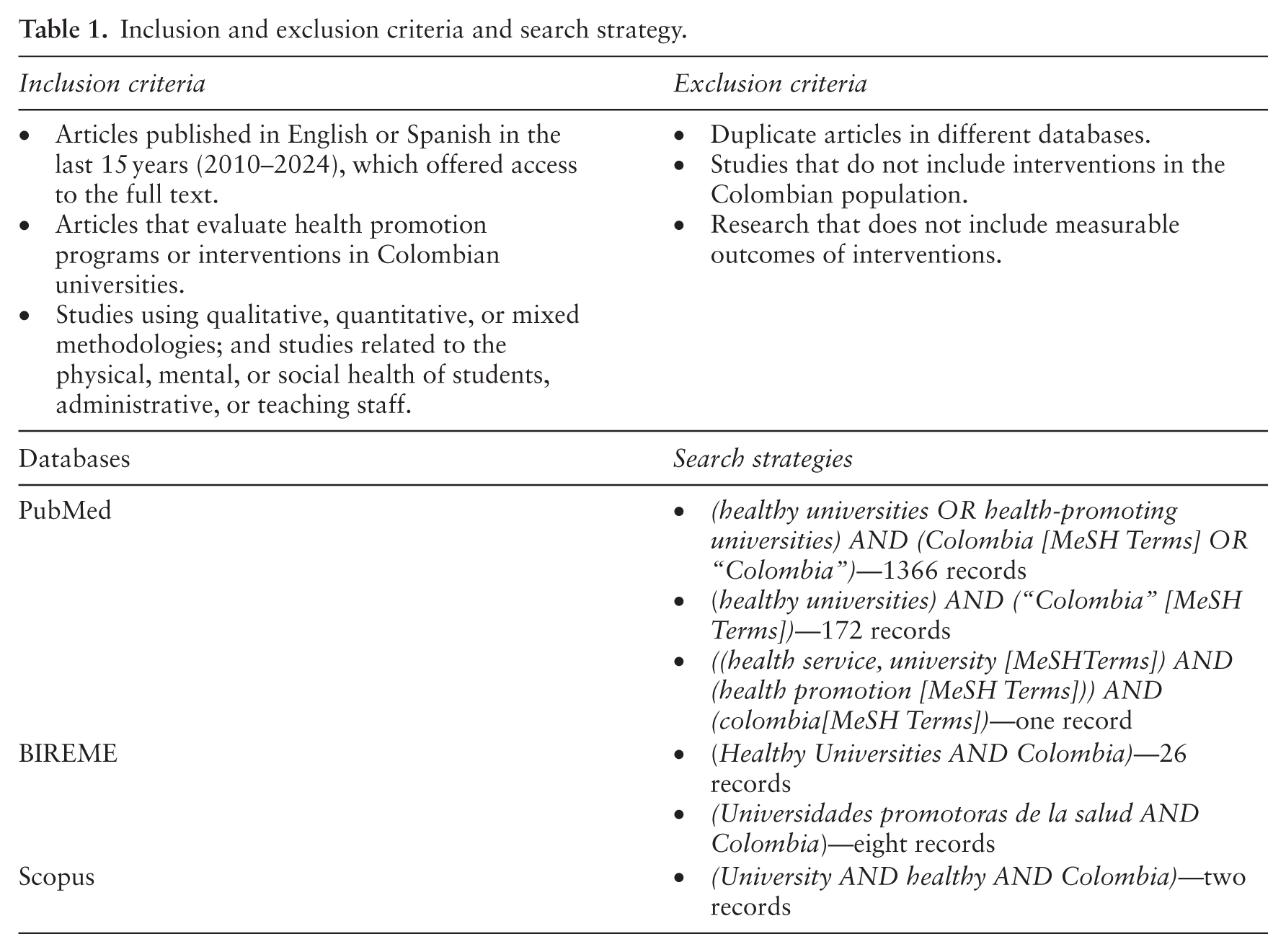
The search strategy employed standard inclusion criteria focused on articles published in English or Spanish in the last 15 years (2010–2024) that evaluated or described health promotion programs or interventions in Colombian universities. The initial search across three databases yielded 1575 records, supplemented by seven additional articles identified through the snowball technique, including potentially relevant grey literature identified through REDCUPS documentation.
After de-duplication and screening based on predefined criteria (detailed in Table 1), 14 studies were selected for full-text review and analysis. The selection process was documented using a PRISMA flow diagram adapted for scoping reviews (Figure 1).
Inclusion and exclusion criteria and search strategy.
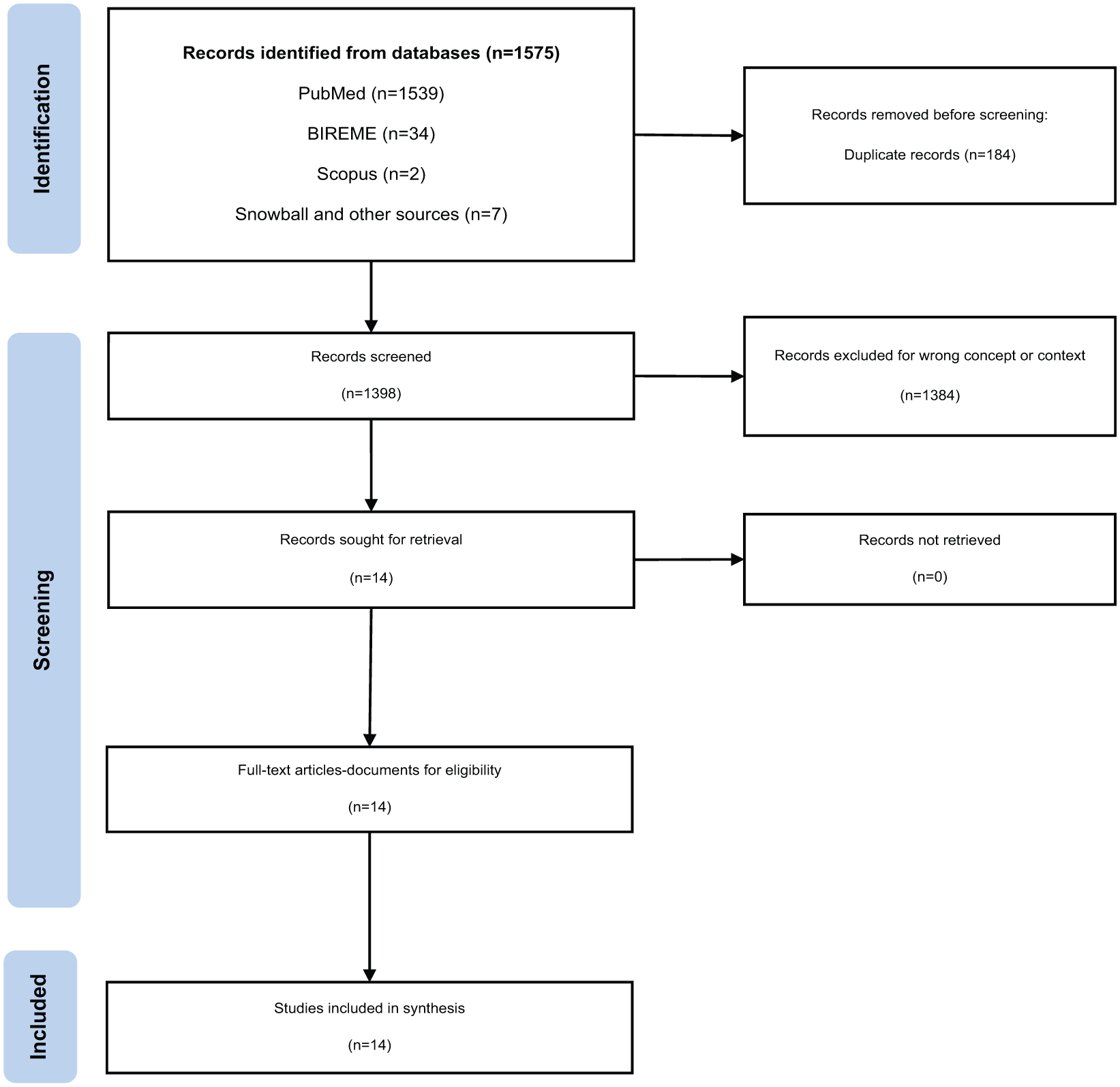
Preferred Reporting Items for Systematic reviews and Meta-Analyses extension for Scoping Reviews (PRISMA-ScR) flow diagram for the identification, screening, and inclusion of studies.
Results
Data obtained from the literature
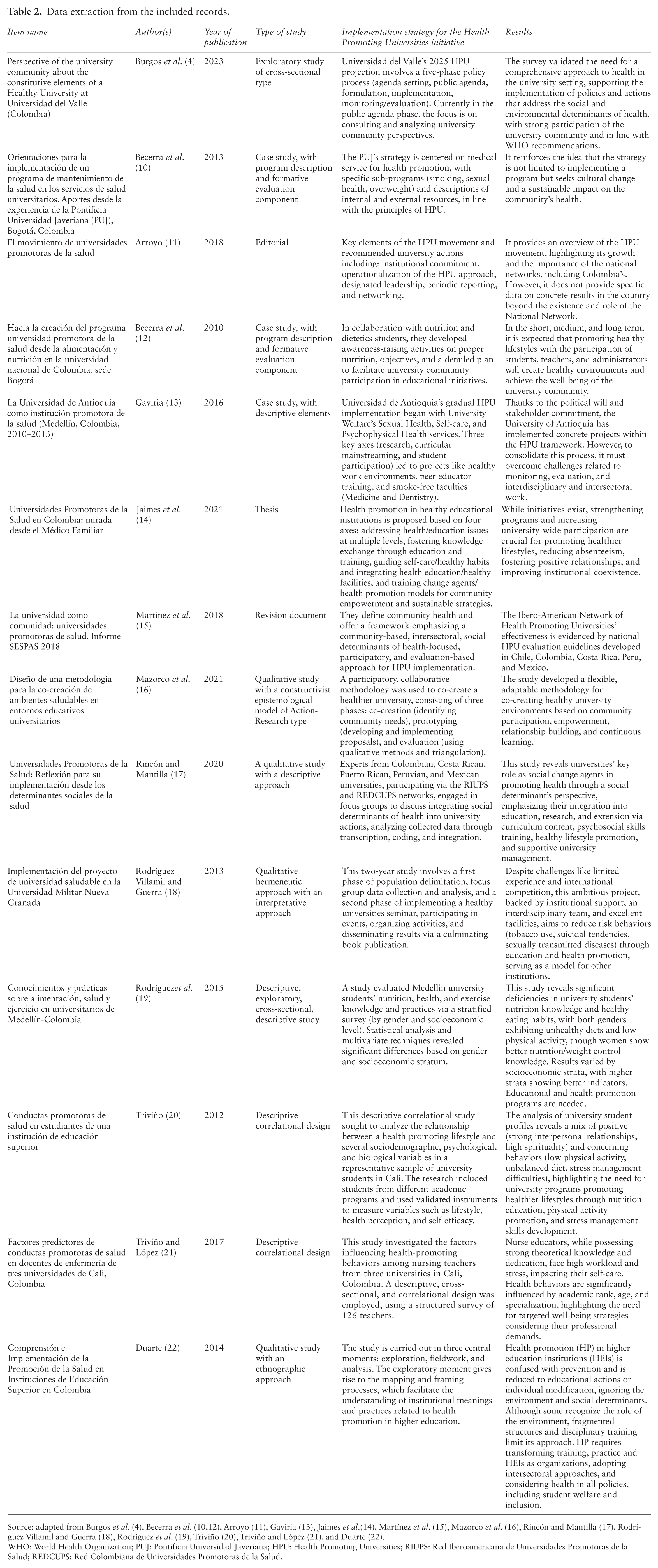
The 14 studies selected for review offered insights into various aspects of health promotion in Colombian universities, with some explicitly referencing the HPU framework while others focused on specific health promotion interventions. While a sizable portion (29%) employed qualitative methodologies to understand experiences and perspectives, others included case studies (21%) and descriptive analyses. Table 2 shows the data extracted from the selected articles, including the name of the article, author, year of publication, place of publication, type of study, implementation strategies related to health promotion, and main results (4,10 –22).
Data extraction from the included records.
Source: adapted from Burgos et al. (4), Becerra et al. (10,12), Arroyo (11), Gaviria (13), Jaimes et al.(14), Martínez et al. (15), Mazorco et al. (16), Rincón and Mantilla (17), Rodríguez Villamil and Guerra (18), Rodríguez et al. (19), Triviño (20), Triviño and López (21), and Duarte (22).
WHO: World Health Organization; PUJ: Pontificia Universidad Javeriana; HPU: Health Promoting Universities; RIUPS: Red Iberoamericana de Universidades Promotoras de la Salud; REDCUPS: Red Colombiana de Universidades Promotoras de la Salud.
The Colombian literature reviewed describe a variety of health promotion activities implemented in universities (4,10 –22), ranging from targeted interventions to broader institutional initiatives. These activities were reported in diverse institutional contexts, reflecting differences in resources, priorities, and institutional culture.
Specific interventions and health promotion activities
Several studies described physical activity programs (19,20), substance use prevention initiatives (17,19), and mental and sexual health promotion (17 –19) in Colombian universities. Physical activity promotion was addressed through curricular and extracurricular programs, substance use prevention included tobacco control campaigns and broader awareness activities, and mental and sexual health initiatives ranged from workshops to structured support services.
Studies exploring health perceptions and practices (12 –15,20) reported low levels of knowledge and healthy lifestyle behaviors among students, faculty, and staff, particularly regarding nutrition and physical activity. Factors influencing these behaviors included psychosocial aspects such as academic stress, socioeconomic limitations affecting access to healthy options, and environmental conditions such as the availability of safe spaces for exercise and healthy food services on campus (4).
Implementation-focused studies (16 –19,21,22) identified key strategies such as the creation of networks and alliances between institutions, active community participation involving students, faculty, and staff, and the development of university-level policies to sustain health promotion efforts. These strategies were noted as facilitators for embedding health promotion into the institutional fabric, consistent with recommendations from REDCUPS (8).
Summary of objectives and impacts
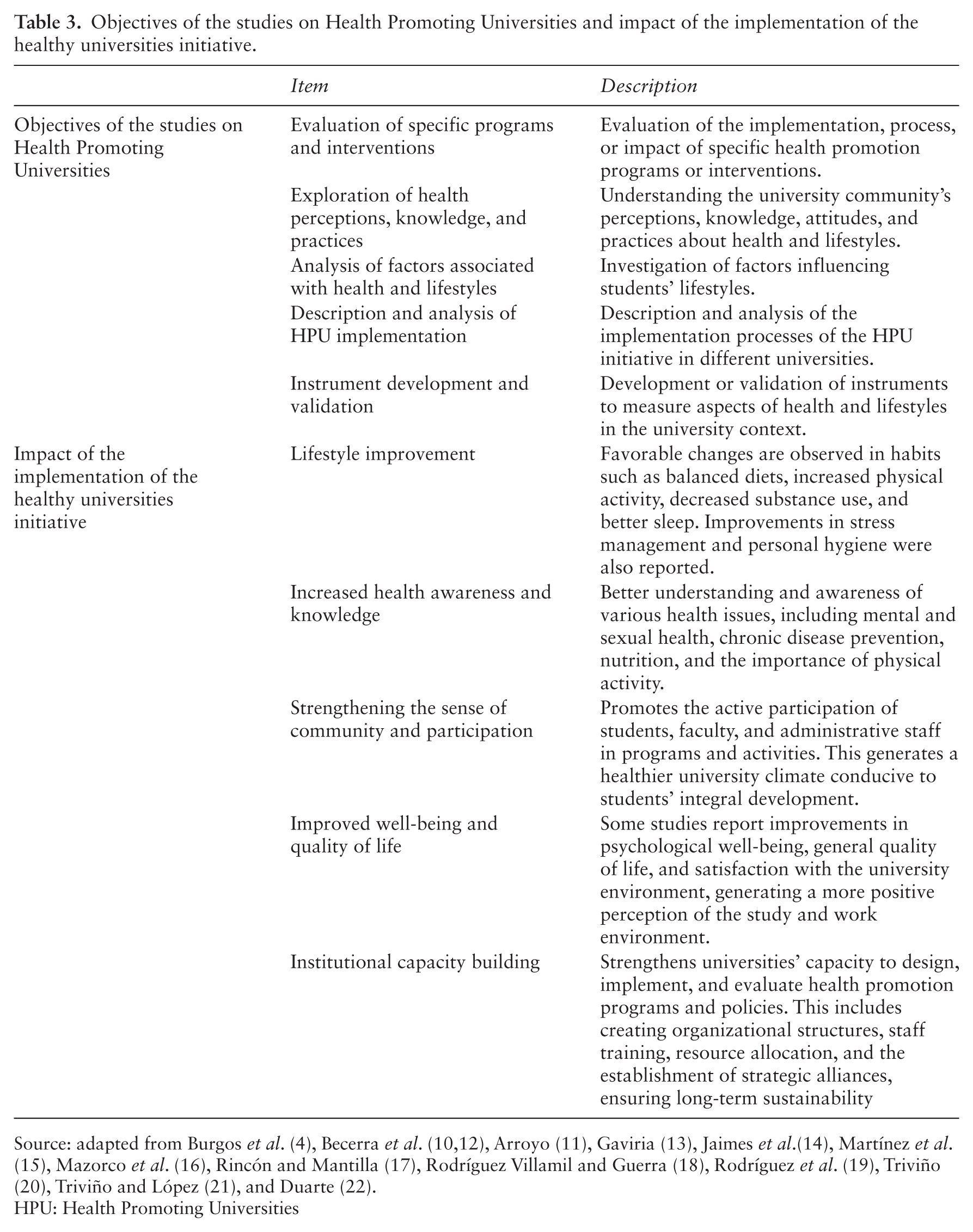
Table 3 summarizes the main objectives and reported impacts of the reviewed initiatives, all based on Colombian literature. These include lifestyle improvements, increased health awareness, strengthened community participation, enhanced well-being, and institutional capacity building (4,10 –22).
Objectives of the studies on Health Promoting Universities and impact of the implementation of the healthy universities initiative.
Source: adapted from Burgos et al. (4), Becerra et al. (10,12), Arroyo (11), Gaviria (13), Jaimes et al.(14), Martínez et al. (15), Mazorco et al. (16), Rincón and Mantilla (17), Rodríguez Villamil and Guerra (18), Rodríguez et al. (19), Triviño (20), Triviño and López (21), and Duarte (22).
HPU: Health Promoting Universities
Discussion
Health promotion activities in Colombian Higher Education Institutions (HEI) described in the literature typically adopt a holistic perspective, incorporating concepts that reflect the complex interplay of variables influencing individual and community well-being. This aligns with the World Health Organization (WHO) principles and the Ottawa Charter for Health Promotion (7). In practical terms, the included studies demonstrate that Colombian university actions map onto the Ottawa Charter’s five action areas: 1. building healthy public policy (e.g. institutional policies and smoke-free faculties), 2. creating supportive environments (e.g. healthier food services and safe spaces for physical activity), 3. strengthening community action (e.g. peer-led programs and student participation mechanisms), 4. developing personal skills (e.g. workshops on mental and sexual health, stress management), and 5. reorienting services (e.g. integrating health promotion within university health/well-being services). Together, these components illustrate conceptual alignment with WHO principles while revealing implementation gaps in policy integration and monitoring. However, despite this conceptual alignment, implementation often results in isolated interventions rather than comprehensive HPU frameworks (4,10 –22). This apparent contradiction can be explained by limitations in financial and human resources, fragmented institutional planning, and insufficient monitoring and evaluation mechanisms, as reported in Colombian experiences such as Universidad de Caldas (5) and Universidad de Antioquia (13).
The literature indicates that specific strategies, such as healthy eating programs, physical activity promotion, and stress management workshops are being implemented in various Colombian universities (4,10 –22), though often as short-term projects without policy-level integration. In international contexts, similar interventions are sustained within institutional frameworks (23 –25), highlighting the need for Colombia to develop binding policies that ensure continuity.
The studies reviewed reveal diverse methodologies employed to promote health in Colombian universities, demonstrating the adaptability to institutional contexts. While this diversity is valuable, challenges remain in ensuring sustainability and measuring outcomes. Few Colombian studies (16,18,22) have employed mixed methods approaches, despite international recommendations (9,23,24) that such designs are essential for capturing both processes and outcomes.
A consistent finding across the Colombian literature is the low level of knowledge and healthy practices among students, particularly regarding nutrition and physical activity (12 –15,19). These results emphasize the necessity for educational approaches tailored to the local context, addressing barriers such as socioeconomic disparities, academic workload, and limited access to supportive environments. International evidence supports similar needs but often in more resource-abundant settings (26,27), underscoring the importance of context-sensitive strategies in Colombia.
For example, at Universidad de Antioquia, staged implementation through University Welfare combined policy initiatives (e.g. smoke-free faculties), peer educator training, and curriculum links to foster sustained participation—yet authors underscore the need to consolidate monitoring and interdisciplinary work to scale impact (13). At Pontificia Universidad Javeriana, the service-based health promotion program included sub-programs for smoking, sexual health and overweight, integrating internal and external resources to embed a culture of health within the campus (10). These experiences illustrate transferable best practices—policy adoption, peer engagement, and service integration—that can guide comprehensive HPU frameworks in Colombia beyond isolated projects (4,10 –22).
Within this context, examples such as the national program ‘La Alegría de Vivir en Paz’ and the initiatives of the Pontificia Universidad Javeriana demonstrate the potential for structured, community-based interventions that go beyond isolated actions. Although these cases originate in school or mixed educational environments, their principles (active community participation, integration of health promotion into institutional culture, and sustained engagement) are directly applicable to higher education settings.
International literature emphasizes the value of community cross-sector collaborations and integrated preventive services (23 –25), strategies that are partially reflected in Colombian cases such as Burgos et al. (4) and Gaviria (13). However, without systematic integration into policy and evaluation frameworks, these remain fragmented efforts.
Strengthening inter-university collaboration through REDCUPS (8) and leveraging the Ibero-American Network of Health Promoting Universities (15) could facilitate the exchange of best practices, joint research, and the development of standardized evaluation indicators. Figure 2 presents a set of recommendations derived from this review, emphasizing institutional policy development, community engagement, intersectoral alliances, and continuous program evaluation as core components for advancing HPU implementation in Colombia.
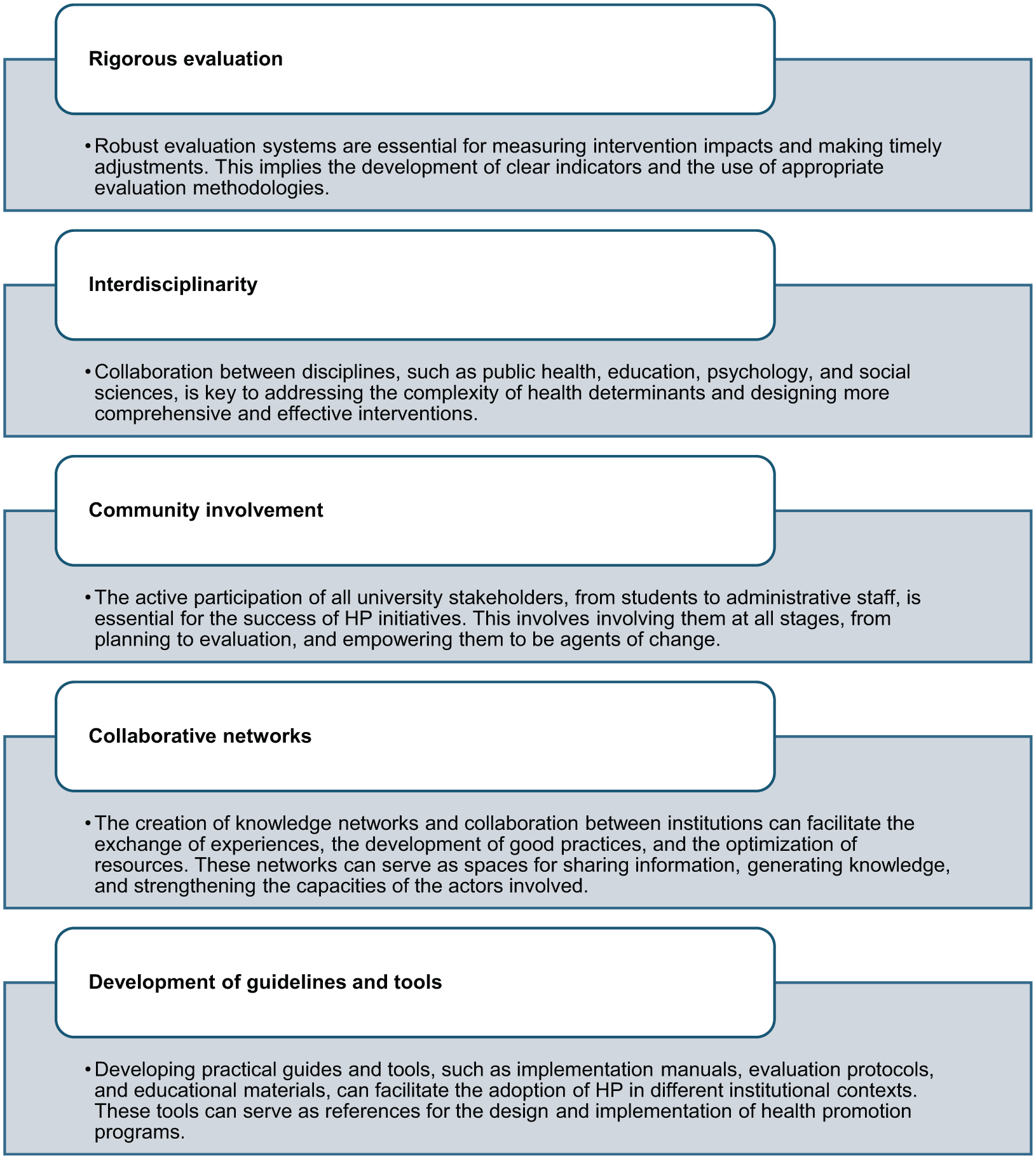
Proposed recommendations for the implementation of the healthy university initiative.
Finally, while international evidence points to the effectiveness of mindfulness, cognitive-behavioral therapies, relaxation, and social skills training techniques in university contexts (28 –31), Colombian literature provides minimal evaluation of these methods. Future research should adapt and test such approaches in local settings to determine feasibility, acceptability, and impact. Applying structured prioritization methods for research, such as the framework proposed by Khalil et al. (32), could guide the identification of the most relevant and achievable strategies in the Colombian context.
Cultural considerations in Colombia may both support and hinder HPU implementation. Strong traditions of community engagement and solidarity can facilitate participatory approaches and peer-led initiatives; however, territorial inequities, urban–rural contrasts, and sociocultural diversity (including ethnic communities) complicate standardization, resource allocation, and continuity. These factors reinforce the need for context-sensitive strategies, culturally responsive communication, and flexible evaluation frameworks that can accommodate institutional heterogeneity while progressing towards common indicators.
Limitations
This review is limited by the heterogeneity of study designs and the variability in reporting quality, which restricts the capacity to compare outcomes across institutions (32). The search strategy was comprehensive; however, some relevant gray literature or unpublished evaluations might not have been captured. Additionally, the predominance of qualitative approaches limits the ability to assess the magnitude of effects, reinforcing the need for future studies incorporating robust mixed methods designs and standardized evaluation frameworks.
Conclusions
The literature on health promotion in Colombian universities suggests various activities and initiatives that could potentially have a positive social impact on the well-being of university communities. However, these activities are often implemented as isolated interventions rather than part of comprehensive HPU frameworks. Strengthening evaluation systems, fostering interdisciplinary collaboration, actively engaging the university community, and developing supportive institutional policies are necessary steps to advance the implementation of HPUs in Colombia.
In addition, leveraging inter-university networks such as REDCUPS and the Ibero-American Network of Health Promoting Universities could accelerate the exchange of best practices, promote joint research initiatives, and support the adoption of standardized indicators for monitoring progress.
Based on the findings of this scoping review, the recommendations presented in Figure 2 are proposed to guide practitioners and policymakers in designing, implementing, and evaluating health promotion strategies tailored to the Colombian higher education context.
Research priorities
Develop and validate standardized indicators and evaluation tools specifically designed for assessing HPU initiatives in Colombian universities.
Conduct longitudinal studies to measure the long-term health, academic, and social outcomes of HPU-related interventions.
Adapt and evaluate internationally recognized interventions (e.g. mindfulness, cognitive-behavioral therapy, integrated preventive services) for their feasibility and effectiveness in the Colombian context.
Strengthen and expand REDCUPS as a platform for inter-institutional collaboration, capacity building, and dissemination of best practices.
Promote the integration of HPU principles into national higher education regulations to ensure sustainability and scalability of initiatives.
Footnotes
Appendix 1. Summary of JBI stages and outcomes in this scoping review
Author contributions
All authors participated in conceptualizing the research, drafting, and final approval of the manuscript. In addition, this research corresponds to the last two authors’ family medicine specialization degree work.
Declaration of conflicting interests
The authors have no conflicts of interest to declare.
Funding
The authors disclosed receipt of the following financial support for the research, authorship, and/or publication of this article: This research was supported by Universidad de La Sabana, Colombia, through the MED-342-2023 project (Permanent professional development in Primary Health Care through the Virtual Campus for Public Health in Colombia).
