







Abstract
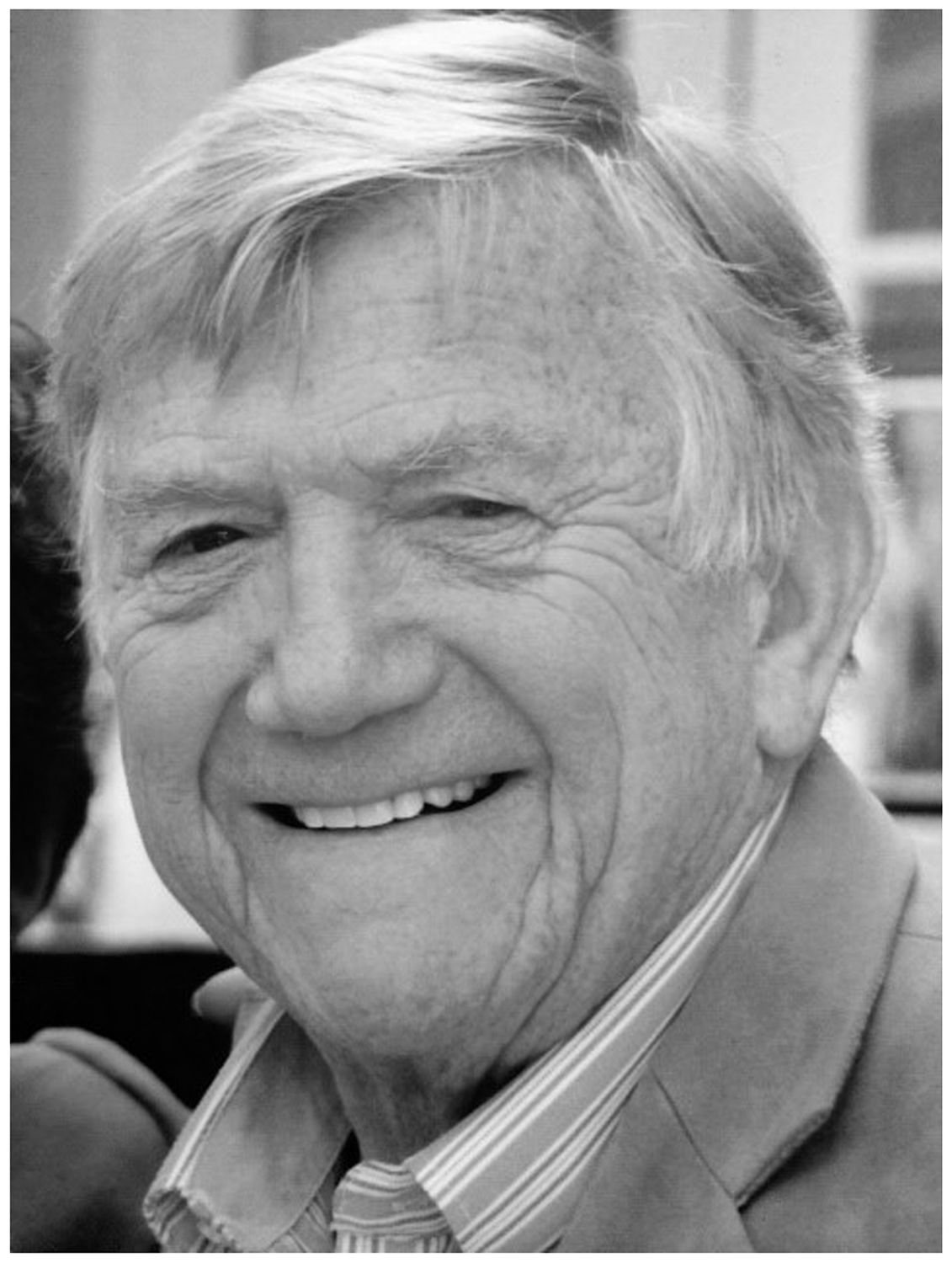
Stephen Copeland was a leader in shoulder surgery in the UK, Europe and the World for 30 years following his appointment as a consultant in Reading in 1979. He died from a recurrence of malignancy after a non-Hodgkin’s lymphoma that first occurred in 1998. Steve became the first true UK ‘Master Shoulder Surgeon’ from 1984 when he started the Reading Shoulder Course, which then became a national and international institution.
Steve Copeland was born in Shropshire and went to school in Nantwich in the North West of England. While still at school, he started his career as an inventor: he designed ‘A new method of Measuring Thermal Conductivity of Metals’, which he registered with the British Standards Institute in 1963 and which is still used to test the maturity of metal samples today. In 1965, he went to Medical School at St Bartholomew’s (Bart’s) in London. In his second year at medical school, he designed and built his own sports car, although this was not as successful as his earlier project. He later focussed on Porsche, Aston Martin and Ferrari designs, all of which he owned and enjoyed. He obtained his FRCS from the Royal College of Surgeons of England by examination in 1974. As a Senior Registrar on the Bart's Percivall Pott Rotation, he won the Benjamin Gooch Prize for Clinical Research. He achieved this whilst working for a Paediatric Orthopaedic Surgeon, Richard Howard, in Norwich in 1977, for a unique review of the outcome from an operation to treat patients with a form of muscular dystrophy in which the shoulder blade is anchored to the chest wall to improve the function of the arm. This was later to be published as Steve’s first shoulder paper in the British Journal of Bone & Joint Surgery in 1978 and remains a landmark paper.
He was a disciple of Professor Lipmann Kessel in London (called Lippy by everyone) who organized and ran the first ever International Congress on Surgery of the Shoulder in 1980. Steve presented a new operation for treating acromioclavicular joint injuries at that meeting. In 1979, Steve had been appointed a consultant orthopaedic surgeon at the Royal Berkshire Hospital (a District General Hospital in Reading) at the exceptionally young age of 33 years. Most consultant appointees at that time were 36 years to 40 years old. He worked there initially as a general trauma and orthopaedic surgeon, with an interest in paediatric orthopaedics at the same time as building a shoulder practice. His commitment initially was a one in four on-call rota for trauma and it was not until 1994, when another surgeon was appointed to carry out paediatric orthopaedics, that Steve finally focused totally on shoulder surgery: both arthroscopic and shoulder replacement surgery. During his early consultant years, he was also awarded the very prestigious ABC Travelling Fellowship by the British Orthopaedic Association in 1982 and a Johnson & Johnson Travelling Fellowship in 1985.
From the mid-1980s, Steve’s career took off. Steve became a member of a group of five pioneering shoulder surgeons in the UK (Ian Bayley, Michael Watson, Angus Wallace and Ian Kelly) and he was a founding member of the British Shoulder and Elbow Society in 1988. He developed his own shoulder replacement: the Copeland shoulder, which he designed with Barrie People (an engineer), and which was marketed from 1986 initially by Zimmer and then by Biomet. He published 58 referenced research papers and wrote four textbooks, as well as ten chapters in textbooks, and produced number of teaching videotapes. He also produced a DVD called the Virtual Shoulder, which shows, in three dimensions, the shape and anatomy of the shoulder.
He was appointed President of the British Shoulder and Elbow Society from 1995 to 1997 and President of the European Society for Shoulder and Elbow Surgery from 1998 to 2000.
He was personally responsible for upgrading UK surgeons in shoulder surgery through his famous Reading Shoulder Courses, which have taken place every 2 years since 1984 and at which the world leader of Shoulder Surgery, Dr Charles Neer II from New York, was a regular guest lecturer. The Reading Shoulder Course was subsequently reproduced in four other countries. Steve was very proud of all his Fellows.
In 1998, Steve developed a non-Hodgkin’s lymphoma that prevented him from attending the 7th International Congress on Shoulder Surgery in Sydney, Australia (the first triennial Shoulder Congress that he had missed). He was fortunate to recover completely from his lymphoma and was back working full-time again in 1999 until his retirement in 2010.
The respect that Steve has gained worldwide is reflected in his invitations as a Special Guest Lecturer. Over a 2-year period (1999/2000), he was a guest lecturer at the American Academy of Orthopaedic Surgeons Meeting, Los Angeles; the Royal Society of Medicine, London; the Spanish Orthopaedic Association, Cordoba, Spain; The European Federation of Orthopaedic & Trauma Societies, Brussels; The European Society for Surgery of the Shoulder and Elbow, the Hague; The Calgary Shoulder and Elbow Course, Canada; and at the International Shoulder Arthroplasty Course, Paris. He was elected a Fellow Ad Hominem by the Royal College of Surgeons of Edinburgh in 2000.
Steve was appointed Chairman of the International Board of Shoulder and Elbow Surgery from 2005 to 2010 and he was also awarded the very prestigious Sir Robert Jones Lecturer by the British Orthopaedic Association in 2005. He was a past member of the editorial board of the Journal of Bone and Joint Surgery (British); the first corresponding member of the American Shoulder and Elbow Society (ASES) in 2006; and was elected an honorary member of the Shoulder Surgery Societies of Australia, Spain, Argentina, South Africa, Korea, India and Japan.
Behind every great man there is an even greater woman and, supporting Steve, was Jenny, who worked as a General Practitioner in Henley. They first met as students at Bart’s and married in 1972. They were an extremely happy couple with two children, Sara and Matthew, now both married, and five grandchildren. Jenny is very down to earth and has told me in the past that she only has two problems with Steve: his rugged good looks and his gullibility. He will be sadly missed by his whole family.
Steve Copeland retired from clinical practice in 2010 and his practice in the Reading Shoulder Unit has been taken over by Professor Ofer Levy, Mr Giuseppe Sforza, Mr Juan Bruguera and Mr Ali Narvani.
Steve was a true leader in shoulder surgery, known worldwide for his unique and innovative approach to shoulder surgery, and also as one of the pioneers in shoulder arthroscopy, as well as the ‘Father’ of shoulder resurfacing (the Copeland Surface replacement) and stemless arthroplasty (the Verso Shoulder Arthroplasty). He was a masterful teacher, excellent surgeon, great friend and caring family man. Above all, he was a true gentleman and a humble man.