






Abstract
This paper evaluates how ‘regulatory governance’ has evolved as a conceptual framework among the research community and practitioners in the utilities sector literature, what its essential dimensions are, and how it impacts sectoral performance. A thematic and methodological review of 116 relevant articles in the energy and telecommunications domains has been undertaken to create a firm foundation for the advancement of knowledge by (i) uncovering areas where research is required, (ii) identifying areas where a plethora of academic research exists and closing them, and (iii) facilitating the development of new theories. The reviews of the articles helped in the identification of four and five vital themes in the energy and telecommunications domains, respectively, while the methodological review revealed the popular techniques under qualitative, quantitative, and mixed research designs – a piece of useful information for future research. The study highlights essential dimensions of regulatory governance and recommends enhanced use of a qualitative approach for gaining insights into social issues, native viewpoints of policy practitioners, and the generation of relevant substantive theories. The study has mapped the micro themes under attributes, mechanisms/instruments (how and why), and outcomes (what) of regulatory governance and recommends enhanced use of grounded theory, phenomenology, and an action research approach.
Introduction
This research aims to evaluate how ‘regulatory governance’ has evolved as a conceptual framework in the utilities sector 1 , followed by identifying its essential dimensions and its impact on sectoral performance. The public policy issues, irrespective of the sectors they pertain to, are generally intractable, open-ended, and complex. They are characterized by uncertainty, complexity, and divergence (Head, 2008) and are often categorized as “wicked problems.” The utilities sector, particularly the energy and telecommunications sectors, have witnessed disruptive changes due to increasing demand, massive adoption of technologies, and regulatory reforms (Elia et al., 2019). These regulatory reforms largely involved allowing and promoting private companies’ participation in the delivery of these public utilities’ services.
There is a dearth of literature reviews focusing on regulatory governance in the utilities sector. Mishra and Kumar (2021), a Systematic literature review (SLR) focusing on how the regulatory framework impacts sectoral performance, comes close by. SLR identifies, evaluates, or synthesizes identified papers relevant to the specific research question(s) or topic and follows a scientific, transparent, and rigorous process to ensure replicability and bias minimization, unlike traditional literature reviews (Mallett et al., 2012).
This study adopts a thematic and methodological approach to review academic literature around the theme of regulatory governance. The thematic literature review groups the existing studies/literature thematically to identify research gaps and suggest opportunities for extending the existing literature. Similarly, a methodological literature review focuses and groups the existing studies/literature belonging to a specific research topic/area based on state-of-the-art research methods. Thus, the thematic and methodological reviews can help in identifying thematic and methodological gaps in a specific research area.
Cairney (2015) has argued that academia and policymakers often hold different assumptions regarding the policymaking world based on different experiences. Policymakers and academia can learn from each other to understand the policymaking world better. On one hand, a certain distancing from the policy process may help academia to add to the breadth of knowledge and develop generalizable recommendations across governments. The policymakers may continue gaining in-depth expertise by directly engaging with the task. This study is also expected to reduce the conversation gap between these two essential pillars in regulatory governance.
Regulation is a set of rules or directives that the authority or government makes to manage a complex system, for instance, a market. The Organization for Economic Co-operation and Development defines regulation as “policies where the government acts as a referee to oversee market activity and the behavior of private actors in the economy” (OECD, 1997). Regulations may be categorized as economic, social, and administrative regulations. Economic regulation is associated with improving the efficiency of the markets in delivering goods and services. Social regulation intends to ensure the safety and health of society and protect the environment, while administrative regulation manages the functioning of both the public and private sectors. Regulatory reform intends to continuously ensure that regulations remain responsive to variations in the economic, social, and technical environment.
The usage of the term regulatory governance is increasing day by day among policymakers and in academic discussions (Kjaer & Vetterlein, 2018). Regulatory governance is now “perceived as a new form of governance away from command-and-control type regimes towards other modes of collaboration across various policy actors” (Levi-Faur, 2011). The World Bank and OECD emphasize good governance and regulatory governance, respectively.
Reform, regulation, and deregulation are closely linked to regulatory governance. While ‘deregulation’ became the buzzword in the 1980s and onwards, now ‘regulation’ is increasingly popular. (Rodrik, 2011). The term ‘deregulation’ is associated with regulatory purposes. The new demand for regulation also takes the form of ‘regulatory governance’ or ‘good governance’ as competing concepts, wherein high expectations are attached to these terms.
Cherry and Wildman (1999) treated regulation as a design problem, having two components: regulatory governance and regulatory incentives. While regulatory governance intends to restrain the behaviour of regulators, regulatory incentives intend to affect the behaviour of private entities. The regulatory incentives may comprise rules that directly influence regulated firms’ behaviour (pricing, subsidy, entry, and interconnection). Levy and Spiller (1996) emphasized that the real impact (negative/positive) of regulatory incentives can be realized only after the regulatory governance is successfully implemented.
Since this study aims to examine how the research on regulatory governance has evolved among the research community and practitioners dealing with the utilities sector, a thematic and methodological review of the relevant articles has been carried out. The organization of this article is as follows: the next section describes the research methodology adopted in this study. Results and discussion are covered in the subsequent sections, respectively. It starts with a methodological and thematic review of regulatory governance. Next, a comparison of methodological and thematic reviews of identified articles has been conducted. Finally, the last section of this paper covers the conclusion and policy implications of the study. We believe that the outcomes of this study may be of importance for policymakers, industry, and academia working in the utilities sector.
Research Methodology
As per Webster and Watson (2002), a literature review of previous articles helps the researcher to create a firm foundation for the advancement of knowledge by (i) uncovering areas where research is required, (ii) identifying areas where a plethora of academic research exists and closing them, and (iii) facilitating the development of new theories. In addition, a good literature review gives an overview and acts as a stepping stone for researching a particular area or topic.
SLR allows thematic and methodological assessment in brief and, therefore, may not reveal a complete and distinct category of regulatory governance studies in various sectors. Mishra and Kumar (2021) suggested undertaking more elaborate thematic and methodological reviews in the literature related to regulatory governance in connection with sectoral performance. The thematic and methodological reviews in this paper have overcome the above restrictions by allowing the identification of a greater number of articles to draw a panorama of themes and methods published in those identified journals (although restrictions do come from the scope of journals).
Thematic reviews of academic literature are undertaken by categorizing them around the issue or topic under study. The progression of time may or may not be given importance. Thus, a thematic review shall have subcategories based on factors related to the theme or issue. A methodological review provides a framework of understanding at different levels (i.e., theory, substantive fields, research approaches, data collection, and analysis techniques). It helps draw on a wide variety of knowledge, ranging from conceptual references to non-academic documents related to ontology and epistemology, quantitative and qualitative integration, sampling, data collection, and data analysis, and ethical issues of interest to the researcher (USCLibraries, 2018).
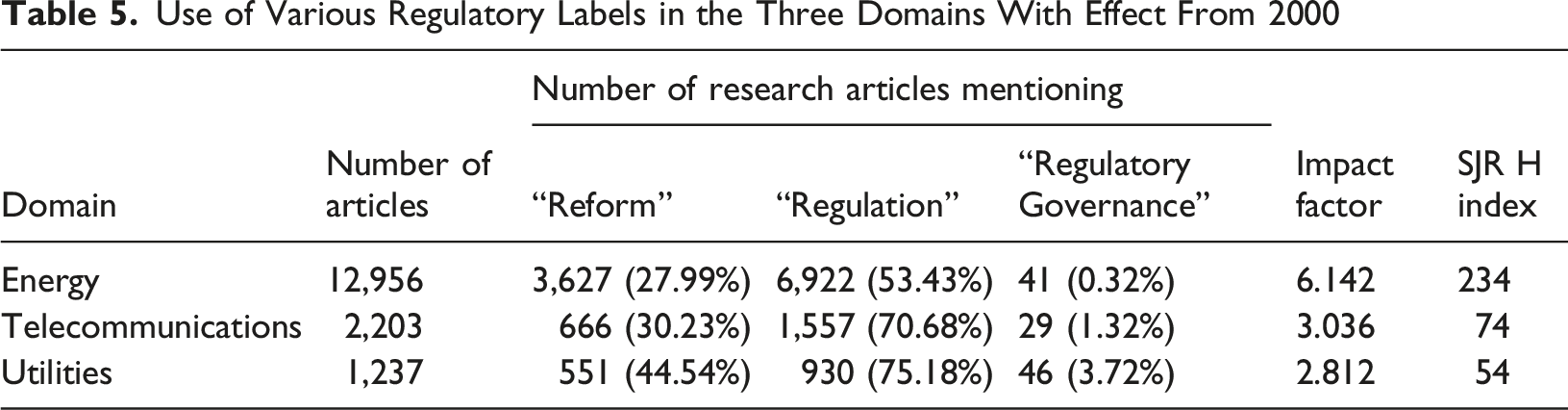
While undertaking the thematic and methodological review, it would be desirable to explore a maximum number of journals related to public policy and regulation areas. However, this approach may need exploration of important journals covering public policy/regulation in energy and telecommunications domains. Further, it will also be worthwhile to assess how regulatory governance research in the energy and telecommunications sectors stands as compared to other infrastructure sectors. Therefore, considering the time and other research resource constraints, only three journals have been selected for the review period 2000 to 2022, one each from energy (Energy Policy), telecommunications (Telecommunications Policy), the utilities sector, and networked industries (Utilities Policy). Telecommunications Policy and Energy Policy belong to Quartile 1 of the Communications and Economics/Environment Studies category of journals, respectively. Both have a decent Web of Science impact factor of 4.5 and 7.6, respectively. Utilities Policy, with an impact factor of 3.25, has been chosen mainly because it has a similar focus on policy and regulation issues.
Energy Policy, an international peer-reviewed journal, deals with policy implications of energy demand, usage, and supply and their relationships with economic, social, planning, and environmental issues (Energy Policy, 2022). The Telecommunications Policy journal covers the issues impacting digitalization in the economy and society. It is multidisciplinary and caters to articles that are conceptual, theoretical, and empirical (Telecommunications Policy, 2022). Similarly, Utilities Policy is a leading peer-reviewed journal for academic researchers, government officials, industry professionals, consultants, and analysts in the global utilities policy community. The journal emphasizes the utilities and network industries providing essential electricity, natural gas, water and wastewater, solid waste, communications, broadband, postal, and public transportation services (Utilities Policy, 2022).
The ScienceDirect website has been used to search and access various articles published in the three journals covered under this study. The website contains over 800 academic journals from the social sciences and humanities. We have used three common search strings (reform, regulation, and regulatory governance). In addition, the search was restricted to ‘research articles’ and ‘short communications’ while excluding review articles, book reviews, and conference information. The flowchart of inclusion and exclusion criteria is given in Figure 1 (Wilson et al., 2012). It is based on Preferred Reporting Items for Systematic Reviews and Meta-Analyses (PRISMA). PRISMA inclusion and exclusion criteria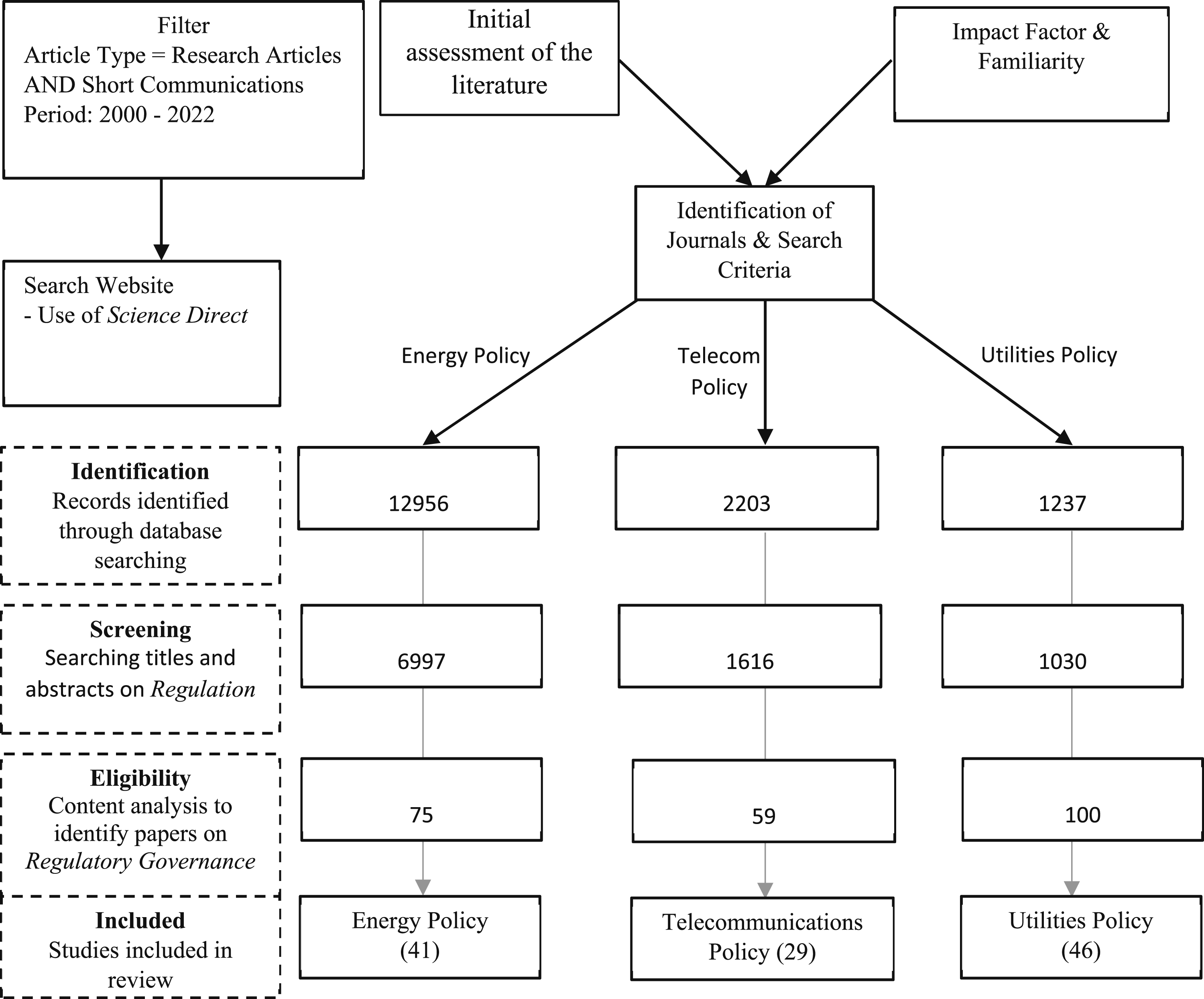
While executing the methodological review, we have used the following definitions of qualitative, quantitative, and mixed research methods. Qualitative research is a research inquiry that involves observing and interacting with people in their own natural settings, language, and terms. Here, the data is drawn from the context of the event with the intent to describe the occurrence (Basri, 2014). The perspectives of the participants are given importance to explain the phenomenon (event process) using an inductive approach. The researcher acts as a human instrument of data collection. Quantitative research may be construed as a scientific method that generally follows model generation, identifying hypotheses and theories, instruments of measurement, experimentation, quasi-experimentation, collection, and analysis of data. It deals with systematic investigation of quantitative properties and relationships (Biswas & Muthukkumarasamy, 2017). The quantitative procedures ensure the validity and reliability of the study. Mixed methods are characterized by the combined usage of qualitative and quantitative data to provide deeper answers to the research questions (Menon, 2010). Here, the investigation involves the collection and analysis of data by integration of inferences emerging from both qualitative and quantitative approaches in a single study.
Results
Methodological Review of ‘Regulatory Governance’ in the Energy Domain
Overall, forty-one articles, constituting 0.33% of 12,363 published articles from 2000 to 2022, have used the concept of ‘regulatory governance’, out of which the number of articles using quantitative methods, qualitative methods, and mixed methods is fifteen (36.59%), twenty-two (53.66%), and four (9.75%), respectively.
Quantitative Methods
The authors have used quantitative methods in various data sources and analytical techniques while researching regulatory governance in the energy sector. The data types range from secondary-sourced data (cross-sectional, longitudinal, and panel data) to primary-sourced data using survey techniques. The techniques applied to these data may be categorized into econometric methods, factor analysis, stochastic frontier analysis, etc.
The survey method is an effective way to capture stakeholders’ perceptions of power projects. For instance – (i) performance benchmarking on different aspects of 63 regional electricity distribution utilities in six European countries (Jamasb & Pollitt, 2003), (ii) estimation of consumer support for Hong Kong public utilities commission (Woo et al., 2015), (iii) assessment of the impact of independent regulatory agencies on the electricity sector in Mediterranean region (Cambini & Franzi, 2013).
Econometric modelling of the relevant secondary datasets has been adopted to evaluate the impact of different policy devices on performance indicators of the power sector (Nagayama, 2010). Polemis (2016) applied panel regression to capture the impact of structural reforms on electricity sector performance in OECD countries. Srivastava and Kathuria (2020) evaluated corporate governance impact on the performance of 48 power utilities spread across 19 Indian states during 2016-17. A similar study (Kathuria, 2021) applied dynamic panel analysis to investigate the causality between institutional reforms and utilities’ technical/financial performance. Mohsin et al. (2021) applied data envelopment analysis to estimate the impact of energy reforms on energy efficiency. A recent study (Fuentes & Sengupta, 2020) applied an econometric business model that enables utilities to compensate households for the blackout.
A few studies have applied advanced modelling techniques to understand regulatory governance issues in the energy sector. For instance, - (i) system dynamics technique to examine evolution of regulation and development of the Argentinean gas market (Ponzo et al., 2011), (ii) modeling of household decision making to examine distributional impacts of climate change mitigation in Indian electricity sector (Rao, 2013), (iii) stochastic frontier analysis on a panel dataset covering pre and post reform era to estimate effect of regulatory governance on efficiency of thermal power generation (Ghosh & Kathuria, 2016), (iv) probability distribution functions estimation of cost overruns and delays in 401 Brazilian power megaprojects developed between 1936 to 2014 (Callegari et al., 2018), (v) expert judgment and Bayesian belief network to estimate the nuclear security and proliferation risk of small modular reactors and nuclear plants in the emerging nuclear energy countries (Carless et al., 2021), (vi) synthesis of composite indicator to measure the institutional transparency (Drago & Gatto, 2022).
Qualitative Methods
Most of the identified articles using qualitative methods, falling under the category of descriptive studies (14 out of 22), have used academic and non-academic literature.
Regulatory institutions play a critical role in the functioning of the power sector. Two of the identified articles for this study have majorly relied on a review of non-academic literature. For instance, Kessides (2013) adopted a narrative style to analyze chaos in Pakistan’s power sector, while Eberhard and Gratwick (2011) identified success determinants for independent power projects in sub-Saharan Africa. Zhang et al. (2019) conducted a time-dimension analysis of Chinese policies in energy distribution by using data/information from multiple sources (websites of the Chinese government, administration, and local government). A qualitative study of power sector reforms to actualize universal access in Afghanistan used Ostrom’s institutional analysis and development framework (Amin & Bernell, 2018).
Similarly, a new institutional approach has been used to study power sector reforms in Pakistan (Ullah et al., 2017), while the case study approach (literature survey and analysis of semi-structured interviews) has been used to evaluate development of smart grids in South Korea (Mah et al., 2012). Finally, Makkonen et al. (2012) assessed the competitive scenario in the European electricity markets by applying the Delphi technique to data generated from interactions with a panel of experts.
Mixed Methods
Four out of forty-one identified articles published on ‘regulatory governance’ have explicitly or implicitly used mixed methods. The focus of studies adopting mixed methodology in the energy sector are diverse, inter-alia, including (i) examination of the evolution of independent regulatory authorities (IRAs) a decade after their establishment (Kumar, 2022); (ii) creation of an analytical framework by using AHP/Delphi technique to weigh the relative importance of natural gas security and suggest a composite security index (Ye et al., 2021); (iii) identification/validation of relevant factors impacting coal-based power generation in Bangladesh by using a mix of systematic literature review, multi-criteria analysis, and semi-structured interviews of experts (Zaman et al., 2018); (iv) Analyze regulatory performance in Britain’s electricity industry using a mixed methods case study approach including survey technique and a descriptive analysis of academic and non-academic literature (de Oliveira & Tolmasquim, 2004).
Thematic Review of ‘Regulatory Governance’ in Energy Domain
General Usage of Regulatory Governance
Several authors have used ‘regulatory governance’ as an umbrella concept for sectoral reforms (Carless et al., 2021; Dastan, 2011; Florêncio, 2016; Glachant et al., 2008; Holburn, 2012; Makkonen et al., 2012; Polemis, 2016; Rao, 2013; Woo et al., 2015; Ye et al., 2021). Similarly, a few of the authors have given a passing reference to ‘regulatory governance’ in their articles (Amin & Bernell, 2018; Bazilian et al., 2010; Fuentes & Sengupta, 2020; Mah et al., 2012; Mohsin et al., 2021; Srivastava & Kathuria, 2020; Wright, 2005).
Policy Evaluation
In total, twenty-one identified articles have delved into evaluating policy formulation and implementation. A recent article focused on how periodic assessments of independent regulatory agencies (IRAs) may help understand the trajectory of sectoral regulatory governance (Kumar, 2022). Energy reforms are beneficial to electricity access and energy efficiency (Mohsin et al., 2021). On the other hand, weak regulatory infrastructure and political instability in emerging nuclear energy countries may enhance the risk of nuclear proliferation and security risks (Carless et al., 2021). While the quality of regulatory governance is more effective in the electric power sector, it could be more effective in the T&D loss segment. Kathuria (2021) employed data from 55 power utilities to assess the impact of the regulatory index on their commercial-cum-technical performance. Srivastava and Kathuria (2020) evaluated the impact of corporate governance on the technical cum commercial performance of Indian utilities. Zhang et al. (2019) analyzed the distribution of energy policies’ impact on managerial improvement in China, while Ullah et al. (2017) examined power sector reforms in Pakistan.
Other papers have covered policy evaluation on multifarious issues: (i) how regulatory framework/reforms deterred investments in Brazilian oil sector (Florêncio, 2016); (ii) impact of structural reforms on electricity sector performance in OECD countries (Polemis, 2016); (iii) impact of institutional quality on performance of Indian thermal power plants (Ghosh & Kathuria, 2016); (iv) impact of independent regulatory agencies and rules harmonization on the electricity sector in Mediterranean countries (Cambini & Franzi, 2013); (v) Turkey’s energy market reforms (Dastan, 2011); (vi) how political endowments of the country draw boundaries of implementation of regulation (Durakoğlu, 2011); (vii) evolution of regulation and development of the Argentinean gas market (Ponzo et al., 2011); (viii) impact of different policy reforms on performance indicators of power sector across the world (Nagayama, 2010); (ix) German transmission grid performance during self-regulated regime from 1998 to 2005 (Glachant et al., 2008); (x) Turkish electricity regulator, lacking of experience and will to create competitive environment, retarded reforms (Cetin & Oguz, 2007); (xi) how liberalization and security of UK’s gas supply couldn’t bring desired performance improvement (Wright, 2005); (xii) Analyzed regulatory performance of Britain’s electricity industry in terms of performance of its associated system (de Oliveira & Tolmasquim, 2004); (xiii) Analyzed Russian power sector reform plan and Chile’s experience to caution against over reliance on regulatory governance (Kennedy, 2003); (xiv) how power sector regulatory reform and market development takes place in transition economies (Kennedy, 2002).
Policy Prescription
Eight identified studies mainly focused on policy prescriptions in the energy sector. For instance- (i) prescribes an interval-based composite indicator to evaluate the extent of institutional transparency (Drago & Gatto, 2022); (ii) suggests a replicable technique to evaluate energy security and comprehensive policy framework for natural gas security (Ye et al., 2021); (iii) policy and institutional reforms to expand the power grid (Amin & Bernell, 2018); (iv) estimation of consumer support for public utilities (Woo et al., 2015); (v) analysis of chaos in the power sector for prescribing ways to strengthen regulatory governance (Kessides, 2013); (vi) assess prospects of electricity markets using conceptual lens of Regulatory Governance (Makkonen et al., 2012); (vii) recommendations to promote network investments and the integration of distributed generation in the Dutch electricity sector (Niesten, 2010); (viii) policy alternatives in reforming energy utilities in developing countries (Gabriele, 2004).
Climate Change and Clean Energy
Four identified studies relate to climate change and clean energy issues. First, Zhang (2019) assessed Chinese electricity law and policy reforms from the energy-climate-environment dimension. Second, Rao (2013) examined the distributional impacts of climate change mitigation in the Indian electricity sector. Third, Bazilian et al. (2010) examined how international cooperation could support national actions, clean energy services, and universal access. Finally, de Carvalho et al. (2010) focused on energy choices to account for potential climate change.
Miscellaneous
The seven shortlisted articles covered under the thematic review do not fall under the above themes: general usage, policy evaluation, policy prescription, climate change and clean energy. For instance – (i) Fuentes and Sengupta (2020) proposed an agent-based business model wherein insurance is offered to the household by utilities against the prospect of a blackout; (ii) Zaman et al. (2018) carried out a multi-criteria analysis of coal-based power generation in Bangladesh; (iii) Callegari et al. (2018) analyzed the relationship between cost overruns and delays in energy megaprojects in Brazil; (iv) Holburn (2012) identified the location of subsequent investments in the renewable energy sector after considering regulatory risks in US and Canada; (v) Mah et al. (2012) examined the development of smart grids in South Korea; (vi) Eberhard and Gratwick (2011) identified determinants of success of independent power projects and emphasized on the effectiveness of regulatory governance; (vii) Jamasb and Pollitt (2003), in a benchmarking study of electricity distribution utilities in Europe, emphasized on commitment and transparency for the effectiveness of regulatory governance.
Methodological Review of ‘Regulatory Governance’ in Telecommunications Domain
Overall, twenty-nine articles, constituting 1.32% of 1557 published articles from 2000 to 2022, have used the concept of ‘regulatory governance’, out of which the number of articles using quantitative methods, qualitative methods and mixed methods is four (14%), nineteen (65%) and six (21%) respectively.
Quantitative Methods
The authors have made use of quantitative methods in a variety of ways. Cheng (2016) used covariance-structural analyses and developed a model to examine mediating effects of regulatory decision tools on relationships between governance mechanisms and regulations in the communications regulator of Taiwan. Mohamad (2014) highlighted the importance of institutional governance on telecommunications efficiency and provided empirical results for the impact of institutions on reform outcomes. Yang et al. (2013) applied a meta-frontier analysis to measure the influence of regulations on the efficiency of telecommunications operators. Martin and Jayakar (2013) used “qualitative meta-synthesis” to construct a seven-variable parsimonious telecommunications regulatory governance index.
Qualitative Methods
A few articles have used the Case Study approach. Liu (2016) delved into the sustainability of rural informatization in the Sichuan province of China using a single explanatory case study. Jayakar and Liu (2014) compared China’s and India’s universal service policies through comparative case studies. Abdala (2000) adopted a qualitative case study to examine regulatory outcomes in different sectors of Argentina. They found that dynamic institutional characteristics determine the selection of regulatory incentives, producing different regulatory outcomes.
A few articles are methodologically based on extensive archival research and interviews and follow a two-step case study design. Xia (2012), an exploratory study on China’s Institutions, governance, and State-owned Telecom Enterprises, covered competition and regulation in 3G/4G mobile communications. Xia (2011) is a heuristic analysis of third-generation-mobile policy and deployment in China.
Mixed Methods
Regarding the adoption of mixed methods, the specific qualitative and quantitative methods used by the author(s) differ. Details are as given below - (i) Palladino (2021) applied a mixed approach to explore the role of the EU High-Level Expert Group on Artificial Intelligence in the ‘constitutionalizing’ of Internet Governance. (ii) Ojo (2016), based on the data gathered from qualitative semi-structured interviews and secondary sources, has analyzed the challenges and obstacles confronting the Africa Information Society Initiative (AISI) implementation and ICT4D agenda in Africa. (iii) Yu et al. (2012) examined China’s technology policies for wireless broadband infrastructure using a multi-dimensional methodology (document analysis and analysis of semi-structured interviews). (iv) Jayakar and Martin (2012) formulated and tested the resource curse hypothesis to examine telecommunications regulatory governance in 53 African countries. They used mixed methods to construct indices through qualitative meta-synthesis using a different method. (v) Waverman and Koutroumpis (2011) suggested a global index measuring regulatory governance in the telecoms sector based on information from individual countries assembled in the International Telecommunications Union’s annual telecommunications regulatory survey. (vi) Chou and Liu (2006) studied the paradoxical impact of asymmetric regulation in Taiwan’s telecommunications industry using a Case Study of Taiwan (qualitative descriptive analysis of literature and use of econometric method).
Thematic Review of ‘Regulatory Governance’ in the Telecommunications Domain
General Usage of Regulatory Governance
A few authors have used “regulatory governance” as an umbrella concept for sectoral reforms or as a synonym for structural reforms (Abdala, 2000; Cherry & Wildman, 1999; van Gorp & Maitland, 2009; Xia & Lu, 2008). Similarly, a few authors have referenced “regulatory governance” in their articles (Gómez-Barroso & Feijóo, 2010; Jayakar & Liu, 2014; Liu, 2016; Ojo, 2016; Sutherland, 2013; Xia, 2017).
Evaluation of Regulatory Reforms
Xia (2017) studied a two-decade evolution of the Chinese telecommunications sector, institutions, and policy issues. Ojo (2016) analyzed the challenges and obstacles faced by the Africa Information Society Initiative implementation and the ICT development agenda in Africa. Cherry (2015) compared policy experimentations under federalism in the U.S. and Canada that influenced technology transitions within telecommunications networks. Mohamad (2014) studied how telecommunications reform changes impact the reforms and industrial performance. Yang et al. (2013) studied the influence of regulations on the efficiency of telecommunications operators. Sutherland (2013) studied telecom regulations in Scotland vis-à-vis the rest of the United Kingdom. Finally, Jayakar and Martin (2012) formulated and tested the resource curse hypothesis to examine telecommunications regulatory governance in 53 African countries.
Xia (2011) argued that regulatory convergence in China needs to focus on specializing communications regulation in regulatory governance due to its highly technical nature. Xia and Lu (2008) emphasized that the Chinese “Village Access Project” needs to be more explicit and sustainable from the angle of regulatory incentives and regulatory governance. Chou and Liu (2006) argued that Taiwan’s mobile competitors greatly benefited under asymmetric regulatory governance. Yu et al. (2004) studied the market performance of Chinese telecommunications to determine the reform’s impact on policy objectives. Gutierrez and Berg (2000), in the context of Latin America, viewed regulatory governance as consisting of various reform elements. Abdala (2000) examined regulatory outcomes in different sectors of Argentina and observed that nation-specific institutional endowments could constrain regulatory governance and incentive choices. Finally, Cherry and Wildman (1999) examined various roles the US Constitution has played as an enabler of regulatory governance institutions, including policies shaping telecommunications industries.
Policy Prescription
Winter and Davidson (2022) emphasized the need to harmonize three overlapping data regimes to meet the challenges of patient-generated health data. Krämer and Schnurr (2014) developed a policy guideline to assist policymakers in identifying the appropriate Open Access framework for regulating the telecommunications infrastructure in Europe. Finally, Xia (2012), in the exploratory cum prescriptive study on China’s Institutions, governance, and State-owned telecom enterprises, delved into competition and regulation in 3G/4G mobile communications.
Model of Regulation
Cheng (2016) examined the mediating effects of regulatory decision tools on the relationships between governance mechanisms and regulations. Martin and Jayakar (2013) sought to construct a more parsimonious telecommunications regulatory governance index. Waverman and Koutroumpis (2011) provided a global index (Telecommunications Regulatory Governance Index) built upon several previous studies to benchmark the quality of telecommunications regulatory governance in each country. Finally, Shelanski (2002) explored whether US telecommunications regulation should move to a more general regime of antitrust law.
Policy Studies
A study by Palladino (2021) identified epistemic communities as an important component of the constitutionalizing of digital technologies. Liu (2017) studied the evolution of China’s broadband policy and proposed a two-dimensional analytical framework. Liu (2016) delved into the sustainability issues of rural informatization in China’s Sichuan province. Jayakar and Liu (2014) examined the contrast between China’s and India’s universal services. Yu et al. (2012) examined China’s technology policies for wireless broadband infrastructure and argued that future development of the Chinese telecommunications industry should depend upon technology strategies and regulatory governance. van Gorp and Maitland (2009) provided a series of theoretical propositions developed in respect of various regions (Organization of Eastern Caribbean States, the European Union, etc.).
Miscellaneous
Gómez-Barroso and Feijóo (2010), in their review article, argued how justifications for public action could model the public-private relationship in the telecommunications sector. French (2009) examined the conditions that induce firms to overbid in franchise auctions and argued that using auctions as an instrument of public policy may often fall short, as happened in spectrum auctions in the UK and Germany during the year 2000.
Discussion
In this subsection, we have attempted to compare how the ‘regulatory governance’ has evolved in the energy sector compared to the telecommunications sector and general utilities sector. For this, methodological and thematic reviews, like those done for the energy and telecommunications domain, have also been carried out for the utilities domain. However, the details of those reviews have not been presented, as they do not fall directly within the study’s focus, and for the sake of keeping the paper’s size optimal.
Methodological Review
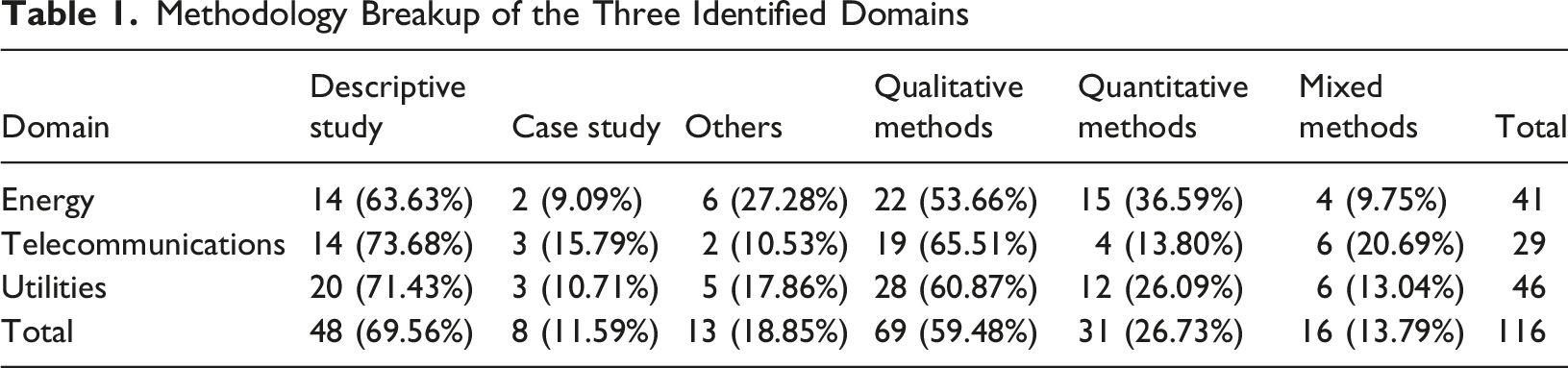
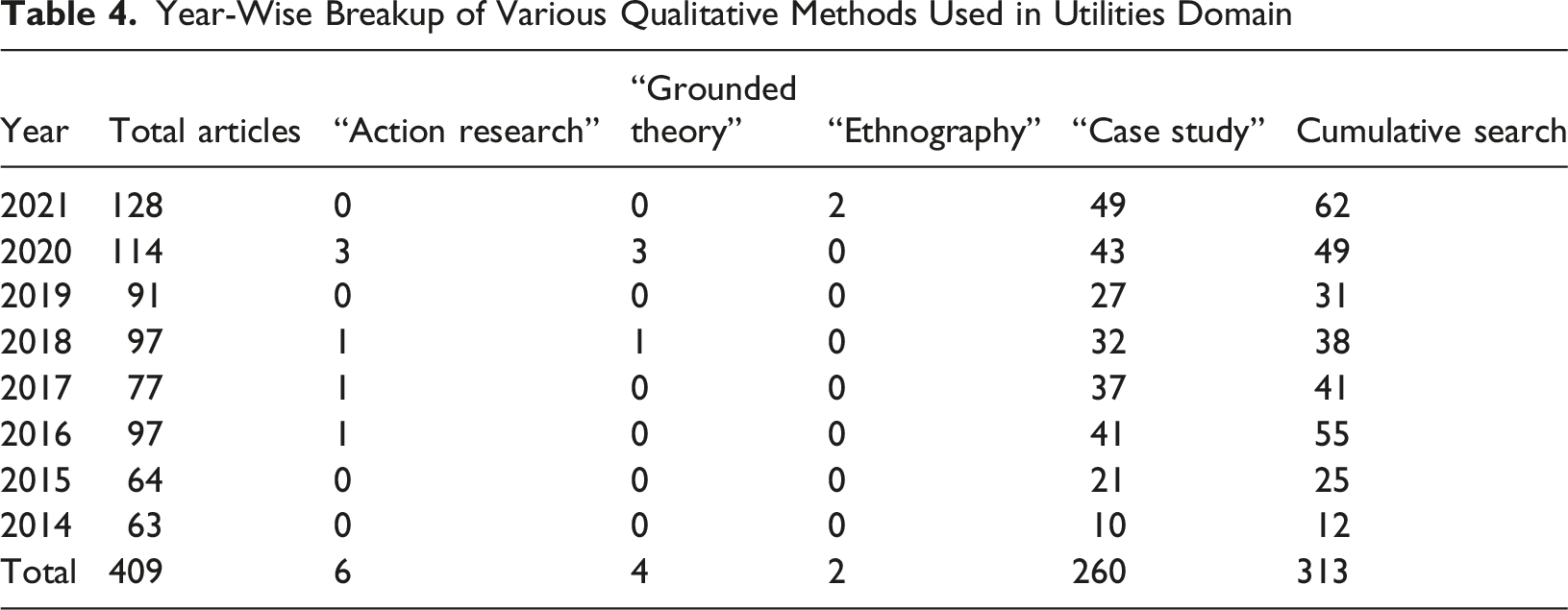
A few critical observations based on the methodological review of ‘regulatory governance’ in respect of three domains are as follows: (i) Although qualitative is the most used approach vis-à-vis quantitative and mixed techniques in the three domains, a breakdown of academic articles reveals that most use descriptive analysis of academic and non-academic literature. Details are given in Table 1. (ii) Out of the articles using a qualitative approach, on average, 69.56% use descriptive analysis of academic and non-academic literature. Details are presented in Table 1. The analysis shows that this practice is most prominent in telecommunications (73.68%), followed by the utilities (71.43%) and the energy domain (63.63%). (iii) The Case study is the second most popular qualitative approach and is most prominent in telecommunications (15.79%), followed by utilities (10.71%) and the energy domain (9.09%). (iv) The Quantitative approach has been adopted by on average 26.73% of the articles, with the highest number of incidences in energy (36.59%), followed by utilities (26.09%) and the telecommunications domain (13.80%). (v) The need for mixed methods in articles related to regulatory governance (13.79%) is a concern. Mixed methods require more rigour vis-à-vis unitary method approaches, and hence their adoption may require better collaboration and conversation between academics and policymakers. Cairney (2015) has suggested that the lack of usage of the mixed methods approach may be a significant barrier to conversations between academics and practitioners. Both have their own structure of language, and a meaningful conversation may need considerable translation. (vi) The usage of powerful qualitative methods like grounded theory, action research, and phenomenology/participant observations in the identified articles is almost non-existent. Direct observation was used in only one article by Peci et al. (2017). The author used mixed methods (archival research, in-depth semi-structured interviews, and direct observation) to explore the process of independent regulation of government-owned utilities in the water supply and sanitation sectors, drawing on the theory of regulation inside the government of Rio de Janeiro. Methodology Breakup of the Three Identified Domains
Use of Qualitative Methods in General
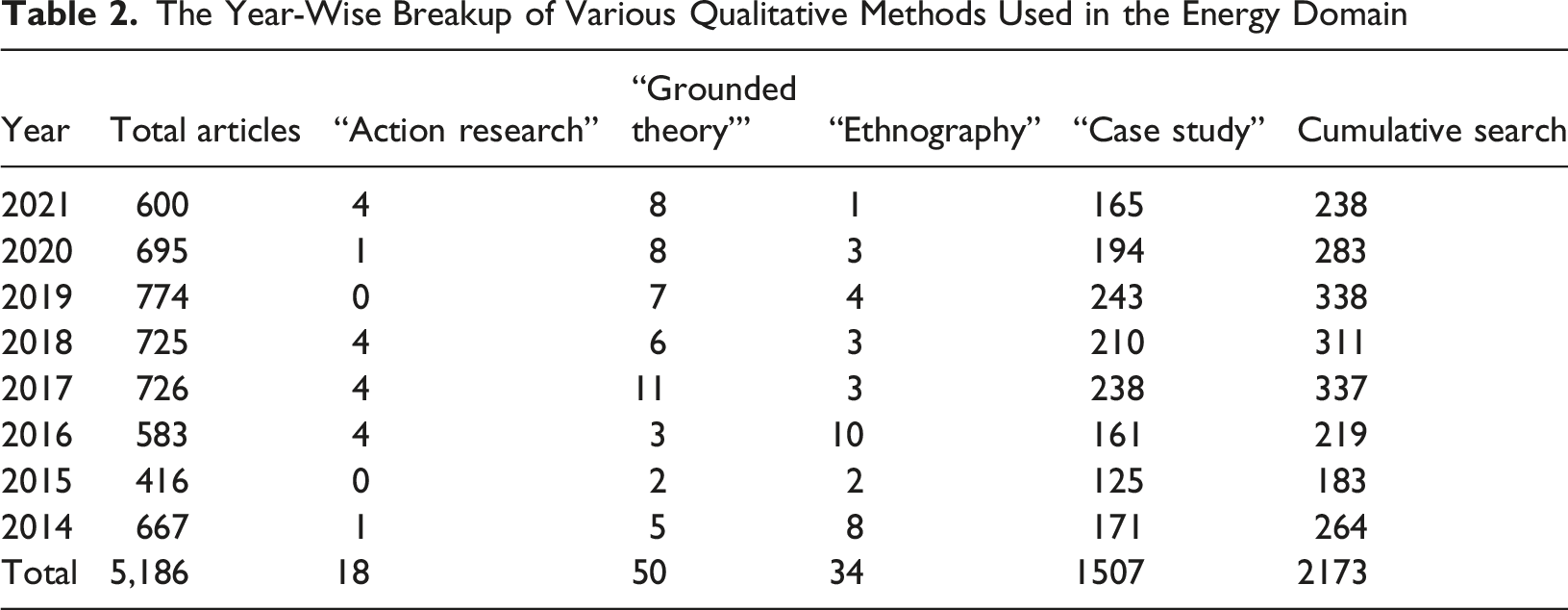
The Year-Wise Breakup of Various Qualitative Methods Used in the Energy Domain
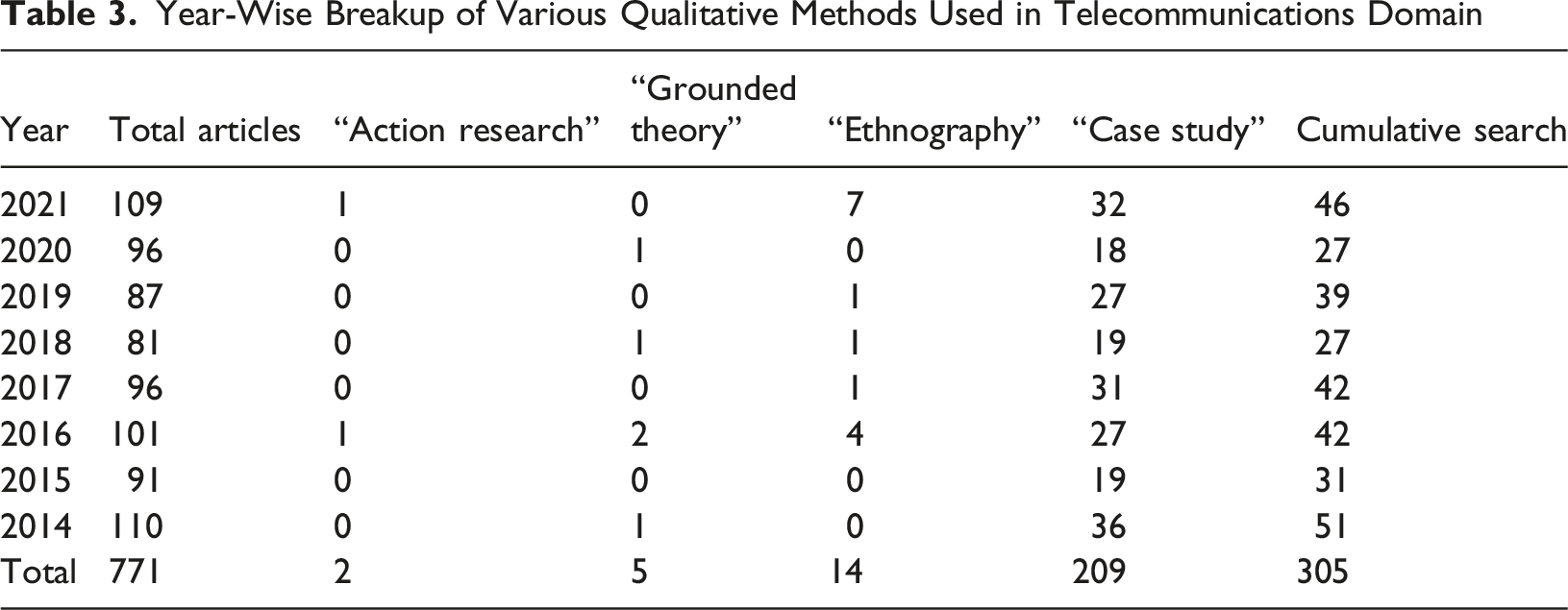
Year-Wise Breakup of Various Qualitative Methods Used in Telecommunications Domain
Year-Wise Breakup of Various Qualitative Methods Used in Utilities Domain
Thematic Review
Use of Various Regulatory Labels in the Three Domains With Effect From 2000

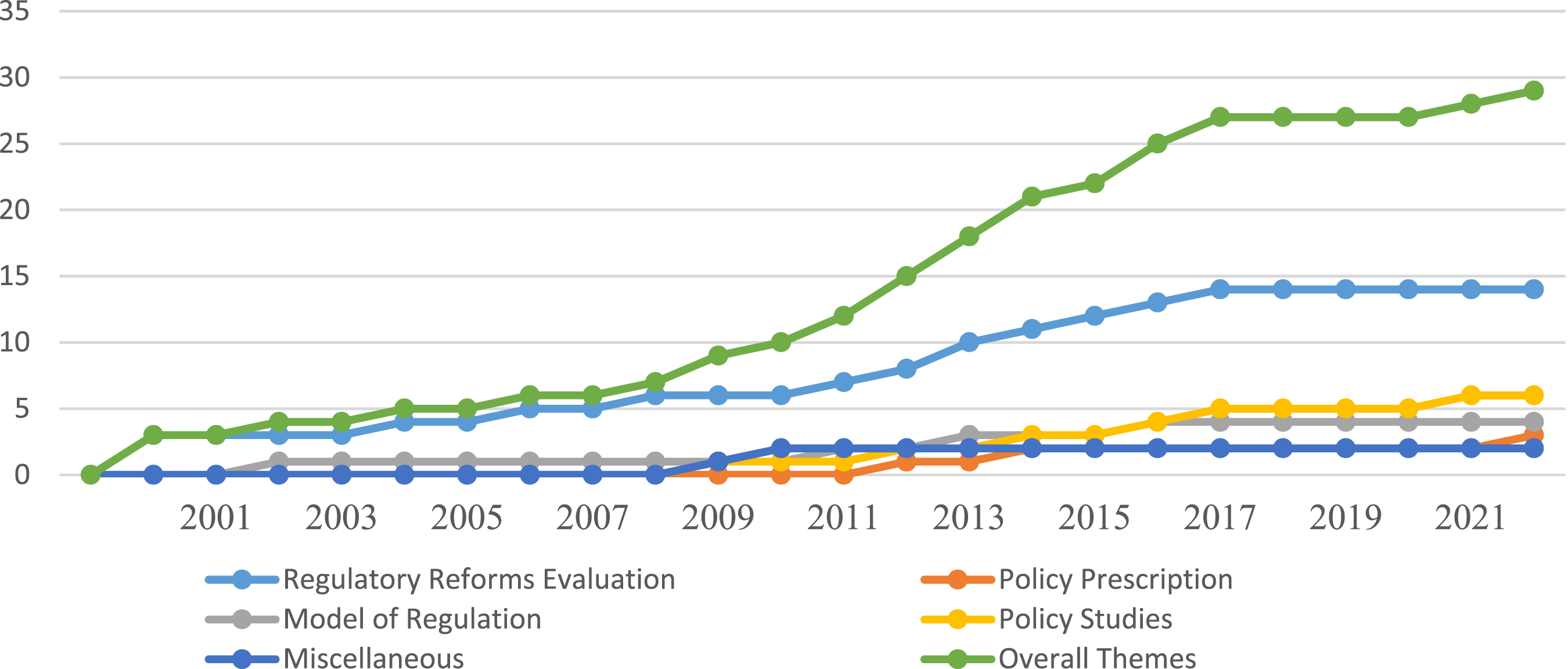
Use (cumulative) of ‘Regulatory Governance’ in the shortlisted domains
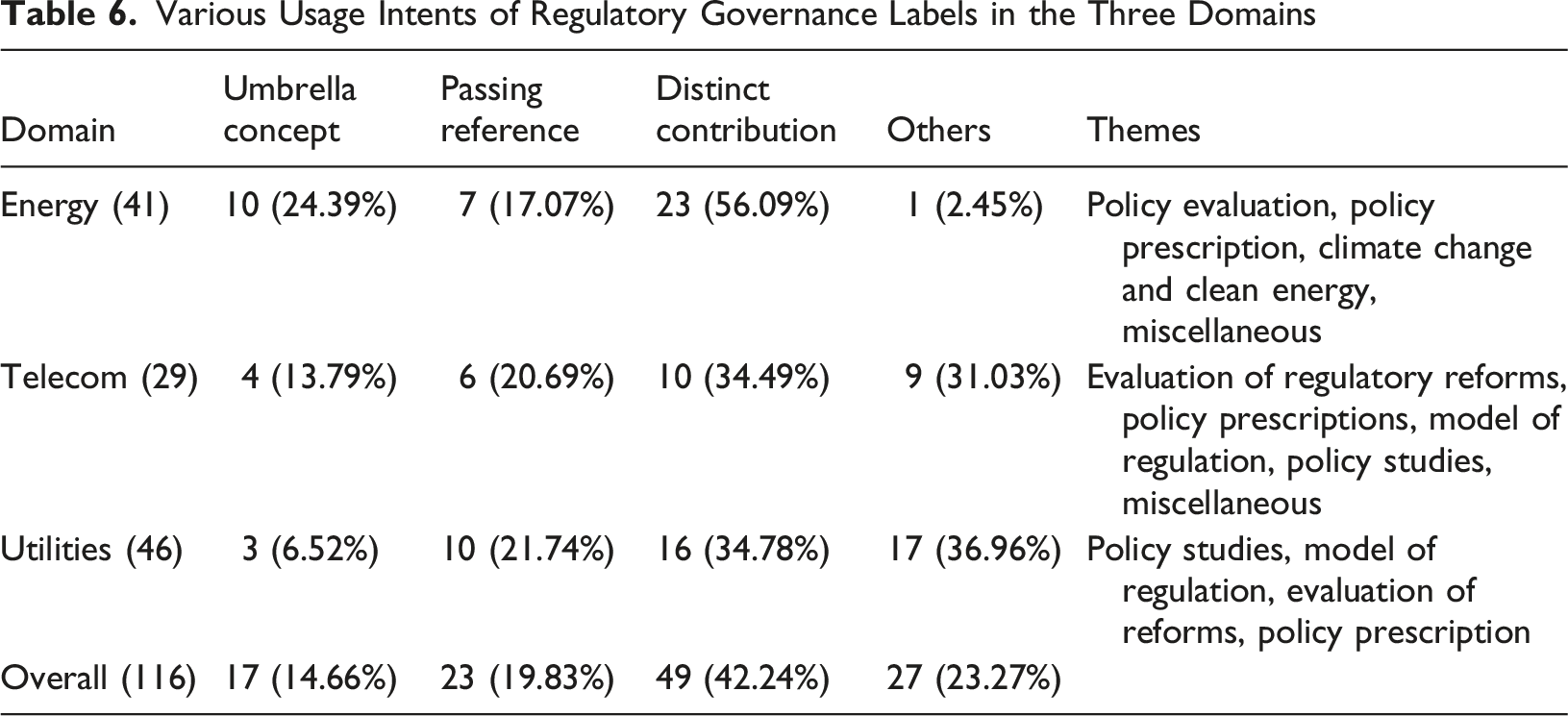
Various Usage Intents of Regulatory Governance Labels in the Three Domains
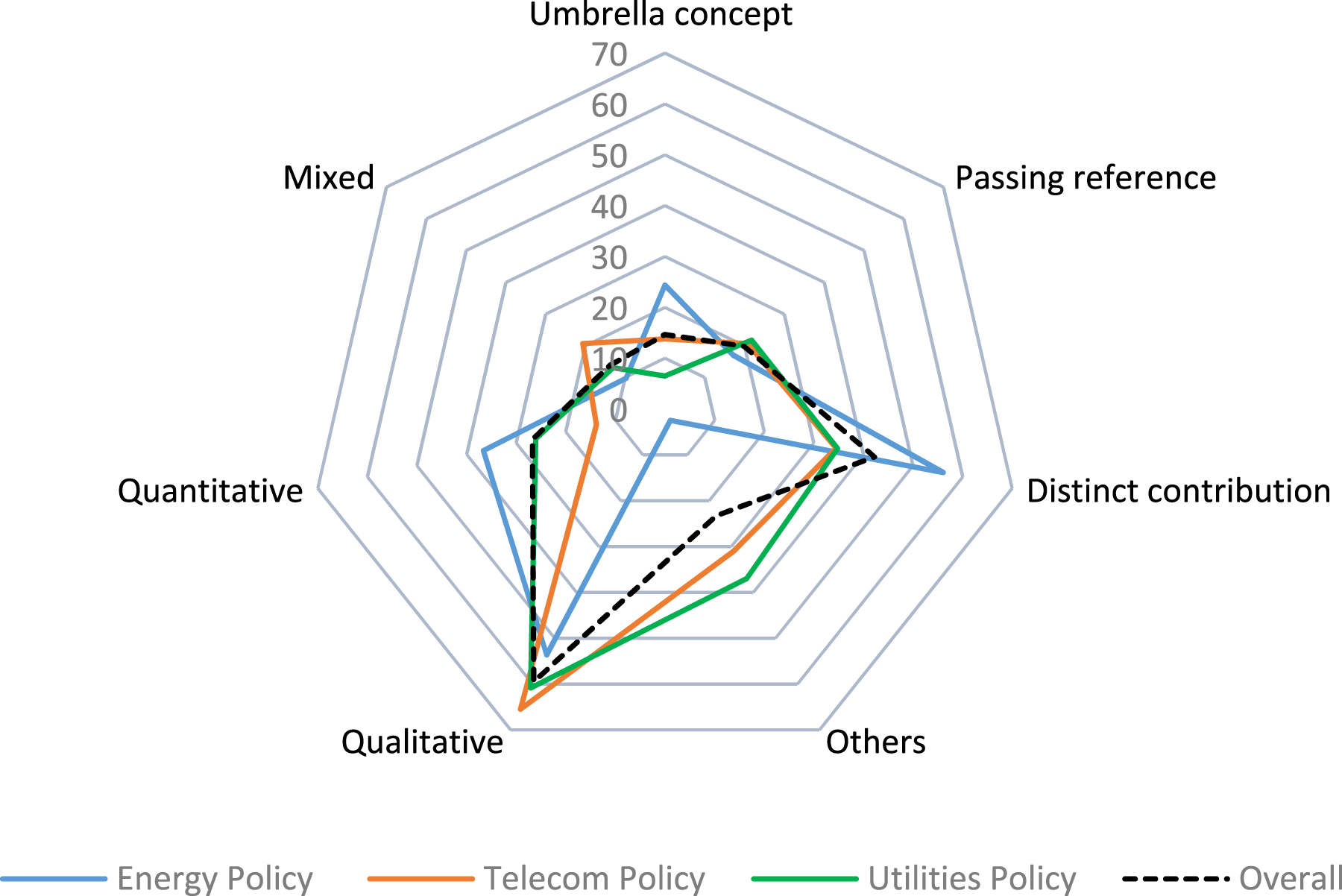
Figures 3 and 4 present the breakup of different themes used in energy and telecommunications domains, respectively, during the last two decades. The themes covered by the academic articles have grown more affluent in the post-2010 period. The themes of policy evaluation and regulatory reform evaluations have dominated the two sectors, whereby the researchers have evaluated the impact of policy changes and regulatory reforms on the performance of the sectors. While policy prescription is the second most popular theme in energy studies, policy studies form the second rung of popular themes in the telecommunications domain. Radar mappings of ‘regulatory governance’ usage and research methodologies are presented in Figure 5. Emerging use of different themes in the energy domain Emerging use of different themes in the telecommunications domain Radar mapping of themes and methodologies
Various characteristics of regulatory governance may be categorized under attributes, mechanisms/instruments (how and why), and outcomes (what). The essential dimension of regulatory governance, along with the connected challenges and failures, is presented in Figure 6. Essential dimensions of ‘regulatory governance’ discovered in the study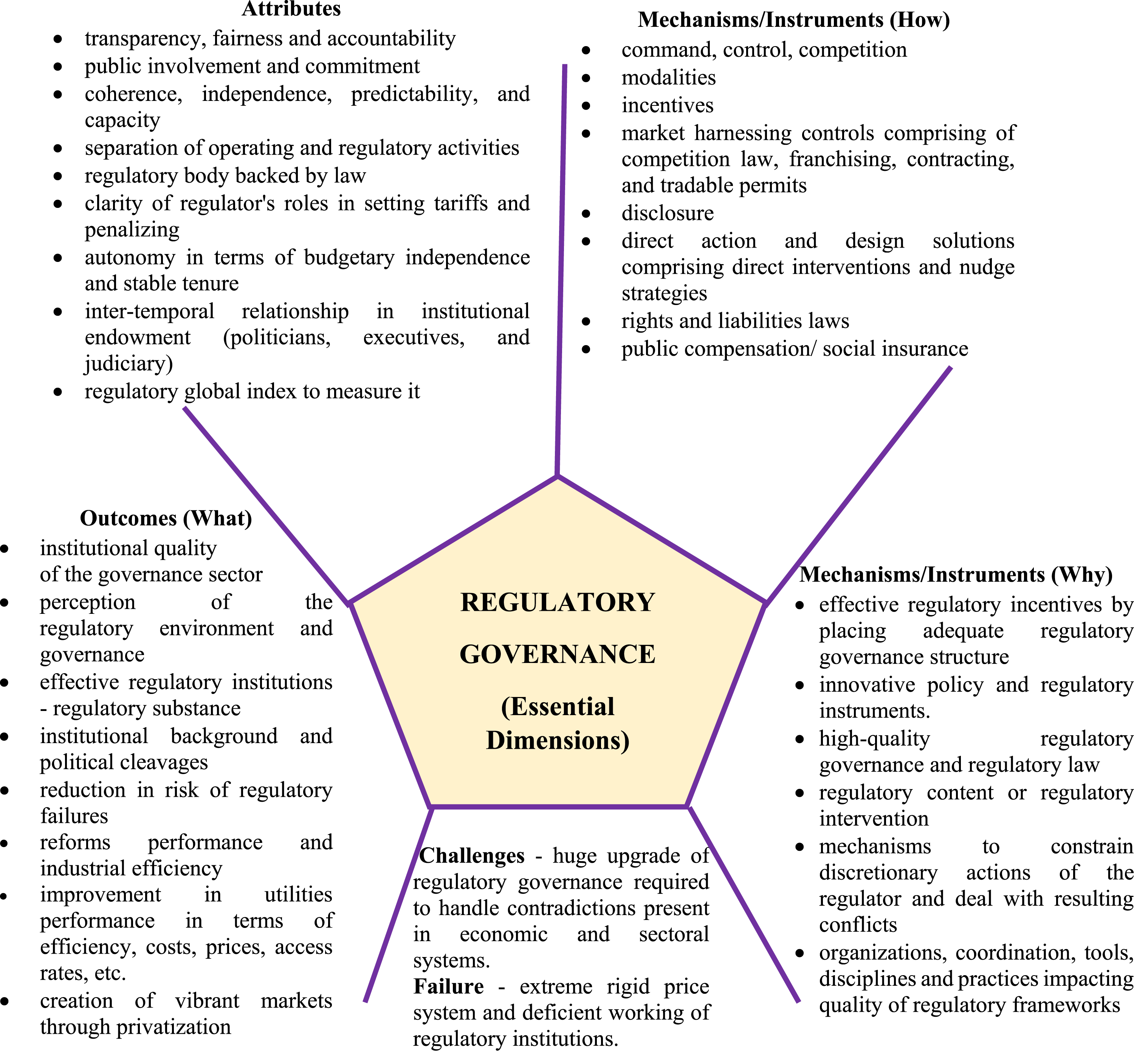
Conclusion and Policy Implications
General Usage of Regulatory Governance
As one of the insights emerging out of this review, regulatory governance may be construed as a policy instrument to ensure the institutional quality of the government, inter alia, characterized by coherence, independence, accountability, transparency, predictability, and capacity. Another insight of this literature review is that a conducive regulatory governance framework positively impacts investment, service quality, cost recovery, and market vibrancy (Callegari et al., 2018; Florêncio, 2016; Kathuria, 2021).
On average, in 14.66% of articles, the authors have used ‘regulatory governance’ as an umbrella concept for sectoral reforms or as a synonym for structural reforms. This figure is highest in the energy domain (24.39%), followed by the telecommunications domain (13.79%) and the utilities domain (6.52%). Similarly, on average, in 19.83% of the articles, the authors have given a passing reference to ‘regulatory governance’. This figure is highest in the utilities domain (21.74%), followed by the telecommunications domain (20.69%) and the energy domain (17.07%). Finally, on average, in 42.24% of the articles, the authors have made a distinct contribution to the concept of the regulatory governance framework. This figure is highest in the energy domain (56.09%), followed by the utilities domain (34.78%) and the telecommunications domain (34.49%).
Usage of Regulatory Governance Themes
The following themes have emerged in the three domains. In the case of the energy domain, most articles may be categorized into five themes: general usage, policy evaluation, policy prescription, climate change and clean energy, and miscellaneous. In the case of the telecommunications domain, most of the articles may be categorized into six themes: general usage, evaluation of regulatory reforms, policy prescriptions, model of regulation, policy studies, and miscellaneous. In the case of the utilities domain, most of the articles may be categorized into five themes: general usage, policy studies, model of regulation, evaluation of reforms, and policy prescription.
Regulatory governance is grounded in the wider theme of “good governance”. It functions around accountability, independence, role clarity, wider participation, transparency, etc. It is the interplay of policy actors in regulatory processes that reduces regulatory failure risks. Quality of regulatory governance is critical for the growth of the ICT sector in developing countries.
Observations on Research Gap
Qualitative research methods are powerful vis-à-vis quantitative research. Qualitative research methods are more suitable for public policy and governance areas where adequate flexibility in data collection and analysis is needed (Stolle, 2023). They are not restrictive, allow usage of non-numerical data, allow speculative investigation, and extend the opportunity, as per the need. Qualitative methods can capture changes in perspectives of the research participants.
The findings emerging from methodological review in this paper are in line with those of Mishra and Kumar (2021) and Hendren et al. (2018). Absence of application of grounded theory, action research, and phenomenology/participant observations in the papers covered under this study is worrisome. Hendren et al. (2018) emphasized that public administration scholars should increasingly use mixed-methods research approaches, as it provides diverse and novel perspectives on complex issues in the public policy arena. Adequate training may improve the quality standards of public policy researchers, thereby enabling them to respond to the growing complexity of research questions comprehensively and systematically.
A careful reading of the methodological perspective discussed in the preceding paragraphs reflects that approximately 40% of the research articles in these domains have systematically used qualitative or mixed research approaches during the last eight years. These numerical figures do not include descriptive, exploratory articles based on the literature review of academic and non-academic articles. Among the qualitative/mixed methods, the case study research approach is the most popular (more than 60%).
Essential Dimensions of Regulatory Governance
The essential dimensions have three broad categories: attributes, mechanisms/instruments (how and why), and outcomes (what). The attributes category refers to the desired attributes of regulatory governance. It consists of transparency, fairness, accountability, coherence, independence/autonomy, capability, predictability, stakeholder participation, backing of law, separation from operation, role clarity, regulatory global index, etc. The mechanisms/instruments category covers the mechanisms or instruments through which regulatory governance operates. It delves into how and why processes that regulatory institutions follow.
The how category covers command and control, incentives, market harnessing control (competition law, franchising, contracting, and tradable permits), disclosure, direct action and design solutions (direct interventions and nudge strategies), rights and liabilities laws, public compensation, and social insurance, etc. While the why dimension covers effective regulatory incentives by placing adequate regulatory governance structure, innovative policy and regulatory instruments, high-quality regulatory governance and regulatory law, regulatory content or regulatory intervention, mechanisms to constrain discretionary actions of the regulator and deal with resulting conflicts, organizations, coordination, tools, disciplines and practices impacting quality of regulatory frameworks.
The outcomes category (what) dimension may be construed as the outcome associated with regulatory governance. It includes - institutional quality of governance, perception of regulatory environment and good governance, effective regulatory institutions (regulatory substance), institutional background and political cleavages, reduction in risk of regulatory failures, reforms performance and industrial efficiency, improvement in utilities performance (in terms of efficiency, costs, prices, access rates, etc.), and creation of vibrant markets through privatization.
Limitations of the Study
The thematic and methodological review outcomes presented in this paper and the inferences drawn from it by the readers may be subject to certain restrictions. The outcomes of this review are governed by the choice made to shortlist the papers and execute the review. The study has focused on relevant regulatory governance ‘research articles’ and ‘short communications’ published from 2000 to 2022 in the three Elsevier journals (namely, energy, telecommunications, and general utilities sector). The review articles, book reviews, and conference information were excluded. The choice of search strings during the search of the publication database (“regulation”, “reform”, “regulatory governance”) and screening of title and abstract (content analysis for relevance on “regulatory governance”) finally shortlisted 116 articles, which were subsequently applied to thematic and methodological reviews.
Future studies may replicate similar thematic and methodological analyses in other journals of the utilities sector. The study may also be replicated by interested scholars for other non-utility sectors. For instance, health, agriculture, education, and environment & forest, etc. The essential dimensions of regulatory governance give a panorama of attributes, mechanisms/instruments (how and why), and outcomes (what) aspects of regulatory governance. Future research may further refine these four dimensions and apply them to study the existing regulatory framework or use them to make existing regulatory governance more agile, responsive, and performance-driven.
Theoretical and Practical Implications
As evident in previous paragraphs, the use of grounded theory, phenomenology, and an action research approach is dismal. The judicious use of these qualitative approaches in the public policy & governance domain, including regulatory governance, may be helpful in the following ways: (i) A paradigm shift may be needed in formulating, implementing, and evaluating public policies based on statistical/quantitative measures. Qualitative methods like grounded theory, action research, and phenomenology/participant observation theory suggest making this paradigm shift possible by generating a valuable and relevant substantive theory. (ii) The qualitative methods can help public policy scholars and practitioners understand social issues and give insight into the social issues that quantitative/statistical averages may not capture. (iii) The academicians find it challenging to understand the working of public policy formulators and implementers. A qualitative approach may help the academic community to understand the native views that these policy practitioners hold (Mishra & Kumar, 2021). This may help them to reduce the gap between rigor and relevance, which exists more prominently in the public policy & governance arena. (iv) The regulatory governance literature in the utilities sector have evolved from the stages of using regulatory governance as a passing reference to viewing regulatory governance as an umbrella concept and has entered the stage where it is widely accepted, supported by theories and models, and is all set to make distinct contributions.
Footnotes

Funding
The authors received no financial support for the research, authorship, and/or publication of this article.
Declaration of Conflicting Interests
The authors declared no potential conflicts of interest with respect to the research, authorship, and/or publication of this article.