






Abstract
The NOURISH:ECE project explored the role of maternal and child health nurses (MCHNs) in early childhood education and care (ECEC) through the design and pilot of professional learning (PL) regarding responsive feeding practices. Eight focus groups were conducted in Queensland (MCHNs, n = 20; educators, n = 29) to explore attitudes regarding partnerships, PL, and feeding practices. Subsequently, a PL module was developed - incorporating videos, group discussion and reflection - and delivered to 64 educators by a MCHN. Educator practices were compared pre- and post-PL. The proportion of meals at which an educator was observed to use responsive feeding practices increased (praise for eating healthy foods, 11.3%–29.2%), but educators were observed pressuring children to eat more often (19.9%–40.1%). NOURISH:ECE provided promising preliminary results regarding PL. However, adequate resourcing and workforce issues in both sectors are barriers to developing effective partnerships across education and health.
Introduction
The importance of consistent and responsive interactions between a child and their adult caregiver in early life cannot be underestimated. The interpersonal relationships that children experience influence lifelong learning, behaviour, and physical and mental health (National Scientific Council on the Developing Child, 2020). Regarding physical development, infants and young children are growing rapidly, and will eat frequent small meals and snacks across the day to meet this demand. This makes mealtimes an opportune time for children and caregivers to engage in health-promoting, supportive and responsive interactions.
‘Feeding practices’ are defined as the techniques that a caregiver employs with a child during eating and feeding such that the child consumes the type and amount of food the caregiver deems appropriate. Importantly, ‘responsive feeding practices’ shift the locus of control to the child and are practices that recognise and respond appropriately to children’s own cues of hunger and fullness at mealtimes (DiSantis et al., 2011). Responsive feeding can be defined as ‘feeding practices that encourage the child to eat autonomously and in response to physiological and developmental needs, which may encourage self-regulation in eating and support cognitive, emotional, and social development’ (Pérez-Escamilla et al., 2021, p. 1). There is substantial evidence to support that responsive parent feeding practices interact with a child’s unique eating behaviour traits to positively influence long-term food preferences, dietary quality and healthy growth trajectory (Shloim et al., 2015). Trials have been conducted in Australasia (Seidler et al., 2020) and up-scaled state-wide programs supporting the use of responsive feeding practices by parents are now delivered by maternal and child health nurses (MCHNs) in New South Wales (NSW Government, 2020) and Victoria (Institute for Physical Activity and Nutrition, 2020).
With more than 45% of children aged 0–5 years attending early education and care (ECEC) services in Australia (Department of Education, 2022), the importance of building educator capability and integrating responsive feeding practices in ECEC is increasingly being recognised. Responsive feeding is specifically mentioned in policy documents at international (World Health Organization, 2021), country-specific (Jackson et al., 2021) and service level. But recent studies suggest that educators may not have the knowledge to fulfil this role (Love et al., 2020; McGuire et al., 2019). ECEC represents a diverse workforce that includes educators with a range of qualifications, spanning vocational and higher education. The minimum entry qualification to work as an assistant educator is an approved certificate III which provides basic information about nutrition, menu planning and food hygiene (Wallace et al., 2017). However, the extent to which responsive feeding is covered in certificate, diploma or Bachelor qualifications is unknown. In addition, it has been noted that policy documents describing responsive feeding in ECEC are most often produced by health-related, rather than education organisations. A recent study in the United States suggested that ‘the use of responsive feeding practices needs to be incorporated into quality measurements and teaching practices endorsed by education-related entities in order to ensure they are understood and implemented in the classroom’ (Malek-Lasater et al., 2022, p. 208). Notably, the Guide to the National Quality Framework (ACECQA, 2020) does not refer to responsive feeding, however, the practice is closely aligned to other process quality factors that are promoted, including child agency, respectful and reciprocal relationships and responsive teaching. The need for health and education entities to work in partnership is widely acknowledged (Skouteris et al., 2017), and recently, Australia’s National Obesity Strategy nominated one example action as ‘establish effective shared leadership across education and health and build professional knowledge and skills to embed…. healthy eating and wellbeing across the learning and education environment’ (Commonwealth of Australia, 2022, p. 45). Consequently, there is a need to explore how health and education professionals can work in partnership.
This paper describes the NOURISH:Early Childhood Education project (NOURISH:ECE), which aimed to investigate the potential role of MCHNs in supporting the promotion of responsive feeding practices in ECEC and had three objectives (i) Conduct focus groups with nurses and educators to assess perceptions, attitudes and preferences regarding partnerships and professional learning (PL); (ii) Based on focus group feedback develop a multi-modal learning module regarding the use of responsive feeding practices; and (iii) Implement and evaluate the effectiveness of the learning module in building educator knowledge and influencing ECEC practices, as well as strengthening local partnerships between educators and maternal and child health nurses within their health service region.
Methods
As each step in this study was iterative, the methods and results corresponding to each objective are presented in turn: phase i) Focus groups; phase ii) Development of multi-modal learning module; and phase iii) Implementation and evaluation of learning module. NOURISH:ECE was conducted from November 2018 to September 2019 with the three phases approved by the Children’s Health Queensland Human Research Ethics Committee, LNR/2018/QCHQ/45429.
A convenience sample of nine centre based ECEC services across North Brisbane and the Sunshine Coast were invited to participate. These services offer care for children aged 6 weeks to 5 years of age from approximately 7 a.m. to 6 p.m. Monday to Friday and provide meals to the children who attend. As services were operated by one large organisation which manages over 300 centre based ECEC services across Queensland, access to the centres was first negotiated with this organisation. Centre Directors were then approached by research staff who explained the study procedures, and Directors decided whether to participate in consultation with their staff. Interested staff were provided with participant information statements and individual educators decided whether to participate in focus groups and/or evaluation.
Directors of child health nursing services in the corresponding local health service areas were approached to obtain permission for their staff to be invited to participate. Interested staff were provided with participant information statements and individual MCHN decided whether to participate in focus groups.
Recognising work demands for both groups of participants, and seeking to minimise disruption within ECEC services, data collection was embedded in everyday practice as much as possible. Written informed consent was obtained from all participants.
Phase i) Focus groups to assess perceptions, attitudes and preferences regarding partnerships and PL
Focus group – methods
The ‘Consolidated Framework for Implementation Research’ (CFIR) (Damschroder et al., 2009) was chosen to guide this phase. The CFIR has been widely used in evaluating the implementation of health programs in heterogeneous settings and consists of a menu of 39 constructs across five domains (CFIR I. Intervention characteristics, CFIR II. Outer setting, CFIR III. Inner setting, CFIR IV. Characteristics of Individuals, CFIR V. Process). These constructs provide a practical guide for systematically assessing potential enablers and barriers to implementation but with sufficient specificity to direct future action. (CFIR Research Team-Center for Clinical Management Research, 2022). It is considered best practice to integrate the CFIR throughout the research process, including study design, data collection and analysis (Kirk et al., 2016).
Educators and MCHNs nurses at participating sites were invited to take part in discipline-specific focus groups. These were facilitated by one of the researchers and held at a mutually agreed time in their usual workplace. Focus group questions (available on request) were developed by the research team to align with all five domains of the CFIR. Briefly, educators were asked about current practices regarding nutrition and feeding, opinions about working with child health nurses and their preferences regarding PL. Focus group facilitators deliberately avoided the use of the terms ‘responsive feeding’ or ‘feeding practices’ unless these were mentioned by participants. Nurses were asked about current services provided to families including advice regarding responsive feeding, opinions about working with ECEC services and support for educators’ PL.
Characteristics of educators participating in focus groups and evaluation, % (n).
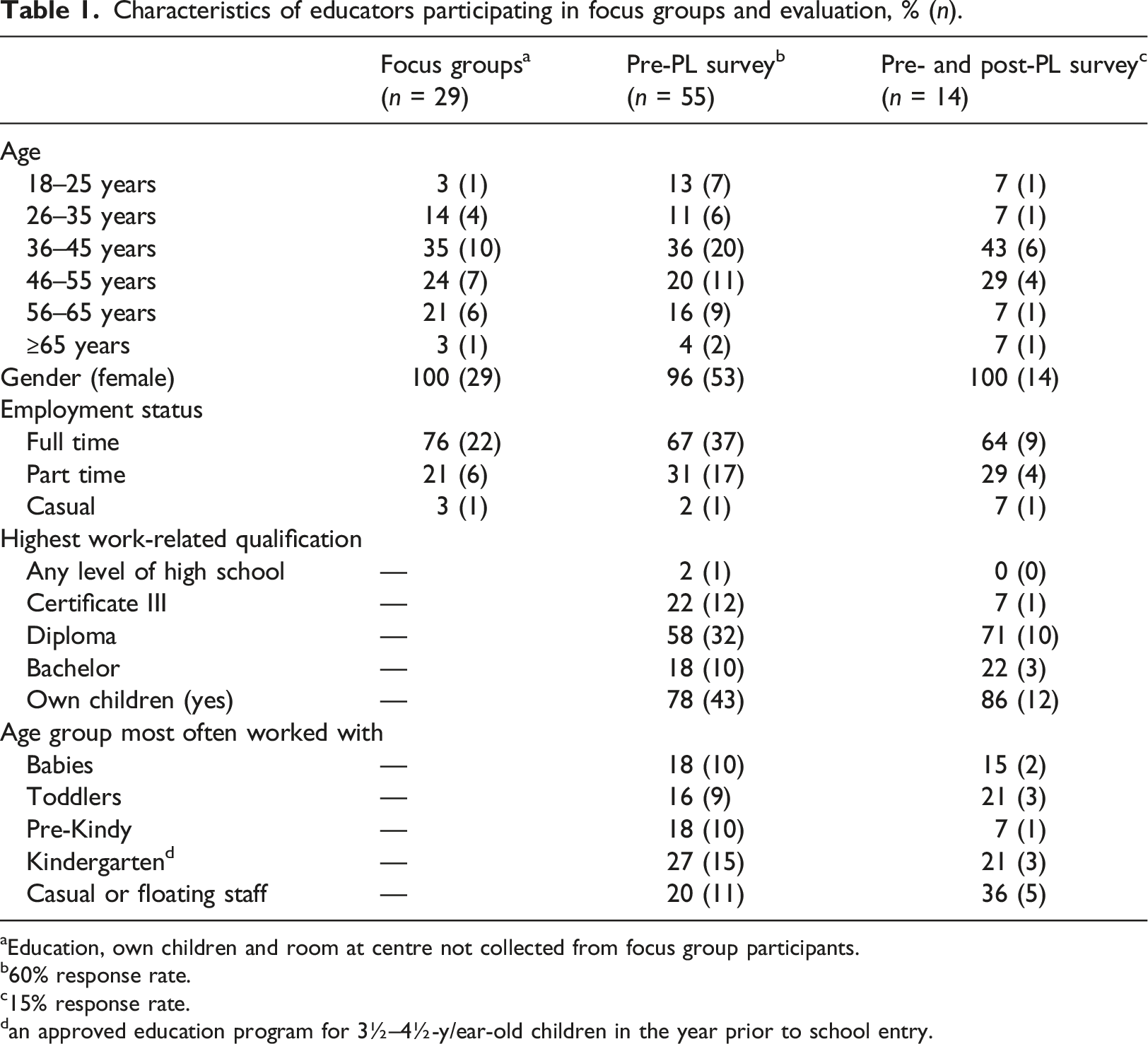
aEducation, own children and room at centre not collected from focus group participants.
b60% response rate.
c15% response rate.
dan approved education program for 3½–4½-y/ear-old children in the year prior to school entry.
Audio recordings of focus groups were transcribed verbatim, and deductively analysed independently by two researchers (RB, KD) using the CFIR constructs as codes. Both researchers are Dietitians, one of whom has worked previously as an early childhood educator. Both have experience conducting research in the ECEC setting and in implementation science. After coding the transcripts independently and categorising findings as barriers or enablers, the researchers met to discuss the analysis. Similar barriers and enablers were identified, but occasionally quotes were categorised under different CFIR constructs. In these cases, RB and KD discussed their reasoning, until a consensus regarding which code to use was reached.
Focus group – results
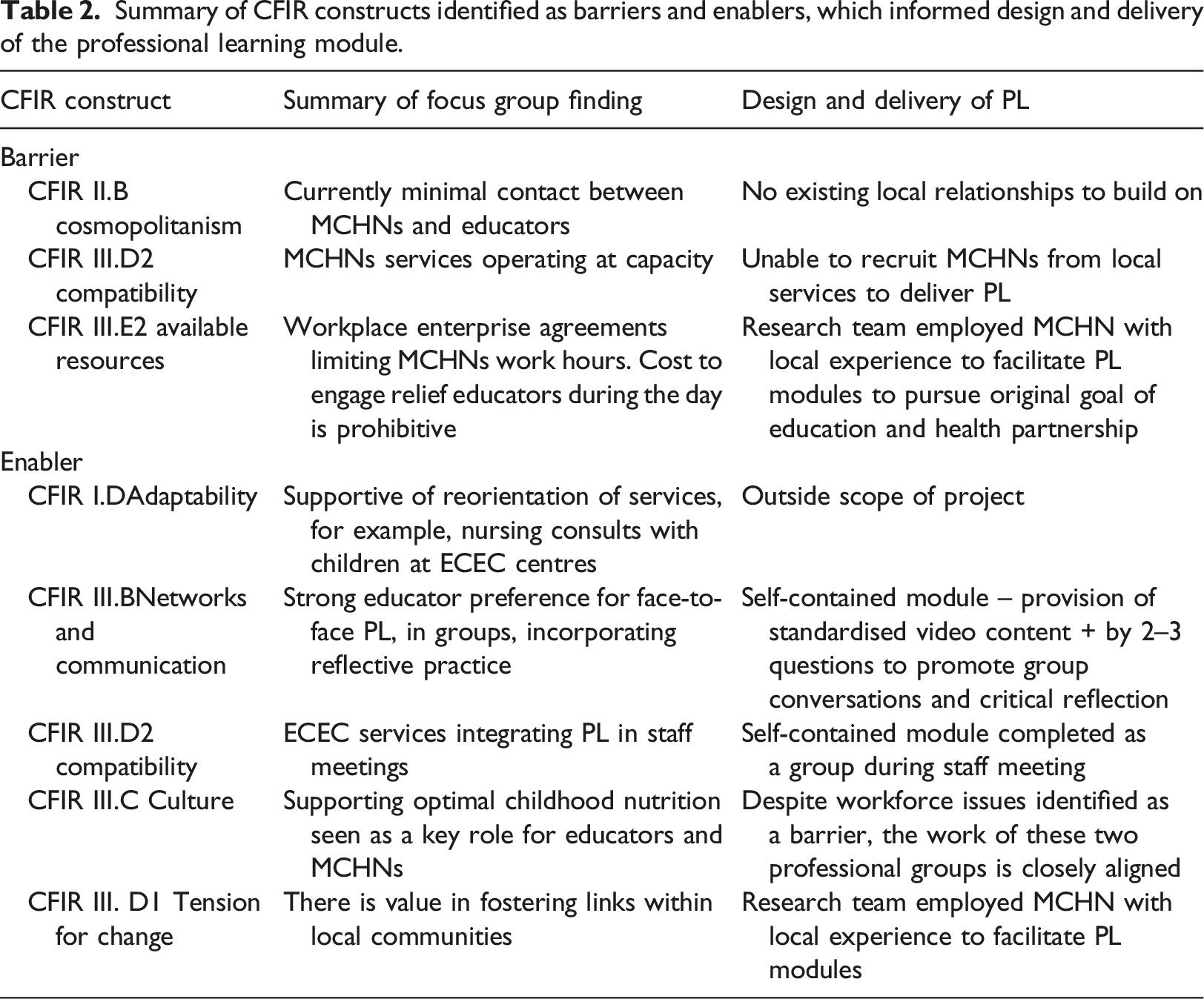
Participants reported minimal contact between MCHNs and educators in their everyday work (CFIR II.B Cosmopolitanism). ‘That’s rare to go into childcare centres. That is not our core business’. MCHN
Interactions were generally limited to one-off talks in which a nurse was invited to speak at a parent seminar. Alternatively, participants recalled a previous personal experience, for example, working in a less populated rural area where providers had close working and personal relationships, or need for information on a specific issue. ‘… years ago, I remember I contacted child health and they sent us an email… (a list of) foods that they recommend introducing at what age and so we handed that information onto the parent’. Educator
All participants saw value in fostering links within local communities (CFIR III. D1 Tension for change) and supporting optimal nutrition in children was seen as a key role for educators and nurses (CFIR III.C Culture). ‘We should have really good partnerships and connections with early childhood’. MCHN ‘It’s very much a place we nurses should be, and as child health nurses, that’s our bread and butter; it’s something we do all the time. I would say that we have got a really good knowledge of the evidence, we’re current, we undertake regular professional development to maintain currency, so I think we are in a very good space to be out there, sharing that information’. Senior MCHN ‘Having a contact with somebody that’s in the field… with all of the knowledge and understanding in the (nutrition) information that’s ever changing, it’s good for us to keep in touch with them’. Educator
Participants agreed parents rely on both nurses and educators for information, consequently partnerships would ensure educators are aware of local services, facilitating timely referral of families in need. MCHNs currently provide group education sessions to parents and suggested this could be modified to become PL for educators. Linking nurses and educators through PL within the ECEC setting would be an opportunity to ensure consistent information is provided to parents. ‘We’re asking about nutrition every time we see (families)’. MCHN ‘Parents are asking us things all the time about (food and nutrition), and we don’t have all the answers. All we can go by is our knowledge or experience working in childcare. But if we had a flyer or card or something to say - contact this person, we work alongside them - I think that would be brilliant’. Educator
Educators expressed a strong preference for face-to-face PL in groups rather than individually and/or online and for the incorporation of reflective practice elements. Educators consistently talked about the advantages of in-person interaction (CFIR III.B Networks and Communication) and were adamant that they did not want another online module to complete on top of existing mandatory training that already needed to be repeated annually. ‘I'm a face-to-face person, I just gloss over most things online… if you have the opportunity for a conversation, you get more out of it’. Educator ‘face-to-face and having conversation… learning through yarning and just discussing stuff’. Educator
Additionally, some centres had chosen to have fewer but longer staff meetings across the year, providing an opportunity to integrate regular PL with business matters (CFIR III. D2 Compatibility).
Though not the focus of NOURISH:ECE, participants suggested reorientation of services, for example, nursing consults at ECEC centres, that would meet the needs of working parents who were unable to visit a child health centre (CFIR I.D Adaptability). ‘If we could say to families, okay, a child health nurse will be here at this day at this time and if you have availability, if you’ve got some questions… come and join in’. Educator ‘If they are working full time, they don’t have the time. Parents don’t have the ability to access our service’. MCHN
A barrier to implementation was that child health services were identified as already operating at capacity and therefore unable to further stretch resources beyond their ‘core’ business (CFIR III. D2 Compatibility). ‘(Working with ECEC centres is) something that we should really do but we are pushed a lot as well for the services that we already run’. MCHN ‘We don’t have the resources to go out to the centres’ MCHN ‘We are aware that we’ve got that need for our families that is currently not being met (but) we can’t go to childcare centres. I really like that model - offering it to childcare centres if they are interested - but that’s a service for parents. It’s not our… core business… If we assist with the educators that may well be passed onto parents’ MCHN ‘We can definitely be involved in developing modules or doing some online training… The issue about having face to face is, what would that look like, how often would that be, what do we have to stop doing to do that?’ Senior MCHN
Nurses saw their core business as working with parents rather than directly with children and wondered how they could effectively impart information to families if only the child was present for the consultation. In addition, participants felt it was unclear when the two professional groups could come together for PL activities. Nurses reported not being able to work outside normal business hours due to workplace enterprise agreements, while educators typically are with children from 7 a.m. to 6 p.m. The ability to engage relief educators and the associated cost to enable several educators to attend PL during the day, would be prohibitive (CFIR III.E2 Available Resources).
Phase ii) Development of multi-modal learning module regarding the use of responsive feeding practices
After completion of the focus groups in phase i), a baseline quantitative assessment of existing centre routines and practices was conducted. The purpose of this was two-fold, first, to inform the design of the learning module to ensure it fitted with existing workflows and systems (CFIR III.D2 Compatibility), and second, act as a baseline to evaluate change in practices following attendance at the professional learning. Trained research staff visited each centre over 1–2 days and directly observed each mealtime (morning tea, lunch and afternoon tea) within each room (Babies, Toddlers, Pre-Kindy and Kindergarten). Data was collected on the use of nine different feeding practices using nutrition components of the ‘Environment and Policy Assessment and Observation’ (EPAO-17) tool (Ward et al., 2008) which included four responsive, and five non-responsive practices. In addition, educators were invited to complete an online survey which collected demographic characteristics and self-reported feeding practices using items from the Childcare Food and Activity Practices Questionnaire (Gubbels et al., 2015). The method has previously been published (Byrne et al., 2022).
Summary of CFIR constructs identified as barriers and enablers, which informed design and delivery of the professional learning module.
Format and timing of the ‘NOURISH:Early Childhood Education’ facilitated professional learning module.
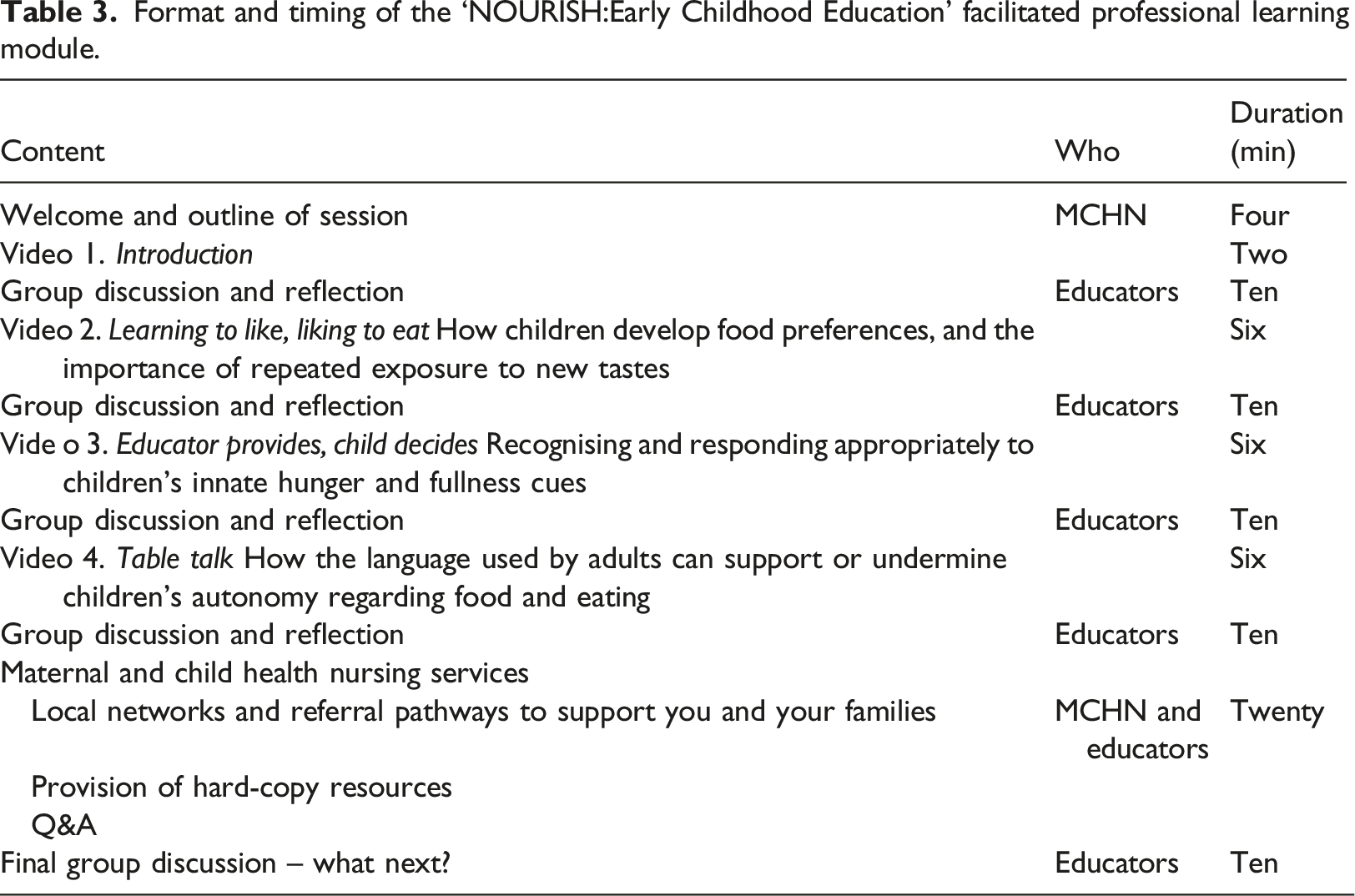
The module was positioned as facilitated professional learning, which could be completed by any educator regardless of previous knowledge or understanding of nutrition. A MCHN could be present, to facilitate discussion and provide information related to local service availability and referral pathways, that educators could then use in their discussions with parents. The final group discussion included time to reflect on alignment with the National Quality Standards and to update the service’s Quality Improvement Plan, identifying current strengths and areas for improvement in responsive feeding practices.
Phase iii) Implementation and evaluation of learning module
Implementation and evaluation – methods
The nine original centres were approached and invited to participate in this phase. Six centre directors agreed, four of whom had participated in the focus groups. As a result, the learning module was facilitated by a MCHN (employed as part of the research team) at each of the six centres, between June and September 2019, to a total of 64 educators. This occurred during the usual centre staff meeting, and all educators were welcome to engage with the module, regardless of whether they were participating in the research evaluation.
The measurement of observed and self-reported feeding practices was repeated using the same methods as per baseline assessment. The post-PL online survey contained additional items regarding satisfaction with the intervention. The module was evaluated by comparing prevalence of feeding practices pre- and post-PL.
Implementation and evaluation – results
Observed feeding practices
Proportion of mealtimes at which the feeding practice was observed pre- and post-conduct of the professional learning (PL) module (N=6 centres).
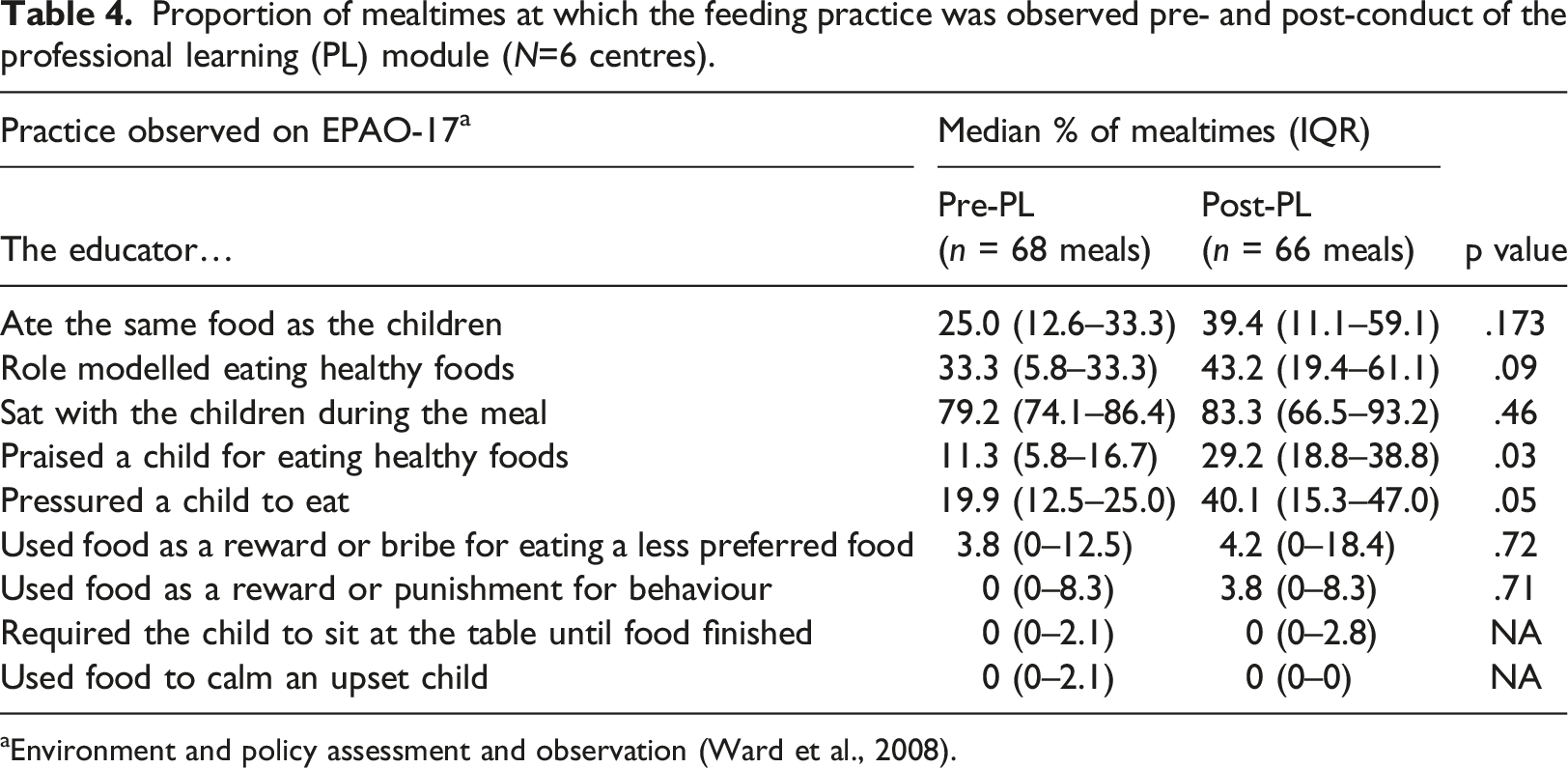
aEnvironment and policy assessment and observation (Ward et al., 2008).
A significant change was observed for two feeding practices. The proportion of meals at which an educator was observed to praise a child for eating healthy foods increased from 11.3% pre-PL to 29.2% post-PL. However, an increase was also seen in the proportion of mealtimes at which a child was pressured to eat – from 19.9 to 40.1%. The occurrence of the remaining four non-responsive practices that were assessed was minimal prior to the PL, so there was effectively no change after the module.
Self-report feeding practices
Factor scores for self-reported feeding practices pre- and post-conduct of the professional learning (PL) module (N = 6 centres).
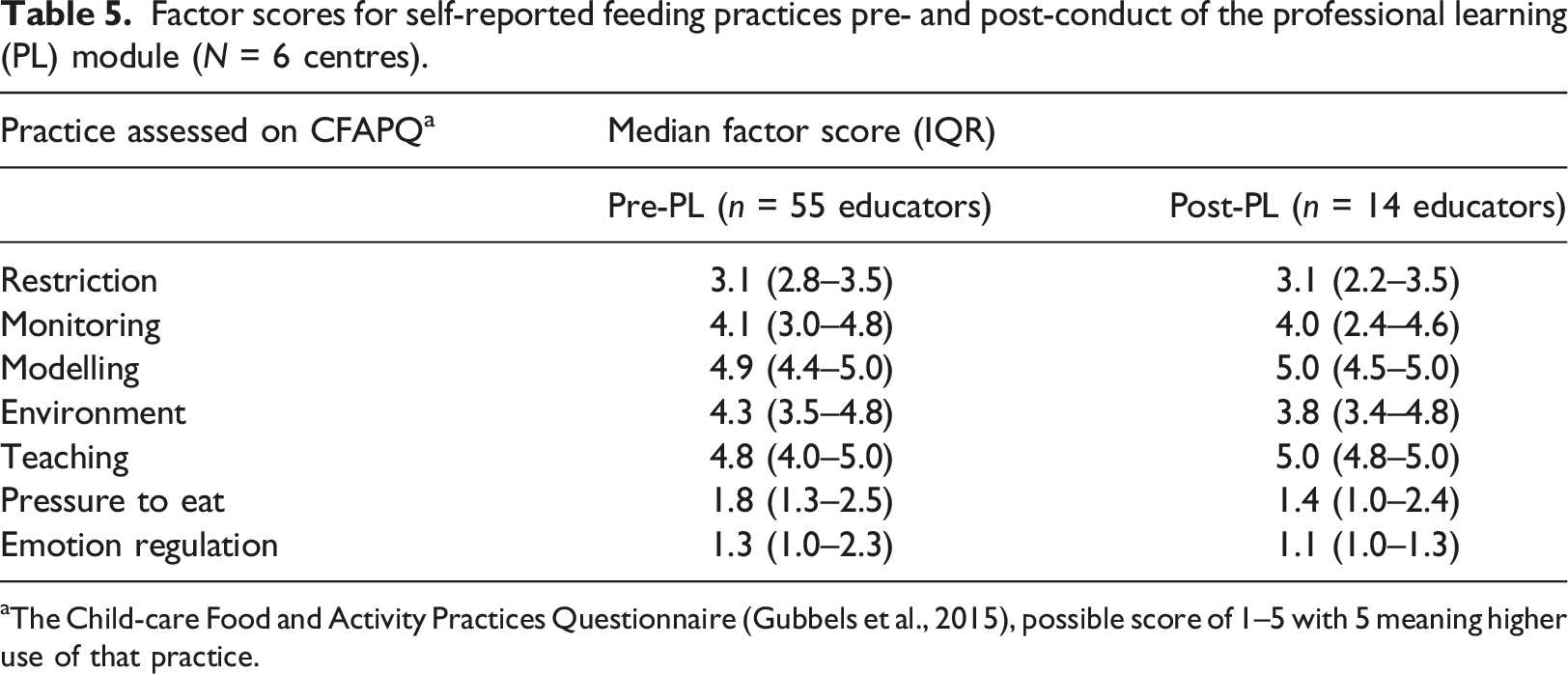
aThe Child-care Food and Activity Practices Questionnaire (Gubbels et al., 2015), possible score of 1–5 with 5 meaning higher use of that practice.
Discussion
The NOURISH:ECE project explored the role of MCHNs in supporting the implementation of responsive feeding practices in ECEC through the design and pilot of a professional learning module for educators.
Focus group participants saw the value of developing close working partnerships to better support the nutrition needs of the families that access their services. However, they perceived considerable barriers to doing so. Most notably, the current workloads of both educators and MCHNs would make it difficult to introduce new models of service provision. Findings from the focus groups revealed that it was not possible to fulfil part of the project’s third objective, that is, strengthening local partnerships between educators and MCHNs within their health service region. The original intention was that each PL module would be delivered by the MCHN that worked directly with the families in the same suburb where the ECEC centre was located, with an honorarium included within the project budget. But given the structural barriers identified in phase i), namely, MCHNs are unable to work outside usual business hours, and staff meetings are held after-hours when children have gone home – a MCHN was employed as part of the project team to facilitate the modules.
However, most objectives were achieved, that is, the successful development, implementation, and evaluation of a professional learning module regarding the use of responsive feeding practices. Within the services participating in NOURISH:ECE there were already high levels of responsive feeding practices amongst educators – both observed and self-reported – prior to the PL Similarly, occurrence of non-responsive practices such as using food as a reward for good behaviour or using food to soothe a child’s emotions was very low, so there was effectively limited room for improvement after the PL. While these results make an evaluation study more challenging, the findings are extremely encouraging. Other Australian studies have documented barriers to responsive feeding in ECEC, including competing priorities at the service level, whereby health eating policy becomes a lower priority in the face of other concerns, and a lack of support from parents (Love et al., 2020; McGuire et al., 2019; Wolfenden et al., 2015). In a study of 10 ECEC centres in South-East Queensland, in which half of the centres provided food, educators used non-responsive practices more frequently in centres where food was provided by families (Searle et al., 2022), which may be an unintended consequence of parent expectations placed upon educators to ensure children eat all the food provided in their lunchbox. All centres participating in the NOURISH:ECE study provided food for the children, which is one potential explanation for the lower levels of non-responsive feeding practices seen in this sample.
There was one exception. Educators were observed pressuring children to eat more often after the professional learning, with an increase from 19.9% to 40.1% during mealtimes. These results were counter-intuitive with pressure to eat being classified as a non-responsive feeding practice that was defined and discouraged during the NOURISH:ECE professional learning module. The reason for this is unknown, but further research into how educators conceptualise and use practices at mealtimes could provide insight into this finding. Pressure to eat may be overt ‘drink all your milk before you leave the table’, or subtle ‘c’mon, eat up’. What one adult might perceive as encouraging a child to eat, may be defined as pressure to eat within an observational coding scheme such as the EPAO-17 (The Children's Healthy Weight Research group, 2018). Similarly, implementing strategies to ensure a child eats ‘healthy food’ such as vegetables, may be considered acceptable (or even perceived as desirable when an external research team are observing meals at a centre), but defined as pressure or coercion in the feeding practices literature (Vaughn et al., 2016).
Positive changes were seen amongst other feeding practices after the NOURISH:ECE PL module. There was a significant increase in the percentage of mealtimes where educators were observed to give verbal praise for eating healthy food (11.3%–29.2%). There also appeared to be higher levels of role modelling – represented by an increase in proportion of educators sitting with the children at mealtimes, eating the same food; and enthusiastic role modelling of eating healthy foods, for example, ‘this orange carrot stick is super crunchy and delicious!’; however, these differences were not statistically significant.
The intention was to also compare self-reported practices, pre- and post-engagement in professional learning; however, the response rate on the post-questionnaire was poor (n = 55 vs. n = 14). While it is not known why this was the case, the impact of nutrition interventions in ECEC usually declines after researchers’ ‘leave’ (Matwiejczyk et al., 2018). It may have been that participants perceived the program as finished and saw no value in completing the post-questionnaire. Staff were provided with a certificate of completion after the PL to use as evidence of their ongoing learning but offering an incentive to complete both questionnaires may have improved response rates. A key component of this project was that educator perspectives were taken into account in the design of the learning module, but end-user perspectives are considered less-often when determining how to evaluate research (Moores et al., 2017).
There are two published examples of interventions delivered in ECEC by MCHNs, both conducted in the USA. Both were complex interventions, occurring over long periods and covering multiple health-related topics, not only responsive feeding. In the first (Alkon et al., 2014), MCHNs were trained as ‘childcare health consultants’ and delivered workshops to educators, cooks, and parents on nutrition and physical activity across 37 ECEC providers. MCHNs conducted onsite-consultations (observing the environment, negotiating solutions) and worked with Directors to write or update centre policies. This 7-month trial evaluated change in educator practices, also using the EPAO-17 (Ward et al., 2008), however no change was observed across the eight practices assessed. The second intervention aimed to determine if integration of the ‘Healthy Apple Program’ into routine public health nursing services significantly increased the number of nutrition and physical activity best practices adopted by ECEC centres (Stookey et al., 2017). This study was conducted over 5 years and evaluated impact on child growth outcomes. The program included tailored workshops for educators, individualised technical assistance for ECEC centres as well as provision of self-assessment materials. MCHNs also interacted directly with children, providing nutrition education during ‘circle time’ as well as hearing, vision, dental, and growth screenings and referrals. Use of responsive feeding practices was not assessed in that study.
Strengths and limitations
NOURISH:ECE used an iterative design, informed by an implementation science framework (CFIR) (Damschroder et al., 2009) to ensure that the resulting PL fit within existing workflows and structures, and met the needs of educators.
This was a convenience sample, and the small number of participating centres means that results of the statistical analysis should be interpreted cautiously. The duration of funding for this project was 12 months, in which time the research team conducted focus groups, designed the PL and delivered the modules. For pragmatic reasons a simple pre-post comparison of data was chosen for evaluation. There are limitations to this method, and ideally the module should be tested again in appropriately designed and powered randomised controlled trial, including adequate numbers of services that provide food, as well as centres where food is provided by families.
While it has been used in several Australian studies, there are limitations to the use of the EPAO-17 (Barnes et al., 2021; Byrne et al., 2022; Searle et al., 2022). There are no questionnaires with good evidence of validity and reliability to assess feeding practices in the Australian ECEC setting. There is a need to develop measures unique to Australian settings and regulatory requirements, particularly tools that are sensitive to assess change in the constructs covered in the videos, namely, ‘Learning to like, liking to eat’, ‘Educator provides, child decides’ and ‘Table talk’.
Future studies could assess the impact of PL on feeding practices used by educators in family day care, though the design and delivery would need to be modified to suit their unique circumstances, including caring for children across multiple age groups simultaneously, and lack of opportunities for group PL.
While recognising the present challenges associated with face-to-face PL due to the COVID-19 pandemic, educators in this study expressed a strong preference for PL as a team activity rather than individual and/or online learning. The rationale being that this more easily enables professional conversations and collaborative critical reflection and supports the development of relationships and partnerships with local services. Further attention could be given to online pedagogies that actively facilitate learner interaction and critical reflection within groups.
Finally, given the workforce issues identified in phase i) of NOURISH:ECE are not easily overcome, future research could investigate the effectiveness of the learning module when it is facilitated by an educational leader at a centre due to no MCHN being available.
Conclusion
While not explicit in current ECEC policy, responsive feeding practices align with the NQF focus on promoting child agency, responsive teaching practices and collaborative partnerships that support holistic approaches to learning, development and wellbeing. NOURISH:ECE identified several barriers to the development of effective partnerships across early education and health, including adequate resourcing and current workforce challenges in both sectors. The pilot PL module was well accepted, but the immediate influence on feeding practices was not always as expected. Further studies are needed to look at the long-term impact of interactive PL, delivered by MCHN and/or Educational Leaders within ECEC services. Ideally, this would be a collaborative activity, leveraging the expertise of both partners and strengthening the connection between MCHN and ECEC services within local communities. The study highlights barriers and enablers to strengthen collaboration and integrated approaches to improve child outcomes, with policy and funding implications.
Footnotes
Acknowledgements
The authors acknowledge the First Nations owners of the land on which this research was conducted, the Turrbal, Yugara and Gubbi peoples. We acknowledge the support of Alison Evans, Dr. Pam Spall, and Dr. Elizabeth Martin; Andrew Resetti from Children’s Health Queensland; and our maternal and child health nurse Catherine Armstrong. A sincere thank you to the Directors and Educators who participated, for giving so generously of your time.
Authors’contribution
All authors had input into the design and conduct of this study. R.B., K.B. and K.D. completed data collection and analysis. R.B. drafted the manuscript. All authors contributed to the writing of the manuscript and approved the final version.
Declaration of conflicting interests
The author(s) declared the following potential conflicts of interest with respect to the research, authorship, and/or publication of this article:Funding for this grant round was provided to the Children’s Hospital Foundation via a philanthropic donation from Woolworths. Applications for funding were evaluated independently by the Research Grants Committee of the Children’s Hospital Foundation. Woolworths did not have input into the awarding of funds or the design and conduct of this research.
Funding
The author(s) disclosed receipt of the following financial support for the research, authorship, and/or publication of this article: This research was funded by the Children’s Hospital Foundation (WWHSR0052018) in the 2018 Woolworths Nutrition-Related Health Services Research Grant Round. The Children’s Hospital Foundation had no role in the design, analysis or writing of this article.
