






Abstract
This article examines Chinese international students’ (CISs’) participation in Australian party politics and election campaigns under the prevailing “China panic” climate that problematises Chinese presence in public life. As one of the first empirical studies to explore CISs’ participation in party politics and elections in a host society, it advances a novel understanding of migrant integration by analysing how temporary migrants without voting rights relate to democratic institutions. Grounded in integration theory and drawing on thirty semi-structured interviews, the study demonstrates how Chinese co-ethnic enclaves, coupled with Australian political parties’ pragmatic efforts to expand their support base, have jointly removed social boundaries and barriers to CISs’ structural entry into electoral politics. Through their engagement, CISs have developed new social networks and learned to navigate the cultural practices and values underpinning democratic elections. Yet, their attitudes towards these practices remain diverse, reflecting a heterogeneity of CISs whose political behaviour embodies both adaptation and critical distance. The findings offer new insights into temporary migrants’ political integration within liberal democracies.
Introduction
Since the twenty-first century, China has emerged as one of the major sources of international students worldwide, a trend underpinned by the country's sustained economic growth, expanding middle class, and emphasis on education as a pathway to social mobility and global competence. Chinese students now constitute a substantial share of the international student populations in major host countries, including the United States, the United Kingdom, Australia, and Canada.
A considerable body of scholarship has examined the integration of Chinese international students (CISs) into host societies. Attributed to the rapid transformation of the social environment in which these young people were raised – shaped by shifting socio-economic conditions and evolving cultural norms – this research agenda has highlighted the heterogeneity of contemporary CISs and its influence on their processes of integration (Guo and Liu, 2025; Heng, 2020; Ma, 2020; Thøgersen and Wu, 2016). Newer studies tend to investigate CISs’ socialisation into mainstream political values and discourses of host societies or their involvement in student politics on university campuses (Brophy, 2021; Gao, 2021; Guo, 2025b; Tao, 2025). Yet, research on how CISs integrate into host societies through political participation remains in its infancy, with many areas still requiring systematic scholarly investigation. In particular, the ways in which CISs engage with local political communities and gain access to formal political institutions – such as multi-party politics and democratic elections – have received limited academic attention.
In this study, we examine CISs volunteerism in party politics and election campaigns as a form of political integration into the host society, providing access to Australia's core political institutions. CISs’ non-citizen status and temporary residency often position them at the margins of local political communities, and the prevailing political climate, shaped by concerns over Chinese interference, reinforces social barriers. However, our findings, based on integration theory from migration studies and semi-structured interviews with thirty CISs who participated in Australian political campaigns, reveal evidence of mutual willingness to engage. Australian political parties actively recruit CISs, and CISs themselves are motivated to engage in local electoral processes. This study firstly investigates how boundaries and barriers are navigated or mitigated and what factors have facilitated CISs’ involvement. It then examines the extent to which non-voter migrants’ participation in party politics and election campaigns can serve as a catalyst for further social and cultural integration. The former is reflected in the establishment, consolidation, and, in some cases, withdrawal of CISs’ connections with local political communities. The latter refers to their engagement with the routinised institutional practices of election campaigning and their varied responses to democratic norms that underpin Australian party competition and electoral politics.
Migrant Integration and Chinese International Students in Australia
Within migration studies, integration is generally understood as a multidimensional process encompassing newcomers’ socio-economic engagement and the development of shared relations, values, and practices in the host society (Ager and Strang, 2008; Wessendorf and Phillimore, 2018). A comprehensive framework distinguishes four domains: structural, social, cultural and identificational integration (Heckmann and Schnapper, 2003). Structural integration refers to migrants’ acquisition of rights and access to core institutions such as employment, education, housing, healthcare, and political participation (Alba and Nee, 2005; Hochman, 2011). Social integration concerns the private relations, networks, and participation in community life that migrants establish (Wessendorf and Phillimore, 2018). Cultural integration refers to the process through which migrants adopt elements of the host society's culture while often retaining aspects of their original cultural background. The extent of this integration varies, ranging from the adoption of cultural practices at the behavioural level to the internalisation of norms and values at the attitudinal level (Berry, 2005). Identificational integration relates to migrants’ subjective sense of belonging to the settlement society, including national, ethnic, or multiple forms of social identification (Heckmann and Schnapper, 2003).
Although analytically distinct, these forms of integration often are intertwined and interact in practice. Structural integration emphasises measurable outcomes in the socio-economic and civic domains, underscoring the need for systemic inclusion and the removal of institutional barriers (Heckmann and Schnapper, 2003). Social integration can mediate between migrants and host-society institutions, as networks often facilitate access to employment, housing, education, or key information (Ager and Strang, 2008; Vermeulen and Penninx, 2000). Cultural integration – such as learning the local language – can, in turn, strengthen social ties and enable wider participation. Engagement with institutions and communities may also stimulate cultural, social, or identificational integration. This process is open-ended and dynamic, producing cognitive, behavioural, and attitudinal change, stronger networks, and a deeper sense of belonging. Conversely, negative experiences may result in alienation or disintegration (Berry, 2005; Heckmann and Schnapper, 2003). Thus, migrant integration is best understood as a fluid and evolving process.
Current migration literature highlights that integration is shaped by unequal power dynamics and social positioning, which influence migrants’ access to resources, opportunities, and full membership in host societies (Phillimore et al., 2024). Approaches based solely on rigid assimilation or one-sided migrant adaptation undermine genuine civic participation and risk producing social tensions. Instead, integration must be understood as a two-way process of mutual adaptation and reciprocity between migrants and receiving societies (Ager and Strang, 2008; Klarenbeek, 2019; Phillimore et al., 2024). This requires not only migrants’ efforts to adapt but also openness and structural adjustments on the part of host societies. When pursued in this way, integration can reduce tensions, promote mutual understanding, and strengthen migrants’ sense of belonging – an essential condition for building stable and cohesive communities.
Chinese International Students and Host Society
Like other categories of migrants, international students often face disadvantages compared to native-born populations in host societies. These include limited familiarity with local institutions, cultural and language barriers, and precarious economic or housing conditions. Research highlights growing commitments from both international students and host societies to address these challenges and foster integration (Liu and Chung, 2024; Wong and Hyde, 2024; Yu, 2022). In the case of CISs, observations reveal rising enthusiasm to integrate for diverse reasons. Many have become increasingly active in host-country labour markets, driven by the desire to develop cross-cultural competencies, attain a better work–life balance, and pursue pathways to permanent residency or citizenship (Ma, 2020; Martin, 2021; Tillman, 2012). The pursuit of social well-being and enriching overseas experiences also drives engagement with local communities (Hattersley and Nicholson, 2024; Ma, 2021). At the same time, CISs often maintain ties with co-ethnic communities that provide support, employment information, and belonging (Chen and Ross, 2015; Page, 2019). Importantly, Chinese enclaves are not necessarily isolating; rather, they may buffer discrimination and facilitate broader integration – especially in countries such as Australia, the United States, and Canada, where Chinese migrants are embedded within broader society (Gao, 2016; Zhou, 2009).
Meanwhile, despite the often-temporary nature of their stay, CISs are increasingly recognised as important contributors to the social, cultural, and economic vitality of host countries. Consequently, many host societies have introduced targeted initiatives to support their integration. Australia, one of the most popular destinations for Chinese students pursuing higher education abroad. Driven by China's expanding middle class and Australia’s proactive international education policies, the number of Chinese students grew from 83,662 in 2005 to a historic peak of 260,075 in 2019. During this time, China consistently represented the largest source of international students in Australia, frequently accounting for over a fifth of all international enrollments (Department of Education, 2025). Given their significance, governments, universities, and community organisations have launched initiatives to promote social inclusion, enhance intercultural understanding, encourage civic engagement, and improve employability outcomes. For example, the Department of Education, Employment and Workplace Relations collaborated with Australian education providers and associations to publish guidelines supporting international students’ integration with domestic peers and the wider community. Similarly, the City of Sydney introduced the International Student Leadership and Ambassador Program to enrich the overall experience of international students.
However, formal citizenship constructs boundaries between “us” and “them,” shaping how individuals behave toward insiders and outsiders (Klarenbeek, 2019; Wimmer, 2012). It confers exclusive political rights, such as voting and standing for office, positioning citizens not only as subjects of policy but also as active agents in shaping it through democratic participation (Ager and Strang, 2008). By contrast, temporary migrants, such as international students, are excluded from these civic rights, reinforcing perceived boundaries between themselves and citizens. For CISs, their Chinese citizenship may encourage them to maintain distance from local political communities and activities. Participation in host-country politics may not align with their career aspirations, political beliefs, or long-term plans, particularly for those intending to return to China. Additionally, concerns about potential risks further reinforce a cautious approach, leading many to remain disengaged from local political participation (Guo, 2025b; Tao, 2025). For instance, although non-citizens are not legally barred from joining political parties in Canada, CISs often remain disengaged from local political communities, even within Chinese diaspora neighbourhoods (Li, 2016).
At the same time, scholars and civic activists in migrant-receiving countries such as Australia have highlighted the ways non-citizens can exercise political rights despite their lack of full membership in the polity. For example, Jakubowicz (2009, ) argues that alternative forms of participation – through community organisations, ethnic associations, cultural activism, and advocacy – offer vital pathways for non-citizens to engage with public life, make claims on state institutions, assert rights, and build social capital. These forms of participation broaden the democratic space by enabling migrants without citizenship to exercise agency and visibility. However, in recent years, the overwhelming discourse of “Chinese interference” in Western societies has further delegitimised CISs’ access to local political spaces, reinforcing their marginalisation through stereotypes and stigmatisation, even in the absence of any legal prohibition. Media representations frequently frame CISs as instruments of the Chinese state, allegedly engaged in efforts to undermine academic freedom or intervene in local politics (Dong, 2017; Rotella, 2021; Xu, 2019). Organisations such as the Chinese Students and Scholars Association (CSSA) are increasingly portrayed as extensions of the Chinese government on university campuses (Human Rights Watch, 2021). The Canadian case further illustrates this dynamic: reports of CISs being recruited to support local election campaigns provoked legitimacy crises for politicians, as such activities were interpreted as facilitating Chinese state interference in domestic elections (Onishi, 2024; Ronson, 2024).
The Emerging Phenomenon in Australia
As non-citizens, CISs in Australia are excluded from voting rights at all levels of government. At the same time, Australia – like many other Western societies – has experienced growing anxieties over alleged Chinese interference, culminating in a climate of heightened suspicion often described as “China panic” since the 2010s (Brophy, 2021). Within this environment, CISs have come under increasing scrutiny, with their presence raising concerns about potential impacts on academic freedom and democratic values. Media outlets and think tank reports have alleged that some CISs have reported classmates or instructors to Chinese authorities or participated in nationalist protests, behaviours interpreted as tacit support for the Chinese state (Human Rights Watch, 2021; Xu, 2019). Moreover, racial discrimination against CISs intensified during and after the COVID-19 pandemic, reinforcing negative attitudes toward the Chinese diaspora, particularly when debates on perceived foreign interference from China were invoked (Tao and Loo, 2022).
Amid growing scrutiny and suspicion over their political intentions, CISs have, perhaps unexpectedly, become increasingly active in engaging directly with Australian party politics and electoral campaigns – one of the country's core institutions. Their involvement was first publicly noted in 2014, when many supported Chinese Australian candidate Stanley Chiang in the Victorian state election (Sina, 2014). The case of Ian (Kaixin) Tan further illustrates this trend: after campaigning for the Australian Labor Party (Labor) in 2013 and 2016, he became a formal party member, worked at the Australian Council of Trade Unions, and served as a campaign officer in 2019 (Jinnan University, 2020). By the 2019 federal election and the 2023 NSW state election, CISs’ involvement in electoral campaigns was increasingly visible (Xue 2022). CISs’ growing involvement in Australian party politics and election raises important questions about how CISs overcome the social boundaries and barriers that restrict their access to the core institutions of Australian politics? Given that engagement with party politics and election campaigns necessarily brings participants into direct contact with local political communities and exposes them to Australian political norms and values, to what extent has their participation fostered their social and cultural integration into Australian society?
Our observation of CISs’ engagement with local political parties and election campaigns in Australia fills an important empirical gap by providing a rare case study of CISs’ interaction with their host society, without the usual focus on host governments’ concerns about CISs advancing Chinese nationalist agendas. It further highlights the evolving characteristics of contemporary CISs, who are increasingly willing to engage with and integrate into the social and political life of host countries. Theoretically, this study contributes to migration and integration scholarship by explaining the factors that shape the integration of politically sensitive temporary migrants and non-voters into host societies through their participation in party politics and election campaigning.
Research Design
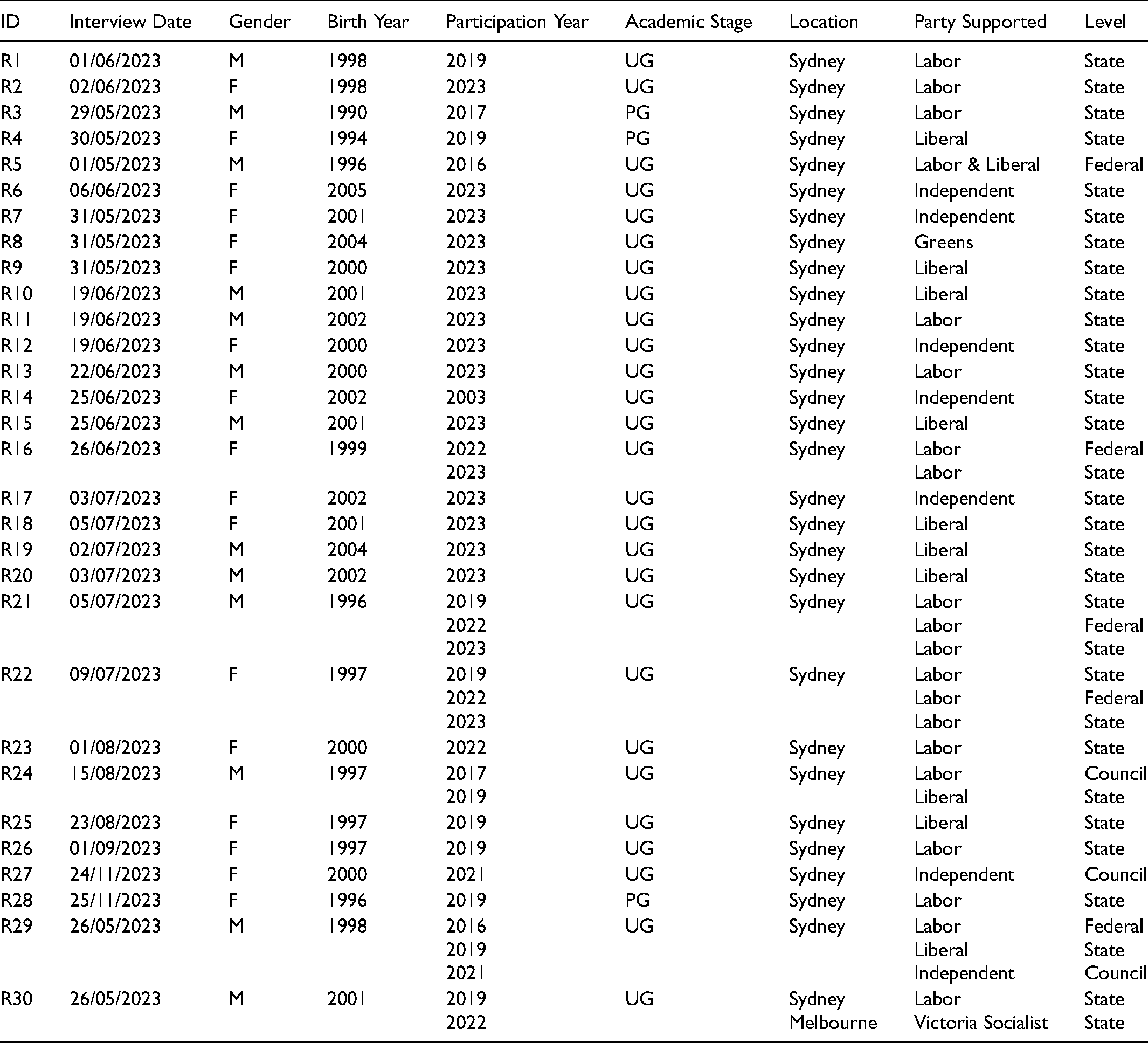
Our study draws on semi-structured, anonymous interviews with CISs who participated in Australian party politics and election campaigns between 2016 and 2023 while enrolled at Australian universities. Between May and November 2023, we conducted thirty interviews via Zoom, each lasting 25–40 min. All interviews were conducted in Mandarin Chinese, which participants identified as the language in which they could most accurately and comfortably articulate their perspectives. The use of Mandarin reduced the risk of miscommunication and response bias, thereby enhancing the validity and authenticity of the data by enabling respondents to convey complex experiences and emotions without linguistic constraints. The participants, aged 19–35 (see Appendix 1), comprised seventeen women and thirteen men. All had campaign experience in Sydney, with one also active in Melbourne. This research did not seek direct cooperation from political parties or electoral candidates. Instead, students’ accounts of recruitment and interaction with party representatives provide valuable insights into how CISs integrated into local political institutions and communities. During the interviews, four interviewees revealed that they also had acted as recruiters on behalf of the parties or candidates they supported.
The interviewees were recruited through convenience sampling (snowballing). The research team first contacted student organisations at their institutions to help distribute the recruitment information within their networks. Subsequently, participants who had been recruited were invited to share the information further among their networks. As a form of “hidden population,” CISs engaged in election campaigns are not easily identifiable through formal channels. Relying on student networks and peer referrals, therefore, helped the researchers avoid coercion in the recruitment while also fostering trust and encouraging candid accounts of their experiences. Of the thirty respondents, twenty-seven had engaged in election campaigns during their undergraduate studies, while three were postgraduate students. In terms of political affiliation, most respondents campaigned for Australia's two largest parties – Labor and the Liberal Party (Liberal–National Coalition at the federal level). Seven supported independent candidates, while two respondents campaigned for the Greens and the Victorian Socialists, respectively. Notably, four respondents reported involvement with more than one political party over time, reflecting the diverse and fluid nature of their political engagement. All participants were fully informed of the study's aims and procedures and voluntarily consented to take part. As the investigator conducting the interviews had previously been a CIS involved in Australian student politics, their experiences helped shape the questions we asked of participants. However, participants were recruited from a much wider range of political backgrounds beyond the investigator's own, and the investigator took care not to intrude during interviews with their own political viewpoints.
We asked participants, “Who recruited you?” and “Why did you agree to participate in the election campaign?” to examine how CISs became involved in Australian politics. To assess their degree of involvement, we asked, “How long did you work in the campaign?” To explore their experiences of campaign involvement, we asked, “Did you receive any training before starting the campaign?,” “What work did you do during the campaign?” and “How do you evaluate your experience?” The interviews were recorded and subsequently transcribed. The transcripts were then reviewed to identify similarities and differences in respondents’ experiences, followed by an analysis of the underlying contributing factors and their potential impacts.
One caveat should be noted before proceeding: this research focuses primarily on CISs’ structural, social, and cultural integration. While identificational integration is also widely recognised as a key dimension of migrant incorporation, it falls outside the scope of this study. Identificational integration is more applicable to migrants who hold citizenship status and are therefore legally and institutionally positioned to develop a sense of national belonging – for example, identifying as “Australian.” By contrast, international students, as temporary non-citizens, generally lack the legal and institutional foundations required to cultivate such identification, rendering this dimension less relevant to their experience.
Mutual Accommodation Between CISs and Australian Political Parties
Democratic elections are a core political institution in Australia, and access to this process provides a meaningful indicator of migrant structural integration. Electoral participation signifies not only migrants’ civic engagement but also their contribution to, and potential influence on, the host country's political trajectory (Diamond and Gunther, 2001). Although CISs lack the right to vote or stand for office, our research shows that they nonetheless overcome boundaries and barriers to participation in local politics – whether through formal party membership or volunteer activities in election campaigns. In doing so, they support particular parties and policies, engage with democratic practices, and in some cases even shape political outcomes. Interviews reveal that pre-existing social networks in Australia – especially co-ethnic enclaves and communities – act as critical intermediaries, conveying political information and facilitating CISs’ mobilisation. Importantly, their involvement reflects a two-way process: while CISs demonstrate willingness to participate, the openness of Australian political institutions is equally decisive. Our findings suggest that political parties, motivated by the need to broaden their electoral base, play a pivotal role by actively recruiting CISs and creating opportunities for their engagement.
Co-Ethnic Communities and Structural Integration
The interview findings indicate that twenty-three respondents were recruited by representatives of specific political parties or politicians. Among the twenty-three recruited participants, fourteen were approached by Chinese-speaking students at their universities, making this the most common channel through which CISs received election-related information and entered local political communities. Respondents noted that recruiters were often members or supporters of major political parties who maintained youth-wing organisations across university campuses. For instance, at the researchers’ institution, the ALP Club and Labor Club were affiliated with Young Labor, while the Conservative Club and Liberal Club were linked to the Young Liberals. These student organisations promoted their parties among students, disseminated election-related information, and recruited campaign volunteers. To engage CISs more effectively, they relied on Chinese-speaking student members, who shared information directly through classroom interactions and via online platforms such as WeChat.
Regarding student recruiters, respondents also noted that some were active in student politics on campus, holding considerable influence within the various CIS communities. This information aligns with recent observations of Chinese students’ increasing engagement in student politics across Australian universities (Brophy, 2021; Koziol, 2018). Participation in student politics on campus enables student leaders and influencers within CIS communities to engage more frequently and substantively with local student political organisations affiliated with different parties. Their unique position within local political parties and CIS communities grants them an informational advantage, enabling them to serve as intermediaries who articulate CISs’ concerns to political parties and candidates while facilitating targeted incentives for their party to mobilise greater CIS involvement in election campaigns.
Several respondents indicated that they were initially unaware that participation in election campaigns could align with their broader goals for studying abroad until Chinese student recruiters introduced these potential benefits. According to the respondents, recruiters typically framed campaign involvement in three ways. First, it was portrayed as enhancing career or academic prospects by facilitating connections with potential employers or referees, including local business leaders, community figures, and political elites. At a minimum, volunteers could expect a certificate acknowledging their contribution. Such benefits were especially attractive to career-oriented students, as growing competition in the Chinese and global labour markets has driven many to accumulate extracurricular experience and social capital to strengthen employability or bolster postgraduate applications (Jiao, 2023; Ma and Yang, 2021). As Anonymous 26, who volunteered for Labor in 2019, explained: “I recognized that participating in such activities could help me expand my social circle, and I thought these connections might benefit my future career” (Anonymous 26, 2023).
Second, recruiters often convey the message that participating in election campaigns offers CISs a valuable opportunity to enrich their experiences of studying abroad. Through campaign involvement, students can learn more about Australian political culture and institutions, make local friends, practice English in real-life settings, and engage more deeply with local communities. This aligns with recent observations that CISs today exhibit a greater enthusiasm for exploring new experiences and maximising the value of their time overseas. For example, Anonymous 28, who campaigned for Labor in the 2019 NSW state election, told us that since she knew she was only coming to Australia for a two-year master's program before returning to China, she was “willing to explore more about this country, creating good memories of my student life in Australia” (Anonymous 28, 2023).
Third, recruiters often emphasise the policies and attitudes of the party or politician they represent, particularly their support for international students. This typically includes pro-immigration stances and measures aimed at improving student welfare. Several respondents with future immigration aspirations noted that their support for a specific party was influenced by claims that the party favoured more accessible immigration pathways. For example, Anonymous 2 (2023) explained that she supported Labor in the 2023 NSW state election because she was told its policies aligned with her immigration goals. Others recalled recruiters stressing the party or candidate's commitment to enhancing international students’ social welfare. In New South Wales, public transport concessions are available only to domestic students – a long-standing source of dissatisfaction (McGregor, 2024). Some local politicians and recruiters sought to leverage this issue by promising to advocate for fairer travel policies, using it as a strategy to attract CIS support.
Eleven respondents reported being recruited by someone with whom they had a pre-existing close relationship – such as a family member or friend – connected to a local political party or candidate. These relationships typically started out as apolitical and non-utilitarian, grounded in emotional bonds, reciprocity, and mutual trust. As such, they served as credible interaction channels between CISs and local political communities. The trust embedded in these relationships enhances the credibility of political messages when conveyed through them. The issue of travel concessions for international students in NSW illustrates this dynamic. Many CISs who campaigned for equitable transport policies became disillusioned by broken political promises, leading to a decline in trust. For instance, Anonymous 24 initially doubted politicians’ sincerity but ultimately chose to campaign for a candidate because a close friend – his recruiter – assured him that the candidate was genuinely committed to the issue (Anonymous 24, 2023).
Notably, Chinese-speaking recruiters often occupied multiple identities: they could be formal members of political parties or close associates of candidates, while simultaneously serving as student leaders in campus politics with extensive friendship networks among CISs. These overlapping roles afforded them a distinct informational advantage, as they possessed a nuanced understanding of the needs and expectations of both CISs and political parties. Such recruiters acted as brokers, occupying structural positions that linked otherwise weakly connected networks and enabling the transfer of political knowledge, resources, and opportunities. At the same time, their pre-existing personal ties with CISs generated forms of closure, where dense ties and mutual trust reduced uncertainty and lent credibility to political messages. This combination of brokerage and closure facilitated reciprocity and reduced perceptions of instrumentalism, making CISs’ entry into political activities appear less transactional and more trust-based. In this sense, these interactions illustrate how social capital can be mobilised to bridge cultural gaps and foster civic participation. For example, Anonymous 18 (2023), Anonymous 21 (2023), and Anonymous 29 (2023), who undertook recruitment tasks for their respective parties, reported that their primary targets were friends and fellow Chinese students.
Alongside these primary channels, seven respondents reported proactively seeking involvement after encountering recruitment information online, through campus posters, or at candidate speeches. Overall, CISs’ structural integration into Australian party politics underscores the central role of pre-existing social connections in enabling political participation. Among these, co-ethnic enclaves on and beyond university campuses proved especially significant. Rather than fostering isolation, Chinese co-ethnic communities in Australia increasingly operate as integrated yet distinct spaces: embedded in a broader context shaped by Western cultural norms, while preserving elements of Chinese cultural heritage (Ang, 2013; Guo and DeVoretz, 2006; Pendery, 2008). Functioning as a form of “connective tissue,” these enclaves link CISs with local political parties and facilitate their involvement in election campaigns. In this way, ethnically grounded relationships serve not as barriers but as vital bridges to core political institutions.
Local Political Parties as Initiators of Structural Integration
Indeed, CISs’ access to Australian political institutions reflects a two-way process of reciprocity between students and political actors, with both sides demonstrating a willingness to engage and accommodate one another's interests. Yet, as the preceding discussion indicates, this reciprocity has been driven more by the proactive outreach of Australian political parties than by the deliberate initiative of CISs themselves. Existing scholarship highlights the motivations underpinning parties’ eagerness to expand their activist base, emphasising the instrumental value of mobilising volunteers to extend voter outreach, strengthen ties with local communities, and enhance multicultural representation within electoral politics (Cross and Gauja, 2014; Head, 2022; Sun and Yu, 2020).
Australia's system of compulsory voting is a key driver of parties’ efforts to expand their campaign base. Given consistently high turnout, parties cannot rely solely on mobilising core supporters; instead, they must appeal to a broader, more diverse electorate. This necessitates substantial campaign resources, including volunteers, to reach disengaged or low-information voters through broad-based canvassing and persuasive communication (Birch, 2009; Louth and Hill, 2005). Yet, in recent decades, formal party membership has markedly declined (Cross and Gauja, 2014; Head, 2022). Membership in civic and social groups – including political organisations – fell by 8–10 per cent between 2006 and 2019, and fewer than 10 per cent of Australians now belong to political parties (Nicolas, 2023). This decline compels parties to seek alternative means of sustaining campaign strength. As campaigns remain heavily dependent on volunteers to perform essential tasks such as leafleting, door-to-door canvassing, phone banking, and voter outreach (Cross and Gauja, 2014), recruiting new supporters has become increasingly critical to electoral viability.
Moreover, Chinese Australians are becoming a significant political force. This is reflected primarily by the increase in the number of both China-born and Chinese-speaking citizens, particularly in major cities such as Sydney and Melbourne, where they represent 10.6 per cent and 8.3 per cent of the population, respectively (Australian Bureau of Statistics, 2022; Sun and Yu, 2020). Meanwhile, the shifts in the socioeconomic status of Chinese voters over the past fifteen years have resulted in more volatile voting preferences, with Chinese Australians no longer consistently supporting Labor (Gao, 2020). Thus, political parties and candidates must allocate substantial campaign resources to engage with Chinese communities effectively.
These demographic shifts within political parties and Australian society have intensified the urgency of recruiting Chinese-speaking members and supporters, leading parties to view CIS involvement as a valuable campaign resource. To mobilise this group, parties strategically appeal to CISs’ diverse motives. For example, campaign materials (Image 1) from NSW Senator Jason Yat-sen Li invited participants, in Chinese, to “experience the battlefield of an Australian election” and promised a volunteer certificate upon completion. Another advertisement (Image 2) framed participation more broadly: “Do you care about politics, current affairs, social justice? Whether you are a newcomer or an Australian citizen, join our volunteer program.” Such strategies not only foster CISs’ political awareness and reasoning about Australian politics but also blur the distinction between citizens and non-citizens. Ultimately, although parties’ enthusiasm to recruit CISs is primarily driven by electoral pressures rather than commitments to integration, this pragmatism has inadvertently enabled CISs’ political participation to emerge as a novel pathway for integration.

A Labor candidate’s volunteer recruiting flyer.

Labor Party’s volunteer recruiting flyers.
Political Participation and Further Integration
The degree of CISs’ structural integration with the local political community is assessed by the total number of hours they devoted to election campaigns. Figure 1 illustrates the variation in respondents’ time commitment. Eleven participants worked for over 50 h – the largest group, indicating a high level of engagement. The second-largest group, six respondents, contributed between 5 and 10 h, reflecting lower involvement. The remaining respondents were more evenly distributed: three each worked 10–15, 15–20, and 20–25 h; two reported 1–5 h, and another two worked 25–30 h.
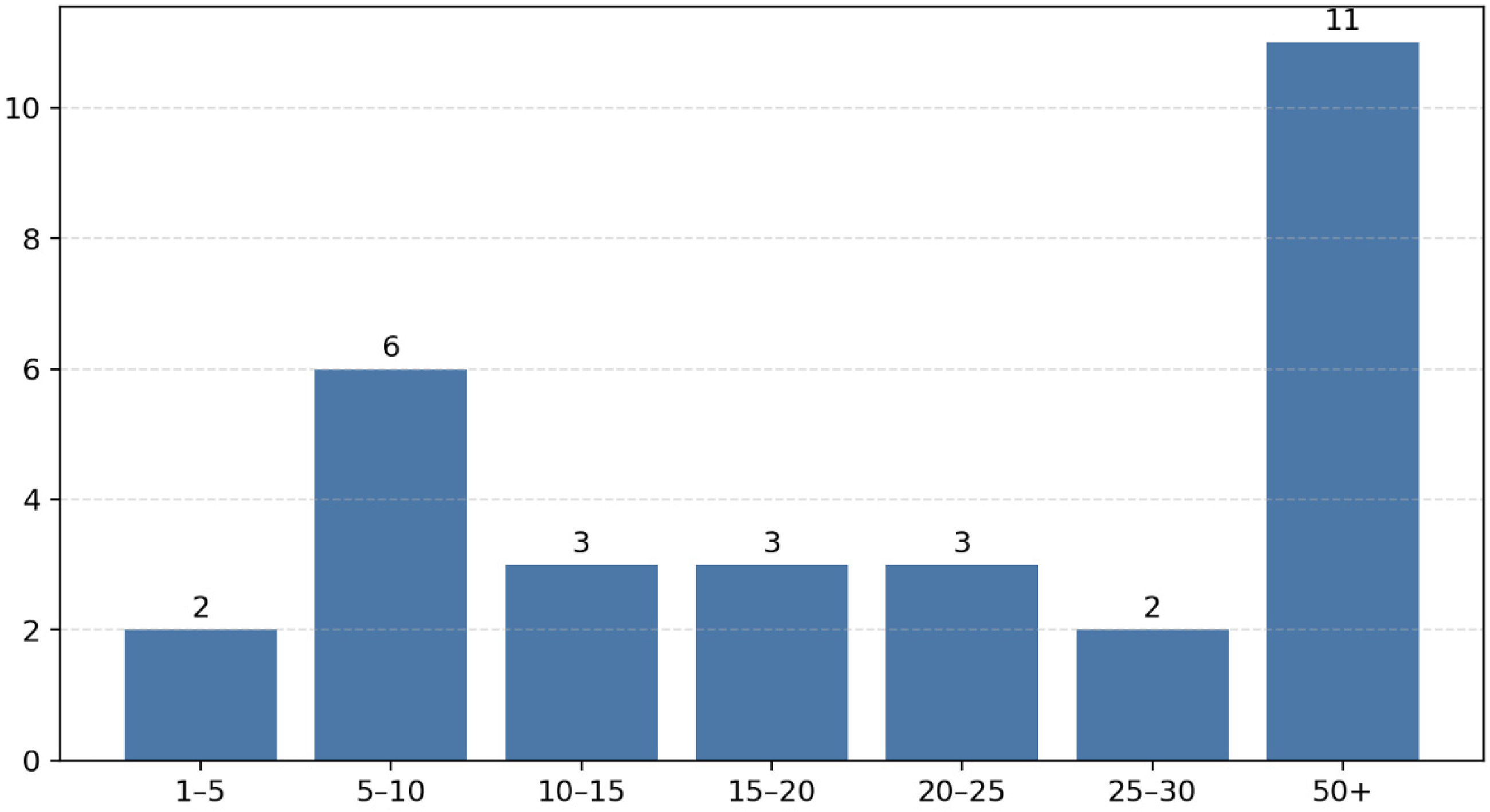
Distribution of participants’ lengths of working time on campaign.
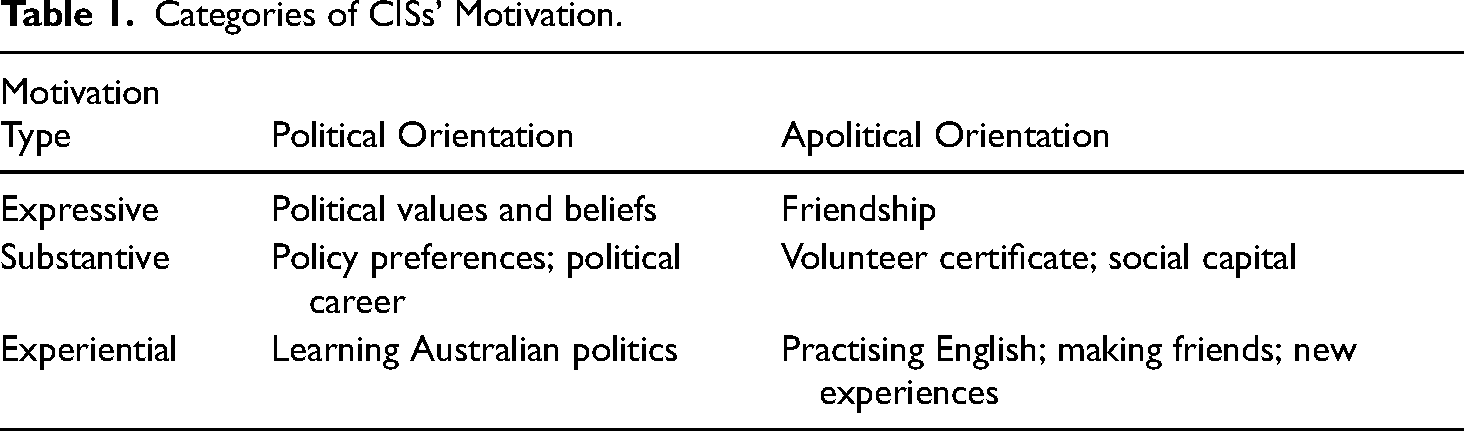
As discussed elsewhere, CISs’ involvement in Australian party politics and election campaigns is underpinned by multiple motivations (Xue et al., 2025). These include participation as a means of expressing attitudes or emotions shaped by particular values, beliefs, or friendships; as a strategy for addressing tangible academic, career, or life-development needs; and as a way of gaining new life experiences while in Australia (see Table 1). Respondents frequently reported that their decision to participate was driven by a combination of these factors, rather than a single, clearly defined motive (Xue et al., 2025). Through our interviews, we further observed that some respondents demonstrated clear political awareness, with their participation driven by explicit political interest. In contrast, others showed little political consciousness or interest in their motivations for getting involved. Therefore, we classified respondents as politically motivated participants if their involvement in party politics and election campaigns was driven by explicit political interests. Those not meeting this criterion were categorised as apolitical participants. Our research identifies twenty-one respondents as politically motivated. This group includes the seven participants who initiated their own involvement and the three respondents who held formal membership in the Labor Party. The remaining nine respondents are categorised as apolitical.
Categories of CISs’ Motivation.
Motivation is significant, as the amount of time participants devoted to election campaigns correlated with whether their motivations were political or apolitical. Figure 2 presents the distribution of working hours among politically motivated respondents. All eleven respondents who worked more than 50 h were politically motivated, while only five politically motivated respondents contributed fewer than 15 h. It is difficult to determine definitively which specific form of political motivation drives longer working hours, as political interest is highly subjective and individualised. It can manifest in various forms – such as the expression of attitudes and emotions shaped by political values and beliefs, the pursuit of solutions to social welfare issues, or the aspiration to gain experience and deepen one's understanding of political processes. For example, Anonymous 30 participated in election campaigns both to express his attitudes shaped by left-wing political values and to advocate for policy action to address international students’ collective practical issues. He campaigned for Labor in the 2019 federal election and Victoria Socialist in the 2022 Victorian state election and worked over 50 h in total. Elaborating on the reasons for participation, Anonymous 30 explained: My political stance is left-wing, and I strongly support political radicalism. I had some conflicts with some white students who supported Liberal, and I felt they were racially discriminatory. Labor was more inclusive toward international students and ethnic minorities. So, when I agreed with Labor's political claims, I was very willing to support them. (Anonymous 30, 2023)
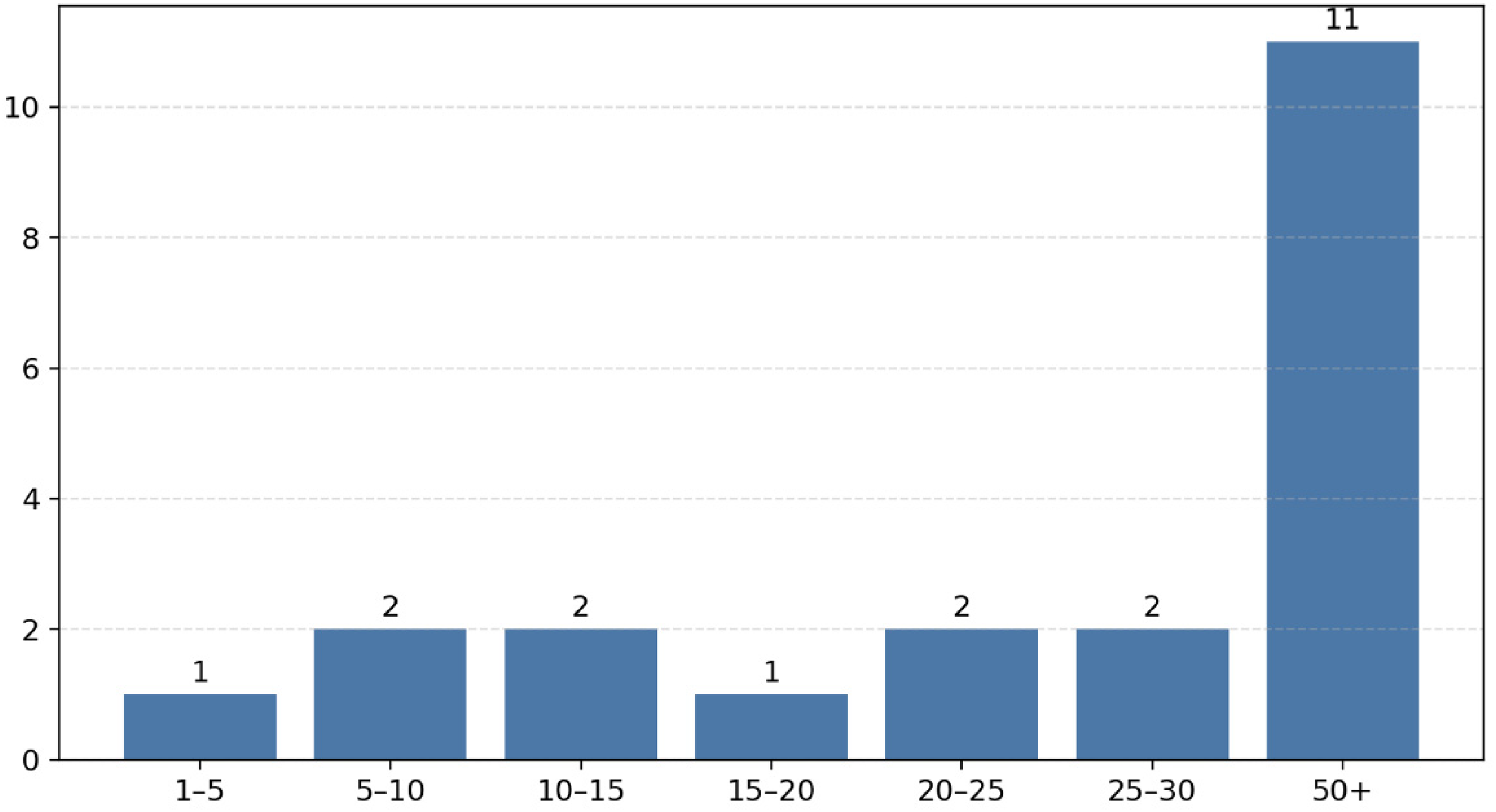
Distribution of working hours among politically motivated respondents.
The reason for Anonymous 30's switch to the Victorian Socialist Party was that he was disappointed with Labor after they came to power: They did not address current issues, such as the cost of living, and they did not introduce policies favorable for international students. So, I chose a more left-wing and radical party. (Anonymous 30, 2023)
Unlike Anonymous 30, Anonymous 10 – who campaigned for the Liberals in the 2023 NSW state election for over 50 h – did so only because he saw his support for the Liberals as a symbolic way to express his dissatisfaction with China's political system. As he says: I’m quite disapproving of China's political system. The Morrison government's firm stance toward China is something I greatly appreciate. Compared to Liberal, Labor's actions are not as tough as those of the Liberal party. For instance, a few years ago, there was news about a Labor Party member being discovered as a Chinese spy. I feel that such occurrences are almost unlikely to happen within Liberal. (Anonymous 10, 2023)
Similarly, Anonymous 8, who devoted over 50 h to support the Australian Greens (Greens) during the 2022 federal election, was also solely motivated the desire to express her political belief and attitude. As she says: I participated in campaigning because I align more with the values and policies of the Greens. I appreciate their policies regarding environmental protection and social welfare. I wanted to contribute to enhancing the recognition of the Greens among immigrants and international students. Their awareness of Australian politics is usually limited to the “two major parties.” (Anonymous 8, 2023)
Participants with formal membership in a political party understandably demonstrated a stronger commitment to party activities and, consequently, dedicated more time and effort to election campaigns. Three respondents (Anonymous 1, Anonymous 21, and Anonymous 22) with formal membership all worked over 50 h. Both Anonymous 21 (2023) and Anonymous 22 (2023) expressed a clear aspiration to pursue political careers in Australia after obtaining citizenship. As Anonymous 21 explained, “In the future, after immigrating, I hope to participate in politics and public affairs in Australia” (Anonymous 21, 2023). Given their membership status and long-term political ambitions, it is unsurprising that these participants invested significantly more time and energy in campaign activities.
Although Anonymous 1 (2023) did not express an aspiration to pursue a political career in Australia, he explained that a strong interest in political affairs motivated him to join the party and observe Australian politics more closely. As a Political Science student, he sought to gain practical experience and insights to complement his academic studies. Similarly, Anonymous 19 (2023) and Anonymous 29 (2023) viewed their participation as an opportunity to deepen their understanding of Australian politics, and this strong interest served as a key motivation for their involvement in the campaign for over 50 h.
Among apolitical participants, working hours were consistently short, none exceeded 25 h, and five worked fewer than 5 h. A key commonality is that seven were recruited by a family member or friend. For example, Anonymous 7, who campaigned for an independent candidate for around 10 h in the 2023 NSW election, admitted her involvement stemmed from a close relationship with the recruiter and that she lacked political motivation (Anonymous 7, 2023). Similarly, Anonymous 14, who campaigned for an independent candidate for 10 h, said her mother encouraged her to participate due to a family connection with the candidate. She noted her engagement was minimal, often “just going through the formalities” (Anonymous 14, 2023). Anonymous 25, who spent approximately 8 h campaigning for a Liberal candidate in the 2019 election, described her involvement as “simply helping out a friend” and felt no deeper obligation beyond the initial request (Anonymous 25, 2023).
Overall, while CISs’ participation in party politics and election campaigns is frequently driven by political motivations, the nature of their political interests is highly diverse – ranging from ideological commitment and issue-based engagement to career-oriented or experiential goals. At the same time, a smaller but notable proportion of CISs engage in such activities for largely apolitical reasons, such as fulfilling social obligations or supporting friends. Taken together, these findings suggest that CISs’ political participation is shaped by their structural position as temporary residents and non-citizens. Lacking formal political rights and institutional guarantees, their engagement tends to be informal, situational, and contingent upon personal networks and opportunity structures rather than embedded civic membership. As a result, their structural integration into the political sphere is relatively fragile and easily withdrawn, underscoring the conditional and provisional character of CISs’ political participation in host societies.
Integrating and Disintegrating with the Local Community
At the social integration level, fourteen respondents explicitly identified building and maintaining social connections as a key reason for their involvement in election campaigns. Their approaches to these connections reflected two orientations: an instrumental one, where local networks were valued for career advancement, and a relational one, where connections were pursued as friendships rooted in emotional and intimate bonds. However, our findings also show that increased social integration was not a universal outcome; some respondents disengaged from local political communities following negative experiences during their participation.
Developing social connections through participation in local party politics and election campaigns is attractive for students who consider connections a meaningful form of social capital for their future career development. Anonymous 6 (2023), who campaigned for an independent candidate in the 2023 NSW election, noted that the primary reason for participating was to gain volunteer experience and social connections to support her application to an international volunteer program. She says, “As international students, we don’t have many opportunities to engage with various political parties and politicians, and the election campaign was a rare chance to interact with these politicians in person.” She also explained that she had achieved her goal through this experience.
Strengthening connections with local political communities is particularly important for participants like Anonymous 21 (2023) and Anonymous 22 (2023), who plan to pursue citizenship and establish political careers in Australia. Anonymous 22 noted that she has “extended social connections within Labor and a rising status within the party.” The roles and responsibilities that participants assumed during the campaign also reflect the nature of their relationship with the party or candidate they supported, as the level of responsibility often signals a degree of trust in them. While most respondents were assigned basic tasks, such as in-person campaigns (leafleting, letterboxing, door knocking, and street canvassing) and telephonic campaigns, Anonymous 21 and Anonymous 22 were entrusted with managing a candidate's public relations affairs. This suggests better integration within their respective political networks.
Respondents driven by a relational orientation often prioritised the expressive dimension of social connections over their instrumental value. For example, Anonymous 4 (2023), who supported the Liberal Party in the 2019 NSW election, cited making new friends as a major reason for her participation. She successfully established several friendships during the campaign and has remained in contact with these individuals since. Moreover, some respondents admitted that their involvement was not primarily driven by a desire to make new friends, but rather by a sense of obligation to support the friend who had recruited them. The Chinese concept of renqing (人情) – roughly translated as “favour” in English – was frequently mentioned by participants as a key motivation for their involvement. Anonymous 29, who has campaigned for three different candidates from 2016 to 2023, explained how reciprocating others’ favour encouraged him to participate: My participation in the 2016 campaign was entirely self-initiated and driven by a genuine desire to learn. However, after that first experience, my enthusiasm declined. If no one had approached me, I certainly would not have participated again. My subsequent involvement was primarily because the candidate was a close friend who had offered me significant support in the past. Participating was, in part, a way of returning the favor. After all, when someone has helped you, it's only natural to feel obliged to assist them in return, wouldn’t you agree? (Anonymous 29, 2023)
When explaining his most recent participation in 2021, he noted that he assumed the role of campaign manager for a friend running for a local councillor position. Again, his involvement was driven by the logic of reciprocating a favour previously offered by this friend. He was entrusted with such a critical role because the candidate valued his prior experience in political campaigning and his established social network within the local political community.
However, not all respondents established or strengthened social networks within local political communities; instead, some chose to withdraw from them. One contributing factor to this disengagement was a lack of political motivation, particularly among respondents who viewed their involvement merely as doing a favour for friends, often with only a short-term commitment. As Anonymous 25 explained: I feel that it didn't bring me any positive returns, and I considered it a waste of time. After that, whenever someone approached me again for supporting someone's election campaign, I simply refused their request directly. (Anonymous 25, 2023)
More often, the social disintegration is caused by the respondents’ negative experiences during their participation. For example, Anonymous 3 campaigned for Labor in a federal by-election in 2017, and had a strong desire to learn more about Australian politics through his participation. However, his experience was marred by some unfriendliness when campaigning in a pro-Liberal electorate district. As he explained: When we were canvassing, some voters came to ask us, “Did your teachers force you to campaign for Labor? If you don't come, they will fail you, right?” and “Are you guys Chinese Communist Party members?” There were some other unfriendly encounters, and in general, it was an attack from Liberal supporters while we were canvassing for Labor. (Anonymous 3, 2023)
Although he admitted that participating in activities like that could be meaningful to learn about the Australian political system, the unpleasant experience hampered his passion to participate in similar activities.
Anonymous 13, who campaigned for Labor in the 2023 NSW state election, expressed dissatisfaction with the campaign experience, which fell significantly short of his expectations. He had been told that participating in the campaign would offer a valuable opportunity to practice spoken English. He viewed it as a chance to integrate more deeply into local society. However, he was assigned to work within a Chinese diaspora community, and his primary task involved conducting telephonic outreach in Chinese. Reflecting on the experience, he remarked: It fell a bit short of what I had imagined. In my mind, I envisioned something more engaging, where I could meet more people and genuinely help them. However, during the phone calls, people weren’t very receptive to that approach. They also had doubts and concerns about whether the information I shared was genuine. (Anonymous 13, 2023)
Anonymous 11, who campaigned for Labor in the 2023 NSW election, expressed similar disappointment with his experience, as it did not provide opportunities to form new friendships. He explained how his role primarily involved telephonic campaigning, which offered little opportunity to make friends, as he described: “My original intention was to make friends, but during this election, I was mostly assigned to making phone calls. In reality, I didn’t really get to make friends, so I don’t feel particularly satisfied” (Anonymous 11, 2023).
The social disengagement arising from unmet expectations underscores the problem of informational asymmetry created by the multiple identities of Chinese student recruiters. In this context, such multiple identities led to conflicting obligations. As student leaders, they were expected to represent and safeguard the interests of their peers. But their role as recruiters required them to prioritise the strategic imperatives of the political organisations. Because success in mobilising supporters is closely linked to career advancement within parties, recruiters were incentivised to privilege party agendas over CIS’s concerns. This often resulted in persuasion strategies built on partial truths or exaggerated claims, eroding trust and reinforcing disengagement. For example, several respondents reported being told that volunteer certificates would only be issued if a candidate won office and was authorised as a public servant. Similarly, recruiters frequently invoked promises of international student travel concessions to secure participation, only for respondents to later discover that such issues were absent from the candidate's formal agenda.
Cultural Integration: From Behaviour to Attitude
While culture is often employed as a catch-all term. It encompasses both observable practices, such as customs, traditions, rituals, and institutions, and the internalised norms and values that sustain and reproduce these practices (Geertz, 1973; Swidler, 1986). In this context, CISs’ participation in Australian elections provides a platform for engaging with the institutional practices embedded in campaigns, alongside the democratic norms and values they embody. Our findings suggest that CISs’ integration into Australian society is primarily reflected in their adaptation to and assimilation of routinised campaign practices. However, this behavioural assimilation does not necessarily translate into full attitudinal alignment with the democratic values underpinning Australia's political institutions.
Having grown up in a political system without competitive multiparty elections, many CISs experience a cultural distance from Australian political institutions. This is reflected in their limited familiarity with the rules, routines, norms, and values underpinning electoral campaigning in a liberal democracy, particularly practices specific to the Australian context. Twenty-eight participants reported receiving some form of training from the party or candidate they supported, though its depth varied. For instance, Anonymous 19 described comprehensive preparation from a Liberal candidate, who stressed professionalism: “Since you’re essentially the party's representatives, any mistakes you make will reflect on the party” (Anonymous 19, 2023). By contrast, Anonymous 17 (2023) noted minimal guidance, as the independent candidate lacked the resources for structured training. Two respondents received no formal preparation: Anonymous 3 (2023) was recruited on the final day of a by-election, leaving no time for onboarding, while Anonymous 12 (2023), who campaigned for an independent candidate in the 2023 NSW state election, was simply told to follow existing volunteers.
All trained participants reported being instructed on the basic code of conduct during campaigns. This included avoiding polling areas, refraining from pressuring voters, and not engaging in verbal or physical conflict with disinterested individuals. Some candidates also provided printed orientation materials for new volunteers. Training typically covered the party's political stance, core values, the candidate's policy agenda, and background on competitors. Respondents who received more comprehensive training emphasised that the primary aim was to equip them with practical skills necessary for effective participation in routine campaign practices. These practices – such as leafleting, letterboxing, doorknocking, and street canvassing – constitute core elements of Australian electoral culture and grassroots mobilisation. Training was designed to help CIS volunteers quickly adopt these standardised methods, enabling them to approach voters confidently, gauge political preferences, and communicate party messages in a persuasive yet authentic manner. Overall, CISs’ involvement in campaign training reflects a learning process that facilitated their adaptation to the procedural norms of Australian electoral culture.
CISs undertook five campaign roles – ranked in ascending order of responsibility – as in-person campaigning, telephonic campaigning, volunteer recruitment, public relations, and campaign management. These roles reflect the participatory and decentralised nature of Australian elections, where grassroots mobilisation is central. For CISs, engaging in such roles signified behavioural assimilation into Australia's political culture. In-person campaigning was the most common activity, with all respondents participating, while six (all for Labor) engaged in telephonic campaigning. A small number took on higher-responsibility roles: four contributed to public relations by tailoring messages for Chinese voters, promoting candidate images, and managing crises. Only Anonymous 29 (2023) served as a campaign manager, overseeing strategy and negotiating with other candidates. This distribution suggests that CISs’ responsibilities were generally limited, with the depth of engagement shaped by trust between students and political actors. Nonetheless, their widespread participation illustrates meaningful behavioural integration into Australia's electoral practices (Figure 3).
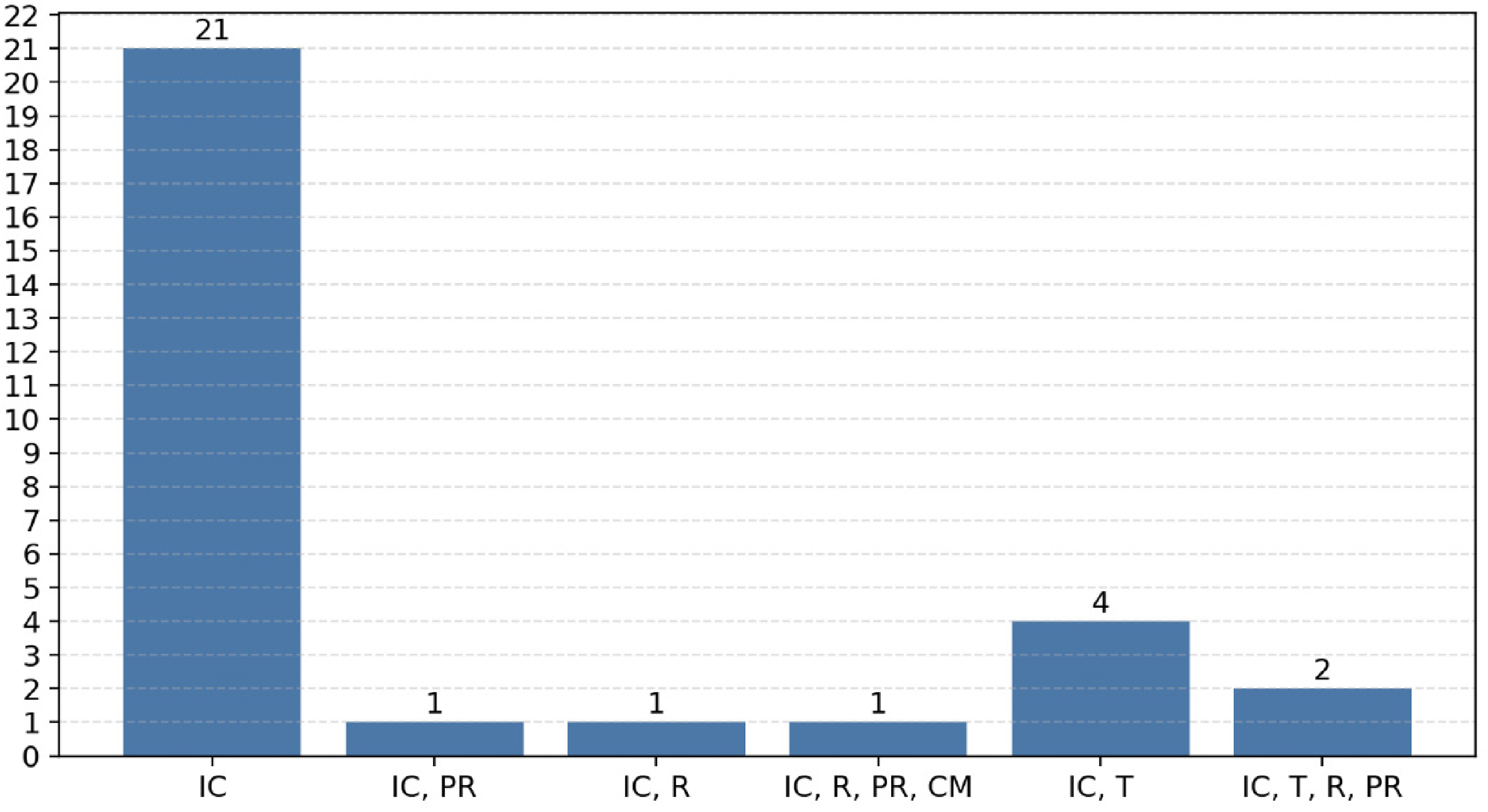
Distribution of the participants’ roles during campaigns.
Meanwhile, the ways in which CISs carried out their campaign roles demonstrate that cultural integration is not only a one-way process of assimilation. Instead, it is reciprocal – CISs could engage in political activities while maintaining aspects of their own cultural identity. Within Australia's multicultural social context, elements of their cultural heritage (e.g. language use or culturally specific communication styles) were accommodated in campaign strategies, particularly when engaging Chinese-speaking communities. For example, Anonymous 28, who campaigned for Labor in the 2019 federal election, indicates that she could use the Suzhou dialect during the campaign: I found that conversing with locals in dialects such as Shanghainese and Suzhounese helped bridge the gap considerably, as there were many migrants from those regions. When they agreed to vote for Labor, I felt a sense of accomplishment. However, I also sometimes wondered if their voting decisions were too random. (Anonymous 28, 2023)
Participants who were involved in public relations roles during the campaign noted that their responsibilities required a nuanced understanding of the cultural and political backgrounds of Chinese voters. This included crafting canvassing narratives tailored to resonate with the concerns and values of the Chinese community. Additionally, they were expected to use Chinese-language social media platforms, such as WeChat, which have become increasingly prominent tools for disseminating election-related information (Sun and Yu, 2020; Yang and Martin, 2020). This experience further underscores that CISs’ behaviour in campaigns is not simply a process of assimilation, as local political parties and candidates also benefit from adapting the cultural practices of CIS participants.
The constitutive dimension of CISs’ cultural integration is reflected in their attitudes toward the value of democracy – the bedrock that sustains elections as an institution in Australia. Several respondents stressed the differences between China's and Australia's political systems and openly admired the democratic socio-political culture. For example, Anonymous 2, who plans to immigrate permanently after graduation, explicitly expressed this perspective: I think the differences between Australia and China are quite significant. You can really feel that you're the master of the country (Australia). Your vote can actually impact the nation's destiny. Unlike China, people can’t participate and pick who they want. On this point, I think the Australian government is doing a great job. It's really democratic. (Anonymous 2, 2023)
Similarly, Anonymous 16, who campaigned for Labor due to the Party's pro-immigration policy, shared her feelings about making an impact through the democratic process: This process genuinely made me feel like I'm participating in this country's progress and change. After Labor came into power, I felt my efforts yielded some rewarding outcomes. (Anonymous 16, 2023)
In particular, some apolitical participants experienced growing political awareness and the development of pro-democracy attitudes through their involvement in the election campaign. Anonymous 7, who initially stated that her participation was not politically motivated, later acknowledged that her involvement had enhanced her understanding of political systems in comparison to China. She also expressed a positive attitude toward the democratic process, as she said: I gained a more direct understanding of Australia's election and voting culture, something I hadn’t experienced in my own country. When I engaged in this democratic process and felt like I might have had a negligible impact on it, there was a sense of satisfaction. (Anonymous 7, 2023)
For some participants, involvement in local election campaigns fostered pro-democracy attitudes rather than broader attitudinal development. Anonymous 21 (2023), for example, noted that his passion for democracy was one of the reasons he chose to study abroad and aspired to stay in Australia. Campaign participation deepened his appreciation of democratic politics. Similarly, Anonymous 8 (2023), who sought to expand the Greens’ influence within Chinese Australian and CIS communities, emphasised the importance of democratic processes in advancing the party's values. Her experience reinforced this belief, as she enjoyed engaging with diverse individuals during the campaign and took pride in the Greens’ victory in the NSW electorate of Balmain.
However, not all participants developed stronger pro-democracy attitudes; some adopted more critical or balanced perspectives on Australian elections. Anonymous 5, who campaigned for both Labor and Liberal in the 2016 federal election, described experiencing the intensity of party competition and observing voters’ varying attitudes toward candidates. He highlighted the tension that arose when voters’ demands were unmet, noting that they often questioned why candidates focused narrowly on certain issues while neglecting minority concerns. Reflecting on this, he remarked that his experience gave him “a more balanced understanding of the strengths and limits of democracy” (Anonymous 5, 2023). Similarly, Anonymous 29 (2023) reported gaining a “clearer understanding” of elections across different levels and jurisdictions. Through his campaign work in various districts with diverse ethnic communities, he observed how local citizens’ attitudes toward voting differed across contexts. As he described: Although voting is compulsory, very few Chinese Australians would actively and carefully inquire about the candidates’ policies. In contrast, local white Australians are more inclined to understand the candidates’ policies. (Anonymous 29, 2023)
Our observations of CISs’ cultural integration reinforce the need to avoid homogenising or reifying their experiences solely along national lines (Guo and Liu, 2025). As the findings demonstrate, cultural integration does not necessarily produce a uniform alignment with the dominant norms and values of Australia's political institutions. Instead, CISs’ attitudes toward democratic processes are diverse and multifaceted, shaped by individual experiences, prior political socialisation, and varying levels of engagement in the host society. Some adopt pro-democracy perspectives, while others maintain more critical or pragmatic views, reflecting the interplay between cultural background and local exposure. Crucially, such critical or sceptical engagement should not be misinterpreted as a lack of integration. Rather, it signals the development of political knowledge and cultural understanding, underscoring that integration is a dynamic and negotiated process rather than a linear or purely assimilative one.
Conclusion
This article has explored political participation as an emerging yet underexamined pathway for CISs to integrate into their host society. Drawing on the concept of integration from migration studies and informed by semi-structured interviews with thirty CISs, the study examined their engagement in party politics and election campaigns in Australia. The study represents a novel dimension of integration that extends beyond the educational and economic spheres that are more commonly studied. By situating this phenomenon within the broader social and political context of “China panic,” this article offers new insights into how CISs navigate opportunities and barriers to integration within a climate of heightened geopolitical tension, and the extent to which they have further integrated into the host society.
The findings suggest that CISs’ engagement with Australia's core political institutions is primarily facilitated by pre-existing social ties with local political communities, often rooted in co-ethnic enclaves both on and beyond university campuses. This observation aligns with scholarship on the integrative functions of Chinese co-ethnic enclaves, which highlights their dual role in buffering against discrimination and creating pathways for newcomers to build connections that extend into the wider society. While integration is ideally a reciprocal process, the evidence here indicates that local political parties have often taken the initiative – removing boundaries and barriers for CISs even amid the heightened sensitivities of the “China panic.” Although this outreach is pragmatically driven by electoral interests, it has nonetheless opened meaningful avenues for CISs to participate in and integrate with Australian society.
At the same time, the findings resonate with recent studies on the diverse and mixed motivations of contemporary Chinese youth in pursuing overseas study. Their engagement in host societies extends beyond academic and economic spheres into political and civic domains, reflecting a willingness to interact with political institutions and democratic processes (Heng, 2020; Guo, 2025a; Ma, 2020). For many CISs, participation in party politics and election campaigns abroad serves as a means of pursuing pragmatic, expressive, and experiential goals during their time overseas. Most respondents demonstrated political consciousness, with their involvement shaped by varied interests: expanding knowledge of Australian politics, expressing political beliefs, or supporting parties perceived as better positioned to advance their individual aspirations. Campaign participation appeared particularly attractive to students intending to apply for permanent residency, citizenship, or pursue political careers in Australia. For these individuals, involvement in party politics and election campaigns was not merely a temporary extracurricular activity but a strategic and symbolic step toward long-term social and political incorporation into the host society. Campaign work provided opportunities to develop networks with local political elites, gain familiarity with institutional procedures, and enhance civic credentials valued in immigration and career pathways. Also, these students often exhibited stronger acceptance of democratic values and practices and viewed participation to internalise and perform the behavioural norms of liberal democracy. Notably, nationalist or geopolitical considerations did not feature in respondents’ motivations. Their accounts further indicate that participation was largely independent of state-linked organisations such as the CSSA and was primarily oriented toward advancing personal ambitions rather than serving the interests of the Chinese state.
Moreover, the findings also reveal that structural engagement with Australian political parties and election campaigns can trigger additional social and cultural integration processes. Through such participation, CISs have developed and strengthened social connections with local communities, whether motivated by instrumental objectives or emotional ties. However, negative experiences can hinder integration, which may result in disengagement. Some students found their experiences exploitative, marked by unfulfilled promises, and they found political candidates and campaigns had little interest in them or their motivations, only in their free labour. Cultural integration has manifested in both behavioural and constitutive forms: CISs have adopted routinised campaign practices, reflecting behavioural assimilation, yet their acceptance of the democratic norms that underpin Australian political institutions remains varied. This heterogeneity suggests that, while political engagement may support behavioural adaptation, it does not necessarily lead to the full internalisation of dominant political values.
Since this study focuses exclusively on the perspectives of CIS participants in the Australian case, it opens two important avenues for future research. First, examining the perspectives of Australian political parties and politicians is crucial. As central actors in this interaction, their reflections on involving CISs in the very core of Australia's democratic process would provide important insights. How do parties justify enabling non-citizens to influence electoral outcomes through volunteering? How do they balance the benefits of engaging CISs with the reputational and security risks associated with heightened public concern over foreign interference? These questions are increasingly salient in light of recent controversies, such as Liberal senator Jane Hume's allegation of “Chinese spies” volunteering for Labor during the 2025 federal election (Fang et al., 2025). Incorporating these perspectives would render the integration story more comprehensive and nuanced. Second, comparative studies of CISs’ involvement in local party politics across other Western democracies are needed. While their participation in campus politics has become more visible in universities in the United Kingdom, Canada, and elsewhere (Green, 2025; Pattinson, 2025), it remains unclear whether these experiences provide platforms for integration into local party communities, as observed in Australia, or whether they follow different trajectories shaped by distinctive political and social contexts. Such comparative inquiry would help identify both commonalities and divergences in CISs’ integration across liberal democracies.
Footnotes
Acknowledgements
We are grateful to Yu Tao and Wanning Sun for their thoughtful comments and valuable feedback on an earlier draft of this article. We also thank the anonymous reviewers and the editor of the journal for their constructive suggestions, which have greatly improved the manuscript.
Declaration of Conflicting Interest
The authors declared no potential conflicts of interest with respect to the research, authorship, and/or publication of this article.
Ethical Approval and Informed Consent
Ethics approval for the study was obtained in March 2023, approval number 2022/836. All respondents were fully informed about the nature and purpose of the study and voluntarily agreed to participate. None expressed concerns regarding external factors such as Australia–China relations, perceptions from Chinese peers, or pressure from governmental bodies.
Funding
The authors disclosed receipt of the following financial support for the research, authorship, and/or publication of this article: This project was supported and sponsored by the China Studies Centre, The University of Sydney.

Author Biographies
Appendix
| ID | Interview Date | Gender | Birth Year | Participation Year | Academic Stage | Location | Party Supported | Level |
|---|---|---|---|---|---|---|---|---|
| R1 | 01/06/2023 | M | 1998 | 2019 | UG | Sydney | Labor | State |
| R2 | 02/06/2023 | F | 1998 | 2023 | UG | Sydney | Labor | State |
| R3 | 29/05/2023 | M | 1990 | 2017 | PG | Sydney | Labor | State |
| R4 | 30/05/2023 | F | 1994 | 2019 | PG | Sydney | Liberal | State |
| R5 | 01/05/2023 | M | 1996 | 2016 | UG | Sydney | Labor & Liberal | Federal |
| R6 | 06/06/2023 | F | 2005 | 2023 | UG | Sydney | Independent | State |
| R7 | 31/05/2023 | F | 2001 | 2023 | UG | Sydney | Independent | State |
| R8 | 31/05/2023 | F | 2004 | 2023 | UG | Sydney | Greens | State |
| R9 | 31/05/2023 | F | 2000 | 2023 | UG | Sydney | Liberal | State |
| R10 | 19/06/2023 | M | 2001 | 2023 | UG | Sydney | Liberal | State |
| R11 | 19/06/2023 | M | 2002 | 2023 | UG | Sydney | Labor | State |
| R12 | 19/06/2023 | F | 2000 | 2023 | UG | Sydney | Independent | State |
| R13 | 22/06/2023 | M | 2000 | 2023 | UG | Sydney | Labor | State |
| R14 | 25/06/2023 | F | 2002 | 2003 | UG | Sydney | Independent | State |
| R15 | 25/06/2023 | M | 2001 | 2023 | UG | Sydney | Liberal | State |
| R16 | 26/06/2023 | F | 1999 | 2022 2023 |
UG | Sydney | Labor Labor |
Federal State |
| R17 | 03/07/2023 | F | 2002 | 2023 | UG | Sydney | Independent | State |
| R18 | 05/07/2023 | F | 2001 | 2023 | UG | Sydney | Liberal | State |
| R19 | 02/07/2023 | M | 2004 | 2023 | UG | Sydney | Liberal | State |
| R20 | 03/07/2023 | M | 2002 | 2023 | UG | Sydney | Liberal | State |
| R21 | 05/07/2023 | M | 1996 | 2019 2022 2023 |
UG | Sydney | Labor Labor Labor |
State Federal State |
| R22 | 09/07/2023 | F | 1997 | 2019 2022 2023 |
UG | Sydney | Labor Labor Labor |
State Federal State |
| R23 | 01/08/2023 | F | 2000 | 2022 | UG | Sydney | Labor | State |
| R24 | 15/08/2023 | M | 1997 | 2017 2019 |
UG | Sydney | Labor Liberal |
Council State |
| R25 | 23/08/2023 | F | 1997 | 2019 | UG | Sydney | Liberal | State |
| R26 | 01/09/2023 | F | 1997 | 2019 | UG | Sydney | Labor | State |
| R27 | 24/11/2023 | F | 2000 | 2021 | UG | Sydney | Independent | Council |
| R28 | 25/11/2023 | F | 1996 | 2019 | PG | Sydney | Labor | State |
| R29 | 26/05/2023 | M | 1998 | 2016 2019 2021 |
UG | Sydney | Labor Liberal Independent |
Federal State Council |
| R30 | 26/05/2023 | M | 2001 | 2019 2022 |
UG | Sydney Melbourne |
Labor Victoria Socialist |
State State |