







Abstract
With the acceleration of digital transformation, enhancing the digital capability of small and micro enterprises (SMEs) has become a critical factor for their sustainable development. To scientifically evaluate the level of enterprise digitalization, this study constructs a digital capability evaluation model that integrates the analytic hierarchy process (AHP) and fuzzy comprehensive evaluation (FCE). The model includes four dimensions: resource collaboration, digital technology, operational management, and environmental awareness, with indicator weights determined through expert interviews. Empirical analysis of 20 SMEs in Guizhou Province reveals that digital technology is the most influential factor (weight = 0.3957), while many enterprises perform poorly in resource coordination and technology application. The average score of digital capability is 60.53, indicating a moderate level overall, with only 5% of enterprises showing strong digital capability and about 20% demonstrating high environmental awareness. The results show that the proposed AHP-FCE model outperforms traditional methods in robustness, reliability, and adaptability, offering an effective tool and practical guidance for the digital transformation of SMEs.
Introduction
Background
In the wake of the swift evolution of information technologies and the extensive integration of digital instruments across various sectors, the global reach and impact of the digital economy are experiencing a continuous and substantial expansion. 1 In this context, digital transformation (DT) has become a central task for enterprises across all sectors. For small and micro enterprises (SMEs), digitalization is far from a simple strategic selection; rather, it constitutes a vital determinant for an organization's survival and long-term prosperity. The success or failure of DT directly affects the sustainability and competitiveness of SMEs, making the evaluation of digital capability increasingly important.
Review of existing literature
To address the challenges of SME digital capability, researchers worldwide have conducted extensive investigations. 2 studied the impact of digital orientation on DT and offered practical recommendations for SMEs. 3 explored the role of digital orientation in driving enterprise transformation. In an additional study centered on SMEs operating within Saudi Arabia, the application of partial least squares analysis substantiated the pivotal role of innovation capability in bolstering digital competitiveness (2022). 4 emphasized the value of constructing digital platforms to guide DT processes. Despite these efforts, existing studies on SME digital capability assessment remain limited, often lacking comprehensive indicator systems, methodological integration, or empirical validation.
Research questions
Based on the above background and literature gaps, this study aims to address the following research questions:
What are the core components and evaluation dimensions of SME digital capability? How can subjective expert judgment and fuzzy data be integrated into a coherent assessment framework? What is the current level of digital capability among SMEs, and where are the main deficiencies? How does the proposed evaluation model compare to existing approaches in terms of effectiveness and applicability?
Research methodology
This study constructs a hybrid evaluation model by integrating the analytic hierarchy process (AHP) and fuzzy comprehensive evaluation (FCE). AHP provides a structured and practical multi-criteria decision-making framework for determining the relative importance of indicators through expert judgment. 5 FCE, which is grounded in fuzzy set theory, facilitates the conversion of qualitative assessments into quantitative outcomes. This characteristic renders it exceptionally well-suited for addressing uncertainty and ambiguity in evaluations. The integration of AHP and FCE not only overcomes the imbalance between subjective and objective factors but also enhances the systematic rigor and precision of the evaluation.
Contributions and innovations
This study contributes to the existing literature in the following ways:
It develops a digital capability indicator system consisting of four primary dimensions—resource collaboration, digital technology, operational management, and environmental awareness—and 15 sary indicators, comprehensively covering key aspects of SME capability. It proposes a hybrid AHP-FCE model that balances hierarchical weighting with fuzzy logic, addressing the limitations of traditional single-method evaluations. It applies the model to 20 SMEs in Guizhou Province, combining expert assessments and enterprise surveys to ensure practical relevance and validity. It compares the proposed model with established methods such as TOPSIS and entropy weighting, demonstrating its superior robustness, reliability, and adaptability in empirical analysis.
Structure of the research
The remainder of this paper is organized as follows: Section 2 reviews relevant literature on SME digital capability and evaluation methodologies. Section 3 presents the construction of the indicator system and the AHP-FCE integrated model. Section 4 applies the model to a sample of 20 SMEs in Guizhou Province and analyzes the results. Section 5 summarizes the main findings and provides policy recommendations and directions for future research. By combining a structured modeling approach with empirical validation, this study aims to offer theoretical and methodological support for assessing and enhancing the digital capability of SMEs.
Related works
The development of digital technology and artificial intelligence has promoted the transformation of traditional industrial economy and the reconstruction of business models. 6 For SMEs, undertaking the requisite DT has emerged as the focal point for their very survival. However, most SMEs cannot improve their digital capabilities by themselves, so it is important to evaluate their digital capabilities. 7 Based on this, scholars have conducted in-depth discussions on this issue. Eniola et al. 8 comprehensively investigated and analyzed the digital strategy of SMEs in Nigeria to promote their transformation towards digital management. 9 evaluated the digitalization capability of SMEs in Surabaya city by using the corresponding evaluation method, to provide suggestions for their sustainable development. 10 built a theoretical model by studying the service innovation performance, to provide constructive suggestions for the DT of enterprises. 11 conducted a comprehensive analysis of knowledge management, DT, and Industry 4.0 to help enterprises improve their digital capabilities and expand their fields. 12 provided corresponding means to improve the business performance of the insurance industry in the United Arab Emirates by studying digital marketing. 13 used modern technology to predict and analyze the relevant strategies of high-tech enterprise development, to help enterprises with DT. 14 analyzed the problems to provide important suggestions for the DT policy of enterprises.
In addition, 15 provided guidelines for the DT of the textile industry by investigating and analyzing the development of the textile industry and using multiple regression analysis. 16 provided a framework of digital supply chain to offer a more flexible way for the future DT of enterprises. 17 realized the five-dimensional analysis of bank credit digitization by using AHP, which helped to improve the performance of the company. 18 analyzed the ecological coordination method built by manufacturers to help explore the digitalization of enterprise business model. 19 conducted an in-depth exploration of the roles of AI within the manufacturing sector. They achieved this by meticulously analyzing the internal functional mechanisms of enterprise information systems, with the aim of offering strategic pathways for enterprises’ DT. 20 conducted in-depth interviews with designers and technology suppliers to provide necessary communication channels for DT of textile enterprises. 21 used the back-propagation artificial neural network to help manufacturing enterprises to predict the risk of DT. 22 analyzed 784 DT documents collected by a library, thus providing help for future research. 23 put forward a novel approach for assessing the DT of traditional manufacturing enterprises. This was achieved by refining the practical methodologies for the elimination and selection of m polar coordinate fuzzy sets, thereby offering robust theoretical underpinnings for the DT process of these enterprises. 24 addressed the relevant issues in the decision analysis of enterprise DT by constructing a rough matrix based on generalized Z-fuzzy soft coverage. Moreover, they combined relevant evaluation methods to propose a comprehensive evaluation model, thereby providing assistance for efficient decision-making.
In addition to traditional statistical methods and expert-based evaluations, recent studies have increasingly applied machine learning and structural modeling approaches to multi-indicator forecasting and capability assessment problems. For instance, 25 used Gaussian process regression combined with Bayesian optimization and cross-validation to predict steel product price indices, demonstrating strong robustness in uncertain environments. Similarly, 26 applied Gaussian process models to pre-owned housing price forecasting across ten Chinese cities, highlighting the ability of such methods to capture nonlinear, regional market patterns. Furthermore, 27 utilized vector error correction models and linear non-Gaussian acyclic graphs to analyze causal relations among retail property prices, offering a structural modeling approach complementary to traditional AHP. In a related study, 26 conducted an in-depth investigation into contemporaneous causality among steel product prices through the application of graphical techniques. This endeavor led to the identification of core indices that exert a dominant influence on long-term price dynamics. These studies provide valuable methodological inspiration for constructing integrated and interpretable evaluation models under complex decision-making scenarios. The summary of the literature review is shown in Table 1.
Summary of related literature.
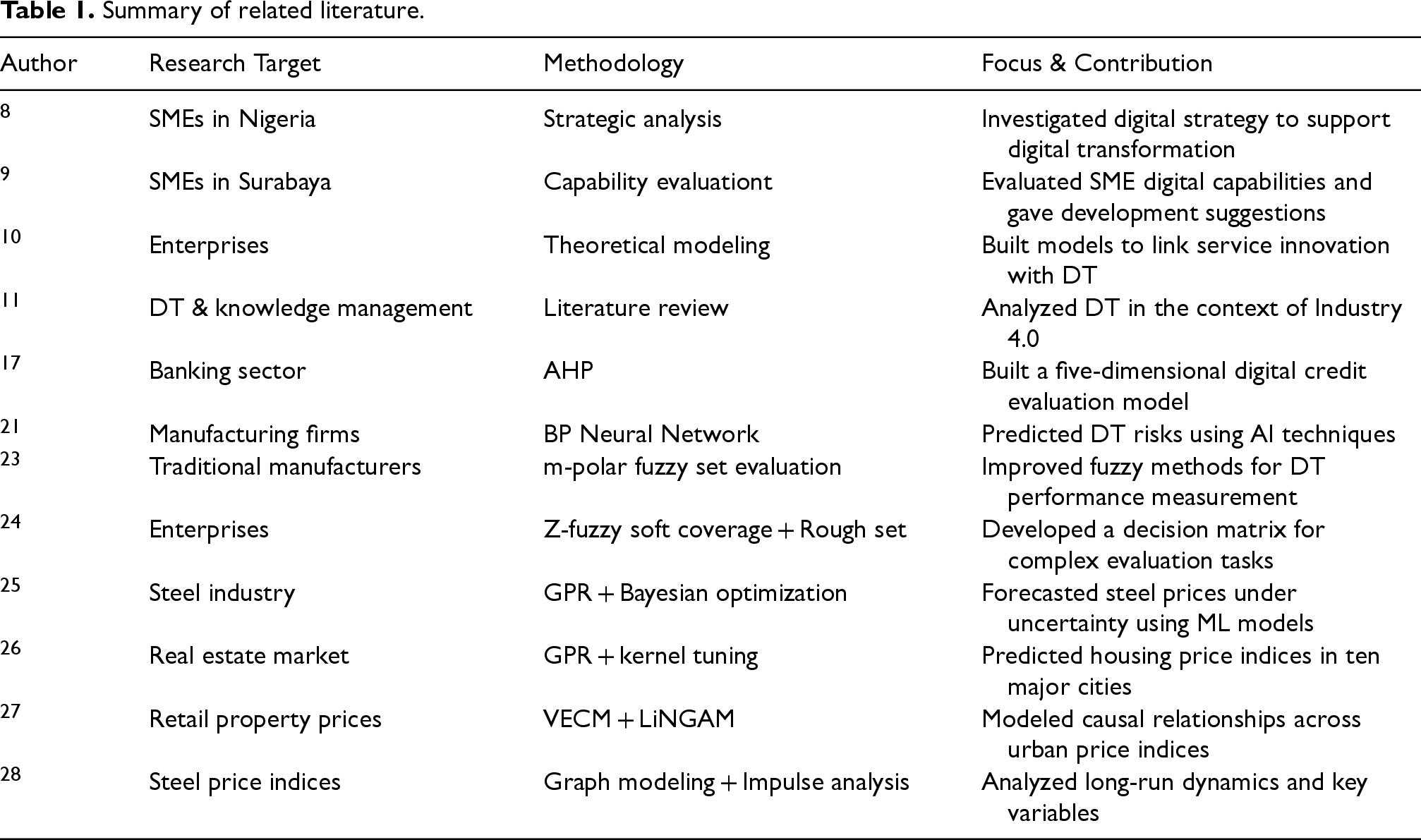
Summary of related literature.
Based on a comprehensive review of both domestic and international studies, it can be observed that current methods for evaluating the digital capabilities of SMEs are not yet widely applied in practice. Many existing approaches suffer from limitations such as incomplete indicator systems and insufficient accuracy in handling qualitative or uncertain information. Given that the success of DT directly influences the sustainable development of SMEs, there is a growing need for more systematic and adaptable evaluation frameworks. In this context, the method proposed in this study—integrating the AHP with FCE—is both innovative and practical. From the perspective of research content, the study focuses on SMEs in Guizhou Province under the background of digital economy development, and constructs a comprehensive indicator system to assess their digital capabilities. From the methodological perspective, the proposed AHP-FCE model effectively combines structured expert judgment with fuzzy logic, offering a novel and interpretable approach for digital capability evaluation in regional SME settings.
Indicator system for SME digital capability
To enhance the digitalization capability of SMEs, an evaluation model for the digitalization capability is built by integrating AHP and fuzzy synthesis to promote their sustainable development, and its practical effect is verified through examples. Digital technology is a more advanced technology naturally generated under the progress of the times. As time goes by, enterprises have applied digital technology to expand information access, enhance technological innovation, and occupy the market. 29 In fact, the digitalization of an enterprise is specific and dynamic, which uses and implement digital technology to gain competitive advantage under new circumstances. Therefore, the precondition for building a digital capability evaluation model is to establish a corresponding system. For SMEs, it is essential to understand the constituent elements of their digital capabilities, as shown in Figure 1. 30
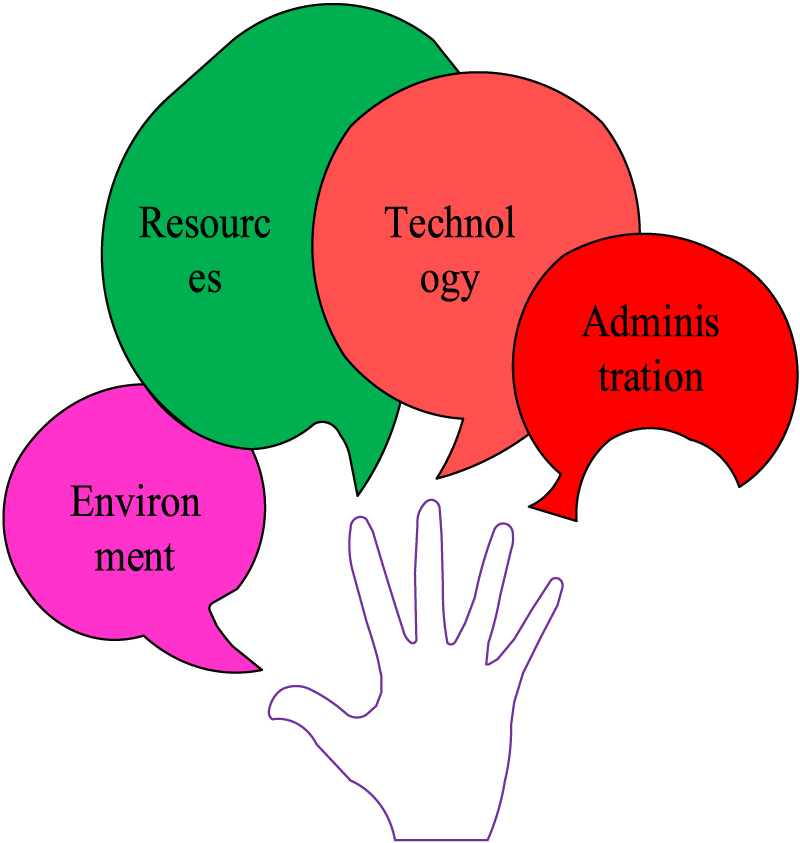
Elements of SMEs’ digital capabilities.
From Figure 1, the elements of SMEs’ digital capabilities include environment, resources, technology, and management. The survival trend of SMEs is also an important factor affecting their overall development. Therefore, considering the survival environment, the needs of customers can be grasped timely and accurately, and the quality of products and services can be constantly improved to meet customer needs, thus enhancing the competitiveness of small, medium and micro enterprises. Sources are the basis for realizing the digital development of enterprises and improving their competitiveness. Enterprises must have enough capital to gain competitive advantage. Only by obtaining economic benefits continuously can the development of the enterprises be guaranteed. Human resources are an important part of enterprise resources, which determine the way and direction of enterprises. In addition, the acquisition of resources has a certain impact on the production and operating performance of enterprises, which plays a decisive role in their innovation and development. The development and expansion of digital technology are prerequisites for innovation and achieving intelligent decision-making. On the one hand, the key digital technology is the lifeline for enterprises to learn and master production and manufacturing. On the other hand, it is necessary to transform, align, and reuse technical knowledge through professional knowledge and other application tools. For digital management, introducing digital technology to SMEs and establishing a management system from product supply to customer feedback are important measures to achieve effective cooperation and enhance the sustained competitiveness of enterprises.
The elements of SMEs’ digital capabilities enable the construction of the evaluation index system, which can comprehensively reflect the comprehensive capability for the development. Therefore, before building the system, four principles should be followed, and corresponding indicators should be determined. The first level includes digital resource collaboration capability, technology, management, and environment awareness, which are represented by A, B, C, and D, respectively (The four indicators are mainly constructed based on the constituent elements of digital capabilities in SMEs, by sorting and summarizing existing literature, and combining the opinions of multiple management experts, scholars, and managers of SMEs in Guizhou). Their specific contents are shown in Figure 2. 31
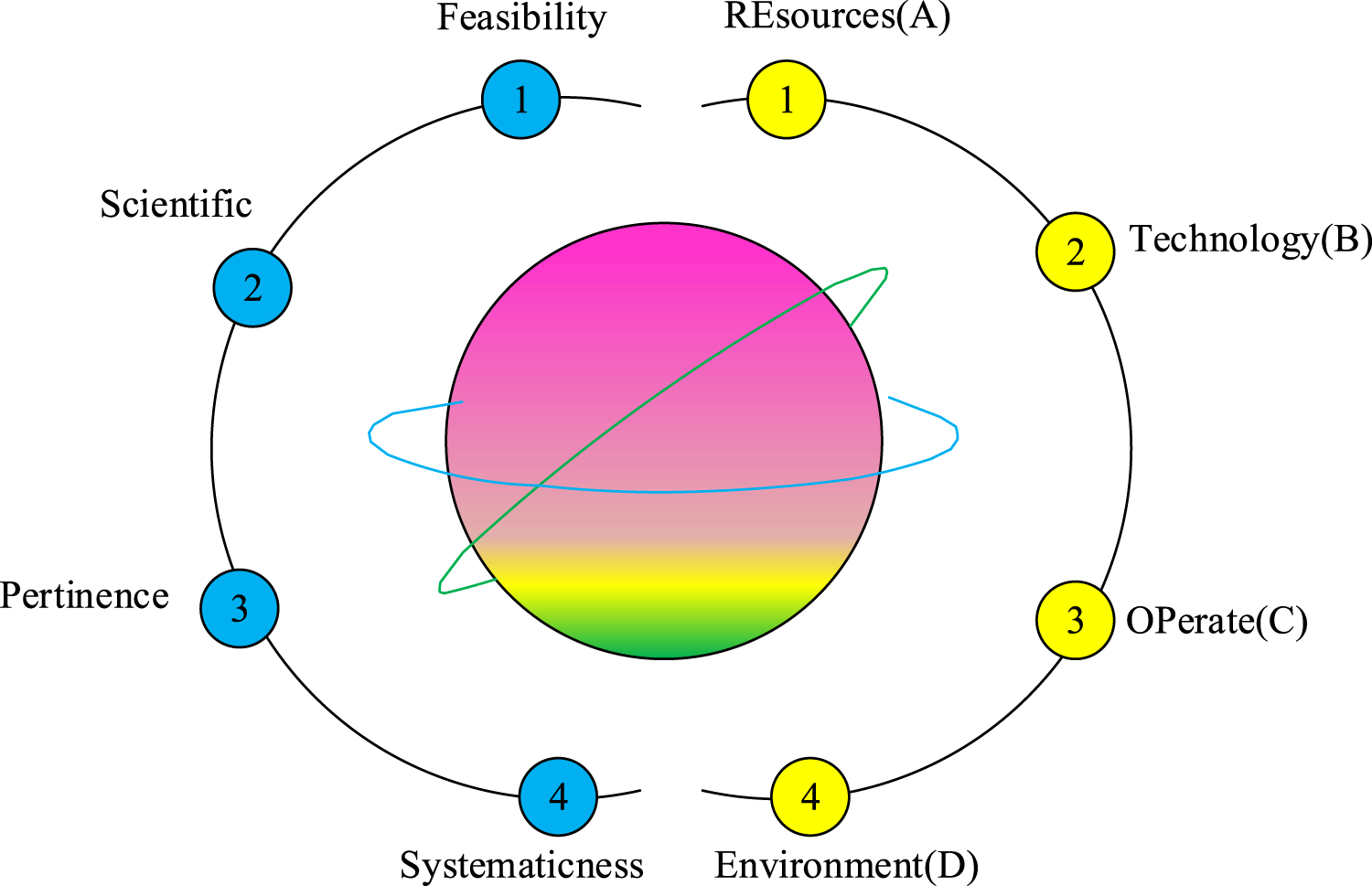
Principles and selected indicators for building evaluation system.
From Figure 2, the principles to be followed are feasibility, scientificity, pertinence, and systematicness. Compliance with the principles of feasibility and scientificity can ensure that the research content conforms to the development status of SMEs, while compliance with the principles of pertinence and systematicness can ensure a comprehensive capability analysis of SMEs. The four indicators are at Level I, which comprehensively analyze the technological integration capacity, basic resource reserve capacity, innovation capacity, and environmental resilience of SMEs. Under the primary indicators, the indicators can be further refined to select the corresponding secondary indicators, to build an evaluation indicator system integrating the primary and secondary indicators. The contents are shown in Figure 3. 32
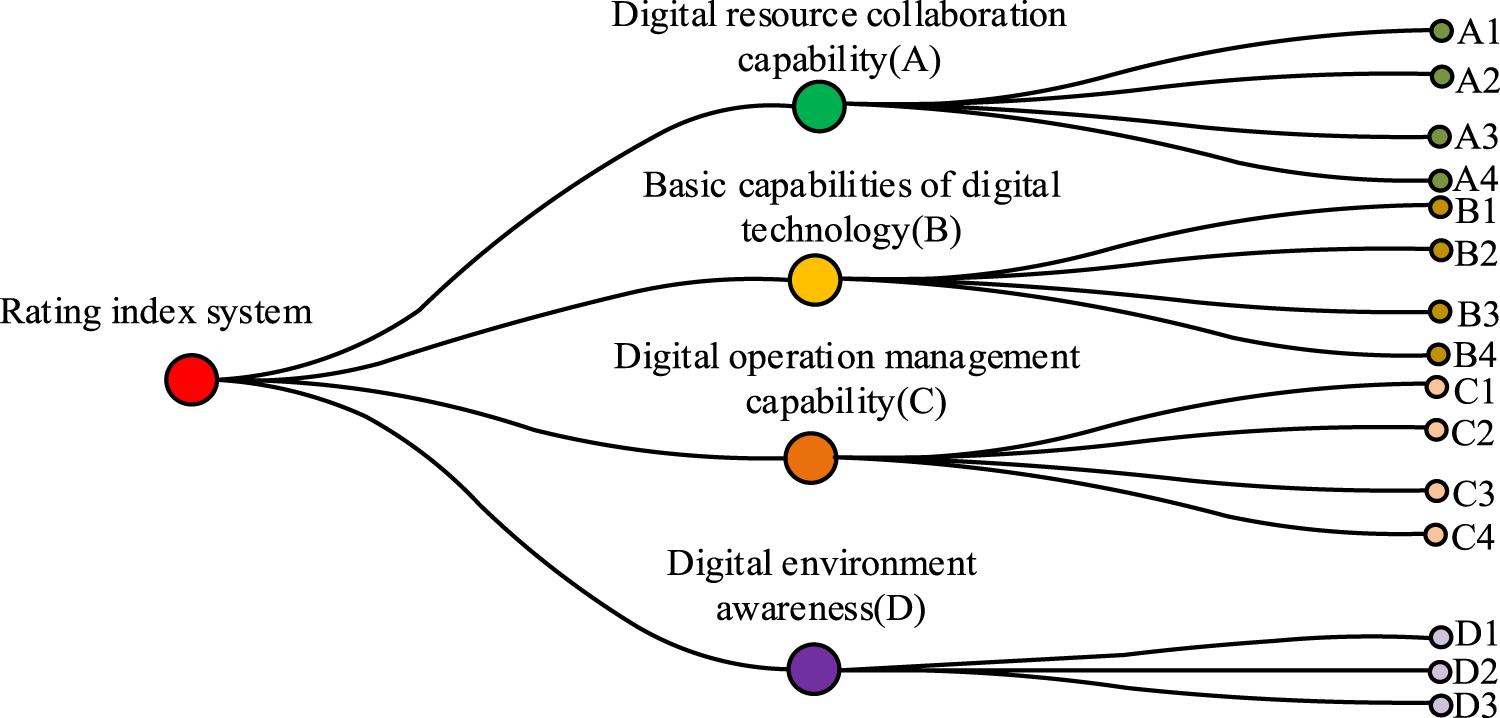
Schematic diagram of evaluation indicator system for digital capability of SMEs.
The selection of primary indicators in Figure 3 is based on relevant literature, expert opinions, and opinions from management personnel of SMEs in Guizhou. The secondary indicators are further subdivided based on relevant literature on the digital capabilities of enterprises. From Figure 3, 15 secondary indicators are divided under the four primary indicators, and these secondary indicators comprehensively analyze the primary indicators. The specific contents are respectively the integration of digital resources within the enterprise (A1), the integration and complementarity of resources and technologies with competing enterprises (A2), the collaboration of technical knowledge between the upstream and downstream enterprises (A3), and the industry university research cooperation (A4) under the digital resource synergy capability. The proportion of digital equipment investment (B1), the proportion of enterprise digital talents (B2), the proportion of digital R&D investment (B3), and the application rate of enterprise data security measures (B4) belong to the digital technology. The degree of digitalization of production process (C1), purchase and sales (C2), marketing (C3), other processes and management, and the coverage of ERP financial system (C4) belong to digital operation and management capabilities. Finally, there are government policy information acquisition (D1), industry competition information perception (D2), consumer demand perception speed (D3), etc.
Currently, the widely-used evaluation methods include AHP analysis, data envelopment analysis, and FCE, which are divided into subjective and objective weighting. From the elements of SMEs’ digital capabilities, the digital capabilities of SMEs are the result of the comprehensive effects of various factors. This makes it necessary to determine the corresponding weights at four levels when evaluating the digital capabilities of SMEs. Therefore, the research adopts the fusion method of AHP and FCE methods to conduct comprehensive evaluation. Traditional evaluation methods, such as the Best Worst Method (BWM), are built on intuition and are relatively simple. 33 Moreover, they are time-consuming when faced with large-scale problems and are easily influenced by decision-makers’ subjective judgments. Although the technique for Order Preference by Similarity to an Ideal Solution (TOPSIS), which utilizes the similarity of ideal solutions, is simple to operate, accurate results cannot be obtained when the indicators of two evaluation objects are symmetrical about the connection between the optimal and worst solutions. 34 Only the advantages and disadvantages of each evaluation object can be sorted, and cannot be managed in different levels, resulting in low sensitivity. The Full Consistency Method (FUCOM) demonstrates superior performance in accounting for the interplay between consistency and the frequency of criterion comparisons. 35 In comparison to conventional multi-criterion decision-making approaches, this method involves a notably reduced number of paired comparisons. However, its reliability in ascertaining standard weights when addressing multi-factor problems is suboptimal. The digital capabilities of SMEs analyzed are composed of multiple factors. This also indicates that when evaluating their digital capabilities, it is necessary to determine the corresponding weights of the indicators that constitute the four levels of digital capabilities of SMEs. Therefore, the method of integrating AHP and FCE has comprehensive and accurate evaluation capabilities.
AHP determines the weight of the evaluation index, and the FCE method constructs the evaluation model. AHP stands as a well-structured, hierarchical methodology that seamlessly integrates qualitative and quantitative approaches. This multi-criteria decision-making method is simple, flexible, and practical. 36 Its basic principle is to analyze the key indicators in complex problems, and then decompose them into a number of ordered dimensions. The position of each element in each level is roughly the same. Each level has specific associations with the previous level and the next level, and an orderly hierarchical structure is constructed between them according to the subordination relationship.
The evaluation and calculation process of AHP analysis method can be roughly divided into four steps. First, it establishes a hierarchical structure, then constructs a judgment matrix, and then ranks the levels in a single order, and finally, conducts a consistency test. In the second step, the constructed judgment matrix expression is shown in formula (1).
37

In formula (1), B represents a positive reciprocal matrix. b is the element in the matrix, and its related equation is shown in formula (2).
38

In formula (2), i and j respectively represent the horizontal and vertical values in the matrix, and the maximum value is n. 
In formula (3), W represents the normalized eigenvector of the maximum terbium value. 
In formula (4),
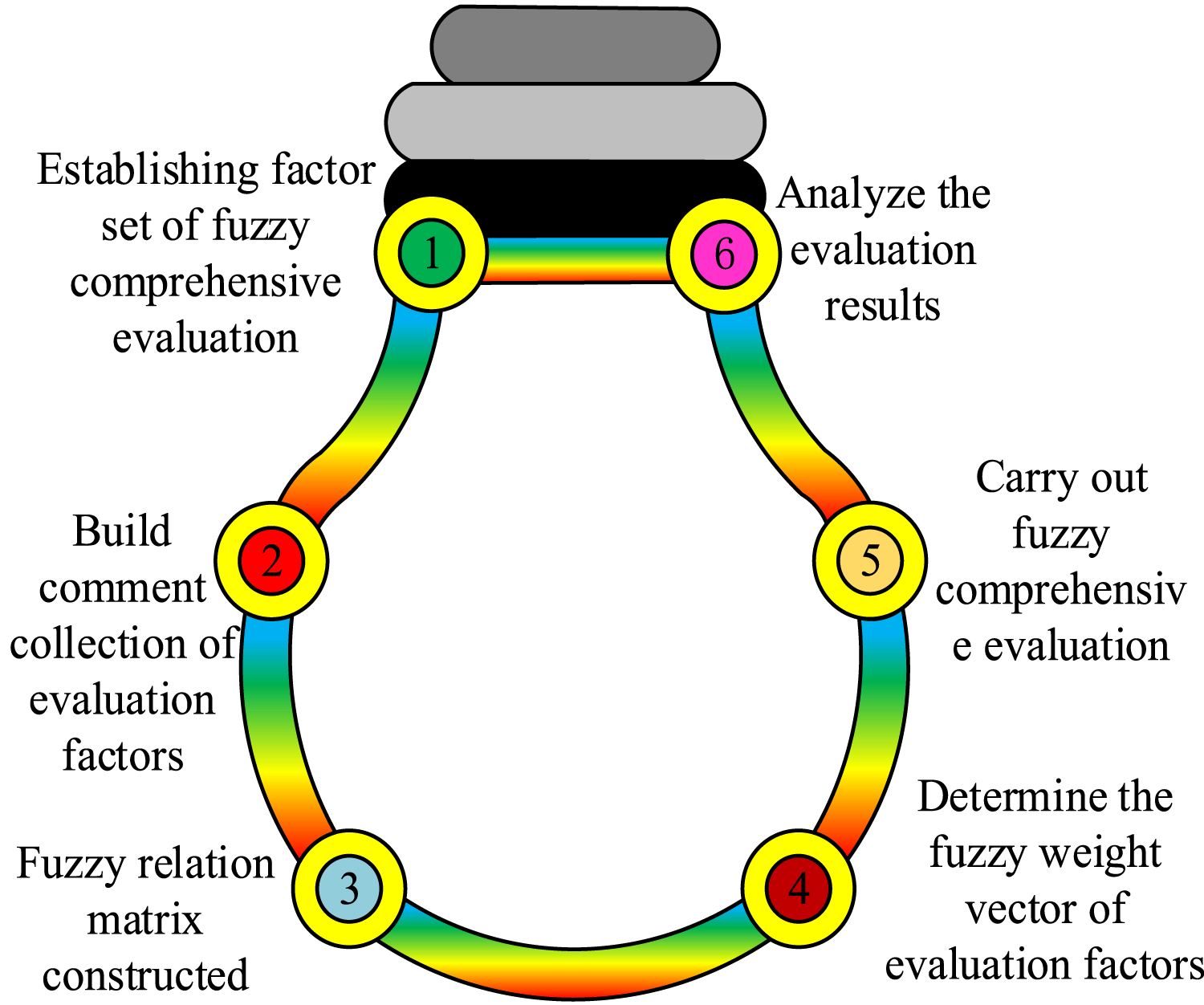
Specific steps of building evaluation model.
From Figure 4, the specific steps are to first establish the corresponding factor set of FCE. The second is to construct the comment set corresponding to the evaluation factors. Then the corresponding fuzzy relation matrix is constructed. Next, the fuzzy weight vectors of these factors are determined according to the evaluation factors. In the next step, the FCE is carried out, and the evaluation results are analyzed finally. In establishing the corresponding factor set, the expression of the factor set is shown in formula (5).

In formula (5), U represents the factor set of FCE. u is the element in the set, and its expression is shown in formula (6).

In formula (6), 
In formula (7), V represents the comment set of evaluation factors, and the expression of its internal elements is shown in formula (8).

In formula (8), 
In formula (9), R represents the fuzzy relation matrix. r represents its internal element. The expression of 
In formula (12), 
In formula (11), 
In formula (12), 
In formula (13), each weight can be combined to form a weight set, and AHP analysis method is used to determine the coefficient of the weight index. During the execution of the FCE process, an appropriate composition operator can be employed to merge the weight set with the fuzzy relation matrix. This operation yields the fuzzy evaluation result vector for each evaluated object. The model expression of FCE is shown in formula (14).

In formula (14), C represents the evaluation result vector. W represents the weight set. The expression of c is shown in formula (15).

In formula (15),
To verify the effectiveness of the evaluation model integrating AHP and fuzzy synthesis, the research evaluated the digitalization capabilities of SMEs in Guizhou. Due to the disruptions brought about by the pandemic, the study was predominantly carried out via an online questionnaire-based survey. The questionnaire collected the basic information of the respondents, which was filled in by the managers and employees of the respondents. The Likert 5-level scale was used to quantify the digital capabilities of the SMEs, which were expressed by 1–5, respectively. The larger the number, the stronger their digital capabilities. Among them, the main measures for the digital capabilities of SMEs in the questionnaire were the basic digital capability, analysis capability, application, and development capability indicators. The basic information of the samples collected in the study and the related reliability test results are shown in Figure 5.
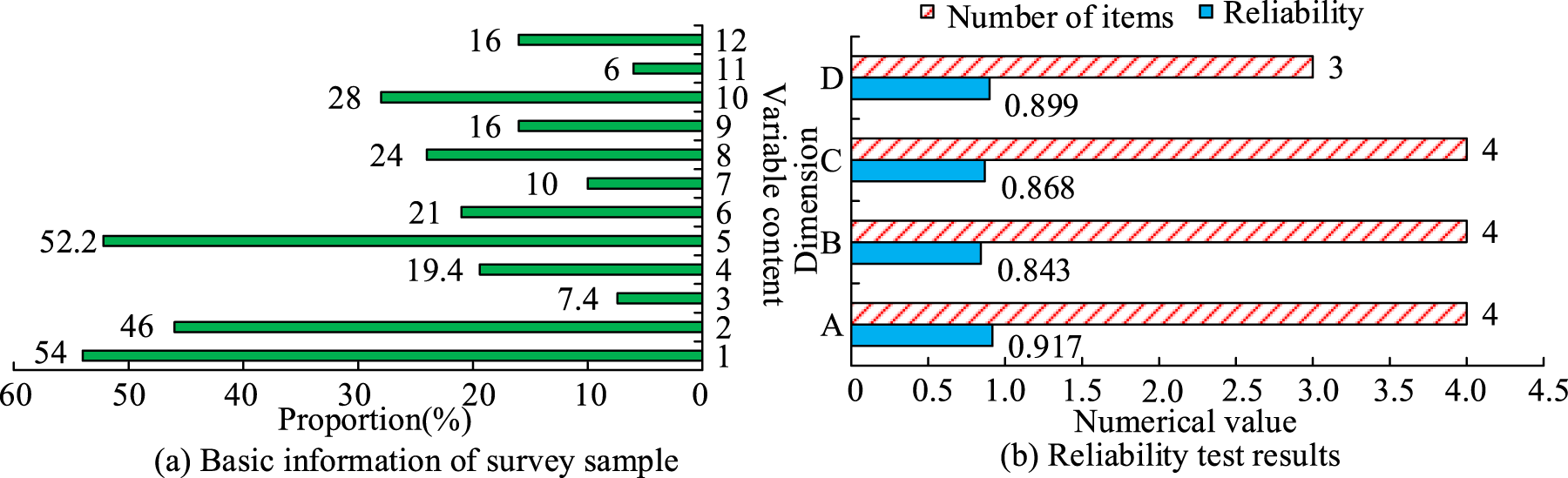
Basic sample information and related reliability test results.
The results in Figure 5 were expressed using the relevant calculations from formulas (5) to (9). 1–12 in Figure 5(a) represent variable contents, including male, female, senior high school and below, junior college, undergraduate, master and above, management post, production post, technical post, marketing post, administrative post, and others. There was little difference between the male and female proportion of the respondents. The majority of the respondents had bachelor's degrees, accounting for 52.2%. Among the post types, production posts and marketing posts accounted for more, 24% and 28%, respectively. In the reliability test, the correlation of the items in the questionnaire was greater than 0.5, which indicated that the internal consistency of the scale was high. From the reliability test, the values of the four-dimension indicators were greater than 0.8, indicating that the scale selected in the study was highly reliable. On this basis, the study asked five experts in the management, including Guizhou University, and five executives of Guizhou SMEs, to compare the importance of each indicator, to obtain the single weight and comprehensive weight of the indicator, and the results are shown in Table 2.
Individual weight and comprehensive weight of each indicator.

From Table 2, among the first level indicators of SMEs’ digital capabilities, the most important one was digital technology, with a weight of 0.3957, followed by digital operation and management, with a weight of 0.3519. It indicated that the development of SMEs’ digital capabilities needed digital technology as a support to lay a good foundation for digital construction. In addition, the improvement of digital operation and management was also conducive to the creation and transmission of SMEs’ own values, to realize the realization of the business model. Among the secondary indicators, the more important indicators were the internal resource integration of the enterprise and the speed of government policy information acquisition. The individual weights of the two indicators were 0.4829 and 0.5. At this time, in terms of more detailed indicators, the basic capabilities of SMEs became particularly important. In addition, when conducting a questionnaire survey on managers and employees of an SME, the research also collected their satisfaction with their enterprise's digital capabilities under these indicators, which were judged according to five levels: very satisfied, relatively satisfied, general satisfied, not very satisfied, and very dissatisfied. The survey results are shown in Figure 6.
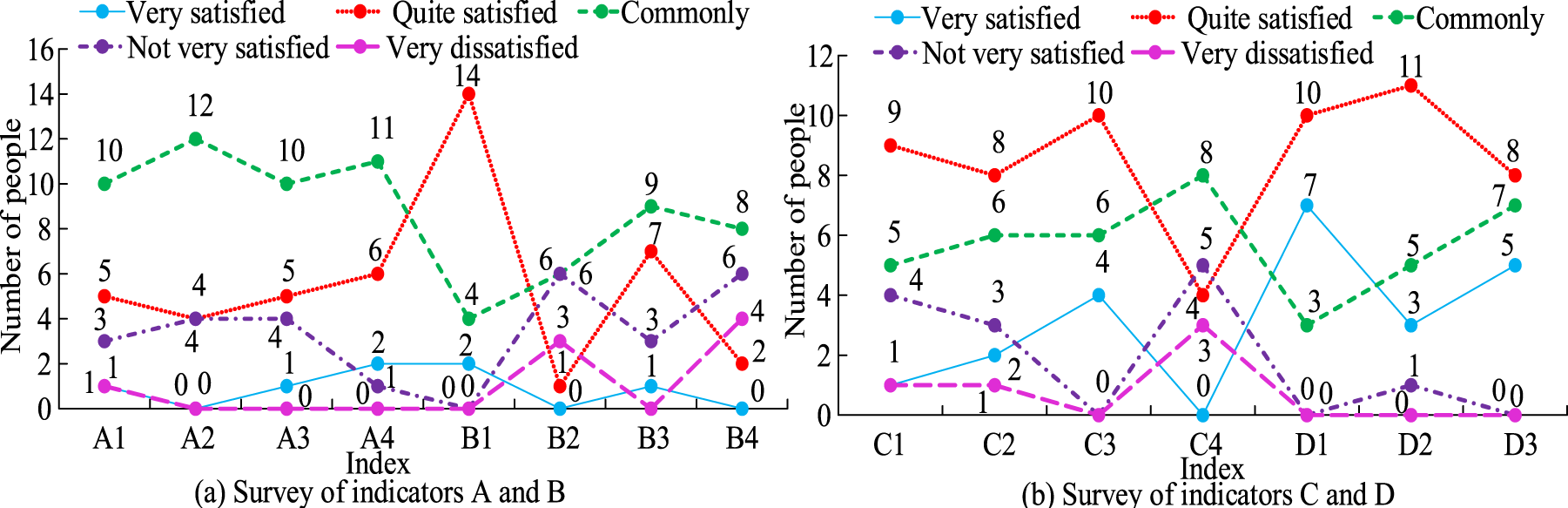
Investigation results of digital capability of an enterprise.
The results in Figure 6 are expressed using the relevant calculations from formulas (10) to (15). From Figure 6, among the digital collaboration capability indicators, most people in the enterprise thought that the indicator was average, with 43 people in total, and only 4 people were very satisfied. Among the basic capability indicators of digital technology, most people thought they were satisfied, with the largest proportion of people investing in digital equipment. Similarly, among the indicators of digital operation management and environmental awareness, the number of people who were also satisfied was the largest, 31 and 27, respectively. In general, the SME's digital resource collaboration capability was average, and its environmental awareness was at a strong level. To further verify the results, the relevant calculation formula of FCE was used to calculate the scores of the corresponding the first level indicators. The study assigned their scores as weak below 40, weak from 40 to 60, average from 60 to 80, strong from 80 to 90, and strong from 90 to 100. The results are shown in Figure 7.
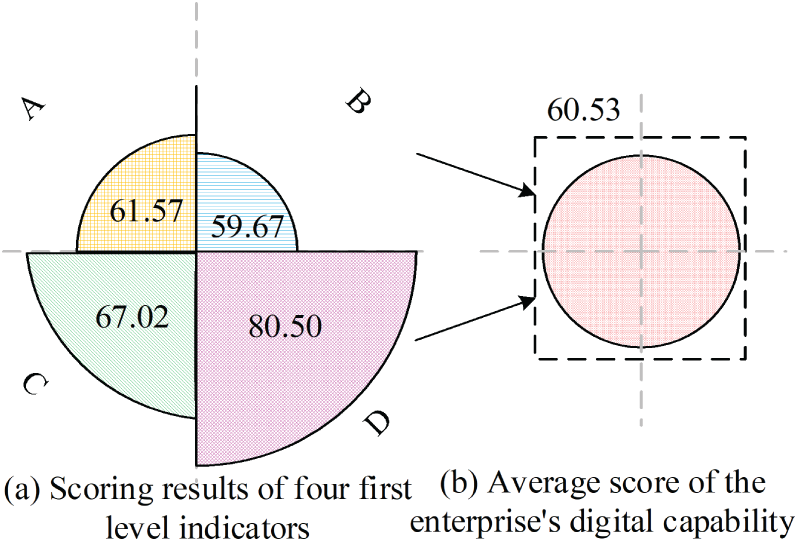
Score result of the enterprise's digital capability.
The results in Figure 7 were also expressed using the relevant calculations from formulas (10) to (15). From Figure 7, the digital resource system capability of the SME was 61.57 points, which was a general level. The score of basic digital technology ability was 59.67, which was weak. The score of digital operation and management ability was 67.02, which was marked as a general level. The score of digital environment perception ability was 80.50, showing a strong level. The average score was 60.53, which was at the average level. To sum up, the digitalization capability of the enterprise needed to be further enhanced, so as to help the enterprise achieve better digitalization development. In addition, the AHP FCE method used in the study could better analyze the digitalization capability of the SME, which was effective. To more comprehensively analyze the ability of the methods given in the study, the study expanded one enterprise to 20 enterprises, and the score results are shown in Figure 8.
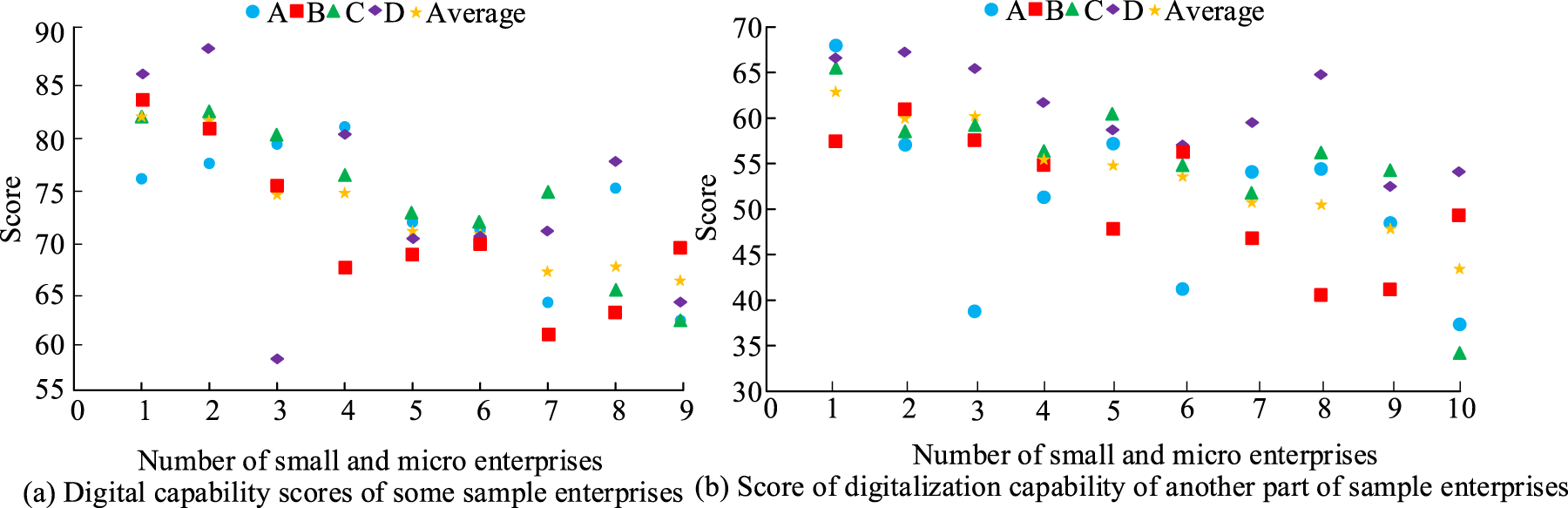
Scores of the remaining 19 companies.
From Figure 8, the digital perception and operation management capabilities of many enterprises were at a strong level, with the highest score in the second enterprise, 88.25 points. Other indicators were still at a general or even low level, with the lowest score of 37.33. In general, the numerical capability of Guizhou's SMEs was still at a general level and needed to be improved. In addition, the method selected in the study showed the digital capability level of sample enterprises better, and could find out the missing places of SMEs more intuitively based on the score, so it was practical. According to the AHP FCE method, the importance of the four digital capability indicators of SMEs, namely, basic digital technology capability > operation management capability > resource collaboration capability > environmental awareness capability. Consequently, by conducting a weight comparison, it becomes evident that the four indicators exerted a significant influence, compelling SMEs to place greater emphasis on enhancing their digital capabilities. Ultimately, to provide a more intuitive representation of the digital capability level range among Guizhou SMEs, the evaluation results, which are based on the evaluation set and score grade configuration, are presented in Figure 9.
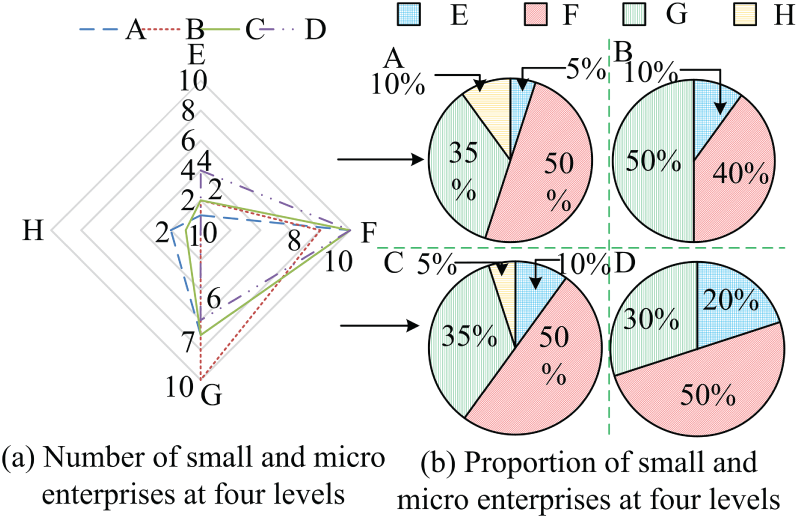
The evaluation results are given according to the given comment set and score grade settings.
In Figure 9(a), E, F, G, and H represent strong, general, medium weak, and weak, respectively. Among the four indicators, the digital resource collaboration capability was the worst, which was medium weak in most sample companies. Among these companies, 5% were relatively strong, 50% were general, 35% were medium weak, and 10% were weak. This showed that the digital resource collaboration capacity of Guizhou SMEs was not deep enough, and digital resource collaboration must be strengthened. Digital environment awareness was relatively strong. Most companies were in general and medium weak situations. 20% of companies were strong, 50% were general, and 30% were medium weak. From the two indicators of digital technology foundation and digital operation and management, the vast majority of companies were in a general or weak situation, and only 10% of high-level companies. To sum up, SMEs in Guizhou were at a medium low level in terms of digital resource collaboration, digital technology foundation, digital operation management, and digital environment awareness. To further validate the robustness of the evaluation method proposed in the study, it was compared with other methods. The study introduced TOPSIS, entropy weight method, grey correlation analysis method, and data envelopment method for comparison (represented by A∼D and studied using E). The robustness, reliability, and adaptability of the analysis and evaluation methods in the comparative experiment are shown in Table 3.
Comparison results of indicators using different methods.

From Table 3, the robustness, reliability, and adaptability results of the proposed combination evaluation method were 0.487, 0.569, and 0.776, respectively, which were higher than those of the comparative comparison method. Overall, the combination evaluation method proposed in the study that combined AHP and FCE methods had high robustness and reliability.
To enhance the digitalization capability of SMEs, the evaluation method integrating AHP and FCE was selected and applied to 20 companies in Guizhou to verify the evaluation effect of this method. In the model constructed by AHP FCE method, it described the four digital capabilities of SMEs and the individual weight and comprehensive weight of subordinate specific indicators in more detail. The largest individual weight was the basic digital technology capability, with the weight of 0.3957. Applying this method to the satisfaction survey of managers and employees, most people were generally satisfied with the digital capabilities of the enterprise, and the highest score was digital environment awareness, with a score of 80.50. In addition, in the 20 enterprises, the digitalization capability of SMEs in Guizhou was generally weak, and the digitalization resource collaboration capability was the lowest. Only 5% of enterprises are strong, while the digitalization perception capability was the highest, and 20% of companies were strong. Overall, the AHP FCE method proposed in the study could provide a clearer understanding of the importance of various digital capabilities of enterprises and the level of digital capabilities of enterprises. Therefore, enterprises could improve their digital capabilities according to the comparative changes in weights.
Limitations and future work
This study provided a comprehensive evaluation model of SME digital capability based on the integration of AHP and FCE. However, several limitations should be noted. First, the sample size used in the empirical analysis was limited to 20 SMEs in Guizhou Province, which may affect the generalizability of the findings. Second, the indicator weights were mainly derived from expert scoring, which may introduce subjectivity despite the structured AHP approach. Third, the evaluation results relied on static data, lacking consideration of temporal dynamics or evolving digital behaviors.
Future work can address these limitations in multiple directions. Expanding the dataset to cover multiple provinces or industries would enhance the model's applicability and robustness. Incorporating machine learning techniques, such as neural networks or Gaussian process regression, could improve the adaptability of weight assignment and result interpretation. Additionally, integrating dynamic or longitudinal data would allow for time-series tracking of enterprise digitalization levels, offering greater insights into DT progress and policy intervention effectiveness.
Footnotes
Funding
The research is supported by: The Humanities and Social Sciences Research Project of Hubei Provincial Education Department: “International Comparative Study of Government Accounting: From the Perspective of Comparing China, Portugal, and the UK” (13q115).
Declaration of conflicting interests
The author declared no potential conflicts of interest with respect to the research, authorship, and/or publication of this article.