







Abstract
Work-related stress has emerged as a critical issue in public health and labour policy, particularly in light of evolving work environments and the effects of the COVID-19 pandemic. This study examines the perception of work stress across European Union member states by utilising CUB models, a class of mixture models well-suited for analysing ordinal data. The data for this research stems from the Flash Eurobarometer - OSH Pulse survey, conducted by the European Commission Agency for Occupational Safety and Health (EU-OSHA) in Spring 2022. Our findings indicate that the pandemic crisis has affected workers in the EU differently, with a greater impact on self-employed individuals, women, and more educated workers, who reported higher levels of work-stress. To support this analysis, the graphical features of CUB models effectively illustrate diverse response patterns across different countries and respondent profiles. Additionally, the Gretl CUB package has been updated to allow the use of sample weights in the estimation algorithm.
Introduction
Work-related stress is increasingly recognised as a serious social issue and a pressing public health challenge. 1 It is associated with depression, reduced productivity, increased absenteeism, and long-term mental and physical health consequences. 2 Recent studies on workplace risk factors indicate that approximately 27% of workers report experiencing stress, depression or anxiety. 3 A comparable proportion also states that their working conditions exert detrimental effects on physical and psychological health, as well as on their overall well-being. 4
Current research on workers’ well-being across Europe reveals significant discrepancies between employees and self-employed individuals, with the latter group experiencing higher levels of stress. 5 These findings indicate that employees often benefit from structured support systems and resources within organisations, whereas self-employed individuals frequently navigate their challenges in isolation.6,7 Empirical research consistently frames self-employment as inherently stressful, characterised by pronounced economic insecurity, high workloads, and unpredictability. 8
Since the onset of the COVID-19 pandemic, self-employed individuals have encountered remarkable and disproportionate challenges. Many have experienced drastic reductions in working hours and consequently, their income has substantially declined, also due to the combination of multiple factors. 9 The financial and operational challenges faced by self-employed individuals have had a noticeable impact on their well-being. A study by Eurofound on self-employment and social protection in Europe reveals that self-employed people are twice as likely as employees to have difficulties making ends meet and are more prone to health issues such as exhaustion and depression. 6 The pandemic crisis may have intensified pre-existing structural vulnerabilities, particularly for self-employed individuals, who have historically lacked access to the institutional support mechanisms and resource safeguards available to salaried employees. 10
As a matter of fact, the sources of stress for each group can differ markedly; employees may experience pressures related to workplace dynamics, job insecurity, and workload, whereas self-employed individuals often face uncertainties related to income stability, client management, and the lack of a structured work-life balance. 6 Other research also showed that high job demands among self-employed individuals led to greater mental exhaustion, with a significant correlation between workload and presenteeism. Although proactive coping strategies showed potential to mitigate stress, their effectiveness varied. 11 Self-employed people have reported elevated levels of stress and anxiety, grappling not only with financial instability but also with the uncertainty of their professional futures, particularly in comparison to employees who had access to more robust support systems during the pandemic. 12 Within the European Union, this trend was particularly prominent in sectors such as healthcare and education. The effects were even more remarkable in countries where stringency measures were more severe. 13 This increased pressure highlights the unique vulnerabilities experienced by self-employed individuals during these unprecedented times.
To delve deeper into these findings and provide advanced graphical tools specifically suited for ordinal data, this study utilises information from the 2022 European OSH Pulse Survey, 3 conducted by the European Union (EU) Agency for Occupational Safety and Health (EU-OSHA) as part of the European Commission’s Strategic Framework for Health and Safety at Work. Data was collected through self-reported responses to a series of questions on working conditions, typically measured using Likert scales. Our analysis employs CUB models, a class of mixture models that is particularly suitable to analyse ordinal data. 14 We focus on the perception of work stress across European Union member states, examining the differing impact of the pandemic on self-employed individuals compared to employees, while taking into account available respondents’ characteristics (gender, education level, age, full/part-time arrangement).
Particularly, we first examine the perception of work stress across European Union member states and our main research question centres around the differential impact of the pandemic crisis on the self-employed compared to their employed counterparts. Then, we also consider the characteristics of respondents, such as gender, age group, full-time or part-time employment, and educational level, since the COVID-19 pandemic has exposed certain groups of workers 1 (both employees and self-employed) to greater risks. For instance, women, young workers, and part-time workers faced significant income and job losses.
Our findings suggest that two years after the onset of the COVID-19 pandemic, self-employed workers reported higher levels of work-related stress compared to employees across the EU. This trend is especially pronounced among self-employed women and those with higher levels of education.
These results can be effectively represented in a parametric space (specifically, the unit square) and compared across different subgroups of respondents (e.g. by demographics, country of origin, or other characteristics).
The study is organised as follows. The next Section presents data of interest and the implemented modelling approach to analyse the response behaviour of employed and self-employed workers concerning their increased/non-increased work stress due to the pandemic. Section 3 presents visual representations of the findings from the empirical analysis, examining the impact of factors such as country of origin and employment type, as well as an analysis of the respondents’ characteristics. In Section 4, a novel algorithm is presented for evaluating the confidence intervals for the estimated probabilities for each response category. Some concluding remarks end the paper.
Data and methodology
Data source
Data for this study were sourced from the Flash Eurobarometer - OSH Pulse survey commissioned by EU-OSHA, which was conducted in Spring 2022.3,15 The survey involved interviews with over 27,000 employed workers across all EU Member States, as well as Iceland and Norway. Its purpose was to assess the impact of COVID-19 on workers’ health and to gather self-reported information on the overall quality of working life. The survey included a probability sample of 27,250 employed individuals aged 16 and older from the EU member states, with a specific sample size of 25,683, plus participants from Iceland and Norway. For each country, a sample of 1,000 respondents has been considered, except for Cyprus, Malta and Luxembourg, with 500 respondents. Interviews were conducted by telephone, representing both employees and the self-employed. In each country, respondents were called on their mobile phones. The telephone numbers sampled and contacted were generated via Random Digit Dialling (RDD) methods. The response rate 2 vary significantly, ranging from 4.2% in Poland to 31.5% in Belgium.
The survey covers all economic sectors and investigates psychosocial risk factors, stress, mental health, occupational safety and health (OSH) preventive measures, as well as opinions and experiences related to OSH in the workplace and digitalisation. Our focus is on question
This study investigates the different perceptions of work stress due to COVID-19, distinguishing by type of employment (employee/self-employed). Several factors have been selected for the analysis, including gender, full-time/part-time employment, age, and education level.
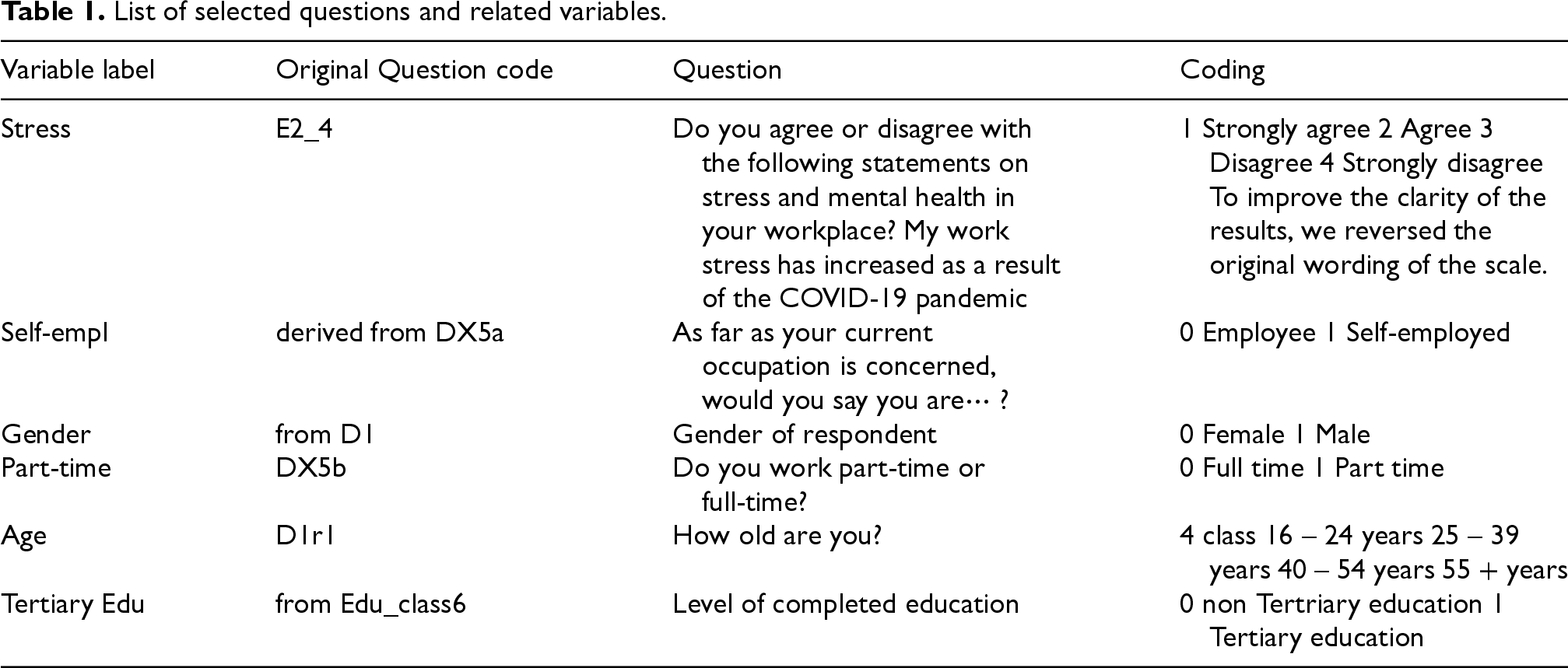
A detailed list of the selected variables, along with the corresponding questionnaire items and coding, is provided in Table 1. The target sample consists of 23,809 valid observations, after accounting for missing values.
List of selected questions and related variables.
List of selected questions and related variables.
Specifically, men represent
Increased stress perception (stress) and age frequency distribution, non-weighted observations.
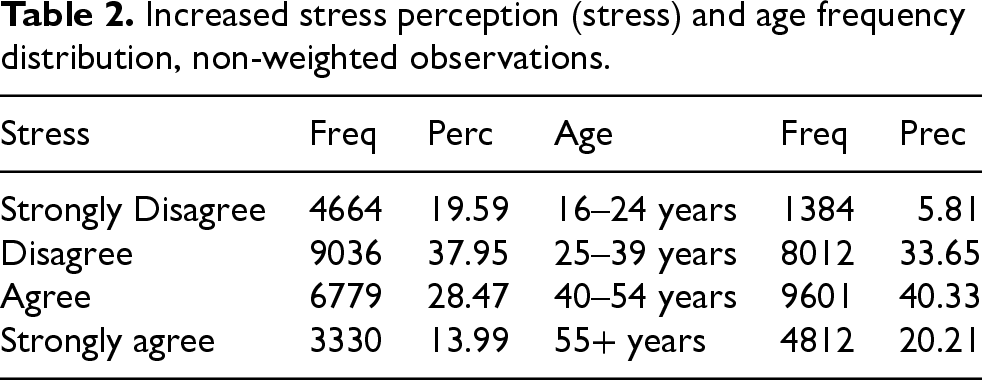
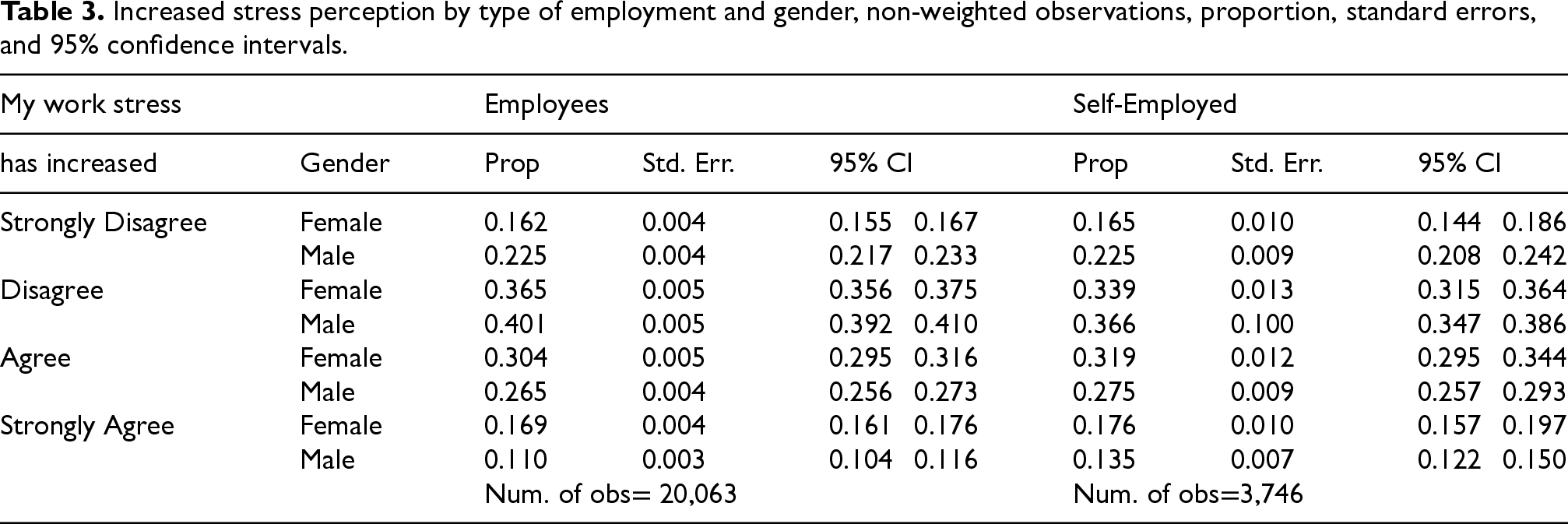
The majority of the interviewed workers fall within the 25 to 54-year age range. Approximately 57.5% of the total sample indicated disagreement or strong disagreement with the statement that they have experienced increased stress in relation to the proposed item. This percentage drops to 55.8% when specifically considering self-employed respondents. As illustrated in Table 3, although this reduction in the overall sample is modest, it is statistically significant when analysed by gender. Such statistical evidence emerges from the fact that the confidence intervals do not overlap for every response category. Therefore, it seems essential to further investigate the variations in response patterns according to employment type and gender.
Increased stress perception by type of employment and gender, non-weighted observations, proportion, standard errors, and 95% confidence intervals.
To achieve our goals, we employ the framework of CUB models, which are particularly effective for analysing ordinal data. This methodology allows us to explore response patterns across various subgroups, highlighting their levels of agreement/disagreement (referred to as ”Feeling”) with a particular item, as well as their degree of heterogeneity (denoted as ”Uncertainty”). Furthermore, this framework allows for insightful graphical representations, both with and without the inclusion of covariates related to the subjects under consideration.
A consolidated statistical analysis of preferences, opinions, judgments, and similar expressions through ordinal variables can be effectively conducted using Generalised Linear Models (GLM); see among many others.17–19 In this study, we opted for a relatively novel approach based on the assumption that self-assessments can be viewed as a combination of agreement with the item and the uncertainty or heterogeneity observed in the response patterns. The selected methodology is based on CUB models, the acronym standing for a convex Combination of a discrete Uniform and a shifted Binomial random variable. Originally proposed by Piccolo, 20 this model has been refined and adapted in various ways and has found applications across numerous contexts. For a comprehensive review, see Piccolo. 21
The primary distinction between the
Within the GLM framework, the central idea is that modelling ordinal data requires the use of cumulative distribution functions to establish ordered constraints among adjacent categories. This framework also necessitates a relationship with covariates through these distribution functions. Conversely, the CUB paradigm is based on a mixture distribution designed to mirror the decision-making process underlying the observed ordinal scores. The data-generating process is described as the combination of a feeling component and an uncertainty/heterogeneity component. The theoretical rationale of CUB models is that observed discrete responses arise from a dual latent decision-making process, comprising a) a feeling component reflecting personal preference, and b) an uncertainty/heterogeneity component capturing inherent indecision. This framework is well-suited for modelling both rating variables and marginal ranking distributions, explicitly accounting for the uncertainty intrinsic to the evaluation process. Therefore, CUB models enable more transparent visualization and enhance the characterization and interpretation of respondent profiles of interest.
Formally, suppose that
The former component is described as a shifted Binomial distribution:

Then, the CUB model for the response 
Regarding the interpretation of the parameters, a larger value of
More comprehensive CUB models can be developed by including explanatory variables, allowing the feeling and/or uncertainty components to depend directly on respondents’ profiles. Let 

A simple CUB model without covariates can be labelled as
This methodology enables a thorough comparison of different responses to each item in terms of feelings and uncertainty. Consequently, it allows for the identification of clusters or atypical items that may require further examination, as well as the comparison of response patterns across various groups of respondents. These capabilities depend on the one-to-one correspondence between the probability distribution of responses (R) and the parameters (
Likelihood methods are the preferred estimation procedures for CUB models.

The OSHA-Pulse data are weighted 3 to align with Eurostat’s official statistics on the survey target population, which includes employment by sex, age, and NUTS-2 regions for each country within the covered geographical area.
Therefore, to consider sample weights 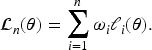
For this paper, the CUB Gretl package has been modified to consider sample weights in the estimation algorithm. Moreover, in the present study, standard error estimates are obtained using both the Sandwich matrix and the Bootstrap procedure following. 28 More importantly, the visualisation of the estimated models and the effects of covariates on the ordinal responses can be depicted using graphical devices; these representations convey a straightforward interpretation of the results.
Cross-country analysis
As previously stated, we aim to contribute to the current debate on work stress by means of the selected modelling approach. In particular, we investigate the (possible) variations among individuals in the response pattern to question E2_4 (Stress), measured on a 4-point Likert scale. To address the research question, we first analyse response patterns from a cross-country perspective, taking into account the type of employment (employee/self-employed).
Exploiting the graphical features of the modelling framework, without covariates,
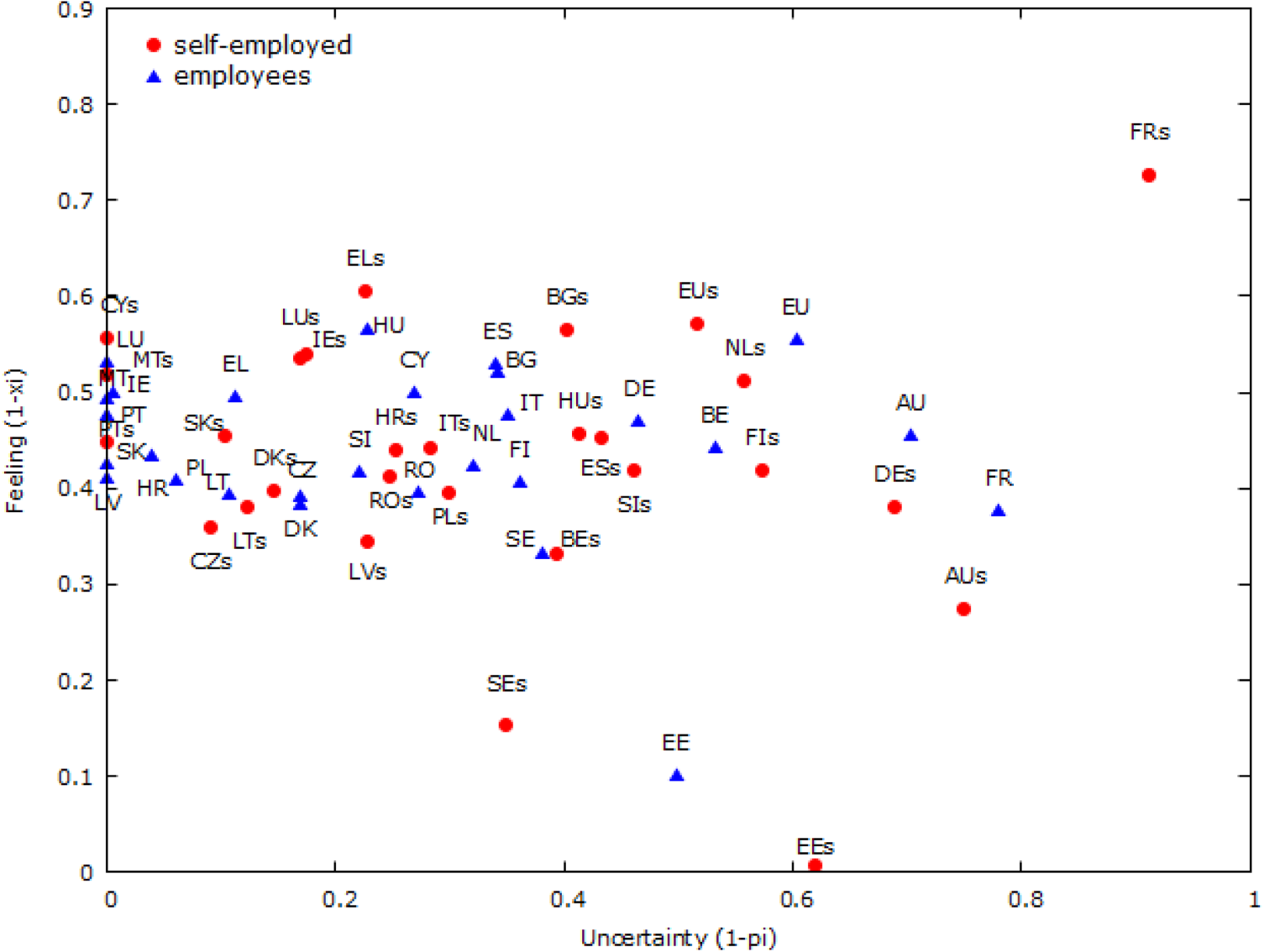
CUB(0,0) parameter estimates by country and type of employment. ISO country code, red bullet refers to self-employed, blue triangle refers to employees.
Our findings suggest that self-employed individuals reported higher levels of work-related stress during the COVID-19 pandemic compared to employees. Notably, for most of the countries, there are varying degrees of agreement with the selected item, since feeling and uncertainty parameters span the whole unit square. As depicted in Figure 1, there is a remarkable dispersion in levels of uncertainty among countries. For example, French self-employed respondents demonstrate a high level of feeling, scoring
This evidence can also be illustrated using a Multidimensional Scaling procedure 29 combined with a complete linkage clustering method 30 on data represented in Figure 1, we underline the presence of four distinct country clusters. These groups are depicted in Figure 2. German self-employed respondents, French non-self-employed respondents, and Austrian interviewees exhibit a unique response pattern characterised by remarkable uncertainty. In addition to their high levels of uncertainty, Estonian respondents and self-employed Swedes report the lowest feeling overall.
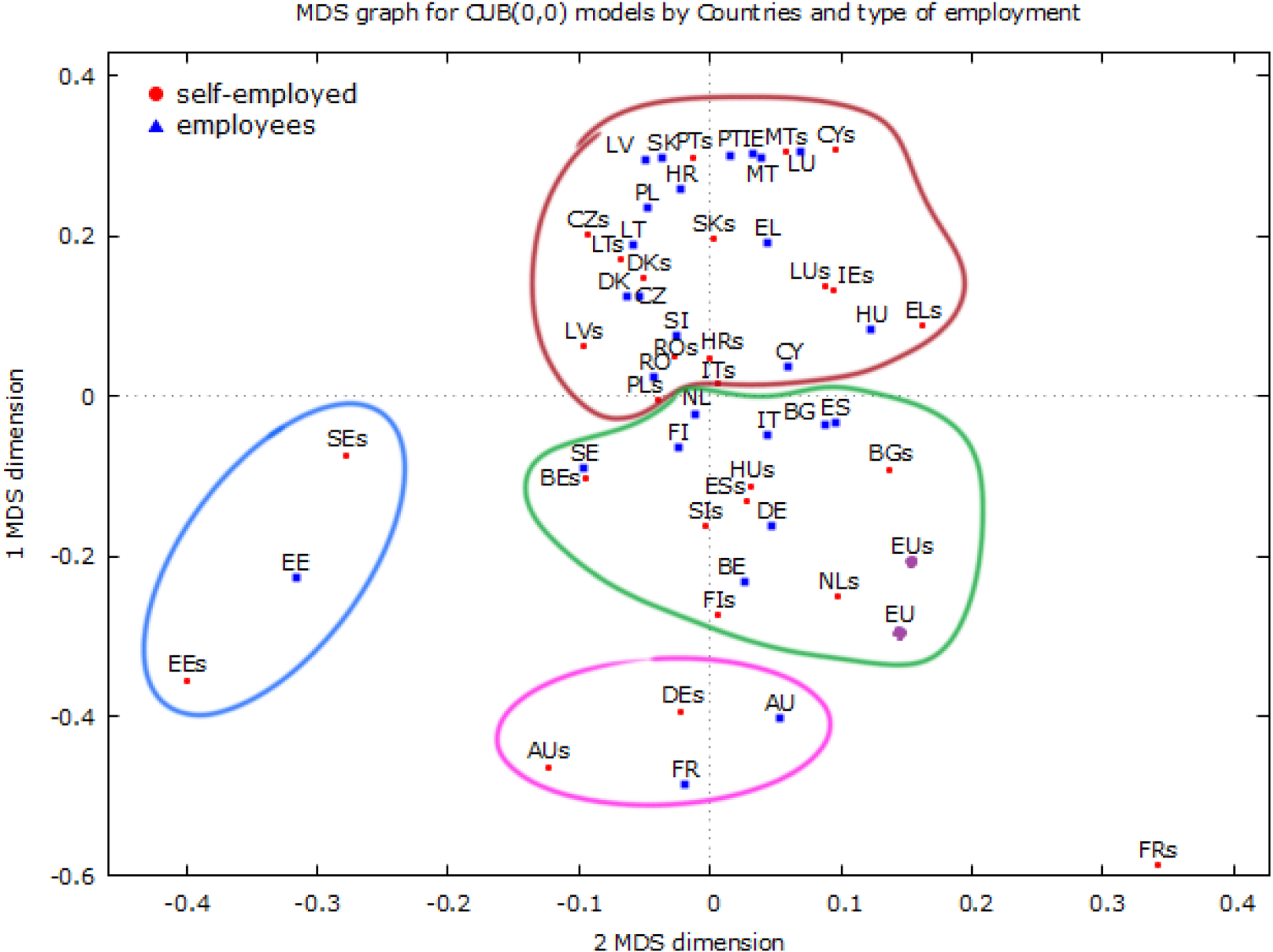
MDS groups on CUB(0,0) parameter estimates by country and type of employment. ISO country code, red bullet refers to self-employed, blue triangle refers to employees.
To delve deeper into the research question, we explore perceptions of work-related stress in relation to specific individual characteristics. This study seeks to investigate how the rise in work stress due to COVID-19 is influenced by factors such as gender and other drivers. Therefore, a Type of Employment (dummy variable: employee or self-employed, with employees as the reference category); Gender (dummy variable, with females as the reference category); Work Arrangement (dummy variable for full-time or part-time work, with full-time as the reference category); Age (categorised into four classes, with 16-24 years as the reference category); Education Level (dummy variable, with non-tertiary education as the reference category).
These factors contribute to a more nuanced understanding of the complexities associated with work stress in the context of the COVID-19 pandemic.
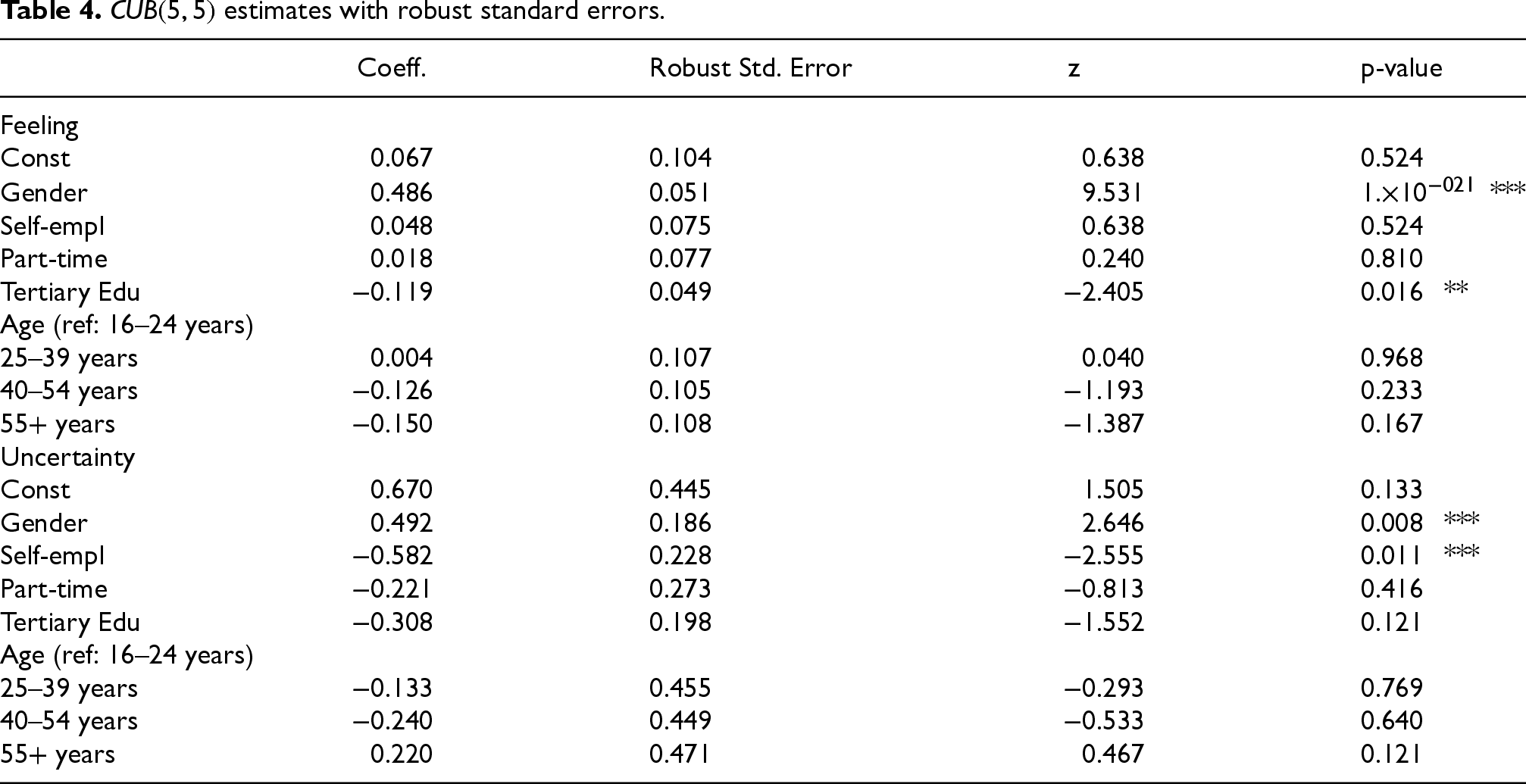
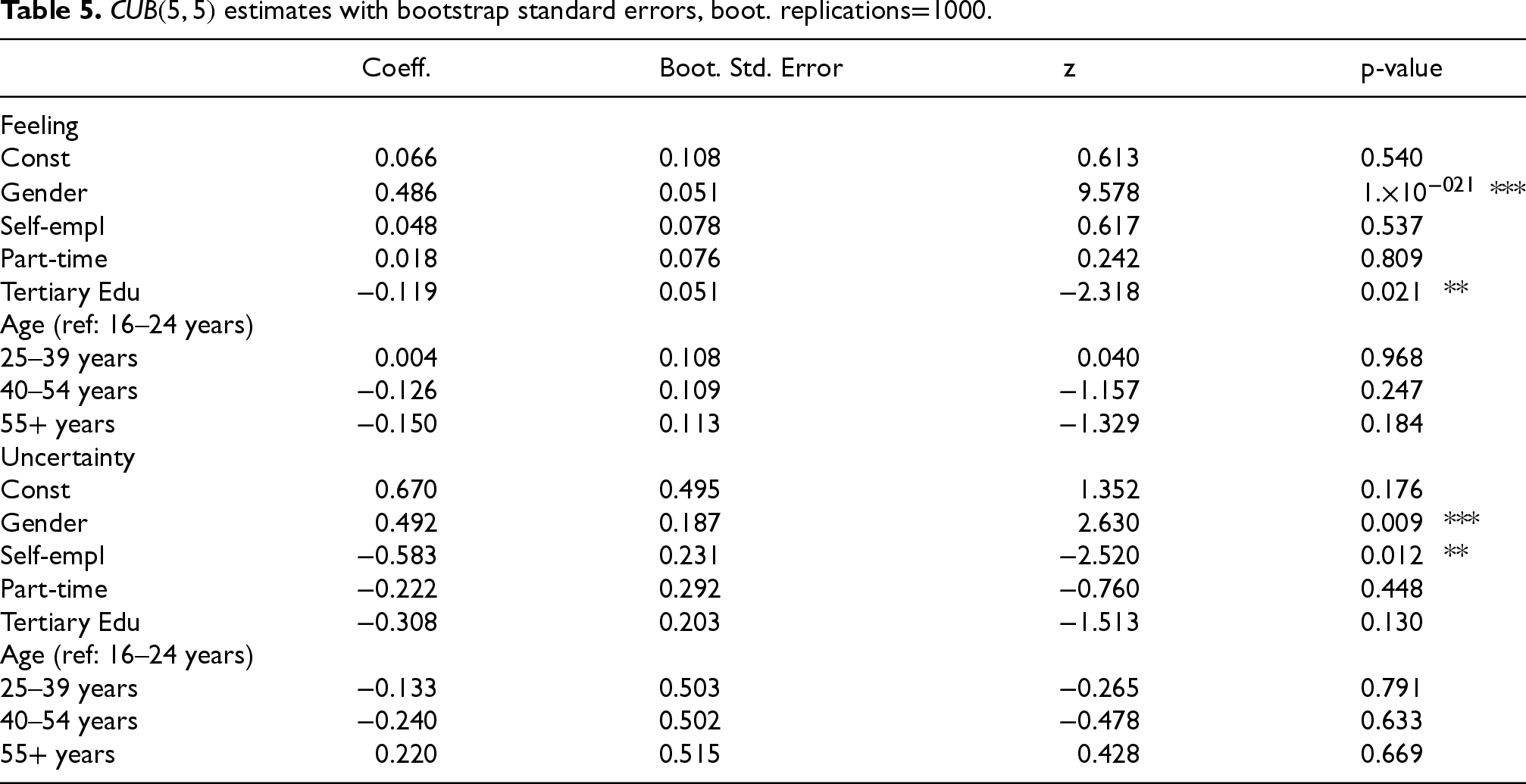
The estimated coefficients are reported in Table 4 with robust standard errors, while in Table 5 are the Bootstrap Standard errors (obtained according to Kolenikov, 28 equation 5).
estimates with robust standard errors.
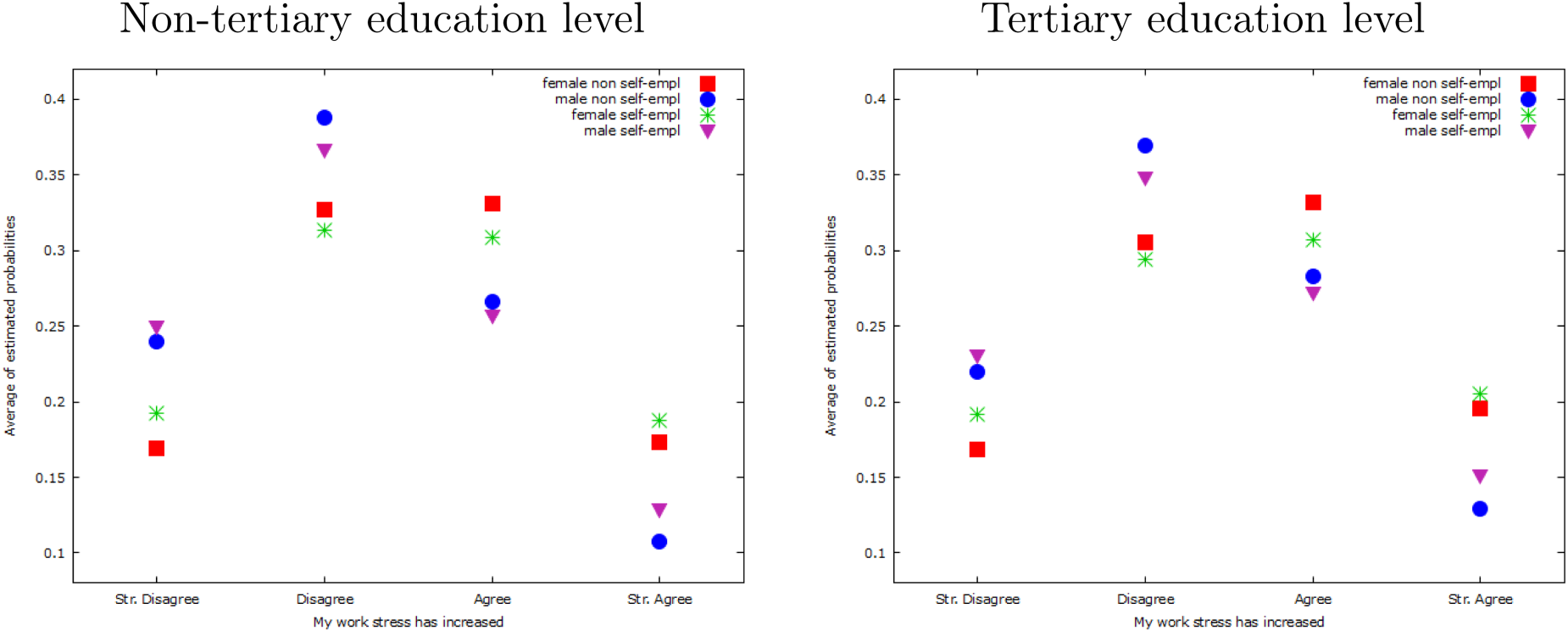
CUB(5,5) average estimated probabilities by education level, gender and type of employment.
The difference between the standard error estimates reported in Tables 4 and 5 is marginal; thus, it can be said that the inferential conclusions on their significance are the same. As can be seen, gender and education level exert a significant influence on the feeling component, while gender and type of employment are statistically relevant for the uncertainty.
When interpreting the parameters in the tables, it is important to consider that equations 3 and 4 link the parameters
Consider, first, the effect of the gender dummy variable (0=female; 1=male). The positive coefficient implies an increase in
In contrast, for the dummy variable for the Education Level (dummy variable with reference category non-tertiary), the negative coefficient is associated to a decrease in
Concerning gender, several studies indicate that women are more exposed to work stress than men; see among many others. 31 As a matter of fact, across the EU countries, working women continue to carry a ”double day” burden, balancing paid employment with significantly higher levels of unpaid care work, which amplifies overall strain and contributes to gendered disparities. 32
Regarding the Education Level, lower educational attainment is often associated with an increase in perceived work-related stress, while higher education generally provides protective benefits.33,34 Nevertheless, in the aftermath of the COVID-19 pandemic, some studies have displayed different results, with education level negatively influencing reported work stress, especially among healthcare professionals, 35 and in the education and academic sectors.13,36,37
Distinguishing by gender, education level, and type of employment, the average estimated probabilities are graphically represented in Figure 3. The graph indicates that, overall, the response patterns of employees and self-employed individuals, both male and female, by education level (with non-tertiary workers shown in the left panel) are quite similar. The plot confirms that women, regardless of their employment type (employee or self-employed), are more likely than men to strongly agree with the statement, indicating they experienced higher levels of stress due to COVID. In contrast, non-self-employed males show a probability of disagreeing with the item at around 37%. When focusing on education level, the results reveal a narrowing gap, even between the average estimated probabilities for females and males.
Our findings about self-employed women align with existing research.13,38 These studies emphasise that the adverse impact on self-employed women is particularly pronounced in sectors such as health and education, where measures to contain the spread of the pandemic were more stringent.
It is important to note that when in a CUB only dummy variables are used as explanatory factors, the model is effectively estimated on homogeneous groups of respondents (e.g., non-tertiary self-employed men, non-tertiary self-employed women, etc.). As a result, in such cases, the estimated probabilities for each response category
The situation changes when continuous variables are included among the explanatory factors. In this case, the estimated probabilities for each response category
To this end, one approach is to compute the average of the individual estimated probabilities for each response category. Alternatively, the model-predicted probabilities for each response category
In the previous section, to verify whether there is a different response pattern among respondents, the average of the estimated probabilities for each type of respondents’ profiles (e.g. non-tertiary self-employed women, etc.) has been presented in Figure 3. However, an inferential evaluation of the differences among respondents highlighted by the figure is needed. To this end, we propose a parametric bootstrap estimate of confidence bands for the individual estimated probabilities.
The Bootstrap confidence bands can be evaluated according to the following Algorithm:
Algorithm:
Identify the sub-sample related to a given respondent’s profile by setting specific values for dependent variables, Estimate on selected sub-sample a For each response category Generate For the pseudo-observations For each response category Repeat steps 3-5 for For each response category For each response category
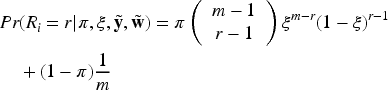
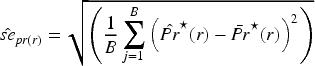

In particular, the respondent profiles considered are: non-tertiary and tertiary educated female employees (3,225 and 6,333 non-weighted valid observations, respectively) and self-employed (492 and 934 non-weighted valid observations, respectively), non-tertiary and tertiary educated male employees (3,969 and 6,536 non-weighted valid observations, respectively) and self-employed (834 and 1,486 non-weighted valid observations).
The estimated
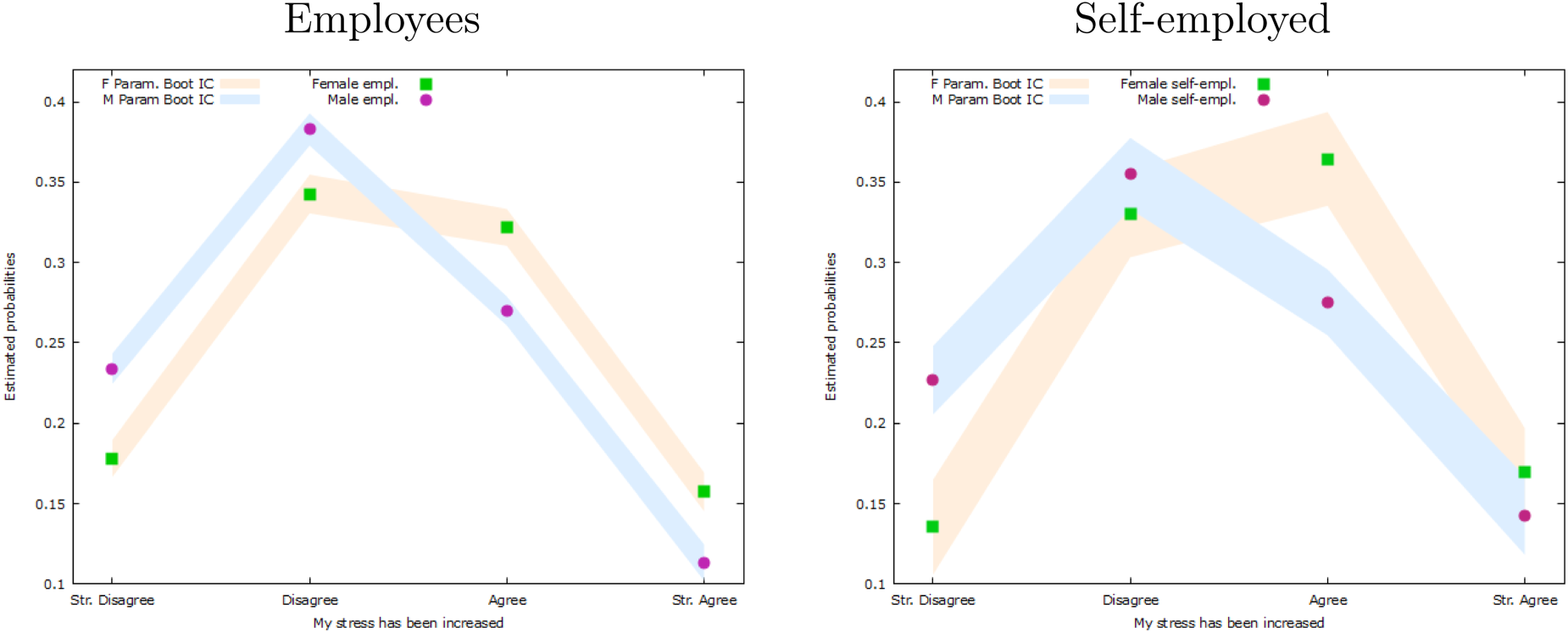
CUB(5,5) average estimated probabilities and Bootstrap CI by type of employment and gender, non-tertiary educated workers.
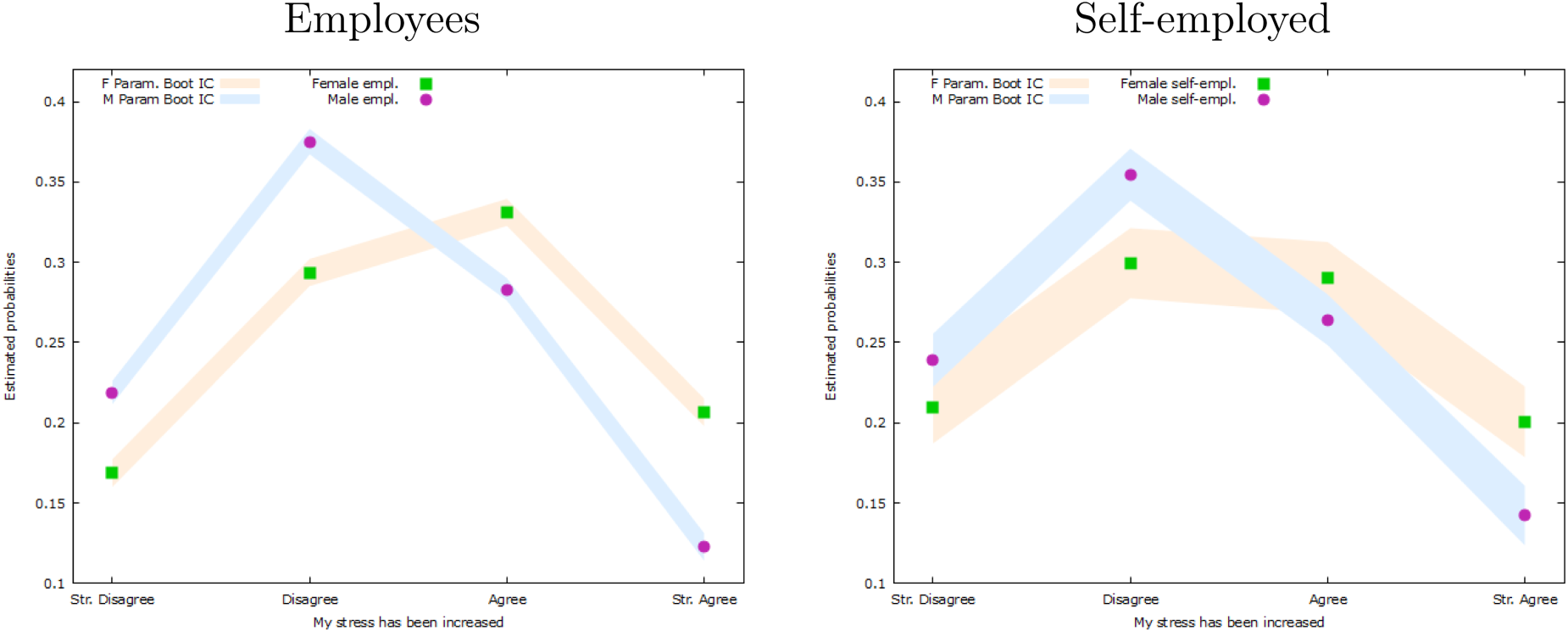
CUB(5,5) average estimated probabilities and Bootstrap CI, by type of employment and gender, tertiary educated workers.
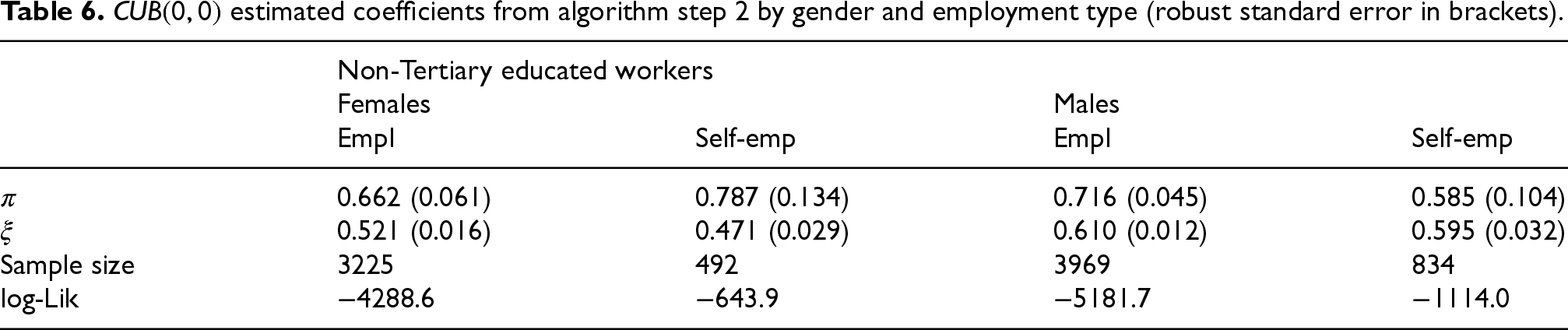
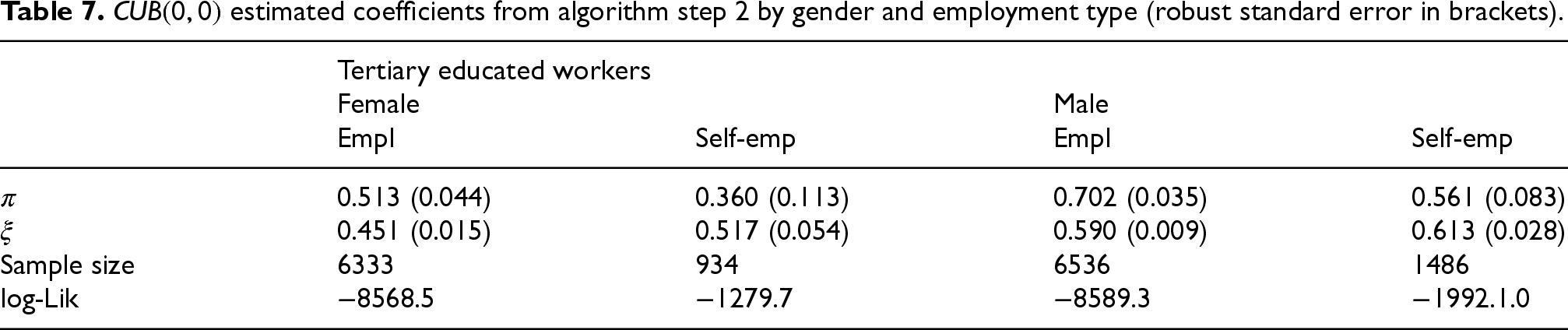
The estimated values for
Results in Figures 4 and 5 highlight distinct response behaviours between men and women, further differentiated by educational level, which does not seem to have a prominent impact.
Among employees, the relatively narrow confidence intervals reveal a statistically significant difference in response patterns between genders. Notably, this gender gap is smaller among non-tertiary educated employees compared to those with tertiary education.
Conversely, among self-employed individuals, the differences in response behaviour by gender and education level appear more nuanced. The wider confidence intervals observed for this group, compared to employees, suggest greater variability in the patterns of responses. Specifically, for the response category ”Disagree”, there is no statistically significant difference between genders among non-tertiary self-employed individuals. A similar absence of gender difference is observed for the ”Strongly agree” category within the same group. In contrast, among tertiary-educated self-employed individuals, statistically significant gender differences emerge in both of these response categories.
Overall, the estimated probabilities indicate that self-employed men may have experienced fewer difficulties than their female counterparts during the COVID-19 pandemic. This finding aligns with existing literature, which highlights how women often face a disproportionate burden of both professional and domestic responsibilities, see among others Birhanu et al. 39 and Brieger et al. 40
Our research confirms that across all 27 EU member states, the COVID-19 pandemic had a greater impact on work-related stress levels among self-employed individuals compared to employees. Although both groups faced increased stress due to the pandemic’s exceptional challenges, self-employed workers were especially vulnerable. Contributing factors may be referred to higher income instability, limited access to social protection schemes, and heightened uncertainty about the future of their businesses.6–8 Together, these pressures led to a notably sharper increase in stress levels among the self-employed across the EU.
When considering specific respondent profiles, our findings point to underlying differences in how the increase in work-related stress is reported. In particular, the analysis reveals notable gender-based differences, with women reporting higher levels of work-related stress. 41 Additionally, workers without tertiary education, whether employees or self-employed, tend to report slightly lower stress levels than those with higher educational attainment.34,36
Women are more likely to report elevated work stress levels, regardless of their education. This finding is consistent with existing research connecting self-employment among women to greater emotional and psychological demands. The heightened stress faced by self-employed women often stems from balancing professional commitments with domestic responsibilities, leading to feelings of overwhelm. This dual burden negatively affects their mental well-being, job satisfaction, and work-life balance.40,42
However, the relatively modest differences identified in our study indicate a potential convergence in the stress experiences of self-employed men and women. This pattern may reflect evolving social roles, particularly during the pandemic, or a shared experience of the uncertainties and pressures inherent in self-employment. Furthermore, this circumstance might be influenced by gender norms regarding emotional expression: women may feel more socially permitted to disclose their work-related stress, whereas men might underreport it due to societal expectations.43,44
These findings emphasise the necessity of implementing a gender-sensitive approach in the development of work health policies and interventions for self-employed workers. By customising support mechanisms to address the unique psychological and structural stressors faced by different genders, we can significantly enhance well-being and productivity within this expanding segment of the labour force. 13
Nevertheless, while the survey offers valuable and timely data focused on worker well-being during the pandemic, it lacks key variables, such as income, family circumstances, and caregiving responsibilities, that would be useful for a thorough analysis. Consequently, our study is limited in capturing how various social and economic factors intersect to affect work-related stress. We emphasise the need for future research with more comprehensive data to better explore these aspects.
Finally, when considering the inherent uncertainty in the responses, as discussed in Section 2, the estimated models suggest that this type of self-assessment question tends to elicit neutral answers. This inclination may be influenced by various response biases, such as social desirability bias, along with the use of a four-point Likert scale; see, for instance.45,46 However, the class of CUB models appears to effectively account for the heterogeneity within responses, particularly when differences between groups are not immediately discernible.
Footnotes
Acknowledgments
The authors would like to thank the Editors and the anonymous Reviewers for their valuable comments and suggestions. Stefania Capecchi and Francesca Di Iorio acknowledge the financial support by the grant SI-WCWB from the University of Naples Federico II (FRA 2022), Rectoral Decree no.3429, 07/09/2023 (CUP: E65F22000050001).
Funding
The author(s) received no financial support for the research, authorship, and/or publication of this article.
Declaration of conflicting interests
The author(s) declared no potential conflicts of interest with respect to the research, authorship, and/or publication of this article.
