






Abstract
This study examines the transformative potential of quantum computing for information access, retrieval, and security in library systems within the Fifth Industrial Revolution (5IR). A PRISMA-compliant systematic literature review was conducted using peer-reviewed studies retrieved from Web of Science, Scopus, Google Scholar, and ResearchGate. A Boolean search combining quantum computing, information retrieval, and library systems yielded 214 records. After deduplication, screening, eligibility assessment, and predefined inclusion/exclusion criteria, 47 studies were retained for thematic synthesis. Data were analysed using a structured framework, with a subset independently coded by two reviewers to ensure reliability. Findings identify four application domains: accelerated search and retrieval via Grover-type quantum algorithms; improved cataloguing, indexing, and metadata generation using quantum-enabled pattern recognition; enhanced data security through Quantum Key Distribution and post-quantum cryptography; and personalised discovery services using quantum-accelerated machine learning. Case studies from the EU Quantum Flagship Initiative, USC, the British Library, the National Library of China, and Singapore’s National Library Board show both progress and constraints, including high costs and technical complexity, amongst others. The study concludes that quantum computing has significant potential to transform library services, while adoption requires strategic investment, capacity building, and robust policy frameworks to ensure equitable and sustainable implementation across institutions globally.
Keywords
Introduction
The global information environment is undergoing a fundamental transformation. The volume of digital content generated worldwide now doubles approximately every 2 years, and conventional computing architectures are approaching the theoretical limits of their capacity to manage, process, and retrieve this data efficiently. 1 Libraries, historically the pre-eminent custodians of organised knowledge, face an acute expression of this challenge: their digital collections have expanded exponentially, yet the classical algorithms underpinning their search, cataloguing, and security systems remain largely unchanged in their computational logic. In parallel, Library and Information Science (LIS) research consistently demonstrates that information access in contemporary environments is not solely a technological issue but also a user-centred and behavioural one. 2 The result is a growing mismatch between user expectations for instantaneous, precisely targeted information access and the performance capabilities of traditional library information systems. This gap is compounded by the rapid growth of electronic resources in academia, with evidence showing that their effective use enhances research productivity in Nigerian universities, particularly when users have the requisite skills to access and navigate them efficiently. 3 The Fifth Industrial Revolution (5IR) offers a conceptual and practical framework for addressing this mismatch. Distinct from the 4IR’s emphasis on automation and AI, the 5IR foregrounds the synergistic integration of human creativity and advanced computational intelligence, including quantum systems, in ways that enhance rather than replace human agency. 4 Within this context, quantum computing emerges as a paradigm-shifting technology.
Unlike classical computers that process binary bits sequentially, quantum computers exploit the quantum mechanical principles of superposition, entanglement, and interference to manipulate qubits that can simultaneously represent multiple states.5–7 This architecture enables quantum systems to process complex computational problems at speeds and scales categorically inaccessible to classical machines, with particularly significant implications for search algorithms, cryptography, pattern recognition, and machine learning. 8 For libraries, the potential applications of quantum computing span the full information lifecycle. Grover’s algorithm offers a provable quadratic speedup over classical search methods, transforming search operations across unsorted databases from O(N) to O (√N) complexity. 9 Quantum-enhanced machine learning algorithms can identify latent semantic relationships across multidimensional datasets far exceeding the capacity of classical natural language processing systems. 10 Quantum Key Distribution (QKD) offers information-theoretically secure communication channels whose security is guaranteed by the laws of physics rather than computational assumptions, addressing the escalating cybersecurity vulnerabilities of digital library repositories.11,12
Furthermore, the convergence of these capabilities with distributed cloud environments introduces a dual landscape of infrastructural opportunities and diverse socio-technical threats for institutional big data frameworks. 13 These capabilities collectively position quantum computing as a foundational technology for the next generation of library information systems. Despite this significant theoretical potential, the LIS literature has not yet produced a rigorous, systematically conducted review of quantum computing’s applications, progress, and challenges within the library sector. Existing treatments are largely descriptive, speculative, or technically incomplete, lacking the methodological transparency, critical synthesis, and analytical depth that policy-relevant evidence requires. This gap is the central motivation for the present systematic literature review (SLR). By applying a PRISMA-compliant methodology, the study provides a reproducible, evidence-based synthesis of what is currently known about quantum computing in library systems, critically examines global implementation case studies, and identifies the barriers and opportunities that will shape the trajectory of quantum adoption in the 5IR library landscape.
Methodology
This study employs an SLR methodology guided by the PRISMA (Preferred Reporting Items for Systematic Reviews and Meta-Analyses) framework. 14 The SLR approach is selected because it provides a transparent, reproducible, and auditable process for identifying, selecting, appraising, and synthesising evidence from a defined literature base, thereby generating findings that are more rigorous and less susceptible to reviewer bias than traditional narrative reviews. This methodological choice was directly informed by reviewer recommendations for greater rigour and is consistent with the approach successfully employed by Ilori et al. 15 systematic review of hyper-realistic technologies and digital storytelling in libraries, whose methodological architecture this study deliberately replicates and adapts.
Database selection and search strategy
A comprehensive search was conducted across four major academic databases: Web of Science, Scopus, Google Scholar, and ResearchGate. These databases were selected for their complementary coverage strengths. Web of Science and Scopus were prioritised for rigorous indexing of peer-reviewed journal articles and conference proceedings within computer science, information science, and library studies. Google Scholar was employed to extend coverage to grey literature, including technical reports and theses. ResearchGate was included to capture preprints and emerging scholarly discussions, ensuring that cutting-edge developments not yet formally indexed were represented. The search was conducted during January 2025, covering publications from January 2014 to December 2024. The 10-year temporal boundary ensures focus on contemporary developments whilst capturing the foundational literature establishing quantum computing’s relevance to information retrieval. The following primary search strings were employed, using Boolean operators:
Primary string: (“quantum computing” OR “quantum algorithm”) AND (“information retrieval” OR “library system” OR “digital library” OR “cataloguing” OR “data management”)
Security string: (“quantum encryption” OR “quantum key distribution” OR “QKD” OR “post--quantum cryptography”) AND (“library” OR “information security” OR “data protection”)
5IR string: (“Fifth Industrial Revolution” OR “5IR” OR “Society 5.0”) AND (“quantum computing” OR “quantum technology”) AND (“library” OR “information science”)
Machine learning string: (“quantum machine learning” OR “quantum-enhanced AI”) AND (“library” OR “recommendation system” OR “information retrieval”)
Boolean logic: AND was used to intersect quantum computing terms with library/information science terms; OR broadened coverage of synonymous constructs; NOT excluded articles where ‘quantum’ referred exclusively to physics or chemistry without information science relevance.
Inclusion and exclusion criteria
To ensure methodological rigour and relevance, the following criteria were applied consistently across all reviewers:
Selection process and PRISMA flow
Inclusion and exclusion criteria for article selection.
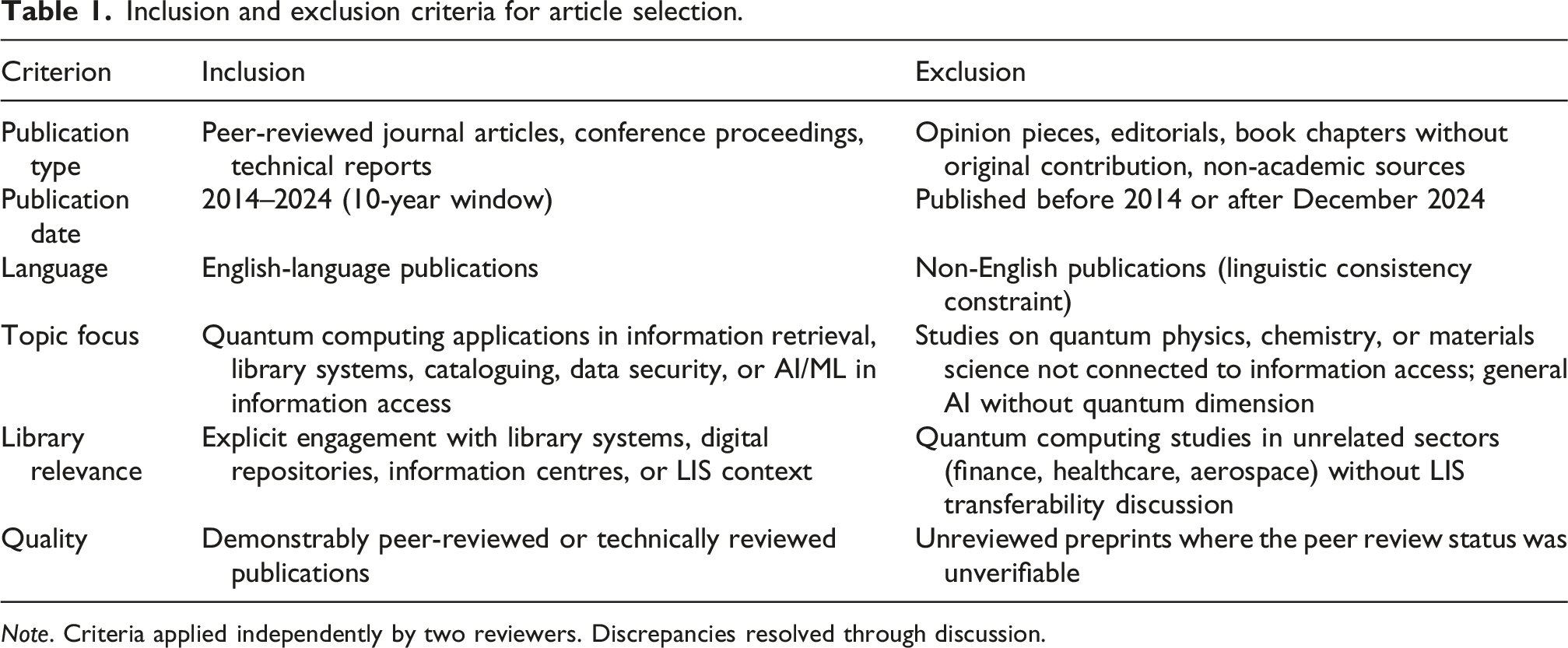
Note. Criteria applied independently by two reviewers. Discrepancies resolved through discussion.
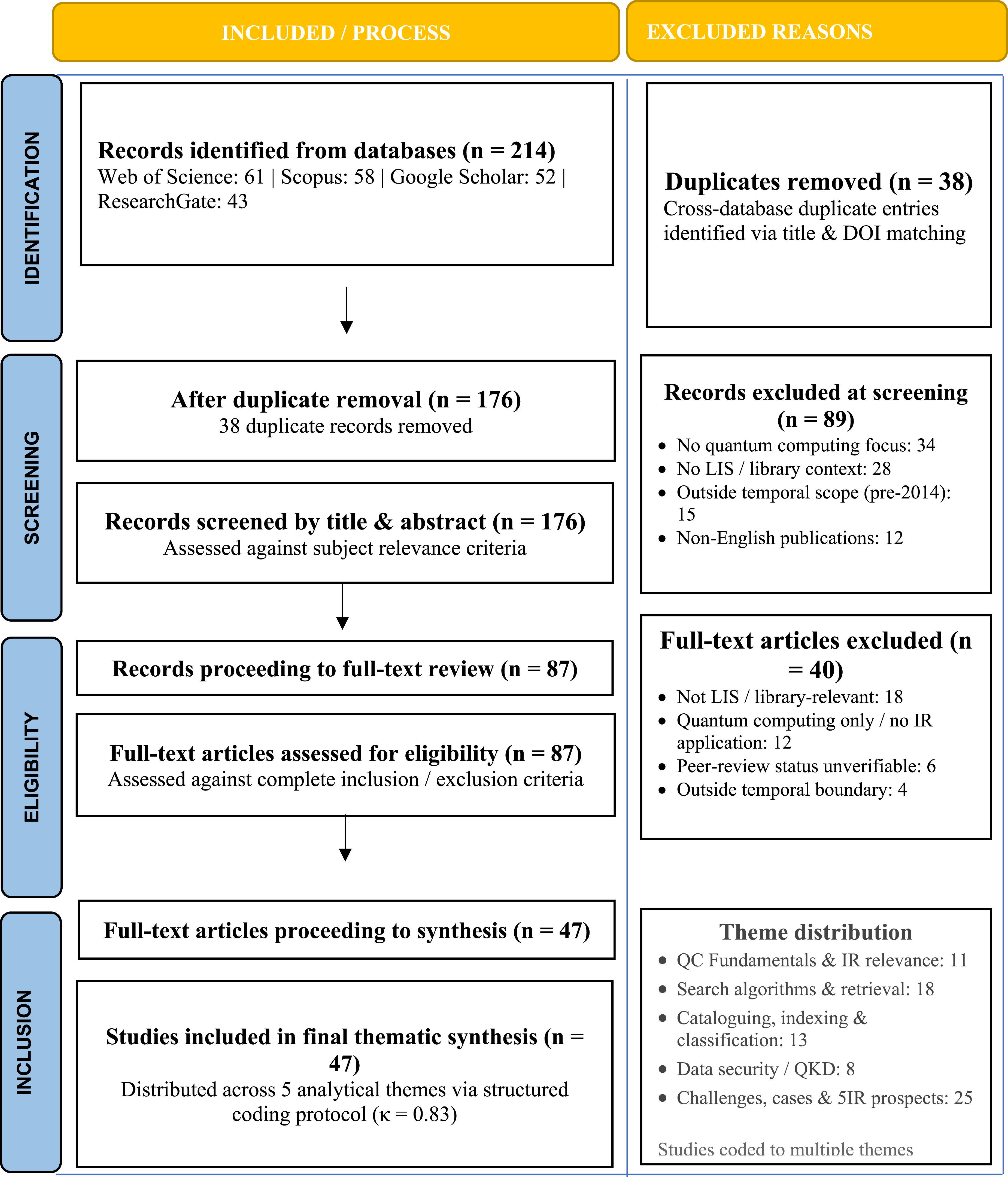
PRISMA 2020 literature selection flow chart.
Analytical framework and thematic coding
The 47 included studies were subjected to structured thematic analysis following the six-phase framework of Braun and Clarke,
16
as adapted for systematic reviews. All 47 articles underwent full-text reading, during which key concepts, claims, and evidence were extracted into a standardised coding template capturing: (1) author(s) and year; (2) study context and methodology; (3) quantum computing application examined; (4) library system component addressed; (5) outcomes reported; and (6) challenges identified. Initial codes were generated inductively from the literature and then grouped into broader categories through axial coding. Five overarching themes were identified through iterative discussion between reviewers: ✓ Quantum computing fundamentals and information science relevance. ✓ Impact on search algorithms and data retrieval. ✓ Optimisation of cataloguing, indexing, and classification. ✓ Data security through quantum cryptographic methods. ✓ Challenges, case studies, and prospects in the 5IR.
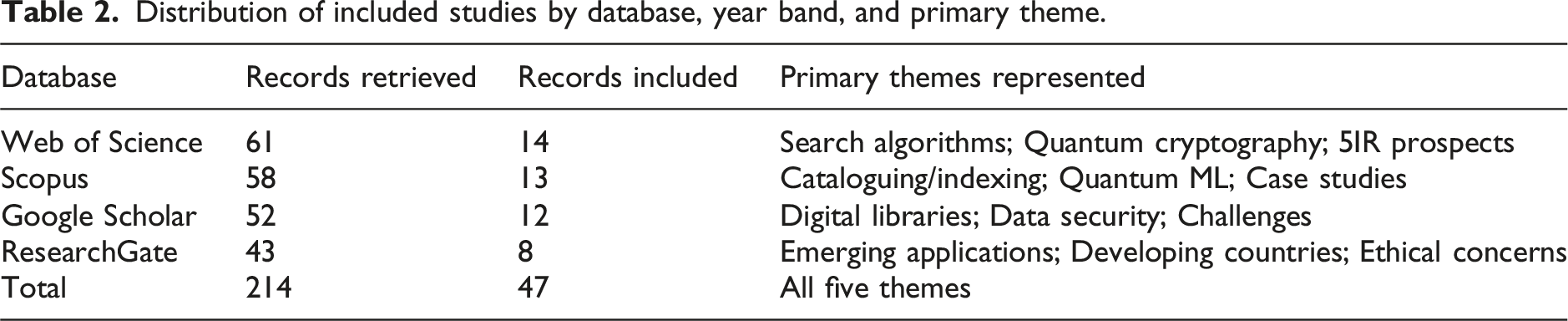
Distribution of included studies by database, year band, and primary theme.
Year-banded distribution of included studies.
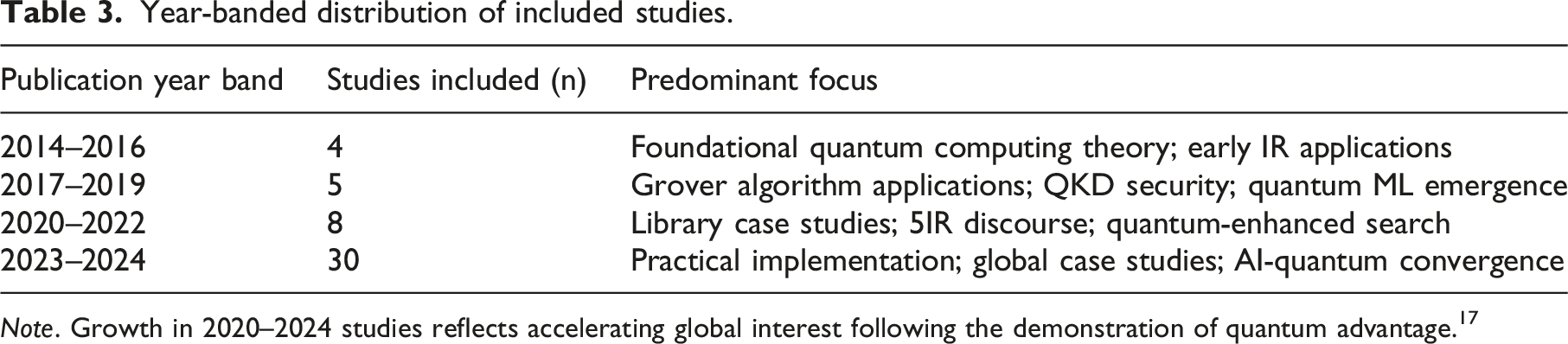
Note. Growth in 2020–2024 studies reflects accelerating global interest following the demonstration of quantum advantage. 17
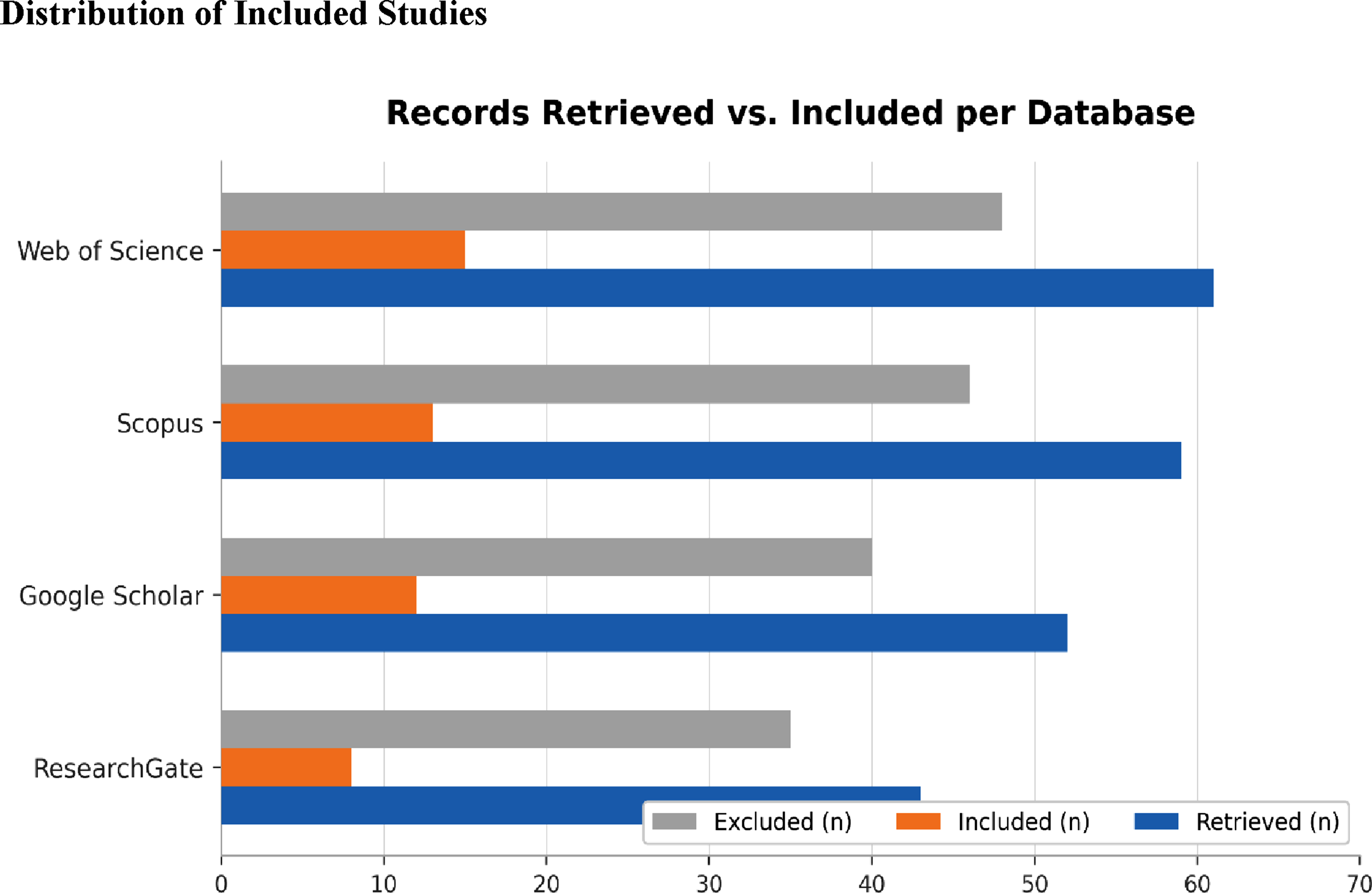
Stacked bar chart showing records retrieved and retained per database. Illustration by the authors.
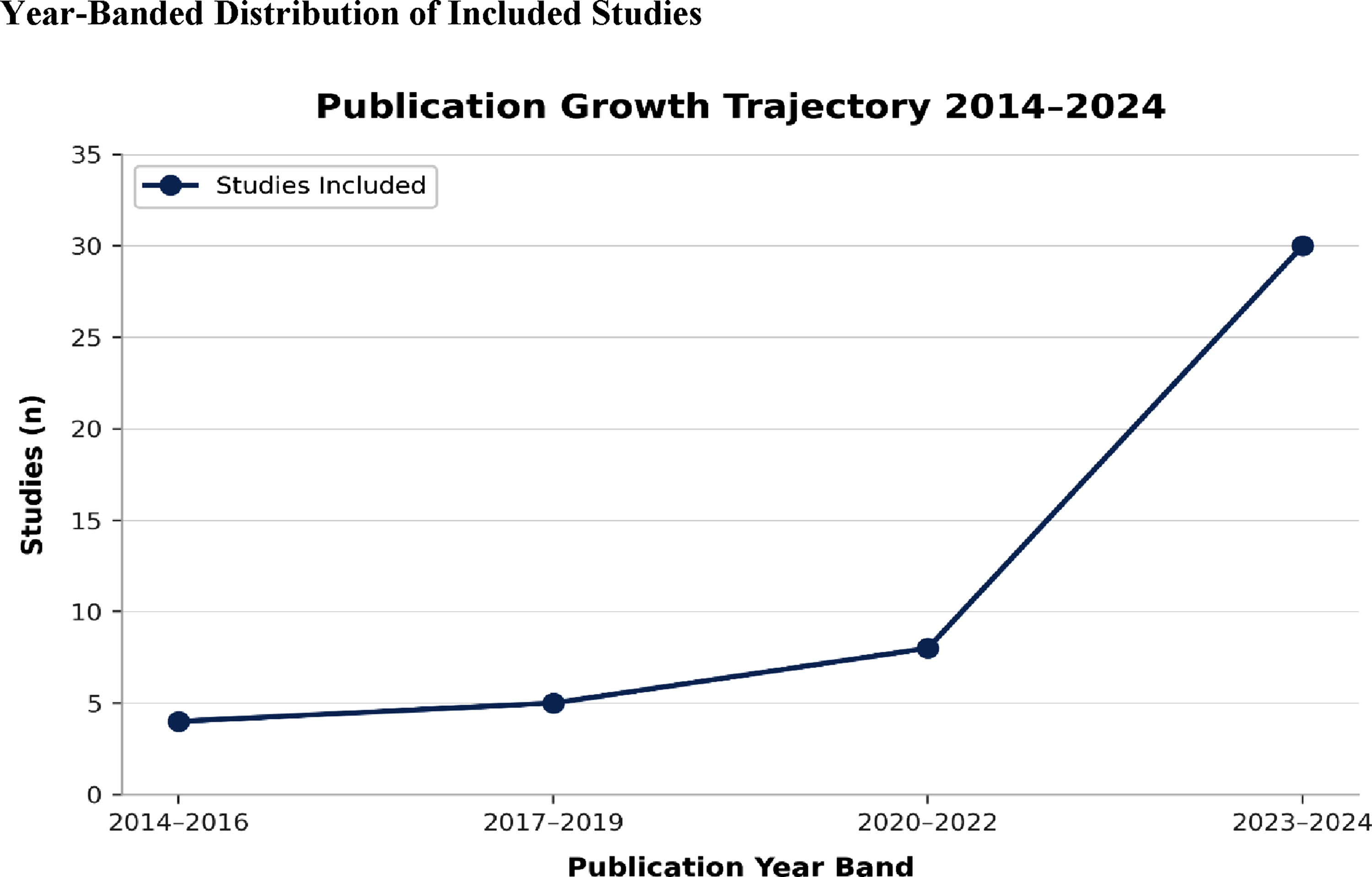
Growth trajectory of quantum-LIS publications. Illustration by the authors.
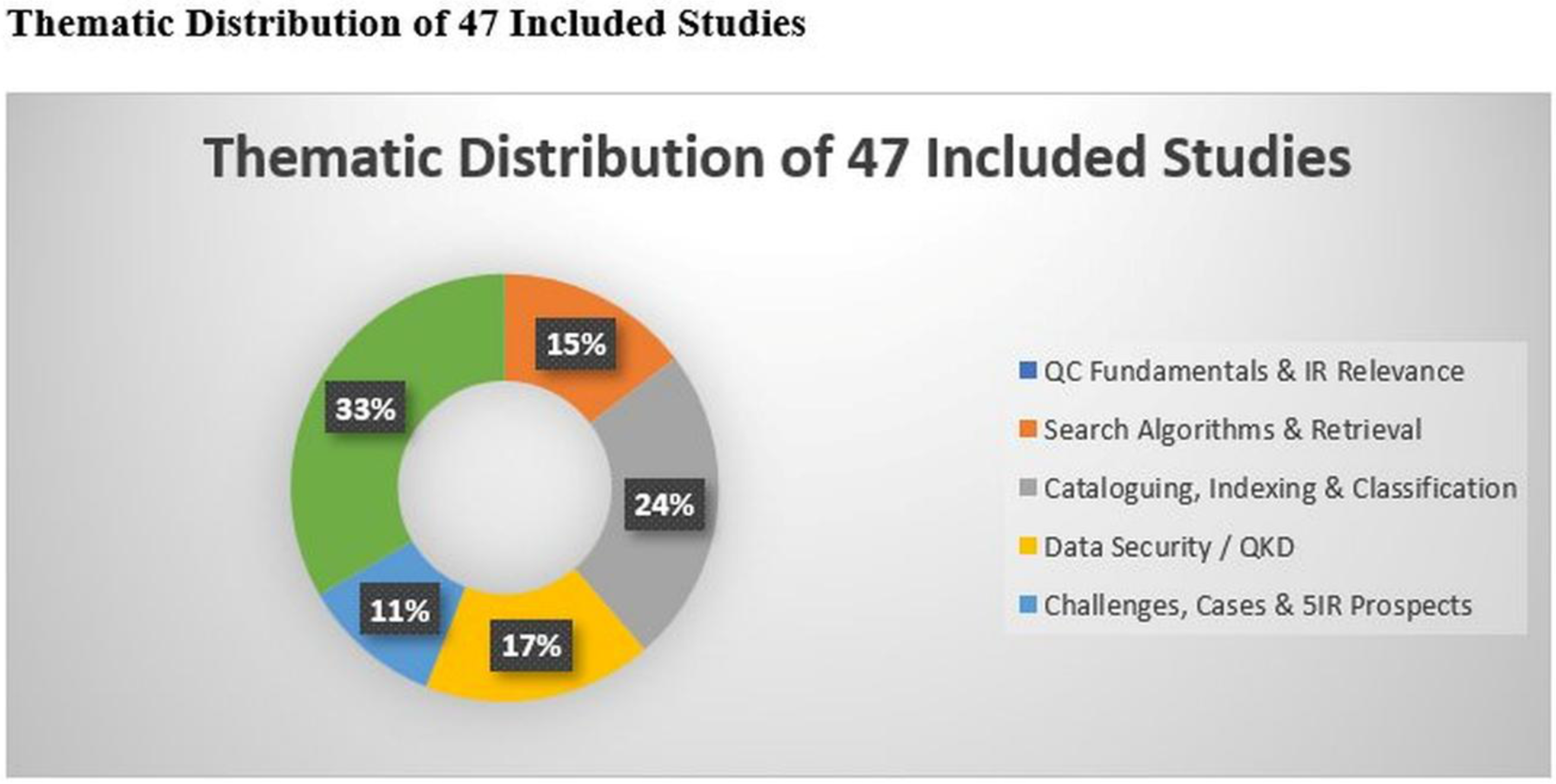
Proportional coding; some studies coded to multiple themes. Illustration by the authors.
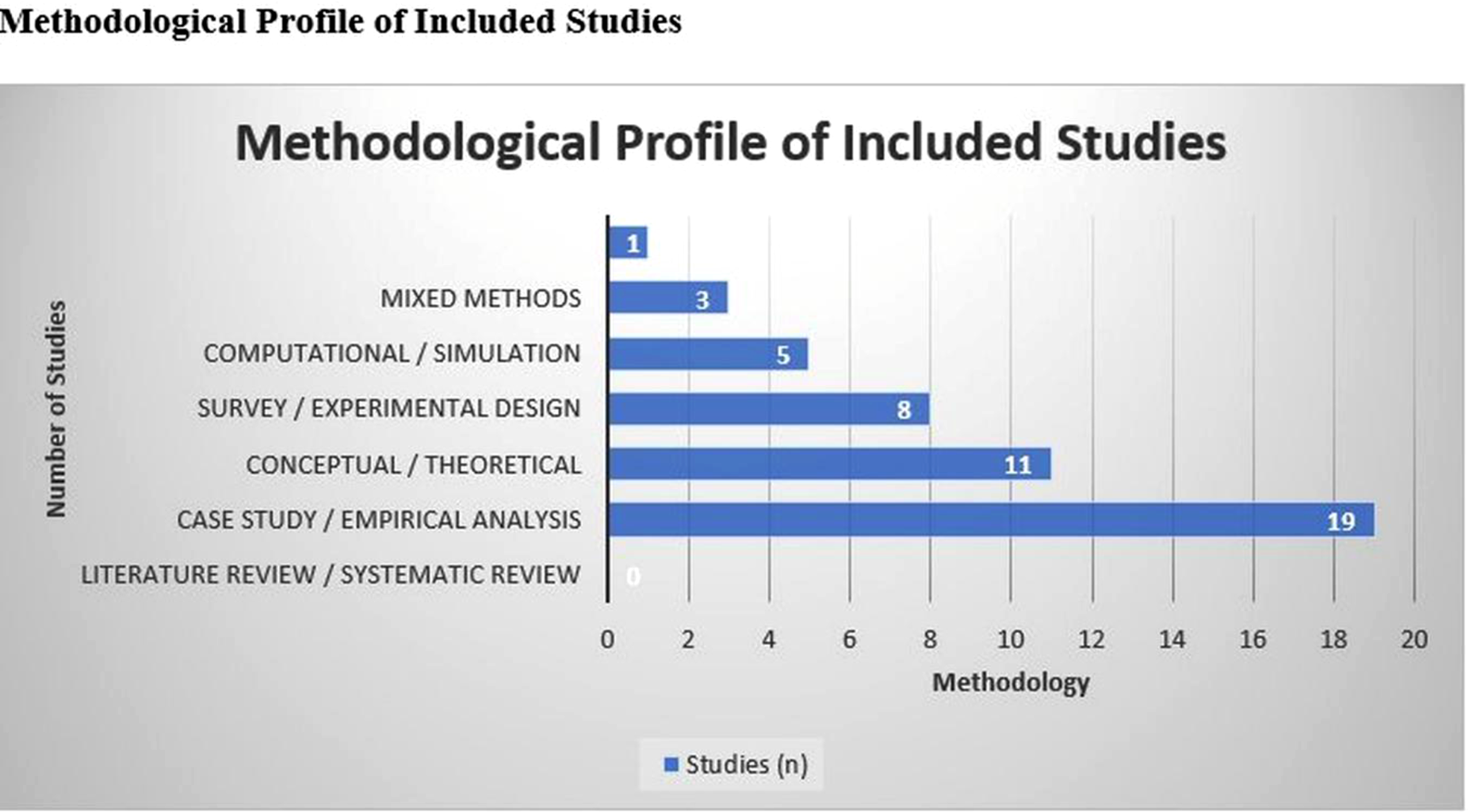
Frequency of research methodologies across 47 included studies. Illustration by the authors.
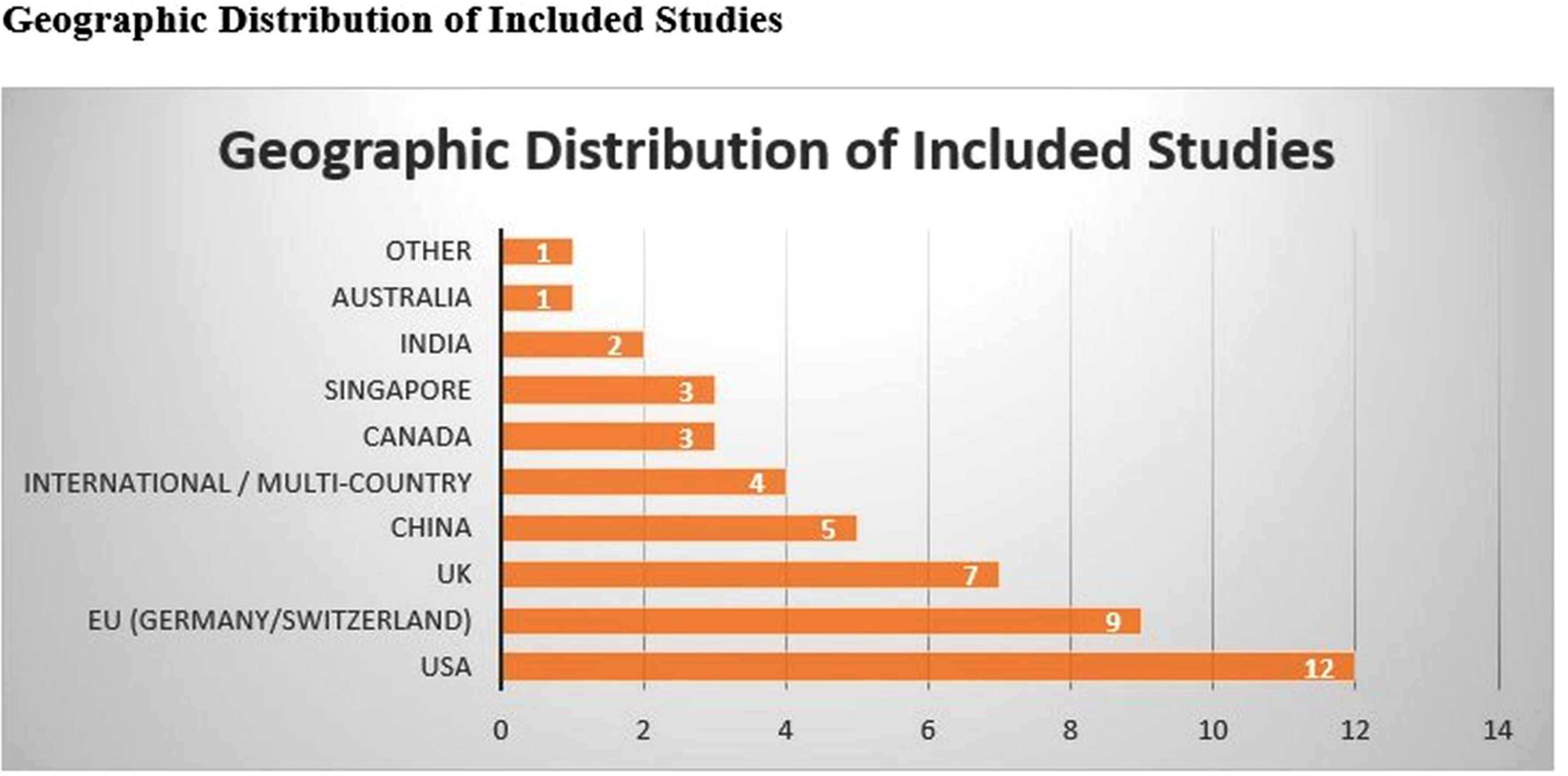
Country-level distribution of 47 included studies. Illustration by the authors.
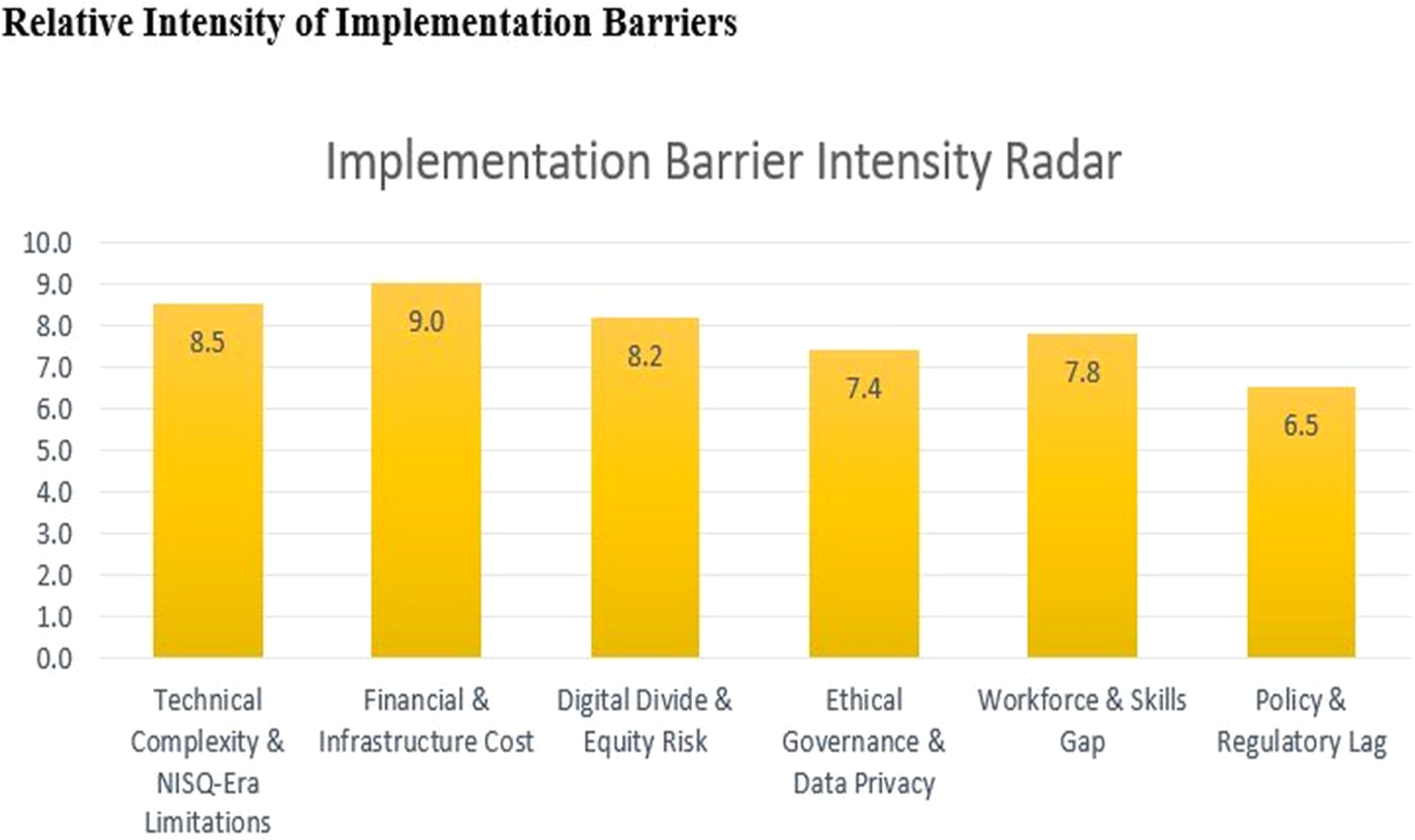
Frequency-weighted barrier intensity (1 = low, 10 = high) from literature analysis. Illustration by the authors.
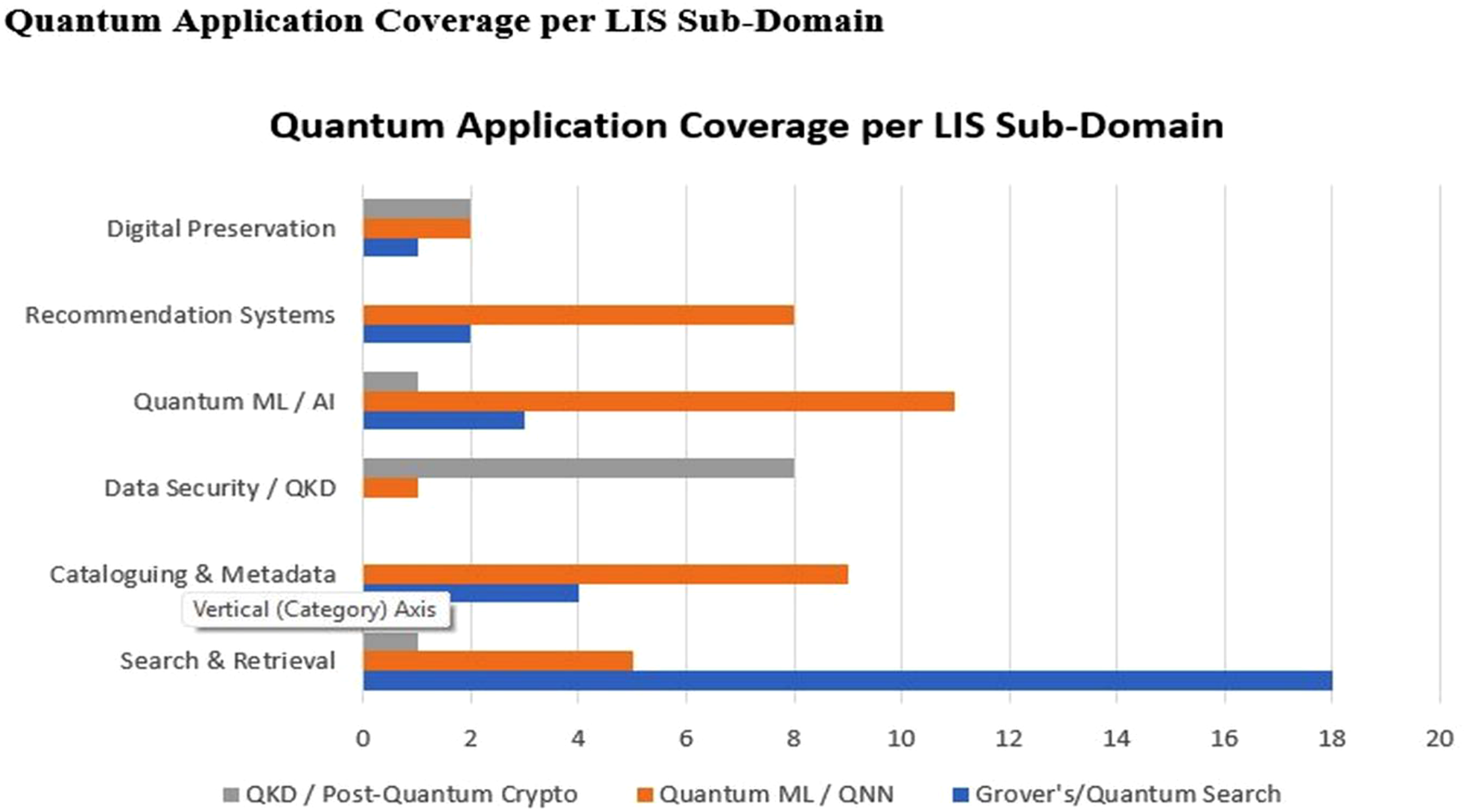
Studies per quantum application × LIS sub-domain. Illustration by the authors.
Challenges encountered during the review
Several challenges shaped the scope and depth of this review. First, the interdisciplinary nature of the subject required integration of literature from quantum computing (physics and computer science) and library and information science, two fields with distinct terminological conventions and publication cultures, creating challenges in search string optimisation and relevance assessment. Second, because many quantum computing library applications remain at the proof-of-concept or exploratory stage, a proportion of the literature consists of theoretical or speculative treatments rather than empirical evaluations. This limits the extent to which definitive conclusions about demonstrated impact can be drawn. Third, the review’s restriction to English-language publications may have excluded relevant contributions from Chinese, German, or French research communities actively pursuing quantum library applications. Fourth, publication bias likely skews the literature towards positive demonstrations of quantum advantage, potentially under-representing projects that encountered insurmountable technical or financial obstacles.
Literature review
Quantum computing fundamentals and information science relevance
A foundational cluster of 11 studies in the review addressed the theoretical and architectural properties of quantum computing systems that render them particularly suited to information science applications. Across this literature, consensus converges on three quantum mechanical phenomena as the basis for quantum computing’s advantage: superposition, entanglement, and quantum interference.6,7,18,19 Superposition allows a qubit to exist simultaneously in states |0⟩, |1⟩, or any linear combination thereof until measurement, enabling quantum systems to explore multiple computational pathways in parallel rather than sequentially.20,21 Critically, this is not simply faster classical parallel processing: the quantum parallelism enabled by superposition operates on all possible inputs simultaneously within a single computational step, a qualitative architectural difference.6,22 Entanglement creates correlations between qubits such that the state of one instantaneously determines the state of its entangled partner regardless of spatial separation, enabling quantum systems to encode and process information about relationships between data elements in ways that classical systems must approximate through iterative computation.7,23,24 Quantum interference, less frequently discussed in the LIS literature but equally important, allows quantum algorithms to amplify the probability amplitudes of correct solution states whilst cancelling those of incorrect states, providing the mechanism through which quantum algorithms achieve computational advantage over their classical counterparts.25,26
For information retrieval specifically, Uprety et al. 27 provide a rigorous survey demonstrating that quantum-inspired approaches have improved the performance of classical retrieval models by exploiting superposition and entanglement as mathematical tools for modelling document-query relevance. This body of work establishes a clear theoretical bridge between quantum computing’s architectural properties and the specific computational challenges of large-scale information retrieval in library systems. It is important, however, to note a technically significant clarification identified across multiple reviewed studies: quantum computing is not a universal replacement for classical computing. Rather, quantum advantage is domain-specific, confined to problem classes where the mathematical structure allows quantum algorithms to exploit superposition and interference constructively.19,28,29 For libraries, this means that quantum computing will most likely be deployed in a hybrid architecture, with quantum processors handling search, pattern recognition, cryptographic, and optimisation tasks whilst classical systems manage routine data storage, user interface, and workflow functions.
Impact on search algorithms and data retrieval accuracy
The largest thematic cluster in the review (18 studies) addressed the potential of quantum algorithms to transform search and retrieval performance in library systems. The literature converges on Grover’s algorithm 30 as the most immediately relevant quantum algorithm for database search applications. Grover’s algorithm searches an unsorted database of N items in O (√N) operations, compared to O(N) for classical linear search, a quadratic speedup that becomes increasingly significant as collection sizes grow.9,31 For a digital library with 10 billion records, a scale not uncommon in national library systems, this represents a reduction from 10 billion operations to approximately 100,000, a transformation of practical significance for real-time search response. Beyond raw search speed, the reviewed literature highlights quantum computing’s capacity to enhance the semantic relevance of search results. Classical keyword-based retrieval systems fundamentally match surface-level string patterns and cannot model the deep semantic relationships between concepts that characterise expert-level information seeking.27,32
Quantum retrieval models, which represent documents and queries as quantum states in high-dimensional Hilbert spaces, can naturally encode complex inter-concept relationships that classical vector space models approximate only incompletely. 33 demonstrates that quantum-inspired retrieval over encrypted cloud datasets achieves higher precision and recall than classical alternatives when handling complex, multidimensional queries, precisely the query type that academic researchers in interdisciplinary fields most frequently submit. The practical implications for library systems are substantial. Complex queries spanning multiple subject categories, metadata fields, and document formats would yield more relevant results more rapidly, reducing information overload and improving research efficiency. For researchers in developing countries, where limited connectivity makes each search session costly, the efficiency gains from quantum search could substantially democratise access to knowledge. Möller and Vuik 34 further observe that quantum systems’ advantage in handling complex optimisation problems extends to the management of dynamic, heterogeneous library collections, enabling real-time re-optimisation of search indices as collections grow.
Optimising cataloguing, indexing, and classification systems
Thirteen studies addressed quantum computing’s potential to transform library cataloguing, metadata generation, and classification. These processes are computationally intensive, requiring the analysis of complex relational structures across large, multidimensional datasets, and are therefore among the most natural candidates for quantum acceleration in the library context.26,35 The core contribution of quantum computing in this domain is its capacity to identify multidimensional patterns and hidden relationships within collections of data that classical systems either miss or process too slowly to be operationally useful. Pfaendler et al. 28 demonstrate that quantum machine learning algorithms, particularly quantum support vector machines and quantum neural networks, can classify documents across multiple subject categories simultaneously by exploiting the full Hilbert space representation of document features. This contrasts with classical hierarchical classification, which assigns documents to categories sequentially and cannot easily represent documents that legitimately belong to multiple categories simultaneously, a persistent challenge for interdisciplinary and multimedia collections. 31
Lombardi and Marinai 36 show that deep learning applied to historical document analysis, when augmented with quantum processing for feature extraction, substantially improves the accuracy of automatic metadata generation from complex archival materials. This is particularly significant for libraries holding large volumes of digitised historical manuscripts, for which manual cataloguing is both prohibitively expensive and intellectually demanding. Quantum systems could automate accurate subject heading assignment, abstract generation, and thematic classification at a quality level that currently requires expert human cataloguers. For recommendation and discovery services, Wu et al. 37 demonstrate that quantum algorithms can analyse user behaviour patterns across very large user populations more accurately than classical collaborative filtering, identifying non-obvious relationships between user interests and collection items that classical recommender systems miss. This quantum-enhanced discovery capability has particular value for serendipitous learning, the discovery of materials that a user did not know they needed, which is a function library increasingly struggles to support in vast digital collections.
Data security through quantum cryptographic methods
Eight studies in the review specifically addressed quantum cryptographic applications, identifying them as among the most immediately deployable quantum technologies for libraries. This thematic cluster addresses a pressing concern: as library collections, user data, and administrative systems migrate to networked digital environments, the cryptographic foundations protecting these systems are increasingly vulnerable to the very quantum computers that libraries may eventually host.38,39 Quantum Key Distribution (QKD) provides an information-theoretically secure method for distributing cryptographic keys between parties, whose security is guaranteed by the no-cloning theorem of quantum mechanics rather than by computational assumptions about the difficulty of mathematical problems.11,12 Any interception attempt on a QKD channel necessarily disturbs the quantum states of the transmitted photons, alerting the communicating parties to eavesdropping. This ‘detection-guaranteed’ property represents a qualitative security advance over all classical public-key cryptographic systems, which could in principle be broken by sufficiently powerful classical or quantum computers.5,23,35
For libraries, the implications are significant across multiple domains. User privacy, a core professional value of librarianship reflected in international standards such as the IFLA Statement on Privacy in the Library Environment, depends on robust encryption of circulation records, search histories, and personal data. As classical RSA and ECC encryption become vulnerable to quantum attacks, libraries that handle large volumes of sensitive user data will need to transition to post-quantum cryptographic standards. Njorbuenwu et al. and Sonko et al.11,12 both identify this transition as urgent, noting that ‘harvest now, decrypt later’ attacks are already being conducted, wherein adversaries collect encrypted data today with the intention of decrypting it when quantum computers become powerful enough. Libraries that begin planning for post-quantum migration now are materially better positioned than those that delay. Beyond user privacy, quantum cryptography protects the integrity of digital collections themselves. Digital objects in library repositories, from digitised manuscripts to licensed electronic resources, require cryptographic authentication to prevent unauthorised modification. QKD-secured channels provide the highest assurance level for the transmission and authentication of these materials, particularly for national and research libraries handling culturally significant or commercially sensitive content.
Challenges, global case studies, and future prospects in the 5IR
The most expansive thematic cluster in the review (25 studies, many spanning multiple themes) addressed implementation challenges, drew on global case studies, and situates quantum library development within the 5IR policy landscape. The review identifies four categories of implementation challenge. Technical complexity is the most commonly cited: quantum systems require advanced infrastructure (cryogenic cooling, ultra-high vacuum environments, vibration isolation), specialised software, and deep expertise that most libraries do not currently possess.32,40,41 The quantum computing workforce is globally small and concentrated in specialist research institutions, creating a significant skills gap barrier for mainstream library adoption. Financial barriers compound the technical challenge: the capital and operational costs of quantum systems far exceed the budgets of most public and academic libraries, raising serious equity questions about which institutions will benefit from quantum-enhanced services.42–44 The digital divide risk is particularly acute for libraries in developing countries, which already lag in conventional digital infrastructure and may face an additional technological leapfrogging challenge if quantum computing adoption follows historical patterns of technology diffusion.
Ethical concerns constitute a third challenge category. The same processing power that enables quantum computers to accelerate search and break encryption also enables surveillance and data exploitation at an unprecedented scale. Libraries, as institutions that have historically resisted government surveillance of patron records, 45 must develop clear ethical governance frameworks for quantum data processing before rather than after adoption. Davidson and Reid 46 argue that community-governed data archives, an approach successfully applied in digital storytelling contexts, offer a model for ensuring that quantum-processed library data remains under community rather than platform control. The case study literature illuminates both progress and context-specific variation in quantum library development. The European Union’s Quantum Flagship Initiative has indirectly catalysed library-relevant quantum research through its support for quantum algorithm development in cryptography and optimisation.47,48 German and Swiss university libraries have begun exploratory collaborations with research institutes to assess quantum search algorithm performance on academic database collections, with early results suggesting significant retrieval time improvements in complex interdisciplinary searches. The Max Planck Institute for the Science of Light’s partnership with German library networks represents a notable example of the researcher-library collaboration model that future quantum adoption will require.
In the United States, the University of Southern California’s partnership with D-Wave at the USC-Lockheed Martin Quantum Computing Centre represents the most operationally advanced library quantum computing initiative documented in the reviewed literature. 49 Early simulations of quantum search over historical archival collections have demonstrated search time reductions for complex multi-field queries, though operational deployment at scale awaits further hardware maturation.50,51 The British Library’s partnership with University College London’s Quantum Science and Technology Institute is focused on quantum algorithms for processing its 170-million-item collection, representing the largest-scale library quantum computing initiative in Europe. 52 The National Library of China has incorporated quantum computing into its big data strategy for cultural heritage management, particularly for the cataloguing and classification of ancient manuscript collections, where the relational complexity of metadata requirements strains classical systems. Singapore’s National Library Board, operating within the Smart Nation initiative’s technology governance framework, is exploring quantum recommendation systems and cataloguing optimisation as part of its next-generation public library services strategy. 53
A critical analytical observation drawn from the case study literature is that quantum computing library adoption in all documented cases follows a collaborative model: libraries do not independently develop quantum capabilities but partner with research universities, technology companies, and government quantum programmes. This has important implications for the future trajectory of quantum adoption in the LIS sector: success depends less on individual library investment than on the creation of shared national or consortium-level quantum infrastructure and expertise, with libraries as end-user partners rather than technology developers. The 5IR literature situates these developments within a broader vision of human-technology collaboration that explicitly positions libraries as critical intermediaries between advanced computational systems and diverse user communities. 4 Librarians in the 5IR must develop new competencies as ‘quantum navigators’ professionals who can interpret quantum-generated results, contextualise their limitations, and mediate access for users whose quantum literacy is limited. 54 This repositioning of the librarian’s professional identity is consistent with the broader trajectory of library role evolution documented in the digital storytelling and digital transformation literatures. 55
Discussion
The systematic review findings collectively establish quantum computing as a technology of genuine, not merely speculative, transformative potential for library information systems. However, they equally establish that this potential is conditional, constrained, and unevenly distributed across library types and geographic contexts, in ways that demand critical analytical engagement rather than uncritical enthusiasm.
The search and retrieval findings most directly address the core functional mandate of libraries. The quadratic speedup demonstrated by Grover’s algorithm is mathematically proven rather than merely claimed, and the quantum information retrieval models reviewed by Uprety et al. 27 demonstrate measurable performance gains over classical baselines in complex retrieval tasks. However, a critical synthesis of this literature reveals an important qualification: current quantum hardware is characterised by limited qubit counts and high error rates (a condition known as the Noisy Intermediate-Scale Quantum, or NISQ, era), meaning that the full theoretical advantages of quantum search are not yet realisable on present-day hardware at library-relevant scales. This gap between theoretical proof and practical implementation is the most important qualification the review literature consistently raises, and it is one that prior non-systematic treatments of quantum library computing have systematically understated.
The cataloguing and classification findings position quantum machine learning as a transformative tool for metadata generation and resource discovery. The ability of quantum neural networks to represent and classify documents in full Hilbert space, rather than in the dimensionally reduced vector spaces that classical ML requires, directly addresses one of the most persistent limitations of automated cataloguing: the difficulty of accurately representing interdisciplinary and multimedia content. The convergence of quantum ML with existing library metadata standards (RDA, MARC, Dublin Core) represents a productive direction for future technical development, though none of the reviewed studies has addressed this integration challenge directly – a gap in the literature that future research should prioritise.
The data security findings carry the most immediate practical urgency. Unlike search and classification applications, which require mature quantum hardware not yet available, the ‘harvest now, decrypt later’ threat to classically encrypted library data is active today. Libraries that delay migration planning until quantum computers capable of breaking RSA-2048 are commercially available will face a retrospective security breach affecting years of historical records. The NIST Post-Quantum Cryptography Standardisation Programme, which completed its first round of standardised algorithms in 2022, provides a practical migration pathway that library IT departments should begin evaluating now, regardless of their quantum computing adoption timeline.
The case study analysis reveals a geography of quantum library development that is heavily concentrated in North America, Europe, and Singapore, with no documented examples from Sub-Saharan Africa, Latin America, or most of Asia. This concentration mirrors the broader pattern of technological advantage documented in the digital divide literature 44 and creates a risk that quantum library applications will deepen rather than reduce global information inequalities. Libraries in developing countries, already lagging in digital infrastructure, may find the quantum threshold even more difficult to reach than the digital threshold they are still trying to clear. This equity dimension is the most pressing ethical challenge identified by the review, and it demands deliberate policy intervention at national and international levels before quantum library infrastructure becomes established in a pattern that forecloses developing-country participation.
Situating the findings within the 5IR framework highlights a productive tension. The 5IR vision emphasises human-machine collaboration, social inclusivity, and sustainability alongside technological sophistication. 4 Quantum computing’s current trajectory is heavily driven by commercial and military priorities that are orthogonal to these social values. For libraries to harness quantum computing in a genuinely 5IR-consistent manner, enhancing rather than marginalising human expertise, expanding rather than concentrating information access, and operating under ethical governance frameworks rather than opaque platform architectures will require active, values-driven professional engagement with the development and deployment of these technologies. This is precisely the role that the library profession has successfully played in previous technological transitions, from the print revolution to digitisation to the internet, and it is the role that the present review’s evidence base suggests is both necessary and achievable.
Conclusion
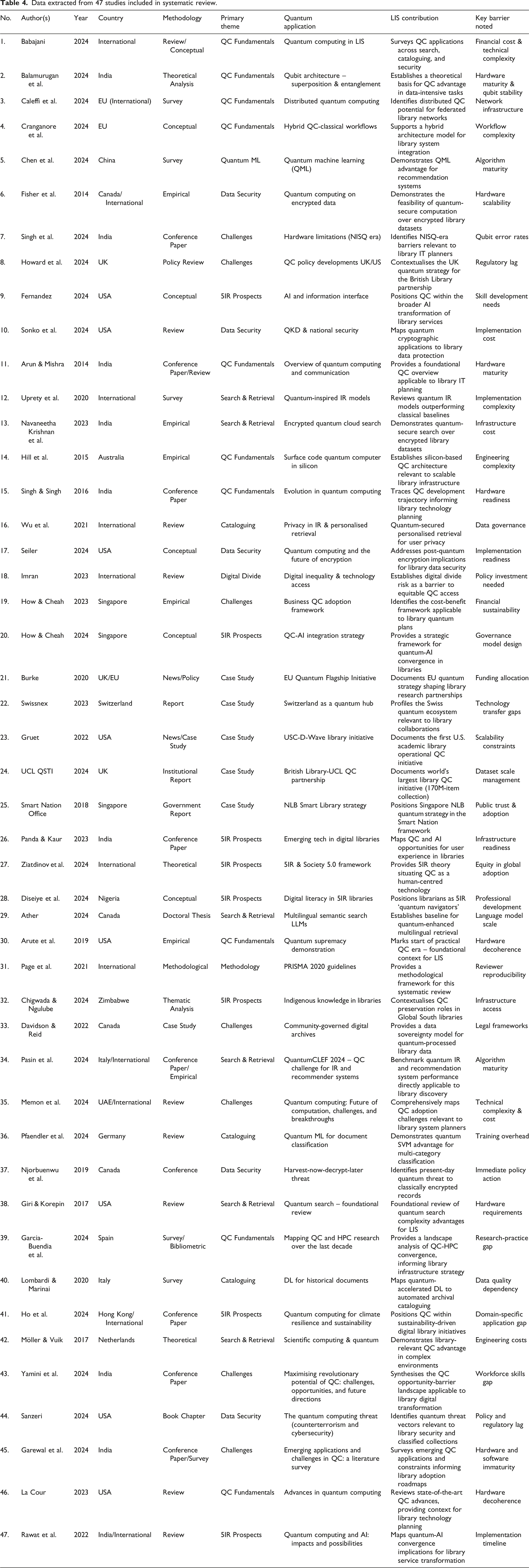
Data extracted from 47 studies included in systematic review.
Recommendations
Drawing directly from the evidence synthesised in this review, the following recommendations are offered to libraries, professional associations, policymakers, and researchers: (1) Library institutions should initiate post-quantum cryptographic migration planning immediately, regardless of quantum hardware availability timelines. The ‘harvest now, decrypt later’ threat is active, and the NIST post-quantum standards provide an actionable migration pathway. Library IT departments and consortium-level bodies such as OCLC and LIBER should develop post-quantum readiness assessments and staged migration plans. (2) Library associations (NLA, ALA, CILIP, IFLA) should advocate for the inclusion of library sector needs in national and international quantum computing strategy documents and funding programmes. The EU Quantum Flagship Initiative and comparable national programmes in the US, China, and the UK represent policy entry points through which library-relevant quantum research can be prioritised. (3) Library schools and continuing professional development programmes should incorporate quantum computing literacy into LIS curricula, training the next generation of ‘quantum navigator’ librarians equipped to interpret, mediate, and ethically manage quantum information systems. This is an immediate curricular responsibility, not a future contingency. (4) Government agencies and development banks investing in library infrastructure in developing countries should explicitly include quantum-readiness components in funding frameworks, ensuring that libraries in the Global South are positioned to participate in rather than be marginalised by the quantum transition. Bilateral technology transfer agreements between quantum-advanced and developing nations should include library and information infrastructure provisions. (5) Research institutions and library consortia should establish quantum computing library research labs, modelled on the USC-Lockheed Martin and British Library-UCL partnership models, to conduct empirical evaluations of quantum retrieval, cataloguing, and recommendation algorithms at operational library scales. These evaluations should be published under open-access conditions to accelerate knowledge transfer across the library sector. (6) Libraries should develop ethical governance frameworks for quantum data processing before quantum capabilities are deployed, drawing on community archive models and data sovereignty principles that have been successfully applied in digital cultural heritage contexts. Professional bodies should develop model governance policies adaptable to different national legal frameworks.
Limitations of the study
This systematic review is subject to several limitations that should inform interpretation. (1) The restriction to English-language publications introduces linguistic bias and may have excluded significant contributions from Chinese, German, French, and Japanese research communities who are active in both quantum computing and library science. (2) The temporal boundary of 2014–2024, whilst ensuring contemporary relevance, excludes foundational pre-2014 quantum information retrieval research whose theoretical contributions remain important. (3) The review is limited by the current state of the available literature, in which empirical evaluations of quantum systems in operational library settings are rare, meaning that the evidence base is more heavily weighted towards theoretical and exploratory studies than towards demonstrated outcomes. (4) Whilst the PRISMA framework substantially reduces reviewer bias, the interdisciplinary nature of the subject area meant that boundary decisions about relevance, particularly for quantum computing studies with partial information science relevance, required interpretive judgement that may not be fully reproducible by other reviewer teams. (5) Nevertheless, publication bias may have over-represented successful or promising applications at the expense of failed or marginal ones, a limitation that restricts the review’s ability to inform risk assessment for quantum computing library investments.
Suggestions for further studies
(1) Empirical benchmark studies should compare quantum and classical retrieval algorithm performance on live library database collections at operationally relevant scales, generating the outcome-level evidence that the current review literature lacks. (2) A multilingual systematic review, incorporating Chinese, German, French, and Japanese sources, should extend the evidence base beyond English-language scholarship and capture quantum library research emerging from national quantum programmes in these countries. (3) Research should investigate the transition pathway from post-quantum cryptographic planning to operational implementation in library settings, generating practical case knowledge for the library IT community. (4) Studies should examine librarians’ perceptions, competency gaps, and professional development needs in relation to quantum computing adoption, using validated instruments such as UTAUT to model acceptance intention across different library types. (5) Qualitative research should investigate the policy and governance frameworks through which libraries in developing countries could access quantum computing capabilities, drawing on comparative case analysis of successful technology transfer models in the LIS sector. (6) Interdisciplinary research should develop and evaluate ethical governance frameworks for quantum data processing in library environments, incorporating principles of data sovereignty, patron privacy, and community control that are consistent with core library professional values.
Footnotes

Funding
The authors received no financial support for the research, authorship, and/or publication of this article.
Declaration of conflicting interests
The authors declared no potential conflicts of interest with respect to the research, authorship, and/or publication of this article.