






Abstract
Complex intuitionistic fuzzy sets (CIFSs) can represent problems in multicriteria decision-making that involve uncertainty and periodicity of semantics at the same time. CIFSs handle two-dimensional information that requires a long time and a huge number of calculations and processes. In this research, the complex intuitionistic shadowed set (CISHS) is defined as a novel threshold approximation method. CISHS is introduced to simplify processing and enhance the interpretation of outcomes obtained from CIFSs. The main idea of constructing CISHS is adding a complex non-membership function to the complex shadowed set (CSHS) range. Additionally, the basic operations, specifically complement, union, and intersection on CISHSs, are introduced. The properties of CISHSs are defined as null, absolute, and subset. Finally, an application to demonstrate the effectiveness of the proposed approach is employed by using an adaptive algorithm with CISHSs.
Keywords
Introduction
Zadeh (1965) introduced the theory of fuzzy sets (FSs). FSs aid in formulating information from human knowledge into mathematical models and vice versa. FSs are mathematical tools used to explain vague and uncertain information. FSs are characterized by a membership function that assigns each object a membership value between 0 and 1. Narasimhan (1979) presented an application of FSs theory to the problem of locating gas stations. FSs have numerous applications in artificial intelligence by Bas and Egrioglu (2023), and in expert systems by Wójcik et al. (2023). Recently, many researchers applied FS and their generalizations to various fields of mathematics (Abuhijleh et al., 2021; Al-Masarwah et al., 2021; Al-Sharoa, 2023; Alsharo et al., 2024; Ramot et al., 2002; Rani & Garg, 2017).
Then, in 1986, intuitionistic fuzzy sets (IFSs) were introduced by Atanassov (2016) as an extension of FSs, by adding non-membership function. In an IFS, the membership function and the non-membership function are used to model hesitation, and it is more powerful to deal with the uncertainty and fuzziness. Biswas (1989) introduced the concept of intuitionistic fuzzy subgroup. Akram et al. (2013) proposed IF logic controller for heater fans. This concept has been applied in pattern recognition by Wang and Xin (2005), and in medical diagnosis by Kozae et al. (2020).
Existing theories are often inadequate for fully capturing information, and hence there is a loss of information during the process. To address this limitation, Ramot et al. (2002) introduced a new notion and named it complex fuzzy sets (CFSs) to model periodic problems or recurring problems. They extended the range of membership function to the unit disk in the complex plane. Ma et al. (2019) suggested a model based on CFS to identify the reference signal among multiple signals collected by a digital receiver. Sobhi and Dick (2023) proposed a new neuro-fuzzy architecture using CFS that has been designed for large-scale learning problems. In 2023, Dai (2023) proposed a new notion called linguistic complex fuzzy set.
Alkouri and Salleh (2012) extended the definition of CFSs to complex intuitionistic fuzzy sets (CIFSs) by adding a non-membership term to the notion of CFSs. Rani and Garg (2017) proposed a series of distance measures for CIFSs and applied them to problems in pattern recognition and medical diagnosis problems. Garg and Rani (2019) developed new averaging aggregation operators, called complex intuitionistic fuzzy weighted averaging. In 2023, Al-Sharoa (2023) presented the idea of complex intuitionistic fuzzy subgroups, and the properties were explored.
As a three-region approximation, Pedrycz (1998) defined the Shadowed sets (SHSs) as a tool for handling uncertainty. The main idea was transforming the range of FSs into three components, that is, 0, 1, and the unit interval [0,1]. The elements of the range of SHSs can be labeled using symbols, say, elevated, shadow, and reduced. Zhang and Yao (2020) proposed a game-theoretic approach to shadowed sets. Yue, Zhou, Yao, and Miao (2020) proposed a novel shadowed set method to construct shadowed neighborhoods for uncertain data classification.
In 2021, Yang and Yao (2021) exposed that shadowed sets can be constructed from IFSs. This approach is related to the notion of a three-way decision and is considered an approximation method for intuitionistic fuzzy information. In 2024, Hlael (2024) presented a new structure of intuitionistic fuzzy information, and the basic operations were introduced. Recently, Alsharo et al. (2024) introduced the notion of complex shadowed set (CSHS) by extending the range of SHSs from
The construction of complex intuitionistic shadow sets is mainly motivated by the desire to extend intuitionistic fuzzy logic and set theory into domains involving dynamic, oscillatory, or phase-based behavior, using the tools of complex numbers. Complex numbers allow for encoding both magnitude “indicating the degree to which an element belongs to a set” and Phase “representing when or in what direction this membership occurs”. In the case of complex intuitionistic fuzzy information, we have complex membership and non-membership values help us to identify the objects to be lying in rejection, accept, or shadow region.
In short, intuitionistic shadow sets simplify intuitionistic fuzzy systems, while complex membership and non-membership values generalize them for richer, more nuanced modeling. Therefore, combining the two offers a flexible, computationally manageable, and conceptually powerful framework for handling systems characterized by both vagueness and periodicity. In addition, complex intuitionistic shadow sets (CISHS) aim to simplify processing and enhance the interpretability of results derived from complex intuitionistic fuzzy sets (CIFSs). This extension enables more refined analysis of uncertainty across different phases and strengthens decision-making capabilities.
The idea of adding the complex non-membership function to the stricter of CFS introduced the notion of CIFS. The challenge of translating human knowledge involving periodicity semantics and uncertainty simultaneously into mathematical formulas and vice versa is addressed by CIFSs. So, the phase terms of CIFSs highlighted a new complication, which is adding enormous operations and calculations accomplished from the CIFSs and the explanation of acquired results.
To improve the understanding of CIFS findings and streamline processing, By appending a complex non-membership function to the range of complex shadowed sets, we provide the idea of the complex intuitionistic shadowed sets, which yields the subsequent new range from
In this research, a literature review and relevant preliminaries are presented in Sections 2 and 3, respectively. Section 3 also introduces a new concept called complex intuitionistic shadow sets (CISHS), developed by adjoining a complex non-membership function to the range of complex shadowed sets (CSHS). Furthermore, several fundamental mathematical operations and their properties are defined and discussed. Section 4 then illustrates an application example in decision-making problems to validate the effectiveness of CISHSs in handling and approximating complex intuitionistic fuzzy information. Finally, Section 5 presents a discussion of the main contributions and directions for future work.
Preliminaries
A fuzzy set An intuitionistic fuzzy set let A complex fuzzy set A CIFS Let The union of The intersection of The complement of (Zadeh 1965)
(Atanassov 2016)
(Pedrycz 1998)
(Ramot et al. 2002)
(Alkouri and Salleh 2012)
(Alsharo et al. 2024)

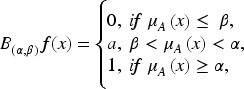








If
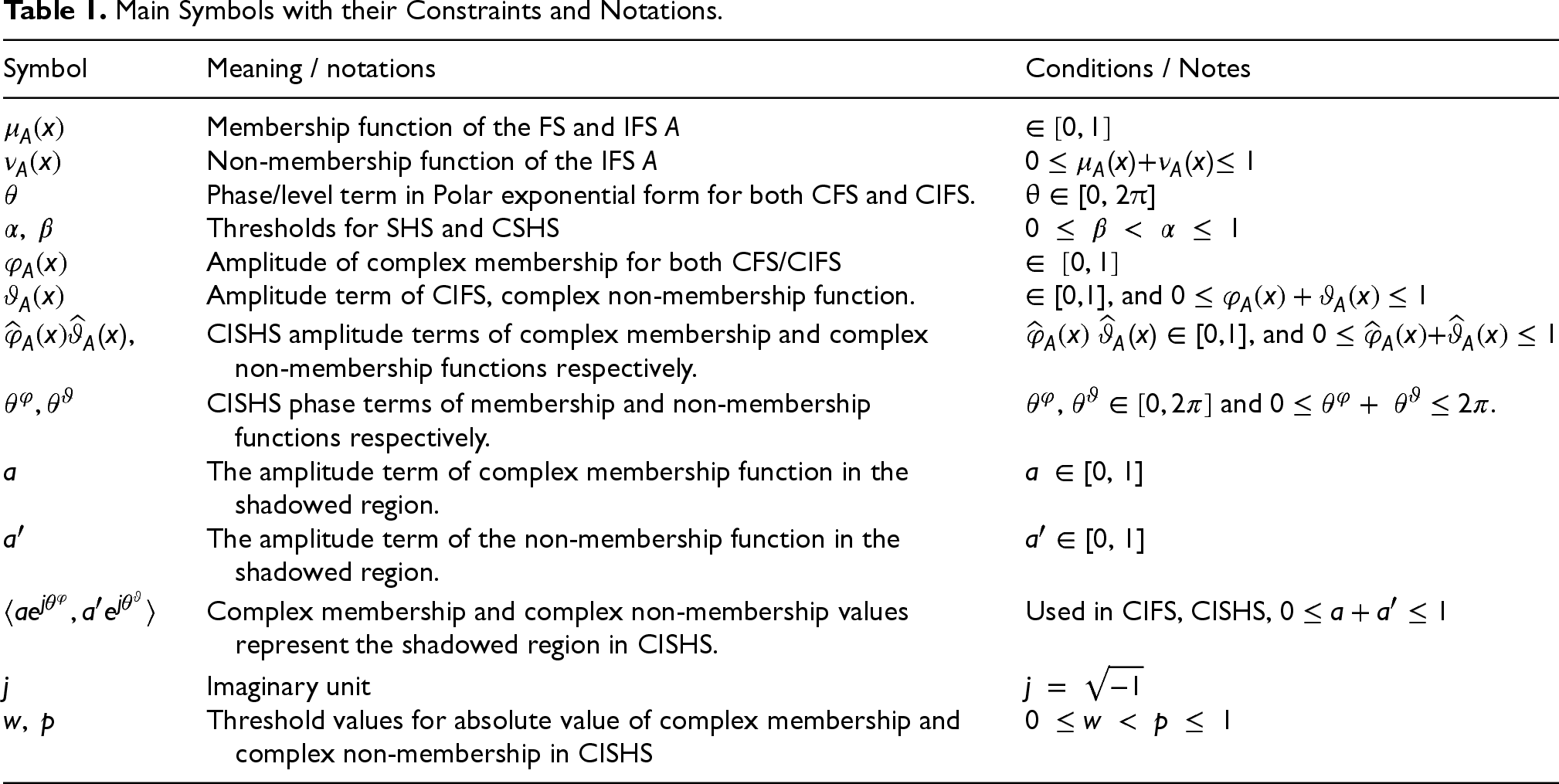
Table 1 summarizes the symbols used in this research along with their associated constraints, for improved clarity and ease of reference.
Main Symbols with their Constraints and Notations.
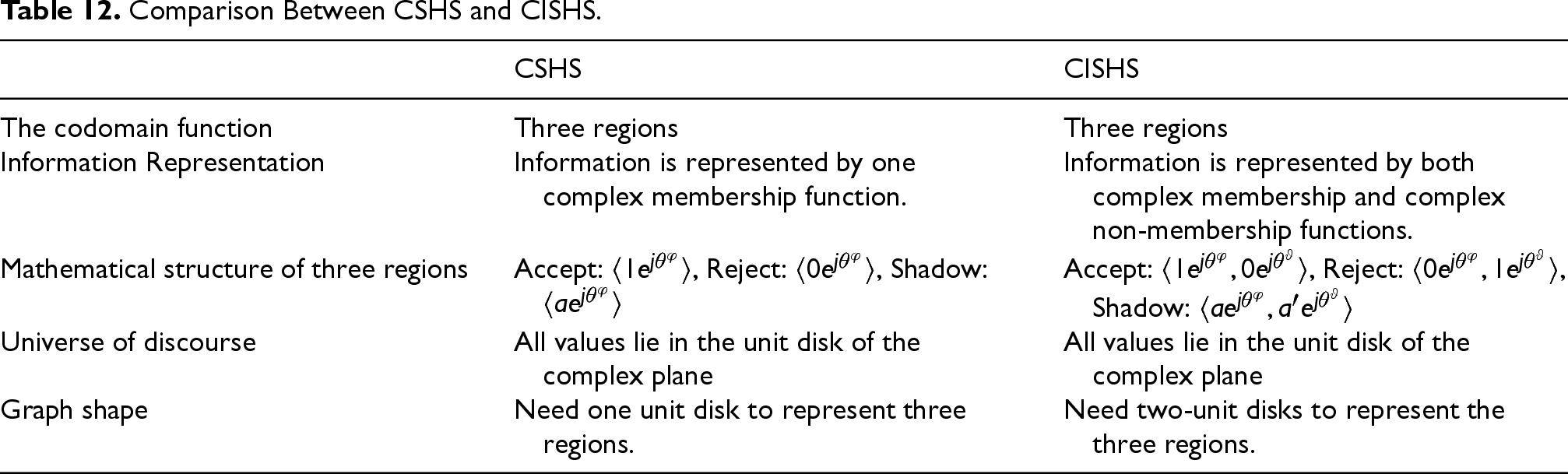
In this section, we define the notion CISHS, which is a generalization of CSHS. The transition from CSHS to CISHS provides a more expressive and informative framework for handling uncertainty, especially in domains involving contradictory or incomplete information. While CSHS approximates the degree of membership using complex numbers, it lacks the ability to express opposition (non-membership) and hesitation. CISHS overcomes this by approximating a complex-valued non-membership function, enabling the representation of both support and rejection levels, along with the inherent hesitation. Figure 1 presents the three regions of membership and non-membership functions for CISHS instead of only one function in CSHS and Tables 11 summarizes their core differences. Some definitions and properties are given.
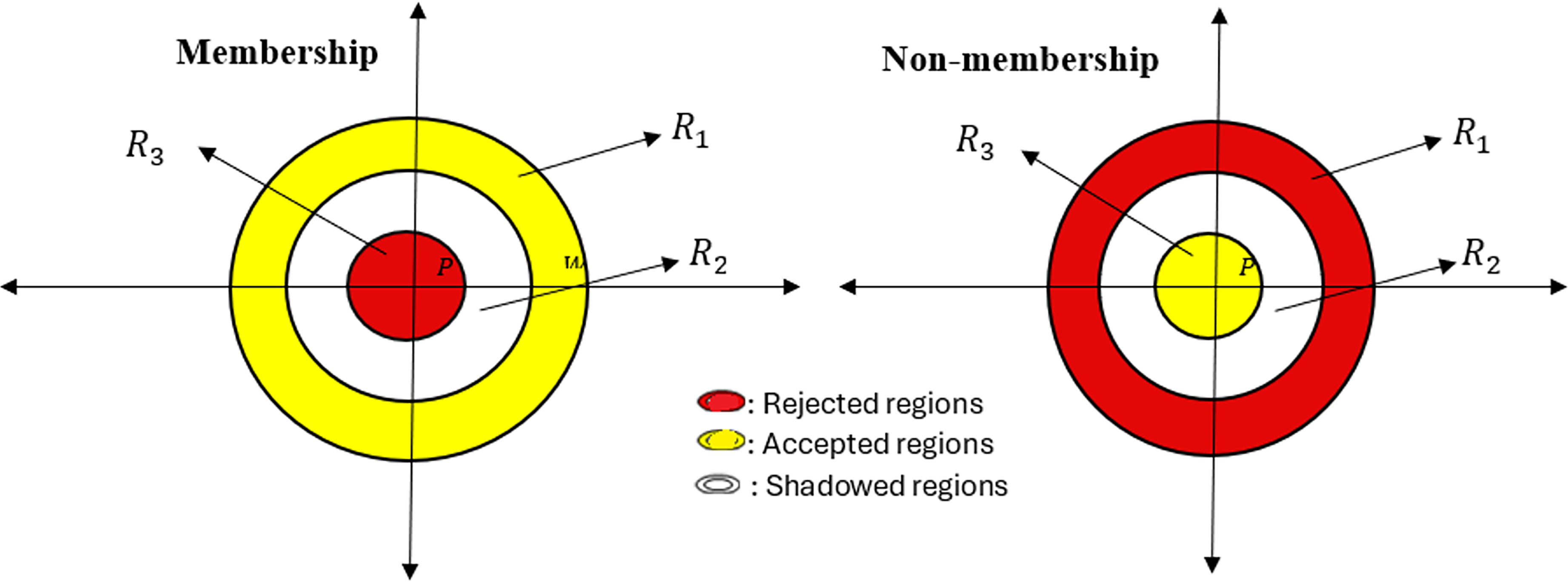
The Three Regions of Membership and Non-membership Function for CISHS.

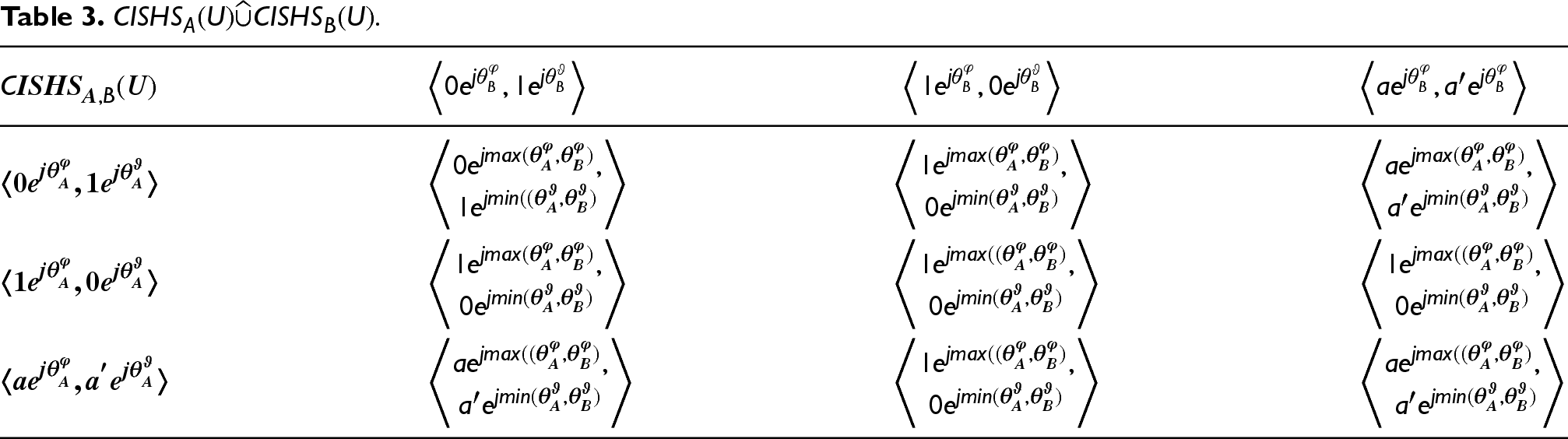


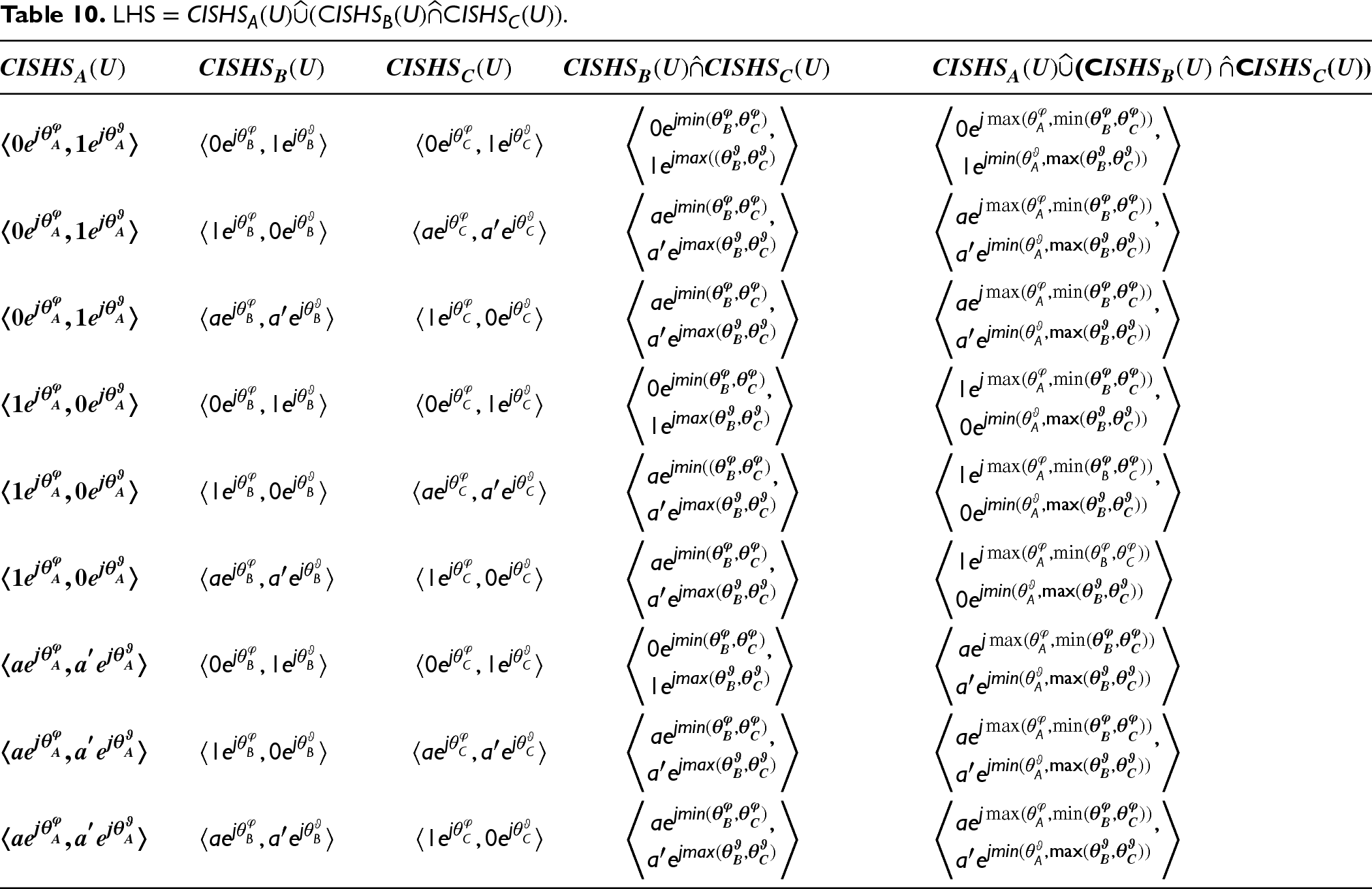
LHS
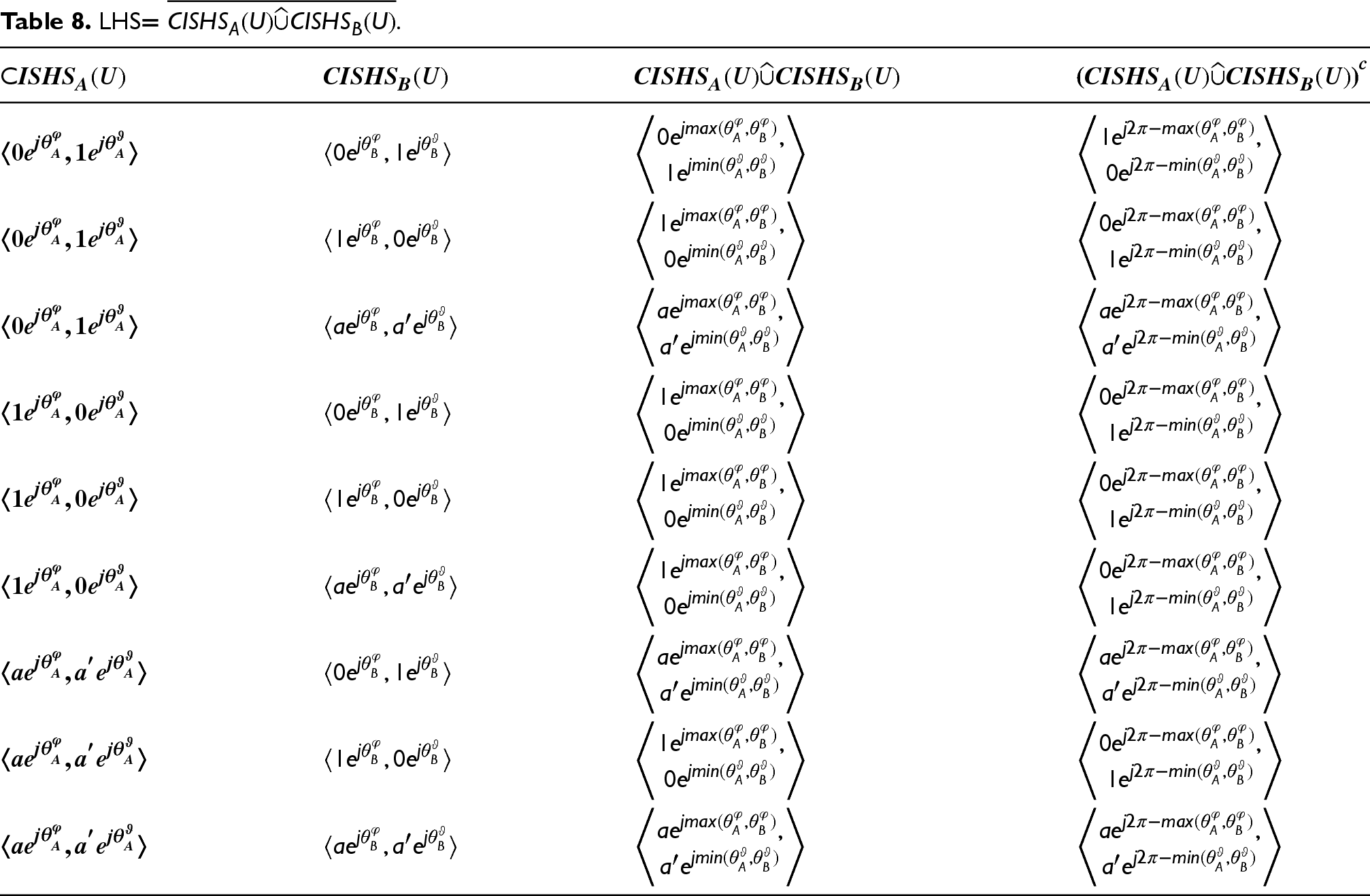
RHS=
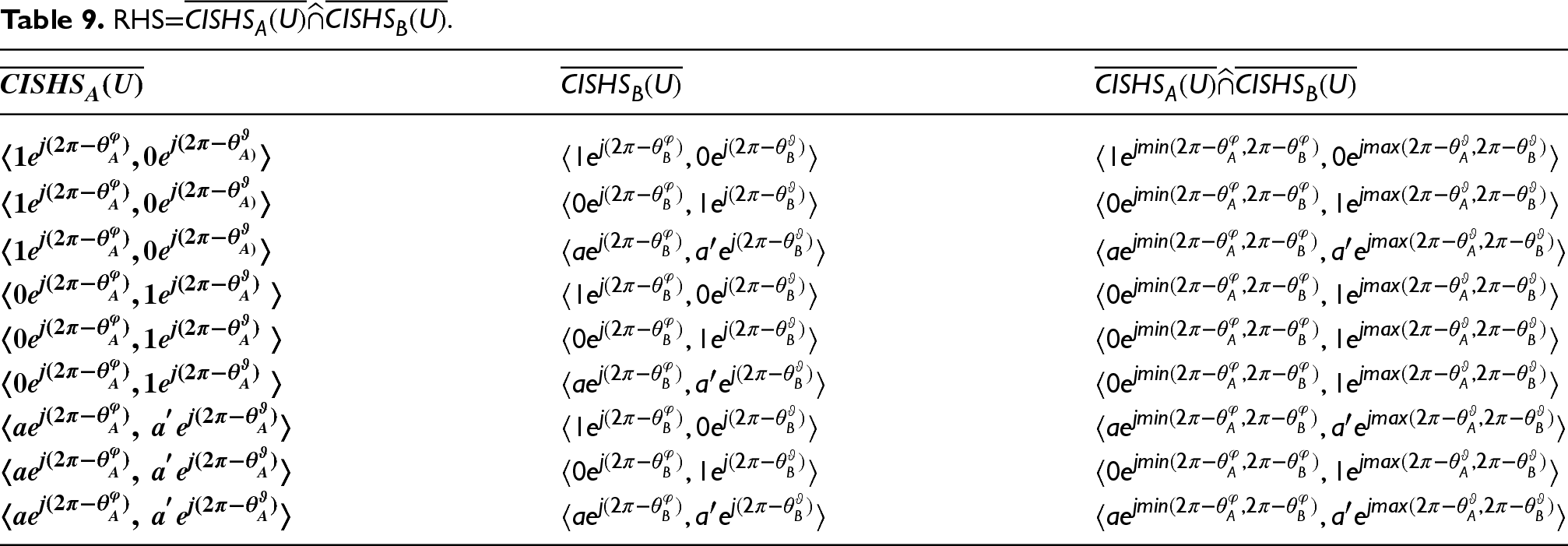
LHS =
RHS =
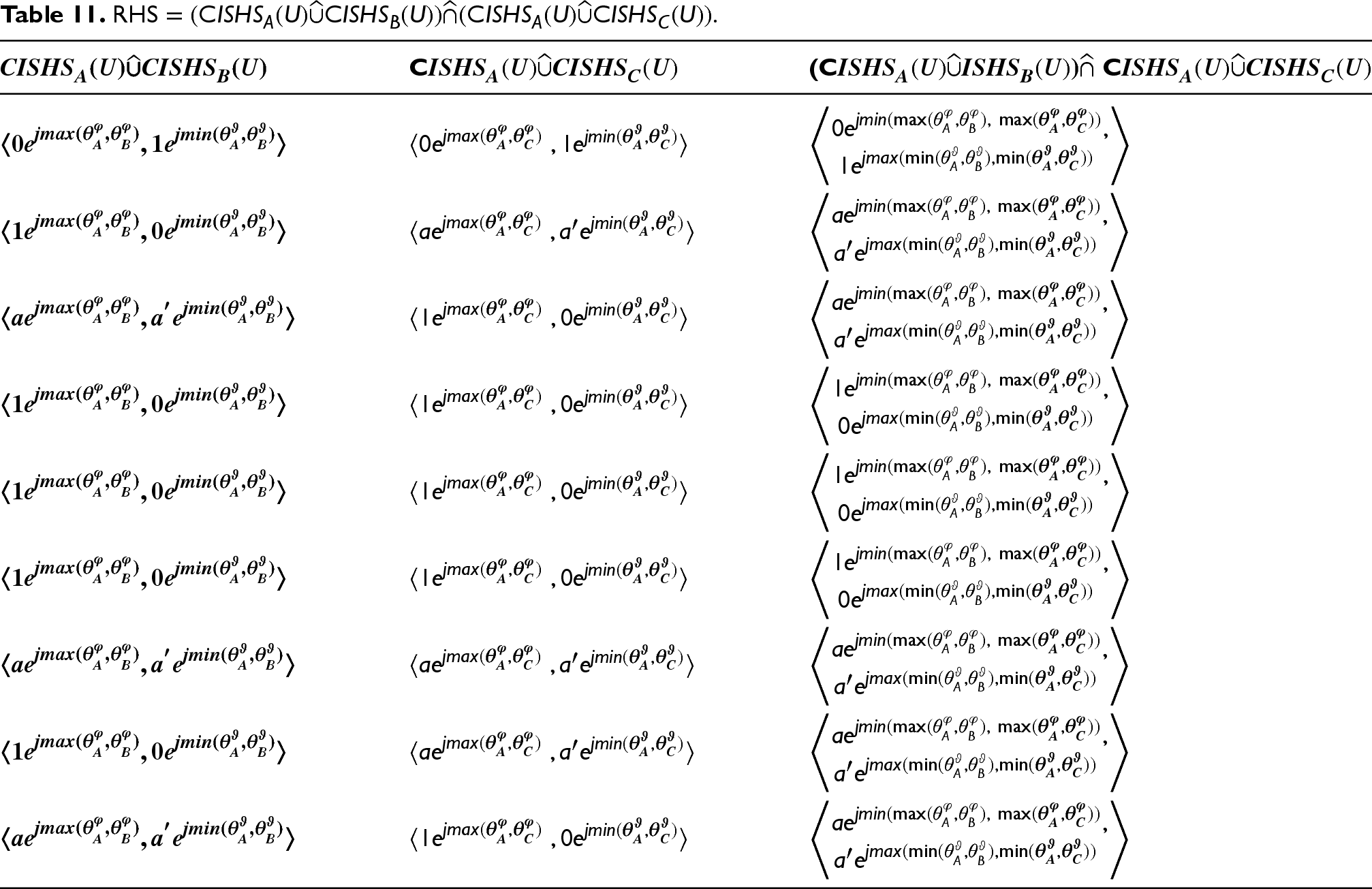
Let

Now,
The objects
The grade
Let
The following definitions may elaborate some special cases of the CIFHS sets. Definition 3.3, illustrate the Null CISHS characterizes all values/objects in the Universe that are full amplitude terms of non-members and zero amplitude terms of members in phase terms
A null complex intuitionistic shadowed set
An absolute complex intuitionistic shadowed set
A completely complex intuitionistic shadowed set
Let
Let 
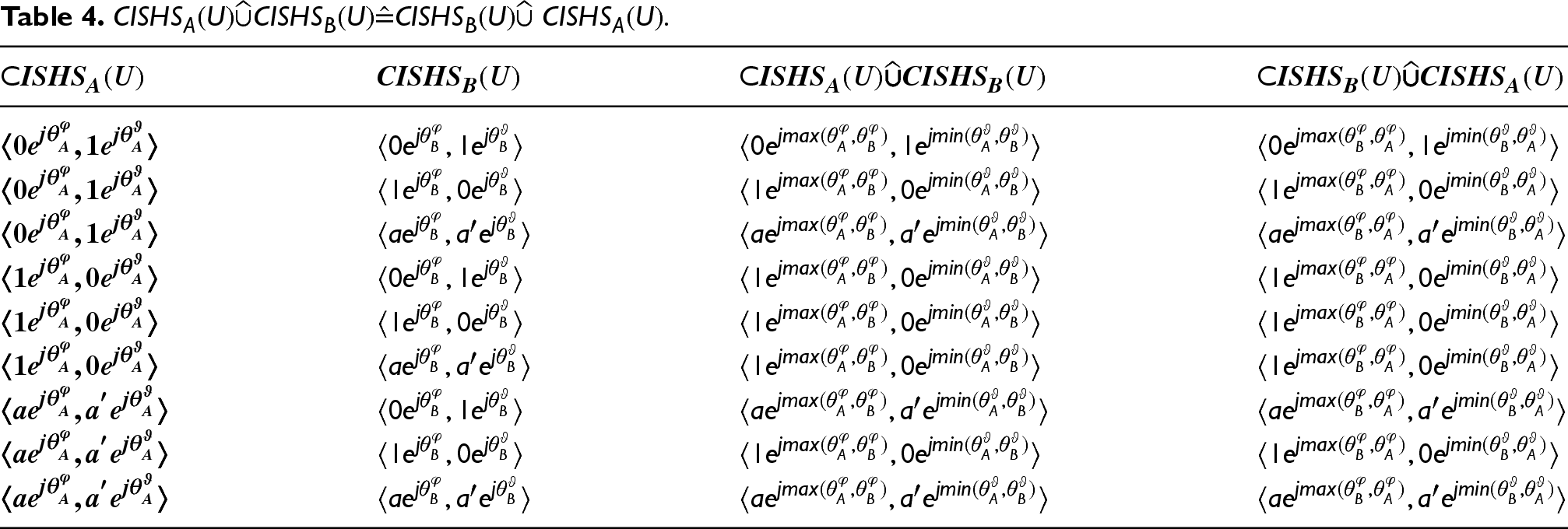
The union of two complex intuitionistic shadowed sets
Let 
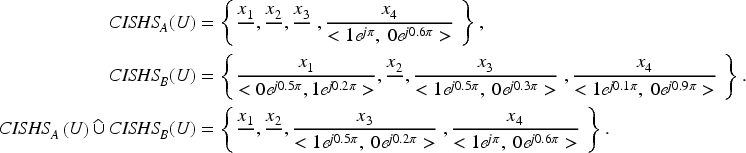
Let

Clearly, the third column is equal to the fourth column in Table 4.
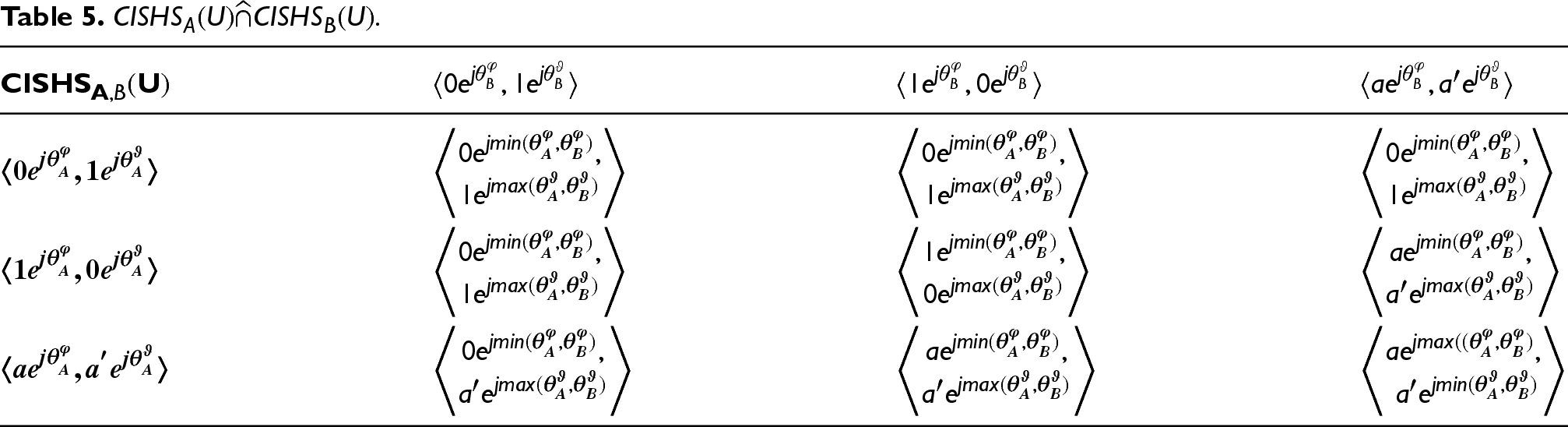
For parts (b), (c), (d), and (e) the proof is straightforward based on Definitions 3.2, 3.3, 3.4, 3.5, and 3.7. The intersection of two complex intuitionistic shadowed sets Let Let

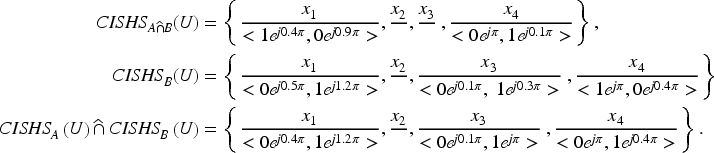

Clearly, the second column is equal to the third column in Table 6. For parts (a), (b), (d), and (e) the proof is straightforward based on Definitions 3.2, Definition 3.4, Definition 3.5, and Definition 3.8.
Let 
Clearly, the third column is equal to the first column in Table 7 that proved the property
Let
Let


The innovation lies in the richness of data types and the level of detail they carry; thus, constructing a set capable of fully capturing and emphasizing this detailed information becomes essential for effective analysis. Also, The CIFS stands out from CFS by using two functions instead of one, allowing it to represent both the fuzziness and the periodic nature of data in more details and comprehensively. As known in the literature, the CIFS can address and solving certain real-world problems that CFS cannot. CISHS is considered as a generalization of CSHS, it incorporates additional complex non-membership functions that enhance its representational power and applicability. A more thorough examination of ambiguity and repetition is made possible by CISHS, which specifically offers a multi-dimensional viewpoint on complex membership, complex non-membership, and complex hesitation degrees. This extension enables researchers to tackle more intricate problems that cannot be adequately addressed by CSHS alone. Also, Table 12. Represent how many regions, number of functions that represent the information, the mathematical structures, universe of discourse, and graphs shape for CSHS and CISHS.
Application
In this section, a numerical example is studied to show the efficiency of the proposed algorithm. For this purpose, a selection model is used based on Reference (Garg & Rani, 2019). Moreover, CISHS is utilized to get the desired machine or the best alternative for a company to select a machine from five models with its production date simultaneously. Therefore, they are two-dimensional problems, i.e., the model and production date of the machine. As a result, the following steps are used to reach a decision:
Comparison Between CSHS and CISHS.
Comparison Between CSHS and CISHS.
Information in the Form of CISHS.
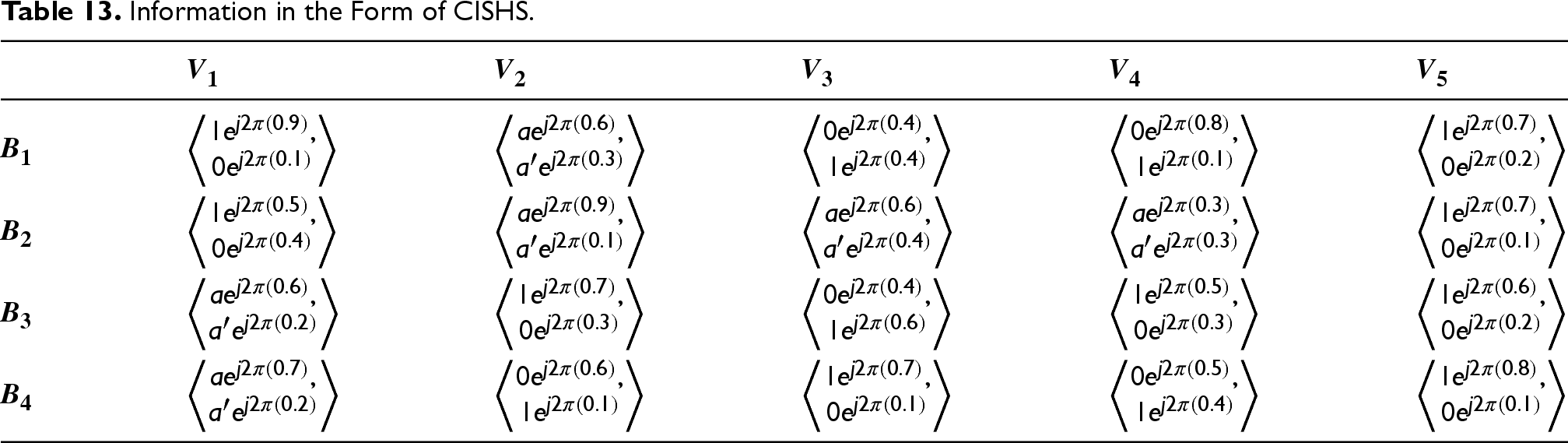
Step 1: Provide Step 2: Assume two parameters ( Step 3: Approximation Step 4: Find the score of each element in Step 5: Rank the feasible alternatives, hence select the best alternative that has the largest number of
Assume a contractor wants to buy for his company a new machine from a machine maker. The machine maker offers information on five models of machine which form the set of alternatives,
Step 1: Provide five candidates Step 2: Assume two parameters (w, p) as threshold values. Suppose w = 0.6, p = 0.3 based on the entrepreneur‘s requirements. Step 3: Approximate Step 4: Find the score function as in Table 14 Step 5: The ranking of all the feasible alternatives ( = 1, 2, 3, 4, 5) according to Table 14, is given as 5
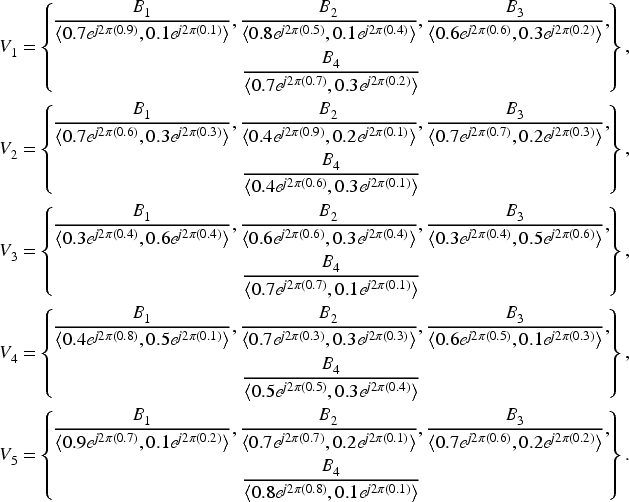
Score of

This research presented a new concept, namely, complex intuitionistic shadowed sets. The novel idea may be used to address the issue of sophisticated intuitionistic ambiguity and frequency at the same time, which requires a significant amount of computation and data. Therefore, the main advantage of CISHSs is its ability to divide CIFS values into three regions at the unit disk of the complex plane in a flexible and comprehensive manner comparable with CSHS. These regions were illustrated to simplify and present data in an easy-to-handle format. Furthermore, several operations on CISHSs were defined, i.e., subset, complement, union, and intersection, and their properties were proved. Finally, the CISHS decision-making algorithm and real-life example were construed to demonstrate the concept’s validity and effectiveness. As shown, the score function was used by the proposed algorithm to study the best alternative for the current research. CISHS introduces additional computational complexity and may require more intricate algorithms for practical applications as a limitation. Also, some information has more details comparable with CIFS, such as bipolarity or multi parameters which cannot be represented and approximated by current approach. Therefore, to cover this limitation, we suggest extending the presented approach to study and combining shadowed set and both complex bipolar fuzzy set and complex hesitant fuzzy set as future research.
Footnotes

Funding
The author(s) received no financial support for the research, authorship, and/or publication of this article.
Declaration of Conflicting Interests
The author(s) declared no potential conflicts of interest with respect to the research, authorship, and/or publication of this article.
Data availability
The author confirms that all data generated or analyzed during this study is included in this published article. Furthermore, primary and secondary sources and data supporting the findings of this study were all publicly available at the time of submission.