






Abstract
The comparative analysis of brain diseases and disorders to better appreciate the differences and similarities in their treatments, progression, symptoms, and causes. Brain diseases and disorders present a key worldwide challenge because of the problem of the brain, which makes research, treatment, and diagnosis extremely complex. This study discovers the model of Weighted Aggregated Sum Product Assessment for complex fuzzy models with intuition, because this structure describes the opinions and feelings of human beings very precisely and efficiently. This study derives the operations based on Sugeno-Weber norms for the development of the Sugeno-Weber weighted averaging model and Sugeno-Weber weighted geometric model for the interpretation of the Weighted Aggregated Sum Product Assessment technique. Globally, differences in access to neurological care, slow progress in research, and the economic impact of these disorders highlight the urgent need for better education, treatment, and diagnosis strategies. Finally, this study compares the rank of our designed datasets with the ranking values of the prevalent strategies to designate the rationality and strength of the intended approaches.
Keywords
Introduction
The brain controls the whole body’s functions and works as a command center in the human body. Functions like speech, thinking, movement, and memory are all controlled by the brain. The brain consists of three major parts, including the cerebrum, the brainstem, and the cerebellum. The early detection of brain diseases is very challenging because they grow silently and worsen day by day. Various types of advanced technologies are developed for the early detection of brain diseases, such as EEG, genetic testing, and MRI scans. The major brain diseases, based on their causes and symptoms, are discussed in Table 1.
Major brain diseases.

Major brain diseases.
An increasing number of brain diseases has become a big challenge for public health, which requires early strategies such as finding new treatment ways, public awareness, and improving prevention. The evaluation of such treatment options is very important to detect and treat the disease earlier. Different types of treatment approaches are developed based on the nature of the disease. Some major treatment approaches for various brain diseases are explained in Table 2.
Treatment approaches for brain diseases.

After the innovation and construction of the above application, numerous works have been done by different scholars. For instance, Lu et al. 1 derived the systematic analysis for the global burden of diseases with the national burden of spinal cord injury from 1990 to 2021. Sengar et al. 2 invented the systematic review and application of generative artificial intelligence. Sharafaddini et al. 3 designed the detection of breast cancer with the help of deep learning techniques, with a comprehensive review. Wang et al. 4 exposed the traditional machine learning model for image classification algorithms with deep learning models. Aly 5 presented the real-time progress tracking based on deep learning for advanced facial expression recognition.
The theory of fuzzy set (FS) was invented by Zadeh 6 in 1965, which is a strong approach to address complex and uncertain MADM challenges. FS contains a membership function, defined from any universe of discourse to the unit interval. The membership function shows the exact number to which an element belongs from a set or shows the exact influence rate of something on a particular MADM problem. For example, in brain diseases MADM problem shows the influence of each disease by assigning a membership value that ranges between 0 and 1. The membership function gives a partial degree about the disease in the brain, but not like a traditional classical set; for instance, the truth degree only shows whether the disease is present or not, but not partial. Later on, numerous extensions were developed by different scholars; for instance, Mahmood and Ali 7 exposed the fuzzy superior Mandelbrot sets. Marrucci et al. 8 developed the fuzzy qualitative comparative analysis to explore paths underlying industry implementation in manufacturing. Rodriguez and Arkkio 9 invented the fuzzy detection of stator winding faults. Laribi et al. 10 introduced the genetic algorithm mechanism synthesis with fuzzy logic.
The idea of FS is generalized to an intuitionistic fuzzy set (IFS) by Atanassov11,12 in 1983. The IFS contained a membership function as well as a non-membership function with hesitation degree, which clearly shows the influence and the hesitation level of the particular element. The IFS is the generalized framework of FS theory, which provides the strength to the decision-making approaches and enhances their capability to address complex and uncertain problems. The IFS is a valuable concept for further extension to various fields by different research scholars; for instance, Hao et al. 13 described the intuitionistic fuzzy prospect theory with designed schemes. Atanassov 14 established the multi-topological structure with IFS. Panchal and Kushwaha 15 exposed the optimal maintenance policy decision in a sugar mill based on IFS. Das et al. 16 derived the sustainable ranking of battery technology based on IFS with linguistic and hesitant sets. The novel and well-organized structure of complex fuzzy set (CFS) was designed by Ramot et al. 17 in 2002, which is a generalized concept of FS. CFS contained a membership function in the form of a complex value. The complex membership grade belongs to a unit disc in a complex plane having real and imaginary parts. The real and imaginary parts belong to the closed interval of 0 and 1. CFS is a famous representation of fuzzy information because it contains dual-dimensional information in a single set. Nowadays, CFS is widely adopted by many scholars; for instance, Mahmood et al. 18 derived the neighborhood operator for CFSs. Liu et al. 19 designed the distance and entropy measures for CFSs. Bi et al. 20 invented two different classes with energy measures for CFSs.
CFS with a complex-valued fuzzy function plays a valuable role in the circumstance of complex and uncertain situations. But it is also very important to cope with vague data; the complex-valued fuzzy function is not enough. Therefore, the idea of CFS was further generalized by Alkouri and Salleh 21 in the shape of a complex intuitionistic fuzzy set (CIFS) by adding a complex-valued non-membership function in the definition of CFS. CIFS is a famous and dominant technique because of both function with complex nature and strong conditions. Complex intuitionistic fuzzy approach achieved close attention in various MADM problems; for instance, Ali et al. 22 derived the Archimedean operator with Heronian mean for CIFSs. Mahmood et al. 23 invented the analysis of the autonomous vehicles for CIFSs with rough values. Jawad et al. 24 exposed the group isomorphism theorem for CIFSs. Garg and Rani 25 developed the novel aggregation operators for CIFSs.
Aggregation operators (AO) are widely used in the scenario of MADM models for the assessment of the best outcome among the family of alternatives. Various types of AO are constructed by scholars to handle awkward and complex problems; for instance, decision-making problems, clustering analysis, and medical diagnosis. Additionally, the AOs are developed based on some norms, called algebraic, Einstein, Hamacher, and so on, but our concentration is on the development of the Sugeno-Weber information, which was developed by Sugeno and Weber.26,27 Sugeno-Weber AO (SWAO) is developed based on Sugeno-Weber t-norm (SWTN) and Sugeno-Weber t-conorm (SWTCN), which can help us aggregate the collection of data into a singleton set. After the construction of the SWAO, many scholars have worked on it; for instance, Pamucar et al. 28 developed the idea of fuzzy SWAO. Hussain et al. 29 generalized the idea of fuzzy SWAO for IFS to assess the challenge of sustainable digital security. Xu 30 constructed some novel aggregation operators, such as the IF weighted averaging (IFWA) operator, IF ordered weighted averaging (IFOWA) operator, IF hybrid aggregation (IFHA) operator, and their properties. Xu and Yager 31 developed some novel AO based on IF information. Wang and Liu 32 constructed some Einstein AO based on IF information. Garg 33 proposed some novel AO for IFS using the concept of Einstein norms and also discussed its applications. Xu and Yager 34 established the Bonferroni mean based on intuitionistic fuzzy and also explained its special cases. He et al. 35 developed the idea of geometric interaction AO based on IFS and discussed its application in MDDM. Huang 36 invented the idea of intuitionistic fuzzy-based Hamacher AO and explained its applications. Chen and Chang 37 established a novel multiplicative operator between intuitionistic fuzzy information and also invented a new power operator based on IFS. Goyal et al. 38 proposed the idea of a genetic weighted averaging operator based on IF information. Ye 39 established some hybrid arithmetic and geometric AO based on IFS and addressed the problem of mechanical design schemes. Garg 40 constructed a new approach to decision-making based on intuitionistic fuzzy information and also discussed some applications. Zhou and Xu 41 developed the idea of extreme intuitionistic fuzzy weighted AO and explained its application in the decision-making process. Garg and Rani 42 invented some generalized AO based on CIF information and discussed its applications in MADM approaches.
Actually, the above operators are developed for the valuation of the different types of decision-making procedures. Therefore, to assess complex and ambiguous information, the idea of decision-making models is also widely used by scholars. For instance, Chakraborty and Zavadskas 43 invented a new Weighted Aggregated Sum Product Assessment (WASPAS) approach to address the uncertainty in complex information. Later on, many people have used the concept of decision-making models. For example, Turskis et al. 44 established the concept of the WASPAS model for fuzzy values with the Analytic Hierarchy Process. Stanujkic and Karabaševic 45 extended the idea of the WASPAS model for IF information and addressed the challenge of website evaluation.
After our long assessment, this study noticed the importance and effectiveness of the AO as well as the MADM approaches. Many scholars used the existing ideas of AO and MADM models for various types of real-world problems. The framework of SWTN and SWTCN is as follows:

For 
So, the SWTN for 
The technique of Sugeno-Weber information is very strong and is used in many places for the aggregation of data. So, to cover the above-mentioned research gaps, this study is motivated to address them by the following points: (i) To extend the current approach of the WASPAS model for CIFS, which will be a better framework for the expert to address MADM problems. (ii) To combine the idea of the WASPAS model with SWAO, which makes it an effective model for decision-makers. (iii) To modify the current approach of SWAO for CIFS, which will make it a suitable approach for the evaluation of complex alternatives. (iv) To solve a real-world problem by using the concept of this hybrid model, which will demonstrate its flexibility and effectiveness. This article presented a combined approach of the WASPAS model with SWAO based on CIF information, which can overcome the challenges faced by the traditional models.
As our proposed model is a combination of two different approaches, which makes it is unique among other models. Due to this combination, various traditional approaches are now special cases of our invented theory. Some of them are as follows: for instance, Fuzzy Sets, Intuitionistic Fuzzy Sets, Complex Fuzzy Sets, Fuzzy-based WASPAS Models, and WASPAS Model based on Intuitionistic Fuzzy Set. The following are our main contributory points to this research work, for instance,
To present an advanced structure of SWAO for CIF information. To generalize the existing idea of the WASPAS model. To integrate the approach of SWAO with the WASPAS model under the CIF environment. To address a real-life MADM problem using the invented model. To compare the results of the invented model with the results of some existing models.
The procedure of the proposed manuscript is arranged in the following ways: Section 2 revised the fundamental concept of the CIFSs with operational laws, and also stated the main idea of SWTN and SWTCN for the unit interval. Section 3 deliberated the WASPAS model and MADM model based on aggregation operators for Sugeno-Weber operational laws. Section 4 examined the comparative analysis of Brain diseases and disorders with the help of invented approaches and also stated some numerical examples for their justifications. Section 5 presented the comparative analysis between proposed and existing techniques to state the worth of the derived theory. Section 6 discussed some concluding remarks.
This section deliberated and revised the concept of CIFS with basic operational laws. Further, this study stated that the fundamental concept of the score and the accuracy function for CIFS is explained. Moreover, this study also explained the existing idea of SWTN and SWTCN in detail, which helps the reader understand.
(Alkouri et al. 21 )
Let us consider a universe of discourse 
For any two CIFNs such as 


For any CIFNs 

In the 1980s, Siegfried Weber constructed the idea of SWTN, where the idea of dual t-conorms was already designed in the 1970s by Michio Sugeno. For the given interval 



This section is divided into three major sub-sections to explain how this study develops the WASPAS model and MADM model based on Sugeno-Weber norms.
Aggregation operators based on Sugeno-Weber information
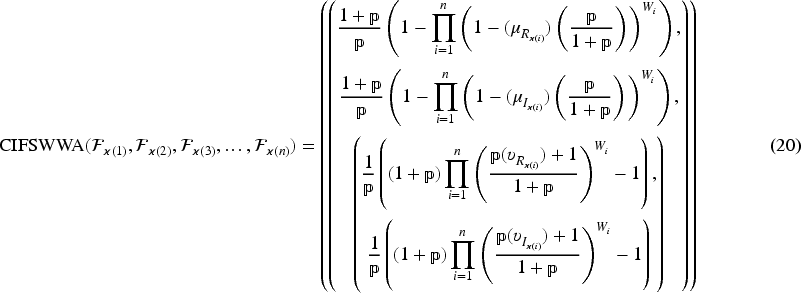
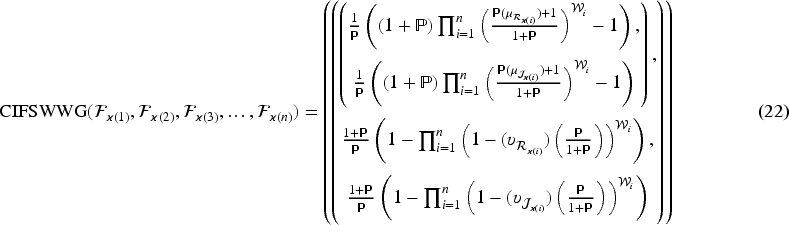
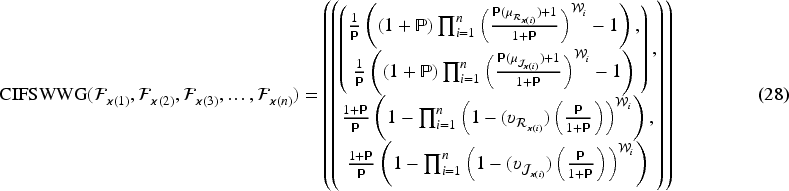
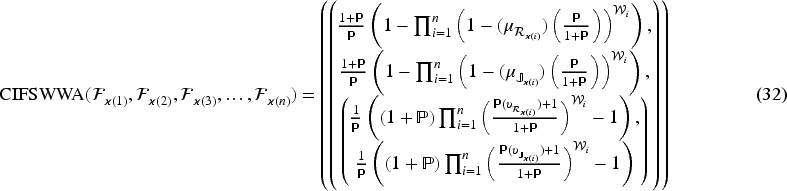
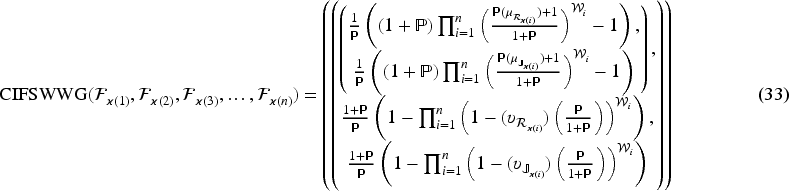
This section investigated the novel technique of Sugeno-Weber operational laws for the structure of CIFNs. Therefore, this study deliberated the model of CIF Sugeno-Weber weighted averaging (CIFSWWA) aggregation operator and CIF Sugeno-Weber weighted geometric (CIFSWWG) aggregation operator for the aggregation of the information into a singleton set.
For any two CIFNs, such as 



Consider 
Consider 
In this sub-section, the model of the CIF-WASPAS model based on Sugeno-Weber aggregation operators for the valuation of the proposed problems is developed. This study integrates the concept of the WASPAS model with SWAO under the CIF environment to address the MADM problem. This hybrid approach is specially designed to handle ambiguous information in a complex environment. To apply this hybrid model to any real-world problem, a set of alternatives and attributes is required. This study denotes the set of alternatives by

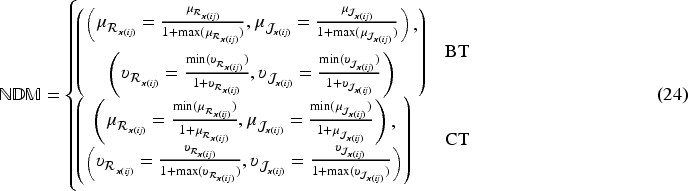


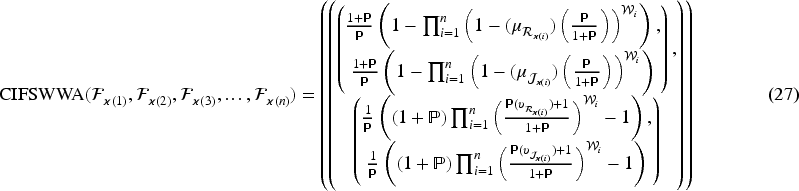

This section derived the model of MADM model for the valuation and comparison of the ranking values of the WASPAS model and our proposed MADM model to discuss the supremacy and validity of the invented theory. The MADM technique is a simple decision-making procedure, which is used for the valuation of the best decision among a family of a finite number of alternatives. This hybrid approach is specially designed to handle ambiguous information in a complex environment. To apply this hybrid model to any real-world problem, a set of alternatives and attributes is required. This study denotes the set of alternatives by



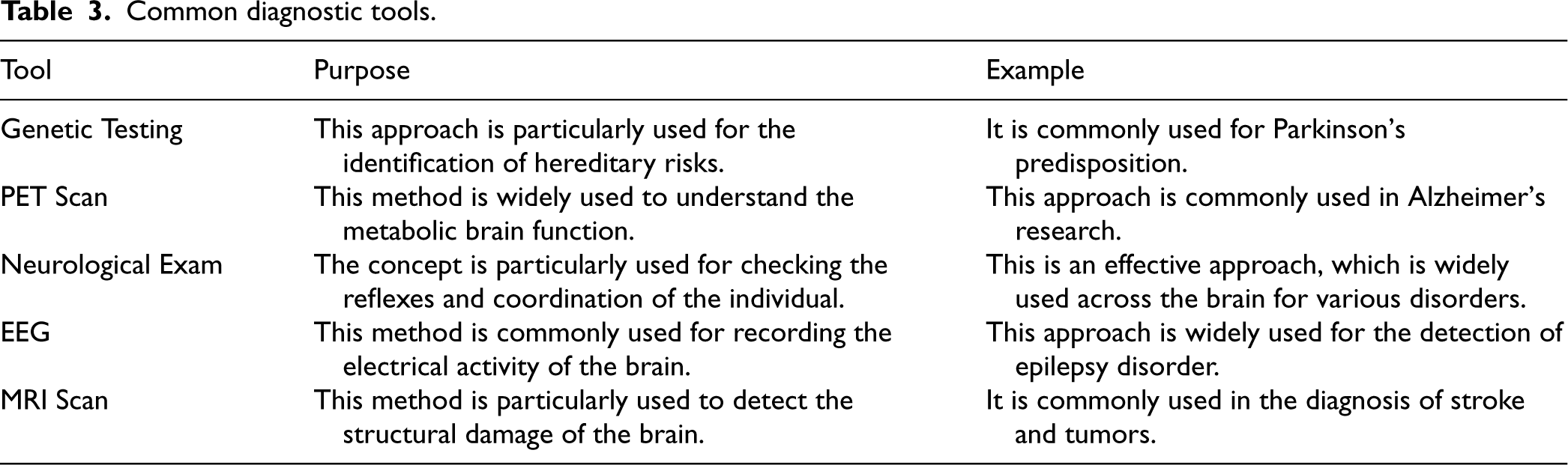
Brain diseases and disorders are the most complex health challenges of modern medicine. They affect both the physical and mental health of the individual. Because each case has its own dimensions and causes, its impact on patients and their families also differs depending on the disease they have. For example, the impact of genetics, trauma, and infection is often severe compared to the others. By comparing all the diseases, the doctors and scholars can easily understand the similarity as well as the difference between various diseases. Various advanced diagnostic approaches have been developed, which have enhanced the early detection and monitoring of such conditions. Advanced technologies like genetic screening, PRT scans, and MRI provide an effective platform for doctors and researchers to deeply examine the chemical or structural changes in the brain. This approach is effective for understanding the problem, but its diagnosis still completely depends on clinical observation and patients’ history. The comparative analysis of the various diagnostic approaches helps to identify the most reliable approach for each condition. There are several diagnostic tools used for brain disease. Among all, the most common ones are explained in Table 3.
Common diagnostic tools.
Common diagnostic tools.
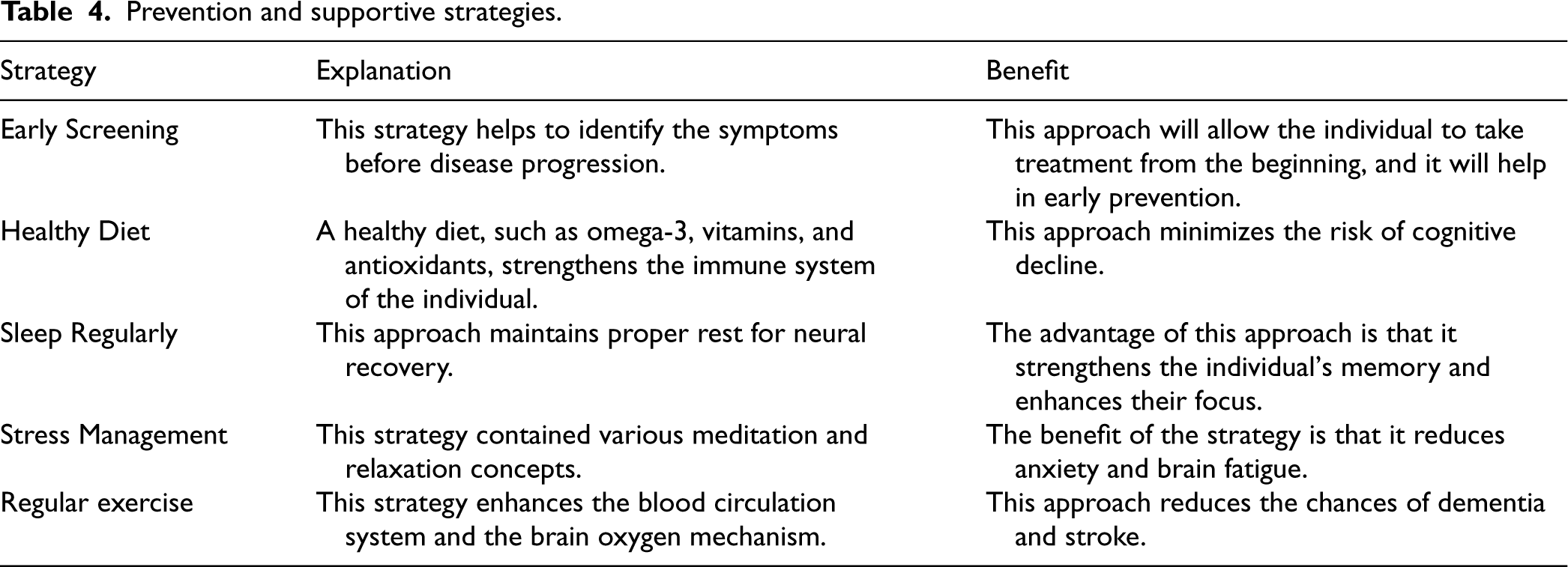
Brain disorders not only affect individual life but also have a significant influence on economic costs for families, employers, and the nation’s healthcare. The most common and biggest challenge for doctors and policymakers is the identification of brain diseases because each disease has various symptoms and causes, and even a single person may be affected by more than one disease at the same time. So, for this, not only for clinical decision-making but also for the public health sector, a well-structured and systematic approach is required to compare, prioritize, and understand such diseases and their prevention strategies. Different types of prevention and supportive approaches have been developed for the enhancement of brain health. Some common prevention and supportive approaches for brain health are discussed in Table 4 below:
Prevention and supportive strategies.
The integrated approach of various diagnosis and prevention strategies can effectively reduce the ratio of rapidly increasing brain disorders. Although each brain disease requires a unique diagnostic approach, the prevention and awareness strategies are also very beneficial for all types of diseases. Both the diagnosis approaches and prevention strategies help to understand both the biological and social aspects of brain diseases. Despite all these, the question is which one is the most dangerous and common brain disease? So, to answer these questions, many traditional approaches are designed to rank the diseases according to factors including the number of affected people, disability level, mortality rate, and treatment cost, which helps policymakers and doctors to know which factor needs urgent attention. In a real-life scenario, such approaches first integrate reliable information about each disease, and then a well-structured model is applied to it to assess them against multiple attributes. Despite its advantages, these approaches are limited in evaluating large and complex information because of the complexity and uncertainty present in medical information. To determine the most common brain disease, this study takes some emerging and well-known brain diseases as an alternative. First, this study will explain them briefly, and then this study operate our proposed models to find which one is most common among all. The alternatives are explained as follows:
To evaluate these alternatives by using the proposed models, this study needs a set of criteria or attributes for it, because without attributes, this study cannot evaluate them by using the proposed MADM approaches. The set of attributes is given as:
Cost of Care (CoC). Treatment Effectiveness (TE). Diagnosis Accuracy (DA). Impact on Quality of Life (IQOL).
Now, this study applies the proposed WASPAS model with SWAO based on CIF information to evaluate them accurately. The complete working mechanism of the proposed WASPAS model is explained below.
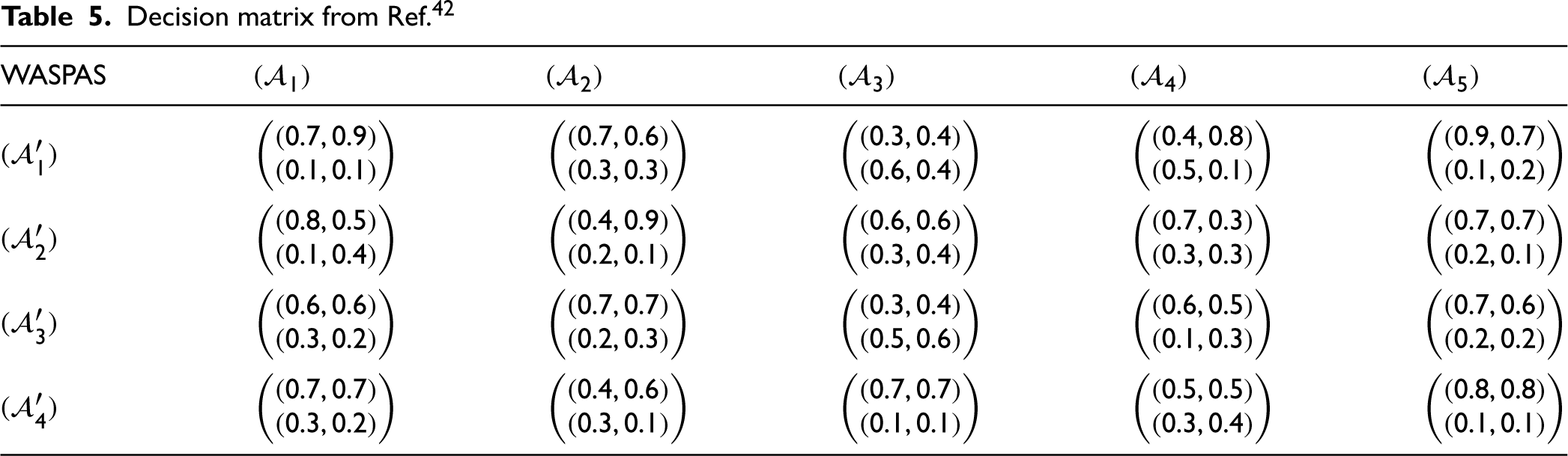
So, by applying the proposed WASPAS model on the information present in Table 5 (Illustrative Example) of Ref.
42
this study got
Decision matrix from Ref. 42
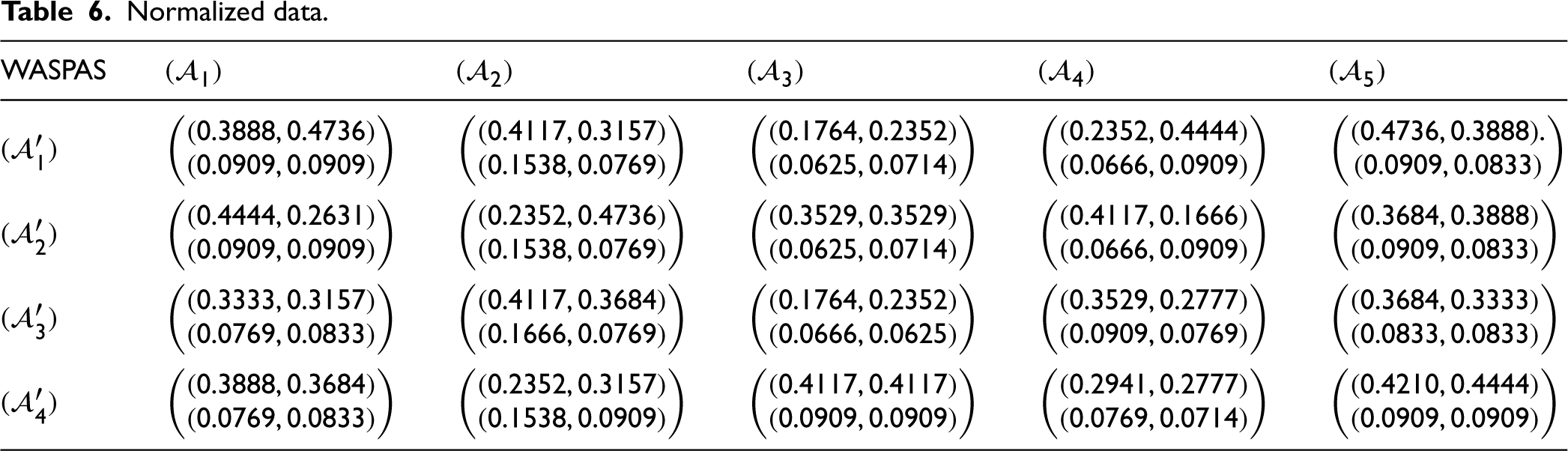
Normalized data.
Weighted sum and product mean of the alternatives.
Aggregated score values.

Rank the results of the alternatives.

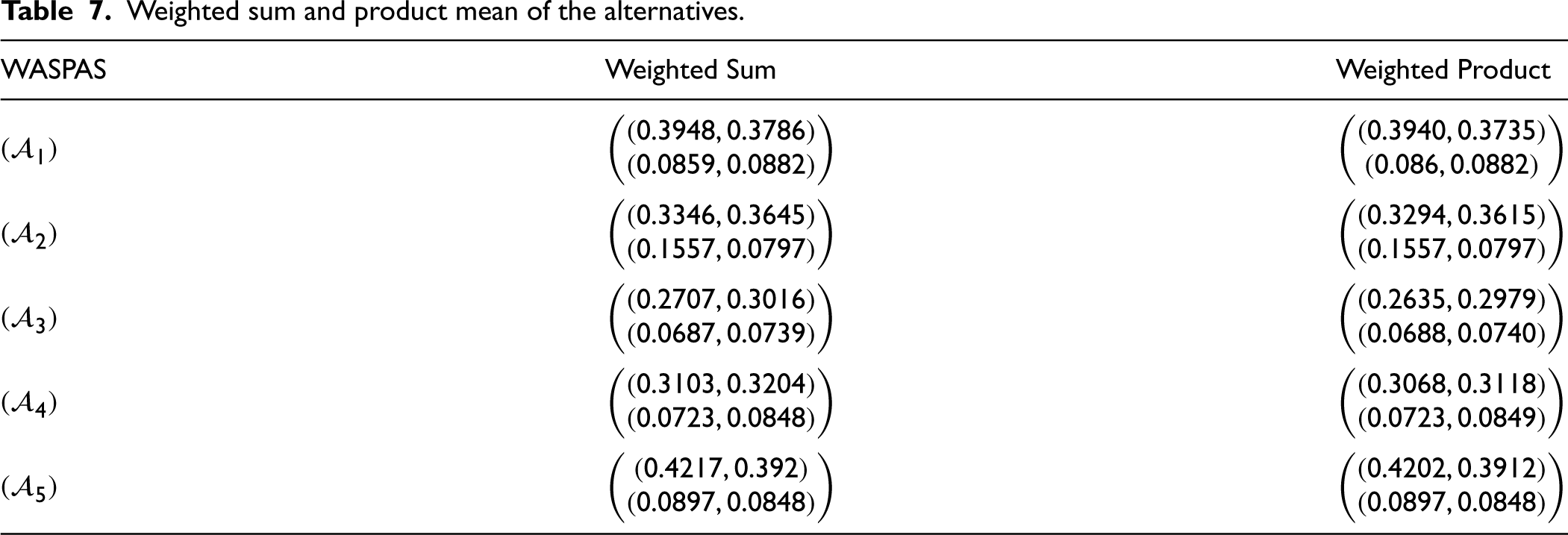
First, this study calculates the aggregated decision matrix by using the technique of the CIFSWWA aggregation operator and the CIFSWWG aggregation operator. The aggregated values are listed in Table 10 based on the weighted vectors: (0.4,0.25,0.15,0.2) from Ref. 42
Weighted sum and product mean of the alternatives.
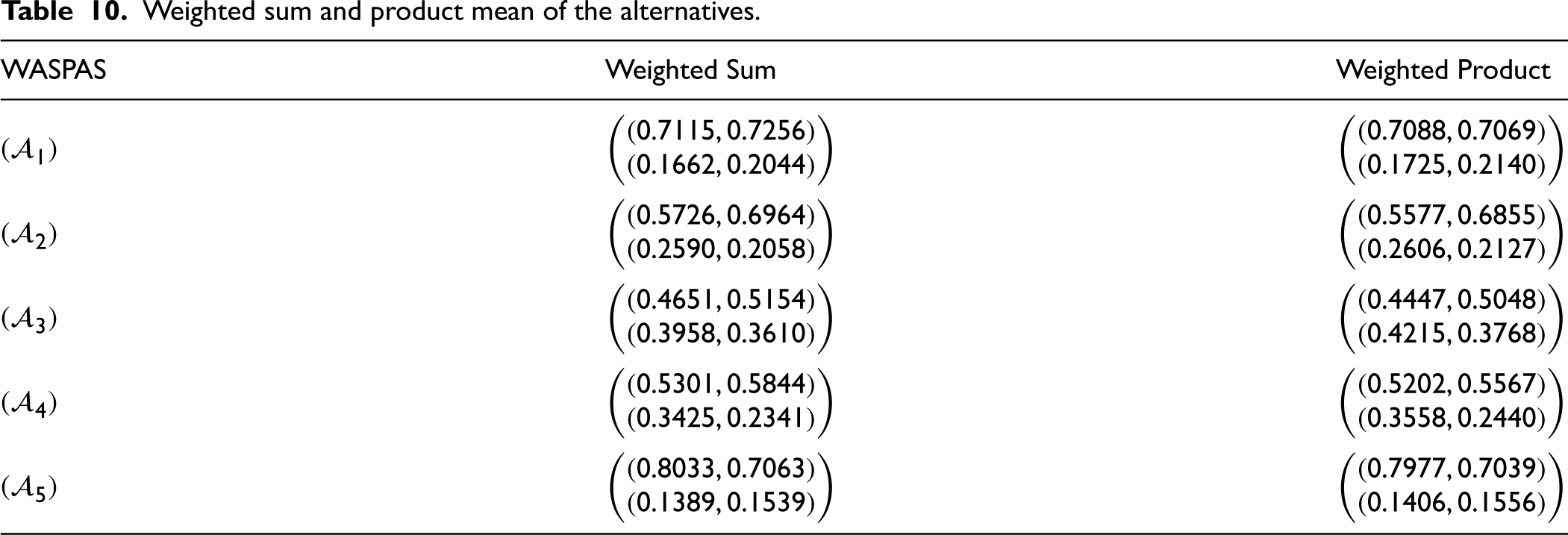
Now, calculate the score value based on the data in Table 10. This study uses the score function of the CIFSs to get the MADM score in the form of the data in Table 11.
Weighted sum and product mean of the alternatives.

Finally, rank all the alternatives based on their values obtained from Table 11. This study gets the best alternative from the given set, see the data in Table 12.
Rank the results of the alternatives.

Thus, the best or most dominant decision is still
To determine the worth and accuracy of the proposed model, this study compares its results with those of some existing models under CIF and IF information. So, for this, this study selected some existing approaches, such as Xu, 30 who established the idea of various AO based on IF information. Xu and Yager 31 developed some novel AO based on IF information. Wang and Liu 32 developed the idea of Einstein AO in the environment of IFS. Garg 33 generated some new AO based on IF information using the idea of Einstein t-norm and t-conorm. Xu and Yager 34 developed the Bonferroni mean in the environment of intuitionistic fuzzy and also discussed its properties. He et al. 35 constructed the idea of geometric interaction AO for IF information. Huang 36 expanded the approach of Hamacher AO for IF information and also discussed its applications. Chen and Chang 37 constructed the idea of a multiplicative operator among intuitionistic fuzzy information and also developed a novel power operator for IFS. Goyal et al. 38 developed the concept of a genetic weighted averaging operator for IFS. Ye 39 presented the concept of hybrid arithmetic and geometric AO for IFS. Garg 40 proposed a novel approach to decision-making based on intuitionistic fuzzy data and also explained its applications. Zhou and Xu 41 presented the concept of extreme intuitionistic fuzzy weighted AO and discussed its applications in decision-making. Garg and Rani 42 constructed various generalized AO for CIF information and explained its application in the MADM environment. Turskis et al. 44 proposed the idea of the WASPAS model based on fuzzy information. Stanujkic and Karabaševic 45 generalized the idea of the WASPAS model for IF information and addressed the challenge of website evaluation. Table 5 presents the score values and ranking results of all the above-mentioned approaches (Table 13).
Comparative analysis with existing approaches.
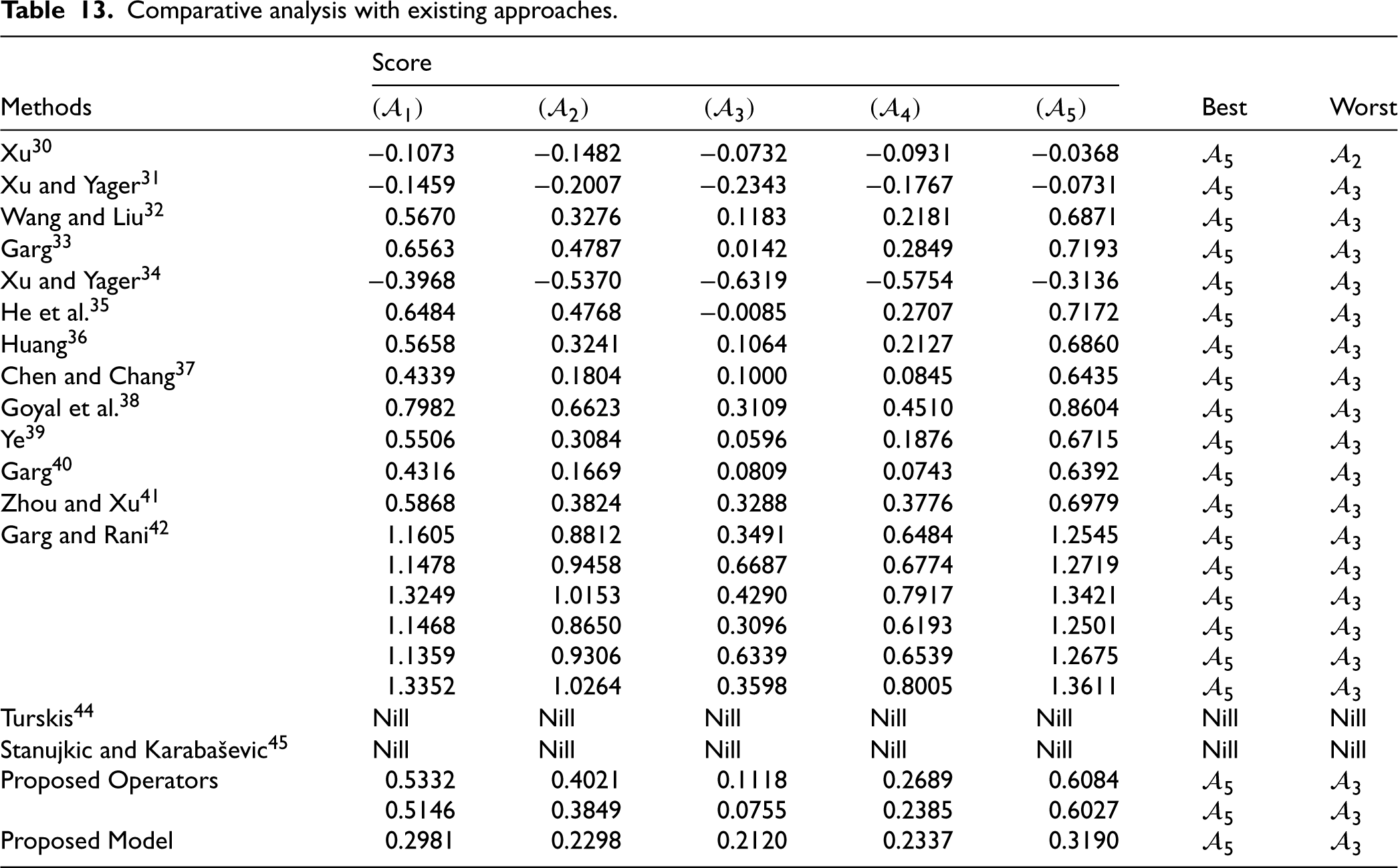
Comparative analysis with existing approaches.
From Table 5, this study concluded the following points:
By applying the existing ideas which are based on IFS such as Xu,
30
Xu and Yager,
31
Wang and Liu,
32
Garg,
33
Xu and Yager,
34
He et al.,
35
Huang,
36
Chen and Chang,
37
Goyal et al.,
38
Ye,
39
Garg
40
and Zhou and Xu,
41
this study got By applying the existing approach of Garg and Rani,
42
which is based on CIFS, this study got The models presented by Turskis et al.
44
proposed the idea of the WASPAS model based on fuzzy information. Stanujkic and Karabaševic
45
generalized the idea of the WASPAS model for IF information and addressed the challenge of website evaluation. These models are the special cases of the proposed work this reason, they are not able to evaluate the considered data precisely and efficiently. By applying our proposed model and AO, this study got
So, the similarity in the results shows the effectiveness and accuracy of our invented work. The advantage of this proposed model is that it gives a single ranking result by combining the strength of both the weighted sum and product approaches, which reduces the chance of bias in the result. So, because of this, our proposed work is more reliable for addressing the complex MADM problem.
The invented technique integrates the model of SWAO with CIFSs for the valuation of the WASPAS model, because they can help us in the determination of the best decision among the family of information. Many individuals have used the technique of the MADM model based on aggregation operators, but they gave us two different results, and for this reason, experts faced a lot of problems. Therefore, this study developed the WASPAS model, which combines the values of both operators with the help of a convex function, which gives us a single result. The following are the main points, which are addressed in this research work.
This study presented an advanced structure of Sugeno-Weber operational laws for CIF information. This study derived the model of aggregation operators based on invented operational laws, called averaging and geometric operators. This study generalized the existing idea of the WASPAS model and developed the techniques of the CIF-WASPAS model and the CIF-MADM model. This study integrated the approach of SWAO with the WASPAS model under the CIF environment. This study addressed a real-life MADM problem using the invented model. This study compared the results of the invented model with the results of some existing models.
As this research work provides a reliable approach for addressing complex and uncertain real-world problems, there are also some limitations of the proposed work, such as if the expert provided the data in linguistic form or a hesitant form, then our proposed model will not be able to solve the particular MADM problem. Also, if the expert information is present in circular or extended fuzzy form, including q-rung orthopair fuzzy set or pq-rung orthopair fuzzy set, then this approach will show limitations.
In the future, our target is to extend this approach to advance fuzzy areas, for instance, the idea of Dombi AO based on intuitionistic linguistic fuzzy set to address a real-world problem, the idea of Frank power AO and EDAS model for circular bipolar complex fuzzy information, and the idea of Muirhead mean operators for pq-rung orthopair fuzzy linguistic information. Then the authors will work to utilize it in different fields, for instance, green innovations, supply chain, hydrogen energy, fuel consumption, and decision-making, to describe the supremacy of the invented models.
Footnotes
Acknowledgments
This work was supported in part by the National Science and Technology Council, Taiwan, under Grant NSTC 114-2410-H-224-001 and internal number 114-1011. Authors are thankful to Prince Sultan University for support through TAS research lab.

Funding
The author(s) received no financial support for the research, authorship, and/or publication of this article.
Declaration of conflicting interests
The author(s) declared no potential conflicts of interest with respect to the research, authorship, and/or publication of this article.