
The Journal of Parkinson's Disease is proud to announce the two articles that have won this year's Parkinson Prize, recognizing these outstanding contributions to the advancement to Parkinson's disease (PD) research. Recipients of the award are Georgina M. Aldridge and Matthew Weber (University of Iowa, USA) for best basic research article, and Lauren Walker (National Horizons Centre, Teesside University, UK) for best clinical research article. The winning papers are:
Alpha-Synuclein Pre-Formed Fibrils Injected into Prefrontal Cortex Primarily Spread to Cortical and Subcortical Structures
1
Matthew A. Weber, Gemma Kerr, Ramasamy Thangave, Mackenzie M. Conlon, Serena B. Gumusoglu, Kalpana Gupta, Hisham A. Abdelmotilib, Oday Halhoul, Qiang Zhang, Joel C. Geerling, Nandakumar S. Narayanan, and Georgina M. Aldridge
Prevalence of Concomitant Pathologies in Parkinson's Disease: Implications for Prognosis, Diagnosis, and Insights into Common Pathogenic Mechanisms
2
Lauren Walker and Johannes Attems
These papers were selected by the Associate Editors of the Journal of Parkinson's Disease's from the 2024 volume. Awardees will receive a cash award of $1000 (per article). The Parkinson Prize is as an annual award.
“Together with the Associate Editors of the Journal of Parkinson's Disease, we congratulate the authors of the winning papers. We are pleased to have the opportunity to publish these important contributions to the field, and we look forward to more high-quality submissions to the Journal of Parkinson's Disease in the upcoming year,” state Editors-in-Chief Bastiaan Bloem, MD, PhD, FRCPE, and Lorraine Kalia, MD, PhD, FRCPC.
The 2025 Parkinson prize recipients
Basic Science Winner: Alpha-Synuclein Pre-Formed Fibrils Injected into Prefrontal Cortex Primarily Spread to Cortical and Subcortical Structures
Importance of the work: The work by Dr Aldridge, Dr Weber and their colleagues builds upon previous preclinical research investigating alpha-synuclein aggregation following preformed fibril injections. This study showed that preformed fibril injections in the rodent prefrontal cortex induced widespread alpha-synuclein aggregation in cortical and subcortical brain regions, but only sparse aggregation in midbrain and brainstem nuclei, when assessed 21 months after injection. This pattern of alpha-synuclein aggregation was accompanied by mild behavioral alterations, aiding in our understanding of the potential contribution of the cortical spread of alpha-synuclein that occurs in Lewy body Dementia and Parkinson's dementia patients.
Drs. Aldridge and Weber state: “This work was a truly collaborative effort from multiple groups at the University of Iowa. Dr Weber and I, along with our colleagues, would like to thank the editorial team at the Journal of Parkinson's Disease for recognizing our work. We are very proud to have received the Parkinson Prize.”
 Georgina Aldridge: Georgina M Aldridge, MD. PhD, received her graduate degrees at University of Illinois Urbana-Champaign. She came to the University of Iowa for neurology residency and cognitive neurology fellowship. During her fellowship, Dr Aldridge focused on Lewy body Dementia and other dementia types involving the protein alpha-synuclein. She co-leads a specialized Lewy body Clinic that uses a multi-disciplinary approach to address the varied needs of this population. Many of the patients also participate in a longitudinal registry, led by Dr Aldridge, that seeks to objectively characterize symptoms and how they change day to day in complex mixed dementias. Dr Aldridge's research focus is based on understanding the pattern and consequences of alpha-synuclein spread in human autopsy tissue and using these real-world cases to experimentally test outcomes in mouse models. This includes determining the cortical and brainstem consequences of alpha-synuclein pathology, including differential circuit vulnerability and behavioral outcomes.
 Matthew A. Weber: Matthew A. Weber, PhD, received his PhD in Basic Biomedical Sciences, specializing in Neuroscience, from the University of South Dakota. Currently, he is a research scientist in Dr Nandakumar Narayanan's lab at the University of Iowa where he collaborates extensively with Dr Georgina Aldridge. Dr Weber's research has focused on studying basic neural mechanisms that serve cognitive processing in preclinical models, especially as it relates to neurodegenerative diseases such as Parkinson's and Alzheimer's disease. His broad research interests are to investigate neural circuits affected by neurodegenerative disease to inform development of novel treatment approaches that target these circuits to improve cognition and quality of life.
Clinical Science Winner: Prevalence of Concomitant Pathologies in Parkinson's Disease: Implications for Prognosis, Diagnosis, and Insights into Common Pathogenic Mechanisms
Importance of the work: This work was undertaken to provide the basis for a large platform trial to test potential neuroprotective treatments for Parkinson's disease, the UK-wide Edmond J Safra ACT-PD initiative, and the hope is that the framework provided will support the design and selection of outcome measures across clinical trials in Parkinson's disease worldwide, with updates according to emerging evidence and assessment criteria.
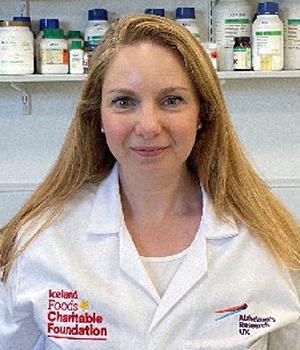 Dr Lauren Walker states: “Along with my co-author Professor Johannes Attems, I am deeply honored to receive this award from the Journal of Parkinson's Disease. This recognition is a testament to the dedication from all of those that make this work possible, from the people with Parkinson's, their families, and the wider research community.”
Lauren Walker: Dr Lauren Walker is a lecturer in Biomedical Science and neurodegenerative disease researcher based at the National Horizons Centre, Teesside University, UK. Her research focuses on the neuropathological mechanisms underpinning Parkinson's disease, dementia with Lewy bodies, and Alzheimer's disease, with particular emphasis on the role of mixed and concomitant pathologies in driving clinical heterogeneity and cognitive decline. Her work has contributed to international neuropathological consensus criteria and has been recognized through multiple awards and grants, including a Dementia Research Leader Award from the Alzheimer's Society and an Alzheimer's Research UK Fellowship. Her work has also been supported by the NIHR Newcastle Biomedical Research Centre. Alongside her research, she is an active educator and mentor, delivering teaching across undergraduate, postgraduate, and medical programs, supervising PhD students, and engaging widely in public outreach and patient-focused events related to dementia and Parkinson's disease research.
Importance of the work: This paper highlights that Parkinson's disease commonly involves multiple co-existing neuropathologies, including α-synuclein, tau, amyloid-β, TDP-43, and vascular lesions, which together shape clinical progression. It also emphasizes additional disease mechanisms such as impaired protein clearance, neuroinflammation, and dysfunctional cellular homeostasis that may interact with these pathologies to drive symptom heterogeneity and accelerate disease progression. By integrating evidence on pathological overlap, genetic risk, racial differences, emerging biomarkers, and shared pathogenic mechanisms, the paper underscores the need for diagnostic and therapeutic strategies that address the multifactorial biology of Parkinson's disease to improve prognosis and guide disease-modifying treatments.
Best basic research paper runners up (in random order)
Experimental Animal Models of Prodromal Parkinson's Disease
3
Yamakado, Hodaka; Takahashi, Ryosuke
Emerging Role of Environmental Epitranscriptomics and RNA Modifications in Parkinson's Disease
4
Gionco, John T.; Bernstein, Alison I.
Localized Pantothenic Acid (Vitamin B5) Reductions Present Throughout the Dementia with Lewy Bodies Brain
5
Scholefield, Melissa; Church, Stephanie J.; Xu, Jingshu; Patassini, Stefano; Cooper, Garth J. S.
Best clinical research paper runners up (in random order)
Delivering Multidisciplinary Rehabilitation Care in Parkinson's Disease: An International Consensus Statement
6
Goldman, Jennifer G.; Volpe, Daniele; Ellis, Terry D.; Hirsch, Mark A.; Johnson, Julia; Wood, Julia; Aragon, Ana; Biundo, Roberta; Di Rocco, Alessandro; Kasman, Glenn S.; Iansek, Robert; Miyasaki, Janis; McConvey, Victor M.; Munneke, Marten; Pinto, Serge; St Clair, Karen A.; Toledo, Santiago; York, Michele K.; Todaro, Ronnie; Yarab, Nicole; Wallock, Kristin
Association of Misfolded α-Synuclein Derived from Neuronal Exosomes in Blood with Parkinson's Disease Diagnosis and Duration
7
Schaeffer, Eva; Kluge, Annika; Schulte, Claudia; Deuschle, Christian; Bunk, Josina; Welzel, Julius; Maetzler, Walter; Berg, Daniela
Chronotropic Incompetence During Exercise Testing as a Marker of Autonomic Dysfunction in Individuals with Early Parkinson's Disease
8
Griffith, Garett; Lamotte, Guillaume; Mehta, Niyati; Fan, Peng; Nikolich, Juliana; Springman, Victoria; Suttman, Erin; Joslin, Elizabeth; Balfany, Katherine; Dunlap, MacKenzie; Kohrt, Wendy M.; Christiansen, Cory L.; Melanson, Edward L.; Josbeno, Deborah; Chahine, Lana M.; Patterson, Charity G.; Corcos, Daniel M.








