






Abstract
Strawberry, a berry crop with nutritional and economic value, faces seasonal challenges in overwintering solar greenhouse cultivation in mid-latitude regions (30°–50°N), such as low temperature, insufficient light intensity (winter) and high temperature, humidity (spring-summer). As a key greenhouse microclimate regulator, bed orientation lacks systematic research on its effects on strawberry cultivation efficiency over the growth cycle. This study used 6 solar greenhouses in North China, with two cultivation modes (east-west beds/EW, north-south beds/NS; 3 replicates each). From Nov 2024 to May 2025, it monitored monthly strawberry yield, microclimate (temperature, relative humidity, light intensity) and sales value, and analyzed the microclimate-yield relationship. Results showed: (1) Both orientations had a “first increasing then decreasing” yield trend (peak: January–February). EW had higher early yield (November: 2.297 vs. 1.679 t·ha−1 for NS) and stronger late-stage yield retention (May: 3.018 vs. 1.254 t·ha−1). EW total yield (36.194 t·ha−1) was 6.93% higher than NS (33.849 t·ha−1, P < 0.05). (2) Microclimate: EW had higher autumn-winter temperature/humidity (November: 13.49°C, 86.05%); NS had higher spring-summer temperature (April max: 36.76°C) and light (April: 10961.09 lux). (3) Correlation analysis: EW yield correlated highly positively with temperature (P < 0.01); humidity affected yield more than light intensity. (4) Gross output value: EW total (137,730 USD·ha−1) was 6.06% higher than NS (P < 0.05), mainly due to May's yield gap. This study reveals the seasonal characteristics of bed orientation-mediated microclimate regulation and its corresponding effects on strawberry full-cycle yield and gross output value, fills gaps in mid-latitude strawberry overwintering research, and provides a scientific basis for bed orientation selection and precise management of solar greenhouse strawberries, supporting the industry's shift from experience-based to precise cultivation.
Introduction
Strawberry (Fragaria × ananassa Duch.), as a berry crop with both nutritional and economic value, has been deeply integrated into global agricultural production and consumption systems.1,2 Driven by the popularization of healthy dietary concepts and the upgrading of consumption, the market demand for strawberries has continued to expand. 3 It not only occupies an important share as a fresh fruit but also its processed products (such as jam, juice, and freeze-dried products) play a significant role in the food industry. 4 This growing demand has directly promoted innovations in strawberry cultivation technologies, among which protected cultivation, with its ability to control the natural environment, has become a core means to break through geographical and seasonal limitations. 5 Globally, mid-latitude regions (30°–50°N) have gradually emerged as key hubs for protected strawberry cultivation due to their unique geographical and climatic conditions. These regions not only possess a temperature base and light potential suitable for strawberry growth but also have well-developed agricultural infrastructure and industrial chain support-forming a complete industrial ecosystem from variety breeding, cultivation management to post-harvest handling and market circulation. It can be said that the protected strawberry production capacity in mid-latitude regions largely determines the supply stability and quality level of the global strawberry market.6,7
However, the seasonal climatic characteristics of mid-latitude regions pose complex and variable challenges to strawberry cultivation.8,9 Low temperatures and short daylight hours in winter are the primary constraints: low temperatures inhibit root activity and nutrient uptake in strawberries, leading to stunted plant growth, while short daylight hours affect the accumulation of photosynthetic products and may even trigger the plant's dormancy mechanism, delaying flower bud differentiation and directly impacting subsequent fruiting potential.10,11 Entering spring and summer, the climatic pattern undergoes significant changes: rapid temperature rise may cause metabolic imbalance in plants and reduce photosynthetic efficiency; meanwhile, the high-humidity environment brought by monsoons and precipitation not only disrupts the transpiration and water balance of strawberries but also provides a hotbed for the proliferation and spread of pathogens (such as Botrytis cinerea and Podosphaera aphanis), increasing the pressure of disease prevention and control.12–14 Such seasonal environmental fluctuations keep strawberry production in a dynamic balance of “needing cold resistance to maintain growth in winter and needing humidity control to prevent diseases in spring and summer.” The disruption of this balance often triggers a chain reaction of yield fluctuations and quality degradation, bringing persistent production risks to growers. 15
As a key artificial ecosystem for addressing climatic challenges in mid-latitude regions, solar greenhouses’ structural design and spatial layout directly determine the microclimate quality for strawberry growth.16,17 Among them, bed orientation, as a fundamental parameter for spatial configuration within the facility, plays a core role in microclimate regulation. By defining the direction of crop rows, bed orientation profoundly influences the temporal and spatial distribution of light, the circulation path of air flow, and the dynamic balance of temperature and humidity inside the greenhouse. In terms of light utilization, changes in solar altitude and azimuth across seasons make the matching degree between crop row direction and solar trajectory critical to light interception efficiency. For air exchange, the coordination between bed orientation and greenhouse ventilation direction directly affects air renewal rate and humidity dissipation efficiency. For temperature regulation, row direction influences heat absorption and conduction processes by altering the light-receiving area of the soil surface and crop canopy.18,19 For strawberries, their demands for microclimate vary significantly across different growth stages: the vegetative growth stage requires stable light and temperature to build robust plants, while the reproductive growth stage is more sensitive to humidity and ventilation to ensure fruit development and quality formation. Such stage-specific differences in demand mean that the selection of bed orientation cannot be limited to the advantages of a single season but must consider the adaptability throughout the entire growth period. 20 In current production practices, many cultivation models overly focus on meeting the needs of a particular season (such as light utilization in winter), leading to significant environmental stress in other seasons and ultimately affecting the overall production efficiency across the entire growth cycle. 21 This highlights the necessity of re-evaluating the effects of bed orientation and exploring full-cycle adaptation solutions.
This study takes Wande Strawberry Manor in Changping District, Beijing as a typical case study. Addressing the seasonal challenges in strawberry cultivation in mid-latitude regions, a comparative experiment was conducted in 6 solar greenhouses (with 3 replicates for both east-west and north-south bed orientations). From November to the following May, systematic monitoring was carried out on yield dynamics and microenvironmental parameters (light intensity, temperature, and humidity). The objectives of this study are as follows: (1) To elucidate the temperature and humidity regulation characteristics of east-west beds during high-temperature and high-humidity seasons and their role in maintaining late-stage yields; (2) To quantify the differences in total yield, stage-specific yields, and gross economic benefits between the two bed orientations; (3) To reveal the correlation between environmental factors and yield under different bed orientation cultivation. By clarifying the dynamic relationship between bed orientation and strawberry cultivation efficiency during the overwintering period, this study aims to provide a scientific basis for bed orientation selection in strawberry greenhouses in mid-latitude regions, promoting the transformation from “experience-based cultivation” to “precision regulation”. The research results are not only applicable to North China but also can serve as a reference for other major strawberry-producing regions at the same latitude, contributing to the sustainable development of the strawberry industry in mid-latitude regions.
Materials and methods
Site description
This experiment was conducted at the Wande Strawberry Manor (40°19′ N, 116°36′ E, elevation 41 m) in Beijing's Changping District, located at Northern China (Figure 1). It has a temperate continental monsoon climate. The total facility agriculture production area across Beijing exceeds 11,500 hectares. 22 The initial soil properties of the experimental site were as follows: pH 7.3; bulk density, 1.43 g cm−3; organic matter content, 19.2 g kg−1; total nitrogen content, 2.67 g kg−1; available phosphorus content, 140 mg kg−1; and available potassium content, 526 mg kg−1. The experiment period was from 1st November 2024 to 1st June 2025, which is the harvest period of strawberries.
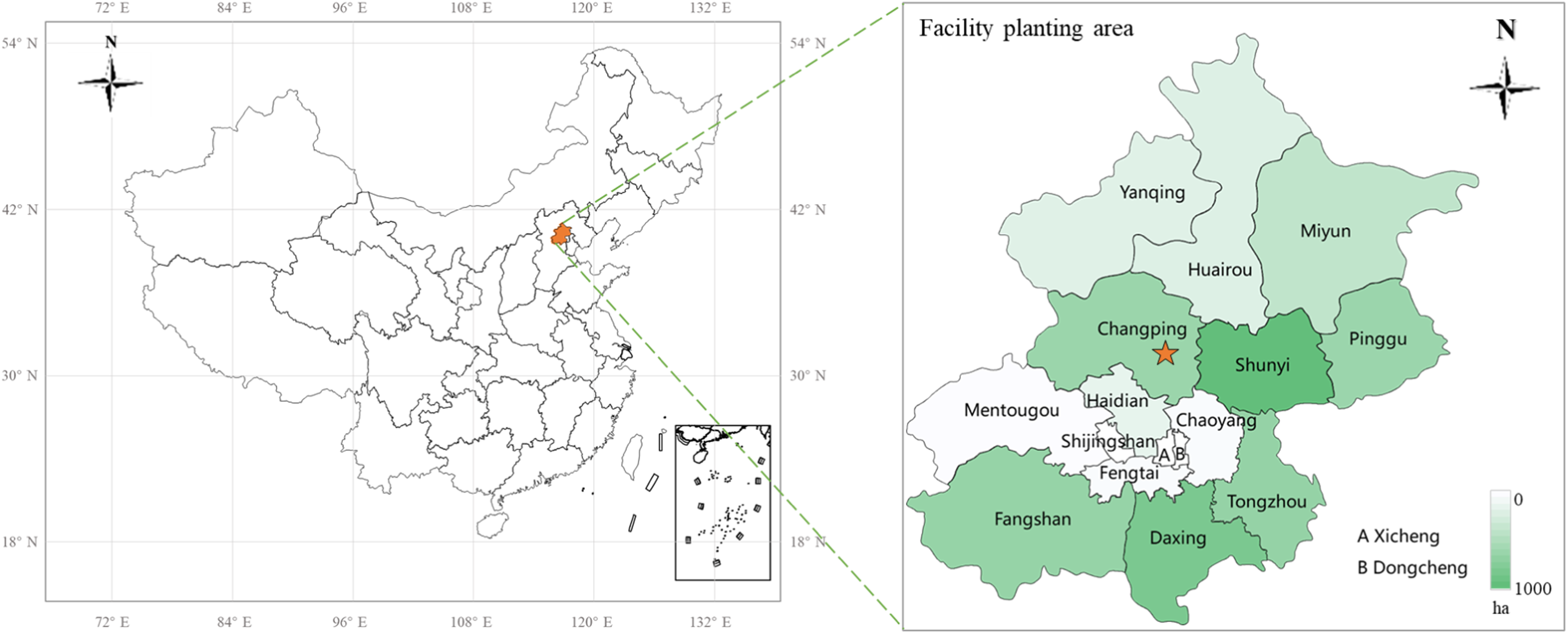
Study area.
Experimental design and greenhouse management
Three brick-wall solar greenhouses were set up for strawberry cultivation with east-west beds (EW), and another three with north-south beds (NS), with an 8-meter spacing between greenhouses (Figure 2). The strawberry cultivar planted was Suizhu, a Japanese variety, using the ground planting mode. The cultivation beds were 35 cm in width, with a plant spacing of 20 cm, and the planting density was uniformly 70,000 plants per hectare. The east-west beds were constructed with a slight slope (higher on the left and lower on the right). All agricultural operations, including irrigation, fertilization, plant pruning, pesticide spraying, and greenhouse environment control, were conducted in accordance with high-quality cultivation standards and kept consistent across all greenhouses and for the cultivar.

Greenhouse conditions and cultivation methods.
For overwintering cultivation of ground-planted strawberries in solar greenhouses, drip irrigation was adopted to maintain soil moisture (60%-70% water content). Sufficient freezing-proof irrigation was applied before overwintering; during the growing period, watering was done when the soil surface dried out (keeping the soil alternately dry and moist), and flood irrigation was avoided. For fertilization, decomposed organic fertilizer and compound fertilizer were applied as base fertilizer before planting; phosphorus and potassium fertilizers were topdressed during the flowering stage; calcium fertilizer was applied after fruit setting; and foliar spray with potassium dihydrogen phosphate was conducted 1-2 times. For pruning, old leaves, diseased leaves, and stolons were removed in a timely manner; weak flowers and malformed fruits were thinned out; and 3-4 healthy functional leaves were retained. For pest control, prevention of powdery mildew and aphids was the focus, using low-toxicity pesticides such as kresoxim-methyl and matrine. Spraying was carried out at the early stage of disease occurrence, with an interval of 7–10 days, and pesticide application was stopped 15 days before harvest. For environment control, daytime temperatures were maintained at 20–25°C, nighttime temperatures at 5–8°C, and relative humidity at 60%-70%. Ventilation was performed at noon on sunny days to reduce humidity, and short-term ventilation was conducted on cloudy or snowy days to prevent diseases.
Data sources
The monitoring of temperature, light intensity, and relative humidity in the microclimate of greenhouses were carried out, respectively, by the greenhouse intelligent sensors provided by Beijing Tian-chuang Jinong Technology Co., Ltd (http://www.bjtcjn.com/facility.html#facility, accessed on 1st June 2025). The small meteorological monitoring station was positioned at the center of the area, 2 m above the ground, with no surrounding obstructions. For the brick-walled solar greenhouse and soft-shell solar greenhouse, the greenhouse intelligent sensor was hung at the greenhouse center, 8 m away from the back wall and 2 m above the ground, ensuring no obstruction from shed beams or plants. The monitoring data, which are hourly records, were provided by the company's internal platform. The sensors monitored the ambient background microclimate above the strawberry canopy (mature plant height: 30–40 cm), rather than the micro-light environment at the canopy level.
Yield
Greenhouse managers weigh the strawberries from each harvest, record the yield, and aggregate the data on a monthly basis. Yield data were collected on a per-greenhouse basis, with 3 replicate greenhouses for each bed orientation (EW and NS).
Economic benefit
Based on the monthly average price data of strawberries across the city compiled by the Beijing Municipal Bureau of Agriculture and Rural Affairs (Table 1), the monthly gross sales value from strawberry sales at the manor was calculated. The calculation method is to multiply the monthly yield by the monthly selling price. This study only analyzed the gross output value of strawberry cultivation, and did not include the calculation of production costs (e.g., seedling, fertilizer, pesticide, labor costs). Thus, all economic conclusions in this study are indicative of gross output value performance, not net profitability.
Monthly price of strawberries.
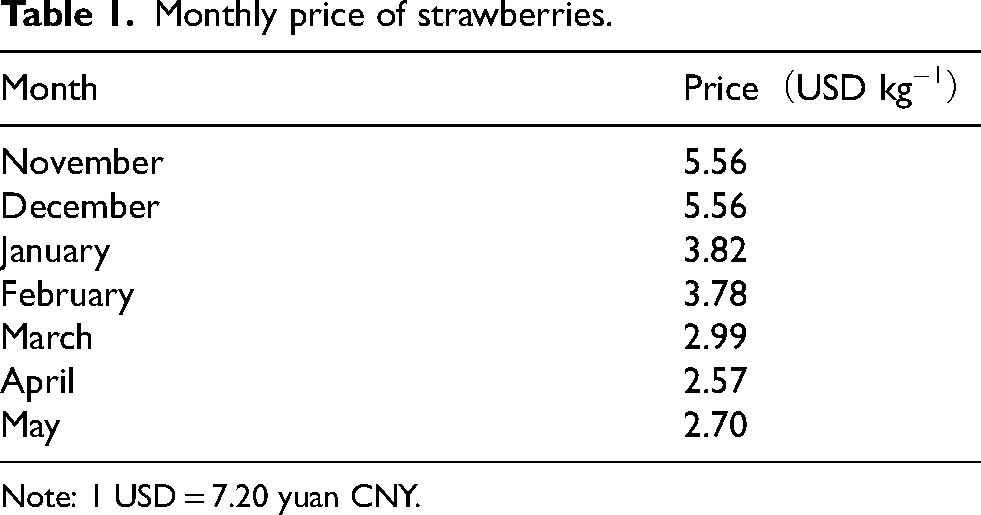
Note: 1 USD = 7.20 yuan CNY.
Statistical analysis
The experimental unit of replication was the brick-wall solar greenhouse, with 3 independent greenhouses set for each bed orientation (EW and NS) as biological replicates. All statistical analyses and data visualization were performed using Microsoft Excel 2023 for data collation, IBM SPSS Statistics 25 for statistical tests, and Origin 2024 for graph plotting. The statistical significance threshold was set at P < 0.05 for all tests.
Prior to all parametric statistical analyses, the normality of the data distribution was verified through descriptive statistics (mean, standard deviation, skewness, kurtosis) and the Shapiro–Wilk test, and the homogeneity of variance of the data was evaluated with the Levene test. Non-conforming data (non-normal distribution/unequal variance) were either transformed to meet parametric test assumptions or analyzed using non-parametric tests. For ANOVA with unequal variance, the Welch correction was used; for regression analysis with unequal variance, the weighted least squares method was adopted. These procedures ensured the rationality of the data assumptions and provided strong statistical support for the conclusions.
One-way analysis of variance was used to identify the significant differences in monthly yield, total yield, microclimate factors (temperature, relative humidity, light intensity), and monthly/gross output value between EW and NS bed orientations. The Mantel test was used to quantify the overall correlation between yield indicators and microclimate factors, and Pearson correlation analysis was further combined to construct a correlation matrix for pairwise factor relationships.
Results
Crop yield
An analysis was conducted on the monthly yields and total yields of strawberries cultivated with different bed orientations (Figure 3). The results showed that in terms of the dynamic changes in monthly yields and total yield performance of strawberries, the yields under both EW and NS cultivation modes exhibited a seasonal variation trend of “first increasing and then decreasing”, with the peak values concentrated in the full fruiting period from January to February. However, there were differences in yield performance at different growth stages.
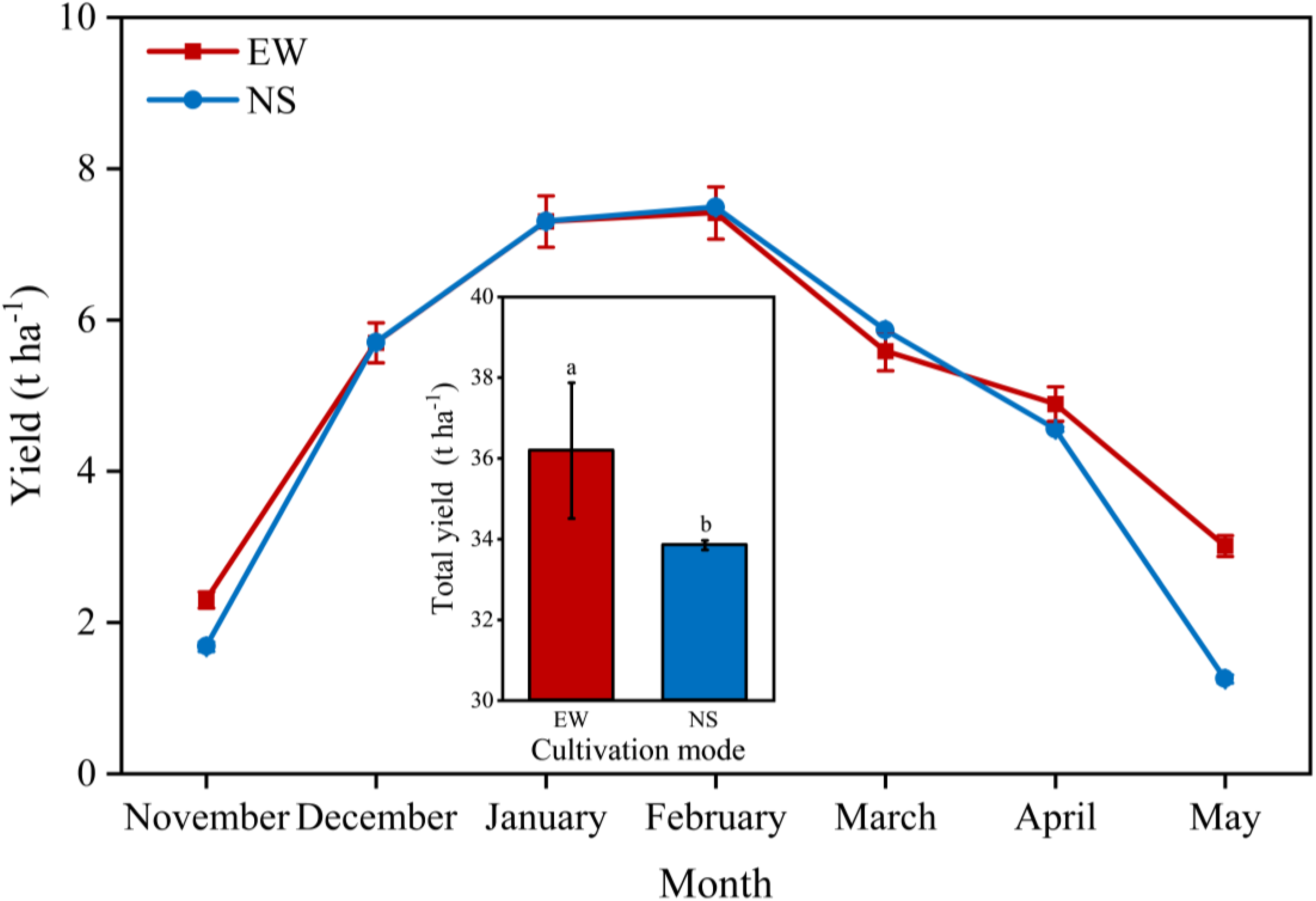
Monthly yields and total yields of strawberries in east-west beds (EW) and north-south beds (NS). The error bars represent the standard error. Different letters within each cultivation mode represent significant differences at P < 0.05.
In the early harvest stage (November), the yield of EW reached 2.297 t·ha−1, which was significantly higher than that of NS (1.679 t·ha−1), reflecting the yield advantage of EW in the initial stage of cultivation. When entering the full fruiting period (December–February), the yields of both modes increased rapidly and remained at a relatively high level. In December, the yield of EW (5.697 t·ha−1) was similar to that of NS (5.702 t·ha−1). From January to February, the yield of NS (7.304 t·ha−1 in January, 7.489 t·ha−1 in February) was slightly higher than that of EW (7.301 t·ha−1 in January, 7.413 t·ha−1 in February), and there was no significant difference overall. In the late harvest stage (March–May), the yield decline rate of NS was faster than that of EW. Although the yield of NS (5.865 t·ha−1) in March was slightly higher than that of EW (5.587 t·ha−1), EW (4.887 t·ha−1 in April, 3.018 t·ha−1 in May) was significantly higher than NS (4.555 t·ha−1 in April, 1.254 t·ha−1 in May) from April to May, indicating that EW had stronger anti-yield-decline ability in the later stage.
In terms of total yield, the total yield of EW was 36.194 t·ha−1, and that of NS was 33.849 t·ha−1. EW increased the yield by about 6.93% compared with NS, and there was a significant difference in total yield between the two (P < 0.05), which indicated that the EW cultivation mode had a more advantageous yield performance throughout the entire growth cycle through the synergistic effect of “increasing yield in the early stage and stabilizing yield in the later stage”.
Greenhouse microclimate
This study systematically monitored the microclimate dynamics in greenhouses for strawberry cultivation with EW and NS from November to the following May, covering hourly temperature, relative humidity, and light intensity. It also calculated the daily maximum, daily average, and daily minimum values of temperature and humidity, as well as the daily average light intensity (Figure 4). The results showed that there were significant seasonal differences in the microenvironment between the two bed orientation greenhouses.
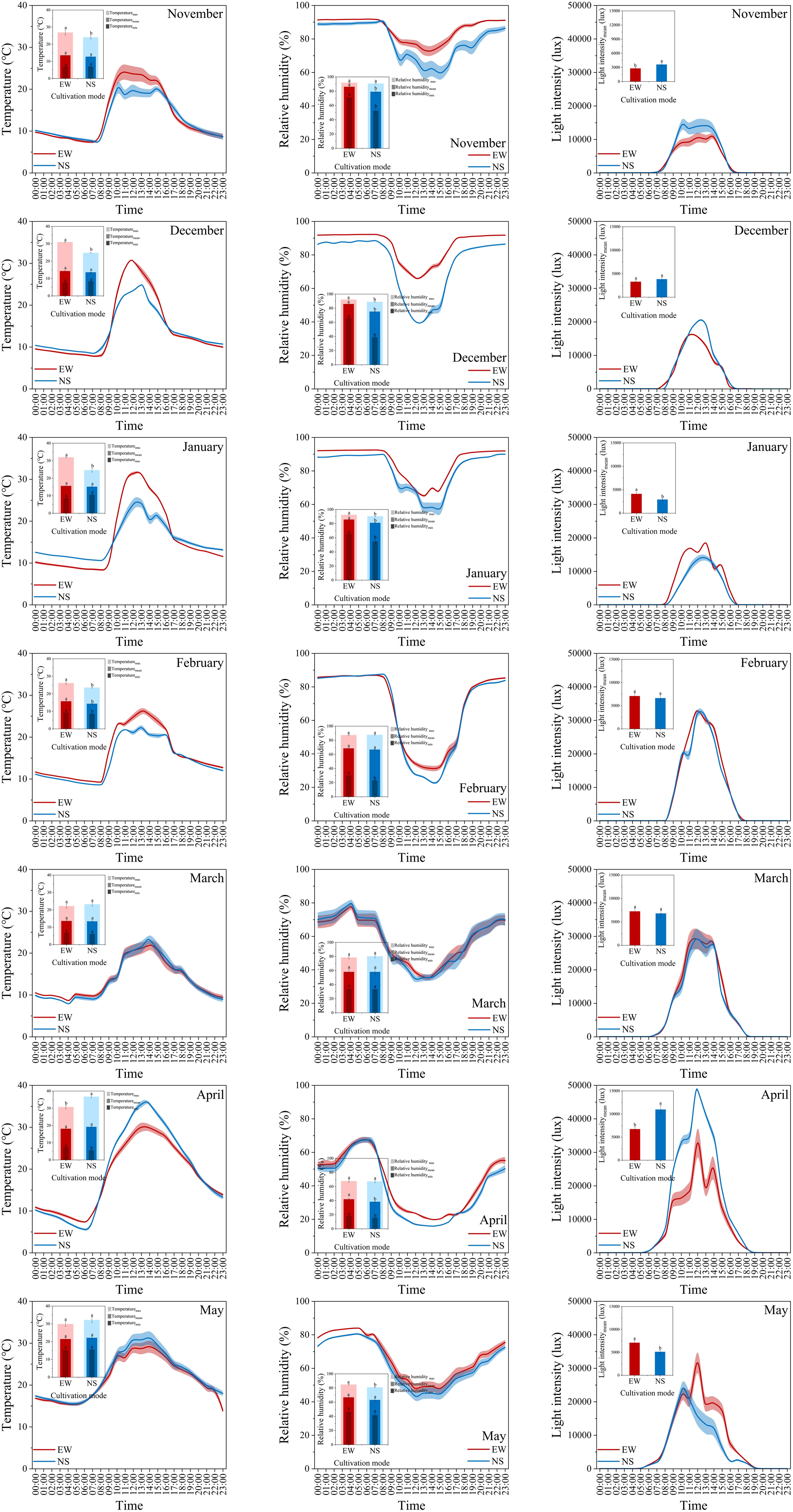
Monthly temperature, relative humidity, and light intensity in the greenhouse. The error bars represent the standard error. Different letters within each cultivation mode represent significant differences at P < 0.05.
In terms of temperature, the temperature changes in EW and NS showed obvious seasonal differentiation. From November to January, the temperature in EW was generally higher than that in NS: the daily average temperature of EW in November was 13.49°C, 0.79°C higher than that of NS (12.70°C); the daily average temperature of EW in January (15.56°C) was slightly higher than that of NS (15.11°C), and the daily minimum temperature of EW was more stable. The daily minimum temperature of EW in January (8.30°C) was lower than that of NS (10.58°C), indicating better nighttime thermal retention. However, the trend was reversed from February to May, with temperatures in NS rising faster. The daily average temperature of NS in April (19.17°C) was 1.10°C higher than that of EW (18.07°C), and the difference in daily maximum temperature was particularly significant. The daily maximum temperature of NS in April reached 36.76°C, 6.06°C higher than that of EW (30.70°C), indicating that NS was more prone to high-temperature stress in spring and summer.
In terms of relative humidity, the moisture retention capacity of EW was generally better than that of NS, with more prominent differences in autumn and winter. The daily average humidity of EW in November was 86.05%, significantly higher than that of NS (79.19%), and the daily maximum humidity of EW (91.88%) was also higher than that of NS (90.81%); the daily average humidity of EW in December (85.92%) was 10.74 percentage points higher than that of NS (75.18%), and the daily minimum humidity of EW (65.87%) was also higher than that of NS (38.66%). Only in May, the difference in daily average humidity between NS (63.09%) and EW (66.75%) narrowed to 3.66 percentage points, reflecting that EW had a more obvious advantage in humidity regulation in low-temperature seasons.
The daily average data of light intensity showed that NS received more light than EW in most months, with the exception of January. The daily average light intensity of NS in April reached 10961.09 lux, 63.1% higher than that of EW (6718.72 lux); NS in December (3816.13 lux) was 16.5% higher than EW (3275.37 lux); while the daily average light intensity of EW in January (4093.84 lux) was 41.8% higher than that of NS (2887.29 lux), which may be related to the low solar altitude angle in winter, making the EW bed orientation more conducive to receiving diffuse light.
In summary, the microclimate differences between EW and NS greenhouses are significantly seasonal: EW shows higher temperature stability and humidity levels in autumn and winter, while NS has higher temperatures and more sufficient light in spring and summer. This microenvironmental differentiation caused by bed orientation provides a key environmental mechanism basis for analyzing the differences in yield dynamics and stress resistance of strawberries under different bed orientations.
Relationship between output and microclimate
This study analyzed the relationship between strawberry yield under different bed orientations and greenhouse microclimatic factors (Figure 5). The results showed that the relative humidity in the greenhouse had an extremely significant negative correlation with light intensity (P < 0.001), meaning that the greater the humidity, the weaker the light intensity. The correlations between EW and NS with the greenhouse microclimate were similar. Among them, the yield of EW had an extremely significant positive correlation with temperature (P < 0.01), and the yield of NS had a very significant positive correlation with temperature (P < 0.05), indicating that the yield of EW was more significantly affected by temperature. The yield under different cultivation modes had no significant effect with relative humidity and light intensity (P > 0.05). There was a positive correlation trend between yield and relative humidity, and a negative correlation trend with light intensity, indicating that relative humidity had a stronger impact on strawberry yield than light intensity in greenhouse-grown strawberries.
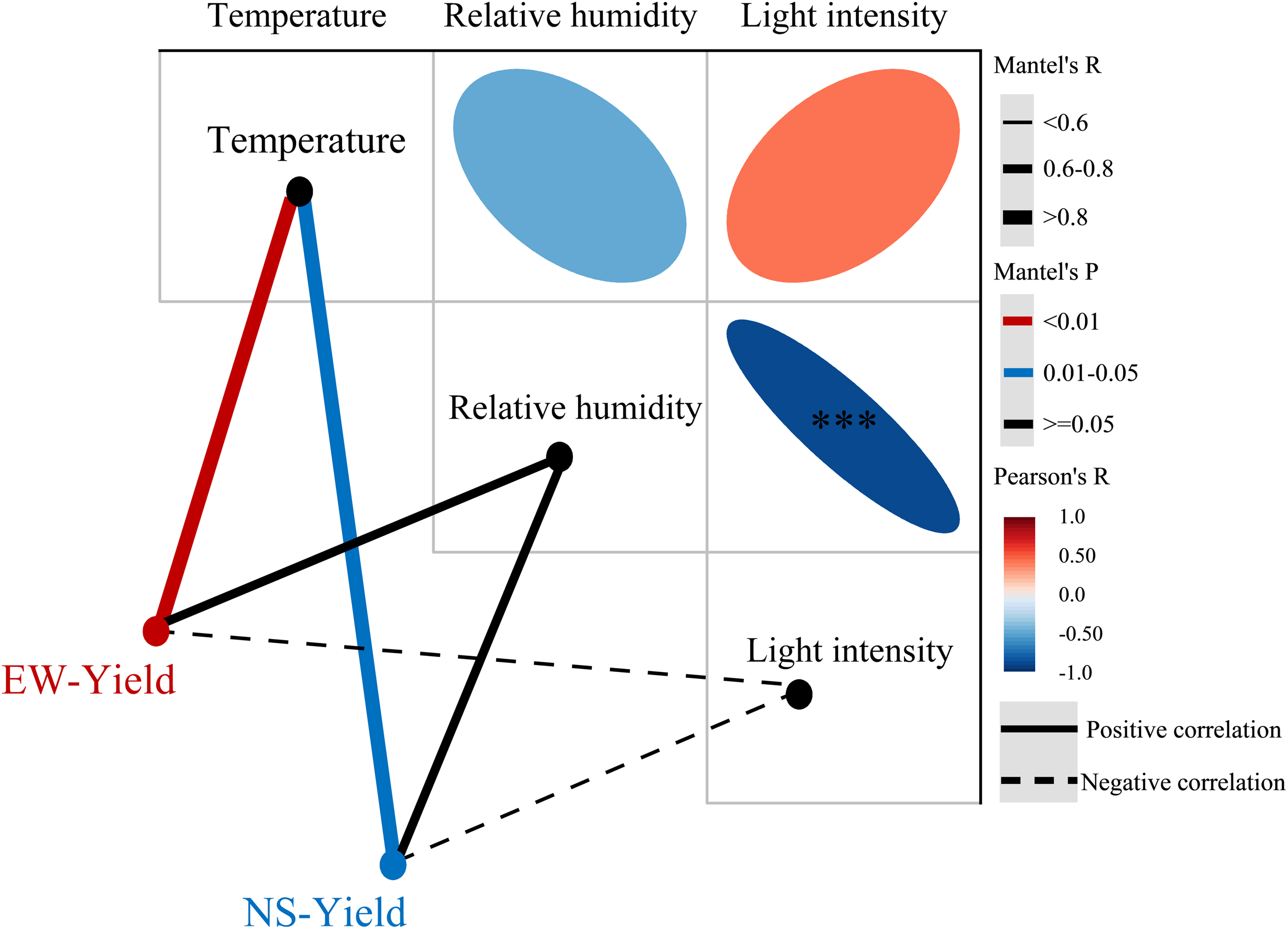
The correlation between strawberry yield and greenhouse microclimate under different cultivation modes.
Crop value
The monthly sales value and total output value of strawberries cultivated with different bed orientations were analyzed (Figure 6). The results showed that the sales value of strawberries under both cultivation modes exhibited a pattern of “first increasing, then decreasing, then increasing again, and then decreasing again” with the change of months, and the peak value was concentrated in the full fruiting period from December to February. However, there were differences in the value performance at different growth stages.
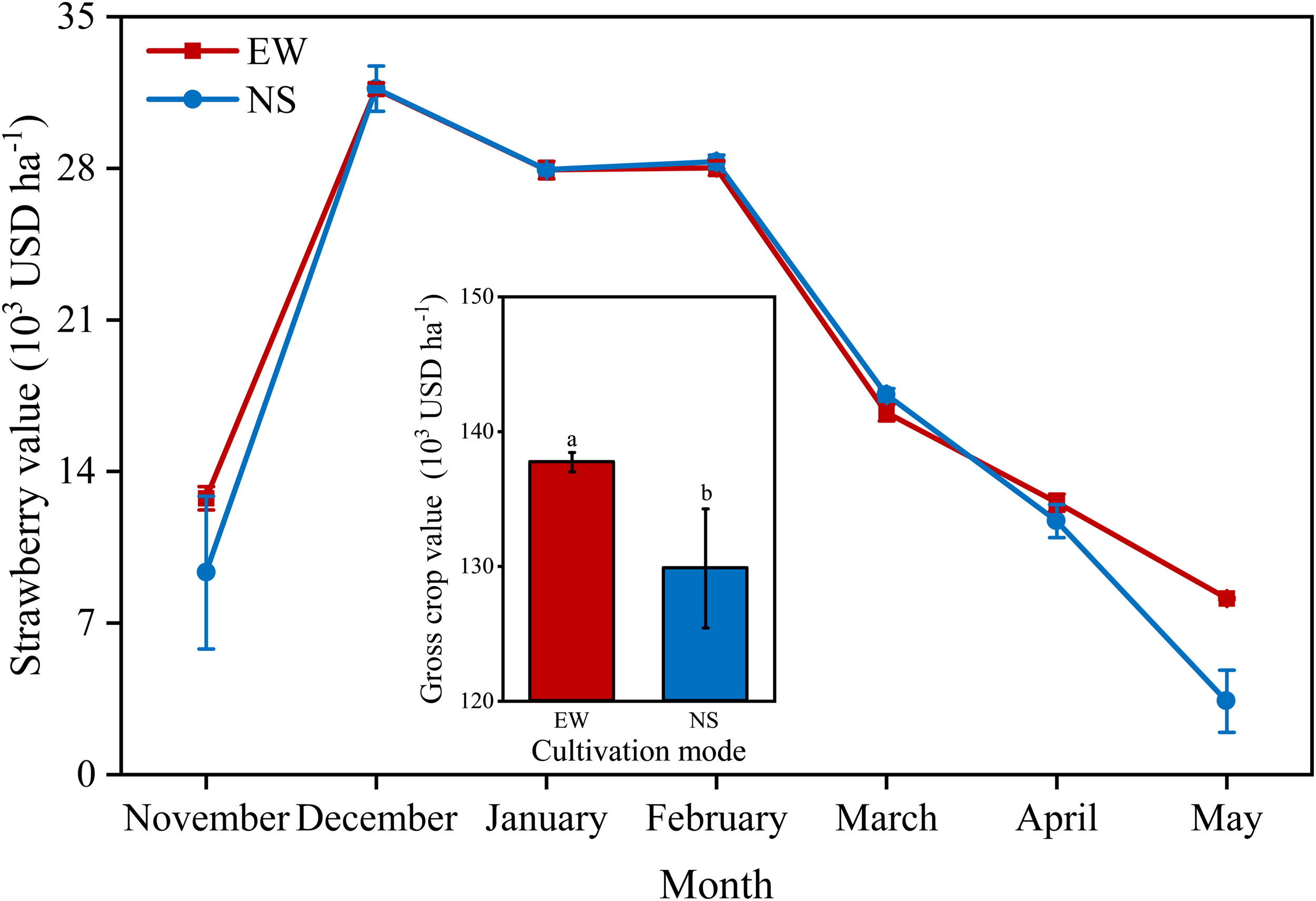
Monthly value and gross value of strawberries in east-west beds (EW) and north-south beds (NS). The error bars represent the standard error. Different letters within each cultivation mode represent significant differences at P < 0.05.
In the early harvest stage (November), the sales value of strawberries under East-West bed (EW) cultivation reached 12,760 USD·ha−1, which was significantly higher than that under North-South bed (NS) cultivation (9330 USD·ha−1), reflecting the output value advantage of EW in the initial stage of cultivation, which was related to the synergistic effect of early yield advantage and market price. During the full fruiting period (December–February), the output value of both modes increased rapidly and remained at a relatively high level. In December, the output value of EW (31,650 USD·ha−1) was almost the same as that of NS (31,680 USD·ha−1). From January to February, the output value of NS (27,930 USD·ha−1 in January, 28,290 USD·ha−1 in February) was slightly higher than that of EW (27,920 USD·ha−1 in January, 28,010 USD·ha−1), and there was no significant difference overall, reflecting that the comprehensive performance of yield and price of the two modes was similar during the full fruiting period.
In the late harvest stage (March–May), the output value of NS declined faster than that of EW. Although the output value of NS (17,540 USD·ha−1) in March was slightly higher than that of EW (16,710 USD·ha−1), the output value of EW (12,560 USD·ha−1 in April, 8130 USD·ha−1 in May) was significantly higher than that of NS (11,700 USD·ha−1 in April, 3390 USD·ha−1 in May), indicating that EW had stronger yield stability in the later stage, thus ensuring a higher sales value. In terms of total output value, the total output value of strawberries under EW cultivation was 137,730 USD·ha−1, and that under NS cultivation was 129,860 USD·ha−1. EW increased the revenue by about 6.06% compared with NS, and there was a significant difference in total output value between the two modes (P < 0.05). This shows that the EW cultivation mode has a more advantageous economic output value performance throughout the entire growth cycle through the synergistic effect of “increasing production and sales in the early stage and stabilizing production and ensuring sales in the later stage”.
Discussion
Bed orientation-mediated microclimate modification in solar greenhouses
Bed orientation is a key spatial configuration factor that drives seasonal differentiation of the ambient background microclimate in solar greenhouses, and this study observed clear seasonal differences in temperature, humidity and light intensity between EW and NS beds above the strawberry canopy. For EW beds, the higher temperature and humidity in autumn and winter are the most prominent microclimate characteristics, which is closely related to the matching degree between EW row direction and the low solar altitude angle in northern China (40°19′N) in winter. The EW row direction reduces the heat loss from the soil surface and crop canopy, forming a relatively stable thermal and moisture environment in the greenhouse—this is the main reason for the higher ambient temperature and humidity in EW greenhouses in November-January. In contrast, the NS row direction is more aligned with the high solar altitude angle in spring and summer, leading to a faster rise in ambient temperature in the greenhouse and a significant increase in background light intensity above the canopy, which results in the higher temperature and light intensity in NS greenhouses in April-May, and even extreme high temperature (36.76°C) in April. 23
The negative correlation between light intensity and relative humidity observed in this study is a universal microclimate pattern in solar greenhouses, and bed orientation amplifies this pattern in different seasons: EW beds maintain high humidity in autumn and winter while reducing light intensity loss, while NS beds increase light intensity in spring and summer, which in turn leads to a significant reduction in ambient humidity. This seasonal microclimate modification by bed orientation is the fundamental environmental factor affecting strawberry growth and yield formation, and also provides a direct empirical basis for explaining the differences in strawberry performance under EW and NS cultivation modes.
Strawberry yield and phenological responses to bed orientation
The most significant yield differentiation occurs in the late harvest stage (April-May), which is directly related to the high-temperature stress in NS greenhouses. The extreme high temperature in NS greenhouses in April far exceeds the optimal growth temperature of strawberries, which not only inhibits the activity of photosynthetic enzymes and accelerates chlorophyll degradation, but also leads to a low-humidity environment due to the negative correlation between light and humidity,24,25 triggering physiological drought in strawberries 26 —these two factors together accelerate plant senescence and result in a sharp decline in late yield of NS. 27 In contrast, the milder temperature environment in EW greenhouses avoids severe high-temperature stress, so EW maintains a relatively high yield in the late stage, showing strong anti-yield-decline ability.
The correlation analysis shows that temperature is the key factor affecting strawberry yield, and the yield of EW has a more significant positive correlation with temperature, which further confirms that the temperature regulation advantage of EW in autumn and winter is the core driver of its full-cycle yield advantage. In addition, the study found that relative humidity has a stronger impact on yield than light intensity, which indicates that maintaining suitable humidity is more important for strawberry cultivation in solar greenhouses in mid-latitude regions, and also explains why EW, with better humidity retention capacity, has better yield performance in the whole growth cycle. 28 The differing correlation patterns between yield and temperature in EW and NS may suggest the presence of a temperature-response threshold in strawberries. However, this remains a hypothesis and requires validation through future studies incorporating detailed physiological measurements.
Economic implications of bed orientation for seasonal strawberry production
The 6.06% higher total gross output value of EW compared to NS is the direct economic reflection of the yield dynamic differences between the two cultivation modes, and this advantage is essentially determined by the spatio-temporal matching between the yield rhythm of EW and the seasonal fluctuation of strawberry market prices in Beijing. In the high-price period (November-December), the early yield advantage of EW enables it to capture the market price premium, and the gross output value advantage in November alone contributes a large proportion of the total gross output value difference between EW and NS—this is the main reason for the early economic advantage of EW. 29 In the low-price period (March-May), the strong late yield retention ability of EW offsets the impact of market price decline through the scale effect of yield, especially in May, the gross output value of EW is much higher than that of NS due to the huge yield gap, which becomes the key to maintaining the total gross output value advantage of EW.30,31
It is important to note that all economic conclusions in this study are based on gross output value without considering production costs, so they cannot be directly equated with net profitability. This result indicates that bed orientation selection is a seasonal production strategy with indicative economic implications: EW's yield rhythm of “early high yield + late stable yield” is more adapted to the seasonal price fluctuation of strawberries in mid-latitude regions (represented by Beijing), and can bring more stable gross output value for growers. This conclusion is dependent on the climatic characteristics and market price pattern of the study area, and its applicability in other regions needs to be combined with local actual conditions.
Practical limitations and future research directions
This study fills two key gaps in existing research on protected strawberry cultivation. First, previous studies have mostly focused on the regulation of microclimate by technologies such as greenhouse cladding materials5,32 and irrigation methods,33–34 while ignoring “bed orientation"—a low-cost, easy-to-implement spatial configuration factor. This study confirms that yield increase and gross output value growth can be achieved simply by adjusting bed orientation, providing a “low-cost and high-benefit” alternative for small and medium-sized growers in mid-latitude regions. Second, existing studies on bed orientation are mostly limited to single-season effects, while this study reveals the full-cycle regulatory role of bed orientation in the overwintering cultivation of strawberries, clarifying the seasonal differences in microclimate regulation and yield effects of EW and NS beds, and enriching the research on spatial configuration of protected strawberry cultivation.
At the same time, the differences between this study and some existing conclusions also have enlightening significance. Previous studies suggested that NS is more conducive to uniform light absorption by crops, 35 but this study found that EW has higher ambient light intensity in winter (January). The root cause of this difference lies in the latitude of the study area: Beijing (40°19′N) has a low winter solar altitude angle, and EW is more likely to capture diffuse light in the greenhouse, forming a “light utilization advantage in low-light environments”. This indicates that the “optimal bed orientation” is a function of latitude, and a universal adaptation model needs to be constructed through multi-latitude gradient experiments. It is hypothesized that the high humidity environment of EW in winter may potentially improve the physiological resistance of strawberries to low-humidity stress in spring and summer, 36 and this potential cross-seasonal physiological effect needs to be verified by determining strawberry leaf physiological indicators in subsequent studies.
Despite its clear theoretical and practical value, this study still has three limitations that need to be addressed in subsequent research. First, the experiment was only conducted in brick-wall solar greenhouses in Changping District, Beijing. However, different greenhouse structures (such as soft-shell solar greenhouses) in mid-latitude regions vary significantly in thermal insulation and light transmittance, and the winter temperature advantage of EW may be weakened. Therefore, multi-site and multi-greenhouse type verification experiments need to be carried out in the 30°-50°N latitude zone to construct an latitude-greenhouse structure-bed orientation adaptation matrix. Second, this study only monitored three ambient background microclimate factors—temperature, humidity, and light—and did not involve CO2 concentration, air velocity, and soil temperature (a key factor affecting strawberry root growth). On one hand, high-temperature stress in NS in spring and summer may be alleviated by increasing CO2 application (high CO2 can improve the photosynthetic heat resistance of strawberries); on the other hand, the high-humidity environment of EW may increase the risk of Botrytis cinerea occurrence. 37 In the future, these biotic and abiotic factors need to be integrated to construct a bed orientation-microclimate-yield coupling model, improving the systematicness of the research. Third, production costs were not included in the economic analysis. In actual production, NS requires additional investment in cooling equipment such as fans and shade nets, while EW needs to increase dehumidification measures during the rainy season. These costs will significantly affect actual net profitability. Subsequent studies need to establish a comprehensive accounting system of yield-price-cost to make the conclusions more practically guiding.
Future research can further explore bed orientation + integrated management strategies: for example, combining EW with straw mulching can enhance winter thermal insulation effects, and pairing NS with deficit irrigation can alleviate high-temperature stress in spring and summer. Such integrated measures will promote the transformation of protected strawberry cultivation from single-factor regulation to systematic and precise management, providing more comprehensive technical support for the sustainable development of the strawberry industry in mid-latitude regions.
Conclusion
This study systematically explored the effects of different bed orientations (EW vs. NS) on the microclimate, yield and gross output value of strawberry overwintering cultivation in brick-wall solar greenhouses in mid-latitude regions (represented by Beijing), and clarified the seasonal characteristics of bed orientation-mediated microclimate regulation and its corresponding effects on strawberry cultivation efficiency. The main conclusions are as follows:
Bed orientation drives significant seasonal differentiation of greenhouse microclimate: EW beds maintain higher temperature and humidity in autumn and winter, with better thermal and moisture retention capacity; NS beds have higher ambient temperature and light intensity in spring and summer, and are prone to extreme high-temperature stress in April. The microclimate monitoring data in this study reflect the ambient background environment above the strawberry canopy, and the seasonal differences are closely related to the matching degree between bed orientation and solar altitude angle in different seasons. EW beds exhibit superior full-cycle yield performance: Both EW and NS show a “first increasing then decreasing” yield trend with peak yield in January-February, but EW has a higher early yield (November) and stronger late-stage yield retention (April-May), leading to a 6.93% higher total yield than NS (P < 0.05). The early yield advantage of EW is due to the suitable temperature and humidity in autumn and winter, while the late yield stability is attributed to the avoidance of severe high-temperature stress; the sharp late yield decline of NS is mainly caused by extreme high-temperature stress and subsequent physiological drought in spring and summer. Temperature is the key microclimate factor affecting strawberry yield: EW yield has an extremely significant positive correlation with temperature (P < 0.01), and relative humidity exerts a stronger impact on strawberry yield than light intensity in solar greenhouses. Maintaining suitable temperature and humidity is the core of improving strawberry overwintering cultivation efficiency in mid-latitude regions. EW beds have more advantageous gross economic performance: The total gross output value of EW is 6.06% higher than that of NS (P < 0.05), which is mainly due to the spatio-temporal matching between EW's yield rhythm and the seasonal price fluctuation of strawberries in Beijing: the early high yield captures the market price premium, and the late stable yield offsets the impact of price decline. All economic conclusions in this study are based on gross output value without considering production costs, and only reflect the indicative economic performance of bed orientation.
In summary, bed orientation significantly affects strawberry cultivation efficiency by altering the seasonal distribution of greenhouse microclimate, and EW beds are more suitable for strawberry overwintering cultivation in brick-wall solar greenhouses in mid-latitude regions with temperate continental monsoon climate (represented by Beijing). For practical production, it is recommended to prioritize EW beds to leverage its advantages in temperature and humidity regulation in autumn and winter; for NS beds, additional ventilation, cooling and shading measures should be implemented in spring and summer to alleviate high-temperature stress. This study provides a scientific basis for the selection of bed orientation and precise microclimate management of strawberry overwintering cultivation in mid-latitude regions, and the bed orientation + integrated management strategy is the key direction for the further improvement of strawberry cultivation efficiency in the future. The research results can be extended to other major strawberry-producing regions at the same latitude, and need to be combined with local greenhouse structures, climatic characteristics and market conditions for appropriate adjustment.
Footnotes
Acknowledgments
Thanks for the greenhouse and test materials provided by Wande Strawberry Manor of Changping District.

Author contributions
Conceptualization, Xihong Lei and Hongrun Liu; Methodology, He Zhao and Xiaoyi Hu; Software, Song Liu and Hongrun Liu; Validation, Ning Zhu and Shangjun Wu; Formal analysis, Song Liu and Hongrun Liu; Investigation, Song Liu and He Zhao; Resources, Ning Zhu and Xihong Lei; Data curation, Song Liu and Hongrun Liu; Writing-original draft preparation, Song Liu, Hongrun Liu, He Zhao and Xiaoyi Hu; Writing-review and editing, Shangjun Wu, Yanan Tian, Ning Zhu and Xihong Lei; Visualization, Song Liu and Hongrun Liu; Supervision, Ning Zhu and Xihong Lei; Project administration, Yanan Tian and Xihong Lei; Funding acquisition, Yanan Tian and Xihong Lei. All authors have read and agreed to the published version of the manuscript.
Funding
The authors received no financial support for the research, authorship, and/or publication of this article.
Declaration of conflicting interests
The authors declared no potential conflicts of interest with respect to the research, authorship, and/or publication of this article.
Data availability statement
The original contributions presented in this study are included in the article. Further inquiries can be directed to the corresponding authors.