







Abstract
Addressing two key challenges in northern solar greenhouse strawberry production—weak seedling root function and uneven growth from greenhouse spatial heterogeneity—this study examined regulatory effects of inoculating strawberry seedlings with varying arbuscular mycorrhizal fungi (AMF) concentrations and transplanting them to south, middle, north greenhouse locations. Results showed that: (1) AMF inoculation, particularly the high-concentration treatment (AMF-1440), significantly enhanced root activity and root weight, with maximum increases of 171.4% and 58.2%, respectively; (2) Significant spatial heterogeneity existed within the greenhouse, with plants in the northern position exhibiting superior root traits, SPAD values, fruit weight per fruit, and marketable yield compared to those in the southern position; (3) The yield-enhancing effect of AMF was spatially dependent, showing a higher increase rate in fruit weight per fruit in the northern position (23.9%) than in the southern position (16.6%); (4) Path analysis indicated that AMF drives yield formation through the pathway of “enhancing root activity —maintaining leaf photosynthetic capacity (SPAD)—increasing fruit weight per fruit.” This study demonstrates that AMF inoculation acts as a potential biological measure for enhancing strawberry root function and improving marketable yield, while its efficacy is constrained by low-temperature induced spatial heterogeneity within the greenhouse. A tentative approach for achieving relatively balanced yield increases in the tested system involves combining AMF application with zonal environmental management of solar greenhouses.
Keywords
Introduction
As an important high-efficiency economic crop in northern China, protected strawberry (Fragaria × ananassa Duch.) plays an irreplaceable role in ensuring the economic benefits of the horticultural industry and meeting market demand for high-quality fresh fruits.1–2 With the popularization of protected cultivation technologies, strawberry production scale has continuously expanded,3–4 but its high-quality development is constrained by two key production challenges:
Firstly, strawberry root development is highly sensitive to environmental conditions. Root function quality during the seedling stage directly affects growth, seedling establishment, and post-transplant stress resistance, thereby indirectly influencing subsequent fruit formation and development.5–7 Secondly, solar greenhouses—the main cultivation facility for strawberries—exhibit significant internal spatial heterogeneity.8–9 Differences in microenvironmental factors such as light and temperature between northern and southern beds lead to uneven growth and yield performance of strawberries in different locations, reducing overall production efficiency and product quality uniformity.10–11 Addressing these two issues is crucial for promoting protected strawberry cultivation from “scale expansion” to “quality improvement” and optimizing horticultural crop protected cultivation systems. 12
Among potential solutions, beneficial soil microorganisms offer environmental friendliness and physiological regulation advantages, with Arbuscular Mycorrhizal Fungi (AMF) being particularly noteworthy. 13 As widely distributed beneficial soil microorganisms, AMF form symbiotic relationships with plant roots, 14 expanding root absorption ranges, regulating rhizosphere microenvironments, and enhancing root metabolic activity to improve plant mineral nutrient acquisition, growth, development, and stress resistance.15–17 In horticultural crops, AMF has shown promising potential in improving root traits, fruit yield, and quality.18–20 For strawberries, AMF-root symbiosis can theoretically optimize root growth and provide a stable nutritional and physiological foundation for fruit development, aligning with the core demand of “strengthening root function and improving yield quality” in protected strawberry production.21–22
However, existing research has obvious limitations: most studies focus on the independent effects of single AMF inoculation conditions on strawberry yield or quality, failing to systematically establish synergistic relationships between AMF-regulated root traits (e.g., root activity, morphological parameters) and fruit traits. Furthermore, the regulatory effect of protected cultivation spatial heterogeneity on AMF efficacy has not been fully considered. 23 This neglect of spatial variables limits systematic theoretical support for AMF application in strawberry production, hindering precise adaptation. 24
Notably, winter solar greenhouses in northern China exhibit unique spatial heterogeneity: influenced by external low temperatures and thermal insulation structures, the southern location (near the greenhouse film) has significantly lower temperatures during critical growth periods, creating unfavorable conditions for strawberry photosynthesis and material accumulation, leading to poor growth. In contrast, the northern location—sheltered by thermal insulation quilts and walls—has relatively suitable temperatures, resulting in better plant growth, revising the traditional perception of “superior southern growth”. 25 This low-temperature-induced uneven growth exacerbates yield and quality differences, becoming a key constraint on production efficiency. 26 Theoretically, AMF may alleviate southern low-temperature growth limitations by improving root function and nutrient absorption capacity, but research on AMF adaptability to low-temperature southern locations remains scarce. Critical questions—such as whether strawberry responses to AMF differ between low-temperature southern and suitable northern locations, and whether AMF inoculation conditions need adjustment for southern low-temperature environments—remain unanswered, representing urgent gaps in protected strawberry cultivation research.
Based on the industrial challenge of “low-temperature-induced uneven growth in southern greenhouse locations” and existing AMF research gaps, this study used ‘Suizhu’ (a major strawberry cultivar in Changping District) as test material and conducted field experiments at a typical protected cultivation base. Three core objectives were addressed from macro-physiological and cultivation regulation perspectives: (1) Clarify the regulatory effects of different AMF spore concentrations on strawberry root traits during the seedling stage, and screen suitable inoculation parameters to optimize root function for coping with post-transplant southern low-temperature environments; (2) Analyze interactions between greenhouse locations (south, middle, north) and AMF spore concentrations, particularly AMF's regulatory effect on strawberry growth in southern low-temperature locations, and clarify their combined impact on the first crop's yield and quality to fill gaps in “low-temperature spatial heterogeneity-microbial regulation” research; (3) Reveal correlation mechanisms between strawberry root and fruit traits under AMF regulation, clarify pathways through which root function optimization alleviates low-temperature stress and improves yield, and refine physiological theories underlying AMF-mediated quality improvement in low-temperature environments. The results are expected to provide theoretical support for constructing an integrated protected strawberry cultivation technology system featuring “precision AMF inoculation during seedling stage and adaptive management in low-temperature locations after transplanting,” with important scientific and practical value for improving protected strawberry production stability and quality, and advancing beneficial microorganism application in horticultural crop stress resistance.
Materials and methods
Study area
This experiment was conducted at Wande Strawberry Manor in Changping District, Beijing (40°19′ N, 116°36′ E, elevation 41 m), located in northern China (Figure 1). The study area belongs to a temperate continental monsoon climate. The total area of protected agricultural production in Beijing exceeds 11,500 hectares. 27 The initial soil properties of the experimental site were as follows: pH value 7.1; bulk density 1.38 g cm−3; soil organic matter content 18.7 g kg−1; total nitrogen content 2.72 g kg−1; available phosphorus content 168 mg kg−1; and available potassium content 417.6 mg kg−1. The experimental period lasted from September 9, 2025, to November 30, 2025, covering the period from strawberry transplanting to the harvest of the first crop of straw-berries.

Study area.
Experimental design and greenhouse management
This experiment was conducted in a brick-wall solar greenhouse for strawberry cultivation, with dynamic changes in the greenhouse environment shown in Figure 2. A randomized complete spatial block design was adopted in this experiment, where the southern, middle and northern parts of the greenhouse were set as three independent spatial blocks, and six AMF spore concentration treatments were arranged in each block with three biological replicates per treatment (20 plants per replicate, 60 plants per bed in total). North-south oriented cultivation beds were adopted, and the test strawberry cultivar was ‘Suizhu’, a Japanese cultivar, grown under the ground planting mode. Each cultivation bed was 35 cm wide with a plant spacing of 20 cm, accommodating 60 plants per bed, resulting in a uniform planting density of 7.0 × 10⁴ plants·ha−1. All agricultural practices, including irrigation, fertilization, plant pruning, pesticide application, and greenhouse environmental regulation, were implemented in accordance with high-quality cultivation standards and remained consistent across all treatments and blocks. Strawberry seedlings were raised in 24-cell seedling trays, and their roots were inoculated with the arbuscular mycorrhizal fungus Entrophospora lamellosum. Six AMF spore concentration treatments were established: 0 (Control), 240 (AMF-240), 480 (AMF-480), 720 (AMF-720), 960 (AMF-960), and 1440 (AMF-1440) spores per tray, with a guaranteed final inoculation rate of over 60% (Table 1, Figure 3). The plants in each block were statistically analyzed independently to eliminate the systematic error caused by the spatial heterogeneity of the greenhouse.
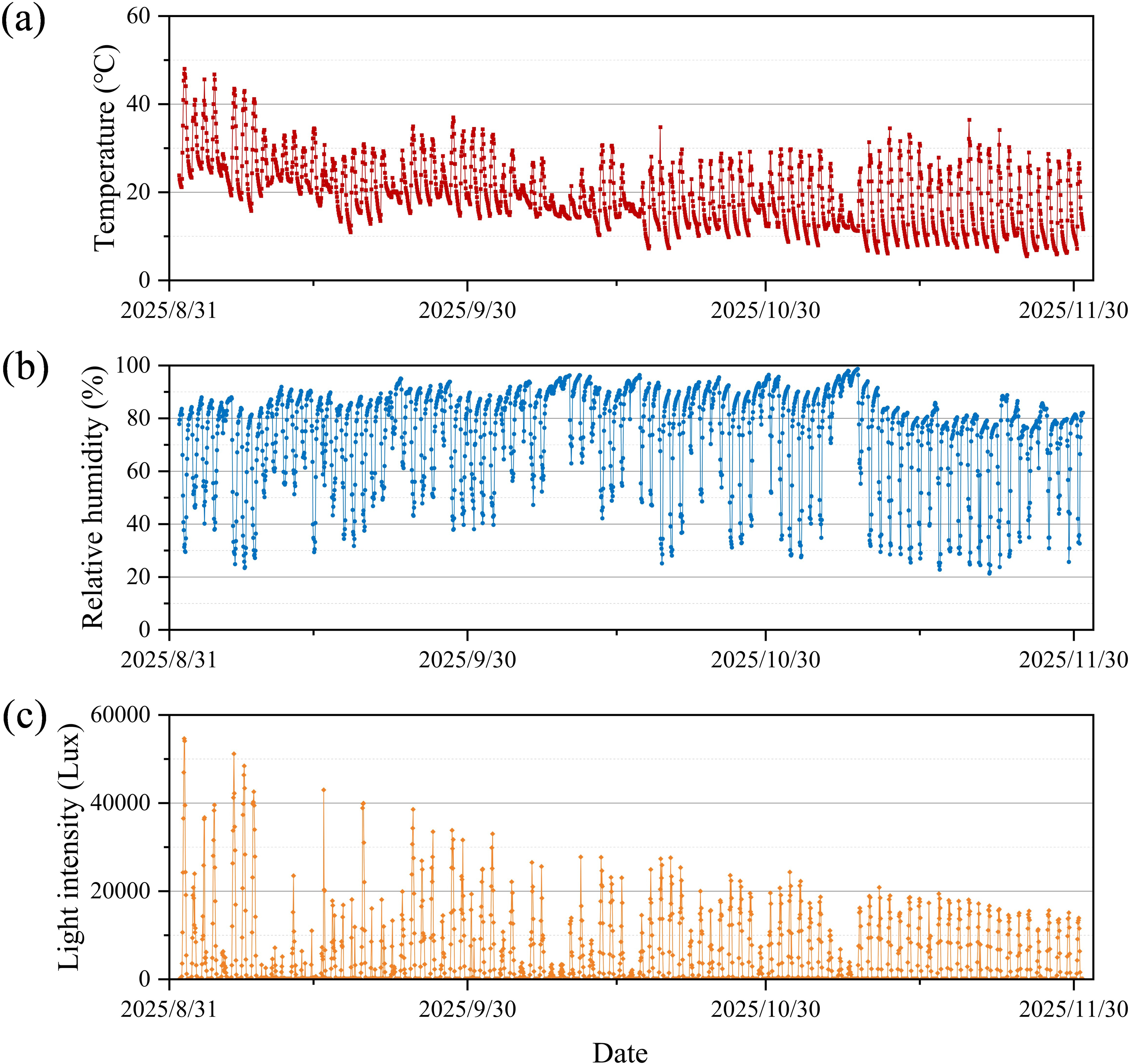
Dynamic changes of daily and hourly temperature (a), relative humidity (b), and light intensity (c) in the greenhouse.

AMF inoculation gradient and root colonization of strawberry.
Root colonization rate of strawberry in different treatments.
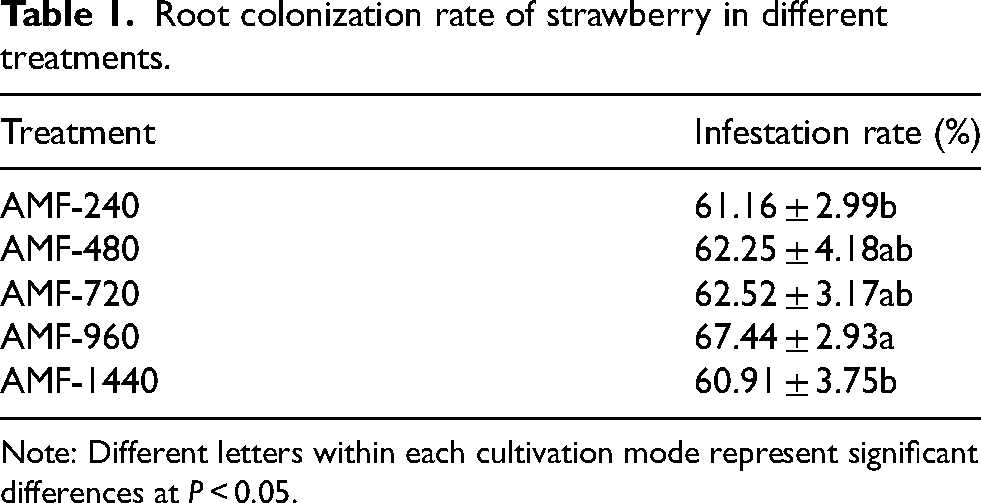
Note: Different letters within each cultivation mode represent significant differences at P < 0.05.
For the cultivation of ground-planted strawberries in the solar greenhouse, drip irrigation was adopted to maintain the soil moisture content at 60%∼70%, and flood irrigation was strictly prohibited. Regarding fertilization management, decomposed organic fertilizer and compound fertilizer were applied as base fertilizer before trans-planting, phosphorus and potassium fertilizers were top-dressed during the flowering stage, calcium fertilizer was applied after fruit set, and foliar spraying of potassium dihydrogen phosphate was conducted 1∼2 times during the growing period. For pruning management, old leaves, diseased leaves, and stolons were promptly removed, weak flowers and malformed fruits were thinned out, and 3∼4 healthy functional leaves per plant and 3∼4 flowers per inflorescence were retained. In terms of pest and disease control, the key targets included powdery mildew, aphids, and spider mites, with low-toxicity pesticides (e.g., kresoxim-methyl, matrine) and biological control methods (e.g., predatory mites) employed. Applications (spraying or spreading) were carried out at the early stage of pest and disease occurrence with an interval of 7∼10 days, and pesticide application was ceased 15 days before harvest. For environmental regulation, daytime temperatures were maintained at 20∼25°C, nighttime temperatures at 5∼8°C, and relative humidity at 60%∼70%; ventilation was performed at noon on sunny days to reduce humidity, and short-term ventilation was conducted on cloudy and rainy days to prevent disease outbreaks.
Strawberry fruit yield parameters
During the harvest period of the first crop of fruits, the number of marketable fruits under different treatments was recorded, and the fresh weight of 20 fruits from different plants in each treatment was measured. Marketable fruits were defined as intact strawberry fruits with no obvious pests, diseases or mechanical damage, regular fruit shape without malformation, and a ripeness degree of over 90% (mature red color covering more than 90% of the fruit surface). The marketable yield was calculated by multi-plying the number of marketable fruits by the average fresh weight of individual fruits.
Strawberry fruit quality
The total soluble solid (TSS or Brix) content and total acidity of each strawberry were measured by a portable Brix-acidity meter (PAL-BX|ACID3 Master Kit, ATAGO Co., Ltd, Tokyo, Japan). The sugar/acid ratio (% Brix÷% acid) was calculated by di-viding the Brix degree with the citric acid percentage. 28 All determinations were carried out in 20 replicates of different plants.
Determination of SPAD values
During the harvest period of the first crop of fruits, the relative chlorophyll con-tent of the main functional leaves of the plants corresponding to the tested fruits was measured using a SPAD-502 chlorophyll meter. 29 The measurement was conducted at the middle part of the leaves, and the average value was calculated.
Statistical analysis
In this experiment, the measured data were analysed and visualized using Microsoft Excel 2023, IBM SPSS Statistics 25, and Origin 2024. A general linear model (GLM)-UNIANOVA was used for analysis of variance (ANOVA), where cultivation location was set as a block factor and AMF spore concentration was set as a fixed factor, with P < 0.05 as the threshold for significant differences. 30 Prior to analysis, the normality of the data was checked through descriptive statistics (mean, standard deviation, skewness, kurtosis) and the Shapiro–Wilk test. Data that did not meet the normality assumption were either transformed or analysed using nonparametric tests. The homogeneity of variances was evaluated via the Levene test. If variances were heterogeneous, Welch's correction was applied in ANOVA, and weighted least squares (WLS) were used in regression analysis. These steps ensured the rationality of data assumptions and provided robust statistical support for the conclusions. Partial least squares path modelling (PLS-PM) was adopted to investigate the effects and contributions of AMF and planting position on strawberry yield and quality (the research objects included the AMF inoculation and cultivation location of strawberries: the Control and AMF treatments were defined as 0 and 1, respectively, while the southern, middle, and northern positions were defined as 1, 2, and 3, respectively). The block effect of cultivation location was fully considered in the PLS-PM analysis to avoid the interference of spatial heterogeneity on the model fitting results.
Results
Strawberry root traits
The root activity of the Control treatment in the northern (North), middle (Mid-dle), and southern (South) positions was 20.80, 19.78, and 17.35 μg TTC g−1 h−1, respectively. Compared with the Control, the AMF-240, 480, 720, and 960 treatments significantly increased root activity by 19.89%, 34.25%, 36.31%, and 70.17% (P < 0.05), while the AMF-1440 treatment achieved root activity values of 36.11, 33.28, and 28.38 μg TTC g−1 h−1 in the North, Middle, and South locations, respectively, representing extremely significant increases of 144.29%, 164.57%, and 171.41% compared with the Control (P < 0.001, Figure 4(a)). The root surface area of the Control treatment ranged from 211.95 to 282.44 cm3 plant−1 across all positions. AMF treatments showed a tendency to increase root surface area, but the effect was not significant (P > 0.05). Among them, the AMF-1440 treatment resulted in the highest root surface area (347.85 cm3 plant−1) in the North position (Figure 4(b)). The root weight of the Control treatment ranged from 2.66 to 3.86 g plant−1 across all positions. The AMF-240, 480, 720, and 960 treatments significantly increased root weight by 8.11%∼15.49% compared with the Control (P < 0.05). The root weight of the AMF-1440 treatment reached 6.10 g plant−1 in the North position, a 58.17% increase compared with the Control (P < 0.001, Figure 4(c)). Both AMF inoculation concentration and cultivation location had extremely significant main effects on strawberry root activity and root weight (P < 0.001), while their interaction effect was not significant (P > 0.05, Figure 4). With the gradient increase of AMF spore concentration from 0 to 1440, all root-related parameters showed a continuous and significant up-ward trend. Additionally, all root traits consistently followed the order of North > Middle > South, and the differences between positions were extremely significant under the same AMF concentration (P < 0.001).
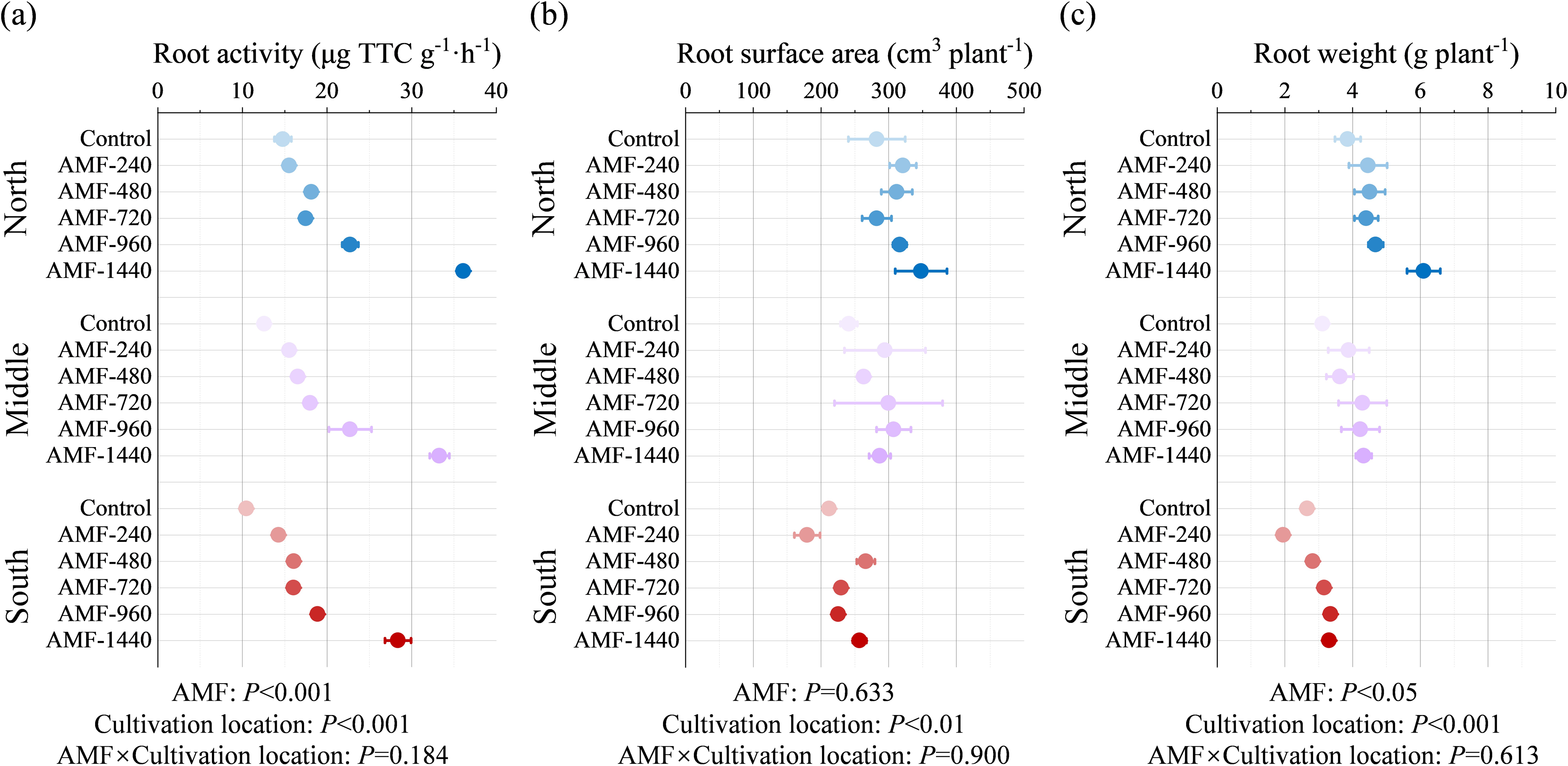
Strawberry root activity (a), root surface area (b), and root weight (c).
Strawberry leaf SPAD value
Cultivation location had an extremely significant effect on the SPAD value (P < 0.01), while the effects of AMF inoculation and their interaction were not significant (P > 0.05, Figure 5). Overall, the SPAD value followed the order of North > Middle > South, with extremely significant differences between locations (P < 0.01). Notably, a trend of first increasing and then stabilizing in SPAD value with the increase of AMF spore concentration was only observed in the North location, whereas the concentration effect was not obvious in the South and Middle locations. On average, the SPAD value in the North location was 10% higher than that in the South location under the same AMF concentration. The SPAD value in the North location ranged from 44.87 to 49.63, in the Middle location from 43.47 to 53.10, and in the South location from 41.23 to 44.63. In the Control treatment, the SPAD value in the South location was significantly decreased by 6.76% compared with that in the North location. Even under the high-concentration AMF-1440 treatment, the SPAD value in the South location (43.63) was 11.31% lower than that in the North location (49.20). The SPAD values of all AMF treatments in the North location showed a consistent in-creasing trend with the increase of spore concentration, while the trends in the Middle and South locations were not stable. Specifically, in the North location, the SPAD values of the AMF-240, 480, 720, 960, and 1440 treatments were increased by 1.48%, 5.34%, 6.82%, 10.62%, and 9.65%, respectively, compared with the Control treatment.
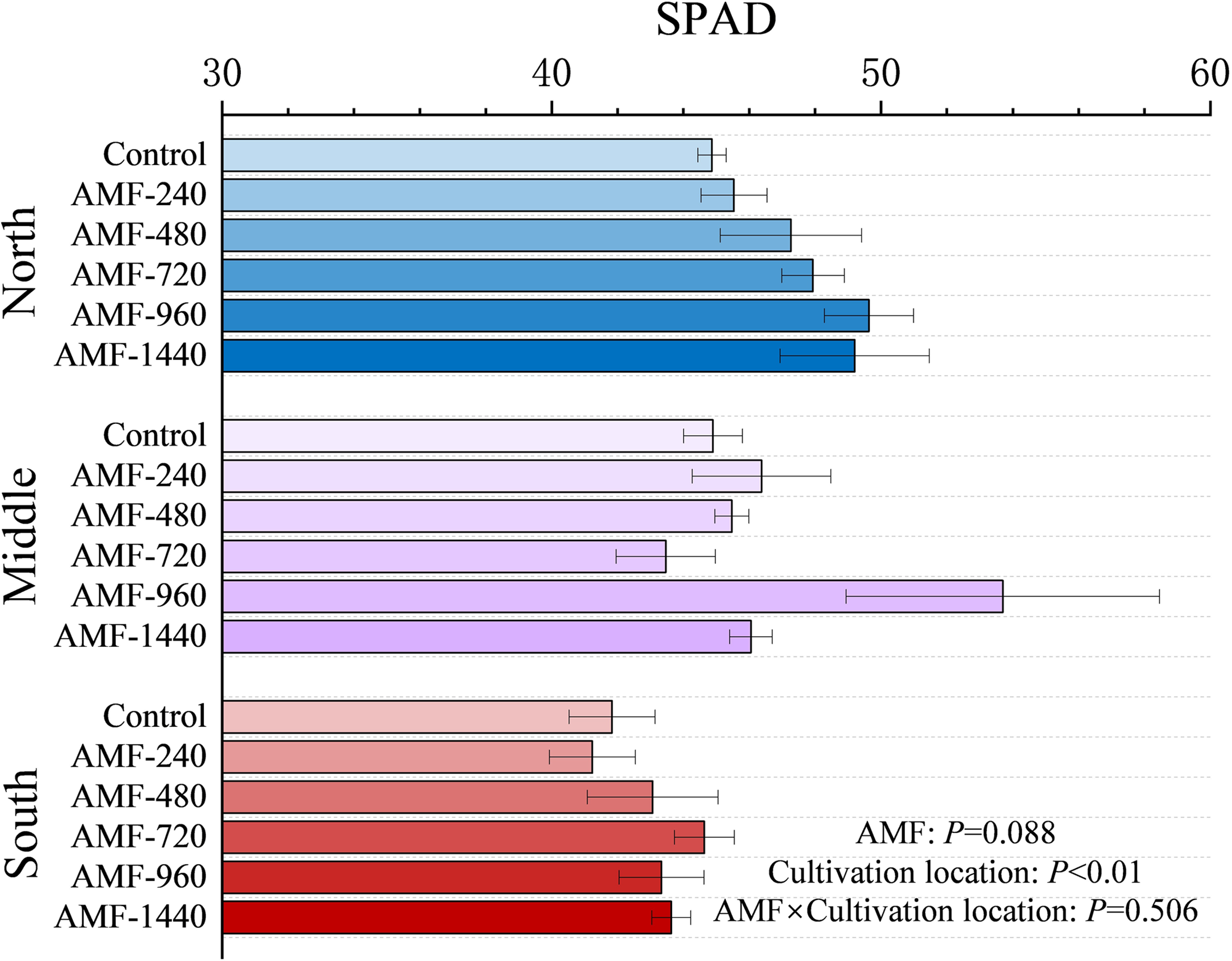
SPAD value of strawberry functional leaves.
Strawberry first crop fruit yield traits
The fresh weight per fruit of the Control treatment in the North, Middle, and South locations was 18.90, 16.38, and 15.81 g, respectively, with the value in the South location being 15.63% lower than that in the North location. The AMF-1440 treatment achieved the highest fresh weight per fruit (23.42, 22.76, and 18.43 g in the North, Middle, and South locations, respectively), where the value in the South location was 21.31% lower than that in the North location. Notably, the increase rate of fresh weight per fruit induced by AMF in the South location (16.60%) was lower than that in the North location (23.93%) (Figure 6(a)). The number of marketable fruits of the Control treatment in the North, Middle, and South locations was 7.2 × 10³, 8.1 × 10³, and 5.4 × 10³ fruits ha−1, respectively, with the South location showing a 25% reduction compared to the North location. The overall number of marketable fruits across all AMF treatments was 7.95 × 10³, 8.7 × 10³, and 5.25 × 10³ fruits ha−1 in the North, Middle, and South locations, respectively. The increase rates of the five AMF treatments (AMF-240, 480, 720, 960, 1440) were 8.70%, 4.35%, 1.05%, 13.04%, and 8.69%, respectively. Among these, the AMF-960 treatment resulted in the highest overall number of marketable fruits, with 9.9 × 10³, 8.1 × 10³, and 5.4 × 10³ fruits ha−1 in the North, Middle, and South locations, respectively (Figure 6(b)). The marketable yield of the Control treatment in the North, Middle, and South locations was 135.71, 131.99, and 85.27 kg ha−1, respectively, with the South location being 37.17% lower than the North location. The overall marketable yield across all AMF treatments was 161.82, 166.64, and 81.79 kg ha−1 in the North, Middle, and South locations, respectively. The increase rates of the five AMF treatments were 14.62%, 9.76%, 10.06%, 22.25%, and 40.68%, respectively. The AMF-1440 treatment achieved the highest overall marketable yield, with 210.81, 204.22, and 81.47 kg ha−1 in the North, Middle, and South locations, respectively (Figure 6(c)). Both AMF inoculation and cultivation location had extremely significant main effects on fresh weight per fruit and marketable yield (P < 0.001). Cultivation location also had an extremely significant main effect on the number of marketable fruits (P < 0.001). Additionally, their interaction effect was significant for the number of marketable fruits and marketable yield (P < 0.01, Figure 6) that AMF exerted significantly higher promotive effects on the yield indicators of strawberries in the North location than in the South location.
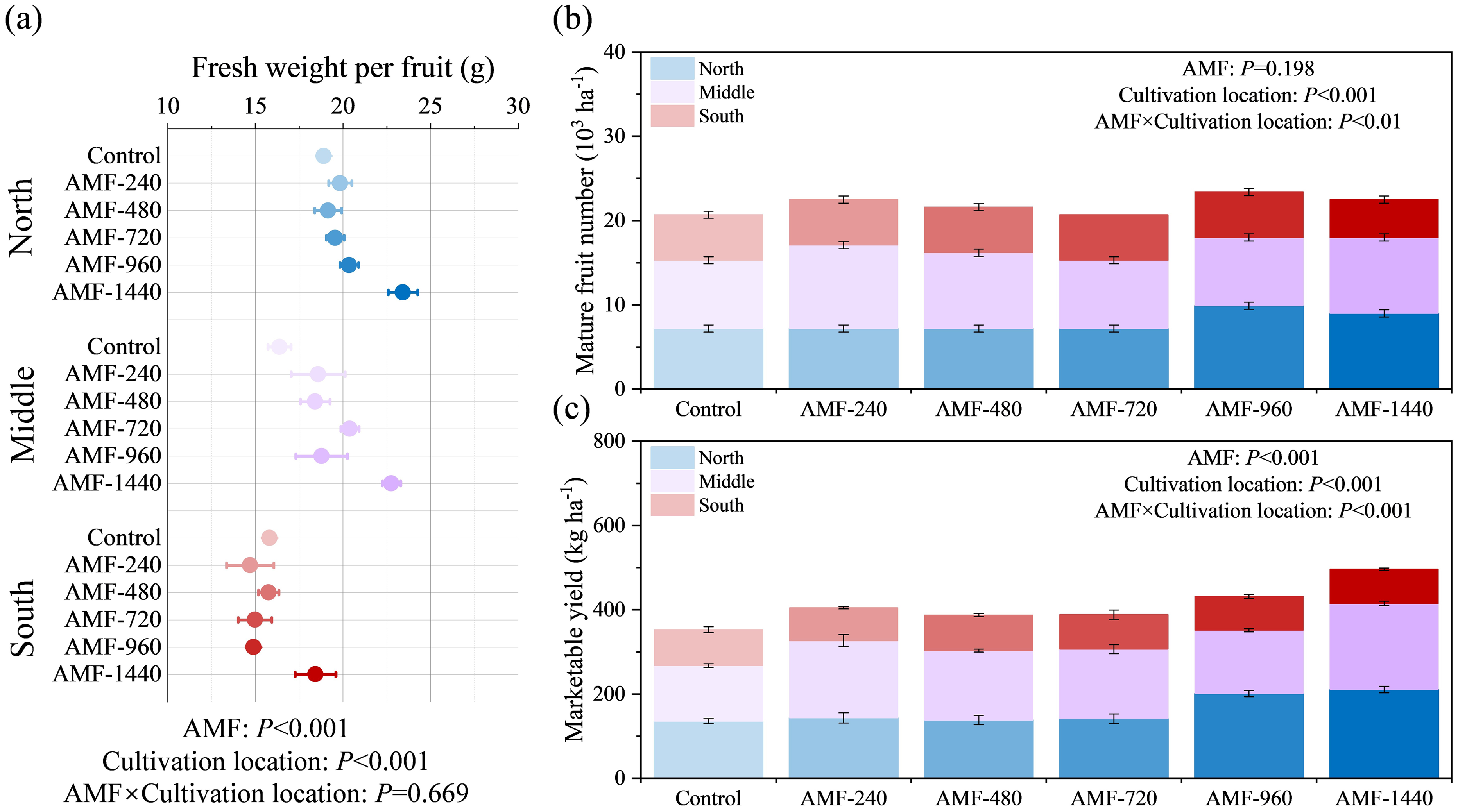
Strawberry fresh weight per fruit (a), number of marketable fruits (b), and marketable yield (c).
Strawberry first crop fruit quality traits
Cultivation location had a significant effect on the soluble solid content of fruits. The soluble solid content in the North location ranged from 10.13% to 10.83% overall, 9.70% to 10.60% in the Middle location, and 8.53% to 9.70% in the South location. In the Control treatment, the soluble solid content in the South location was 5.26% lower than that in the North location, and AMF concentration treatments did not alter this positional gradient. Additionally, there was no significant difference in soluble solid content between AMF treatments and the Control within each location (P > 0.05, Figure 7(a)). The effect trend of cultivation location on fruit titratable acid content was similar to that of soluble solid content, with values of 1.48%, 2.22%, and 1.23% in the South, Middle, and North locations, respectively. The titratable acid content in the South location was 5.72% lower than that in the North location. The AMF-240 treatment exhibited the best reduction effect on titratable acid content across different locations, with reduction rates of 25.05%, 55.41%, and 7.88% in the North, Middle, and South lo-cations, respectively. Although higher AMF concentration treatments also reduced fruit titratable acid content to a certain extent, the effect was less significant than that of the AMF-240 treatment (Figure 7(b)). The overall sugar-acid ratios in the North, Middle, and South locations were 7.94, 7.98, and 7.59, respectively. AMF treatments significantly increased the sugar-acid ratio in the North and Middle locations, with increase rates ranging from 14.86% to 110.52%, and the AMF-240 treatment showed the strongest promotion effect in the Middle location. In contrast, AMF treatments generally exerted a negative effect on the fruit sugar-acid ratio in the South location (Figure 7(c)). Statistical analysis indicated that cultivation location had an extremely significant effect on soluble solid content (P < 0.001), while AMF inoculation had significant effects on titratable acid content and sugar-acid ratio (P < 0.05). No significant interaction effect was observed between cultivation location and AMF inoculation (P > 0.05, Figure 7).
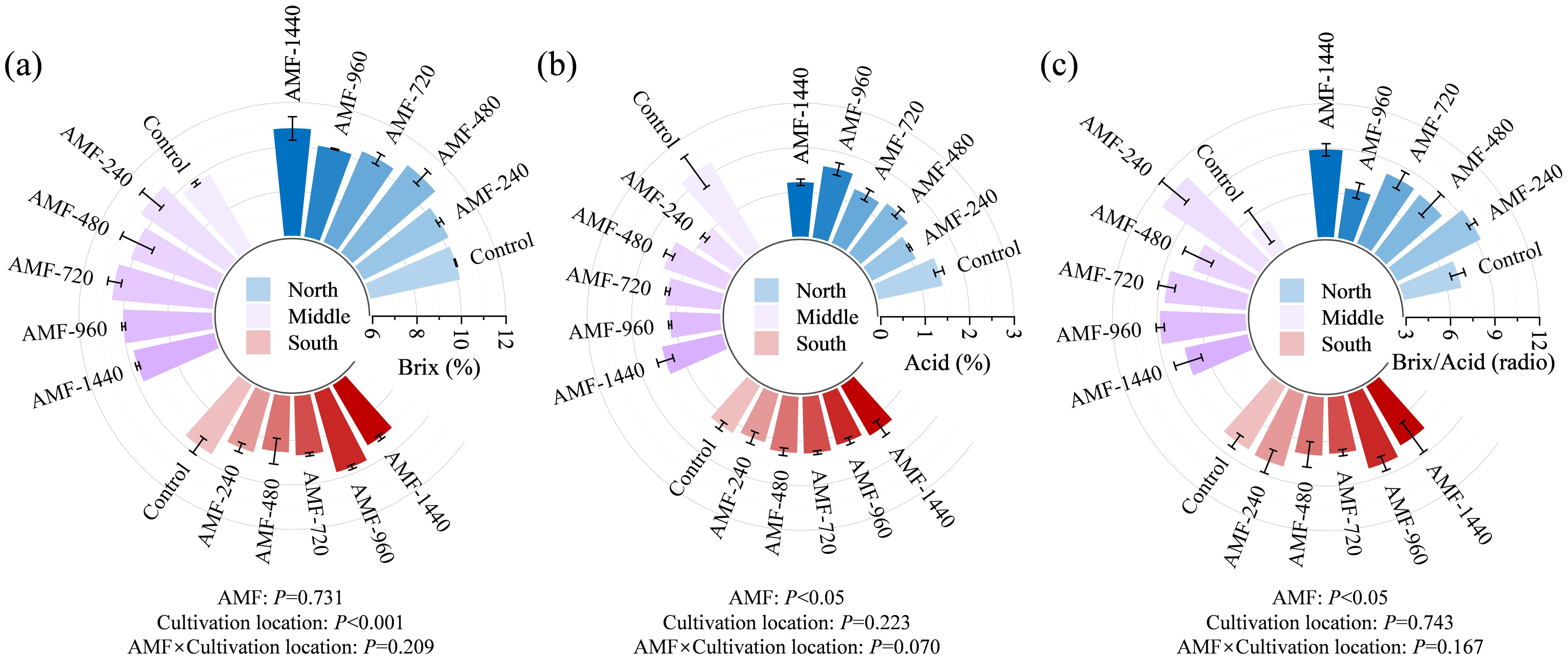
Strawberry soluble solid content (a), titratable acid content (b), and their ratio (c).
PLS-PM analysis
The PLS-PM exhibited a good goodness of fit (GoF = 0.78) and explained 99.3% of the variation in marketable yield (Figure 8), clearly revealing the synergistic regulatory mechanism of AMF concentration and cultivation location. Both AMF and cultivation location had significant effects on root indicators and photosynthetic indicators, among which AMF exerted a stronger influence on root activity. The SPAD value showed a significant positive regulatory effect on soluble solid content and the number of marketable fruits. The determinant factor of marketable yield was the fresh weight per fruit, while there was a significant negative correlation between soluble solid con-tent and titratable acid content. Notably, both AMF and cultivation location had extremely significant effects on marketable yield, with the effect of cultivation location being stronger than that of AMF.
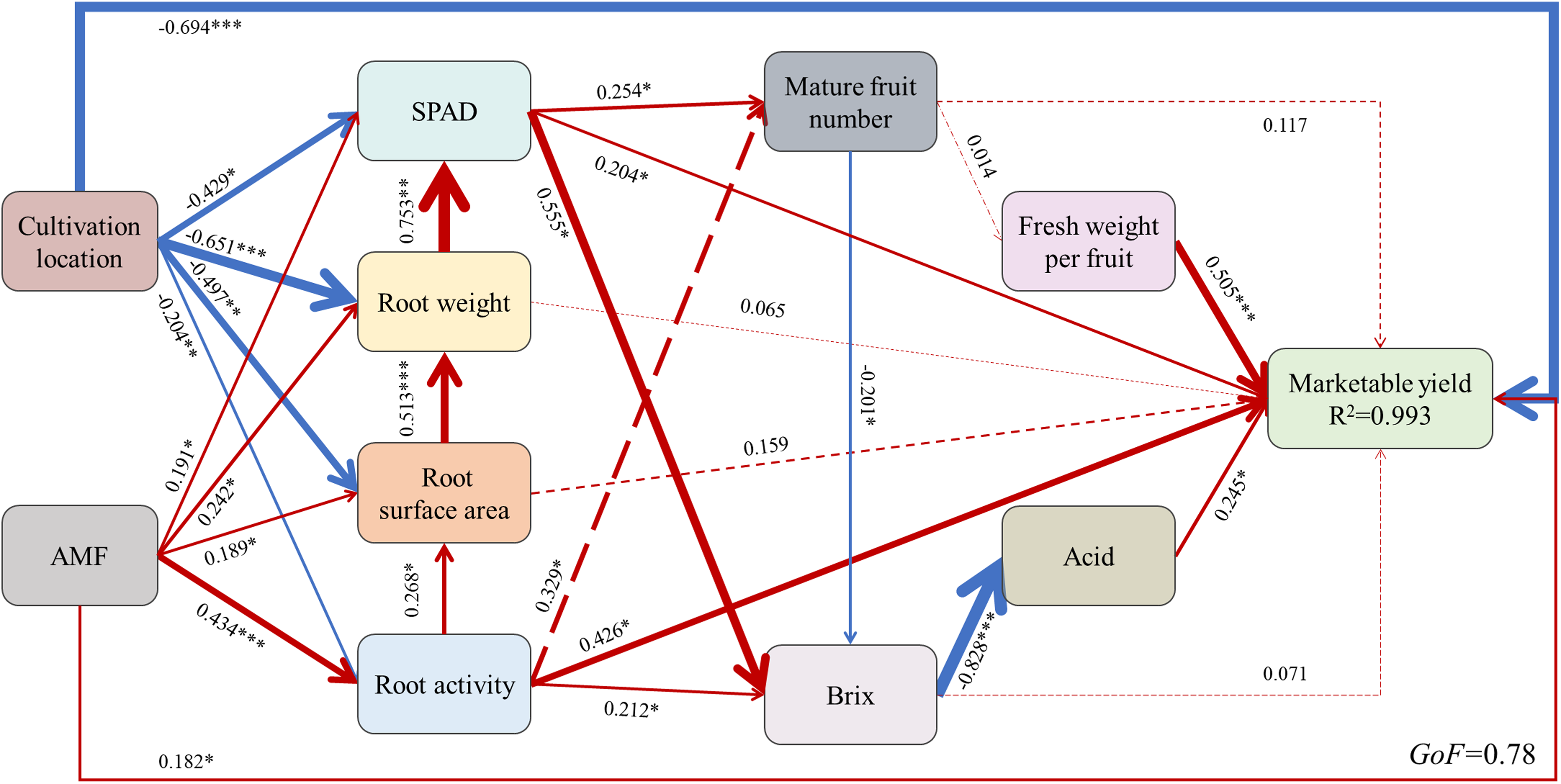
Partial least squares path analysis of the effects of AMF inoculation and cultivation location on marketable strawberry yield. Note: The thickness of the lines indicates the degree of influence, the red and blue lines indicate the positive and negative influence, respectively, and the solid and dashed lines indicate the significant influence, respectively, (P < 0.05) and no significant effect (P > 0.05). *P < 0.05; **P < 0.01; ***P < 0.001.
Discussion
Regulatory effects and mechanisms of AMF on strawberry root traits
The establishment of a mutualistic symbiotic relationship between arbuscular mycorrhizal fungi (AMF) and host plants serves as a crucial biological strategy for im-proving plant mineral nutrition, particularly phosphorus uptake. This study confirms that AMF inoculation significantly promotes strawberry root development, manifested as the simultaneous enhancement of root physiological activity and biomass.31–32 This finding aligns with the conclusions of numerous studies on AMF-promoted root growth in horticultural crops. However, unlike previous research which often focused on the direct effects of AMF on root morphology (e.g., root length, surface area), this study suggests that under specific cultivation systems, the strengthening of root “function” (e.g., enzymatic activity and metabolic intensity) by AMF may be more decisive than mere morphological expansion. This could be because, in relatively nutrient-sufficient cultivation substrates, the ecological function of AMF shifts more from “expanding the absorption range” to “optimizing root physiological status” and “enhancing stress buffering capacity”.33–34 This perspective extends the role of AMF from a simple nutrient bridge to a regulator of overall root physiological health, providing a new basis for understanding its application value in intensive agriculture.
Interaction and implications of spatial heterogeneity in solar greenhouses and AMF
Spatial heterogeneity in environmental conditions within protected agricultural facilities, particularly gradient differences in light and temperature distribution, is a key factor affecting crop uniformity and overall output. This study reveals that in solar greenhouses in northern China during winter, the southern area near the film may be-come a “bottleneck” limiting production potential due to low temperatures, a phenomenon that revises the traditional perception of superior light and temperature conditions in the southern greenhouse section. 35 In this context, while AMF demonstrates a general growth-promoting and yield-increasing effect, its efficacy shows significant spatial dependence: the beneficial effects are more pronounced in the environmentally suitable northern area, whereas the improvement is relatively limited in the southern area under low-temperature stress. This resonates with previous reports on the conditional dependency or environmental thresholds of AMF's stress-resistance (including low-temperature) functions. Research indicates that the symbiotic benefits of AMF are regulated by a combination of host plant photosynthetic capacity, carbon allocation strategy, and soil environment. Under persistent low temperatures, the sup-ply of host photosynthetic assimilates may be constrained, thereby limiting carbon in-vestment into AMF and its feedback benefits. 36 Therefore, AMF technology is not an independent solution that replaces environmental control; the realization of its maxi-mum potential must be integrated with precise management of the facility environment, particularly warming and insulation in low-temperature zones. Future research needs to focus on exploring the specificity of interactions between AMF species/strains and environmental stresses (low temperature, low light), as well as integrated models of synergistic “microbial inoculation - physical environment optimization” technologies.
Correlation mechanisms between root traits and fruit traits
Through path analysis, this study elucidates the cascade effect of “root system enhancement—maintenance of leaf photosynthetic capacity—fruit yield and quality formation” mediated by AMF. This provides a clear physiological explanation for AMF-induced increases in fruit yield: by enhancing the activity and uptake efficiency of the root “source,” AMF ensures the strength and duration of the above-ground photosynthetic “source,” ultimately promoting the establishment and filling of the fruit “sink”. 37 This finding advances AMF research from simple correlations of individual root or fruit metrics to a systemic understanding of carbon and nitrogen flow regulation across the entire “root-leaf-fruit” continuum. Notably, the regulatory pathways through which AMF influences fruit quality (e.g., sugar-to-acid ratio) may be more complex. Some previous studies suggest that AMF can directly or indirectly affect the activity of enzymes related to sugar metabolism and organic acid accumulation in fruits.38–39 The observation in this study that AMF treatment's impact on fruit acidity does not completely synchronize with its effect on sugar content implies that its regulatory mechanisms for different quality components may differ. Furthermore, the weakening of the positive root-fruit correlation in low-temperature stress areas further highlights the profound influence of environmental stress on the allocation of photo-synthetic assimilates and fruit metabolic pathways, which may be a key factor limiting the effectiveness of AMF in improving fruit flavor under adverse conditions.
Research limitations and future directions
Although this study clarifies the positive effects of AMF in the strawberry seed-ling-raising and transplanting system within protected facilities and its modulation by spatial heterogeneity, several areas require further in-depth exploration. Firstly, this study adopted a spatial block design in a single solar greenhouse; although the block effect was statistically controlled to reduce the risk of pseudoreplication, the experimental results were still limited by the single greenhouse environment. Multi-greenhouse and multi-site verification will be carried out in subsequent studies to further confirm the regulatory effect of spatial location on AMF efficacy and improve the external validity of the research results. Secondly, at the mechanistic level, molecular biology and omics technologies are needed to reveal how AMF symbiosis regulates key low-temperature response genes, carbon partitioning signaling pathways, and fruit development-specific metabolic networks in strawberry. Thirdly, at the technological level, it is necessary to screen and verify indigenous or commercial AMF strains with greater potential for stress resistance and efficacy enhancement, and to develop integrated rhizosphere micro-ecological management packages combining AMF with biochar, organic amendments, etc. Finally, at the ap-plication level, precise AMF inoculation technology needs to be integrated into intensive strawberry seedling-raising processes, and intelligent agronomic strategies based on greenhouse sensor networks for “zoned management and on-demand regulation” should be established. Long-term, multi-location large-scale validation is essential to ultimately form replicable and scalable green yield-enhancing technological models, promoting the quality improvement, efficiency enhancement, and sustainable development of the protected strawberry industry.
Conclusion
This study investigated the effects of seedling-stage arbuscular mycorrhizal fungi (AMF) inoculation at different spore concentrations and greenhouse spatial positions on root function and yield formation of Suizhu strawberry in a winter solar greenhouse in Changping District, Beijing. Results showed that AMF inoculation enhanced strawberry root function in a concentration-dependent manner, with the AMF-1440 treatment exhibiting the most significant effect: root activity and root weight were increased by 144.29∼171.41% and 58.17% compared with the control, laying a foundation for plant stress resistance and yield accumulation. Significant spatial heterogeneity was observed in the tested greenhouse, where low-temperature stress in the southern position led to significantly inferior root traits, leaf SPAD values, single fruit weight and marketable yield of strawberry plants relative to the northern position, becoming a key factor causing uneven yield distribution. The yield-improving effect of AMF showed obvious spatial dependency, with more pronounced promotion in the northern position with suitable environmental conditions than in the southern low-temperature position. Partial least squares path modelling (PLS-PM) analysis revealed that AMF was associated with the improvement of strawberry marketable yield by enhancing root activity and maintaining higher leaf SPAD values, thus increasing single fruit weight, forming a physiological pattern of “strengthening roots, stabilizing leaves and increasing fruit weight” under the experimental conditions. In addition, AMF had position-dependent regulatory effects on strawberry fruit quality: it significantly increased the sugar-acid ratio in the northern and middle positions, but had a suppressive effect on this index in the southern position, implying low-temperature stress may interfere with carbon metabolism allocation related to fruit quality. In summary, under the cultivation conditions of winter solar greenhouses in Changping District, Beijing, seedling-stage AMF inoculation is a potential biological measure to enhance Suizhu strawberry root function and improve marketable yield, but its efficacy is severely constrained by greenhouse spatial heterogeneity, especially low-temperature stress in the southern position. A tentative technical approach for balanced yield increase in the local tested system is the combination of high-concentration AMF inoculation at the seedling stage and enhanced insulation and temperature regulation in the southern greenhouse position after transplanting. The results provide preliminary experimental data and theoretical references for the integration of AMF application and zonal environmental management in northern solar greenhouse strawberry cultivation, and have certain guiding significance for the green and efficient development of the local strawberry industry.
Footnotes
Acknowledgments
Grateful acknowledgment is made to Beijing Tianchuang Jinnong Technology Co., Ltd for providing greenhouse environmental data, to Beijing Zhongnong Tuba Biotechnology Research Institute for supplying Arbuscular Mycorrhizal Fungi (AMF), and to Wande Strawberry Manor in Changping District, Beijing for offering greenhouses and experimental strawberry plants.

Author contributions
Data curation, Hongrun Liu, Tianqun Wang and Yu Zhou; Data analysis, Hongrun Liu and Tianqun Wang; Data interpretation, Hongrun Liu; Investigation, Hongrun Liu, Tianqun Wang, Yu Zhou, Qinxiang Meng and Fuli Wang; Figure preparation, Hongrun Liu, Xiaofei Lu and Ting Li; Literature search, Hongrun Liu and Ning Zhu; Writing—Original draft, Hongrun Liu, Tianqun Wang and Yu Zhou; Writing—review and editing, Fuli Wang, Ning Zhu, Xiaofei Lu, Jing Zong and Ting Li; Supervision, Ning Zhu, Jing Zong and Ting Li; Resources, Ning Zhu, and Ting Li; Conceptualization, Qinxiang Meng and Ting Li; Methodology, Hongrun Liu and Ting Li; Funding acquisition, Ting Li. All authors have read and agreed to the published version of the manuscript. All authors read and approved the final version of the manuscript.
Funding
The authors disclosed receipt of the following financial support for the research, authorship, and/or publication of this article: This work was supported by the Beijing Innovation Consortium of Special Crops Research System (BAIC04-2025).
Declaration of conflicting interests
The authors declared no potential conflicts of interest with respect to the research, authorship, and/or publication of this article.
Data availability statement
The original contributions presented in this study are included in the article. Further inquiries can be directed to the corresponding authors.