







Abstract
Remineralizers are inputs of mineral origin that can supply nutrients, improve fruit quality, and increase the productive potential of strawberry plants. In this study, our objective was tested the use of substrate manufactured with the remineralizer olivine melilitite associated with bacteria of the genus Bacillus spp. in hydroponic strawberry cultivation. We evaluated the nutritional status of the plants, the phytochemical characteristics of the strawberries, and the productivity of the plants. The remineralizer associated with Bacillus spp. led to higher levels of P (74.50 mg mg−1), K (8.21 g kg−1), Ca (35.06 mg kg−1), Mn (5.00 mg kg−1), Fe (4.81 mg kg−1), and Si (6.81 g kg−1) in the strawberry plants and fruits. The highest productivity was observed with the use of the remineralizer associated with Bacillus spp. (730.15 g plant−1), a result strongly correlated with the increase in P (R2=0.78), K (R2=0.88), and Si (R2=0.93) levels in the plants. Furthermore, the combined use of the remineralizer and Bacillus spp. resulted in strawberries with higher sugar content (7.30%), phenolic compounds (40.85 mg 100 g−1), and vitamin C (35.89 mg 100 g−1). We conclude that the olivine melilitite remineralizer and inoculation improve the nutritional status of the plants, increase strawberry productivity, and enhance the phytochemical characteristics of the strawberries.
This is a visual representation of the abstract.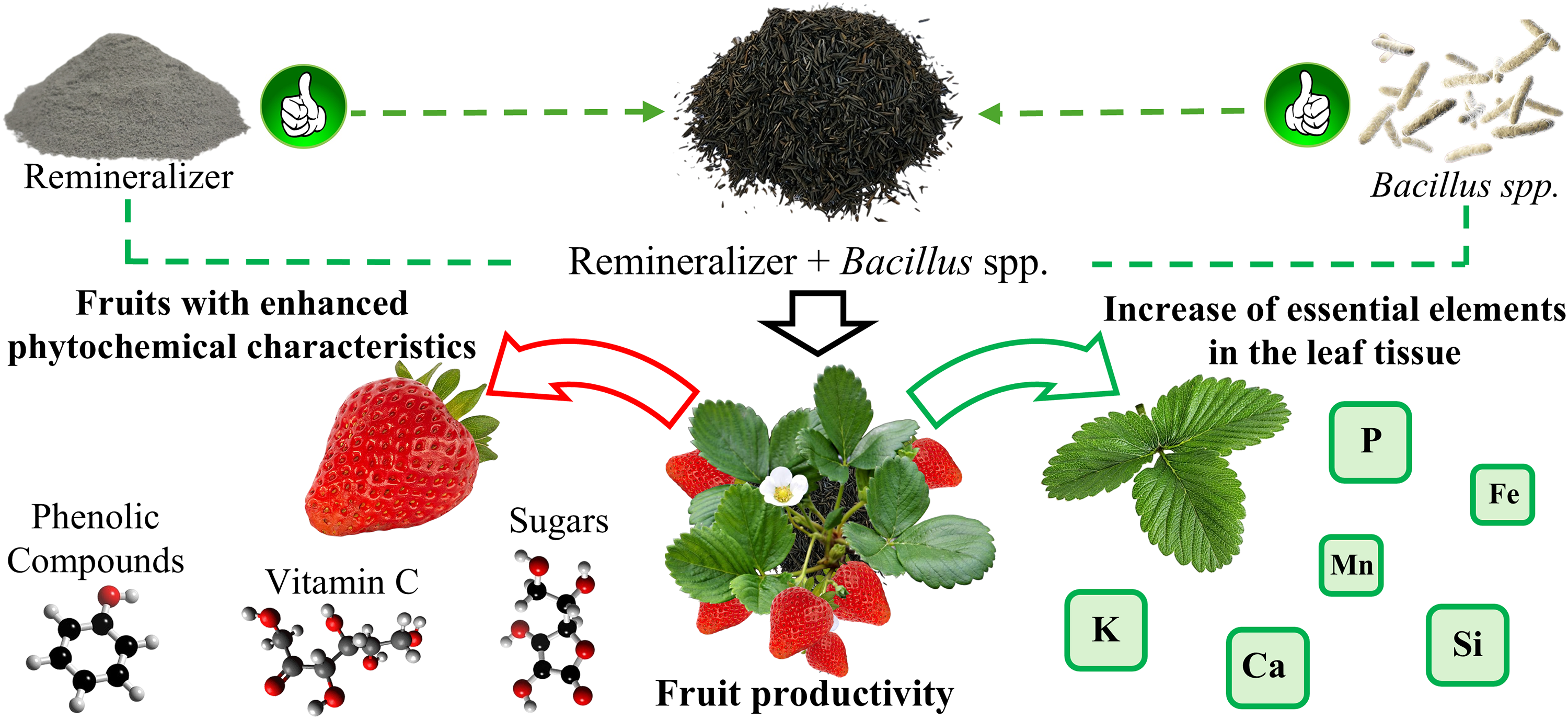
Introduction
In Brazil, the cultivation of the strawberry plant (Fragaria×ananassa sp.) is predominantly concentrated in conventional agricultural systems that utilize mulching directly on the soil. 1 Nevertheless, over the past few decades, soilless cultivation in substrates using hydroponic systems has gained significant prominence. This is attributed to its ease of management, potential for higher yields, and reduced environmental footprint. 2 The substrates employed for growing strawberries can encompass a wide range of compositions, 3 with the primary components utilized including rice hulls (Oryza sativa L.), pine bark (Pinus pinea L.), coconut coir (the fiber from the pericarp of Cocos nucifera L.), fertile peat, ashes, humus, and vermiculite being the main components. 4
The great challenge of the hydroponic production system is to use inputs that are less aggressive to the plants, 5 since soluble chemical fertilizers are the main sources of nutrients for this production system. 6 Remineralizers are agricultural inputs of mineral origin 7 and show potential as an alternative nutrient source due to containing essential elements for plants in their mineral composition. 8 This input shows good results based on mineral weathering, promoting long-term soil rejuvenation 9 through chemical, 10 physical, 11 and biological 12 alterations.
We believe remineralizers hold potential for utilization within the substrate manufacturing process, with the objective of enhancing the physicochemical characteristics of strawberries, nutritional status of plants and productivity. Research by Chiomento et al. 13 indicates that using basalt powder in strawberry cultivation affects plant yield potential. Studies indicate several benefits related to the application of remineralizers; however, the main obstacle concerns the solubilization of nutrients locked in the structural form of rocks. 14
Weathering is a complex, heterogeneous, and gradual process, varying with the mineral composition of the rock. 15 However, this process can be accelerated by enhanced weathering techniques involving rock crushing to increase particle surface area and the use of biological action on the minerals. 14 Microbial communities are geologically active, colonizing silicates to extract elements of interest, 16 releasing extracellular polymeric substances, 17 forming biofilms, and causing delamination. 18 The Bacillus subtilis strain BRM2084 and the Bacillus megaterium strain BRM119 have been identified as efficient agents in the solubilization of nutrients from mineral sources. 10 Therefore, the association of Bacillus spp. bacteria through substrate inoculation can optimize the action of olivine melilitite powder.
We hypothesize that inoculation enhances the remineralizer's action, resulting in higher productivity and fruits with improved physicochemical characteristics. The objective of this study was to evaluate the effect of using olivine melilitite powder associated with Bacillus spp. bacteria on plant and fruit characteristics of strawberry plants in the post-harvest period.
Materials and methods
Experimental site and cultivation techniques
The experiment was set up at an agricultural production unit in the city of Erval Grande, Rio Grande do Sul, Brazil (coordinates: 27° 23′ 24.49″ S and 52° 34′ 10.85″ W). Cultivation was conducted in a greenhouse environment using a hydroponic system, where the slabs containing the substrate were suspended 80 cm above the ground. In the cultivation environment there was no control of environmental factors, and the plants were cultivated with photoperiod and natural temperature of the humid subtropical climate (Cfa). 19 The moisture of the substrate was controlled manually through the drip irrigation system, being close to 60% of the total water retention capacity.
The chosen cultivar was San Andreas, of Argentinian origin, which was transplanted in June 2021 with a spacing of 20 cm between plants and a population of 9 plants per slab distributed in benches with double rows. The duration of the San Andreas cultivar was approximately 2 years after transplanting, with a productive period of 18 months. Crop nutrition was carried out with nutrient solution applied to the substrate via drip fertigation daily, at a dose equivalent to 120 mL per plant. The composition of the nutrient solution was based on the nutritional requirements of strawberry cultivation, 20 as shown in Table 1.
Composition of the nutrient solution applied to the substrate for hydroponic cultivation of strawberry plants.
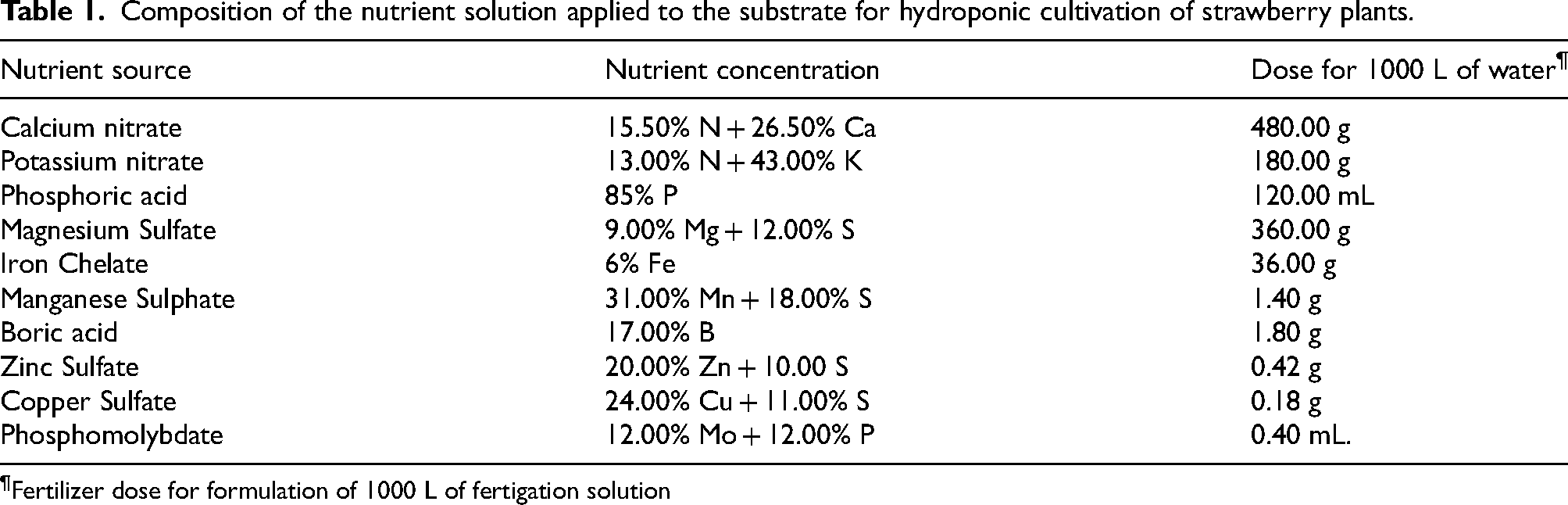
Fertilizer dose for formulation of 1000 L of fertigation solution
The substrate was manufactured with 60% fertile peat, 20% charred rice hulls, 15% raw rice hulls, and 5% coconut coir fiber. The olivine melilitite has in its mineralogical composition 40% of Melilite, 30% of Phlogopite, 15% of Pyroxenes, 10% of Olivine and 5% of opaque minerals. 12 In the chemical composition, the rock has 37.5% of Silicon Oxide (SiO2), 17.4% of Magnesium Oxide (MgO), 14.8% of Calcium Oxide (CaO), 10.5% of Iron Oxide (Fe2O3), 2.7% of Potassium Oxide (K2O) and 1.2% of Phosphorus Pentoxide (P2O5). 12 The remineralizer was manufactured by mechanical grinding in a ball mill of the source rock, sieved through a 0.35 mm mesh to meet the specifications of Normative Instruction No. 05/2016 7 for the Filler category, and added to the mixture at a dose equivalent to 40 kg m3 of substrate.
The mixture components were energetically homogenized, and the resulting volume underwent a solarization process for 30 days, being subsequently packaged in slabs with an approximate volume of 50 L. The inoculant used (Bioma Phos) has in its composition the BRM 2084 strain of the bacterium Bacillus subtilis and the BRM 119 strain of Bacillus megaterium (4 × 10⁹ CFU mL−1). The application of the inoculant to the substrate of interest occurred via the drip irrigation system, at a dose of 200 mL for every 100 L of water every 90 days throughout the evaluation period (two years).
Treatments and experimental setup
A randomized block design (RBD) with four replicates, represented by 15 slabs of 1 m length totaling 2160 plants, was chosen. The treatments were: C, substrate without remineralizer (control); CB, substrate without remineralizer + inoculation with Bacillus subtilis and Bacillus megaterium; OM, substrate with remineralizer (40 kg m3); OMB, substrate with remineralizer (40 kg m3) + inoculation with Bacillus subtilis and Bacillus megaterium. The experimental period comprised two years (the 2021/2022 and 2022/2023) growing seasons, with samplings carried out through a systematic plan considering 10 slabs (90 plants) per plot, as illustrated in Figure 1.
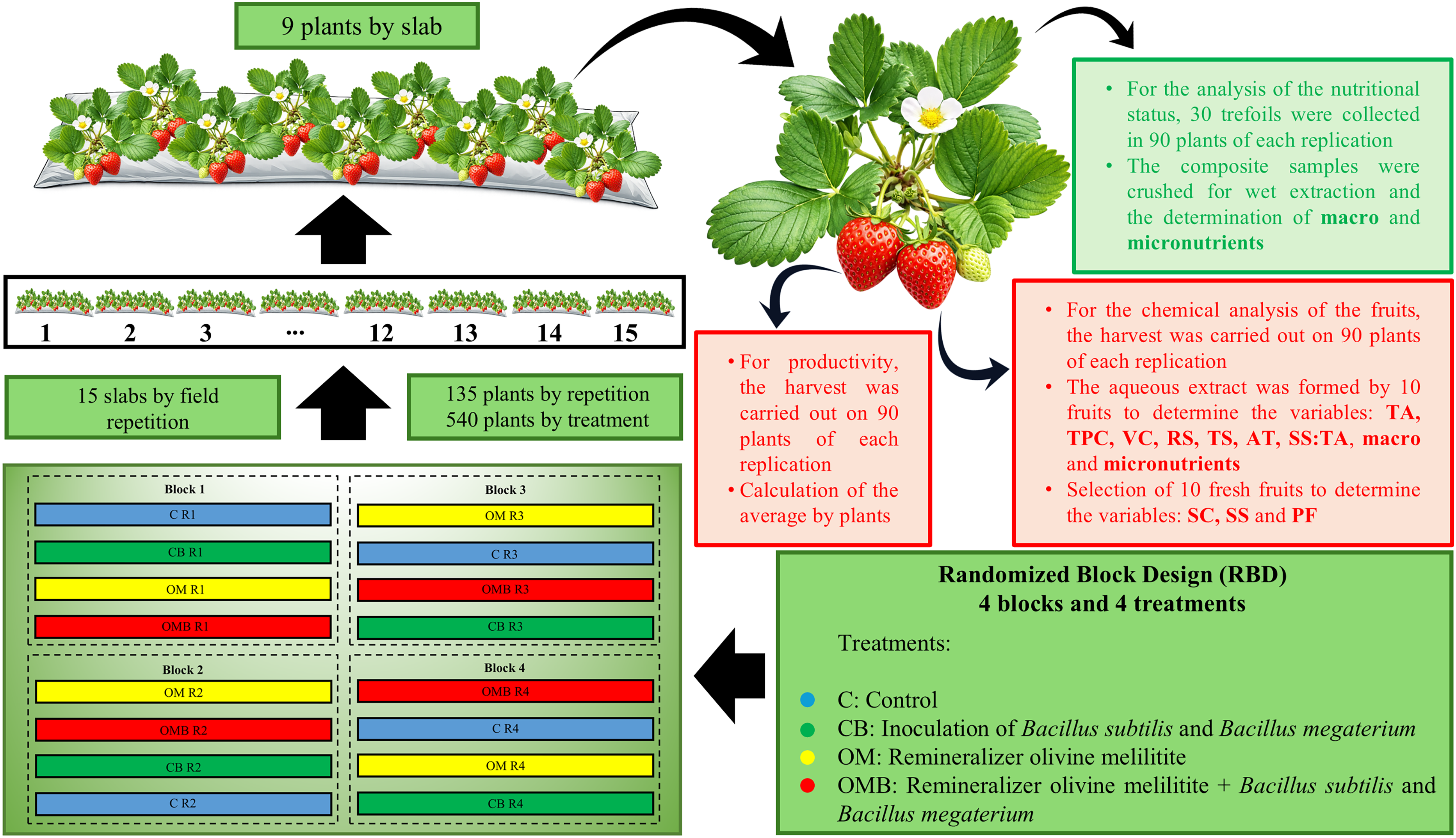
Illustration of the experimental design, collection of plant tissue for nutrient analysis, collection of fruits for chemical analysis and harvesting to determine yield.
Physicochemical attributes of the substrate
Electrical conductivity (EC) was measured using a benchtop conductivity meter as described by Guerrini and Trigueiro. 21 The hydrogen potential (pH) was measured by the aqueous method using a potentiometer with combined electrodes. 22 The dry bulk density (DD) of the samples was determined according to Normative Instruction No. 31/2008. 23 Particle density (PD) was determined as proposed by Miner. 24 Total porosity (TP) was determined according to ECN 13041, 25 considering apparent density values with the dry sample and particle density. The particle size distribution of the substrate was determined according to Miner, 24 with the grammages used for the determination of the percentage based on the sample mass. All physicochemical attributes of the substrate were evaluated with three analytical repetitions.
Nutrient content in plant tissue and productivity
Leaf collection was carried out at the end of the evaluation period, selecting fully developed trifoliate leaves, according to the methodology proposed by Brandão Filho et al. 26 The composite samples were dehydrated in a forced-air oven at 65 °C and ground for extraction.
The extraction of elements from the leaves was performed according to Silva et al. 27 Potassium (K) readings were taken using a flame photometer, with a two-point calibration using standards (0 and 100 ppm). The elements copper (Cu: y = 1.0023x-0.0049, R2 = 0.999), zinc (Zn: y = 0.09384x + 0.051, R2 = 0.998), iron (Fe: y = 0.8717x-0.2394, R2 = 0.995), manganese (Mn: y = 0.986x + 0.0288, R2 = 0.999), calcium (Ca: y = 0.9521x + 0.3124, R2 = 0.994), and magnesium (Mg: y = 0.7717x + 0.1854, R2 = 0.990) were determined using a flame atomic absorption spectrometer. The levels of silicon (Si: y = 0.2917x-0.1703, R2 = 0.992) and phosphorus (P: y = 0.0906x-0.048, R2 = 0.999) were quantified using a UV-Vis spectrophotometer. All nutrients in plants tissue were evaluated with three analytical repetitions.
Fruit harvesting for productivity calculation began 100 days after seedling transplantation, during the periods of August 2022 to March 2023 and August 2023 to March 2024, in 10 pre-established slabs for each treatment in both periods. Productivity was determined by summing the fruit weights at the end of each period and dividing by the number of plants in each replicate (4 repetitions) to obtain the total fruit weight per plant (g plant−1).
Physicochemical and phytochemical characteristics of the fruits
The mature berry stage was adopted as the fruit harvesting point, according to a methodology adapted from Hussain et al. 28 Fresh strawberries were harvested, sanitized, and freeze-dried for mineral analyses; the remaining analyses were performed with fresh fruits.
The levels of soluble solids (SS) were determined from a composite sample of 5 fresh fruits from each plant, followed by reading on a refractometer, with the results expressed in °Brix. Total sugars (TS) were determined by spectrophotometry, according to the methodology described by Dubois et al. 29 Calibration curves were prepared from standard solutions of fructose (y = 16.016x-0.0404, R2 = 0.999), glucose (y = 9.4131x + 0.0156, R2 = 0.996), and sucrose (y = 10.115x + 0.0298, R2 = 0.997), with serial dilutions between 0 g L−1 and 1 g L−1, and the results expressed as a percentage.
Reducing sugars (RS) were determined from an adaptation of Vasconcelos et al., 30 where quantification was performed by the DNS (3,5-dinitrosalicylic acid) method. Absorbance reading was taken using a UV-Vis spectrophotometer with a calibration curve based on a standard glucose solution (y = 9.4131x + 0.0156, R2 = 0.996), under serial dilutions between 0 g and 1 g L−1. The sugar concentration was expressed as a percentage.
Titratable acidity (TA) was determined by potentiometric titration, according to the Instituto Adolfo Lutz, 31 for highly colored juices. The fruits were ground, the juices collected, and the results were calculated and expressed as a percentage of citric acid. The soluble solids: titratable acidity ratio (SS:TA) is widely used as an indication of the fruit's degree of maturation and is based on the calculation of the °Brix to acidity ratio expressed as some organic acid, 32 in this case citric acid.
Five fresh strawberries were randomly selected from each treatment for surface color (SC) analysis, and two readings were taken on opposite sides of the fruits, specifically in the equatorial region, using a colorimeter. The a* and b* values were used to calculate the HUE angle (H°), in which the results were expressed. For pulp firmness (PF), 10 fruits were randomly selected from each treatment and subjected to analysis using a penetrometer. Two measurements were performed in the equatorial region of each fruit, and the results were expressed in Newtons (N).
The quantification of total phenolic compounds (TPC) was performed using the Folin-Ciocalteau method described by Singleton and Rossi, 33 and modified by Georgé et al. 26 Gallic acid was used as the standard for the calibration curve (y = 9.3955 + 0.011, R2 = 0.999), which was constructed at concentrations between 0 and 1 g L−1, with the results expressed in mg per 100 mL of juice. For the determination of vitamin C (VC), the method used was that of Hernández et al. 34 The calibration curve was constructed with ascorbic acid at concentrations between 0 and 40 mg L−1 (y = 0.0049x-0.0213, R2 = 0.994), with the results expressed in mg per 100 mL of juice. The determination of the elements P, K, Ca, Mg, Si, Cu, Zn, Fe, and Mn was performed using the same methods and standard curves described in section 2.4, according to Silva et al. 27 All physicochemical characteristics of the fruits were evaluated with three analytical repetitions.
Data processing and statistical analysis
The resulting dataset from all the analyses was tested for normality using the Shapiro-Wilk test and for homogeneity of variances using Levene's test. Subsequently, an analysis of variance (ANOVA) was performed, and when significant differences were detected, the means were compared using Tukey's test at a 5% probability level (P ≤ 0.05). The results were presented as mean ± standard deviation or error bars.
Multivariate exploration was conducted by initially identifying multicollinearity among the tested variables using the Variance Inflation Factor and applying Forward Selection operations to identify significant variables, followed by multiple linear regression (MLR) to verify the influence of plant and substrate variables on productivity. The correlation matrix between fruit variables was obtained following Pearson's principles at a 5% probability level (P ≤ 0.05), with the relevance of the coefficients represented through heatmaps.
Results
Nutrient content in plant tissue and productivity
The analysis of variance was significant for the levels of P, Si, K, Ca, Mn, and Fe found in the strawberry plant tissue at the end of the experiment. On the other hand, the levels of Mg, Cu, and Zn were not influenced by the treatments. Table 2 shows that there was a considerable increase in the levels of P and Si in the strawberry leaves for the OM and OMB treatments compared to the C and CB treatments. The levels of K and Ca in the leaf tissue of the strawberry plants were higher in the CB, OM, and OMB treatments, with the lowest average found in C.
Means ± standard deviation (SD) of phosphorus (P), silicon (Si), potassium (K), calcium (Ca), magnesium (Mg), copper (Cu), zinc (Zn), manganese (Mn) and iron (Fe) content in the leaf tissue of the strawberry plant.
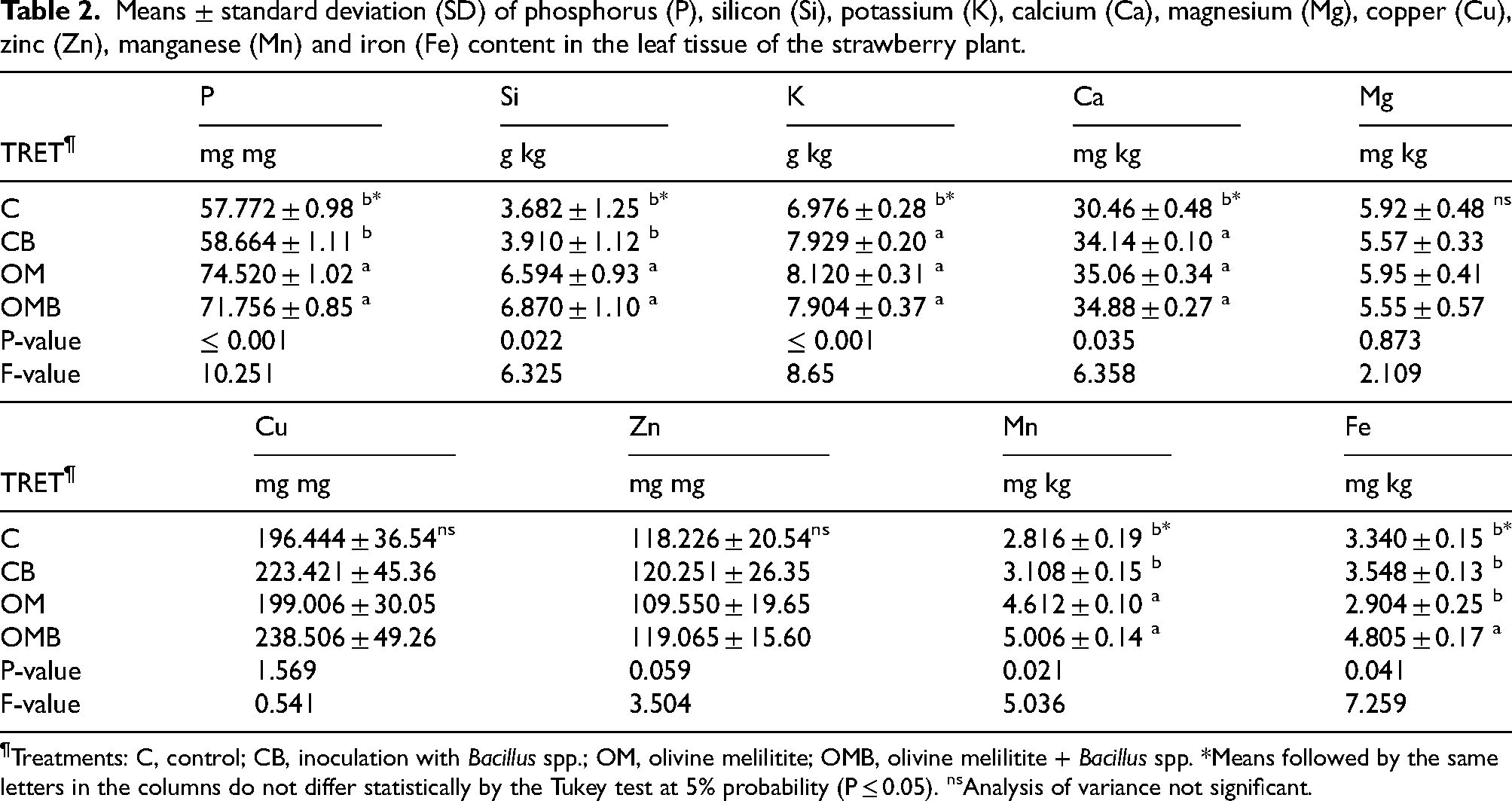
Treatments: C, control; CB, inoculation with Bacillus spp.; OM, olivine melilitite; OMB, olivine melilitite + Bacillus spp. *Means followed by the same letters in the columns do not differ statistically by the Tukey test at 5% probability (P ≤ 0.05). nsAnalysis of variance not significant.
Higher Mn levels were observed in the OM and OMB treatments, and the lowest values found in C and CB. The Fe content was highest in the treatment with olivine melilitite + Bacillus subtilis and Bacillus megaterium (OMB), with no significant difference between treatments C, CB, and OM for this element (Table 2).
Statistically significant differences (P = 0.003; F = 7.341) were observed among the treatments for the productivity variable across the two evaluation cultivations (Figure 2). In the 2021/2022 cultivation (Figure 2A), the highest averages were found in the CB and OMB treatments, while the lowest productivities occurred in the C and OM treatments. We highlight that in the first cultivation, inoculation with Bacillus subtilis and Bacillus megaterium enabled an increase in strawberry productivity of up to 75 g per plant, either in isolation (CB) or associated with olivine melilitite powder (OMB).
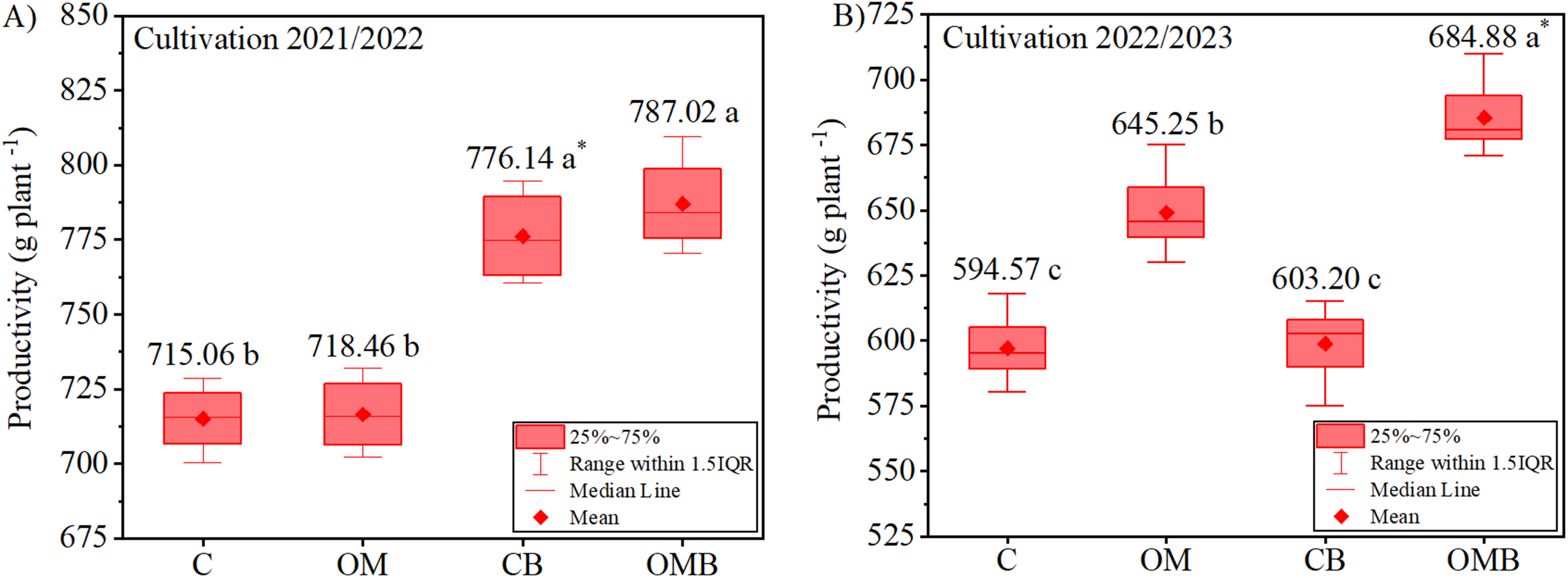
Fruit productivity of San Andreas cultivar in a hydroponic system with reconditioned substrate in control (C), inoculation with Bacillus spp. (CB), olivine melilitite (OM), olivine melilitite + Bacillus spp. (OMB) in 2021/2022 and 2022/2023 cultivation. *Means followed by the same letters in the box do not differ statistically by the Tukey test at 5% probability (P ≤ 0.05).
In the 2022/2023 cultivation (Figure 2B), the highest productivity was observed in the OMB treatment, which was statistically superior to OM. The association of olivine melilitite with bacteria of the genus Bacillus spp. (OMB) promoted increases of approximately 40 g per plant when compared to the use of the remineralizer (OM) alone, and up to 90 g per plant when compared to the control (C).
Physicochemical and phytochemical characteristics of the fruits
The physicochemical and phytochemical characteristics of the strawberry plants were affected by the research treatments. We observed statistically significant differences among the treatments for P, Ca, K, Si, Mn, and Fe in the strawberry pulp. On the other hand, the levels of Mg, Cu, and Zn did not show significance, indicating they were not affected by the treatments.
The data presented in Table 3 show that the levels of P and Ca were higher in the CB, OM, and OMB treatments, while the lowest averages were found in C. The fruits grown in reconditioned substrate with olivine melilitite powder (OM) and the association of this input with inoculation (OMB) showed the highest contents of K and Si. In Table 3, higher Mn levels are observed in the OM and OMB treatments, while the Fe content was higher in the OMB treatment, with no statistically significant differences among the C, CB, and OM treatments for this element.
Means ± standard deviation (SD) of phosphorus (P), calcium (Ca), potassium (K), silicon (Si), magnesium (Mg), manganese (Mn), iron (Fe), copper (Cu) and zinc (Zn) content in strawberries fruits.
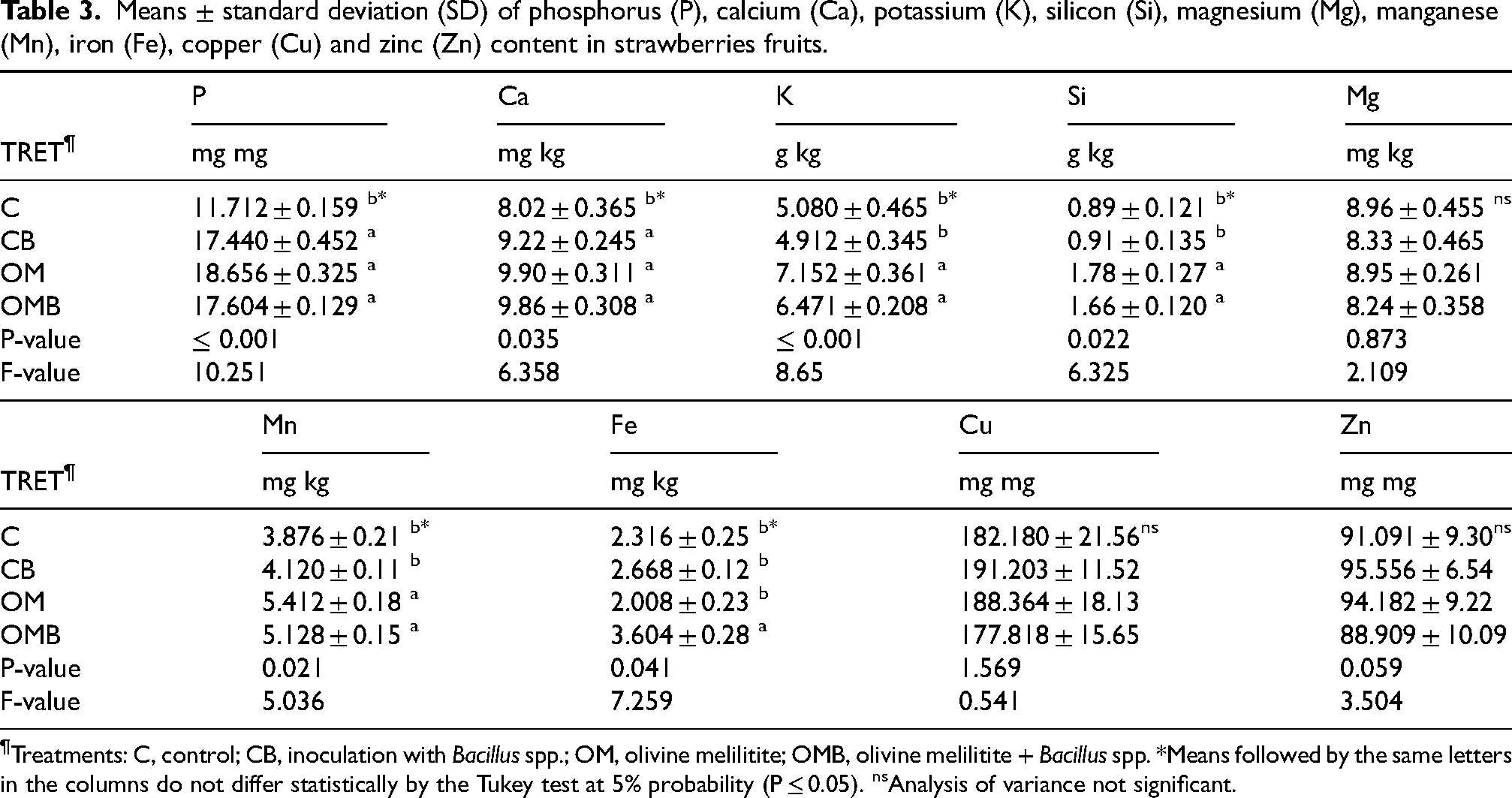
Treatments: C, control; CB, inoculation with Bacillus spp.; OM, olivine melilitite; OMB, olivine melilitite + Bacillus spp. *Means followed by the same letters in the columns do not differ statistically by the Tukey test at 5% probability (P ≤ 0.05). nsAnalysis of variance not significant.
Statistically significant differences were found among the treatments for the variables SC, PF, TA, SS, and the SS:TA ratio. Table 4 shows that the SS levels and the SS:TA ratio were higher in the fruits from the treatments that used only inoculation with Bacillus spp. (CB) and associated with olivine melilitite (OMB). Furthermore, the SS levels and the SS:TA ratio were higher in the fruits produced in the OM treatment when compared to C, which presented the lowest value.
Means ± standard deviation (SD) of soluble solids (SS), soluble solids to titratable acidity ratio (TS:TA), titratable acidity (TA), surface color (SC) and pulp firmness (PF) concentration of reducing sugars (RS), total sugars (TS), total phenolic compounds (TPC) and vitamin C (VC) in strawberry fruits.
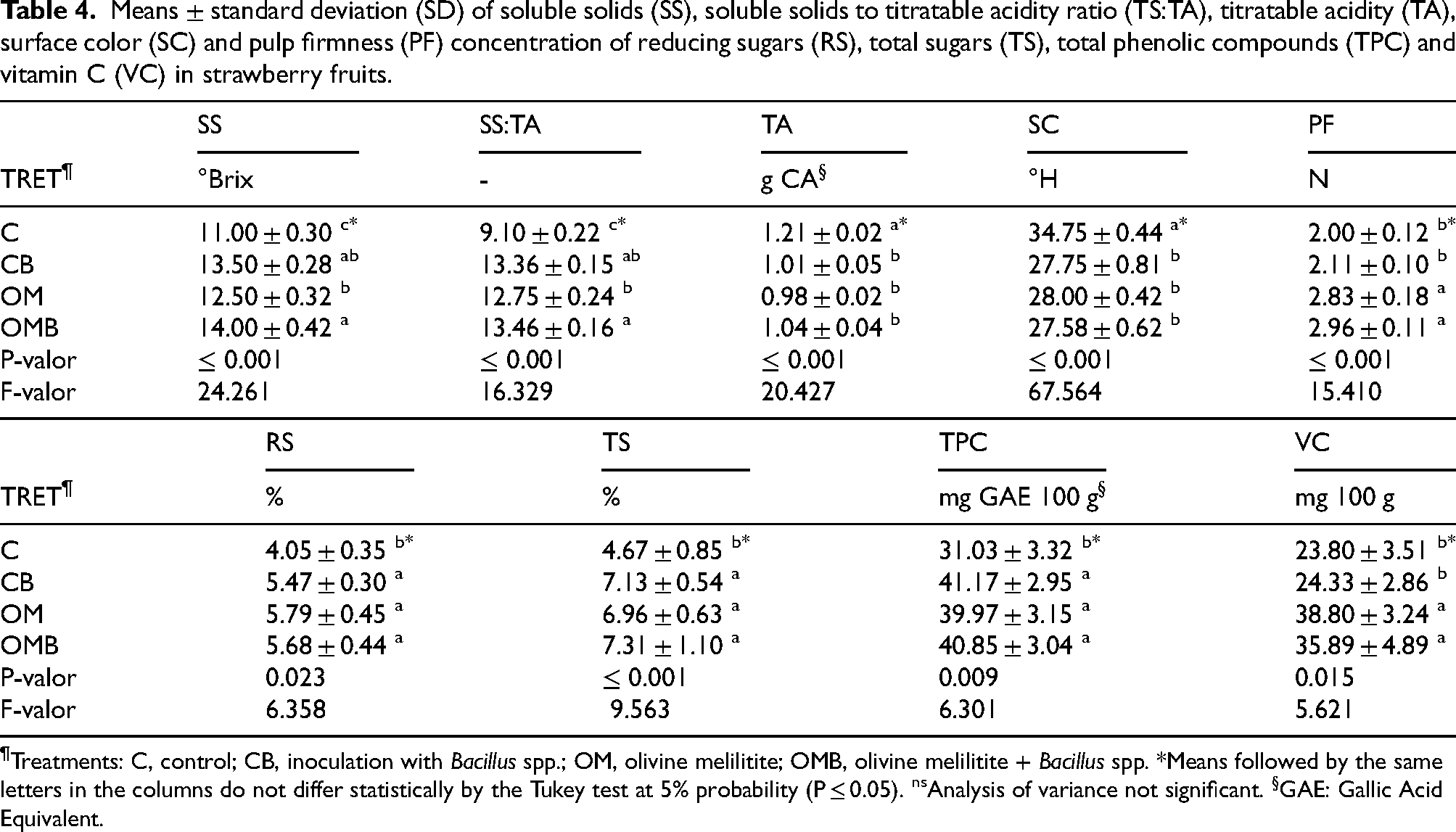
Treatments: C, control; CB, inoculation with Bacillus spp.; OM, olivine melilitite; OMB, olivine melilitite + Bacillus spp. *Means followed by the same letters in the columns do not differ statistically by the Tukey test at 5% probability (P ≤ 0.05). nsAnalysis of variance not significant. §GAE: Gallic Acid Equivalent.
The fruits produced in C, OM, and OMB showed higher levels of TA and a surface color close to 35 °H. On the other hand, strawberry cultivation in the substrate of the CB, OM, and OMB treatments produced fruits with lower acidity and a color close to 28 °H. Furthermore, the fruits produced in reconditioned substrate with olivine melilitite powder showed greater mechanical resistance to penetration, conferring higher PF values to the OM and OMB treatments.
In addition, Table 4 presents the contents of RS, TS, TPC, and VC in the strawberry fruits. The highest levels of RS, TS, and TPC occurred in fruits from CB, OM, and OMB, with the lowest averages found in fruits from the control. The fruits from the OM and OMB treatments showed higher vitamin C contents, with the lowest averages observed in the C and CB treatments.
Correlation and multiple regression
The Pearson correlation models showed significance (P = 0.021; F = 38.94) among the fruit variables P, K, Si, Mn, TA, PF, SC, RS, TS, and TPC. Figure 3 shows the coefficients of determination, and their relevance is represented by a heatmap, where red indicates negative correlations and blue indicates positive correlations between the variables.
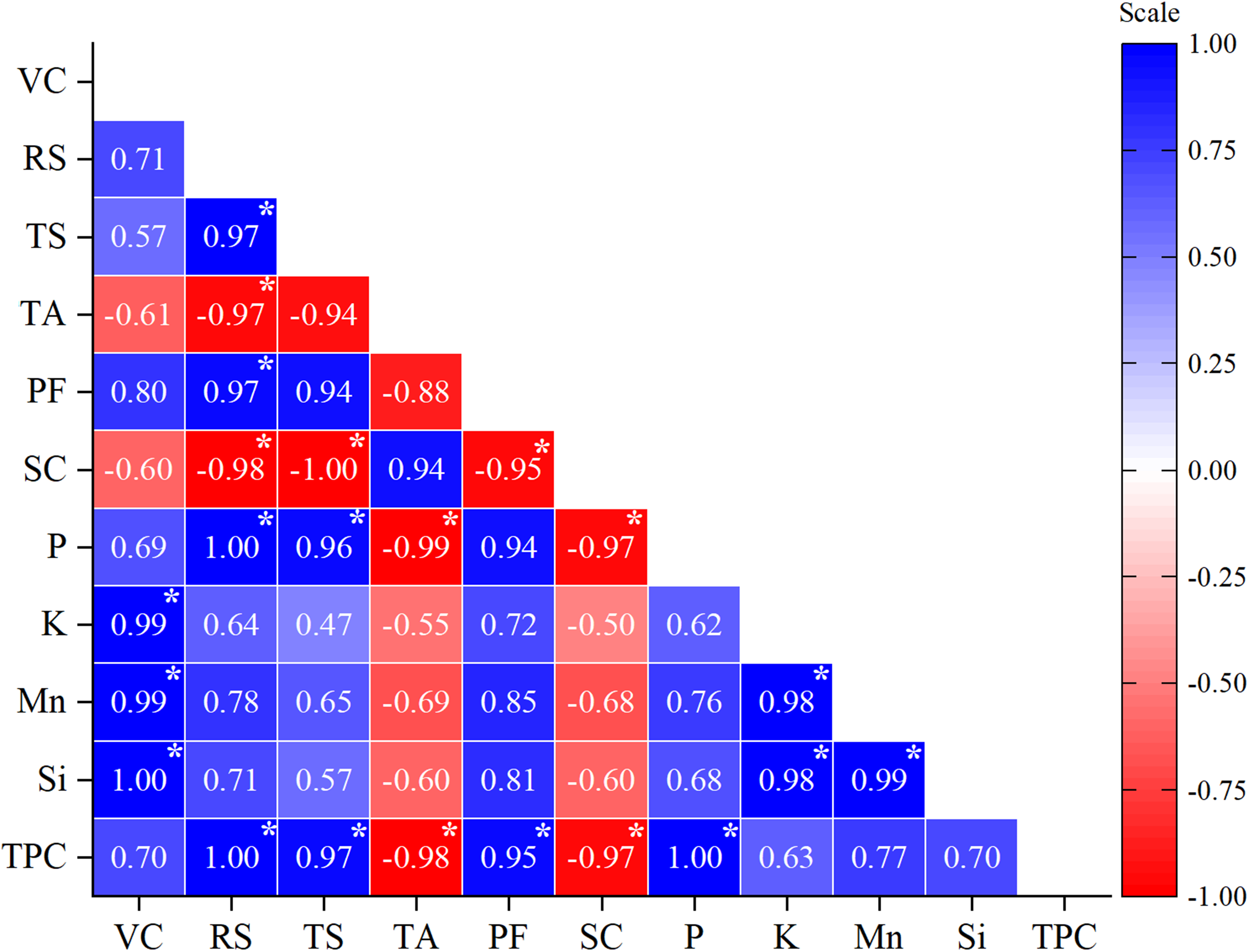
Heatmap with Pearson correlation coefficients among the variables phosphorus (P), potassium (K), manganese (Mn), silicon (Si), titratable acidity (TA), pulp firmness (PF), surface color (SC), vitamin C (VC), total phenolic compounds (TPC), reducing sugars (RS), total sugars (TS) in strawberry fruits. *Correlation is significative by Pearson's principles with a 95% confidence interval (P ≤ 0.05).
The heatmap in Figure 3 reveals positive correlations of Vitamin C with the elements K (R2 = 0.99), Mn (R2 = 0.99), and Si (R2 = 1.00). The RS content showed positive relationships with TS (R2 = 0.97), PF (R2 = 0.97), P (R2 = 1.00), and TPC (R2 = 1.00); however, there was a negative correlation with TA (R2 = −0.97) and SC (R2 = −0.98). The TS variable showed positive relationships with P (R2 = 0.96) and TPC (R2 = 0.97), with a negative correlation with SC (R2 = −1.00).
The correlation of TA with P (R2 = −0.99) and TPC (R2 = −0.98) was negative, as was the correlation between the variables PF and SC (R2 = −0.95). Negative relationships of SC with P (R2 = −0.97) and TPC (R2 = −0.97) were also observed for the fruit variables. From another perspective, Figure 4 reveals that the multiple linear regression model of plant variables on productivity was significant (P = 0.003; F = 75.05) with an adjusted coefficient of determination R2 = 0.87, where the variables represented by the color blue indicate positive effects, and the variables in red indicate negative effects.
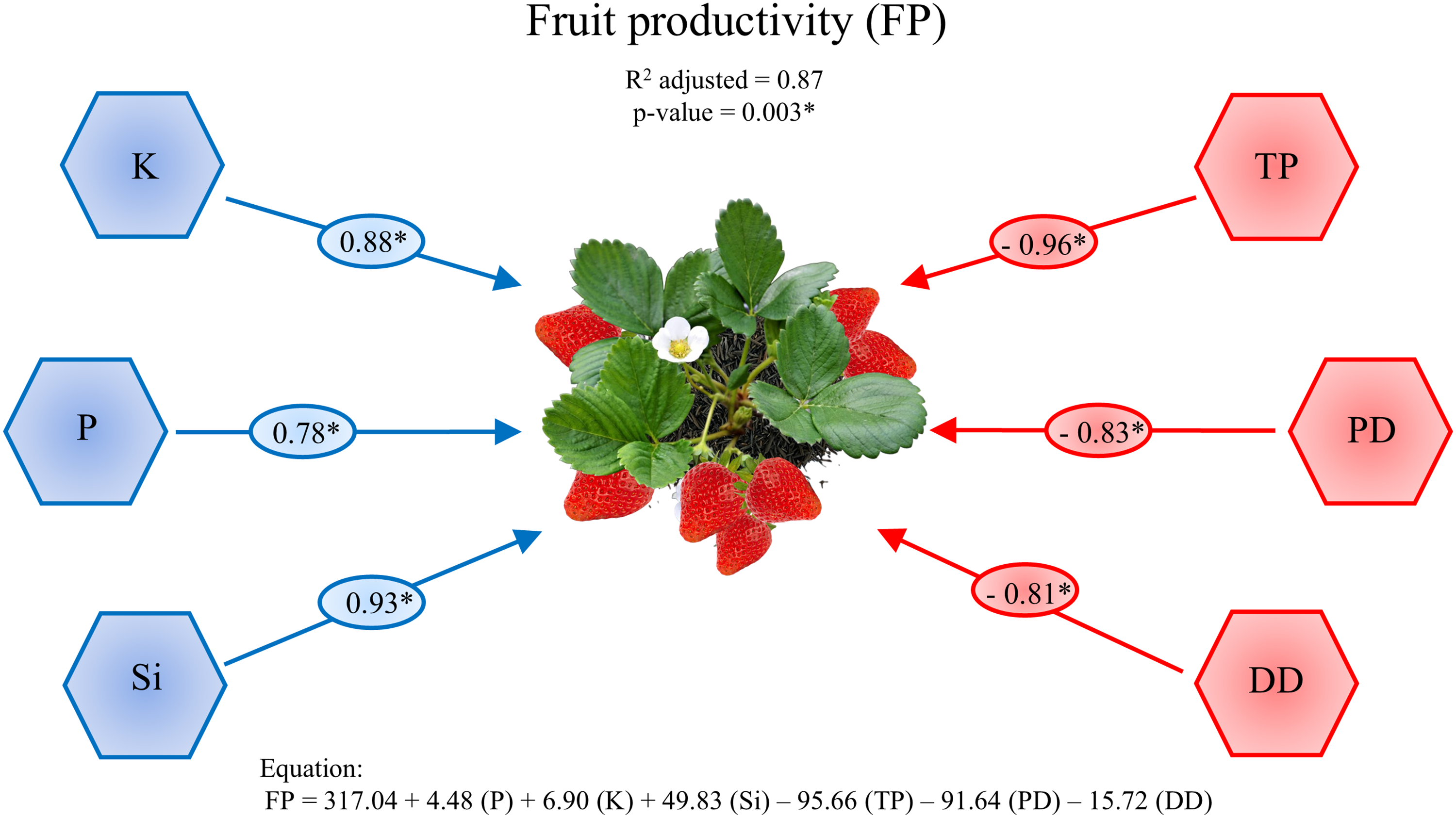
Representative scheme of the multiple linear regression model with the independent variables dry density (DD), particle density (PD), total porosity (TP) of the substrate, phosphorus (P), potassium (K) and silicon (Si) contents of leaf tissue on the dependent variable productivity (Prod). *Correlation significative by Pearson's principles (P < .005).
We observed (Figure 4) that the levels of P, K, and Si in the leaf tissue show a positive relationship with strawberry productivity, with Si being the element with the greatest individual contribution to the model (R2 = 0.93), followed by K (R2 = 0.88) and P (R2 = 0.78). On the other hand, the physical characteristics of the substrate, such as TP, PD, and DD, showed a negative relationship with crop productivity, with the greatest individual contribution observed for TP (R2 = −0.96), followed by PD (R2 = −0.83) and DD (R2 = −0.81).
Discussion
The use of olivine melilitite remineralizer and inoculation with Bacillus ssp. bacteria in substrate reconditioning enabled significant increases in strawberry productivity. Inoculation led to productivity gains in the first year of cultivation; however, the multiple regression model (Figure 4) showed that physical alterations (supplementary material 1) observed in the substrate of the CB treatment may have limited productivity in the absence of the remineralizer. Considering that substrate porosity is a limiting factor for strawberry root system development and affects production, 14 the low productivity of CB in the second year may be related to the reduction in TP.
We highlight that when the remineralizer was associated with inoculation with Bacillus spp. bacteria (OMB), the productivity increases were effective and occurred throughout the two years of evaluation. Considering that the action of Bacillus spp. in mineral biosolubilization is already recognized, 35 the association of bacteria through inoculation may have optimized the remineralizer's effects, resulting in higher productivities as early as the first year of evaluation. On the other hand, when the substrate was reconditioned only with the remineralizer, the effects on productivity were more evident only in the second year of cultivation.
As previously reported, rock weathering is a complex, heterogeneous, and gradual process. 15 Therefore, when the remineralizer was used without inoculation with Bacillus spp., the effect on productivity was only consolidated after two years of evaluation. Furthermore, the positive correlation of plant Si content with productivity shows that this element was important for the production increases observed in the OM and OMB treatments. This is an effect of the olivine melilitite remineralizer, which, according to Galina et al., 12 contains 37.5% silicon oxides (SiO2) in its mineralogical composition (22.74% elemental Si).
The positive contribution of Si to the productivity of strawberry (Fragaria×ananassa Duch) and various other crops such as wheat (Triticum aestivum), maize (Zea mays), banana (Musa acuminata), and tomato (Lycopersicon esculentum) has already been reported by Yan et al. 36 in their literature review, corroborating the results of this research. Phosphorus (P) is also an element involved in many plant processes, such as energy transfer, nutrient flow in plant tissues, photosynthesis, and fruit filling. 37 Therefore, the increases in P levels in the leaf tissue (OM and OMB) and fruits (CB, OM, and OMB) of the strawberry plants show that the use of the remineralizer and inoculation benefited the plants and the productivity of the crop under study.
In addition to solubilizing phosphates, 38 Bacillus subtilis and Bacillus megaterium also have the capacity to stimulate plant growth due to the release of extracellular substances and biological phytohormones, which benefit plant development. 39 Andrade et al. 40 also confirmed positive effects of inoculation with Bacillus spp. in strawberry cultivation, concluding that phytohormone production improved the vegetative and productive characteristics of the plants. Therefore, we consider that inoculation with Bacillus subtilis, Bacillus megaterium, and the remineralizer improves strawberry productivity, the nutritional status of the plants, and enhance the phytochemical characteristics of the fruits, confirming the hypotheses speculated by this study.
Through the observed correlation between leaf tissue nutrients and fruit phytochemical characteristics, we highlight that the increase in P, K, Mn, and Si in plants promoted by the application of the remineralizer and solubilizing bacteria results in fruits with higher sugar, vitamin C, and phenolic compound contents. Wang et al., 35 studying different doses of potassium chloride (KCl), found that increased K in plants elevated the levels of reducing sugars, total sugars, and vitamin C in strawberries. Phosphorus (P) also participates in the transformation of sugars and starches, 37 accelerates biochemical reactions, promotes the transport of photoassimilated compounds, and the synthesis of proteins and sugars, also contributing to fruit sweetness. 41
Higher sugar levels contribute to strawberries with a sweeter taste, pleasing demanding palates and influencing product consumption. 42 Therefore, strawberries produced in substrate reconditioned with the remineralizer and inoculated with Bacillus spp. have greater consumption potential due to higher levels of RS, TS, and SS. The average SS values of strawberries range between 6.11 and 7.80 °Brix, 43 thus the results found in CB, OM, and OMB are above average and contribute to the reduction of TA, softening the acidic taste and favoring consumer acceptance of the strawberry.
Considering that P 37 and K 35 participate in sugar transformation, the increases in RS, TS, and SS contents are directly related to the increase of these nutrients in plants and fruits due to the use of the remineralizer and inoculation in the cultivation system. In this context, we found that the increases in P and K provided by the application of the olivine melilitite remineralizer and inoculation with Bacillus spp. were important for improving the physicochemical and phytochemical properties of strawberry fruits.
Peris-Felipo et al. 44 found that Si also improves fruit quality by increasing the robustness, sugar content, and mineral content of strawberries. Our study reveals that the increase in Si content of the fruits improved fruit firmness, which is a direct benefit of the remineralizer application in substrate reconditioning on the mechanical resistance of the fruits. Although the carbonization process of rice husk makes this material rich in Si, 45 the statistical difference observed in Table 2 and Table 3 indicates that the remineralizer was the main source of Si for the plants and fruits in the OM and OMB treatments.
In general, the olivine melilitite remineralizer and inoculation also promoted significant increases in the Ca, Mn, and Fe contents of strawberry plants and fruits. In plant tissues, Ca acts in maintaining the structural integrity of the cell wall and plasma membranes. 46 Therefore, the increases in Ca levels promoted by the remineralizer and inoculation also resulted in fruits with more resistant pulp due to less cell wall degradation. These factors confer higher fruit quality during the storage period. 47
The increases in Mn and Fe contents in plants and fruits observed with the application of the olivine melilitite remineralizer (OM and OMB) indicate that this input has the potential to supplement essential micronutrients for plants. Iron (Fe) is essential for plants as it participates in photosynthetic reactions, and its deficiency can limit the productivity and quality of strawberry fruits. 48 Olivine melilitite contains approximately 10% Iron Oxides (Fe2O3) with a high degree of solubilization in its composition. 12 Therefore, we consider that the increases in this micronutrient in the plants and fruits of the OMB treatment are a combined effect of the remineralizer + inoculation association.
In addition to increasing plant resistance against pests and insects, improving stress tolerance, and regulating phytohormones, 49 Si also influences the transport of Fe in plant tissues, affecting its absorption and translocation. 50 Therefore, increases in Fe levels may also be related to the greater availability of Si provided by the remineralizer. Furthermore, adequate supply of Fe and Mn enhances the color, flavor, and enriches the nutritional profile of fruits. 42 Thus, by elevating the levels of these micronutrients through the use of the remineralizer, it is possible to improve the nutritional quality of strawberries.
Our study reveals that the use of the remineralizer in substrate reconditioning increases the levels of P, K, Ca, Mn, and Fe in the leaf tissue of strawberry plants and in the fruits, due to the potential for release of these nutrients by olivine melilitite, especially when associated with inoculation with bacterial strains BRM 2084 of Bacillus subtilis and BRM119 of Bacillus megaterium. In their studies involving the solubilization of different rocks, Dalmora et al. 51 verified that remineralizers have the potential to release elements such as P, K, Ca, Mg, and Si present in minerals. These results were also observed in this study and improved the nutritional status of strawberry plants and fruits.
We observed significant increases in the SC and TPC of strawberries with the application of the remineralizer and inoculation. In strawberries, phenolic compounds are the main bioactive substances with antioxidant power, especially anthocyanins, which are responsible for the red color. 52 Cömert et al. 53 concluded that fruit color is correlated with antioxidant content, with strawberries being one of the fruits with the highest antioxidant capacity due to their high anthocyanin content. According to Ahmed et al., 42 color is an attribute that positively influences the tendency to purchase and consume fruits; therefore, the increased color intensity and phenolic compounds observed in the CB, OM, and OMB treatments are positive effects of olivine melilitite application and inoculation.
Considering that the sensory attributes of strawberries are acquired during the ripening process, 54 the observed negative correlation between pulp firmness and surface color was expected. On the other hand, the negative correlation between surface color and the phenolic compound content of strawberries should be interpreted inversely due to color being presented in °Hue. On the Hue scale, lower indices indicate closer proximity to intense colors, 55 therefore in this case, the correlation results indicate that the fruits from the CB, OM, and OMB treatments tend to have a higher content of phenolic compounds like anthocyanins.
With the exception of phenolic compounds, vitamin C is the most important phytochemical substance present in fruits, 56 with strawberries being one of the best sources of ascorbic acid among anthocyanin-rich fruits. 52 Our study shows that the increase in K levels in strawberries with the application of the olivine melilitite remineralizer is positively correlated (Figure 3) with higher vitamin C contents presented in the OM and OMB treatments. Soares et al. 57 verified that the increase of K in radish (Raphanus sativus L.) also showed a positive relationship with the increase of vitamin C.
As observed by Murariu et al., 58 nutritional management directly influences the synthesis of antioxidant compounds such as ascorbic acid. The authors found that higher electrical conductivities (2.7 mS cm−1) can result in increased oxidative stress in the plant and, consequently, induce greater synthesis of ascorbic acid (70.6 mg 100 g−1) as a defense mechanism against this process. Therefore, this study corroborates the results found in the present research, where the OM and OMB treatments showed the highest EC values (supplementary material 1), reflecting increases in VC, even in the face of lower TA and SC.
Based on the observed results, the initial hypothesis that use olivine melilitite remineralizer in the substrate manufacturing process improves the physicochemical characteristics of strawberries, resulting in fruits of better quality and nutritional value was supported.
Conclusions
Inoculation and olivine melilitite remineralizer increase the levels of phosphorus (P), potassium (K), calcium (Ca), magnesium (Mg), silicon (Si), manganese (Mn) and iron (Fe), improving the nutritional status of plants increasing strawberry productivity when used in combination in the production system. Strawberries produced in manufactured substrate with olivine melilitite remineralizer and the use of Bacillus spp. inoculation have higher levels of soluble solids (SS), reducing sugars (RS), total sugars (TS), total phenolic compounds (TPC), vitamin C (VC) and pulp firmness (PF), exhibit enhanced physicochemical and phytochemical characteristics.
The positive results obtained in this study from bacterial inoculation combined with the remineralizer have important implications for the use of remineralizers in hydroponic production systems, as the main limitation to their application lies precisely in the solubilization of nutrients that are strongly bound within the rock matrix. These findings highlight the potential of combining bacterial inoculation with olivine melilitite remineralizer as a sustainable strategy to enhance nutrient availability, fruit quality, and productivity in hydroponic strawberry systems.
Supplemental Material
sj-docx-1-ber-10.1177_18785093261452113 - Supplemental material for Management with remineralizer associated with inoculation improves productivity and the quality of strawberries
Supplemental material, sj-docx-1-ber-10.1177_18785093261452113 for Management with remineralizer associated with inoculation improves productivity and the quality of strawberries by Jardel Galina, Magda Alana Pompelli Manica, Mário Rodrigo Romero, Fabrício Júnior Assolini, Jean do Prado, Clevison Luiz Giacobbo, Jacir Dal Magro and Carolina Riviera Duarte Maluche Baretta in Journal of Berry Research
Footnotes
Acknowledgments
The authors thank the institutional support from the Universidade Comunitária da Região de Chapecó and Universidade Federal da Fronteira Sul; Dinamisa Mining S.A. for the supply of inputs; Coordenação de Aperfeiçoamento de Pessoal de Nível Superior (CAPES) by awarding a scholarship and Conselho Nacional de Desenvolvimento Científico e Tecnológico (CNPq) for scientific productivity grants through the process number (CRDM 30249483/2022-0).
ORCID iDs

Author contributions
Funding
The authors received no financial support for the research, authorship, and/or publication of this article.
Declaration of conflicting interests
The authors declared no potential conflicts of interest with respect to the research, authorship, and/or publication of this article.
Data availability
The data that support the findings of this study are available from the corresponding author upon reasonable request.
Supplemental material
Supplemental material for this article is available online.
References
Supplementary Material
Please find the following supplemental material available below.
For Open Access articles published under a Creative Commons License, all supplemental material carries the same license as the article it is associated with.
For non-Open Access articles published, all supplemental material carries a non-exclusive license, and permission requests for re-use of supplemental material or any part of supplemental material shall be sent directly to the copyright owner as specified in the copyright notice associated with the article.
