







Abstract
The objective of this study was to evaluate the vegetative and productive characteristics of raspberry plants, as well as the bioactive compounds and cytotoxic potential of fruits from the “Heritage”, “Autumn Bliss”, and “Fallgold” cultivars. The experiment used a strip plot design with eight replicates per cultivar treatment (“Heritage”, “Fallgold”, and “Autumn Bliss”). Vegetative and productive traits were assessed, along with the fruits’ phytochemical characteristics. Cell viability and oxidative parameters were also determined using raspberry extracts. All cultivars adapted to the climatic conditions of Western SC; however, “Fallgold” showed the lowest productive potential. Regarding fruit composition, “Autumn Bliss” and “Fallgold” presented the highest total sugars and soluble solids, while “Heritage” showed higher vitamin C and phenolic compounds. Overall, the local climate supports raspberry cultivation: “Autumn Bliss” and “Fallgold” have greater potential for fresh consumption, whereas “Heritage” offers higher antioxidant potential.
Keywords
Introduction
The raspberry plant (Rubus idaeus L.) belongs to the Rosaceae family and produces a false fruit composed of small true fruits. 1 Raspberry cultivation occurs in temperate climate regions. 2 However, the increase in demand for fresh fruits, harvesting during off-season periods, and the need to cultivate the raspberry plant in warm climate regions, 3 in Brazil. The choice of cultivars and the location of orchard implementation are still considered a dilemma for many Brazilian farmers who wish to produce raspberries, given that aspects of fruit production and quality are affected by the edaphoclimatic conditions of the cultivation site. 4
Various raspberry cultivars have been developed over decades through genetic selection, resulting in diverse vegetative-productive, chemical, phytochemical, and oxidative characteristics.5–6 Currently, there are several raspberry cultivars with potential for cultivation in subtropical climate regions, such as “Heritage”, 7 “Autumn Bliss”, and “Fallgold”. 8 The cultivars “Autumn Bliss” and “Fallgold” are useful in phenological studies because they fruit within the same vegetative cycle (primocane-fruiting), with the latter being a yellow-fruited raspberry. In contrast, “Heritage” is a traditional cultivar that is widely cultivated worldwide. 2
Brazil does not have programs for the genetic improvement of raspberries, and farmers use old exotic cultivars from temperate climate countries. 9 Considering that southern Brazil has a humid subtropical climate (Cfa) with well-distributed rainfall in the summer and low temperatures in the winter, 10 Rio Grande do Sul 11 and Santa Catarina 12 are the states with the greatest potential for raspberry production, with “Heritage” and “Autumn Bliss” being the cultivars with the highest adaptation potential due to their lower thermal requirements. 9 However, there is a need to investigate whether the post-harvest quality of the fruits changes throughout the production cycles due to climatic influence. We know that the vegetative and productive behavior, as well as the fruit quality, can be modified because the climate is different from the place of origin, 9 because of this, studies about the adaptation of exotic raspberry cultivars in Brazil is important to stimulate the production of these fruits.
Thus, evaluating the accumulated degree days by raspberry plants in different phenological phases is essential for planning pruning and production in subtropical climate regions. We hypothesize that the climatic conditions of western Santa Catarina affect the phenology of raspberry cultivars, modifying the chemical compounds and oxidative profile of the fruits. Some basic chemical analyzes were performed (soluble solids, total sugars, reducing sugars, phenolic compounds, and vitamin C), considering the oxidative profile and cytotoxic potential of the cultivar extracts in a complementary way and made available in the supplementary material. However, the objective of this study was to evaluate the vegetative and productive characteristics of the raspberry plant.
Methodology
Edaphoclimatic conditions, treatments, and experimental design
The experiment was conducted in an orchard located in the extreme west of Santa Catarina (latitude 27°07'11'’ S and longitude 52°42'3'’ W), Brazil. The site is 605 m above sea level, and according to the Köppen classification [10], the region's climate is humid subtropical (Cfa) with well-distributed rainfall in the summer, frequent frosts in the winter, an average temperature of 16.1 °C, relative air humidity of 82.8%, and an average annual precipitation of 2460 mm. The average precipitation and temperature values that occurred during the experiment's evaluation periods can be observed in Fig. 1.
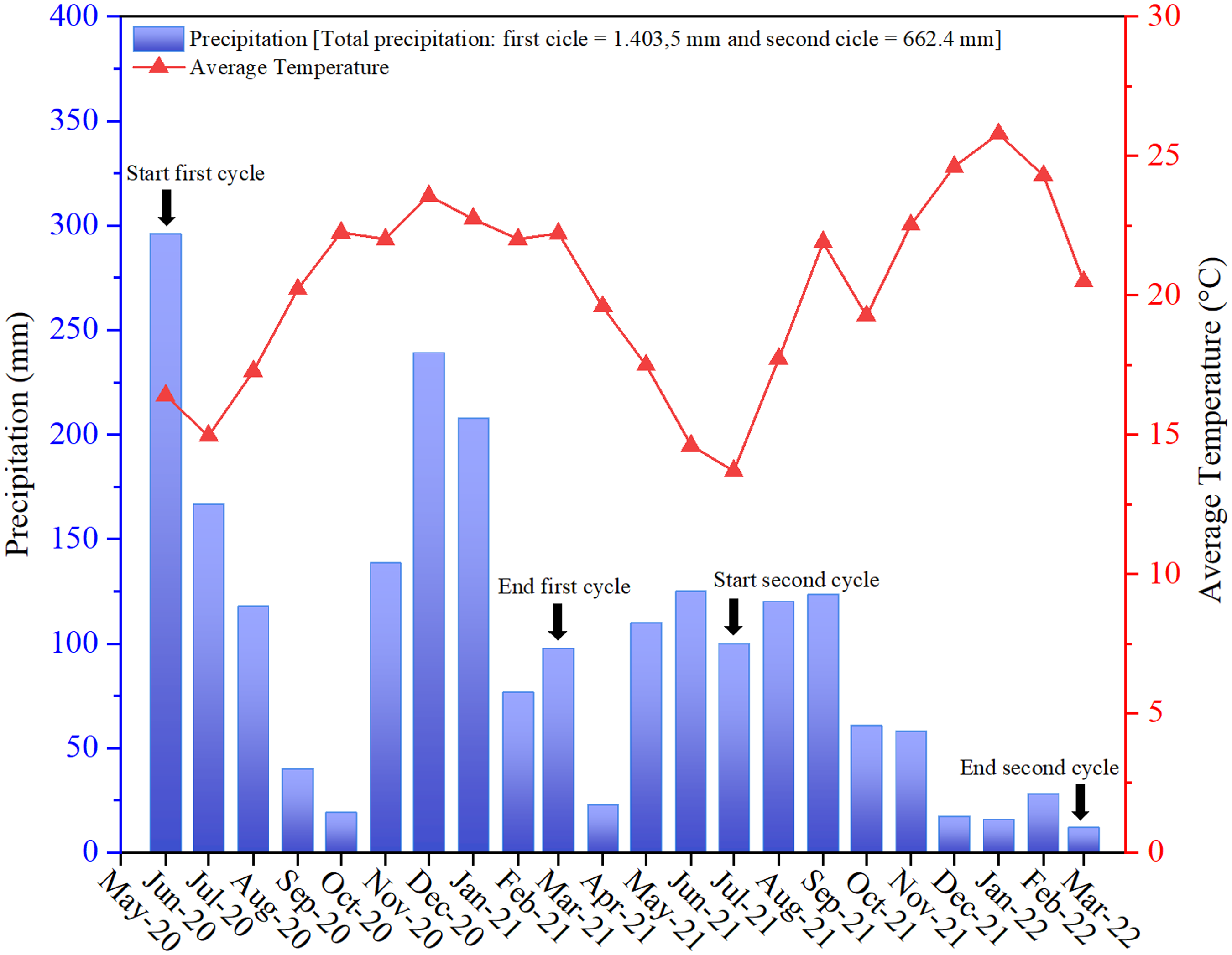
Monthly precipitation and average temperature during the two raspberry cultivation cycles in the municipality of chapecó, Santa catarina, Brazil.
According to the Soil Survey Staff, the soil where the experiment was conducted is classified as an Oxisol. 13 Following the Brazilian Soil Classification System, 14 the soil corresponds to a distroferric Red Latosol, and before the implementation of the first cultivation, it had the following chemical characteristics: clay 51.00%; organic matter 4.10%; SMP index 5.90; pH 5.70; phosphorus (P) 7.30 mg dm3; potassium (K) 133.80 mg dm3; aluminum (Al3+) 0.00 cmolc dm3; calcium (Ca) 6.30 cmolc dm3; magnesium (Mg) 2.30 cmolc dm3; cation exchange capacity at pH 7 (CEC) 15.12 cmolc dm3; potential acidity (H + Al) 4.89 cmolc dm3; and bases (V%) 67.65%.
The training system used was the inverted Lorena cross with a spacing of 2 m between rows and 0.33 m between plants. Due to the lack of a recommendation for fertilizing raspberries under the edaphoclimatic conditions where the crop was planted, fertilization was carried out according to the recommendations of the Manual of Liming and Fertilization for the States of Rio Grande do Sul and Santa Catarina, 15 following the recommendations for blackberry (Rubus spp.). The experiment was implemented under field conditions with a strip plot design with 8 repetitions of the treatments represented by the cultivars: “Heritage”, “Fallgold”, and “Autumn Bliss”.
Vegetative and productive characteristics
To determine the phenological periods of the tested cultivars, the cycle duration in days and the thermal sum in growing degree days were calculated as proposed by Arnold,
16
using Equation 1:

For the calculation of the thermal sum, temperatures below were used as a basis, as proposed by Pedro Júnior et al. 17 for exotic raspberry cultivars grown in subtropical regions. Three phenological phases were considered for the calculation of ΣGD: vegetative period, starting from pruning until the emission of the first flowers; reproductive period, marked by the appearance of the first flowers until the beginning of the harvest; and harvest period, marked by the appearance of the first ripe fruits until the end of the harvest.
Productivity (PD) was determined through manual fruit harvesting followed by weighing with a calculation adjusted for 1 ha (10,000 m2). The total number of fruits (TNF), obtained by counting fruits per m2; total fruit mass (TFM) from weighing the fruits per m2; number of stems (NH), determined by counting stems per m2; number of fruits per stem (NFH), from the ratio between TNF:NH; fruit mass (FM), obtained from the ratio of TFM:TNF. In addition, the fruit volume (FV) was determined by immersion in a known volume of water with a graduated cylinder, as proposed by Moura et al. 12
Chemical analyses of the fruits
The fruits for the evaluation of bioactive compounds were harvested considering the complete maturation stage represented by code 89 on the BBCH (Biologische Bundesanstalt, Bundessortenamt and Chemical industry) scale, as proposed by Schmid et al. 18 An aqueous extract composed of 10 g of macerated fruits and distilled water in a 1:1 ratio was necessary for the determination of total sugars (TS), reducing sugars (RS), total phenolic compounds (TPC) and vitamin C (VC).
The TS was determined as described by Dubois et al. 19 Extract samples were filtered through filter paper and diluted in distilled water in a 1:500 ratio. 0.5 mL aliquots were taken from the amount, followed by the addition of 0.5 mL of 5% phenol solution and 2.5 mL of sulfuric acid. The samples were left to rest for 10 min, followed by shaking for 30 s and another rest for 20 min. The absorbance of the samples was measured in a UV-Visible spectrophotometer under the absorbance of 490 nm. Calibration curves were constructed from standard solutions of fructose, glucose and sucrose of analytical purity, prepared with serial dilutions between 0.0001 g and 1 g L−1, with the sugar concentration expressed as a percentage (%).
RS was determined following a methodology adapted from Khatun and Mollah. 20 Quantification was performed in glucose in the aqueous extract, using the DNS reagent (3,5-dinitrosalicylic acid). The initial aqueous extract was diluted in distilled water in a 1:500 ratio, and aliquots of the sample in a 1:1 ratio were added to the DNS reactive solution. The oxidation process was carried out in a water bath for 10 min at a temperature of 100°C, followed by cooling the samples to room temperature. The absorbance readings were performed in a spectrophotometer at 540 nm, under a calibration curve with an analytical purity glucose standard solution, in serial dilutions between 0.0001 g L−1 and 1 g L−1, with the sugar concentration expressed as a percentage (%).
The quantification of TPC was carried out according to the Folin-Ciocalteau method, initially described by Singleton and Rossi. 21 A dilution in distilled water in a 1:250 ratio was carried out from the initial extract, and 0.5 mL aliquots were added to 2.5 ml of the Folin-Ciocalteau reagent, followed by 2.0 mL of 4% sodium carbonate. The samples were then stored in a completely dark environment for a period of 2 h. After this period, readings were performed on a UV-Visible spectrophotometer, at 760 nm absorbance. Gallic acid of analytical purity was used as the standard for the calibration curve, at concentrations ranging from 0.0001 g L−1 and 1 g L−1, with the results expressed in g 100 mL−1 of extract.
For the determination of VC, a dilution in a 1:250 ratio was also carried out from the initial extract. 100 μL aliquots of each sample were placed on microplates followed by 25 μL of distilled water, 25 μL of 13% trichloroacetic acid and 20 μL of 2,4-dinitrophenylhydrazine. The plates were then incubated for 2 h at 37°C, and readings were subsequently performed on an Elisa microplate reader in the 520 nm absorbance range. The calibration curve was constructed from serial dilutions between 0 and 40 μL of an analytical purity ascorbic acid standard solution, with the analysis results expressed in g 100 mL of extract. 22
For the determination of soluble solids (SS), fresh fruits were used, shortly after harvest. A benchtop refractometer was used for the individual measurements, an arithmetic mean was performed for each cultivar and the results were expressed in °Brix per 100 g of fresh fruit.
Cell viability protocols and oxidative parameters
Cell viability analyses and oxidative stress parameters were performed using aqueous extracts from the fruits of the “Fallgold”, “Heritage”, and “Autumn Bliss” cultivars. The protocols were evaluated on healthy HFF-1 fibroblast cell line cells obtained from the Rio de Janeiro Cell Bank (BCRJ). The cells were maintained in a humidified incubator at 37 °C with 5% carbon dioxide (CO2) saturation and were cultured using Dulbecco's Modified Eagle Medium (DMEM) supplemented with 10% fetal bovine serum, plus 1% antibiotic and antifungal (penicillin + streptomycin 10 mg mL−1 and amphotericin B 0.25 μg mL−1, respectively).
The cells were evaluated daily and the culture means was replaced every two days until they reached the necessary confluence for the experimental protocols. Upon obtaining the required quantity of cells for cytotoxicity and oxidative stress parameter analyses, they were detached from the cell culture flasks using Trypsin EDTA (ethylenediaminetetraacetic acid), seeded into 96-well plates, and incubated again. After incubating the plates for the assays, the cells were treated for 24 h with the aqueous fruit extracts from the studied cultivars, which were diluted using Dulbecco's Modification of Minimum Essential Media.
Initially, a concentrated solution of 10,000 µg mL−1 was prepared, which was filtered and subsequently diluted to the following treatment concentrations: 5,000, 1,000, 500, 250, 100, 50, and 25 µg mL−1. These concentrations were defined in preliminary studies and a pilot assay. The reaction control was performed using only the culture medium, as suggested by Peres and Curi. 23 Cell viability and cytotoxicity were evaluated with the MTT assay reagent (3–4,5-dimethyl-thiazol-2-yl-2,5-diphenyltetrazolium bromide). 24
A solution of MTT at a concentration of 5 mg mL−1 in phosphate-buffered saline was added to the 96-well plates after treatment with the aqueous extract from the studied raspberry cultivars. Subsequently, there was a reduction by dehydrogenase enzymes to the formazan salt, which was solubilized by the addition of the DMSO (dimethyl sulfoxide) reagent. Quantification was performed on a spectrophotometer with an absorbance of 560 nm, with the percentage of viable cells expressed relative to the control.
Oxidative stress protocols were evaluated by pro-oxidant markers, which included analyses of nitric oxide (NO), thiobarbituric acid reactive substances (TBARS), the stress and pro-inflammatory indicator myeloperoxidase (MPO), and the exogenous antioxidant marker of VC content. NO detection was performed according to the protocol established by Choi et al. 25 Precisely 100 µL of the sample was added to 100 µL of the Griess reagent, followed by incubation for 15 min at room temperature. The reading was performed on a spectrophotometer at 540 nm absorbance, with the results expressed as a percentage.
The TBARS assay was performed using the protocol by Jentzsch et al. 26 to measure the formation of malondialdehyde (MDA). The assay used 25 µL of distilled water, 5 µL of 10 mM butylated hydroxytoluene (BHT), 295 µL of 1% phosphoric acid, 25 µL of 8.1% sodium lauryl sulfate, 125 µL of thiobarbituric acid (TBA), and 50 µL of each sample, followed by incubation for 1 h at 95°C. The reading was performed on a spectrophotometer at 532 nm, with the results expressed in nmol MDA mL−1. MPO was determined as suggested by Suzuki et al., 27 with 12 µL of each sample added to 148 µL of 25 mM aminoantipyrine and 170 µL of hydrogen peroxide, followed by incubation for 30 min at 37°C for reading on a spectrophotometer at 492 nm. The results were expressed in mm of quinoneimine produced in 30 min.
Statistical analysis
The dataset was first submitted to normality tests using Shapiro-Wilk and homoscedasticity of variances using Levene's test. After obtaining suitable parameters for parametric tests, the vegetative-productive and phytochemical variables were subjected to a one-way analysis of variance (ANOVA). When the ANOVA was significant, the differences between varieties were compared using Tukey's test at a 5% probability (P < 0.05). The results for cell viability and oxidative stress were subjected to Dunnett's test at a 5% probability (P < 0.05) to check for differences relative to the control.
We used simple regression with exponential and polynomial models to check the strength of the correlation between the raspberry extract concentrations (0 to 5000 µg mL−1) and the bioindicators of oxidative stress (NO, TBARS, and MPO). Multiple linear regression models were applied to check the influence of the independent variables (NO, TBARS, and MPO) on the dependent variable (cell viability). Both models followed Pearson's principles with a 95% confidence interval (P < 0.05).
Results
Vegetative-productive characterization of cultivars
As seen in Fig. 2A, the raspberry plants began to sprout in the 2020/21 cycle in July 2020 and this extended until September 2020. The “Autumn Bliss” cultivar surpassed the period from pruning to peak sprouting in 86 days, “Heritage” in 91 days, and “Fallgold” in 101 days. Flowering occurred from October 2020 to December 2020. For the period from the peak of sprouting to the peak of flowering, it took 59 days for “Autumn Bliss”, 64 days for “Heritage”, and 69 days for “Fallgold”. The period from peak flowering to peak harvest began in December 2020 and ended in March 2021, lasting for 91, 97, and 99 days for “Autumn Bliss”, “Heritage”, and “Fallgold”, respectively.
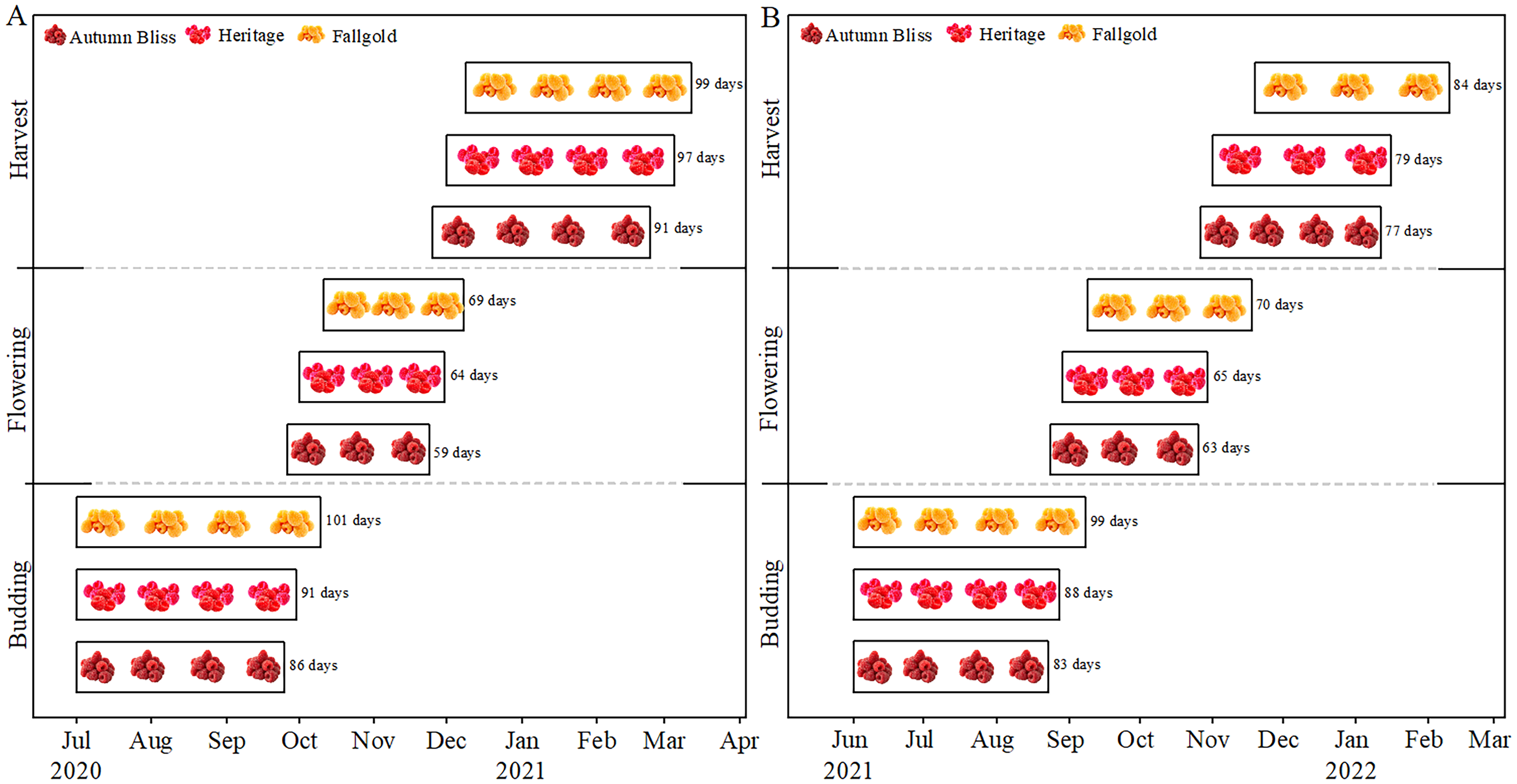
Phenology with the periods of sprouting, flowering, and harvesting for the “autumn bliss”, “heritage”, and “fallgold” cultivars in the 2020/21 (A) and 2021/22 (B) cycles in Chapecó, Santa Catarina, Brazil.
In Fig. 2B, it is observed that in the 2021/22 cycle, sprouting began in June 2021 and reached its peak in August 2021, lasting for 83, 88, and 99 days for the “Autumn Bliss”, “Heritage”, and “Fallgold” cultivars, respectively. Flowering began in September 2021 and peaked in November 2021, lasting for 63 days for “Autumn Bliss”, 65 days for “Heritage”, and 70 days for “Fallgold”. The harvest began in November 2021 and ended in February 2022, lasting for 77, 79, and 84 days for “Autumn Bliss”, “Heritage”, and “Fallgold”, respectively.
In Table 1, it can be seen that in the 2020/21 cycle, the “Autumn Bliss” cultivar needed approximately 3371 GD (Growing Degree Days) to complete the sprouting, flowering, and harvesting phases. “Heritage” completed a phenological cycle with approximately 3532 GD, and “Fallgold” accumulated a total of 3851 GD to complete the phenological phases and finish the cycle (Table 1). In the 2021/22 cycle, the results were similar to the previous year with small changes in the sprouting, flowering, and harvesting periods, which resulted in the accumulation of 3,014, 3,073, and 3407 total GD for “Autumn Bliss”, “Heritage”, and “Fallgold” to complete a phenological cycle, respectively (Table 1).
Accumulated growing degree days (ΣGD) for completing the sprouting phase (ΣGD budding), flowering phase (ΣGD flowering), harvesting period (ΣGD harvest), total sum of growing degree days (ΣGD total), number of chilling hours (NCH7) below 7 °C, and number of chilling hours (NCH13) below 13 °C for the “autumn bliss”, “heritage”, and “fallgold” cultivars under the climatic conditions of Chapecó, Santa Catarina, Brazil.
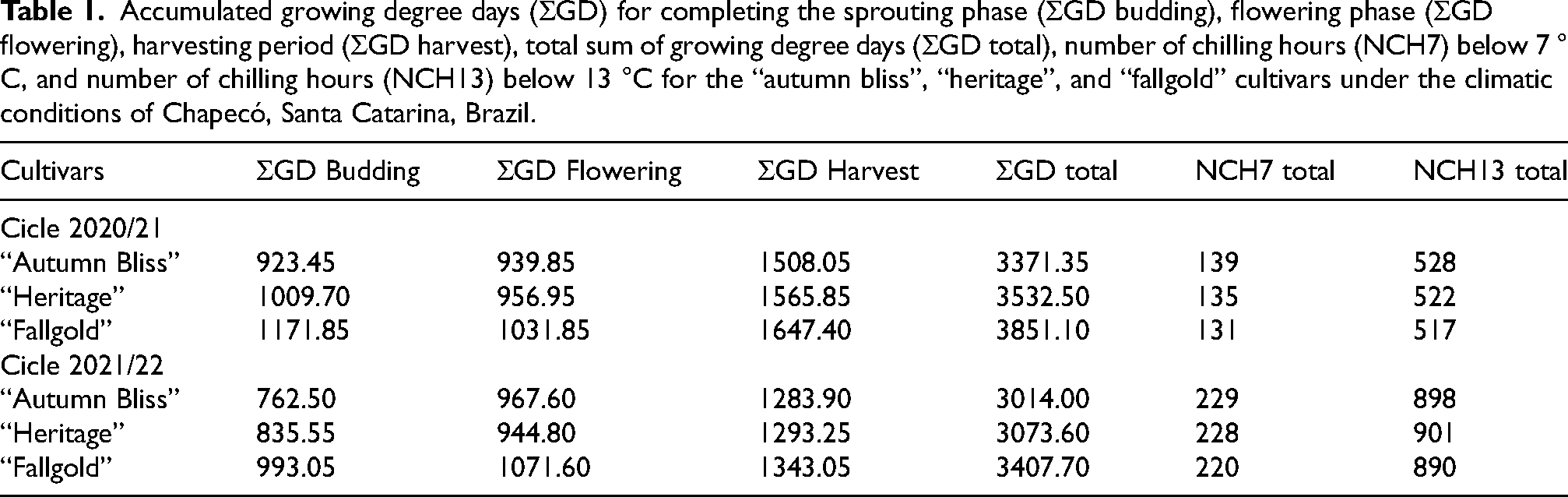
The chilling hour requirement varied between 131 and 229 h below 7.2°C or 517 and 901 h below 13°C for the tested cultivars (Table 1). In the first cycle, “Autumn Bliss” needed 139 chilling hours below 7°C or 528 chilling hours below 13°C to complete the sprouting and flowering phases and reach peak harvest. In the second cycle, it needed 229 h below 7°C or 898 h below 13°C. “Heritage” required 135 chilling hours below 7°C or 522 h below 13°C in the first cycle, and 228 h below 7°C or 901 h below 13°C in the second cycle. “Fallgold” completed a phenological cycle with 131 h below 7°C or 517 h below 13°C in the first cycle and 220 h below 7°C or 890 h below 13°C in the second cycle.
Statistical analysis revealed a significant difference between the cultivars for the variables TNF, NH, NFH, FM, and FV across the two evaluation cycles. In 2020/21, “Heritage” showed higher TNF, NH, and NFH, while the lowest averages were presented by “Autumn Bliss” and “Fallgold” (Table 2). On the other hand, “Autumn Bliss” was the cultivar that produced fruits with the highest mass and volume during the 2020/21 cycle. Similar results were observed in 2021/22, where the “Heritage” and “Autumn Bliss” cultivars showed higher TNF, but “Heritage” had a higher NH and “Autumn Bliss” had a higher NFH. It is noteworthy that “Autumn Bliss” and “Fallgold” showed the highest averages for the FM and FV variables in the 2021/22 cycle (Table 2).
Total number of fruits (TNF), number of canes (NH), number of fruits per cane (NFH), fruit mass (FM), and fruit volume (FV) of the “Autumn Bliss”, “Heritage”, and “Fallgold” cultivars in the 2020/21 and 2021/22 seasons.
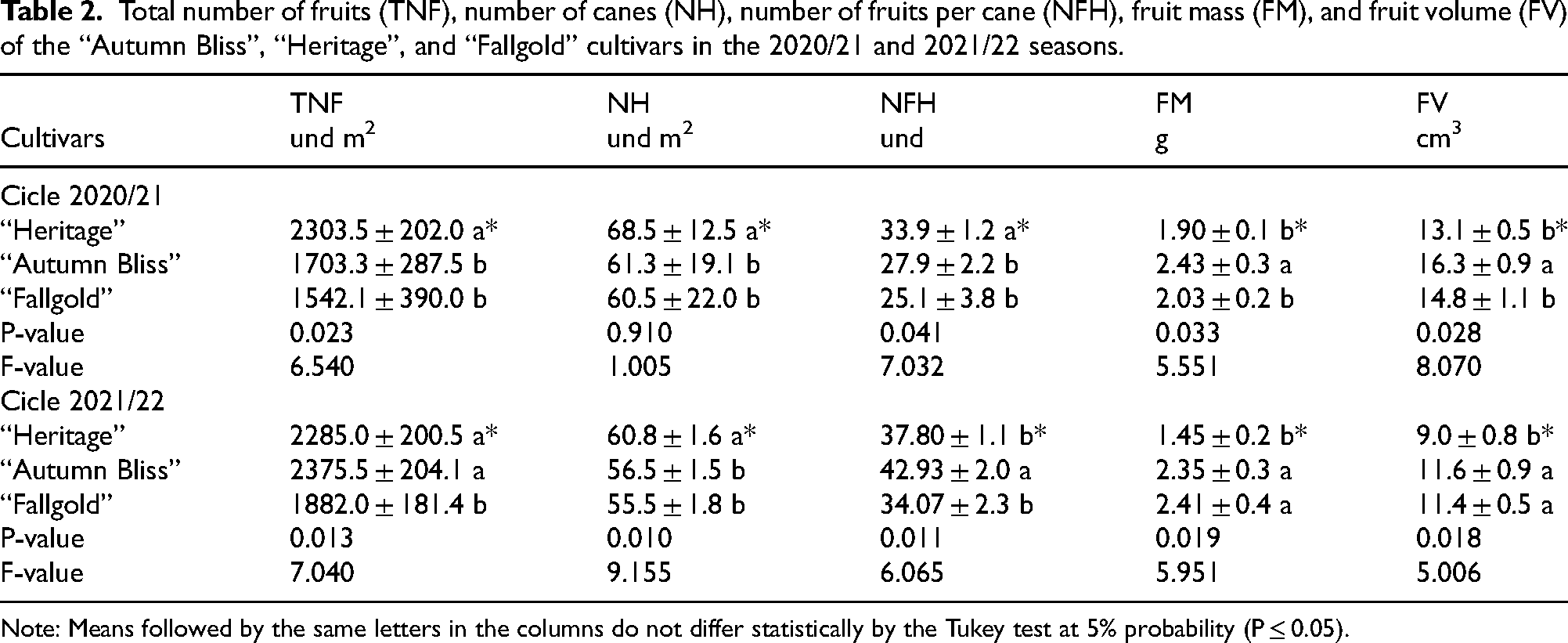
Note: Means followed by the same letters in the columns do not differ statistically by the Tukey test at 5% probability (P ≤ 0.05).
As seen in Fig. 3, there were variations in the productivity of the evaluated cultivars throughout the production cycles. The statistical test revealed significant differences (P = 0.003; F = 9.331) between the cultivars during the evaluation period. In the 2020/21 cycle, the “Heritage” and “Autumn Bliss” cultivars achieved the highest productivity, with the lowest average found for “Fallgold” (Fig. 3A). “Heritage” reached a productivity of approximately 15 t ha−1, “Autumn Bliss” 14 t ha−1, while “Fallgold” showed a productivity 25% below the averages observed for “Heritage” and “Autumn Bliss” (11 t ha−1).
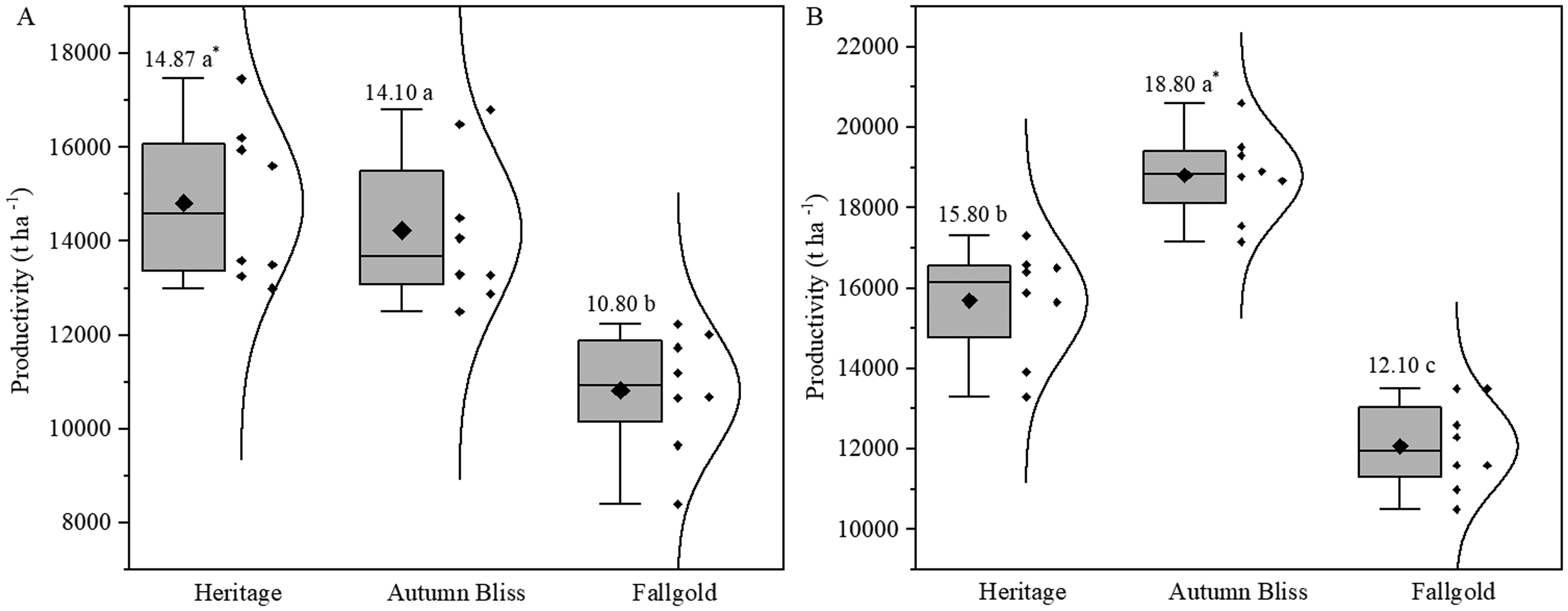
Box plot showing the productivity (PD) of the “heritage”, “autumn bliss”, and “fallgold” cultivars in the 2020/21 (A) and 2021/22 (B) cycles. Note: Significant difference between cultivars by Tukey's test at 5% probability (P < 0.05).
On the other hand, in the 2021/22 cycle, the “Autumn Bliss” cultivar achieved the highest productivity when compared to “Heritage”, and again, the lowest average was found in “Fallgold” (Fig. 3B). It is observed that in the second cycle, “Autumn Bliss” reached a productivity of 19 t ha−1, representing a 15% superiority over “Heritage” (16 t ha−1) and 37% when compared to “Fallgold” (12 t ha−1). When comparing “Heritage” with “Fallgold”, we identified a productivity difference of approximately 25%, which represents 4 t ha−1 of fruit.
Chemical composition of fruits
The analysis of variance was significant between the cultivars for the variables SS, TS, RS, and TPC across the two evaluation cycles. In Table 3, it is observed that in the 2020/21 cycle, the TPC and VC contents were higher in the fruits of the “Heritage” cultivar. Similarly, in the 2021/22 cycle, the fruits of “Heritage” showed higher contents of RS, TPC, and VC when compared to the fruits of “Fallgold” and “Autumn Bliss”. On the other hand, the highest levels of SS and TS were found in the fruits of “Fallgold” and ‘“Autumn Bliss”’ in the second evaluation cycle (Table 3).
Concentrations of soluble solids (SS), total sugars (TS), reducing sugars (RS), total phenolic compounds (TPC), and vitamin C (VC) in the fruits of the “heritage”, “autumn bliss”, and “fallgold” cultivars.
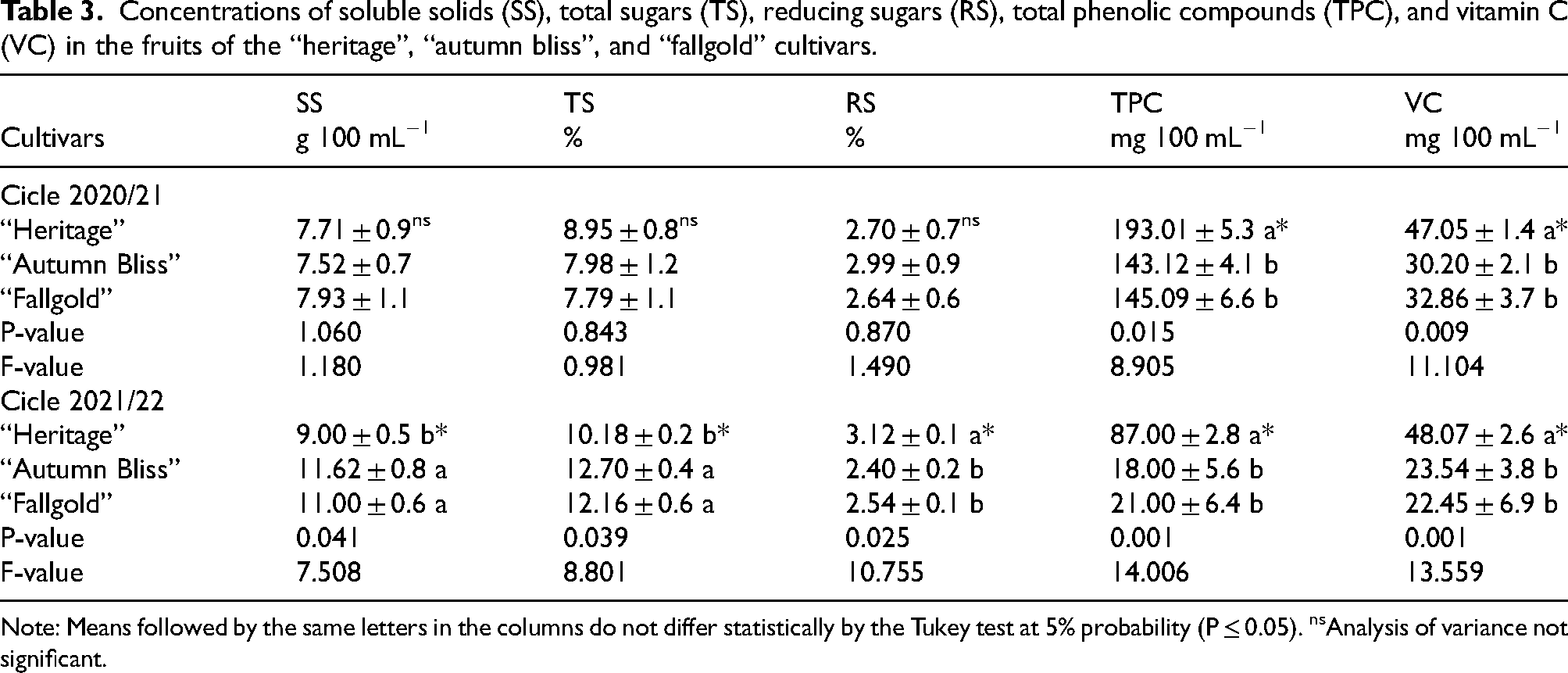
Note: Means followed by the same letters in the columns do not differ statistically by the Tukey test at 5% probability (P ≤ 0.05). nsAnalysis of variance not significant.
Cell viability and oxidative profile of the cultivar extracts
The healthy cells from the cell viability (Fig. S1) assay with “Heritage” and “Fallgold” fruit extracts were subjected to the evaluation of oxidative stress indicators. The accumulation of reactive oxygen species induces a chain of radical reactions resulting in oxidative stress at the cellular level (Table S1). Through simple regressions, significance was observed in the models by Pearson's principles (P < 0.05) with exponential and polynomial order effects of NO, TBARS, and MPO in the cells in relation to the concentrations of the “Heritage” (Fig. S2) and “Fallgold” (Fig. S3) fruit extracts.
In the multiple linear regression (MLR) model represented by the scheme in Fig. 4, it is observed that the oxidative stress parameters NO and TBARS showed significant correlations with the viability of healthy HFF-1 cells. The MLR was significant (P = 0.001) with an adjusted determination coefficient of R2=0.76. Individually, the variables NO (R2=−0.83) and TBARS (R2=−0.57), represented by the color red, showed a negative correlation with cell viability, that is, as the concentration of the extracts from “Heritage” and “Fallgold” fruits increases, the viability of HFF-1 cells decreases linearly. On the other hand, the MPO variable (R2=−0.23), represented by the color black, did not show significance and, therefore, is not correlated with the effects observed on cell viability in the present study.
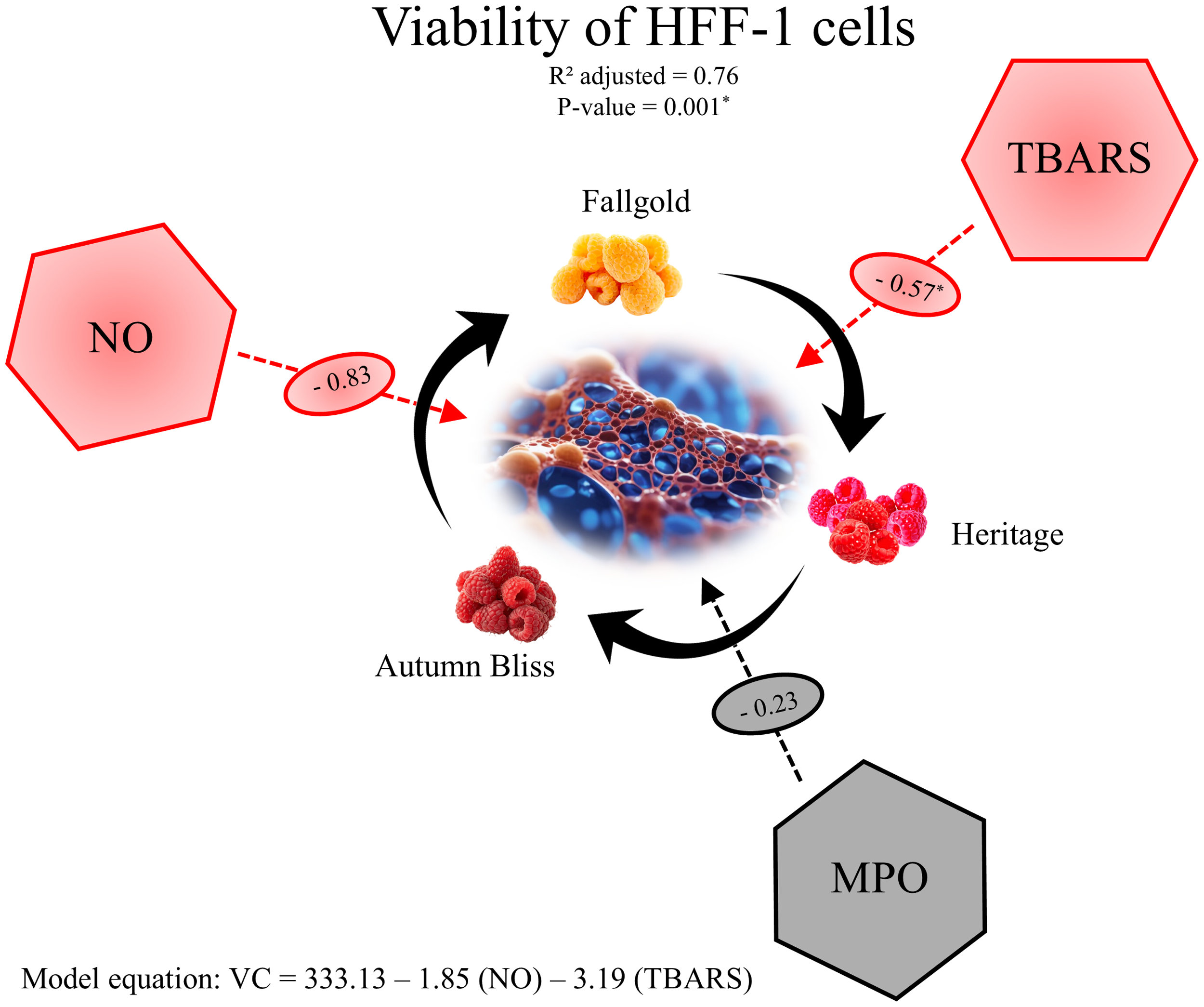
Representation of the multiple linear regression (MLR) model with effects of the independent variables nitric oxide (NO), thiobarbituric acid reactive substances (TBARS), and myeloperoxidase (MPO) on cell viability (dependent variable). Note: Significant by Pearson's principles with a 95% confidence level.
Discussion
The genotypes of Rubus idaeus express distinct characteristics and adapt to the edaphoclimatic conditions of the cultivation site. 23 In general, the budding, flowering, and harvesting periods did not show important variations among the “Heritage”, “Fallgold”, and “Autumn Bliss” cultivars. However, in the 2021/22 cycle, these periods were slightly shorter than in the 2020/21 cycle. According to Fagundes et al., 9 raspberry phenology varies globally due to climatic conditions, and the thermal sum calculated in growing degree days (ΣGD) is a reliable method to monitor vegetative development. 28 Raspberry cultivation has been tested in several warm-climate regions, and in Brazil, the South [Paraná (PR), Santa Catarina (SC), and Rio Grande do Sul (RS)] and Southeast [Espírito Santo (ES), Minas Gerais (MG), Rio de Janeiro (RJ), and São Paulo (SP)] show the greatest potential. 29 Our results indicate that “Heritage”, “Fallgold”, and “Autumn Bliss” are suitable for cultivation in western SC, as all cultivars reached their phenological peaks under the NCH conditions observed in Chapecó-SC during two evaluation cycles.
No data on ΣGD for these cultivars in SC were found in the literature. However, Marchi et al. 11 reported that “Heritage” and “Fallgold” require approximately 213 and 225 days to reach flowering peak in Pelotas-RS. In contrast, under the conditions of Chapecó-SC, “Fallgold” and “Heritage” reached flowering peak in 170 and 151 days, respectively, a reduction of about 70 days. Additionally, “Autumn Bliss” was earlier, reaching flowering peak in 145 days. Similarly, Marchi et al. 11 observed that “Heritage” and “Fallgold” required 335 and 336 days to reach harvesting peak in Pelotas-RS, whereas in Chapecó-SC, harvesting peak occurred at 252, 269, and 230 days for “Heritage”, “Fallgold”, and “Autumn Bliss”, respectively. These results indicate that the climatic conditions of Chapecó-SC favor shorter production cycles, likely due to the chill hours accumulated during the budding phase. Higher NCH7 or NCH13 values were associated with lower ΣGD requirements for all cultivars to reach harvesting peak, indicating reduced thermal demand and shorter cycles. A similar relationship was reported by Segantini et al. 28 in blackberry cultivars (Rubus spp.) in São Paulo. Considering that “Heritage”, “Autumn Bliss”, and “Fallgold” originate from temperate climates, 29 the accumulation of chill hours below 7 or 13°C is essential for proper vegetative and reproductive development. 30
The climatic conditions of Chapecó-SC provided sufficient chill hours (<7 and <13°C), allowing normal development without anomalies and resulting in satisfactory yields in both cycles. Lower temperatures during the vegetative phase likely contributed to shorter flowering and production periods, as higher temperatures accelerate plant metabolism. Overall, agronomic variables related to productivity reached satisfactory levels in both cycles. The number of stems is a limiting factor for production, 12 and “Heritage” showed greater potential for stem emission and higher productivity in the first cycle due to higher TNF. In the second cycle, however, “Autumn Bliss” achieved similar productivity due to higher FV and FM, resulting in larger and heavier fruits. Under subtropical conditions, raspberry yields can reach up to 25 t ha−1 depending on management practices. 12 Alvarado-Raya et al. 31 reported that “Autumn Bliss” can reach up to 20 t ha−1 when stem density exceeds 40 stems m2. In this study, NH exceeded this threshold in both cycles, confirming the high productive potential of “Autumn Bliss” in western SC. Milivojevic et al. 32 reported yields close to 16 t ha−1 for “Autumn Bliss” and above 20 t ha−1 for “Heritage”, with increases in the second cycle. Similarly, our results showed that “Heritage” stood out in the first cycle, while “Autumn Bliss” exhibited greater productive potential in the second cycle. Although “Fallgold” reached 10–12 t ha−1, it showed the lowest productive potential among the cultivars. Moura et al. 12 also observed productivity increases in the second cycle for raspberry cultivars grown in subtropical regions, particularly for “Autumn Bliss” and “Fallgold”. This increase is associated with the maintenance of stems from the first cycle, a practice that proved especially promising for “Autumn Bliss”.
In general, “Heritage” and “Autumn Bliss” showed superior vegetative and productive performance, while “Fallgold” presented lower productivity under the conditions of Chapecó-SC. Regarding phytochemicals, “Autumn Bliss” and “Fallgold” fruits showed higher SS and TS levels, contributing to greater sweetness and consumer acceptance for fresh consumption. In contrast, “Heritage” fruits presented higher levels of VC and TPC, indicating greater antioxidant potential. Phenolic compounds exhibit antioxidant and anti-inflammatory properties and contribute to the regulation of hypertension and endothelial function. 33 Their levels vary according to cultivar characteristics and environmental conditions. 34 Thus, genotype significantly influenced fruit composition, resulting in distinct phytochemical profiles. According to Bortolini et al., 1 phenolic compound levels in raspberries range from 135.03 to 2494.00 mg per 100 g−1, and the values observed in the first cycle fall within this range. However, in the second cycle, phenolic content decreased by approximately 87% in “Heritage”, 84% in “Autumn Bliss”, and 30% in “Fallgold”. This reduction is likely associated with stem maintenance, which advanced the harvest by about 30 days. Ponder and Hallmann 34 reported that phytochemical levels vary with harvest period, with higher concentrations observed during summer. As the second cycle harvest began before summer, climatic conditions may have limited phytochemical synthesis, reducing TPC levels. Vitamin C, like phenolic compounds, also contributes to antioxidant activity and protection against oxidative stress. 34
Higher VC and TPC contents were consistently observed in “Heritage” fruits, suggesting a genotype-related effect and greater antioxidant potential compared to the other cultivars. In contrast, sugar content is a key determinant of nutritional and organoleptic quality in fresh fruits. 35 SS and TS levels increased in the second cycle for all cultivars. Yang et al. 36 reported TS values between 5% and 8%, whereas the present study found values between 8% and 12%, likely influenced by local climatic conditions. 34 Lower rainfall and higher temperatures during the second cycle (Fig. 1) may have contributed to fruit dehydration and increased solute concentration due to osmotic adjustments. 37 SS values in raspberries typically range from 4 to 12 g per 100 g,38–39 reinforcing their importance for fresh consumption and processing. As SS and TS are positively correlated with sweetness, 35 “Autumn Bliss” and “Fallgold” fruits may be more suitable for fresh consumption and industrial processing due to their higher sugar content.
Cell viability analysis alone is insufficient to determine safe concentrations of raspberry extracts; therefore, oxidative stress indicators were evaluated. The accumulation of reactive oxygen species induces oxidative stress through radical chain reactions. 36 Cells HFF-1 exposed to concentrations below 250 µg mL−1 (“Fallgold”) and 500 µg mL−1 (“Heritage”) showed oxidative stress responses via NO, TBARS, and MPO biomarkers. “Fallgold” extracts increased nitrite levels from 100 µg mL−1, while “Heritage” extracts showed similar effects from 250 µg mL−1. Additionally, “Heritage” extracts increased TBARS and MPO activity above 250 µg mL−1, indicating lipid peroxidation and hypochlorous acid (HClO) formation. NO is a lipophilic free radical involved in several biological processes, 37 and excessive production is associated with cytotoxicity. 38 Increased TBARS reflects lipid oxidation and membrane damage. 39 These findings highlight the importance of evaluating cytotoxicity in future studies to define safe concentrations and identify cultivars with therapeutic potential.
The authors recommend further study of the chemical characteristics of “Fallgold” and “Heritage” fruits, since aqueous extracts of “Fallgold” and “Heritage” fruits seem to affect cell viability and provide oxidative stress in HFF-1 cells at concentrations above 100 μg mL−1 and 250 μg mL−1, respectively.
Conclusions
The climatic conditions of Chapecó-SC are suitable for the cultivation of raspberries (Rubus idaeus L.), with chill hours below 7°C or 13°C and a sufficient sum of growing degree days for the “Heritage”, “Autumn Bliss”, and “Fallgold” cultivars to complete the phases of a phenological cycle (budding, flowering, and harvesting). The “Autumn Bliss” and “Heritage” cultivars show better vegetative-productive responses, achieving higher yields in the second cultivation cycle with the maintenance of old stems.
Although climatic conditions are ideal for all cultivars studied, the fruits of the “Autumn Bliss” and “Fallgold” cultivars have more attractive characteristics for fresh consumption, due to the higher contents of soluble solids and total sugars resulting in sweeter raspberries. On the other hand, the fruits of the “Heritage” cultivar have greater antioxidant potential due to the higher contents of phenolic compounds and vitamin C.
Supplemental Material
sj-docx-1-ber-10.1177_18785093261457622 - Supplemental material for Vegetative and productive characteristics of raspberries grown in a subtropical climate
Supplemental material, sj-docx-1-ber-10.1177_18785093261457622 for Vegetative and productive characteristics of raspberries grown in a subtropical climate by Juliano Galina, Jardel Galina, Magda Alana Pompelli Manica, Jean do Prado, Filomena Marafon, Fabricio Júnior Assolini, Margarete Dulce Bagatini, Jorge Luis Mattias and Clevison Luiz Giacobbo in Journal of Berry Research
Footnotes
Acknowledgments
The authors thank the institutional support from the Universidade Federal da Fronteira Sul and Coordenação de Aperfeiçoamento de Pessoal de Nível Superior (CAPES) by awarding a scholarship.

Author contributions
Funding
The authors received no financial support for the research, authorship, and/or publication of this article.
Declaration of conflicting interests
The authors declared no potential conflicts of interest with respect to the research, authorship, and/or publication of this article.
Data availability statement
The data that support the findings of this study are available from the corresponding author upon reasonable request.
Supplemental material
Supplemental material for this article is available online.
References
Supplementary Material
Please find the following supplemental material available below.
For Open Access articles published under a Creative Commons License, all supplemental material carries the same license as the article it is associated with.
For non-Open Access articles published, all supplemental material carries a non-exclusive license, and permission requests for re-use of supplemental material or any part of supplemental material shall be sent directly to the copyright owner as specified in the copyright notice associated with the article.
