







Abstract
Suicide is still a global public health concern. Electrocution suicide is a rarely observed method of ending life. We reported the incident of a young electrical technician in his 30s who was brought dead to the emergency room of a hospital with a history of electrocution. A detailed examination revealed that the electric lines were attached to the left thumb and left toe and connected to the electrical plug switch (220 V). A written, signed suicide note was recovered in the room, from which it was possible to derive details about the suicide's planning and draw the conclusion that an electric current had also gone through the body. This case was unusual in the methods used, highlighting the need for multidisciplinary involvement.
INTRODUCTION
These days, the number of suicides has virtually epidemic proportions, making it a serious public health concern. Suicides by electric current are very uncommon and inadequately researched (1). Numerous studies have described the cause of death and the pathological characteristics of electrical deaths; however, no studies have described the importance of investigating the death scene in electrical suicides. It could be possible to determine the cause and manner of death by an examination of the death scene and a technical examination of the electrical equipment (2,3). Cutaneous current markings could be the only indication of mortality linked to low voltage (4). The year-wise distribution of deaths due to suicidal electrocution in India, according to data from the National Crime Records Bureau. In 2020, there were 629 deaths (0.4%), while 2019 saw a higher number with 752 deaths (0.5%). In 2018, the number of deaths was 565 (0.4%), and in 2017, it was slightly lower at 560 (0.4%). The year 2016 recorded 647 deaths (0.5%) (5). We describe an uncommon incident of a planned electrocuted suicide and emphasize the necessity for investigators and emergency personnel to exercise caution when electrical suicides are found.
CASE PRESENTATION
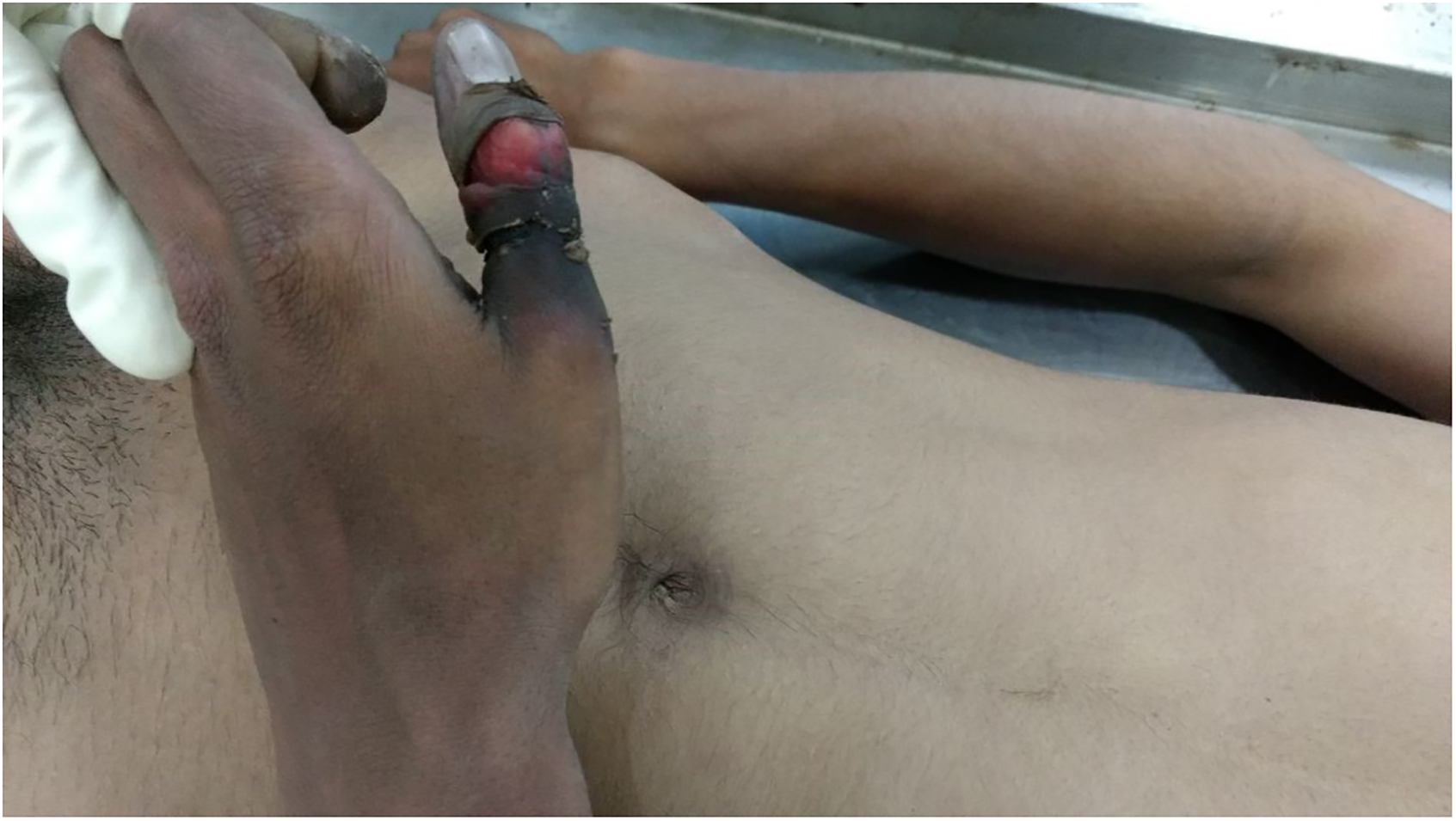
Blackish deep circumferential electric burn around left thumb.
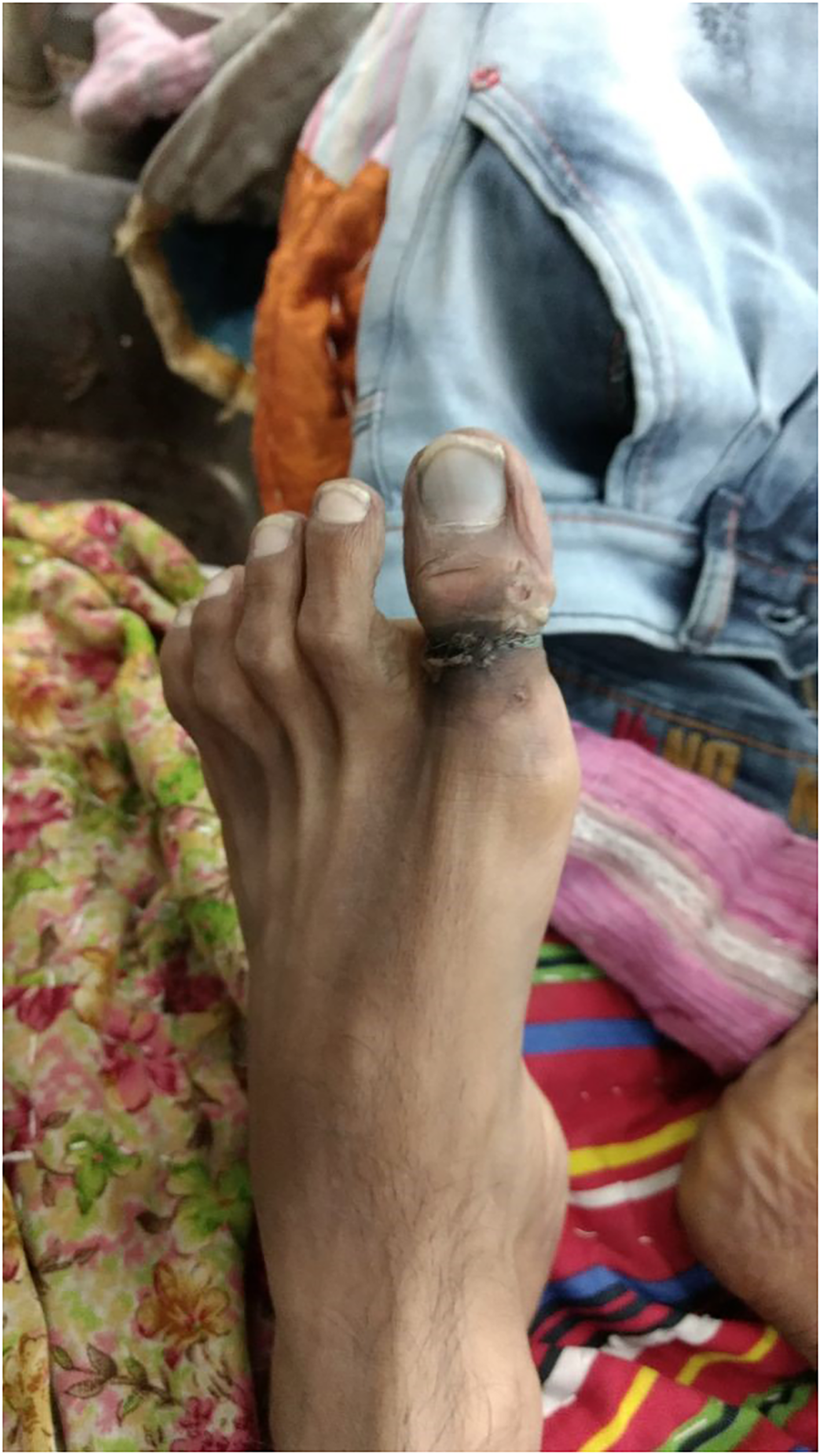
Blackish deep circumferential electric burn around left toe.
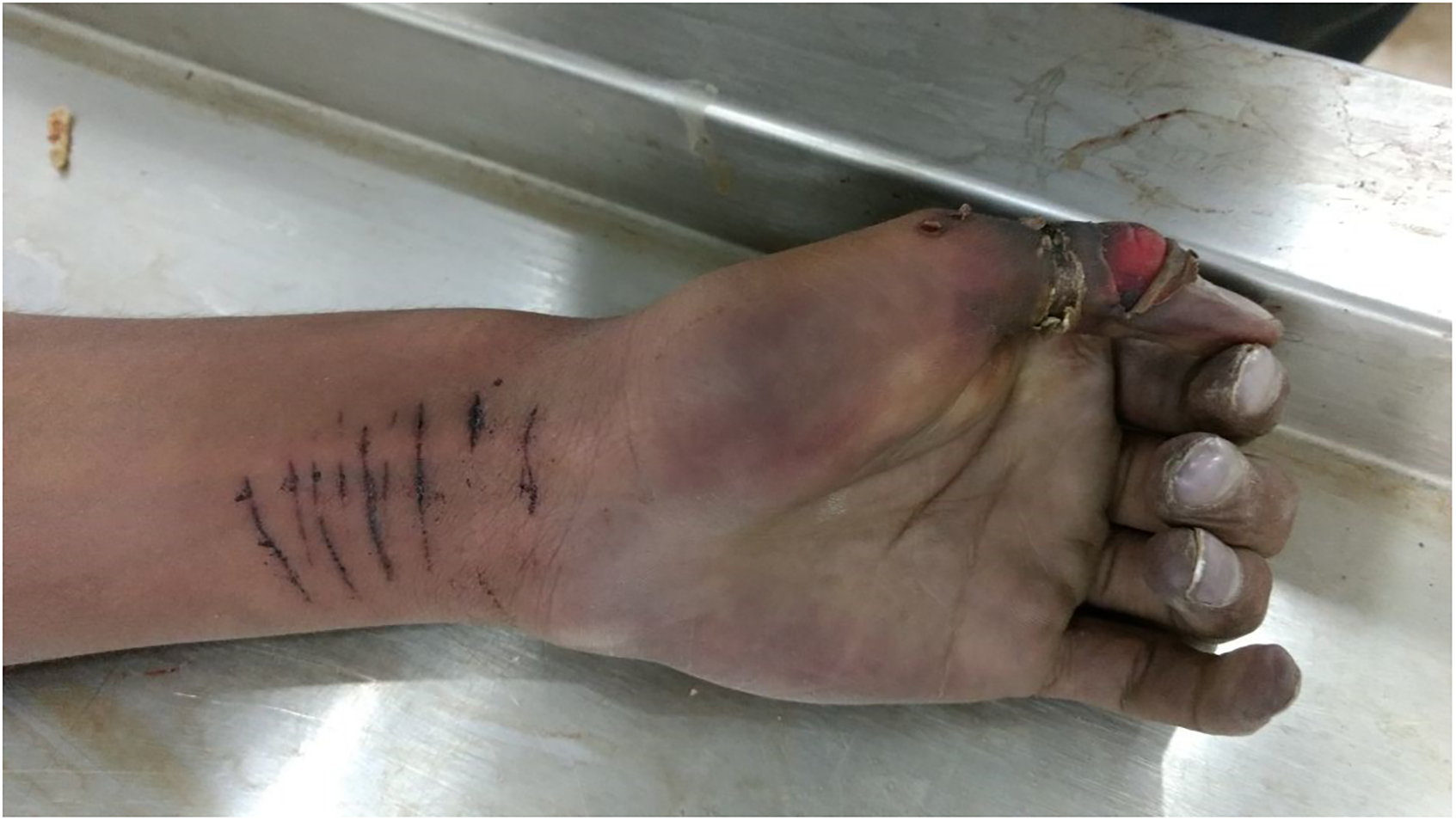
Multiple parallel self-inflicting superficial incised wounds.
DISCUSSION
From an epidemiologic perspective of suicide, the victims are often individuals in their 20s or 30s, with a clear male predominance (1,2). In essence, bipolar illnesses, or depressive syndromes, frequently have a history of psychiatric illness. There is surprisingly little mortality despite the fact that electricity is widely used in households as well as manufacturing units and that countless people have access to this essential source of light and power. Due to current passing through the heart during suicidal electrocution, ventricular fibrillation is most likely the cause of death (3,6). Additionally, the literature has noted that ventricular fibrillation may only be brought on by currents >100 milli-Amperes (mA). At a voltage of 220 V, the body has a resistance of around 1000 to 2125 ohms, resulting in a current of between 100 to 220 mA (3,7,8). The macro morphologic manifestation of electrical current-related dermal modifications reveals a wide variety, including extensive burns involving the skin and tissues underneath or superficially crater-like lesions that are characteristic but nonspecific and can serve as a “negative” of the electrodes utilized (9,10).
We described the case of a young electrical technician in his 30s who had a history of electrocution and was taken dead to the emergency room of a hospital. A thorough inspection revealed that the electric lines were connected to the plug switch (220 V) and attached to the left thumb and left toe. In the room, a written, signed suicide note was discovered. From it, it was possible to learn more about how the suicide was planned and determine that an electric charge also passed through the body. A multidisciplinary approach combining forensic experts, emergency specialists, death scene investigations, and police investigations is required in this case because of the unusual tactics deployed.
CONCLUSION
When an electric current travels through the body, particularly across the heart or through the chest and abdomen, it can cause fatal disruptions to both cardiac and respiratory functions. The pathway from the left thumb to the left big toe is especially dangerous as it often passes directly through the heart, increasing the risk of fatal arrhythmias. A thorough forensic investigation, including on-site examination, is crucial to understanding the motivations and circumstances of these tragic events, potentially leading to improved prevention and support measures.
Footnotes
ETHICAL APPROVAL
N/A.
STATEMENT OF HUMAN AND ANIMAL RIGHTS
N/A.
STATEMENT OF INFORMED CONSENT
N/A.
DECLARATION OF CONFLICTING INTERESTS
The authors declared no potential conflicts of interest with respect to the research, authorship, and/or publication of this article.
FUNDING
The authors received no financial support for the research, authorship, and/or publication of this article.
