







Abstract
Research suggests that honors students are more likely to be engaged in some, but not all, aspects of the college experience, although there is less information available from the faculty perspective. This study presents findings from the Faculty Survey of Student Engagement (FSSE), comparing various engagement-related practices between faculty who teach honors courses and those who do not. Along with core FSSE items, this study uses responses from 1,487 faculty members at 15 institutions on two items about teaching honors courses. A series of ordinary least squares regression analyses suggest that faculty who teach honors courses are more likely to encourage engagement in the areas of student–faculty interaction, learning strategies, and collaborative learning, even after controlling for other demographic and institutional variables. These findings are considered within the context of existing research and theory, connecting knowledge from higher education and gifted education.
Students’ active engagement in their academic endeavors has been demonstrated to be an important component of student success and outcomes in college (Kuh, 2009). Faculty play an important role in this engagement, as they shape and determine many of the engagement practices utilized. The teaching practices and values of faculty can greatly enhance students’ experiences and learning outcomes (Nelson Laird, BrckaLorenz, et al., 2014; Umbach & Wawrzynski, 2005). One area ripe for exploration is the role of faculty and engagement for honors colleges and programs. This study extends research on the importance of specialized programming, curriculum, and teaching for high-achieving individuals at the college level, using data from the Faculty Survey of Student Engagement (FSSE) to compare various aspects of engagement between faculty who teach honors courses and those who do not. Specifically, the guiding research questions focus on whether honors faculty, compared with faculty who do not teach honors courses, are more likely to emphasize higher-order learning, value reflective and integrative learning and quantitative reasoning, encourage learning strategies and collaborative learning, provide opportunity for discussions with diverse others, participate in student–faculty interactions, use effective teaching practices, perceive students’ quality of interactions with others, and value increasing aspects of students’ supportive environment, even after controlling for demographic and institutional characteristics known to influence the faculty experience.
Honors Colleges in the Gifted Context
Various theoretical models that focus on high-ability students include an environmental element, prompting exploration of the “nurture” role for the development of this group, which includes the crucial role of teachers (Gagné, 2009; Tannenbaum, 2003). One comprehensive model of giftedness that pertains to multiple domains, features structural specificity, and acknowledges the importance of environment is Gagné’s (1999) Differentiated Model of Giftedness and Talent (DMGT). This model, and the subsequent update of the “DMGT 2.0” (Gagné, 2009), distinguishes between giftedness, presented as aptitude domains; talents, presented as fields in which these aptitudes are expressed; and developmental processes, presented as the connecting path between the abilities of giftedness and their manifestation as talents (Gagné, 2000, 2003). Moreover, this model recognizes how intrapersonal characteristics, environmental factors, and chance can also influence numerous components of the developmental process. For each of these categorized components (giftedness, developmental processes, talent expression, intrapersonal attributes, environmental factors, and chance), there are successive sub-factors. The DMGT cites environmental sub-factors of milieu (including physical, cultural, social, and familial capital), specific individuals (including parents, other family members, peers, teachers, and mentors), and provisions (including enrichment from curriculum and pedagogy as well as administrative matters such as grouping and acceleration) (Gagné, 2009).
The degree of specificity in the DMGT is relevant to the honors college experience for various reasons. Undergraduate students participating in these programs are interacting with professors and classmates, but also with other peers at their institutions (roommates, friends, social clubs, etc.) and many still have close ties to their families. In addition, their experience is embedded within the greater backdrop of higher education in general, and how they traverse this life stage is likely affected by prior social and educational encounters. Specific curricular elements of honors programs can also have an influence, as these may or may not be analogous to what these students have experienced during their prior K-12 education (such as self-contained classrooms or enrichment activities). A considerable amount of the research involving models of gifted education has focused on younger elementary and secondary populations; therefore, it is also valuable to expand research exploring the application of these models across all ages.
Characteristics of Honors Colleges and Programs
It is important to note for any discussion of high-achieving students within honors colleges or programs that there is a potentially large degree of variance in the intentions and implementation of such programs. An “Honors College” at one institution might vary in multiple ways from a program with an identical title at another (which frequently occurs with K-12 schools as well). Honors college admissions policies are produced within the constraints of overall institutional admissions criteria; in some cases honors students are admitted in their first year at the university while in others they are granted honors status only after gaining a minimum number of credit hours or demonstrating a certain grade point average (GPA; Schuman, 2006). Many honors students have been officially identified as academically gifted during their previous education, but the services and programming they have received can vary substantially (Rinn & Plucker, 2004). However, because most honors colleges do include a minimum GPA (high school or college) requirement and/or standardized test criteria for admissions, yet do not require the IQ and other cognitive testing prominent in many K-12 programs, these students should technically be categorized as “high ability” (rather than “gifted”). This difference is necessary to consider when using honors college students in replications of research originally done with younger, traditionally identified gifted K-12 populations. Nonetheless, it is extremely likely that honors college students have been identified as gifted at some point during their previous schooling. For instance, a study of 393 honors college students at one university found that nearly all Honors College students (92%) self-reported participation in gifted programming during elementary, middle, and/or high school, although the types of programs in which they had participated varied extensively (Miller & Speirs Neumeister, 2017).
Despite the possible diversity of experiences, there are nevertheless some basic elements of most honors colleges, including more academically rigorous versions of general education courses, frequently with smaller class sizes for heightened student–faculty interaction, and these courses are often prerequisites to more challenging courses such as colloquia or seminars (Fischer, 1996; Freyman, 2005; Sederberg, 2005). Many of these courses are interdisciplinary, and students maintain the freedom to select any major offered at the university; additionally, there is often a required final thesis, capstone, or creative project that must be completed before graduation (Digby, 2005). A recent systematic examination of honors curricula discovered that most programs have independent research elements, but there is more disparity in requirements for other high-impact practices such as internships, service learning, and study abroad (Cognard-Black & Savage, 2016). Numerous universities also have designated honors residence halls or study rooms available exclusively to honors students (Noldon & Sedlacek, 1998; Rinn, 2004). Students may begin their honors program with great expectations for their college experience (Rinn, 2008), yet these expectations may or may not be fulfilled, depending on the details and execution of each program (Rinn & Plucker, 2004). Honors program participation is related to several positive outcomes for students, in terms of academic achievement (Furtwengler, 2015; Rinn, 2007; Rinn & Plucker, 2018), various aspects of subjective well-being (Plominski & Burns, 2018), and interpersonal experiences (Perrone et al., 2010).
Student Engagement in Higher Education
Various studies have demonstrated that student engagement, defined as student involvement in educationally purposeful activities (Kuh, 2001), is a strong predictor of students’ learning and personal development (Astin, 1993; Pace, 1980; Pascarella & Terenzini, 2005). There are many interrelated aspects of student engagement, found both inside and outside of the classroom (Kuh, 2001). Some are more traditionally concentrated on classroom experiences, and many of these academic behaviors can develop content knowledge in addition to general cognitive processing skills and are all associated with multiple aspects of achievement and success (Ormrod, 2011; Pascarella & Terenzini, 2005).
The National Survey of Student Engagement (NSSE), launched in 2000 and then updated in 2013, was created to assess “activities and experiences that have been empirically linked to desired college outcomes” for students and uses student engagement as an umbrella term to capture a variety of content areas reflecting academic challenge, learning with peers, experiences with faculty, and campus environment (NSSE, 2018, p. 1). Within these content areas are 10 different “Engagement Indicators” (i.e., scales). The content area of academic challenge refers to the scales of higher-order learning, reflective and integrative learning, quantitative reasoning, and use of learning strategies; learning with peers refers to collaborative learning and discussions with diverse others; experiences with faculty refers to student–faculty interaction and effective teaching practices; and campus environment refers to quality of interactions and a supportive environment. In 2003, the FSSE was created (and similarly updated in 2013) as a complementary survey to NSSE, asking faculty about their perceptions and encouragement of student engagement in different activities, as well as their interactions with students and use of time (for details, see fsse.indiana.edu). FSSE is also organized by content areas and has 10 scales within these areas, which parallel the NSSE scales in name and construct (FSSE, 2017). These content areas and scales can also be used as a conceptual framework for understanding the various facets of student engagement utilized in this study.
Academic Challenge
Possibly the most essential of academically challenging behaviors within student cognitive development is higher-order learning. Rooted in the well-known Bloom’s taxonomy (Krathwohl, 2002), higher-order learning involves the proactive incorporation of new knowledge and existing information, and the connection and expansion of this information to pursue answers and solutions (Lewis & Smith, 1993; Weiss, 2003). Incorporating new knowledge with existing knowledge or practical issues and reflecting on one’s own views while concurrently considering views of others, suggest deeper approaches to learning that extend beyond memorizing content and instead emphasize the underlying meaning of information (Nelson Laird et al., 2005).
Other academically challenging skills and behaviors are also instrumental for enhanced engagement. Learning strategies are patterns or combinations of learning activities that learners use to gain knowledge (Clayton et al., 2010; Vermetten et al., 1999; Vermunt, 1996), related to what is sometimes termed self-regulated learning (Pintrich, 2004). Learning strategies can range from taking notes when reading and in class, to summarizing and organizing new information, and to creating an environment that is conducive to studying (Ormrod, 2011). Another specialized construct, quantitative literacy/quantitative reasoning, encompasses the ability to use numerical, statistical, and graphical information in everyday life as well as in the workplace (Steen, 2001; Wilkins, 2010) and is an important skill for a variety of engaging and valuable situations in higher education (Rocconi et al., 2013).
Learning With Peers
Interactions with peers are also crucial elements of student engagement (Cabrera et al., 2002). Collaborative learning occurs when two or more students participate together in a specific intellectual activity, with the instructor having a facilitating role (as opposed to simply serving as a knowledge source). Students work together for an intensified understanding of course material, to solve problems, to complete group projects, or for a range of other rigorous learning activities (Goodsell, 1992; Smith et al., 2005). Moreover, research indicates that experiencing diversity in college can positively influence students’ personal development (Astin, 1993). Interacting with diverse peers is associated with positive academic outcomes, as well as cognitive development, reduced racial bias, civic engagement, and prosocial behaviors such as volunteering and leadership (Bowman, 2010, 2011, 2013; Denson, 2009; Denson & Chang, 2009; Gurin et al., 2002; Loes et al., 2012; Nelson Laird, 2005).
Experiences With Faculty
It is widely acknowledged that student–faculty interactions generally have a positive impact on the cognitive growth and development of college students, as well as on their satisfaction (Kuh & Hu, 2001; Pascarella & Terenzini, 2005) and retention (Lau, 2003). A multitude of seminal work in the field of higher education has determined that student–faculty interaction is positively related to students’ learning (Astin, 1993; Cabrera et al., 1999; Kuh et al., 1997; Pike, 1991; Quaye & Harper, 2015; Volkwein & Carbone, 1994). Furthermore, faculty who teach their courses with clarity, organization, and provide prompt and formative feedback also have a favorable influence on student learning and development (Pascarella & Terenzini, 2005). Students’ assessments of various effective teaching practices are positively associated with critical thinking, psychological well-being, leadership, openness to diversity, and academic motivation (Blaich & Wise, 2011). The use of teaching methods that include transparency in instructional approach and goal setting offers students a better understanding of expectations and course content (BrckaLorenz et al., 2012).
Campus Environment
Moreover, there are several factors of the surrounding environment that shape student engagement, such as the quality of interactions with students, faculty, and other types of staff, in addition to an overall perception of a supportive environment (Baird, 2005). Interactions may influence an assortment of student outcomes including academic achievement, social development, and critical thinking (Umbach & Wawrzynski, 2005; Whitt et al., 1999). A supportive campus environment encompasses cognitive, social, and physical domains for students (Flowers & Pascarella, 2003; Pascarella & Terenzini, 2005). Research has demonstrated links between supportive environments and many beneficial aspects of higher education, including retention, satisfaction, engagement, and involvement of students (Kuh, 1993; Kuh & Hall, 1993; Quaye & Harper, 2015).
Faculty in Honors Colleges and Programs
Much of the research on honors colleges focuses on characteristics of the students and student outcomes (Rinn & Plucker, 2018), or the student experience and student engagement (e.g., Seifert et al., 2007; Shushok, 2006). Even those who touch on the role of faculty often do so from a student perspective. In a study that compared honors students’ experiences and outcomes to those of students with similar academic ability who did not participate in honors, Shushok (2006) discovered that while GPA did not differ between these groups, honors students had more interactions with faculty and other students, indicating that faculty relationships are a crucial element of the honors experience. Seifert and colleagues (2007) compared honors students to non-honors students and found that honors students had more exposure to a variety of educationally effective “best practices” during their first year of college. Many of these practices were directly linked to faculty, such as use of higher-order learning techniques, clarity in instructional skills, and timely feedback to students. In addition, other research indicates that honors faculty are highly motivated and supportive of their students (Daily, 2016), but not all studies on this topic provide cross-comparison to non-honors faculty.
Research on the faculty role in honors programs is largely focused on teaching strategies (e.g., Johnson et al., 2011; Szasz, 2017). Although these studies offer support for faculty and opportunities to develop one’s own teaching practice, they do not provide information on whether these practices are being utilized across multiple faculty and institutions. As argued by Kelly (2013), faculty in honors programs should work intentionally and deeply to implement a curriculum that both challenges students and encourages their engagement both inside and outside of the classroom. For lower-division students, experiences with faculty and peer interactions have been shown to influence students’ decision to remain in an honors program (Kampfe et al., 2016). Hammond et al. (2007) observed that honors college participation provided a supportive social network and opportunities to be challenged. In addition, for honors students in academically based living-learning communities, increased interaction with faculty was an important element of the student experience (Wawrzynski et al., 2012). Given these previous findings, understanding faculty’s contributions to engagement is important.
Affirming quality teaching within the honors community is imperative to support faculty, as Dean and Jendzurski (2012) found that after creating a process for recognizing honors faculty at their institution, teaching effectiveness improved and the honors community was recognized as “advocates for quality teaching” (p. 186). On a smaller scale, this study suggests that recognition of best practices can improve overall teaching at an institution. On a larger scale, these findings can be expanded further, as acknowledging where honors faculty are succeeding may be able to provide institutional benchmarks for improvement both within and outside of honors colleges.
The Current Study
Recent research suggests that honors students are more likely to be engaged in some, but not all, aspects of the college experience, and that these patterns can differ by class level (Miller & Dumford, 2018). However, it is also important to consider whether honors programs are having an impact on student engagement from the perspective of another vital institutional group: faculty. Because the FSSE assesses a variety of behaviors related to student engagement with faculty at 4-year colleges and universities across the United States and Canada, it is an ideal approach to exploring honors programs from a faculty perspective. Therefore, the current study was developed to address whether faculty who teach honors courses are likely to encourage and support student engagement more or less than their peers who do not teach honors courses. Specifically, the study explores whether honors faculty, compared with faculty who do not teach honors courses, are different in 10 areas related to student engagement, even after controlling for demographic and institutional characteristics known to influence the faculty experience:
Are honors faculty more likely to emphasize higher-order learning in their courses?
Are honors faculty more likely to value reflective and integrative learning for their students?
Are honors faculty more likely to value quantitative reasoning for their students?
Are honors faculty more likely to encourage the use of learning strategies among their students?
Are honors faculty more likely to encourage collaborative learning among their students?
Are honors faculty more likely to provide opportunities for discussions with diverse other students?
Are honors faculty more likely to interact with their students?
Are honors faculty more likely to use effective teaching practices in their courses?
Are honors faculty more likely to positively perceive students’ quality of interactions with others on campus?
Are honors faculty more likely to value increasing aspects of a supportive environment for students?
Method
Data and Sample
For this study, we used data from the 2016 administration of the FSSE. FSSE annually collects information from faculty about student engagement both in and out of the classroom. FSSE asks faculty about their promotion of learning and development in their courses and the allocation of their time, both course-related and outside of their courses. The reasons that institutions participate vary and include national and regional accreditation, departmental/program reviews, curricular reform, and institutional improvement efforts. In 2016, more than 14,500 faculty members from 119 4-year colleges and universities responded to the survey. Overall, the FSSE respondents and participating institutions are representative of all bachelor’s degree-seeking faculty and institutions in the United States, with a few exceptions (FSSE, 2016).
In addition to the main survey instrument, FSSE staff add experimental questions for research and development purposes. In 2016, FSSE staff tested several item sets at a random subset of participating institutions, and in this study, we use responses to an item set including two additional demographic questions about teaching honors courses that FSSE staff appended to the core survey instrument. While this was a subset of FSSE institutions, FSSE staff selected them by random assignment, and they mirrored the overall national landscape when looking at size, Carnegie classification, and control (FSSE, 2016). The institutions ranged in enrollment size from 470 to 39,100 students. Three institutions had enrollments of less than 1,000; five had enrollments between 1,000 and 2,500; two had enrollments between 2,500 and 5,000; three had enrollments between 5,000 and 10,000; and two had enrollments over 10,000. Of these 15 institutions, five were public and 10 were private. There were three Doctoral Universities, seven Master’s Colleges and Universities, and five Baccalaureate Colleges. Six institutions were located in cities, three in suburban areas, four in towns, and two in rural locations.
We used available data from 1,487 faculty members at 15 institutions offering honors colleges or programs. Of the sample of faculty members, 46% were men and 76% were White. Less than 2% of the faculty members were non-U.S. citizens. Among the faculty, 68% held a doctorate. By academic rank and employment status, there were 25% full Professors, 24% Associate Professors, 22% Assistant Professors, 16% full-time Lecturers/Instructors, and 13% were part-time Lecturers/Instructors. When asked on FSSE to respond to certain questions based on one particular undergraduate course section they were teaching, 37% responded based on a lower-division undergraduate course (mostly first-year students and sophomores), while 56% responded based on an upper-division course (mostly juniors and seniors).
Data Collection Procedures
FSSE staff recruited faculty through an email requesting their participation. Although FSSE encourages institutions to recruit all of their faculty who teach at least one undergraduate course during the current school year, institutions are able to choose which of their faculty members receive this email, which contained a link to the online survey instrument. Faculty respondents completed the surveys online during untimed sessions. FSSE staff administer the survey annually during the spring semester and, depending on the institution’s calendar, administrations can range from April to May. Faculty receive a maximum of four contact emails from FSSE staff. The average institutional response rate was 46%.
Measures
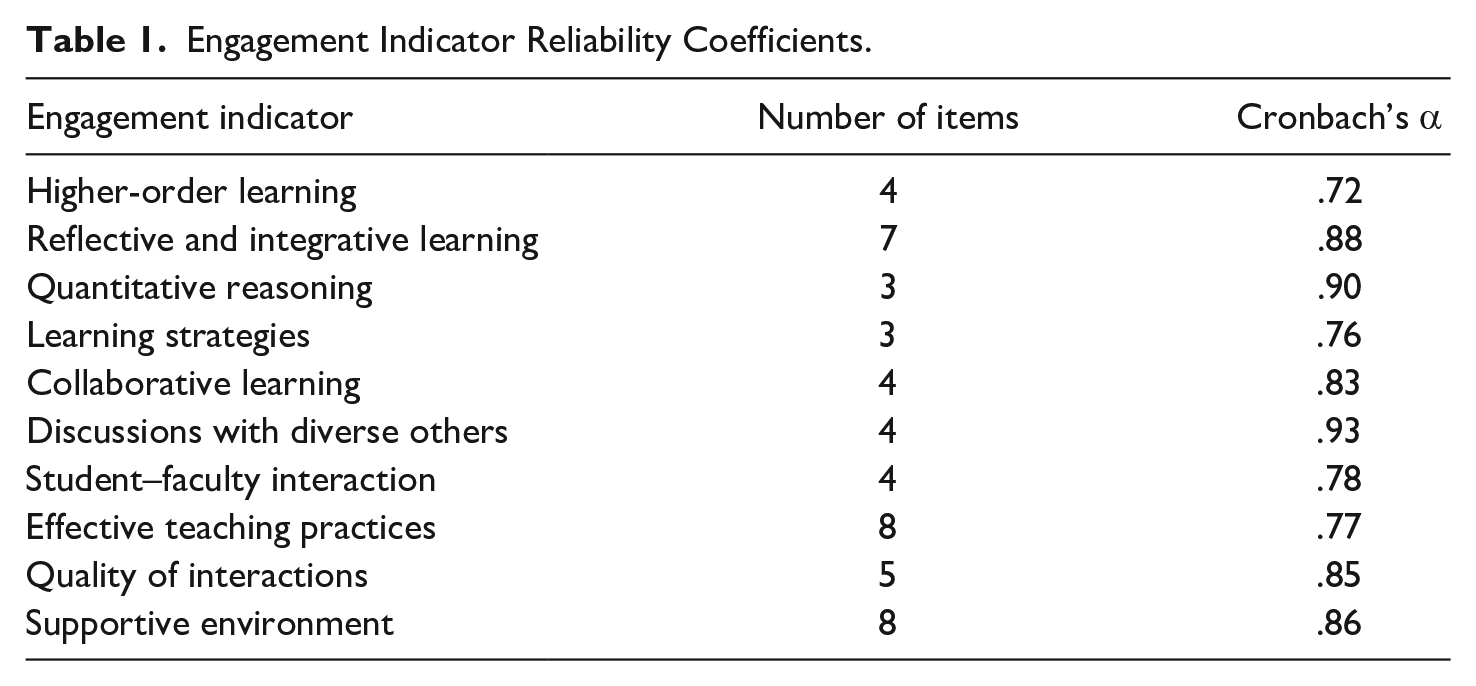
On FSSE, there are several different measures of faculty contributions to student engagement. The dependent variables were 10 scales. These included higher-order learning, reflective and integrative learning, quantitative reasoning, learning strategies, collaborative learning, discussions with diverse others, student–faculty interactions, effective teaching practices, quality of interactions, and supportive environment. Reliability coefficients for each scale are found in Table 1. These scales show acceptable levels of internal consistency (McMillan & Schumacher, 2001) and previous research suggests sufficient evidence for construct validity with exploratory and confirmatory factor analyses (FSSE, 2017). FSSE staff scored each item on a 60-point scale by converting the response sets to 60-point intervals and then averaging the rescaled items. Consequently, a score of zero would mean a faculty member responded at the bottom of the response set for every item in the scale, while a score of 60 would mean that a faculty member responded at the top of the response set for every item in the scale. Thus, higher scores on the scales mean higher levels of contribution to that aspect of engagement. Although several of the scales are significantly correlated with one another (Table 2), these correlations are small or moderate in magnitude (Cohen, 1992), suggesting that there is not enough shared variance to be considered redundant constructs. These scales are meant to be considered as separate constructs, as there is not a psychometrically sound higher-order scale for “overall engagement.” (For a more detailed discussion of the scale construction process and the individual items in each scale, please refer to the FSSE website at http://fsse.indiana.edu/html/Psychometric_Portfolio.cfm).
Engagement Indicator Reliability Coefficients.
Engagement Indicator Bivariate Correlations.
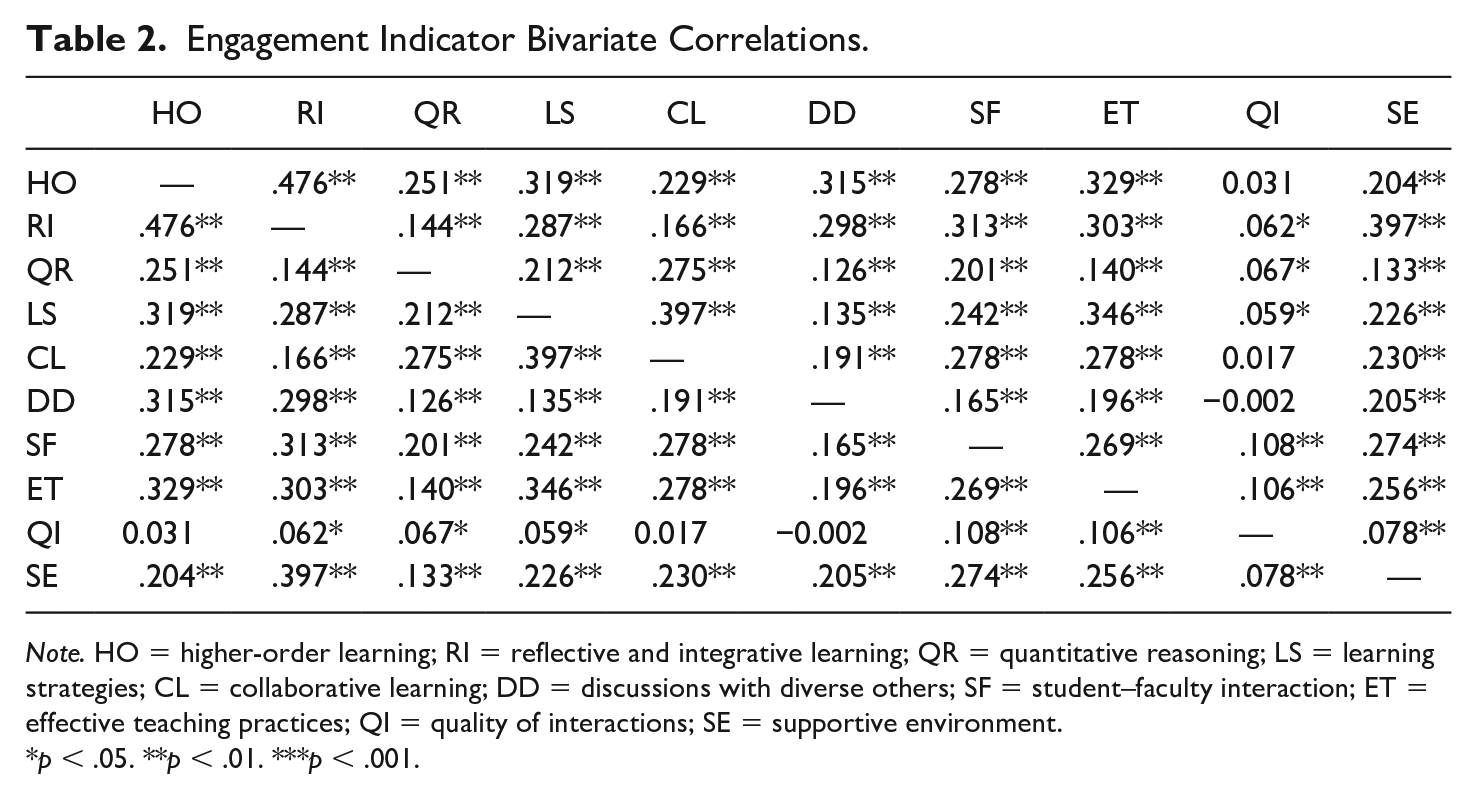
Note. HO = higher-order learning; RI = reflective and integrative learning; QR = quantitative reasoning; LS = learning strategies; CL = collaborative learning; DD = discussions with diverse others; SF = student–faculty interaction; ET = effective teaching practices; QI = quality of interactions; SE = supportive environment.
p < .05. **p < .01. ***p < .001.
In addition to the core survey, these results incorporate responses from two additional experimental items on teaching honors courses that FSSE staff administered to faculty members at the subset of 15 institutions offering honors colleges or programs. One item asked if faculty had taught any honors courses during the academic year (15% responded yes), and the second asked if their “selected course section” (about which they provided responses for several items on the core survey) was an honors course (5% responded yes).
The survey instrument also collected demographic information from respondents. FSSE staff then combine the survey instrument data with publicly available data such as institution control, selectivity, and size. We used this demographic and institutional information as control variables for all models. As a variety of research in the field of higher education points to important differences in the faculty experience based on these characteristics (Nelson Laird, Lambert, et al., 2014; Umbach & Wawrzynski, 2005), it is important to include them in the models. For additional descriptions and coding of these variables, see the appendix.
Analyses
We chose ordinary least squares (OLS) regression analyses due to the univariate focus of the research questions, the ordinal nature of the dependent variables, the number and type of control variables, and the appropriateness of this method for testing theory with real-world data collected outside of manipulated laboratory settings (Aldrich, 2019; Field, 2009; Huang, 2020; Tabachnick & Fidell, 2001) and this approach is consistent with FSSE recommended practice for modeling predictors of FSSE scales (FSSE, n.d.). We conducted a series of 10 OLS regression analyses, controlling for certain faculty and institutional characteristics. In each of the analyses, we entered the corresponding flag for teaching honors courses as the last step predictor variable by itself. We entered selected faculty and institutional characteristics as step one of each model (see the appendix). The faculty characteristics were gender, race/ethnicity, U.S. citizenship, doctorate-earned status, academic rank, discipline of appointment, age, and number of years of teaching experience; the institutional characteristics were locale, enrollment size, Barron’s selectivity, and control. We dummy coded all categorical independent variables and used the 10 scales as the outcome variables in each of the models. The Variance Inflation Factor (VIF) values for each predictor variable in these regression models were all well below 5 (ranging from 1.0 to 3.7), suggesting that multicollinearity was not an issue (Field, 2009). We focused on standardized beta coefficients, which allows for the coefficients to be interpreted as effect sizes relative to one another.
Results
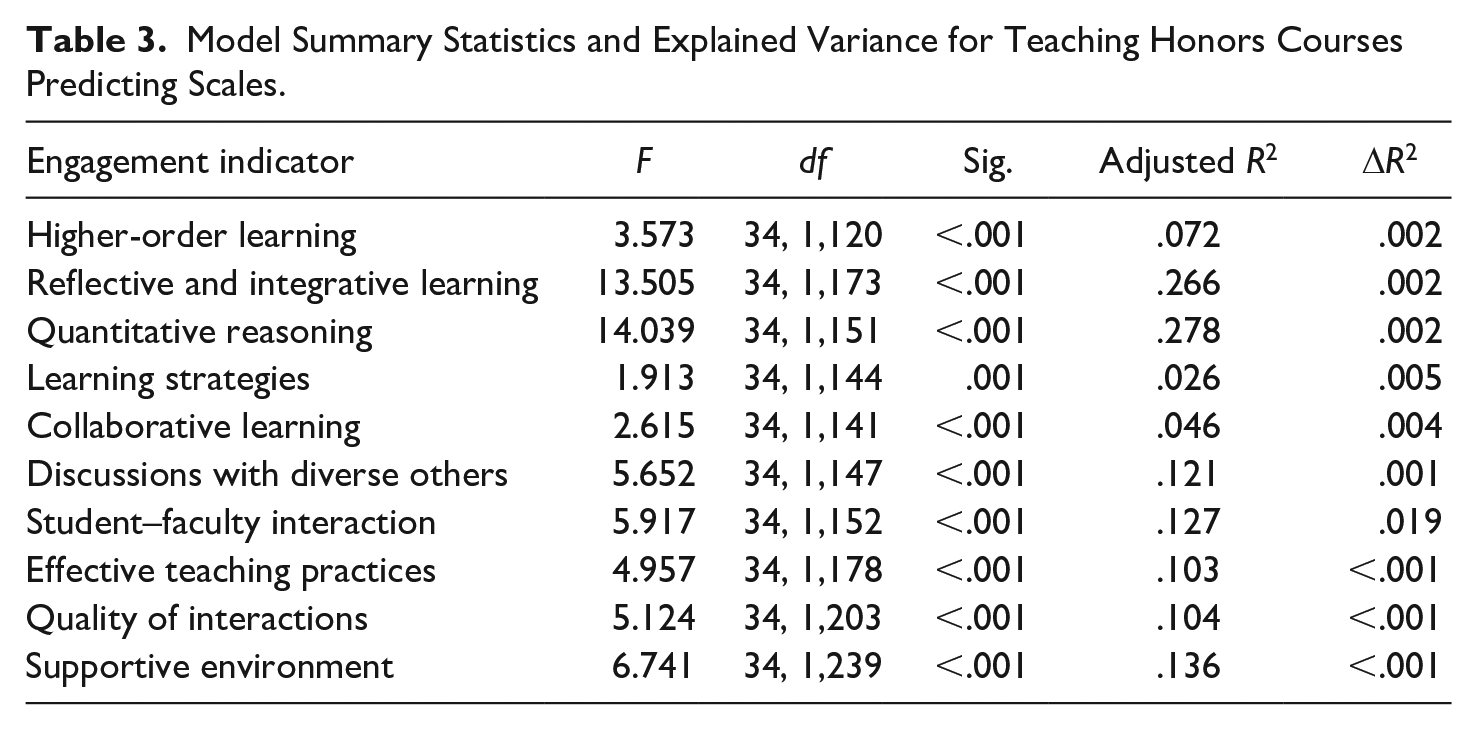
The results of the regression models indicate that faculty who teach honors courses contribute more in the areas of student–faculty interaction, learning strategies, and collaborative learning. The positive, statistically significant effects emerged from the models even when controlling for other demographic and institutional characteristics. However, teaching an honors course did not have a statistically significant impact on higher-order learning, reflective and integrative learning, quantitative reasoning, discussions with diverse others, effective teaching practices, quality of interactions, or supportive environment scores. Model summary statistics are reported in Table 3, and individual standardized beta coefficients for all models are reported in Tables 4 and 5. Overall, the predictor variables accounted for 2.6% to 27.8% of the total variance on faculty engagement scores. However, teaching an honors course seems to be one of many explanatory factors in the model outcomes, contributing between 0.1% and 1.9% of the overall model variance.
Model Summary Statistics and Explained Variance for Teaching Honors Courses Predicting Scales.
OLS Regression Models for Scales: Standardized Beta Coefficients.
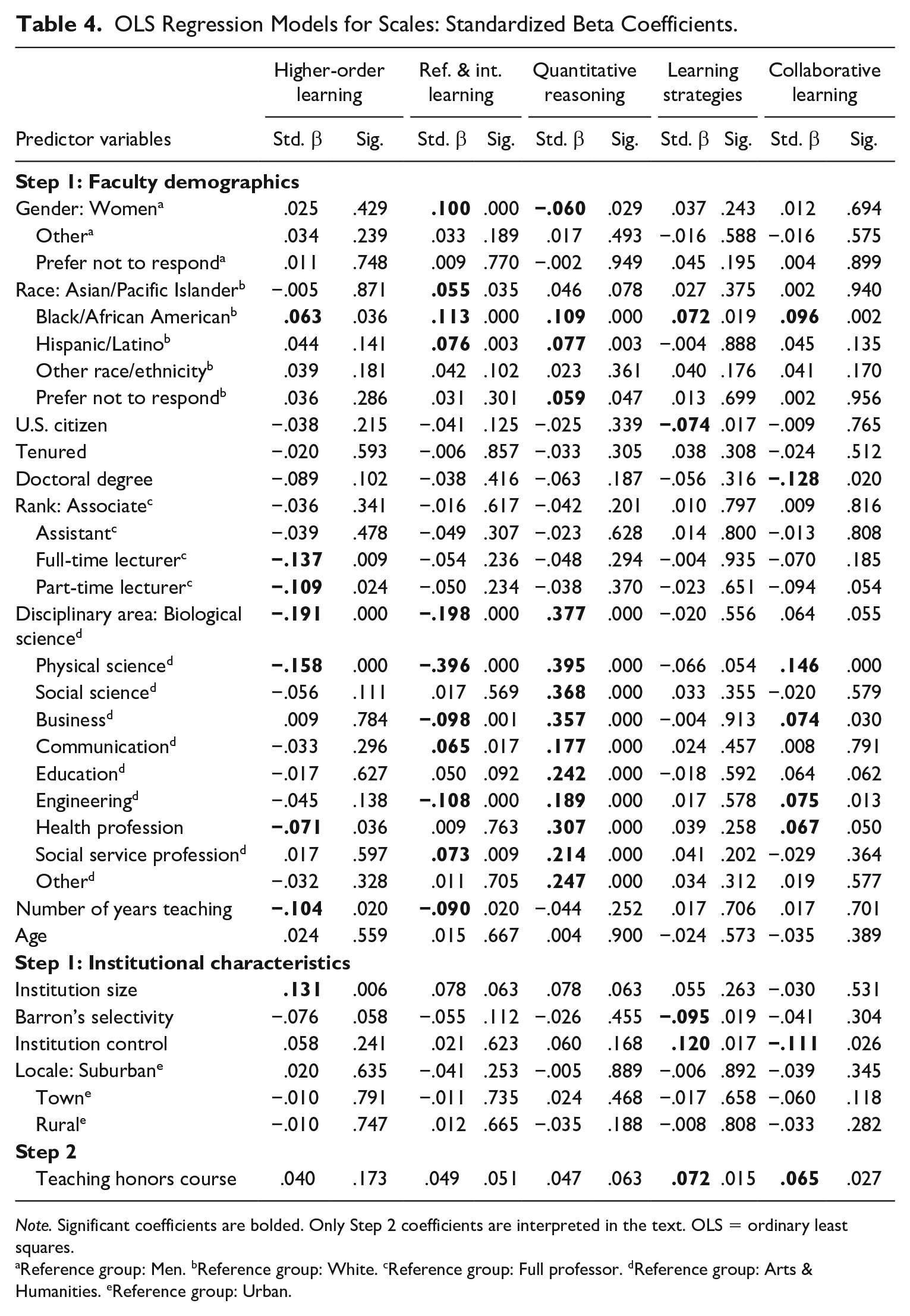
Note. Significant coefficients are bolded. Only Step 2 coefficients are interpreted in the text. OLS = ordinary least squares.
Reference group: Men. bReference group: White. cReference group: Full professor. dReference group: Arts & Humanities. eReference group: Urban.
OLS Regression Models for Scales: Standardized Beta Coefficients.
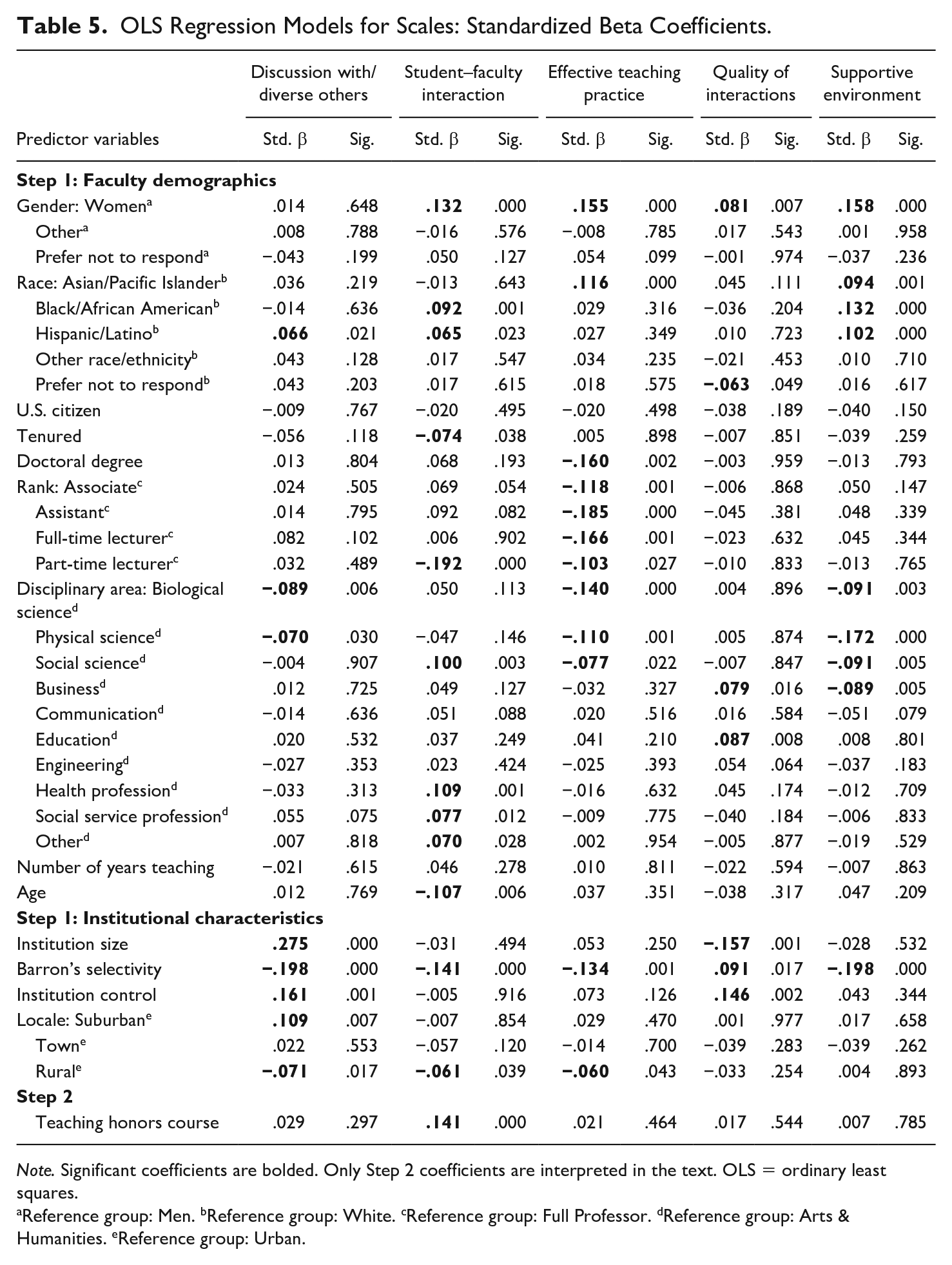
Note. Significant coefficients are bolded. Only Step 2 coefficients are interpreted in the text. OLS = ordinary least squares.
Reference group: Men. bReference group: White. cReference group: Full Professor. dReference group: Arts & Humanities. eReference group: Urban.
Faculty teaching honors courses were more likely to explicitly encourage the use of learning strategies for their students (β = .072). Compared with the other significant coefficients in the model (Table 4), this was a relatively moderate, albeit statistically significant, coefficient. This finding is interesting to note, as it might be believed that honors faculty would put less emphasis on these types of activities (such as summarizing or reviewing notes) because they might assume that honors students would already have developed these skills. However, the results from this model suggest that honors faculty are more encouraging of these behaviors, to a moderate degree.
Faculty teaching honors courses were also more likely to encourage collaborative learning for their students (β = .065). This was a relatively weak predictor, compared with the other significant coefficients in the model (Table 4). Of the statistically significant coefficients, it was the weakest in magnitude, suggesting that many other factors are having an influence on faculty encouragement of collaborative learning. Yet regardless of the small magnitude of the coefficient, this finding is still somewhat intuitive. Group work in honors courses is probably more feasible given the smaller class sizes.
Of models where teaching honors courses had a statistically significant result, the strongest effect was for student–faculty interaction (β = .141). Compared with the other significant coefficients in the model (Table 5), it was tied for the strongest coefficient in magnitude. While also not surprising given the smaller class sizes for most honors courses, the relative strength of prediction within the model is a valuable finding.
Although not the focus of this study, it is also worth noting a few of the demographic and institutional characteristics that seem to play a role in encouraging engagement, especially for those models where teaching honors courses did not have a statistically significant effect. For instance, disciplinary area seems to be the driving force within quantitative reasoning and has an influence on reflective and integrative learning scores as well (Table 4). Furthermore, institutional characteristics tend to predict discussions with diverse others, while full Professor rank appears to influence effective teaching strategies (Table 5).
Discussion
Taken together, there were some findings from this study that were consistent with previous research, while others were somewhat more surprising. Faculty teaching honors courses were more likely to encourage the use of learning strategies. This point is interesting to note, as on the surface one might assume the opposite effect. Some might presume that honors students would already have well-developed study skills, gained from their previous educational experiences, and therefore faculty would be less likely to incorporate direct instruction on such practices into their courses. However, the encouragement of these practices (regardless of whether they are already acquired by students) is more prevalent for honors faculty, which suggests that these strategies are beneficial for students at a variety of ability levels and are a notable element of honors courses. It may also be the case that honors students have been more likely to explicitly request this type of assistance from their instructors out of a greater concern for their study habits and grades, and in turn their instructors have obliged.
Smaller class sizes are another hallmark of honors courses. This type of format allows professors to facilitate more group work, and therefore it makes sense that collaborative learning was more likely to be encouraged from honors faculty in their courses. Collaborative learning is linked to many positive outcomes, including cognitive elaboration, enhanced critical thinking, and promoting social and emotional development (Macgregor et al., 2000). This type of curricular approach allows students to more actively involve themselves in the course material, which is consistent with the claims that honors courses offer more academic rigor compared with their general education counterparts (Sederberg, 2005).
Smaller class sizes can also be connected to another finding from this study, which was that honors faculty were more likely to participate in student–faculty interactions with their students. The lower the student–faculty ratio, the more the individual attention that an individual can provide. Faculty can spend more time with each student not only delivering the course material, but also getting to know the students at a more personal level: their backgrounds, majors, research interests, and learning preferences. It is also worth noting that the individual items within the student–faculty interaction measure in this study contain interactions that might be considered “above and beyond” regular relationships with faculty such as discussing course topics outside of class and working on activities other than coursework. This interaction allows for more customized feedback about student strengths and weaknesses, furthering their academic development.
In the remaining models, the effect of teaching honors courses was not statistically significant. For some of the scales, such as higher-order learning and reflective and integrative learning, it is surprising that these are not more emphasized or more important, respectively, in honors courses, although somewhat promising from the perspective that all college students can benefit from these types of engagement. Similarly, one might expect faculty to provide more opportunities for discussions with diverse others in honors courses. This is especially important to consider, given criticisms that honors programs are either lacking in diversity, or are only addressing issues on a superficial level (Ashton, 2009). Scholars and educators have recently pushed for a more intentional and inclusive focus on diversity education within honors programs (e.g., Coleman et al., 2017; Coleman & Kotinek, 2010). Dziesinski et al. (2017) suggest changing the culture of honors education by reframing honors discourse from one of elitism and entitlement to one of diversity and social responsibility. This shift requires a move in curriculum design that does not create an othering or remarginalization of underrepresented students and instead integrates and infuses social justice throughout (Riek & Sheridan, 2010).
For some of the other models with non-significant findings for honors faculty, this may be due to a stronger impact of a specific major field (such as quantitative reasoning) or that the measures are based on more global assessments of the student experience that are not specific to honors students (such as supportive environment and quality of interactions). One particularly surprising finding was that differences in the use of effective teaching practices (aspects of teaching clarity) were not found, given that previous research has found evidence to the contrary in favor of finding good teaching practices in honors courses (Dean & Jendzurski, 2012; Shushok, 2006). The finding in this study suggests that instructors may not be altering their teaching methods based on whether or not the course they are teaching is for an honors program (or are only altering them very little). This may be due to a lack of training on the specific qualities of honors students, or a lack of time, or a combination of factors. In K-12 classrooms, this might be comparable to the various challenges that teachers face when trying to differentiate for gifted learners (VanTassel-Baska & Stambaugh, 2005). More faculty awareness of the needs of honors students would be beneficial.
In addition, for those models that did find a significant effect for teaching honors, it should be noted that these statistically significant (standardized) coefficients are considered small when interpreting effect size (Courville & Thompson, 2001). Therefore, many other variables were contributing to the explained variance in encouragement of student engagement. Because student engagement is not a unitary construct, but rather a variety of many different behaviors, motivations, attitudes, and perceptions (NSSE, 2018), is it reasonable to expect that explained variance within any model to be moderate at best.
These findings can be of additional support to faculty developers and administration. Faculty developers may want to examine the practices that faculty use in honors courses to encourage the use of learning strategies and collaborative learning. It is possible that some of these methods could be scaled up to non-honors courses. Although not finding differences could mean that all faculty, on average, are participating in effective educational practice, faculty developers who assist faculty teaching honors courses could work to find ways for ensuring that honors courses are meeting the high expectations and standards that could be applied to high-ability honors students. These students should be maximizing their development through deep approaches to learning and discussions with diverse others. One potential area of concern for the findings in this study is the increased amount of student–faculty interaction for faculty teaching honors courses. Administrators should make sure that these faculty have the support and resources they need for this extra student contact and should consider rewarding these faculty for this additional effort.
The significant findings corroborate previous research focusing on student engagement and honors colleges from the perspective of the students. Miller and Dumford (2018) found evidence that first-year honors students were more likely to engage in the use of learning strategies, collaborative learning, and student–faculty interaction, while senior honors students were also more likely to engage in student–faculty interaction as compared with their general education counterparts. In terms of the DMGT (Gagné, 2009), these findings are consistent with the role of the environmental factor. The specific individuals (i.e., professors and administrators) supply provisions (i.e., instruction in learning strategies, curricular requirements of group work, and smaller class sizes) that enhance the experience of the honors students. These elements are important for providing an appropriately challenging education for students at high ability levels.
Our results also reinforce previous research looking at students’ perceptions of honors faculty and faculty academic identity. Shushok (2006) found that honors students were more likely to discuss social issues with peers outside the classroom. Our results also support findings that students in honors programs are more likely to have course-related interactions with peers (Seifert et al., 2007). Both studies align with the idea of honors faculty nurturing collaborative learning, encouraging students to work and engage with peers outside the classroom to extend those relationships built inside the classroom. In addition, Shushok (2006) found that both honors students and non-honors students perceived honors faculty to be more involved, having more frequent interactions with their students. According to Daily (2016), honors faculty view themselves as mentors and advocates for students, valuing their interactions and striving to incorporate “interesting experiences in the classroom” as a core focus of their teaching philosophies (p. 170). Thus, student–faculty interactions and other best practices, such as collaborative learning and learning strategy instruction, may be a priority for those who work in honors colleges or with honors students.
Limitations
There are some limitations of this research that should be considered when interpreting the results. Although there were a variety of institutions included in this sample and they represented FSSE participants as a randomly selected sub-sample of all FSSE institutions, the results may not be reflective of all 4-year undergraduate institutions across the country. Institutions elect to participate in FSSE and can further select to whom the survey should be administered. Data were collected from 15 institutions, so while the results were not institution-specific, only having 15 institutions in the sample did not allow for in-depth examinations of the influences of institutional characteristics, such as enrollment size, selectivity, or institutional control (public vs. private), although these were included as control variables in the models. It could be that honors faculty practices have a disparate impact depending on aspects of the institutional climate or specifics of the honors program (such as curricular stipulations). Furthermore, there was not much racial/ethnic diversity in the sample, with 76% of respondents reporting White for race/ethnicity. Faculty of color are not well-represented in this sample, which can limit conclusions and generalizability.
A further limitation involves the use of self-reported measures. Although this type of research has the advantage of increased sample size and ease of online data collection, responses to the measures may not always be completely objective. Survey data may not completely capture all elements of student engagement (Kahu, 2013), and in this case there was a relatively narrow focus on behaviors of faculty. In addition, there were relatively low standardized coefficients (i.e., effect sizes) and percentages of explained variance for many of the models, which suggest that there were many other factors not included in the analyses influencing the variables of interest. Moreover, given the research design, this study was unable to test for causal relationships between honors course teaching and contributions to engagement. The results can only confirm whether they are associated. Although dependent measures are sufficiently distinct to warrant separate statistical analyses (Table 2; FSSE, 2017), multiple analyses can increase the chance for Type 1 error. Given these caveats, the results should be interpreted with caution.
Future Directions and Conclusions
Overall, this study provides further evidence for increased encouragement of several aspects of student engagement among honors faculty. However, in other areas there were no differences between honors and non-honors faculty after controlling for demographic and institutional factors. This study continues the multifaceted combination of theories and knowledge within gifted education and research-based best practices in the field of higher education. All students, regardless of ability level, can benefit from faculty who support engagement (Kuh, 2009), but demonstrating that at least some aspects of engagement are especially encouraged in honors colleges is vital as well. This interpretation conveys not only the potential advantages of honors college participation but can also address other related issues. What are faculty (both honors and non-honors) perceptions of honors courses and students? Are these perceptions in alignment with students’ perceptions? Are the same patterns found across diverse samples of faculty and students (which may necessitate targeted oversampling methodological procedures)? Another approach to studying honors faculty might be qualitative, conducting case studies of high-performing institutions. What are their curricular models? Do honors faculty receive any pedagogical training or support specifically for honors courses? Do they differentiate for honors courses in similar or different ways, compared with K-12 gifted education practices?
It is important to measure the effectiveness of honors colleges, in terms of both faculty perceptions and student outcomes, rather than simply assuming they are superior. These assessments can play a role in institutional improvement efforts, programming enhancements, and resource allocation for honors colleges. In some instances, it may be fruitful to adapt K-12 gifted education models to undergraduate classrooms, but in others there may be a need to incorporate unique curricular elements. Similarly, providing honors faculty with pedagogical training and an understanding of the social and emotional needs of these students could also be beneficial. Ongoing research regarding the experiences of honors college students and faculty, as well as the effectiveness of these honors programs, can advance the fields of both gifted education and higher education. Ultimately, gathering this evidence can help educators to better serve high-ability students at the college level.
Footnotes
Appendix
Faculty and Institutional Characteristic Measures.
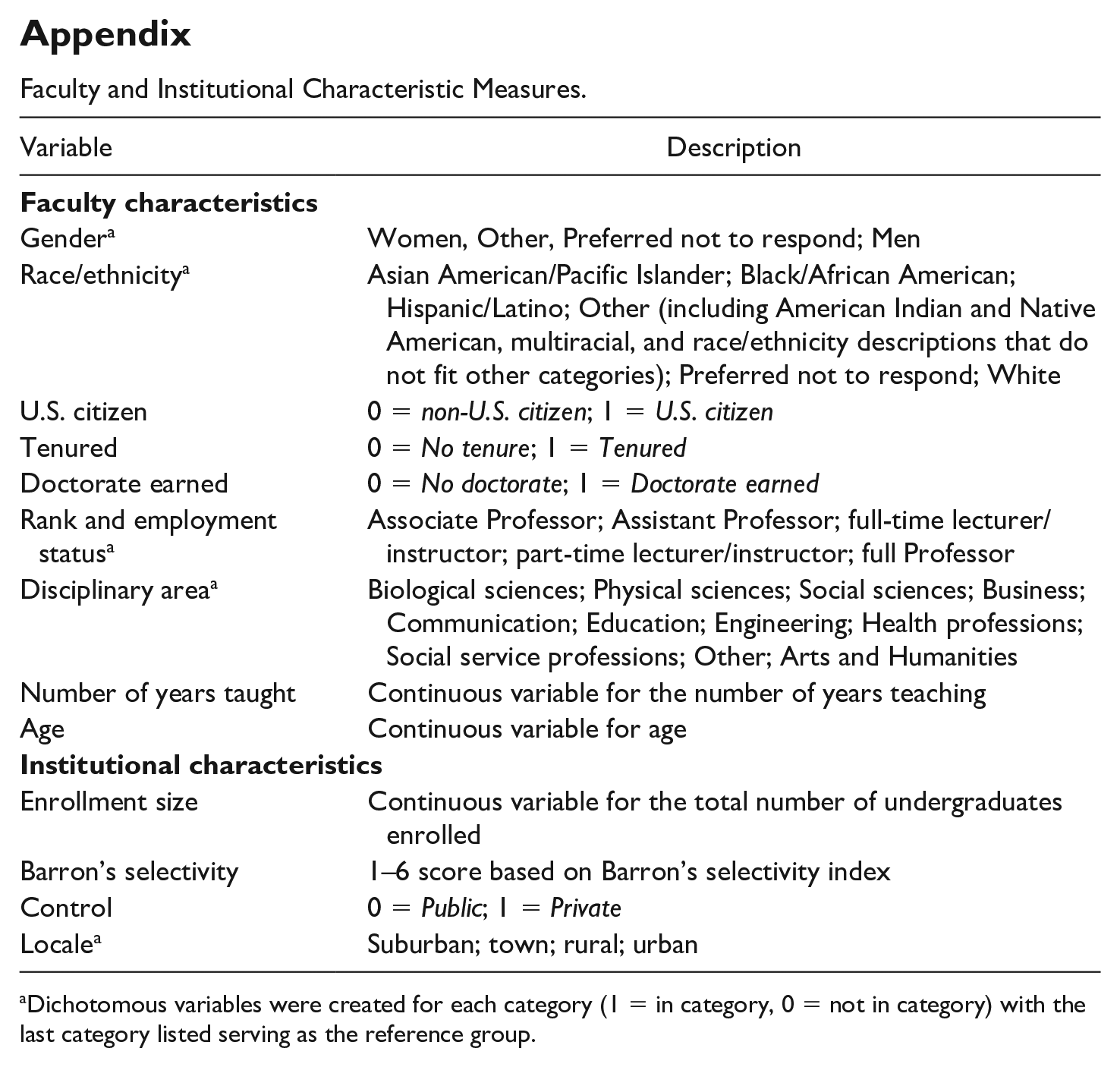
| Variable | Description |
|---|---|
|
|
|
| Gender a | Women, Other, Preferred not to respond; Men |
| Race/ethnicity a | Asian American/Pacific Islander; Black/African American; Hispanic/Latino; Other (including American Indian and Native American, multiracial, and race/ethnicity descriptions that do not fit other categories); Preferred not to respond; White |
| U.S. citizen | 0 = non-U.S. citizen; 1 = U.S. citizen |
| Tenured | 0 = No tenure; 1 = Tenured |
| Doctorate earned | 0 = No doctorate; 1 = Doctorate earned |
| Rank and employment status a | Associate Professor; Assistant Professor; full-time lecturer/instructor; part-time lecturer/instructor; full Professor |
| Disciplinary area a | Biological sciences; Physical sciences; Social sciences; Business; Communication; Education; Engineering; Health professions; Social service professions; Other; Arts and Humanities |
| Number of years taught | Continuous variable for the number of years teaching |
| Age | Continuous variable for age |
|
|
|
| Enrollment size | Continuous variable for the total number of undergraduates enrolled |
| Barron’s selectivity | 1–6 score based on Barron’s selectivity index |
| Control | 0 = Public; 1 = Private |
| Locale a | Suburban; town; rural; urban |
Dichotomous variables were created for each category (1 = in category, 0 = not in category) with the last category listed serving as the reference group.
Declaration of Conflicting Interests
The authors declared no potential conflicts of interest with respect to the research, authorship, and/or publication of this article.
Funding
The authors received no financial support for the research, authorship, and/or publication of this article.
Data Availability
The FSSE data set is proprietary and not currently available for free public use. Syntax for all analyses included in this article are available from the authors upon request.
