







Abstract
The present qualitative pilot study aimed to evaluate students’ perceptions of procedures and outcomes from an affective intervention to increase achievement motivation among gifted students. The intervention was implemented at a summer program with 20 students. Using inductive analysis, participants’ perceptions of the intervention and its effects were evaluated. This study’s findings show most students enjoyed the Achievement Motivation Enhancement sessions and felt they benefited from talking about their experiences with peers in small groups. Students discussed improved self-perceptions and said they benefitted from learning goal valuation, goal-setting, and self-regulation strategies. Implications are discussed.
Introduction
Specific motivation-related constructs support academic achievement, including academic self-concept and self-perception (Bandura, 1993; Preckel & Brunner, 2015; Schnitzler et al., 2020), goal valuation (Eccles & Wigfield, 2020; Siegle et al., 2017), goal orientation (Albert & Dahling, 2016), self-regulation (Ridgley et al., 2020; Zimmerman, 2002), resilience (Reis et al., 2004; Yeager & Dweck, 2012), and positive self-talk (Thomaes et al., 2020). Many gifted students may currently be achieving academically, but they are not required to use these motivation-related skills to be successful in their schools. In fact, lack of achievement motivation among gifted students has been a concern of educators, parents, and researchers for decades (Emerick, 1992; Obergriesser & Stoeger, 2015; Peterson & Colangelo, 1996; Reis & McCoach, 2000; Whitmore, 1980). Lack of achievement motivation may cause students to underachieve, which may negatively affect students’ self-actualization.
Underachievement is often defined as a significant discrepancy between an individual's ability and actual achievement (Reis & McCoach, 2000). Underachievement can manifest both in absolute and relative terms. Absolute underachievers are students who achieve below their intellectual ability, and this is also an objectively low achievement level (e.g., failing a class; Koenderink & Hovinga, 2018; Snyder et al., 2019). Relative underachievers are students, often gifted, who are seemingly doing well (i.e., grade-level achievement). Still, their actual performance is significantly lower than their potential achievement, as indicated by their intellectual ability (Snyder et al., 2019). Although gifted students who exert minimal effort may still be successful in their current school environment (i.e., relative underachievement), eventually, motivation-related skills will be necessary, and students should learn them and start practicing them. So, the purpose of this study was to pilot the Achievement Motivation Enhancement (AME) curriculum, an affective intervention to teach gifted students motivation-related strategies and skills to support their long-term achievement. The AME curriculum was designed to target positive self-perceptions, goal-valuation, mastery or learning goal orientation, self-regulation, resilience, self-directed learning, and positive self-talk.
The AME Curriculum
The AME curriculum was designed based on the Achievement Orientation Model (Siegle et al., 2017). The Achievement Orientation Model (Siegle, 2013; Siegle et al., 2017) theorizes students will be motivated to do well in school if they perceive tasks as manageable (self-efficacy) and meaningful (goal valuation) and their environment as supportive because these perceptions will affect self-regulated behaviors which increase engagement and achievement. The AME curriculum, therefore, directly targets goal valuation and self-regulation, and indirectly focuses on self-efficacy through activities on goal setting, identifying talents, and positive self-talk. By creating positive interactions with a caring adult and a supportive peer group, the AME curriculum intends to promote positive environmental perceptions as well. The curriculum is centered around small-group discussion and achievement coaching. Specifically, each session centers around one or two learning activities that typically include a worksheet with prompts for student reflection and strategy application, followed by a guided discussion of the topic with targeted questions. Students are encouraged to practice the strategies between sessions and each session typically starts with an opening-round designed to check on students’ progress with the application of the strategies. The AME curriculum consists of six units, that each takes 60–90 min depending on group size. The first unit, “Hello, my name is … and this is my talent toolbox,” addresses positive self-concept. The second unit, “Turning dreams into goals,” addresses goal-valuation, learning or mastery goal orientation, and goal-setting strategies. The third unit, “Now I see me,” addresses self-monitoring and self-regulation strategies. The fourth unit, “I thought I could, and I did,” addresses resilience. The fifth unit, “My learning process, my rules,” addresses self-directed learning strategies. The sixth and final unit, “When the going gets tough … the tough keep going,” addresses positive self-talk.
Literature Review
In what follows we review the Achievement Orientation Model which serves as the theoretical framework underlying the AME curriculum. This is followed by a brief review of the existing literature on the three core outcomes targeted in the AME curriculum: academic self-perceptions, goal valuation and goal orientation, and self-regulation.
The Achievement Orientation Model
The Achievement Orientation Model (Siegle, 2013; Siegle et al., 2017) is based on Bandura’s (1986) self-efficacy theory, Weiner’s (1985) attribution theory, Eccles and Wigfield’s (2020) expectancy-value theory, and Lewin’s (1938) person-environment fit theory. The Achievement Orientation Model theorizes that individual's self-perceptions in the areas of self-efficacy, goal valuation, and environmental support, affect student achievement because those perceptions are related to self-regulated behaviors that increase engagement and achievement. A student's self-perception in these three areas does not need to be equally strong; however, it does need to be positive.
An initial exploratory validation study by Ritchotte et al. (2014) showed that several of the relationships theorized in the Achievement Orientation Model indeed exist. They found that all components of the Achievement Orientation Model predicted engagement, as the model suggests, but only two, self-efficacy and self-regulation, predicted achievement. Ritchotte et al. (2014) did not find that goal valuation directly predicted achievement, however, there is substantial evidence from other work to support this relationship (see below). Ritchotte et al. (2014) suggested it is possible gifted students may still achieve at higher levels even when their goal valuation is lower. More recently, Desmet et al. (2020) conducted a narrative inquiry study with underachieving girls and found that the underachievement of some could be attributed, in part, to their lack of goal valuation, self-regulation, and environmental support, supporting what Siegle et al. (2017) theorized.
Academic Self-perception
Positive academic self-perception or self-concept is an important prerequisite for academic achievement (Byrne & Shavelson, 1986; Febriana & Mujiyanto, 2020; Hussain et al., 2019; Thomaes et al., 2020). Academic self-perception or self-concept involves the beliefs we hold about our academic abilities, behavior, and competence (Bandura, 1993; Byrne & Shavelson, 1986; Marsh & Craven, 2006). Positive academic self-perception both influences and results from high achievement (Marsh & Craven, 2006; Marsh & Martin, 2011; Seaton et al., 2014). Students’ academic self-perceptions also influence the academic choices students make, such as the types of tasks students engage in, courses, college majors, and career paths (Eccles, 1994; Horta, 2018; Marsh & Yeung, 1997; Simpkins et al., 2006; Tirri & Nokelainen, 2010). Academic self-perception also affects student's effort, engagement, resilience, perseverance, intrinsic motivation, and help-seeking behavior (Bong & Skaalvik, 2003; Schunk & Pajares, 2002). Improving gifted students’ academic self-perception is therefore important to support their long-term achievement and motivation-related skills.
Research on self-concept interventions targeting gifted students is limited. However, research with heterogeneous populations shows that various types of self-concept interventions can effectively improve student's self-concept. For example, based on 105 studies reporting 152 self-concept interventions between 1960 and 2000, O'Mara et al. (2006a) found a mean effect size (d) for self-concept interventions of 0.51. O'Mara et al. (2006a) also found that the treatment setting, intervention administrator type (e.g., teacher or school counselor), administrator training, and the use of standardization procedures were not significant moderators. Researchers found self-concept interventions using feedback, and specifically attributional feedback, goal feedback, or contingent praise, are most effective (O’Mara et al., 2006b). Furthermore, researchers found that positive self-talk is associated with higher levels of self-concept (Burnett, 1999, 2003) and that targeting positive self-talk can improve achievement for students with lower self-competence beliefs (Thomaes et al., 2020). Therefore, the AME curriculum explicitly targets self-concept and positive self-talk.
Goal Valuation
Goal valuation or task value contribute to a students’ motivation to engage in and successfully complete academic tasks (Eccles & Wigfield, 2020). Generally, goal valuation or task value encompasses the extent to which a person finds a task worthwhile or meaningful. This is subjective and person-dependent, so the value of one goal or task can vary among people. Eccles and Wigfield (2020) identified three types of task value: intrinsic value, attainment value, and utility value. Intrinsic value, also known as interest value, refers to the anticipated enjoyment of choosing the task as well as the enjoyment one gets when doing the task. Intrinsic value is similar to intrinsic motivation, both promote achievement (Eccles & Wigfield, 2020; Liu & Hou, 2018; Ryan & Deci, 2020). Attainment value is the “relative personal/identity-based importance attached by individuals to engage in various tasks or activities” (Eccles & Wigfield, 2020, p. 5). Researchers found that attainment values are positively associated with academic self-concept and achievement (Arens et al., 2019). Utility value refers to the usefulness a task holds for a person's present or future plans. Researchers have found utility value interventions, such as writing about the usefulness of a learning topic or domain for various jobs and communal goals, effective in improving utility value and motivation (Canning et al., 2018; Shin et al., 2019). Therefore, the AME curriculum intends to promote goal valuation through identifying and discussing intrinsic, attainment, and utility value in students’ present academic requirements.
Goal-setting interventions can strengthen task value as well as expectancy of success by clarifying the desired goals and specifying a path to success (Eccles & Wigfield, 2020). Researchers found that a single-session, goal-setting intervention can increase grade point average (GPA) and reduce negative affect among undergraduate students (Morisano et al., 2010). Engaging in structured and intentional goal setting can also be seen as a self-regulatory skill and influences students’ self-concept and self-efficacy as well (Morisano & Shore, 2010). So, goal-setting activities are not only beneficial for students’ achievement but also for their positive social and emotional development (Morisano & Shore, 2010). Although goal-setting interventions have typically been used with young adults, researchers argued that these are well suited for gifted students at younger ages due to their advanced metacognitive abilities (Morisano & Shore, 2010). Therefore, the AME curriculum involves two sessions on goal setting.
Self-regulation
Self-regulation and self-regulated learning strategies have a large, positive effect on achievement (Dent & Koenka, 2016; Ergen & Kanadli, 2017; Zimmerman, 2002). Self-regulated learning involves “self-monitoring of one's activities, applying personal standards for judging and directing one's performances, enlisting self-reactive influences to guide and motivate one's efforts, and employing appropriate strategies to achieve successes” (Zimmerman & Bandura, 1994, p. 846). Self-regulated students are proactive in their effort to learn and show more adaptive learning behavior, making them more effective at learning and more likely to achieve (Zimmerman, 2002). Various types of self-regulation, including metacognitive, cognitive, and motivational self-regulation, central in the AME curriculum, are essential skills at all stages of talent development (Olszewski-Kubilius et al., 2019; Ziegler & Stoeger, 2019). Therefore, researchers argued that self-regulation is more important for gifted and talented students than their normative peers, assuming these gifted and talented students want to reach excellence in a talent domain (Stoeger et al., 2015). Therefore, Stoeger et al. (2015) suggested that self-regulation skills should ideally be taught in primary school years, and students should then continue to develop these skills over time.
Research on self-regulated learning interventions for gifted and talented students is limited. However, there is a large body of evidence to support the effectiveness of self-regulated learning interventions with the general population. Researchers also used self-regulated learning interventions to resolve underachievement (for an overview, see Ridgley et al., 2020). Zimmerman (1998) organized self-regulated learning into three phases: forethought, performance, and self-reflection. The forethought phase refers to learning processes and sources of motivation that precede the learning effort, for example, goal setting, or task analysis. The performance phase involves the processes that occur during learning, such as applying specific learning strategies and self-monitoring. The self-reflection phase then refers to processes that occur after the learning effort that influences students’ reactions to the learning experience, such as self-evaluation and feeling satisfied. Rubenstein et al. (2012) conducted an intervention study using forethought strategies and found significant improvement in achievement for underachieving students. Stoeger et al. (2015) conducted various studies to evaluate a self-regulated learning intervention for primary school students following Zimmerman's (1998) three-phase model. Stoeger et al.,'s intervention successfully improved students’ time-management, homework behavior, self-regulated skills, and metacognitive skills (Stoeger & Ziegler, 2008). They also found that their intervention successfully improved time management and strategic learning and confidence and helplessness among underachieving gifted students (Stoeger & Ziegler, 2005). Thus, self-regulation is a powerful skill for talent development and lifelong learning. Therefore, a central objective of the AME intervention is to teach students self-monitoring strategies and self-regulated learning strategies, as well as motivational (e.g., goal setting) and emotional regulation strategies (e.g., positive self-talk and resilience).
Purpose
Some gifted students may be achieving academically but exert minimal effort to succeed. Despite students’ high achievement, some gifted students indicate they lack achievement motivation. Thus, an affective curriculum, the AME curriculum, was developed to facilitate positive academic self-perceptions, goal-valuation, and self-regulation. In this study, we piloted this curriculum and studied how students perceived the curriculum procedures and outcomes?
Methods
This study involved inductive and deductive thematic analysis (Braun & Clarke, 2006; Nowell et al., 2017) of interview transcripts, field notes from observations, and written responses to open-ended survey questions. The thematic analysis allowed us to identify, analyze, and organize themes within our dataset and capture and compare opinions and experiences from various students across the data sources (Braun & Clarke, 2006).
Context and Participants
The summer enrichment program
The study took place in a summer enrichment program for gifted, creative, and talented students at a Midwestern University in the United States. The summer enrichment program was open to students in seventh through 12th grade, who met two of the following criteria: (a) a GPA of 3.5 on a four-point scale in the talent area related to their choice of class(es); (b) individual or group intelligence test results with a minimum score of 120; (c) a national or state achievement or aptitude test result at or above the 90th percentile; (d) a recommendation from a teacher or mentor in the talent area related to their choice of class(es); and (e) documentation of involvement in the talent area related to their choice of class(es), such as awards or recognition letters (Institute, 2019). In 2019, 218 students (48% female) attended the program. The program had a diverse student population, with approximately one-third of students receiving financial aid to attend the camp, students attending from all over the United States, and ∼20% international students. The ethnic breakdown of students attending the program was as follows: 7.8% African American or Black, 27.9% Asian, 12.8% Hispanic or Latinx, 14.2% Native American/Alaska Native, 0.4% Pacific Islander, 4.1% two or more races, 27.7% White, 2.7% Other, and 12.8% chose not to specify their ethnicity. Students attended the program for 2 to 4 weeks and chose two different enrichment classes, which they attended during the day. Students in seventh and eighth grade were grouped together for all program activities and students in grades 9 through 12 were as well. The AME curriculum was implemented as part of the evening activities. Students engaged in the AME small-group discussions for approximately 1 hour every other weekday for a total of six sessions.
Although all camp counselors used the AME curriculum as part of the evening activities, only four camp counselors implemented the curriculum with our study participants. Program coordinators selected four camp counselors to implement the AME affective curriculum as part of this study: Ben (White, male), Grace (White, female), Kathy (Asian, female), and Tana (White, female). Camp counselors were selected for this study based on their level of experience. Program coordinators felt it best to conduct the study with more experienced counselors rather than those who were new to the program or to small group work. Tana had a degree in counseling psychology, and the other three camp counselors were preservice teachers. All camp counselors had taken at least one introductory course on motivation theory and had previous experience guiding small-group discussions either as part of the enrichment program or through other experiences. Kathy and Grace worked with seventh and 8th graders, and Tana and Ben worked with high school students.
Participants
All parents of students attending the enrichment program received a recruitment letter with information about the study. In that letter, parents and students received details about the research study and procedures involved. Students who mentioned one or more of the following reasons for not achieving as well as they could on a screening form were selected for this study: (a) students once qualified for their school's gifted and talented or high-ability program and recently no longer qualified; (b) students felt they exerted minimal effort to be successful; or (c) students mentioned a lack of achievement motivation. Twenty-seven students submitted screening forms. Following the screening procedure, we determined that six students did not meet the criteria and excluded them from the study. The other 21 candidates were selected for the study. These students’ parents were asked to sign a parental informed consent form, and the students signed an assent form.
At the start of the pretest, one student changed her mind and asked to exit the study. Our participants were assigned to one of the four camp counselors by a program coordinator. One camp counselor (Kathy) had a group that consisted of only research participants (n = 7). The other three camp counselors had research participants and regular campers in their groups. Tana, Grace, and Ben had counseling groups of eight members with four, six, and three research participants, respectively. All counselors worked with mixed-gender groups.
Group profiles
The summer enrichment program offered two 2-week sessions. During the first 2-week session, two camp counselors (Kathy and Tana) and 11 students participated in the study. During the second 2-week session, two camp counselors (Grace and Ben) and nine students participated in the study. Table 1 provides an overview of the demographic characteristics of the student sample. Demographic information on camp counselors is detailed in the summer enrichment program section).
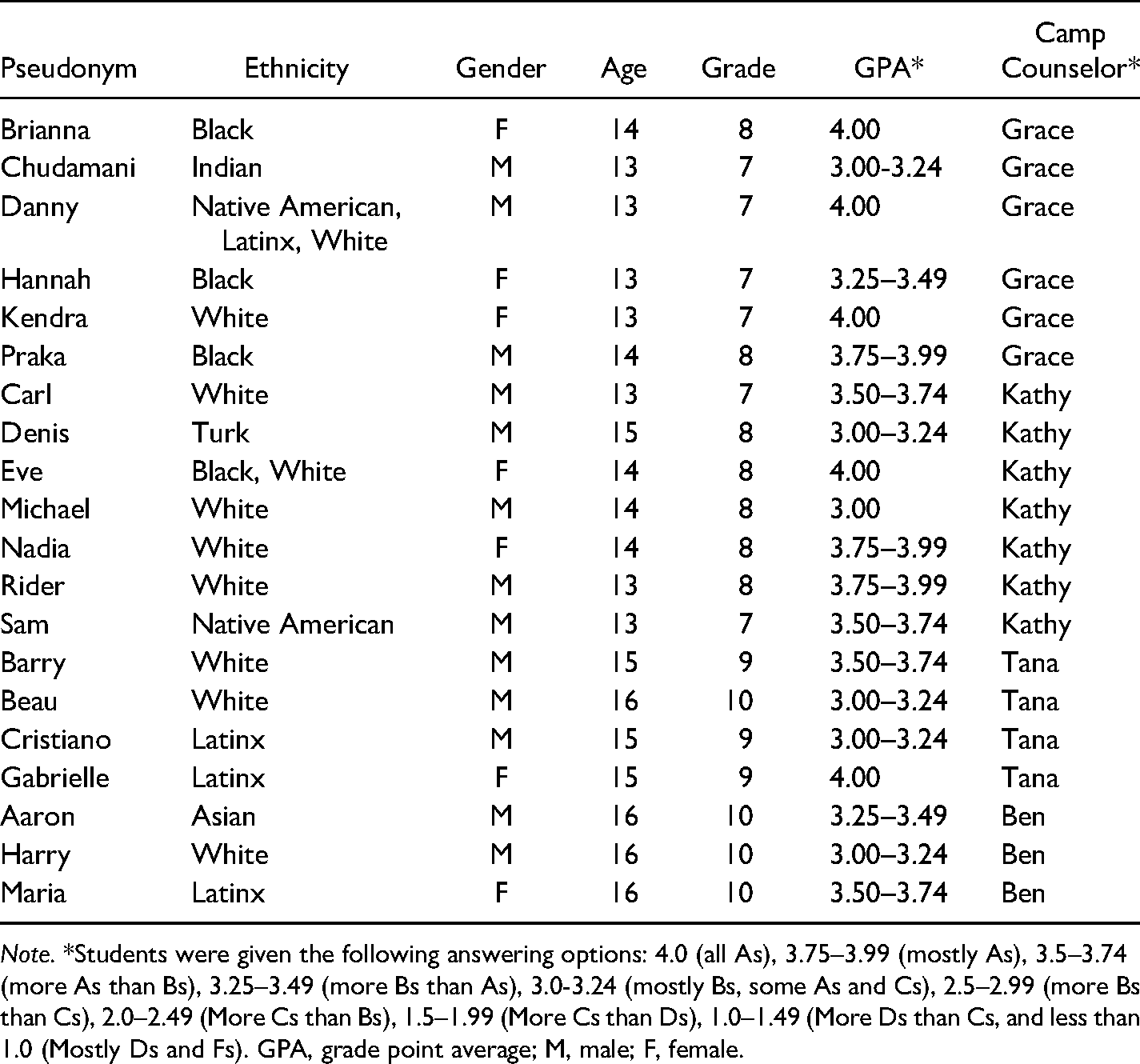
Note. *Students were given the following answering options: 4.0 (all As), 3.75–3.99 (mostly As), 3.5–3.74 (more As than Bs), 3.25–3.49 (more Bs than As), 3.0-3.24 (mostly Bs, some As and Cs), 2.5–2.99 (more Bs than Cs), 2.0–2.49 (More Cs than Bs), 1.5–1.99 (More Cs than Ds), 1.0–1.49 (More Ds than Cs, and less than 1.0 (Mostly Ds and Fs). GPA, grade point average; M, male; F, female.
Kathy implemented the AME curriculum with a group of seven middle school students. All seven students in her group were part of the research study. Kathy had an assistant camp counselor (this is typically a role assigned to someone who works in the program as part of an internship requirement) who joined most sessions and observed, but rarely participated. Kathy's students evaluated her positively; she received an average of 4.70 out of 5.00 rating on the counselor evaluation form. Based on our observation field notes we determined Kathy had a good fidelity of implementation.
Tana worked with a group of eight high school students. Of those eight students, four were participants in the study: Barry, Beau, Cristiano, and Gabrielle. Tana's counselor evaluations were good; she received five out of five for all questions from all students, other than Barry. Barry rated Tana at a four out of five for her communication skills. Tana's fidelity of implementation was excellent based on our observation field notes.
Grace was responsible for facilitating a group of eight middle school students. Of those eight students, six were part of this research study: Brianna, Chudamani, Danny, Kendra, Hannah, and Praka. Grace's students evaluated her positively; she received an average evaluation score of 4.80 out of 5.00 by her students. Grace's fidelity of implementation was moderate. Grace made several changes to the AME curriculum. She added some team-building activities and skipped some activities entirely.
Ben implemented the AME curriculum with eight high school students. Of those eight students, three were part of this research study: Aaron, Harry, and Maria. One of Ben's other students was a counselor in training. The role of a counselor in training was ill-defined, which caused some confusion for Ben and the students. This lack of clarity also affected the group dynamic to some extent as this student's role was unclear during the small group discussion sessions. Harry gave Ben an average of four out of five on the counselor evaluation, whereas Maria and Aaron both gave Ben a five out of five. Ben's fidelity of implementation was poor as he frequently deviated from the curriculum per the observation field notes.
Camp Counselor Training
Due to the affective, discussion-based nature of the curriculum, the AME curriculum involves skills training for educators who plan to work with the curriculum. This training was developed following Peterson and Jen’s (2018) guidelines for facilitating small group discussions. The training and curriculum were created with a focus on the whole child, a developmental and proactive perspective, and encourage group facilitators to address potential personal biases and potential ethical concerns. The training specifically addresses the following: (a) training on listening and responding skills to guide small-group discussions, (b) information on the needs and characteristics of gifted and talented students, (c) information on characteristics, needs, and development of absolute and relative underachievement among gifted and talented students, and (d) a brief overview of the AME curriculum topics and activities. We conducted a brief comprehension check at the end of the training to evaluate camp counselors’ understanding of the curriculum objectives. Additionally, camp counselors had the opportunity to debrief each session with the first author and a program coordinator. During debrief sessions, we reviewed camp counselor's questions, concerns, and procedures as needed.
Data Collection Procedures
Data collection involved observations, surveys, and interviews. We observed each AME session to record camp counselor's fidelity of implementation. During these observations, we took detailed fields notes and recorded deviations from the curriculum. On the last Friday of the enrichment program, students completed a postcamp survey. Once the enrichment program concluded, we conducted one-on-one interviews with all participants. Participants were randomly assigned to one of the authors for interview purposes. Interviews lasted ∼30 min. These interviews were audio-recorded and transcribed for analysis.
Instruments
Interview protocols
We created a semistructured open-ended interview protocol to provoke thoughts about a student's perceptions of AME curriculum procedures and outcomes. Before the first interview, we met and discussed the interview protocol and appropriate probes for clarification. The interview protocol included 10 questions. All questions were open-ended, and we used probes such as “Give me an example” or “Tell me more about that” to elicit rich responses. Sample questions included “Tell me about some things you learned in the small group discussion sessions” and “What was it like for you to participate in these small group discussion sessions?”
Postcamp survey
As part of the regular program evaluation procedures, students completed a postcamp survey in which they gave feedback on their experiences at the camp. Several of the questions in this survey pertained to students’ experiences during the AME sessions; thus, these data were collected for analysis. For example, students were asked to evaluate their counselors using questions such as “How would you rate the level of comfort you felt with your counselor?” and what they learned during the AME sessions. Students also answered a series of open-ended questions designed to give general feedback regarding their experience at the camp, such as “If you could change something about camp to make it better, what would it be?” and “What were your three favorite things about camp?”
Data Analysis Procedures
The first author created case profiles for each participant using the demographic information. Then she assigned all qualitative data sources to those cases, starting with the interview transcripts and field notes. She reviewed participants’ responses to the open-ended postcamp survey and highlighted references to the AME sessions and assigned those to appropriate cases. Once the data were organized within the cases, she familiarized herself with the data by reading through the various data pieces. During the second and third reading she wrote down her initial thoughts and responses (i.e., writing memos) to help her engage in a self-reflective process of recognizing and setting aside her own thoughts as much as possible (i.e., bracketing; Tufford & Newman, 2012). She thematically analyzed (Braun & Clarke, 2006; Nowell et al., 2017) the qualitative data with both an inductive and deductive approach and continued memoing. For the inductive approach, first, she highlighted passages of interest and identified initial patterns and themes in the data. Second, she continued to identify patterns and themes while actively comparing findings across participants, using in vivo and initial coding (also known as open coding) strategies (Saldaña, 2015). Third, through several readings of the passages of interest, she organized her initial codes (i.e., themes and patterns) into categories using focused coding (Saldaña, 2015). At this point, the first author presented her analytical memos and a detailed overview of the coding process to the second author. The second author reviewed those materials as well as some of the raw data. He reached similar conclusions. They then discussed the categories and reduced them to the most salient themes. Finally, to increase trustworthiness of the findings, a copy of the final findings was shared with each participant for member checking. No participants expressed disagreement with the interpretations and statements in the manuscript. Figure 1 provides an overview of the inductive coding process. For the deductive approach she used focused coding and preexisting labels created based on the AME sessions to code references to the various AME sessions and activities.
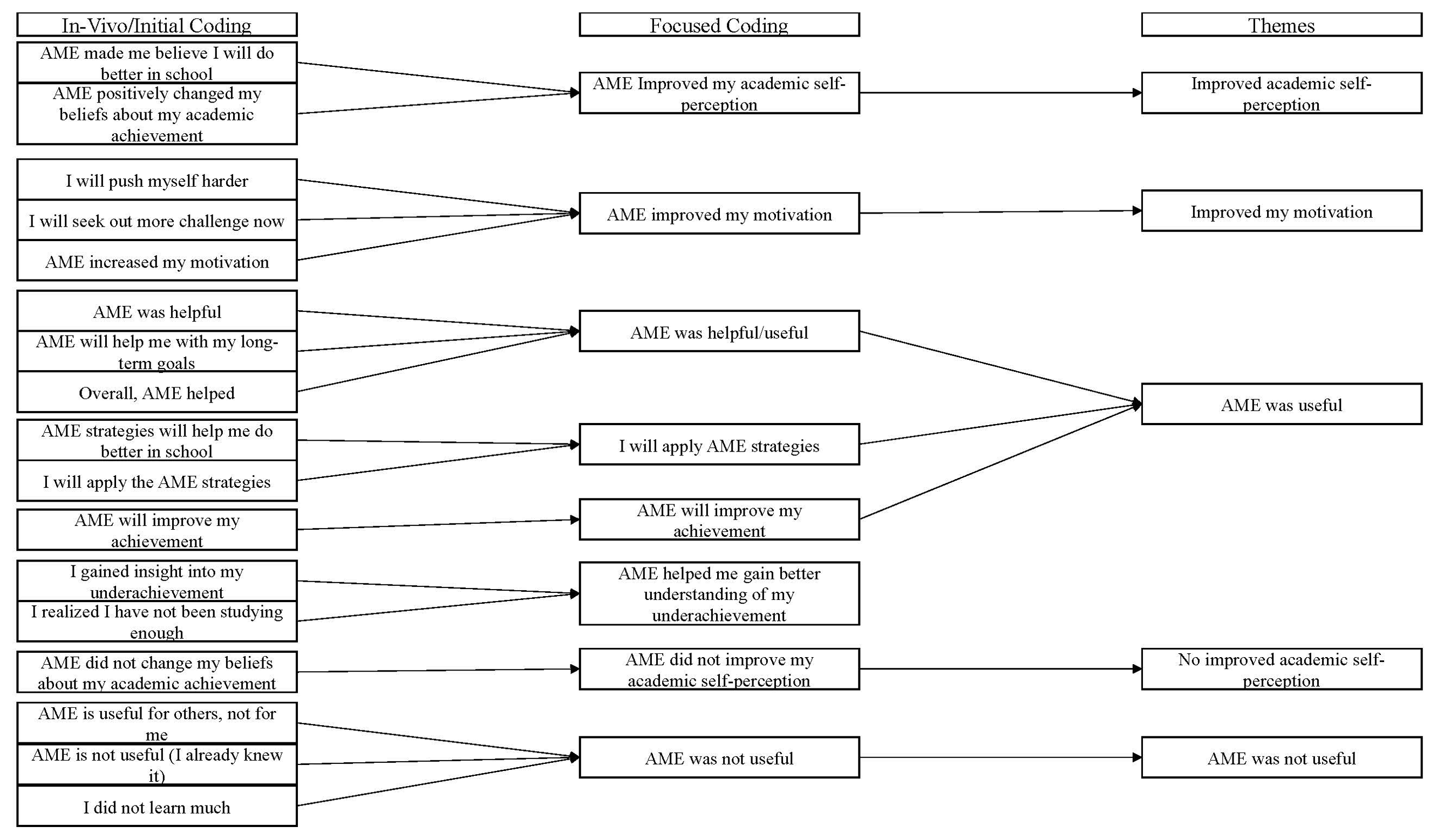
Inductive coding process.
Positionality Statements
As we were the primary instruments for data collection and analysis, our biases should be made explicit. The first author identifies as White and Belgian-Flemish. She grew up in a working-class household in an urban neighborhood and has not participated in a summer enrichment program similar to the one in this study. She previously worked as an achievement coach for students with gifts and talents and the teacher coordinator for a summer enrichment program for gifted, creative, and talented students. The second author is a professor and researcher who identifies as White and Latino. His experiences with summer enrichment programs include having served as a coordinator and teacher in two different programs. For the past 15 years, his research has focused on programs for students with gifts and talents, including students’ experiences in both programs in which he served as a teacher.
Results
Students Perceptions of the AME Procedures and Outcomes
Qualitative data were analyzed thematically following both inductive and deductive approaches. Therefore, we first present students perceptions regarding the AME procedures and outcomes derived from inductive analysis. We then present students perceptions of AME outcomes organized around the AME topics derived from the deductive analysis.
The AME Experience and Perceived Effects
Table 2 provides an overview of the number of references made to the various themes by students during the interviews. Overall, we found that students enjoyed participating in the AME sessions. Specifically, 13 participants (65%) found the AME sessions enjoyable and mentioned enjoying the learning activities and connecting with their peers. Students frequently mentioned (65%) the social aspect of the AME sessions—specifically sharing experiences, hearing other's perspectives, and talking about the AME topics—as one of the most useful components of the AME curriculum. For example, Cristiano mentioned a sense of relatedness within his group: “It feels good. Because most people have the same problems too. You feel like [they] empathize.” (Individual interview, July 13, 2019) and Nadia emphasized she learned from her group member's sense making: It was really interesting and cool because I would give my ideas. I could hear ideas that I would have never thought of before. … Just the ideas and the opinions people brought into the groups were very different from the ones I originally had. (Individual interview, July 17, 2019)
References Per Theme by Case.
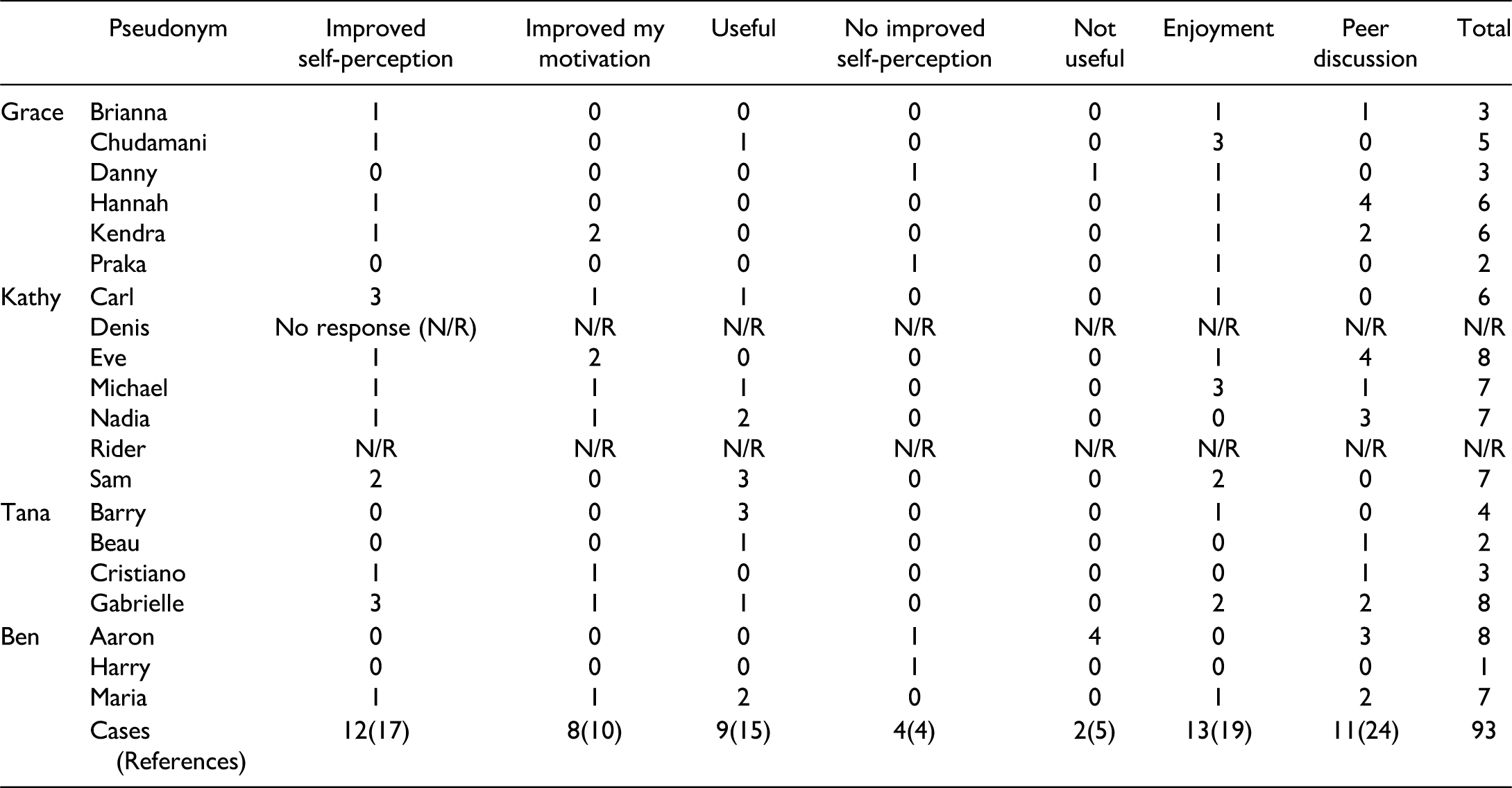
In addition to their perceptions of the AME procedures, students also addressed perceived outcomes. Twelve students (60%) mentioned participating in the AME session helped improved academic self-perceptions. Students specifically mentioned increased awareness of personal strengths and talents identified through the talent toolbox activity (session 1) and increased self-confidence. For example, Eve talked about strengths: “[I learned] I had more strengths than I realized” (Individual interview, July 13, 2019) and Carl addressed his self-confidence: I think that in the background of all the fun, it was actually a lot of learning, and it actually helped a lot with self-confidence and actually following through on things that I've got to do (…) I believe that this year I will be able to do things a lot better than I was, given now I have more tools. (Individual interview, July 15, 2019) I feel like, for me, a person that is already dealt with depression and had to get my way out of that, it is not as impactful, but I understand why it is impactful to other people. To me specifically, it was not really that much of anything because a lot of these lessons I have already learned. (Individual interview, July 27, 2019)
Lessons and strategies learned
Interview transcripts and postcamp survey responses were thematically analyzed using a deductive approach to determine which lessons or strategies students mentioned most. Table 3 provides an overview of the number of references made to the various lessons and strategies by students during the interview. References made in response to postcamp survey questions are discussed in the text. Overall, our results indicated that lessons from each session were referenced by at least eight students during interviews and no negative feedback regarding the AME curriculum was received on the postcamp survey. Thus, generally, none of the sessions was perceived as useless.
Number of References to Lessons and Strategies Learned by Session and Case.
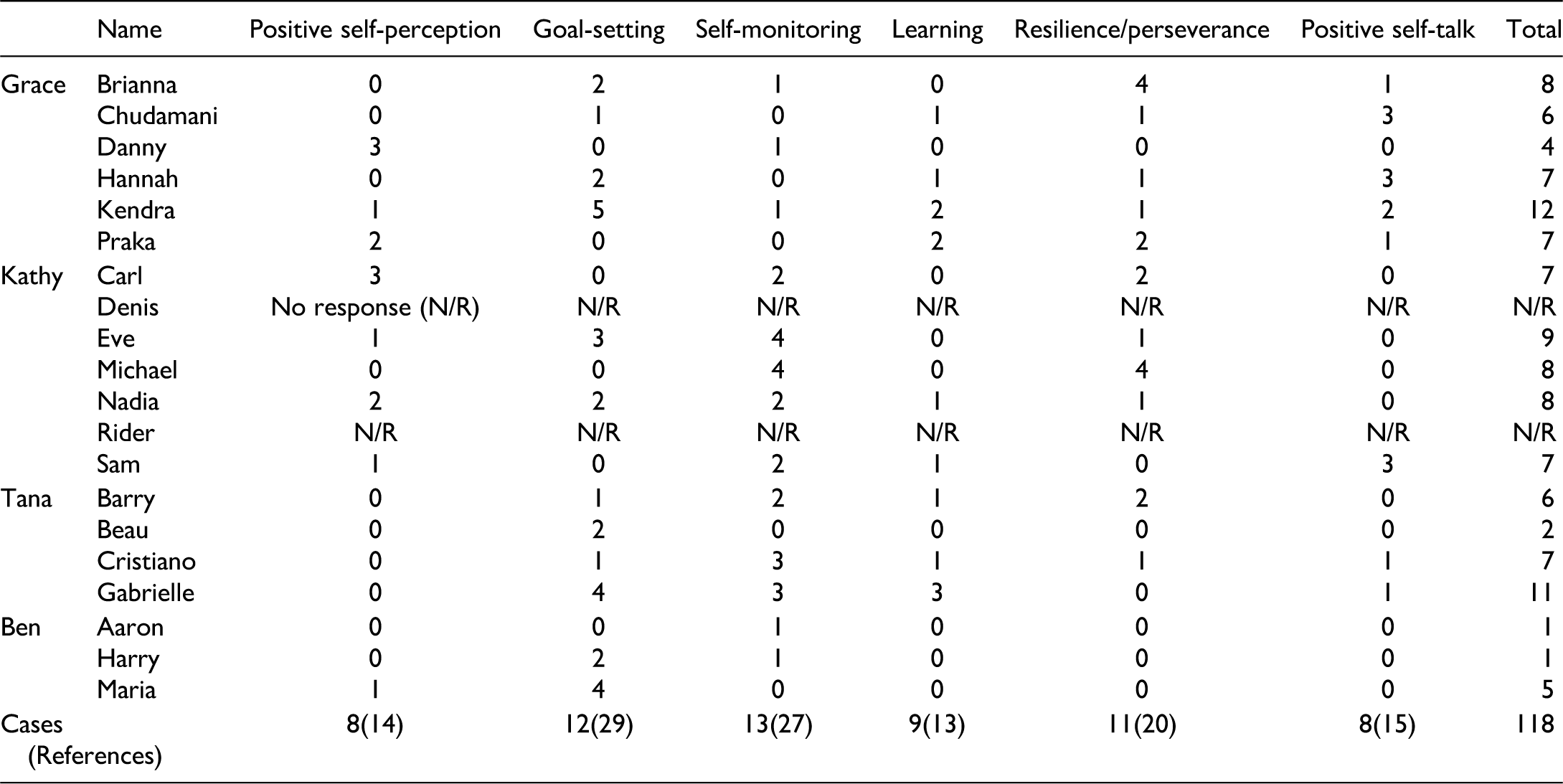
In the context of lessons learned, self-monitoring strategies and goal-setting strategies were mentioned most frequently. Specifically, self-monitoring was referenced 27 times across 13 participants and goal setting was referenced 29 times across 12 participants. Notably, all but one participant (22 references) from the first implementation (with camp counselors Kathy and Tana) mentioned self-monitoring strategies compared to five participants (five references) from the second implementation (with camp counselors Grace and Ben). Field notes show Grace and Ben both deviated from the curriculum during this session, which may explain why students from the second implementation did not reference these strategies much. Interestingly, Ben's group (i.e., Aaron, Harry, and Maria) referenced goal setting the most and no other strategies or lessons. Ben had the highest fidelity of implementation for his goal-setting session, which could explain why that is the main lesson students learned.
Aaron, Beau, Danny, and Harry referenced the least lessons learned. Aaron and Danny both said they did not learn much because they were already familiar with the topics as discussed above. Beau did not enjoy the sessions. He did not like the discussion aspect and would have preferred more hands-on activities such as creating the paper toolbox (session one). Harry had some identity struggles that made it hard for him to focus on the AME topics. [Addressing my gender identity goals will] allow me to focus on other things. Maybe like improving my life. I have to get that out of the way first because it feels like it is keeping me from doing a lot of things. It distracts me during school and stuff. (Harry, individual interview, July 28, 2019)
Findings from the thematic analysis on postcamp survey responses confirm our findings from the transcript analysis. Students referenced positive academic self-perceptions and goal-setting strategies the most (eight times each), followed by resilience (4 references) self-monitoring (3 references), learning strategies (3 references), and positive self-talk (2 references). Five participants (Beau, Brianna, Barry, Denis, and Sam) either said they did not learn anything or left the question blank.
Discussion
Overall, this study’s findings show most students (13 or 65%) enjoyed the AME sessions and particularly felt they benefited from talking about their experiences with peers in small groups. These findings confirm existing research on small group affective curricula by both Jen et al. (2017) and Peterson and Lorimer (2011) who reported positive perceptions from students participating in these types of interventions. Specifically, our findings align with previously reported findings regarding students’ positive perceptions of talking with peers about social-emotional concerns. Peterson and Lorimer conducted a 5-year longitudinal study and showed that positive perceptions were not immediate but happened slowly over time. They found a positive correlation between years of experience in the group program and positive perceptions. Thus, some students in our study may have benefitted from a longer intervention period. This may explain why some students did not have explicit positive perceptions.
Results indicated that students’ academic self-perceptions increased through participating in the AME sessions. Specifically, students addressed increased awareness of personal strengths and increased self-confidence. Our findings are aligned with findings from research on heterogenous student populations (O’Mara et al., 2006a) as well as gifted populations specifically (Jen et al., 2017). Jen et al. (2017) conducted a study on an affective intervention in a similar format and setting and found that students reported improved self-confidence after completing their participation in a 2-week small group affective curriculum. Although research on interventions directly targeting academic self-perceptions with gifted students is limited, research has shown that academic self-perceptions improved after participating in goal-setting interventions (Rubenstein et al., 2012; Sivaraman, 2012; Sullivan, 2016). Goal setting is a key objective in the AME curriculum, and most students mentioned goal-setting strategies as a lesson learned. Researchers have also found that positive self-talk can improve students’ self-competence beliefs (Thomaes et al., 2020). So, those sessions may have contributed to students perceived improved academic self-perceptions.
The sessions on goal valuation and goal setting as well as the sessions targeting self-regulation such as the session on self-monitoring were perceived as the most beneficial by a majority of students (13 or 65%). Yet, seven students thought differently. These mixed perceptions may be due to the 2-week format in which we implemented the intervention. Students participated in 6 hours of curriculum across a 2-week period. Two weeks may have been too short to see significant change and students may have benefitted from multiple sessions on goal setting and goal-orientation to master the objectives. Although Morisano and Shore (2010) found a one session goal-setting intervention effective, they studied undergraduate students. It is possible that younger students would benefit from multiple sessions. For example, Rubenstein et al. (2012) implemented a goal valuation intervention for 6 to 9 weeks and found significant academic growth. So, one session on goal setting and goal orientation and the 2-week intervention period may not have been enough. Additionally, field notes indicate that camp counselors focused mostly on promoting attainment value and less on utility value. Research has shown that attainment value promotes academic self-concept (Arens et al., 2019), so this may also explain the improved self-perception discussed above. However, the limited focus on intrinsic and utility value may in part explain why not all students identified an improved goal valuation as an outcome of their participation in the AME curriculum sessions.
Students’ interest in self-monitoring strategies shows that focusing on these types of strategies may be a good way to promote self-regulation. Previously, Obergriesser and Stoeger (2015) and Rubenstein et al. (2012) found their self-regulation interventions were effective, but they used 7 and 6–9 weeklong interventions with daily implementation of strategies, respectively. In addition to time, self-regulation skills take practice to develop (Muraven et al., 1999). As the AME curriculum was implemented in a summer enrichment program, students may not have practiced the self-monitoring and self-directed learning strategies they were taught as part of the self-regulation sessions. This could explain why seven students did not identify a perceived improvement in their self-regulation after participating in the AME curriculum. Beyond self-regulation, students also suggested they gained self-awareness during the AME sessions The AME curriculum's session on self-monitoring and self-directed learning target metacognition and based on students interview responses, it is evident that students’ metacognition improved. Some students discussed how they gained self-awareness during the session on self-monitoring, which stimulated an intention to apply the strategies once back at school.
In conclusion, this study's findings add to the literature on affective interventions targeting achievement motivation among gifted and talented students. Overall, the results provide preliminary support for the AME curriculum's effectiveness in improving students’ academic self-perceptions, and teaching students goal-setting and self-regulation strategies. However, additional research on the curriculum is necessary.
Limitations
Findings of this study should be interpreted with some caution due to several limitations. One major limitation of this study had to do with the background of the camp counselors who facilitated the small group discussions. First, three of the four camp counselors were preservice teachers with little field experience. Some camp counselors expressed a lack of confidence and required support through debrief sessions throughout the implementation. Additionally, camp counselors’ background knowledge regarding achievement motivation and adolescent development may have influenced the implementation. Specifically, one camp counselor, Ben, had a low fidelity of implementation across sessions and struggled with building positive relationships with some students in his group. It is possible that his personal beliefs around motivation and achievement affected his discussion facilitation.
A second limitation of the study is due to the targeted sample. Participants were selected in part based on struggles with their achievement motivation. They were then taught various strategies to improve their achievement. Applying these strategies requires some personal motivation. Participant's struggle with motivation may therefore influence their application of strategies and perceptions of the curriculum and its usefulness. So, our findings should be interpreted in light of participants’ self-selection and personal reasons for joining the study. This may explain why some students were particularly drawn to specific strategies and other students mentioned not learning anything new.
Readers should also note that there may have been some social desirability within the answers of students. Although several measures were taken to limit social desirability (e.g., two researchers interviewed students, students were told their answers would remain confidential, and students did not know who created the curriculum) it is possible that students answered questions in a manner they believed would be viewed favorably by others. Additionally, we collected our data in a summer enrichment program. Students’ overall program experience may have influenced their perceptions of the AME curriculum. Therefore, we asked students about their general program experience to filter out perceptions of the camp in general from the AME curriculum in particular. Readers should interpret all findings within the context of the AME curriculum as applied at a university-based enrichment program for students with gifts and talents.
Finally, this study had a limited sample, and the results showed variability among students, which limits the external validity of the findings. Therefore, the goal of this study was not to draw generalized conclusions. However, by providing detailed information about the setting, participants, and procedures, we allowed readers to conclude the transferability of the findings of this study to their context.
Suggestions for Future Research
Given the limited scope of the present study, additional research on the AME curriculum is necessary. Given that 2-weeks may have been too short to see changes in goal valuation or self-regulation, future researchers may want to evaluate the effects of the AME when implemented in 6-week or longer format. It may also be interesting to integrate the AME sessions more with the academic enrichment components of the summer enrichment program. For example, merely adding more prompts to the AME curriculum to encourage students to apply strategies during their enrichment classes might affect students’ use of those strategies. Future researchers could also evaluate the long-term effects on students’ academic self-perceptions, goal valuation and self-regulation. It may be beneficial to compare the effects of implementing AME at a summer program versus the regular school year. Future research efforts can extend the AME curriculum to address other affective needs, such as sessions on stress management and emotional regulation, as suggested by some participants. Efforts could also focus on more tailored initiatives to help individual students resolve their lack of motivation. For example, researchers could use a preassessment to determine which AME sessions students would benefit most from. Finally, research on the AME curriculum with a variety of participants is necessary to further establish its effectiveness.
Implications
The results of this study showed most students may have benefitted from their participation in the AME sessions in this summer enrichment setting. Therefore, the findings of this study offer some valuable insights for summer program directors and other educators. Implementing an affective curriculum with a well-designed training and support component, focused on positive self-perceptions, goal-setting, and self-monitoring may be beneficial to students. However, the scope of the study was limited, and educators should carefully consider the most appropriate intervention for their context. This study and the AME curriculum can provide a starting point and some guidance for creating interventions. Overall, students enjoyed the small group discussion format and having the opportunity to share their experiences with peers. Integrating affective small group discussions may therefore be useful in other enrichment programs as well. Further, we suggest conducting a preassessment to evaluate the needs of students. Students will benefit more from the AME sessions if their needs align with the objectives of the various sessions. Students with needs outside the scope of the AME curriculum may benefit from discussing alternative topics and strategies. Based on the findings of this study, practitioners should carefully consider the appropriate length of interventions. Two-weeks may have been too short to observe changes in goal valuation or self-regulation, so meeting less frequently and for a longer time may give students more opportunities to practice and master skills. In that case, we would recommend monitoring students’ progress between sessions and providing support, as necessary.
Footnotes
Appendix
Acknowledgments
The authors would like to acknowledge Marcia Gentry, Ronald C. Martella, and Del Siegle for their feedback on this study.
Declaration of Conflicting Interests
The authors declared no potential conflicts of interest with respect to the research, authorship, and/or publication of this article.
Funding
The authors disclosed receipt of the following financial support for the research, authorship, and/or publication of this article: This work was supported by the American Psychological Foundation (Esther Katz Rosen Fund).
