







Abstract
Twice-exceptional (2E) learners’ readiness levels and learning profiles provide unique challenges in providing meaningful, rigorous learning experiences, making it difficult for general education teachers to consistently meet the needs of neurodiverse gifted learners. Differentiation, an instructional strategy which benefits all learners, is frequently used by many teachers to support below-level learners. But teachers do not readily or always effectively use differentiation to support advanced learners. Educators who dually differentiate for depth and complexity for the 2E learner improve both practice and student learning outcomes. Education preparation programs (EPPs) should provide learning opportunities for teacher candidates to explore what, how, and why differentiation works for 2E learners. This praxis paper in the special issue on poster session proceedings shares how an EPP implemented a scenario to develop teacher candidates’ pedagogy related to differentiating for 2E learners, and applies this to inservice professional learning to enhance practicing teachers’ effective use of differentiation.
Keywords
Powerful Learning: Dual Differentiation for Twice-Exceptional Learners
Students who have both an exceptional ability and a disability (Council for Exceptional Children-The Association for the Gifted Division [CEC-TAG], 2022), twice-exceptional (2E) learners are often overlooked in the general education classroom due to their complex learning profiles and readiness levels. An exceptional ability refers to advanced cognitive abilities, for which the criteria is set at the state level and varies between states (Hodges, 2025). To qualify for special education services, a student must meet criteria for a disability that has an adverse effect on the student's educational performance, as defined by federal and state regulations (Learning Disabilities Association of America, n.d.). Examples of disability categories include specific learning disabilities, emotional and behavioral disorders, autism spectrum disorder, physical disabilities, and speech-language disabilities (Individuals with Disabilities Education Act, 2004). In the classroom, 2E learners may experience a masking effect, which means, “their exceptional ability may dominate, hiding their disability; their disability may dominate, hiding their exceptional ability; or each may mask the other so that neither is recognized nor addressed” (CEC-TAG, 2022, para. 2). As a result of the masking of their ability or disability, 2E learners often are not challenged in the general education classroom.
Masking can also lead to 2E learners’ lack of identification, placement, and/or retention in gifted programs. Scholars present possible reasons why this student population is overlooked and underrepresented (Kircher-Morris, 2021; Reis et al., 2022). Sometimes, there may be an inclination to focus on the disabilities to ensure identification and access to the special education services (Kircher-Morris, 2021; Reis et al., 2022), but being a 2E learner should not be an either or situation. Another barrier to equitable representation is a lack of understanding of the 2E learner, evidence-based practices for designing and developing curriculum, and delivering high-quality instruction for 2E learners (Reis et al., 2022). However, understanding learners should be a priority of all teachers, and addressing the limited teacher knowledge of 2E learners has the potential to significantly impact learning experiences and outcomes for these students.
In reflecting on this knowledge gap in teachers’ pedagogy, a deeper look must be taken into current teachers’ experiences in Educator Preparation Programs (EPP). Across the United States, EPPs are required to provide coursework, though limited, on preparing teacher candidates to work with special education students, but there is such requirement for gifted education. Few programs provide any coursework focused on working with gifted learners and even fewer address 2E learners (Hodges, 2025).
During their time in EPPs, teacher candidates are taught a variety of pedagogies and instructional strategies as well as provided with opportunities to implement them during their field experiences. Differentiation is one instructional strategy which is frequently included in coursework in EPPs. Differentiated instruction is an instructional strategy designed to tailor instruction to the individual learner, accounting for their varying levels of readiness, content knowledge, and learning profiles (Mofield & Phelps, 2020; Roberts & Inman, 2023; Tomlinson, 2017). Within differentiation, all elements of instruction are considered, from classroom management procedures, zones of proximal development, to the intentional grouping of students (The Iris Center, 2010). Adaptable for all learners across all grade spans, differentiated instruction is intended for all learners, but is more frequently deployed to support struggling learners (The Iris Center, 2010). This is seen in the K-12 classrooms where special education teachers and classroom teachers are typically skilled at differentiating for lower level learners, but less experienced at differentiating for advanced learners (Austermann et al., 2024).
Differentiation provides a practical solution for general education teachers who want to provide challenging and respectful instruction for 2E learners. The 2E learner who engages with differentiated curriculum and instruction is provided time and space to grow as a learner as their gifted brains are challenged to make connections and reflect on content, which in turn leads to creativity and productivity (Baum et al., 2001; Roberts & Inman, 2023). Differentiation is a low-cost instructional strategy that is often already in place and aligned with the district curriculum to make curriculum and instruction more accessible for special education students. Yet differentiation and in particular dual differentiation, a specific form of differentiation beneficial for 2E students, is not a norm in most districts.
When implemented with fidelity, dual differentiation makes learning more accessible, equitable, and inclusive for 2E learners. Baum et al. (2001) describe the process, “first, to use instructional strategies that accommodate both sets of characteristics [disability and exceptionality] to create the appropriate balance between attention to strengths and compensating for weaknesses and, then, to infuse these strategies into authentic, challenging curriculum” (p. 481). Dual differentiated curriculum is able to be infused into the classroom setting within the allotted time blocks, not requiring a pull-out program or even the gifted resource teacher, thus reducing the barrier of time. Further, dual differentiation supports a teacher with limited knowledge of gifted education, by drawing on their pedagogical strengths and supplementing with targeted professional learning (PL); thus equipping teachers with the tools necessary to immediately take strategies back to their classroom.
However, teacher candidates and practitioners are still not effectively utilizing dual differentiation with their K-12 students (Austermann et al., 2024). This could be remedied by increased professional learning experiences devoted to dual differentiation for practicing teachers as well as more meaningful integration into EPPs. Instructors at EPPs can more purposefully embed scaffolded learning opportunities for teacher candidates to learn how to utilize dual differentiation as a practical and effective instructional strategy to meet the needs of their 2E learners. Coursework should include instructing students how to differentiate, investigating a strategy or tool, e.g., the Depth & Complexity framework (Kaplan, 2021), exploring scenarios where teachers have utilized the framework, and applying new understandings of differentiation to 2E learners in their field placements. These applications could include developing and co-creating with generative artificial intelligence (GenAI) rigorous and meaningful learning experiences for 2E learners.
In this praxis paper, a write-up of a conference poster presented at the Council for Exceptional Children Convention in 2025, and in the special issue of poster session proceedings, we answer the following questions:
How can EPPs prepare teacher candidates to effectively implement dual differentiated instruction and materials with K-12 2E learners to accelerate their learning and enhance their educational experiences? How can the strategies utilized by EPPs be incorporated into professional learning experiences for practitioners?
Literature Review
Developing high-quality teacher preparation programs which prepare future teachers for their educational settings is the mission of EPPs. As they develop their programs, EPPs rely on the competencies set by their state department of education and are often aligned to standards for practice developed by national organizations. A key factor in the success of EPPs in preparing teachers for the needs of K-12 2E learners is leaning into the technologies that are transforming learning.
Standards for Teacher Candidates and Practicing Teachers
Expectations for EPPs are clearly articulated by state departments of education, who outline competencies and authorize EPPs to operate (Commonwealth of Pennsylvania, 2025). EPPs are responsible for ensuring that teacher candidates are prepared to meet the needs of their future students. EPPs’ responsibilities include preparing teacher candidates to work with diverse student populations, develop and implement instruction for diverse learning profiles of their students, and advocate for these students (22 Pa. CS§ 49.13). 2E learners are a diverse student population, who are often underserved in the K-12 setting, but are not frequently part of EPP curriculum. Within the field of gifted education, the National Association for Gifted Children (NAGC) and CEC-TAG established standards of practice designed to be implemented alongside each state's department of education competencies as well as within districts.
The CEC Initial Practice-Based Professional Preparation Standards for Gifted Education (2024) set expectations for EPPs to prepare gifted educators to design learning experiences, provide responsive instruction, and advocate for diverse gifted learners. Standard 2, Understanding and Supporting Learning Characteristics, Development, and Individual Learning Differences, and Standard 3, Demonstrating Subject Matter Content and Specialized Curricular Knowledge provide details for EPPs to create learning opportunities for teacher candidates to understand how to create learning experiences that meet the needs of 2E learners. For the 2E learner, gifted educators must be able to modify instruction to meet the needs of 2E learners to “enhance creativity, support acceleration, ensure depth and complexity in academic subject matter and specialized domains” (CEC-TAG, 2024, p. 2). By developing course content that teaches about 2E learners as well as intentionally placing teacher candidates in field placements where they have opportunities to interact with 2E learners, develop lesson plans, and deliver instruction, EPPs are ensuring that teacher candidates are prepared to work with this diverse student population.
Similar to CEC-TAG, NAGC has developed programming standards to guide inservice gifted educators. The NAGC Pre-K-Grade 12 Gifted Education Programming Standards for Educators (2019) standards 3, 5, and 6 outline the need for gifted educators to know how to differentiate instruction and curriculum, provide programming that supports talent development, and to provide ongoing professional learning opportunities for gifted educators so that they are ready and able to meet the needs of gifted students.
The World Council for Gifted and Talented Children (WCGTC, 2021) developed Global Principles for Professional Learning in Gifted Education which echo the need for ongoing, sustained professional learning for gifted educators working with diverse students who are gifted and talented. These principles call for educators to use evidence-based practices as well as to collaborate with other educational stakeholders to develop rigorous curriculum and learning experiences for gifted learners. Table 1 provides an at-a-glance overview of these standards as they relate to curriculum design, critical thinking, gifted programming, 2E learners, and professional learning.
Standards Guiding 2E Education.
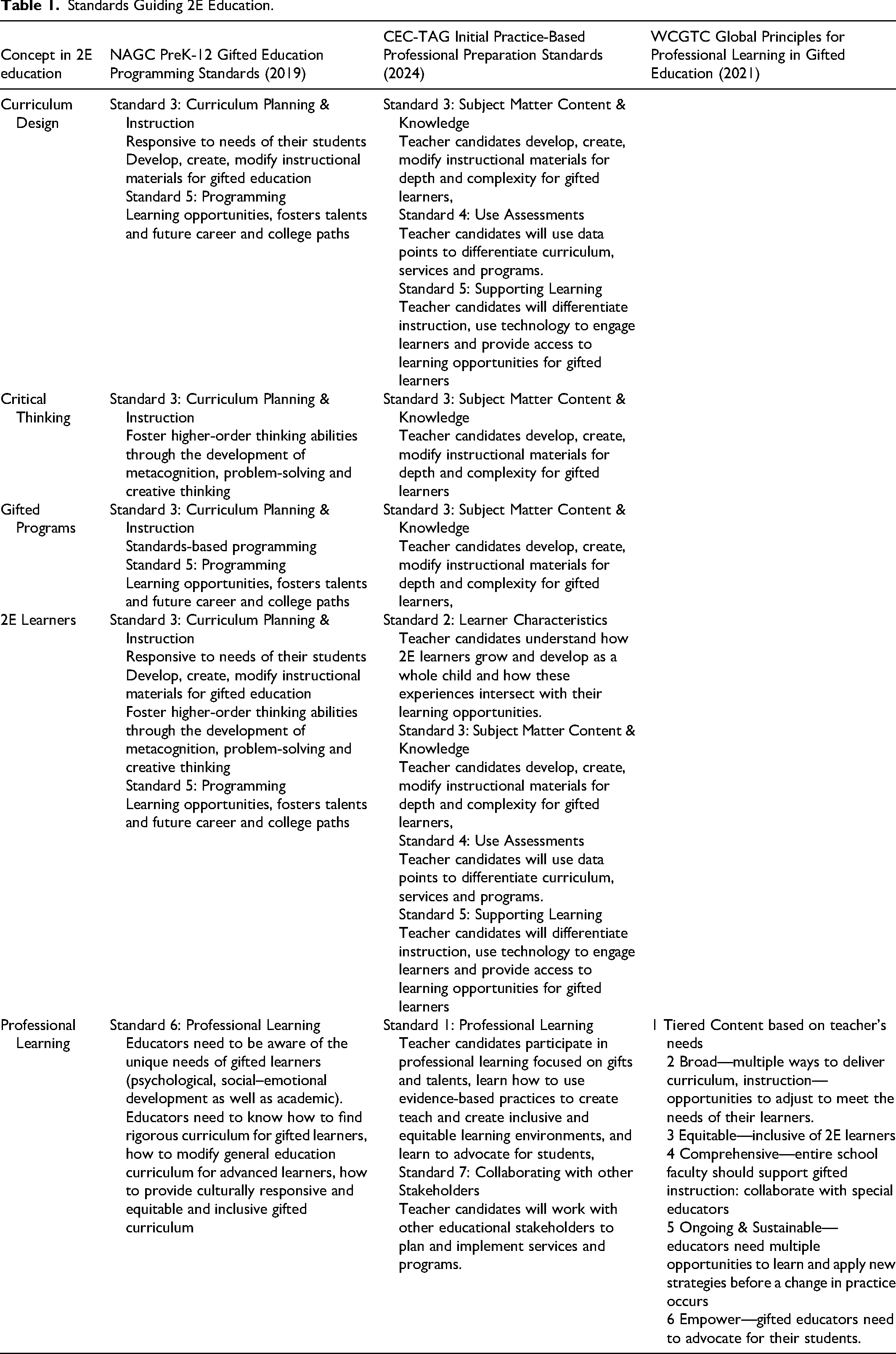
The expectations for gifted educators, special education teachers, and EPPs are clearly outlined in the NAGC and CEC-TAG standards as well as the WCGTC global principles. However, this is not legally binding or required, so many districts may not be utilizing these standards within their gifted education programs. Educators must be prepared to meet the needs of 2E learners in K-12 schools, and it is the responsibility of EPPs and districts to provide professional learning to ensure that they are equipped with the knowledge and skills to be fiercely committed to providing challenging learning opportunities.
EPP and Professional Learning Support
School districts must provide programming that is structured, systematic, and supportive of the whole child for gifted learners (Lewis et al., 2020). The knowledge and skills required to be successful begins during teacher preparation programs. Teacher candidates learn the tools for differentiating curriculum and have opportunities to practice newly acquired skills and knowledge while receiving feedback from experienced instructors. Participating in field experiences and working directly with students in K-12 classrooms provides authentic learning opportunities with room to observe, implement, and reflect.
Differentiation is just one of the instructional strategies which EPPs typically include as part of their coursework for all teacher candidates. Ideally, EPPs should also provide direct instruction on 2E learner characteristics, provide opportunities to develop, modify, and create curriculum and instructional materials, while also providing opportunities to critically evaluate and assess the effectiveness of these materials.
Preparation continues once teacher candidates become practicing teachers as they participate in inservice training and professional learning opportunities. These professional learning experiences are essential in building teacher capacity to ensure 2E learners are successful in meeting their learning outcomes. However, it is not possible or feasible to always experience all possible situations in the classroom. In the absence of authentic learning opportunities during field experiences or K-12 classroom settings, the use of case studies or scenarios have been shown to be an effective way to develop teacher content and pedagogical practice (Lewis et al., 2020; Weber et al., 2014, 2025).
Using Case Studies to Develop Teacher Practices
EPPs provide teacher candidates with field experience opportunities throughout their programs; however, due to the large number of variables impacting placements, it is not always possible for teacher candidates to engage in hands-on learning experiences to synthesize and analyze all of the potential contexts and situations present in a classroom (Weber et al., 2025). The next best option is to provide professional learning opportunities for teachers to engage with case studies and scenarios which present these varying situations (Lewis et al., 2020; Weber et al., 2014, 2016, 2025). While both are beneficial, scenarios are shorter and less complex than case studies, making them ideal to incorporate into existing curriculum where there is limited time.
Like case studies, scenarios provide an opportunity for teachers to engage in conversations, digest new ideas, and objectively look at and see how the new instructional strategy looks in the classroom (Lewis et al., 2020). Reading scenarios provide an opportunity for the reader to connect with empathy to characters within the case study, view the situation from multiple viewpoints as well as question and problem-solve possible solutions (Weber et al., 2025). Scenarios do not have one correct answer, rather they can be approached from multiple facets which align with the dilemmas frequently encountered in K-12 classrooms. As a result of the discussion centered around the scenario, changes in teacher beliefs and practices may occur (Lewis et al., 2020). Case studies and scenarios support best practices for professional learning as recommended by NAGC, CEC-TAG, WCGTC, as well as the Every Student Succeeds Act (ESSA; [S.1177, §8002 (42)]).
Professional learning should be job-embedded, collaborative, data-driven, evidence-based, as well as sustained and ongoing (ESSA; [S.1177, §8002 (42)]). Scenarios provide opportunities for educators to grow their practice by developing their knowledge, skills, and dispositions to support student learning outcomes. When scenarios are used alongside mentoring, lesson demonstrations, and with professional learning communities, the result is a change in teacher mindset and practice (Weber et al., 2025). There are readily available case studies focused on a variety of gifted education contexts which have been vetted by experts in the field (Weber et al., 2014, 2016, 2025); however, they can also be developed by facilitators. It should be noted that facilitators or course instructors must possess the knowledge and skills related to 2E learners and differentiating for depth and complexity prior to facilitating a discussion. This is essential to ensure they are prepared to field any questions that may arise as a result of the engagement with the scenario. Course instructors in EPPs and facilitators in professional learning (PL) should use case studies and scenarios to guide discussions related to serving 2E learners. This strategy provides a hypothetical context which creates a more comfortable learning environment for educators and teacher candidates to ask questions, put themselves in the role of the teacher, and participate in discourse around topics related to 2E learners. As with any professional learning experience, the facilitators need to be trained; see Weber et al. (2014, 2016, 2025) for a sample agenda and guiding questions specific to case studies.
Differentiation as an Instructional Strategy
Differentiation is effective because it brings in learning experiences that are engaging and meaningful for learners with varying readiness levels while challenging advanced learners and providing scaffolding for struggling students when needed (Mofield & Phelps, 2020; Tomlinson, 2017). Differentiated instruction is applied when a teacher becomes aware of students’ needs and incorporates changes or adjustments to the curriculum to ensure the success of all students, whether those students are gifted learners, students with learning disabilities, or students who are simply struggling with the current curriculum (Tomlinson, 2017). The differentiated instruction framework (Tomlinson, 2017) was developed to focus on maximizing the learning of all students, including students who are considered average learners, English language learners, struggling students, students with learning disabilities, and gifted and talented students. However, over time, the scope of differentiated instruction has shifted to focus almost entirely on meeting the needs of struggling students and students with disabilities. In its purest form, differentiated instruction is a framework that includes a variety of evidence-based strategies that teachers can implement to support the learning of all students.
Differentiation as a Framework
Differentiated instruction includes, but is not limited to, employing effective classroom management procedures, assessing readiness to ensure teachers are teaching within students’ zone of proximal development, utilizing intentional grouping of students for instruction, and understanding each student's learning profile and interests (The Iris Center, 2010). Assessment in the form of pre-assessments, formative assessments, and summative assessments is needed to determine each student's readiness level as well as their progress in mastering the curriculum. Assessment of students’ learning profile (i.e., interests and motivation, strengths, and challenges, etc.) is also needed to successfully differentiate instruction (Mofield & Phelps, 2020; The Iris Center, 2010).
Students’ readiness, learning profile, and interests vary across content areas, within content areas, and across the school year, so differentiated instruction utilizes ongoing assessment of student learning to avoid placing students in static, leveled groups. Instead of fixed groups, differentiated instruction recommends the use of flexible, intentional grouping of students that change to meet their needs. Grouping may be homogeneous, where students are grouped with similar needs, or heterogeneous, where students are grouped with different learning needs or interests. Homogenous grouping is used so a teacher can concentrate instruction and focus on building skills within each group, and heterogeneous grouping allows each student to bring their own unique strengths and knowledge to the group.
A teacher implementing differentiated instruction can adjust instructional elements related to the content being learned, the process of learning, and/or the product of that learning (Tomlinson, 2017). Depending on students’ needs, teachers can make changes to just one of these elements or modify all three. Content refers to the knowledge and skills students need to master and can include strategies such as providing a variety of materials, providing tired content that varies in difficulty, utilizing different presentation styles, and scaffolding instruction based on students’ needs (Tomlinson, 2017). Process refers to the activities students use to master the content and includes strategies such as tiered activities that provide students with activities that are at an appropriate level of complexity for students, utilizing learning centers that offer a range of activities based on students’ readiness, learning profile, and interests, and the use of interactive journals, graphic organizers, and manipulatives (Tomlinson, 2017). Product refers to the method students use to demonstrate learning. Implementing differentiation strategies related to the product focus on offering students a variety of ways to demonstrate knowledge, often utilizing student choice to increase engagement during assessment of student learning (Tomlinson, 2017). Examples of providing choice include offering assessment options on a tic-tac-toe board or leaning menu.
Implementing differentiation strategies benefits all learners and is a familiar framework for many general education teachers. While teachers may be skilled at differentiating for students who are struggling, teachers are often less experienced when it comes to differentiating for advanced learners. This may be due to less focus on advanced learners by EPPs, but also may be due to teachers simply having less opportunities to practice implementing differentiation strategies with advanced learners (Austermann et al., 2024; Baum et al., 2001). 2E represent an even smaller minoritized group within the classroom, providing even less opportunities for teachers to gain experience implementing differentiation strategies with this population. However, differentiated instruction engages students in learning experiences that are meaningful and relevant while modifying curriculum already in place in the classroom, making it a feasible option for general educators to meet the needs of all students in their classrooms.
Dual Differentiation
Differentiation for a 2E learner may include utilizing strategies focused on the elements of content, process, or product, depending on the individual student (Baum et al., 2001). When an educator differentiates for both strengths and weaknesses of a 2E learner's profile, it is called dual differentiation. Dual differentiation, a theoretical framework, is defined by Baum et al. (2001) as “meeting the needs of students who exhibit two contradictory sets of learning characteristics by creating a balance between nurturing strengths and compensating for learning deficits” (p. 481). For example, a 2E learner with autism or ADHD may benefit from having the learning content presented visually and modeled through demonstration, the learning process adjusted to ensure hands-on activities, and the product offering choice to ensure the students’ interests are acknowledged and included in the assessment choices. However, differentiated instruction would look very different for a 2E learner with dyslexia or dyscalculia, who may benefit from the content being presented more verbally through discussion, questioning, and verbal description. One example would be learning through centers, where hands-on experiences can be adjusted to include verbal instruction, may be important and the learning products can offer choices so students can demonstrate their learning verbally by showing (through video or recording) what they have learned, rather than writing and recording.
Benefits of Differentiation for 2E Learners
Understanding how students learn best and how to create learning opportunities is the quest of educators. Research has established that motivation to learn directly impacts learning outcomes, and motivation is tied to student interests (Kircher-Morris, 2021; Piaget, 1978; Tomlinson, 2017); culturally, linguistically, and economical backgrounds shape our understandings (Gay, 2013; Ladson-Billings, 1995; Novak & Lewis, 2022); acquiring new knowledge and skills happens within the zone of proximal development and learning does not happen when the work is too challenging or too easy (Vygotsky, 1986); organization, assessments, and active student engagement are all essential elements of maximizing student outcomes (Wiggins & McTighe, 2005).
Advanced learning opportunities within the general education classroom are frequently limited due to a myriad of factors, including limited teacher knowledge of the characteristics of giftedness and evidence-based practices for advanced learners (Austermann et al., 2024). Differentiation provides respectful tasks that considers how students learn and the characteristics of gifted learners, not just more of the same work (Mofield & Phelps, 2020). Differentiation increases 2E learners’ engagement as it takes into account their interests, areas of accommodations and creates opportunities for students to find joy in learning (Austermann et al., 2024; Baum et al., 2001; Reis et al., 2022).
Differentiation also benefits 2E learners because it fosters intrinsic motivation to challenge themselves to grow as learners versus just completing tasks for the grade (Kircher-Morris, 2021; LaFollette & Reddish, 2024; Tomlinson, 2017). When 2E learners are provided with opportunities to challenge themselves, they learn how to move through the learning space. As they move out of the frustration zone, they move toward experiencing the joy of learning. 2E learners are then able to experience the sense of pride and accomplishment that comes with learning (Tomlinson, 2017).
The Depth & Complexity Framework
The Depth & Complexity Framework (Kaplan, 2021) is a practical foundation that can support classroom teachers in their quest to provide rigorous learning opportunities that develop critical thinking skills for all learners, and especially 2E learners. This framework supports educators with the essential question of how students learn by providing opportunities for students to go deep and add complexity as they develop the knowledge and skills to think critically (Kaplan, 2021). The Depth & Complexity Framework is designed to be used along with the district-adopted curriculum materials, creating learning opportunities which foster higher levels of critical thinking and meaningful learning experiences (Kaplan, 2021). This easy-to-use and seamless incorporation of the framework into the district-adopted materials provides a simple yet highly effective tool to support teachers’ instructional planning. Being able to easily merge the Depth & Complexity Framework into district-adopted curriculum makes it easier for educators to implement it with fidelity. The ease of incorporating the framework into classroom practice is essential to successful implementation because it reduces barriers for teachers related to planning time. Furthermore, the framework provides a structure for educators to differentiate their curriculum to challenge 2E learners. The components of this framework are:
Critical and Creative Thinking Skills: students learn the process of how to analyze, evaluate, create new understandings based on the content; Depth & Complexity Icons: visual cues for students to activate learning at varying depths, ranging from concrete to abstract as well as the complexity of ideas connecting concepts across subjects; Content Imperatives: words connected to the topic area guides students to question and think about the topic, starting with general terms and narrowing to more specific; Disciplinarian Thinking: students take on the role of the real-world job connected with the subject matter and have the opportunity to become the expert in the field; and Universal Concepts & Generalizations: learning is interdisciplinary and as such instruction should be across discipline; patterns, systems, structures, relationships, change, force, order, power, and conflict (The Center for Depth & Complexity, 2025).
While the Depth & Complexity icons are most frequently used by classroom teachers, each component offers meaningful differentiation for 2E learners. Differentiating for gifted students’ readiness levels, learning profiles, and interest in the classroom context is necessary, but it must be done in such a way that does not take away from the original intent and purpose of the lesson (Kaplan, 2021). Differentiation through the Depth & Complexity framework benefits the 2E learner who is ready for higher levels of synthesis and analysis beyond the grade level curriculum.
Using GenAI as a Teacher Assistant
GenAI can be used in several ways to support differentiation for the 2E learner. GenAI is a form of artificial intelligence which can create new information (Mishra et al., 2023). This differs from AI, which sifts through databases and compiles responses. GenAI examines texts, identifies patterns and then creates responses based on recall and training data, resulting in new ideas and thoughts (Mishra et al., 2023). GenAI is capable of learning through social interaction with people. As co-creators, humans develop and shape GenAI, but at the same time, humans are being influenced and changed by GenAI. The evolution of GenAI is transforming how we learn. As such, the United States Department of Education ([USDOE], 2023), along with state and local educational agencies and institutions of higher education continue to develop and refine guidelines for GenAI in the classroom.
The benefits of GenAI could have a positive impact on EPPs and teacher candidates’ readiness to teach; both in their pedagogical and instructional content knowledge (Amado-Salvatierra et al., 2024; Lewis, 2025). Due to its transformative nature, there will be unintended consequences and potential biases that arise from the relevance of GenAI, as it is limited by the databases and content information being searched (Amado-Salvatierra et al., 2024; Lewis, 2025; USDOE, 2023). Keeping the human co-creator involved in GenAI is strongly encouraged by the USDOE (2023), as humans can critically analyze and evaluate AI-generated content. Furthermore, the human teacher is the key factor in executing the lesson in the classroom. Human educators bring art into teaching as they adjust the pace of their lesson, capitalize on a teachable moment, and anticipate and adapt the GenAI lesson based on the needs of learners. GenAI is valuable in K-12 and higher education classrooms as it supports teachers and teacher candidates in the creation of lessons and activities, like a teacher's edition of a textbook.
There are several ways GenAI tools may be implemented in the K-12 classroom to support 2E learners. First, a traditional use of AI in the classroom has been the use of adaptive learning programs which deliver content and assessments based on the student performance. The GenAI tutor builds off the concepts of adaptive technology but provides a more meaningful learning experience for the student. GenAI tutors provide an engaging learning experience for 2E learners beyond leveled technology programs. These programs are designed to adjust the level of learning based on the student's proficiency levels but are not sophisticated enough to engage with students who have questions or need additional support. GenAI tutors engage with students on a more human level, providing opportunities for the students to ask questions and adjust their explanations for the learner (Mukhamadiyeva & Hernández-Torrano, 2024). GenAI tutors also provide the educator with individualized reports of a students’ progress, levels of effort, and readiness. The educator can then use this information to adjust their instruction.
The GenAI tutor opens avenues for the 2E learner to explore advanced curriculum without leaving the classroom or relying on teacher expertise. Adaptive learning programs have been shown to increase student engagement and motivation to complete the task (Mukhamadiyeva & Hernández-Torrano, 2024). Similar benefits are seen with students with special education needs (Goldman et al., 2024; Holstein et al., 2019; USDOE, 2023; Wang & Nie, 2023).
A second purposeful use of GenAI in the classrooms is co-creating curriculum. The benefit of co-created GenAI curriculum is that it is drawing on a large database of content and pedagogical knowledge, which may support or supplement the educator's own content and pedagogical knowledge. It must be noted that GenAI tools do not replace the expertise of the teacher, rather GenAI should be seen as an instructional resource to support the teacher's workload. GenAI tools support teachers and teacher candidates in designing differentiated curriculum for 2E learners (LaFollette & Reddish, 2024; Lewis, 2025). Together, teachers and GenAI can create differentiated curricula that include high-quality instructional materials which accommodate the needs of special education students, while also providing depth and complexity for the advanced learner.
Teacher candidates who are developing their expertise would benefit from strategic use of GenAI to develop curriculum. Teacher candidates must develop AI literacy—the skill set necessary to utilize GenAI as an instructional and pedagogical tool. AI literacy is developed through direct and indirect instruction (ISTE, 2024; Lewis, 2025). EPPs directly support teacher candidate's development of AI literacy skills, while teacher candidates develop indirect AI literacy skills through social use of the technology. EPPs and PL should provide the time and space for educators to explore GenAI tools—being critical consumers of the outputs, reflective of the strengths and weaknesses of the outputs, and adjusting it for their unique 2E learner population (Lewis, 2025). EPPs must embed instruction on how to develop AI literacy, how to utilize GenAI as an instructional tool, as well as provide scaffolded learning opportunities to become proficient users and co-creators (Lewis, 2025).
GenAI, like the Depth & Complexity framework, is an instructional resource which can be beneficial for teachers and learners; however, it is only half of the solution to improving student learning outcomes. The second half of the solution is related to the implementation of the differentiated curriculum in the classroom, and for this piece to be successful, teacher candidates must be prepared to deliver respectful tasks that leverage the 2E learner's strengths while supporting their areas of weakness. EPPs preparing teacher candidates to work with 2E learners should consider the NAGC, CEC, and WCGTC standards when developing curriculum as well as ways to incorporate the use of case studies or scenarios during EPP coursework.
Context
The state of Pennsylvania required all K-12 general education teacher candidates to receive at minimum 9 credit hours of special education coursework aligned with the Pennsylvania Department of Education competencies (22 Pa. CS§ 49.13). Gifted education falls under the umbrella of special education within the state of Pennsylvania, providing teacher candidates with a separate course for gifted learners is not required. EPPs have discretion to decide how they will embed the competencies related to meeting the needs of gifted students. Most often, this is accomplished through brief mentions within courses.
Educators of gifted students within the state of Pennsylvania are required to have an Instructional I or II teaching certificate, but it is not required to have a gifted certificate or a certain number of professional learning hours focused on providing instruction to gifted students (16 Pa. C.S§ 16.5). Therefore, many educators are unprepared to provide rigorous instruction which meets the needs of 2E learners. However, if special educators collaborate with gifted educators and lean into each other's areas of expertise, then 2E learners will thrive, as they are able receive instruction that not only meets their needs, but creates meaningful learning opportunities to achieve beyond minimum expectations.
This praxis paper seeks to understand the impact of creating high-quality instructional materials for 2E learners by differentiating the depth and complexity of curriculum. Teacher candidates and practicing teachers need to understand the unique learning profiles of 2E learners, and how and when to effectively and intentionally differentiate for the 2E learner. This is best accomplished by laying a foundation of understanding during their time in EPPs and building on these understandings by providing high-quality PL experiences.
2E learners are an underrepresented and underserved K-12 student population. Research shows that an effective educator can change the course of a student's academic career path. Lack of teacher preparation and knowledge is a key barrier to elevating the gifted abilities in 2E learners, but what if gifted teachers collaborate with special educators who work with these students to build on these strengths in a rigorous and reflective way? So began a conversation between two colleagues: an expert in the field of special education and another in gifted education and professional learning. Dr. Milam, the expert in the field of special education, focuses on peer-mediated interventions, pre-service teacher preparation and practitioner supervision, coaching and professional development, specifically supporting special education teachers implementing evidence-based practices to improve prosocial behavior, friendship skills and social–emotional development. Dr. Lewis focuses on equity-driven professional learning for educators of the gifted. Between the two of them, they have more than 40 years of experience with the field of education.
During these conversations, ideas bounced back and forth, and we landed on a solution that was so simple, it was initially overlooked. Why not target professional learning for teachers on how to use a tool they are already using for special education but apply it to accelerate learning? And how could we bring this into our teacher preparation programs?
Praxis
This paper shares how an EPP purposefully incorporated scaffolded learning opportunities for teacher candidates pursuing special education, and/or general education certification to learn how to implement differentiated instructional strategies to achieve positive 2E learner outcomes. We accomplished this by creating a 2E Differentiation Module which included (a) sharing the Depth & Complexity Framework, (b) modeling how a general education classroom teacher could apply differentiated curriculum in their classroom through sample scenarios, (c) practicing co-creating rigorous differentiated 2E instructional materials with GenAI, and (d) engaging in a conversation with educators about how to foster a change in teacher practice through PL dedicated to 2E learners and differentiation.
We revised our coursework by identifying the upper level education course to incorporate differentiation as a learning strategy for 2E learners. The course was selected because it was a required special education course for all certification areas. Additionally, this course focuses on effective instructional strategies for working with students with special education needs, so it was a logical choice. The decision was made to build off an existing module focused on differentiation as an instructional strategy and create a new module focused on differentiation for 2E learners (see Table 2). As co-authors, we collaborated on the development of the 2E module.
Sample Outline of the Curriculum Modules.
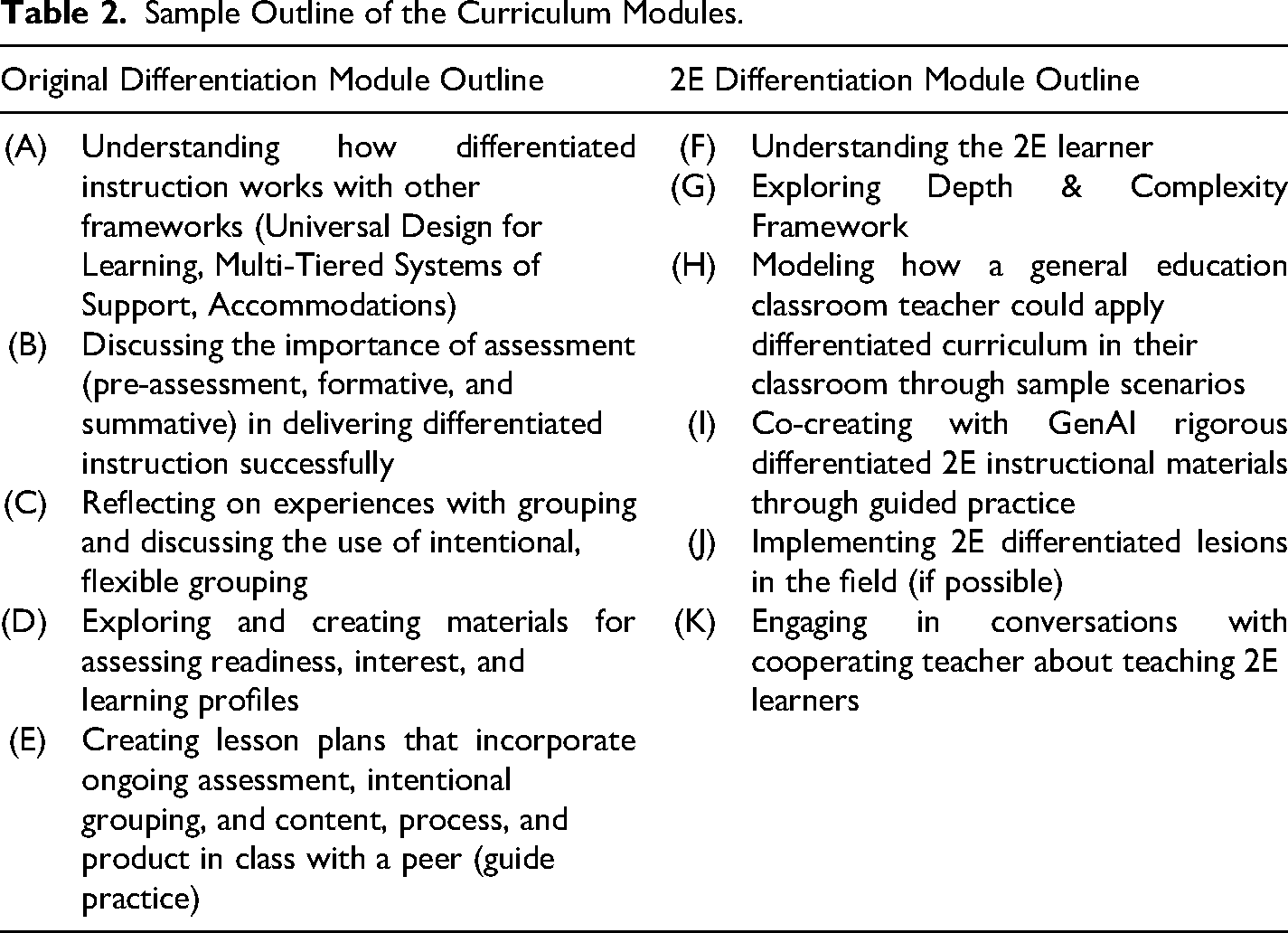
The original differentiation module introduced differentiated instruction how it works with content already presented in the course (Universal Design for Learning, Multi-Tiered Systems of Support, accommodations). This was followed with discussions focused on examining prior experiences with both assessment and grouping, ongoing assessment and intentional and flexible grouping as components necessary for successful instruction. Students were then given opportunities to practice creating assessment materials focused on student readiness, interest, and learning profile to embed within the curriculum. Once this foundation was built, students worked with partners in class to create a lesson plan that incorporated grouping, assessment, and content, process, and product strategies. As part of this activity, students reflected and provided feedback to each other about implementation of differentiation strategies within the lesson plan.
At this point, we integrated the new additions (the 2E differentiation module), with a foundational understanding 2E learners, unpacking terminology and characteristics of gifted learners, and examining the challenges for identifying and serving 2E learners. Next, the module built off prior knowledge of differentiation and with focused exploration of the Depth & Complexity framework. Interwoven throughout the module were scenarios we developed to provide opportunities for the teacher candidates to apply their understanding of 2E learners and differentiation.
Finally, we gave students the opportunity to tie everything together through the completion of an individual lesson project, in which they were expected to demonstrate their learning and incorporate all content learned throughout the two modules (original differentiation and additional 2E module). Students submitted an initial draft of their lesson plan to both the course instructor and the cooperating teacher. The instructor provided both written and verbal feedback during an individual meeting with the student. Students then had an opportunity to revise their lesson plan and submit for final approval. Once this process was complete, they implemented the lesson plan in their field placement and engaged in reflection following lesson delivery.
Following guidelines established by Weber et al. (2025) as well as evidence-based practices for designing curriculum and instruction, we collaborated to develop several scenarios designed to foster critical thinking and create opportunities for teacher candidates to reflect on their understanding of 2E learners. Figure 1 is an example of a scenario with a 2E learner which could be used with teacher candidates enrolled in an EPP or practitioners participating in a PL experience, and it was implemented in the course.
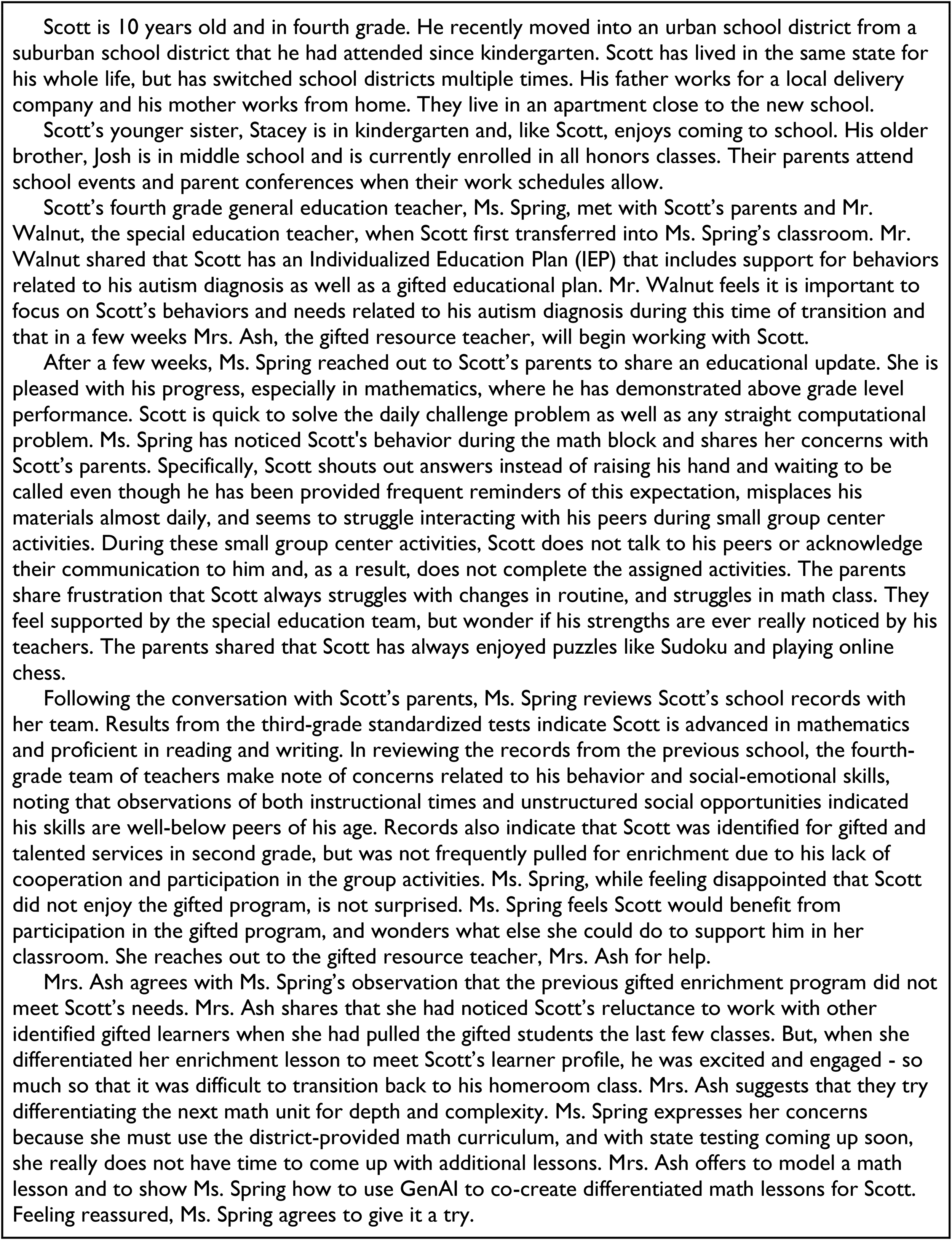
Supporting Disabilities to Accelerate Strengths Scenario.
Scott's scenario is one that is all too common in schools and provides an introduction to understanding the complexities of 2E learners, and the struggle to meet their needs in the classroom. The teacher candidates had previously completed their study of differentiation, as well as understanding the nature and needs of 2E students. The teacher candidates were asked to read and reflect on the scenario individually; they were able to mark up their copy as they reviewed. Next, teacher candidates worked in small groups to share their observations. The facilitator (course professor) prompted conversation by asking guiding questions such as: what do they notice about Scott and his teachers, what information do they already know and what questions do they have, how can they relate to this situation?
In using this activity, teacher candidates’ observations will be grounded in their own personal experiences as a K-12 student, knowledge about autism and giftedness learned within their education coursework or based on their field experience observations. If this scenario is implemented during PL, practitioners would draw upon similar EPP learning as well as their experiences in the classroom working with students with autism diagnoses. Following this discussion, the facilitator of the lesson should model how to differentiate a math lesson for Scott. This process should include exploring differentiation, the Depth & Complexity framework, and practicing utilizing a GenAI tool to differentiate.
Figure 2 represents the instructor-provided lesson plan to accompany the Mrs. Ash scenario. Teacher candidates were asked to review the lesson plan outline and identify potential areas where Scott may struggle based on his learner profile. Teacher candidates recorded these observations and predicted the impact of the disconnect between the learner profile and the lesson plan on the implementation of instruction. One of the goals of this conversation was to raise awareness of the many variables at play during a lesson as well as identifying and modifying the lesson to control for as many variables as possible. Scenarios provide valuable opportunities to collaborate, discuss and reflect on differentiation at play. This reflective analysis process is important in helping teacher candidates and practitioners to learn to value creative thought and higher order thinking in gifted and talented classrooms.
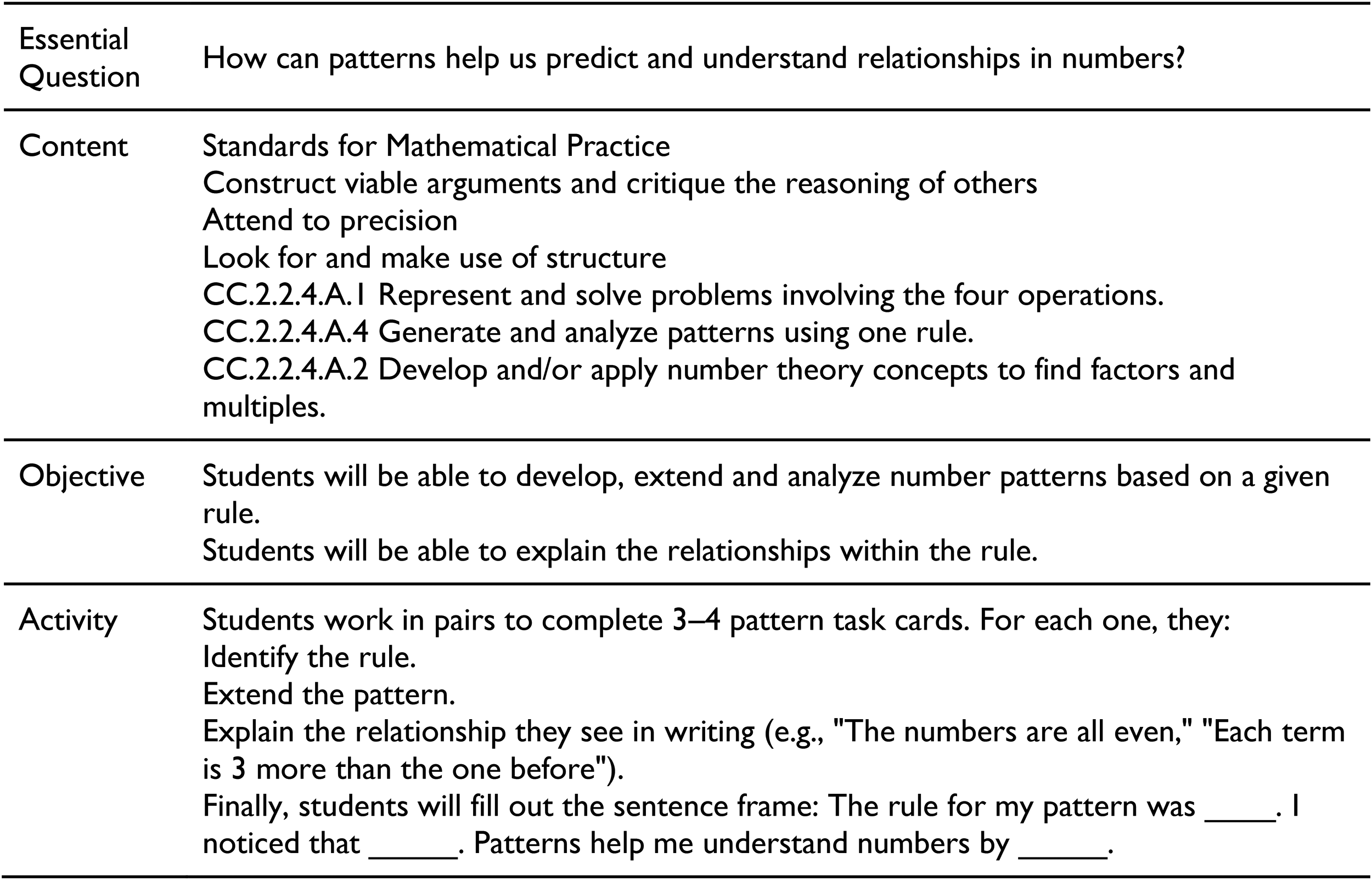
Instructor-Provided Lesson Plan for Mrs. Ash Scenario.
Next, the course instructor guided the teacher candidates through the process of differentiating this lesson for a 2E student. The instructor asked the teacher candidates to reflect on the scenario and identify what pieces of information they know about Scott that a teacher should consider when differentiating the lesson plan. The instructor prompted and guided the teacher candidates as needed. To scaffold the learning process, the instructor guided the teacher candidates as they entered the following prompt into ChatGPT: Can you differentiate this lesson for a twice exceptional learner with autism who does not like to work in groups and does not do well with unstructured social time. The student enjoys puzzles. Figure 3 shares the output generated by ChatGPT 4.0.
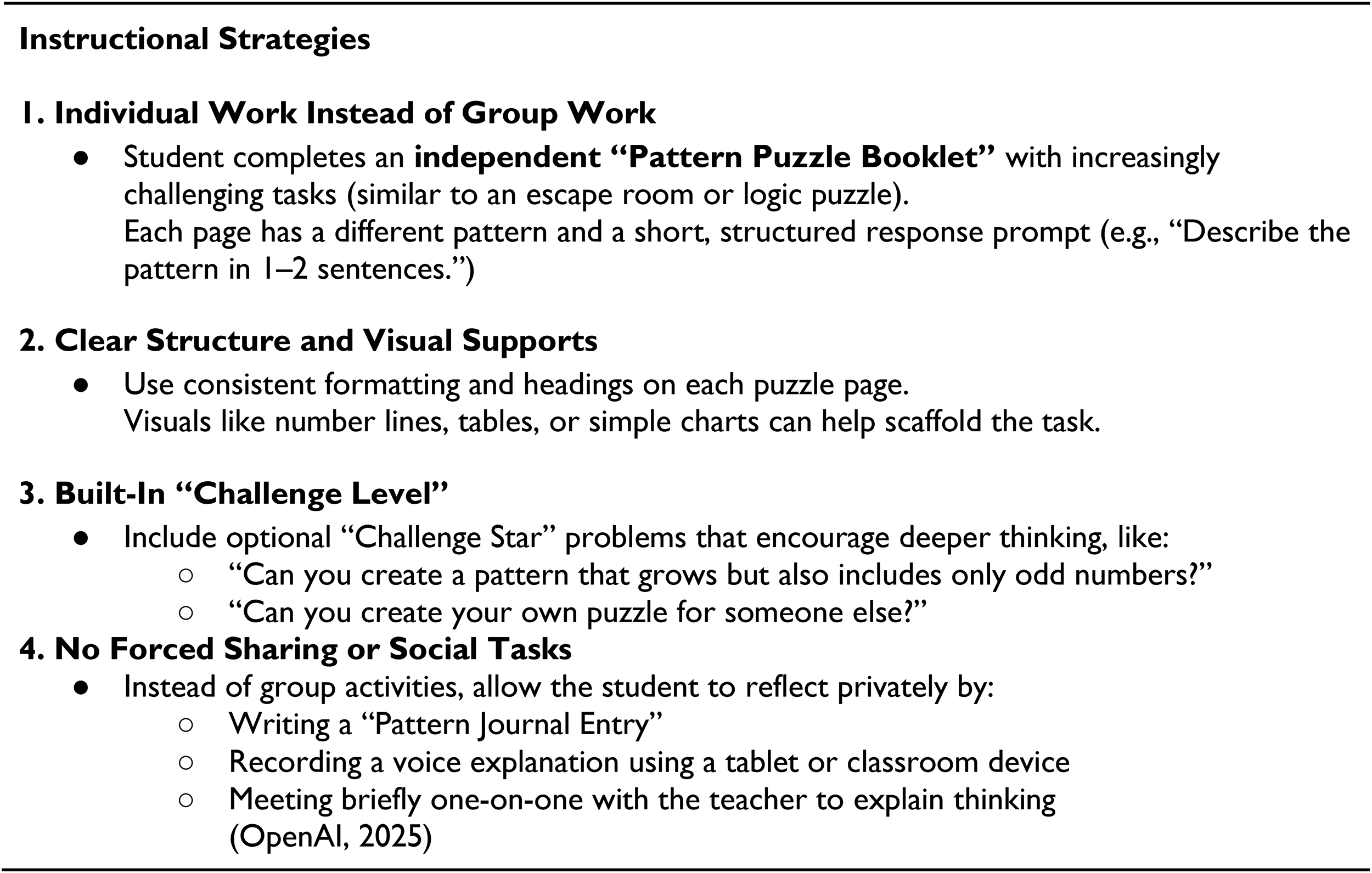
Instructional Strategies From ChatGPT.
The teacher candidates critically evaluated the output for accuracy and appropriateness of differentiation. This is a key step as it provides the human oversight needed when working with GenAI. The course instructor guided the students to recognize that while the lesson plan was differentiated, it did not specifically account for depth and complexity and the strengths of the learner. The original prompt was further developed by asking ChatGPT: How can I adjuist this lesson for this same student using the Depth & Complexity Framework? Figure 4 shares this output.
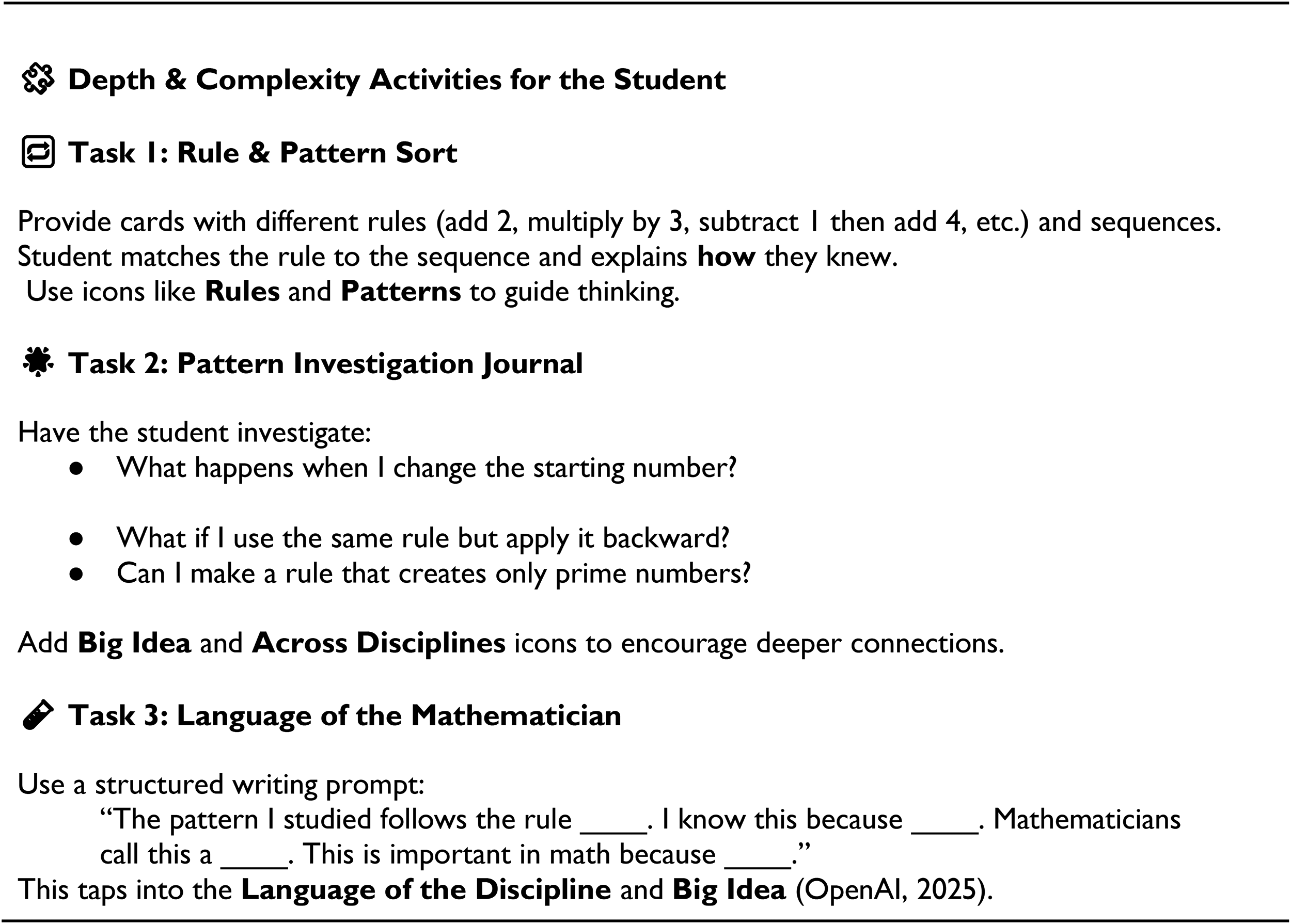
ChatGPT Output for Depth and Complexity.
Conversations continued to further revise and develop the lesson plan alongside ChatGPT, until the teacher candidates felt they had created a lesson which was aligned with the standards and provided respectful challenging learning opportunities for the 2E student in the scenario. Co-creating alongside ChatGPT provides a valuable opportunity for teacher candidates to authentically apply the concepts learned in the college classroom to a K-12 classroom setting.
Following this activity, the teacher candidates worked with creating lesson plans which were aligned with their current field placement and the students within that classroom setting. If a teacher candidate was not currently working with a 2E learner, the course instructor provided a sample 2E learning profile that the teacher candidate could use as they worked on modifying their lesson plans. Teacher candidates were encouraged to implement their co-created lesson plans in the field with a 2E learner if they had access. If not, the teacher candidates were encouraged to discuss with their cooperating teacher the lesson plan and their experiences working with 2E learners.
The course instructor, throughout the entire process, conducted informal assessments to evaluate the effectiveness of the revised 2E curriculum module, the implementation of scenarios and GenAI to revise lesson plans. These informal assessments included in class discussions, lesson plans, and reflective journal prompts. Overall, the informal assessments indicated positive growth in the levels of teacher candidates’ knowledge of 2E learner characteristics, competency in differentiating for 2E learners and AI literacy. In future semesters, course instructors will conduct more formal assessments to measure effectiveness. Based on the informal assessments, course instructors will modify the timing of the differentiation modules to earlier in the semester to allow more time for students to learn the course material prior to beginning working with ChatGPT to modify lesson plans. It is to be noted that as teacher candidates begin using AI tools more frequently, the length of time needed to directly instruct on how to use ChatGPT will be decreased, allowing more time to focus on the critical evaluation and co-creating with GenAI.
Discussion
This experience provides insight into the first guiding question for this praxis paper, how an EPP could prepare teacher candidates to effectively implement dual differentiated instruction (Baum et al., 2001) and materials with K-12 2E learners to accelerate their learning and enhance their educational experiences. By providing direct instruction to teacher candidates focused on dual differentiation followed by opportunities to explore the scenarios created authentic learning opportunities for these undergraduate students (Lewis et al., 2020; Weber et al., 2014, 2025). These scenarios where the teacher candidates were able to critically analyze, discuss and reflect on the characteristics of 2E learners as they presented in a K-12 classroom along with the ways that the teacher could effectively modify the curriculum to support the 2E learners, simulate an experiential learning experience.
It is the hope that teacher candidates during their field placements are able to interact with 2E students; however, this is not always possible given the multiple variables that go into placing students in K-12 classrooms. These case study scenarios played a pivotal role in providing context and understanding of not only what is twice exceptional and what is differentiation, but more importantly how it looks in the classroom and what are some instructional strategies that I could use to support these learners. Research shows that it is often the lack of teacher understanding which results in a focus on disability versus ability in the classroom. Concerned with addressing the disability, educators may not recognize the giftedness due to masking, or may feel that it is more important to focus on the disability and address areas of weakness, rather than growing the areas of strengths (Austermann et al., 2024). However, if EPPs provide a stronger foundation for teacher candidates during their teacher preparation programs, it is more likely that these future teachers will be prepared to look for and differentiate instruction for 2E learners.
This instruction dovetailed nicely with the follow-up instruction dedicated to supporting teacher candidates’ ability to create differentiated instructional strategies with GenAI. EPPs should prepare future teachers to effectively utilize GenAI tools to support their instructional practice (Amado-Salvatierra et al., 2024; Lewis, 2025). Teacher candidates who know how to effectively create instructional materials with GenAI will be more prepared to differentiate instruction for 2E learners for a variety of educational contexts. This in-class opportunity was beneficial to the teacher candidates, even though they were not all able to implement in their field experience, because it provided an authentic context to work with the profile of a 2E learner practice creating differentiated instructional materials. This additional practice is necessary to ensure that the teacher candidates are applying new understandings and developing their skill sets. It is important that EPPs provide the foundational content knowledge about dual differentiation and 2E characteristics and learning profiles because it prepares the teacher candidates to critically examine the outputs of GenAI and determine their trustworthiness and value as potential differentiated instructional materials.
The second question that was explored through this praxis was how can the strategies utilized by EPPs be incorporated into professional learning experiences for practitioners. The collaboration between a special educator and gifted educator to develop the differentiation modules provide an example of the powerful learning experiences this partnership can yield for 2E learners. The strategies used by the EPP to develop scenarios as well as the curriculum modules used in the coursework could be easily adapted to professional learning modules for practicing educators. This smooth transition is possible because the teacher preparation program designed them with the practitioner in mind and research-based practices for professional learning. Collaboration, exploration, discourse, and opportunities to apply in the classroom are all key components of effective PL, and are seen within the EPP's modules (Lewis et al., 2020; Weber et al., 2025). EPPs and PL sessions need to provide practical applications for improving teacher practice and student learning outcomes. This can be accomplished through the use of targeted scenarios designed to develop teachers’ and teacher candidates’ practice.
Recommendations
Teacher candidates may not be adequately prepared to work with 2E learners in their general education classrooms, but with targeted professional learning experiences and course modifications during EPP coursework, this can be changed. EPPs should raise awareness of 2E learners’ learning profiles just as they prepare teacher candidates to work with English language learners, Special Education students, and the general student population. CEC Initial Practice-Based Professional Preparation Standards for Gifted Educators (2024) outline the expectations for areas of preparation teacher candidates need to be ready to work with 2E students. Interweaving scenarios based on K-12 classroom experiences of 2E learners, EPPs can support teacher candidates who need to learn how to differentiate district-mandated instructional materials to accelerate learners, just as they learn how to differentiate for below-level learners.
Both the 2019 NAGC Pre-K-Grade 12 Gifted Programming Standards and the 2024 CEC Initial Practice-Based Professional Preparation Standards for Gifted Educators emphasize the need for future teachers of the gifted and support and recommend professional learning to continue to develop and refine teachers’ pedagogical practices. The standards stress the need to know how to be responsive to the needs of K-12 gifted learners, modify, create curriculum for depth and complexity and support K-12 gifted learners’ growth as creative thinkers and problem-solvers. EPPs should modify and revise their existing curriculum to include 2E learner characteristics and use technology tools to aid in the development of differentiated instructional and assessment materials. EPPs which implement these small changes will realize large impacts in the levels of teacher preparedness to teach 2E learners. It is recommended that EPPs provide teacher candidates with opportunities to learn how to use GenAI to create differentiated instruction for 2E learners and work through scenarios to solidify their learning. GenAI is not a technology fad, but rather it is a transformative learning pedagogy which opens the door for 2E students to have not just their disabilities accommodated in the classroom, but also their gifted abilities to be nurtured (Lewis, 2025).
Modifying existing curriculum is an evidence-based practice supported by NAGC, CEC, and WCGTC, and should be utilized by EPPs to ensure all teacher candidates are ready for today's classrooms. Teacher candidates need to be supported as they transition to practitioners in their districts. Districts and gifted educator professional learning facilitators should incorporate scenarios into their PL to help provide examples of what it looks like in the classroom and encourage the use of GenAI to support the modification of existing lesson plans for 2E students.
Conclusion
Educators and teacher candidates can improve the learning experience for 2E learners through dual differentiation. Teachers have already experienced growth in student outcomes when they use differentiation in the classroom to support their below-grade-level learners. When this same instructional strategy is leveraged to differentiate curriculum for 2E learners, educators create differentiated curriculum which is respectful of the 2E learners’ abilities and disabilities and creates a rich learning experience for the student. Professional learning and teacher preparation programs should provide opportunities for teachers to investigate the Depth & Complexity framework (Kaplan, 2021) and explore scenarios where teachers have utilized differentiation and the Depth & Complexity framework with 2E learners. When special education teachers, gifted education teachers, and general classroom teachers apply their understanding of how to differentiate for the 2E learners to their own classrooms, the result is rigorous and meaningful learning experiences for 2E learners. Differentiating for depth and complexity for the 2E learner is a low-cost, practical instructional strategy which can effectively be utilized by teachers with minimal funding investment but with significant gains in 2E learners’ learning outcomes.
Footnotes

Ethical Considerations
Praxis paper.
Consent to Participate
Not applicable.
Consent for Publication
Not applicable.
Funding
The authors received no financial support for the research, authorship, and/or publication of this article.
Declaration of Conflicting Interests
The authors declared no potential conflicts of interest with respect to the research, authorship, and/or publication of this article.
Data Availability Statement
No data was used in this praxis paper.