






Abstract
This study evaluated the usability of the CagriSema dual-chamber pen, a single-dose, single-use, pre-filled autoinjector for once-weekly subcutaneous administration of a fixed-dose combination of cagrilintide and semaglutide. Adults with overweight/obesity (n = 85) or type 2 diabetes (n = 65) performed simulated injections after standardized training. Endpoints included injection completeness, task durations, and user feedback via the Injection Device Experience and Acceptability–Ease of Use and Convenience Questionnaire (IDEA-ECQ; content validity supported by cognitive interviews, n = 50). All but one participant completed the injection successfully. Median training time was 3 minutes, and time to prepare and inject was 15 seconds. Participants rated the device easy/very easy to use (100%), easy/very easy to learn (98.7%), and an injection with the pen convenient (99.3%). Results were consistent across populations and unaffected by prior device experience.
Introduction
Obesity and type 2 diabetes (T2D) represent major global health challenges that contribute to comorbidities, mortality, and health care use.1,2 Affected individuals experience a significant treatment burden due to the need for long-term management and complex therapeutic regimens. Injection devices play a pivotal role in the management of obesity and T2D, as well as many other chronic conditions. While drug administration via vial and syringe systems is often associated with complex preparation steps and risk of errors, pen-like injection device technology has been widely adopted for chronic disease treatment due to its excellent dose accuracy, portability, reduced injection complexity, and lower treatment burden.3-5 In diabetes treatment, usability and ease of handling of insulin pens have led to improved treatment satisfaction. 3 ,6-9
A combination therapy with semaglutide and cagrilintide (CagriSema) is in development for treatment of overweight with comorbidities or obesity 10 as well as T2D. 11 The novel CagriSema dual-chamber pen is a prefilled, single-dose, and single-use autoinjector designed for once-weekly subcutaneous co-injection of semaglutide and cagrilintide. Pressing the device against the skin retracts the protective needle shield, exposing the needle and automatically initiating the injection. The aim of this study was to confirm the CagriSema dual-chamber pen’s ease of use in the intended user groups. An additional aim was to support the content validity and interpretability of the Injection Device Experience and Acceptability-Ease of Use and Convenience Questionnaire (IDEA-ECQ) that was used to collect the participants’ feedback in cognitive interviews. The IDEA-ECQ was based on a previously published IDEA questionnaire. 12 While the original questionnaire was designed to be used in the context of a clinical study, the IDEA-ECQ was modified to be suitable for a usability study.
Methods
This usability study evaluated the ease of use, ease of learning, and convenience of the single-dose, single-use, pre-filled CagriSema dual-chamber pen (Figure 1A). Detailed description of methodology can be found in Supplementary Information, and the test setting and procedure are summarized in Figure 1B and C. Participants represented intended users for the CagriSema dual-chamber pen, that is, both a user group with T2D and a weight management user group. Key inclusion criteria for the weight management group were overweight (body mass index [BMI] ≥27 to <30) and ≥1 weight-related comorbidity or obesity (BMI ≥30), while participants with T2D could have any BMI. Participants across both user groups were selected to represent a mix of device-naïve and experienced users. The study was conducted by Research Collective and took place in their usability test facility in Tempe, Arizona, USA. Following standardized training by a nurse, participants independently performed a simulated test injection that comprised 3 steps: (1) detaching the cap, (2) activating drug delivery (using test medium), and (3) retracting the pen from the injection pad once the drug delivery is completed. Successful injection steps as well as the time taken for training (in minutes) and the time to prepare and inject during the test (in seconds) were recorded. A posttest debrief interview was done with any participants whose injection was incomplete or incorrect. After the test and potential debrief, all participants answered the IDEA-ECQ with 10 questions. A subset of participants attended a cognitive interview to evaluate whether the IDEA-ECQ is fit for purpose.
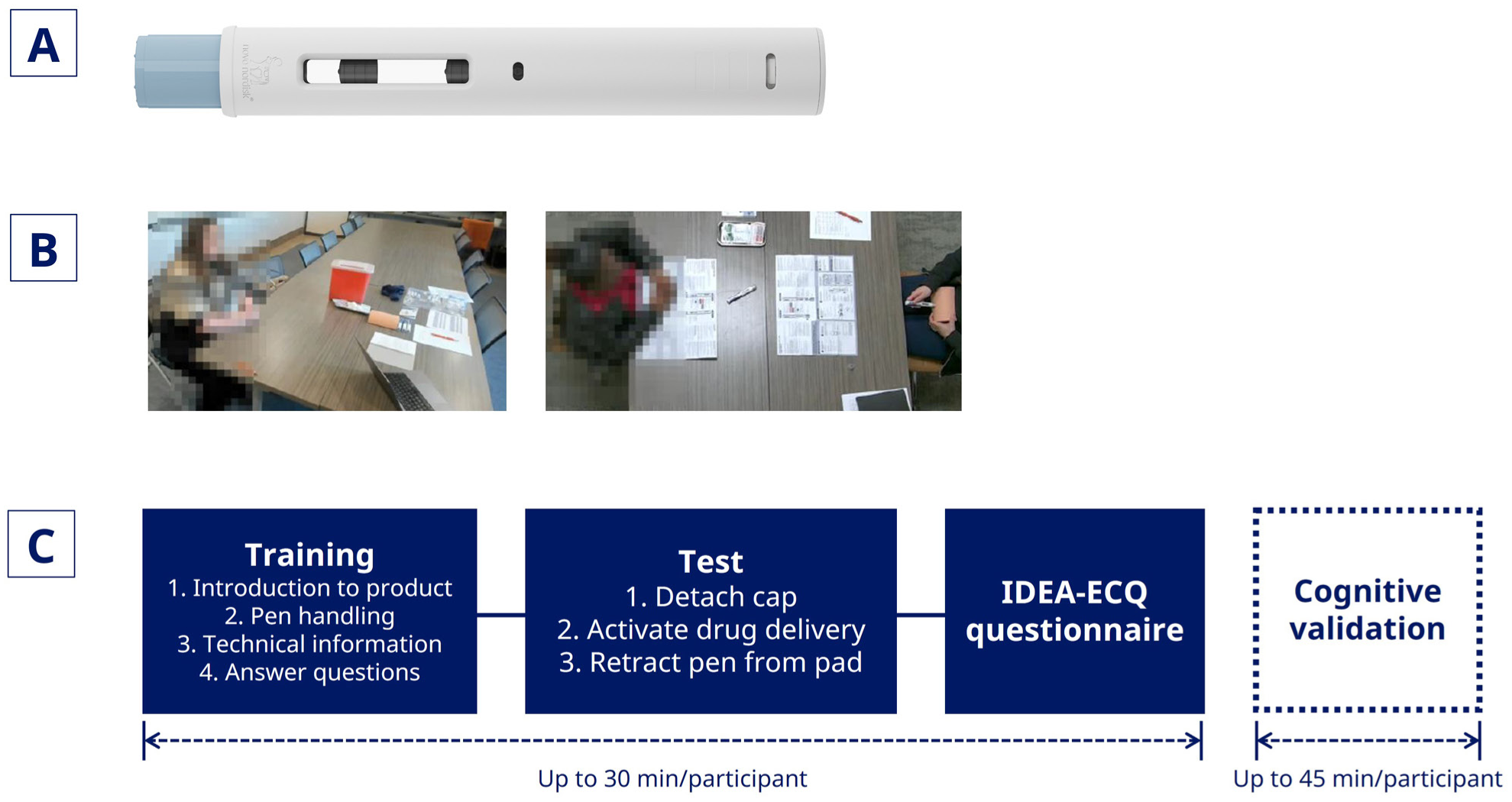
Study design. A. The CagriSema dual-chamber pen containing semaglutide and cagrilintide for once-weekly subcutaneous administration (test medium was used in this study). B. Test setting at the Research Collective usability test facility. C. Study procedure: Participants received standardized training followed by an independent injection test. All steps in the test had to be successful for the injection to be considered complete. All 150 participants completed the IDEA-ECQ after the test, while a subset of 50 participants completed the cognitive validation interview.
Results
Participant Characteristics
A total of 150 participants were screened and enrolled, and everyone completed the study. The study included participants from 2 target populations: weight management (n = 85) and T2D (n = 65). A summary of participant characteristics can be found in Table 1. The mean (SD) age was 45.2 years (15.9), and the mean BMI was 35.6 kg/m² (6.8). Out of all participants, 36.0% had prior pen- or autoinjector experience, while the remainder (64.0%) were device-naïve.
Participants’ Self-Reported Characteristics Based on a Background Questionnaire.
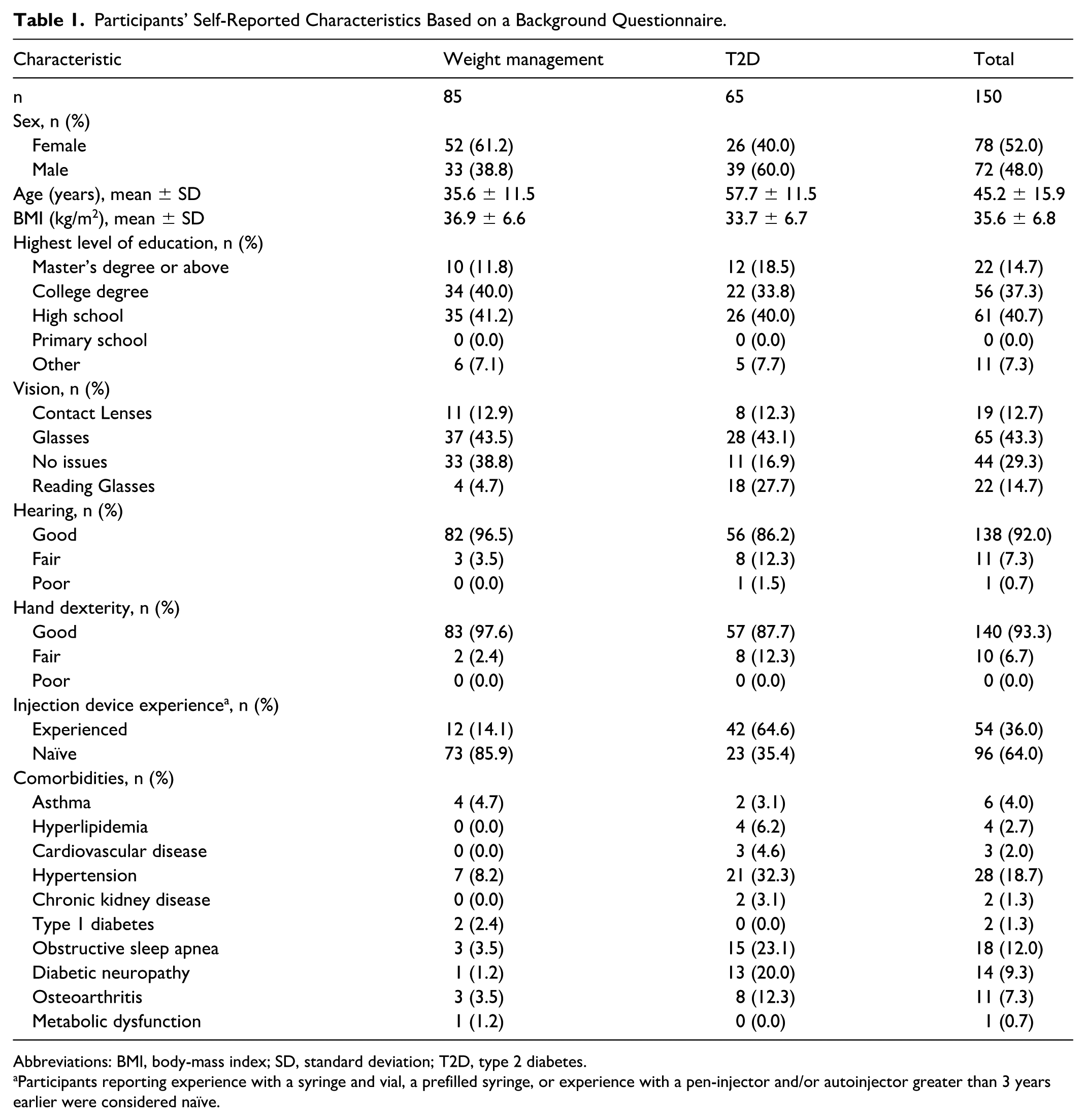
Abbreviations: BMI, body-mass index; SD, standard deviation; T2D, type 2 diabetes.
Participants reporting experience with a syringe and vial, a prefilled syringe, or experience with a pen-injector and/or autoinjector greater than 3 years earlier were considered naïve.
Ease and Convenience of Use
Responses to the IDEA-ECQ demonstrated positive perceptions of the CagriSema pen. Every participant rated the pen as “easy” or “very easy” to use, and 98.7% found it easy or very easy to learn how to use (Figure 2A). Furthermore, 99.3% agreed that taking an injection with the pen was convenient (Figure 2B), more than 98% of participants reported confidence in their ability to use the pen and satisfaction with its use, and 96% agreed that using the pen could easily fit into their daily routine. Responses were similarly positive across the weight management and T2D subgroups as well as across device-naïve and device-experienced participants (Figure 2C-F).
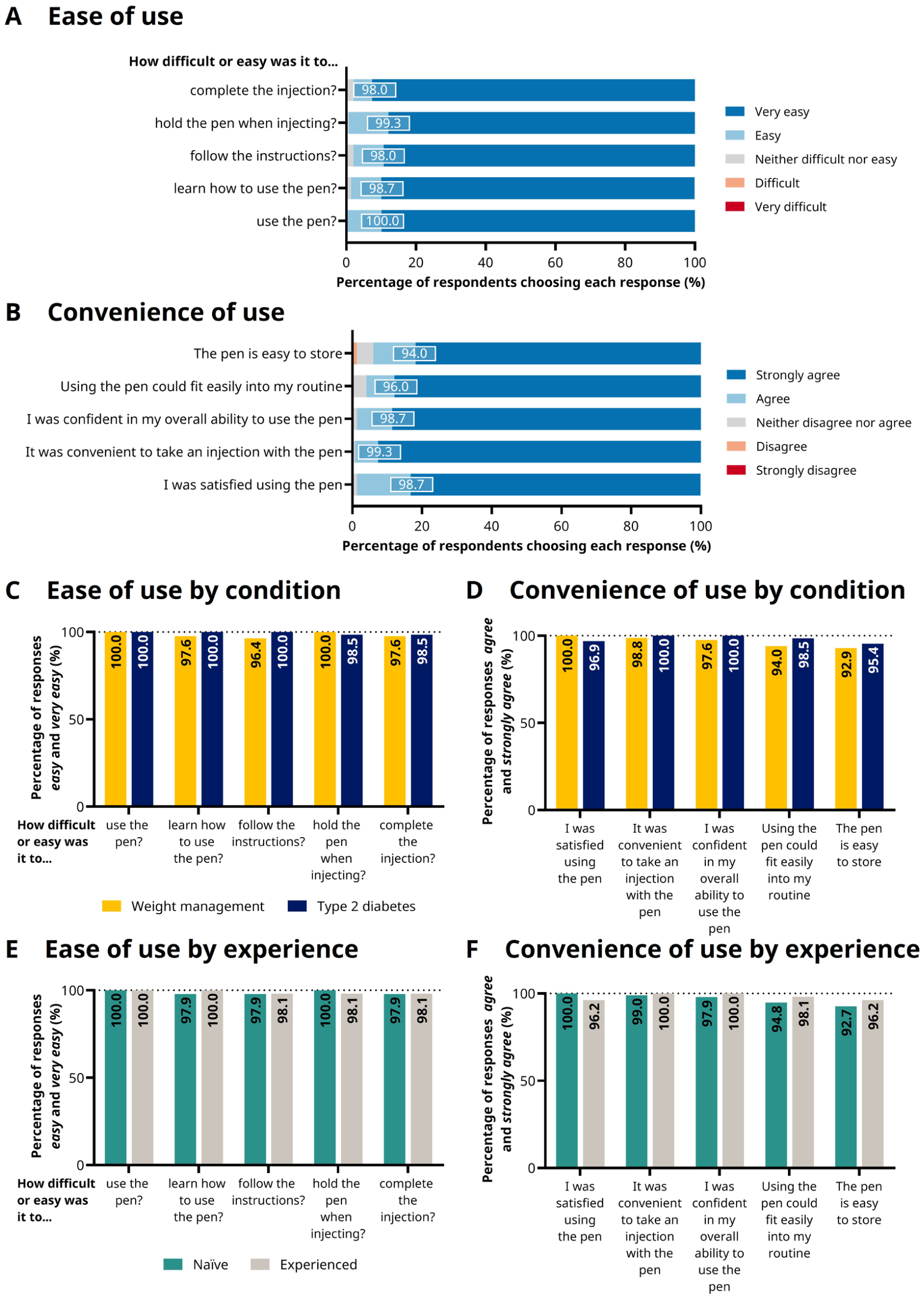
Ease and convenience of use. A. All participants’ responses to ease-of-use questions. B. All participants’ responses to convenience-of-use questions. C. Ease of use in the weight management and T2D groups. D. Convenience of use in the weight management and T2D groups. E. Ease of use by previous injection device experience. F. Convenience of use by previous injection device experience. In A and B, the percentage of responses in the very easy and easy (A) or strongly agree and agree (B) categories is given in the boxes on the graphs.
Training Time, Injection Task Completion, and Injection Duration
Training sessions were brief with an overall median training time of 3 minutes, ranging from 3 to 4 minutes across subgroups and educational backgrounds (Table 2). Following training, participants performed an independent simulated injection task, where 149 out of the 150 participants successfully completed the injection without assistance, and there were no observed near-errors, hesitations, or instances where repeated clarifications were required before testing. One participant (33-year-old experienced user) removed the device prematurely from the injection pad, thus failing the required “Activate drug delivery” step of a successful injection. In the posttest debrief interview, the participant mentioned that they had planned to adopt a gentler approach for the test injection compared with the training injection, during which they had applied excessive pressure. All participants completed the “Detach cap” and “Retract pen from pad” steps successfully. The overall median time to prepare and inject was 15 seconds, which includes the drug delivery phase taking up to 10 seconds. The median duration ranged from 14 to 16 seconds across subgroups (Table 2). Previous injection device experience or educational background did not offer an advantage in training time or the time taken to prepare and inject.
Training Duration and Time Taken to Prepare and Inject Among All Study Participants and Grouped by Intended Use, Device Experience, and Educational Background.
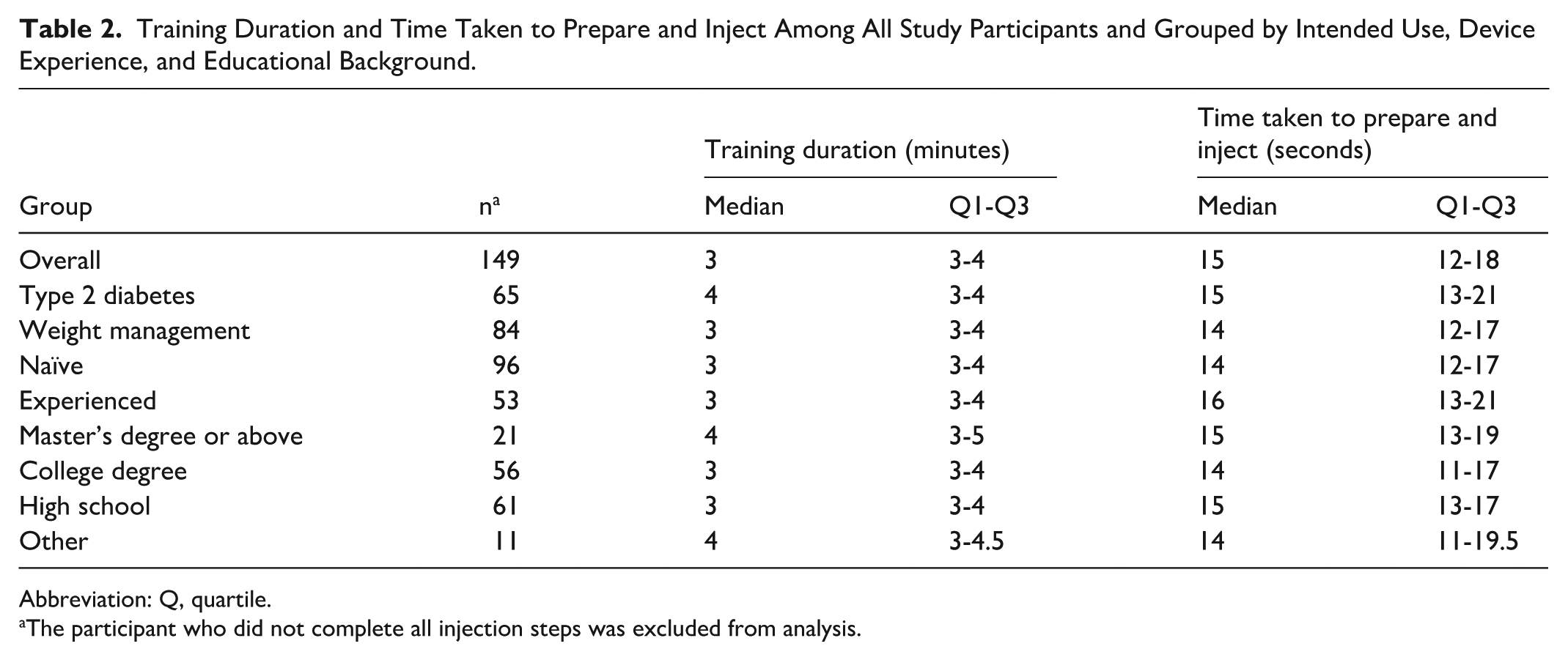
Abbreviation: Q, quartile.
The participant who did not complete all injection steps was excluded from analysis.
Cognitive Interviews
Results from the cognitive interviews conducted with 50 participants (25 weight management and 25 T2D) confirmed the relevance, comprehensiveness, and comprehension of all assessed items, with very few instances of participants expressing difficulty in interpreting or answering the evaluated items. As the results indicated that the instructions and response options of the IDEA-ECQ were effective and meaningful to most participants, no modifications were proposed or made during the study. Key findings, verbatim participant quotes, and considerations for future versions are provided in Supplementary Information.
Discussion
The findings from this usability study demonstrate that, in a supervised simulated-use setting following standardized training, the CagriSema dual-chamber pen was perceived to be easy to learn how to use, easy to use, and convenient to take an injection with among individuals with overweight, obesity, or T2D. As the study population was intentionally recruited to mirror the target population, the perceptions observed in this study can be expected to reflect real-world treatment initiation.
As the treatment landscape of overweight, obesity, and T2D is changing, it is important that novel treatments are accompanied by devices that are suitable for both device-naïve and experienced users. The CagriSema dual-chamber pen required a median of only 3 minutes for training, regardless of previous device experience. This short training time is noteworthy in the context of existing literature. In a DuraTouch handling study, pen-injector-naïve users required a median of 11 minutes of training, compared with 9 minutes among experienced users. 13 In a comparative study of the somapacitan pen-injector versus the lonapegsomatropin autoinjector, training durations of 5.9 minutes versus 24 minutes were reported, respectively. 14
Following training, participants completed the preparation and injection sequence rapidly, with a median time of 15 seconds. Completion time was shorter among device-naïve participants (14 seconds) than among those with prior experience (16 seconds). These times include device preparation (eg, uncapping and retraction), whereas the actual drug delivery phase is shorter, taking up to 10 seconds. The very high rate of injection task completion with 149 of 150 participants independently completing all required steps without any recorded difficulties or close calls further demonstrates that the device design effectively supports correct injection completion across user backgrounds.
The small differences observed in training duration with a slightly longer time in the subgroup with T2D may be due to previous user experience with other devices (eg, insulin devices). Stoll et al 15 have previously stated that user education is important when transitioning between devices, and the very short and simple training required for the CagriSema dual-chamber pen can be expected to minimize any unintended carry-over effects from previous use of different devices. The ease of learning to use the CagriSema dual-chamber pen makes treatment initiation easy across all user groups. Furthermore, the high usability and convenience ratings regardless of prior device experience suggest that the device design effectively accommodates both device-naïve and experienced users.
Limitations
This study was conducted in a controlled usability test facility using simulated injections into a pad, which may not fully replicate real-world conditions or the tactile feedback and potential discomfort of an actual injection. Testing occurred immediately after training and involved only a single independent injection, which minimizes learning decay and does not reflect repeated use over time. As the study focused on perceived usability and independent task completion following standard training, it was not designed to provide design input or to evaluate use-related risks, safety signals, or behavior under worst-case or error-provoking conditions. While the findings provide insight into initial user perceptions, they cannot be used to determine if the ease of use translates to improved long-term adherence or preference compared with existing device options. The self-reported ratings measured by the IDEA-ECQ demonstrated a strong ceiling effect, which limits the ability to detect subtle differences. In addition, the medical history was self-reported, and the sample was geographically limited to the United States.
Conclusion
The CagriSema dual-chamber pen was designed to be easy to use, and this usability study demonstrates consistently high ease of use, ease of learning, and convenience across the intended users in a simulated setting immediately following training. All participants (100%) rated the pen easy or very easy to use. Combined with minimal training and a short time taken to prepare and inject, these findings support the pen’s potential to offer a positive initial user experience for individuals with overweight, obesity, or T2D. This study also supported the content validity and interpretability of the IDEA-ECQ for future pen device usability assessments.
Supplemental Material
sj-docx-1-dst-10.1177_19322968261461530 – Supplemental material for Ease of Use, Ease of Learning, and Convenience of the CagriSema Dual-Chamber Pen: Results From a Usability Study in Adults With Overweight, Obesity, or Type 2 Diabetes
Supplemental material, sj-docx-1-dst-10.1177_19322968261461530 for Ease of Use, Ease of Learning, and Convenience of the CagriSema Dual-Chamber Pen: Results From a Usability Study in Adults With Overweight, Obesity, or Type 2 Diabetes by Walter Gulisano, Gitte Ter-Borch, Paul Brown, Joshua Buron Feinberg, Maya Gonczi, Emily Hildebrand, Gina Legere-DeJohn, Riia Sustarsic and Thomas Sparre in Journal of Diabetes Science and Technology
Footnotes
Acknowledgements
The authors thank all participants and staff who were involved in the conduct of this usability study. The authors thank Antonino Azzarello and Mette Marie Koefoed of Novo Nordisk A/S for their valuable insights on the study design. Medical writing support was provided by Kati Rehberg (PhD) of Novo Nordisk A/S.
Abbreviations
ADA, American Diabetes Association; BMI, body mass index; CKD, chronic kidney disease; CVD, cardiovascular disease; FDA, U.S. Food and Drug Administration; IDEA, Injection Device Experience and Acceptability; IDEA-ECQ, IDEA-Ease of Use and Convenience Questionnaire; IRB, Institutional Review Board; MASH, metabolic dysfunction-associated steatohepatitis; Q, quartile; SD, standard deviation; T2D, type 2 diabetes.

Ethical Considerations
Prior to initiation of the study, an Institutional Review Board (IRB) approval was obtained from the Castle IRB in Chesterfield, MO, USA. All participants provided written informed consent prior to participation.
Funding
The authors disclosed receipt of the following financial support for the research, authorship, and/or publication of this article: This study was funded by Novo Nordisk A/S.
Declaration of Conflicting Interests
The authors declared the following potential conflicts of interest with respect to the research, authorship, and/or publication of this article: Walter Gulisano, Paul Brown, Joshua Buron Feinberg, Gina Legere-DeJohn, Gitte Ter-Borch, Riia Sustarsic, and Thomas Sparre are employees of Novo Nordisk. Walter Gulisano, Gina Legere-DeJohn, Gitte Ter-Borch, and Thomas Sparre are also shareholders of Novo Nordisk. Emily Hildebrandt and Maya Gonczi are employees of Research Collective, which has received funding from Novo Nordisk for research carried out in this work.
Data Availability Statements
The datasets generated during and/or analyzed as part of the current study are available from the corresponding author on reasonable request.
Supplemental Material
Supplemental material for this article is available online.
References
Supplementary Material
Please find the following supplemental material available below.
For Open Access articles published under a Creative Commons License, all supplemental material carries the same license as the article it is associated with.
For non-Open Access articles published, all supplemental material carries a non-exclusive license, and permission requests for re-use of supplemental material or any part of supplemental material shall be sent directly to the copyright owner as specified in the copyright notice associated with the article.
