







Abstract
This study aimed to study the expression of homeobox (HOX)A11-AS1 (HOXA11 antisense RNA) long noncoding RNA (lncRNA) and the expression of homeobox A (HOXA9, HOXA10, HOXA11, and HOXA13) genes in the eutopic (EU) and ectopic (EC) endometria of women with peritoneal endometriosis. A total of 30 women undergoing laparoscopic surgery for peritoneal endometriosis and 15 infertile women without endometriosis were enrolled in this study. Peritoneal EC tissue samples were obtained through surgery. The EU tissues were obtained by curettage. The EC and EU lncRNA and messenger RNA (mRNA) expression levels were measured using real-time reverse transcriptase–polymerase chain reaction. The HOXA11-AS1 lncRNA and HOXA9, HOXA10, HOXA11, and HOXA13 mRNA were expressed at significantly lower levels in the EU than in the EC, that is, in women with peritoneal endometriosis (P < .05). The expression levels of HOXA10 and HOXA11 in the EU were significantly lower in women with peritoneal endometriosis compared to the control group participants (P < .05), whereas the levels of lncRNA (HOXA11-AS1), HOXA9, and HOXA13 did not differ significantly between the 2 patient groups (P > .05). In conclusion, the study findings suggest that HOXA11-AS1 lncRNA may play a role in the development of peritoneal endometriosis, but HOXA11-AS1 may not influence endometrial receptivity in endometriosis-associated infertility.
Introduction
Endometriosis is characterized by the presence of endometrial tissue outside the uterus, primarily on the pelvic peritoneum, ovaries, and the rectovaginal septum and is associated with pelvic pain and infertility. 1,2 Several classical studies have suggested that 25% to 50% of infertile women have endometriosis, and 30% to 50% of this population has been reported to be infertile. 3,4 Endometriosis-associated infertility is commonly attributed to advanced pelvic disease (stages III and IV), in which lesions such as tubal and ovarian adhesions can mechanically obstruct and impair normal reproductive processes. 5 Such lesions may also result in reduced oocyte quality and reduced endometrial receptivity to implantation. 6 Laparoscopic exploration has frequently identified early stage endometriosis (stages I and II) as a potential cause of infertility. Late stage endometriosis is relatively easy to diagnose compared to the early stages, which can only be diagnosed via laparoscopy. One study suggested that the prevalence of endometriosis in women undergoing tubal sterilization is 1% to 7%, while that of endometriosis in women undergoing laparoscopic evaluation of infertility ranges from 9% to 50%. 4,7
Thus far, the connection between endometriosis and subfertility has not been conclusively established, and it is still unknown why some patients with endometriosis are infertile while others are not. 8 Although many studies have hypothesized about the nature of the disease, our understanding of the etiopathogenesis of endometriosis remains inadequate. Recent studies have suggested the role of epigenetic mediators in endometriosis. 9 -11 Endometriosis is well-known to have a multifactorial etiology, and genetic factors are well-known to play crucial roles in its development and maintenance, partially through epigenetic regulation. 12
Less than 3% of the human genome is directly implicated in protein coding, and over 80% of our genomic DNA is transcribed into noncoding RNAs. 13 Noncoding transcripts shorter than 200 nucleotides in length that demonstrate no protein-coding capacity are termed long noncoding RNAs (lncRNAs). 14 Over the last 2 decades, lncRNAs have been recognized as more than mere “transcription noise,” and studies have reported their roles in epigenetic regulation, development, and human diseases. 15 Dysregulation of lncRNAs is strongly associated with cancers. 16 -18 For instance, the lncRNA homeobox (HOX) transcript antisense RNA (HOTAIR) is pervasively overexpressed and correlates with tumor invasion, progression, metastasis, and poor prognosis in various human cancers, including breast cancer. 19 Further studies have shown that high HOTAIR levels correlated with metastasis and poor prognosis. 20 Upregulation of HOTAIR is associated with metastatic progression and poor prognosis not only in breast cancer but also in colorectal, liver, pancreatic, and gastric cancers and gastrointestinal stromal tumors. 16,21 -24
As lncRNAs are known to regulate a number of developmental and tumorigenic processes, most lncRNA studies have focused on cancer. 25,26 Endometriosis can be regarded as a benign metastatic disease, as it is not fatal in itself. However, due to the ability of endometrial tissue to invade, metastasize, and recur like tumors, it closely resembles cancer. Although the underlying cause of endometriosis is unknown, it is likely to be caused by multiple factors such as genetic factors, which may be affected by epigenetic processes. 12 Very few studies have investigated the relationship between lncRNAs and endometriosis. A recent study investigated the differential messenger RNA (mRNA) and lncRNA expression levels in eutopic (EU) and ectopic endometria (EC) of adenomyosis. 27 However, previous studies have reported lncRNA expression patterns in human EC and EU tissues. 28 Microarray analysis revealed that nearly 1000 lncRNA transcripts were dysregulated, and both dysregulated lncRNA transcripts and their potentially cis-regulated mRNA transcripts were identified in human EC and EU tissues. 28 Specifically, HOXA11-AS1 was previously predicted to cis-regulate the expression of HOXA10 mRNA. 28 Similarly, the expression of HOXA gene clusters was reported to be lower in the EC than in EU. 29 Dysregulated lncRNAs might represent new biomarkers or novel therapeutic targets for endometriosis. 30 It remains to be determined whether lncRNAs are involved in the pathogenesis and progression of endometriosis-associated infertility. To date, however, few studies have investigated the lncRNA expression or the potential functional roles of lncRNAs in endometriosis-associated infertility.
The HOXA11-AS1 is also known as HOXA11 antisense RNA 1. The HOXA11 antisense transcript levels are reported to vary during the menstrual cycle: the antisense RNA level peaked in the midproliferative phase and was inversely correlated with mRNA expression levels. Progesterone downregulated HOXA11 antisense transcription, followed by upregulation of HOXA11 mRNA, suggesting a possible role for the antisense transcript in regulating mRNA expression. Chau et al 31 suggested that HOXA11 antisense does not regulate HOXA11 mRNA by formulation of sense/antisense duplexes but by transcriptional interference to repress HOXA11 expression by competing for transcription of the common gene.
Therefore, in the present study, we investigated the expression levels of HOXA11-AS1 and HOXA genes (HOXA9, HOXA10, HOXA11, and HOXA13) in peritoneal and EU samples and verified the results using quantitative reverse transcriptase–polymerase chain reaction (qRT-PCR). Furthermore, we predicted the potential functions of HOXA11-AS1 by analyzing its coexpressed protein-coding genes.
Materials and Methods
This study was approved by the ethical review board of Yuhuangding Hospital, Yantai, China. Written informed consent was obtained from all the participants prior to start of the study.
Patient Profiles
Women with normal ovulation who visited the Yuhuangding Hospital, Yantai, China, between August 2014 and May 2015, for laparoscopic evaluation of infertility, were recruited for participation in this study. The patients’ partners had normal semen. The EC tissue was obtained from the pelvic peritoneum of 30 women with peritoneal endometriosis (American Fertility Society stages I and II, according to the revised American Society for Reproductive Medicine classification for endometriosis, 1997). Here, we chose to study endometriosis at stages I and II because although endometriosis is relatively easy to diagnose at later stages (stages III and IV), its early diagnosis and treatment is preferable. Early stage endometriosis (stages I and II) is not easy to diagnose and can only be identified upon laparoscopic analysis. Patients with other causes of infertility were excluded from this study. The diagnosis of endometriosis was confirmed surgically and pathologically. Paired EU samples from the same patients were collected by curettage after hysteroscopy. Histological dating according to the Noyes criteria confirmed that EU samples were in the midsecretory phase. 32 The EU samples were obtained by hysteroscopic biopsy during the implantation window, that is, 7 to 9 days after ultrasound-confirmed ovulation. Menstrual cycle phase (days 20 to 23) was established according to history and serum progesterone levels (P > 10 ng/mL). 33
Among the women who underwent laparoscopic exploration for suspected tubal factor infertility, those who were found to have mild tubal disease were included in the study. In both the test and control groups, patients with hydrosalpinx, endometritis, or submucosal myoma were excluded from the study, as these diseases may possibly affect endometrial receptivity. The EU was collected from patients by curettage at the same time after hysteroscopy. We selected 15 age-matched infertile women without endometriosis as the control group during laparoscopic surgeries.
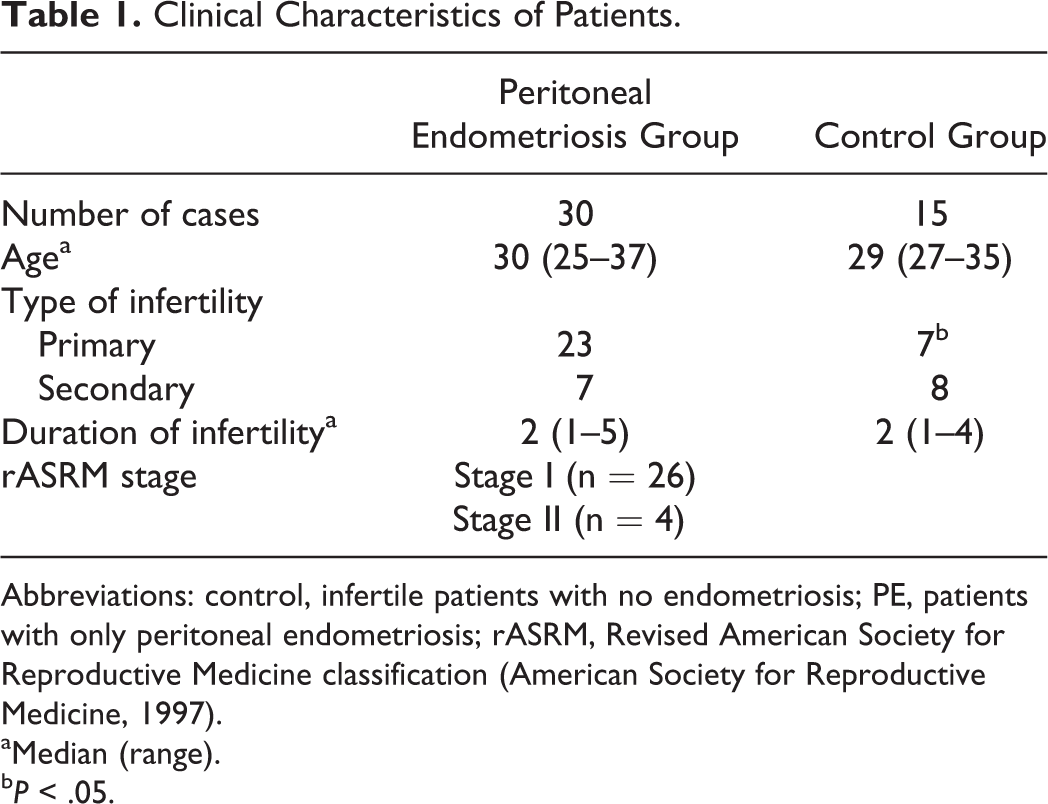
Table 1 describes the characteristics of the studied population. The main symptom was infertility, and 45 patients had not used any form of hormonal treatment for at least 3 months before sample collection. None of the patients had received gonadotropin-releasing hormone agonist therapy before surgery. All endometrial tissues were included in the study, and the tissues were confirmed to be in the midsecretory phase by histological dating according to the Noyes criteria. 32
Clinical Characteristics of Patients.
Abbreviations: control, infertile patients with no endometriosis; PE, patients with only peritoneal endometriosis; rASRM, Revised American Society for Reproductive Medicine classification (American Society for Reproductive Medicine, 1997).
aMedian (range).
b P < .05.
Tissue Collection, RNA Extraction, and Reverse Transcription
In the patients with peritoneal endometriosis, we obtained tissue samples from the peritoneum with typical endometriotic lesions. Paired EU samples were simultaneously collected by curettage after hysteroscopy. The harvested samples were snap frozen in liquid nitrogen after washing with phosphate-buffered saline and stored at −80°C until use.
Total RNA was extracted from 30 mg of endometrial tissue using the RNeasy Mini kit (Qiagen, Hilden, Germany) according to the manufacturer’s instructions. The concentration and purity of RNA was determined by spectrophotometry (Nanodrop 2000/2000C; Thermo Scientific, Wilmington, Delaware), and the RNA was reverse transcribed into complementary DNA (cDNA) using a PrimeScript RT Reagent kit (TaKaRa, Shiga, Japan) in the Rotor-Gene 3000 real-time PCR system (Corbett Research, Sydney, Australia) with the following parameters: 15 minutes of reverse transcription at 37°C, 5 seconds at 85°C to inactivate reverse transcriptase, followed by refrigeration at 4°C. The resultant cDNA was stored at −20°C.
Quantitative Real-Time PCR
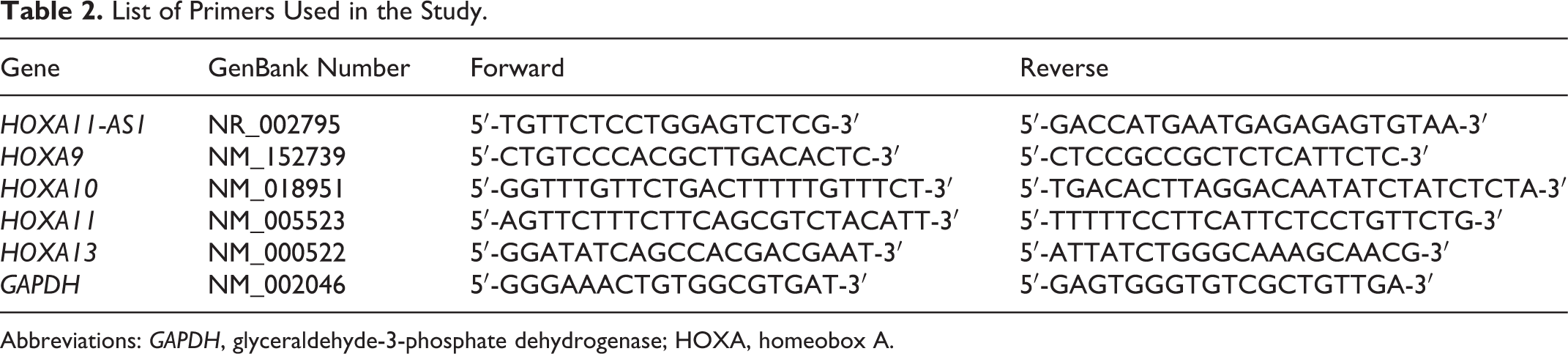
Real-time RT-PCR analysis was run in a Rotor-Gene Q (Qiagen) using a Platinum SYBR Green qPCR SuperMix-UDG kit (Life Technologies Corporation, Carlsbad, California), according to the manufacturer’s protocol. The following RT-PCR conditions were used: 50°C for 2 minutes and 95°C for 5 minutes; 40 cycles of 95°C for 10 seconds and 60°C for 45 seconds. All the experiments were completed in triplicate. Melting curve analysis was performed to validate the specific generation of the expected PCR product. The housekeeping gene glyceraldehyde-3-phosphate dehydrogenase was used as an endogenous reference. Table 2 presents the sequences of all the primers used in this study.
List of Primers Used in the Study.
Abbreviations: GAPDH, glyceraldehyde-3-phosphate dehydrogenase; HOXA, homeobox A.
The 2−ΔCt method 34 was used to calculate the differential expression levels of the target lncRNA (HOXA11-AS1) and mRNA (HOXA9, HOXA10, HOXA11, and HOXA13) in tissues.
Coexpression of LncRNAs With mRNAs and Functional Prediction
Most of the lncRNAs present in current databases have not yet been functionally annotated. Therefore, their functions are predicted on the basis of the functional annotations of their coexpressed mRNAs. 28 This method was originally described previously. 35 Guttman et al studied the mRNAs coexpressed with lncRNAs and further explored how dysregulated lncRNAs could exert their functions via cis- and/or trans-regulating protein-coding genes. In their study, cis-regulated genes were defined as protein-coding genes coexpressed with 1 dysregulated lncRNA and with a genomic distance of less than 100 kb in the same allele. The HOXA11-AS1 was selected due to its cis-regulating potential reported in previous studies. The HOXA11-AS1 has been previously predicted to cis-regulate 7 mRNAs, including HOXA2, HOXA5, HOXA6, HOXA9, HOXA10, HOXA11, and HOXA13. 28 The HOXA9, HOXA10, HOXA11, and HOXA13 genes are expressed in the reproductive system, and the HOXA9 gene is expressed in the fallopian tube. The HOXA10 gene is expressed in the uterus, while HOXA11 is expressed in both the uterus and cervix, and the HOXA13 gene is expressed in the vagina. 36 Therefore, we selected lncRNA (HOXA11-AS1) and HOXA9, HOXA10, HOXA11, and HOXA13 mRNAs as our targets for analysis.
Statistical Analysis
Results are expressed as mean (standard deviation). All statistical analyses were performed using IBM SPSS Statistics version 19. The Student t test or 1-way analysis of variance was used to evaluate the statistical significance of continuous variables. Data were considered statistically significant at P < .05.
Results
Clinical Characteristics
Table 1 demonstrates the clinical characteristics of patients in the endometriosis group and control group. The patients ranged in age from 25 to 37 years, and the mean age and duration of infertility did not differ significantly between the 2 groups. However, the incidence of primary infertility was significantly higher than that of secondary infertility in infertile patients with peritoneal endometriosis (P < .05); while in control patients, there was no significant difference between the rates of primary and secondary infertility. The rates of primary and secondary infertility precisely reflect the rates of each in the corresponding population. It was previously reported that many cases of primary infertility had undiagnosed mild endometriosis. 37 Therefore, primary infertility is more prevalent than secondary infertility in endometriosis-associated infertility.
Quantitative Real-Time RT-PCR Analysis of lncRNA and HOXA9, HOXA10, HOXA11, and HOXA13
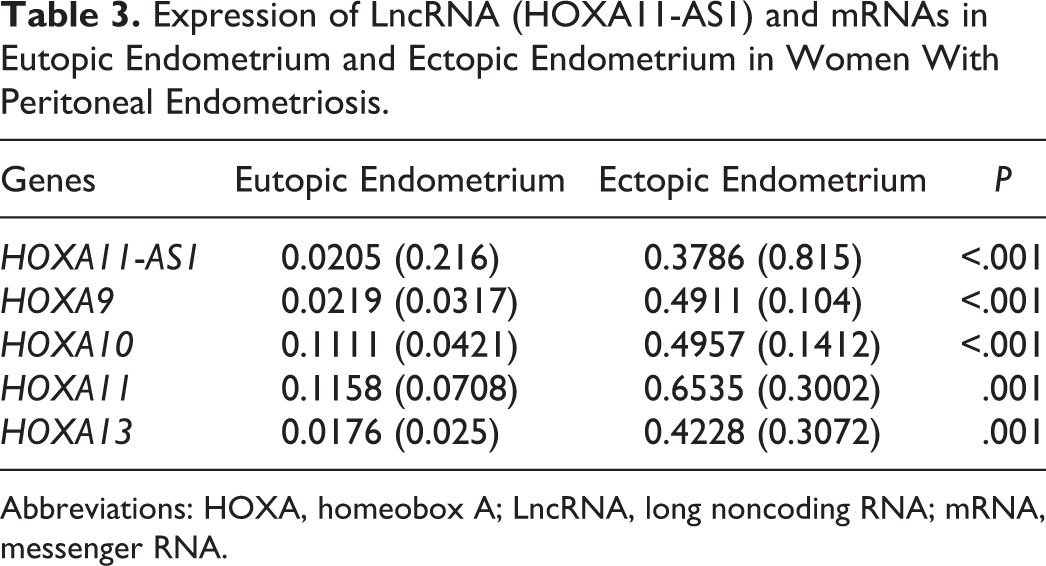
LncRNA (HOXA11-AS1) and HOXA9, HOXA10, HOXA11, and HOXA13 mRNA were all expressed in the EU and EC of women with peritoneal endometriosis. The expression levels of HOXA11-AS1 and HOXA9, HOXA10, HOXA11, and HOXA13 differed significantly between the EU and EC samples. As shown in Figure 1 and Table 3, the HOXA11-AS1 lncRNA and HOXA9, HOXA10, HOXA11, and HOXA13 mRNA levels were significantly lower in the EU than in the EC of women with peritoneal endometriosis (P < .05). The HOXA11-AS1 lncRNA expression levels were consistent with the HOXA9, HOXA10, HOXA11, and HOXA13 mRNA expression levels, all of which were lower in the EU than in the EC.
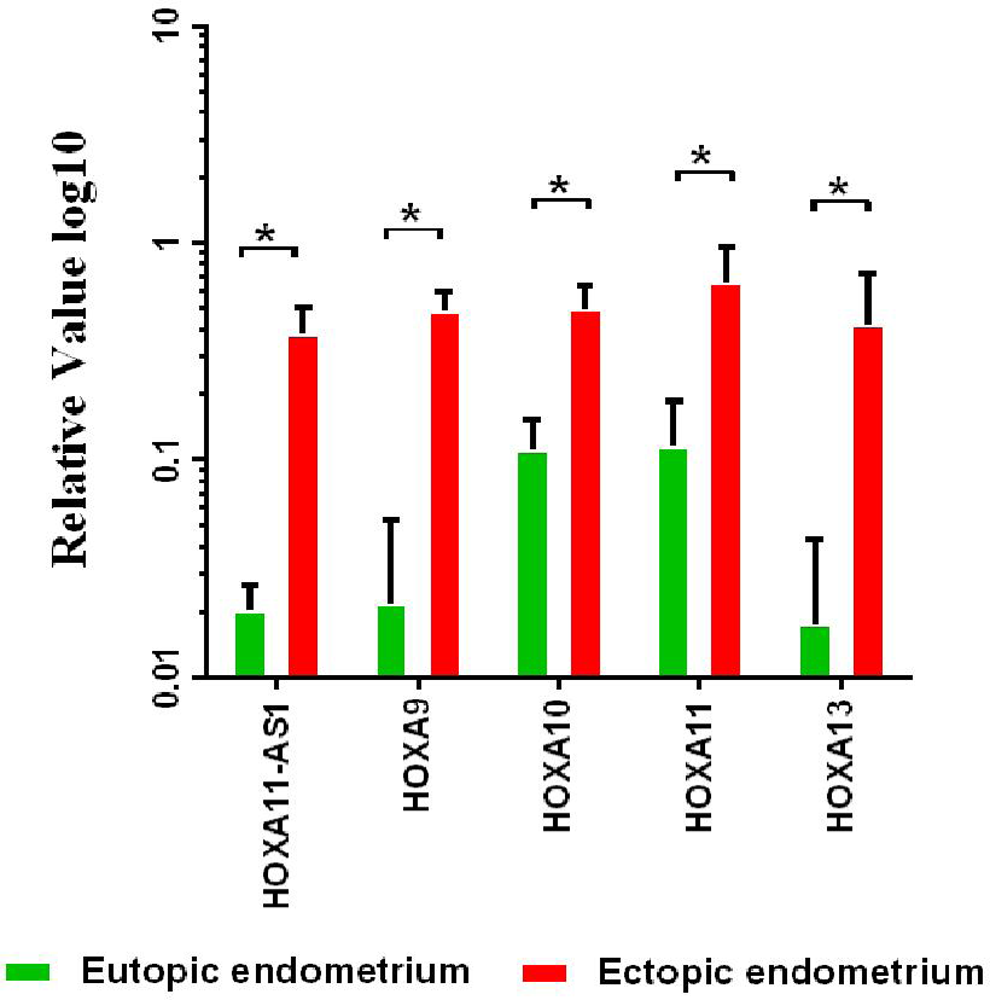
Expression of HOXA11-AS1 and HOXA9, HOXA10, HOXA11, and HOXA13 mRNA in the eutopic and ectopic endometria of women with peritoneal endometriosis (Table 3). HOXA indicates homeobox A; mRNA, messenger RNA.
Expression of LncRNA (HOXA11-AS1) and mRNAs in Eutopic Endometrium and Ectopic Endometrium in Women With Peritoneal Endometriosis.
Abbreviations: HOXA, homeobox A; LncRNA, long noncoding RNA; mRNA, messenger RNA.
Quantitative Real-Time RT-PCR Analysis of HOXA10 and HOXA11 mRNA
The HOXA11-AS1 expression level was not consistent with the HOXA9, HOXA10, HOXA11, and HOXA13 mRNA expression levels in the EU of women in the endometriosis and control groups. The HOXA10 and HOXA11 levels in the EU were significantly lower in the endometriosis group than in the control group (P < .05), whereas the HOXA11-AS1 and HOXA9 and HOXA13 levels did not differ significantly between the 2 groups (Figure 2 and Table 4; P > .05).
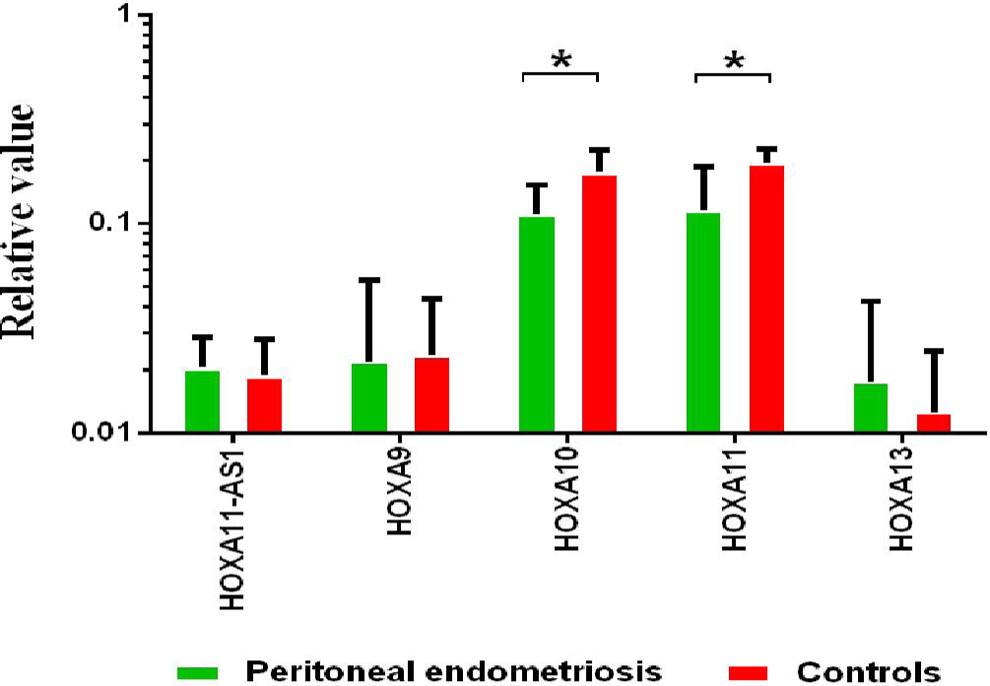
Expression of l HOXA11-AS1 and HOXA9, HOXA10, HOXA11, and HOXA13 mRNA in the eutopic endometrium of controls and women with peritoneal endometriosis (Table 4). HOXA indicates homeobox A; mRNA, messenger RNA.
Expression of LncRNA HOXA11-AS1 and mRNAs in Eutopic Endometrium of Controls and Women With Peritoneal Endometriosis.
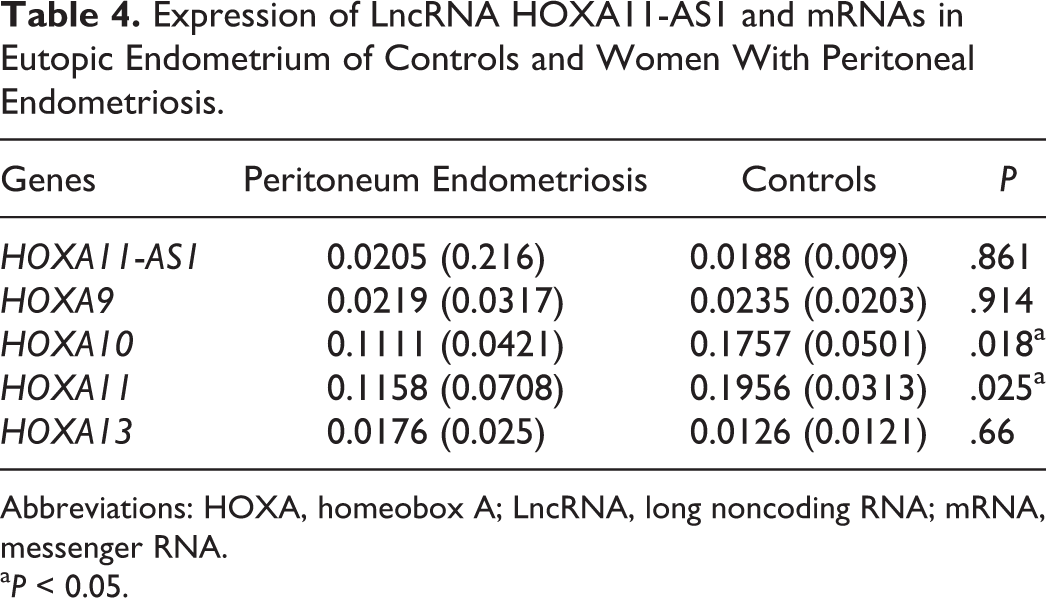
Abbreviations: HOXA, homeobox A; LncRNA, long noncoding RNA; mRNA, messenger RNA. a P < 0.05.
Discussion
In this study, we assessed and compared the levels of HOXA11-AS1 and the HOXA9, HOXA10, HOXA11, and HOXA13 mRNA expression in the EC of women with peritoneal endometriosis and in paired autologous EU specimens. We attempted to explore the possible function of HOXA11-AS1 by analyzing the RNAs coexpressed with this lncRNA. Our results revealed that the HOXA11-AS1 and HOXA9, HOXA10, HOXA11, and HOXA13 mRNA expression levels were significantly lower in the EU than in the EC of women with peritoneal endometriosis. In addition, the HOXA10 and HOXA11 expression levels were significantly lower in the EU in the endometriosis group than in the control group, while the expression of HOXA11-AS1, HOXA9, and HOXA13 did not significantly differ between the 2 groups.
Thus far, the connection between endometriosis and subfertility has not been conclusively established. 8 Severe endometriosis causes mechanical disruption of the pelvic anatomy and tubal adhesion, and these features are hypothesized to contribute to infertility. However, the cause of infertility in patients with only peritoneal (mild or minimal) endometriosis, which does not mechanically compromise tubal patency or function, remains uncertain and controversial. 5,38 Some studies have suggested that implantation failure may be one of the major underlying causes of infertility in patients with peritoneal endometriosis, 38,39 and our results are consistent with this viewpoint.
Numerous hypotheses about the nature of the disease have been proposed, but our understanding of the etiopathogenesis of endometriosis remains inadequate. It is widely accepted that the cause of endometriosis is multifactorial and that genetic factors play crucial roles in its development and maintenance, partially through epigenetic regulation. 12
The functions of differentially expressed lncRNAs were predicted by Gene Ontology (GO) and Kyoto Encyclopedia of Genes and Genomes (KEGG) pathway annotations of their coexpressed mRNAs. It is well-known that predicting lncRNA function is difficult and has been based on the functional annotations of their coexpressed mRNAs. HOXA11-AS1 has been previously predicted to cis-regulate the expression of HOXA10 mRNA, 28 and the expression of HOXA gene clusters was reported to be lower in the EC than in the EU. 29
In another study, HOXA10 and other HOXA mRNAs were reported to be downregulated in the EC. 28 Our results are consistent with these reports, as we found that the expression of both HOXA11-AS1 and HOXA9, HOXA10, HOXA11, and HOXA13 mRNA levels was lower in the EU than in the EC of women with peritoneal endometriosis. These results suggest that lncRNA may play a role in the development of peritoneal endometriosis.
The cyclic expression of HOXA10/HOXA11 and upregulation during the window of implantation do not occur in the endometrial tissue of patients with endometriosis; which may represent one mechanism by which this disease impairs fertility. 40,41 Further studies evaluating patterns of HOXA10/HOXA11 expression have suggested DNA methylation as a possible mechanism by which gene expression is altered. One mechanism by which HOXA10 levels are decreased in endometriosis is via methylation of this gene, 38 and aberrant methylations at HOXA10 may be responsible for its aberrant expression in the endometrium of women with endometriosis. 11 Some researchers have suggested that peritoneal endometriotic lesions might induce aberrant methylation of HOXA10 in the EU, resulting in decreased HOXA10 protein expression in endometrial stromal cells. 42,43 Another study supported the theory that reduced HOXA11 expression in eutopic midsecretory endometrium may contribute to endometriosis-associated infertility. 44 Their results demonstrated significantly lower levels of HOXA11 transcripts and protein levels in women with endometriosis than in fertile women and in infertile women with tubal occlusion. Moreover, they found significantly higher levels of HOXA11 methylation in infertile women with endometriosis than fertile and infertile women with tubal occlusion. Consequently, DNA hypermethylation may be one of the many possible molecular mechanisms causing reduced HOXA11 expression in the eutopic midsecretory endometrium of infertile women with endometriosis.
As hypermethylation in the promoter regions tends to suppress gene expression, DNA hypermethylation may be one of the mechanisms by which HOXA10 gene silencing occurs in women with mild peritoneal endometriosis. Therefore, there is reason to believe that deregulation of HOXA10 expression in the endometrium of women with endometriosis may be caused by aberrant methylation. 10,11,45 The EU was significantly more methylated in the endometriosis group than in the control group. 45 This could explain why HOXA10 levels were lower in women with endometriosis than in those without. Several studies have shown that HOXA10 is downregulated in the EU of women with endometriosis during the window of implantation. 41,46 Similar to these findings, we also found that the HOXA10 and HOXA11 mRNA levels were significantly lower in the EU in the endometriosis group than in the control group. 10,44,46 -48
The HOXA10 is a homeobox-containing transcription factor that is essential for embryonic and uterine development and is necessary for proper adult endometrial development during the menstrual cycle. 49 -52 Its expression is necessary for implantation and endometrial receptivity. 49,51,53,54 During the implantation window in the midsecretory phase, HOXA10 mRNA is upregulated in both the endometrial glandular and the stromal cells. 40,49,55 Aberrant endometrial HOXA10 expression has been described in association with endometriosis, polycystic ovary syndrome (PCOS), adenomyosis, and hydrosalpinx, all of which are associated with abnormal implantation. 41,56 -59 In endometriosis, the decreased expression of both HOXA10 and HOXA11 suggests that alterations in the endometrial molecular environment may contribute to decreased implantation and receptivity.
In the present study, we found that the HOXA10 and HOXA11 levels were decreased in the EU of women with peritoneal endometriosis, while there was no significant change in the lncRNA expression between the endometriosis and control groups. These results demonstrated that lncRNA plays a limited role in the endometrial receptivity in endometriosis-associated infertility. Further studies are necessary to further characterize the relationship between lncRNA and endometriosis-associated infertility. Our results are consistent with the report of Chau et al 31 suggesting that HOXA11 antisense does not regulate HOXA11 mRNA by the formulation of sense/antisense duplexes. We found that HOXA11-AS1 negatively regulated the expression of the HOXA11 gene. This secretory phase expression is probably mediated by progesterone. Progesterone-mediated downregulation of HOXA11 antisense transcription likely increases HOXA11 sense transcription. The HOXA11 levels were decreased in the EU of women with peritoneal endometriosis, while HOXA11-AS1 was higher in the endometriosis group than in the control groups, although not statistically significantly. This observation may also be associated with the decreased progesterone levels observed in luteal phase defects in patients with endometriosis.
A previous study demonstrated that methylation profiles differed significantly between EU and EC tissue in humans. These findings could explain, in part, the compromised fertility in women with endometriosis. 45 We carried out a preliminary exploration into the association between lncRNA and endometriosis, and our results revealed that lncRNA did not play a role in endometrial receptivity in endometriosis-associated infertility.
In conclusion, the results of the present study suggest that HOXA11-AS1 lncRNA may play a role in the development of peritoneal endometriosis. However, HOXA11-AS1 lncRNA has a limited effect on endometrial receptivity in endometriosis-associated infertility. Further studies are necessary to investigate the relationship between lncRNA and endometriosis-associated infertility.
Footnotes
Declaration of Conflicting Interests
The author(s) declared no potential conflicts of interest with respect to the research, authorship, and/or publication of this article.
Funding
The author(s) disclosed receipt of the following financial support for the research, authorship, and/or publication of this article: This work was supported by the