






Abstract
Objective
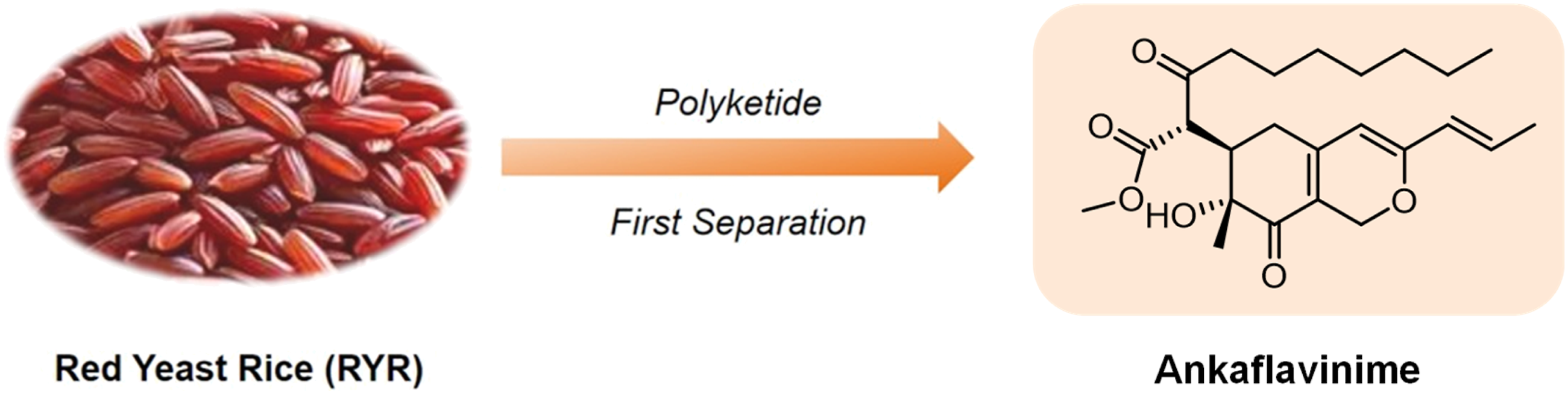
The objective of this study was the isolation, structural characterization, and anti-tumor activity evaluation of a new compound isolated from Red Yeast Rice (RYR).
Method
The dichloromethane extract of RYR was separated by silica gel column chromatography using petroleum ether/acetone as eluent, affording four fractions. Fraction C was further purified by preparative high-performance liquid chromatography (HPLC) to afford ankaflavinime (
Results
A new polyketide compound, ankaflavinime (
Conclusion
In this study, a new polyketide compound, ankaflavinime (
Introduction
Red Yeast Rice (RYR) is a traditional fermented product derived from rice with the yeast Monascus purpureus and other related molds. 1 It is characterized by a distinctive red color that develops during the fermentation process. For hundreds of years, RYR has been used as a food preservative, a nutraceutical in East Asian cuisines, and an ingredient in traditional Chinese medicine.2-4
Modern pharmacological studies have demonstrated that RYR possesses diverse pharmacological properties, including improved lipid metabolism, reduced cholesterol levels, lowered blood pressure and blood glucose, as well as anti-cancer, anti-inflammatory, and neuroprotective effects against age-related cognitive decline.5-9 Among its bioactive constituents, monacolin K has been the most extensively studied, as it is structurally and chemically identical to the clinically used cholesterol-lowering drug lovastatin. 10 Nowadays, RYR is widely applied as a dietary supplement for statin-intolerant individuals pursuing lifestyle interventions. 11 However, other potentially active constituents in RYR, such as polyketides, flavonoids, lignans, and terpenoids, remain underexplored. Therefore, further investigation into the bioactive components of this traditionally used and widely available product is of great significance.
To date, more than ten polyketide compounds have been isolated from RYR, including monasphilone A ( The structures of representative compounds isolated from RYR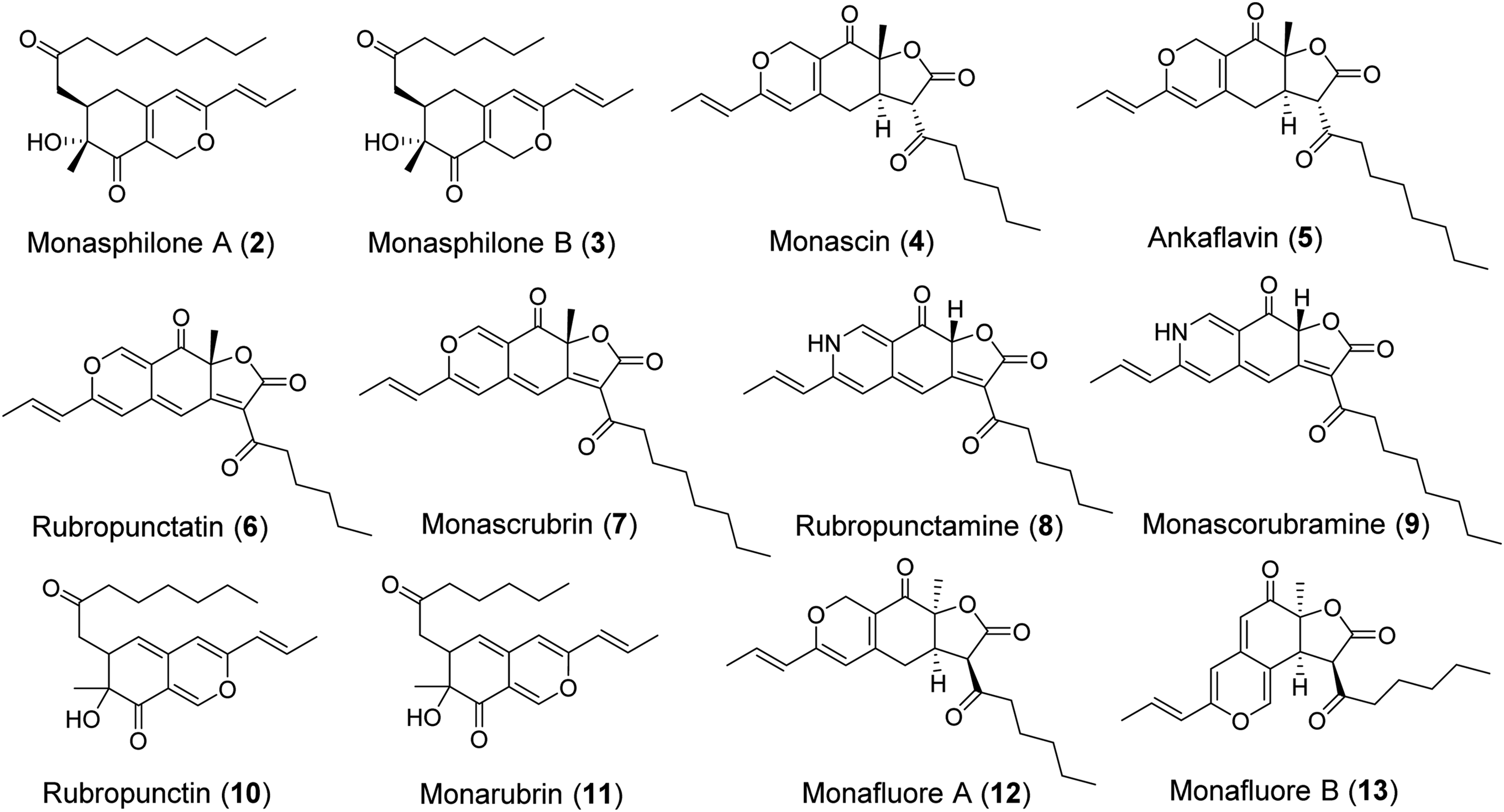
To further explore the bioactive constituents and expand the chemical diversity of RYR molecular library, this study aimed to isolate and structurally characterize novel compounds from RYR. Ankaflavinime (
Materials and Methods
Plant Material
The RYR was purchased from Fujian Province, China, in February 2019. The specie was identified by Professor Y. Chen of Leshan Normal University. A voucher specimen (no. 201903-1) was deposited in the herbarium of Leshan Normal University.
General Experimental Procedures
Silica gel for column chromatography (CC) was purchased from Qingdao Marine Chemical, Inc. (Qingdao, China). TLC was performed on silica gel plates (Qingdao Marine Chemical, Inc.). IR Spectrum was recorded on a Nicolet FT-IR 200S spectrometer. Optical rotations were measured on a Perkin-Elmer 341 polarimeter. 1D and 2D NMR spectra were acquired on a Varian Unity-INOVA-400 instrument. HR-ESI-MS data were obtained on a Waters Aqcquity UPLC/Q-TOF micro mass spectrometer.
Extraction and Isolation
RYR (50 kg) sourced from Fujian Province was pulverized and soaked three times with CH2Cl2 (80 L). Then reflux extracted with CH2Cl2 at 40 °C for three hours. After filtrating, the residue repeated the above operation two more times. The filtrates were combined and concentrated under reduced pressure to give the oily crude extract (1.22 kg). 14 The crude extract was then subsequently to column chromatographed over silica gel, eluted with a gradient of petroleum ether-acetone (10:1 → 2:1), affording four fractions, including Fr. A (600 g, 10:1 and 9:1, v/v), Fr. B (319 g, 8:1 and 7:1, v/v), Fr. C (26 g, 6:1, 5:1, and 4:1, v/v) and Fr. D (28 g, 3:1 and 2:1, v/v). Fr. C was further purified by preparative high-performance liquid chromatography (HPLC) with a mobile phase of CH3CN - H2O (30 %:70 % → 90 %:10 %, v/v) to afford ankaflavinime (1.56 mg).
Cytotoxicity Assay
Cells viability assay was tested on human lung carcinoma cells A549 and human breast cancer cells MDA-MB-231 using CCK-8 kit.15,16 The compound was screened at six concentrations (0.5, 1, 2, 4, 8 and 16 μM) against two cell lines. Camptothecin (CPT) was used as positive control. The A549 and MDA-MB-231 cell lines used in this study were purchased from Procell (China, Wuhan), that stored in CCL-185 ATCC (no. CL-0016) and CRL-12532 ATCC (no. CL-0150B), respectively.
Statistical Analysis
All bioassays were expressed as mean ± standard deviation. Statistical analysis was performed using Excel software.
Results
1H and 13C NMR Data of Ankaflavinime (
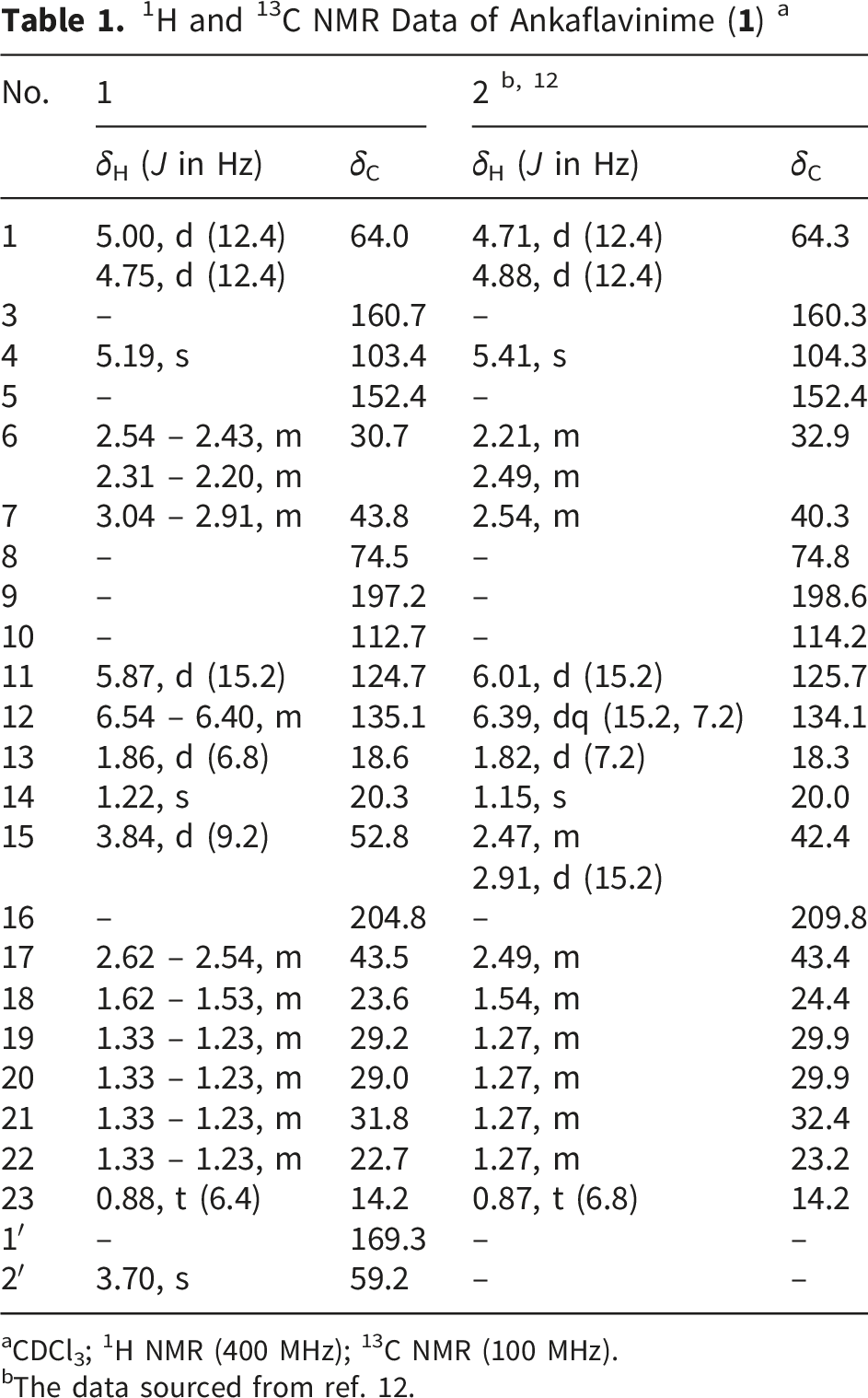
aCDCl3; 1H NMR (400 MHz); 13C NMR (100 MHz).
bThe data sourced from ref. 12.
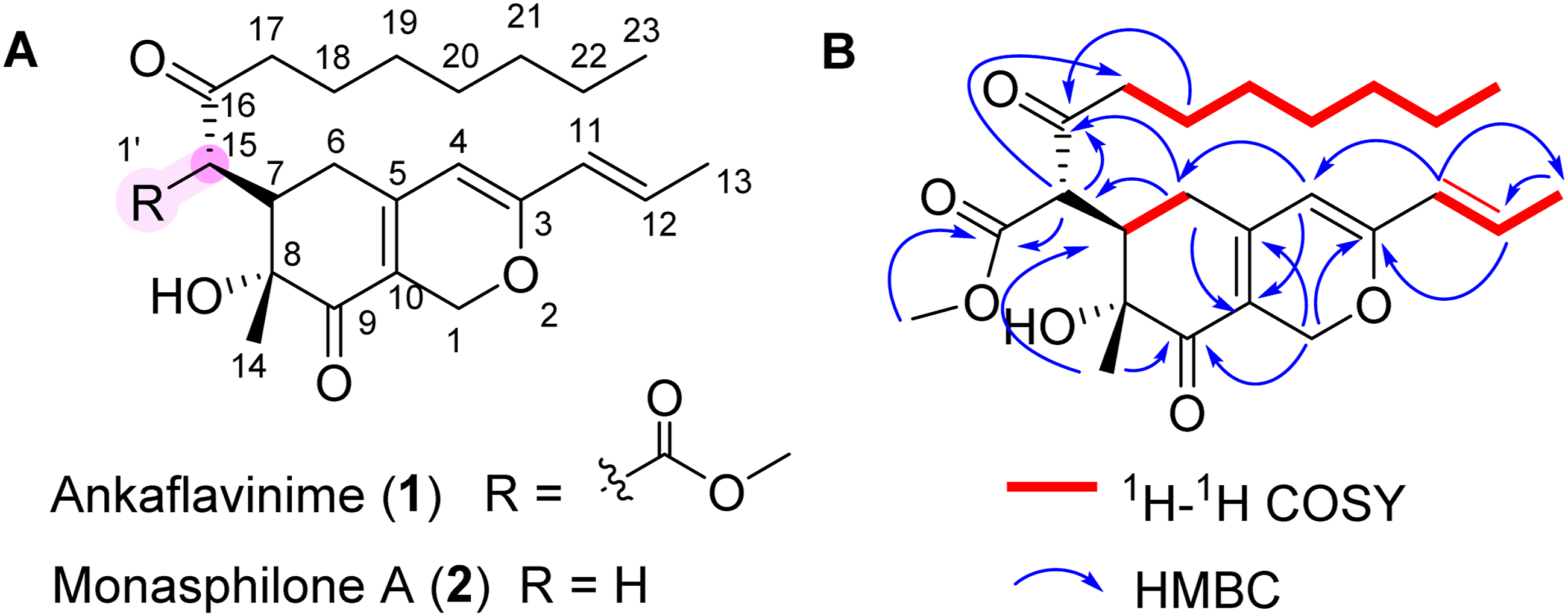
(A) Structures of ankaflavinime (
Monascin ( Plausible biosynthetic pathway of 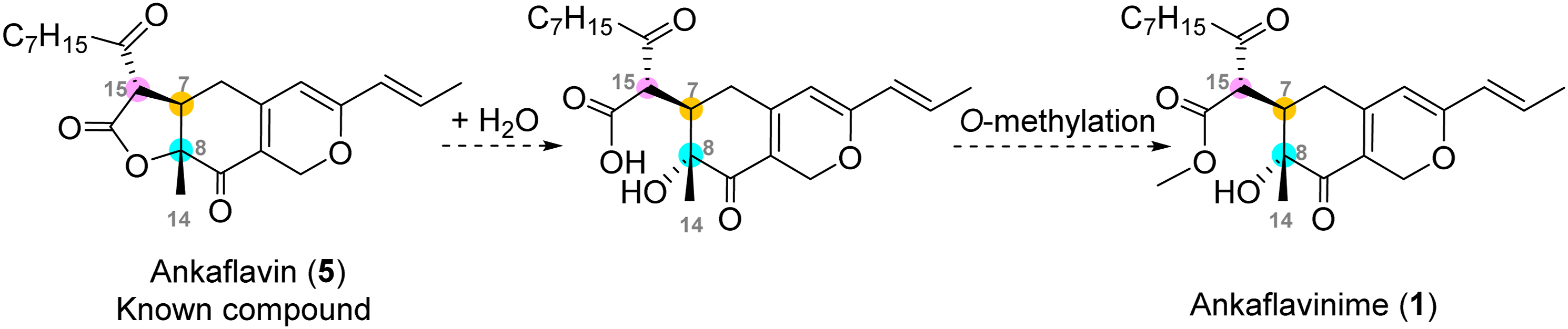
Anti - Tumor Activity of Compound
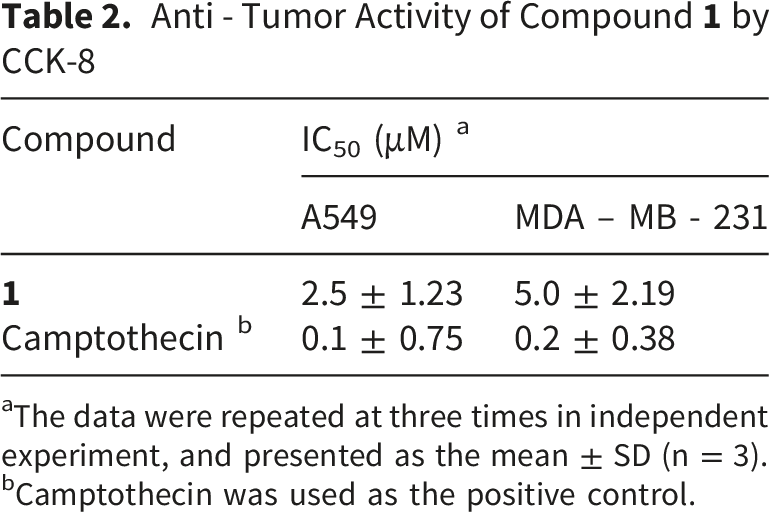
aThe data were repeated at three times in independent experiment, and presented as the mean ± SD (n = 3).
bCamptothecin was used as the positive control.
Discussion
In this study, a new polyketide compound, ankaflavinime (
Conclusion
In this study, a new polyketide compound, ankaflavinime (
Supplemental Material
Supplemental Material - Ankaflavinime, an Unprecedented Polyketide From Red Yeast Rice
Supplemental Material for Ankaflavinime, an Unprecedented Polyketide From Red Yeast Rice by Fang-Tao Xiang, Yi Tian, Qiu-Shan Huang, Shu-Hua Li, Feng-Zheng Chen in Natural Product Communications
Footnotes
Acknowledgements
This research was supported by the Solid-state Fermentation Resource Utilization Key Laboratory of Sichuan Province(No. 2018GTJ011).

Ethical Considerations
Ethical Approval is not applicable for this article.
Consent to Participate
There are no human subjects in this article and informed consent is not applicable.
Author contributions
Funding
The authors disclosed receipt of the following financial support for the research, authorship, and/or publication of this article: Solid-state Fermentation Resource Utilization Key Laboratory of Sichuan Province(No. 2018GTJ011)
Declaration of Conflicting Interests
The authors declared no potential conflicts of interest with respect to the research, authorship, and/or publication of this article: The authors declare that they have no known competing financial interests or personal relationships that could have appeared to influence the work reported in this paper.
Statement of Human and Animal Rights
This article does not contain any studies with human or animal subjects.
Supplemental Material
Supplemental material for this article is available online.
References
Supplementary Material
Please find the following supplemental material available below.
For Open Access articles published under a Creative Commons License, all supplemental material carries the same license as the article it is associated with.
For non-Open Access articles published, all supplemental material carries a non-exclusive license, and permission requests for re-use of supplemental material or any part of supplemental material shall be sent directly to the copyright owner as specified in the copyright notice associated with the article.
