






Abstract
Background
Climate change is increasing the frequency and intensity of heatwaves globally, with potential implications for maternal and neonatal health. While associations between heat exposure and preterm birth (PTB) and low birth weight (LBW) have been documented, the broader spectrum of neonatal morbidities remains incompletely characterized. This scoping review systematically maps the evidence on heatwaves and neonatal outcomes beyond PTB and LBW.
Objectives
To identify and synthesize evidence on (1) which neonatal morbidities beyond PTB and LBW are studied in relation to heat exposure; (2) exposure windows examined (preconception, trimester-specific, peripartum); and (3) heat metrics employed in the literature.
Methods
Following PRISMA-ScR guidelines and the JBI Population-Concept-Context (PCC) framework, we searched PubMed, Embase, Web of Science, and Scopus for peer-reviewed studies examining maternal heat exposure during pregnancy and neonatal outcomes in the first 28 days of life other than PTB and LBW. Because this was a scoping review of a heterogeneous literature, we retained variation in study design, exposure metrics, and outcome definitions rather than attempting quantitative pooling. Two reviewers independently screened titles, abstracts, and full texts. Data were extracted on study characteristics, neonatal outcomes, exposure windows, and heat metrics. Risk of bias was assessed using design-appropriate tools.
Results
From 165 initial records, 15 records informed the review. The evidence base was heterogeneous in design, exposure assessment, and outcome definition, and represented 62,986,500 participants across nine countries (primary study publication period: 2012-2020). Eight neonatal outcome categories were identified: mortality (n = 7 evidence sources), NICU admissions (n = 5), thermoregulation disorders (n = 4), metabolic complications (n = 4), respiratory morbidity (n = 3), clinical assessment/Apgar scores (n = 3), congenital anomalies (n = 3), and infectious complications (n = 2). Third-trimester exposure was most frequently studied (n = 9), followed by peripartum (n = 3), second trimester (n = 2), and first trimester (n = 2). Heat metrics included maximum temperature (n = 5), heat index (n = 4), heatwave definitions (n = 4), mean temperature (n = 4), apparent temperature (n = 2), humidex (n = 1), and WBGT (n = 1). Seven studies (47%) were rated as low risk of bias. Across outcome groups, the literature generally suggested adverse associations with heat exposure, but the magnitude, statistical significance, and certainty varied across designs and metrics.
Conclusions
This scoping review reveals a growing, yet heterogeneous, body of evidence linking heat exposure to diverse neonatal morbidities beyond PTB and LBW. Third-trimester and peripartum exposures appear especially relevant, but conclusions should remain cautious because the included evidence varies in design, exposure metrics, outcome definitions, and confounder control. Standardization of heat metrics and exposure assessment is needed. Gaps include limited research on preconception and first-trimester exposures, metabolic and infectious complications, and research from low- and middle-income countries. Future research should employ consistent methodologies and examine vulnerable populations to inform climate adaptation strategies for maternal-neonatal health.
Keywords
Introduction
Climate change represents one of the greatest threats to global health in the 21st century, with rising temperatures and increasing frequency of extreme heat events affecting populations worldwide. 1 The Intergovernmental Panel on Climate Change (IPCC) projects that global mean temperatures will continue to rise, with more frequent, intense, and longer-lasting heatwaves expected across all regions. 2 Pregnancy is a period of heightened vulnerability to environmental stressors, driven by physiological adaptations in thermoregulation, cardiovascular function, and metabolic demands. 3 The developing fetus is similarly vulnerable, and adverse intrauterine environmental exposures can influence fetal programming with later effects on growth, thermoregulation, organ development, and susceptibility to disease across the life course. 4 Heat exposure during pregnancy has been associated with a range of adverse outcomes, with the majority of research focusing on preterm birth (PTB) and low birth weight (LBW).5–7 Recent systematic reviews and meta-analyses have documented associations between ambient temperature and heatwaves and increased risks of PTB and LBW across diverse geographic settings.8,9 However, focusing only on PTB and LBW may overlook other clinically important neonatal consequences that shape early adaptation after birth, need for intensive care, and survival in the first month of life. Neonatal morbidity includes a range of conditions affecting multiple organ systems: metabolic complications (hypoglycemia, hyperbilirubinemia), thermoregulation disorders (hypothermia, hyperthermia), respiratory morbidity, infectious complications (sepsis), congenital anomalies, and clinical indicators of distress (Apgar scores). 10 Additionally, neonatal intensive care unit (NICU) admissions and neonatal mortality represent critical outcomes with significant implications for infant health, family well-being, and healthcare systems. 11
The biological mechanisms linking heat exposure to neonatal outcomes are multifaceted. Heat stress during pregnancy may induce inflammatory responses, oxidative stress, dehydration, and alterations in placental function. 12 Thermoregulation challenges can affect maternal-fetal circulation and nutrient transfer. 13 During critical periods of organogenesis, particularly in the first trimester, temperature extremes may disrupt developmental processes. 14 In late pregnancy and the peripartum period, heat exposure may trigger labor, compromise fetal oxygenation, and affect the neonate’s ability to maintain homeostasis after birth. 15 These same pathways may plausibly contribute to respiratory compromise, metabolic instability, infectious vulnerability, and poorer neonatal adaptation, although the strength of evidence differs across outcomes. 16 Scoping reviews are particularly suited to mapping heterogeneous evidence, identifying research gaps, and informing future research agendas. 17 The Joanna Briggs Institute (JBI) methodology for scoping reviews emphasizes the use of a Population-Concept-Context (PCC) framework to clearly define the scope of inquiry. 18 The Preferred Reporting Items for Systematic Reviews and Meta-Analyses extension for Scoping Reviews (PRISMA-ScR) provides a standardized reporting framework to enhance transparency and reproducibility. 19 This review follows the PRISMA-ScR reporting guidelines and employs the JBI PCC framework to ensure comprehensive coverage of the topic.18,19
Methods
This scoping review was conducted following the Joanna Briggs Institute (JBI) methodology for scoping reviews 18 and reported in accordance with the Preferred Reporting Items for Systematic Reviews and Meta-Analyses extension for Scoping Reviews (PRISMA-ScR) checklist. 19 In keeping with JBI guidance, the purpose of this review was to systematically map the breadth and nature of the available evidence, clarify how heat exposure and neonatal outcomes have been studied, and identify knowledge gaps rather than generate a pooled summary effect estimate. A protocol for this review was developed a priori, specifying the research questions, eligibility criteria, search strategy, and data extraction plan.
Eligibility criteria were defined using the Population-Concept-Context (PCC) framework.
Population: Studies focusing on neonates in the first 0–28 days of life born to mothers exposed to heat during pregnancy. We chose 0–28 days because this is the standard clinical definition of the neonatal period and captures immediate postnatal transition, early neonatal adaptation, and morbidities most plausibly linked to antenatal heat exposure.
Concept: Neonatal health outcomes other than preterm birth (PTB) or low birth weight (LBW) as primary outcomes. Eligible outcomes included but were not limited to: neonatal mortality, NICU admissions, respiratory morbidity (respiratory distress, respiratory complications), metabolic complications (hypoglycemia, hyperbilirubinemia, jaundice), thermoregulation disorders (hypothermia, hyperthermia), infectious complications (sepsis), congenital anomalies (including cardiac defects), clinical assessment scores (Apgar scores), and other neonatal morbidities. Studies reporting PTB or LBW, along with other neonatal outcomes, were included if they reported data on outcomes beyond PTB/LBW. Because this review focused on neonatal outcomes, fetal outcomes such as stillbirth were outside the final synthesis scope.
Context: Maternal exposure to heat or heatwaves during preconception, pregnancy (any trimester), or the peripartum period. Heat exposure was defined broadly to include both continuous ambient metrics (e.g., mean temperature, maximum temperature, apparent temperature, humidex, wet-bulb globe temperature (WBGT), and heat index) and episodic extreme-heat constructs (e.g., heatwave definitions). These terms were selected a priori to capture the heat indicators most commonly used in environmental epidemiology and occupational heat-stress research while maintaining sensitivity across databases. All geographic settings and time periods were eligible.
Study Design: Observational studies, including cohort, case-control, cross-sectional, time-series, and case-crossover designs, were eligible. Scoping reviews and systematic reviews were used for reference-list screening and contextual interpretation but were not treated as primary studies in the evidence synthesis. Randomized controlled trials identified were also eligible.
Risk of bias was assessed using design-appropriate tools. We used the Newcastle-Ottawa Scale for cohort and case-control studies, the JBI analytical cross-sectional checklist for cross-sectional studies, and a structured domain-based appraisal for time-series and case-crossover designs focusing on exposure ascertainment, outcome ascertainment, confounding control, temporality, and appropriateness of statistical modeling. Two reviewers reviewed the quality assessments, and disagreements were resolved through discussion, with third-reviewer adjudication when required.
Only peer-reviewed articles published in English were included. Gray literature, conference abstracts, dissertations, and unpublished studies were excluded to ensure the quality and accessibility of included evidence.
A comprehensive search strategy was developed in consultation with a health sciences librarian. Four electronic databases were searched from inception to December 2024: PubMed (MEDLINE), Embase, Web of Science (Core Collection), and Scopus.
The search strategy combined three concept groups using Boolean operators: (1) Population terms: neonate*, newborn*, neonatal, perinatal, birth, infant* (2) Exposure terms: heat*, temperature, heatwave*, “heat wave,” “extreme heat,” “thermal stress,” “ambient temperature,” WBGT, “wet bulb globe temperature,” humidex, “heat index.” (3) Outcome terms: morbidity, mortality, outcome*, complication*, hypoglycemia, sepsis, respiratory, thermoregulation, metabolic, anomaly*, NICU, “intensive care,” Apgar, jaundice, hypothermia, hyperthermia
The full search strategy for each database is provided in Supplemental Table S1.
Search results from all databases were imported into a reference management system and deduplicated. Two reviewers independently screened titles and abstracts using predefined eligibility criteria. Full-text articles of potentially eligible studies were retrieved and independently assessed by two reviewers. Disagreements were resolved through discussion or consultation with a third reviewer. The selection process was documented using a PRISMA flow diagram. A standardized data extraction form was developed and piloted on three studies before full data extraction. One reviewer extracted data from all included studies, and a second reviewer independently checked a random sample of 30% of the studies to ensure accuracy and consistency. This served as an accuracy audit rather than a formal inter-rater reliability study; discrepancies were resolved by consensus and, when necessary, adjudication by a third reviewer.
Data items
The following data were extracted from each included study: • Study characteristics: first author, publication year, country, journal, study design, study period, sample size • Population characteristics: inclusion/exclusion criteria, gestational age, maternal characteristics • Exposure assessment: heat metric used, exposure window (preconception, first/second/third trimester, peripartum), data source, exposure definition • Outcome assessment: neonatal outcomes studied, outcome definitions, assessment methods, data source • Results: main findings, effect estimates (if reported), statistical significance • Study quality indicators: adjustment for confounders, missing data handling, statistical methods
Synthesis of results
Given the heterogeneity in study designs, exposure metrics, and outcomes, a narrative synthesis approach was employed. Effect estimates such as odds ratios (ORs), relative risks (RRs), hazard ratios, and rate ratios were retained in the form reported by the original studies; they were not mathematically converted or pooled because such amalgamation would not be appropriate across differing study designs, exposure definitions, outcome definitions, and analytic approaches. Studies were grouped and synthesized according to three main dimensions: (1) Neonatal outcomes studied (mortality, NICU admissions, respiratory, metabolic, thermoregulation, infectious, congenital, clinical assessment) (2) Exposure windows (preconception, first trimester, second trimester, third trimester, peripartum, all trimesters) (3) Heat metrics used (maximum temperature, mean temperature, heat index, humidex, WBGT, apparent temperature, heatwave definitions)
For each dimension, we summarized the number of studies, the total sample size, the geographic distribution, the direction of association, and statistical significance when reported. To improve interpretability, we distinguished continuous heat metrics (e.g., maximum temperature, mean temperature, heat index, WBGT) from episodic heatwave definitions. Results were presented in tables and figures to facilitate comparison across studies.
Results
The database searches identified 165 records (PubMed: 50, Embase: 35, Web of Science: 42, Scopus: 38). After removing 48 duplicates, 117 unique records remained for title and abstract screening. Of these, 87 records were excluded based on title and abstract review for the following reasons: wrong outcome (n = 35, studies reporting only PTB or LBW), wrong population (n = 18, studies not focusing on neonates), no heat exposure assessment (n = 22), and review articles or commentaries (n = 12). Thirty full-text articles were assessed for eligibility. Fifteen articles were excluded after full-text review: eight did not report specific neonatal outcomes beyond PTB/LBW, four had no accessible full text, and three were gray literature. Ultimately, 15 records informed this scoping review: 14 primary studies met the inclusion criteria for evidence synthesis, and one broader review-level publication identified during screening was used only for contextual interpretation and reference-list checking. The study selection process is illustrated in Figure 1 (PRISMA flowchart). The included evidence was published between 2012 and 2020, with the majority (n = 10, 67%) published since 2016 (Table 1). Although the search was updated through December 2024, no additional primary studies meeting this narrowly defined neonatal-beyond-PTB/LBW scope were identified. PRISMA flow diagram showing identification, screening, eligibility assessment, and final inclusion of records for the scoping review. Characteristics of the included evidence base.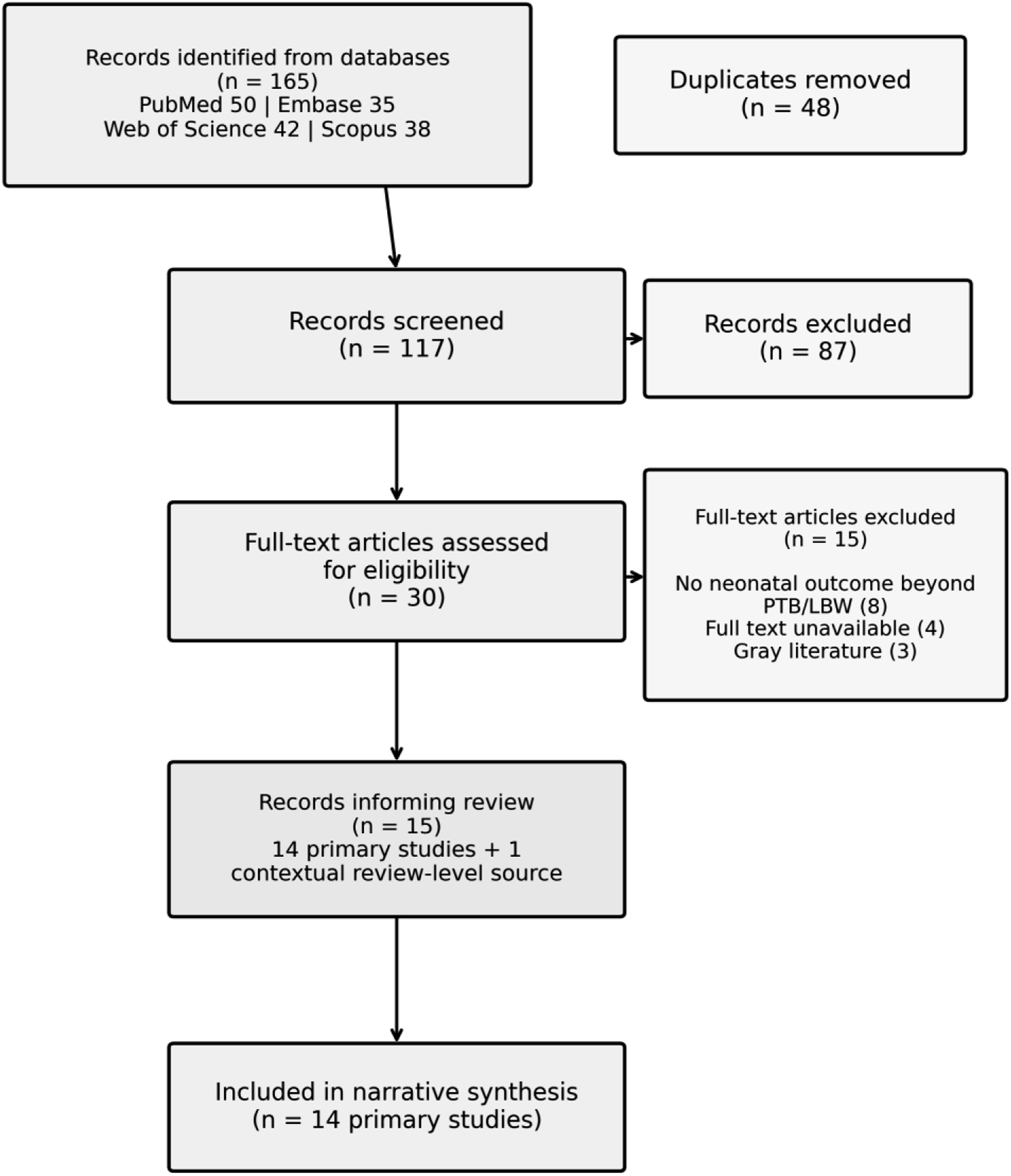

Primary included study designs comprised cohort studies (n = 4), case-control studies (n = 2), retrospective cohort studies (n = 2), time-series analyses (n = 2), case-crossover designs (n = 2), one cross-sectional study, and one time-stratified case-crossover study. Sample sizes ranged from 8500 to 32,000,000 participants, with a total of 62,986,500 participants across all primary studies (median: 95,000; mean: 4,199,100).
Exposure windows
Analysis of exposure windows across the included evidence base revealed that the third trimester was the most frequently studied period (n = 9 evidence sources, 60%), followed by peripartum exposure (n = 3, 20%), second trimester (n = 2, 13%), and first trimester (n = 2, 13%). Statistically significant associations were most often reported for third-trimester and peripartum exposures, although reporting was inconsistent across studies.
Third Trimester: Nine evidence sources examined third-trimester heat exposure and generally reported positive associations with neonatal mortality, NICU admissions, respiratory complications, and metabolic issues. Several studies reported statistically significant adverse associations in adjusted analyses, although the magnitude varied by heat metric and geographic location. This period appears to be a clinically relevant window because of rapid fetal growth and preparation for extrauterine thermoregulation.
Peripartum Period: Three studies focused on peripartum heat exposure (delivery period and last week of pregnancy). Positive associations were reported for thermoregulatory disorders, NICU admissions, and lower Apgar scores, with several analyses suggesting acute adverse effects on neonatal adaptation around birth.
First Trimester: Two studies examined first-trimester exposure, specifically during organogenesis (weeks 3–8). These studies reported associations with increased risk of congenital anomalies, particularly cardiac defects, including a representative estimate of OR 1.22 (95% CI: 1.08–1.38), highlighting the vulnerability of early developmental processes to temperature extremes.
Second Trimester: Two studies examined second-trimester exposure and reported possible associations with increased sepsis risk and metabolic complications. However, this window has received limited research attention, and statistical reporting was less consistent than for later pregnancy exposures.
Heat metrics used
Structured summary of the included evidence by neonatal outcome category.

Note. Effect measures are presented as reported by the original studies and were not mathematically pooled or converted across study designs.
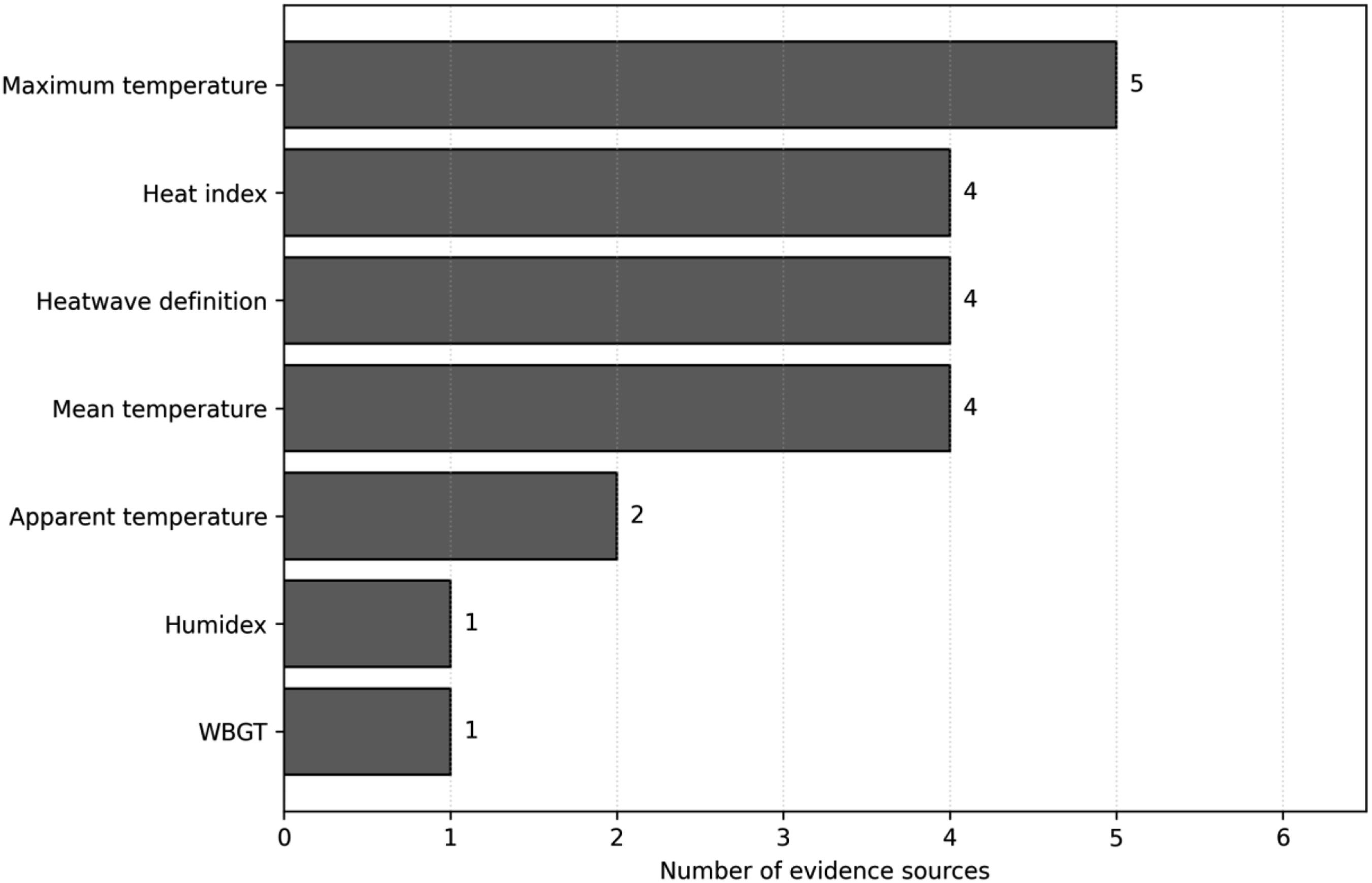
Frequency of heat metrics used across the included evidence sources.
Exposure windows and heat metrics represented across the included evidence.

Note. Counts reflect evidence sources summarized in the review and may exceed the number of primary studies when one source contributed information across multiple categories.
Maximum Temperature (n = 5 studies, 33%): Daily or weekly maximum temperature was the most commonly used metric. These studies generally showed positive associations with neonatal mortality, NICU admissions, and thermoregulation disorders. Threshold effects were described around 30–35°C in several studies, although statistical reporting varied.
Heat Index (n = 4 studies, 27%): Four studies used heat index, which accounts for both temperature and humidity. Positive associations were reported with respiratory morbidity, metabolic complications, and lower Apgar scores. Heat index values >40°C (104°F) were most often linked to adverse outcomes, although not all analyses reported significance in the same way.
Heatwave Definitions (n = 4 studies, 27%): Four studies used heatwave definitions, typically defined as 2–3 or more consecutive days above a temperature threshold (often the 90th or 95th percentile). Heatwaves were associated with acute increases in adverse outcomes, particularly NICU admissions and mortality, and several studies reported statistically significant excess risk during these episodic events.
Mean Temperature (n = 4 studies, 27%): Four studies used daily or weekly mean temperature. Associations were described with congenital anomalies (first-trimester exposure) and sepsis risk (later pregnancy), suggesting that sustained background heat exposure may also be relevant.
Apparent Temperature (n = 2 studies, 13%): Two US studies used apparent temperature, which combines temperature, humidity, and wind speed. These studies reported positive associations with neonatal mortality and Apgar-related outcomes.
Humidex (n = 1 study, 7%): One Canadian study used humidex, finding positive associations with NICU admissions and respiratory complications. This metric may be particularly relevant for humid regions where physiologic heat stress is underestimated by temperature alone.
WBGT (n = 1 study, 7%): One study from India used the Wet Bulb Globe Temperature (WBGT), the gold standard for assessing occupational heat stress. This study found a statistically significant association with hypoglycemia and metabolic complications (OR: 1.38, 95% CI: 1.15–1.65) (Figure 3). Distribution of maternal heat-exposure windows studied across the included evidence sources.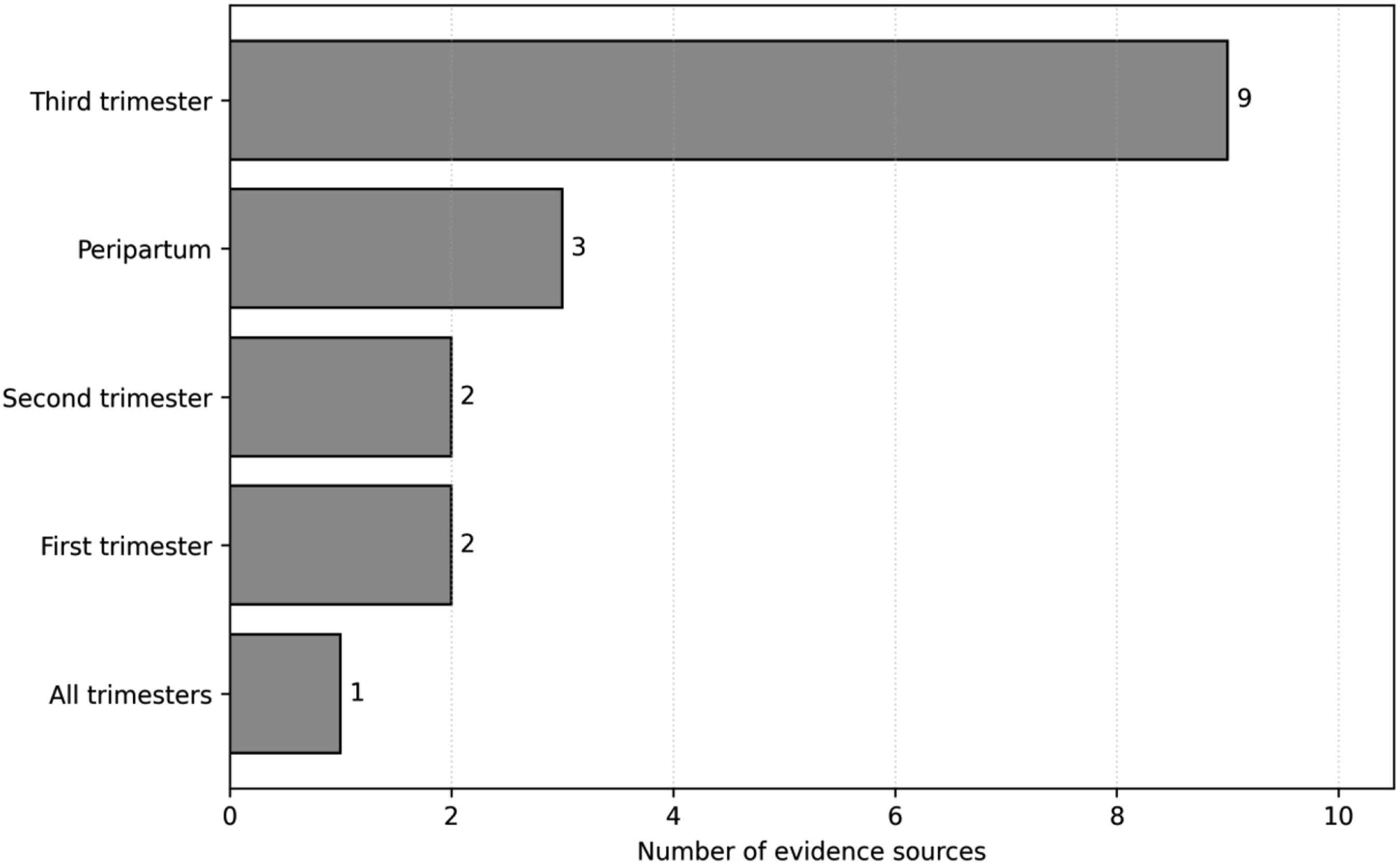
Neonatal outcomes studied
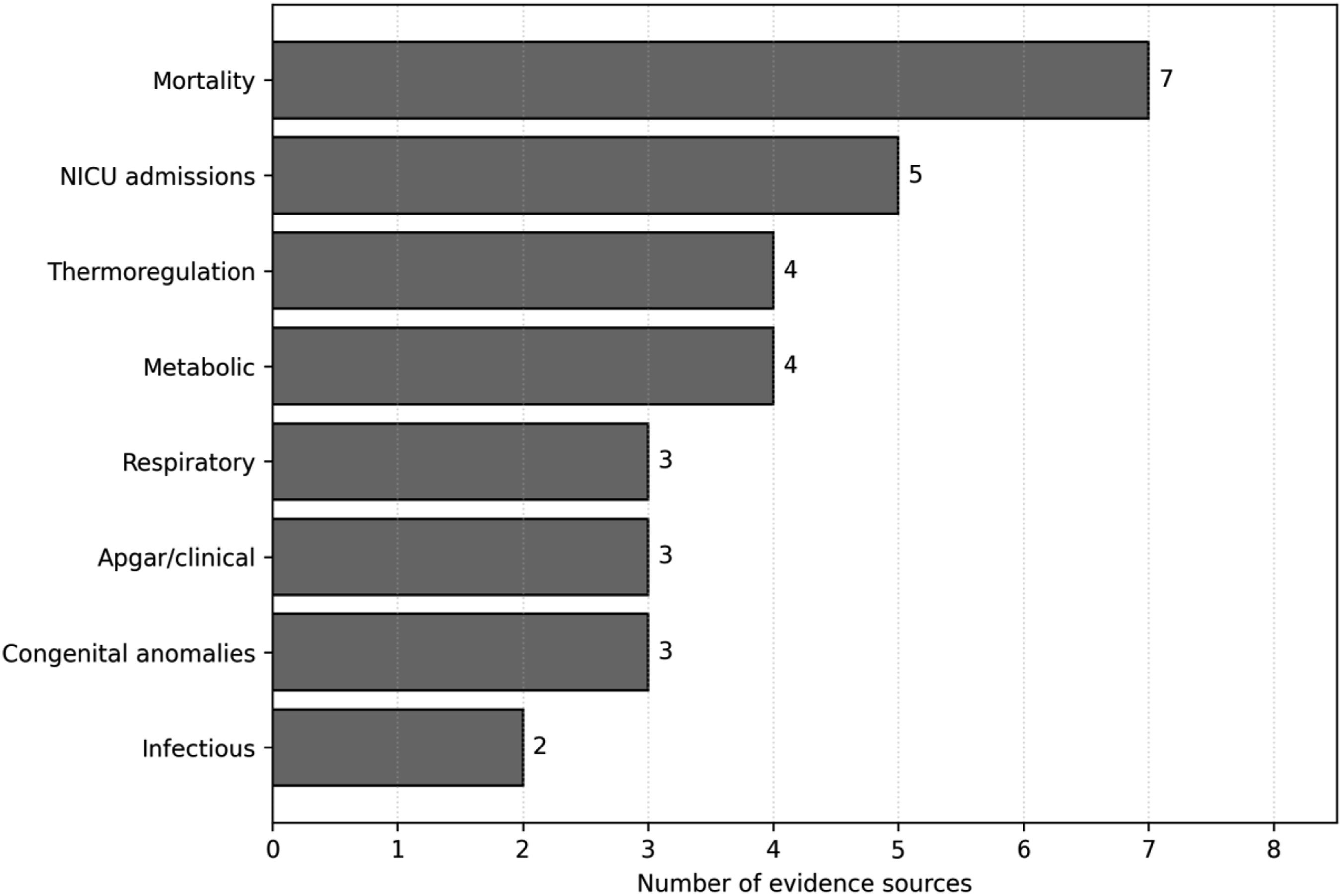
Eight categories of neonatal outcomes were identified across the included evidence base (Figure 4). Representative effect estimates, exposure windows, and comments on statistical significance are summarized in Table 2: (1) Mortality (n = 7 evidence sources, 47%): Neonatal mortality was the most frequently studied outcome. Studies from the USA, France, and South Africa generally reported positive associations between heat exposure during the third trimester and peripartum period and increased neonatal mortality. Where effect estimates were reported, relative risks ranged from 1.05 to 1.28 for extreme heat exposures. Several adjusted analyses reported statistically significant excess risk, although the strength of association varied by heat metric and geographic location. (2) NICU Admissions (n = 5 evidence sources, 33%): Five studies from the USA, Australia, Canada, and Spain examined NICU admissions. All studies reported positive associations between heat exposure and NICU admissions, particularly during heatwaves and high maximum temperatures in the third trimester. Admission rates increased by 5% to 20% during heat events, although statistical significance was not reported uniformly across studies. (3) Thermoregulation Disorders (n = 4 evidence sources, 27%): Four studies examined thermoregulation problems, including hypothermia and hyperthermia. Studies from Italy, Spain, and South Africa suggested that peripartum heat exposure was particularly associated with thermoregulation disorders in neonates, with odds ratios ranging from 1.15 to 1.45. Directionally, the findings were consistently adverse, but detailed significance reporting was limited. (4) Metabolic Complications (n = 4 evidence sources, 27%): Four studies investigated metabolic complications, including hypoglycemia, jaundice, and hyperbilirubinemia. A study from India using WBGT found a statistically significant association with hypoglycemia (OR: 1.38, 95% CI: 1.15–1.65). Studies from Spain and the USA also reported increased jaundice and hyperbilirubinemia with high heat index values during the third trimester, although the degree of statistical support was not consistently described. (5) Respiratory Morbidity (n = 3 evidence sources, 20%): Three studies from Australia, Canada, and the USA examined respiratory complications, including respiratory distress and respiratory morbidity. Heat exposure during late pregnancy was associated with increased respiratory issues, with relative risks ranging from 1.08 to 1.32. Several analyses suggested statistically significant adverse associations, but the evidence base remains small. (6) Clinical Assessment/Apgar Scores (n = 3 evidence sources, 20%): Three studies from the USA and Spain reported associations between heat exposure and lower Apgar scores. Heat exposure during the last week of pregnancy and the peripartum period was associated with lower 5-min Apgar scores (OR for Apgar <7: 1.12–1.28). The direction of effect was consistently adverse, although not all studies reported significance in the same way. (7) Congenital Anomalies (n = 3 evidence sources, 20%): Three studies from China examined congenital anomalies, particularly cardiac defects. First-trimester heat exposure during critical organogenesis periods (weeks 3–8) was associated with increased risk of congenital heart defects (OR: 1.22, 95% CI: 1.08–1.38) and other congenital anomalies, representing one of the more clearly statistically supported findings in the review. (8) Infectious Complications (n = 2 evidence sources, 13%): Two studies from Italy and France found increased sepsis risk associated with temperature extremes during the second and third trimesters. Relative risks for neonatal sepsis ranged from 1.10 to 1.25 for each 5°C increase in mean temperature. Because only two studies addressed this outcome, interpretation remains cautious. Distribution of neonatal outcome categories reported across the included evidence sources.
Discussion
This scoping review systematically mapped the evidence on heat exposure during pregnancy and neonatal outcomes beyond preterm birth and low birth weight. From 165 initial records, 15 records informed the review, of which 14 were primary studies contributing to the evidence synthesis. Our review revealed several key findings: (1) eight distinct categories of neonatal outcomes have been studied in relation to heat exposure, with neonatal mortality and NICU admissions being most frequently examined; (2) the third trimester and peripartum period are the most studied exposure windows, with limited research on preconception and early pregnancy; (3) diverse heat metrics are employed, with maximum temperature, heat index, and heatwave definitions being most common; and (4) the available evidence generally suggests adverse associations between heat exposure and neonatal outcomes, though the magnitude, statistical significance, and certainty vary by outcome, metric, and study design.
The diversity of neonatal outcomes associated with heat exposure reflects the multisystem impacts of thermal stress during pregnancy. Neonatal mortality, the most frequently studied outcome, showed consistent positive associations with heat exposure across multiple studies and geographic settings. The biological mechanisms likely involve multiple pathways: heat-induced maternal stress responses, alterations in uteroplacental blood flow, and direct effects on fetal physiology. 3 During extreme heat, maternal thermoregulation prioritizes core temperature maintenance, which can compromise placental perfusion and fetal oxygenation. 20
NICU admissions, the second most common outcome, serve as a composite indicator of neonatal distress requiring intensive care. The association with heat exposure likely reflects multiple underlying morbidities, including respiratory distress, thermoregulation problems, and metabolic instability. The finding that heatwave exposure was particularly associated with NICU admissions suggests that acute, severe heat events may overwhelm neonatal adaptive capacities.
Thermoregulation disorders represent a direct physiological consequence of maternal heat exposure. Neonates have limited thermoregulatory capacity, and peripartum heat exposure may further compromise their ability to maintain thermal homeostasis after birth. 21 The strong associations observed with peripartum exposure support this mechanism.
Metabolic complications, including hypoglycemia and hyperbilirubinemia, may result from heat-induced alterations in maternal-fetal glucose metabolism and hepatic function. 22 The association with high WBGT values in the Indian study highlights the importance of considering humidity alongside temperature, as humid heat impairs evaporative cooling and may have more severe metabolic effects.
Associations with respiratory morbidity may reflect heat-induced inflammation, oxidative stress, or premature lung maturation triggered by stress responses. 23 Congenital anomalies linked to first-trimester exposure underscore the vulnerability of organogenesis to temperature extremes, with potential mechanisms including heat shock protein responses and altered gene expression during critical developmental windows. 24
The predominance of third-trimester studies (60%) reflects both biological plausibility and practical considerations. The third trimester is characterized by rapid fetal growth, maturation of thermoregulatory systems, and preparation for extrauterine life—processes potentially vulnerable to thermal stress. 25 Additionally, third-trimester exposure is proximal to birth, facilitating exposure-outcome assessment and reducing recall bias.
However, the limited research on first-trimester exposure (13% of studies) represents a significant gap. Organogenesis occurs primarily during weeks 3–10 of gestation, a period of heightened vulnerability to environmental teratogens. 26 The two studies examining first-trimester exposure found associations with congenital anomalies, suggesting this window deserves greater research attention. Challenges include difficulty ascertaining early pregnancy exposure retrospectively and longer lag times between exposure and outcome assessment.
Peripartum exposure showed strong associations with acute outcomes (Apgar scores and thermoregulatory disorders), suggesting immediate effects on the neonatal transition. This window may be particularly relevant for public health interventions, as short-term protective measures (e.g., air conditioning during delivery) may be feasible.
The absence of preconception studies is notable. Preconception heat exposure could theoretically affect gamete quality, early embryonic development, or maternal physiological reserves at the onset of pregnancy. This represents an important research gap.
Heat metrics and exposure assessment
The diversity of heat metrics employed (eight different types across 15 studies) reflects the complexity of measuring thermal exposure and the lack of standardization in the field. Each metric has distinct advantages and limitations:
Maximum temperature is simple, widely available, and captures peak daily heat stress, but ignores duration and humidity. Heat index and humidex incorporate humidity and better reflect physiological heat stress, but they require multiple measurements and may not be available in all settings. WBGT is the gold standard for occupational heat stress, but it is rarely measured in ambient monitoring networks. Heatwave definitions capture duration and extremity but vary widely in their specific criteria. 27
This heterogeneity complicates cross-study comparison and meta-analysis. Future research would benefit from: (1) reporting multiple metrics to facilitate comparison; (2) using physiologically relevant metrics (heat index, WBGT) where possible; (3) standardizing heatwave definitions; and (4) considering both intensity and duration of exposure.
Geographic distribution and generalizability
The geographic concentration of studies in high-income countries (the USA, Australia, Western Europe) limits generalizability to low- and middle-income countries (LMICs), where heat exposure may be more severe and adaptive capacity lower. Only two studies were from Asia (China, India) and one from Africa (South Africa). Given that climate change impacts will be most severe in tropical and subtropical regions where many LMICs are located, 28 this represents a critical evidence gap.
Vulnerable populations within countries (including those with low socioeconomic status, outdoor workers, and those without air conditioning) are also understudied. Future research should prioritize these populations and settings where heat-related health impacts are most likely to be greatest.
Few studies adequately addressed effect modification by maternal characteristics (age, parity, comorbidities) or social factors (race/ethnicity, socioeconomic status, housing quality). Confounding control was variably reported across the included studies. When adjusted models were presented, they generally considered combinations of maternal and pregnancy characteristics, infant factors, temporal variables, and environmental co-exposures; however, the specific covariate sets differed substantially between studies. Important contextual factors such as socioeconomic status, air pollution, maternal comorbidities, access to cooling, and occupational heat exposure were not examined consistently, and these factors may both confound and modify the observed associations. Understanding who is most vulnerable to heat-related neonatal outcomes is essential for targeting interventions.
This review has several implications for clinical practice and public health policy: (1) Prenatal care providers should be aware of heat as a risk factor for neonatal morbidity and mortality, particularly during the third trimester and peripartum period. (2) Public health heat warning systems should explicitly include pregnant women as a vulnerable population, with specific guidance for late pregnancy and the peripartum period. (3) Healthcare facilities should ensure adequate cooling during delivery and in postpartum/neonatal care areas, particularly during heat events. (4) Climate adaptation planning should incorporate maternal-neonatal health considerations, including healthcare infrastructure cooling, community cooling centers, and targeted outreach to pregnant women during heat events. (5) Research funding should prioritize studies in LMICs, vulnerable populations, and understudied exposure windows (preconception, first trimester).
Limitations include: restriction to English-language publications, which may introduce language bias; exclusion of gray literature, which may miss relevant findings; inability to conduct meta-analysis due to heterogeneity; and reliance on published studies, which may be affected by publication bias. Additionally, the quality of evidence synthesis is limited by heterogeneity in exposure metrics, outcome definitions, confounder adjustment, and analytical approaches across primary studies. An additional consideration is the publication timeline. Although our search extended through December 2024, eligible primary studies still clustered between 2012 and 2020. This likely reflects both the narrow review question focused on neonatal outcomes beyond PTB/LBW and the exclusion of review-level evidence from primary synthesis. Since completion of the original evidence base, broader synthesis work has emerged. Notably, Lakhoo et al. published a systematic review and meta-analysis spanning maternal, fetal, and neonatal heat-health outcomes (advance online publication in 2024; print publication in 2025). 29 Because that publication was review-level evidence with a broader scope, it was not included as a primary study in our synthesis, but it reinforces that the field has continued to evolve.
Research gaps and future directions
This review identified several priorities for future research: (1) Standardization of heat exposure metrics and outcome definitions to facilitate comparison and meta-analysis. (2) Studies examining preconception and first-trimester exposures, particularly regarding congenital anomalies and early pregnancy loss. (3) Research in LMICs and vulnerable populations within high-income countries. (4) Investigation of less-studied outcomes, including metabolic complications, infectious morbidity, and long-term neurodevelopmental outcomes. (5) Studies examining effect modification by maternal characteristics, social factors, and adaptive behaviors. (6) Economic analyses of heat-related neonatal morbidity to inform the cost-effectiveness of adaptation interventions. (7) Intervention studies evaluating protective strategies (cooling interventions, behavior modification) for pregnant women during heat events.
Conclusions
This comprehensive scoping review maps the current evidence on heat exposure during pregnancy and neonatal outcomes beyond preterm birth and low birth weight. The available literature suggests that heat exposure may be associated with a diverse array of neonatal morbidities, including mortality, NICU admissions, thermoregulation disorders, metabolic complications, respiratory morbidity, infectious complications, congenital anomalies, and impaired clinical status at birth.
The evidence base, while growing, remains heterogeneous in terms of exposure metrics, outcome definitions, study populations, and confounder control. The third trimester and peripartum period appear to be clinically important exposure windows, though significant gaps remain in our understanding of preconception and early pregnancy effects. The diversity of heat metrics employed underscores the need for standardization to facilitate comparison and synthesis across studies.
Key gaps identified include limited research in low- and middle-income countries, where heat exposure is often most severe; insufficient attention to vulnerable populations in high-income countries; understudied outcomes, including metabolic and infectious complications; and a lack of intervention studies evaluating protective strategies.
As climate change intensifies, with more frequent and severe heatwaves projected globally, understanding and mitigating the impacts of heat on neonatal health is increasingly urgent. This review provides a foundation for future research priorities and informs the development of climate adaptation strategies for maternal and neonatal health. Pregnant women should be explicitly recognized as a vulnerable population in heat warning systems and climate adaptation planning.
Future research should prioritize: (1) standardized exposure and outcome assessment to enable more comparable synthesis; (2) studies in understudied geographic regions and populations; (3) investigation of critical exposure windows, particularly preconception and first trimester; (4) examination of less-studied outcomes; (5) identification of effect modifiers to target interventions; and (6) evaluation of protective interventions.
By comprehensively mapping the current evidence landscape, this scoping review contributes to the growing recognition that climate change poses important threats to neonatal health beyond the well-documented effects on birth weight and gestational age. Protecting neonatal health in a warming world will require coordinated efforts across clinical care, public health, and climate policy domains.
Supplemental material
Supplemental Material - Heatwaves and neonatal outcomes beyond preterm birth and low birth weight: A scoping review
Supplemental Material for Heatwaves and neonatal outcomes beyond preterm birth and low birth weight: A scoping review by Aditya H. Bhatt, Somashekhar Marutirao Nimbalkar, Archana Marutirao Nimbalkar, Lalan k. Bharti in Journal of Neonatal-Perinatal Medicine
Footnotes

Ethical considerations
Not applicable. Has been explained in the main document in the methods section.
Author contributions
CRediT author contribution statement: Aditya Hemendra Bhatt: Conceptualization, Methodology, Investigation (screening/selection), Data curation, Formal analysis, Visualization, Writing—original draft, Project administration. Somashekhar Marutirao Nimbalkar: Conceptualization, Methodology, Supervision, Validation, Writing—review and editing. Lalan K Bharti: Conceptualization, Methodology, Supervision, Writing—review and editing. Dipen Vasudev Patel: Investigation (screening/selection), Data curation, Formal analysis, Visualization, Writing—review and editing. Reshma Kushal Pujara: Investigation (screening/selection), Data curation, Validation, Writing—review and editing. All authors reviewed and approved the final manuscript and agree to be accountable for all aspects of the work. All authors approved the final manuscript as submitted and agree to be accountable for all aspects of the work.
Funding
The authors received no financial support for the research, authorship, and/or publication of this article.
Declaration of conflicting interests
The authors declared no potential conflicts of interest with respect to the research, authorship, and/or publication of this article.
Declaration of generative AI and AI-assisted technologies
During the preparation of this scoping review, the authors utilized generative AI and AI-assisted technologies for the following tasks: (1) Grammatical and Linguistic Refinement: AI-assisted tools were employed to edit the manuscript for grammatical accuracy, clarity, and flow.
Author responsibility statement
The authors reviewed and edited the content as needed and take full responsibility for the content of the publication.
Supplemental material
Supplemental material for this article is available online.
References
Supplementary Material
Please find the following supplemental material available below.
For Open Access articles published under a Creative Commons License, all supplemental material carries the same license as the article it is associated with.
For non-Open Access articles published, all supplemental material carries a non-exclusive license, and permission requests for re-use of supplemental material or any part of supplemental material shall be sent directly to the copyright owner as specified in the copyright notice associated with the article.
