






Abstract
Background
Acute kidney injury (AKI) is a serious complication in early preterm neonates with severe birth asphyxia, yet its incidence and predictors in this specific population remain incompletely characterised. The effect of caffeine initiation timing on AKI outcomes has not been prospectively examined.
Methods
This prospective observational cohort study enrolled 112 neonates of 28–32 weeks gestational age with severe birth asphyxia admitted to a level III neonatal intensive care unit (NICU) in South India (February–August 2025). AKI was defined by neonatal KDIGO (nKDIGO) criteria. Neonates were categorised according to early (≤6 h) or delayed (>6 h) caffeine initiation; delayed initiation was primarily associated with outborn status and haemodynamic instability at admission. Independent predictors of AKI were identified by multivariate logistic regression with bootstrap confidence intervals.
Results
AKI was diagnosed in 48 of 112 neonates (42.9%; 95% CI 34.1–52.1%). Stage 1 disease predominated (47.9% of AKI cases), with onset in the first 48 h in the majority. On multivariate analysis, early caffeine initiation was independently associated with reduced odds of AKI (aOR 0.22; 95% CI 0.11–0.43; p < 0.001), and cumulative fluid balance at 48 h was associated with increased odds (aOR 6.30 per SD [21.8 ml/kg]; 95% CI 4.27–13.05; p < 0.001). AKI incidence was 24.1% in the early caffeine group versus 60.3% in the delayed group (p < 0.001), with an observed difference in AKI incidence of 36.2%. In-hospital mortality was higher in the AKI group (10.4% vs 0%; p = 0.013).
Conclusions
AKI occurred in 42.9% of early preterm neonates with severe birth asphyxia. Early caffeine initiation (≤6 h) was associated with reduced AKI incidence. Positive fluid balance at 48 h was an independent predictor. These findings suggest early caffeine initiation as a potentially modifiable factor associated with reduced AKI risk and identify fluid balance as a clinically relevant early marker in this high-risk population.
Keywords
Introduction
Acute kidney injury (AKI) is a common and potentially life-threatening complication in neonatal intensive care, with reported incidence ranging from 18% to 56% in preterm populations.1,2 Early preterm neonates with severe birth asphyxia represent a particularly vulnerable subgroup, in whom renal hypoperfusion from perinatal circulatory compromise occurs in the setting of an immature kidney with limited autoregulatory reserve. 3 Although the multicentre AWAKEN study has characterised AKI epidemiology broadly, the specific combination of early prematurity (28–32 weeks) and severe birth asphyxia represents an incompletely studied subgroup in whom dual insults may act synergistically to elevate AKI risk. 3 Positive fluid balance, a modifiable haemodynamic variable, has been independently associated with AKI and adverse outcomes in neonatal populations, yet its specific role in this group has not been prospectively delineated.2,4
Caffeine citrate, the most widely used medication for apnoea of prematurity, acts as an adenosine receptor antagonist and has been shown in animal and haemodynamic studies to increase renal blood flow and attenuate adenosine-mediated renal vasoconstriction.5–7 Although early caffeine initiation is associated with improved neurodevelopmental outcomes, its specific effect on AKI incidence has not been prospectively examined in the context of birth asphyxia.5,8 Natural variation in caffeine initiation timing, driven by outborn status, haemodynamic stability, and vascular access availability, allows observational comparison of early versus delayed initiation. 7
This study aimed to prospectively determine the incidence, severity, and clinical predictors of AKI in early preterm neonates (28–32 weeks) with severe birth asphyxia, and to evaluate the association between caffeine initiation timing and AKI outcomes. We hypothesised that early caffeine initiation (≤6 h) would be associated with lower AKI incidence after adjustment for confounders, and that cumulative positive fluid balance at 48 h would be independently associated with increased AKI risk. 9
Methods
Study design and setting
This was a prospective observational cohort study conducted in a tertiary-level neonatal intensive care unit in South India from February 2025 to August 2025.
Ethical approval
The study was approved by the Institutional Ethics Committee (IEC Reference No. IEC/2025/014). Written informed consent was obtained from parents or legal guardians prior to enrolment. The study was conducted in accordance with the Declaration of Helsinki.
Study population
Neonates of 28–32 weeks gestational age with severe birth asphyxia, admitted to the NICU within 6 h of birth, were eligible. Severe birth asphyxia was defined by ≥2 of the following: Apgar score <5 at 5 min, cord blood pH or first-hour arterial blood gas pH < 7.0, and base deficit >12 mEq/L. 10 Gestational age was confirmed by first-trimester ultrasound or Ballard score assessment within 12 h of birth.
Neonates were excluded if they had lethal congenital anomalies, structural renal anomalies, death within 24 h of birth, transfer before 72 h, or if parental consent was withheld.
AKI definition and staging
AKI was defined and staged using the neonatal modified Kidney Disease Improving Global Outcomes (nKDIGO) criteria. 11 Baseline serum creatinine was defined as the lowest recorded value within the first 72 h of life, consistent with the neonatal KDIGO framework. 11 This approach accounts for maternally transferred creatinine at birth, which reflects maternal renal function due to placental equilibration and does not represent true neonatal baseline renal function; using the lowest value within 72 h allows maternally derived creatinine to clear before establishing the individual baseline. This approach is more conservative than the nKDIGO-recommended 7-day window 11 and, if anything, would lead to an underestimate rather than an overestimate of AKI incidence by setting a lower baseline threshold. Serum creatinine was measured by enzymatic method standardised throughout the study period.
Caffeine therapy
All eligible neonates received caffeine citrate in accordance with unit protocol (loading dose 20 mg/kg; maintenance 5–10 mg/kg/day). Timing of first dose was not modified for study purposes. Reasons for delayed initiation included outborn status with delayed NICU arrival, haemodynamic instability precluding peripheral or umbilical venous access, and ongoing resuscitation at the time of admission. Caffeine initiation time was recorded prospectively in hours from birth. Neonates were categorised as early (≤6 h) or delayed (>6 h) based on time of first dose. The 6-h threshold was adopted from the AWAKEN study by Harer et al., 7 which used this cutoff in its analysis of caffeine timing and AKI risk in preterm neonates, and is consistent with the proposed biological window of peak adenosine-mediated renal vasoconstriction following perinatal asphyxia. To assess robustness of findings to this threshold, sensitivity analyses were performed using alternative cutoffs: at 24.1% versus 60.3% for the primary cutoff of ≤6 h (aOR 0.22; p < 0.001); ≤4 h (AKI incidence 26.7% vs 48.8%; aOR 0.49; p = 0.060); ≤8 h (32.9% vs 66.7%; aOR 0.47; p = 0.002); and ≤12 h (35.2% vs 70.8%; aOR 0.41; p = 0.004). The association between earlier caffeine initiation and lower AKI incidence was consistent across all cutoffs, with the ≤6 h threshold yielding the strongest and most statistically significant association, supporting its selection as the primary cutoff.
Data collection
Clinical, biochemical, and demographic data were collected prospectively using a structured case record form. Variables included maternal and perinatal characteristics, asphyxia severity markers, HIE grading by Sarnat classification, 12 haemodynamic parameters, fluid balance, serial serum creatinine at predefined timepoints (24 h, 48 h, 72 h, and Day 7), urine output, electrolytes, and short-term outcomes. Renal ultrasonography was performed between Day 3 and Day 7 by a single radiologist blinded to AKI status; abnormality was defined as increased cortical echogenicity, loss of corticomedullary differentiation, or renal enlargement on B-mode imaging.
Statistical analysis
Continuous variables are presented as median with interquartile range (IQR) and compared using the Mann–Whitney U test. Categorical variables are presented as frequency and proportion and compared using chi-square or Fisher exact test. Standardised mean differences (SMD) were calculated to assess baseline group balance.
Independent predictors of AKI were identified by multivariate logistic regression. Variables for multivariate modelling were pre-specified based on clinical plausibility prior to data analysis, and further refined by univariate significance (p < 0.20). Odds ratios were expressed per predefined unit increments (Table 5). Confidence intervals were computed by bootstrap resampling (2000 iterations). Model discrimination was assessed by the area under the receiver operating characteristic curve (AUC-ROC) and calibration by the Hosmer–Lemeshow test. Serum lactate was excluded from multivariate analysis due to more than 20% missing values; complete case analysis was used for all other variables. As a sensitivity analysis to assess the impact of missing lactate data, the multivariate model was refitted in the 76 neonates with complete lactate measurements, including serum lactate as an additional covariate. To address confounding by indication, two additional sensitivity analyses were performed: a propensity score matched analysis using 1:1 nearest-neighbour matching with a caliper of 0.2 standard deviations of the propensity score, and an analysis restricted to inborn neonates only. Statistical significance was set at p < 0.05. Analyses were performed using IBM SPSS Statistics, version 26.0 (IBM Corp., Armonk, NY, USA). 13
All eligible neonates presenting during the study period were enrolled (convenience sample). A post-hoc power calculation confirmed that the enrolled sample provided adequate power: based on a prior AKI incidence of approximately 40% in comparable populations,1,3 with a two-sided alpha of 0.05 and 80% power to detect a 27 percentage-point difference in AKI incidence between caffeine timing groups using a two-proportion z-test, a minimum of 106 neonates was required; the enrolled sample of 112 exceeded this threshold.
Results
Study population and baseline characteristics
Of 2100 neonates admitted to the NICU during the study period, 840 were preterm, of whom 315 had gestational age between 28 and 32 completed weeks. Following application of inclusion and exclusion criteria, 154 neonates were eligible and 112 were enrolled (Figure 1). Exclusions comprised lethal congenital anomalies (n = 8), renal structural anomalies (n = 4), death within 24 h of birth (n = 12), transfer before 72 h (n = 10) and parental non-consent (n = 8). Study flow diagram showing participant screening, eligibility assessment, exclusions, cohort enrolment, caffeine initiation groups, and final analysis population. Among 2100 NICU admissions, 112 early preterm neonates (28–32 weeks gestation) with severe birth asphyxia met inclusion criteria and were prospectively enrolled. Participants were categorised according to timing of caffeine initiation as early (≤6 h) or delayed (>6 h) initiation.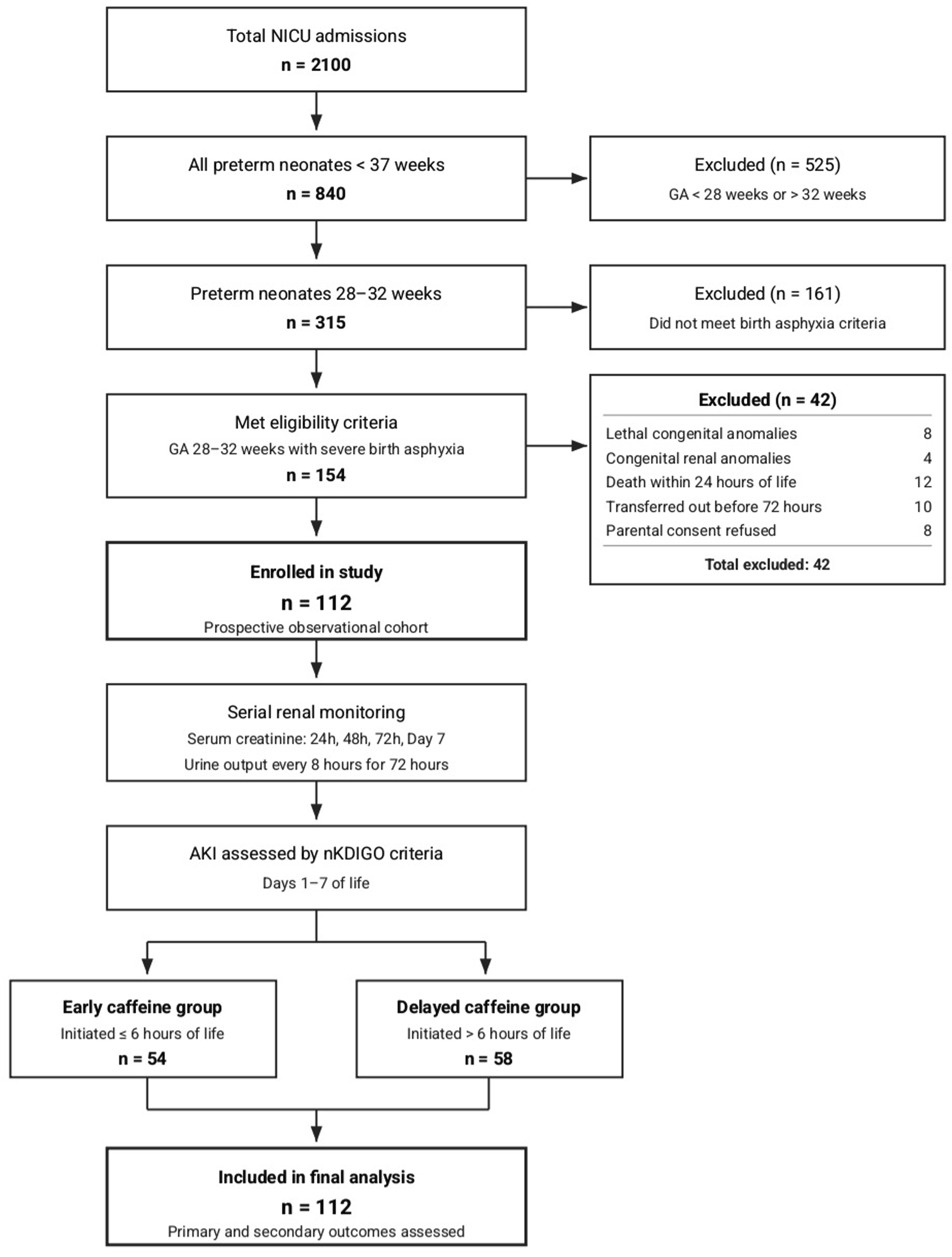
Baseline demographic, perinatal and clinical characteristics stratified by acute kidney injury status.

Data presented as median [IQR] for continuous variables and n (%) for categorical variables.
Continuous variables compared by Mann–Whitney U test; categorical variables by chi-square or Fisher exact test.
Antenatal corticosteroids and HIE grade shown as ordered sub-categories; p-value reflects overall distribution (chi-square).
Caffeine initiation timing compared between inborn and outborn neonates (Mann–Whitney U test and chi-square respectively).
SMD = standardised mean difference; values >0.10 indicate potential baseline imbalance. AKI = acute kidney injury; PIH = pregnancy-induced hypertension; NSAID = non-steroidal anti-inflammatory drug; HIE = hypoxic ischaemic encephalopathy; IQR = interquartile range.
aMissing in 15 patients (13.4%): cord blood gas and resuscitation data unavailable in outborn neonates transferred without documentation.
Incidence and severity of acute kidney injury
Incidence and severity distribution of acute kidney injury in the study cohort (n = 112).

AKI defined by neonatal KDIGO (nKDIGO) criteria over the first 7 days of life.
95% CI for proportions calculated by Wilson score method.
Clinical profile of acute kidney injury in affected neonates (n = 48).

Stage columns shown only for parameters with clinically meaningful stage-wise variation (duration and peak creatinine). Remaining parameters shown for all AKI patients combined.
aSerum creatinine at Day 7 missing in 7/48 patients (5 deaths before Day 7; 2 transferred before collection).
bElectrolyte disturbance = serum sodium <130 mEq/L and/or serum potassium >6.0 mEq/L at 72 h. IQR = interquartile range; BUN = blood urea nitrogen.
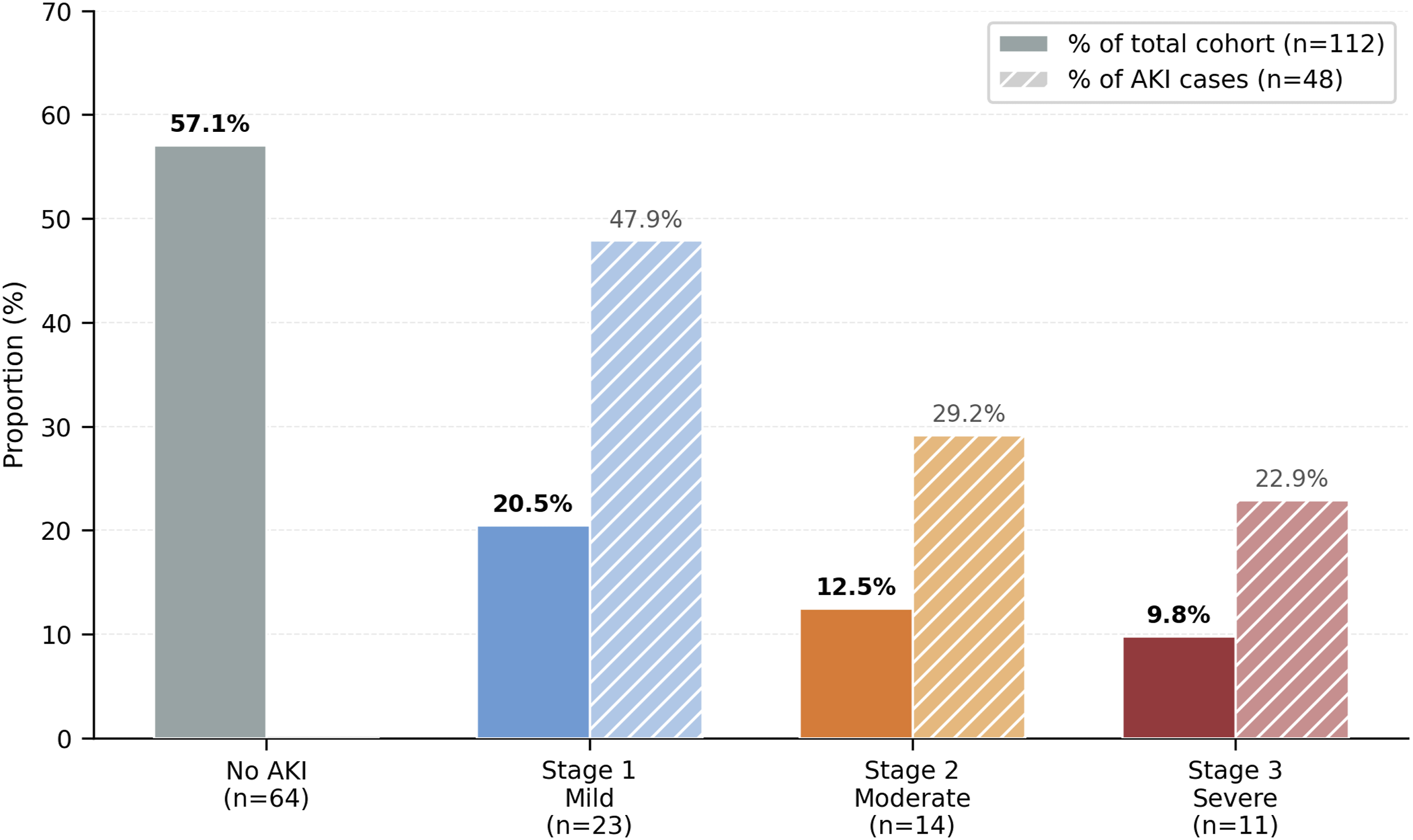
Severity distribution of acute kidney injury by nKDIGO stage grouped bar chart showing AKI severity distribution. Solid bars represent proportion of total cohort (n = 112); hatched bars represent proportion of AKI cases (n = 48). AKI staging by neonatal KDIGO (nKDIGO) criteria (see Methods). nKDIGO = neonatal kidney disease improving global outcomes.
Serial serum creatinine trajectory
Serum creatinine diverged between AKI and No-AKI groups from 48 h onwards (Figure 3A). Median creatinine in the AKI group rose from 0.97 mg/dL [IQR 0.89–1.06] at 24 h to 1.73 mg/dL [IQR 1.50–2.15] at 72 h, then declined to 1.31 mg/dL [IQR 1.13–1.71] at Day 7; Day 7 creatinine was unavailable in seven neonates (five deaths before Day 7; two transferred before collection). In the No-AKI group, creatinine declined from 0.82 mg/dL at 24 h to 0.42 mg/dL at Day 7. Between-group differences were significant at each timepoint (all p < 0.001; Mann–Whitney U test). Serial serum creatinine trajectory by AKI status and caffeine initiation timing. median serum creatinine (mg/dL) with interquartile range at four postnatal timepoints (24 h, 48 h, 72 h, Day 7). Panel A: AKI group (n = 48, blue solid line) versus No-AKI group (n = 64, orange dashed line). Panel B: delayed caffeine group (>6 h of life, n = 58, red solid line) versus early caffeine group (≤6 h of life, n = 54, green dashed line). Shaded bands represent interquartile range. p-values at each timepoint by Mann–Whitney U test. AKI = acute kidney injury; IQR = interquartile range.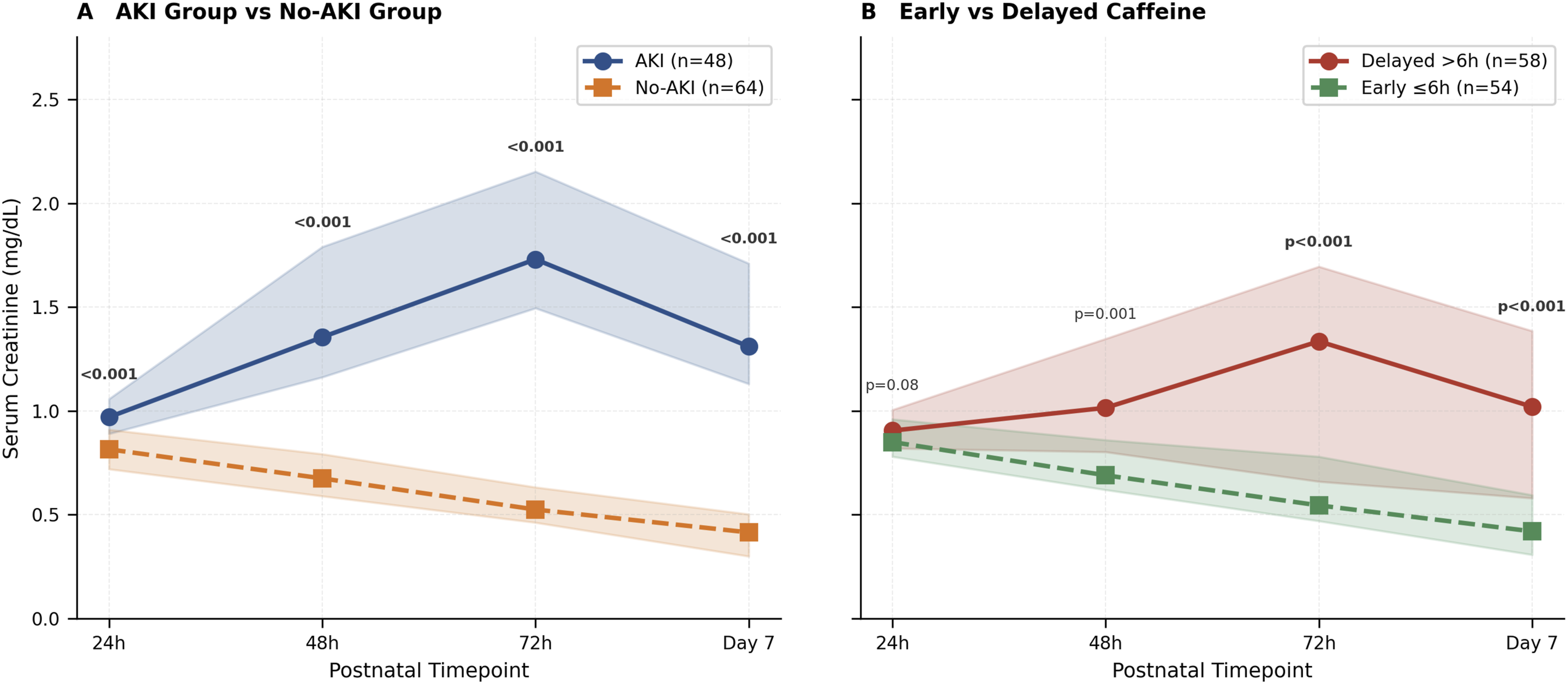
Clinical and management variables associated with AKI
Clinical and management variables by acute kidney injury status with unadjusted odds ratios.

Continuous variables: Median [IQR]; Mann–Whitney U test. Categorical: chi-square or Fisher exact test.
aOR for binary variables by Woolf method; OR for continuous variables expressed per clinically meaningful unit increment; 95% CI by bootstrap (2000 iterations).
bSerum lactate available in 76/112 patients; complete case analysis. MAP = mean arterial pressure; DIC = disseminated intravascular coagulation; IVH = intraventricular haemorrhage.
Independent predictors of acute kidney injury
Univariate and multivariate logistic regression—Independent predictors of acute kidney injury.

Variables selected on clinical relevance and univariate p < 0.20. Vasopressor excluded due to collinearity with fluid balance (Spearman r = 0.53).
Model fit: Hosmer–Lemeshow p = 0.86. AUC = 0.911. VIF <2.0 for all variables. aOR = adjusted odds ratio.
aEarly caffeine initiation retained as primary exposure variable irrespective of significance.
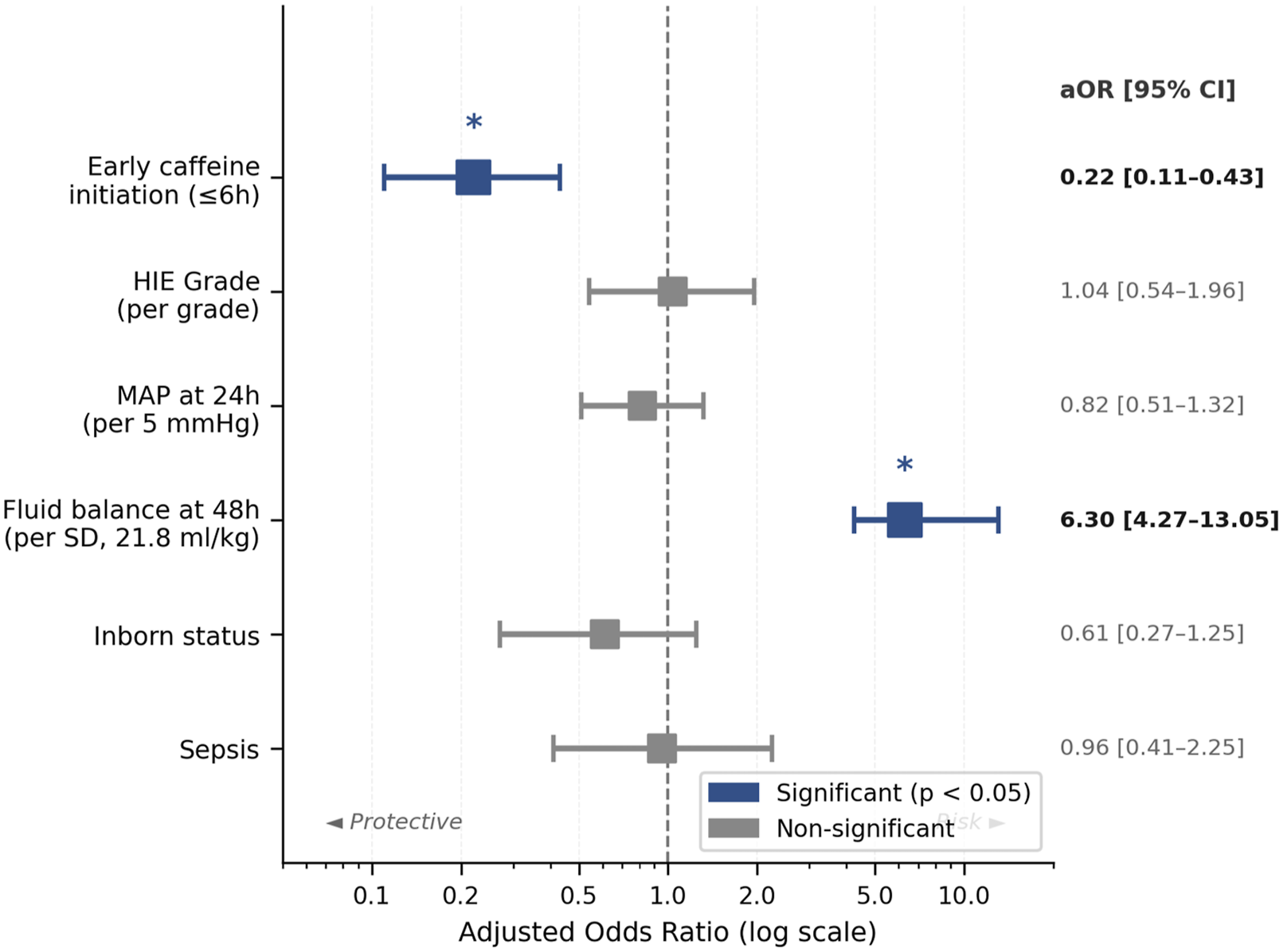
Forest plot, adjusted odds ratios for independent predictors of acute kidney injury adjusted odds ratios (aOR) with 95% confidence intervals from multivariate logistic regression (n = 112). Filled dark squares indicate statistical significance (p < 0.05); grey squares indicate non-significant variables. Vertical dashed line at OR = 1.0 represents no effect. aOR = adjusted odds ratio; AUC = area under ROC curve; CI = confidence interval; HIE = hypoxic ischaemic encephalopathy; MAP = mean arterial pressure; SD = standard deviation.
Effect of caffeine initiation timing on AKI outcomes
Comparison of renal and clinical outcomes by caffeine initiation timing.

Early caffeine: first dose ≤6 h of life. Delayed caffeine: first dose >6 h of life.
ARR = absolute risk reduction; 95% CI by Newcombe method. eNNT = exploratory number needed to treat = 1/ARR; derived from observational data and represents a hypothesis-generating estimate only; should not be interpreted as the expected effect size of a clinical intervention.
aHigher Stage 3 proportion in early caffeine group reflects small numbers (n = 7 vs 4) and greater asphyxia severity in this subgroup; overall AKI incidence was significantly lower in the early caffeine group (p < 0.001).
bAKI onset day reported only in neonates who developed AKI (n = 48).
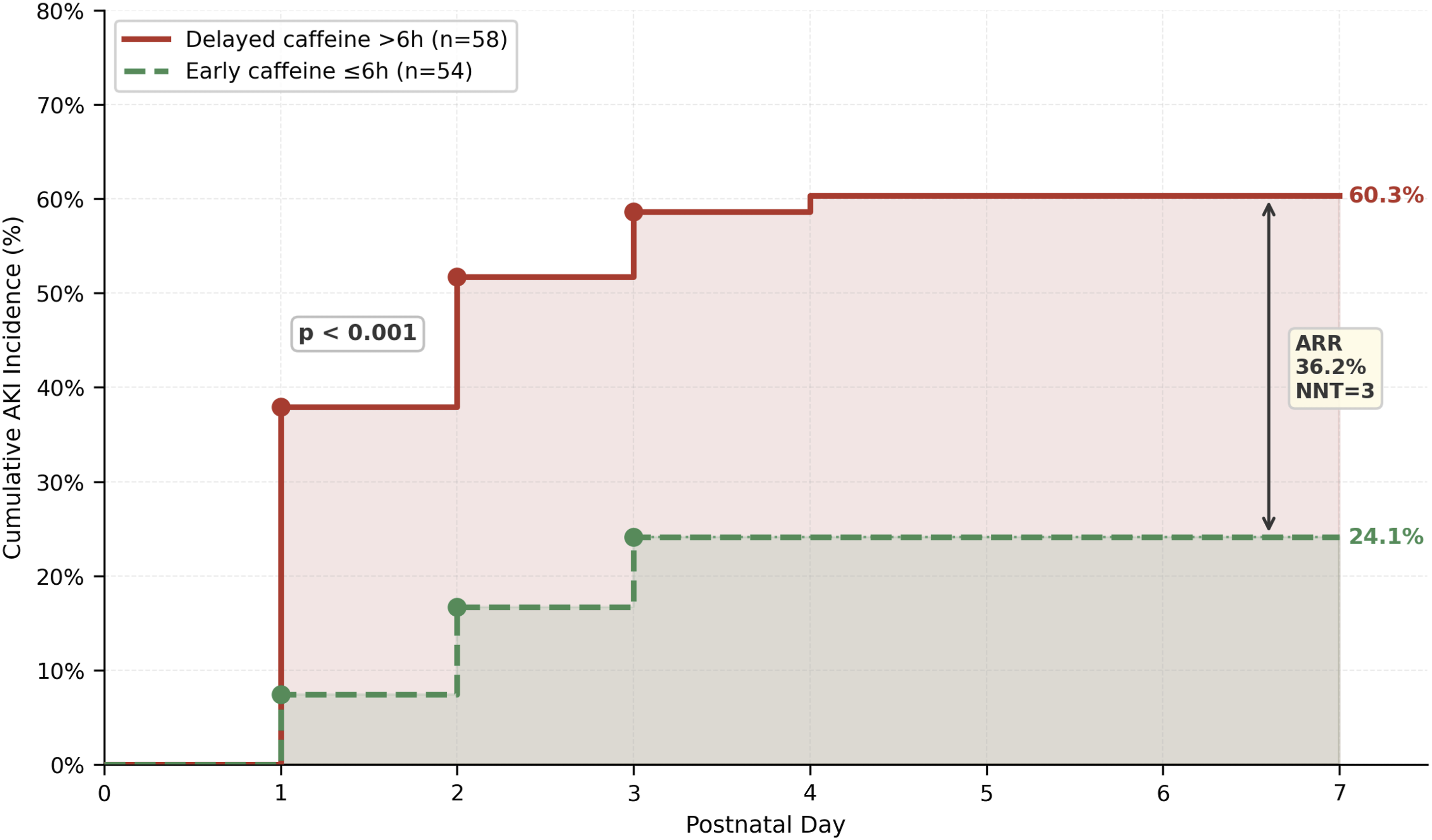
Cumulative incidence of acute kidney injury by caffeine initiation timing cumulative AKI incidence by postnatal day. Delayed caffeine group (>6 h, n = 58, red solid line) reached a plateau of 60.3%; early caffeine group (≤6 h, n = 54, green dashed line) reached a plateau of 24.1%. AKI = acute kidney injury; ARR = absolute risk reduction; CI = confidence interval; NNT = number needed to treat.
Stage-wise, early caffeine was associated with lower Stage 1 (3/54 [5.6%] vs 20/58 [34.5%]; p < 0.001) and Stage 2 AKI (3/54 [5.6%] vs 11/58 [19.0%]; p = 0.033); Stage 3 AKI did not differ significantly (7/54 [13.0%] vs 4/58 [6.9%]; p = 0.360).
Among neonates who developed AKI, peak serum creatinine was lower in the early caffeine group (0.85 vs 1.34 mg/dL; p = 0.007) and urine output was higher (2.4 vs 1.1 ml/kg/h; p = 0.018; Figure 6). Duration of AKI was shorter in the early group (2.0 vs 5.0 days; p = 0.004). Serial creatinine trajectories by caffeine timing are shown in Figure 3B; groups were comparable at 24 h (p = 0.08) but diverged significantly from 48 h onwards (p < 0.001 at 48 h, 72 h, and Day 7). Mortality, IVH, NICU stay, and ventilation duration did not differ between caffeine groups (all p > 0.05; Table 6). Peak serum creatinine and urine output by caffeine initiation timing box plots comparing early caffeine (≤6 h, n = 54, green) versus delayed caffeine (>6 h, n = 58, red). Panel A: peak serum creatinine (mg/dL); median [IQR] 0.85 [0.78–1.19] versus 1.34 [0.89–1.70]; p = 0.007. Panel B: urine output over first 72 h (ml/kg/h); median [IQR] 2.4 [1.6–3.2] versus 1.1 [0.7–2.7]; p = 0.018. Boxes represent IQR; horizontal line = median; whiskers represent 1.5× IQR. Groups compared using Mann–Whitney U test. IQR = interquartile range.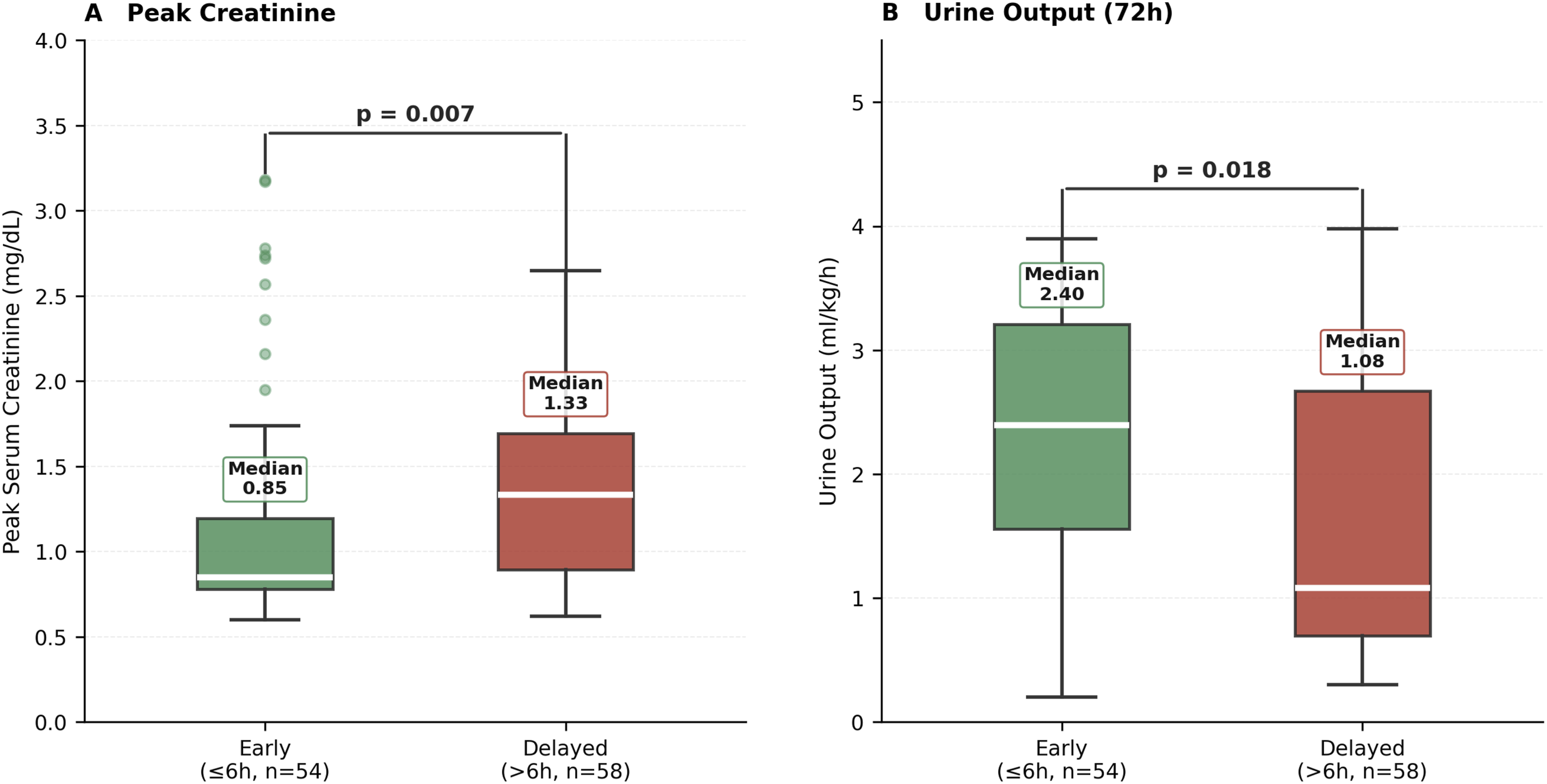
Short-term clinical outcomes
Short-term clinical outcomes stratified by acute kidney injury status.

Adjusted analysis for mortality not performed (n = 5 events). DIC = disseminated intravascular coagulation; IVH = intraventricular haemorrhage.
aOR calculated using Haldane–Anscombe correction (adding 0.5 to all cells) where comparator group has zero events; wide confidence intervals reflect sparse data.
bElectrolyte disturbance = serum sodium <130 mEq/L and/or serum potassium >6.0 mEq/L. Woolf method used for ORs where all cells non-zero.
Electrolyte disturbance occurred exclusively in the AKI group (19/48; 39.6% vs 0/64; 0%; p < 0.001), with hyponatraemia (Na <130 mEq/L) present in 13 neonates (27.1%) and hyperkalaemia (K >6.0 mEq/L) in 13 neonates (27.1%), with overlap in some. Peritoneal dialysis was required in two neonates (4.2% of AKI cases; both Stage 3). Although rates of intraventricular haemorrhage (12/48 [25.0%] vs 18/64 [28.1%]; p = 0.878), seizures (17/48 [35.4%] vs 15/64 [23.4%]; p = 0.239), liver dysfunction (14/48 [29.2%] vs 14/64 [21.9%]; p = 0.508), and coagulopathy (19/48 [39.6%] vs 16/64 [25.0%]; p = 0.149) did not differ significantly between groups, the absolute burden of neurological and multiorgan morbidity was high in both groups, reflecting the severity of the underlying asphyxial insult independent of AKI status (Table 7).
Discussion
This prospective cohort study identified an AKI incidence of 42.9% in early preterm neonates with severe birth asphyxia, with early caffeine initiation and positive fluid balance independently associated with AKI.
AKI incidence and severity
The observed incidence of 42.9% is consistent with published rates in comparable high-risk preterm cohorts. The AWAKEN study reported AKI in 29.9% of neonates across all gestational ages, with rates exceeding 40% in those below 29 weeks 3 Indian single-centre studies have reported AKI incidence of 30–50% in preterm neonates with perinatal compromise, including birth asphyxia and sepsis, though definitions and gestational age ranges vary.14,15 The higher incidence in our cohort likely reflects the compounded vulnerability of early prematurity and severe asphyxia, a dual insult model in which hypoxia-reperfusion injury acts upon an already nephron-deficient kidney. Stage 1 disease predominated (47.9% of AKI cases), consistent with the published literature, and over 80% of cases presented within the first 48 h of life, underscoring the importance of early and serial renal monitoring in this population. The finding that nearly half of neonates with AKI (47.9%) had abnormal renal ultrasonography reinforces the structural dimension of injury and suggests that sonographic assessment may have value as an adjunct to biochemical monitoring in identifying neonates at risk of persistent renal impairment.
Caffeine initiation timing and AKI
A key finding of this study was the independent association between early caffeine initiation and lower AKI incidence. After multivariate adjustment, early caffeine initiation (≤6 h) was associated with 78% lower odds of AKI (aOR 0.22; 95% CI 0.11–0.43; p < 0.001), representing the strongest inverse association in the model and persisting after adjustment for fluid balance, HIE grade, inborn status, MAP, and sepsis.
The mechanistic basis for a timing-specific effect relates to adenosine dynamics during hypoxia-reperfusion injury. Adenosine released during perinatal asphyxia activates A1 receptors on the afferent arteriole, causing renal vasoconstriction and reducing glomerular filtration. 6 Early caffeine initiation, by potentially blocking adenosine receptors during the critical window of peak release if the proposed mechanism holds, may attenuate vasoconstriction before tubular injury is established, whereas delayed initiation may miss this window entirely. Observational data from large cohorts, including the AWAKEN study, have similarly linked early caffeine citrate with lower AKI incidence in very low birth weight neonates, lending independent support to the present findings. 7
The observed difference in AKI incidence of 36.2% and an exploratory number needed to treat of three are clinically notable, though they must be interpreted within the limitations of an observational design and do not establish a causal relationship. The higher proportion of Stage 3 AKI in the early caffeine group (7/54 [13.0%] vs 4/58 [6.9%]; p = 0.360) should be interpreted with caution; this was based on small numbers, was not statistically significant, and likely reflects greater asphyxia severity in this subgroup rather than a harmful effect of early caffeine initiation. These findings collectively suggest that the timing of caffeine initiation merits prospective evaluation as a potentially modifiable factor associated with reduction in AKI incidence in this high-risk population. An important interpretive caveat is that delayed caffeine initiation in this cohort was not random. Outborn neonates, who experienced transport delay and later NICU arrival, were substantially over-represented in the delayed caffeine group (65.5% vs 11.1%; p < 0.001). This introduces the possibility of confounding by indication: neonates who were outborn, or experiencing haemodynamic instability and delayed vascular access received caffeine later precisely because of the clinical circumstances that also independently predispose to AKI. Although inborn status was included in the multivariate model and was not independently significant after adjustment, residual confounding from unmeasured severity markers, including inotrope type and dose, cumulative duration of hypotension, pre-admission resuscitation quality, transport conditions, and interval to NICU admission, cannot be excluded. To address this, two sensitivity analyses were performed. In a propensity score matched analysis (1:1 nearest-neighbour matching, n = 50, 25 pairs; covariates: inborn status, HIE grade, MAP at 24 h, gestational age, birth weight, vasopressor duration, Apgar at 1 min), the association between early caffeine initiation and lower AKI incidence persisted (OR 0.33 [95% CI 0.14–0.77]; p = 0.032). The attenuation of the effect estimate from aOR 0.22 to OR 0.33 following matching is expected and reflects partial explanation of the association by baseline group differences; however, a statistically significant association remained after accounting for these factors. In the analysis restricted to inborn neonates (n = 68), the direction of association was consistent (aOR 0.30 [95% CI 0.13–0.75]), though statistical significance was attenuated (p = 0.150), likely reflecting the limited size of the delayed inborn subgroup (n = 20). These findings should be interpreted as hypothesis-generating, supporting the design of prospective interventional studies examining caffeine initiation timing as a potentially modifiable factor in AKI risk reduction.
Fluid balance as a predictor
Cumulative positive fluid balance at 48 h was the strongest independent predictor of AKI (aOR 6.30 per SD [21.8 ml/kg]; p < 0.001). A one-SD increment in fluid balance (21.8 ml/kg) represents a clinically meaningful degree of fluid accumulation in an early preterm neonate, approximating 15–20% of body weight in this cohort. Positive fluid balance elevates renal venous pressure, reduces the arteriovenous pressure gradient, and decreases effective renal perfusion, a mechanism well characterised in paediatric critical care.4,16 The immature preterm renal vasculature may render this population especially susceptible. Published data associate fluid overload exceeding 10–20% of body weight with adverse outcomes in neonatal AKI, though validated thresholds for this specific population are lacking.2,4 The temporal relationship between fluid balance and AKI onset warrants careful consideration. Cumulative fluid balance was recorded at 48 h, by which time 54.2% of AKI cases had already been diagnosed, predominantly on Day 1. Fluid accumulation at 48 h may therefore partly reflect oliguria from already-established renal dysfunction rather than independently precede it. However, complete reverse causation is unlikely to account for the full magnitude of the association, as the degree of fluid overload recorded (median 47.8 ml/kg in the AKI group) substantially exceeds what oliguria alone would generate in this timeframe. The more plausible model is bidirectional: haemodynamic instability in the first 48 h drives both liberal fluid administration and reduced renal perfusion simultaneously. This bidirectionality is an inherent limitation of observational fluid balance studies and cannot be resolved without a prospective interventional design. These findings identify cumulative fluid balance as an early, actionable monitoring target and support prospective evaluation of restrictive fluid strategies in this population.
Outcomes
In-hospital mortality was significantly higher in the AKI group (10.4% vs 0%; p = 0.013), consistent with the well-established AKI-mortality association,3,17 and is likely an underestimate given exclusion of neonates dying within 24 h. Electrolyte disturbances, exclusive to the AKI group (39.6%), represent a largely preventable source of morbidity requiring early identification. The similar rates of IVH and seizures between groups suggest neurological morbidity is driven predominantly by asphyxia severity rather than AKI per se. The finding that 47.9% of neonates with AKI had structural renal abnormalities warrants longitudinal follow-up given the documented risk of chronic kidney disease after neonatal AKI.18,19 In LMIC settings where therapeutic hypothermia is unavailable for this gestational age group, early biochemical and sonographic renal surveillance may represent a valuable and accessible clinical strategy.
This study has several limitations. As a single-centre observational study, findings may not be generalisable, and residual confounding cannot be excluded. The 6-h caffeine cutoff was based on clinical convention and the AWAKEN-derived threshold; no externally validated cutoff for renoprotection currently exists. Therapeutic hypothermia was not administered, as evidence-based criteria restrict its use to neonates of 36 weeks gestational age or above, 10 limiting comparability with settings where hypothermia is routine for term asphyxia.
Outborn neonates were over-represented in the AKI group (56.2% vs 26.6%), likely reflecting greater asphyxia severity and delayed caffeine initiation in transferred neonates, a confounder only partially addressed by adjusting for inborn status in the multivariate model. Detailed haemodynamic severity indicators, including inotrope type and dose, cumulative duration of hypotension, pre-admission resuscitation quality, transport conditions, and interval to NICU admission, were not individually quantified and represent sources of residual confounding. Long-term renal outcomes were not assessed and represent a critical area for future longitudinal investigation.18,19 The multivariate model included 48 AKI events across six variables, yielding an events-per-variable ratio of 8.0. While this falls below the traditionally cited threshold of 10, that rule has been increasingly questioned in the methodological literature and is no longer considered an absolute standard. 20 Bootstrap resampling (2000 iterations) was employed for all confidence interval estimation, providing overfitting-corrected estimates. Model calibration was adequate on Hosmer–Lemeshow testing (p = 0.858), and the direction and magnitude of findings were replicated across propensity score matched and inborn-only sensitivity analyses, collectively reducing the likelihood that the principal association reflects model overfitting. Serum lactate was missing in 36 neonates (32.1%). AKI rates did not differ significantly between neonates with and without lactate measurements (47.2% vs 40.8%; Fisher exact p = 0.546), supporting a missing completely at random assumption. In the sensitivity model restricted to 76 complete cases and including serum lactate as a covariate, early caffeine initiation remained independently associated with lower AKI odds (aOR 0.24 [95% CI 0.12–0.49]), consistent with the primary analysis. Fluid balance remained positively associated with AKI, though the point estimate was attenuated, likely reflecting partial collinearity between serum lactate and cumulative fluid balance. Serum lactate was not independently significant after adjustment (aOR 1.13 [95% CI 0.61–2.06]). Neonates who died within the first 24 h of life (n = 12) were excluded as they could not complete the minimum monitoring period required for nKDIGO-based AKI classification. 2 This introduces a form of survival bias, the most severely affected neonates are absent from the analysis, and the reported AKI incidence of 42.9% should be interpreted as applying to survivors of the first 24 h. This exclusion leads to a conservative underestimate of true AKI incidence in this population (Supplementary Table 1).
Conclusion
AKI occurred in 42.9% of early preterm neonates with severe birth asphyxia, with over 80% of cases presenting within 48 h. Early caffeine initiation within 6 h was independently associated with 78% lower odds of AKI, corresponding to an exploratory number needed to treat of 3, though this requires validation in prospective interventional studies. Cumulative positive fluid balance at 48 h was the strongest independent predictor and represents an early, actionable monitoring target. These findings support randomised trials of early caffeine initiation and restrictive fluid strategies as components of a potentially kidney-protective care bundle in this high-risk population.
Supplemental material
Supplemental material - Acute kidney injury in early preterm neonates with severe birth asphyxia: Incidence, predictors and role of caffeine initiation timing
Supplemental material for Acute kidney injury in early preterm neonates with severe birth asphyxia: Incidence, predictors and role of caffeine initiation timing by Hari Prasath C, P Anil Kumar and Pentala Sripooja in Journal of Neonatal-Perinatal Medicine
Footnotes

Funding
The authors received no financial support for the research, authorship, and/or publication of this article.
Declaration of conflicting interests
The authors declared no potential conflicts of interest with respect to the research, authorship, and/or publication of this article.
Supplemental material
Supplemental material for this article is available online.
References
Supplementary Material
Please find the following supplemental material available below.
For Open Access articles published under a Creative Commons License, all supplemental material carries the same license as the article it is associated with.
For non-Open Access articles published, all supplemental material carries a non-exclusive license, and permission requests for re-use of supplemental material or any part of supplemental material shall be sent directly to the copyright owner as specified in the copyright notice associated with the article.
