







Abstract
This paper examines whether Amartya Sen’s entitlements and capabilities concepts can be transferred in their application from low-income countries to high-income countries, specifically Cumbria, Northern England. Originally used to understand the causes of famine, these concepts have previously been used in several different geographical contexts to broadly understand poverty and inequality but almost entirely in low-income countries. This paper applies these concepts to a United Kingdom context in an attempt to understand the causes of poverty and inequality among people experiencing “livelihood crisis.” The research uses data from two nongovernmental social welfare projects to examine the causes of crisis and the remedial effects of the intervention. Our findings indicate that these concepts can help to explain how people find themselves in crisis in Cumbria. On a broader level, they can also be used to explain poverty, inequality, and disadvantage in communities in the United Kingdom. The authors put forward that entitlements and capabilities provide a useful framework to advance the policy and political debate on the causes of poverty by providing a straightforward language and broad application. Entitlement and capabilities can also assist social welfare programs in framing their aims and objectives and through improved understanding about the causes of inequality, will be better able to support people out of disadvantage by strengthening entitlements and building capabilities, without the necessity of large-scale investment.
Keywords
The authors of this paper have worked in low-income countries in poverty reduction and humanitarian assistance programs for nongovernmental organizations since the early 1990s 1 . It was in this context that we were first exposed to Amartya Sen’s concepts of entitlements and capabilities and we successfully used them to understand situations of crisis and disadvantage and inform local development efforts. In repeated and unconnected situations across low-income countries, we witnessed situations of poverty and disadvantage which could be explained in terms of lost entitlements and undeveloped capabilities. Over the last decade, we have been working in similar thematic areas in high-income countries, where we have seen striking similarities in the relevance of Sen’s concepts. Again, the authors experienced in unconnected situations of disadvantage in different countries which we felt could be explained using the same concepts. In conversations together, we postulated that Sen’s entitlements and capabilities could provide a unifying theory for understanding why communities experience poverty and disadvantage across the globe.
In this paper, we wanted to further explore this observation using a current social welfare program in the north of England and to share this with an audience of social scientists. The theoretical imperative of this paper is not to compare and contrast different social theoretical models to see which best suits our case study. Rather, it is to test the validity of the application of these concepts and put simply, to see if they work and make sense (and later on we present a case study to support this sense making). To do this, we use our own research in two different social welfare projects using as complete a dataset as possible, incorporating a range of data collection methods. The objective is not to justify the mixed methodological orientation of the exercise but rather to provide a sufficiently strong empirical evidence base to test our hypothesis.
Poverty in the United Kingdom
The context to the application of these concepts is poverty and disadvantage, which in the United Kingdom have once again become ubiquitous. This issue has come to the fore since the onset of economic austerity measures at the turn of the last decade, which resulted in a reduction in social welfare and public sector investment and a withdrawal of the state from local administration. In particular, the 2010 Spending Review and the Welfare Reform Act 2012 implemented by subsequent Coalition and Conservative Governments are said to have significantly increased the number of families living in poverty. Evidence suggests that key poverty indicators, such as poor mental health, substance misuse, foodbank reliance, and homelessness, continue to rise (Brownfield 2018). The cumulative impacts of these alongside other more focused events such as the 2017 Grenfell Tower fire in London where at least 71 lives were lost 2 and the spike in drug-related deaths in deprived areas (Doward 2018), demonstrate a need to focus the debate on poverty in the United Kingdom.
Despite the press reporting on poverty in the United Kingdom, and the impact of cuts to government funding, there has been no coordinated policy debate on poverty since the Labor Government of Brown and Blair in the late 1990s and early 2000s, where there was an emphasis on early childhood investment by the state. In recent years, there seems to be an almost blanket resignation that poverty is an unavoidable consequence of center-right political decisions, with the right and popular media personalizing poverty by victim blaming (Larsen and Dejgaard 2013). There has been some interesting work developed on the measurement of poverty by the Social Metrics Commission which takes a more socially relevant and inclusive system of measurement (Stroud 2018).
Contemporary poverty in the United Kingdom and its effects on individuals, families, and communities have recently been brought into focus by a report by Professor Philip Alston (2018), the United Nations Special Rapporteur on extreme poverty and human rights. His observations reflect the situation of the case study site, Barrow, Cumbria, in the north of England, where a growing number of people are affected by poverty and disadvantage, increasing marginalization, underfunded services, and political neglect. Alston (2018) describes a new welfare system (Universal Credit) which pushes more people into poverty and crisis, and how local authority social safety nets have been undermined by a series of government policies. The report refers to National Audit Office data showing that local governments have seen a 49 percent real-terms reduction in Government funding from 2010 to 2018 alongside a rise in demand for key social services (Alston 2018).
Other authors support the argument that poverty is growing in the United Kingdom. Tinson et al. (2016) assessed poverty rates using official data from a range of Government Department sources, including Department of Work and Pensions and Ministry of Housing, Communities and Local Government. In applying the relative measure of poverty, they found that during the financial year 2014/2015, there were 13.5 million people living in poverty in the United Kingdom, equating to 21 percent of the population; of all children in the United Kingdom, 29 percent experience poverty, with those figures rising to 52 percent when assessing poverty of children living in social housing (Tinson et al. 2016). Furthermore, they noted that there are 3.8 million workers living in poverty, with the largest group being female part-time employees (Tinson et al. 2016). In 2017/2018, these high levels of poverty were expressed in the number of people accessing the United Kingdom’s foodbank network, which distributed 1.3 million emergency food supplies to people in crisis, a 13 percent increase on the previous year (Trussell Trust 2018). This suggests that food insecurity, which is strongly correlated with poverty, is also on the rise (Alston 2018; Richards, Kjærnes, and Vik 2016).
Poverty has strong implications for mental health, particularly depression, anxiety, and suicide (Barr, Kinderman, and Whitehead 2015). Mental ill-health prevalence has increased markedly in the United Kingdom since 2008, corresponding with the start of the recession (Barr et al. 2015). This has disproportionately affected those already living in poverty and in particular, the most vulnerable subsectors of society, such as people with existing disabilities (Taylor-Robinson, Whitehead, and Barr 2014). Poor mental health is often symptomatic of worsening poverty and may push many people, who previously may have been just coping, into crisis. For this paper, we define crisis as a stressful life event which overwhelms an individual’s ability to cope effectively in the face of a perceived challenge or threat (Flannery and Everly 2000).
This paper seeks to contribute to the poverty debate by applying Amartya Sen’s (1979, 1983b) entitlements and capabilities concepts and using them as a means of understanding how people find themselves in crisis, poverty, and disadvantage in the United Kingdom. Sen (1979, 1983a, 1983b) argues that poverty, inequality, and crisis result if there is a problem with combinations of entitlements. Furthermore, when in crisis or when facing multiple vulnerabilities, capabilities are often absent or insufficient to effectively win back entitlements. Cycles of crisis, poverty, and disadvantage can then occur.
Taking a mixed methods approach, we apply Sen’s entitlements and capabilities concepts to data collected by social welfare voluntary sector organizations working in Cumbria under the umbrella term of Help through Crisis (HTC). This is a nationwide program financed by the National Lottery Community Fund, 3 a U.K.-based charitable trust fund, which is intended to help those most disadvantaged and in need living in the local community. The data reported in this paper come from 18 months of project delivery, collected via the projects’ monitoring databases. This anonymized data collected from individuals during their appointments with project workers include demographic information such as age, ethnicity, and gender as well as “presenting issues” that require support. Presenting issues predominantly fall into the categories of mental health, substance abuse, and homelessness. The data also include the type of support provided to the individual, which may be categorized, for example, as advocacy and/or counseling. Finally, the outcomes of the support provided were recorded, which included tangible benefits such as “secure tenancy” or “benefits reinstated.” As such, the data provide an in-depth, rich account of the experience of service users living in poverty in Cumbria.
In the first section of the paper, we consider Sen’s concepts of entitlements and capabilities and their development in low-income countries 4 . We then describe our methodology using two case studies in northern England, which leads to our findings that (a) Sen’s concepts have practical application in understanding poverty and disadvantage in modern Britain; and (b) that social welfare support interventions to increase people’s entitlements and capabilities can help people out of common crises such as no income, food, and fuel shortages and homelessness.
Entitlements and Capabilities
Amartya Sen, writing in the 1970s and 1980s, developed the concepts of entitlements and capabilities to understand poverty and disadvantage in developing countries (Sen 1979, 1983a, 1984 among others). In particular, he used the concept of entitlements to understand why certain people died in famines, and others did not; he put forward that it was not from absolute food shortage, but rather, a loss of entitlements to access food which was the cause of starvation (Sen 1983a). He received the Nobel Prize in Economics for this work in 1998. The academic and practical application of these concepts has mostly taken place within low-income countries, although the Capability Approach has recently been used in an applied sense in Europe and appears to be gathering momentum in a broader context (e.g., Hartworth and Hartworth 2006; Richards et al. 2016). The application of entitlements is particularly absent in high-income countries. The authors, through their own fieldwork experiences in high-income countries and low-income countries, put forward that Sen’s work has much to offer contemporary understandings of poverty in high-income countries, such as those from this case study. We will first briefly summarize both theoretical positions.
In low-income country agricultural societies, Sen put forward that an individual inherits a set of entitlements at birth (this is their endowment), strengthening and accumulating others through their life (Sen 1983b). These consisted of entitlements to natural resources (land, water, animals, etc.) through ownership or usage rights; and the product of their labor, but not in servitude (Sen 1983a). Sen said that this resulted in a set of entitlements (sometimes referred to as a basket of entitlements) that an individual could exchange for other resources or services, such as money or food, with the objective of social reproduction and sustainable livelihoods (Sen 1983b). With a strong set of entitlements, individuals within communities could withstand vulnerabilities, disturbances, and shocks, for example, a period of disease (human or animal) or changes in climatic conditions. When entitlements are removed or become weaker, for example, through the loss of access to natural resources or the presence of repressive government regimes, it becomes more difficult to maintain the livelihood system.
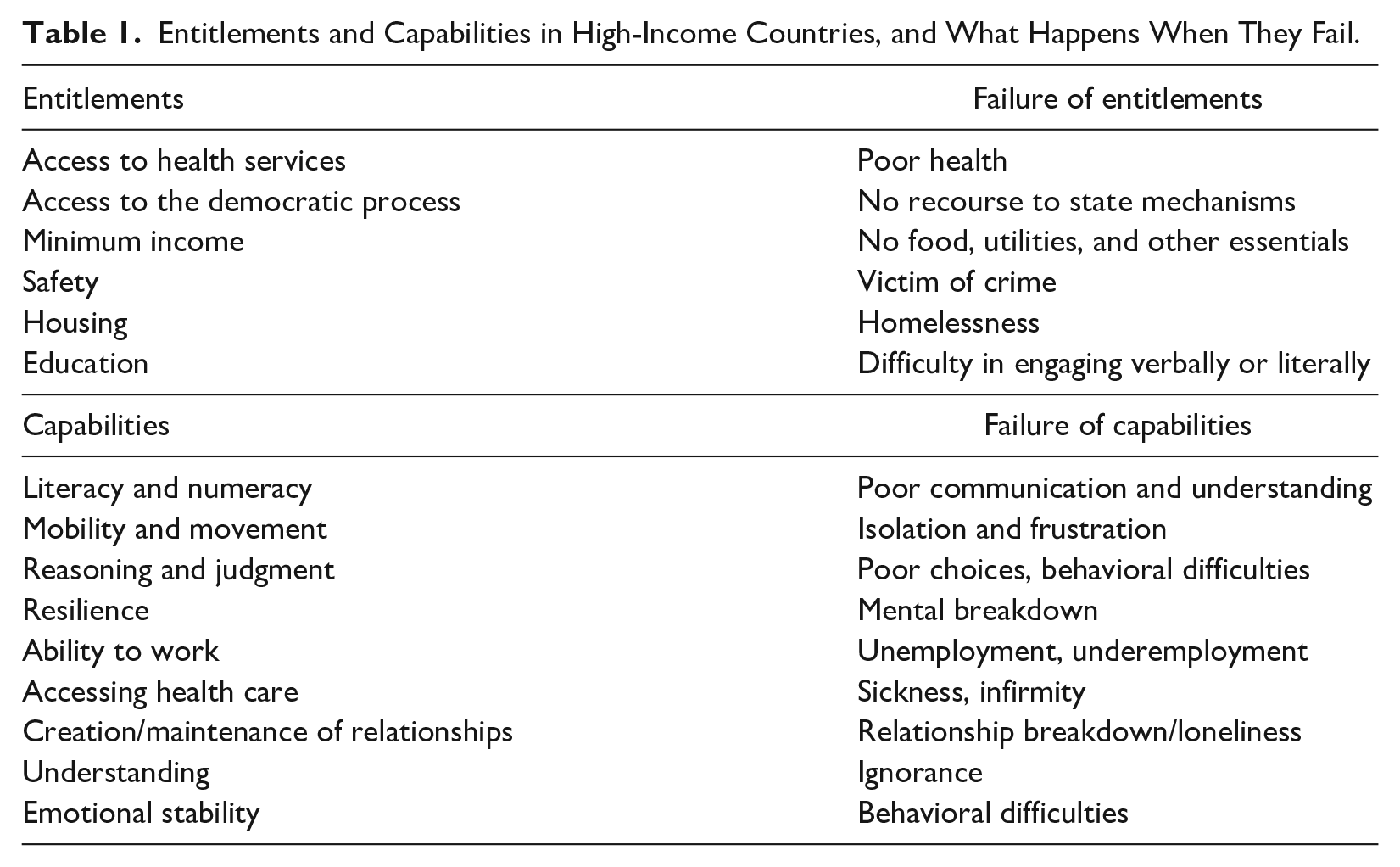
In the United Kingdom, we put forward that individuals inherit an expanded basket of entitlements as citizens of a democratic high-income country. These include entitlements to be protected from violence, abuse, and have recourse to the law; to be adequately housed and protected against homelessness; to a minimum income ensuring a basic livelihood; to a health service, both emergency and nonemergency (which includes both physical and mental health); to an education up to the age of 18 years; and of access to the democratic process through solicitations, appeal, and lobbying to elected and nonelected government officials (see Table 1). These entitlements can be then exchanged for services which are used in the creation of a sustainable livelihood and social reproduction.
Entitlements and Capabilities in High-Income Countries, and What Happens When They Fail.
In his earlier work, Sen (1979) put forward the idea of capabilities, which concerned an individual’s ability to function, subsist, and prosper. Sen (1979) explains “basic capabilities” as a person being able to do certain basic things: “the ability to move about . . . the ability to meet one’s nutritional requirements, the wherewithal to be clothed and sheltered, the power to participate in the social life of the community” (Sen 1979:218). In an examination of the capability approach, Robeyns (2003) wrote, Wellbeing and development should be discussed in terms of people’s capabilities to function, that is, on their effective opportunities to undertake the actions and activities that they want to engage in, and be whom they want to be. These beings and doings, which Sen calls achieved functionings, together constitute what makes a life valuable . . . What is ultimately important is that people have the freedoms (capabilities) to lead the kind of lives they want to lead, to do what they want to do and be the person they want to be. (P. 6)
Capabilities are developed from birth, influenced by attachment style (after Bowlby 1973), parenting and upbringing, peer group influence, key relationships, and educational settings, among others. Capabilities in the United Kingdom are largely a result of the family socioeconomic demographic, with those from disadvantaged backgrounds generally starting life with a weaker set of capabilities. When capabilities are lost or fail to function it can lead to disadvantage and inequality. Indeed, Sen (1999:18) has defined poverty as “capability deprivation,” which has been confirmed by others (e.g., Hick 2014).
Using entitlements and capabilities in an adaptive sense is not unique. As Tiwari (2007) found, these concepts can be connected and applied to a wide spectrum of issues, topics, and purposes with appropriate modifications. For example, Tenai (2016) proposes an amalgamation of Sen’s entitlement and capability approach as an integrated framework for “the church” to conceptualize, quantify, and respond to instances of poverty. Alamgir and Cairns (2015) use entitlements to understand “perpetually temporary” livelihoods, and Chomba et al (2015) use it to explain access to natural resources at the forest margin. The authors have previously written about entitlements and high-income countries: Hartworth and Hartworth (2006) looked at entitlements to safety in disadvantaged socioeconomic communities in Newcastle upon Tyne; Richards et al. (2016) examined entitlements to food in Australia and Norway.
The concept of capabilities has seen growth and development since inception, with Nussbaum (2003) a key contributor, and there is a growing body of research, brought together by the Human Development and Capability Association
5
set up in 2004 which had Sen and Nussbaum as its first two presidents. From capability concept came the Capability Approach. This is a framework that proposes social development is most effectively achieved through supporting the capabilities of individuals to conceive, pursue, and revise their life plans (Venkatapuram 2007). It is these capabilities which enable individuals to take advantage of the resources and opportunities presented to them, including their entitlements. Indeed, inequality has been interpreted as capability deprivation (Nussbaum 2003; Ziegler et al. 2015). The Capability Approach advocates strengthening and supporting an individual’s capabilities as a means of social justice and equality (Alkire 2002). Sen illustrated the objective of Capability Approach as Replacing the domination of circumstances and chance over individuals by the domination of individuals over chance and circumstances. (Sen and Drèze 1989:44)
In 2015, Capability Approach was used as the analytical framework for a successful European youth employment initiative called Making Capabilities Work (Ziegler et al. 2015). The central argument of our paper is that entitlements and capabilities concepts can be used to understand how people find themselves in livelihood crisis in Cumbria.
The Research Sites and the HTC Program
Cumbria
The case study consists of two geographical sites, Carlisle and Barrow-in-Furness, both located in Cumbria, a county in the north of England. The Office for National Statistics (ONS) estimates that at mid-2016, Cumbria’s population was 497,900 persons, making it the 41st most populous county in England (ONS 2011). With an area of 6,768 km² it is England’s third largest county, but with only 73 people per square kilometer, it is the country’s second least densely populated county (ONS 2011).
Carlisle
The city of Carlisle is the county capital, not far from the border with Scotland. The 2016 ONS reports a population of 108,409 people. The 2015 Cumbria Intelligence Report evaluated the unmet needs of small areas (Lower Super Output Areas [LSOAs]) in Carlisle across Department for Communities & Local Government (DCLG) Indices of Multiple Deprivation (Cumbria Intelligence Report 2015). The seven domains used to evaluate need were income, employment, education, skills and training, health and disability, crime, barriers to housing and services, and living environment. Deprivation scores for each LSOA across all of the above domains are also combined to create an overall Index of Multiple Deprivation (IMD) score and rank for each LSOA (ONS 2011). When deprivation scores are combined for all LSOAs in Carlisle, the district is classified as the fourth most deprived district in Cumbria for overall deprivation. It falls within the 20 percent most deprived nationally in terms of education, skills, and training; and it falls within the 30 percent most deprived nationally in terms of health deprivation and disability (Cumbria Intelligence Report 2015).
Barrow-in-Furness
Barrow-in-Furness lies to the far south of the county, bordered on three sides by the Irish Sea. The 2011 Census recorded a population of 69,087 people (ONS 2011). As a result of its location, it has a history of maritime industry, including military submarine construction. This has created a juxtaposition of highly skilled industrial personnel often from outside the area and low skilled resident population. According to the 2016 Royal Society of Arts and Industry’s Heritage Index, Barrow-in-Furness is ranked first in England for the number and quality of its natural landscape and assets, but 162nd for how its communities use their landscape, and it is the fifth most deprived district in England for health deprivation and disability (Royal Society for the Encouragement of Arts, Manufactures and Commerce [RSA] 2016). Using the same IMD metrics as Carlisle, when deprivation scores are combined for all LSOAs in Barrow-in-Furness, the district is classified as the most deprived district in Cumbria for overall deprivation and falls within 10 percent of the most deprived LSOA nationally. It falls within the 10 percent of most deprived nationally in terms of employment deprivation, health deprivation and disability, and living environment. Barrow-in-Furness falls within the 20 percent most deprived nationally in terms of income deprivation.
In Barrow-in-Furness, there are communities with low entitlements and capabilities, living side-by-side with others possessing strong entitlements and capabilities. As mentioned earlier, Barrow-in-Furness has an interesting socioeconomic demographic as the town is home to BAE Systems, who in 2016, won the contract to build the Government’s next generation of nuclear submarines, and who employ large numbers of highly skilled staff and associated personnel. The consequent influx of workers to the town has caused a housing crisis for the poor: Landlords are increasing rents, encouraging existing tenants to leave and renting properties to the high-earning newcomers, with high entitlements and well-developed capabilities. Families and individuals who are low-wage earners or on welfare benefits are losing their entitlements to housing as a result of their low-income status, related to their undeveloped capability set. It is these groups, among others, who find themselves in crisis, as we show later in this paper.
HTC
The HTC program was developed by the Big Lottery Fund in response to poverty data provided by the Joseph Rowntree Foundation (MacInnes et al. 2014) and a recognition that there was a significant increase in people experiencing a situation where their basic needs such as food, shelter, fuel, and basic health and/or social care were not being met. A working definition of crisis for the program and this paper are people who find themselves in imminent or immediate need of one or more basic resources, such as accommodation, food, and clothes, or money with which to buy them. It is outside the scope of this paper to critically appraise different definitions of crisis, suffice to say beneficiaries of this program are those who are experiencing immediate hardship, which threatens the maintenance of their livelihood systems.
As a result, a £30 million investment program over five years commenced in 2016 to fund best practice, collaborative projects to provide a range of services including advocacy and advice, to better enable people to deal with the problems they are experiencing. In Cumbria, there are two such projects: one in the north of the county, covering the district of Carlisle and Eden, which is delivered by a consortium of services: Mind, the mental health charity, Citizens Advice Bureau, and the Cumbria Law Centre; and another project in the south, in Barrow-in-Furness, also delivered by a coalition of Mind, Barrow Citizens Advice, the local Trussell Trust Foodbank, Project John, a young person’s homeless charity, and the Barrow and District Disability Association (known collectively as the Barrow Advice Hub partnership).
People in crisis are referred to these services by other community organizations, such as health and social care agencies, or people self-refer. HTC project workers support those referred, to address immediate crises, such as preventing eviction, accessing food and welfare payments. Once the immediate crisis is resolved, support work focuses on building an individual’s capabilities, such as their confidence, understanding, and resilience.
Method
Our mixed methods study comprising of quantitative and qualitative techniques focuses on a group of people who are loosely defined as “people in crisis” by local charities and other organizations. These include people from the following groups: people with mental health problems; homeless young people between 16 and 25 years old; and those on low incomes, especially those with children, and who are beneficiaries of the HTC program. Quantitative and qualitative data were collected in both the Carlisle and Barrow-in-Furness sites from a total of 492 people in crisis between June 2016 and December 2017.
The quantitative data were collected through initial assessments with service users and included data relating to age, gender, presenting issue, and the service(s) received. Quantitative information was also collected about the intervention and resulting changes in the service users’ circumstances and data from a “distance travelled” tool completed by the service user. “Distance travelled” in this context measures changes in an individual’s circumstances that have resulted from support and intervention. The evaluation tool was a questionnaire based on Goal Based Outcomes (Law 2013) and was used to track the effectiveness of the intervention on a series of capabilities including: to be healthy; understanding; reasoning and judgment; and resilience. Questionnaires were completed by the service user at the beginning of the project’s intervention and after a period of substantive contact/work, generally between 3 and 6 months. The beneficiary gave each item a score out of 10 at the different periods (0 = negative, 10 = positive), enabling the change to be demonstrated numerically.
Qualitative data were collected from service users in the form of narrative information. This was arranged in time-linear format, edited and used to create anonymized and illustrative case studies, one of which is presented later in this paper in an adapted form. The purpose of these case studies was to present a “human face” to the data and provide examples of both “typical” and “atypical” cases. The single-case study is used here as an exemplar to illustrate the context of an individual seeking support in Cumbria and the application of the Capabilities Approach.
Findings
A thematic analysis of the data revealed key sets of entitlements and capabilities and the key reason for their breakdown. This is illustrated in Table 1.
Figure 1 shows the reasons behind the crisis for beneficiaries for the first 18 months of the project. As can be seen, income and housing feature highly as the source of crisis. Applying Sen’s concepts of entitlements, these crises may occur as weak entitlements and low capabilities, something that we explore further in this paper.
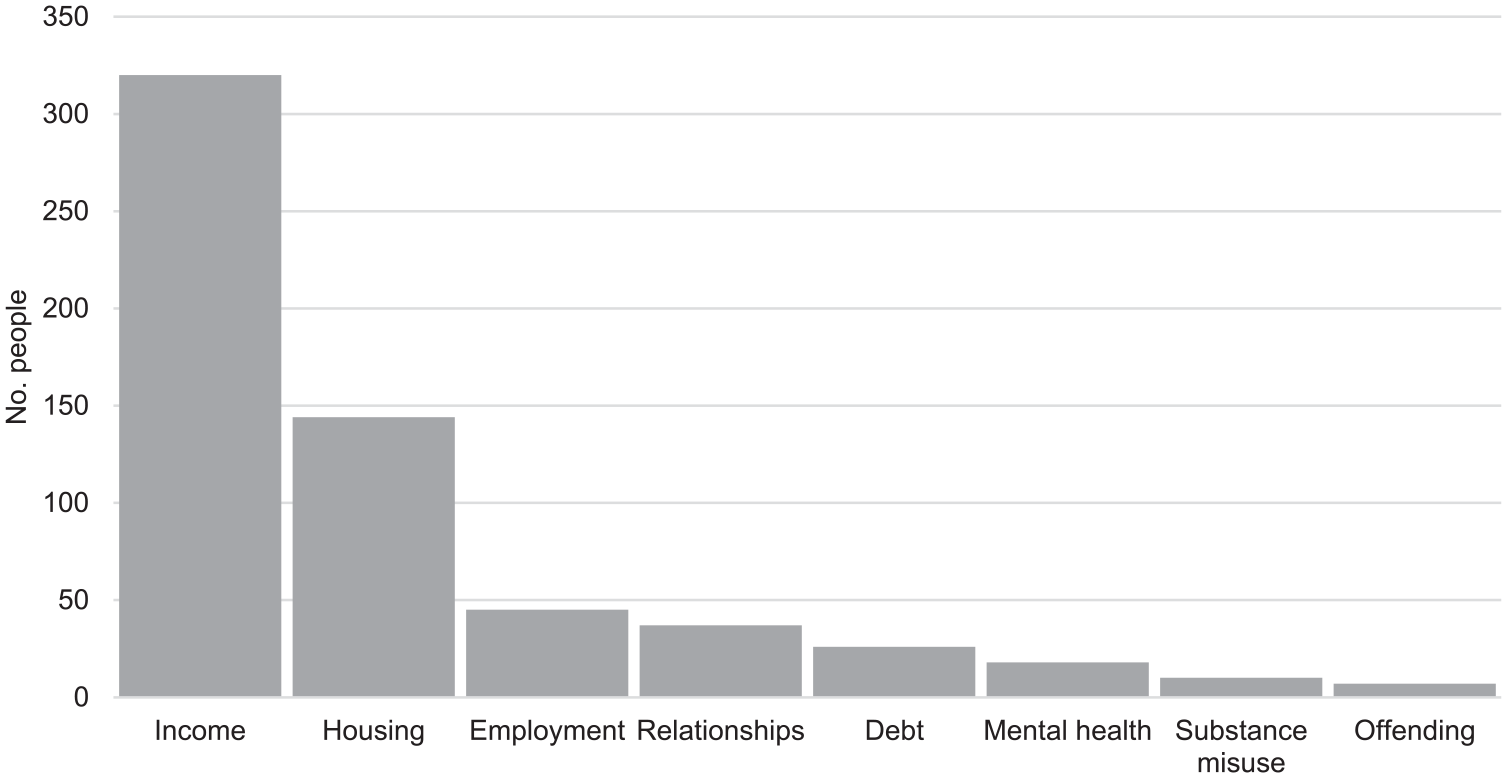
The nature of the crises among the project’s beneficiaries, 2016 to 2017.
It is important to note that many people are referred to HTC by mental health service providers and the majority of these will have underlying mental ill-health. However, service users often cited the overriding and immediate crises as those relating to income, housing, and unemployment. While mental health is cited as a major issue for many young people accessing the program, it is possible that it is underreported, or was assigned lower importance by young people in the face of more immediate crises.
However, mental ill-health was found to be related to the experience of crisis by project workers due to it being a key factor in the reduction of capabilities, which means that the rights-based endowment set can no longer be “exchanged” for associated resources and services. Young people between the age of 16 and 18 years tend to have no housing element in their endowment set. This can be a result of their age and/or relationship breakdown where their housing entitlement via their family fails and homelessness ensues. Tiwari (2007) argues that a person/household is deemed to be living in poverty if their exchange entitlement does not fulfill their basic needs requirements, which is the case here.
As can be seen, the largest issue was a failure of income. This was often due to welfare payments reducing or stopping. The reason for this is series of failed capabilities to function (that Robeyns [2003] referred to as functionings) were recorded as follows, failure to: accurately complete a complex welfare benefit application form; maintain timetabled contact and appointments; and to possess and provide the relevant information, such as birth certificates. As a result of this, benefits are sanctioned (i.e., stopped) and the individual receives no money and generally has no savings, which leaves people in absolute poverty. Furthermore, rent welfare payments stop and housing agencies begin eviction proceedings, resulting in homelessness, demonstrated by the next biggest issue on the graph. A critical mental health crisis, such as attempted suicide or severe psychosis, is the sixth largest cause of crisis, which demonstrates a failure of the entitlement to access health services. For the young people’s service, the crisis for all of their beneficiaries is one of homelessness.
To illustrate in real terms the application of entitlements and capabilities, we have presented an illustrative case study of a typical beneficiary, called James (not his real name), from information provided by a project worker: We illustrate those failures in square brackets in relation to livelihood factors.
Case Study: James
James was 26 years old and lived in Barrow-in-Furness in Cumbria. Growing up, his father was absent and his mother was unable to look after him because of a heroin addiction. He spent most of his early life in different residential care settings and was looked after either by the state or in foster homes (poor endowment from caregivers; capabilities to form and maintain relationships undeveloped/damaged). James’ school life was erratic and sparse, with much of lesson time missed and behavior was often disruptive (poor endowment from educators; weak entitlement to education; capabilities of literacy and numeracy undeveloped). Outside of school, James started taking drugs and became involved in crime (weak entitlement to safety; capabilities of rational choice and reasoning damaged). In his early 20s, James started having episodes of mental ill-health such as anxiety, panic and depression, increasing in frequency and severity, which went untreated because of substance misuse and chaotic lifestyle (weak entitlement to health services; capabilities to be healthy undeveloped and damaged). He was unable to work for these reasons, was on minimum welfare payments, and was often homeless because of failure to pay rent (weak entitlement to be housed; capabilities to be able to work absent). James was violently attacked and tortured because of unpaid drug debt (increasingly weak entitlement to safety) which caused him to seek help. When James approached the HTC project, his entitlements were weak and capabilities undeveloped and damaged.
The Social Welfare Intervention
The intervention with the service users first attempts to offset the immediate impact of the crisis, such as providing people with emergency food aid, accommodation, or emotional support to avert mental health breakdown. In James’s case, the initial crisis intervention consisted of ensuring immediate medical attention, including a substitute prescription for drug dependency and stable accommodation. A key early intervention method, where the emphasis is on negotiating for an improved bundle of resources and goods, is the provision of advocacy, that is, having another individual with strong entitlements and advanced capabilities, speaking on their behalf and representing their issues. Among the service users, there have been several examples where the presence of an advocate with these characteristics and qualities is able to succeed in the entitlement exchange, where the individual has failed as a result of their weak entitlements. An example of this surrogacy of capabilities leading to entitlement exchange is the occasion of welfare interviews held by the Government Department for Work and Pensions (DWP) with welfare benefit applicants (for Personal Independence Payments [PIP], and Employment Support Allowance [ESA] 6 ), which are reported to be highly stressful occasions for people with underlying mental health problems. These interviews take place in a private room with a DWP assessor and the applicant. PIP and ESA are welfare schemes aimed at disabled people and those with chronic illness; applicants often experience multiple disadvantages, such as low income and mental ill-health, and experience a range of vulnerabilities. Added to these are nervousness, anxiety, and sometimes panic, which are created by the interviews. There have been several service users with preexisting mental health problems, who have experienced mental breakdowns immediately before their interview. The HTC project is often approached by those in crisis who have been refused PIP or ESA and have helped them successfully appeal the decision. They are also often asked to help with the initial application and accompany the applicant at the interview. To date, when the project has supported/advocated for an applicant in crisis, there has always been a positive decision to provide or reinstate welfare benefits. There is a contrasting view of the DWP interviewer; positive and helpful from the HTC worker and negative and intimidating from applicants. The implication is that without the advocate, the project beneficiary has insufficient capabilities to convert their entitlement set to provide a minimum income via welfare payments. The advocate employs their own capabilities which are accepted by the government representative. In the journey out of crisis, the strong entitlements and capabilities of the support workers are used in place of the beneficiaries to access a bundle of livelihood resources, for example, benefits, health, and housing.
After the initial crisis has been addressed, the project focuses on building capabilities and strengthening entitlements of the individual through ongoing support and provision of alternative services, such as counseling or education. To return to the case of James, the project helped him successfully apply for PIP, he is settled in permanent accommodation, is on a stable opiate substitute prescription, and is starting to volunteer with the project. After borrowing from the project worker’s strong entitlement set to exchange for a range of resources, his capabilities are in the process of being strengthened, which is likely to be a long process. However, even in the short term, it is evident from the project’s distance traveled evaluation tool that the intervention has resulted in improvements in several areas (see Figure 2).
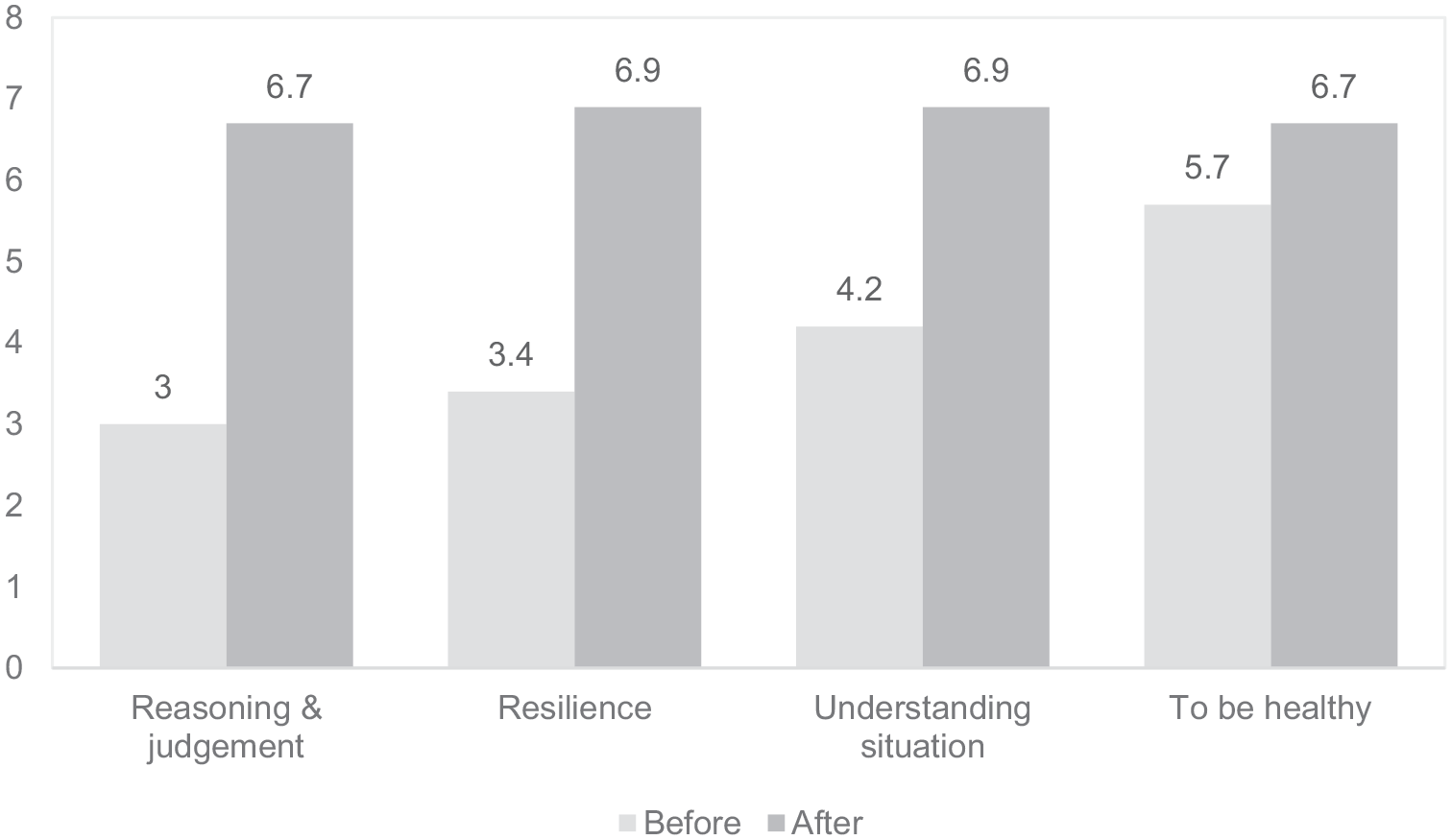
Intervention’s impact on capabilities.
This demonstrates that even relatively brief interventions can have an impact on the capabilities of others. One concern is the duration of this impact on an individual’s capabilities. As adults, the entitlement set has been impoverished for many since childhood (e.g., literacy, understanding) and so it seems likely that a longer intervention period needed, with an associated longitudinal research study to inform best practice. As a dynamic intervention, the project can look at how best to provide this, whether through developing peer support, extending the advocacy role, engaging beneficiaries in longer-term social/educational activities, or providing mentor educators.
Discussion
The HTC program was conceived to address crises experienced by vulnerable and disadvantaged groups; those groups that lack the (cap)ability to get themselves out of crisis. We have overlaid an entitlement and capability framework onto the project and its data to understand the reasons behind the crisis, as has been done in low-income countries.
From the research, we have been able to sketch out the causes and effects of weak and strong entitlements with the HTC service users (see Figure 3). This helps to make the overall picture of poverty and crisis clearer and importantly, to provide a possible route out for those experiencing crisis which can be supported by social welfare organizations. It is the experiences of the projects that effective advocacy provided by the project workers underpins increasing entitlements and subsequent positive effects. The project workers have been “loaning” their own strong entitlements and capabilities to the service user or they have been used in place of the service user’s weak ones, in order to access goods and services on their behalf.
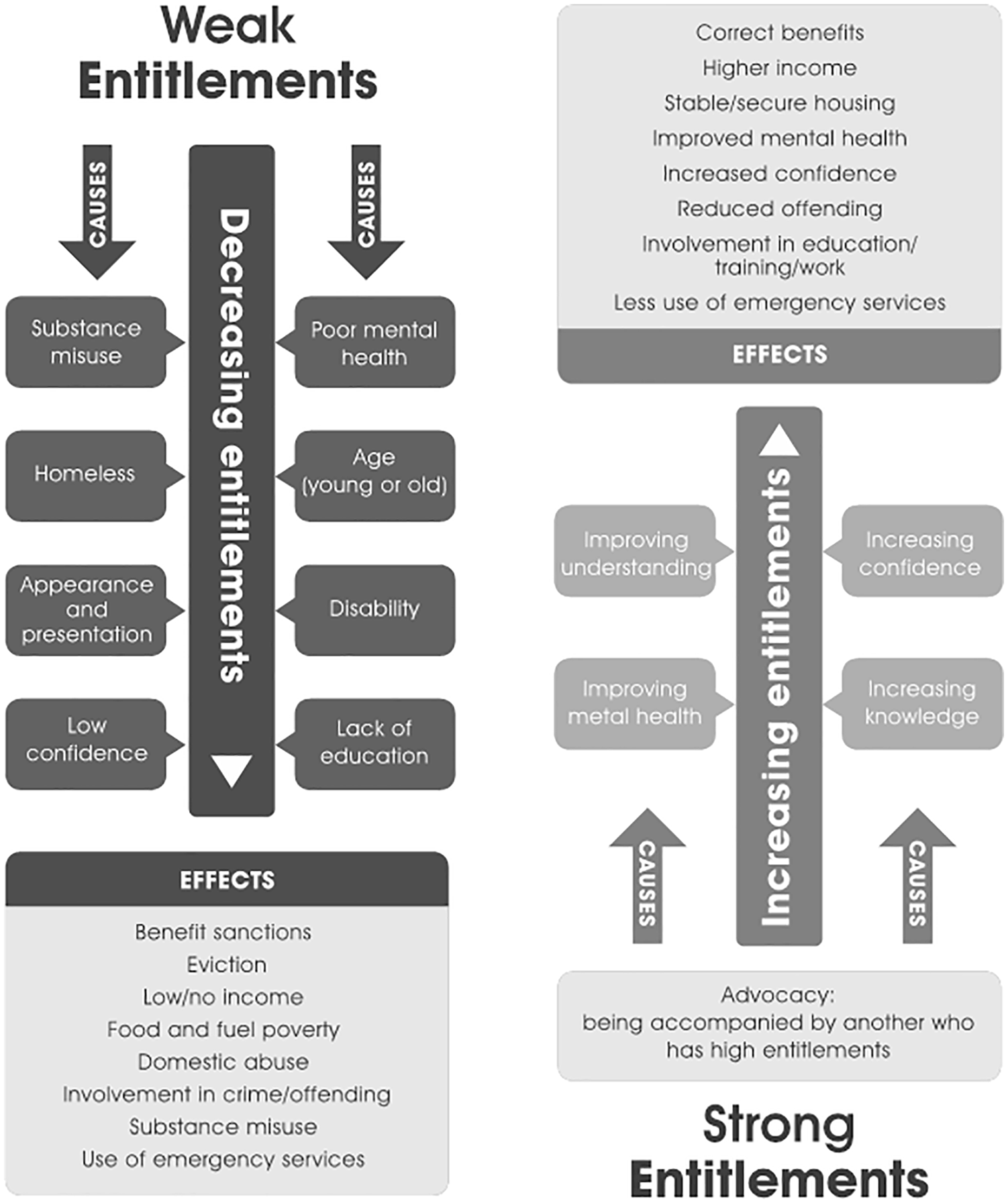
Causes and effects of weak and strong entitlement.
The delivery experience indicates that impacts have been achieved through entitlement and capability substitution; using the strong entitlements and capabilities of the project workers to exchange for resources for beneficiaries or to provide certain functionings, such as reasoning and judgment. Through the modeling behavior and coaching of the advocate/support worker, the project has supported service users develop their own capabilities and accessing entitlements. Data collected through the distance traveled questionnaires indicate that the projects are positively impacting on this, at least in the short term (up to 12 months). As a longer-term solution, this offers the possibility that in future crises there may be no need for, or a lower level of, intervention required as capabilities have been strengthened. However, it is unknown how long it takes to build capabilities from a weakened position in an adult. Similarly, it is not known if strong capabilities lead to stronger entitlements, although it would seem logical.
The entitlement and capability framework can be applied to a range of poverty-linked situations in different geographical areas. This study has shown this approach can help highlight the underlying causes of poverty and disadvantage by systematically assessing areas of weak endowment. Importantly, Sen’s work does have practical applications in economically developed countries and can contribute to an understanding of the causes of crises and the identification of tools to support individuals out of crisis. Furthermore, the complementary concepts of entitlements and capabilities offer a conceptual simplicity that can be translated to policy-making circles, such as local and national government and other public forums, and as such can inform debate. Similarly, they can be readily adapted and applied to guide social welfare intervention. In relation to the latter, the concepts offer a universality and can be deployed on any disadvantaged target group or situation. The limitation to this approach is that, although not new, it is largely untested as a methodology for crisis intervention, particularly in the high-income country context.
Conclusion
Given the suitability of the approach as outlined in the preceding sections, we argue for a more widespread use of Sen’s entitlement and capabilities concepts in a high-income country context. This is particularly pertinent now as poverty and disadvantage, including food insecurity, have become more pronounced amid stagnant wage growth, austerity measures, and benefit reductions in the United Kingdom and other economically developed countries. Sen’s entitlements and capabilities concepts provide not only a unifying theory which highlights the link between poverty and hunger even when resources are plentiful, it demonstrates the ways in which entitlements and capabilities mediate access to a number of resources. Its utility lies in its ability to not only theoretically explain poverty and famine in developing countries as was Sen’s original intention, but to be mobilized as a framework of intervention to help develop capabilities and entitlements to marginalized groups regardless of geographical location.
Related Resources
The Human Development and Capability Association (HDCA) is a global community of academics and practitioners that seeks to build an intellectual community around the ideas of human development and the capability approach, and relate these ideas to policy.
The United Nations human development reports, and related Human Development Index, provide a simple measure of human development (e.g., unweighted average of a nation’s longevity, education and income) for assessing development results and national development policy choices.
The Joseph Rowntree Foundation (JRF) is an independent social change organization focusing on U.K. poverty. The JRF provides funding for research and practical action. In 2016, they produced a strategy for solving U.K. poverty.
https://www.tnlcommunityfund.org.uk
The National Lottery community fund is a distributor of funds for charitable purposes in the United Kingdom. It is a major social welfare investment mechanism in the United Kingdom and brings help and support to many disadvantaged communities.
Footnotes
Declaration of Conflicting Interests
The author(s) declared no potential conflicts of interest with respect to the research, authorship, and/or publication of this article.
Funding
The author(s) received no financial support for the research, authorship, and/or publication of this article.