







Abstract
Social innovation labs have emerged as collaborative platforms addressing complex societal challenges, yet little is known about how value co-creation unfolds within these ecosystems, particularly in the Global South. This article examines the mechanisms of value co-creation in four Moroccan social innovation labs representing distinct governance models. Drawing on a qualitative multi-case study anchored in Service-Dominant Logic and the Quadruple Helix framework, the analysis conceptualizes labs as engagement platforms that integrate heterogeneous resources. Findings highlight three key organizational levers sustaining inclusive co-creation: trust-based governance, user-centered methodologies, and structured value-sharing mechanisms. The study also identifies structural fragilities, including financial instability, governance tensions, and limited impact-evaluation tools, which threaten long-term sustainability. These results extend the co-creation theory to fragile institutional contexts and provide implications for policymakers and ecosystem builders.
Introduction
Since the 1990s in the United States and the 2000s in Europe, a new form of innovation space has emerged: the living lab. These innovation laboratories are distinguished by the active involvement of end users (citizens, clients, patients, etc.) and other heterogeneous stakeholders in an iterative innovation process, conducted in real-life conditions and mobilizing a wide range of methods (Schuurman et al. 2012). Initially focused on technological innovation, living labs have progressively expanded into socially oriented domains, including health, education, and smart cities. Increasingly, they are identified as key infrastructures for social innovation, insofar as they align societal challenges with technological solutions through multi-stakeholder partnerships involving businesses, citizens, governments, and universities (Akasaka and Murakami 2025; Angelini et al. 2016; Baran 2019; Cossetta and Palumbo 2014; Edwards-Schachter, Matti, and Alcántara 2012; Yndigegn et al. 2021).
Within this broader movement, a specific variant has emerged, focused explicitly on social challenges: social innovation labs. These labs inherit the core principles of living labs (real-world experimentation, co-creation with stakeholders, and knowledge hybridization) but differ in the issues they address. While living labs have often been applied to technological innovation logics (Hossain, Leminen, and Westerlund 2019; Leminen and Westerlund 2025), social innovation labs focus on complex societal needs such as exclusion, education, ecological transition, or health (Cole and Hagen 2024; Osorio et al. 2024). They follow an impact-driven approach, mobilizing public, private, and civic actors to design inclusive and sustainable solutions jointly. This distinctiveness justifies their study as an object in its own right, as the dynamics of collaboration, governance, and value co-creation they foster exhibit specific features that are still underexplored in the academic literature.
Situated at the crossroads of open innovation (Chesbrough 2003) and user-centered innovation (Von Hippel 2006), social innovation labs differ from other collaborative spaces, such as coworking spaces, which are not necessarily innovation-oriented, or from fab labs, makerspaces, and hackerspaces, which do not systematically involve users in problem definition. However, the boundaries between these spaces remain porous, as they all share a common feature: enabling value co-creation between actors from diverse backgrounds.
This emphasis on collaboration and inclusion makes the conceptual framework of value co-creation particularly relevant for analyzing how social innovation labs operate and the contributions they make. In their seminal work, Prahalad and Ramaswamy (2004) define value co-creation as a joint initiative between producers and beneficiaries, where value is co-produced through interaction. This perspective was later reinforced by the Service-Dominant Logic (SDL; Vargo and Lusch 2008), which conceptualizes value as emerging in use rather than at the point of exchange. While the literature has extensively explored co-creation in commercial contexts, very few studies have addressed it within the realm of social innovation, where stakeholder diversity and complexity are central. Yet, it is precisely the mission of social innovation labs to structure, support, and facilitate these collective dynamics in the service of social transformation.
In this regard, Morocco offers a particularly relevant case study. On the one hand, the country has engaged in a process of modernizing public policy, increasingly integrating social innovation as a lever for territorial transformation. On the other hand, several recent Moroccan initiatives, led by public, private, or academic actors, have explicitly adopted the social innovation lab model while adapting it to local challenges. Studying these labs thus provides a valuable opportunity to document the emergence of hybrid forms of innovation within the Global South, a context still underrepresented in the literature.
Nevertheless, despite their growth and the increasing interest they generate in both academic and institutional circles, these labs remain fragile. According to data from the European Network of Living Labs (ENoLL), a significant share of these labs has ceased activity, revealing the difficulty of sustaining experimental innovation approaches over time. This fragility raises questions about the organizational robustness of social innovation labs and their capacity to embed themselves durably within their territorial ecosystems. Understanding the value co-creation dynamics at play is thus essential for identifying the structural and contextual levers of their long-term viability.
While social innovation labs are proliferating across various institutional and territorial contexts, their actual functioning, the forms of collaboration they foster, and the kinds of value they produce remain poorly understood. More specifically, the mechanisms through which value co-creation occurs require further investigation. It is therefore crucial to explore how these labs organize co-creation in practice, what organizational levers they mobilize, and how they navigate the risks of partial or uneven value distribution.
This article thus aims to analyze the process of value co-creation within social innovation labs, focusing on how heterogeneous stakeholders engage in collective innovation. It is based on four case studies conducted in Morocco. The paper is structured into four main parts. First, a literature review positions social innovation labs as platforms for engagement that facilitate value co-creation. Second, the methodology section details the data collection and analysis tools employed. Third, the results section presents the different forms of value generated (economic, social, and societal) and the organizational conditions that support or hinder the co-creation process. Finally, the discussion proposes ways to enrich existing theoretical models in light of the empirical findings.
Literature Review
To understand the role of social innovation labs in value creation, it is essential to explore the theoretical foundations of co-creation in social innovation. While social innovation involves diverse actors and aims for collective outcomes, its value-creation dynamics remain understudied. This section first outlines co-creation as a core process in social innovation, before examining social innovation labs as engagement platforms that structure and support this co-creation.
Value Co-creation in Social Innovation: An Emerging Dynamic
Social innovation stands out for its capacity to generate novel responses to persistent or emerging social challenges. It refers to a new solution, whether a product, service, organizational model, process, or market arrangement, that meets a social need more effectively than existing alternatives. Its aim extends beyond functional efficiency, as it also seeks to enhance social relations, strengthen collective agency, and optimize resource use within a framework of sustainability (Eichler and Schwarz 2019). Unlike technological innovation, often driven by market logics, social innovation is grounded in collective goals and societal benefits (Howaldt, Domanski, and Kaletka 2016). It entails concrete implementation and is rooted in collaborative dynamics, engaging a diversity of actors, citizens, associations, public institutions, social enterprises, and local governments, brought together by shared social concerns.
According to Phillips et al. (2015), social innovation can be defined as a novel solution to a social problem that is more effective, efficient, or equitable than existing alternatives, with the value created primarily benefiting society as a whole rather than private interests. This definition highlights two essential dimensions: first, the relative superiority of the proposed solution in terms of social and equity criteria; and second, the public or shared nature of the value created. This differentiates social innovation from conventional forms of innovation, which are primarily oriented toward individual or organizational value capture.
The process of social innovation, therefore, mobilizes stakeholders with diverse interests and action logics. Among them, users and public authorities often play a central role—not only as regulators but also as funders and facilitators of innovation (Pol and Ville 2009). This plurality of actors and resources makes collaborative approaches indispensable. From this perspective, value co-creation is not a peripheral aspect but a foundational pillar of social innovation. It enables the structuring of actor interactions through complementarity, mutual learning, and the recognition of diverse forms of knowledge and usage (Agrawal, Kaushik, and Rahman 2015). In other words, the social value generated is not the outcome of a unilateral transaction but the result of a collective process of construction, deliberation, and appropriation.
In their seminal work, Prahalad and Ramaswamy (2004) define value co-creation as an interactive and collaborative process between producers and beneficiaries, where value emerges through exchange, dialogue, and joint experimentation. This notion has been further developed through the SDL (Vargo and Lusch 2004), which posits that value is not preproduced in isolation but co-constructed in use, through the active involvement of users and the integration of resources contributed by each party. In this view, the engagement platform is a key infrastructure. It orchestrates contributions, aligns intentions, and facilitates coordination among actors. It is within this platform that resource sharing, goal negotiation, and the development of contextualized solutions take place. Co-creation thus involves reciprocal effort and mutual recognition of contributions, resulting in value that is meaningful to all participants.
In traditional co-creation models, the process is typically initiated by a company and centers on a bilateral relationship between the firm and the customer. However, in social innovation, this model applies only partially. Initiatives may emerge from civil society, public authorities, or hybrid organizations. Furthermore, the notion of “customer” is replaced by that of user, beneficiary, or community. The value produced extends beyond individual or functional outcomes and often takes the form of broader social transformation. It may be reflected in enhanced collective well-being (Vasconcellos Oliveira 2021), the modernization of public policy (Edler, Ostertag, and Schuler 2024), or the construction of sustainable futures (Schmidpeter 2013). From this perspective, value lies not only in the innovative output but also in the collaborative process that enables its emergence—mobilizing cooperation, experimentation, and empowerment.
Indeed, social innovation seeks not merely to solve a problem but to strengthen the capacities of individuals and communities to act. User empowerment (Avelino et al. 2019) thus becomes a key indicator of success, reflecting increased competence, legitimacy, and autonomy among those involved in designing and appropriating the solutions. This participatory dimension, deeply rooted in inclusive approaches, aligns with the fields of social marketing and macromarketing, where value is assessed not only in economic terms but also with social impact, public utility, and collective justice.
Social Innovation Labs as Engagement Platforms for Social Innovation
Despite the growing recognition of engagement platforms in value co-creation dynamics, the concrete mechanisms that enable interaction, resource pooling, and collaborative mobilization remain relatively underexplored in the literature. It is in this context that we focus on a specific co-creation arrangement: social innovation labs. We consider them as engagement platforms specifically oriented toward social innovation, designed to foster interaction among heterogeneous actors and support the co-production of innovative solutions with high societal value. These labs meet the criteria of engagement platforms identified by Cañeque (2017), namely stakeholder identification and selection, active connection-building, resource integration, and joint value generation.
One of the core features of social innovation labs lies in the centrality given to users and the grounding of experimentation in real-life environments. These two principles contribute to the creation of both use value and contextual value, extending beyond functional utility to include users’ situated perceptions. Indeed, the concept of value, long confined to its market dimension, has been enriched through the SDL, which emphasizes perceived value (Vargo and Lusch 2008). From this perspective, value is co-constructed by users through their lived experiences and the context in which those experiences unfold.
Marketing research identifies several forms of value. First, exchange value, which reflects a trade-off between resources invested and benefits received. Second, use value, focused on the improvement of well-being through activity performance. Lastly, experiential value arises from social, cultural, or emotional interactions and may yield personal or collective benefits. Some scholars propose an integrated view of value as a balance between functional, emotional, and social benefits versus financial, temporal, or cognitive costs incurred by the user (Varshneya, Das, and Khare 2017).
Complementing these insights, research in the social and solidarity economy introduces the concept of social value, hybrid in nature, bridging market and nonmarket logics, as well as utility and social ties. This value may manifest internally (benefiting actors within the organization), internally-externally (benefiting both members and partners), or externally (contributing to society at large) (Sinkovics and Archie-Acheampong 2020). This perspective enhances traditional marketing-based models of value creation.
In addition, the Quadruple Helix model (Carayannis and Campbell 2012) provides a systemic view of innovation ecosystems by emphasizing the interplay between academia, industry, government, and civil society. Integrating this framework helps explain how Moroccan social innovation labs operate at the intersection of multiple helices, negotiating legitimacy and resources across institutional boundaries.
This capacity to integrate diverse resources allows social innovation labs to deliver tailored responses to user needs. From an economic standpoint, this fosters better product and service design and enhances market fit (Ballon, Hoed, and Schuurman 2018), thanks to real-world testing that improves usability, reduces learning costs, and accelerates time to market (Baran 2020).
However, this reading must be nuanced. Not all social innovation labs pursue the same objectives. Some remain focused on technical or commercial optimization without fully addressing social dimensions. Others place users at the center and embrace a plurality of needs and contributions. In this second case, labs contribute to identifying collective needs, supporting territorial development, and embedding projects within public policy frameworks (Timmermans et al. 2020). In rural or peri-urban settings, they serve as engines of economic and social revitalization by encouraging local entrepreneurship, enhancing community well-being, and supporting regional development strategies (Tirziu and Vrabie 2017). In urban environments, they contribute to smart city initiatives, tackling complex challenges at the intersection of social, technological, and environmental concerns (Nguyen, Marques, and Benneworth 2022).
Beyond management and innovation studies, insights from critical development research and the anthropology of innovation highlight how power asymmetries, informality, and resource scarcity shape co-creation in the Global South. Grassroots and frugal innovation literature further shows how locally embedded, resource-constrained solutions generate forms of value invisible to conventional market-oriented approaches. These lenses are particularly relevant to interpret the Moroccan cases.
Through their methodological frameworks, which combine exploration, prototyping, testing, and institutional embedding, social innovation labs promote the co-construction of new knowledge and practices (Puerari et al. 2018). They become spaces of convergence and transformation, where each actor’s contributions can be valued. Value creation thus extends beyond market logics to include symbolic, social, and cognitive dimensions—such as mutual learning, the emergence of new partnerships, or the diffusion of more inclusive organizational models (Kazadi, Lievens, and Mahr 2016).
Yet this richness requires a careful balance between contributions and expected benefits. From a social standpoint, the equitable distribution of value becomes a central concern. The social innovation lab must therefore ensure fair, transparent governance that is responsive to the expectations of all stakeholders. This need for reciprocity and recognition is particularly acute given the diversity of lab structures. Leminen, Westerlund, and Nyström (2012) offer a helpful typology that distinguishes labs led by firms, universities or research centers, local authorities, or user collectives. Such structural diversity shapes their operations, purpose, and ability to sustainably generate social value. To synthesize these conceptual dimensions and reflect the complexity of value co-creation within social innovation labs, the following section presents an integrative theoretical framework.
This framework illustrates how diverse stakeholders interact on engagement platforms through stakeholder engagement, resource integration, and mutual learning to co-create value. The process is influenced by individual motivations and a set of moderating factors, leading to multiple outcomes, including higher innovation quality, power sharing, and sustained collective engagement.
This research seeks to empirically examine the process of value co-creation as it unfolds within social innovation labs, using the theoretical framework presented in Figure 1 as an analytical lens. Adopting an exploratory approach based on case studies, the objective is to gain a deeper understanding of the concrete dynamics of co-creation at play, the nature of stakeholder interactions, and the enabling or constraining conditions that shape the value co-creation process.
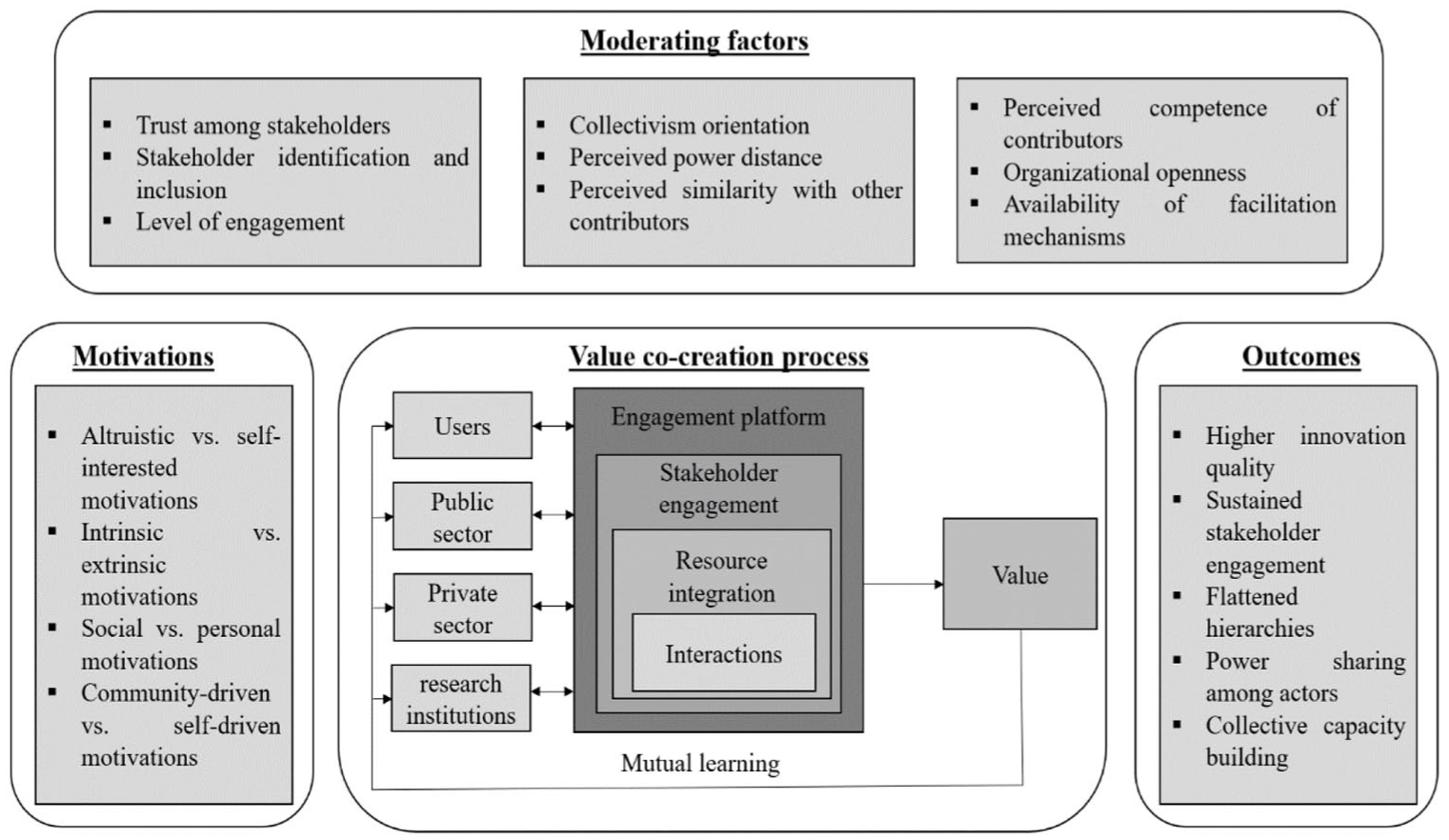
Theoretical framework of the value co-creation process.
Methodology
This research adopts a qualitative multiple case study approach to explore the mechanisms of value co-creation within social innovation labs. The four selected cases reflect a diversity of organizational models, aligned with the typology proposed by Leminen et al. (2012), thereby enabling a comparative analysis of engagement configurations and the forms of value generated. Four cases were selected to reflect the four governance archetypes identified by Leminen et al. (2012): corporate, academic, civic, and territorial. Selection followed theoretical sampling principles, ensuring diversity in sponsorship and scale. Data collection combined semi-structured interviews (18 in total, 50–90 minutes), one multi-stakeholder focus group, questionnaires, and participant observation (2018–2025). This triangulation reinforced reliability. All interviews were transcribed, anonymized, and coded using a thematic grid aligned with the theoretical framework. Analysis proceeded in two steps: open coding to let categories emerge (trust, fragility, value sharing), then axial coding to link these categories with SDL and Quadruple Helix constructs.
Sample
To explore the mechanisms of value co-creation within social innovation labs and to examine their functioning as engagement platforms, this study adopts a multiple case study approach. Four labs were selected, each representing one of the four categories identified by Leminen et al. (2012): corporate, academic, public, and citizen-driven.
Among the selected cases, the Essaouira Territorial Innovation Lab (ETIL), founded in 2018, stands as a flagship example of territorial anchoring. Initiated by the province of Essaouira, it follows an open innovation logic aimed at co-developing local solutions in education, place branding, and urban planning. As an actor of social revitalization, ETIL actively engages civil society, elected officials, and decentralized state services to test innovations such as mobile classrooms and participatory digital tools.
In a complementary yet distinct approach, the Al Moutmir Open Innovation Lab (AMOIL), launched in 2019 by the OCP Group, illustrates the corporate-institutional model. Designed as a catalyst for innovation in agricultural sectors, the lab works directly with farmers through demonstration platforms, tailored training programs, and technical support. It aims to promote sustainable and inclusive agriculture by disseminating scientific knowledge and building local capacities.
In the academic sphere, the Social Innovation Lab of Mohammed VI Polytechnic University (SIL-UM6P), also created in 2019, embodies the university-research model. With over 4,200 beneficiaries across Morocco’s 12 regions, the lab runs diverse programs in social entrepreneurship, digital inclusion, youth employability, and cultural heritage valorization. It positions itself as a national incubator for socially anchored experimentation.
Finally, the most recent case, the Rhamna Territorial Innovation Lab (RTIL), launched in 2020, represents a locally driven model within an endogenous development perspective. Led by territorial authorities in close collaboration with economic, associative, and educational stakeholders, RTIL aims to design and test practical solutions to local socio-economic and environmental challenges through inclusive and adaptive methods.
Together, these four cases offer a rich diversity of institutional structures (public, academic, corporate, and civic), timelines, and innovation purposes, providing a robust comparative framework for analyzing value co-creation conditions. This presentation sets the stage for the following section on data collection and analysis methods.
Data Collection and Analysis
The four social innovation labs included in this study have been subject to longitudinal observation. This long-term engagement ensures analytical depth, grounded in robust empirical material from both primary and secondary sources. Table 1 provides an overview of each case, including the nature of the data collected.
Characteristics of the Social Innovation Labs studied and Data Collected.
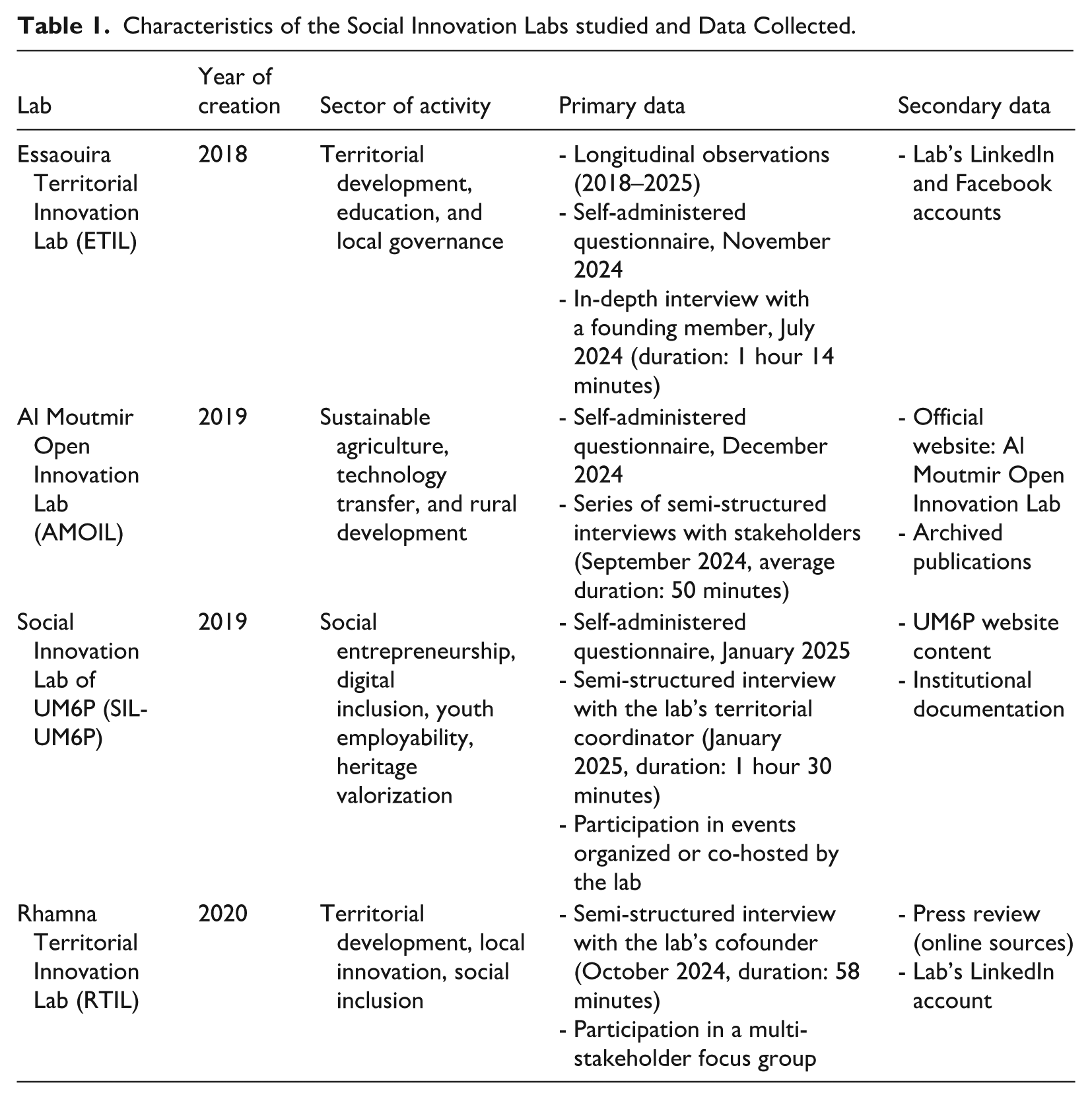
The ETIL, which has been observed since its inception in 2018, is the longest-running case. The researcher was closely involved through participation in general assemblies, ideation seminars, and territorial events. Multiple interviews were conducted with key stakeholders—users, professionals, and institutional representatives—to assess their expectations and perceptions of governance and territorial impact. A structured questionnaire was administered in November 2024, and an in-depth interview with a founding member was conducted in July 2024 (duration: 1 hour 14 minutes). Since ETIL ceased operations in early 2025, it provides a unique opportunity to analyze failure factors related to economic sustainability and governance.
The AMOIL, launched by OCP in 2019, was selected for its distinct sectoral positioning. It was examined through a self-administered questionnaire in December 2024, complemented by a series of semi-structured interviews with various stakeholders (average duration: 50 minutes).
The SIL-UM6P, also founded in 2019, was investigated via a questionnaire completed in January 2025, a comprehensive interview with the territorial coordinator (duration: 1 hour 30 minutes), and participant observation during events organized or co-hosted by the lab. This case illustrates an academic model with national reach.
The RTIL, launched in 2020, was subject to active field observation in 2023, followed by a semi-structured interview with its cofounder (October 2024, 58 minutes) and participation in a multi-stakeholder focus group. Situated in a rural area, it offers a relevant lens for analyzing bottom-up innovation and civil society-local development linkages.
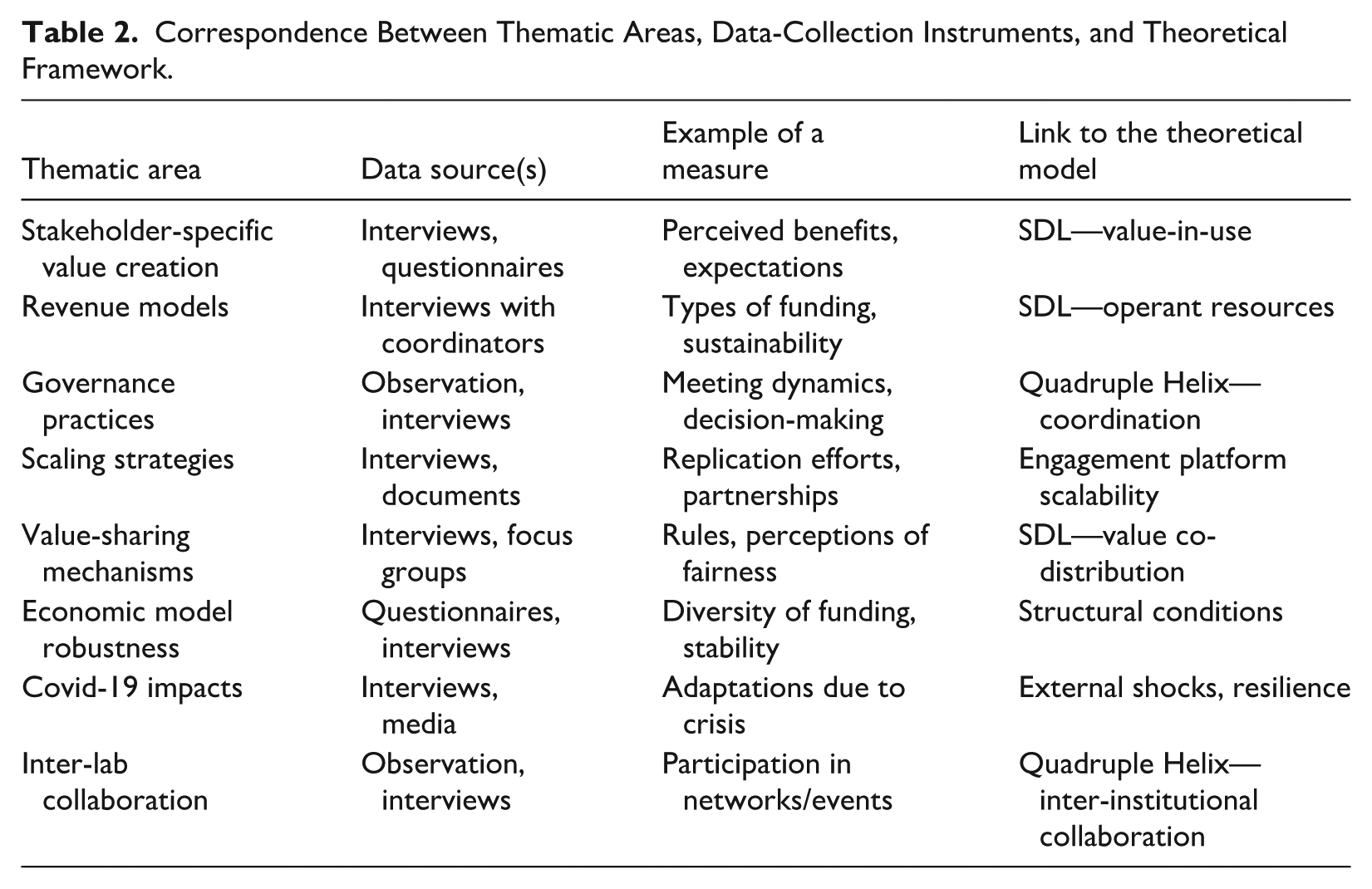
To supplement and update the data, at least one interview was conducted with a lead representative from each lab. These interviews, ranging from 50 to 90 minutes, were conducted via videoconference in winter 2024 for three of the cases, and in early 2025 for SIL-UM6P. The semi-structured interview guide included eight thematic areas: stakeholder-specific value creation, revenue models, governance practices, scaling strategies, value-sharing mechanisms, economic model robustness, Covid-19 impacts, and inter-lab collaboration.
To ensure validity, two independent researchers reviewed a subset of transcripts, and coding discrepancies were discussed until consensus. Triangulation with secondary sources (institutional reports, websites, media) further enhanced robustness.
All interviews were recorded, transcribed, and manually coded based on a thematic grid. The qualitative material was triangulated with a documentary review of websites, social media content, public reports, and media publications covering the 2020–2025 period. In addition, participation in conferences, workshops, and awareness events organized by or involving the labs enriched the empirical understanding of stakeholder engagement practices.
All participants in this study provided informed consent before their involvement. Participation was voluntary, and interviewees were informed of their right to withdraw at any stage. Individuals appearing in photographs or other visual materials explicitly agreed to their academic use. When appropriate, images were anonymized to protect participants’ identities. These measures ensured compliance with ethical standards of research integrity and with the journal’s policy on research ethics and visual representation.
The analysis focuses on the value co-creation process as it unfolds within social innovation labs, using the theoretical framework presented earlier. Units of analysis were defined according to the model’s key dimensions: actor profiles, types of value generated, nature of interactions, forms of engagement, resources mobilized, and types of learning. The objective is to identify organizational and relational configurations conducive to social value creation and the sustainability of collaborative innovation ecosystems.
The eight thematic areas of the interview guide were directly aligned with the theoretical framework. For instance, “stakeholder-specific value creation” and “forms of engagement” correspond to the SDL’s notion of value-in-use, while “governance practices” and “inter-lab collaboration” reflect the Quadruple Helix emphasis on institutional interplay. Observation notes enriched dimensions such as resource mobilization and types of learning. This alignment ensured coherence between data-collection instruments and analytical categories.
Table 1 summarizes the main characteristics of the four social innovation labs analyzed, outlining their fields of activity, year of establishment, and types of empirical data collected. This diversity of institutional contexts and data sources provides a rich basis for exploring the dynamics of value co-creation.
While Table 1 provides an overview of the cases and the types of data collected, it is equally important to demonstrate how these empirical materials were linked to the analytical framework. To this end, Table 2 details the correspondence between the thematic areas of the interview guide, the instruments used for data collection, illustrative measures, and their connection to the theoretical model. This mapping highlights the methodological coherence of the study and ensures the validity of the analytical categories employed.
Correspondence Between Thematic Areas, Data-Collection Instruments, and Theoretical Framework.
The following results section presents the observed configurations and identifies key organizational levers derived from the case studies.
Results and Discussion
Within social innovation labs, users are engaged in real-life usage scenarios of social innovations. These environments thus serve as privileged empirical contexts for observing the mechanisms of value co-creation that unfold within social innovation processes.
From Use Value to Social Value
In other contexts, early-stage user involvement also exists but takes different forms. At the SIL-UM6P, based within a university, researchers and academics act as intermediaries, channeling needs identified directly from the field. Conversely, some labs encounter challenges in engaging partners at the ideation stage: “Our partners rarely approach us at the idea stage,” notes the cofounder of the RTIL.
AMOIL has developed an original model of intermediation by facilitating structured interactions between companies and “farmer clubs” composed of volunteers engaged at various stages from ideation to experimentation. As the RTIL cofounder emphasizes, the user-centered approach adopted by social innovation labs does not necessarily imply that users are the final beneficiaries of the innovation.
Our lab follows the social innovation lab methodology, which is centered on users. But users are not always people in vulnerable situations. Still, we strive to improve their daily lives. For example, we’ve developed an entrepreneurship support project aimed at local agricultural entrepreneurs. They are the ones who interact directly with the lab, mobilize resources, and test tools. Yet, the broader goal is to foster the professional integration of the most vulnerable populations in the region. In other words, the social purpose extends beyond the direct participants in the process.
This configuration reveals a critical distinction in the value co-creation process (Figure 2). On the one hand, immediate use value is generated for the actors directly involved in the innovation initiative (in this case, supported entrepreneurs). On the other hand, broader social value emerges for third parties, often vulnerable groups, that the project seeks to support indirectly. This intentional disconnect between operational users and final beneficiaries underscores the complexity of value chains in social innovation, where the expected outcomes are embedded in a systemic and redistributive logic aimed at serving the common good.
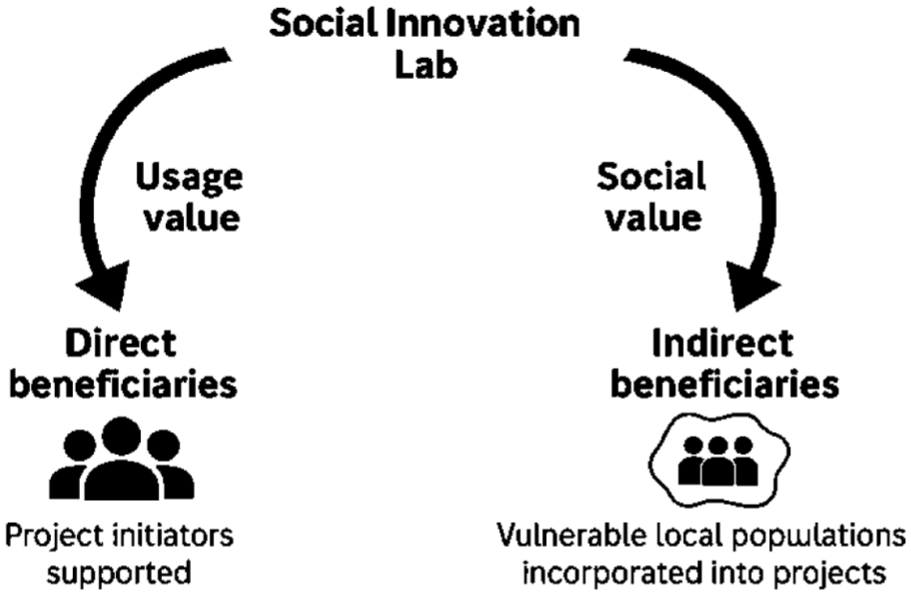
Use value and social value in Social Innovation Labs.
One ETIL participant explained: “The lab gave us a platform to present our ideas to local officials. Without it, our association would never have been considered.” Similarly, a farmer engaged with AMOIL stated: “Through the field schools, I learned to test fertilizers myself. This gave me independence.” These voices illustrate how experiential and cognitive value emerge in practice.
Building on these empirical insights, Figure 3 illustrates collaborative ideation activities within the social innovation labs under study, highlighting how stakeholder interactions materialize in practice.
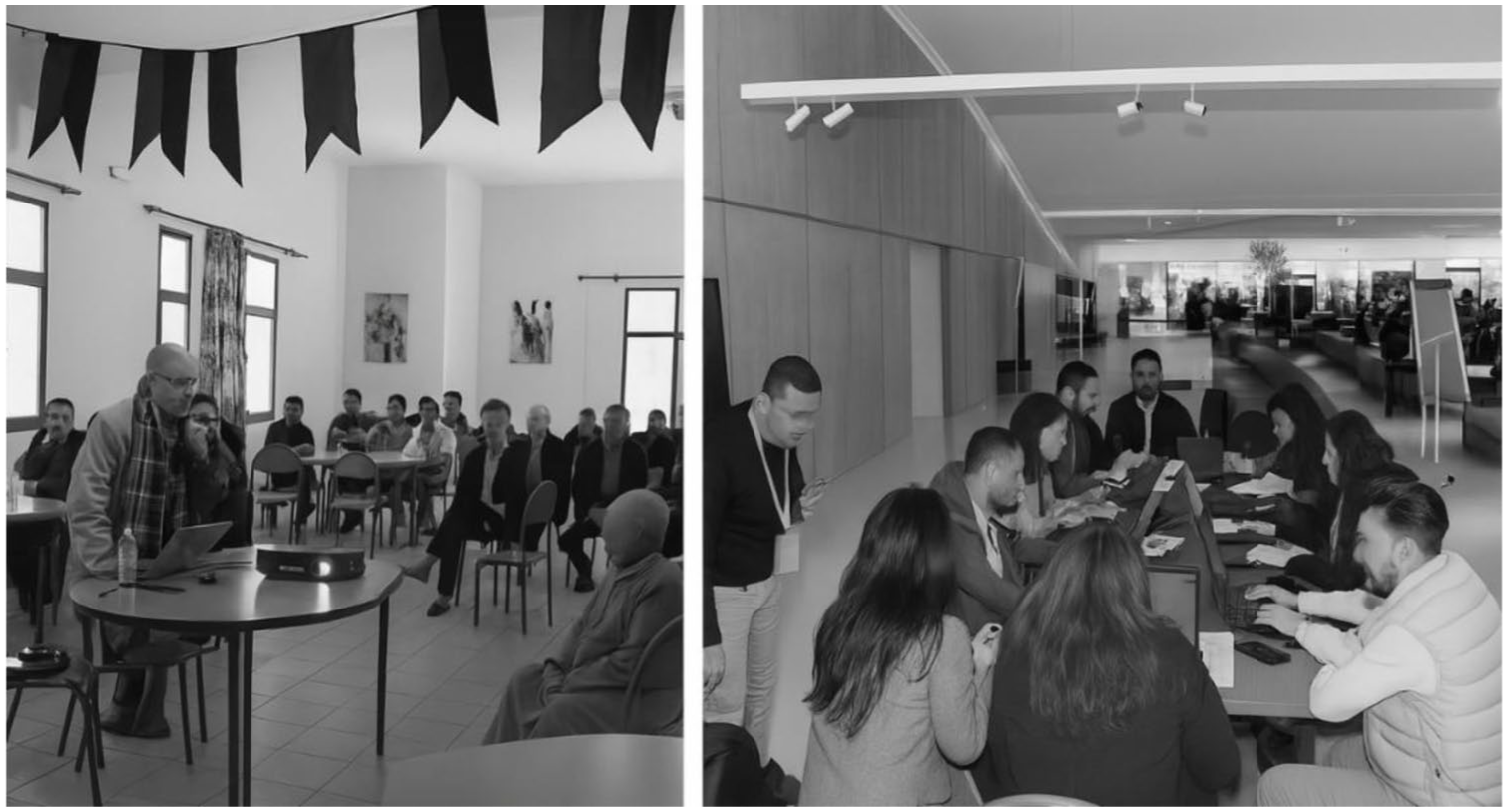
Collaborative ideation activities in the social innovation labs under study.
Moreover, even in situations where market logic is less prominent, the strategic interest of companies in these structures remains clear. As a local government official from the RTIL explains, “Today, a social innovation lab is a label. When a project is said to have been tested in a lab, it lends credibility. Companies see it as a communication tool and as a guarantee that the innovation meets a real need.” Firms involved in social innovation labs can also benefit from connections with institutional stakeholders, access to new markets, and valuable user feedback. As a program coordinator from the SIL-UM6P notes:
Every time we organize a field visit, we invite partners who are interested in the topic. One local company was able to engage with stakeholders in Senegal and Côte d’Ivoire. As a result, it tested its products in different settings and adapted its offerings for international markets.
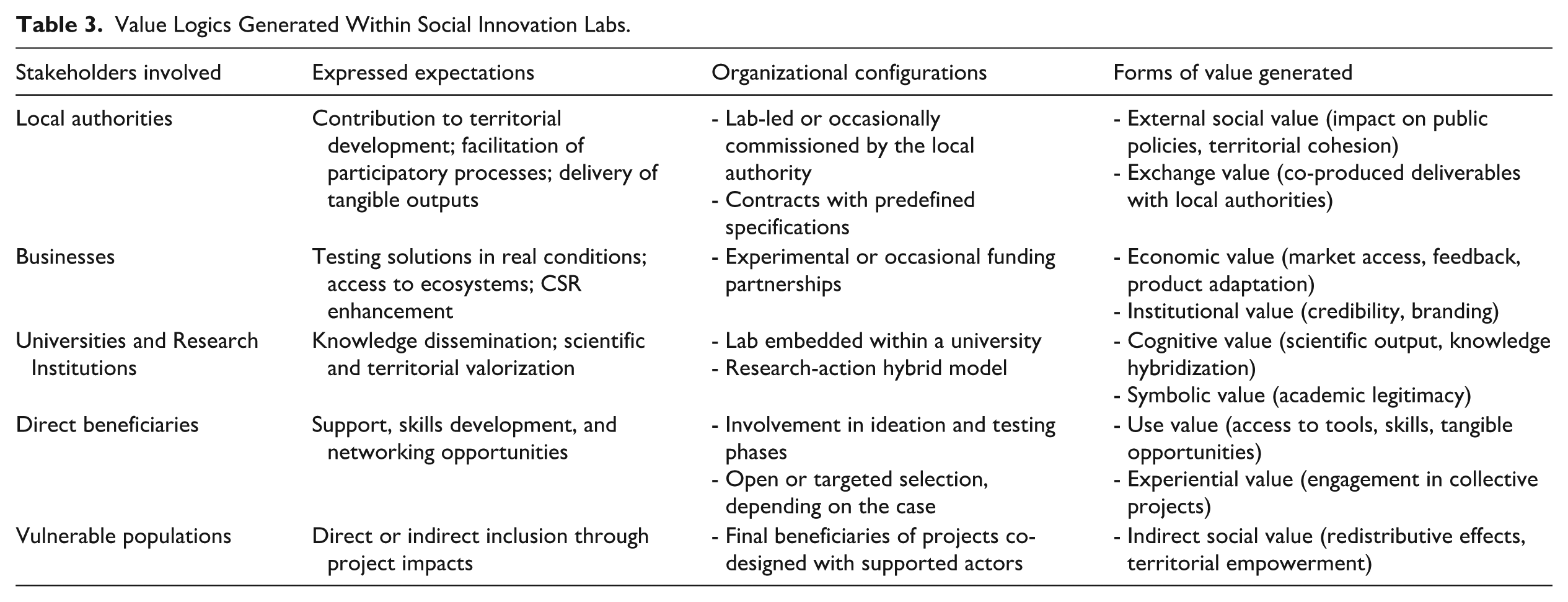
These examples demonstrate how social innovation labs can create multiple types of value: personal value for participants, social value for beneficiaries, economic value for companies, and regional value for local authorities. Their ability to communicate these different types of value depends largely on the quality of interactions, mutual recognition among stakeholders, and the clarity of the collective goals. The following table provides a detailed overview of the value logics generated within the four case studies, by cross-referencing stakeholder expectations, organizational configurations, and the outcomes observed.
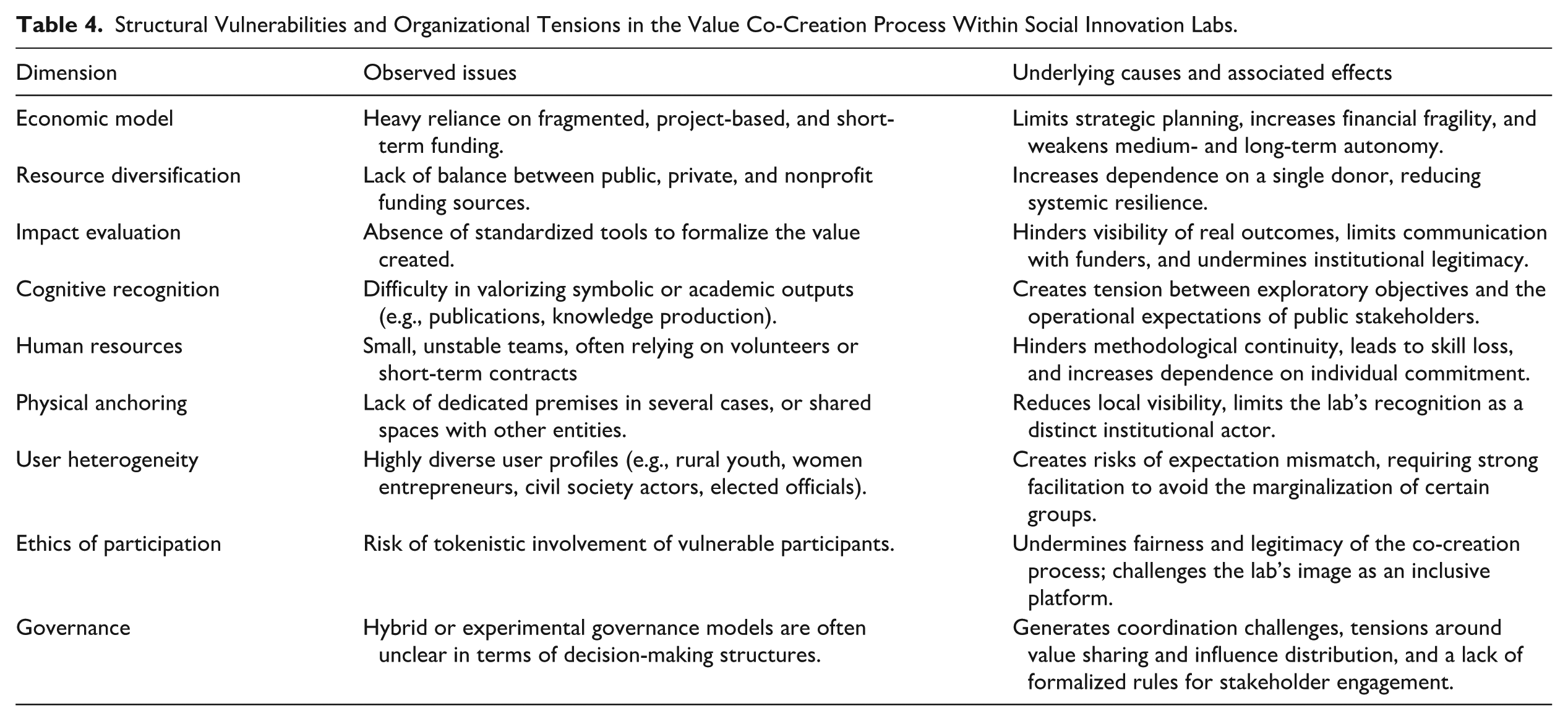
Beyond the diversity of value forms generated, the analysis of the four case studies also highlights a set of recurring vulnerabilities that undermine the ability of social innovation labs to sustain, structure, and expand co-creation dynamics over time. These vulnerabilities, both structural and organizational, reveal underlying tensions within their operations, particularly between the logic of social experimentation and the demands of economic viability.
The evidence presented here combines insights from different instruments: Observations provided information on material and organizational constraints, interviews captured stakeholders’ perceptions of governance and value sharing, and questionnaires offered complementary data on funding models and collaboration.
Some of these observations were documented directly through fieldwork, such as the reliance on shared spaces or volunteer teams. Others were explicitly raised by interviewees and survey respondents, especially regarding financial fragility, lack of evaluation tools, and difficulties in sustaining governance practices. By combining observational and declarative evidence, the analysis increases the validity of these findings.
Structural vulnerabilities and organizational tensions in the value co-creation process
Despite their strong potential for fostering social transformation through inclusion, participation, and collective intelligence, Moroccan social innovation labs face recurring fragilities that threaten their sustainability. These vulnerabilities, both structural and organizational, create tensions between their long-term ambitions and the operational constraints of their daily functioning.
One of the main challenges lies in the precariousness of their economic model. Most of the labs examined rely on fragmented funding, often tied to short-term project calls or institutional partnerships that are difficult to renew. This short-term logic is fundamentally at odds with the long-term timelines required for meaningful social transformation. As one coordinator at the SIL-UM6P explains: “Most of our funding is tied to projects, while our logic is that of long-term social transformation.”
Among the four cases studied, the trajectory of the ETIL provides a vivid illustration of how these structural fragilities can materialize. Launched in 2018 with strong political backing from local authorities, ETIL quickly became a hub for participatory governance and territorial revitalization, mobilizing associations, elected officials, and civil servants around collaborative projects. However, from 2024 onward, the gradual withdrawal of municipal and provincial financial support severely weakened its capacity to operate. Without diversified funding streams or formalized partnerships beyond local administration, the lab found itself unable to sustain its activities. Interviews with former members revealed frustration at the absence of long-term contracts, evaluation mechanisms, and legal recognition for social innovation initiatives, all of which left ETIL vulnerable to shifting political priorities. Its closure in early 2025 epitomizes the risks faced by labs that depend on a single institutional patron, showing how even socially impactful and locally embedded initiatives can collapse when their economic foundations remain fragile.
In this context, the diversification of funding sources becomes a critical issue. Several actors advocate for a hybrid financing model that combines public funds, for-profit private investment, and support from nonprofit organizations. A member of the RTIL articulated an ideal distribution: “One-third public funding, one-third for-profit private funding, and one-third from nonprofit organizations. That would allow us to maintain our independence.”
Beyond financial issues, organizational constraints also weigh heavily on the development of these labs. Only the SIL-UM6P benefits from dedicated facilities and a stable, professional team. In contrast, AMOIL and RTIL operate with small, often precarious or volunteer-based teams and share workspaces with other institutions. This situation undermines their institutional visibility and hampers the consolidation of a coherent methodology. As an AMOIL coordinator noted: “Our method was built iteratively. But without a stable team, it’s hard to ensure continuity and capitalize on what we’ve learned.”
Another persistent challenge lies in the institutional recognition of the value produced. In the absence of standardized evaluation tools, the impacts of the labs often remain qualitative and implicit. This lack of visibility makes it difficult to secure long-term funding. While some projects impose performance indicators, these are frequently perceived as insufficiently reflective of the actual effects of co-creation. The ETIL case is telling: “Our impacts have never been formalized, but you can see it in the recognition our lab has earned.” In addition, cognitive externalities, such as academic publications or collective learning, are difficult to valorize with public funders. As an AMOIL team member puts it: “Public institutions aren’t interested in funding research publications. The private sector is more responsive to that argument.”
Finally, labs must manage a wide range of user profiles—including rural youth, women entrepreneurs, elected officials, and civil society organizations—whose expectations and communication styles often differ significantly. While this diversity can be a source of richness, it also carries a real risk of value co-destruction. It is essential to ensure that participation does not occur at the expense of the most vulnerable groups. As one RTIL founder states: “We need to ensure that innovation is not monopolized by elites, but benefits those who have no voice.” In this sense, implementing ethical governance and regulatory frameworks is crucial to preserving equity throughout the co-creation process.
The elements presented in Table 3 underscore the necessity for social innovation labs to fortify their economic, organizational, and institutional foundations if they are to sustain their initiatives over time and make meaningful contributions to the societal transformations they aim to support. Beyond mere operational adjustments, a strategic reflection is required on the conditions for their long-term structuring—whether in terms of funding models, governance frameworks, territorial anchoring, or institutional recognition. Without such consolidation, these labs risk remaining peripheral experimental spaces, with limited capacity to influence the systemic dynamics they aim to transform. In this light, governance emerges as a central issue—a key lever for regulating and sustaining the value co-creation process.
Value Logics Generated Within Social Innovation Labs.
Building on these observations, Table 4 synthesizes the main structural vulnerabilities and organizational tensions identified across the four case studies, highlighting their underlying causes and implications for the sustainability of value co-creation processes.
Structural Vulnerabilities and Organizational Tensions in the Value Co-Creation Process Within Social Innovation Labs.
Toward strategic and regulative governance of value co-creation
In social innovation labs, governance cannot be reduced to a mere coordination mechanism; it constitutes a strategic pillar of the value co-creation process. Faced with the diversity of stakeholders (citizens, researchers, institutions, companies, and local authorities) and the heterogeneity of their interests, governance plays a critical role in mediation, stabilization, and legitimacy. The findings of this study demonstrate that governance not only shapes the quality of interactions but also determines the lab’s ability to sustain inclusive, equitable, and long-lasting co-creation dynamics.
The four cases analyzed reveal a shared ambition to implement inclusive steering mechanisms. The RTIL presents an advanced model of multi-stakeholder representation through its Board of Directors, composed of seven thematic colleges. This structure ensures plurality of voices and collective deliberation on strategic priorities. In contrast, the ETIL adopted a more horizontal governance model, allowing all active members to participate in decision-making. Although more informal, this approach strengthened local ownership and trust among actors.
Project-selection criteria within these labs also reflect regulatory efforts, combining social impact requirements, territorial relevance, and alignment with lab values. This is especially evident in university-affiliated labs such as the SIL-UM6P, where the selection process gives prominence to citizen-led experimentation, even in the absence of immediate funding. However, fieldwork also highlights persistent tensions between participatory ideals and constraints imposed by funders or institutional frameworks. As one AMOIL representative notes, administrative demands and institutional timelines often hinder the implementation of truly collaborative governance models.
In addition, many labs are gradually exploring alternative governance models inspired by commons-based approaches, distributed governance, and social economy frameworks. While these directions offer promising prospects for democratizing innovation processes, they are often constrained by the lack of a supportive legal framework for social innovation in Morocco. Legal recognition of a hybrid status, balancing public interest and entrepreneurial flexibility, emerges as a crucial condition for institutionalizing these new governance forms.
Another critical challenge lies in regulating the distribution of value. Labs that succeed in defining in advance the modalities of result-sharing, as does RTIL, which ensures transparency regarding deliverables and evaluations, establish an ethical framework that prevents asymmetric appropriation. In this sense, governance functions as a preventive mechanism against value co-destruction, ensuring that the benefits of co-creation are shared fairly among contributors.
It is also important to note that governance extends beyond the local scale. While firmly grounded in their respective territories, Moroccan social innovation labs express broader ambitions of scaling and transnational engagement. Some join regional networks (as RTIL recently did through a North African initiative of territorial labs), others develop triangular cooperation programs (such as SIL-UM6P’s partnerships with West Africa), or adopt open dissemination tools (Creative Commons licenses, shared publications). This outward-facing dimension positions governance as a driver of knowledge capitalization, solution transferability, and broader influence within inclusive innovation ecosystems.
Rethinking governance in social innovation labs, therefore, entails laying the groundwork for an institutional architecture that supports the transformative ambitions of these initiatives. It entails developing a governance model that is strategic, inclusive, regulative, transparent, and adaptable, able to align divergent interests, mobilize collective resources, and anticipate potential conflicts over value appropriation. Such governance is not only a guarantee of sustainability for the labs themselves but also a powerful lever for diffusing social innovation across territories and beyond.
Ultimately, our analysis reveals an emerging model of social innovation rooted not only in experimentation but also in the progressive institutionalization of co-creation norms, equity mechanisms, and shared engagement standards. The following figure (Figure 4) synthesizes this value-creation process as it unfolds in the social innovation labs studied and provides a foundation for the concluding reflections of this article.
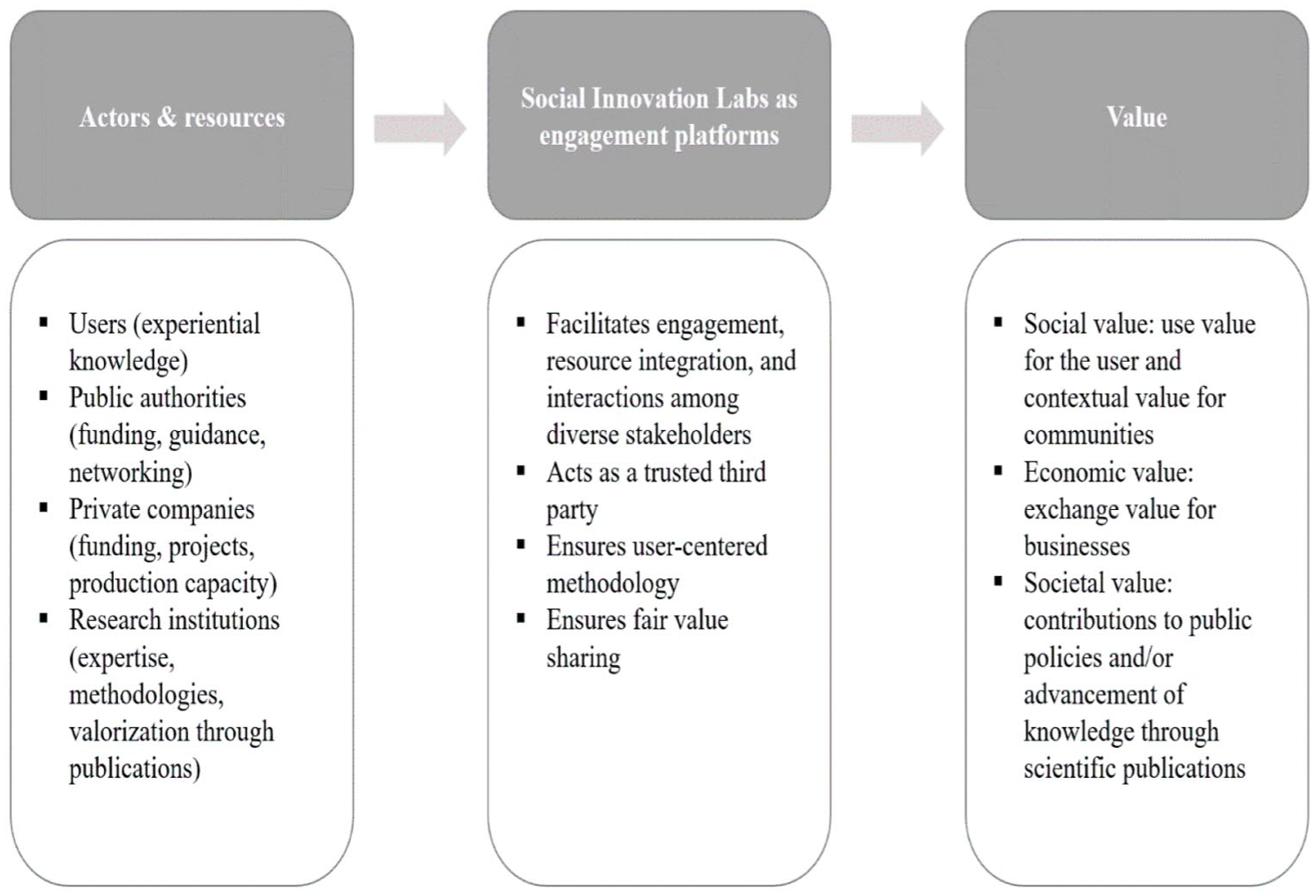
The value co-creation process within Moroccan Social Innovation Labs.
The value co-creation dynamic within social innovation labs relies on the careful orchestration of a diverse ecosystem of actors, each contributing specific resources, be they cognitive, institutional, material, or social. This plurality represents both an asset and a challenge: It requires the establishment of mediation mechanisms capable of facilitating the alignment of contributions, reconciling potentially divergent interests, and ensuring an inclusive, transparent, and equitable process.
In this respect, the social innovation lab functions as an engagement platform (Cañeque 2017; Vargo and Lusch 2008). More than a simple space for collaboration, it plays an active role as a trusted third party that structures interactions, regulates stakeholder inputs, and fosters the emergence of a shared co-construction framework. This mediating function is essential to activate the potential of distributed resources, whether it be the experiential knowledge of users, the experimentation capacity of businesses, the methodological expertise of researchers, or the policy-shaping influence of public institutions.
The lab also ensures the integrity of a user-centered methodology by making sure that innovations respond to real, contextualized needs. Through this approach, the lab becomes a space for mutual recognition and the mobilization of collective competencies. It also guarantees the traceability and fairness of value distribution, thus preventing asymmetrical appropriation, especially in projects involving private actors or intellectual property stakes.
The empirical cases reveal how SDL’s value-in-use is not an abstract principle but materializes through resource integration and boundary-spanning roles, particularly in AMOIL’s farmer clubs and RTIL’s multi-college governance board. Similarly, the Quadruple Helix emerges in practice through codified interfaces such as citizen juries, academic incubators, and municipal partnerships. These findings invite a rethinking of both frameworks under fragile institutional conditions, where co-creation is constantly negotiated rather than structurally guaranteed.
Moreover, these labs do not operate in isolation: They are embedded within broader networks that promote mutual learning, the diffusion of innovations, and scaling-up processes. This networking anchors local experiments within systemic dynamics, leveraging the transversal and capillary effects that characterize open innovation approaches.
Conclusion
This research aimed to analyze the value co-creation process within social innovation labs carrying out social innovation projects. The four case studies, each corresponding to one of the four types of social innovation labs identified by Leminen et al. (2012), show that regardless of the sponsoring structure, social innovation labs seek to create hybrid value that meets the expectations of their various stakeholders.
Hybrid value in this context refers to the simultaneous generation of social outcomes (empowerment, territorial cohesion, inclusiveness) and economic or institutional outcomes (credibility, funding opportunities, knowledge production). This dual nature was evident across cases, demonstrating that co-creation processes in Moroccan labs transcend simple service delivery and embed broader societal transformation.
This article first contributes to the research on value co-creation processes, which has paid little attention to social innovation. Through the study of four social innovation labs, this research identifies the resources contributed by each actor within the Quadruple Helix (Carayannis and Campbell 2012). The social innovation lab thus appears as a particular type of engagement platform. On the one hand, it is not managed by the producer, as is the case for most platforms studied in the context of market-based value co-creation. On the other hand, unlike other engagement platforms, which may be purely digital mechanisms, the social innovation lab presents several features related to the individuals involved in the platform.
The social innovation lab thus serves as a trusted third party. This role is particularly important in innovation ecosystems based on community logics, yet it remains understudied. Three organizational characteristics related to this role are highlighted: safeguarding the methodology, ensuring value sharing, and facilitating connections through various networks. The innovation lab methodology is characterized by general principles (real-life settings, user centrality) that must be adapted. It can therefore be more or less formalized (Puerari et al. 2018).
These differences are linked as much to the specificities of the social innovation lab as to those of the co-created projects. A lab stemming from a research center, for example, offers a more formalized method than a citizen-driven structure but is capable of adapting it depending on the project initiator. These differences do not affect the nature of the value created. The second organizational characteristic relates to governance. However, the governance of social innovation labs has been little studied. Although this research does not reveal a single model, its role appears crucial in ensuring a fair distribution of the value produced, which is key to the long-term engagement of the various partners (Prahalad and Ramaswamy 2004).
The third characteristic lies in the networking of actors, both within local ecosystems and through national and international networks, which allows an innovation co-created locally to be adapted to other contexts. In addition to these characteristics, this article also highlights the financing structure as a moderator of the value co-creation process.
The fragility of the economic model of social innovation labs has already been pointed out by Schuurmann, particularly the weakness of long-term funding. This study goes further by showing that funding is a source of tension and has consequences on the nature of the projects undertaken and how they are managed. One possible solution could be to demonstrate the value produced by both the projects and the structures themselves. This particularly calls for reflection on the evaluation of social and societal impacts, which could be addressed in future research.
In contrast to the conclusions of Puerari et al. (2018), physical space does not appear to be a crucial moderating element. The social innovation labs studied carry out their projects close to users in premises made available by their partners. The final contribution concerns the nature of the co-created value. Regardless of the sponsoring structure, the lab aims to simultaneously create both exchange (economic) and social value (Cole and Hagen 2024). These different types of value are not opposed; rather, they are interlinked. In most cases, it is the demonstration of potential social or societal value to public authorities that enables the initial political and financial support for the project.
Furthermore, the economic value of an innovative idea or its potential to be transformed into a marketable innovation is tied to the inclusion of the user, who contributes social value. But without sustained financial support from economic actors and public authorities, there would be no joint creation of economic and social value. Overall, this study advances theory by showing how co-creation under fragile institutional conditions requires a dual anchoring: structurally in governance and funding arrangements, and relationally in trust-based user engagement. Empirically, it documents the emergence of hybrid value in the Global South, extending SDL to contexts marked by scarcity and institutional instability. This theoretical extension, combined with empirical evidence from Morocco, contributes to bridging the gap between co-creation studies and critical development research.
These results should be interpreted with caution due to the limited number of cases studied. Additional investigations would be necessary on a larger sample, across more diverse sectors. It would also be useful to interview the different stakeholders to better understand their motivations for engaging in a lab-based innovation process. More broadly, this research highlights the social innovation approach of social innovation labs, as well as some of the conditions for co-creating economic and social value. These initial results may inspire companies seeking to develop innovation labs with their clients, especially in response to new societal needs related to sustainability, purchasing power, and inclusion, among others.
In addition, participation in a collaborative process led by a social innovation lab integrates the company into an ecosystem and into networks. Through interaction with actors sometimes far removed from the original context, the company expands its scope of action. Finally, on a theoretical level, the innovation lab approach encourages a rethinking of customer empowerment. Marketing has favored a utilitarian and “company-centered” conception of empowerment. With the emergence of the citizen-consumer, a broader vision of empowerment is necessary. This research shows that a collaborative approach centered on the user fosters skill-building and empowerment of the user or customer. Motivations of users, as well as the impact of the innovation lab approach on empowerment, remain insufficiently studied and warrant further exploration.
By highlighting the relational, structural, and cognitive conditions underpinning value co-creation, this study contributes to reframing innovation policy in emerging economies. It invites both public institutions and private actors to recognize social innovation labs as strategic interfaces for addressing collective challenges and embedding inclusive practices in their innovation ecosystems.
From a managerial perspective, our findings underscore the need for hybrid financing models that combine public, private, and nonprofit contributions and for the development of standardized evaluation frameworks. For policymakers, the Moroccan cases highlight the importance of legal recognition of social innovation labs as strategic intermediaries, granting them stability and legitimacy to scale inclusive practices. These implications extend to other regions of the Global South facing similar institutional fragilities.
Footnotes

Funding
The author received no financial support for the research, authorship, and/or publication of this article.
Declaration of Conflicting Interests
The author declared no potential conflicts of interest with respect to the research, authorship, and/or publication of this article.