






Abstract
Keywords
Introduction
The National Association of Children's Hospitals and Related Institutions defined evidence-based design as “the deliberate attempt to base building decisions on the best available evidence with the goal of achieving the best possible outcomes for patients, families and staff while improving utilization of resources” (Sadler & Joseph, 2008, p. iii). The evidence presented in this paper represents a compilation of work accumulated by comparing the open-bay (OPBY) neonatal intensive care unit (NICU) with the more recently constructed single-family-room (SFR) NICU used sequentially by the same children's hospital. This work represents the most comprehensive single comparison of NICU designs conducted to date.
Background
Over the past 30 years, the survival of small preterm neonates in the NICU has progressively improved (Fischer, Steurer, Adams, & Berger, 2009). With better survival, concerns have arisen regarding the potential adverse impact of environmental factors on the developing nervous system of very premature neonates. Methods have been devised whereby neurodevelopmental assessment of preterm neonates has been standardized and the results applied to modify care practices to reduce physiologic stress on the sick preterm neonate (Als, 1982; Als et al., 1994). Recent large studies have demonstrated a reduced length of hospitalization, less chronic lung disease, and improved neurodevelopmental outcomes at 18 months of age in neonates of < 32 weeks' gestation when these methods of developmental care were used (Peters et al., 2009).
Many investigators have reported that a number of environmental factors impose undue stress on the immature neonate. These include high levels of noise (Elander & Hellstrom, 1995; Gray & Philbin, 2004), illumination (Graven, 2004), odor (Schaal, Hummel, & Soussignan, 2004), and constant activity, which interferes with the ability of neonates to establish a normal circadian rhythm (Rivkees, 2004). All of these factors are routinely encountered in the OPBY NICU. Care areas are frequently crowded, with minimal space available for family-centered care (Institute for Patient and Family-Centered Care, 2012). Accommodations for patient and family privacy are inadequate (R. D. White, 2004).
Methods to address each of these environmental factors in the NICU have been suggested by the Consensus Committee on Recommended Design Standards for Advanced Neonatal Care (R. D. White, 2007). The SFR NICU design is one means by which these recommendations can be implemented (R. White & Whitman, 1992). Although the SFR NICU has become common, and even proclaimed by some as the standard of care (Feldman, 2009; Hauser, 2007), little objective information is currently available regarding this design and potential changes in outcomes that might be anticipated. The potential for less favorable outcomes of care has been a particular concern because in the SFR NICU patients are separated from their nurses in individual rooms. Possible problems might include the failure of personnel to respond to bedside monitor alarms and impaired communication among the bedside nurse, physicians, and other members of the healthcare team, especially during emergencies (Smith, Schoenbeck, & Clayton, 2009a; Stevens, Helseth, Khan, Munson, & Smith, 2009).
NICU Designs Compared
The conventional OPBY NICU was built in the late 1970s with typical construction of the era. A large number of babies received care in a single room (James & Muirhead, 1977). This unit was remodeled in 1986 with the addition of five private rooms, resulting in a total capacity of 40 babies with an area of 7,700 square feet (ft2) (Figure 1).
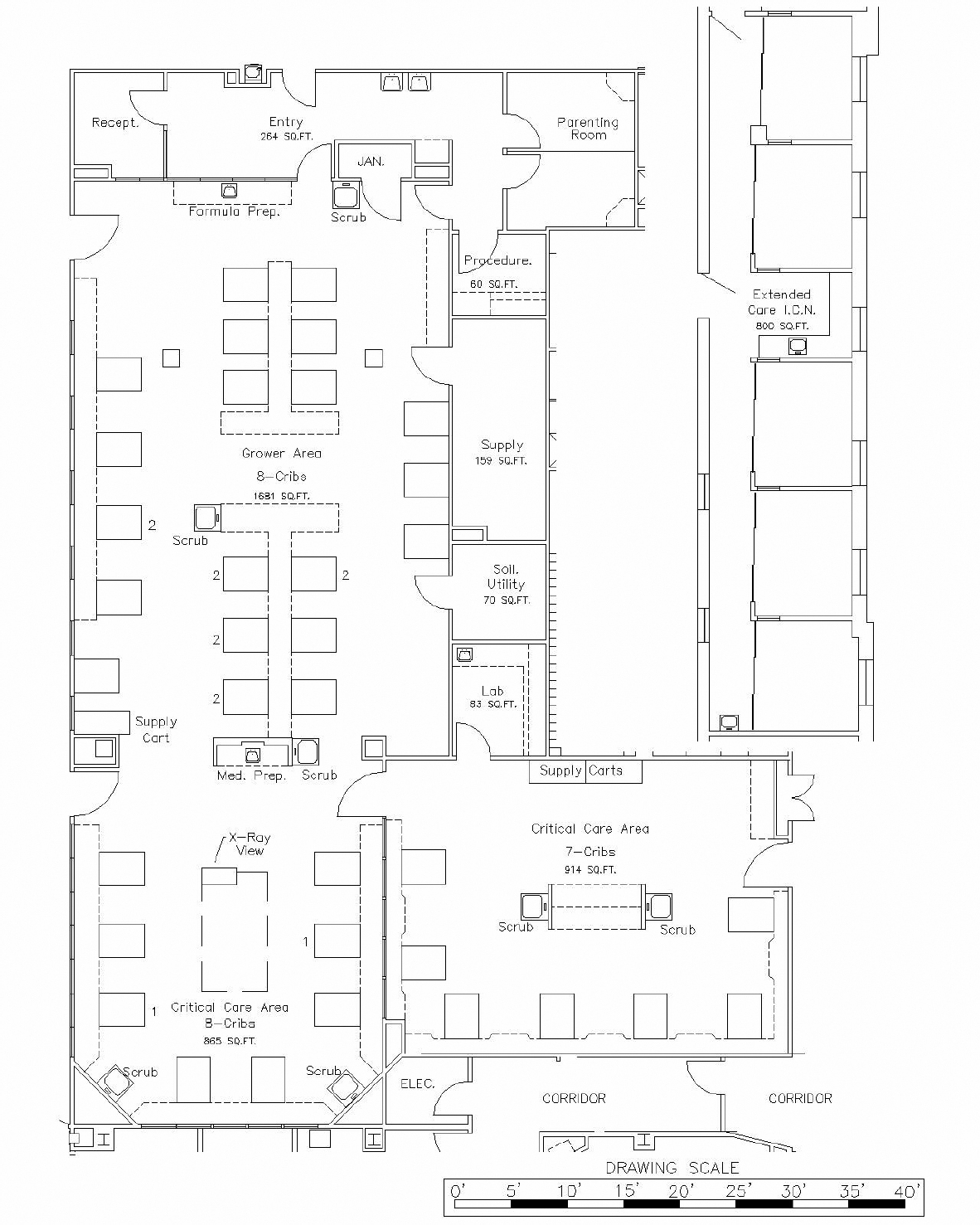
Floor plan of the conventional OPBY NICU. The top right area of the blueprint represents the chronic care area, which was separate from the main NICU and located in another building. Adapted with permission from Macmillan Publishers Ltd: Journal of Perinatology (D. C. Stevens et al., 2007).
Planning for the SFR NICU began in 2002, and it opened in June 2006. The unit comprises 45 rooms with a total capacity of 58 babies and occupies an area of 27,000 ft2. Ten rooms are equipped for twins and one room for triplets. Planning involved hospital administrators, architects, biomedical engineers, neonatologists, nurses, hospital staff from all disciplines, and members of a parent advisory committee. The design process included site visits to recently completed facilities and the involvement of consultants in the fields of illumination and sound control. Sound-reducing flooring and ceiling acoustical panels were trialed in the OPBY NICU before construction. The primary goal was to design a NICU that would complement the neurodevelopmental needs of preterm neonates (R. D. White, 2003). The floor plan is shown in Figure 2 and photographs of an individual room are shown in Figure 3.
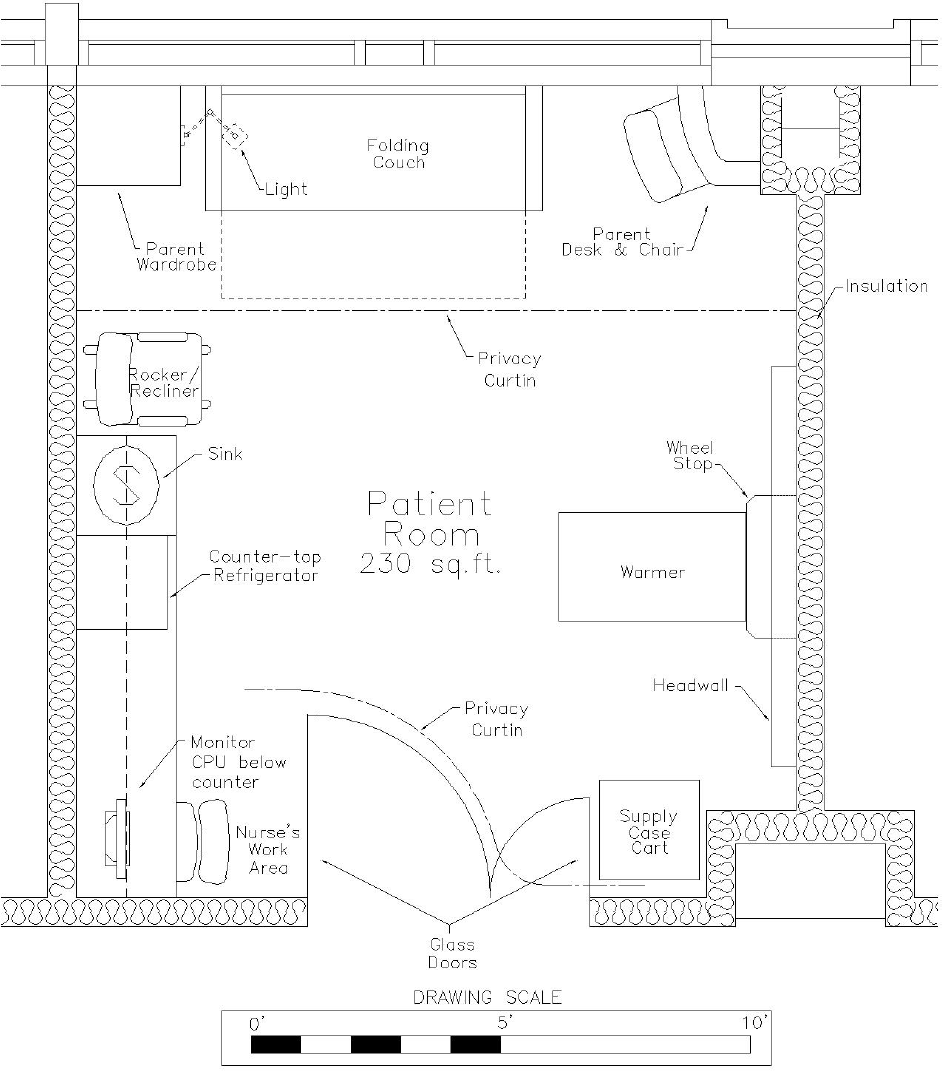
Floor plan of the SFR NICU room.
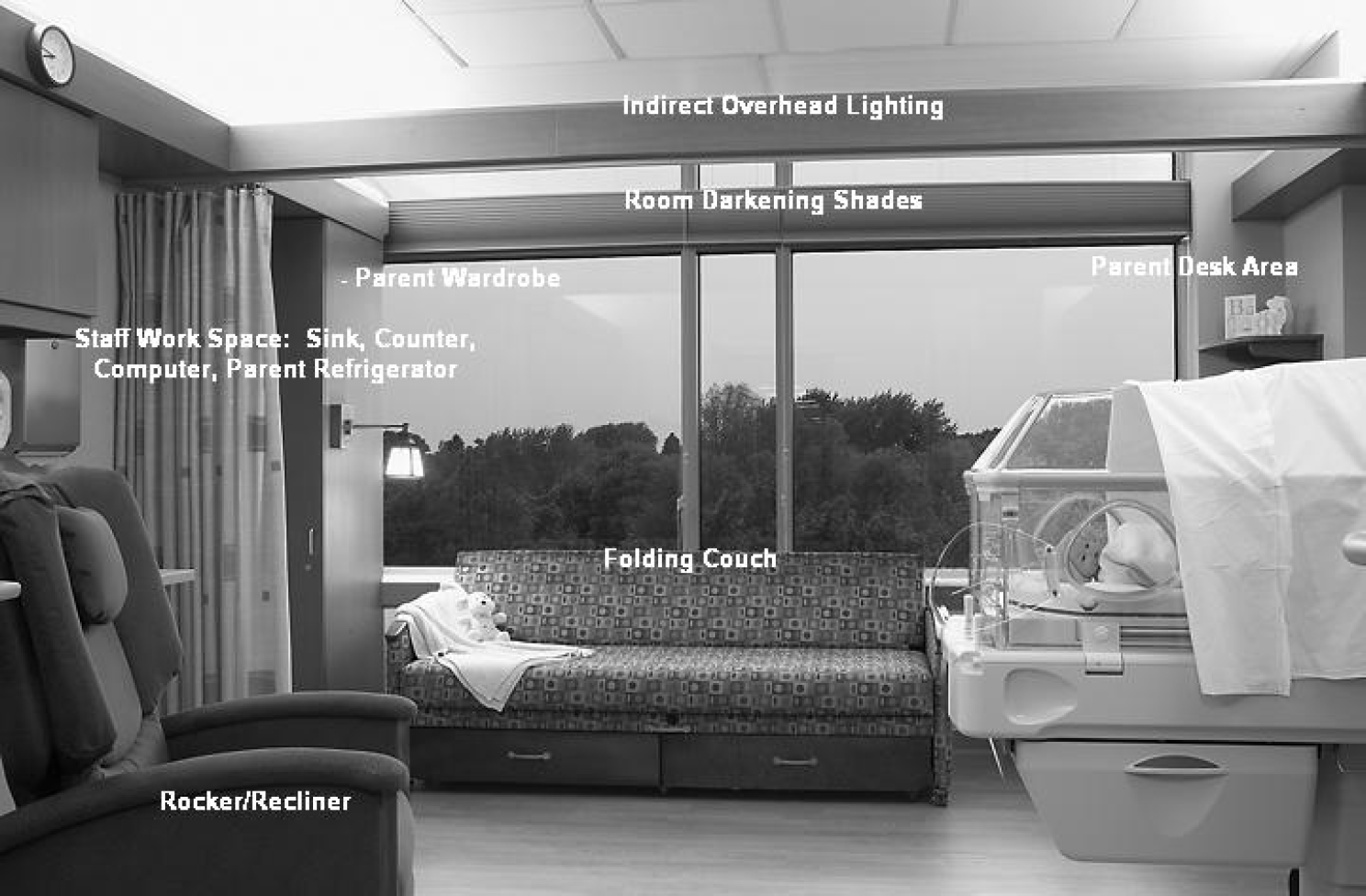
Photograph of an SFR NICU room demonstrated in Figure 2. Features designed for environmental control include three levels of indirect overhead lighting, room-darkening shades over exterior windows, sound-deadening ceiling tile, floor coverings, and wall coverings. Features included for parent comfort include folding sofa bed, parent wardrobe, privacy curtains, desk (left, behind incubator), rocker/recliner, and refrigerator. Staff work areas (to the far left, not shown) include scrub sink, storage area, countertop, and computer terminal.
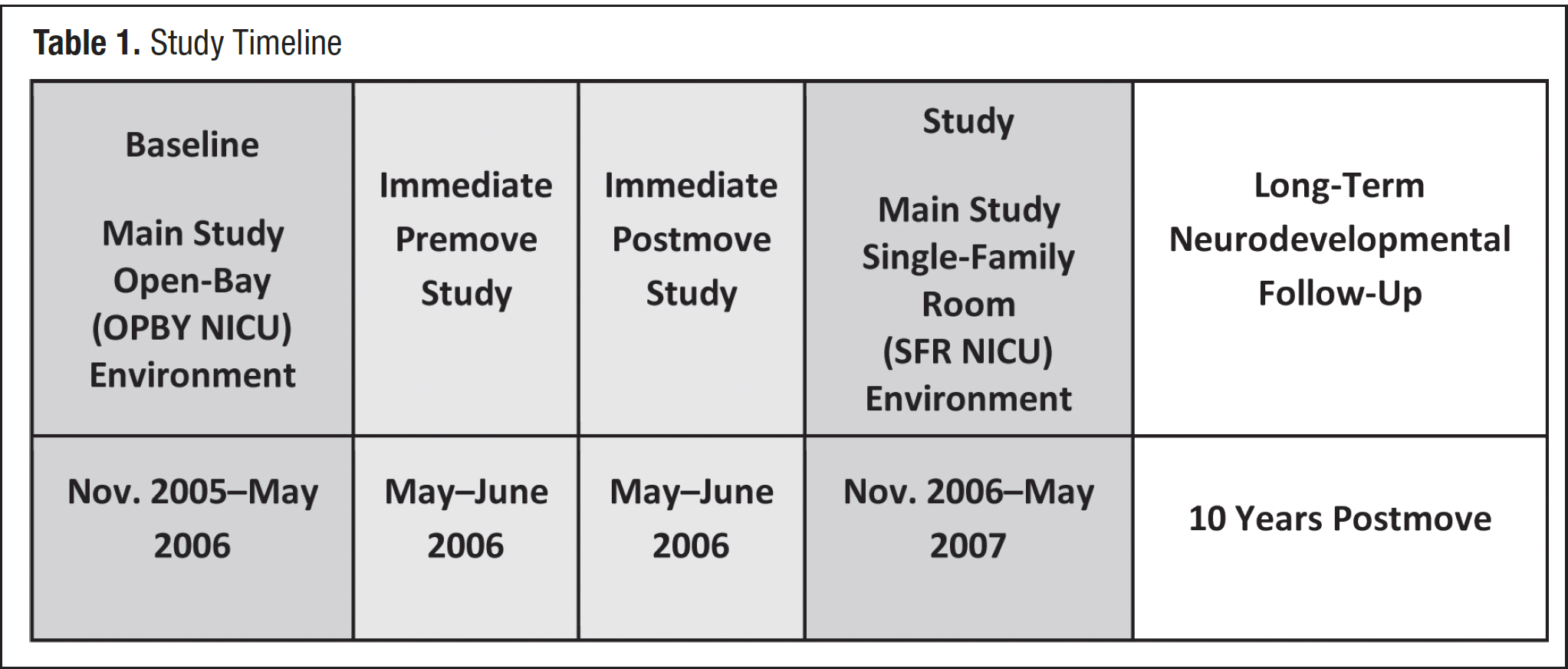
A comprehensive research program for evaluation of this new facility was designed in 2004. This included a 6-month baseline period in the OPBY NICU between November 2005 and May 2006 and a study period in the SFR NICU between November 2006 and May 2007 (Table 1). This study included 32 primary hypotheses in the following categories: Environmental Measurements, Evaluation of Morbidity and Mortality, Physiologic Measurements, Psychosocial Evaluations, and Measures of Administration and Finance. Because this paper represents a summary of a multifaceted research program, the reader is referred to the references for details of each subinvestigation. The overall research program and this project were approved by the Sanford and University of South Dakota Medical Center Institutional Review Committee #1. Informed consent was obtained from parents for individual procedures performed as part of the following research.
Study Timeline
Comparisons of Environmental Measurements
Sound
Vacant Nursery Environment
Sound measurements were performed in 34 bed locations in the OPBY NICU and 40 bed locations in the SFR NICU. Measurements were made of the equivalent continuous sound level (average sound level, Leq) using the A-weighted decibel scale (dBA), slow recording frequency, an exchange rate of 5 seconds (sec) (Larson Davis, 2000) and 1-second intervals with a Larson Davis Noise Dosimeter Model 706 and Blaze Analysis Software (Larson Davis, Inc., Provo, UT). Nonparametric statistical analysis was performed using the Mann-Whitney Test (Woolson, 1987). The median Leq (25th, 75th percentile) for the OPBY NICU was 42.1 (39.2, 42.7) dBA and for the SFR NICU 37.6 (36.5, 38.6) dBA (p < 0.001) (D. C. Stevens et al., 2007). These data show that sound levels in both NICU environments complied with the Recommendation and Standards at an Leq of < 45 dBA (R. D. White, 2007). The 4.5 dBA decrease in the SFR NICU is more than a 50% reduction of the sound load of the OPBY NICU.
Occupied Nursery Environment
Twenty-four-hour sound recordings performed adjacent to the baby's ear did not show a significant difference between the two styles of NICU (OPBY mean hourly Leq = 58.2 dBA, SFR = 56.9 dBA). Figure 4 shows the sound levels for the OPBY and SFR for the different types of respiratory support.
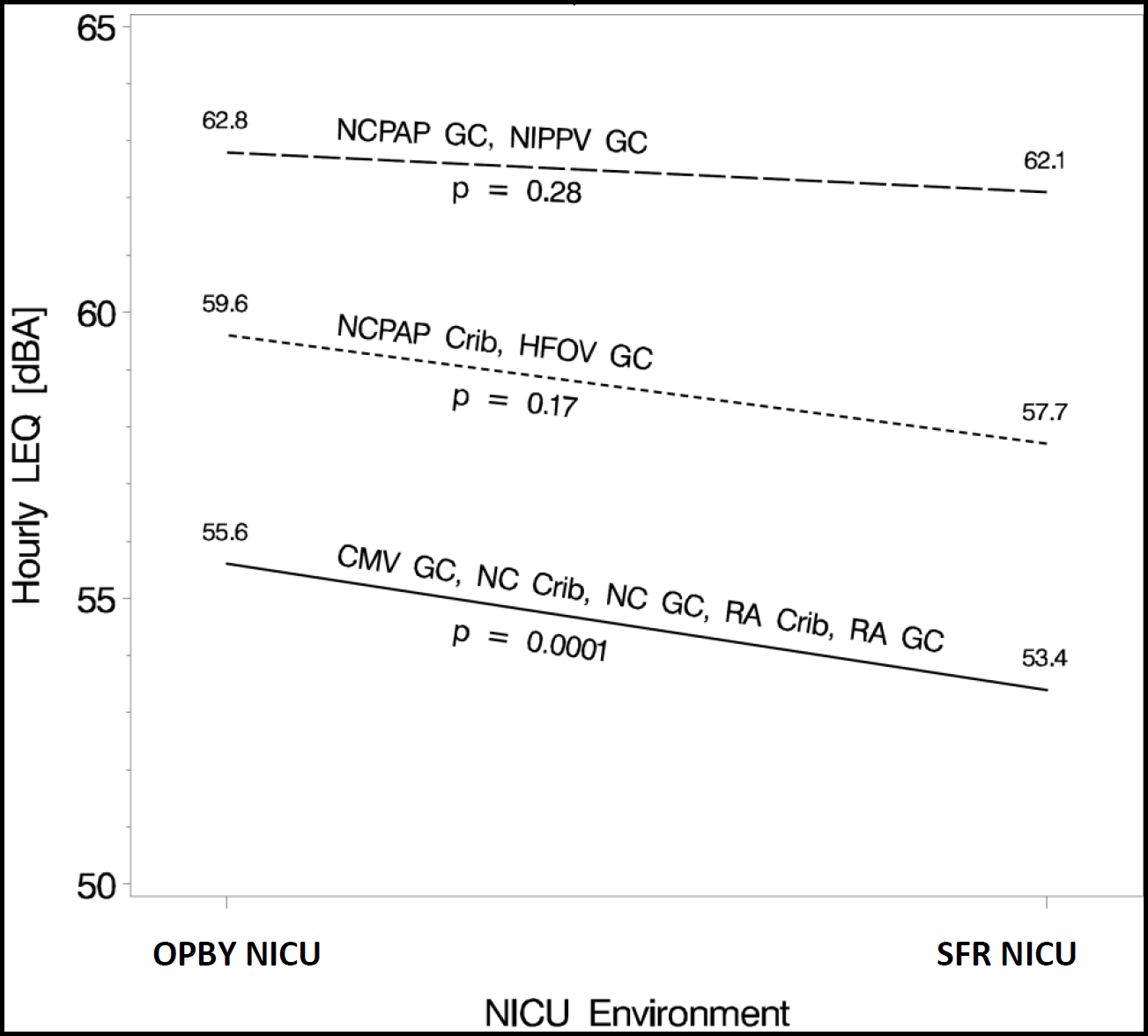
Graph depicting sound levels (Leq) in dBA for the OPBY NICU on the right and the SFR NICU on the left. The three lines depict the change in sound levels in the two facilities based on the type of respiratory support used. Dashed line: nasal continuous positive pressure (NCPAP) with the incubator closed (GC), nasal intermittent positive pressure (NIPPV) with the incubator closed. Dotted line: NCPAP in an open crib, high-frequency oscillatory ventilation (HFOV) with the incubator closed. Solid line: conventional mechanical ventilation (CMV) with incubator closed and nasal cannula with the incubator closed, room air (RA) in a crib and in a closed incubator. The statistical significance of the change in the two NICU conditions is noted below each line.
Because of the unanticipated finding of high sound levels at the bedside, experimental Leq measurements were performed in a standard unoccupied room in the SFR NICU with various types of respiratory equipment operating. These measurements were made at the location of the baby's ear on an open radiant warmer (Giraffe Omnibed™, Ohmeda Medical, Laurel, MD). The sound level of the room alone was 40 dBA. An approximate sound level of 45 dBA was recorded with conventional mechanical ventilation, 50 dBA with continuous positive airway pressure, 60 dBA with high-frequency oscillation, and nearly 65 dBA with jet ventilation in the room (Khan et al., 2009). Thus, in spite of the architectural design, respiratory support equipment makes it very difficult to achieve the recommended sound levels (R. D. White, 2007).
Noise Attenuation by Incubators
This study was performed to evaluate the noise of operation of the Giraffe™ OmniBed™ incubator and its ability to attenuate environmental noise. Measurements were performed with the incubator inside of a calibrated sound booth. Sound attenuation recordings were obtained within a quasi-diffuse sound field of 70 dBA of pink noise selected because it has equal energy in each octave frequency. Five-minute periods were recorded for each experimental condition.
The normal sound level of operation of the Giraffe™ OmniBedTM was 41.7 dBA. In the Boost Air Control (BAC) mode, which is designed to increase the flow of warm air when the incubator is open, the Leq increased to 54.1 dBA. With the incubator off, the sound measured was 11.6 dBA, which was the lowest detectable level (Quest Technologies, 1998). The Giraffe™ OmniBed™ attenuated the 70 dBA pink noise to 58.9 dBA. The baseline sound level of 58.2 dBA increased to 59.7 dBA with one door latch open, 60.5 dBA with two latches open, and 60.3 dBA with one porthole open (Wubben, Brueggeman, Stevens, Helseth, & Blaschke, 2011).
In summary, the sound level of operation of the Giraffe™ OmniBed™ was slightly greater than the level of operation of the empty SFR NICU but less than the level of operation of respiratory therapy equipment. This incubator was effective at attenuating high noise levels; however, use of the BAC mode increased the sound level. Minor variations in care, such as leaving a latch or porthole open, could significantly enhance the sound level to which a neonate is exposed.
Illumination
Illumination for the Neonate
Illumination was measured in 35 bed locations in the OPBY NICU and 31 in the SFR NICU. Light was measured using an Extech Instruments (Extech Instruments Corp., Waltham, MA) EasyView Digital Light Meter Model EA30 using foot-candles (lumens/ft2) and converted to lux (lumen/m2 = foot-candles × 10.7639) (Rea, 2004).
Illumination was measured in the OPBY NICU with all overhead lights off and on. Measurements were made in the SFR NICU with the lights turned off and with one, two, and three banks of indirect overhead lights on. Illumination was also measured inside a covered Giraffe OmnibedTM in rooms with the shades closed and artificial lights on.
Median (25th, 75th percentile) values for minimum illumination in the OPBY NICU were 48.4 (36.6, 77.5) lux and 6.4 (5.3, 9.6) lux in the SFR NICU (p < 0.05). Values for maximum illumination in the OPBY NICU were 402.0 (347.9, 474.1) lux compared with 357.3 (329.6, 409.0) lux in the SFR NICU (p = 0.05). Intermediate median values in the SFR NICU for one and two banks of overhead lights were 78.5 (67.0, 95.0) and 191.6 (166.0, 206.0) lux. Levels of illumination inside a covered incubator ranged from 0 lux with the lights off to 2 lux with all three banks of room lights on.
A significant reduction in the level of illumination was documented in the SFR NICU compared with the OPBY NICU. These levels were quite low in both units and are probably of minimal clinical significance. All illumination in the SFR NICU was indirect as opposed to direct overhead fluorescent illumination in the OPBY NICU. The data also clearly indicate that environmental lighting can be effectively controlled through the use of supplemental incubator covers.
Illumination for Staff
Measurements for the staff work area were taken in the usual clinical circumstances of having the overhead lights off in the OPBY NICU. In the SFR NICU, these measurements were made with the light over the staff work desk on and with overhead lights off, and with one, two, and three banks of lights on.
Median minimum illumination for staff tasks were 18.8 (14.8–25.5) lux in the OPBY NICU and 72.1 (39.8–141.0) lux in the SFR NICU (p < 0.05). These levels increased to 101.1 (75.3–199.1), 158.2 (127.0–237.8), and 243.2 (193.7–294.9) lux with one, two, and three banks of overhead lights on, respectively (Stevens et al., 2007).
Levels of illumination for staff work areas in the SFR (72.1 lux) were greater than for the OPBY NICU (18.8 lux) with the lights off, but were much lower than those with the overhead lights on as measured at the position of the incubator (SFR 243 lux vs. OPBY 402 lux). These results are cause for concern. Current recommendations for illumination for work areas in the NICU include levels of 2,000 lux for procedures and 1,500–2,500 lux at the work plane, or 300–500 lux at the eye, for basic care tasks (R. D. White, 2007). SFR NICU rooms all had levels of illumination that were below standard. Low levels of illumination combined with decreased environmental noise could impair the ability of staff to maintain vigilance during 12-hour night shifts (Boyce, Beckstead, Eklund, Strobel, & Rea, 1997).
Evaluation of Morbidity and Mortality by NICU Design
This research used a retrospective sequential cohort of neonates who received care in the OPBY NICU and SFR NICU. A composite of serious adverse outcomes was defined by the investigators as the occurrence of either death, grade-III or -IV intraventricular hemorrhage (Papile, 2002), retinopathy of prematurity requiring laser ablation surgery (Phelps, 2002), or the requirement of supplemental oxygen for a time period of 28 or more days following birth (Jobe & Bancalari, 2001). The analyses were restricted to neonates hospitalized for disorders related to prematurity, excluding those with suspected genetic and dysmorphic (including cardiac and surgical) anomalies. Data were extracted from the Sanford NICU database (Neodata NICU Patient Data System, Isoprime, Corp., Chicago, IL) for the time period of 1/1/2004 through 12/31/2008. Study period duration was determined by setting the power to 80% with a 0.05 critical level, and calculating the number of composite events required (n = 121) to detect a two-sided 40% change in relative risk.
The occurrence of the composite endpoint of adverse outcomes examined using logistic regression showed no statistically significant difference between the OPBY and the SFR NICU (odds ratio = 1.267, 95% confidence interval [0.929, 1.730]). Three statistical methods were used to confirm this finding including: (1) the confirmation of the statistical equivalence of the composite endpoints (Chen, Tsong, & Kang, 2000; Zaslavsky, 2005); (2) the finding of an 81% overlap in the propensity scores for the two study populations (Guo & Frasier, 2009; Rosenbaum & Rubin, 1983; Rubin, 2006); and (3) confirmation of no difference in composite endpoint when the logistic regression was repeated for cases matched by propensity score (Stevens et al., 2011). The authors feel that this is a highly reliable and extremely important finding confirming that care can be safely provided in the SFR NICU.
Comparisons of Physiologic Measurements by NICU Design
Sleep Time
Nine neonates had 6-hour pneumogram recordings performed (Kelly, 1980; Stein & Shannon, 1975). Overall, they had a mean gestation of 29.7 + 1.2 (+ standard error of the mean) weeks and a mean postnatal age at the time of the two pneumogram recordings of 4.7 + 1.6 and 5.9 + 1.5 weeks. A significant decrease was found in the number of apneas of 6–12 seconds and the percentage of quiet time in periodic breathing in the SFR NICU compared with the OPBY NICU. A decrease in the percentage of awake time was noted in the SFR NICU but it was not significant (OPBY = 24.9, SFR = 19.88). No statistical differences were found in the Leq recorded; however, illumination decreased from 16.6 + 5.2 lux in the OPBY NICU to 2.5 + 0.7 lux in the SFR NICU (p = 0.03). Detailed evaluation of the data for this study indicated that two distinct groups of neonates were included. The first group of three neonates had a mean gestation at birth of 25.1 + 0.7 weeks and had their first pneumogram at a postnatal age of 10.2 + 2.2 weeks. Comparisons of awake time, apnea, periodic breathing, sound levels (OPBY = 53.6 dBA, SFR = 64.7 dBA), and illumination (OPBY = 0.4 lux, SFR = 0.05 lux) demonstrated no statistical differences between the two units. The second group of six neonates had a mean gestation of 32.0 + 0.2 weeks at birth with their first pneumogram recorded at a postnatal age of 2.0 + 0.8 weeks. In the SFR NICU, most measures of apnea, periodic breathing, and awake time (OPBY = 28.3%, SFR = 17.6%, p = 0.023) were significantly less. The median Leq was not significantly different (OPBY = 59.3 dBA, SFR = 60.6 dBA), but illumination was significantly reduced in the SFR NICU (OPBY = 1.05 lux, SFR = 0.25 lux).
The first group noted above included smaller and sicker babies and two-thirds remained on oxygen at the time of the second pneumogram. Comparisons between the facilities were not significant primarily because of the very small number of neonates. The second group was of longer gestation, and sound and illumination were better controlled in the SFR NICU. None of the second group of neonates required supplemental oxygen in the SFR NICU. In this group, awake time was significantly decreased, which could be extrapolated to approximately 2½ hours less awake time per day. This was a statistically significant finding from a small group of neonates; however, the authors feel that it is a critically important observation. Neonates in the second group represent a larger proportion of NICU admissions than those in the first group; however, the first group could be more adversely affected by inattention to NICU design detail. Brain development is tied to sleep time in the premature neonate (Graven, 2004).
Nutritional Outcomes
A prospective cohort study was conducted to determine differences in time to reach feeding goals between the OPBY NICU (n = 42) and the SFR NICU (n = 31) for neonates with birth weights of < 1,500 grams. Using analysis of variance, there were no differences between groups in the days to reach full parenteral nutrition or in the number of days to establish full bottle feeding after controlling for gestational age, birth weight, and clinical risk index for babies (CRIB) acuity score (International Neonatal Network, 1993). Neonates in the SFR NICU took significantly fewer days to establish full enteric nutrition (20.8 days vs. 23.3 days, p = 0.04). This was the only nutritional parameter that was significantly changed in relation to the NICU. It should be noted that the neonates in the SFR were significantly less mature (mean gestation = 26.7 vs. 28.1 weeks, p = 0.05) and sicker (mean CRIB score = 5.2 vs. 2.7, p = 0.01). Although these findings should be considered with caution because of the small size of the study population, it appears that nutritional outcomes might be significantly improved by care provided in the SFR (Erickson et al., 2011).
Comparisons of Psychosocial Measurements by NICU Design
Parent Satisfaction and Family-Centered Care
Parents of neonates in the two NICUs were mailed a parent satisfaction survey by Press Ganey Associates, Inc. (South Bend, IN) within 60 days of discharge of their infant from the NICU. The survey was composed of 42 items in seven categories: delivery, environment, nurses, physicians, discharge, personal, and overall assessment. Because one of the objectives of developing the SFR NICU was to facilitate the provision of family-centered care, four of the investigators independently selected 16 items felt to be representative of family-centered care for more detailed analysis (Institute for Patient and Family-Centered Care, 2009).
The response rate for parents in both study groups was 39%. All respondents were mothers. Baseline characteristics of neonates in the two study groups were comparable. The total survey scores (p = 0.04), the scores for the environment (p = 0.001), and the scores for overall assessment of care (p = 0.018) were greater for the SFR NICU. Differences in the other categories were not statistically significant. The median score for the category of family-centered care was significantly greater in the SFR NICU (4.4, 1 = least favorable, 5 = most favorable) compared to the OPBY NICU (4.0, p = 0.017). Thus, it appears that parental satisfaction with care and with family-centered care was significantly better in the SFR NICU.
NICU Staff Perceptions of Care
NICU staff were surveyed regarding their perceptions of care in the two NICU facilities using an 88-item survey modified from that developed by Smith and colleagues (Smith et al., 2009). Individual items were designed to address the following areas: the individual's perception of the quality of being an employee of the Sanford Health System; the quality of the NICU physical work environment; the quality of NICU patient care; job quality in the NICU; the quality of health and safety in the NICU; the quality of safety and security in the NICU; the quality of interaction with other members of the NICU healthcare team; the quality of interaction with NICU technology; and off-job quality of life.
Total point scores and categorical scores were significantly greater in the SFR NICU (p < 0.005) with the exception of the categories of quality of employment, quality of health and safety in the NICU, quality of interaction with members of the healthcare team, and off-job quality of life. When analyzed by role in the NICU, nurses showed a decrease in their median score for interaction with other members of the healthcare team (p = 0.01); whereas, no difference was found for other occupational categories combined (Stevens et al., 2009).
Scores for the quality of health and safety in the SFR NICU relative to the OPBY NICU were not significantly different. The percentage of respondents with comments reporting orthopedic problems in the two facilities was the same (15%). Approximately half of the reports involved problems involving the feet and lower extremities. This was a major concern of staff before occupancy because of the notably larger area and potential for increased walking in the new NICU. Ten percent of respondents complained of headaches in the OPBY NICU compared with only one in the SFR NICU, suggesting lower levels of stress in this facility.
In summary, it appears that nurses' perceptions of the environment and care in the SFR NICU improved compared to the OPBY NICU. One exception was that nurses' perception of their ability to interact with members of the healthcare team was not as good in the SFR NICU. The move to the new NICU facility would not have been expected to affect the quality of employment by the organization or off-job quality of life. Finally, it appears that complaints of physical ailments diminished in the SFR NICU.
Staff State-Trait Anxiety Scores
Paired surveys for the two study periods were received for 31staff nurse respondents to the State-Trait Anxiety Inventory (Spielberger, 1983). The State-Trait Anxiety scores were significantly lower in the SFR NICU [median score = 27 (25th percentile = 23, 75th percentile = 30)] than in the OPBY NICU [34 (25.5, 38.5), p = 0.008]. Trait scores remained unchanged at 31(27, 38.5) in the OPBY and 32 (28, 36.5) in the SFR NICU. The median age of respondents was 40.5 years (26.75, 48). The decline in the State-Trait Anxiety scores is of interest; however, the degree of decline would be of no clinical significance.
Administrative and Financial Comparisons by NICU Design NICU Staffing
Data regarding the NICU census and number of staff who worked each day were collected for each of the two study periods. Information regarding the acuity level of each neonate was collected by the billing clerk. A system for assigning daily acuity levels was devised using a modification of Common Procedural Terminology (American Medical Association, Chicago, IL) codes. All data were electronically compiled by one of the investigators, and analysis was performed using parametric methods with SPSS software (SPSS, Inc., Chicago, IL).
These data indicated that there was a statistically significant increase in the need for both nursing and all unit staff in the SFR NICU compared with the OPBY NICU when adjusted for total patient acuity. Although the average daily census, total acuity level, number of patients in need of respiratory support, and average staff numbers required to operate increased in the SFR NICU, the average patient acuity per nurse and the daily caseload per nurse did not differ (Stevens et al., 2009).
In planning for the operation of the new SFR NICU, the nursing director attempted to keep the workload for nursing staff the same in spite of the expectation that there would be increased demands related to patient care (Stevens & Helseth, 2010). It is encouraging that this planning succeeded in maintaining the average acuity level and average nurse patient assignments at the same level in the SFR NICU. To maintain the level of nurse assignments and the average nurse acuity level, the overall level of NICU staff had to be significantly increased. Some proponents of the SFR NICU feel that staffing needs should be reduced; however, the authors' experience indicated an increased need for personnel to maintain staff-to-care-acuity ratios. Table 3 lists some of the administrative modifications implemented to support care in the SFR NICU.
Walking
For this part of the investigation, nurses were asked to use a pedometer during their shifts. Pedometers were assigned to nurses according to their specific roles in the NICU during one week of each month in the OPBY NICU and in the SFR NICU. Data were recorded at the end of each shift and registered using a blinded code.
Pedometer measurements were available for a total of 63 12-hour nursing shifts in the OPBY NICU and for 85 12-hour shifts in the SFR NICU. In the OPBY NICU, the mean was approximately 5,700 footsteps per 12-hour shift. In the SFR NICU the mean was approximately 6,500 (p = 0.03). Mean values for neonatal nurse practitioners were 4,000 footsteps in the OPBY NICU and 5,100 footsteps in the SFR NICU (p = 0.02). Review of the data by shift and by level of care indicated that in all but one instance, the numbers of footsteps per shift increased in the SFR NICU (Helseth, Stevens, Svien, Schmitz, & Reid, 2008).
In the SFR NICU, staff nurses and neonatal nurse practitioners walked significantly more per shift. No studies to date have investigated the impact of this design on the amount of walking or energy expenditure of NICU nurses. If the NICU nursing director had not taken the area of the new NICU into consideration in planning for nursing and support staff coverage, these distances could have been even greater. In spite of the increase noted, the distances measured were still much less than the 10,000 steps reported for nurses on a standard medical-surgical unit per 12-hour shift (Welton, Decker, Adam, & Zone-Smith, 2006).
Financial Comparison: Construction Costs
Previously unpublished data for the Sioux Valley Hospital/Sanford Health data regarding construction costs for the OPBY NICU and the SFR NICU were reviewed after having been adjusted to 2006 dollars. Costs per square foot were very similar at $353 for the OPBY NICU and $300 for the SFR NICU. When calculated on the basis of bassinettes, the cost for the OPBY NICU was estimated at approximately $52,000 per bed and the SFR NICU was $141,500 (Stevens et al., 2012).
Financial Comparison: Cost of Care
An analysis of the direct costs of care in the OPBY NICU and SFR NICU was performed. General linear mixed models were used. The total costs (i.e., labor, benefits, medical supplies, depreciation, and other) were log10 transformed and expressed in year 2007 U.S. dollars by multiplying all costs from the year prior OPBY NICU by 4.4%, which was the increase in the medical care consumer price index between the two study periods (Bureau of Labor Statistics, 2007).
The differences in baseline characteristics indicated that neonates admitted to the SFR NICU were less mature at birth and sicker than those in the OPBY NICU, resulting in a longer duration of hospitalization. There was a 15.5% reduction of total direct cost in the SFR compared to the OPBY for infants with equal comorbidities and duration of hospitalization. Ninety-eight percent of the variability in total direct costs was explained by this model (r2 = 0.98) (Stevens et al., 2012).
The preceding data represent the first analysis of the direct costs of care comparing OPBY and SFR designs. It is encouraging that the direct costs of care did not increase with SFR design. It is important that these comparisons be interpreted with awareness of the changes in staffing, which were planned and implemented prior to transferring care to the new SFR NICU. Most of the direct cost of NICU care is from salary and fringe benefits. Perhaps, as SFR NICU census increases, the provision of services becomes more efficient in relation to an increase in the number of support staff who help make bedside care more efficient. Further exploration of these data is planned, although the regression analysis reported is complete.
Conclusions
The data presented represent the most comprehensive comparison of the features and outcomes of care provided in an OPBY and SFR NICU within the same institution with similar care providers over a relatively brief period of time. These results do not carry as much weight as those of a well-designed randomized controlled trial; however, that methodology is not likely to be applied to this issue because of its complex nature. Table 2 summarizes the results of this multifaceted research program and offers an assessment of the quality of the evidence reported (Melnyk & Fineout-Overholt, 2005).
Staffing Support Decisions for the Sanford Children's SFR NICU

Summary of Evidence: Sanford Children's Environmental Research Program

Levels of Evidence:
1 – systematic review of randomized clinical trials
2 – at least one randomized clinical trial
3 – well-designed controlled trial without randomization
4 – well-designed case-control or cohort trial
5 – descriptive reviews of qualitative studies
6 – single descriptive or qualitative study
7 – opinion of authorities and /or reports of expert committees
These findings suggest that the SFR can be constructed for a cost comparable to the OPBY NICU on a square footage basis. Noise and illumination can be regulated more successfully in the SFR; however, the impact on diminishing sound is counterbalanced by the use of nearly all types of respiratory support equipment. It appears that neonatal sleep time and nutrition are improved in the SFR and a comprehensive analysis of adverse outcomes of care importantly documented no deterioration in the outcomes of care in the SFR compared with the OPBY NICU.
Parent satisfaction with care and staff perceptions of care were both improved in the SFR NICU. It also appears that family-centered care can be facilitated more readily in the SFR NICU. Although it took more NICU staff to maintain care ratios in the SFR NICU, the cost of care appears to be less in comparison to the OPBY facility. When the results presented in this paper are considered collectively, there appears to be little reason to continue the tradition of constructing OPBY NICU facilities. The SFR NICU should be the new standard of design.
Footnotes
Acknowledgments:
This work was supported by grants from the following organizations: Sanford Health System, Sanford Research, The Foundation for the Advancement of Medical Education and Research of the Sanford School of Medicine, Press Ganey Associates, Inc., and Ohmeda Medical.