






Abstract

Jaynelle F. Stichler, DNSc, RN, EDAC, NEA-BC, FACHE, FAAN
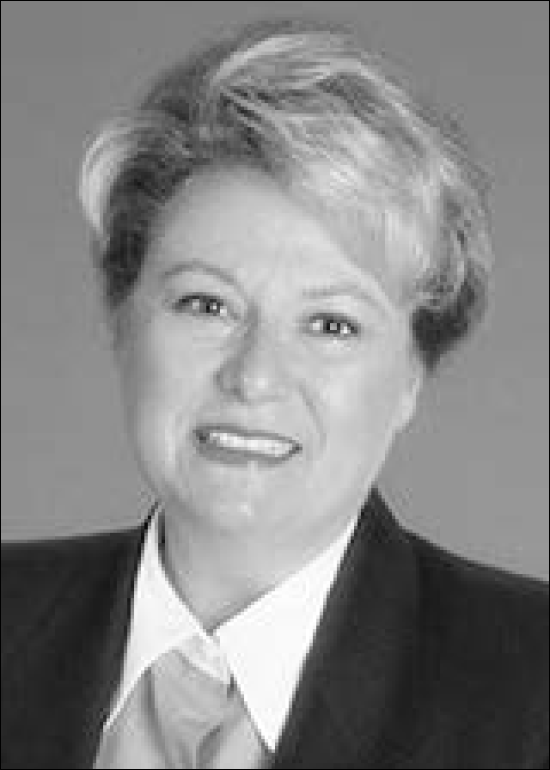
Reflecting back on my career as a nurse, I am amazed at how the various positions I have held have shaped my perspectives on so many issues. After a great career in clinical nursing and hospital management, with involvement in the planning and design of a large specialty hospital, I was invited to join an architectural firm as a nurse consultant. The role included teaching less experienced architects about healthcare operations, care delivery processes, and patient and staff needs that might influence design decisions, and to accompany the design team when interfacing with the healthcare clients. In essence, I was an interpreter between the two languages in the worlds of healthcare and architecture. I must confess that the first few months in the architectural firm were a bit rugged for me. I was a pioneer in a new role with minimal skills, little orientation to the architects' world of thinking, and toolkit full of the wrong tools … or so I thought. Feeling like a fish out of water, I decided to surround myself with nursing memorabilia in my new avant-garde design office (what was a nurse doing in an office like this?). Still not comfortable in my new role, I re-read Florence Nightingale's Notes on Nursing, and then I knew why I was embedded in an architectural firm. Florence Nightingale was not only a nurse, but the first to bring attention to the need for changes in the design of healthcare facilities to ensure an environment that facilitated healing.
After the first few client visits and work sessions, the importance of a nurse embedded in the design world was very apparent. Nurses and physicians could relate to me in ways that they could not relate to architects. They trusted me, because I was one of their own, and they were certain that architects didn't understand them or know how they were “different” from all other hospitals in the world. Hospital leaders also trusted me, because I was experienced in hospital operations, finance, and patient care—“what do architects know about that?” was the general question. In hospital meetings, I was in my comfort zone, but back in the office, it took some time for me not to feel that I was in foreign territory. I made it my personal goal to prove my worth and to be a value-added asset to the firm.
There is a purpose for my revealing such personal information. I hope to demonstrate in this editorial that there is “magic at the intersection,” where true interprofessional practice intersects and positive outcomes can be achieved as a result of the synergy that occurs among different professionals who come together with a common purpose and goal.
Recognizing the Intersections in Healthcare Design
Even the term healthcare design indicates the intersection of two different disciplines that have merged into a new discipline with its own language, guidelines, and standards; science with rigorous research to guide practice decisions; and even certification examinations to recognize individuals who have mastered a body of knowledge that can be translated to quality decisions, service, and outcomes in healthcare design. All of these have come together at the intersection of two worlds; however, each of these distinctly different worlds has subsets of disciplines within them, making the intersection all the more complex. As an example, in healthcare the subsets of disciplines include healthcare administration, nursing, medicine, all the therapies, and numerous other disciplines that shape and support patient care. On the other hand, the design discipline also comprises subsets, including architecture; interior design; environmental psychology; structural, electrical, and mechanical engineering; and a host of other disciplines that support the planning, design, and construction of healthcare facilities. Clearly the healthcare design discipline is a complex system and can be best understood and explained using the theory of quantum science and complexity theory, which describe the world as one of complexity and chaos with multiple constantly moving and often unpredictable parts that comprise the structure of a whole system (Plsek & Greenhalgh, 2001). The authors of this classic article summarize complexity theory as applied to healthcare and indicate that:
Individuals' actions are based on internalized rules based on personal beliefs; Both the individuals and the system are adaptive over time; Systems are embedded within other systems and may evolve together; Tension and paradox are a part of the complexity; Interaction among the parts leads to emerging and novel behaviors; and The organizing factors of a complex system are both non-linear and unpredictable but create an inherent pattern.
When we think of healthcare design in this fashion, we can better understand the need for recognizing and valuing the intersections among multiple disciplines, perspectives on issues, and even visions of what the potential of a new facility can be.
Quantum science and complexity theory can also explain how a minor change in the design of one space can ultimately affect multiple other spaces, processes, and human behaviors. Porter-O'Grady and Malloch (2011) explain that no one act is independent of another, and “every element interacts with every other element in some way, and all the elements together constitute a complex mosaic of movement and intersection” (p. 22). This notion makes traditional planning—where everything is linear and outlined—obsolete, recognizing that while we try to have control over the planning process, we must also recognize and appreciate the circular and constant change inherent in the complex system of healthcare design. Porter-O'Grady and Malloch also explained that leaders in these types of complex systems must also be good signpost readers recognizing new changes and trends on the horizon and how these changes and trends will direct the current and future realities. So how can we possibly prepare leaders in healthcare design to assume new roles as change agents in healthcare design process? It doesn't seem possible to achieve leadership in complex systems without first recognizing the interdependence among the various stakeholders and players in the healthcare design process.
Valuing Interdependence and Collaboration
The recognition and acceptance of interdependence is a critical first step in achieving true interprofessional collaboration (Stichler, 1995). By definition, interdependence is the recognition that a goal cannot be achieved unless the involved stakeholders realize that they cannot achieve the goal individually. True collaboration is dependent on the recognition of interdependence, and includes three other essential attributes to be fully appreciated or operationalized: the balance of power; sharing our exchange of valued assets, skills or information; and finally the interpersonal valuing of each contributing party (Henneman, Lee, & Cohen, 1995; Stichler, 2013). True collaboration means that individuals, regardless of their level in the hierarchy of the organization, have equal and valued input that is respected by others and that there is an open and transparent sharing and communication among the team members. Can you imagine the effect of this if true collaboration really existed in our healthcare design charrettes, focus groups, and other planning group activities?
Oftentimes, a decision-making structure is appropriately defined that is critical to the overall control of the project's budget and schedule, but too much control with a decision-making authority resting only with non-care providers can result in a design that negatively affects patient care processes and patient, provider, and organizational outcomes. It is critical that healthcare administrators and architects appreciate the critical importance of having actual healthcare providers at the decision-making table to reflect the needs of patients and point-of-service nurses and support professions. Their unique contribution is vital in the planning and design of healthcare facilities that are safe, operationally effective, and supportive of the day-to-day bedside activities essential in patient care. The magic occurs as the team collectively imagines the potential in the new design to meet the needs of the future while balancing the realities of budget, schedule, and regulatory requirements.
Creating Synergies with the Emergence Process
Systems and complexity theories also reference emergence theory, which describes the self-organizing process inherent in the chaos of multiple inputs or entities. Emergence theory provides the framework for “magic at the intersection,” because differing perspectives can merge at the intersection in truly collaborative environments and cause a synergy that leads to congruence in thinking and a commonly valued and adopted end point or decision. The beauty of emergence is that the stakeholders believe in the final stage that it supports their initial perspective because their “frame of view” has been ultimately changed in the process of the interaction with others whom they value and trust.
I believe that we are entering a higher stage of development in healthcare design, and we are moving beyond simple interprofessional workgroups in the design of hospitals. It is evident at the annual Healthcare Design (HCD) Conference, where practioners of multiple disciplines merge in learning from each other in the dissemination of project outcomes or to discuss new evidence and research ideas. It is also exciting to witness developing changes to curricula in baccalaureate and graduate level studies in healthcare disciplines and design disciplines with the merging of the knowledge from both fields. Because research has a common language that is understood by all disciplines, emergence of new concepts, theories, and notions (hypotheses) about healthcare design are being explored at the doctoral level where research is most emphasized. New courses and curricula changes can be seen in the graduate education for nursing, medicine, physical therapy, and the design fields where students from one discipline are immersed in the theories and their operational applications in another discipline.
In the Future of Nursing report prepared by the Institute of Medicine and the Robert Wood Johnson Foundation (Institute of Medicine, 2011), there are clear recommendations with supporting evidence about the critical importance of interprofessional education and integration with nursing and other disciplines in the planning, implementation, and evaluation of the healthcare needs of the nation. This sentinel report supports the need for more educational programs that integrate healthcare providers with healthcare designers to enhance the outputs that can result from “magic at the intersection.” I am especially touched by and impressed with my partner and co-editor of HERD, who took the risk of seeking a doctoral degree in Nursing & Healthcare Innovation rather than choosing to study for his doctorate in the architectural discipline. I am certain that there has been reciprocal learning with what he has gained from being immersed in the nursing and healthcare theoretical frameworks, from interactions with others not from his own discipline, and the value he has brought to the table from a vast experiential knowledge base in architecture and healthcare design. This interprofessional approach to education likely enhances the learning of both professors and students as they explore differing perspectives in the worldview of healthcare design.
As previously mentioned, research has a common language and process that is understood by all disciplines even if the research questions are vastly different. Research and the use of evidence in practice creates “magic at the intersection” and the emergence of new ideas and concepts that flow from the chaos and complexity of divergent perspectives, beliefs, and ideas.
HERD is another example of the synergies developed with the integration of the research, knowledge, and experience of multiple disciplines that have merged together to expand the science of healthcare design. There clearly has been magic at the intersection and HERD has accelerated the change to an evidence-based approach to healthcare design and has facilitated decision making among designers, healthcare executives, and healthcare providers using current available evidence or research methods to measure results.
Back to the Beginning
As I worked more with the design team on-site in the various hospitals, taught the less experienced architects about the healthcare delivery process, reviewed their designs, and made recommended changes based on provider input and my own experiences in patient care, there was a recognition of the value of nurses' contributions in healthcare design. The teacher was a learner as well, and what I learned from my architectural, engineering, and interior design colleagues was immeasurable. Watching them interact with healthcare providers and translate design knowledge into a language easily understood by those who often could not visualize square footage, adjacencies, or even schematic drawings was illuminating. Clearly there was magic at the intersection merging the differing perspectives of the healthcare and design disciplines.
Over the past two decades the field of healthcare design has grown into a discipline with an expanding scientific base and evidence to guide design decisions. Theories and scientific findings are borrowed and merged from multiple professional disciplines, and the outcomes from this process have expanded the field of healthcare design worldwide. With increasing numbers of nurse consultants and nurse researchers in many architectural and design firms across the nation, a non-profit organization has emerged, the Nursing Institute for Healthcare Design (NIHD). Members of NIHD now organize a clinical track with peer-reviewed presentations offered at the annual HCD Conference. As designers and healthcare providers and leaders learn together, share their respective knowledge and experiences, and envision a new future for healthcare design, there will be magic at the intersection.