







Abstract
Objectives:
Exposure to nature or to green space has positive mental health benefits. Closing of parks and green spaces during the COVID-19 pandemic has reduced options for mental health and well-being benefits and could have a greater impact on vulnerable populations, especially the elderly. The present study, therefore, explores the physiopsychological impacts of indirect contact with nature, using forest imagery, on the brain activity and autonomic nervous systems of elderly people.
Study Design:
A within-subject design experiment was used.
Methods:
Thirty-four participants aged 82.9 ± 0.78 years were asked to look at bamboo and urban images for 2 min. During the visual stimulation, α relative waves were measured using electroencephalography as an indicator of brain activity. Heart rate variability and skin conductance (SC) responses were utilized as indicators of arousal. Afterward, psychological responses were evaluated using the semantic differential and the Profile of Mood States questionnaires.
Results:
Visual stimulation with bamboo image induced a significant increase in α relative waves and parasympathetic nervous activity and a significant decrease in SC. In addition, a significant increase in perceptions of “comfortable,” “relaxed,” “cheerful,” and “vigorous” feelings was observed.
Conclusions:
Indirect contact with nature enhances the physiological and psychological conditions of the elderly. Findings can be used to guide the new design, renewal, and modification of the living environments of the elderly and those who are unable to get outside.
Keywords
Two inseparable and intersecting demographic trends define the 21st century: rapid urbanization and population aging. The last century was the century of population growth; the current century will be remembered as the century of aging (Lunenfeld & Stratton, 2013). Aging is a human life-cycle state that appears to have a higher incidence of cardiovascular disease, depression, and/or mental illness (S. H. Chang et al., 2016). Previous studies suggested that susceptibility to disease and the aging of the body’s functions cause stress for the elderly (Vitlic et al., 2014). Additionally, aging increases the vulnerability to neurodegenerative diseases that cause memory problems and may lead to an unsafe environment (Tsolaki et al., 2009). Furthermore, nowadays, the elderly face the most threats and challenges. Older people are at significant risk of developing serious illnesses due to physiological changes resulting from aging and potential underlying health conditions (World Health Organization, 2020). It is therefore essential to consider the elderly’s well-being, including physiological and psychological health, in order to maintain the stability and comfort of their moods and avoid anxiety and stress. More than half of the world’s population are currently living in cities, and by 2050, it is estimated that 66% of the population will live in urban areas (Dye, 2008; United Nations, 2014). Recent research has shown that there is a relatively higher risk of serious mental illness in urban areas than in rural areas (Gruebner et al., 2017).
In view of this, in the 21st century, more attention has been paid to finding successful ways to cope with stress and improving the mental health of elderly people. One such method is contact with nature. Exposure to nature is seen as a beneficial way to improve human psychological and physiological conditions. A large body of studies have confirmed the hypothesis that contact with nature can lead to improved mental health and psychological well-being (Elsadek, Liu, Lian, & Junfang, 2019; Elsadek et al., 2020; Janeczko et al., 2020). According to Keller (2005), there are different types of contact that we can have with nature, such as direct and indirect. Earlier studies, such as the study by R. Kaplan (1984), theoretically explained this by showing that natural stimuli in cities contribute to recuperation and recreation. This is true not only when engaging directly in nature-related activities but also through indirect participation such as observation and planning.
A good deal of research from across the globe showed that perceptions or interactions with nature and/or plantscapes seem to benefit individual’s well-being in several ways, for example, by reducing stress, depression, and anxiety (C. Y. Chang & Chen, 2005; Elsadek, Jo, et al., 2013; Reklaitiene et al., 2014), promoting recovery from fatigue (Beyer et al., 2014; S. Kaplan, 1995), improving emotional states (Elsadek et al., 2017; Kexiu et al., 2021), reducing postoperative recovery times (Chiesura, 2004), and improving the recovery process following a stressor (Brown et al., 2013). The association between views of vertical planting and human well-being has been demonstrated in earlier studies. Elsadek, Liu, and Lian (2019) showed that when viewing the green façade, individuals were more relaxed.
Garden perception also diminishes negative psychological conditions and has important emotional and human recovery values (Elsadek, Sun, et al., 2019; Kim et al., 2018). A prior study showed that viewing a money plant for 5 min can improve the relaxation of older adults both psychologically and physiologically (Hassan et al., 2019). Gardening activities could also increase physiological and mental relaxation of older adults (Hassan et al., 2018).
In today’s societies, while nature and green spaces improve human physical and mental health, they strengthen our societies, enhance the attractiveness of cities, and reduce psychological distress (Owari et al., 2018).
The visual stimulation of nature imagery may help people who are placed in stress-provoking situations and people with health problems to get in touch with nature, relax, feel comfortable, and avoid negative emotions. There is no doubt that visual stimulation of nature plays an effective role not only through direct contact but also through indirect contact in improving human health and well-being. Mustapa et al. (2019) reported that indirect experiences with nature could be an alternative and effective way to develop children’s connectedness to nature without neglecting the importance of direct experiences with nature. In addition, Song et al. (2018) showed that visual stimulation with forest imagery has contributed to a substantial increase in perceptions of feeling “comfortable” and “relaxed.”
Knowledge of the positive impacts of indirect contact with nature on elderly people in stress-provoking circumstances should be better understood. Although studies on the psychological conditions of the elderly people when walking in different urban environments showed that urban natural environments (green spaces) contribute to a reduction in the emotional stress caused by artificial environments (Neale et al., 2017), it is not clear whether an indirect nature stimulus could have a positive effect on the physiological and psychological conditions of elderly. Therefore, the present study aims to (1) investigate the physiological relaxation impacts of viewing bamboo imagery on brain activity, by measuring the electrical activity of the brain, and on the autonomic nervous system, by measuring heart rate variability (HRV) and skin conductance (SC) and (2) explore the psychological relaxation impacts as assessed by the semantic differential (SD) questionnaire and the Profile of Mood States (POMS).
Method and Materials
The purpose of the experiment was to measure the impact of indirect natural stimuli on the physiology and psychology states of elderly people. Electroencephalography (EEG), HRV, and SC clarified the physiological responses, while the SD and POMS scales were filled in immediately after each set to record the responses of visual stimuli on the participants’ moods.
Participants
A total of 34 elderly people with an average age of 82.9 ± 0.78 (Mean ± SE) years participated in the experiment, half of whom were male and half female. The experiment was approved by the ethics committees of the university (2019tjdx283). A detailed explanation of the procedure was provided to the participants prior to the experiment, and their informed and verbal consent was obtained.
Visual Stimuli
Visual stimulation was performed using a compatible high-vision liquid crystal display TV with a width of 6.14 ft, a height of 3.45 ft, and a resolution of 3840 × 2160 pixels. A forest landscape showing bamboo grove, a well-known and popular plant in Chinese landscape design, widely used in the daily life of people in China, and a symbol of virtue and reflects people’s souls and emotions (Liu et al., 2018), was used as a forest imagery, and a landscape of urban space was used as control (Figure 1). The display was 5 ft away from the participants.
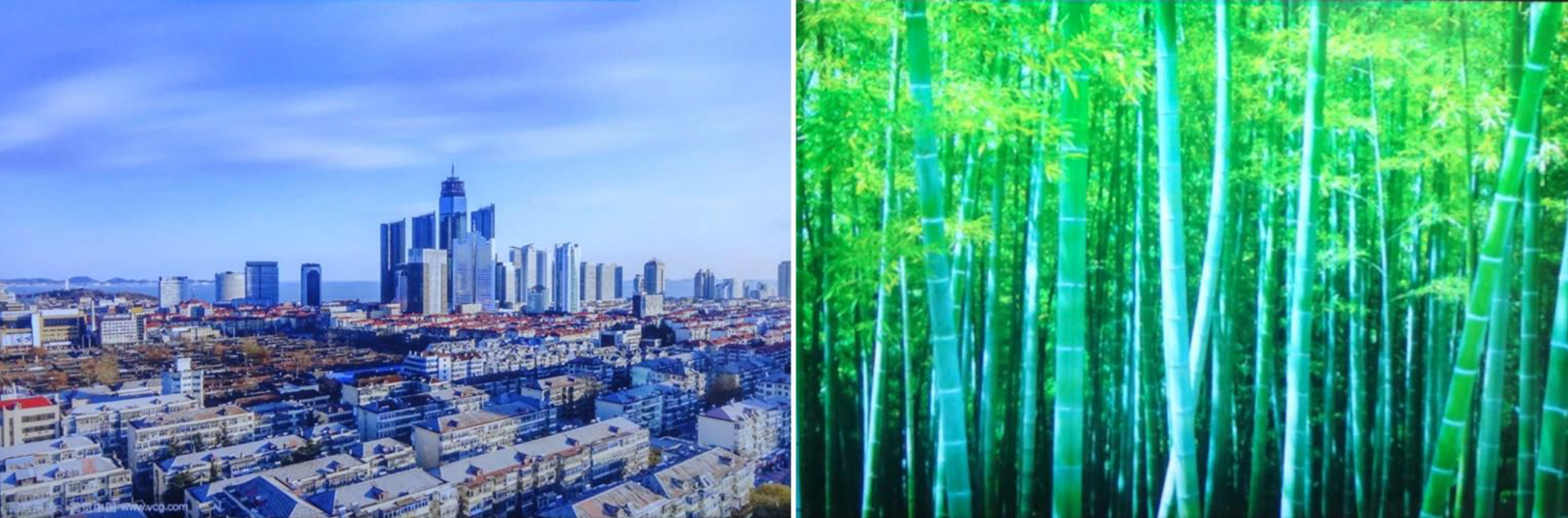
Visual stimulation. Left: urban imagery. Right: bamboo imagery.
Procedure
After clarification of the study objectives and procedures in a waiting room, each participant was asked to move to the test room for physiological measurements at a temperature of 71.0 °F, relative humidity of 50%, and illumination of 200 lux. The portable EEG electrodes and ErgoLAB sensors were installed for the physiological measurements. While fitting the physiological measurement sensors, the participants received a description of the measurement procedure. Procedures for experimental design and measurement are summarized in Figure 2. After the physiological sensors were installed, each participant was requested to switch between opening and closing their eyes in four 1-min intervals to verify the reliability/stability of electrode recording. Participants were then asked to rest while viewing a gray background for 60 s to adapt their mood to the experimental environment, then each participant was separately exposed to bamboo or urban images for 120 s each, while maintaining a sitting position. Immediately following completion of the task, the participants were required to respond to self-reported emotional questionnaires, SD and POMS. To reduce the impact of the order, the order of visual stimulations was randomized. A within-subject design experiment was used, and both visual stimuli were experienced by each participant. The experiment’s total duration was 20–25 min.
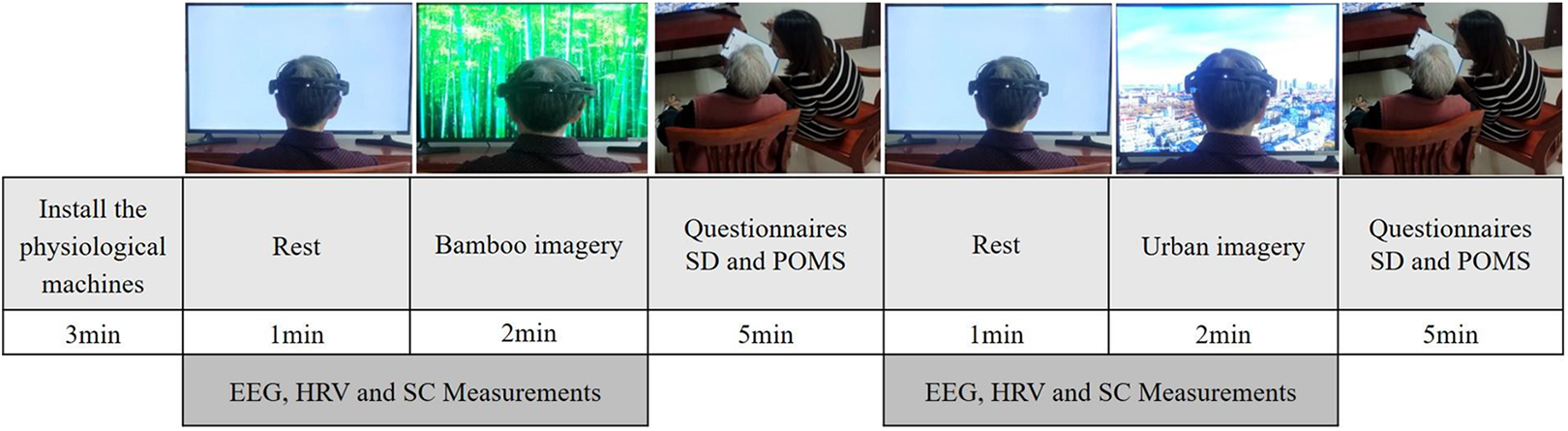
Study protocol.
Physiological Measurements
EEG
The EEG data were collected by the Emotiv EPOC wireless EEG headset as it had shown suitability when used to measure α wave activity in a previous study (Elsadek, Liu, & Lian, 2019; Neale et al., 2020). It features 14 sensors corresponding to International 10–20 system (Homan et al., 1987), which were placed in different locations on the participant’s head: prefrontal (AF3, AF4, F3, F4, F7, F8), frontocentral (FC5, FC6), occipital (O1, O2), parietal (P7, P8), and temporal (T7, T8) sites. The wireless EEG headset had a Bluetooth transceiver, and the measurements were instantly transmitted to a computer using the 2.4 GHz band. In preparation for installation, all felt pads on top of the sensors were wetted with saline solution to ensure adequate conductivity. At the same time, a real-time sensor contact display and a packet count functionality provided by the Emotiv Software Development Kit helped complete the measurements without loss of data. In this study, α absolute power (8–13Hz; associated with relaxation; Neale et al., 2017) was measured with F3, F4, AF3, AF4, O1, and O2 electrodes due to its association with relaxation and calming states (Shan et al., 2018). In general, the absolute power distributions with α were increased at anterior sites during the emotional stimuli. The absolute power of a band is the integral of all the power values within its frequency range (Yuvaraj et al., 2014). These channels were selected because the prefrontal lobe regulates cognition and thinking (Bak, 2011), while the occipital lobe processes visual information (Carter & Frith, 1998). α relative power from 8 to 13 Hz was derived by expressing absolute power in each frequency band as a percentage of the absolute power summed over the two frequency bands (Bian et al., 2014), as demonstrated in Equation 1, where P (·) shows the power, RP (·) shows the relative power, and f1 and f2 show the low frequency (LF) and high frequency (HF), respectively.

Figure 3 displays the Emotiv EPOC device and the electrode channel positions for the prefrontal and occipital lobes. EEG data were transmitted for further treatment using MATLAB (Version 7.12.0.635, R2011a). Initially, data were processed and filtered by the EEG Lab toolbox (<0.5 Hz or >50 Hz) to avoid direct current offsets and low-frequency skin prospective artifacts and to prevent high-frequency noise. The residual artifacts, such as eye blinks or movements, were omitted for each channel. To remove signal artifacts, the automatic independent component analysis algorithm ADJUST was used. ADJUST uses stereotyped artifacts-specific spatial and temporal features to automatically recognize independent artifacts, which are then deleted (Shan et al., 2018).
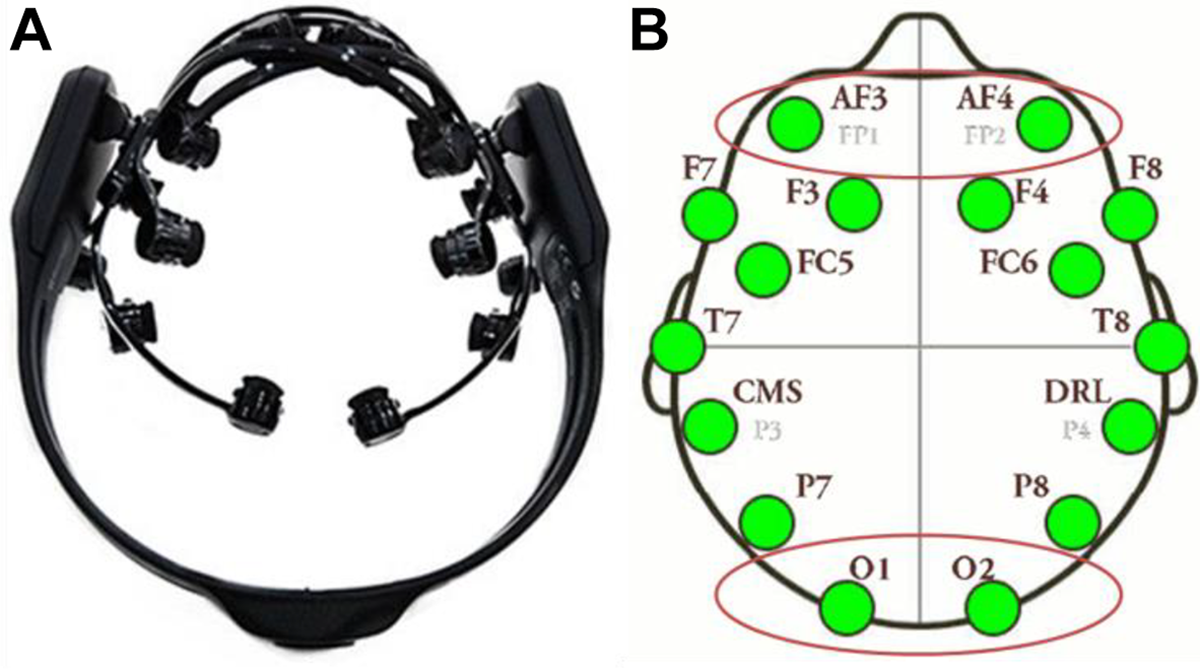
Panel A: Electroencephalography headset. Panel B: Electrode positions.
HRV and SC
The ErgoLAB synchronization platforms (Kingfar Inc., Beijing, China) were used to assess HRV and SC. ErgoLAB consists of portable wireless sensors and a laptop-based platform connected by a wireless receiver. Researchers in related fields have confirmed the validity of ErgoLAB (Zou et al., 2017).
HRV
HRV represents the ability of the heart to respond to a range of physiological and environmental stimuli. An earlier study examined HRV for stress measurement, assuming that HRV is a reliable stress index (Acharya et al., 2006). The HRV data were collected by a wireless multisensor device, ErgoLab data platform Version 2.0 software, which was installed in the participant’s earlobe. Power spectral analysis of HRV—a common medical method–indicates the balance between sympathetic and parasympathetic nervous activity. While the variation of overall power is collected by equipment, the data are usually divided into HF (0.15–0.4 Hz) and LF (0.04–0.15 Hz). HF represents cardiac parasympathetic nervous activity, the reduction of which is related to some negative moods such as anxiety and stress. The ratio of LF and HF represents the balance between sympathetic nervous activity and parasympathetic nervous activity (Zhu et al., 2018). Natural logarithmic transformed values were utilized to normalize HRV data across participants. Filters such as white denoise, low-pass denoise, baseline denoise, and band stop were used to process HRV data. Then, LF domain, HF domain, and LF/HF were used to compare the differences in visual stimulation.
SC
Previous research has shown that SC is an effective physiological stress measure and is commonly used in stress recovery studies (Elsadek & Liu, 2020; Li & Sullivan, 2016). Two reusable electrodes were installed on two fingertips of one hand and collected the electrodermal activity (EDA). EDA is the preferred term of change in the electrical conductivity of the skin dependent on the amount of sweat produced by eccrine sweat glands in the hypodermis of the palmar and plantar regions (Hodge & Brodell, 2018). Sympathetic nervous activity and differences in skin sweating are controlled by central nervous activities linked to emotional and cognitive conditions (Asahina et al., 2003). Therefore, placed on the fingertips, the sensors can detect variation in SC which is reflective of the participant’s mood. The SC was directly measured using a portable skin electrodermal sensor with a measurement range of 0–30 µs, a precision of 0.1 µs, and a sampling frequency of 32 Hz. SC data were processed using a moving average filter.
Psychological Measurements
SD questionnaire
SD scale is widely used in psychological assessments (Osgood, 1952). It contains several opposing adjectives and a scale of 5 points (−2, −1, 0, 1, and 2) to describe the degree of proximity of relevant emotions. In this study, the adjectives were “like” to “dislike,” “bright” to “dull,” “comfortable” to “uncomfortable,” “beautiful” to “ugly,” “attractive” to “unattractive,” “relaxed” to “stressful,” “colorful” to “pale,” “unique” to “ordinary,” and “cheerful” to “depressive” (Elsadek, Liu, & Lian, 2019; Song et al., 2017).
POMS
Another scale, POMS-short form, was used to measure the psychological condition after visual stimuli of different images (McNair et al., 2003). The results of POMS showed seven subscale indicators: Tension–Anxiety (T-A), Depression (D), Anger–Hostility (A-H), Fatigue (F), Confusion (C), Vigor (V), and Total Mood Disturbance (TMD). A better emotional condition is indicated by a lower score of T-A, D, A-H, F, and C and a higher value of V. TMD score was calculated using Equation 2.

The lower the TMD score reflects the better the mood state.
Data Analysis
Physiological data from 29 participants were used (data from the remaining five participants, three males and two females were excluded due to data collection errors). Data were analyzed using International Business Machines (IBM) Statistical Package for Social Sciences (SPSS) statistical software (SPSS version 25). A paired sample t test was used to compare the mean physiological data while Wilcoxon signed rank test was used to test and analyze the differences in psychological indicators after both visual stimuli. Data are presented as mean ± SE. Statistical significance was fixed at p < .05.
Results
Physiological Responses
EEG
Table 1 shows the significantly higher α relative power variation in F3 after visual nature stimuli compared with urban imagery (0.25 ± 0.05 and 0.13 ± 0.03, respectively, t = 3.53, p < .01) and the same trend in F4 (0.52 ± 0.18 and 0.15 ± 0.06, respectively, t = 2.10, p = .04). Regarding the prefrontal lobe AF3 and AF4 electrodes, higher values were observed after participants viewed bamboo imagery than after viewing the urban imagery (0.28 ± 0.05 and 0.16 ± 0.03, respectively, t = 2.39, p = .03 in AF3; 0.56 ± 0.09 and 0.36 ± 0.06, respectively, t = 2.97, p < .01 in AF4). Regarding the left hemisphere (O1), higher α relative power was detected when the participants viewed the bamboo imagery (0.54 ± 0.19) compared to the urban one (0.20 ± 0.06), but there was no significant difference (t = 1.64, p = .09). The changes in α relative power in the right hemisphere (O2) were significantly increased when participants viewed the bamboo (0.84 ± 0.20) compared with the urban image (0.36 ± 0.10, t = 2.79, p < .01).
α Relative Power Variations While Viewing Bamboo and Urban Imagery in the Prefrontal and Occipital Lobes.
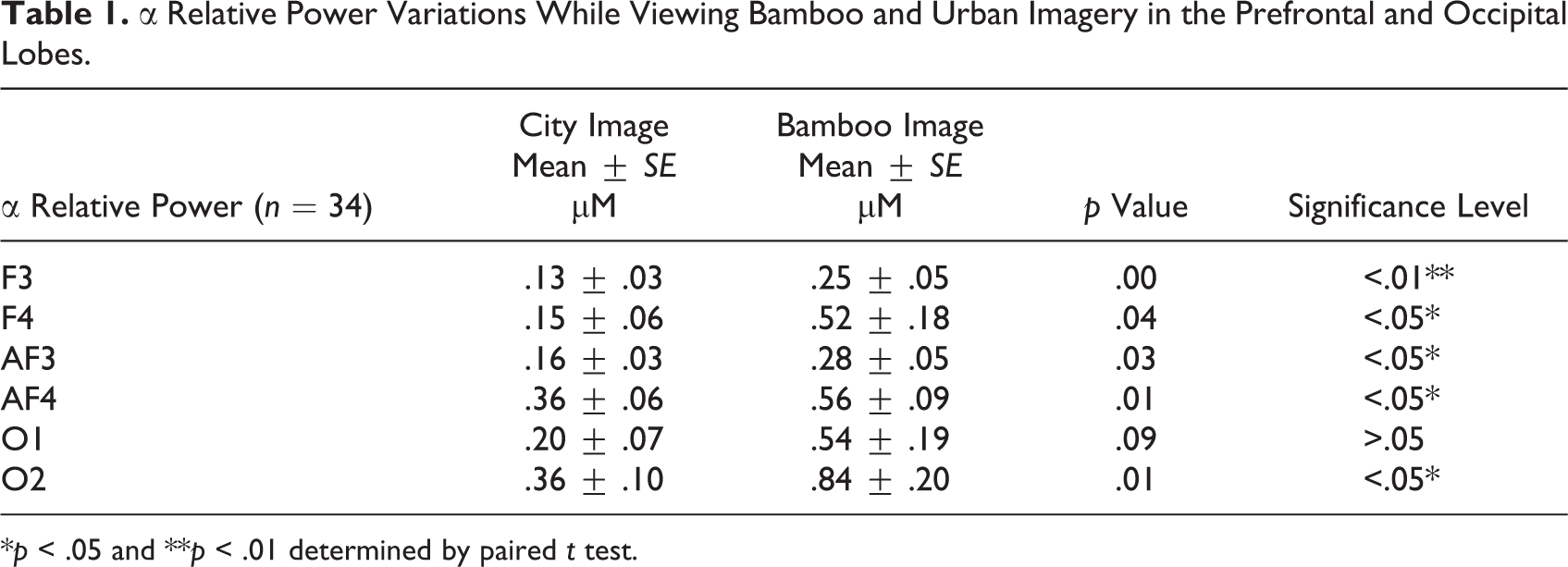
*p < .05 and **p < .01 determined by paired t test.
HRV
Viewing the bamboo imagery significantly increased the value of ln (HF) compared to viewing the urban image (bamboo: 6.46 ± 0.13 lnms2 vs. urban: 4.67 ± 0.16 lnms2, t = 5.67, p = .04; Figure 4). The ratio of ln (LF/HF) reflecting the sympathetic nervous activity; the bamboo imagery (0.23 ± 0.13) was slightly lower than the urban imagery (0.50 ± 0.14, t = 1.25, p = .10), and the difference was not statistically significant.
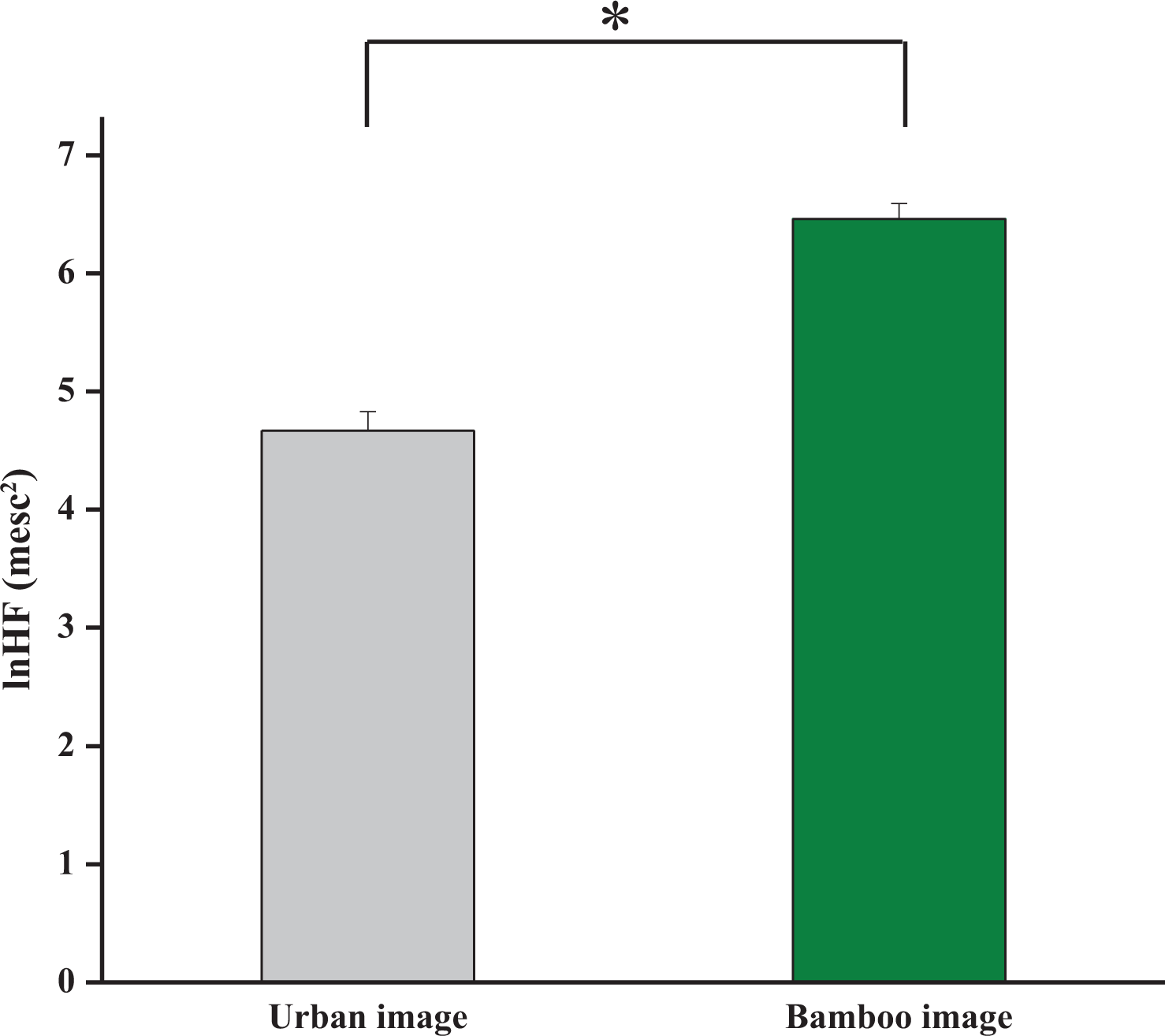
The high-frequency (HF) power levels of the heart rate variability, ln (HF), while viewing urban and bamboo imagery (N = 29). Note. Data are presented as mean ± SE. *p < .05 using paired t test.
SC
Figure 5 illustrates the average of the participants’ SC during the 2-min experience period. When viewing the urban image, the mean SC was significantly higher than when viewing the bamboo imagery (urban: 2.11 ± 0.26 vs. bamboo: 1.61 ± 0.23, t = 3.61, p < .01). These results indicate that the viewing of the bamboo imagery had a positive effect on the participants as demonstrated by a noticeable decrease in their SC.
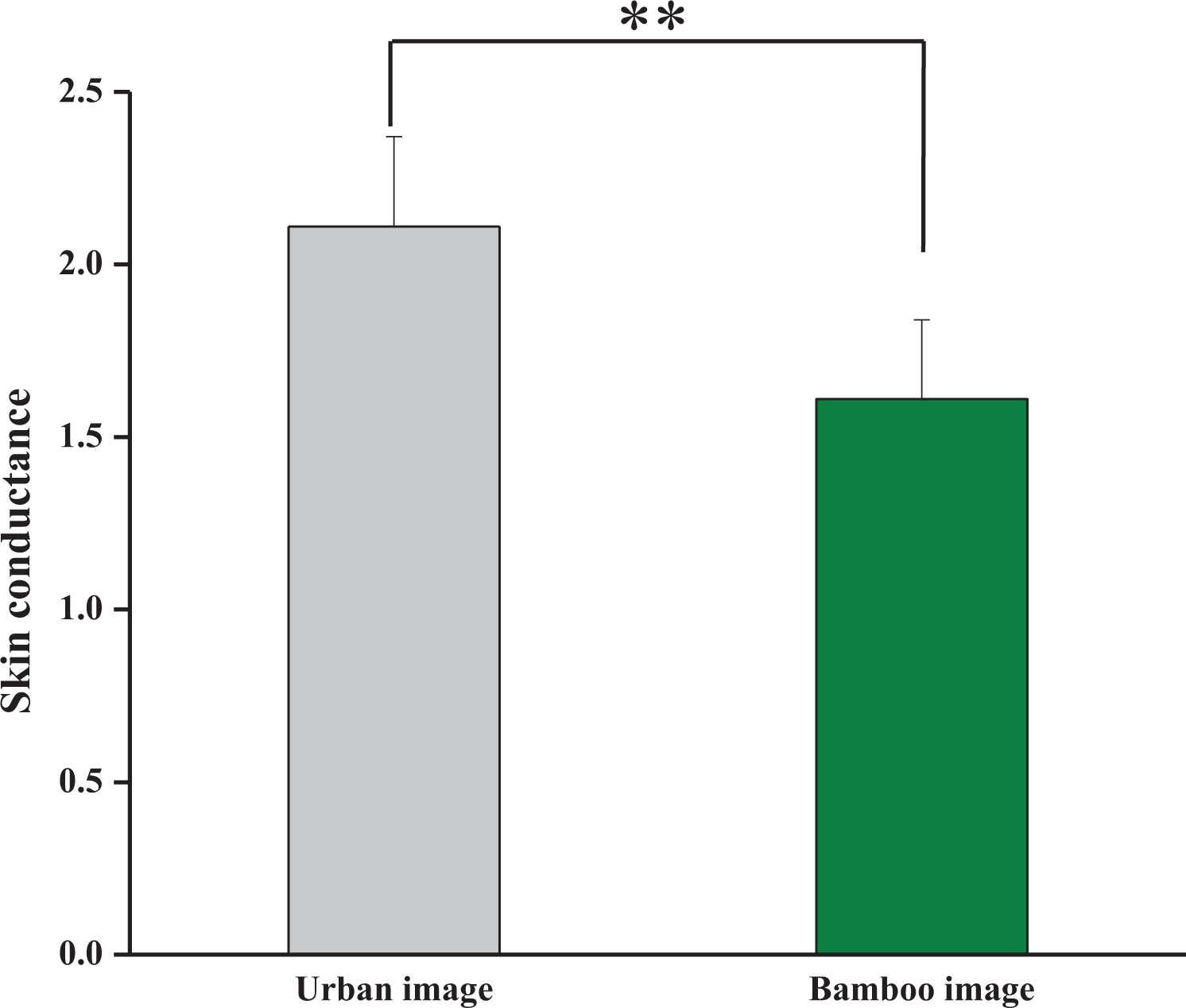
The mean of skin conductance when viewing urban and bamboo imagery (N = 29). Note. Data are presented as mean ± SE. **p < .01, using paired t test.
Psychological Responses
SD questionnaire
Figure 6 illustrates the results of self-reported emotions as rated on the SD questionnaire after visual stimulation with bamboo and urban images. After viewing bamboo imagery, the participants reported higher scores for comfortable (urban: 0.05 ± 0.19 vs. bamboo: 1.82 ± 0.09), relax (urban: 0.11 ± 0.04 vs. bamboo:1.76 ± 0.10), cheerful (urban: 0.17 ± 0.19 vs. bamboo:1.82 ± 0.09), beautiful (urban: 0.09 ± 0.14 vs. bamboo: 1.82 ± 0.09), colorful (urban: 0.18 ± 0.10 vs. bamboo: 1.76 ± 0.10), and attractive (urban: 0.22 ± 0.16 vs. bamboo: 1.53 ± 0.15). They also showed a greater preference for nature imagery, as indicated by the higher like score (p < .01). Thus, based on this feedback, the presence of bamboo imagery was favorable, and looking at bamboo images rather than urban images could evoke more comfortable, relaxed, and cheerful emotions.
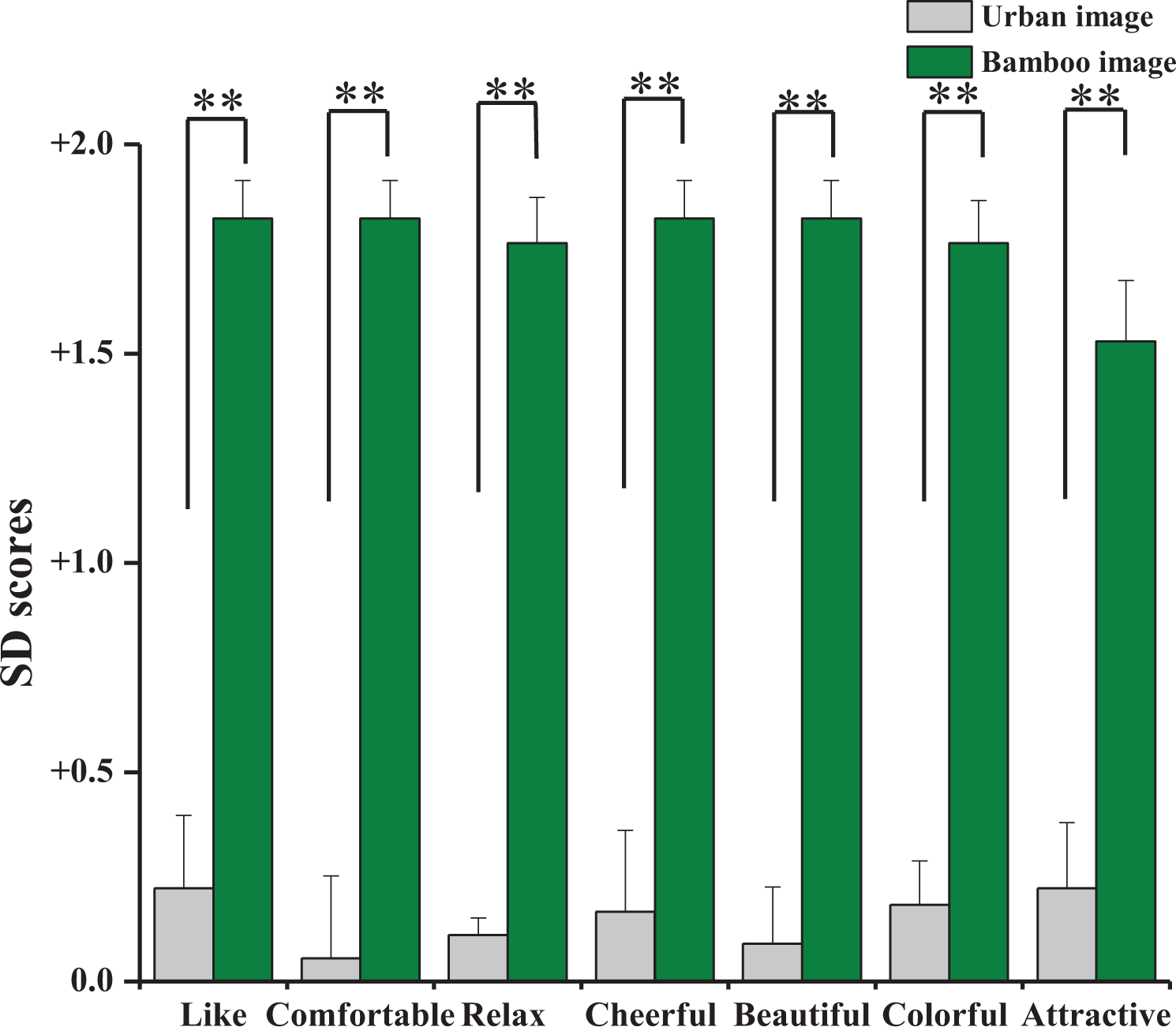
The self-reported emotions according to the semantic differential questionnaire (N = 34). Note. Data are presented as mean ± SE. **p < .01, using Wilcoxon signed rank test.
POMS
The participants’ mood states, as reported in the POMS subscales, are shown in Figure 7. Compared with viewing the urban image, the negative subscales of POMS—T-A (p < .01), D (p < .01), A-H (p < .01), F (p < .01), and confusion (p < .01)—were significantly decreased after viewing the bamboo image. Contrariwise, the V subscale (p < .01) was significantly increased following visual stimulation with bamboo imagery. In addition, the TMD scores significantly decreased after viewing the bamboo imagery. Our findings provide evidence that looking at bamboo imagery evokes positive feelings and improves mood state.
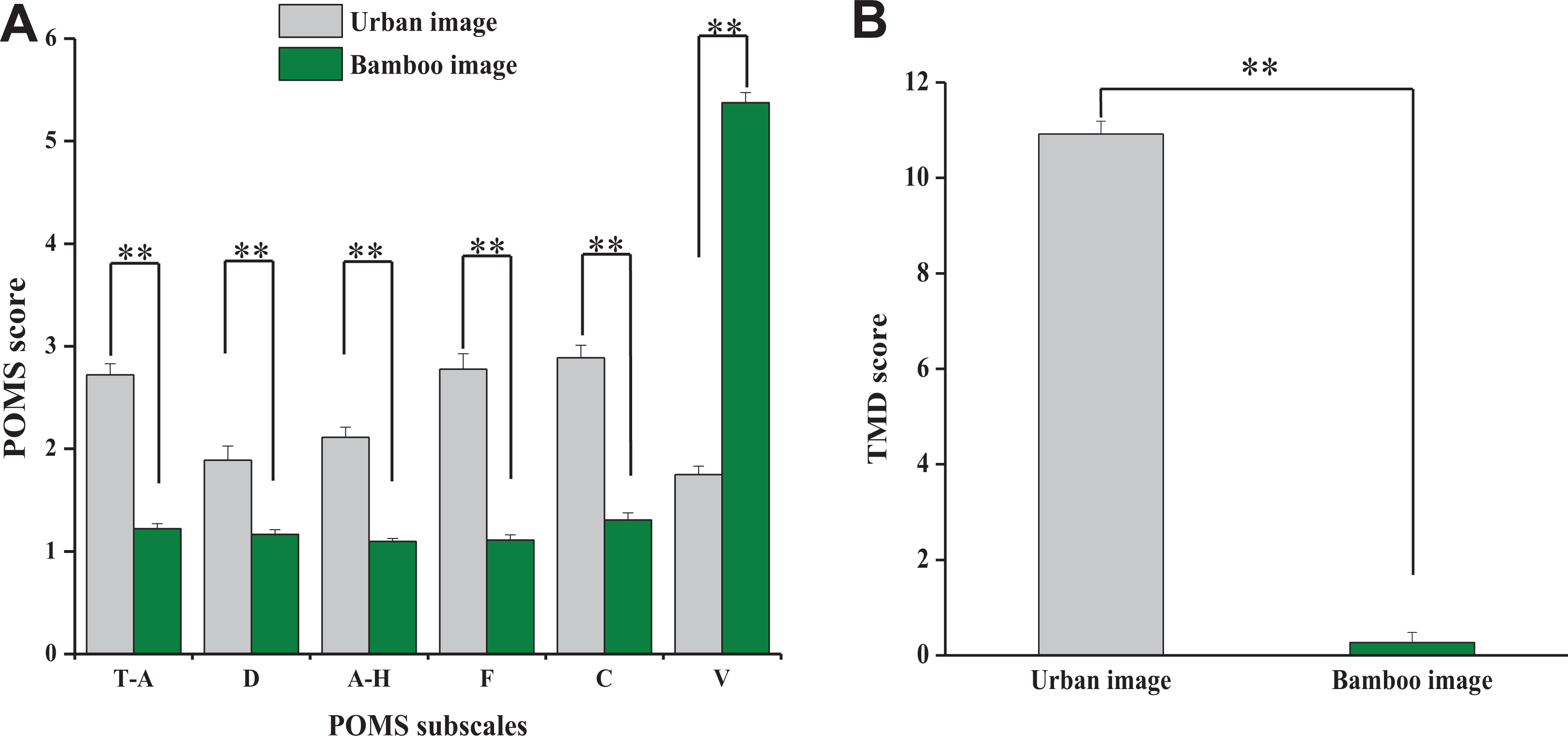
Panel A: Comparison of Tension–Anxiety (T-A), Depression–Dejection (D), Anger–Hostility (A-H), Fatigue (F), Confusion (C), and Vigor (V) in Profile of Mood States (POMS) questionnaire. Panel B: Comparison of total mood disturbance (TMD) score between both visual stimuli. Note. N = 34, data are presented as mean ± SE. **p < .01, using Wilcoxon signed rank test.
Discussion
City dwellers currently live in vertical cities where they have less opportunity to go out to nature, especially elderly people, due to their health conditions, because going out to nature is more a burden on them than entertainment, so the importance of studying the effect of indirect exposure to nature on their health is urgently needed.
Little is known about the positive associations between nature imagery and elderly people’s well-being; therefore, the physiological and psychological relaxation impacts of bamboo and urban images on elderly people were investigated in the present study.
The outcomes of physiological measurements indicated that viewing bamboo imagery had different impacts on the brain activity of the participants compared with viewing the urban image. In particular, α relative power was significantly higher when they saw the bamboo imagery rather than the urban image, which is associated with stimulating a sense of calm and relaxation (Aspinall et al., 2013). The prefrontal and occipital activity analysis showed significantly higher α relative power while viewing the bamboo imagery. Consistent with the findings of a previous study (Elsadek, Liu, & Lian, 2019), which reported a substantial increase in α relative power in the frontal and occipital lobes during 5-min period of viewing the green façade. Increases in α relative power activity were associated with an increased perception of calmness. Additionally, Ulrich (1981) revealed that α waves were significantly higher when viewing vegetation than when viewing urban slides. α relative power increases have been proposed to reflect mental coordination, relaxation, alertness (Başar, 2012; Klimesch, 1999; Palva & Palva, 2007), and low-stress level (Sowndhararajan & Kim, 2016). It is also essential in neuron networking and is highly linked to cognitive performance (Klimesch, 1999). Moreover, increasing brain α waves can stimulate creativity and minimize depression (Dadashi et al., 2015).
Studies are limited however on the impact of nature imagery stimuli on brain activity. Results of the present study found that α relative power in F3, F4, AF3, AF4, and O2 have increased significantly in line with results from earlier studies in the context of calming and relaxation. Nevertheless, the reason(s) for no significant difference in O1 is unknown; more studies on the impact of nature image stimuli in prefrontal and occipital lobes activities are needed in order to explain any differences in response between left and right occipital cortices.
The results of this study, therefore, show that participants were more relaxed, alert, and concentrated when viewing bamboo imagery than urban imagery and that both images have a different effect on the brain activity of individuals.
On the other hand, it is important to note that viewing bamboo imagery has resulted in a significant increase in parasympathetic nervous activity, suggesting a state of relaxation, and a slight decrease in sympathetic nervous activity, thus alleviating the state of stress compared with viewing the urban image. The findings suggested that viewing bamboo imagery for 2 min could promote well-being in elderly people by reducing stress. Previous studies have reported that HRV reflects the state of parasympathetic (relaxation, calmness) and sympathetic (stress, anxiety) activation in the body (Malik et al., 1996). In addition, another study suggested that HRV is affected by stress and supported its use for the objective assessment of psychological health and stress (Kim et al., 2018). The significant increase in parasympathetic nervous activity in this study confirms these earlier results (J. Lee et al., 2014). However, ln (LF/HF) values while viewing bamboo imagery were slightly lower than when viewing the urban image with no significant difference. A similar result was achieved (Kobayashi et al., 2018). In future research, these outcomes need to be confirmed using various experimental design settings and methods of visual stimulation.
SC response was used in several experimental studies to determine the emotional status of the participants (Bradley & Lang, 2000). The results of this study showed that elderly people’s SC significantly decreased when they looked at the bamboo imagery compared to the urban imagery, which means that they felt more relaxed when looking at the bamboo imagery. With increased psychological and physiological arousal, SC increases (Andreassi, 2007). A prior study explores the effect of visual stimuli of virtual photos of urban areas, forests, and parks on physiological stress recovery. Findings showed that the levels of SC in urban areas were significantly higher than in other environments (Hedblom et al., 2019). Positive effects of contact with nature on heart rate and SC have been reported (Ulrich et al., 1991). Previous studies have reported the relaxation effects of viewing green spaces. These studies showed a significant increase in parasympathetic nervous activity (Elsadek, Liu, & Lian, 2019; Igarashi et al., 2015), a decrease in sympathetic nerve activity (A. C. K. Lee & Maheswaran, 2011), and a state of physiological and psychological relaxation (Song et al., 2017).
Regarding the psychological reactions of the participants, the scores of the SD survey showed that the image of bamboo was highly rated as “preferred” and “natural,” and the participants felt more comfortable, relaxed, and cheerful when looking at it than when looking at the urban one. As a result, compared to urban visual stimulation, bamboo imagery could lead to comfort, relaxation, and a sense of cheerfulness. These findings are consistent with those of earlier researchers who reported that contact with, or perception of, green spaces and/or plants has had a positive impact on feelings of relaxation, comfort, and cheerfulness (Elsadek, Sayaka, et al., 2013; Shao et al., 2020). They are also consistent with the findings of prior studies carried on forests (J. Lee et al., 2009) and gardens (Elsadek, Sun, et al., 2019).
As for POMS, compared to viewing the urban image, scores for the negative subscales T-A, D, A-H, F, and C were considerably lower, while for the positive subscales (V), it was significantly higher after viewing the bamboo imagery. These findings, which demonstrated a reduction of stress on elderly people by visual stimulation with bamboo imagery, are consistent with the results of earlier studies (Elsadek, Liu, & Lian, 2019; Yu et al., 2017). These outcomes are potentially important in understanding how viewing bamboo imagery can help promote relaxation and recreation. Viewing bamboo imagery could be a good way to stimulate relaxation and minimizing depressive symptoms in elderly people.
The results of this study show how viewing the image of bamboo can help improve the physiological and psychological well-being of elderly people. The findings of the α relative power increment are closely coherent with the results of HRV, SC, and self-reported emotions, indicating that indirect contact with nature can stimulate positive effects on participants’ well-being. Visual stimulation with nature images seems to be a good way to stimulate relaxation and reduce the stress symptoms of residents compared to viewing urban images. This study provides scientific evidence of the possible benefits of indirect contact with nature. Findings could be applied to and possibly also carried out in areas where elderly people are restricted from going out or are infirm and where nature footage can be shown to them such as in elderly homes and areas where they are being treated or cured as in hospitals/clinics waiting rooms/during invasive procedures/accidents and emergencies. In summary, people who have to stay indoors for a long time and are unable to take advantage of nature by going outside can also take benefit from indirect contact with nature.
The present study provides support for the potential health benefits of viewing bamboo imagery for seniors. This has important implications for elderly people and people who are physically disabled and are unable to leave their homes.
There are some advantages and limitations to this study. One of the advantages is the focus on the elderly, which has filled the gap of studies into indirect nature stimulation for the elderly. Second, the combination of physiological indicators (including EEG, HRV, and SC) and psychological scales fully demonstrates the physiological and psychological effects of visual nature stimulation. However, there are some key limitations that may be addressed in future studies. First, the participants were all healthy elderly persons; therefore, future studies should focus on unhealthy elderly patients, particularly those with physical disabilities. Second, each image was viewed only once for a short time; the repeated views and how a prolonged exposure may affect the parameters chosen should be addressed in future studies.
Conclusion
Here, we attempted to provide scientific evidence of the association between indirect natural stimuli and the psychological health of elderly people. Viewing bamboo imagery helps to improve brain activity and create a comfortable environment compared to viewing urban imagery. When participants looked at the bamboo imagery, α relative power and parasympathetic nervous activity increased, indicating its relaxation effect and helping participants to recover mood and release stress. In addition, subjective psychological measurements indicated that the stimulation of nature imagery provides a sense of comfort, relaxation, pleasure, and vitality compared to urban imagery. In other words, there are significant physiopsychological advantages for elderly people living in cities when they are exposed to indirect natural visual stimuli. Findings may be used to guide the new design, renewal, and modification of the living environments of seniors and other types of care facilities where people are not able to get outside.
Implications for Practice
This study explored the physiopsychological impacts of indirect contact with nature, using forest imagery, on the brain activity and autonomic nervous systems of elderly people. Visual stimulation with bamboo imagery leads to significant rises in α relative waves and parasympathetic nervous activity. Bamboo imagery evokes feelings of comfortable, relaxed, and cheerful. Indirect contact with nature may induce physiological and psychological relaxation for people who have limited access to natural environment.
Footnotes
Declaration of Conflicting Interests
The authors declared no potential conflicts of interest with respect to the research, authorship, and/or publication of this article.
Funding
The authors disclosed receipt of the following financial support for the research, authorship, and/or publication of this article: This research was supported by National Nature Science Foundation of China (NSFC) “Urban Landscape Visual Spaces Network Perception and Reaction Assessment” (No. 51678417) and “Urban Natural Landscape Visual Comfort Mechanism Research” (No. 51808393).
