







Abstract
Objectives:
This phenomenological study aimed to elucidate the lived experiences of employees suffering from poor indoor air quality (IAQ) in their university workplace. It addresses gaps in understanding IAQ’s personal impacts from occupants’ perspectives.
Background:
Prior research on sick building syndrome and indoor air pollution utilized quantitative methods to assess physical health outcomes. However, few studies have adopted qualitative approaches to uncover the meanings ascribed to adverse IAQ experiences and their influences on psychosocial well-being.
Methods:
In-depth semi-structured interviews were conducted with five university employees who attributed their chronic illnesses to poor IAQ in their 60-year-old office building with a history of IAQ concerns. Verbatim transcripts were analyzed using qualitative techniques including thematic coding to extract key themes conveying shared experiences.
Results:
Employees depicted the building itself as fundamentally “sick” and stigmatized, compelling complex coping behaviors hindering productivity. Communication breakdowns, mistrust in leadership, and strained workplace relationships were prevalent. A sense of betrayal, powerlessness, and a sense of detachment from the workplace emerged with home as a refuge.
Conclusions:
Although technically adequate, poor IAQ profoundly damaged perceived health, quality of life, relationships, and satisfaction. The accounts emphasize IAQ’s psychosocial dimensions, advancing theoretical links between indoor environments and well-being. Supportive policies, transparency, communication, participatory processes, and human-centered strategies emerge as ways to nurture productivity, well-being, and organizational health.
Keywords
Introduction
Invisible yet inescapable, indoor air quality (IAQ) influences health, comfort, and performance beyond mere respiratory effects. IAQ encompasses temperature, humidity, pollutants, and biological agents, shaped by a myriad of factors including geography, climate, building maintenance, and human activities (Canadian Centre for Occupational Health and Safety, 2023; Environmental Protection Agency [EPA], 2023c). Despite recognition as a public health issue since 1989 (American Society of Heating, 2017), challenges persist, exacerbated by COVID-19 (EPA, 2023c).
Adverse IAQ, with toxic chemicals, poses health risks, causing sick building syndrome and symptoms linked to time in affected buildings (EPA, 2023a). Traditional IAQ studies focusing on quantitative pollutant measures overlooked subjective experiences, underscoring the need to integrate objective measurements and personal narratives. Underscoring the need to integrate objective measurements and personal narratives to fully grasp occupant well-being implications.
The Current Study
Scholarly work often overlooks office workers’ self-reported experiences with adverse IAQ. While sick building syndrome research typically examines quantitative data and health outcomes, affected employees’ personal narratives warrant attention. Studying these reactions provides a deeper understanding of the impact of adverse IAQ on the quality of life, coping strategies, and employee–employer relationships. Despite extensive research on IAQ’s quantitative impacts, a gap remains in understanding affected employee’s qualitative lived experiences.
This study applies stress theory and environmental psychology. Stress theory examines environmental demands like adverse IAQ that tax adaptive capacities and trigger strain (Awada et al., 2023; Baum, 1990). It has shown dampness, mold, and lack of environmental control cause workplace stress and reduced satisfaction (Lahtinen et al. 2004; Moodley, 2021; Putus et al., 2021). Environmental psychology links the environment via control and identity (Gifford, 2014). Relevant frameworks show how poor indoor climate disrupts staff identity and relationships (Shnapper-Cohen et al., 2022), and control over lighting, temperature, and layout enhances productivity (Giuliani & Scopelliti, 2009; Loraas, 2022; Veitch et al., 2007).
Literature Review
Background
Prior quantitative research has extensively studied the connections between IAQ, dampness, and potential health effects such as respiratory issues, asthma, and sick building syndrome (Sundell, 2004). For example, studies have measured specific particulate levels and correlated exposure to absenteeism and productivity loss (Mendell, 2015). However, the personal, lived experiences of employees coping with adverse IAQ are not well characterized.
Recent research continues elucidating the wide-ranging effects of IAQ on holistic well-being. The COVID-19 pandemic has renewed focus on airborne hazards and ventilation, underscoring IAQ’s links to psychosocial health (Allen & Ibrahim, 2021). While guidelines establish physical air quality standards (ASHRAE, 2023), few studies capture the human dimensions of occupying unhealthy buildings. This study aimed to address that gap through a phenomenological approach exploring employees’ lived experiences with poor workplace IAQ. Findings can inform human-centered design and policy surrounding IAQ.
Health Effects of IAQ
Research has examined the adverse health outcomes associated with poor IAQ with significant emphasis on respiratory issues, allergies, and asthma exacerbation from factors like molds, particulates, and volatile organic compounds. For example, a 2006 literature review found links between mold exposure and upper respiratory tract symptoms, coughing, and wheezing (Bush et al., 2006). Similarly, research by Billionnet et al. (2011) correlated higher fungal concentrations in French dwellings with increased respiratory issues and asthma. Beyond molds, fine particulates from sources like cleaning products and ozone from copiers demonstrate associations with lung function decreases, inflammation, and breathing symptoms (Kim et al., 2019; Sakellaris et al., 2016). Investigations continue demonstrating IAQ’s wide-ranging health burdens, further motivating research like this study exploring related psychosocial impacts.
Impact on Productivity and Well-Being
Beyond health effects, poor IAQ has clear links to worker performance, satisfaction, and psychological well-being. Hawkins et al. (2020) and Mujan et al. (2019) found that inadequate air quality leads to increased absenteeism and presenteeism, with a government building study revealing a 5% productivity loss associated with ventilation issues (Lukcso et al., 2016). IAQ factors also influence psychological outcomes like fatigue, motivation, and engagement (Wargocki, 2016). Moreover, enhancements in ventilation have been demonstrated to improve cognitive function (Allen et al., 2016) and questionnaire data further supports the holistic quality of life benefits of healthy indoor air (Singh et al., 2010) highlighting the holistic benefits of healthy indoor air.
Current Standards and Guidelines
Despite the clear evidence of IAQ’s impacts, current standards, and guidelines, such as those by ASHRAE (2023) and WHO (2009), primarily focus on physical parameters, often overlooking the human dimension of IAQ. The Clean Air Act regulated by the EPA (2023b) sets criteria for air pollutants but does not fully address the nuanced ways these standards are experienced by building occupants.
Qualitative Insights Into IAQ
A notable gap exists in quantitative research exploring the lived experiences of individuals in environments with poor IAQ. While quantitative data provides a foundational understanding of IAQ’s implications, the subjective experiences of those affected remain underexplored (Niza et al., 2023; Söderholm et al., 2016). Phenomenological inquiries in larger and more diverse organizational settings are needed to build on early qualitative work. Beyond physical measurements, rich qualitative investigations are essential to capture the voices of those occupying buildings with adverse indoor conditions. As the current study indicates, profound human impacts may be revealed through occupants’ narratives. There remains a significant need for expanded phenomenological research illuminating employees’ lived experiences with poor IAQ across different workplace settings. Findings would provide crucial insights to complement existing quantitative data and drive human-centered policies, design innovations, and cultural changes prioritizing holistic occupant health.
Theoretical Frameworks
This study is guided by stress theory, environmental psychology frameworks, and phenomenology to understanding interactions between humans and their physical settings. These theories shaped research questions exploring how poor IAQ is appraised as a stressor and how coping strategies manifest to mitigate strain. Findings can enhance theoretical relationships linking indoor environments to psychosocial health.
These theories guided the interview questions such as “How did you know it was the mold/mildew/IAQ in your workplace that was contributing to your illness?” “What health-related symptoms have you encountered that you believe are being caused by the mold/mildew/adverse indoor air in your work environment?” “How has this illness impacted your day-to-day life?” “What accommodations, if any, has your employer made for you?” and “What difference, if any, have these accommodations made in your life?” To understand meaning, questions asked: “What is it like to work in a building that contains qualities that you believe are making you sick, and “reflecting on your experiences, how do you think poor IAQ in your workplace has influenced your stress levels and overall well-being?”
These theoretical frameworks provide a robust foundation for investigating how adverse IAQ influences employees’ health, well-being, and workplace dynamics. By applying these theories, this study aims to uncover the deeper psychological and emotional responses to IAQ issues, directly informing strategies for creating healthier, more supportive work environments.
Study Aims and Purpose
While prior research quantifies physical factors, little work illuminates the personal impacts of adverse IAQ from employees’ perspectives. This phenomenological study explored the meaning five employees ascribed to their IAQ-related illnesses through in-depth interviews. Participants shared their stories, building from initial sickness awareness to broader life impacts and reflections on coping. The findings provide rich, contextual insights to complement existing knowledge and inform human-centered policies and design. Uncovering workplace IAQ’s human dimensions will promote environments and practices supporting holistic health.
Research Questions
Central Research Question: What meaning do employees ascribe to illnesses they perceive resulting from poor IAQ in their workplace?
This study explored several key questions related to employees’ lived experiences with poor IAQ in their workplace. How do employees describe their day-to-day experiences working in such an environment? What impacts on health, well-being, relationships, and productivity do they report? What coping strategies and adaptive behaviors develop in response? How do employees view their employer’s communication, policies, and responsiveness regarding IAQ issues? In what ways is a lack of control over IAQ factors experienced? What role does social support play in coping and making sense of IAQ-related illnesses? Finally, how do employees’ accounts reflect relevant theoretical concepts like environmental psychology? By investigating these questions through in-depth interviews, the study aimed to elucidate the meanings ascribed to adverse IAQ conditions from the perspectives of those directly impacted.
Method
This study utilized a hermeneutic phenomenological approach to uncover the lived experiences of employees suffering from poor IAQ in their workplace. Hermeneutic phenomenology aims to interpret the texts of life and reveal ordinary meaning within human experiences (Moustakas, 1994; Van Manen, 2014). The author spent over 15 years as an interior designer in the architectural community and evidenced adverse IAQ in workplaces. See Figure 1 for the study design.
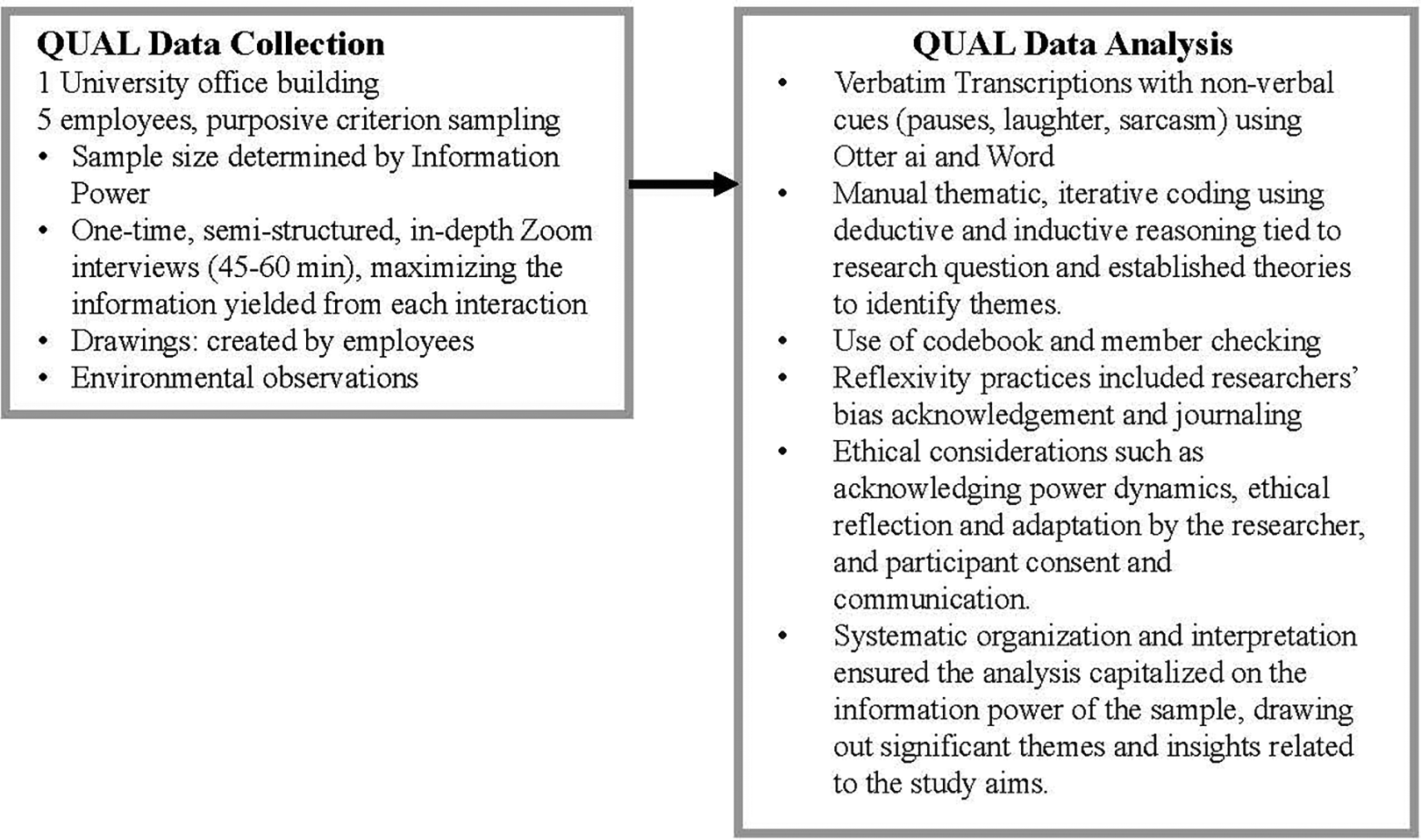
Qualitative study design.
Participants and Setting
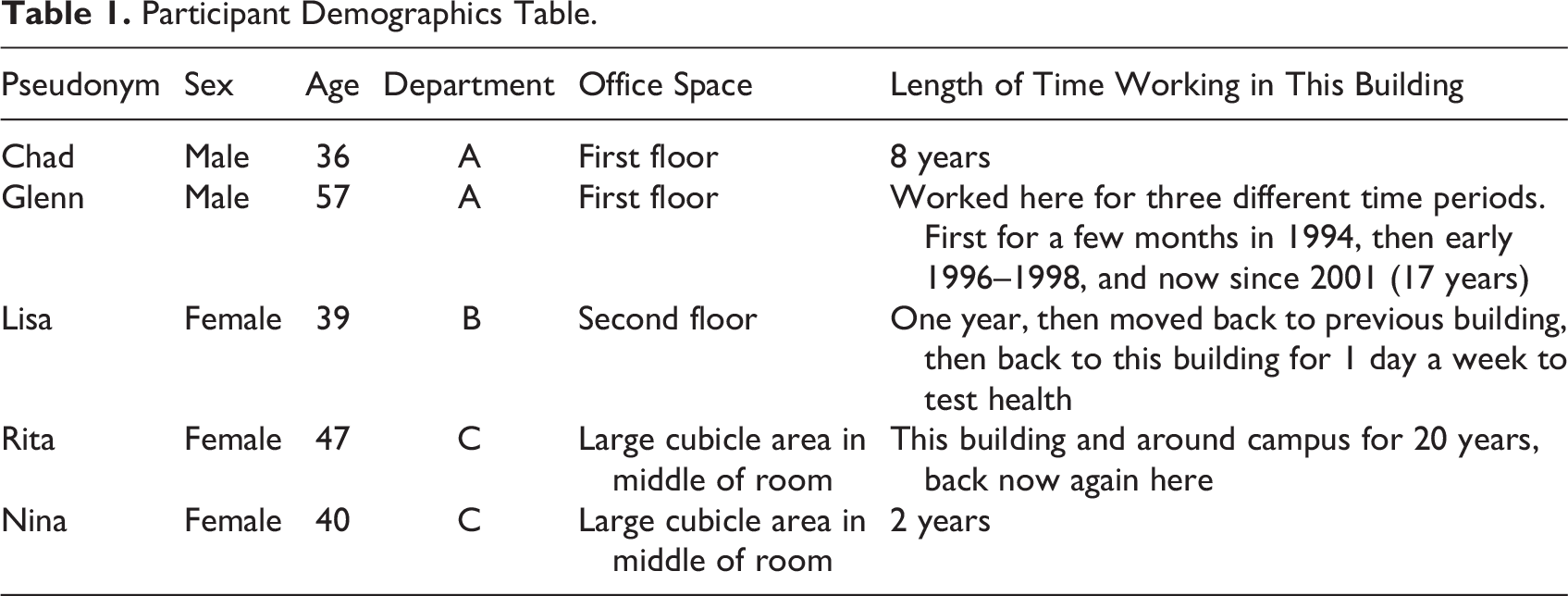
This phenomenological study utilized purposive criterion sampling to recruit five participants aged 36–57 who worked in a campus office building and attributed health issues to poor IAQ. Although a small sample, information power principles assert sample needs decrease with rising information power of data—influenced by aim, sample specificity, framework, dialogue, and analysis (Malterud et al., 2016). One participant experiencing IAQ-related illness introduced the researcher to colleagues with similar experiences. Following protocols, this participant provided coworker contacts for recruitment. Participants worked in a 60-year-old university building with a history of IAQ concerns, occupying it 35–45 hr per week over a tenure period of 2–20 years. Semi-structured interviews averaging 50 min were conducted: four face-to-face and one via phone. An interview guide encouraged rich descriptions of participants’ IAQ experiences. With permission, interviews were recorded and transcribed. Table 1 provides participant pseudonyms and profiles.
Participant Demographics Table.
Data Collection
Participants were selected based on the criterion of having a health-related sickness, their believe was attributed to their workplace. Although all participants were selected first through purposive and snowball sampling, they noted chronic and adverse physical and environmental issues from working in this building.
After obtaining informed consent, semi-structured in-person interviews averaging 50 min were conducted, with four face-to-face and one via phone. An interview guide encouraged rich descriptions of participants’ experiences with IAQ. With permission, interviews were recorded and transcribed verbatim. The process of collecting data, as well as the semantics of the interview questions, is integral to the quality of the data (Castillo-Montoya, 2016; Creswell & Poth, 2018). Interview questions were open-ended and allowed the participants to tell their stories of their experiences in their own words. Four participants created drawings representing their workspace. Detailed field notes were taken. Observational notes and drawings were taken on three separate occasions. The author also generated analytic memos, journaling thoughts, and reflections on observations made before, during, and after fieldwork.
Data Analysis
Transcripts were analyzed following Hycner’s (1985) phenomenology guidelines. They were read repeatedly to immerse the data and then manually coded line-by-line to extract meaning units using thematic inductive and deductive reasoning guided by theory. Related codes were categorized into descriptive themes conveying the essence of participants’ shared experiences. Reflective notes allowed per Creswell and Poth (2018). Transcriptions occurred immediately in Word, nonverbal actions, interview personality, and oral fillers were added back. Two interviews took place in the participant’s office to allow them to be in their natural work setting, which allowed for follow-up questions and to make observations. Participants reviewed and confirmed the transcripts. Trustworthiness was ensured through an audit trail, member checks, peer examination, and triangulation.
Findings
Analysis of interviews with employees experiencing IAQ revealed several key themes related to the meanings they ascribed to their illnesses and coping strategies with the central theme: the physical workplace as a significant perceived contributor to illness. This perception underscores a complex narrative where the physical environment directly influences employee health and well-being. See Figure 2 for a list of key themes and insights.
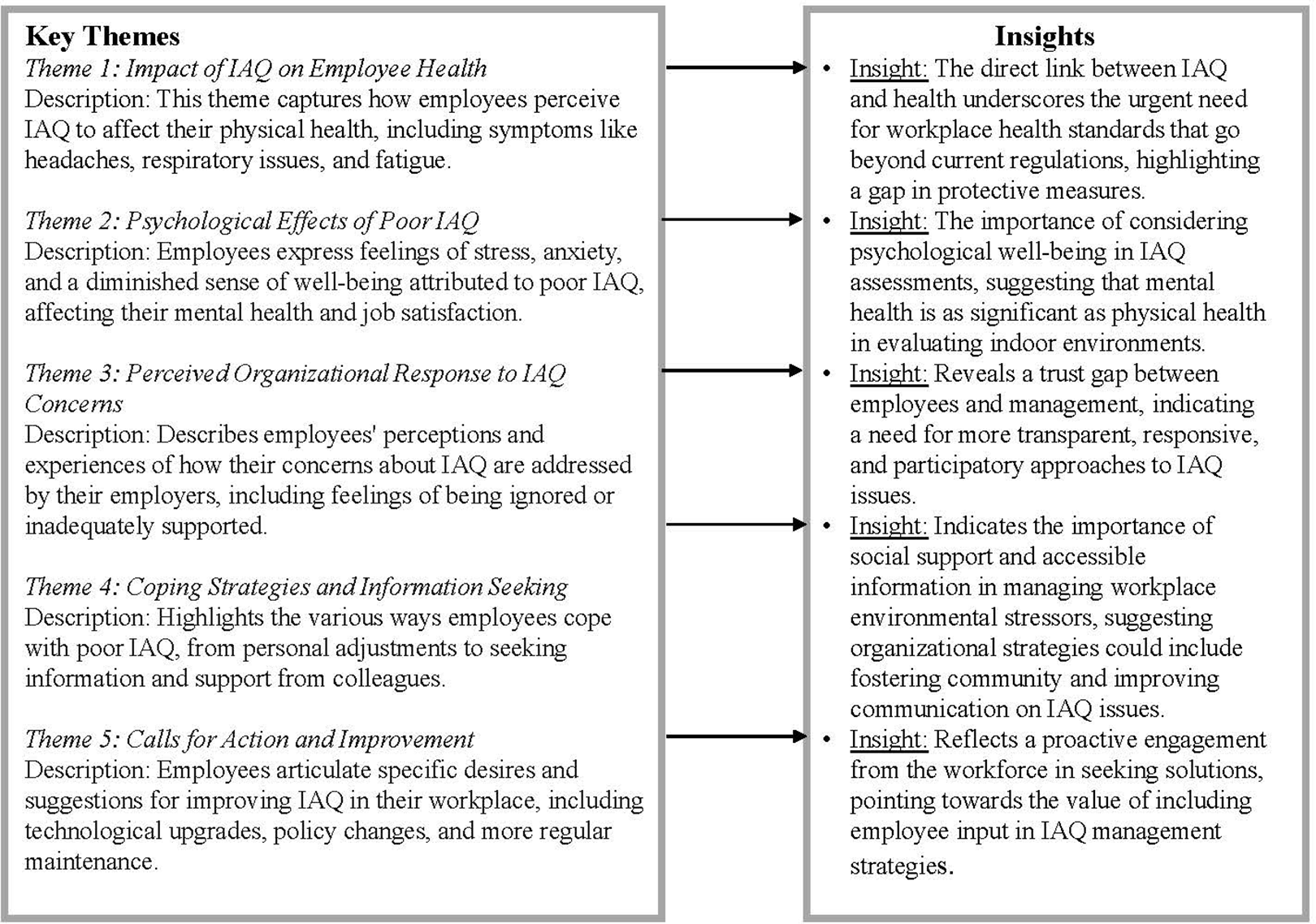
Key themes and insights.
Physical Attributes of the Building
The participant’s description of physical IAQ issues like condensation on walls, duct problems, and exterior air pollution entering through windows provides contextual details on the types of problems faced. The age and temporary nature of the building were noted by all participants as unfavorable, which situates the workplace context. Participants believe the building to be “sick”.
Subtheme 1: Calls for action and improvement
There was a clear articulation of the need for tangible improvements in IAQ, including technological upgrades, policy changes, and more regular maintenance as noted by participants. Specifically, Rita has leveraged mobile technology to work remotely or find alternative environments when the IAQ becomes unbearable and details a specific incident where persistent odor issues were traced back to new construction and associated sewer problems, which were eventually rectified. She also has a call to action for employers and facility managers to prioritize IAQ and to listen to the voices of those affected by it, I think it would be nice if there were greater emphasis on what the ADA Coordinator or Director at organizations and companies, what their role is. Especially when they are dealing with the diseases that you can’t see and you aren’t aware of, such as allergies.
Subtheme 2: Mistrust of employer, related to Subtheme 1
Employees expressed frustration with the lack of transparency and action from leadership regarding IAQ issues, highlighting a pervasive sense of mistrust. This skepticism stems from perceived inaction and opacity regarding IAQ issues, suggesting a deep-seated need for transparency and proactive engagement from leadership.
Chad discusses the perceived apathy of his employer. It would be nice if there could be some kind of regular testing done, maybe there is and I’m just not aware of it, but knowing that things are not good, you feel kind of suspicious…. I believe the building to be sick [emphasis added]…and I don’t think it’s a building that’s supposed to live on like the rest of them, but it keeps getting an extended stay, you know, because the University needs a place for people to live and the University is not interested in investing any money in [this building] building. I get that, I understand that, but to the cost of people’s health? (She pauses for a few seconds) That [emphasis added] doesn’t feel good.
Subtheme 3: Diminished quality of life-psychological effects of poor IAQ
The theme of diminished quality of life emerged as participants described how poor IAQ profoundly impacted their day-to-day health and functioning. For example, Lisa, a 39-year-old employee, shared how her chronic allergy and asthma symptoms worsened over each week spent in the building: The allergist, they had told me that I needed to put like…. They were like, you should put Vaseline on your nose, or you should put these sprays in your nose to keep the allergies from trying to come in. They were like…. And the worst thing was, like, I was getting so much better at home, that I was just like I don’t feel like I need to take my allergy medicine every day. Like we were finally getting it under control, but they said as long as you’re working in that building, you’re gonna have to take it every day.
Lisa also referred to a vivid depiction of the “fog” in her mind and her progressive physical symptoms, which highlights how poor IAQ diminished her quality of life and well-being. Her quote illustrates how the workplace was perceived as an illness agent, with the home as a refuge. This aligns with prior environmental psychology research on place identity. Overall, participants felt their health and functioning were continually strained by occupancy in a building seen as fundamentally “sick.”
Subtheme 4: Information seeking and coping strategies
Participants described various adaptive coping strategies to manage the stress from poor IAQ in their workplace. Rita, a 47-year-old employee, relied on informal information gathering from coworkers to learn more about IAQ issues, saying: You should really talk to (name omitted), he’s great, we even became friends, it’s not even his responsibility to give us news, but what can you do? Everybody was complaining and it seemed like Environmental Health and Safety was out there one to two times a year just telling us everything was normal (she chuckled sarcastically as she uttered “normal”).
In contrast, 36-year-old Chad placed his trust in technology over human authorities, relying on his air purifier to cope with perceptions of poor IAQ. His anthropomorphizing the device highlights a self-advocacy strategy using technology to exert control. Right now, I’d describe it as happy, so if it’s blue, it’s happy, if this turns yellow, it means it detected something and kicks out a little more, you can actually hit this button and it runs a little more strongly. This thing is really sensitive, if someone comes in on a hot day and is sweaty, I’ll notice it turns red…that’s impressive. Well, you know, [the allergist said] that most of the mold and the dirt and things that are in the ventilation system are in the last 12 inches…so I took a ruler and some wipes and would wipe those slats in the vent, black stuff was just coming out.…I think it did help. …because [allergies] makes you so foggy and it makes you seem sort of out of it and weird, um, and I guess I was always so scared, and I had the great fortune of being with a group of people who understood, which is phenomenal because, you know, I could have worked with people who said, “allergies, what? You’re just faking because you don’t feel like working or you’re lazy. Attempting to hire an independent company outside of the University to come and test the IAQ here,…and the guy said, “I can’t do that, I get a lot of work from the University.” Lisa’s supervisor then said to her, “I think you are going to run into that wall anywhere, anybody we call, they’re not going to go against the University.” Lisa then suggested purchasing IAQ kits from the home-improvement store.
This aligns with prior environmental psychology research showing control over one’s physical environment reduces stress and improves well-being (Chan, 2023). Participants’ inability to regulate IAQ suggests an additional mechanism by which poor IAQ diminished their quality of life. Lisa’s coping efforts to exert control further illustrate the constraints employees faced.
Subtheme 5: Impact of IAQ on employee health
Participants consistently reported physical symptoms such as headaches and respiratory issues, directly attributing these to the IAQ conditions within their building. One compelling account comes from a participant whose health concerns were so severe that their doctor prescribed remote work to let their body “reset.” This underscores the tangible impact of the building’s IAQ on individual health. My first doctor, I saw (omit name), Um, he ended up making me work from home for 2 weeks. He said, “I think your body needs to reset. I think you need to get out of there,” and he wouldn’t let me come back without an air purifier. (Lisa)
Colleagues also shared in the struggle, with one participant noting that even part-time staff, who spent minimal time in the building, expressed discomfort and potential health symptoms. The shared experience of health decline among the employees adds weight to the argument that the building’s IAQ was a significant and detrimental factor impacting employee well-being.
The collective experiences, corroborated by medical advice and interventions, reveal a stark reality: the IAQ of the building in question has profound implications for employee health, extending beyond transient discomfort to significantly impairing their quality of life. The accounts serve as a clarion call for a reevaluation of the building’s IAQ and the implementation of remedial measures to safeguard the health of its occupants.
Discussion
This study unveils the significant impact of stigmatized IAQ on employees’ quality of life, revealing a profound sense of betrayal and a desire for leadership acknowledgment. These outcomes resonate with the findings of Allen and Ibrahim (2021), who discuss the broader implications of indoor air changes on health, suggesting that poor IAQ can act as a psychosocial stressor, a viewpoint supported by environmental psychology (Gifford, 2014) and stress theory (Baum, 1990). The study extends this understanding by demonstrating how IAQ directly affects employees’ coping mechanisms and alters their perceptions of the workplace, potentially hindering productivity. This underscores the essential need for holistic health approaches within workplace environments, as suggested by Hawkins et al. (2020), advocating for integrated mental and physical well-being considerations.
The findings advocate for the engagement of university administration and stakeholders in IAQ improvement efforts, echoing the importance of occupant-centered policies highlighted by Mujan et al. (2019). This study suggests moving beyond technical standards toward strategies that address both psychosocial and physical health aspects, highlighting the profound human impacts of IAQ identified in recent literature (e.g., Kim et al., 2019; Niza et al., 2023). By emphasizing buildings as lived experiences, we align with Sakellaris et al. (2016), advocating for environments that enhance productivity, satisfaction, and overall well-being through collaborative efforts in research, policy development, and workplace management practices.
Comparatively, the findings parallel those of Veitch et al. (2007), who found that environmental conditions significantly affect occupant satisfaction and productivity. However, the study uniquely contributes to the literature by highlighting the psychological impacts of IAQ, a less explored area that Chan et al. (2023) began to address through the lens of virtual reality and nature exposure. Furthermore, the research underscores the need for proactive and inclusive approaches to IAQ management, suggesting a paradigm shift in how workplace environments are designed and maintained to support health and well-being, a sentiment echoed by Lahtinen et al. (2004) regarding the psychosocial work environment.
This study not only corroborates existing research on the physical health impacts of IAQ but also extends the discourse by elucidating its psychosocial dimensions, offering a comprehensive understanding of how IAQ influences workplace well-being and productivity. Future research should continue to explore the multifaceted effects of IAQ, incorporating diverse workplace settings and participant demographics to enrich our understanding and inform effective interventions.
Limitations and Future Research
This study provides insightful findings on IAQ’s impact on employee well-being but has limitations for future research. The small sample from one institution restricts broader applicability; larger, more diverse samples are needed. Additionally, the framing of certain interview questions could have been optimized to elicit more directed responses regarding participants’ initial encounters with IAQ-related illnesses. Alternative phrasing may have uncovered further insights.
The COVID-19 pandemic introduces further IAQ complexity, altering workplace dynamics and health perceptions, warranting study of its long-term effects and remote work’s role in mitigating psychosocial risks. Additionally, the university office setting limits generalizability. Extending research across more work environments would enable more comprehensive, context-specific solutions and could reveal unique challenges and coping strategies. Moreover, the qualitative analysis revealed detachment and mistrust themes, underscoring the value of integrated qualitative assessments to offer richer perspectives on IAQ’s psychosocial dimensions.
Conclusion
This phenomenological study provides insight into how employees ascribe meaning to illnesses associated with poor IAQ. The findings emphasize that IAQ is more than a physical health issue; it is a significant psychosocial stressor with implications for workplace health and productivity.
The impact of poor IAQ infiltrates the psychosocial fabric of workplace well-being and productivity. The finding that IAQ acts as a profound psychosocial stressor stands out, fundamentally altering employees’ perceptions and experiences. This underscores the need for human-centered, holistic approaches that address psychological and emotional well-being alongside physical parameters.
An integrated strategy embracing technical solutions and employees’ lived experiences is advocated. This dual approach offers a pathway toward healthier, more productive environments that reflect occupants’ complex needs. As we move forward, let this study serve as a call to action to prioritize IAQ’s multifaceted aspects, ensuring work environments support the total human health of every individual.
Implications for Practice
Frame IAQ as a social justice and equity issue—poor IAQ disproportionately impacts marginalized groups and exacerbates systemic inequalities. Highlight the legal risks and potential liability for organizations with documented poor IAQ impacting worker health. Spotlight the competitive advantages for forward-thinking companies that invest in healthy buildings and employee wellness. Discuss partnerships with building engineers and designers to cocreate solutions centered on occupant experiences. Employees should be viewed as partners in cocreating healthy workspaces, not passive occupants. Their insights are invaluable for human-centered design.
Footnotes
Declaration of Conflicting Interests
The author(s) declared no potential conflicts of interest with respect to the research, authorship, and/or publication of this article.
Funding
The author(s) received no financial support for the research, authorship, and/or publication of this article.
