






Abstract
Objectives
This study aims to identify key factors influencing residential satisfaction and sense of belonging among residents in Shanghai's “moving-merging” rural-urban resettlement communities, with a particular focus on variations across different age groups.
Background
Urban expansion globally impacts rural populations, with China experiencing rapid urbanization. Shanghai's unique “moving-merging” strategy consolidates villagers into new sites near their original locations, preserving social ties while improving physical environments. This study examines how this strategy influences residents’ place attachment, focusing on person, place, and process dimensions.
Method
A mixed-methods approach was adopted, integrating quantitative surveys with qualitative data collection. A structured questionnaire was administered to 245 residents (133 younger individuals <60 years, 112 older individuals ≥60 years) in the DX Community, Shanghai. The survey assessed residential satisfaction, sense of belonging, and perceived changes before and after relocation. Factor analysis with oblique rotation and binary logistic regression were employed for data analysis.
Result
The study revealed that while living conditions improved, overall resident satisfaction did not significantly increase, especially among younger residents. Older residents perceived greater benefits but encountered adaptation challenges. Social ties and belongingness were strengthened in higher-density settings,
Conclusion
The “moving-merging” strategy enhances residential satisfaction and fosters a sense of belonging, particularly benefiting older adults by preserving social networks. However, challenges persist in improving physical environments. Findings highlight the necessity of differentiated policies addressing specific needs and preferences of different age groups.
Keywords
Introduction
Resettlement has become increasingly prevalent worldwide due to urban expansion, large-scale infrastructure projects, and regional renewal efforts led by governments and developers. Globally, rural populations have experienced profound impacts from resettlement under urbanisation, as seen in municipal amalgamation in Japan, key settlement policies in the UK, and land consolidation in Germany and developing countries such as Vietnam. Despite differing contexts, studies have emphasized the dual physical and emotional challenges associated with resettlement. Such processes often result in significant adverse consequences for rural populations, including maladaptation and rural nostalgia (J. Li et al., 2021).
In China, urbanisation has driven an unprecedented transformation of rural areas. Between 1978 and 2018, the urbanisation rate surged from 19.72% to 59.58%, fueled by the escalating demand for rural land in urbanizing regions (Wang et al., 2019). Unlike many other countries, rural resettlement in China is deeply intertwined with complex political, social, and cultural dynamics, creating a unique context for exploring the interplay between place, home, and belonging in resettled rural communities. Extensive research has examined various aspects of rural resettlement in China, including shifts in political institutions, livelihoods, and social status, as well as the challenges of environmental adaptation (Du et al., 2023; Qian, 2017; Z. Wang et al., 2023; Y. Zhou et al., 2020). This process spans diverse localities and impacts a large rural population, exposing individuals to abrupt changes in their living environments and compelling them to navigate significant socio-economic and cultural disparities between urban and rural settings. The tight-knit social networks characteristic of traditional rural “acquaintance societies” add layers of complexity to identity formation and adaptation in resettled contexts. One widely adopted resettlement strategy in China is “moving farmers upstairs,” which relocates rural residents into urban-style apartment complexes (Jiang et al., 2018). Particularly, this process is considered not only to alter farmers’ living arrangements but also to disrupt their long-established home environments and interpersonal relationships, traditionally defined by small, secluded, and homogenous rural societies (Li et al., 2016; Yu et al., 2018).
As a pioneer in industrialization and urbanisation, Shanghai has been a prominent case in trialling innovative resettlement. Since the late 1980s, Shanghai's suburban areas have experimented with consolidating dispersed rural settlements into planned communities. A distinctive approach is the “moving-merging” strategy. In contrast to “moving farmers upstairs,” this approach consolidates villagers from the same community into newly developed sites near the original locations, where farmers build detached homes independently or through contractors, adhering to government guidelines on homestead size, building areas, and floors/heights. The government also oversees the building appearance and infrastructure upgrades, enabling farmers to retain their homesteads and maintain familiar social networks while adapting to higher residential densities (Zhang et al., 2022). The “moving-merging” strategy offers a unique combination of preserving social ties while altering (improving) physical environments. Although it represents a smaller share of resettlement initiatives and has received limited scholarly attention, it directly influences rural living quality and landscape in Shanghai's countryside. Understanding residents’ perceptions and the challenges of rebuilding bonds to place is critical for informing future resettlement policies and environmental design strategies. Moreover, the research offers valuable lessons for other regions facing similar challenges, contributing to the development of innovative farmer resettlement approaches.
Theoretically, examining the “moving-merging” resettlement strategy allows for a nuanced understanding of the relationship between people and place. While resettlement often leads to negative consequences, it can also result in improved living conditions, fostering greater satisfaction with new environments (Huang et al., 2020). While traditional rural-to-urban resettlement approaches that disrupt both social and physical environments may complicate the evaluation (Lewicka, 2010), the “moving-merging” process shows asynchronous changes in physical and social environments (Yan & Bao, 2018). In terms of the four potential dimensions of displacement (physical, functional, social, and psychological) (Kearns & Mason, 2013), this approach primarily affects the physical and functional aspects while maintain social stability. It offers a unique opportunity to examine the people-place dynamics in contexts where the social environment remains largely unchanged, while the physical environment undergoes significant transformation.
To achieve these practical and theoretical objectives, this investigation employs both fixed dimensions of “person-place” bonds and the dynamic “process”, aligned with the PPP (Person-Place-Process) model of place attachment (Scannell & Gifford, 2010), to investigate illuminate how the “moving-merging” approach influence people-place relationship and its manifestation—residential satisfaction and sense of belonging, offering insights for future policy development and environmental design initiatives in rural-urban resettlement process.
Theoretical Framework and Hypotheses
Representing Person-Place Bonds: Residential Satisfaction and Sense of Belonging
Research on place attachment in the context of urban renewal and political resettlement highlights its profound emotional and psychological effects on involuntary migrants (Meth et al., 2023; Rogers & Wilmsen, 2020). Previous studies conceptualize place attachment differently depending on disciplinary focus and theoretical orientation, often emphasizing the need to avoid ambiguous definitions lacking operational clarity (Hernández et al., 2020; Patterson & Williams, 2005). Some scholars suggest that “the sense of/bonds to place” might better encapsulate the attachment experience, particularly for older individuals with deep-rooted ties to specific locations. This study does not engage in debates over terminology but instead focuses on the dual physical and social dimensions of person-place bonds, given the asynchronous changes in physical and social environments within “moving-merging” communities. Though ambiguously defined (Lewicka, 2011), place attachment broadly refers to the emotional and functional bonds between individuals or groups and their environment (Jorgensen & Stedman, 2001). Place identity, the emotional aspect, pertains to the symbolic connection between individuals and their environment, shaped by emotional ties, long-term interactions, and personal memories. This dimension fosters identity and belonging through the relationships associated with a particular place (Relph, 1976; Williams & Roggenbuck, 1989). Place dependence, the functional aspects, refers to how a place's physical attributes meet residents’ practical needs and aspirations, such as access to services and amenities (Williams & Roggenbuck, 1989). These dimensions illustrate how the physical and social characteristics of a community contribute to cultivating bonds to place. In this study, “residential satisfaction” is used to address the physical aspect of attachment by evaluating residents’ contentment with their living environment. Meanwhile, “sense of belonging” emphasizes social connections and community integration. Another reason for selecting these concepts is their contributions to “social adaptation,” a key aspect in studies of migrants’ relationships with their new environments.
Residential satisfaction reflects individuals’ positive or negative perceptions of their living environment and represents the alignment between personal expectations and environmental realities (Emami & Sadeghlou, 2021). Prior research positioned residential satisfaction and place attachment within a community-focused research domain (Hidalgo & Hernández, 2001); others emphasize its distinct focus on the physical environment, separate from social or political factors (Fried, 2000).
Sense of belonging captures individuals’ feelings of connection, acceptance, and engagement within a group or community (Hagerty & Patusky, 1995). At the meso-level, attachment is defined as being “rooted” in a community (Trentelman, 2009). While the academic definition of sense of belonging is relatively consistent, its meaning and intensity can vary among individuals. In times of disruption, such as natural disasters or demolition, a strong sense of belonging can enhance community resilience and recovery (Quinn et al., 2021).
Examining Person-Place Bonds: Person, Place, and Process
Studies suggested that factors such as length of residence, homeownership, housing occupancy, and educational background influence place attachment in diverse ways (Bates et al., 2019; Brown et al., 2003; Lewicka, 2011). Among various personal attributes, this study focuses specifically on older individuals for two reasons: first, resettlement communities often inherit higher ageing rates from their original rural populations; second, environmental stability is critical for older adults, who are more vulnerable to functional decline and loss of independence (Oswald & Wahl, 2005). These concerns are closely related to housing theories or ageing-in-place, which emphasize the importance of stable environments for older adults, especially in the context of relocation and its associated environmental disruptions (Fried, 2018; Wiles et al., 2009). Nevertheless, ageing-in-place often entails a paradox. While improving the physical living conditions of older adults—such as relocating them to safer, more supportive, and protective environments—is considered essential, such moves can disrupt established social support networks. A potential solution, therefore, might simultaneously enhance the physical environment and preserve social connections, balancing satisfaction with a sense of belonging. “Moving-merging” communities provide an ideal context for exploring these dynamics and thus offer insights into what resettlement options can benefit the quality of life for older resettlers in an ageing society.
Although the tripartite place attachment model prioritizes the “person” dimension, environmental psychologists argue that physical settings also play a critical role in supporting individuals’ goals and aspirations (Najafi & Shariff, 2011). This study incorporates Residential Environmental Satisfaction Scale (RESS-DLV) (Adriaanse, 2007), Neighbourhood Cohesion Instrument (Buckner, 1988), local friendship ties (Sampson, 1988), and Neighbourhood Attachment Scale (Bonaiuto et al., 1999) to construct a comprehensive measurement framework. By emphasizing residents’ perceptions and emotional evaluations, this study prioritizes subjective assessments of the built environment.
To capture the person-place dynamics before and after resettlement, the “process” dimension was introduced. Early discussions of sense of place and place attachment (Relph, 1976) often relied on assumptions of sedentism or fixed residency (Di Masso et al., 2019). In contrast, mobility was viewed as a disruption or threat to forming bonds with one's living environment. Empirical studies on displacement caused by natural disasters or urban redevelopment have revealed the significant disruptions and discontinuities triggered by environmental changes or forced migration (Adie, 2020; Fried, 2018). In the context of accelerating global urbanisation and increasing mobility, place attachment is understood as evolving over time through interactions between individuals and their environments (Morgan, 2010). For older adults in particular, this process reflects a lifelong integration with their surroundings.
Theoretical Framework and Hypotheses
Based on the preceding discussion, we establish the theoretical framework (Figure 1) and propose the following hypotheses: (1) “Moving-merging” resettlement provides residents with upgraded housing, enhanced communities, and improved public amenities. These improvements are expected to result in positive evaluations and higher residential satisfaction ratings. (2) “Moving-merging” resettlement facilitates the retention of long-established “acquaintances society,” personal identities, and a sense of belonging. These social and emotional bonds are particularly pronounced among older adults, who rely more heavily on intra-community social ties. (3) “Moving-merging” resettlement typically introduces environmental and social changes that pose adaptation challenges, which may weaken residents’ bonds to the new setting, with older adults being more susceptible to these effects.
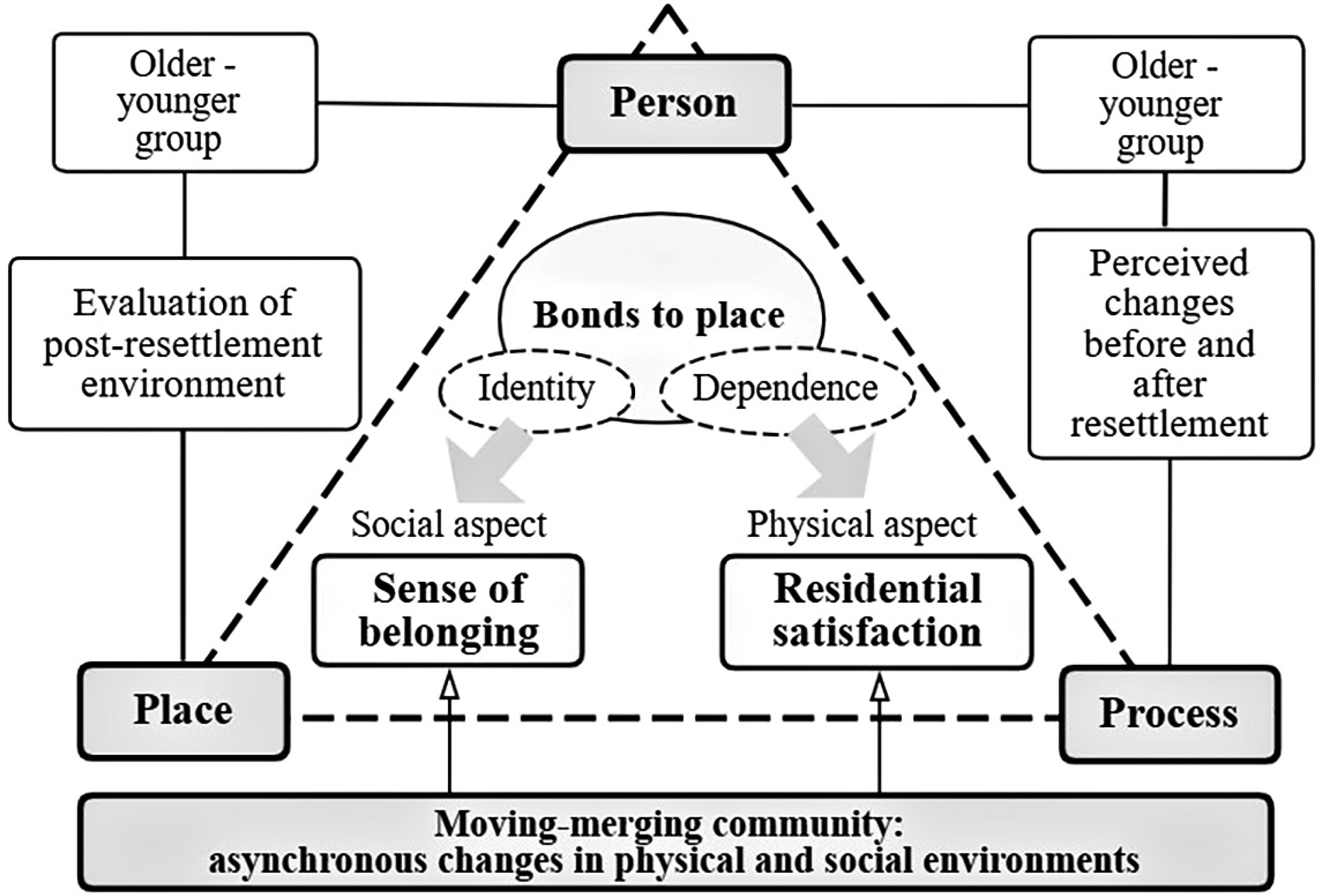
Theoretical framework.
Method and Material
Study Site
The study was conducted in the SJ District, located in the southwestern region of Shanghai. This district covers an administrative area of 604.6 square kilometers and comprises 11 towns. Among them, DJ Town has been a forerunner in regional revitalization and urbanisation initiatives aimed at optimizing land use. As part of these efforts, the DX Community, selected as the study site, represents an early implementation of the “moving-merging” strategy implemented in DJ Town around 2005. Its current population includes 343 households and 1,086 permanent residents, with a large proportion being original villagers. Most residents have lived in the community for over a decade, providing a stable sample for evaluating post-relocation perceptions and enabling comparisons with their pre-relocation experiences.
Procedure
This study is based on an actual community redevelopment project and forms part of a broader research initiative. Several preliminary investigations were conducted prior to the formal survey: 1) a comprehensive analysis of the community's history, demographics, lifestyle, and infrastructure, and 2) discussions with local administrators to clarify survey objectives, content, and ethical considerations.
The formal survey was conducted in April 2021, with assistance from local social workers fluent in the local dialect. Social workers collaborated with leaders of resident self-governance groups, each comprising 50–60 individuals, to distribute and collect survey questionnaires. Due to the high labour mobility within the community, traditional household sampling methods (e.g., Kish grids) were avoided to minimize follow-up loss. Instead, group leaders familiar with the residents oversaw participant selection, ensuring alignment with research objectives. Participants were required to meet the following criteria: 1) Individuals who spent significant time in the community daily rather than mere weekends or short visits; 2) Individuals capable of and willing to participate, excluding those with severe illnesses or dementia that hinder socialization or community activity participation; and 3) Influential family members capable of representing their household's collective views regarding the community, though not necessarily the household head. All participants provided informed consent, and the survey ensured voluntary participation by allowing residents to skip questions they found uncomfortable. To maintain anonymity, questionnaires were designed to prevent the identification of individual respondents.
The survey was distributed to all 340 occupied households in the community (excluding 3 households that were long-term unoccupied). To focus on the perceived environmental changes between the original village before and after resettlement, a “source” question (X1-5) was included to exclude residents who were not originally from the village but had moved there through home purchase, renting, or living with indigenous relatives (n = 7). The final sample included only original village residents.
Two sample sets were derived based on varying criteria for data validity: 1) Strict Sample (n = 195): Included only participants with complete data for all individual attributes, resulting in a response rate of 57.4%, and 2) Expanded Sample (n = 245): Included participants with valid age data, yielding a recovery rate of 72.1%. This larger sample was primarily used for descriptive analysis of the “process” and “place” dimensions.
Measures/Scales
To evaluate the “Place” dimension, we developed an 11-item questionnaire by adapting existing scales. The items included both positively and negatively worded questions and were rated using a five-point Likert scale ranging from 1 (very dissatisfied) to 5 (very satisfied). The survey demonstrated acceptable internal consistency (Cronbach's α = .768; reverse-scored indices marked with # were standardized). We also compiled a list of environmental items that were either considered important or identified as needing renovation. Residents were invited to rate these components favorably or unfavorably. This supplementary questionnaire also exhibited high internal consistency (Cronbach's α = .885).
The “Process” scale was assessed through a 12-item questionnaire designed to capture participants’ perceptions of changes between their previous villages and the current ones. These items were developed based on adaptation challenges highlighted in existing literature, using a five-point Likert scale ranging from 1 (completely disagree) to 5 (completely agree). The scale demonstrated good psychometric properties (Cronbach's α = .705).
The “person” dimension encompasses age, gender, education, housing status, origin of residents, and length of residence (X1-1-6), ensuring privacy in accordance with local administrative committee guidelines. According to the Elderly Rights Protection Law of the People's Republic of China, older individuals are defined as those aged 60 years and above.
Two key questions were used to measure residential satisfaction and sense of belonging: “I am very satisfied with my living environment” and “I have a sense of belonging to this community.” Dimensions, assessment items, and scales are summarized in Table 1.
The Dimensions, Assessment Items, and Scales.
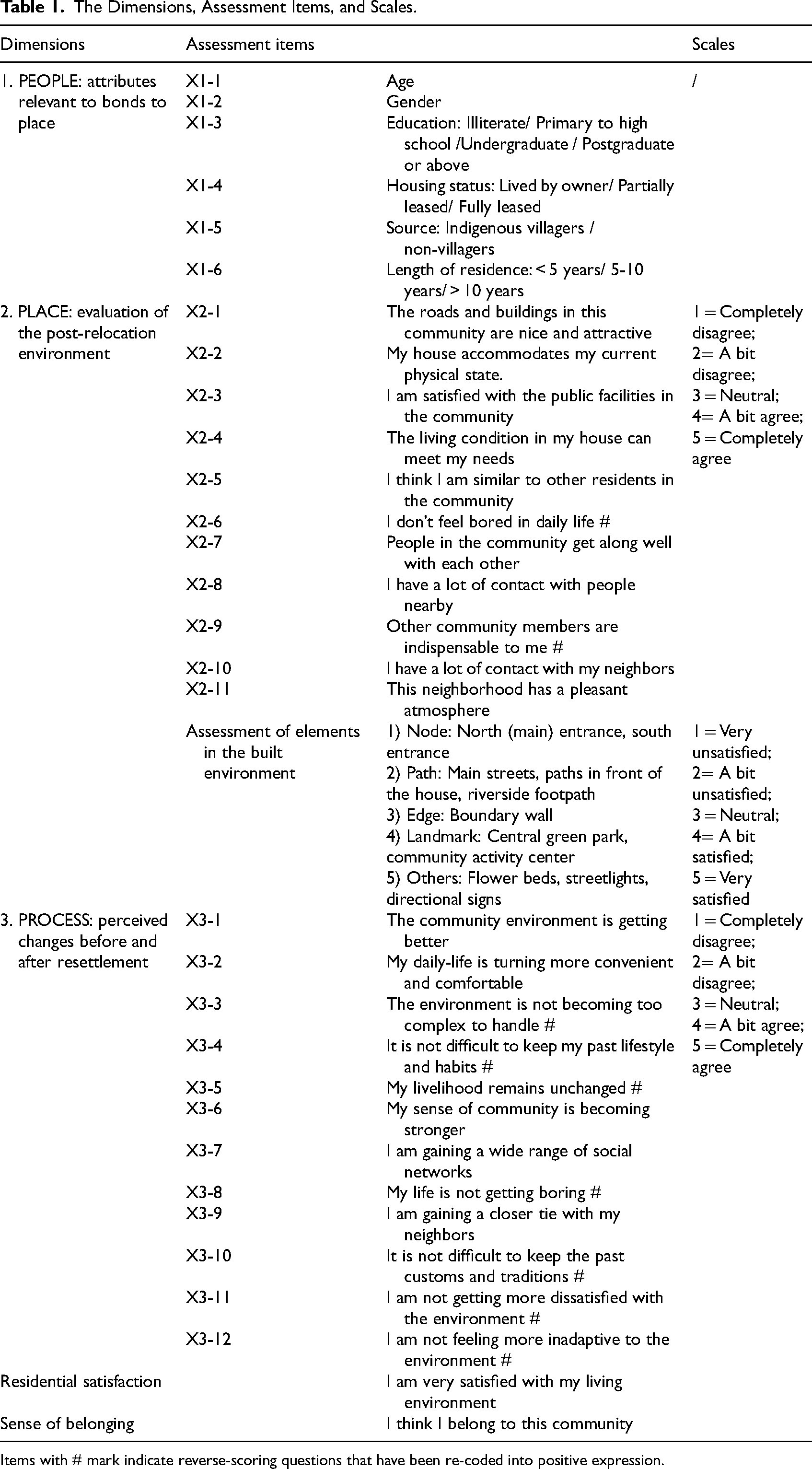
Items with # mark indicate reverse-scoring questions that have been re-coded into positive expression.
Data Analysis
The Shapiro-Wilk test revealed non-normal distributions of the data. Therefore, the Mann-Whitney U test was employed to examine the relationship between age groups and their scores on the “process” and “place” dimensions. To identify underlying structures or patterns within the variables, factor analysis with oblique rotation was conducted, as this approach allows for potential correlations between factors. Binary logistic regression analysis was then applied to explore the relationship between the common factors derived from the “process” and “place” dimensions and residents’ satisfaction and sense of belonging. Furthermore, by applying the Wald test, we were able to refine our understanding of the similarity of coefficients across different age groups in the binary logistic regressions.
Results
The “People” Dimension: Respondent Characteristics
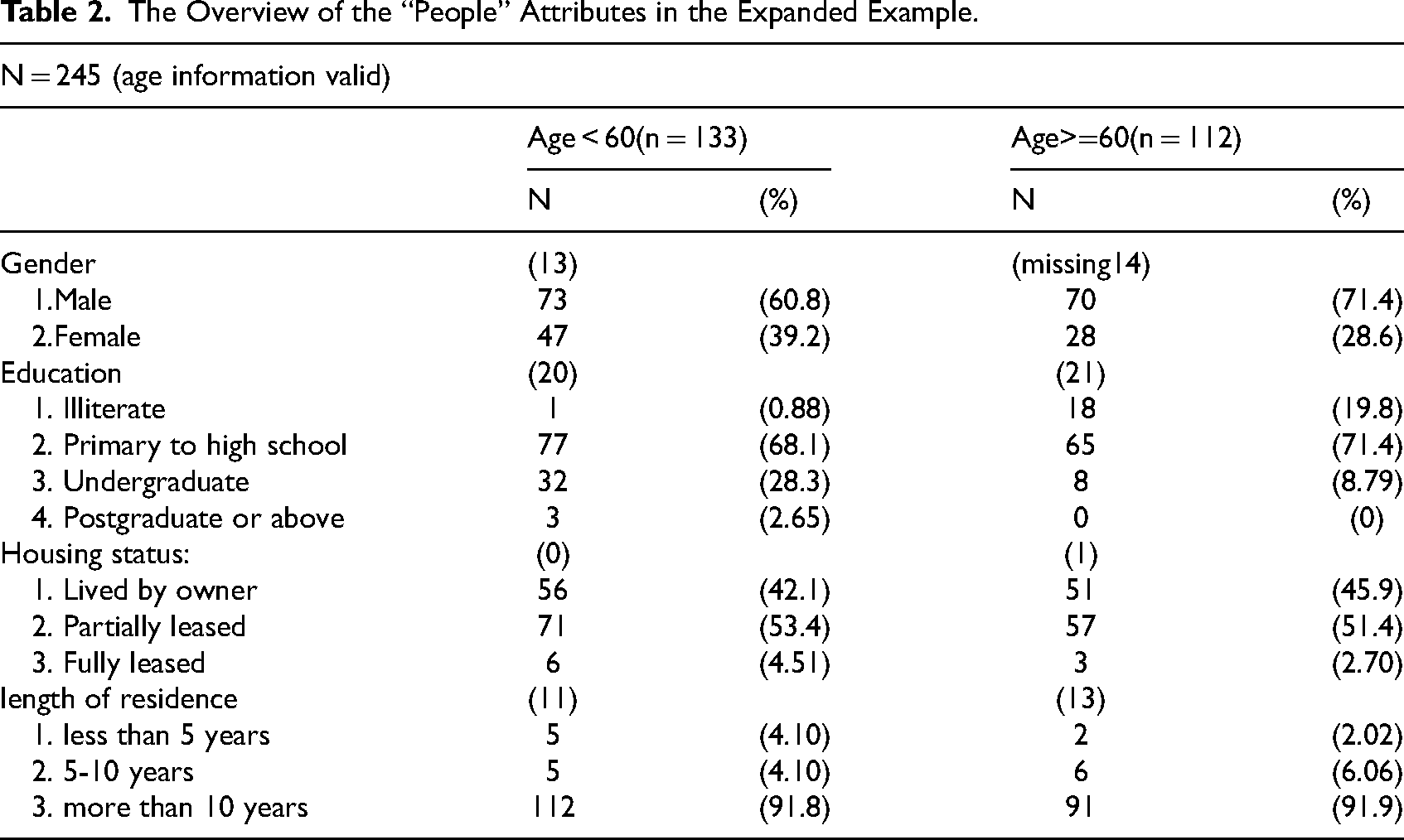
In the expanded sample (n = 245), 133 respondents (54.3%) were under 60 years old, while 112 (45.7%) were aged 60 or older. The strict sample (n = 195) included 108 (55.4%) younger individuals and 87 (44.6%) older individuals. The age range of respondents in the first sample was 26 to 84 years, with an average of 56.32 years. Among the older group, the average was 67.29 years. The sample was predominantly male (61.6%), with an even higher proportion of males in the 60 years and above age group (71.4%). Nearly 20% of the older group were illiterate, while a small percentage of participants (1.2%) held postgraduate degrees or higher, all of whom were younger than 60 years. Most participants (91.4%) had been residing in their current homes for more than 10 years. Table 2 summarizes the demographic features of the first sample, including the number of missing items (noted in parentheses).
The Overview of the “People” Attributes in the Expanded Example.
The “Place” Dimension: Evaluations of the Current Community Environment
The results reveal notable differences between younger and older residents in their perceptions of community satisfaction across various aspects (Figure 2). Both groups rated the aesthetic appeal of roads and buildings (X2-1) and satisfaction with public facilities (X2-3) below the midpoint (<3), reflecting widespread dissatisfaction. Younger residents, however, reported significantly lower satisfaction compared to older residents (Mann-Whitney U test, Z = -3.642, p < 0.05; Z = -3.419, p < 0.05). While both groups agreed that their housing met their current physical needs (X2-2), the older group reported slightly lower satisfaction compared to the younger group. A similar trend was observed regarding whether housing conditions met overall needs (X2-4), though the differences for both variables were not statistically significant. In terms of interpersonal relationships, older residents reported higher levels of harmony with community members (X2-7) and greater interaction with neighbors (X2-8) than younger residents. However, these differences did not reach statistical significance. Both groups expressed a sense of similarity with other residents (X2-5), with the older group reporting slightly higher satisfaction; this difference was also not statistically significant. Regarding feelings of boredom in daily life (X2-6), both groups indicated they did not experience boredom, though younger residents reported slightly higher satisfaction, which was not statistically significant. Both groups rated the community atmosphere positively (X2-11); however, the younger group's satisfaction was significantly lower than that of the older group (Z = -2.354, p < 0.05).
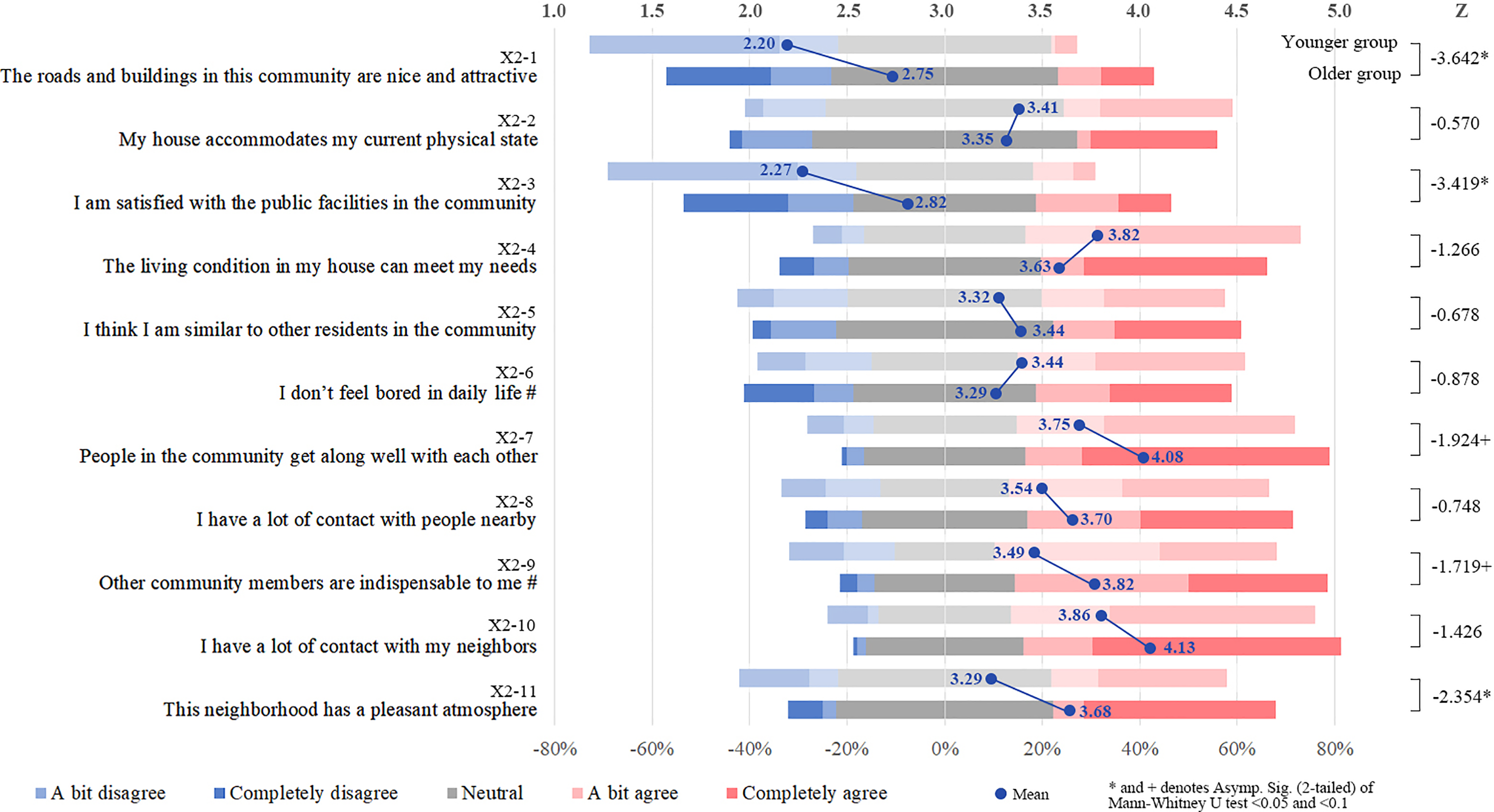
The result of the items in the “place” dimension.
Following factor analysis, four common factors were identified (KMO = 0.671; Bartlett's test for sphericity p < .001; cumulative contribution rate = 71.053%). These factors were labeled as: 1) Evaluation of Social Connection (ESC, including X2-7, X2-8, X2-10); 2) Evaluation of Community Quality (ECQ, including X2-1, X2-3); 3) Evaluation of Housing Quality (EHQ, including X2-2, X2-4); and 4) Evaluation of Community Cohesion (ECC, including X2-5, X2-6, X2-9, X2-11). The older group scored significantly higher than the younger group on ESC (Z = -2.208, p < 0.05) and ECQ (Z = -3.606, p < .001), while their scores were somewhat lower in EHQ. Nonetheless, no significant difference was observed in ECC and EHQ evaluations (Figure 3).
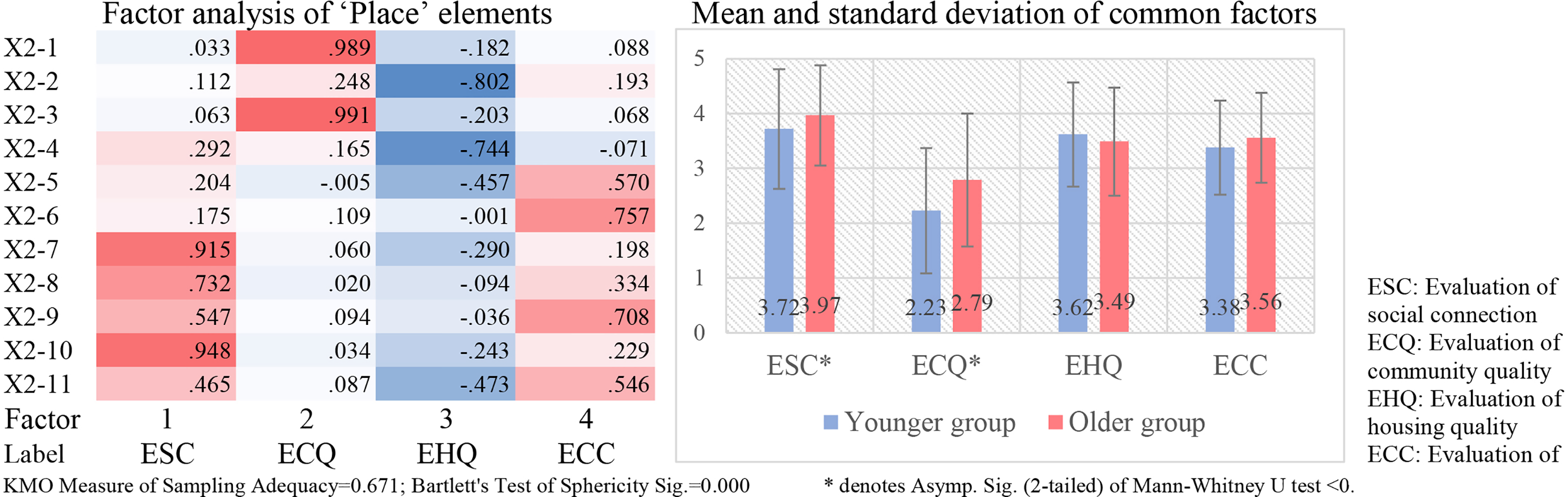
The result of factor analysis of the “place” dimension.
Residents rated specific physical environment elements (Figure 4) between 2.5 and 3.5, indicating neutral to negative perceptions overall. The older group tended to give slightly higher scores than the younger group. Significant differences were observed in their evaluations of the community center and streetlights (Z = -2.766, p < 0.05; Z = -2.635, p < 0.05). Older residents may place greater importance on elements they frequently interact with.
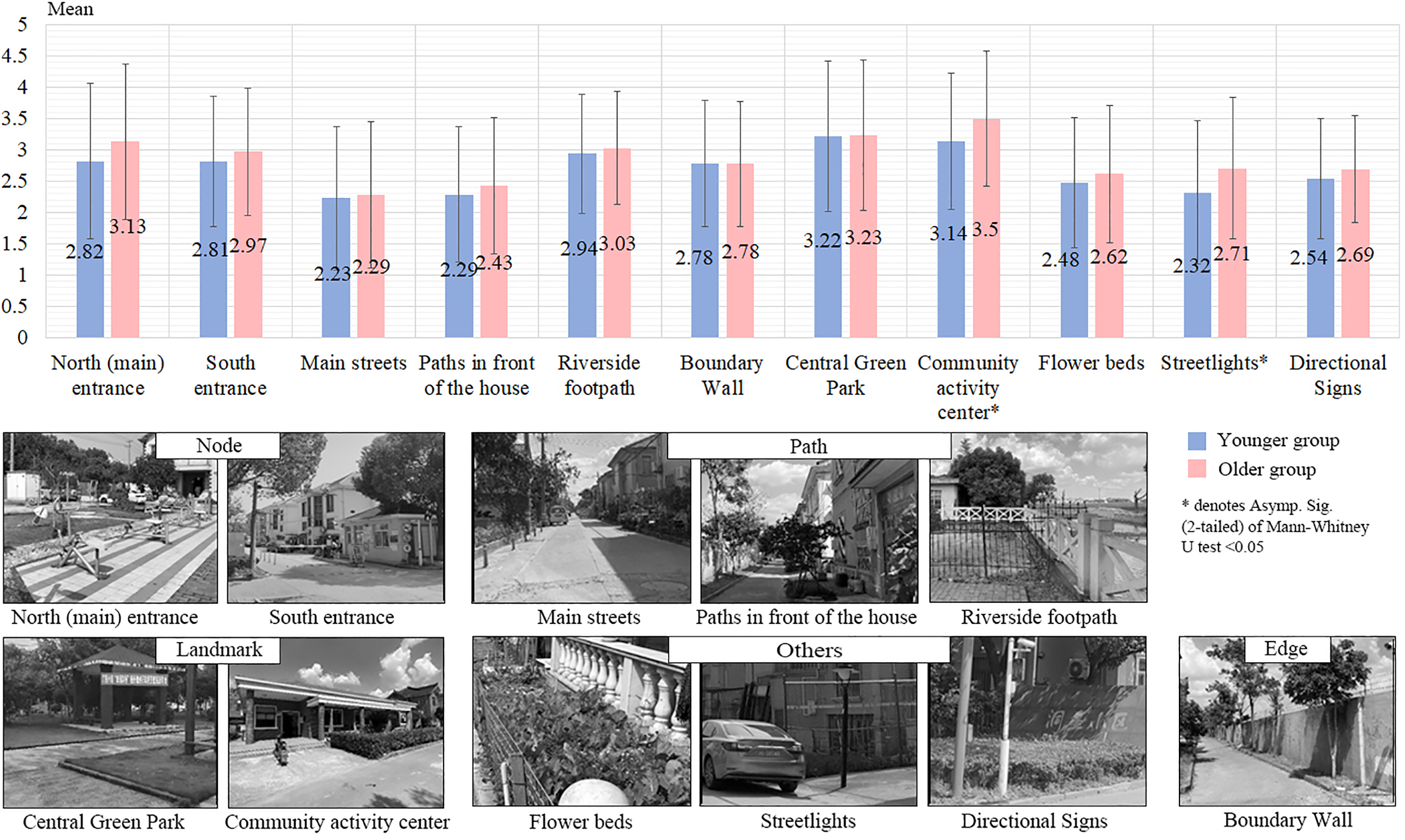
The images and results of specific physical environment elements.
The “Process” Dimension: Perceived Changes of the Affect, Cognition, and Behaviour
The results indicate that the younger group expressed lower levels of agreement compared to the older group regarding statements such as improvements in the community environment (X3-1), increased convenience and comfort in daily life (X3-2), the environment not becoming overly complex or difficult to manage (X3-3), the expansion of social networks (X3-7), and closer relationships with neighbors (X3-9). Despite these trends, none of these differences reached statistical significance. Conversely, the younger group showed slightly higher levels of agreement than the older group regarding the ease of maintaining past lifestyles and habits (X3-4), life not becoming monotonous (X3-8), the ease of preserving traditions and customs (X3-10), and unchanged adaptability to the environment (X3-12), though these differences were also not statistically significant. Notably, the younger group reported significantly lower agreement on enhanced community belonging (X3-6) and reduced dissatisfaction with the environment (X3-11) compared to the older group (Mann-Whitney U test, Z = -3.366, p < 0.05; Z = -2.606, p < 0.05). In contrast, the younger group exhibited significantly higher agreement regarding the stability of their livelihoods (X3-5) (Z = -3.964, p < 0.05) (Figure 5).
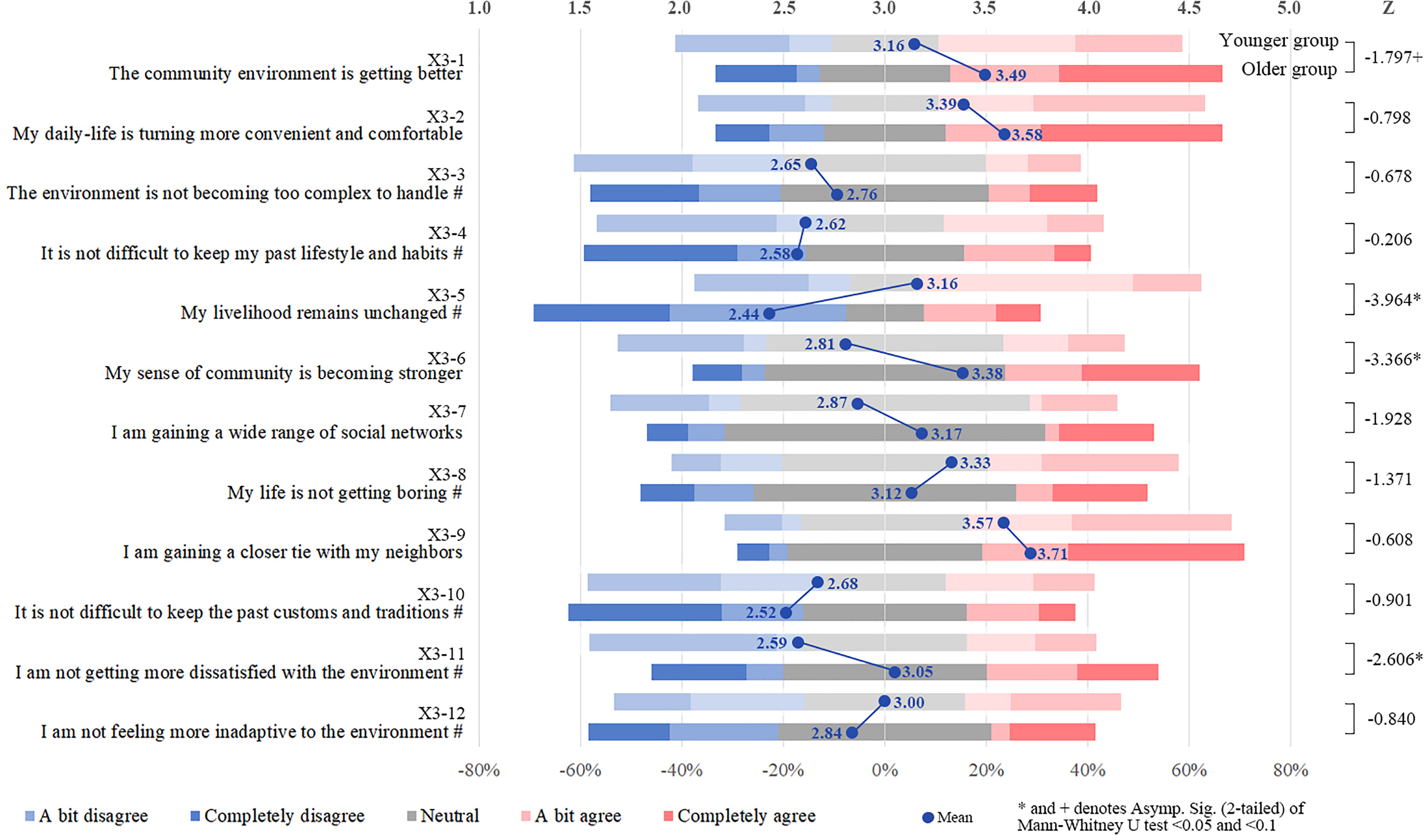
The result of the items in the “place” dimension.
Factor analysis identified three common factors (KMO = 0.671; Bartlett's test of sphericity, p < .001; cumulative explained variance = 71.053%): 1) Perceived Environmental Changes (PEC, including X3-1, X3-2, X3-6, X3-7, X3-9, and X3-11; 2) Perceived Life Changes (PLC, including X3-3, X3-8, and X3-12; and 3)Perceived Behavioural Changes (PBC, including X3-4, X3-5, and X3-10. The results suggest that older residents are less likely to perceive negative changes in the community environment but are more likely than younger residents to perceive changes in their daily lives and livelihoods. Furthermore, age groups were significantly associated with PEC (Z = -2.937, p < 0.01) (Figure 6).
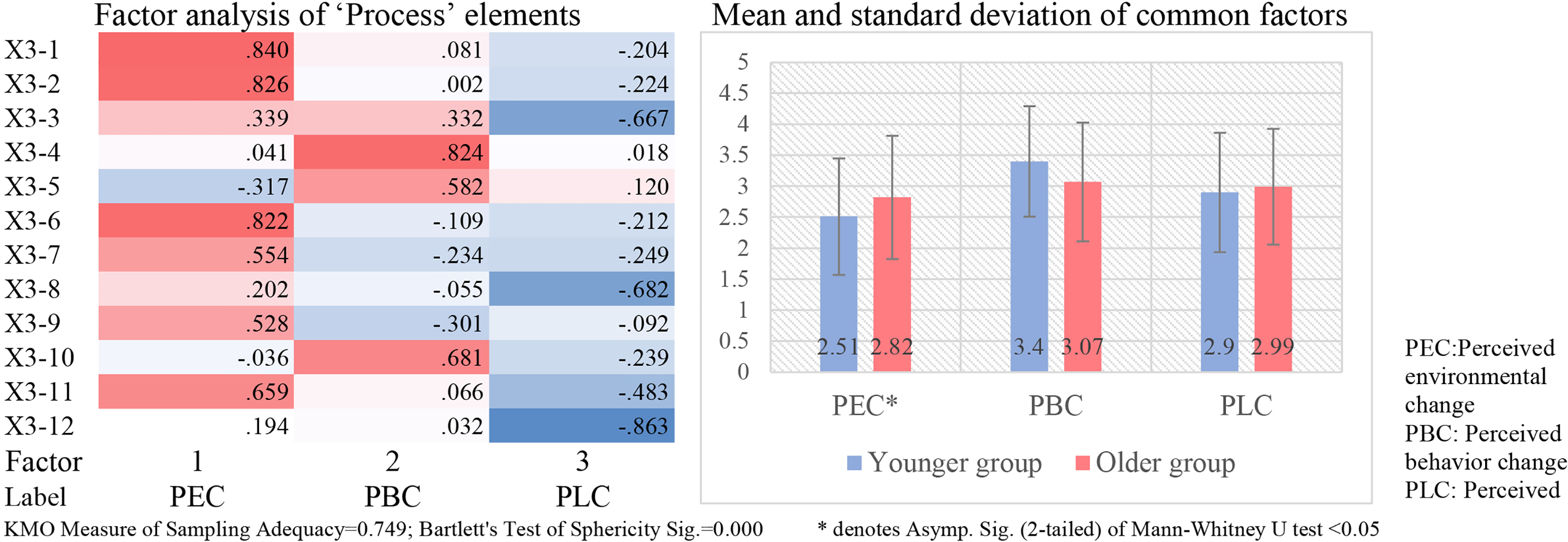
The result of factor analysis of the “process” dimension.
Correlation Between Person, Place, and Process with Residential Satisfaction and Belongingness
Among the older participants, 55 (17 + 38) older individuals, accounting for 49.1 percent of the group, expressed (“strongly” or “somewhat”) satisfaction with their residential surroundings, while 58(14 + 44) cases, or 51.8 percent of this group, reported a sense of belonging. Among younger participants (133 cases), these figures were 39.8 percent and 47.4 percent, respectively. Although the older group exhibited higher average scores for both residential satisfaction (3.75 vs. 3.36) and sense of belonging (3.79 vs. 3.50) compared to the younger group, the differences were not statistically significant.
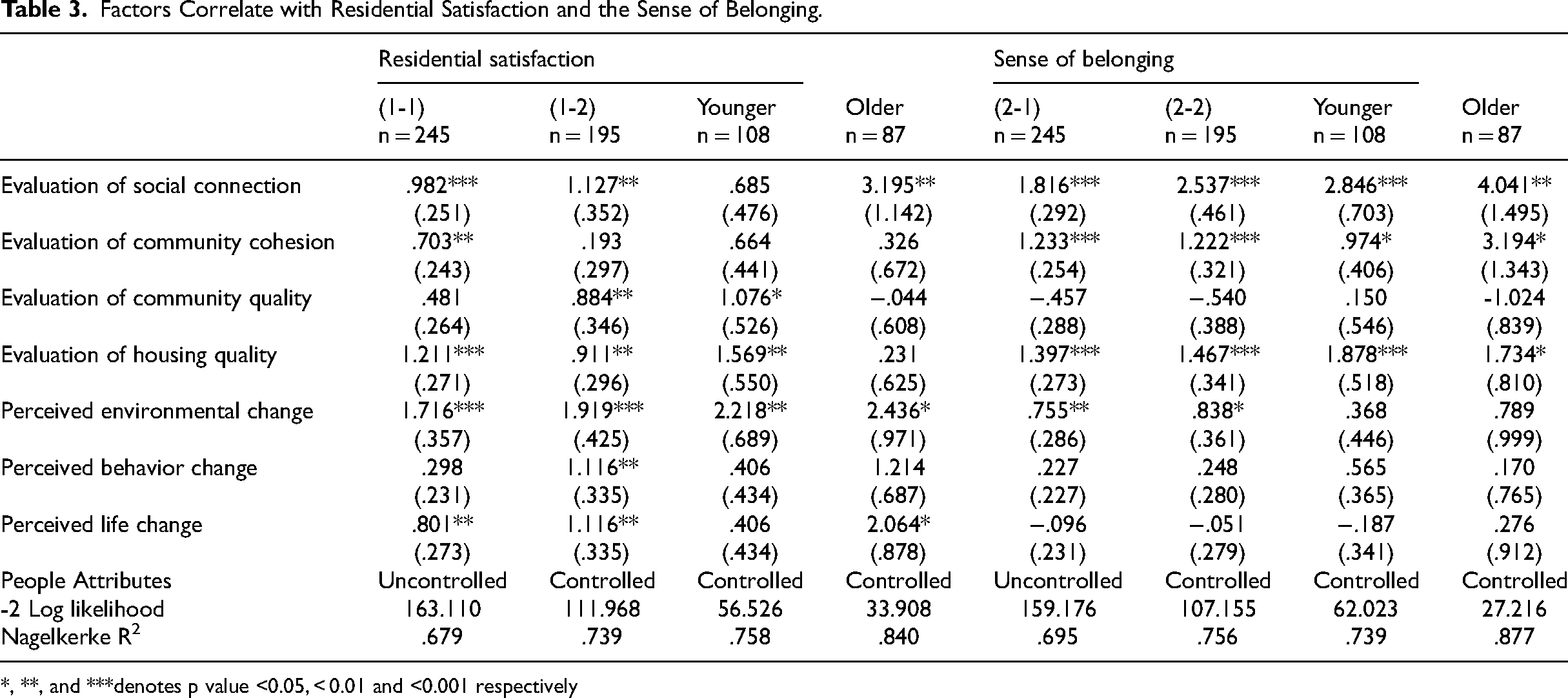
To examine satisfaction and belongingness as positive outcomes of strategic importance, the categories “strongly agree” and “somewhat agree” were merged into “satisfied” or “having a sense of belonging.” Conversely, “neutral,” “somewhat disagree,” and “strongly disagree” were combined as “not satisfied” or “not having a sense of belonging.” This recategorization created a binary dependent variable, enabling analysis through binary logistic regression. While this approach entails a minor loss of data granularity, it was deemed a necessary trade-off to produce interpretable and meaningful results. The analysis incorporated four (for “place”) and three (for “process”) common factors to explore their relationships with residential satisfaction and belongingness. Diagnostic checks confirmed acceptable multicollinearity levels among the independent variables (VIF < 10, tolerance > 0.1). The Nagelkerke R² values increased progressively in models with more demographic variables and when transitioning from the overall sample to age-specific subsamples (Table 3).
Factors Correlate with Residential Satisfaction and the Sense of Belonging.
*, **, and ***denotes p value <0.05, < 0.01 and <0.001 respectively
For younger participants, residential satisfaction was significantly associated with evaluation of community quality (ECQ; β=1.076, p = .041), evaluation of housing quality (EHQ; β=1.569, p = .004), and perceived environmental changes (PEC; β=2.218, p = .001). Their sense of belonging is related to evaluation of social connection (ESC; β=2.846, p = .000), evaluation of community cohesion (ECC; β=.974, p = .016), and EHQ (β=1.989, p = .000). For older participants, residential satisfaction was significantly related to ESC (β=3.195, p = .005), PEC (β=2.436, p = .012), and perceived life changes (PLC; β=2.064, p = .019). Their sense of belonging showed significant associations with ESC (β=4.041, p = .007), ECC (β=3.194, p = .017), and EHQ (β=1.511, p = .037).
To determine whether the effects of the “place” and “process” dimensions on residential satisfaction and belongingness differed significantly between age groups, a Wald test was conducted. The null hypothesis (βyounger = βolder) assumed equal regression coefficients across groups. Results revealed significant differences in the influence of ESC on residential satisfaction (Z = -2.02872, p = 0.042 < 0.05) and ECQ on the sense of belonging (Z = -2.218, p = 0.027 < 0.05), indicating that ESC and ECQ have significantly different impacts on residential satisfaction and sense of belonging between the younger and older groups, respectively.
Discussion
Involuntary resettlement, particularly from rural to urban areas, often weakens individuals’ sense of place, manifesting as diminished social ties and challenges of establishing a cohesive place identity. These unsuccessful transitions in place identity signify a disconnection from the new environment, hindering adaptation and integration (Z. Wang et al., 2020). In this study, both age groups reported above-midpoint scores for belongingness, social connection (ESC), and community cohesion (ECC). with ESC and ECC showing positive correlations with assessments of belongingness. ESC and ECC were positively correlated with a sense of belonging, with older residents scoring higher in ESC and ECC compared to younger participants, especially in aspects such as similarity with other residents, harmony, frequency of interaction, and residents’ perceived irreplaceability.
Despite improved living conditions in resettlement communities compared to rural areas, evaluations of specific physical environmental factors were predominantly negative, particularly among individuals under 60. Prior research suggests that environmental satisfaction is shaped by social comparisons and differing needs (Huang et al., 2018; Yan & Bao, 2018). Villagers in resettlement communities, unique products of China's urbanisation process (L. Zhou & Xiong, 2019), experience two transformative stages: initial population and material changes, followed by shifts in values, ideologies, cultures, behaviours, and lifestyles (Qian, 2017). The lag between these stages may widen the gap between objectively improved physical conditions and residents’ subjective evaluations. Elevated expectations arising from peer comparisons and new identities (e.g., transitioning from “rural” to more urbanized identities), may further contribute to this gap.
Across both age groups, mean scores for housing quality (EHQ) exceeded those for community quality (ECQ), indicating greater satisfaction with personal housing compared to broader community conditions. As the administrative system shifts from village autonomy to top-down governance, resettlement villages employ spatial restrictions and enclosure strategies for heightened supervision and control compared to dispersed agricultural villages or nomadic camps. A critical issue in resettlement communities is the mismatch between “usage inertia” (habits cultivated in rural living) and the top-down urbanized planning of public spaces. As previously noted, the loss of decision-making power and autonomy over public spaces may hinder the formation of people-place connections (Carr et al., 1992). As compensation, residents appear to focus on reinforcing their private “home” boundaries by erecting metal fences, walls, or tall plants around their houses and yards, engaging in informal spatial practices to “resist” formalized community spaces. When houses are viewed as clearly defined, bounded spaces, attachment to one's home becomes more significant than attachment to the community (Hidalgo & Hernández, 2001; Lewicka, 2011). The correlation between belongingness and EHQ (rather than ECQ) underscores this phenomenon, suggesting that the geographic scope of emotional bonds is shrinking in “moving-merged” communities.
While residential satisfaction is initially intended to reflect outcomes related to the physical environment, this study highlights the significant role in resettlement communities. Among older participants, ESC significantly contributed to residential satisfaction, supporting earlier findings that emotional bonds with places mediate satisfaction and environmental quality (French et al., 2014; Hur et al., 2010; Kim & Kaplan, 2004). Their residential satisfaction appears to hinge more on perceived neighbourhood relationships and social environmental quality than on the actual housing condition (Oswald et al., 2011; Pinquart & Burmedi, 2004). Interestingly, while both ESC and ECC are categorized as social factors, only ESC demonstrated significance in this study, suggesting that personal social relationships, such as interactions with neighbors and nearby individuals, hold greater importance for residential satisfaction than broader community connections. The lack of significance for ECC might reflect the unique characteristics of resettlement communities, where the loss of control could shift the focus from collective to individualistic ties. This finding diverges from earlier urban community studies, which emphasized the importance of social cohesion and trust, measured by factors such as willingness to help, intimate relationships, mutual trust, and shared values, in enhancing residential satisfaction among older adults (Y. Li et al., 2023). It also highlights the narrowing of psychological and emotional bonds in “moving-merging” communities.
Remarkably, older residents’ residential satisfaction was unrelated to specific physical environmental factors, of housing or community. Older individuals tend to express higher satisfaction and attachment to their homes, even when housing conditions are suboptimal. Evidence shows that, compared to other age groups, older individuals’ prolonged residence and stronger emotional attachment to specific places contribute to higher community satisfaction (Golant, 1984). Older participants also reported more positive perceptions of physical environmental changes. In urban sociology studies, both physical and social proximity have been shown to foster neighbourhood relationships (Cabrera & Najarian, 2015). Since increased spatial proximity raises the likelihood of weak ties (Felder et al., 2023), it is plausible that the higher-density living environments introduced by restructuring increase opportunities for older individuals’ daily interactions with neighbors. Given their heightened vulnerability to environmental challenges due to health limitations (H. W. Wahl & Oswald, 2010), older individuals may increasingly rely on highly cohesive community environments (Bromell & Cagney, 2014). While certain changes may positively impact satisfaction, none were significantly associated with belongingness.
Conclusion
This study presents an exploratory analysis of a unique resettlement strategy termed the “moving-merging,” characterized by a changing physical environment while preserving a stable social structure. This approach introduces a dynamic perspective on people-place relationships during the resettlement process. The findings reveal that, although living conditions improved, overall resident satisfaction did not significantly increase, particularly among younger groups. Conversely, older residents perceived the changes more positively, citing improved daily convenience and community environments as key benefits. However, mismatched formal public spaces and reduced resident autonomy disrupted the continuity of established lifestyles and daily behaviours. Shifts in identity and expectations may have further intensified “non-objective” evaluations of the current environment, partially supporting Hypothesis 1. Across all age groups, moderate-to-high levels of belongingness, social connection, and community cohesion were observed. The higher-density living environment in the resettlement community created opportunities for daily interactions among older residents, thereby strengthening their social ties and sense of belonging, validating Hypothesis 2. Nonetheless, environmental changes posed adaptation challenges, particularly for older residents, whose emotional attachment appeared more focused on their private housing rather than the broader community. This home-centered attachment reflects a narrowing scope of people-place interactions, partially supporting Hypothesis 3. These findings highlight the multifaceted and complex effects of the “moving-merging” community on residents’ satisfaction and belongingness.
When these phenomena are considered together, they suggest that a housing-centered foundation for people-place interactions has emerged. Policymakers should consider strategies to strengthen community cohesion and enhance residents’ sense of belonging by fostering a complementary relationship between physical and social environments. Policymakers can prioritize housing as a starting point, granting residents greater control over their homes and immediate surroundings. Integrating private spaces with a unified community aesthetic and fostering permeability between home and community interfaces can encourage interactions. Favorable physical environments facilitate community contact, which can strengthen bonds to the community (Kim & Kaplan, 2004; Lewicka, 2010). Community facilities should reflect comprehensive studies of residents’ daily lives and needs. While resettlement communities should aim to match the quality of urban neighbourhoods, public spaces need not replicate urban standards in style or function. Aligning public space design with rural residents’ practices and preferences could enhance their usability and foster positive evaluations. Idealized reference points for assessing living conditions should be recalibrated to align with realistic benchmarks, mitigating the negative psychological effects of unmet expectations. By fostering alignment between expectations and actual conditions, resident satisfaction and psychological well-being can improve.
Given the accelerating urbanisation trends globally, particularly in developing countries, this study provides insights into a distinct resettlement strategy for rural populations during urbanisation in developing contexts. However, its limitations are evident. First, the concepts of residential satisfaction and belonging are open to various interpretations across the literature. As highlighted initially, while it's essential to adopt operational definitions of key concepts aligned with the research objectives and specific contexts, this approach carries the risk of diverging from a unified, broadly accepted discourse—if such exists. We hypothesize that simplifying belongingness and satisfaction into a dichotomy could facilitate interpretation and enhance residents’ grasp of these abstract concepts, thereby rendering the findings “vaguely accurate.” Nonetheless, implementing relevant controlled trial questionnaires for comparison would help to improve the study's validity. Second, this research relied on common factors for regression modeling. While the KMO and Bartlett's sphericity tests confirmed the data's appropriateness for factor analysis and the relevance of common factors, the cumulative variance explained in the “process” dimension was less than 60%. Although no absolute standard exists, this suggests potential information loss from the original data. Given the unique aspects of this resettlement strategy, existing assessment tools were deemed unsuitable for our research aims. Additionally, the study occurred during the epidemic, and although Shanghai's outbreak management policies were relatively relaxed at the time, it remains uncertain if this context affected residents’ perceptions of the studied concepts.
Footnotes
Acknowledgments
The author would like to express sincere gratitude to the support received from the local committee, as well as the insightful comments from anonymous reviewers that helped to improve the article considerably.
Data Availability
The data that support the findings of this study are available from the corresponding author, upon reasonable request.
Declaration of Conflicting Interests
The author(s) declared no potential conflicts of interest with respect to the research, authorship, and/or publication of this article.
Funding
The author(s) disclosed receipt of the following financial support for the research, authorship, and/or publication of this article: This work was supported by the National Natural Science Foundation of China, the MOE (Ministry of Education in China) Project of Humanities and Social Sciences, (grant number 52478023, 24YJC760177).
