






Abstract
Objectives
This study develops and applies a Delphi-informed environmental audit framework to examine spatial responsiveness in community-based day centers for older adults.
Background
Daytime socialization spaces play an important role in supporting mobility, orientation, and psychosocial well-being in later life. Although international frameworks such as WHO Age-Friendly Cities, Universal Design, and NICE provide environmental guidance, structured evaluation tools for non-clinical community settings remain limited.
Methods
A three-round Delphi process involving experts in architecture, interior design, and gerontology refined an 18-item checklist organized into three macro domains and five subdomains addressing accessibility, environmental quality, safety, and supportive spatial features. The framework was applied to eight municipally operated day centers in Turkey. Group comparisons were conducted using non-parametric statistical tests, and visual-comparative synthesis incorporated photographic documentation.
Results
Item-level differences were identified in selected safety-critical and perceptual dimensions, including flooring safety, color contrast, and handrail provision (p < 0.05). No significant differences were observed in total checklist scores, suggesting comparable baseline performance across facility types. Configurational analysis indicated greater spatial compactness and clearer entrance articulation in Type 1 centers, whereas more fragmented layouts in Type 2 centers may increase orientation demands.
Conclusions
Findings suggest that spatial responsiveness in community day centers extends beyond basic accessibility compliance to the coherent integration of sensory, safety-related, and circulation cues. Given the limited sample size and single-city context, results should be interpreted as exploratory. The Delphi-informed framework demonstrates practical applicability; however, broader multi-site validation and integration of user-reported outcomes are needed to strengthen generalizability.
Keywords
Introduction
Aging entails physical, cognitive, and social changes that directly affect daily life and independence in later life (Anisimov & Khavinson, 2010; Crimmins, 2015). Population aging also drives transformations in spatial planning and social structures (Spasova et al., 2018). By 2030, 16% of the world's population will be aged ≥0 years, and those aged ≥80 years will reach 426 million by 2050 (OECD, 2023; UN DESA, 2023).
This demographic shift requires cities and public spaces to be (re)designed for older adults. In particular, daytime socialization spaces are expected to support mobility, social interaction, and psychological well-being (Plouffe & Kalache, 2010; WHO, 2015). Internationally, models such as Older Adult Day Centers (Germany), Golden Age Clubs (USA) and Senior Citizen Centers (India) are recognized as effective practices that foster participation (Dutch Ministry of Health, 2016; European Commission, 2016).
In Türkiye, comparable services Active Aging Centers, Type 1 facilities, and Type 2 facilities have expanded in recent years (Aksoy Özkan & Keleşoğlu, 2024; Özmete & Hussein, 2017). However, systematic analyses of design quality and user orientation remain limited. Existing studies largely focus on participation levels and social policy; evaluations of spatial design criteria are scarce (Çakıcı, 2024; European Commission, 2020; Korkmaz Yaylagül et al., 2021; Skibińska et al., 2019). Meanwhile, the older population in Türkiye surpassed 8.7 million in 2023, and national policy documents have called for proactive, sustainable approaches to aging services (TÜİK, 2023). Designing these facilities around physical accessibility, ergonomics, and opportunities for social interaction is therefore critical for maintaining social ties in later life (ASPB, 2016; Van Hooren & Becker, 2012). Accordingly, user-centered, responsive design is needed in addition to basic functionality (NICE, 2015; OECD, 2023). While participation-oriented studies are abundant, empirical evaluations linking spatial design quality to user experience in daytime socialization spaces remain scarce.
While participation-oriented studies are abundant, empirical evaluations linking spatial design quality to user experience in daytime socialization spaces remain scarce.
While the literature on day-center participation is extensive, empirical studies linking spatial form to user experience remain scarce. The present research situates day-center design within the framework of responsive environments (Davern et al., 2020) and inclusive design (Imrie, 2012), viewing architecture not only as a physical container but as an active agent shaping social participation. Concepts of legibility, affordance, and environmental fit (Lawson, 2005; Zeisel, 2006) are applied to understand how spatial cues can enable or constrain autonomy in later life.
Theoretical Framework and Rationale for Method
The theoretical framework integrates responsive-environment theory (Bentley et al., 1985; Lawson, 2005) with environmental gerontology to capture how environmental stimuli influence behavior, comfort, and orientation. While responsive design emphasizes adaptability, legibility, and sensory feedback as enablers of autonomy, these principles are seldom operationalized in community-scale, non-clinical contexts. To translate theory into measurable criteria, this study employed a Delphi-based consensus process, involving multidisciplinary experts in architecture, interior design, and gerontology. The Delphi method enabled the contextual adaptation of international frameworks WHO (2007, 2015), Universal Design Principles (Van Hoof & Kort, 2008), and NICE (2015) to the social, climatic, and infrastructural realities of Türkiye. Architecture is approached not merely as a physical container, but as an active agent shaping autonomy, orientation, and social participation in later life.
Architecture is approached not merely as a physical container, but as an active agent shaping autonomy, orientation, and social participation in later life.
Literature Summary and Research Rationale
Although many studies emphasize spaces that support social participation, rigorous evaluations of design quality and spatial accessibility are limited (Davern et al., 2020; Van Hoof and Kort, 2008). In higher-income contexts, day centers and senior clubs are monitored against criteria for physical access, wayfinding, and diversity of social areas (Ormazábal et al., 2025; Plouffe & Kalache, 2010; Quadagno, 2021). In Türkiye, however, no comprehensive criterion set is widely used; research often remains care-based rather than design-based (Çakıcı, 2024; Korkmaz Yaylagül et al., 2021). Evidence shows that small environmental modifications (e.g., grab bars, ramp gradients, lighting levels) can extend independence in both domestic and public contexts (Seo & Lee, 2023). While policy frameworks are well documented (Skibińska et al., 2019; WHO, 2007), the spatial adequacy of daytime facilities where older adults gather remains under-examined, underscoring the need for a systematic evaluation tool (European Commission, 2020).
The scope of healthcare design now encompasses non-clinical, community environments that influence health-related quality of life in older age. Recent reviews highlight the value of spaces supporting daily routines, social interaction, and psychological well-being (Liu & Lapane, 2009; Özmete, 2008). Daytime socialization spaces such as day centers, senior clubs, and Type 2 facilities are therefore critical components of the broader health-supportive environment. Although they do not provide clinical care, their spatial quality is central to meeting physical, emotional, and social needs.
Health Significance
Age-friendly spatial criteria are not merely architectural conveniences; they relate directly to outcomes valued in gerontology independent mobility, reduced disorientation, social participation, and perceived safety. International guidance underscores contrast, legible circulation, and handrails as foundations for active aging in public interiors (ASPB, 2016; Özmete, 2008; Quadagno, 2021; WHO, 2015). By auditing these criteria, this study translates design features into health-relevant, actionable targets for local services.
Novelty and Contribution
This research fills a significant gap by introducing an empirically grounded, theory-informed audit framework for evaluating age-friendly public interiors in a middle-income context. Unlike prior works focusing solely on policy or participation, it connects spatial form with well-being outcomes through a replicable, evidence-based method. The framework offers both a methodological innovation and a decision-support tool for municipalities seeking to retrofit community facilities in line with equitable aging-in-place principles.
Purpose and Research Questions
This study examines the extent to which daytime socialization spaces for older adults in Antalya meet physical, psychological, social, and cultural needs. It evaluates accessibility, ergonomics, and opportunities for social interaction, and tests the applicability of a Delphi-informed criterion set.
The research addresses the following questions: Which design criteria are appropriate for evaluating daytime socialization spaces for older adults? To what extent are centers in Antalya adequate in accessibility, ergonomics, and opportunities for social interaction? Are there statistically significant differences between Type 1 and Type 2 facilities in spatial adequacy?
Methods
Ethical Considerations
The study involved only facility-level observations and contained no personal or health-related data. Therefore, it was exempt from ethics review in accordance with institutional and national regulations. Verbal permission was obtained from all facility managers prior to data collection.
Research Design
The study adopted a mixed-method, multi-stage design integrating a Delphi-informed audit development and a field-based environmental assessment of community day centers for older adults.
The process comprised three main phases (Figure 1): Identification of design parameters through literature and guideline review, Delphi consensus process for checklist refinement, Empirical field audit of selected facilities followed by quantitative comparison.
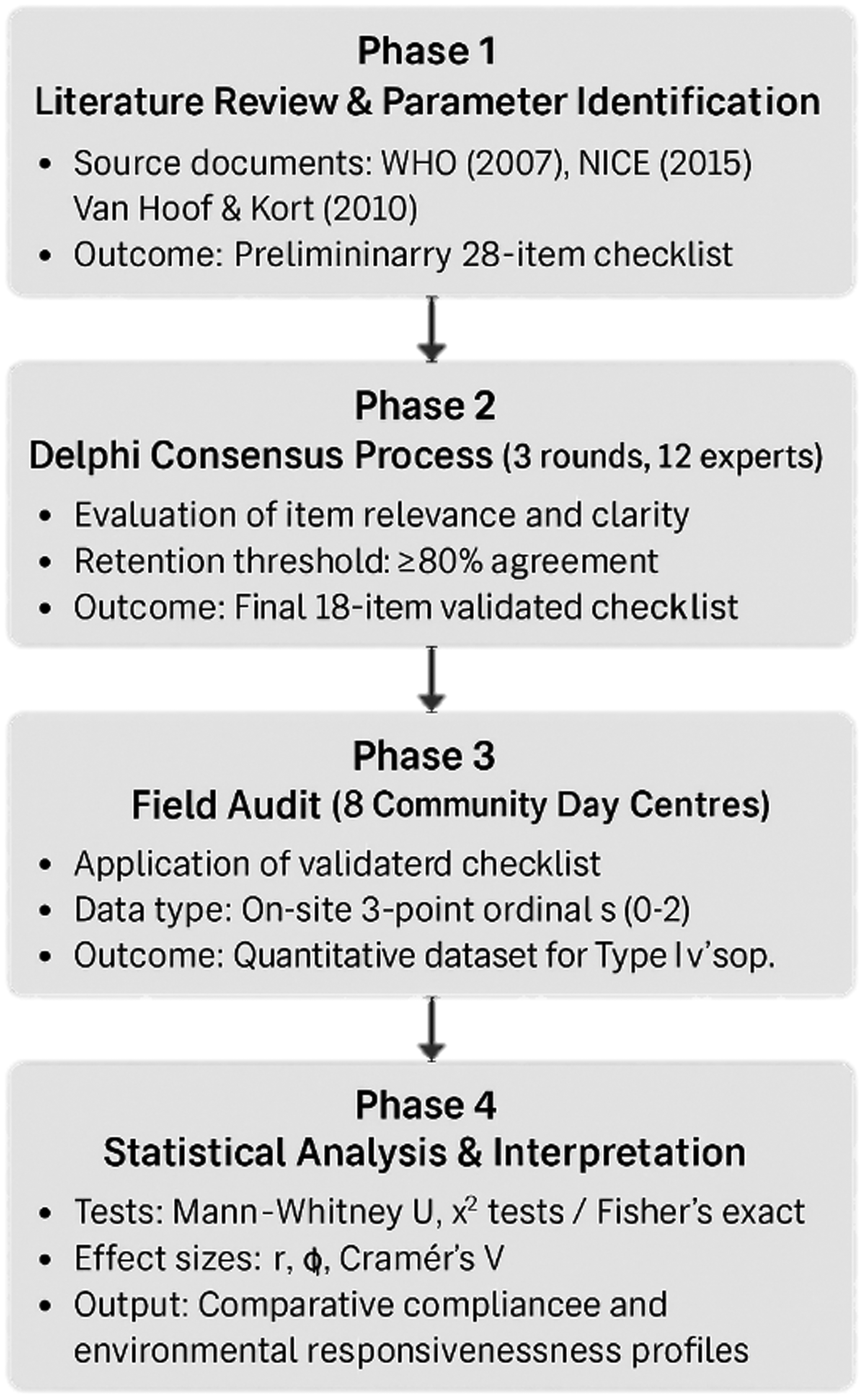
Research design process.
Phase 1—Identification of Design Parameters
An initial pool of 28 items was generated from internationally and nationally recognized age-friendly and universal design guidelines, including WHO Global Age-Friendly Cities (WHO, 2007), NICE NG32 (2015), and Van Hoof and Kort (2008). The items covered spatial organization, accessibility, comfort, and communication aspects relevant to the physical environment of community day centers.
Phase 2—Delphi Process
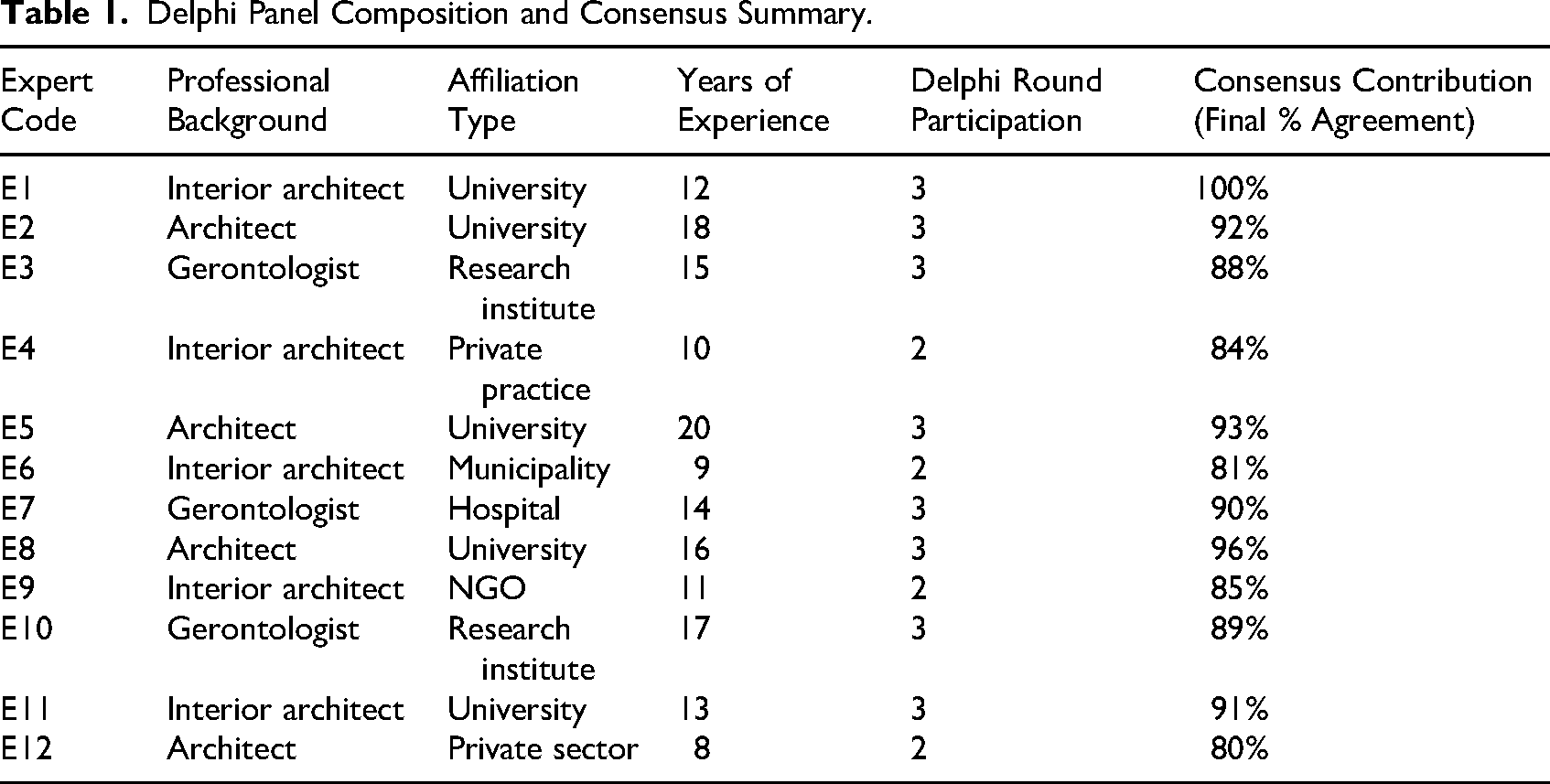
A three-round Delphi survey was conducted between June and August 2024 with 12 experts in interior architecture, architecture, gerontology, and healthcare design. Experts rated the clarity, relevance, and measurability of each item using a 5-point Likert scale (1 = not relevant → 5 = highly relevant).
The consensus threshold was defined as: ≥ 80% agreement = retain, 60%–79% = revise and re-rate in the next round, <60% = exclude.
Median (Mdn) and interquartile range (IQR) were used to quantify stability between rounds (acceptable stability = ΔMdn ≤ 0.5 and IQR ≤ 1.0).
After three rounds, 18 items achieved final consensus and were categorized under three domains: (1) Accessibility and circulation, (2) Environmental comfort, and (3) Furniture and interior equipment. This study translates age-friendly and responsive-environment theories into a Delphi-validated, measurable audit framework for non-clinical public interiors.
This study translates age-friendly and responsive-environment theories into a Delphi-validated, measurable audit framework for non-clinical public interiors.
Phase 3—Field Audit
Between September and November 2024, the validated checklist was applied in eight publicly operated community day centers in Antalya, located in the Mediterranean region of Türkiye.
Facilities were selected using the following criteria: open to community-dwelling older adults, publicly operated, accessible for physical inspection during the audit period.
Centers were grouped by construction period and typology: 3 newer (Type I) and 5 older (Type II) facilities.
Each item was scored on a 3-point ordinal scale (2 = fully compliant, 1 = partially compliant, 0 = non-compliant).
Domain-specific and total compliance scores were calculated (higher = better environmental performance).
All audits were conducted by a trained observer using a standardized protocol. Given the single-observer design, inter-rater reliability was not applicable but is acknowledged as a study limitation.
Data Analysis
Quantitative analyses were performed using SPSS v26 (IBM Corp., 2019)
Visual Summary
The methodological flow, including literature screening, Delphi rounds, and field validation, is illustrated in Figure 1. (Table 1 summarizes expert characteristics and consensus metrics; the short-form checklist is presented in Appendix A.)
Delphi Panel Composition and Consensus Summary.
Results
The results are organized into four sub-sections corresponding to: the visual–spatial documentation of facilities, checklist-based quantitative evaluation, thematic synthesis from observed data and Delphi priorities, and comparative facility performance analysis.
All findings were derived from on-site audits conducted using the 18-item age-friendly design checklist developed through the Delphi process (see Methods and Appendix sections).
Visual–Spatial Documentation
Eight community day centers for older adults were visually and spatially documented to identify typological differences (Figure 2). Type 1 (newer) centers exhibited well-defined, barrier-free entrances directly connected to the street and clearer wayfinding elements. Type 2 (older) centers typically provided access from secondary façades with limited visual cues, resulting in less perceptible entry zones.
Comparative visual synthesis of Type 1 and Type 2 centers across six spatial categories: (A) accessibility and entrance, (B) plan organization, (C) Interior layout, (D) wet areas, (E) outdoor use, and (F) wayfinding elements.
Spatial plans revealed compact layouts in Type 1 centers organized around a central multipurpose hall whereas Type 2 centers displayed more dispersed, corridor-based configurations. These differences increased orientation demands for users in Type 2 settings, as functional areas were visually disconnected and required longer circulation paths.
Interior arrangements in Type 1 centers demonstrated more consistent seating layouts, lighting, and color-contrast applications, aligning with age-friendly design principles. By contrast, Type 2 centers often contained heterogeneous furniture, inconsistent lighting, and areas with ambiguous functional identity.
Wet areas (toilets and kitchenettes) in Type 1 facilities were larger, better ventilated, and equipped with grab bars and non-slip flooring. Outdoor spaces were available in both facility types, but insufficient shading and seating comfort limited extended use, despite evidence that accessible outdoor amenities support active aging and social participation (Vine et al., 2012)
Checklist-Based Quantitative Evaluation
All eight centers (3 Type 1; 5 Type 2) were evaluated using the 18-item age-friendly design checklist.
Each item was rated on a 3-point scale (2 = fulfills; 1 = partially; 0 = does not fulfill). Mean total compliance scores were 56.33 ± 1.15 for Type 1 and 49.6 ± 6.95 for Type 2 centers. Mann–Whitney U tests indicated significant differences in flooring (p = 0.018)
Comparative Checklist Results of Community-Based day Centers by Design Domain (n = 8).
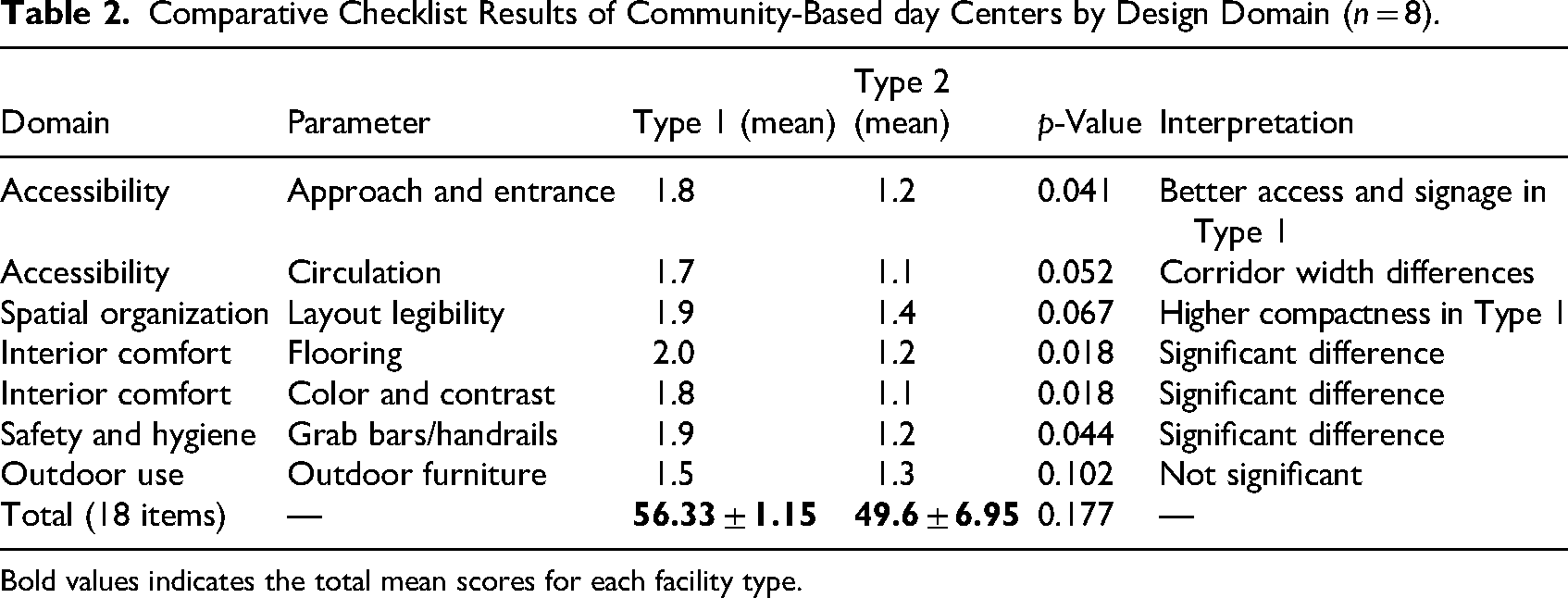
Bold values indicates the total mean scores for each facility type.
Thematic Synthesis from Observed Data and Delphi Priorities
Thematic analysis integrated field observations and expert feedback to identify five recurring design themes influencing user experience (Table 3). Experts prioritized accessibility, visual clarity, and surface safety as the most critical parameters for older adults. The alignment between observed deficiencies and Delphi priorities underscores the validity of the checklist approach.
Thematic Clustering and Priority Ranking Based on Field Observation and Delphi Results.
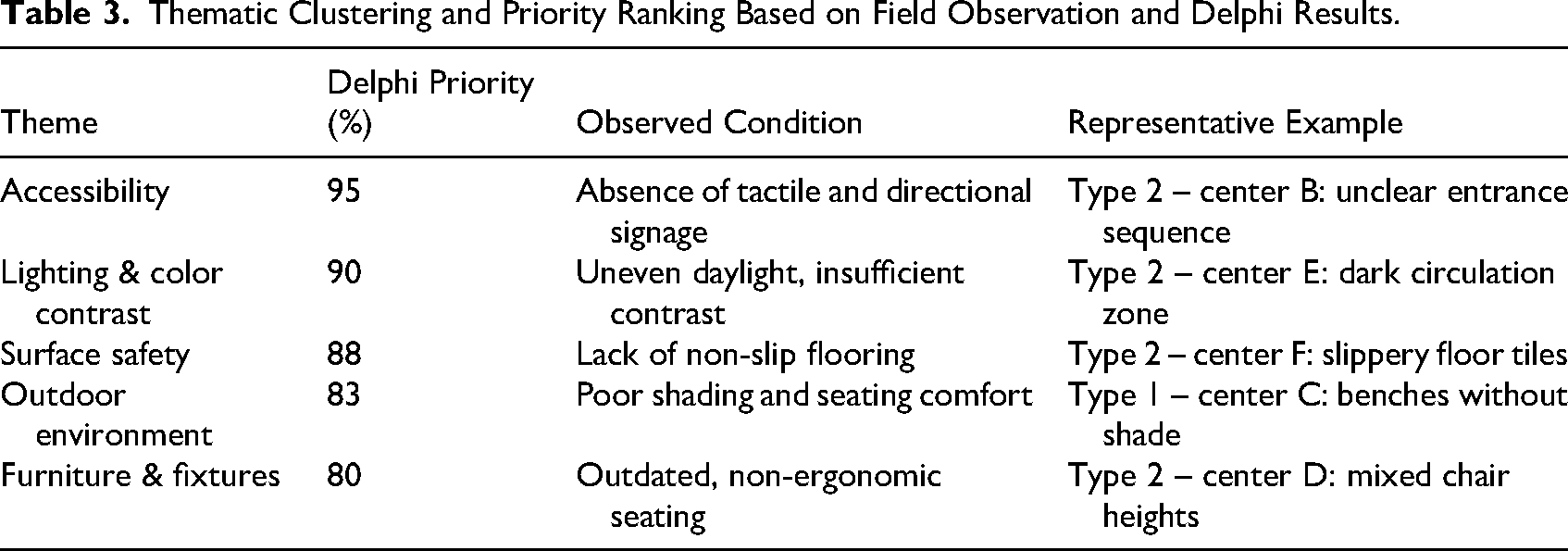
The synthesis highlights that spatial legibility, tactile guidance, and sensory balance are essential for age-friendly design, particularly for older adults experiencing cognitive decline (Marquardt et al., 2014). However, across both facility types, acoustic comfort, ventilation, and outdoor usability remain underdeveloped.
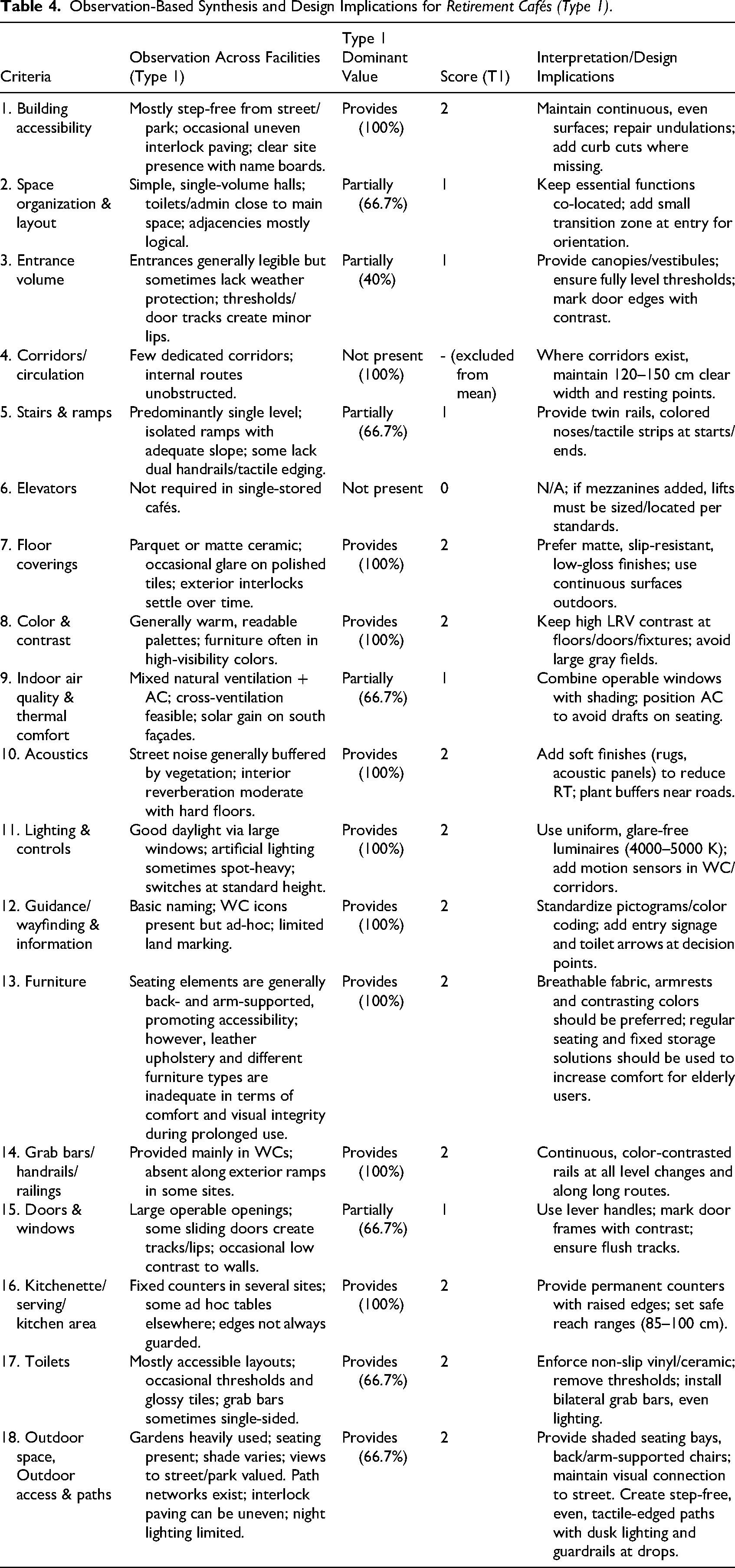
To deepen this synthesis, Tables 4 and 5 present detailed observation summaries and design implications for each facility type, translating checklist results into evidence-based spatial recommendations.
Observation-Based Synthesis and Design Implications for Retirement Cafés (Type 1).
Observation-Based Synthesis and Design Implications for Older Adult Houses (Type 2).
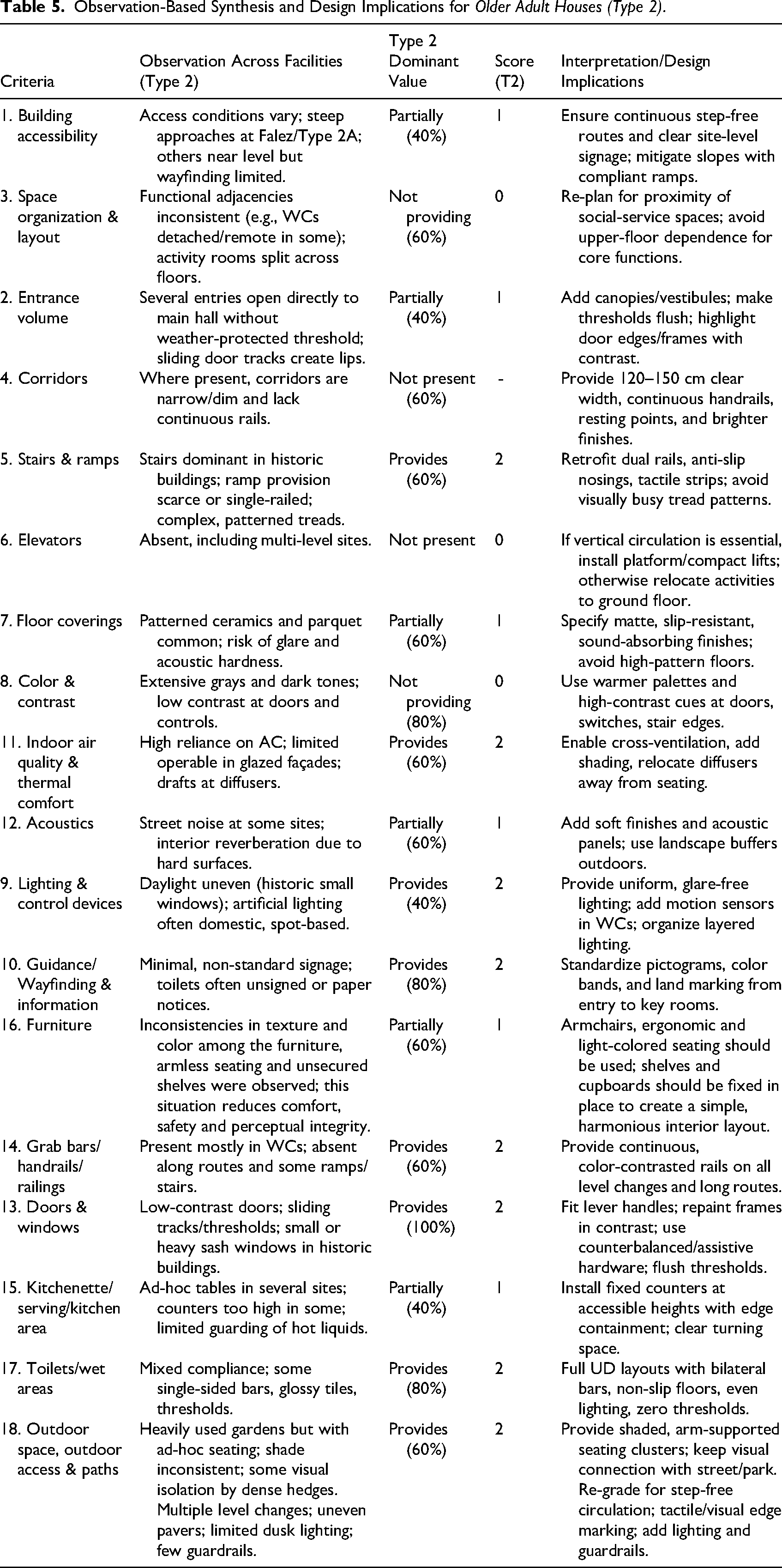
The synthesis highlights that spatial legibility, tactile guidance, and sensory balance are essential for age-friendly design. However, across both facility types, acoustic comfort, ventilation, and outdoor usability remain underdeveloped.
Comparative Facility Performance Analysis
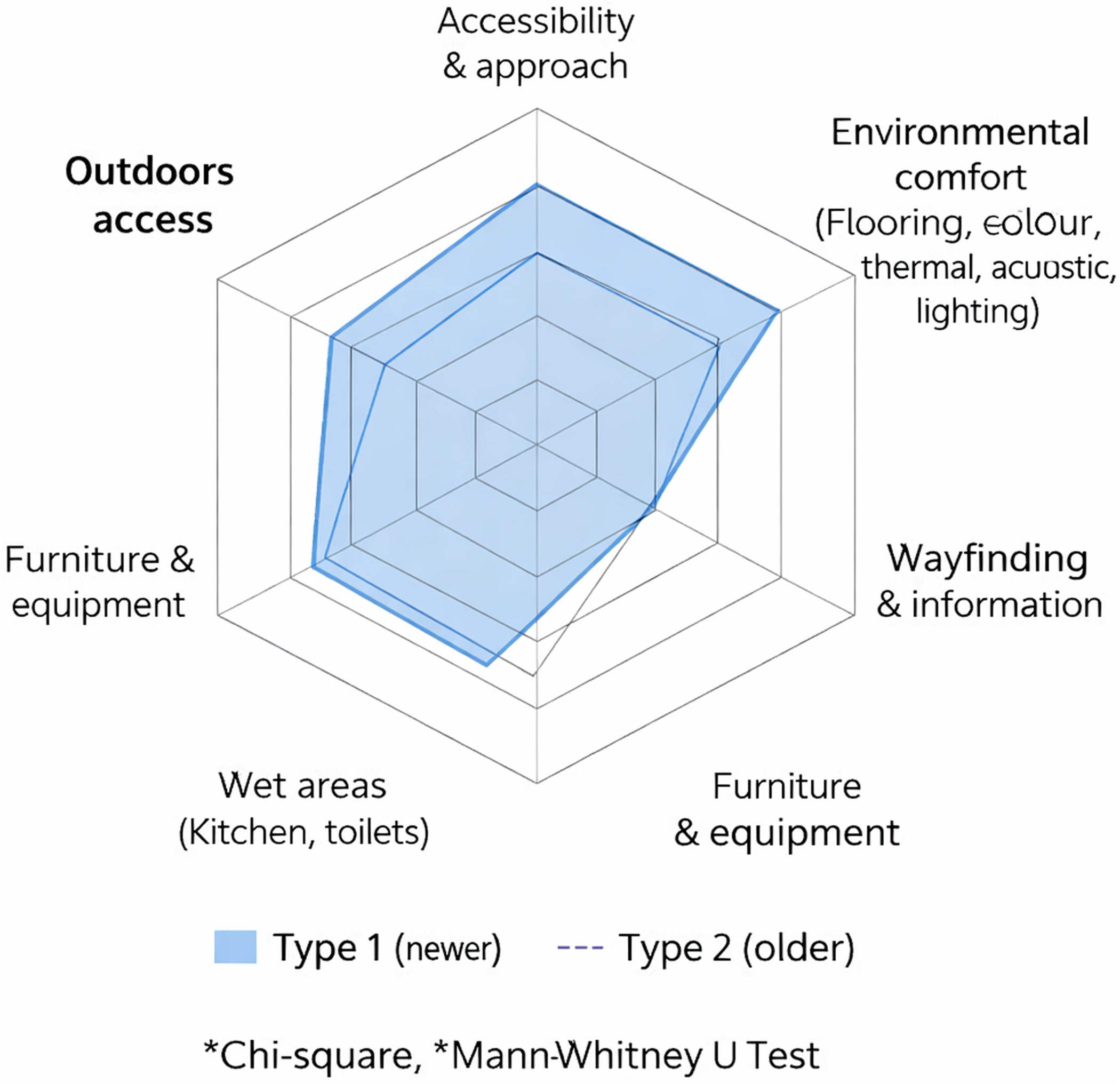
Across the sample, Type 1 facilities consistently demonstrated higher compliance in safety and orientation domains, while Type 2 facilities maintained only basic accessibility. Radar analysis (Figure 3) illustrates that Type 1 facilities outperform Type 2 in four of five domains, particularly in flooring, lighting, and handrail safety.
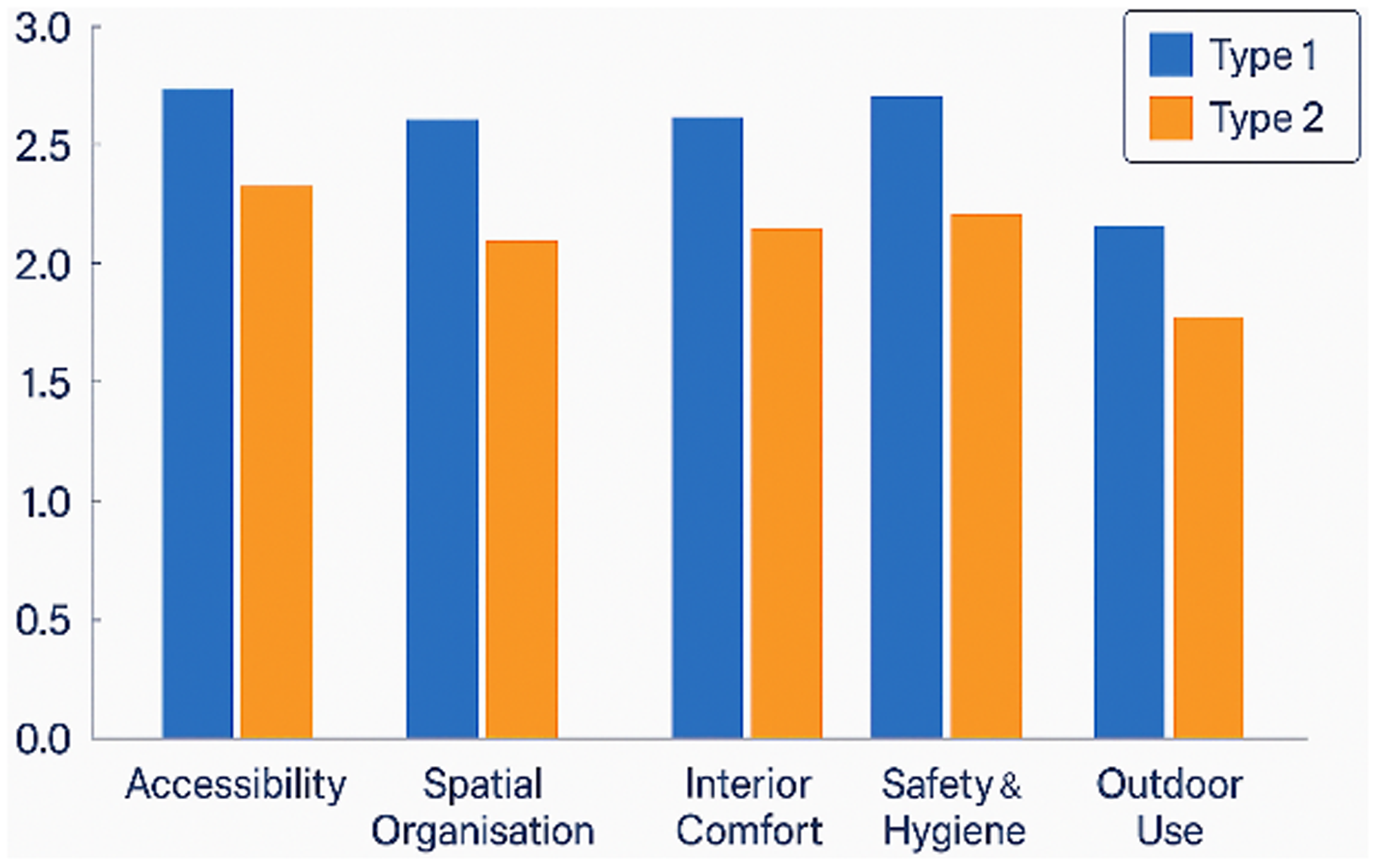
Radar chart of comparative performance across five design domains: accessibility, spatial organization, Interior comfort, safety and hygiene, and outdoor use. Type 1 facilities demonstrated stronger performance in safety- and orientation-related domains.
Although total checklist scores did not differ significantly, the pattern of domain-specific advantages indicates that the design evolution of newer facilities has shifted toward improved perceptual clarity and user control core aspects of age-friendly environments. Nevertheless, both facility types exhibited limited attention to acoustic control, thermal comfort, and multisensory engagement, suggesting that the design of day centers still prioritizes functional accessibility over experiential quality.
Visual-Comparative Synthesis of Facility Types
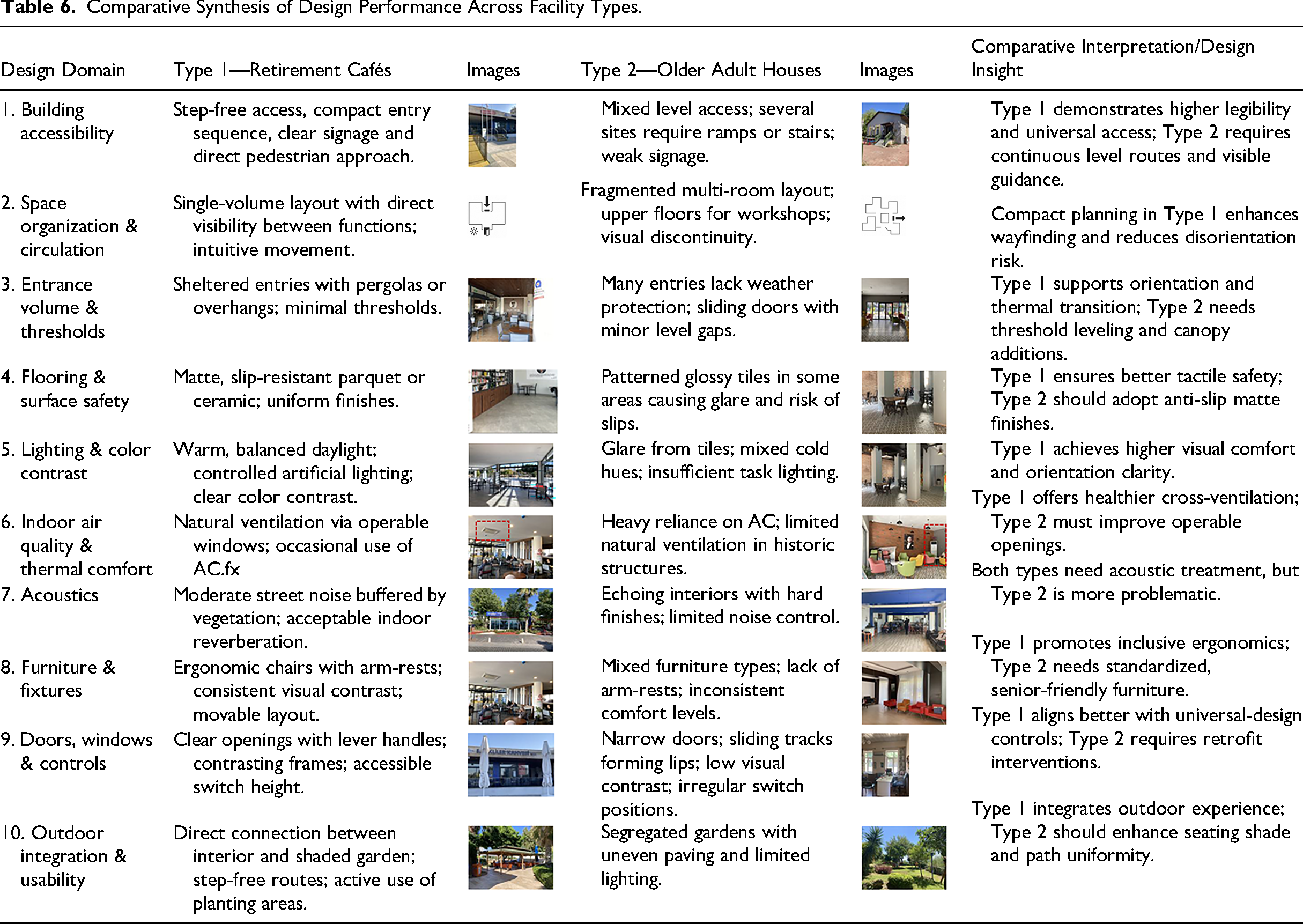
Table 6 presents a visual-comparative synthesis that integrates checklist-based evaluation and photographic documentation across facility types. Representative photographs illustrate spatial and environmental contrasts between Type 1 (Retirement Cafés) and Type 2 (Older Adult Houses), highlighting domain-specific variations in accessibility, lighting, and comfort. The visual evidence supports the analytical findings that Type 1 facilities provide more cohesive spatial organization and environmental control, whereas Type 2 facilities exhibit fragmented layouts and inconsistent ergonomic solutions. This synthesis further reinforces the typological divergence identified in Figure 4 and quantitative summaries in Table 6.
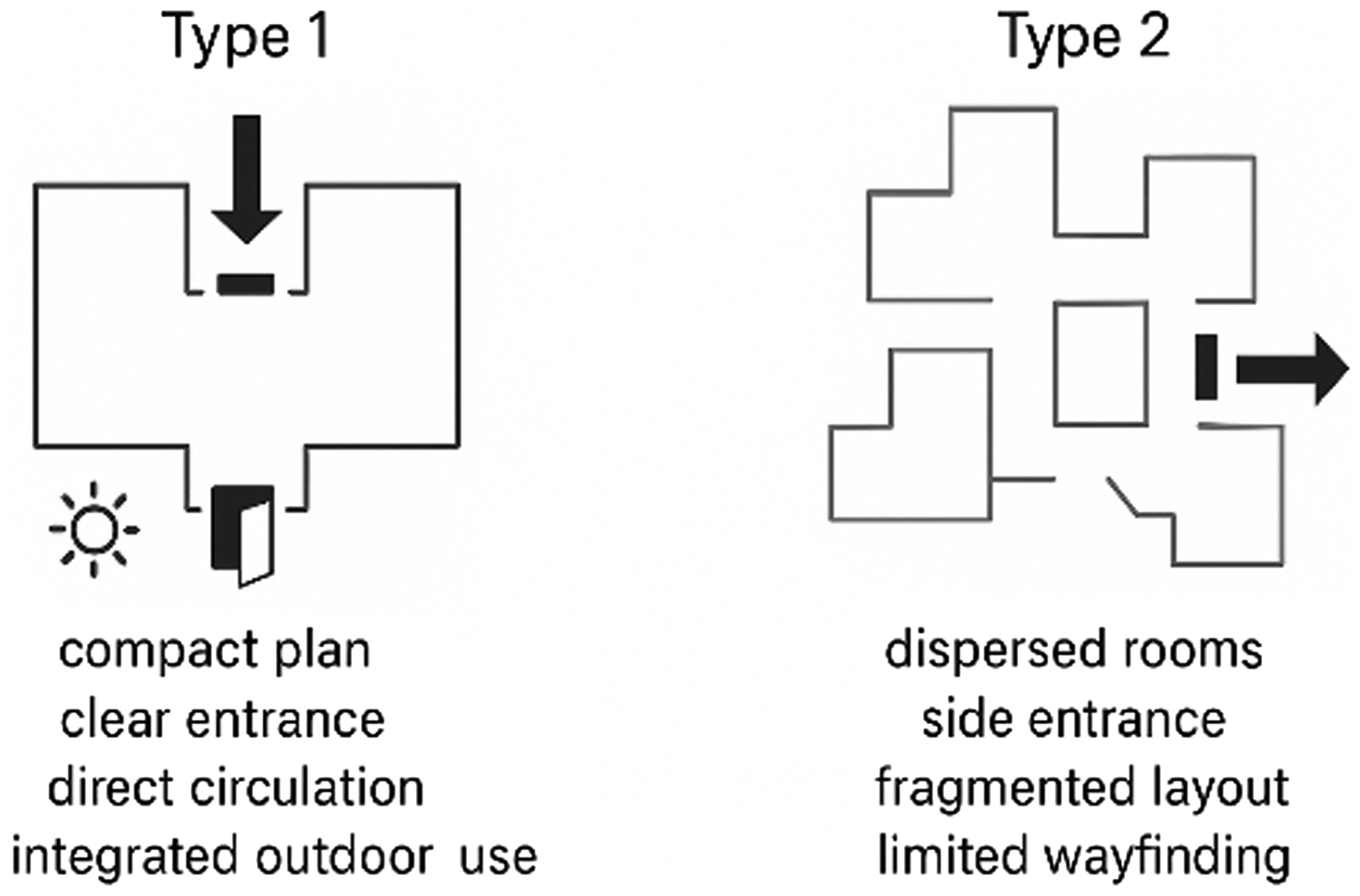
Plan type difference between Types 1 and 2 facilities.
Comparative Synthesis of Design Performance Across Facility Types.
Discussion
Interpreting Spatial Responsiveness
The findings show that spatial quality in community day centers extends beyond physical accessibility. As Bentley et al. (1985) argue, responsive environments depend on legibility, perceptual clarity, and coherent circulation. In this study, features such as contrasted floors, continuous handrails, and unobstructed sightlines served as primary enablers of legibility. These design cues supported mobility while reducing cognitive load, fostering the confidence necessary for autonomous movement echoing Lawson's (2005) emphasis on environmental clarity as a basis for independent action.
Conversely, insufficient signage, uneven lighting, and acoustic discomfort limited users’ ability to form spatial expectations. These results confirm that responsiveness is fundamentally multisensory, requiring coordination of visual, tactile, and auditory cues rather than isolated accessibility features.
Design Affordances and Sensory Orientation
The interaction between spatial configuration and sensory interpretation can be understood through the concept of affordance, the cues through which environments invite or constrain action (Lawson, 2005; Zeisel, 2006). Handrails, surface textures, and differentiated lighting operate as such affordances, guiding transitions between zones and promoting wayfinding. The checklist outcomes reveal that when these cues are inconsistent or absent, older adults encounter micro-barriers that accumulate into psychological fatigue.
This supports Van Hoof and Kort's (2008) view that the built environment functions as an external cognitive support system, reinforcing memory and orientation. From this standpoint, spatial design is not merely a physical framework but an active partner in sustaining perceptual coherence. These findings align with environmental aging theories emphasizing the reciprocal relationship between older adults and their physical environments (Wahl and Oswald et al., 2010).
Social Participation and Psychological Comfort
Spatial responsiveness also influences social engagement, a key determinant of aging well. Spaces with visual and physical continuity between activity zones fostered spontaneous interaction, an important factor in reducing social isolation among older adults (World Health Organization, , 2021). These patterns mirror Zeisel's (2006) concept of sociopetal design, in which layouts draw users together, enabling shared experiences.
Acoustic quality further shaped participation: noisy corridors reduced dwell time, while sound-absorbing finishes encouraged longer stays. Thus, day centers operate as micro-architectures of social well-being, where proxemic distance, perceptual clarity, and environmental comfort interact to shape inclusion.
Implications for the Global South
The Türkiye case offers insight into responsive design in resource-constrained settings. As highlighted in the Global South literature, effective design in such contexts depends on design intelligence, not capital intensity. Low-cost interventions contrast painting, non-slip flooring, continuous handrails, glare-free lighting significantly enhanced safety and spatial legibility.
These findings validate Imrie's (2012) argument that inclusivity is achieved through contextual adaptation rather than universal standardization. Local craftsmanship and municipal refurbishment programs can meaningfully operationalize age-friendly principles without major structural alteration, providing a scalable model for other middle-income regions.
Limitations and Future Directions
This study is limited by its facility-level focus and absence of direct user interviews, restricting deeper insight into lived experience. The single-observer audit also prevented inter-rater reliability assessment. The sample size (n = 8) and single-city scope constrain generalizability.
However, the Delphi-informed checklist offers a replicable foundation for future research. Subsequent studies should incorporate: larger and more diverse samples (including rural centers), inter-rater calibration, behavioral or ethnographic methods (e.g., sensory mapping, orientation tracing), user-reported outcomes such as perceived safety and spatial comprehension.
This would allow the method to evolve into a tool that links environmental performance with behavioral patterns, supporting participatory decision-making in public design.
Principal Findings
Across eight facilities, Type 1 (Retirement Cafés) outperformed Type 2 (Older Adult Houses) in safety- and orientation-related domains, with significant advantages in flooring, color contrast, and grab-bar provision. Both types showed persistent deficits in wayfinding, acoustic comfort, and circulation clarity. Although total checklist scores were not significantly different (p = 0.177), Type 1 demonstrated stronger integration of environmental cues that support autonomy and perceptual coherence.
Interpretation in Context
Type 1 facilities embody a participatory logic, characterized by visual connection and spatial continuity—attributes linked in environmental gerontology to orientation and perceived safety (Liu & Lapane, 2009). In contrast, Type 2 facilities reflect a more traditional, compartmentalized configuration aligned with residential-care models rather than public engagement.
These patterns echo global research showing that legibility and sensory clarity—not just physical Access—form the foundation of age-friendly design (NICE, 2015; WHO, 2007).
Outdoor Environments
Although both facility types provided outdoor areas, age-sensitive detailing such as shading, comfort seating, and microclimatic adaptation was limited. Consistent with restorative environment research (Kaplan & Kaplan, 2020; Skibińska et al., 2019), quality not mere provision determines outdoor usability. Future retrofits should therefore emphasize thermal comfort, tactile clarity, and visibility.
Practice and Policy Implications
Low-cost, high-impact design upgrades can improve the age-friendliness of existing centers: non-slip, high-contrast flooring at hazard points; glare-free, uniform lighting with clear zoning; continuous handrails and bilateral grab bars; pictorial and color-contrast wayfinding.
Embedding such criteria into public procurement, accreditation systems, and municipal audits could standardize baseline quality nationwide (ASPB, 2016; Quadagno, 2021). These modifications disproportionately benefit individuals with sensory or mobility decline, promoting equitable spatial usability even in low-resource contexts.
Strengths and Limitations
Strengths: Delphi-informed tool development, strong theoretical integration, multi-domain evaluation, visual–spatial triangulation of results.
Limitations: Small single-city sample, single-rater observation, cross-sectional design, absence of behavioral/user-experience data, no assessment of operational schedules or temporal variation.
Conclusion and Design and Planning Implications
This study extends the framework of responsive environments to community-based aging facilities. By translating universal design principles into a Delphi-validated audit tool, it demonstrates how measurable spatial criteria reveal the extent to which interiors support autonomy, perceptual clarity, and social inclusion.
Findings emphasize that sensory clarity, proxemic legibility, and environmental affordances are the foundations of spatial responsiveness. These elements transform architecture from a passive backdrop into an active medium of well-being. Spatial responsiveness is not a stylistic preference but an ethical obligation, ensuring that older adults can navigate everyday environments with dignity and confidence.
Spatial responsiveness is not a stylistic preference but an ethical obligation, ensuring that older adults can navigate everyday environments with dignity and confidence.
From a practical standpoint, effective interventions are not capital-intensive but strategically sensory: high-contrast flooring, continuous handrails, zoned lighting, and legible spatial hierarchies. Integrating these into municipal refurbishment programs can substantially elevate inclusivity, especially in the Global South.
Future research should integrate behavioral mapping, user experience methods, and cross-cultural comparison to refine global models of age-friendly design.
Ultimately, the findings affirm that spatial responsiveness is not stylistic but an ethical obligation of architecture, ensuring that older adults can navigate daily environments with dignity.
Recommendations
Adopt a standardized age-friendly checklist for routine municipal audits. Prioritize contrast, lighting, handrails, and circulation clarity in refurbishment projects. Embed checklist criteria into procurement and accreditation mechanisms. Expand research beyond a single city; incorporate inter-rater calibration and user-reported outcomes.
Implications for Practice
Supplemental Material
sj-docx-1-her-10.1177_19375867261451416 - Supplemental material for Age-Friendly Interiors in Practice: Evaluating Spatial Responsiveness through a Delphi-Informed Design Audit
Supplemental material, sj-docx-1-her-10.1177_19375867261451416 for Age-Friendly Interiors in Practice: Evaluating Spatial Responsiveness through a Delphi-Informed Design Audit by Makbule Berfin Büker and Zuhal Kaynakcı Elinç in HERD: Health Environments Research & Design Journal
Footnotes
Acknowledgements
The author gratefully acknowledges the Scientific and Technological Research Council of Türkiye (TÜBİTAK) for scholarship support (2210-A). The author also thanks the experts who participated in the Delphi study for their valuable insights, and the staff of the community day centers for facilitating field access and providing contextual information during site visits. Artificial intelligence-based language support tools (ChatGPT, OpenAI) were used during the revision process to improve clarity, structure, and academic language. All intellectual content, analysis, and interpretations remain the sole responsibility of the authors.

Ethical Approval
The study involved observational documentation of public facilities and expert consultations only. No human or animal participants were directly involved, and ethical approval was therefore not required.
Author Contributions
Author M.B.B. designed the study, collected and analyzed the data, and drafted the manuscript. Author Z.K.E. supervised the research, contributed to the conceptual framing, and provided critical revisions of the manuscript.
Funding
The authors disclosed receipt of the following financial support for the research, authorship, and/or publication of this article: This work was supported by the Türkiye Bilimsel ve Teknolojik Araştırma Kurumu
Declaration of Conflicting Interests
The authors declared no potential conflicts of interest with respect to the research, authorship, and/or publication of this article.
Supplemental Material
Supplemental material for this article is available online.
References
Supplementary Material
Please find the following supplemental material available below.
For Open Access articles published under a Creative Commons License, all supplemental material carries the same license as the article it is associated with.
For non-Open Access articles published, all supplemental material carries a non-exclusive license, and permission requests for re-use of supplemental material or any part of supplemental material shall be sent directly to the copyright owner as specified in the copyright notice associated with the article.
