







Abstract
Background
With its rising popularity of pickleball, particularly in the aging population, comes concern for potential injuries that previously rarely affected this patient cohort. The purpose of this study was to investigate the trends of pickleball-related Achilles tendon injuries.
Methods
A retrospective case series was performed to determine the trends associated with pickleball-related Achilles tendon injuries over the last 10 years. A database search of all Achilles tendon ruptures (ICD-10 S86.0) presenting to a large, multistate, subspecialty referral orthopaedic clinic between January 2013 and June 2023 were identified and included in the study. Pickleball-related injuries were identified via query and confirmed with manual chart review. The incidence of pickleball-related injuries, as well as patient demographics and rate of surgery was determined and compared with the total population during that time period.
Results
A total of 2684 patients who suffered an Achilles tendon injury between January 2013 and June 2023 were identified, with 43 patients meeting the inclusion criteria for pickleball-related Achilles tendon ruptures. The number and overall incidence of pickleball-related Achilles tendon injuries has been increasing since 2016, excluding 2020 where there was a large decrease likely due to the COVID-19 epidemic. Pickleball was associated with older age at time of injury (64.5 vs 48.6, P < .001) as well as a lower BMI (26.6 vs 29.4, P < .001). In addition, patients who sustained a pickleball-related Achilles tendon injury were more likely to undergo surgery (67.4% vs 45.4%, P = .008).
Conclusion
The rising popularity of pickleball and its associated injuries poses a significant risk to the aging population, with Achilles tendon injuries occurring in older individuals and resulting in a higher likelihood of undergoing surgery.
Level of Evidence:
IV; retrospective case-series
“The rising popularity of pickleball and its associated injuries poses a significant risk to the aging population, with Achilles tendon injuries occurring in older individuals and resulting in a higher likelihood of undergoing surgery.”
Introduction
Pickleball is one the fastest-growing sports in the United States. 1 While similar to tennis, pickleball is played on a smaller, 44 ft × 20 ft court compared with the 78 ft × 36 ft sized tennis court. 2 For the aging population, pickleball has created the opportunity for more physical activity in a group that traditionally may not have been able to continue to participate in paddle type sports. This has resulted in many health benefits, mainly by improving cardiorespiratory fitness, while also providing opportunities for social interaction. 3
There has been a significant amount of scientific literature published concerning the demographics and treatment regarding common tennis injuries; however, current research into pickleball injuries is growing but incomplete. Prior papers have analyzed the most common emergency room pickleball injuries across the country; however, there is little data available regarding the treatments of individual patients. 4 - 6
Acute rupture of the Achilles tendon is one of the most common sport-related injuries of the foot and ankle, particularly in the 49- to 60-year age group. 7 The incidence of Achilles tendon rupture has been rising in the past decade, placing a greater demand on foot and ankle surgeons to develop optimal treatment and rehabilitation protocols to better care for this increasingly diverse population.8,9 While the epidemiology and treatment of Achilles tendon ruptures with regard to tennis-related injuries has been investigated, little is known concerning how treatment may differ with regard to pickleball-related injuries and how this relates to the aging population. 10
With the increasing diversity of pickleball participants (age, skill level, athletic fitness, etc.), it is valuable for foot and ankle surgeons to become knowledgeable about the common risks and injuries involved with this increasingly popular new sport. The purpose of this study was to investigate the trends of pickleball-related Achilles tendon ruptures over the last decade. Our hypothesis was that Achilles tendon injuries from pickleball will show a predilection toward the aging population and the incidence of this injury will continue to rise as the sport gains popularity.
Materials and methods
A retrospective case series was performed to determine the trends associated with pickleball-related Achilles tendon injuries over the last 10 years. Following Institutional Review Board (IRB) approval at Thomas Jefferson University (study number #iRISID-2023-2264), a database search was performed for International Classification of Diseases–10th edition (ICD-10) for Achilles tendon rupture (S86.0). In all, 2684 consecutive Achilles tendon ruptures presenting to a large, multistate, subspecialty referral orthopaedic clinic between January 2013 and June 2023 were identified and included in the study. Of these patients, the number of patients who suffered an Achilles tendon rupture from pickleball was identified by querying for the keywords “pickleball” and “pickle ball” from patients’ charts. In-depth chart review was performed to confirm the exact mechanism of injury. Achilles tendon injuries were diagnosed, in general, based on clinical exam; however, when equivocal, diagnostic imaging such as ultrasound or magnetic resonance imaging (MRI) was used to confirm diagnosis. Of the 2684 patients who suffered from an Achilles tendon injury between January 2013 and June 2023, 43 met the inclusion criteria for pickleball-related Achilles tendon ruptures.
During chart review, the data collected included demographic information, such as patients’ age, sex, and body mass index (BMI) and past medical history, and social history. Patient charts were also reviewed for details regarding the date of injury, date of encounter, management, and definitive treatment. In addition, any documented clinical outcomes and complications relevant to the patient’s injury were collected. The yearly and total incidence of pickleball-related injuries was determined by comparing to the total amount of Achilles tendon injuries over the same time period.
Continuous data are presented as weighted mean and percentage of associated cohort along with their 95% confidence intervals (CIs). The weighted mean was used to account for the varying number of injuries each year to ensure that years with increased injury frequency had a proportionate impact on the overall average. Independent t-tests were utilized for parametric continuous data and Mann-Whitney U tests were utilized for nonparametric continuous data. A P-value of less than 0.05 is indicative of statistical significance. All statistical analyses were done using R Studio (Version 3.6.3, Vienna, Austria).
Results
Of the 2684 identified Achilles tendon ruptures from January 2013 to June 2023, 43 were directly related to pickleball. Seventy-two percent of pickleball-related Achilles tendon injuries were male. The average age of pickleball-associated Achilles tendon injuries was 64.5 (59.7-69.3), and the average BMI was 26.6 (25.4-27.8). Four (9.3%) patients had a diagnosis of diabetes at time of injury, and 4 (9.3%) patients reported being current smokers (Table 1).
Characteristics of Pickleball-Related Achilles Tendon Injuries.
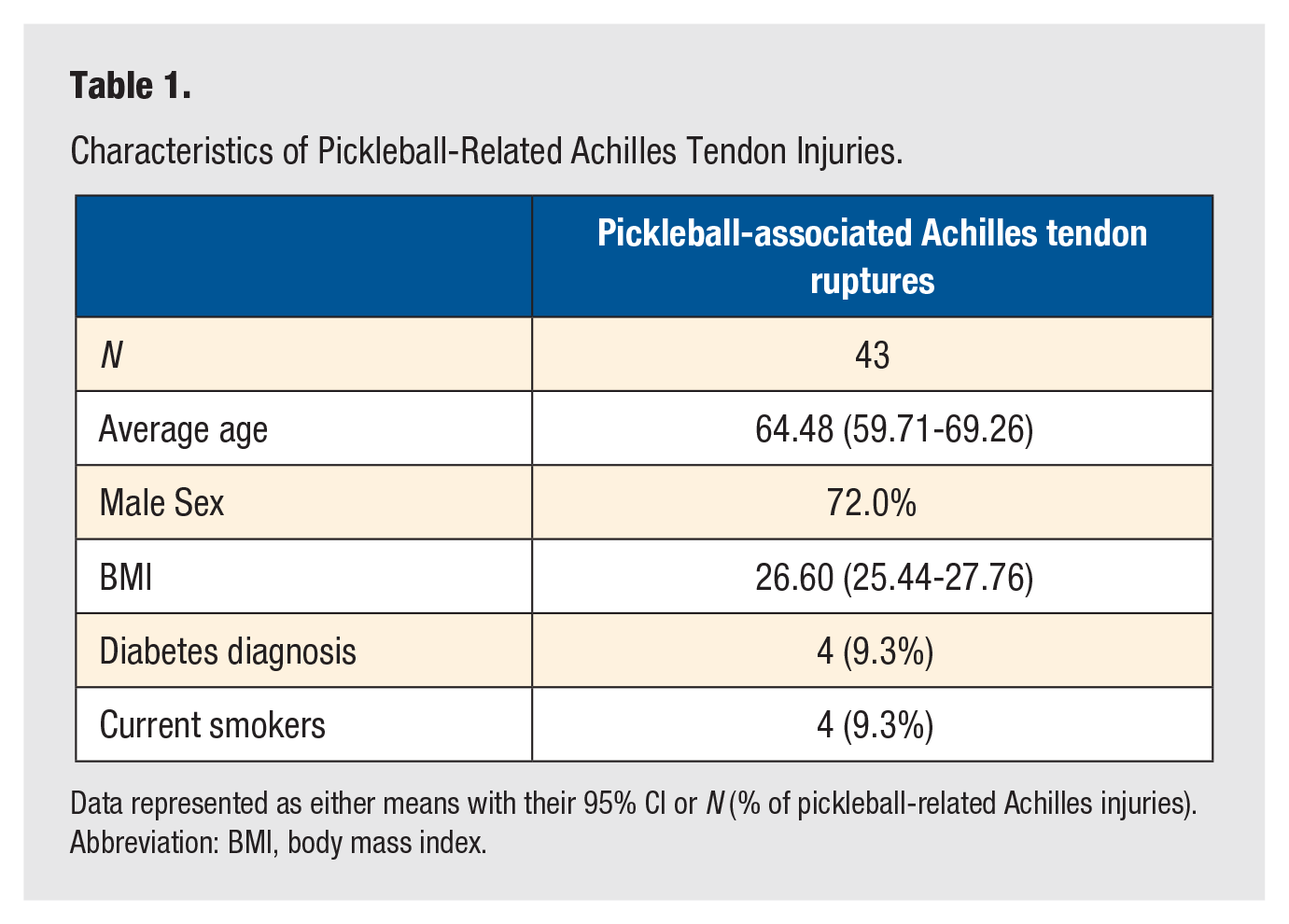
Data represented as either means with their 95% CI or N (% of pickleball-related Achilles injuries). Abbreviation: BMI, body mass index.
The first pickleball-associated Achilles tendon injury was identified in 2016, with 2 documented that year. From 2016 to 2022, the incidence of pickleball-associated Achilles tendon injuries increased yearly, excluding 2020, where a drastic decrease was seen (Figure 1). The overall incidence of pickleball-associated Achilles tendon injuries from 2016 to 2023 was 1.7%.
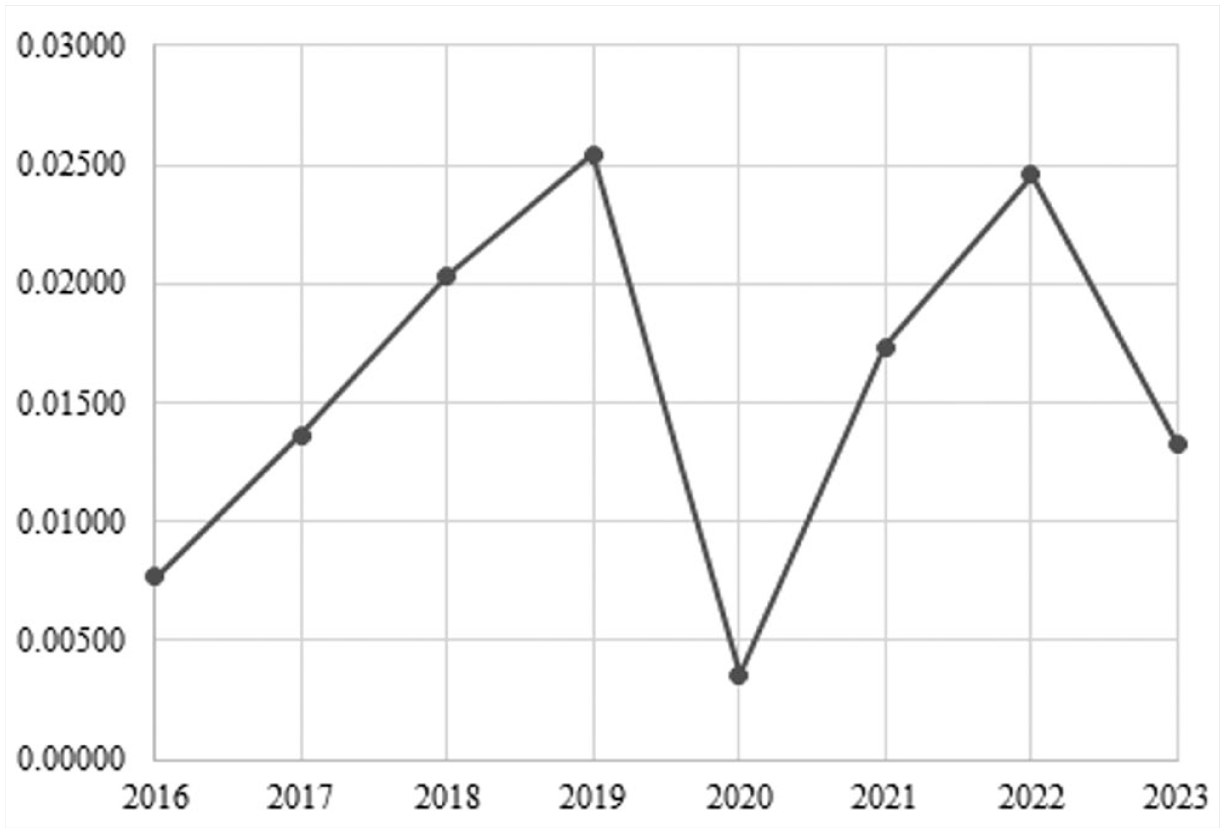
Incidence of pickleball-associated Achilles tendon injuries compared with the total amount of Achilles tendon injuries per year from 2016 to 2023.
A total of 29 of the 43 patients with an Achilles tendon injury from pickleball underwent surgical repair. When compared with all other mechanisms of injury, pickleball-related Achilles tendon tears were significantly more likely to undergo surgery (67.4% vs 45.4%, P = .008). In addition, when compared with other mechanisms, patients who sustained an Achilles tendon tear from pickleball were significantly older (64.5 vs 48.6, P < .001) and had a lower BMI (26.6 vs 29.4, P < .001) (Table 2).
Pickleball-Related Achilles Tendon Ruptures Versus All Achilles Tendon Ruptures.
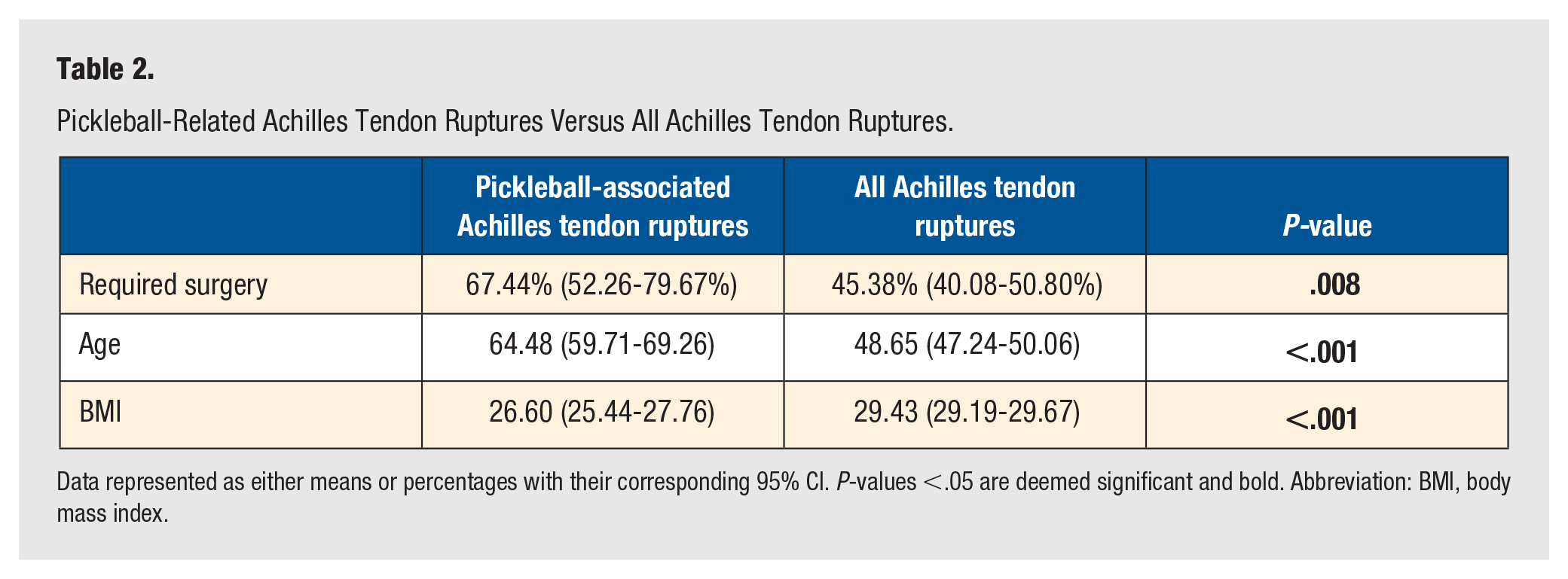
Data represented as either means or percentages with their corresponding 95% CI. P-values <.05 are deemed significant and bold. Abbreviation: BMI, body mass index.
Discussion
Pickleball is reported to be one of the fastest-growing sports in the United States, with a reported 48 million adult Americans participating according to the most recent data from the Association of Pickleball Professionals (APP). This represents a drastic increase from a mere 5 million players in 2021. 11 This surge in popularity of pickleball across the United States, particularly in the aging population, has raised concerns regarding its associated injuries. The purpose of this study was to investigate the trends of Achilles tendon injuries resulting from pickleball over the past decade. We hypothesized that not only will the incidence of Achilles tendon ruptures rise as the sport grows, but there will also be a predilection toward the aging population.
Previous literature on pickleball-related injuries from emergency department data has reported a 10-fold increase in associated injuries from 2013 to 2017. During this time period, the most commonly reported injuries resulting from pickleball have shown to be strains/sprains/tears, with approximately one-third of all injuries affecting the lower extremity. 4 Our study identified 43 pickleball-related Achilles tendon ruptures directly related to pickleball, with the first occurring in 2016. From 2016 to June 2023, the incidence of pickleball-related Achilles tendon ruptures increased yearly, excluding 2020 where a drastic decrease was seen. This outlier is likely related to the COVID-19 pandemic, particularly during the lockdown period in 2020, where similar trends were seen across all traumatic sports-related injuries. 12
In addition to a rising incidence, patients with Achilles tendon injuries resulting from pickleball were found to be on average 16 years older. These findings are in conjunction with previously reported age gaps in pickleball-related injuries. In a 2023 study of pickleball-related upper extremity injuries, Kasper et al 5 reported an average age of 65. Management of Achilles tendon injuries in the elderly can be particularly challenging for clinicians. With age, the blood supply and nutritional supply to the Achilles tendon decreases, accompanied by a decrease with glycosaminoglycans and water content, ultimately affecting the tensile properties.13,14 These biological changes of the Achilles tendon that occur with aging have been shown to have a significant effect on tendon healing, and higher re-rupture rates and overall complications in elderly patients regardless of operative or nonoperative management. 15
Despite these challenges, in conjunction with the associated medical comorbidities faced by this age group, patients may be more likely to opt for surgical management in this patient cohort due to their more active lifestyle and greater functional demands. The findings from this study support this trend, as patients who sustained an Achilles tendon injury were more likely to have surgical management compared with other mechanisms of injury. These patients were also found to have a lower BMI, further pointing to the patient characteristics of this cohort, who although older, are more active. The increasing popularity of pickleball, particularly in the aging population, has provided a great opportunity to become more active and improve cardiorespiratory fitness. 3
As the popularity of pickleball continues to grow, the rate of injury for players can be expected to follow. The sport has already begun to spread to younger age groups, with the most recent data reporting an average age of 35. 11 The reporting of common injuries associated with the sport such as the present study as well as a limited number of others 4 - 6 becomes increasingly important for orthopaedic surgeons to discuss proper injury prevention strategies with patients, to include stretching exercises prior to play. Achilles tendon ruptures most commonly occur from sudden loading to the plantarflexor musculotendinous unit, particularly during an acceleration-deceleration mechanism, which has been reported in up to 90% of cases.16,17 Such movements and loading through the Achilles tendon in a sport such as pickleball is not uncommon when players run and lunge for the ball. Although these injuries have been historically described in sports such as football, tennis, and basketball, pickleball offers new and unique characteristics that potentially increase these high-loading moments through the AT. Despite the court size being smaller than a standard tennis court, the quickness in which players must react as they are much closer together often yields for more lunging and reaching for balls, particularly in less experienced players. In addition to appropriate footwear, emphasis on the importance of a proper warm-up routine can potentially reduce the risk of ruptures. As previously discussed, aging results in a decreased ability of the Achilles tendon to withstand stress from a decrease in blood flow and increase in stiffness.14,15 Although players may not be able to avoid some of the intrinsic factors associated with Achilles tendon pathology from aging, regular physical activity and proper warm-up may promote tendon hypertrophy and increase nutrient delivery. Furthermore, allowing ample time for warm-up and adaptation to new surfaces as well as adequate recovery can minimize compounding effects on an already vulnerable tendon.18,19
The strengths of this study are that to our knowledge, this is the largest cohort to date of Achilles tendon injuries sustained from pickleball, as well as the first to report rates of operative treatment. Previous literature on pickleball-related injuries has largely been focused on the identification and quantification of injury, with scant data currently present regarding treatment and outcomes associated with differing treatment modalities. Our hope is that this case series may present a springboard for future study into the optimal treatment of pickleball-related Achilles tendon injuries and provide clinicians with an evidence-based approach on how to best care for this specific patient population.
Several limitations warrant mentioning. First, data collection for pickleball-related injuries was obtained through a keyword search for “pickleball” and “pickle ball.” There may have resulted in potential selection bias due to the reliance on clinicians to document the mechanism of injury for patients. The authors chose not to include “paddle tennis” or “paddleball” in the search as this is considered a different sport and was not the topic of interest for this study. In addition, this patient cohort was drawn from a single private practice in the northeast United States. Although the pool of patients in this cohort is relatively large, the regional nature of this data has a selection bias that is geographical and socioeconomic. The rates of associated injuries from pickleball in this cohort may not be as generalizable to the US population. For example, in warmer climates where the sport can be played year round, the incidence of pickleball-related injuries may be increased in comparison to this cohort. Despite this, the overall trends found from this study should be considered and bring to light the risk this sport brings to patients, particularly the aging population, and the importance of proper injury prevention strategies.
Conclusion
Achilles tendon ruptures can be devastating injuries. The rising popularity of pickleball and its associated injuries poses a significant risk to the aging population. This retrospective case series reports a rise in the incidence of pickleball-related Achilles tendon ruptures. These injuries are occurring more commonly in the aging population and patients are more likely to undergo surgical management when compared with all other mechanisms of injury.
Footnotes
Authors’ Note
Investigation performed at the Rothman Orthopaedic Institute at Thomas Jefferson University, Philadelphia, Pennsylvania.
Declaration of Conflicting Interests
The author(s) declared no potential conflicts of interest with respect to the research, authorship, and/or publication of this article.
Funding
The author(s) received no financial support for the research, authorship, and/or publication of this article.
Ethical Approval
Ethical approval for this study was obtained from the Institutional Review Board at Thomas Jefferson University (study number #iRISID-2023-2264).
Informed Consent
Not applicable.
Trial Registration
Trial registration is not applicable.
