







Abstract
Gendered decision making around household water use and spending is well-documented in the Global South but remains under-explored in the United States. This study examines how gender and trust in tap water influence caregivers’ use of bottled or filtered water, sugar-sweetened beverage (SSB) consumption, and attitudes toward SSB taxation in California’s San Joaquin Valley, one of the state’s most environmentally burdened regions. We analyze survey responses from 155 caregivers in Kern County, located in California’s San Joaquin Valley. We use descriptive analysis and binary logistic regression models to assess associations between gender, tap water trust, SSB consumption, and attitudes toward SSB taxation. Female caregivers are significantly more likely than male caregivers to rely on alternative water sources, despite being less likely to express concern about tap water safety, suggesting a disconnect between perception and behavior. Although male and female respondents report similar SSB consumption, females are also more likely to oppose an SSB tax, report greater price sensitivity, and are less responsive to participatory budgeting approaches. Renters are more supportive of taxation when given input on spending, while Supplemental Nutrition Assistance Program -eligible households remain skeptical. Findings suggest a disconnection between perceived water safety and actual water use and spending decisions among women, likely reflecting broader caregiving burdens and resource constraints, and point toward gendered responses to health policy interventions. Integrating gender and care work into analyses of environmental health disparities and policy design is essential for addressing water insecurity and promoting equitable health outcomes in under-resourced communities.
INTRODUCTION
The San Joaquin Valley in Central California produces a significant portion of the food for the state and even the nation. However, it is also recognized as one of the most socially disadvantaged and environmentally burdened regions in California. It has the highest percentage of disadvantaged communities statewide 1 and experiences some of the greatest cumulative environmental hazards compared to other parts of the state. 2 The San Joaquin Valley generates much of its economic wealth from agriculture, oil, and transportation industries. Yet, communities in the region face persistent exposures to pesticides and agricultural runoffs, air pollution, toxic waste facilities, and unsafe drinking water as a result of these industries. 3 Among these issues, the lack of safe and accessible tap water stands out as one of the most acute environmental health challenges. This ongoing crisis in water quality and growing distrust of tap water has made the region a focal point for foundational research on drinking water disparities and environmental injustice in the United States. 4
These environmental burdens are particularly harmful for households with young children. The San Joaquin Valley exhibits very high levels of risk factors for children under 5 that contribute to chronic illness and developmental delays. 5 These disparities are further compounded by limited access to trusted tap water, which in turn has led to a greater dependence on bottled water and sugar-sweetened beverages (SSBs). Latino households with children under 5 are overrepresented in the region. They have been found to experience disproportionate rates of dental concerns linked to diet and sugary beverage consumption, 6 as well as higher rates of childhood obesity. 7 These patterns have prompted research to consider the potential impacts of SSB taxation as a health policy intervention. 8
However, existing research has not adequately examined the effects of tap water distrust on households with young children nor has it fully explored how gendered caregiving shapes these decisions. This is a notable gap, given that one study found 85% of women with children are the primary food shoppers in their households. 9 Women with childcare are usually also making daily decisions about whether to rely on tap water or purchase alternatives such as bottled water or SSBs. Extensive research has been conducted on parental and maternal influence on the food that children eat,10,11,12,13 but little has been conducted on their drinking water habits. Therefore, understanding gender and care work is essential for addressing water insecurity and promoting equitable health outcomes in under-resourced communities.
There also remains a widespread assumption that, contrasting with lower-income countries where unsafe water remains endemic, individuals in higher-income countries generally do not or should not need to worry about water quality.14,15,16 As a result, scholarly focus on drinking water quality and trust issues in the United States is relatively recent. The Flint, Michigan, water crisis brought widespread attention to infrastructure failures, environmental racism, and the phenomenon of rational public distrust of tap water. This crisis sparked increased consumption of bottled water and raised awareness about disparities in safe tap water access along socioeconomic lines.17,18 Most of this scholarship is U.S.-focused, but there are some similar studies in other high-income country contexts, especially Europe, showing largely parallel socioeconomic status and higher levels of tap water avoidance and distrust.19,20,21
The literature has long found that trust in tap water is strongly influenced by its sensory characteristics—such as taste, odor, and appearance—and interacts with individuals’ risk perceptions and attitudes toward chemical contaminants. 22 Yet, the focus on sensory-based preferences often obscures deeper, structural patterns that drive distrust. Emerging scholarship increasingly points to a strong association between water distrust and broader experiences of inequality, economic precarity, racial marginalization, and colonial governance structures. 23 In this context, understanding how gender intersects with these factors is critical to addressing environmental health disparities, especially in underserved regions like the San Joaquin Valley.
In this study, we address these critical gaps by examining how gender and trust in tap water influence drinking water and alternative drink decisions among caregivers of young children in under-resourced communities. Building on existing research on environmental health disparities and household beverage choices, we focus on how these dynamics shape reliance on both bottled and filtered water, as well as the consumption of SSBs.
We further examine how gendered caregiving roles shape attitudes toward potential excise taxes on sugary beverages (SSB taxes). Research suggests that SSB taxes can generate cost savings, lower obesity rates, and reduce health disparities.24,25 Excise taxes are a public health tool modeled after tobacco control efforts and designed to generate revenue for health equity reinvestment. 26 At the state level in California, advocates have championed SSB taxes since at least 2013, as legislated under Senate Bill 622. These efforts have faced strong opposition from the beverage industry, whose lobbying campaigns contributed to statewide preemption of local SSB taxes through Assembly Bill 1838, the Keep Groceries Affordable Act of 2018. There is also action at the local level. Berkeley passed the first local SSB tax in the United States in 2014, and the City of Santa Cruz adopted a 2-cent-per-ounce tax in 2025.
To explore these questions, we partnered with a child-serving organization to conduct a survey of household caregivers in Kern County, a predominantly rural region in the southern San Joaquin Valley that faces some of the state’s most severe environmental and social burdens. The remainder of the study describes our study design, presents key findings, and discusses their implications for advancing health equity in communities confronting long-standing water insecurity and structural inequality.
METHODS
This study was conducted in collaboration with the quasi-governmental California Children and Families Commission, known as the First 5 organization, which operates across the state and in the San Joaquin Valley. First 5′s mission is to bring critical services to parents, caregivers, and children ages 0–5, with a particular focus on improving health and education outcomes in under-resourced communities. We used an online survey administered through the Qualtrics platform, which was disseminated by First 5 Kern via e-mail and social media channels between January and May 2022. The survey instrument was informed by focus groups conducted by the research team in December 2021. The final sample included 155 responses, the number which could be retained after applying best practices for data quality and validation, including the removal of duplicate, incomplete, out-of-area, and low-quality responses using Qualtrics’ built-in fraud detection tools. 27
Although the partnership with First 5 Ken allowed us to reach under-resourced households with young children, further research is needed to validate findings across different regions and with larger, randomly selected populations. Additionally, the recruitment via First 5 Kern may have introduced some selection bias toward more service-connected families. However, our findings align with broader research on gendered caregiving and beverage choices, suggesting important patterns that warrant deeper exploration. Despite these limitations, the study provides important insight into gendered responses to water insecurity and beverage policy preferences in a historically underserved region.
We first used the cleaned dataset to generate descriptive statistics illustrating the prevalence of tap water trust, SSB consumption habits, and support for an SSB tax across key demographics (see Table 1). We then constructed four binary logistic regression models to examine the relationship between gender and the following four outcomes of interest:
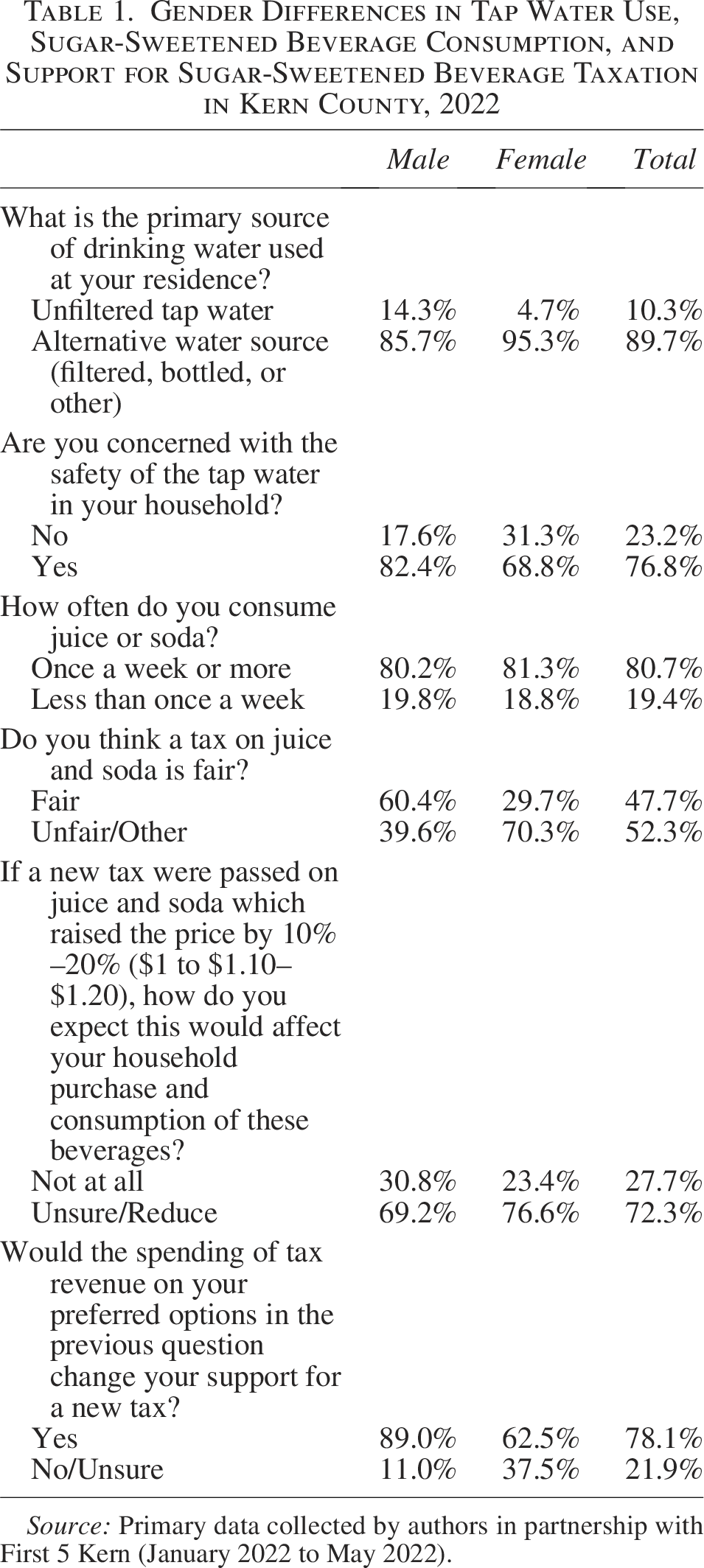
Gender Differences in Tap Water Use, Sugar-Sweetened Beverage Consumption, and Support for Sugar-Sweetened Beverage Taxation in Kern County, 2022
Source: Primary data collected by authors in partnership with First 5 Kern (January 2022 to May 2022).
Reliance on tap water alternatives (Table 2), based on the question: “What is the primary source of drinking water used at your residence?”
Concern about the safety of household tap water (Table 3), based on the question: “Are you concerned with the safety of the tap water in your household?”
Perception of the fairness of an SSB tax (Table 4), based on the question: “Do you think a tax on juice and soda is fair?”
Whether support for an SSB tax would change if respondents had a say in how revenue was spent through participatory budgeting (Table 5), based on the question: “Would the spending of tax revenue on your preferred options in the previous question change your support for a new tax?”
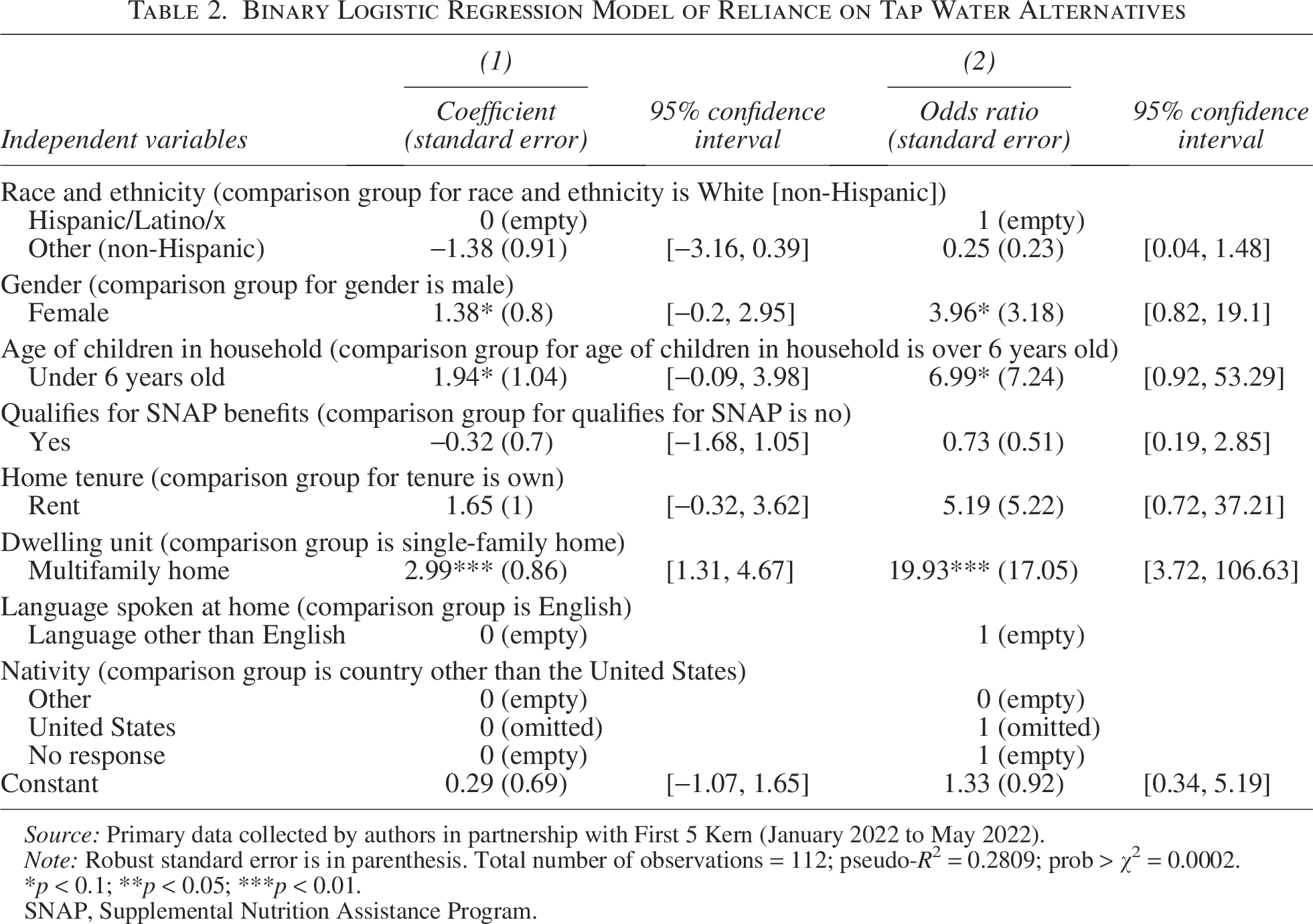
Binary Logistic Regression Model of Reliance on Tap Water Alternatives
Source: Primary data collected by authors in partnership with First 5 Kern (January 2022 to May 2022).
Note: Robust standard error is in parenthesis. Total number of observations = 112; pseudo-R2 = 0.2809; prob > χ2 = 0.0002.
*p < 0.1; **p < 0.05; ***p < 0.01.
SNAP, Supplemental Nutrition Assistance Program.
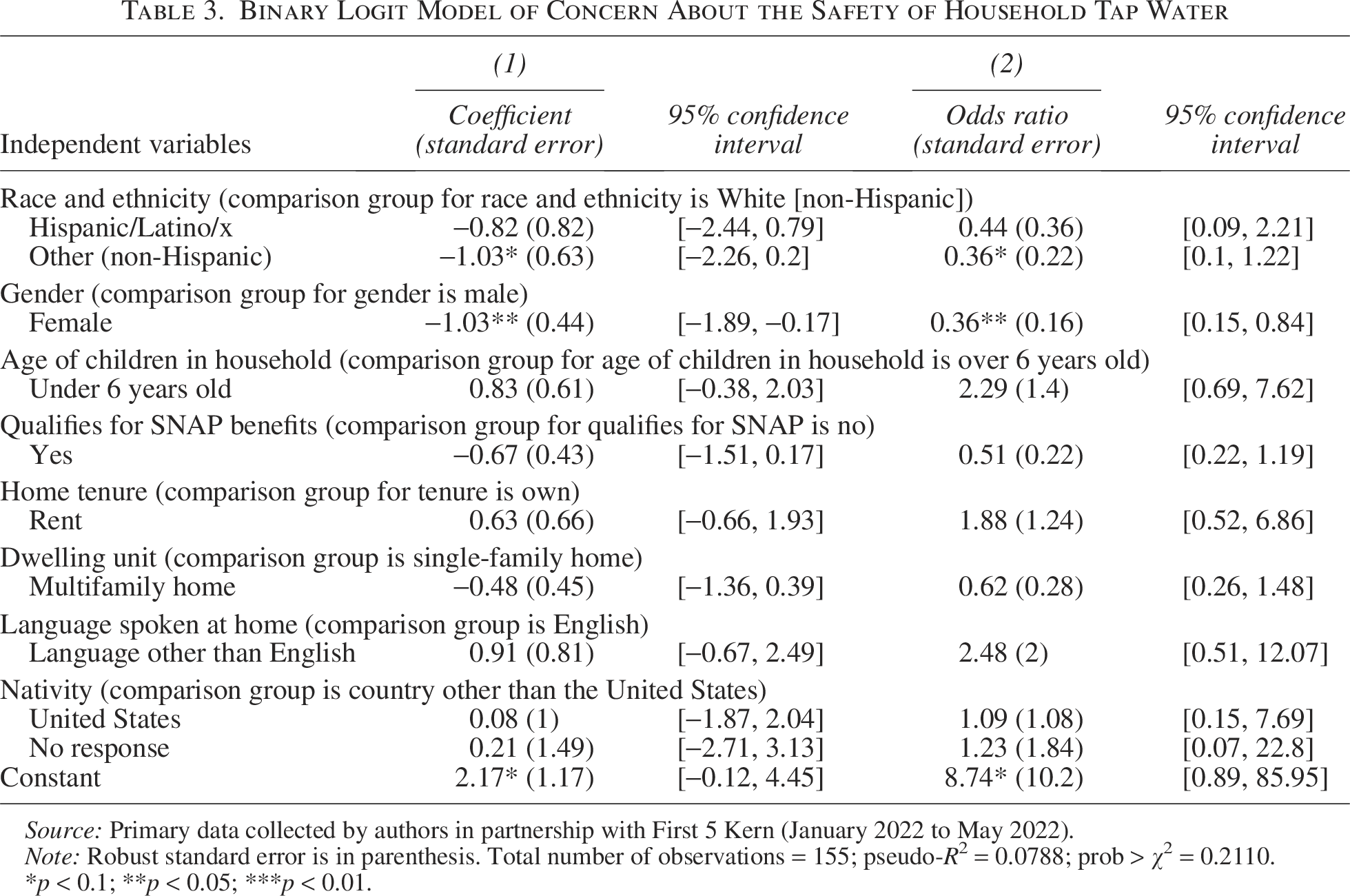
Binary Logit Model of Concern About the Safety of Household Tap Water
Source: Primary data collected by authors in partnership with First 5 Kern (January 2022 to May 2022).
Note: Robust standard error is in parenthesis. Total number of observations = 155; pseudo-R2 = 0.0788; prob > χ2 = 0.2110.
*p < 0.1; **p < 0.05; ***p < 0.01.
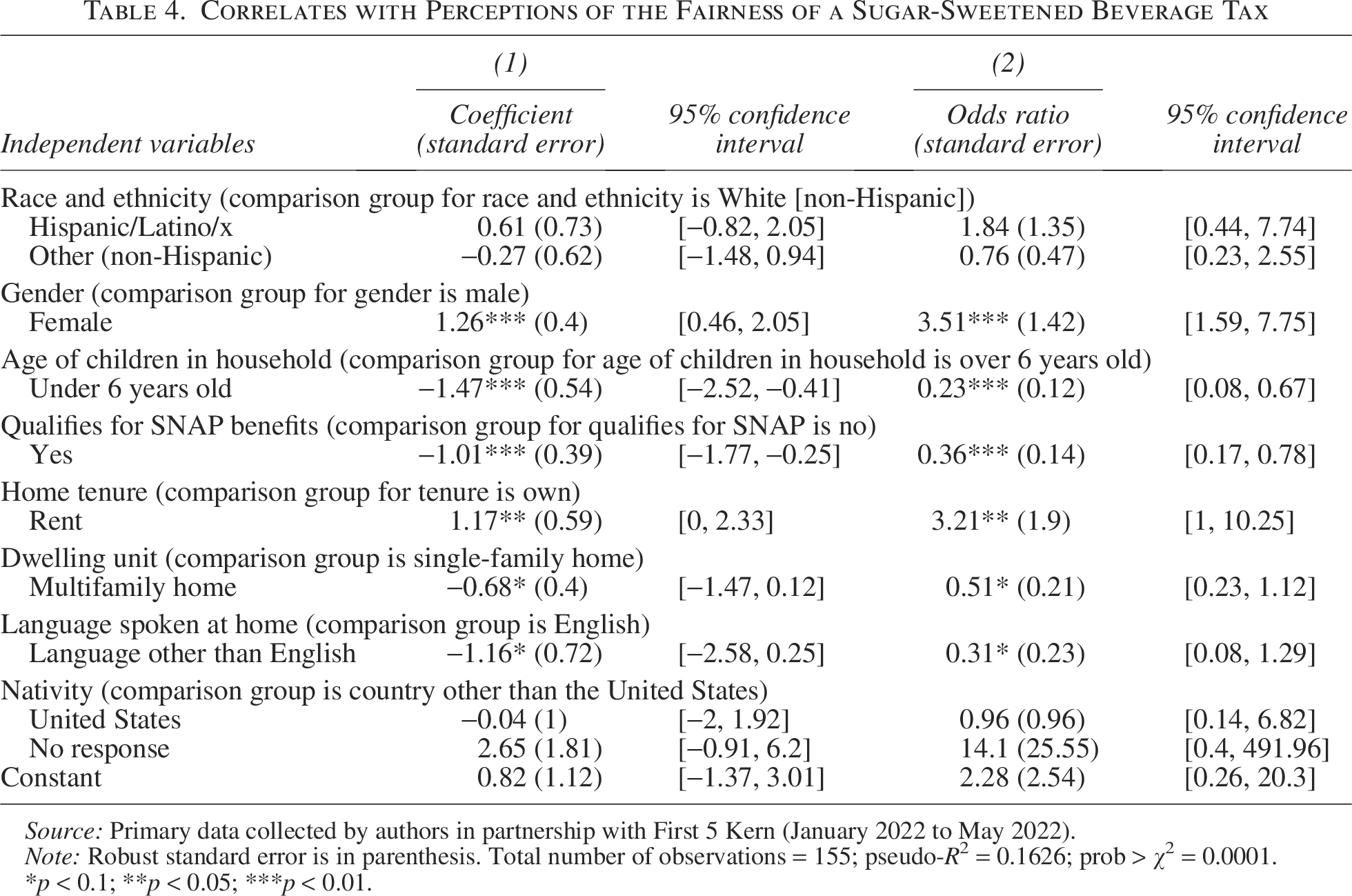
Correlates with Perceptions of the Fairness of a Sugar-Sweetened Beverage Tax
Source: Primary data collected by authors in partnership with First 5 Kern (January 2022 to May 2022).
Note: Robust standard error is in parenthesis. Total number of observations = 155; pseudo-R2 = 0.1626; prob > χ2 = 0.0001.
*p < 0.1; **p < 0.05; ***p < 0.01.
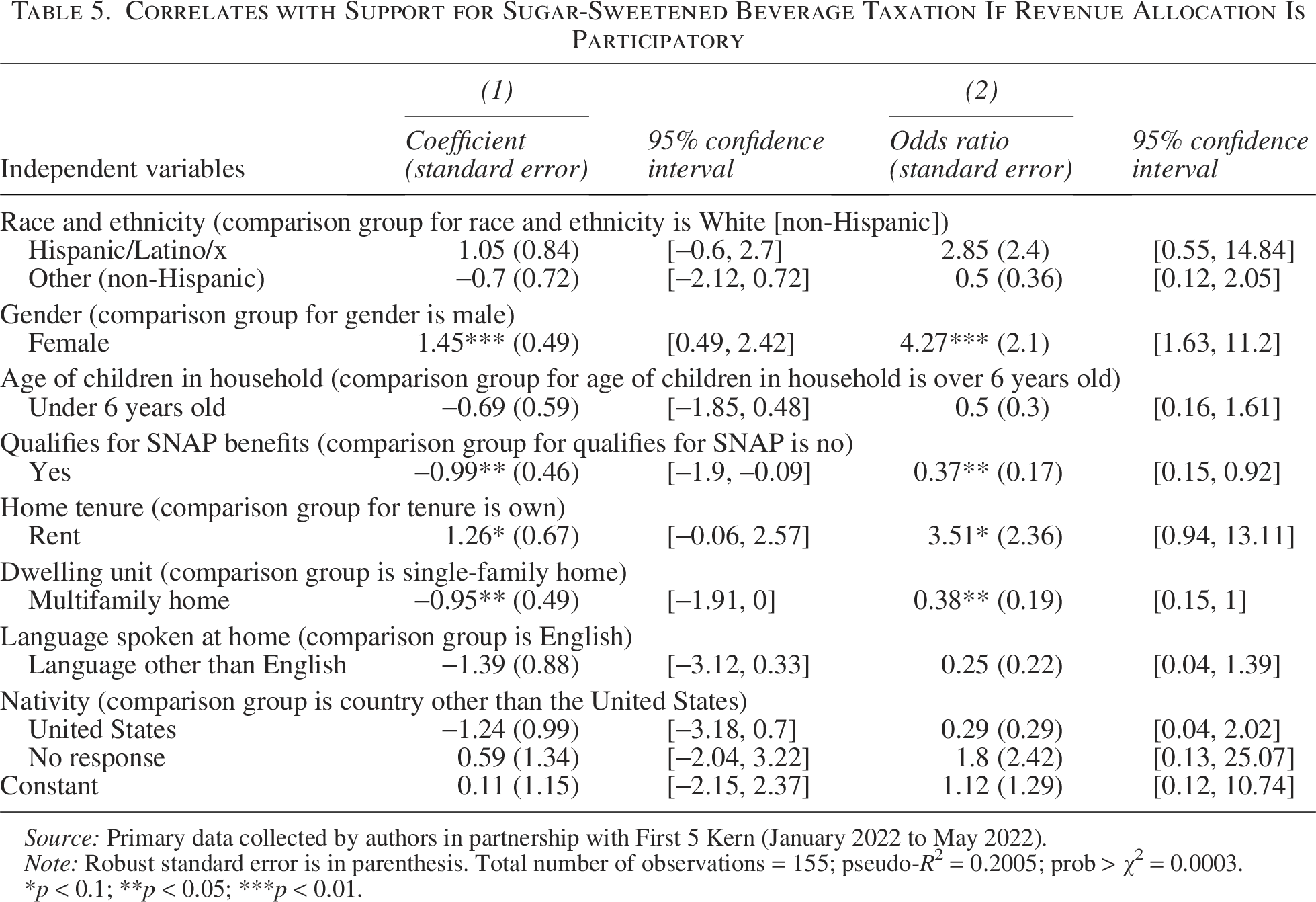
Correlates with Support for Sugar-Sweetened Beverage Taxation If Revenue Allocation Is Participatory
Source: Primary data collected by authors in partnership with First 5 Kern (January 2022 to May 2022).
Note: Robust standard error is in parenthesis. Total number of observations = 155; pseudo-R2 = 0.2005; prob > χ2 = 0.0003.
*p < 0.1; **p < 0.05; ***p < 0.01.
We analyzed six survey items related to water and beverage consumption, as well as attitudes toward SSB taxation. Although two items—(1) frequency of SSB consumption and (2) expected change in household purchasing behavior in response to a 10%–20% SSB tax—did not yield statistically significant associations with gender in regression models, we include results for these items in the Supplementary Data to ensure transparency and completeness. For brevity, we focus the main text on descriptive and regression results for four other key related outcomes.
Each model includes demographic and household characteristics as independent variables. We report coefficients, robust standard errors, odds ratios (ORs), and 95% confidence intervals (CI) to convey the magnitude and direction of associations. We report the ORs to convey the strength and direction of each association. Variance inflation factors for all independent variables were in the range of 1.07–2.61, with an average variance inflation factor of 1.77. This suggests that multicollinearity between independent variables is unlikely to bias the estimated associations.
RESULTS
Sample characteristics
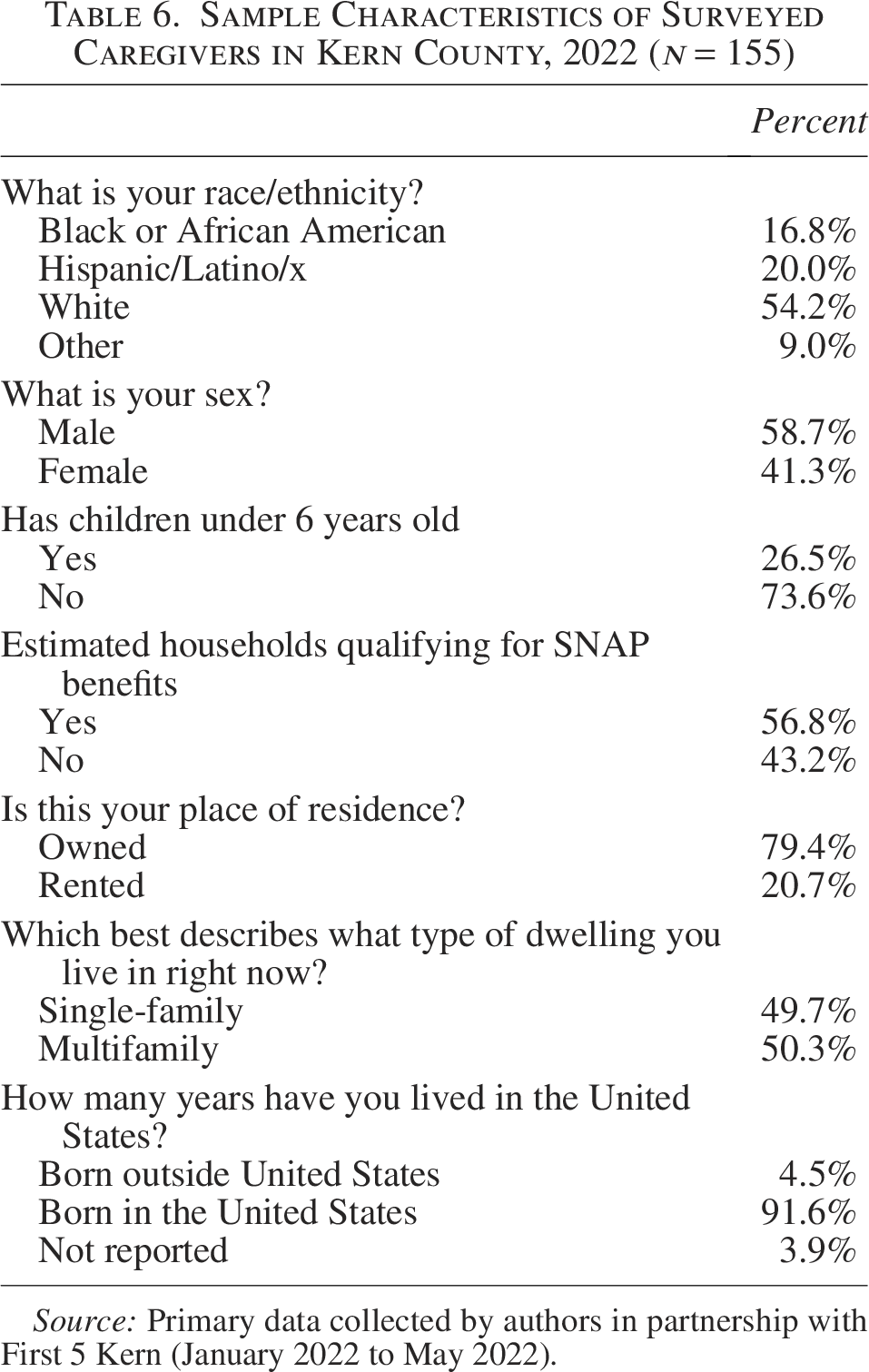
Table 6 presents descriptive statistics for the sample of 155 caregivers, including race/ethnicity, gender, household structure, and key socioeconomic indicators. Over half of respondents identified as non-Hispanic White (54.2%), nearly a quarter identified as Hispanic/Latino/x (20.0%), and the remaining identified as either Black/African American (16.8%) or Other (9.0%). A majority of respondents identified as male (58.7%), while 41.3% identified as female. Notably, despite our best efforts with First 5 Kern, our survey underrepresented Hispanic/Latino/x households in Kern County (57.1%) (U.S. Census Bureau 2024).
Sample Characteristics of Surveyed Caregivers in Kern County, 2022 (n = 155)
Source: Primary data collected by authors in partnership with First 5 Kern (January 2022 to May 2022).
To understand household caregiving responsibilities, we asked participants to report the ages of all children living in their homes. Because First 5 Kern primarily serves families with young children, we stratified households based on whether they included any children under the age of 6. Approximately one-quarter of households (26.5%) did.
Respondents were also asked to report on their total household income. We categorized household incomes based on the federal threshold for Supplemental Nutrition Assistance Program (SNAP), known as CalFresh in California. This policy framing was used because the organization Nourish California has piloted a CalFresh Drinking Water Program in Kern County, an initiative that provides an extra $50 per month in SNAP benefits to households in select zip codes lacking access to safe drinking water. Over half of the sample (56.8%) would qualify for SNAP, indicating a substantial representation of low-income households.
Most households in the sample owned their homes (79.4%), while 20.7% rented. Housing type was evenly split, with 49.7% living in single-family units and 50.3% living in multifamily dwellings. Finally, the majority of respondents were born in the United States (91.6%), while a very small percentage were born outside the United States (4.5%), and 3.9% did not report nativity.
Descriptive statistics: Gender differences in tap water trust, SSB consumption, and attitudes toward SSB taxation
We now examine tap water trust, SSB consumption habits, and attitudes toward SSB taxation between male and female caregiver respondents (Table 1). We focus on gendered preferences to better understand how caregiving roles and perceptions of water safety may influence household beverage choices and policy support.
A large majority of both male and female respondents reported using tap alternative water sources—such as filtered or bottled water—as their primary drinking water source. However, a higher proportion of female respondents (95.3%) avoided unfiltered tap water compared to male respondents (85.7%), corresponding with our other recent research. 28 Male respondents were more likely to express concern about the safety of their tap water (82.4%) than female respondents (68.8%). This may suggest that women’s higher reliance on alternative water sources is shaped by other factors—such as taste or household preferences.
Despite consuming SSBs at nearly identical rates (80%–82%), female respondents were more likely to view an SSB tax as unfair (70.3%) compared to male respondents (39.6%). Women also showed slightly greater price sensitivity: 76.6% indicated that a 10%–20% increase in SSB prices would reduce their household’s consumption, compared to 69.2% of men. However, male respondents were more responsive to participatory budgeting mechanisms. About 89% said that having a say in how tax revenue would be spent would increase their support for a new tax, compared to 62.5% of women.
Multivariate regression results
Reliance on tap water alternatives
We next explore the relative strength of these relationships through multivariate regression modeling. As displayed in Table 2, some demographic variables—including race/ethnicity, language spoken at home, and nativity—were not included in the final regression model due to perfect prediction. 29 This suggests that in some subgroups, reliance on alternatives to tap water is nearly universal, highlighting the potential for deep structural or cultural distrust of tap water in certain demographic populations.
When employing our controls, households with incomes eligible for SNAP benefits (OR = 0.73, p > 0.1, CI: [0.19, 2.85]) and renter households (OR = 5.19, p > 0.1, CI: [0.72, 37.21]) were not significantly associated with reliance on alternative water sources.
Households with at least one child under the age of 6 were nearly seven times more likely to rely on alternative water sources compared to households without young children (OR = 6.99, p < 0.1, CI: [0.92, 53.29]).
The strongest association was found between dwelling type and water source. Households residing in multifamily housing units were nearly 20 times more likely to rely on alternative water sources than those in single-family homes, with a 95% CI ranged from 3.72 to 106.63 (OR = 19.93, p < 0.01, CI: [3.72, 106.63]). This CI indicates a clearly statistically significant increase in the odds of households residing in multifamily dwelling units relying on alternative water sources. However, the large CI range suggests a degree of uncertainty about the true effect size of dwelling type. Although women showed higher odds of relying on alternative water sources than men (about four times higher), the 95% CI ranged from 0.82 to 19.1, suggesting that the null hypothesis of parity cannot be rejected (OR = 3.96, p < 0.1, CI: [0.82, 19.1]).
Correlates with concern about the safety of household tap water
As seen in Table 3, when employing our controls, the age of children in the home, household qualification for SNAP benefits, home tenure, type of dwelling unit, language spoken at home, and nativity were not significantly associated with concern about tap water safety (p > 0.1 for all).
Hispanic/Latino/x identification of households also does not have a statistically significant relationship with concern about the safety of household tap water when compared to White households (OR = 0.44, p > 0.1, CI: [0.09, 2.21]). However, the odds of respondents who identified with a race or ethnicity other than White having concern about the safety of household tap water are approximately 64% lower in comparison to non-Hispanic White respondent households (OR = 0.36, p < 0.1, CI: [0.1, 1.22]).
The odds of female participants having concern about the safety of household tap water, approximately 64%, is lower compared to male participants, with a 95% CI ranged from 0.15 to 0.84 (16%–85% decrease) (OR = 0.36, p < 0.05, CI: [0.15, 0.84]). This CI suggests a statistically significant lower level of concern about the safety of household tap water in female participants compared to male participants.
Correlates with perceptions of the fairness of an SSB tax
As shown in Table 4, perceptions of SSB tax fairness varied by gender and several household characteristics. Race/ethnicity and nativity were not significantly associated with attitudes toward a tax proposal (p > 0.1 for all).
Households that qualified for SNAP (OR = 0.36, p < 0.01, CI: [0.17, 0.78]) and households with children under 6 (OR = 0.23, p < 0.01, CI: [0.08, 0.67]) were significantly less likely to perceive the tax as unfair. Renters were more likely than homeowners to find the tax unfair (OR = 3.21, p < 0.05, CI: [1, 10.25]), while those in multifamily housing and non-English-speaking households were less likely to do so (OR = 0.51, p < 0.1, CI: [0.23, 1.12] and OR = 0.31, p < 0.1, CI: [0.08, 1.29], respectively).
Women, however, were over three times more likely than men to view the tax as unfair, with a 95% CI ranged from 1.59 to 7.75 (OR = 3.51, p < 0.01, CI: [1.59, 7.75]), suggesting gendered differences in how public health interventions are perceived.
Correlates with support for SSB taxation if revenue allocation is participatory
As shown in Table 5, most sociodemographic factors—race and ethnicity, age of children in the household, language spoken at home, and nativity—were not significantly associated with agreement that having a say in how SSB tax revenue is spent would change support for the tax.
However, gender had a strong effect: women were over four times more likely than men to say their support would not increase if they had input on revenue use, with a 95% CI ranged from 1.63 to 11.2 (OR = 4.27, p < 0.01, CI: [1.63, 11.2]). This indicates that there is less support for participatory budgeting mechanisms in women compared to men.
Households qualifying for SNAP were 63% more likely to increase their support based on participatory budgeting mechanisms, with a 95% CI ranged from 0.15 to 0.92 (OR = 0.37, p < 0.05, CI: [0.15, 0.92]).
We also see a difference by tenure, with renters over three times more likely than homeowners to report their support would not increase if they had an influence over spending priorities (OR = 3.51, p < 0.1, CI: [0.94, 13.11]). Residents of multifamily housing were significantly more likely than those in single-family homes to increase their support for an SSB tax based on participatory budgeting mechanisms (OR = 0.38, p < 0.05, CI: [0.15, 1]).
DISCUSSION
Female caregivers are significantly more likely than male caregivers to rely on alternative water sources, despite expressing lower concern about tap water safety. Although male and female respondents report similar SSB consumption, females are more likely to oppose an SSB tax, report greater price sensitivity, and are less responsive to participatory budgeting approaches. Renters are more supportive of taxation when given input on spending, while SNAP-eligible households remain skeptical.
Female caregivers exhibit significantly higher odds of relying on bottled or filtered water, despite their being less likely to express concern about tap water safety. This suggests a mismatch between stated perception and safety, where women avoid tap water as a precaution rooted in caregiving norms, household routines, cultural factors, or past experience rather than perceived or actual risk. 30 In contrast, male caregivers showed greater alignment between distrust and behavior, despite previous studies indicating that males generally have a greater risk tolerance than females. 31 However, our CI for the gender in our multivariate modeling [0.82, 19.1] indicates uncertainty, and further research is needed to determine the strength and causal nature of this relationship. Further research on caregiving norms, cultural factors, and risk tolerance is necessary to better understand why women may have this mismatch in stated perceptions and behavior responses to tap water consumption. Additionally, emerging interdisciplinary research should examine the development of chronic diseases with the use of bottled plastic water. Knowing more about these relationships might impact caregiver decision making around tap water, SSB, and bottled water consumption. 32
Gendered caregiving burdens also seem to have shaped how caregivers responded to proposed health interventions. Although men and women reported similar SSB consumption, female caregivers were more likely to oppose a potential SSB tax and showed greater price sensitivity. These findings suggest that affordability concerns, skepticism toward government interventions, or perceptions of fairness may be more pronounced among women managing household needs. 33 The significantly higher odds of female caregivers stating that their support would not increase if they had input on revenue use indicate that community engagement efforts and participatory planning and budgeting methods may need to be adjusted by policymakers. These policy interventions must also consider the ways in which disinvested communities may interact and perceive government intervention and potential methods to rebuild trust with these communities. 34
In addition, we found differences in support for the participatory budgeting mechanism by tenure and SNAP eligibility status. Renters were significantly less likely to support an SSB tax when given a say in how revenue would be spent, importantly suggesting that participatory mechanisms can enhance policy trust among this group. Meanwhile, SNAP-eligible households were more responsive to participatory framing. Taken together, these indicators of socioeconomic status underscore how economic vulnerability intersects with gendered caregiving burdens to shape perceptions of tap water safety, environmental risks, and the policies intended to address them.
We do note that this research study has a limited sample size and also overrepresents White households and underrepresents Hispanic/Latino/x households in Kern County. Furthermore, the cross-sectional design of this study limits claims regarding causal inference. Future research with an expanded and more representative sample and a longitudinal model is needed to better understand how gender impacts tap water consumption patterns and proposed health interventions.
Yet, our findings suggest that as local policy makers combat tap water distrust and consider participatory mechanisms to promote tap water consumption, they must consider integrating gender and care work into analyses of environmental health disparities and policy design. Despite this study’s findings, prior research indicates that race and ethnicity, household income, and educational level35,36 largely influence tap water consumption patterns and tap water trust. Policy makers must consider structural determinants of tap water distrust that intersect with gendered caregiving decisions to best address water insecurity and promote equitable health outcomes in under-resourced communities.
CONCLUSION
This study partnered with the local organization First 5 to survey household caregivers in Kern County, California, in order to analyze their levels of trust in tap water, how that influences their use of drinking water alternatives like bottled water or SSB, and support for a tax on SSBs. We found that gender had a significant impact on whether caregivers rely on alternative water sources, perceptions of fairness of an SSB tax, and support for SSB taxation if revenue allocation was participatory.
The study’s results further highlight the need to integrate gender, care work, and economic precarity into environmental health policy. Public health interventions like SSB taxation may have greater legitimacy and uptake when designed with transparency and community input in mind. Still, these efforts must also address structural distrust and caregiving demands that shape behavioral choices. Addressing tap water insecurity and promoting health equity requires not only public investments in physical infrastructure solutions but also policies that are responsive to the lived realities of women caregivers in environmental justice communities.
AUTHORS’ CONTRIBUTIONS
A.H.: Conceptualization (supporting), data curation (lead), formal analysis (lead), investigation (supporting), project administration (lead), software (lead), visualization (lead), writing—original draft (lead), and writing—review and editing (equal). S.R.G.: Conceptualization (lead), funding acquisition (lead), investigation (lead), methodology (lead), supervision (lead), validation (lead), visualization (supporting), writing—original draft (supporting), and writing—review and editing (equal). G.P.: Conceptualization (supporting), funding acquisition (supporting), investigation (supporting), methodology (supporting), supervision (supporting), and writing—review and editing (equal).
Footnotes
ACKNOWLEDGMENTS
The authors thank Hector Gutierrez, Paula De La Riva, Anastasia Lester, Kevin Bartl, Analy Martinez, and First 5 Kern for their partnership in the research. They are also grateful to Daniel Luu and Laura Daza-Garcia for facilitating focus groups, Mary Nguyen and Anahit Celio for their research assistance, and Yina Marin, Nick Cuccia, Francela Chi de Chinchilla, Itzel Vasquez-Rodriguez, and Chroma Collaborative for their thoughtful feedback during the development of this project. The views expressed in this article are those of the authors and do not necessarily reflect those of the funders or affiliated institutions.
AUTHOR DISCLOSURE STATEMENT
No competing financial interests exist.
FUNDING STATEMENT
This work was supported by the Institute of American Cultures and Chicano Studies Research Center, University of California, Los Angeles’s 2021–2022 Research Grant Program in Ethnic Studies.
Supplemental Material
Supplementary Material
Please find the following supplemental material available below.
For Open Access articles published under a Creative Commons License, all supplemental material carries the same license as the article it is associated with.
For non-Open Access articles published, all supplemental material carries a non-exclusive license, and permission requests for re-use of supplemental material or any part of supplemental material shall be sent directly to the copyright owner as specified in the copyright notice associated with the article.
