







Abstract
Destructive war means severe and widespread destruction. Genocide means killing members of a specific group of people, causing them serious physical and/or mental harm, deliberately subjecting them to living conditions intended to cause their total/partial physical destruction, and imposing on them measures intended to prevent births. Ethnic cleansing means the organized and often violent attempts by a particular cultural or racial group to remove all members of a different group from their homeland. The area of the Gaza Strip is 365 km2, and its population is approximately 2.3 million Palestinians. It is part of the Occupied Palestinian Territories (6,000 km2) and an essential part of Historic Palestine (27,000 km2) and has been facing an all-out war since October 8, 2023, by the Israeli occupation forces. Many observers around the world, including governments and international organizations that include United Nations, consider this war as being described “destructive, genocidal, and ethnic cleansing.” As a result of this war, about 63,000 innocent Palestinians have been killed, about 160,000 injured, and more than 20,000 missing—75% of whom are women, children, and elderly. This is in addition to the displacement of about two million Palestinians from their homes across the Gaza Strip. Furthermore, Israel has dropped more than 100,000 tons of explosives (bombs, missiles, etc.) on the Gaza Strip, representing 4–5 times the number of nuclear bombs dropped by the United States on the Japanese cities of Hiroshima and Nagasaki during World War II. This research article examines the devastating impacts of the ongoing Israeli war on the Gaza Strip and its population from social, economic, geopolitical, environmental, health-wise, and human rights’ perspectives. This article, which documents the war events since October 8, 2023, until August 28, 2025, can serve a wide range of beneficiaries, including policy- and strategy-makers, politicians, academics, human rights activists, environmentalists, socioeconomists, Doctorate and Master students, and postdoctoral researchers, as well as various international organizations, including UN’s.
Keywords
INTRODUCTION
According to the World Bank, two billion people currently live in fragile areas affected by military wars, representing about 25% of the world’s population. Military wars (or armed conflicts) affect individuals and communities, as they involve violence, mass killings, land occupation, displacement, destruction of houses and infrastructures, disruption of public health services, and damaging the environment and the ecological systems (atmosphere, biosphere, hydrosphere, and geosphere). Populations affected by wars, worldwide, often seek refuge to escape the immediate dangers of wars, suffer from food insecurity, and suffer loss of livelihoods. Of the approximately 70 million people currently displaced by wars, worldwide, 60% (about 42 million) have not crossed international borders and remain in affected countries as internally displaced persons. In light of this, it can be said that conflict-affected countries are unlikely to achieve the sustainable development goals of the United Nations.1,2,3,4,5,6
To further sting the wounds caused by wars, some wars are described as “devastating” (or destructive), “genocidal,” and “ethnic cleansing.” Devastating (or destructive) war means that the war destroys a large part or most of the country, causing significant damage or harm. 7 Genocidal war (or genocide) is an internationally recognized crime in which acts are committed with the intent to destroy, in whole or in part, a national, ethnical, racial, or religious group. These acts are divided into five categories: killing members of the group and causing serious physical and/or mental harm to members of the group; intentionally subjecting the group to living conditions aimed at its physical destruction, in whole or in part; imposing measures aimed at preventing births within the group; and the children of the group were forcibly transferred to another group. 8 On December 9, 1948, the United Nations approved a written international convention known as the “Convention on the Prevention and Punishment of the Crime of Genocide.” This convention considers genocide an international crime, and the signatory states pledged to prevent and punish those who commit it. Ethnic cleansing is defined as the attempt (or attempts) to create racially homogeneous geographic areas through the deportation or forced displacement of people belonging to a particular ethnic group (or groups). Ethnic cleansing sometimes involves removing all physical traces of the targeted group by destroying monuments, cemeteries, and places of worship. 9
The Gaza Strip, with a total area of 365 km2 and a population of approximately 2.3 million people as of mid-2023, 10 has been experiencing exceptional and very difficult conditions for many decades. Those conditions include the small area, the population density, the high rate of population growth, the inhumane siege imposed on the Gaza Strip since 2006, and the no stopped wars since 2008/2009 until present, as the Gaza Strip has witnessed five wars in 15 years. The Israeli occupation forces launched these wars in the years 2008/2009, 2012, 2014, 2021, and the current ongoing war in 2023–2025, which started on October 8, 2023, and not ended yet.
This study was conducted during the current war (2023–2025), which launched by Israel on the occupied and besieged Gaza Strip on October 8, 2023, and is still ongoing as of writing this academic research study. The objectives of this study are to: (1) provide an assessment of the Israeli war on the Gaza Strip and its 2.3 million citizens, in terms of the society, economics, geopolitics, the environmental ecosystems (air, water, soil, and green cover), public health, and human rights’ perspectives. Particular emphasis is placed on environmental issues, such as air pollution and its impacts on public health and the environment, resulting from Israel’s many devastating and genocidal wars against the Gaza Strip, with an emphasis on the current 2023–2025 war; (2) explain how these issues have been significantly changed since October 2023; and (3) provide a forecast of the situation in the Gaza Strip, so that relevant governmental and nongovernmental organizations can help people there by presenting development projects in various sectors, including socioeconomics, health, the environment, water, energy, waste management, and construction (housing, infrastructure, etc.), agriculture, education, employment, and so forth. Such projects would gain great importance, especially in light of the devastating effects of the siege imposed on the Gaza Strip since 2006 and is still continuing, as well as in light of the many wars launched against the Gaza Strip, including the current 2023–2025 war.
The current war has left behind the deaths of tens of thousands of innocent civilians, including infants, children, women, and the elderly, and other several thousands were injured. As of January 22, 2024, 25,295 people were killed in the Gaza Strip, 70% of whom were children and women, and thousands of children were reported missing. 11 As of April 4, 2024, at least 32,552 Palestinians were killed and 74,980 wounded,12,13 and at least 10,000 are still missing in the Israeli attacks on the Gaza Strip. As of March 2025,
“Between 7 October 2023 and 25 March 2025, according to the Ministry of Health (MoH) in Gaza, as stated by OCHA [United Nations Office for the Coordination of Humanitarian Affairs], at least 50,144 Palestinians have reportedly been killed in Gaza and 113,704 have been injured.” 14
As of August 28, 2025 (the latest update of human losses), at least 62,895 Palestinians have been killed, 158,927 injured, and 20,000 missing. 15
This is in addition to the severe damage and destruction to people’s homes, public buildings, and other private and public property.
“At least 92 per cent of housing units in Gaza have been destroyed or damaged, according to data shared by the United Nations’ Office for the Coordination of Humanitarian Affairs.” 16
Therefore, the results presented in this research article represent a very important step in the right direction, as they shed light on the effects of wars on the Gaza Strip and its population, and how they affect people’s health and the environment in the Gaza Strip, as well as many other aspects of life affecting the Gazans. If a comparison with the U.S. population would be made, the total number of those killed, injured, and missed in the Gaza Strip as a result of the current war is equivalent to approximately 3.5 million of the U.S. population, considering it currently at around 348 million. 17
BACKGROUND AND OVERVIEW
This section of the research article discusses important issues that are essential to understanding the objectives of this study, in light of the findings and their implications. These issues include geopolitics; location, area extension, and demographics; climate, terrain, and the environment; and the public health situation in the Gaza Strip.
Geopolitics
The Gaza Strip is part of the Occupied Palestinian Territories (OPT) that also includes the West Bank that includes East Jerusalem, all of which belong to Historic Palestine. Israel occupied the OPT in June 1967, and since then these territories have been internationally recognized, in accordance with United Nations resolutions and international law, as the OPT (or Occupied Palestinian Territory).
Israel itself was established on May 15, 1948, on 78% of the lands of Historic Palestine, and on June 5, 1967, Israel occupied the rest (22%) of the lands of Historic Palestine. 18 The Gaza Strip was part of the British Mandate of Palestine until May 15, 1948, that is, until the establishment of the state of Israel on 78% of the lands of Historic Palestine. Between May 1948 and June 1967, the Gaza Strip was under the control of Egypt, while the West Bank (including East Jerusalem) was under the control of Jordan. Since June 5, 1967, the Gaza Strip and the West Bank (including East Jerusalem) have entirely become under the Israeli military occupation, in violation of international law and United Nations’ resolutions.
In 1993 and 1995, the Oslo Accords were signed between the government of Israel and the Palestine Liberation Organization. These agreements were entirely to the benefit of the Israelis, as the occupied West Bank was divided into three areas (known as Area A, Area B, and Area C), each with its special jurisdictions. 19 At the same time, the most important issues affecting the Palestinian people remain unresolved. These include (1) the Palestinian refugees who were forced to leave their cities, towns, and villages during the 1948 war; (2) East Jerusalem, which was occupied in June 1967; (3) the water resources and their allocations; (4) hundreds of the Jewish settlements that were illegally built on lands of the occupied West Bank; (5) militarization; and (6) boundaries or borders.20,21 All these important issues were postponed until later. The question since then was/is: when later? No one knows, as this “later” has extended until now, about 32 years (i.e., from 1993 until now and is still continuing), and nothing positive has happened for the benefit of the Palestinian people in the OPT.
“In 1993, Israel and the Palestine Liberation Organization signed the Declaration of Principles, which aimed to peacefully resolve the Israeli-Palestinian conflict. Though it was supposed to be a significant step towards peace, for the Palestinians, it came with a hidden cost.” 22
In contrast, the number of illegal Jewish settlements (Fig. 1) doubled, and their “only” Jewish population has reached nearly three quarters of a million.
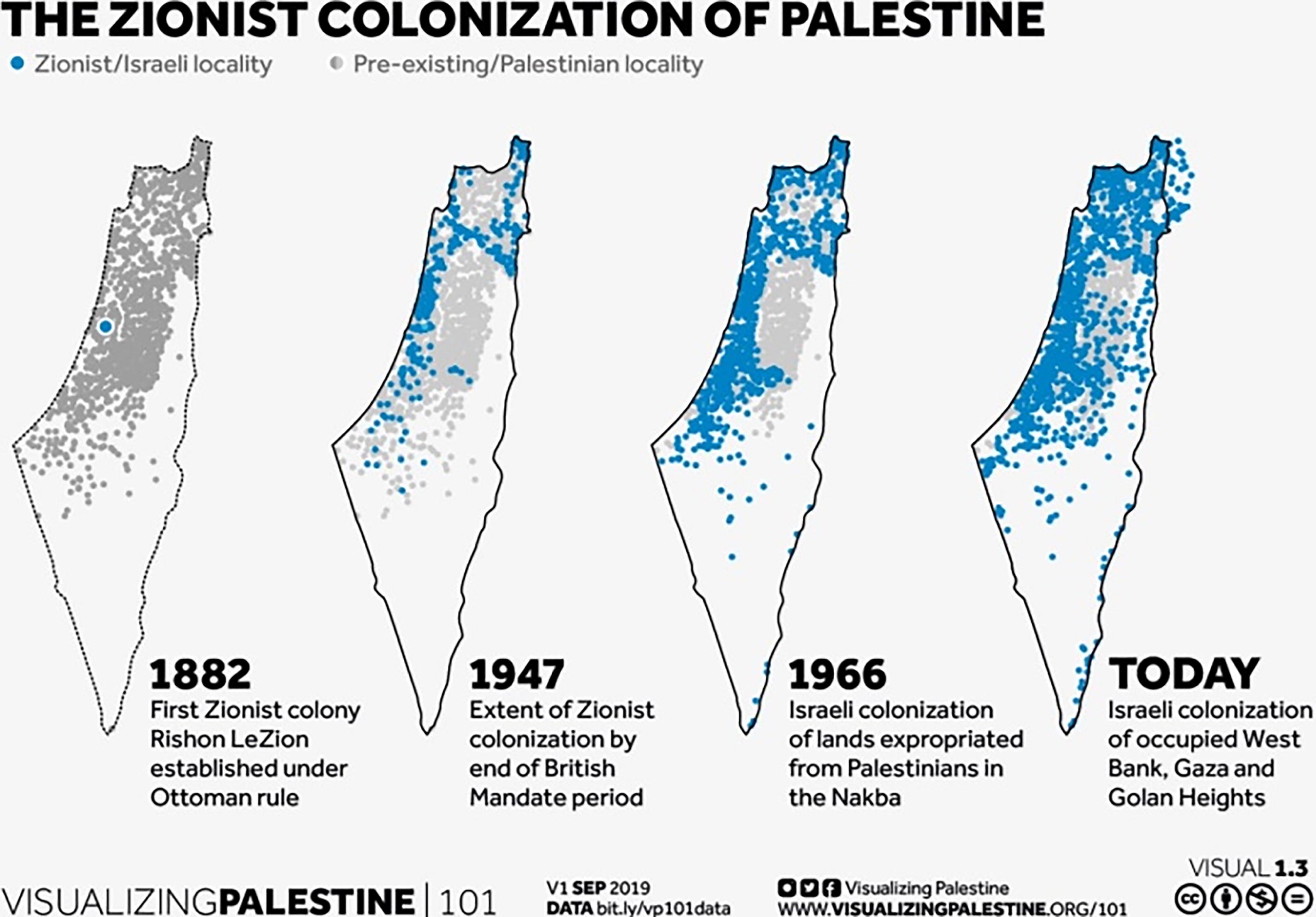
Development of the Zionist Project over time since 1882 until 2019—Zionist Colonization of Historic Palestine.a
“According to the United Nations, [until July 2023] some 700,000 settlers live in 279 settlements across the West Bank and East Jerusalem, up from 520,000 in 2012. More than 3 million Palestinians who live in the same area are subjected to Israeli military rule that some rights groups say amounts to Apartheid.” 23
Palestinian citizens in occupied East Jerusalem and its neighborhoods have been subjected to ethnic cleansing. 24 In addition, Palestinians have become extremely thirsty as Israel controls 87% or more of their legitimate water resources.25,26 Since June 1967, the entire West Bank and Gaza Strip have been under the complete and strict control of the Israeli occupation authorities and the Israeli Apartheid regime. Between 600 and 700 Israeli military checkpoints are spread throughout the occupied West Bank, 27 which have reached now about 900 military checkpoints, 28 where Palestinians do not enjoy freedom of movement, as their movement is subject to complete control by the Israeli occupation authorities and Jewish settlers. 29 This situation has created an Apartheid regime even within Israel itself, where Indigenous Palestinians are treated, in their homeland, extremely poorly and as second class. 30
“Israel is not a state for all its citizens… [but] the nation-state for the Jewish people and them alone. Israel’s then prime minister Benjamin Netanyahu (message published online in March 2019).” 31
Regarding the Gaza Strip, large numbers of Palestinians who fled or were expelled, in May 1948, from their homes in Historic Palestine (what is now known as “Israel”) ended up in the Gaza Strip and the West Bank, as well as in exile (such as Egypt, Syria, Lebanon, and Jordan, in addition to many other countries around the world). Accordingly, since 1948, there have been eight Palestinian refugee camps in the Gaza Strip with a population of 1.4 million people, constituting more than 60% of the Strip’s population, 32 which (total Gaza Strip’s population) now amounts to about 2.3 million people. 33
The Jewish settlements in the Gaza Strip were dismantled in 2005 during the government of Ariel Sharon (then prime minister), and since 2006 the entire Gaza Strip has been under Israeli siege from the air, land, and sea. That is, nothing enters the Gaza Strip and nothing comes out of it. Accordingly, the Gaza Strip has turned into a large prison for approximately 2.3 million people over the last 17 years and is still continuing, as the Israeli occupation authorities impose destructive inhumane punishment measures on the people of the Gaza Strip. 34 The Israeli blockade and sanctions have severely destroyed all aspects of Palestinian life in the Gaza Strip. This means that food, medicine, fuel, building materials, etc. have been not allowed to enter the Gaza Strip, which led to the death of many people, especially during the period of the spread of the coronavirus (COVID-19). 35 Among the dead were children, women, and the elderly. In addition, cancer patients in the Gaza Strip suffer from many hardships imposed on them by the Israeli occupation authorities.36,37 For more information on the inhumane situation in the Gaza Strip, even before the latest current war of 2023–2025, see, for example, the European report on human rights 38 , as well as the data provided by Reliefweb. 39
The Israeli political establishment is openly discussing how to conduct a mass transfer of Palestinians out of the Gaza Strip.40,41 Recently, The U.S. President Donald Trump, in support of the demands of the Israeli Prime Minister Benyamin Netanyahu, has called for mass transfer of the Palestinian citizens from their homes in the Gaza Strip, which is considered a “war crime,” according to the Geneva Convention and international law.42,43,44,45 While the internal forced displacement of some 2 million Palestinian citizens of the Gaza Strip has been carried out through evacuation orders and bombings of their homes, the desire to see this displacement become permanent, including expelling Palestinians from the Gaza Strip entirely, has sparked calls for the Gaza Strip to become unfit (or unviable and uninhabitable for housing). As Giora Eiland, former head of Israel’s National Security Council, wrote in a recent article:
“Israel must work to create a humanitarian crisis in [the] Gaza [Strip], compelling [forcing] tens of thousands or even hundreds of thousands to seek refuge… [The] Gaza [Strip] will become a place where no human being can exist.”46,47
Starving the people of the Gaza Strip and the widespread environmental damage contribute to creating such conditions, facilitating the displacement of Palestinian citizens in the Gaza Strip. Furthermore,
“Israel using starvation as means of war to drive people out of [the] Gaza [Strip]: Head of rights monitor: More than half of people in [the] Gaza [Strip] have been facing ‘critical levels’ of hunger, says chairperson of Euro-Med Human Rights Monitor.” 48
Hundreds of Gazans died from starvation while trying to collect aid, and
“Over half a million people currently face starvation, destitution and death,” with projections of 640,000 within weeks, she added. At least 132,000 children under the age of five are expected to suffer from acute malnutrition, with over 43,000 at risk of death. For pregnant and breastfeeding women, numbers are surging from 17,000 to 55,000.” 49
Since this study provides a deeper understanding of the situation in the Gaza Strip during the 2023–2025 war, one can imagine the consequences of this war on the Gaza Strip that has been ongoing since October 2023 and has not yet ended. Accordingly, this study paves the way for more future studies on the Gaza Strip, with regard to the current war, taking into account that this study focuses on the conditions of the Gaza Strip resulting from the devastating 2023–2025 Israeli aggression and the devastating war of genocide and ethnic cleansing, in light of several impacts.
Location, area, and demography
The Gaza Strip is located on the eastern coast of the Mediterranean Sea, between Israel (part of Historical Palestine) to the north and Egypt to the south (Fig. 2). On average, the Gaza Strip is 33 km long and 11 km wide, and its total area is 365 km2, which constitutes only 6.1% of the area of the OPT, amounting to 6,000 km2 occupied in 1967 and only 1.35% of the area of Historic Palestine, which is 27,000 km2. The population of the Gaza Strip is about 2.3 million people, as mentioned above, with a population density of about 5,500/km2, and thus, it is one of the highest population densities, if not the highest ever, in the world. 50 The population of the Gaza Strip lives (or more accurately, used to live until October 2023) in five governorates across the Strip, including, from north to south: North Gaza, Gaza, Middle Area (or Central District), Khan Yunis, and Rafah (Fig. 2).
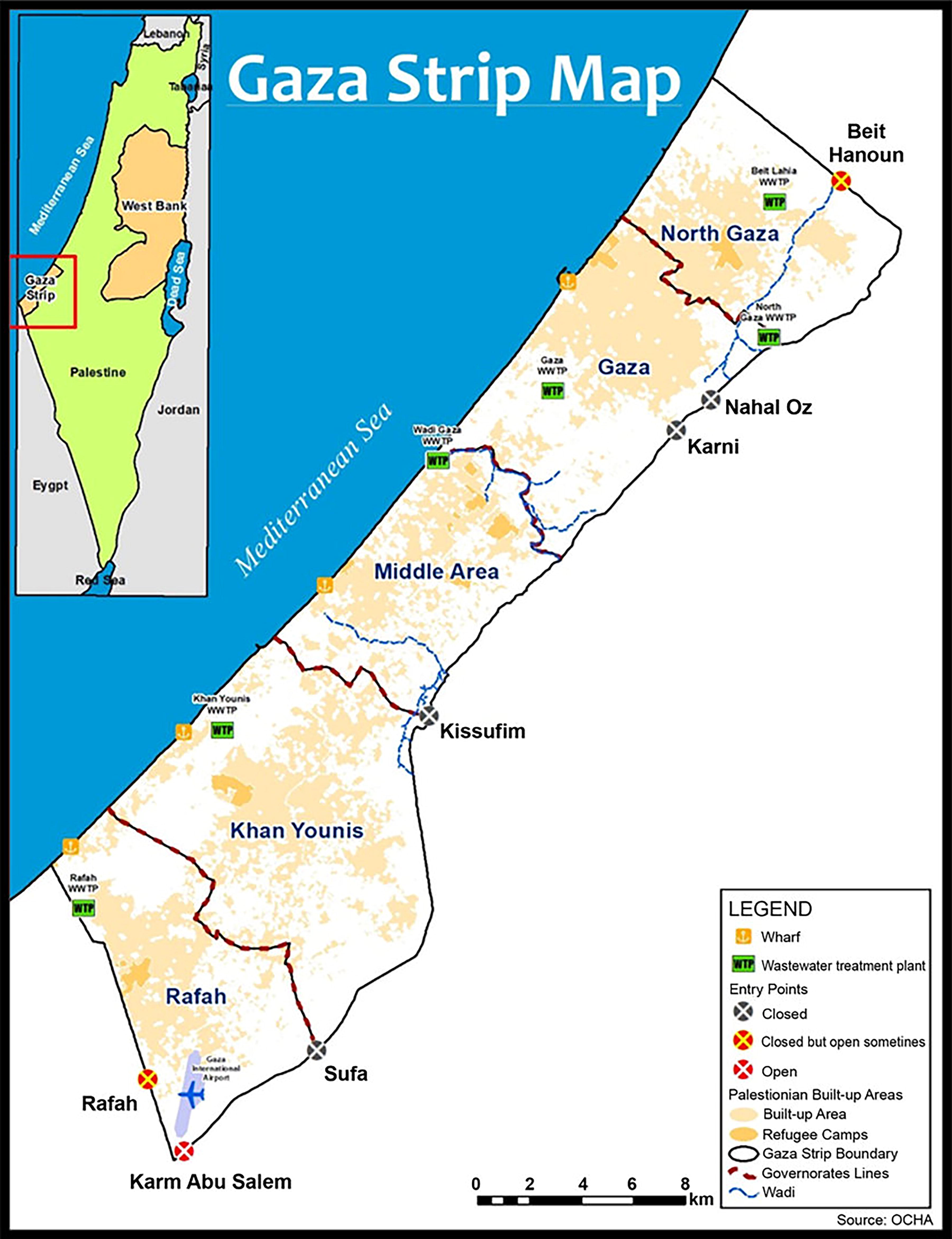
Map of Historic Palestine (on the left) and of the Gaza Strip (on the right) showing the five governorates of the Gaza Strip.a
RESULTS AND DISCUSSION
The devastating, genocidal, and ethnic cleansing 2023–2025 Israeli war on the Gaza Strip
Since December 2008/January 2009, Israel has launched five devastating wars on the Gaza Strip; the last of which is the 2023–2025 current one, which is still ongoing. Many observers around the world have described this war as an “atrocity” and “war of genocide and ethnic cleansing.” The South African government accused Israel of committing acts of “genocide,” aiming at “destroying a large part of the Palestinian national, racial, and ethnic group.” The South African government has urged the United Nations’ International Court of Justice (ICJ), based in The Hague, The Netherlands, to order Israel to “immediately suspend” its military operations in the Gaza Strip and allow humanitarian access to reach civilians there. 51 Accordingly, ICJ issued its ruling on the upcoming decision, which was taken by a panel of 17 judges. The ICJ ordered six temporary measures to protect Palestinians in the Gaza Strip. These measures were approved by an overwhelming majority of judges.52,53
“There are ‘reasonable grounds’ to believe Israel is committing genocide in the besieged Palestinian enclave of the Gaza Strip, according to a report issued by a United Nations-appointed expert,” 54 as being reported in the United Nations’ Human Rights Council Report. 55 During its genocidal war on the Gaza Strip and its 2.3 million Palestinian citizens, the Israeli occupation forces have committed thousands of massacres against innocent Palestinians. One of the most recent massacres committed by Israel was the murdering of “15 Palestinian paramedics and rescue workers one by one, says UN. Workers on a mission to help colleagues were buried in mass grave in southern Gaza, says humanitarian office.” 56
Meanwhile, their hands were tied and their emergency vehicles were buried with them under the sands of Rafah, southern Gaza Strip. 57 As writing this research article, it is hard to follow up with the developing massacres that are happening on a daily basis in the Gaza Strip. For example, on April 2, 2025, Israel killed 19 Gazans many of whom were children with their mothers, while waiting for medical treatment at the UNRWA clinic in the Jabaliya refugee camp, north of the Gaza Strip. 58
Israel has a huge military apparatus. According to the International Institute for Strategic Studies’ Military Balance 2023, Israel has 169,500 active military personnel in the army, navy, and paramilitary forces. Another 465,000 soldiers make up the reserve forces, while 8,000 individuals are part of the paramilitary forces. Just before the 2023–2025 Israeli war started, an Israeli military spokesman said that about 300,000 Israeli soldiers are now stationed near the Gaza Strip to conduct ground operations. 59 Since October 8, 2023, every 30 seconds, Israeli artillery has been shelling a barely visible target somewhere in the Gaza Strip. 60
Furthermore,
“Israel, which is on trial on charges of genocide at International Court of Justice [ICJ], tested large number of new weapons, ammunition for first time in its onslaught on Gaza since October 7, 2023.” 61
Given the fact that Israeli weapons used against the Palestinian people in the OPT, including the Gaza Strip and the West Bank, including East Jerusalem, and against the Lebanese people in southern Lebanon, are manufactured and originated in the United States to a large extent and sent free of charge to Israel for use against Palestinian, Lebanese, Syrian, and Yemeni Arabs in their home-countries (Table 1). In addition, some of the weapons used against the Gaza Strip, the West Bank, southern Lebanon, and other areas in the Arab region are Israeli-made (Table 1), representing the
All Ground Forces Units Participating in the Israeli Massacres in the Gaza Strip Began Testing Several New Technological Weapons and Munitions Developed by the Israeli Defense Industry and the American Arms Industry for Use, for the First Time, Against Palestinians in the Occupied Palestinian Territories (OPT, Including the Gaza Strip and the West Bank that Includes East Jerusalem), as Well as Against the Lebanese People in Southern Lebanon, and Against Syrians, Yemenis, and Other Arabs in the Arab Regiona,b,c,d
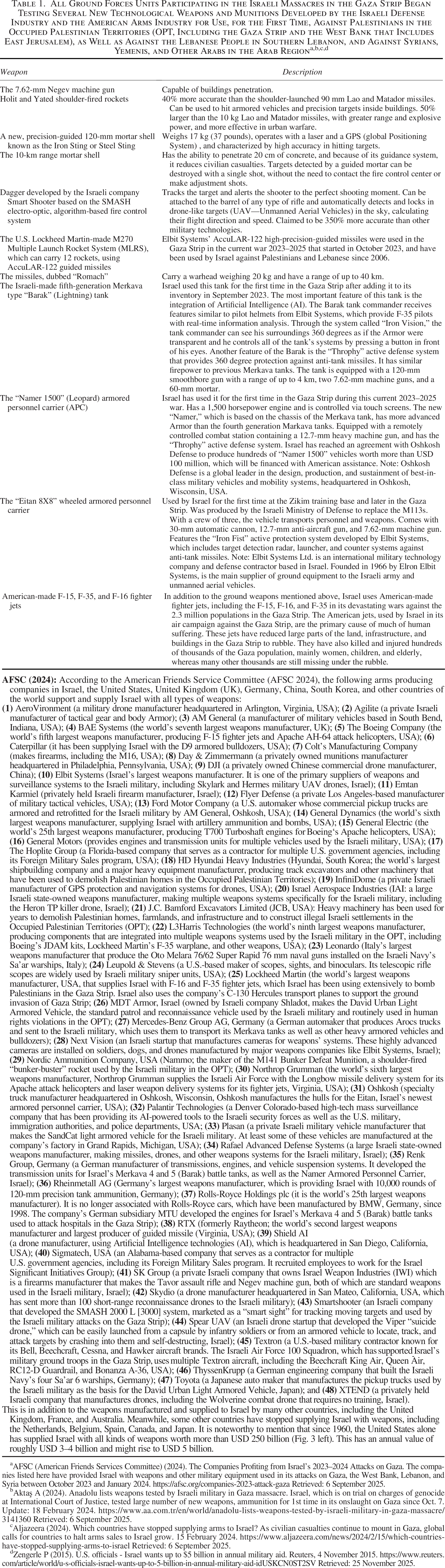
AFSC (American Friends Services Committee) (2024). The Companies Profiting from Israel’s 2023–2024 Attacks on Gaza. The companies listed here have provided Israel with weapons and other military equipment used in its attacks on Gaza, the West Bank, Lebanon, and Syria between October 2023 and January 2024. https://afsc.org/companies-2023-attack-gaza Retrieved: 6 September 2025.
Aktaş A (2024). Anadolu lists weapons tested by Israeli military in Gaza massacre. Israel, which is on trial on charges of genocide at International Court of Justice, tested large number of new weapons, ammunition for 1st time in its onslaught on Gaza since Oct. 7. Update: 18 February 2024. https://www.aa.com.tr/en/world/anadolu-lists-weapons-tested-by-israeli-military-in-gaza-massacre/3141360 Retrieved: 6 September 2025.
Aljazeera (2024). Which countries have stopped supplying arms to Israel? As civilian casualties continue to mount in Gaza, global calls for countries to halt arms sales to Israel grow. 15 February 2024. https://www.aljazeera.com/news/2024/2/15/which-countries-have-stopped-supplying-arms-to-israel Retrieved: 6 September 2025.
Zengerle P (2015). U.S. officials - Israel wants up to $5 billion in annual military aid. Reuters, 4 November 2015. https://www.reuters.com/article/world/u-s-officials-israel-wants-up-to-5-billion-in-annual-military-aid-idUSKCN0ST2SV Retrieved: 25 November 2025.
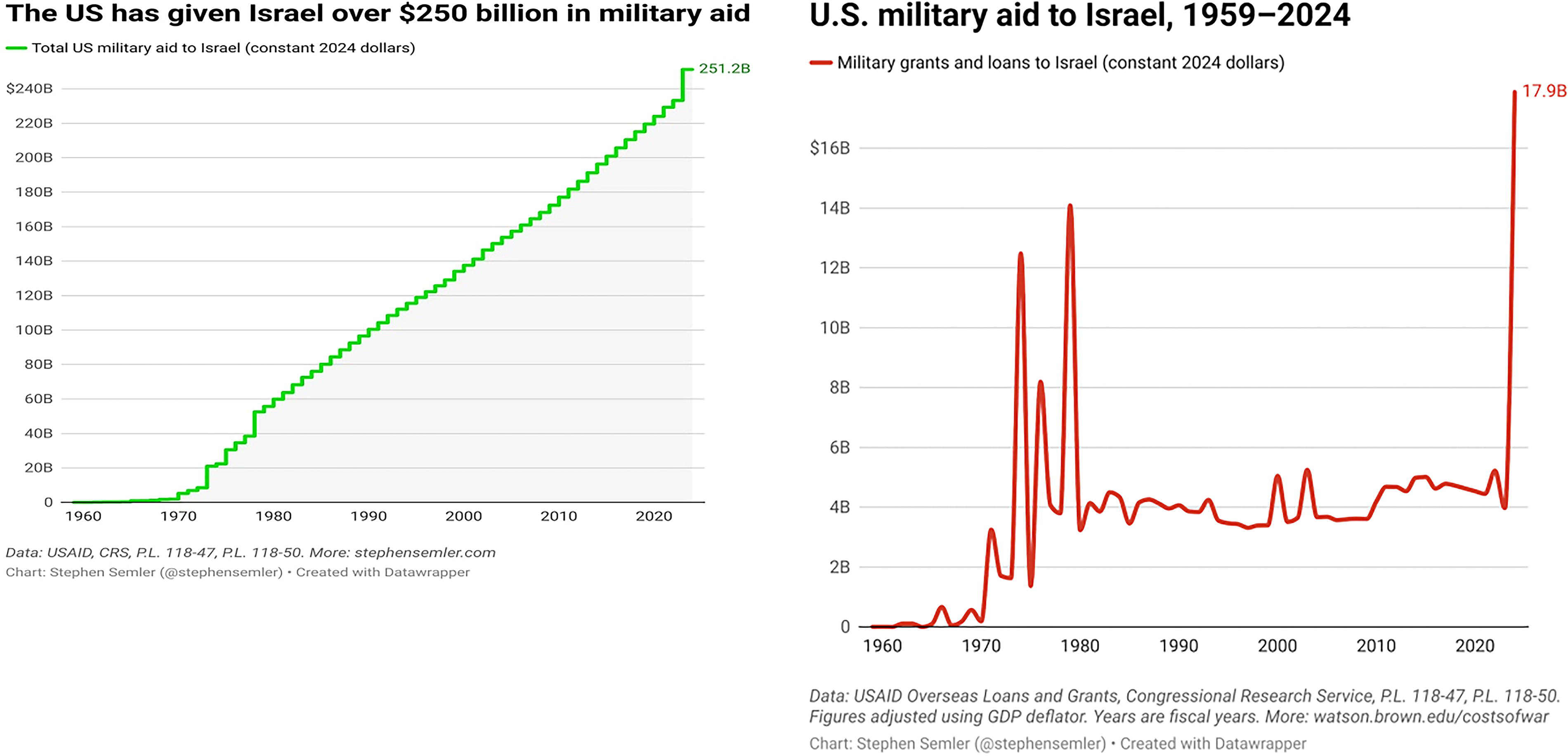
American military supplies given to Israel. Left: The United States has given to Israel USD 251.2 billion between the years 1959 and 2024; Right: Variations of the U.S. military support to Israel during the period of 1959–2024.a,b,c,d
“Dirty secret of Israel’s weapons exports, [as] they’re tested on Palestinians. Weapons tested in each war Israel wages see a spike in global demand. The current Gaza [Strip] war [2023–2025] is the latest laboratory for its arms industry.” 62
Some results and consequences of the Israeli war on the Gaza Strip: In brief
In view of the above, it is possible to imagine the extent of the deaths and injuries among the Palestinian citizens in the Gaza Strip, as well as the extent of the destruction and devastation caused by the Israeli occupation forces to the infrastructure, buildings, and people whose tens of thousands of them are still missing under the rubble of those buildings, as a result of the Israeli devastating, genocidal, and ethnic cleansing war since October 2023 (Fig. 4).
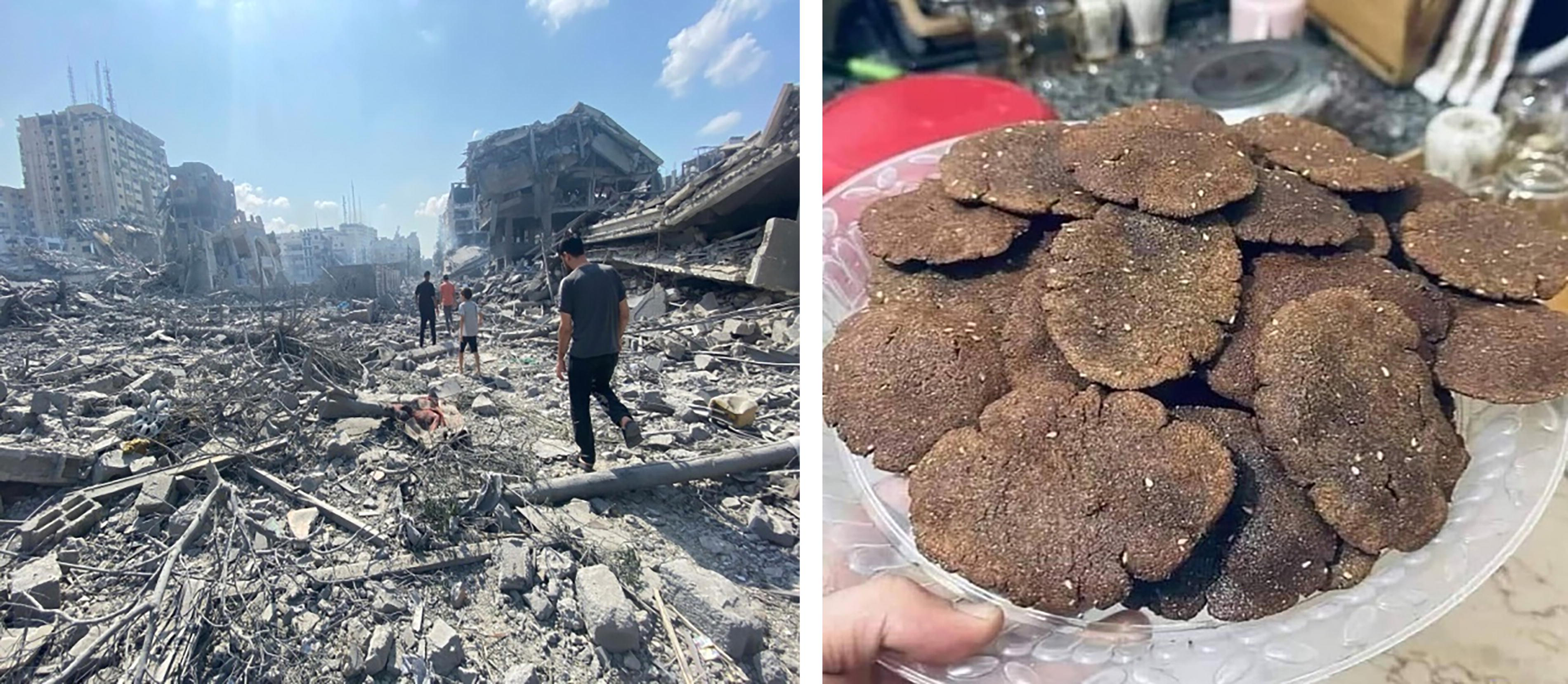
Left: Palestinians inspect the damage following an Israeli airstrike on the El-Remal area in the Gaza City on October 9, 2023.a,b Right: The kind of bread eaten by Palestinians in Northern Gaza.c
“Israel’s war in [the] Gaza [Strip] is creating enormous hidden health problems. A toxic mix of dust, ash and other material from 15 million tons of rubble now blankets [the] Gaza [Strip] and all who live there, posing major health concerns.” 63
More to say,
“Nine weeks ago, the Gaza Strip was a bustling home to more than two million people. Today, neighborhoods have been flattened by Israeli airstrikes and farming communities have been bulldozed by invading Israeli tanks.” 64
Readers are advised to watch the embedded videos in the article provided in Reference 63 (Rahim S, Grist 2024), regarding some of the sites before and after the destructive Israeli war on the Gaza Strip, occupied Palestine.
As of February 19, 2024, at least 29,092 Palestinians were killed and 69,028 others injured as a result of the Israeli war on the Gaza Strip since October 8, 2023, according to the Palestinian Ministry of Health in Gaza. 65 As of February 27, 2024, at least 29,878 people, mostly women and children, were killed, and another 70,215 injured in Israeli attacks on the Gaza Strip since October 8, 2023. 66 As of March 6, 2024, at least 30,717 Palestinians were killed and 72,156 wounded in Israeli attacks in Gaza since October 8, 2023. 67 As of April 4, 2024, at least 32,552 Palestinians were killed and 74,980 wounded in the Israeli attacks on the Gaza Strip.68,69 As of April 2, 2025,
“Gaza’s Health Ministry says at least 50,399 Palestinians are confirmed dead and 114,583 wounded in Israel’s war on Gaza. The Government Media Office updated its death toll to more than 61,700, saying thousands of people missing under the rubble are presumed dead.” 70
Furthermore, as of August 28, 2025 (the latest update of human losses), at least 62,895 Palestinians have been killed, 158,927 injured, and 20,000 missing, as indicated above. 71
In addition, until February 2024 more than 1.7 million Palestinians have been displaced in the Gaza Strip, as a result of the Israeli war, 72 most of them concentrated in Rafah, in southern Gaza Strip (Fig. 2, above). Although these displaced Gazans were forced to leave their homes, they are currently threatened by Israel’s Prime Minister Benjamin Netanyahu and his war cabinet of being attacked by Israeli occupation forces and, thus, being frequently displaced time after time after time.
“We are also of the view that to invade Rafah or to launch an attack on Rafah would bring about a catastrophic humanitarian situation on top of what is already a dire humanitarian situation, and would be unconscionable [with] the incredible suffering; the immense suffering that families are going through with over 1.5 million people crowded into a very small corner of [the] Gaza [Strip]. The world is shocked … at the level of inhumanity that’s now happening within [the] Gaza [Strip],”
As Ireland’s Foreign Minister Micheál Martin said. 73 Moreover,
“These people [in the Gaza Strip] are already traumatized, they lost homes, family members, have no access to hospitals and are increasingly trapped between walls, the sea, and the Israeli military.” 74
As a result of searching for food simply to survive,
“Israeli forces have killed more than 1,000 aid seekers in [the] Gaza [Strip] since May [2025 until July 2025], the United Nations reported.” 75
The citizens of the Gaza Strip have also been facing famine parallel to the Israeli war launched on October 8, 2023. 76 Nearly 5 months after the Israeli aggression against 2.3 million Palestinians in the Gaza Strip, it has become difficult for them to find the minimum amount of food just to keep them alive, due to the exacerbation of the hunger crisis sweeping the Gaza Strip. This is to the point that a loaf of bread has become a rare and expensive commodity, if it exists at all. Security Council Resolution 2417 of May 24, 2018, strongly condemns the use of starvation of civilians as a tactic of war (Fig. 5), the unlawful denial of humanitarian access and the deprivation of civilians of things indispensable for their survival, including deliberately obstructing relief supplies and access to conflict responses related to food insecurity resulting from situations of armed conflict, which constitutes a violation of international humanitarian law. 77
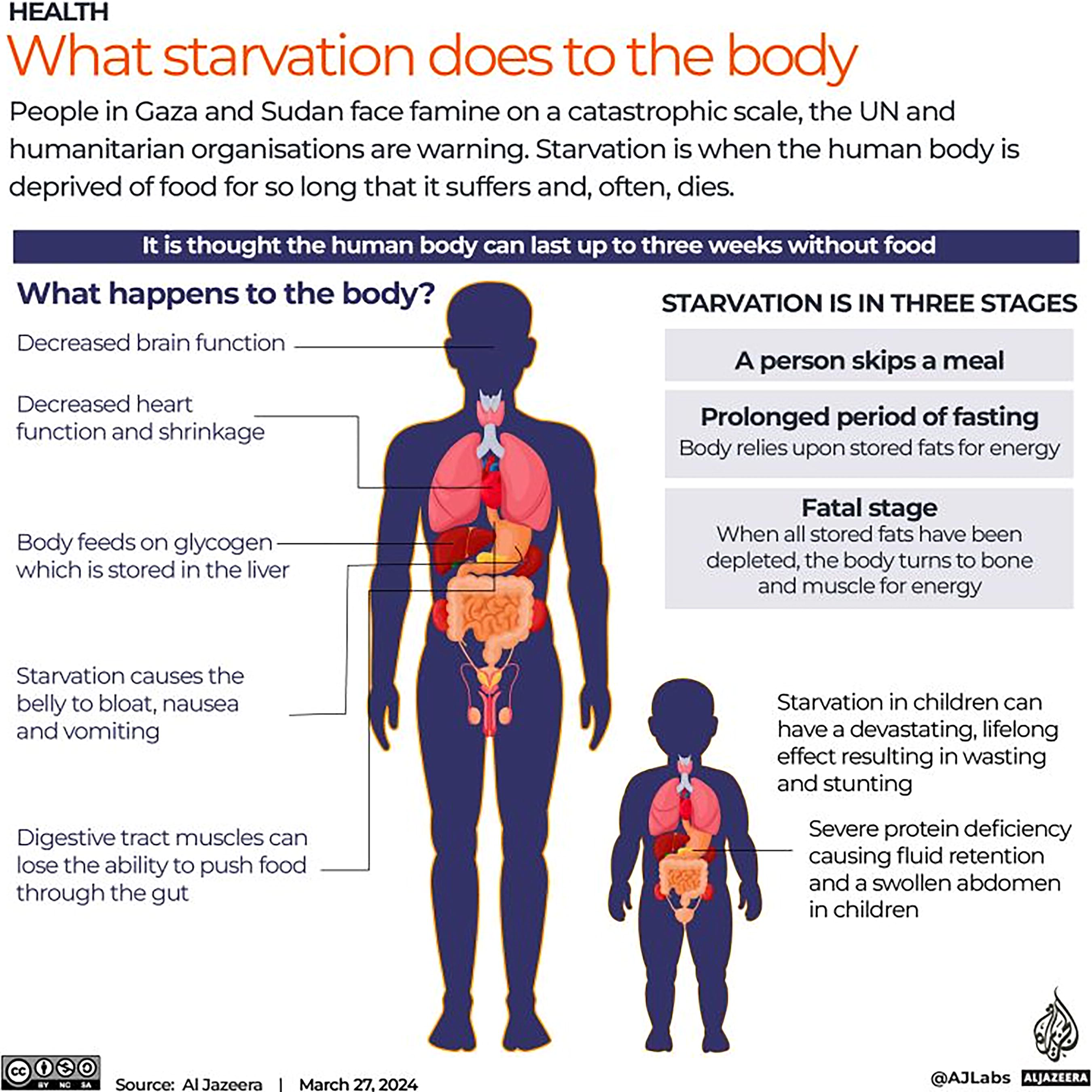
What starvation does to the human’s body? 2.3 million Palestinians bombarded, besieged, and starved to death in the Gaza Strip, as they have been facing a genocidal and ethnic cleansing war since October 8, 2023.a
“All bakeries in Gaza—including 25 run by the World Food Programme—have shut down as Israel’s blockade on the Strip continues for a 31st day, the longest siege since the war began.” 78
World leaders are calling on Israeli Prime Minister Benjamin Netanyahu to stop the starvation of the 2.3 million people in the Gaza Strip by allowing food into the territory, where people are dying from hunger and malnutrition, in addition to the killings caused by the Israeli war. For instance, Canadian Prime Minister Mark Carney called on Israel to allow the United Nations’ World Food Programme to operate in the Gaza Strip, saying
“food cannot be used as a political tool.” 79
“Hunger and severe malnutrition are widespread in the Gaza Strip, where about 2.2 million Palestinians are facing severe shortages resulting from Israel destroying food supplies and severely restricting the flow of food, medicines and other humanitarian supplies. “Intentionally depriving people of food is clearly a war crime. Israel has announced its intention to destroy the Palestinian people, in whole or in part, simply for being Palestinian. In my view as a UN human rights expert, this is now a situation of genocide. This means the State of Israel in its entirety is culpable and should be held accountable—not just individuals or this government, or that person.” 80
Many Palestinians in the Gaza Strip are forced to cook herbs and bake animal feed to satisfy their hunger. 81 In the face of the famine suffered by the Palestinian population in the northern region of the Gaza Strip, they resorted to purifying grains from rabbit fattening feed for use in making bread, in light of the Israeli starvation policies during its ongoing war since October 8, 2023 (Fig. 4–right, above).
According to the Integrated Food Security Phase Classification (IPC 2023–2025), 82
“Hostilities, including bombardment, ground operations and besiegement of the entire population have caused catastrophic levels of acute food insecurity across the Gaza Strip. Around 85% of the population (1.9 million people) is displaced, with many people having relocated multiple times, and currently concentrated into an increasingly smaller geographic area. There is a risk of Famine and it is increasing each day that the current situation of intense hostilities and restricted humanitarian access persists or worsens. The intensification of the hostilities, further reduction in access to food, basic services, and lifesaving assistance, and the extreme concentration or isolation of people in inadequate shelters or areas without basic services are major factors that contribute to increasing this risk. Between 24 November and 7 December 2023, over 90% of the population in the Gaza Strip (about 2.08 million people) was estimated to face high levels of acute food insecurity, classified in IPC Phase 3 or above (crisis or worse). Among these, over 40% of the population (939,000 people) were in emergency (IPC Phase 4) and over 15% (378,000 people) were in Catastrophe (IPC Phase 5).”
According to the Human Rights Watch (HRW), 83
“The Israeli government is using starvation of civilians as a method of warfare in the Gaza Strip, which is a war crime. Israeli officials have made public statements expressing their aim to deprive civilians in [the] Gaza [Strip] of food, water, and fuel—statements reflected in Israeli forces’ military operations” (Fig. 6).

Israel prevents 2.3 million people in the occupied, besieged, and starved to death Gaza Strip from having basic human rightful and basic needs that include food, water, electricity, and fuel.a
Therefore, many international organizations have warned of a famine hitting the people in the Gaza Strip as a result of the Israeli war of genocide and ethnic cleansing to which 2.3 million Palestinians in the Gaza Strip are exposed.84,85,86
Some of the effects of the 2023–2025 Israeli War on the citizens of the Gaza Strip, regarding public health and the environment, in particular
When armed conflicts break out, people first focus on those who are mostly affected. However, the suffering of wars is not limited to those who suffer most, and it does not stop when the fighting ends. Wars cause significant damage to the natural environment and the public health of the directly affected population, as well as to the populations geographically located within war zones. In short, wars have severe impacts on public health and the environment, especially if the war zone is small, such as the Gaza Strip, and if the war lasts for a very long time, as is the case with the current Israeli war (2023–2025) on the Gaza Strip, which has so far lasted for nearly 23 consecutive months until September 7, 2025.
Artillery strikes, missiles, and landmines release pollutants, wipe out forests and green cover, destroy biodiversity, contaminate surface water and groundwater resources, contaminate soils, and render agricultural land unusable. Military vehicles consume petroleum-derived fuel at extremely high rates, with vehicles used in war zones producing millions of tons of carbon monoxide (CO), carbon dioxide (CO2), sulfur oxides (SOx), nitrogen oxides (NOx), hydrocarbons, and other particulate pollutants. Besides the deterioration of natural resources in war zones, and the radical destruction of green cover, the numbers of animals and birds and their habitats are also greatly affected and probably destroyed, as military conflicts cause habitat loss and decreased biodiversity.
Furthermore, when people have to move in conflict zones during times of war, disruption can add additional environmental damage through plastic and other types of waste. Long-term wars are also described as climate change wars in the world, due to their roots in drought, water pollution and shortages, high rates of water evaporation, and the environmental crisis. While it is difficult to clearly link climate change and armed conflict, climate change is at least an indirect driver of armed conflict, exacerbating existing negative social, economic, and environmental impacts. In contrast, conflicts exacerbate the damage caused by climate change, because they limit people’s ability to respond to or cope with climate shocks. The world’s military forces use fossil fuels extensively, accounting for 5.5% of global emissions. 87 If the world military powers are considered as a single country, they would be the fourth largest emitter of carbon dioxide and other greenhouse gases (GHGs), after the United States, China, and India. Therefore, military conflicts mean everything that might prevent leading to sustainable development in societies. According to the United Nations Special Rapporteur on Human Rights and the Environment, Mr. David R. Boyd:
“I do not believe that humanity can achieve a just and sustainable future in a world that continues to engage in military conflict … In other words, peace is a prerequisite for sustainable development. It is impossible to reconcile the human right to a clean, healthy and sustainable environment with the horrific impacts of war.” 88
For the people in the Gaza Strip, the destruction of water wells; wastewater treatment plants; and fresh water, sanitation, and electricity infrastructure makes their already difficult lives even more difficult, jeopardizing their rights to the necessities of life, health, food, water, sanitation, and a clean, healthy, and sustainable environment. Regarding the deteriorating water, food, and energy conditions, and the environmental and health impacts of the current devastating and genocidal Israeli war on the Gaza Strip and its 2.3 million Palestinian citizens, the following are some examples of the grave impacts of the Israeli genocidal war on the Gaza Strip89,90:
Destruction of homes, schools, universities, hospitals, mosques, churches, businesses, and infrastructure: In this current devastating Israeli war on the Gaza Strip, the Israeli occupation forces have destroyed many sites including all of these sites mentioned in this subtitle. Moreover, during Israel’s numerous wars on the Gaza Strip, including the current devastating war (2023–2025), Israel has extensively destroyed buildings, houses, business high towers, and infrastructure facilities, including sewage treatment plants. Sewage treatment plants and almost all sewage pumping stations in the Gaza Strip have been entirely destroyed by the Israeli occupation forces and, thus, stopped working, according to the international organization—Oxfam, meaning that untreated sewage is now being discharged into the Mediterranean Sea, polluting and killing the marine life.
91
Air and artillery strikes have hit wastewater infrastructure in 2014, 2021, 2022, and currently in 2023–2025, releasing sewage into the Mediterranean Sea
92
and the streets of the Gaza Strip, causing flash floods.
93
Seawater pollution (130,000 m3 of wastewater is discharged into the Mediterranean Sea every day) has very badly affected soil and groundwater storage,94,95,96 as well as well-being of the coastal marine life in the Gaza Strip, endangering what little food security Palestinians enjoy in the form of the fishing industry.97,98 Regarding the mosques, since October 8, 2023, Israeli occupation forces have destroyed, partially or totally, more than 1000 mosques out of 1200 mosques.
99
Another example of the Israeli genocidal acts is the destruction of more than 30 hospitals out of 36 that used to serve the entire population of the Gaza Strip—2.3 million people, especially in these dire war times.
“By November 24 [2023], 30 of [the] Gaza [Strip’s] 36 hospitals had been bombed, many repeatedly, even while medical staff, patients, and civilians seeking shelter remained inside. In addition to hospitals, Israeli forces have targeted ambulances, medical aid convoys, and access roads. Israel’s destruction of Gaza [Strip’s] health care system is not only an important part of the genocide charges—it is also a blatant war crime that should be prosecuted outright by the International Criminal Court (ICC), which has an active investigation underway of war crimes in Palestine. While the ICJ resolves disputes between states, the ICC adjudicates criminal prosecutions of individuals.” 100
One of the most recent crimes against humanity committed by the Israeli occupation forces is the total destruction of the largest hospital in the Gaza Strip and the West Bank, which is the Al-Shifa Medical Complex.
“The massacres and widespread destruction that befell Al-Shifa Hospital in Gaza [City] is a crime against humanity that took place before the eyes of the world over more than two weeks [and now almost two years since 8 October 2023]. Al-Shifa complex, the largest and most sophisticated medical and health structure in the besieged Gaza Strip, has been razed to the ground and rendered completely out of service by Israeli forces.” 101
Flooding underground tunnels with seawater: With regard to the current Israeli war (2023–2025) on the Gaza Strip, the Israeli occupation forces began, some months after the beginning of the war, to flood Gaza’s underground tunnels with seawater, despite previous dire warnings from environmental experts of massive, overwhelming floods.
“Israel confirmed this week that its troops are pumping seawater into a network of tunnels in Gaza; a method environmentalists say could violate international law and cause dire, long-term consequences in the besieged Palestinian enclave.” 102
If this would happen, it will certainly lead to a disastrous environmental act caused by the Israeli authorities. One expert warned against this course of action, as said:
“Risks ruining basic life in [the] Gaza [Strip] by causing an ecological catastrophe that will leave Gaza with no drinkable water and devastate what little agriculture is possible. Israeli plan would constitute one element of the crime of genocide.” 103
Water resources: The Israeli war has reduced Gaza Strip’s water supply by 95%, forcing Gazans to use unsafe water and sanitation facilities, which exacerbates the risks to public health. However, 95% of the water resources in the Gaza Strip have been unsafe for many years,104,105,106 not to mention the devastating effects of the current war on the water resources in the Gaza Strip. Even 2 years before the current Israeli war started, observers noted the disastrous effects of drinking contaminated water on public health in the Gaza Strip.
“Heavily polluted water resources in the [Gaza] Strip also have a serious impact on public health, with children, in particular, facing the risk of water-borne disease. The crisis has worsened during the past decades years because of the punishing Israeli blockade, the reduction of humanitarian funding, and the series of Israeli military attacks.” 107
Also,
“As clean water in [the] Gaza [Strip] runs out, a long-expected health crisis has surged in recent days: a steep increase in gastrointestinal diseases and other illnesses tied to poor sanitation. On Wednesday, the World Health Organization [WHO] reported that more than 44,000 cases of diarrhea had been documented in Gaza since mid-October—a dramatic increase compared to previous years.” 108
Furthermore, there are high levels of nitrate and chloride contamination in almost 91% of the wells that penetrate the Coastal Aquifer System (CAS) beneath the Gaza Strip (Fig. 7). It appears that sewage inputs are the main source of nitrate contamination, despite the fact that agricultural inputs are very limited and restricted, especially in the Gaza Strip’s sensitive northern regions.
Nitrate and chloride concentrations in the Coastal Aquifer System (CAS) underneath the Gaza Strip, whereas nitrate concentration lies in the range of <50 to >300 mg/L (Left), meanwhile the chloride concentration lies in the range of <250 to > 2000 mg/L (Right).a 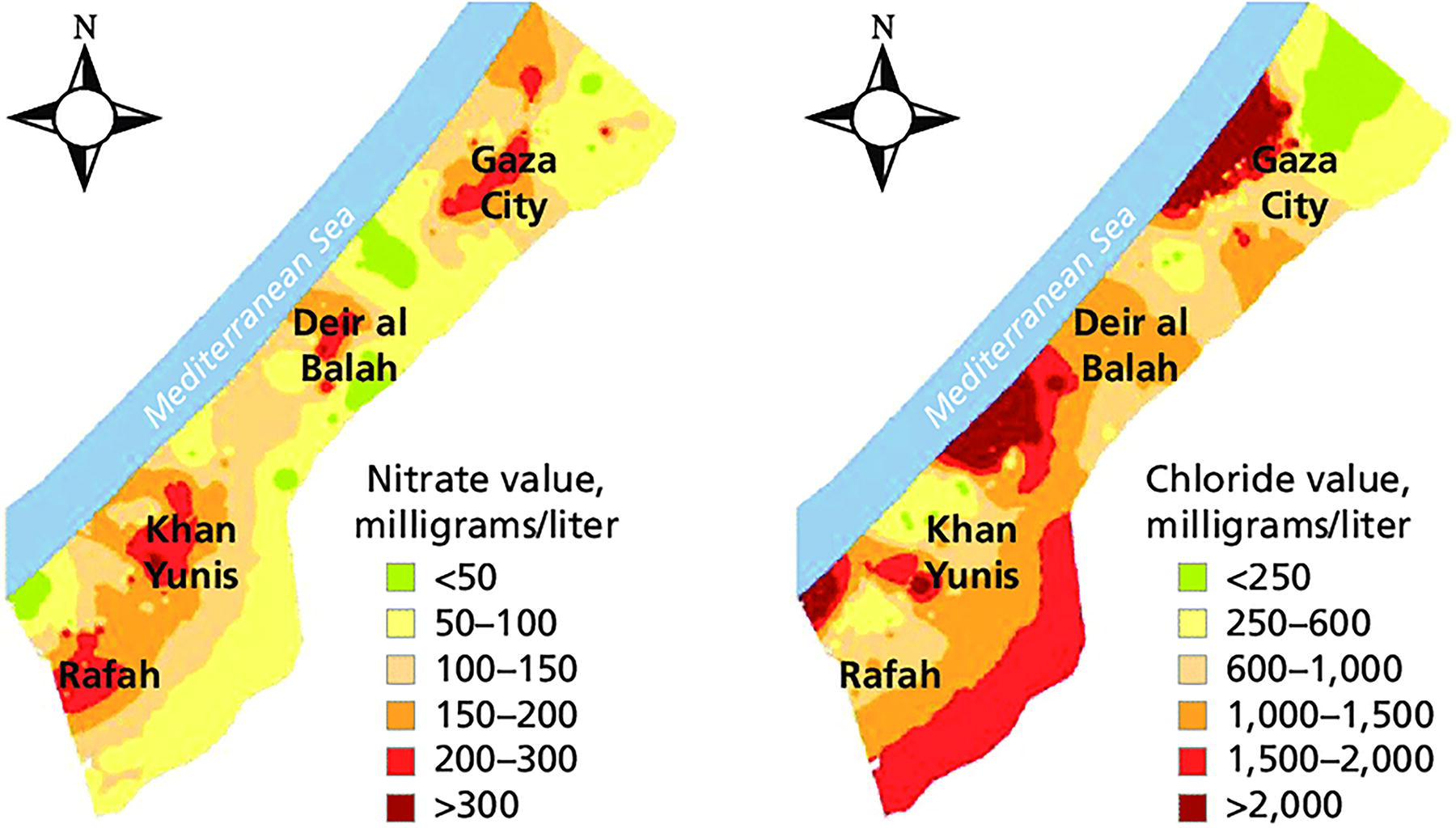
Both natural and man-made (anthropogenic) sources, such as inorganic fertilizers, septic tank effluents, landfill leachates, animal feeds, industrial effluents, irrigation drainage, and seawater intrusion in coastal areas such as the Gaza Strip, can generate nitrate and chloride into water supplies. Figure 7 (Left) shows that the concentration of nitrate in Gaza’s CAS ranges from <50 to >300 mg/L, while Figure 7 (Right) shows that the concentration of chloride ranges from <250 to >2000 mg/L. WHO guidelines state that water sources should have no more than 250 mg/L of chloride 109 and no more than 10 mg/L of nitrates. 110
With an emphasis on water, wastewater, and hygiene; noise pollution; food insecurity; environmental health impacts on vulnerable populations; destruction of health systems and lack of access to care; and the traumatic effects of targeted environmental destruction, recent published research has provided an evidence-based summary of the current environmental conditions in the Gaza Strip, brought on by Israeli bombardment and occupation, which pose serious threats to the population’s short- and long-term health.
111
Agriculture and food: Despite the massive population density in the Gaza Strip, about 25% of the land in the Gaza Strip is arable land, providing Palestinians with some food security and, thus, the ability to withstand the 18-year-old Israeli blockade.
112
In the current attack on the Gaza Strip, this policy has continued. An analysis of satellite imagery by HRW
113
revealed that Israeli ground forces “systematically” bulldozed Palestinian orchards, fields, and greenhouses, creating a barren wasteland of sand and dirt. Such actions have destroyed Palestinian livelihoods and the recognizable landmarks and environmental features that make the landscape familiar. Depriving the land of its agricultural familiarity and soil fertility makes return more painful and eliminates the motivation of Palestinians to return after displacement. Repeated Israeli wars have also disrupted agriculture and food production in the occupied West Bank, as Israeli (Jewish) settlers have uprooted almost a million of olive trees, and neighboring settlements designated for Jews only dumped untreated sewage on cultivated Palestinian lands.114,115
Such practices by the Israeli occupation forces and Jewish settlers in the OPT have led to food insecurity, with 2.3 million people in the Gaza Strip, in particular, facing increasing hunger, and even famine and starvation, as discussed above.
“Food is very scarce, and prices have skyrocketed because quantities are limited. To buy bread [in the Gaza Strip], we have to wait in line for hours, and sometimes we get our turn, sometimes we don’t.” 116
Currently, all bakeries in the Gaza Strip are closed due to the lack of flour, fuel, water, etc. reaching anywhere in the Strip. What makes food issues even more complex in the Gaza Strip is the reality that Israeli occupation forces are shooting at Palestinians while searching for food to feed their children and themselves. On February 29, 2024, Israel opened fire on Gazan civilians who had gathered to get some food, killing 112 people and wounding 700 others,
117
which was described as a “massacre.”
118
The Israeli war on education: Since the establishment of its state on the land of Historic Palestine, the Israeli government and its occupation forces have pursued a policy of killing educated Palestinians. The Palestinian researcher and Oxford University Professor—Karma Nabulsi—coined the term “scholasticide” in reference to Israel’s deliberate and systematic destruction of Palestinian educational infrastructure.
119
“Israel’s ‘scholasticide’ is central to its [Israel’s] colonial project, because education is at the heart of Palestinian resistance and liberation.” 120
During the first 125 days of the war, Israel in the Gaza Strip has bombed all universities, 3 colleges, and 370 schools. The Israeli occupation forces destroyed the Islamic University, Al-Azhar University, and Al-Israa’ University, which was the last remaining university in the Gaza Strip. Israel has killed more than 230 university academics and more than 4240 students. In addition, because of the war on the Gaza Strip, more than 90,000 Palestinian university students were unable to enroll in their universities. On November 6, 2023, the Palestinian Ministry of Education suspended the 2023–2024 academic year due to Israeli aggression and indiscriminate bombing of schools, universities, and other facilities.
“Amid the mass atrocities being waged in [the] Gaza [Strip], Israel has also systematically targeted top scholars, scientists and doctors in the [Gaza] Strip.” 121
Recently, a published report has indicated that,
“The Ministry of Education and Higher Education said that 18,489 students have been killed and 28,854 injured since the start of the Israeli aggression on the Gaza Strip and the West Bank on October 7.” 122
Cultural genocide: In addition to the crimes of genocide against human civilians and ecocide against ecosystems (water, soil, and air), Israel, since its establishment in 1948, has launched one campaign after another against Palestinian culture, which observers, researchers, and analysts have called cultural genocide. 123
“What’s happening in [the] Gaza [Strip] is a multi-layered act that extends far beyond the physical destruction of artifacts or the killing of individuals. These actions are part of broader destructive processes that undermine a community’s heritage, identity, and existence—with profound symbolic and psychological implications for Palestinians not only in [the] Gaza [Strip] but globally.” 124
Energy: The Israeli war has exacerbated energy vulnerabilities in the OPT and is likely to hamper equitable and inclusive energy transitions and sustainable development. Many years ago, Israel destroyed all power plants in the Gaza Strip, where, before the 2023–2025 war, Palestinians in the Strip typically did not have access to electricity for more than a few hours a day. 125 According to the Red Cross, the lack of electricity in the Gaza Strip has turned hospitals into “morgues” or “exhaustion.”
“Israel’s siege has cut off food, fuel, water, and medical supplies from reaching [the] Gaza [Strip], which, in addition to the airstrikes, has created the conditions for a humanitarian catastrophe. Lack of electricity will likely worsen conditions and make it more difficult for Gazans to communicate with each other and the outside world…. The International Committee of the Red Cross warned on Thursday that back-up generators could shut off within hours, threatening to turn treatment facilities into “morgues.” 126
Weather: Cold weather, heavy rain, and strong winds during the first months of the Israeli war on the Gaza Strip have disrupted the lives of the Gaza Strip’s people who have been living in tents or under their destroyed homes since October 2023.
“Cold, wet weather combined with a lack of clean water, toilets and food have fueled a spike in respiratory, stomach and other ailments, and the sick are left struggling to recover, health officials say.” 127
The most common diseases in the Gaza Strip are respiratory infections, which range from the common cold to pneumonia. Even usually mild illnesses can pose serious risks to Palestinians in the Gaza Strip, especially children, the elderly, and the immunocompromised, causing difficult living conditions in the winter time and summer time alike, especially when living in tents since they are very hot in summer and very cold in winter.
Outbreaks of diseases: Record outbreaks of inflammatory skin diseases have been reported, including more than 5000 cases of chicken pox, 18,800 cases of skin rashes, 10,000 cases of scabies, and tens of thousands of cases of severe influenza. 128
“Diseases spread in [the] Gaza [Strip] amid health system collapse, Israeli strikes WHO says diarrhea cases surged 66 percent among children. Meningitis, chickenpox, jaundice also reported.” 129
The Israeli occupation forces’ targeting of diabetes, dialysis, and cancer patients, and premature infants:
“The Israeli attacks and targeting of hospitals, along with Israel’s cutting off of humanitarian supplies, have put hundreds of cancer and chronic disease patients, pregnant women, and newborn babies at risk of death, Euro-Med Monitor warned. The international human rights group drew attention to the grave dangers associated with Gaza [Strip’s] worsening health service deficit. Prior to the recent Israeli bombardment of the [Gaza] Strip, the region was already severely underfunded, and cancer patients in particular faced difficulties in receiving the medical care they required despite their urgent health needs.” 130
Some of those most affected by the Israeli war on the Gaza Strip are patients who need dialysis and cancer treatments.
“Usually, around 100 patients from [the] Gaza [Strip] receive care each day for complex health needs such as treatment for rare cancers and open heart surgery, at hospitals like Azzam’s, as well as in the occupied West Bank, Israel and other countries, according to the World Health Organization.” 131
Before the 2023–2025 current war, about 20,000 patients a year required permits from the Israeli occupation authorities to leave the Gaza Strip to receive health care, many of whom required frequent cross-border trips, and approximately a third of them were children. The Israeli occupation authorities approved about 63% of medical exit requests in 2022, according to the WHO. Health care facilities in the Gaza Strip are under severe pressure during the 19-year blockade imposed by Israel since 2006, in addition to recurring rounds of fighting.132,133
“The concern is not just about the most complex cases. There are 350,000 patients with chronic conditions in [the] Gaza [Strip], including cancer and diabetes, as well as 50,000 pregnant women, according to data from United Nations organizations…. Some needs are particularly acute. About 1,000 patients in [the] Gaza [Strip] need kidney dialysis to stay alive, but 80% of the machines are in local hospitals under evacuation orders, the WHO said. Gaza’s only cancer hospital is no longer functioning. Israel’s military has told civilians to evacuate northern Gaza, where some of the hospitals are located.” 134
“The [human] rights organization warned that thousands of patients—more than 2,000 cancer patients, more than 1,000 patients in need of dialysis to survive, 50,000 cardiovascular patients, and over 60,000 diabetics—urgently need access to basic healthcare services considering the severe shortage of medications, medical supplies, fuel, food, and clean water. Thousands of elderly and bedridden patients are suffering from a complete lack of health care, while pregnant women and newborn infants are at risk of death from dehydration, malnutrition, and lack of medical care. There are currently over 55,000 pregnant women in [the] Gaza [Strip], 5,500 of whom are about to give birth. Many women are being forced to give birth in overcrowded hospitals, homes, and shelters, raising the risk of infection and other critical health problems. The rate of miscarriage among pregnant women in the [Gaza] Strip has also recently increased by more than four times.” 135
In addition to the many Palestinian newborn, premature babies who died as a result of the Israeli outrageous war on the Gaza Strip, for different reasons (including air strikes, dehydration, malnutrition, illnesses, cold and hot weather, lack of food and drinking water, famine, power outage, and so forth),
“Six children have died from dehydration and malnutrition at hospitals in northern Gaza, the Health Ministry in the besieged Palestinian territory has said, as the catastrophic humanitarian situation in the besieged enclave worsens.” 136
According to UNICEF, more than a million children in the Gaza Strip have been deprived of lifesaving assistance for more than a month. The Israeli blockade of aid continues, in violation of international humanitarian law, with devastating consequences for the children in the Gaza Strip.
137
The Gaza Strip is witnessing the largest starvation operation in human history, practiced by the Israeli occupation forces against 2.3 million people in the besieged and bombarded Gaza Strip. For nearly 2 months (dated April 26, 2025), the citizens of the Gaza Strip have been suffering from a lack of food, water, and medicine.
Bodies of dead citizens: The bodies of dead citizens (corpses) are scattered in the streets of major cities, small towns, and refugee camps, as well as under the rubble of buildings destroyed by the Israeli aggression on the Gaza Strip since October 8, 2023. This is at risk of contracting diseases, cholera, immune system disorders, and other diseases spread throughout the Gaza Strip, according to what the Euro-Mediterranean Human Rights Monitor Observatory (EMM) reported:
“Additionally, the power outage makes it challenging to place bodies in mortuaries, which is resulting in improper burials. The public decomposition of dead bodies for long periods of time leads to the transmission of serious diseases, including blood-borne viruses and tuberculosis. Gastrointestinal infections like cholera can also be easily spread.” 138
Videos circulated on social media show starving stray cats and dogs feeding on the corpses of Palestinian citizens in Khan Yunis—in the southern region of the Gaza Strip—where the Israeli army obstructed the arrival of ambulances after killing those citizens.139,140 As a result of the decomposition of corpses, the soil will become sterile, and infectious diseases will spread widely, affecting also groundwater storage in the sands of the underground aquifer systems. Furthermore, various news agencies reported that Israelis steal organs from Palestinian corpses during the genocidal war on the Gaza Strip 2023–2025. The EMM called for the formation of an independent international investigation committee into suspicions of organ theft.141,142,143,144
Mass graves: Improper and random burial of bodies in mass graves may lead to various diseases, such as cholera, which may spread due to the presence of bodies near water sources (underground natural aquifer systems), as already mentioned. The presence of corpses near or in water sources is very disturbing, as this may lead to health problems, such as diarrhea and other diseases, because the corpses may leak feces and contaminate the water sources. In addition, some bacteria and viruses may remain active in dead bodies for long periods of time after death, causing diseases such as hepatitis, tuberculosis, and HIV.145,146
“Workers who routinely handle corpses may however risk contracting tuberculosis, blood-borne viruses (e.g. hepatitis B and C, and HIV) and gastrointestinal infections (e.g., cholera, E. coli, hepatitis A, rotavirus diarrhea, salmonellosis, shigellosis, and typhoid/paratyphoid fevers).” 147
Piles of waste: Since the start of the genocidal Israeli war on the Gaza Strip in October 2023, municipal services have almost stopped, due to the destruction of infrastructure and its tools, including roads and waste vehicles, and due to their absence because of the war circumstances. This is because of the safety of workers, which led to the accumulation of thousands of tons of waste (Fig. 8), creating the risk of the spread of epidemics in the area affected by the war. 148 According to the United Nations, until April 20, 2024, about 270,000 tons of solid waste have been accumulated across the Gaza Strip. 149 Up to date, the Gaza Strip has 50 million tons of rubble and half a million tons of piled-up rubbish in an area of no more than 365 km2. 150
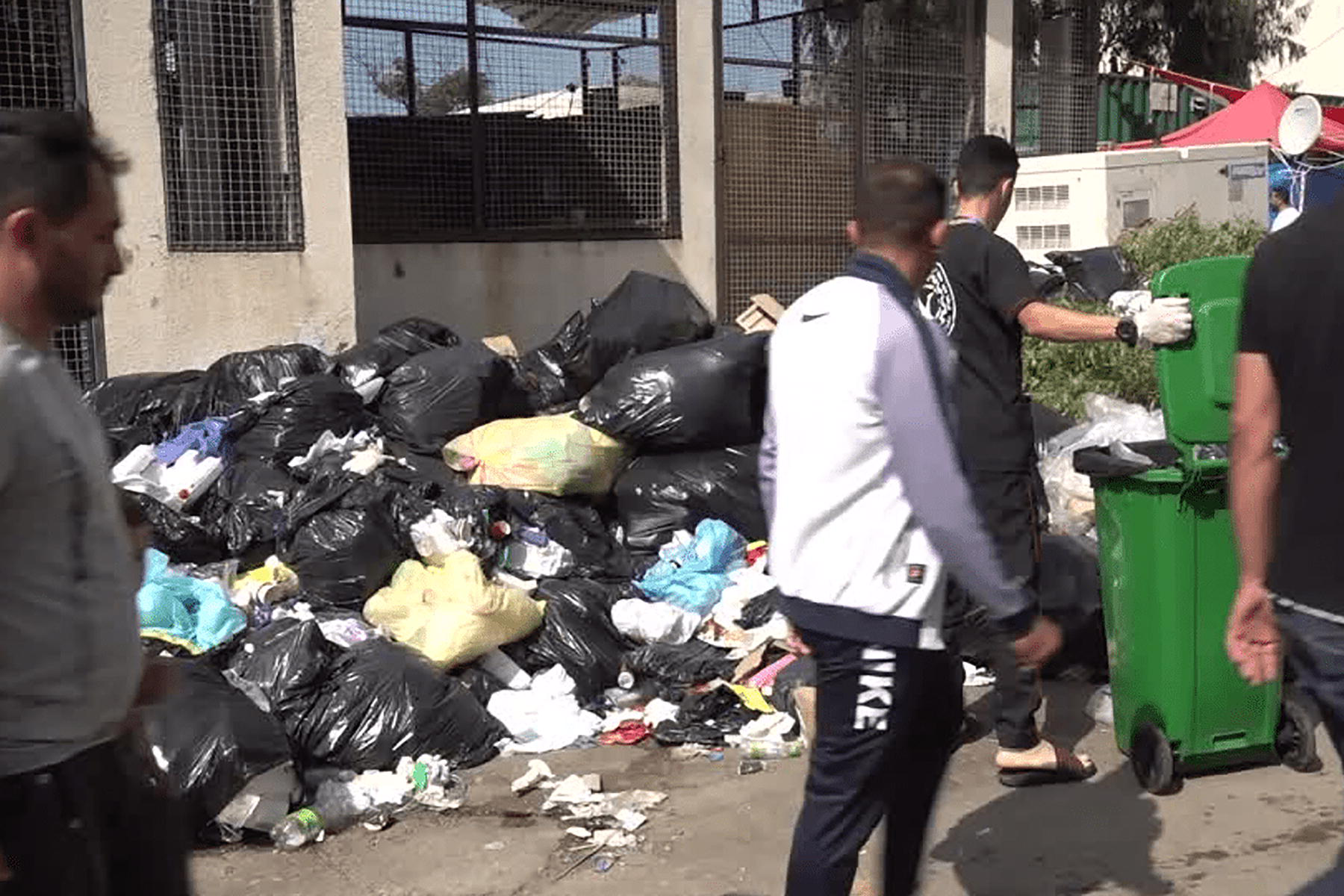
Garbage bags seen outside Al-Shifa Hospital in the Gaza City on October 15, 2023.a
The decomposition of garbage may lead to groundwater pollution, air pollution, soil pollution, and poisoning of the green cover. For example, after the city of Rafah (south of the Gaza Strip) became a refuge for about 1.5 million Palestinians who were forced to move there, leaving their homes (destroyed mostly) in the entire Gaza Strip, the city of Rafah became a huge dumping ground for various kinds of waste. Rafah municipal authorities warned of an “environmental catastrophe—ecocide” in the city of Rafah, due to the accumulation of piles of solid waste, which was exacerbated by the influx of displaced people who fled to the area due to the Israeli war on the Gaza Strip since October 8, 2023.
“Mohamed Abu Mehisen, a sanitation supervisor in Rafah municipality, said that nearly 1.5 million internally displaced persons (IDPs) have fled to Rafah, which has compounded the pressure on the team responsible for transporting the city’s solid waste. He explained, “Nearly 350 to 400 tons of garbage are being transported amid the crisis of displaced people, with the largest numbers in the city of Rafah. In the past, only 50 tons of solid waste used to be transported. This enormous amount has increased the work on the municipality teams and caused challenges.” 151
Recently, with 23 months of the Israeli genocidal war on the Gaza Strip have passed, Gaza’s already limited waste collection infrastructure has been crippled. With access to designated landfills blocked and transportation disrupted by the Israeli fuel’s blockade, hundreds of thousands of tons of solid waste have piled up in the streets, which have been amounted, as mentioned above.
Israel uses artificial intelligence technologies (AITs) to track, attack, and kill Palestinians: The Israeli occupation forces, since they launched the war on the Gaza Strip during the last 18 months and continues, have been using AITs to track, attack, and kill Palestinians in the Gaza Strip. According to a new report published by the New York Times,
152
over the past 18 months, Israel has combined AITs with facial recognition software to match partially obscured or damaged faces with real identities, used AITs to cluster potential airstrike targets, and created an Arabic-language AITs model to power a chat-bot that can scan and analyze Arabic text messages, social media posts, and other data, according to two people familiar with the programs. Three people familiar with the AITs said many of these efforts were partnerships between conscripted soldiers in the Israeli Intelligence Unit (IIU) 8200 and reservists working for high-tech companies, such as Google, Microsoft, and Meta (Facebook, WhatsApp, etc.). The IIU 8200 has created what has become known as “The Studio,” which is an innovation center and venue for matching experts with AITs projects. 14. Israeli killing of hundreds of media personnel: According to “Shireen,” during the 22 months of the bloodiest war on the Gaza Strip, Israeli assaults have murdered over 270 journalists and media workers (or roughly 13 journalists each month.) PS: Shireen Abu Akleh, a journalist for Aljazeera, was shot and killed by Israeli soldiers in the occupied West Bank in 2022. Her name is on a monitoring website.
153
According to a report by the Costs of War project at the Watson Institute for International and Public Affairs, it is the deadliest conflict ever documented for media workers. The number of journalists killed in the Gaza Strip surpasses the total deaths from the Vietnam War, the Yugoslav wars, the two world wars (World War I and World War II), and the U.S. war in Afghanistan.
154
Air pollution caused by particulate matter, resulting from the Israeli war on the Gaza Strip
The WHO defines air pollution as,
“The contamination of the indoor or outdoor environment by any chemical, physical, or biological agent that modifies the natural characteristics of the atmosphere.” 155
In this part of the current research, air pollution has been studied, particularly in relation to the ongoing Israeli war on the Gaza Strip and the effects of the weapons used, heavy bombing, white phosphorus, piles of waste and decomposing bodies of Palestinian citizens killed by the Israeli occupation forces or as a result of illnesses, hunger, and starvation. Air pollution caused by military vehicles and weapons used by the Israeli occupation forces in the Gaza Strip seriously affects the public health of Gazans, including women, children, and the elderly, while chemicals from weapons will remain in the air for a long period of time. Several media outlets have reported about the Israeli weapons used in the Gaza Strip, which not only kill people but also dissolve the bodies of those killed.
“Israel uses weapons that vaporize human bodies in Gaza, says director of Palestinian Health Ministry. In April this year [2024], the Euro-Med Human Rights Monitor called for an international investigation into Israel’s potential use of ‘thermal weapons’ or ‘vacuum bombs’ on residential areas in Gaza.” 156
Therefore, medical doctors and health care professionals are called to conduct more research on war-related environmental pollution as a potential contributor to poor health conditions and high rates of infection and spread of various kinds of diseases in the war zones throughout the Gaza Strip.
In war zones, air pollution can be considered a disastrous factor affecting the environment, public health, biodiversity, and water resources, which result in climate change impacts. Globally, military activities are known to produce around 5.5% of global GHG emissions, as mentioned above, while emissions from wars contribute much more to this figure. 157 GHG emissions from military activities include the production of GHG by military vehicles and weapons, as well as intensive bombing, which entail significant environmental costs (Fig. 9).
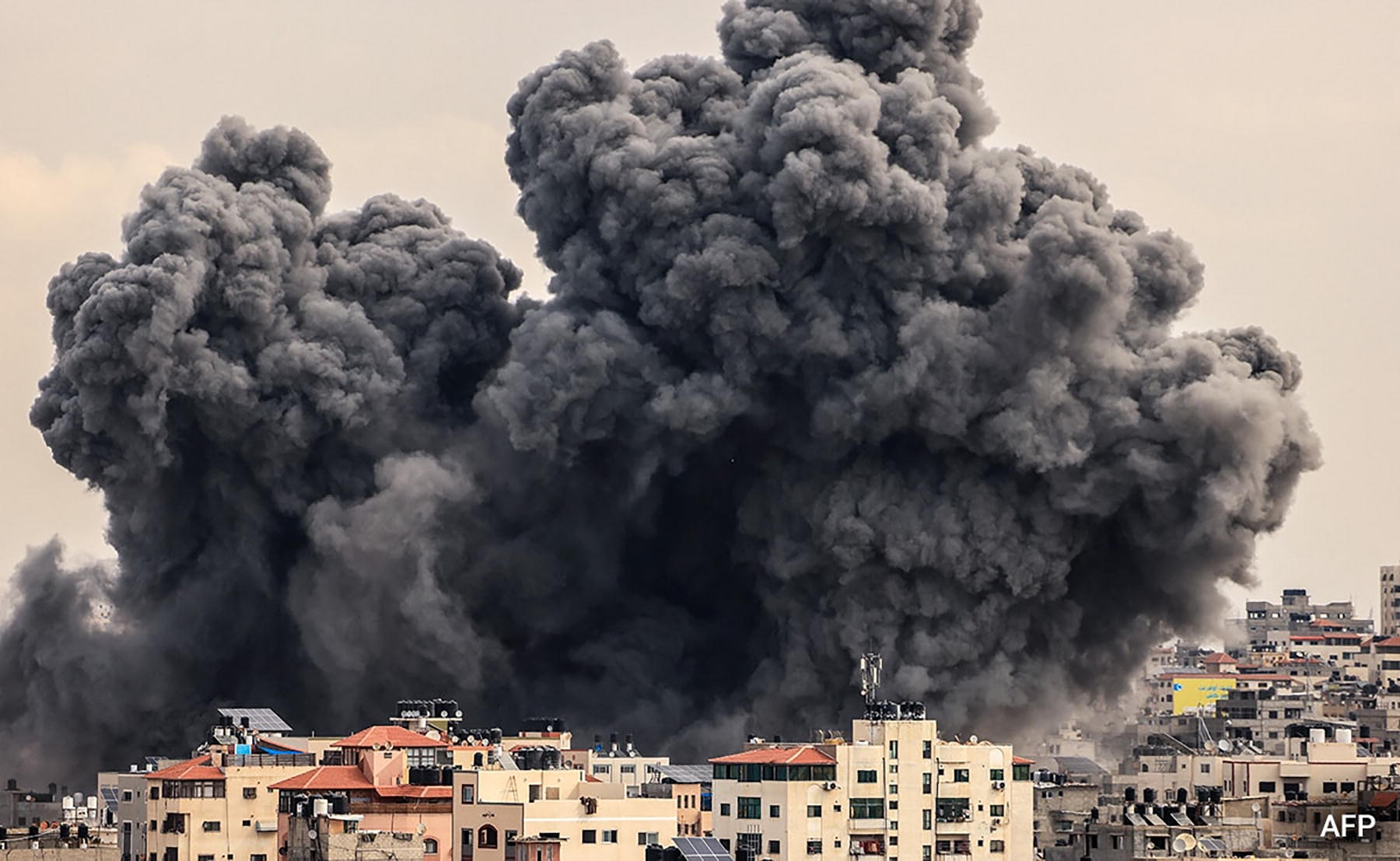
Heavy thick smoke resulting from the Israeli bombing of residential neighborhoods in the Gaza Strip.a
Exposure of people to inhaled toxins from dense clouds of dust and smoke from military vehicles and bombing operations has been associated with respiratory disorders that often prevent exposed people from performing their daily activities.
“Israel’s assault on [the] Gaza [Strip] is creating widespread environmental destruction, compounding the ongoing humanitarian crisis in [the] Gaza [Strip] and the displacement of Palestinians. After 100 days of war, the destruction of [the] Gaza [Strip] is catastrophic enough to have visibly changed the color and “texture” of the territory as seen from space, highlighting the overwhelming environmental devastation of [the] Gaza [Strip]. Indeed, since the current onslaught began, Israeli forces have systematically transformed 22% of Gaza’s [Strip] agricultural land to dust, caused the collapse of wastewater systems through the deprivation of electricity to the civilian population, and unleashed more than 45,000 polluting missiles and bombs.” 158
These bombs used by the Israeli occupation forces in the Gaza Strip have left behind toxic heavy metals, which not only cause direct harm to humans and can accumulate in the human body but also have environmental longevity, accumulating in food chains and making local food sources toxic, which may result in cancer incidences and cancer death cases at the medium and long runs.159,160,161
Global military wars that countries wage against each other are among the largest sources of air, water, and soil pollution. Military vehicles used in war zones, which consume large amounts of fuel, produce hundreds of thousands of tons of toxic substances, including carbon monoxide (CO), carbon dioxide (CO2), sulfur dioxide (SO2), nickel oxide (NiO), hydrocarbons, and others. With regard to air pollution and its effects on public health and the environment, as a result of the current Israeli war on the Gaza Strip, more than 90% of the buildings were partially damaged or completely destroyed, and the environment was subjected to great destruction, as it was affected by soil, water, and air pollution.
“More than 90 percent of homes in [the] Gaza [Strip] have been destroyed and damaged, the International Organization for Migration (IOM) has said, citing data from the UN Office for the Coordination of Humanitarian Affairs (OCHA), as Israel’s ongoing war on the enclave plunges civilians deeper into a humanitarian catastrophe.” 162
Shortly after Israel launched its devastating war on the Gaza Strip in October 2023, rivers of sewage, dirty water, and toxic air have caused environmental catastrophes on life in the Gaza Strip and its population. Moreover, garbage is accumulating in the streets and public places and, thus, fears are increasing about the spread of deadly diseases and epidemics among the local population, resulting from soil, water, and air pollution. 163 Since garbage began to accumulate in landfills near the camps where people were compelled to dwell in the early months of Israel’s genocidal war on the Gaza Strip, pests have been an issue in the region. Rats and other rodents and vermin have even more control over the permeable living conditions in the Gaza Strip now that the homes of the Gazans have been destroyed and massive piles of rubble are more prevalent than standing buildings.
“Rodents, including rats, can increase the risk of infectious diseases spreading which the health system in the Gaza Strip may be unable to treat,” the UN said. 164
The vast majority (more than 99%) of the 281,000 metric tons of carbon dioxide (CO2 equivalent), estimated to have been produced in the first 60 days during the Israeli war on the Gaza Strip, can be attributed to Israeli aerial bombardments and ground invasion through the Gaza Strip, according to a first-of-its-kind analysis by researchers in the United Kingdom and the United States. 165 The data, shared exclusively with the British newspaper—The Guardian, provide the first, albeit conservative, estimate of the carbon cost of the current conflict in the Gaza Strip, which is causing unprecedented human suffering, infrastructure damage, and environmental catastrophe.
During the Israeli offensive on the Gaza Strip in 2014, tens of thousands of homes were demolished or bombed to ground level, resulting in millions of tons of rubble that polluted the air with fine particulates and dust, potentially causing other types of nuisance by hosting rodents and insects. Heavy machinery, tanks, and artillery penetrated the vicinity of the eastern zone of the Gaza Strip, causing mechanical and chemical damages to the surface soil, groundwater, and green cover. Chemical testing of air quality at sites hosting waste crushers, storage facilities, and removal sites has demonstrated the presence of particulate matter that has resulted in air pollution, several times higher than levels defined by the WHO as acceptable. 166 The fine particulates causing air pollution, as a result of the 2014 Israeli war, had significant health effects that may have caused increased rates of respiratory diseases, various types of cancer, cardiovascular diseases, and even premature deaths. Air quality in all areas, where demolition waste remains, should be assessed and monitored for long periods of time, and maps should be created to show the spread of war-related air pollution throughout the Gaza Strip. Children, the elderly, and women may be most vulnerable to air pollution.167,168
As is the case with all previous Israeli wars on the Gaza Strip, in the current war (2023–2025) Israel bombed the Gaza Strip with thousands of tons of ammunition through air strikes, naval and land artillery, and ground invasions. Israeli occupation forces used many types of bombs and missiles, including illegal weapons such as artillery or rocket-propelled grenades, white phosphorus, dense inert metal explosives, 169 and depleted uranium (DU). 170 These bombs cause high levels of human harm (Fig. 10) and air pollution, resulting from deadly chemicals and radioactive materials. A dime is an experimental type of explosive that has a relatively small but effective blast radius. It is manufactured by producing a homogeneous mixture of an explosive (such as HMX or RDX) and small particulates of a chemically inert material such as tungsten.171,172
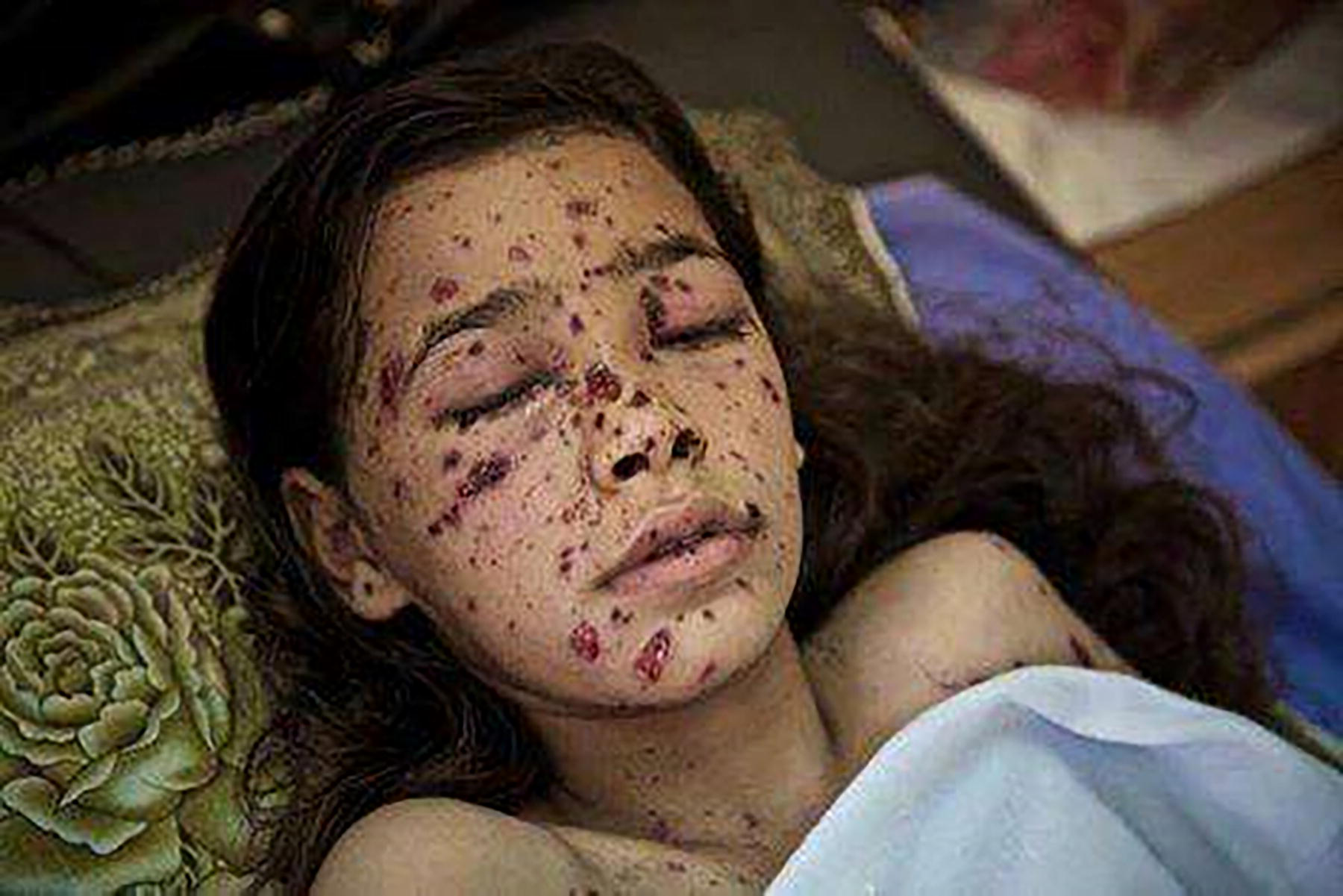
A Palestinian child injured by dense inert metal explosives (DIME) used by the Israeli occupation forces during their war on the Gaza Strip in 2014.a
According to UNICEF (2025),
“Since the end of the ceasefire on 18 March, 1,309 children have reportedly been killed and 3,738 injured. In total, more than 50,000 children have reportedly been killed or injured since October 2023. How many more dead girls and boys will it take? What level of horror must be livestreamed before the international community fully steps up, uses its influence, and takes bold, decisive action to force the end of this ruthless killing of children?” 173
Furthermore, Israel has been using DU during its several wars against civilians in the Gaza Strip, including the current war of 2023–2025.174,175
“There is now enough convincing data to prove that Israel has repeatedly used depleted uranium weaponry. Such was the case in the large-scale massacre that took place in the Gaza Strip in August 2014. These weapons cause cancers and foetal malformations in the populations affected, which may take on epidemic proportions. In Iraq, in the city of Fallujah, where these bombs were launched in industrial quantities by the International Coalition led by the United States, 52% of children today are born with deformities. The lethal effects of radioactivity caused by explosions and subsequent fires, including cancer of the lungs and pleura, can persist for centuries in the environment and particularly in [groundwater] aquifers. We are therefore on the verge of another humanitarian catastrophe in Palestine and in particular in the Gaza Strip, where thousands of tons of depleted uranium bombs were dropped with the effects that have already been documented. In view of this situation, what is the Vice-President/High Representative thinking of doing to pressure Israel into assuming its responsibilities for this crime against humanity, and what help can the Vice-President/High Representative offer to the Palestinian authorities to carry out epidemiological monitoring, which also includes all EU [European Union] citizens who have moved to the territory since then?” 176
In addition, water supplies in war zones are contaminated with oil used for military vehicles and DU from munitions.
In addition to the above-mentioned impacts and consequences that severely affecting the Gaza Strip and its 2.3 million inhabitants as a result of the Israeli genocidal war since early October 2023 and continuing, the environment has been suffering a catastrophic blow. As news agencies reported, by November 1, 2023 (just about 3 weeks after the beginning of the war), Israel had dropped on the Gaza Strip 18,000 tons of explosives (rockets and giant bombs), some weighing about 910 kg each (2000 pounds) of explosives, during the all-out genocidal war on the Gaza Strip, deliberately targeting entire residential areas,177,178 which is equivalent to about 1.5 times the catastrophic force unleashed by the United States on Hiroshima during World War II. 179 As of January 2024, more than 65,000 tons of explosives had been dropped on the Gaza Strip, which exceeds the weight and power of three nuclear bombs such as those dropped on the Japanese city of Hiroshima,180,181 and until November 7, 2024, more than 85,000 tons of bombs dropped on the Gaza Strip, 182 not to mention the Israeli explosive materials used in the previous four wars since 2008/2009.
“The bombs identified by the office include “bunker-busting bombs of types (BLU-113), (BLU-109), (SDBS), the American type (GBU-28), guided by GPS systems to destroy infrastructure, white phosphorus, smart bombs, and Halberd Gudum missiles. It noted that the bombs caused “mass killings and injuries within seconds, in addition to causing permanent damage to the injured, such as deformities and disabilities, along with the environmental risks resulting from the release of toxic radiation.” 183
International human rights’ organizations, including, HRW, Amnesty International, and the EMM, have denounced Israel for its use of white phosphorus against the population of the Gaza Strip.184,185
When exposed to air, the chemicals in white phosphorus burn at extremely high temperatures—enough to burn metal and bone—and often ignite fires in areas where they spread, affecting the environment. The U.S. Agency for Toxic Substances and Disease Registry says white phosphorus can slowly accumulate in the bodies of people and greatly damage them, as well as wildlife and marine life. 186 White phosphorus has the ability to react with water, thus producing the chemical phosphine gas, which is harmful to the liver, central nervous system, and lungs and which also leads to respiratory damage, organ failure, and other horrific, life-altering, and difficult injuries, including burns that are very difficult to treat or death that can result from exposure to white phosphorus.
“The use of white phosphorus in [the] Gaza [Strip] is a violation of international law and a violation of the human rights of Palestinians,” Says UN Special Rapporteur Boyd and adds, “Israel is not among the 127 states that have agreed to be bound by Protocol III, although they are a Party to the Convention.” 187
According to Euro-Med Human Rights Monitor:
“Israel’s escalating use of white phosphorus and smoke bombs targeting crowded residential areas comes as part of its forced displacement and ethnic cleansing policies, which have forced half of Gaza’s population to leave their homes, shelters, and hospitals and attempt to move to the south of the Gaza Valley.” 188
As indicated above, Israeli forces used advanced AIT-powered weapons to maximize casualties while maintaining target accuracy in their attack on the Gaza Strip. 189 In its recent attacks, Israel has used the Gaza Strip and its 2.3 million people to test weapons powered by AITs’ software in its air and naval systems, as well as smart munitions, as indicated in Table 1. The killing of innocent civilians, in their way searching for food and their destroyed homes in the Gaza Strip, and the killing of seven members of the international organization—World Central Kitchen, and many other people such as emergency and health care workers, have been probably carried out with the assistance of AITs applications.
“World Central Kitchen founder says Israeli’s army “systematically” destroyed the three vehicles carrying seven aid workers and demands nations involved to launch an independent investigation into the killings. Israeli military accused of deploying untested Artificial Intelligence (AI) systems in Gaza war that have led to mass casualties among civilians.” 190
“But as the Israeli invasion has ground on for weeks, the longer-term environmental toll for [the] Gaza [Strip] is coming into focus. If the territory seemed unliveable before, the future looks that much worse for [the] Gaza [Strip]…. Whatever political fate the future holds for [the] Gaza [Strip], the long-term consequences for the territory’s environment are clear: the pollution of a weeks-old war, delivered from the bomb bays of warplanes and the barrels of tanks, will last years and perhaps a lifetime.” 191
Furthermore,
“Air pollution, water pollution, soil pollution, toxic contamination and large volumes of greenhouse gas emissions are caused by military conflict. These environmental impacts exacerbate the toll of death and injury directly caused by acts of war, but the environmental death toll will continue for decades due to respiratory diseases, cardiovascular diseases and cancer caused by exposure to elevated levels of pollution,” the UN Special Rapporteur on Human Rights and the Environment David R. Boyd said. 192
Nearly everything has been destroyed by the Israeli occupation forces, who, according to military analysts, are targeting high-rise buildings in Gaza City to lessen the number of troops they would lose if they advanced on the ground and to create “panic and fear” among the civilian population, which also gives them a psychological advantage. As the skyline is demolished, citizens feel shocked, confused, dreadful, and terrified since they cannot see the future or the end of this devastating, ethnic cleansing, and genocidal war against the Palestinian Indigenous population in the Gaza Strip.193,194
CONCLUSIONS AND RECOMMENDATIONS
Wars (or military conflicts) carry a heavy burden on the societies and countries that are directly or indirectly involved in, as they kill thousands and sometimes millions of people (soldiers and civilians) and injure many more. In addition to the effects of war on the environment and public health, wars can also be severely damaging and even destructive.
Regarding the Gaza Strip, as part of Historic Palestine and the OPT, since 2008/2009 the Gaza Strip has been targeted by the Israeli occupation forces five times during five-all-out wars, including the current 2023–2025 war. However, the current war is much bloodier than all the previous four wars together. As last update to be mentioned in this research article, until April 27, 2024, at least 51,500 Palestinians have been killed and about 118,000 wounded in Israeli attacks on the Gaza Strip since October 8, 2023, and more than 10,000 are still missing under the rubble of destroyed buildings. 195 In addition, this war is considered the longest war between the Arabs (especially the Palestinian people) and Israel since the establishment of the state of Israel in 1948 on the land of Historic Palestine. Until August 28, 2025 (the last update of the human casualties), the number of killed people in the Gaza Strip has reached around 63,000, the number of injured has reached around 160,000, and the number of missing people is around 20,000, whereas the majority of them are children, women, and elderly. 196
In light of the above, the current 2023–2025 war waged by the Israeli occupation forces against the Palestinian people (the Indigenous population of the land—Historic Palestine), living under the Israeli occupation in the occupied and besieged Gaza Strip, has been described by many world leaders, observers, scholars, academics, analysts, emergency and rescue workers, etc., as well as governmental and international organizations, including human rights’ and United Nations agencies, as genocide, ecocide, cultural genocide, scholasticide, and ethnic cleansing, as clearly investigated, analyzed, discussed, and presented in this research article. The EMM accused Israel of carrying out one of the bloodiest collective punishment campaigns in modern history against 2.3 million people in the Gaza Strip, which represents a flagrant violation of international humanitarian law and a serious violation of the rules of war. 197 EMM reiterated its call on all members of the international community, especially those who have ratified the Geneva Conventions, 198 to fulfill their obligations to protect civilians and maintain medical facilities in the Gaza Strip and to urgently provide them with the resources they need, ensuring that they have never been targeted.
For human populations—and especially for Indigenous peoples and spatial populations, such as the Palestinian people living in their homeland—Historic Palestine, irreparable damage to life-sustaining and culturally significant resources can lead to catastrophic humanitarian phenomena. This is clearly represented by the repeated Israeli wars of genocide and ethnic cleansing launched against the Palestinian people living under the Israeli military occupation since June 1967 and that goes back to May 1948 when Israel was unjustly established on the land of Historic Palestine. Israel, as an occupying, ethnic cleansing power founded in 1948, has been practicing its full power against the Indigenous population of the land—Historic Palestine, where the majority of Palestinians are living under the Israeli occupation in the Gaza Strip and the West Bank, including East Jerusalem.
This is crystal clear, as the whole world is witnessing what is going on since October 2023 in the Gaza Strip. This includes the killing, wounding, and loss of approximately 243,000 innocent people, so far, in just the last 23 months (i.e., since October 2023), whereas more than 75% of whom are children, women, and elderly, as witnessed by many international organizations. This number (243,000) forms about 11% of the Gaza Strip’s population, which is equivalent to approximately 3.5 million of the U.S. population. This is in addition to the widespread of mass diseases, mass destruction, food insecurity, hunger and famine, and the forced displacement of almost the entire population of the Gaza Strip (2.3 million people). This is in addition to the daily massacres; the total or partial destruction of hundreds of thousands of homes and businesses (more than 90% of the buildings and infrastructure in the Gaza Strip have been destroyed); ecocide (destruction of the environment); cultural genocide; and last but not least, scholasticide. These Israeli actions constitute essential components of the mechanisms of genocide and ethnic cleansing practiced by the Israeli occupation forces against the Indigenous people of the land—Historic Palestine.
With regard to the environmental damage (ecocide), it can be said that a long period of heavy explosions and bombings, as has been happening in the Gaza Strip since October 2023 until now, has left huge amounts of suspended particulates in the air. Israel has dropped more than 100,000 tons of explosives, thus leaving behind deadly chemicals and gases. The munitions will remain in the air, water, soil, and green cover for many years to come, and the chemicals will be highly toxic. In conflict-affected areas, such as the Gaza Strip, the detonation of explosives can release large amounts of GHGs, including carbon dioxide, carbon monoxide, nitrogen oxides, sulfur oxides, hydrocarbons, and other gases and particulate matter. Estimates based on available information about the current war on the Gaza Strip have shown significant emissions of toxic gases, posing severe risks to public health and the environment, and resulting in heavy burdens on, and major challenges to, the agriculture, the economy, and the entire life of the Gaza Strip’s inhabitants who used to live in one of the most densely populated areas, worldwide.
Experts warn that Israel has already destroyed the environment of the Gaza Strip for many years to come, as the consequences of the war go beyond visible damage, and as toxic fumes and pollution from Israeli explosives affect the health of the Gaza Strip’s population. Residential and commercial buildings, schools, universities, mosques, churches, roads, and even hospitals were turned into rubble—a mixture of dust, and twisted metal, as well as the smell of death throughout the Gaza Strip. For the entire population of the Gaza Strip, who has been internally displaced in the Gaza Strip, the air has become unbreathable because it is highly polluted with toxic gases and particulates, and the water is highly polluted. Also, the lack of food that exposes people to various diseases is greatly effective. However, climate experts warn that the effects of the Israeli war on the Gaza Strip are much deeper than expected, which can be seen immediately and on the medium and long runs.
In short, what has been going on in the Gaza Strip since October 2023 is not just a war but rather a mass slaughter and murder, ethnic cleansing, atrocities, and genocide against 2.3 million Palestinian citizens, and it is also an environmental genocide (or ecocide). Humans around the world must stop these genocides before they turn into more extended wars regionally and globally. Moreover, if a just solution, based on international law and treaties, UN resolutions, human rights, and the principles of the Geneva Conventions, would not be reached regarding this bloody Israeli-Palestinian conflict in the Gaza Strip immediately, the conflict will expand in scope, which may lead to catastrophic impacts, regionally and globally.
AUTHORS’ CONTRIBUTIONS
The author, as single author, has entirely contributed to the achievement of this research work.
Footnotes
ACKNOWLEDGMENTS
The author extends his sincere thanks to the friends and colleagues who critically reviewed this research work. He also wants to express his gratitude to the reviewers (anonymous) for their insightful critiques of this work and their insightful remarks. The author also extends his gratitude to Prof. Sacoby Wilson (the Editor-in-Chief) and the scientific, technical, and production teams of the Journal—Environmental Justice (Mary Ann Liebert, Inc., publishers, a part of Sage, New York, NY, USA)—for their assistance during the submission procedure.
AUTHOR DISCLOSURE STATEMENT
There is no potential of conflict of interest of any kind—financial or otherwise.
FUNDING INFORMATION
The author declares that the research presented in this article has not received any funding either from individuals or organizations.
ETHICS APPROVAL AND CONSENT TO PARTICIPATE
These have been completely observed by the author, including informed consent, misconduct, and data fabrication and/or falsification.
CONSENT FOR PUBLICATION
All materials presented in this research article does not need consent to publish.
AVAILABILITY OF DATA AND MATERIALS
All the data used, generated, and/or analyzed during the current study are included in this published article.