






Abstract
This study explores the influence of employee motivations on workplace learning effectiveness and subsequent job performance within the Precision Calibration Operations (PCO) Department in an engineering company. Grounded in human resource development (HRD) literature, the study adopted the self-determination theory (SDT) to understand effects of motivational dynamics on workplace learning effectiveness and subsequent job performance in an engineering workplace. Using a quantitative survey design, self-reported data was collected on influence of intrinsic and extrinsic motivations, social and environmental factors, and basic psychological needs on workplace learning effectiveness and subsequent job performance. A total of 90 employees, out of 110, in the PCO Department participated in the study in 2024. Regression analyses reveal that the social and environmental factors, as proxies for organization development (OD) interventions in this study, and participants’ intrinsic motivation are significant influencers for both workplace learning effectiveness and job performance. Findings of the study suggest the need for HRD practices to not only foster employees’ motivation but also create environments that support the personal and professional development of employees. This alignment could enhance intended workplace learning effectiveness and job performance. Future research could benefit from exploring employees’ long-term motivations in relation to effects of OD interventions across different workplace settings.
Keywords
Introduction
A multifaceted discipline, HRD is crucial to the success of an organization and to individual development. HRD has been defined historically as incorporating training, career development, and OD activities (McLagan, 1989). It fosters a supportive learning environment to enable continuous improvement and development of employees and organizations by integrating different theoretical approaches and methodologies. Pace (2000) characterizes HRD as a field that makes knowledge useful, prepares individuals for careers, and thrives when its adherents think and act in a similar manner.
Understanding what motivates employees to embrace learning and development is a fundamental aspect of HRD. SDT provides valuable insights into human motivation and behavior. It represents a relevant theoretical framework for future training and development research that emphasizes the active role of the learner and recognizes the influence of motivation from autonomous and controlling sources (Dysvik & Kuvaas, 2014). HRD professionals utilize SDT to design development plans that support employees’ intrinsic motivation, fostering a sense of autonomy in their learning journey, nurturing their competence through achievable challenges, and enhancing their sense of relatedness through collaboration and supportive environments (Deci et al., 1991; Gagné & Deci, 2005).
More broadly, HRD draws on OD practices and adult learning principles to establish a comprehensive approach that fosters individual and organizational growth (Dilworth, 2003; Swanson & Dobbs, 2006). By doing so, HRD professionals drive positive change, enhance employee performance, and cultivate a culture of continuous learning and development (Swanson & Holton, 2001). While SDT is not an essential component of HRD, its insights into motivational processing of individuals offer valuable perspectives that can inform and enrich HRD practices further (Kontoghiorghes, 2008; Ryu & Moon, 2019). Despite extensive research on motivation and workplace learning, limited empirical attention has been given to how employees perceive the relationships among motivational factors, workplace learning effectiveness, and subsequent job performance within engineering-based organizational contexts.
Study Purpose and Research Questions
X Engineering is a leader in the United States telecommunications and semiconductor industries. Its PCO Department plays a crucial role in quality assurance. Despite its contributions to technologies like 5G, the PCO Department faces significant challenges, including aligning employee motivation with goals on innovations, adapting HRD practices to rapidly evolving technological landscapes, and fostering a learning environment conducive to performance excellence. The purpose of this study, grounded in SDT, is to examine how employees’ motivation, including intrinsic and extrinsic motivation, social and environmental factors, and basic psychological needs, might influence their workplace learning effectiveness and job performance within the PCO Department at X Engineering. The research questions are:
Which factors among intrinsic and extrinsic motivation, social and environmental factors, and basic psychological needs significantly influence workplace learning effectiveness?
Which factors among intrinsic and extrinsic motivation, social and environmental factors, and basic psychological needs significantly influence subsequent job performance?
Literature Review
Self Determination Theory (SDT)
As reflected by scientific research and the resulting applied practices, SDT centers on the social conditions that facilitate or hinder human flourishing (Edmunds et al., 2006; Gagné & Deci, 2005; Ryan & Deci, 2017). It is a widely applied theoretical framework in the field of psychology, focusing on the motivations and incentives behind human behavior, particularly in the context of autonomy and intrinsic motivation. According to Gagné and Deci (2005), “SDT has been developed as a macro-theory of motivation” (p. 351). In workplace and adult learning contexts, SDT provides insights into how motivational processes influence learning engagement, persistence, and performance outcomes.
Within SDT, six interrelated sub-theories explain different aspects of motivation and behavior (Ryan & Deci, 2017). Cognitive evaluation theory (CET) uncovers how external factors like rewards and feedback influence intrinsic motivation. Organismic integration theory (OIT) explores various types of external motivation and their impact on behavior. Causality orientations theory (COT) explores into individuals’ general tendencies regarding the sources of their motivation. Basic psychological needs theory (BPNT) emphasizes the significance of autonomy, competence, and relatedness in driving motivation. Goal contents theory (GCT) investigates the types of goals individuals pursue and their impact on happiness and behavior. Relationship motivation theory (RMT) examines the importance of relationships in motivation. Together, these sub-theories provide a comprehensive explanation of motivational dynamics in learning and work settings.
Positioned as a comprehensive theoretical framework, SDT provides insights into the intricate landscape of human motivation (Frese & Fay, 2001; Ryan & Deci, 2017). Dysvik and Kuvaas (2014) further suggested the multifaceted connections between learning motivation, workplace learning, and work performance within the encompassing lens of SDT. Within SDT’s examination on intrinsic motivation, a nuanced understanding emerges through the exploration of autonomy support and positive feedback (Gagné & Deci, 2005; Vallerand, 2000). This sheds light on how individuals integrate external motivations into their personal sense of self. The theory’s categorization of extrinsic motivation also unveils the complexity of external motivators and their impact on individual behavior (Vansteenkiste et al., 2010).
Beyond individuals, SDT also highlights the significance of social contexts and environmental conditions in shaping motivation, emphasizing how these elements can either facilitate or impede the satisfaction of psychological needs (Ryan & Deci, 2000b, 2017). This holistic approach, by considering individuals’ motivational processing with effects from social and environmental elements, offers insights into factors that contribute to the overall organizational motivational climate. Further, SDT converges on components of autonomy, competence, and relatedness, allowing for a understanding of the critical role these fundamental psychological needs play in driving motivation (Baard et al., 2004; Gagné & Forest, 2008; Vansteenkiste et al., 2010).
Integrating SDT Concepts Within HRD Practices
Integrating SDT into HRD practices involves focusing on four key elements: intrinsic motivation, extrinsic motivation, social and environmental factors, and basic psychological needs. This integration aligns with HRD's objectives and provides an empirical framework for SDT-driven application in organizational contexts (Ryan & Deci, 2000b, 2017; Swanson & Holton, 2001). In other words, SDT provides opportunities for HRD scholarship and practices to focus on scaffolding the development of “high-quality motivation” in the workplace (Rigby & Ryan, 2018).
Intrinsic motivation, which is central to SDT's CET and intersects with aspects of GCT, emphasizes self-driven learning engagement (Deci et al., 1991; Ryan & Deci, 2017). In terms of extrinsic motivation, explored through OIT and GCT, the focus is on the importance of aligning workplace rewards with personal values for sustainable engagement (Ryan & Connell, 1989; Ryan & Deci, 2000b). Concerning the social and environmental factors, as reflected in COT and RMT, the emphasis is on the impact of the workplace's social context and the quality of interpersonal relationships on motivational orientations (Halvari & Olafsen, 2020; Ryan & Deci, 2017). Finally, basic psychological needs, as posited by BPNT, underscore the importance of fulfilling needs for autonomy, competence, and relatedness for optimal workplace functioning (Niemiec & Ryan, 2009; Vansteenkiste et al., 2008). By focusing on these elements, HRD professionals can leverage SDT to enhance organizational learning and development, providing a clear and actionable framework for addressing motivation and learning in the workplace (Deci et al., 2017; Gagné & Deci, 2005; Strauss & Parker, 2014).
Intrinsic Motivation
A study by Karatepe and Tekinkus (2006) investigated the relationship between intrinsic motivation and job performance among front-line employees in Turkish retail banks. Using 363 questionnaires and employing LISREL 8.30 and path analysis, the study revealed that intrinsic motivation correlated with job performance. A 2010 study by Joo et al. explored the impact of intrinsic motivation on the perceptions of in-role job performance among 283 employees in a Fortune Global 100 company in Korea; the findings revealed an association between intrinsic motivation and job performance. Moreover, Cerasoli et al. (2014) engaged in a comprehensive meta-analysis exploring the connection between intrinsic motivation and performance. They searched databases such as PsycINFO, ERIC, PubMed, Scopus, and Dissertation Abstracts International. The findings serve as a testament to the indispensable role of intrinsic motivation in influencing performance, inspiring a comprehension of how motivation impacts the learning and professional success.
A primary gap is the focus on intrinsic motivation, with empirical data on the combined effects of intrinsic and extrinsic motivation and the role of social and environmental factors. This area presents an avenue for exploration in our study, allowing for a model that encompasses a range of motivation and contextual influences. Moreover, the specific settings of some studies, such as the focus on front-line employees in Turkish retail banks by Karatepe and Tekinkus (2006), might not have translated to the context of the PCO Department at X Engineering. This study bridged this gap by tailoring its investigation to the engineering sector and the department in question. Another weakness was the link between intrinsic motivation and workplace learning effectiveness. Although intrinsic motivation's benefit on job performance is recognized, its specific influence on learning outcomes in the workplace lacked clarity. This study presented an opportunity to explore how intrinsic motivation affects workplace learning effectiveness.
Based on SDT, it is hypothesized that higher levels of intrinsic motivation are associated with greater workplace learning effectiveness and improved subsequent job performance.
Extrinsic Motivation
A quantitative study by Moran et al. (2012) sampled participants from 12 large organizations across diverse industries and regions in China. The study explored the dynamic interplay between extrinsic motivation and job performance, shedding light on nuanced motivational dynamics in the workplace. By delving into extrinsic motivation’s multifaceted aspects, the research enriches existing knowledge and provides insights into its potential effects on workplace learning motivation. Another quantitative study (Nisar et al., 2016) explored extrinsic motivation’s impact on job performance and satisfaction among hospital nursing staff. Data were collected from 320 participants through a deductive approach and a survey method, revealing a correlation between extrinsic rewards and employee performance and satisfaction. Nevertheless, Yusuf (2021), in a study conducted at an ice manufacturing facility in Palembang, South Sumatra with 51 employees, found that extrinsic motivation, including compensation, job status, and workplace conditions, did not influence employee performance.
The existing literature highlights the effects of extrinsic rewards on performance and satisfaction in healthcare settings, pointing out the importance of reward systems. This raises a gap regarding the specific types of extrinsic rewards that enhance learning and performance in engineering environments. Further, recent findings show that extrinsic motivation may not impact employee performance in certain contexts, challenging traditional views on motivation. This highlights the need for research into the contextual and cultural factors that influence the effectiveness of extrinsic motivation strategies in organizational settings.
Guided by SDT, it is hypothesized that extrinsic motivation aligned with employees’ personal values is positively related to workplace learning effectiveness and subsequent job performance.
Social and Environmental Factors
In a study by Chaiphuak (2014) at St. Gabriel’s College in Bangkok, OD interventions including SOAR analysis and appreciative inquiry positively influenced job stress, job satisfaction, job performance, and employee motivation among 140 classified staff members. The research revealed a significant relationship among these variables, demonstrating the effectiveness of OD interventions in transforming organizational dynamics and enhancing employee motivation. Another study in a Thai setting by Phiphadkusolkul (2014), involving 100 production workers in a subject matter expert organization, found that OD interventions improved overall job performance and demonstrated the interconnectedness of performance management, motivation, job satisfaction, and employee outcomes. In yet another study from Thailand, Keerativutisest and Hanson (2017) conducted a comprehensive study on the impact of OD interventions in an engineering services company, employing both qualitative and quantitative research methods. The research, which occurred between January to May of 2016, utilized semi-structured interviews, questionnaires, and observations for problem identification and data accumulation. The OD interventions, comprising training sessions, team activities, and entrepreneurial projects, demonstrated a correlation with workplace learning, employee motivation, and work performance.
While prior studies offer useful insights, they present limitations in applying their findings to the context of the PCO Department at X Engineering. Their varied focus may not fully reflect the challenges and dynamics specific to engineering environments. In addition, cultural and organizational differences may have influenced the outcomes of OD interventions, highlighting the need to consider environmental and social factors within the PCO Department. In response, this study explored how intrinsic and extrinsic motivation, social and environmental factors, and basic psychological needs influence workplace learning effectiveness and subsequent job performance. By examining the impact of tailored OD interventions, the study identified strategies to enhance motivation, learning, and performance in engineering settings.
Consistent with SDT, it is hypothesized that supportive social and environmental factors are positively related to workplace learning effectiveness and subsequent job performance.
Basic Psychological Needs
A study by Baard et al. (2004) explored the impact of autonomy support, autonomous causality orientation, and basic psychological needs on overall work performance and psychological adjustment. The research, encompassing 528 participants from a major investment firm, highlights the influence of basic psychological needs in shaping individuals’ performance and well-being in the workplace. Another study by Dash et al. (2022) investigated leadership styles’ impact on employee motivation and potential performance improvements in a study with 693 participants from Indian Railways. Using PLS-SEM, they found that meeting basic psychological needs at work correlated with motivation and indicated enhancements in performance. Additionally, in their 2023 study, Utomo et al. surveyed 107 early childhood education teachers in East Java, utilizing IBM Statistical Package for the Social Sciences (SPSS) 22 and Smart PLS 3.0 for data analysis. Their investigation explored into the effects of work climate on basic psychological needs satisfaction, intrinsic work motivation, and learning motivation. The results highlighted the role of fulfillment of basic psychological needs as a mediator in shaping a work environment.
One notable limitation is the broad application of findings across contexts, which raises questions about how well existing studies address industry-specific challenges, especially in engineering environments like the PCO Department at X Engineering. While these studies recognize the value of autonomy and meaningful work in meeting basic psychological needs, they often overlook the cultural dynamics within organizations. Generalized findings may not fully reflect how different motivational factors interact in specialized settings. Although the role of psychological needs in supporting motivation and performance is documented, few studies examine the barriers to fulfilling these needs in diverse work environments. Much of the literature assumes a one-size-fits-all approach, neglecting the factors that may hinder employee satisfaction in specific contexts.
Within the framework of SDT, it is hypothesized that satisfaction of autonomy, competence, and relatedness needs is positively associated with workplace learning effectiveness and subsequent job performance.
Method
Population and Sample Size
The study was conducted using a quantitative survey design in the PCO Department at X Engineering, which had a total of 110 employees as of March 2024. The study recruited this entire cohort for data collection. This deliberate choice to include all members of the department made it possible to harness a wide spectrum of insights that reflect the diverse roles and experiences found within this unique setting (Creswell & Plano Clark, 2018; Johnson & Christensen, 2014). Data were collected in the United States, where the PCO Department operates within a technically intensive engineering environment characterized by continuous learning, precision work, and high performance demands. This context was selected because it is appropriate for examining relationships among motivation, workplace learning effectiveness, and job performance, while maintaining contextual consistency by focusing on a single organizational unit.
Participant Recruitment
X Engineering supported recruitment, with the PCO Department director sending emails to protect participant privacy. All 110 employees in the department were invited to join the quantitative phase, followed by a reminder email. The consent form was integrated into the beginning of the survey. Participants who agreed to the terms clicked “I consent” to proceed, while those who did not were exited from the process. This study was reviewed and approved by the Institutional Review Board (IRB).
Survey Instrument
The researchers created the survey instrument for the study. Survey items were designed based on SDT and prior empirical studies on workplace motivation (e.g., Cerasoli et al., 2014; Chaiphuak, 2014; Dash et al., 2022; Nisar et al., 2016). The survey design process started with reviewing SDT to identify key constructs such as intrinsic motivation, extrinsic motivation, and the basic psychological needs of autonomy, competence, and relatedness. These constructs were crucial for understanding the motivational dynamics in the workplace and were thus central to the survey's focus. While the construction of survey items drew inspiration from established scales in motivation and workplace learning literature, they were tailored to align with the specific context of the PCO Department at X Engineering. The PCO Department focuses on precision calibration work, requiring high technical accuracy and teamwork, which guided the adaptation of the items.
To ensure the face validity of the survey instrument, an expert review process was conducted by consulting with experts in human resources, organizational psychology and engineering management, who were familiar with environments similar to X Engineering. This expert review and content validation aimed to enhance the instrument's feasibility for assessing motivational factors within the engineering workplace (Lynn, 1986; Rubio et al., 2003). The expert review process provided feedback to ensure survey items were both relevant and precise (Groves et al. 2009). A panel of subject matter experts (SMEs), including two senior engineers and one human resource specialist from X Engineering, as well as two external engineers from other engineering organizations, was convened to evaluate survey items’ abilities in measuring intended constructs, ensuring that the instrument covered all aspects of motivational dynamics pertinent to an engineering environment (DeMaio & Landreth, 2004; Haynes et al., 1995). A pilot study was conducted prior to the full study. A total of 11 participants were recruited from the PCO Department for the pilot study. The research team modified the survey items according to the feedback collected from the pilot study. The final survey instrument includes 22 items. For the complete survey questionnaire instrument, refer to Appendix A.
Operational Definitions of Key Constructs
Intrinsic motivation was operationally defined as employees’ internal interest, enjoyment, and inherent satisfaction derived from engaging in workplace learning activities. Survey items assessed the extent to which participants perceived learning activities as personally meaningful, interesting, and self-endorsed.
Extrinsic motivation was operationally defined as motivation influenced by external outcomes such as rewards, recognition, performance evaluations, or career advancement. Survey items captured the degree to which employees’ engagement in workplace learning was associated with external incentives and instrumental outcomes.
Social and environmental factors were operationally defined as employees’ perceptions of workplace conditions that support or hinder motivation and learning, including supervisory support, team collaboration, feedback quality, and the overall learning climate. These items reflected contextual influences on motivation emphasized in SDT and organization development literature, focusing on how the work environment shapes learning engagement and performance.
Basic psychological needs were operationally defined as employees’ perceived satisfaction of autonomy, competence, and relatedness in the workplace. Survey items assessed the extent to which participants felt a sense of choice in learning, confidence in their abilities, and meaningful connection with colleagues, consistent with SDT’s basic psychological needs theory.
Rationale for Exclusion of Control Variables
No control variables were included in this study due to the exploratory and theory-driven nature of the research, which focuses on employees’ motivational perceptions within a single organizational unit. In this context, all participants worked within the same department and shared similar organizational conditions. As a result, job structure, performance expectations, and work processes were relatively homogeneous, which reduced variability associated with demographic or positional differences.
Data Collection
This study involved deploying a survey across all 110 employees within the PCO Department at X Engineering. X Engineering utilized its internal communication channels to distribute the survey and ensure broad reach. The survey was conducted using Qualtrics for participant accessibility. Reminders were sent periodically to encourage participation and maintain response rates. The data collection lasted three weeks, allowing sufficient time for employee participation despite varied schedules. The research team monitored responses in collaboration with X Engineering and conducted follow-ups as needed.
Although demographic information was collected from survey respondents, the survey was administered anonymously, and no demographic data were available for nonrespondents. As a result, direct comparisons between respondents and nonrespondents could not be conducted. The survey invitation was distributed to all employees in the department, and multiple reminder emails were sent to encourage broad participation and reduce the potential for nonresponse bias.
Research Findings
Participants
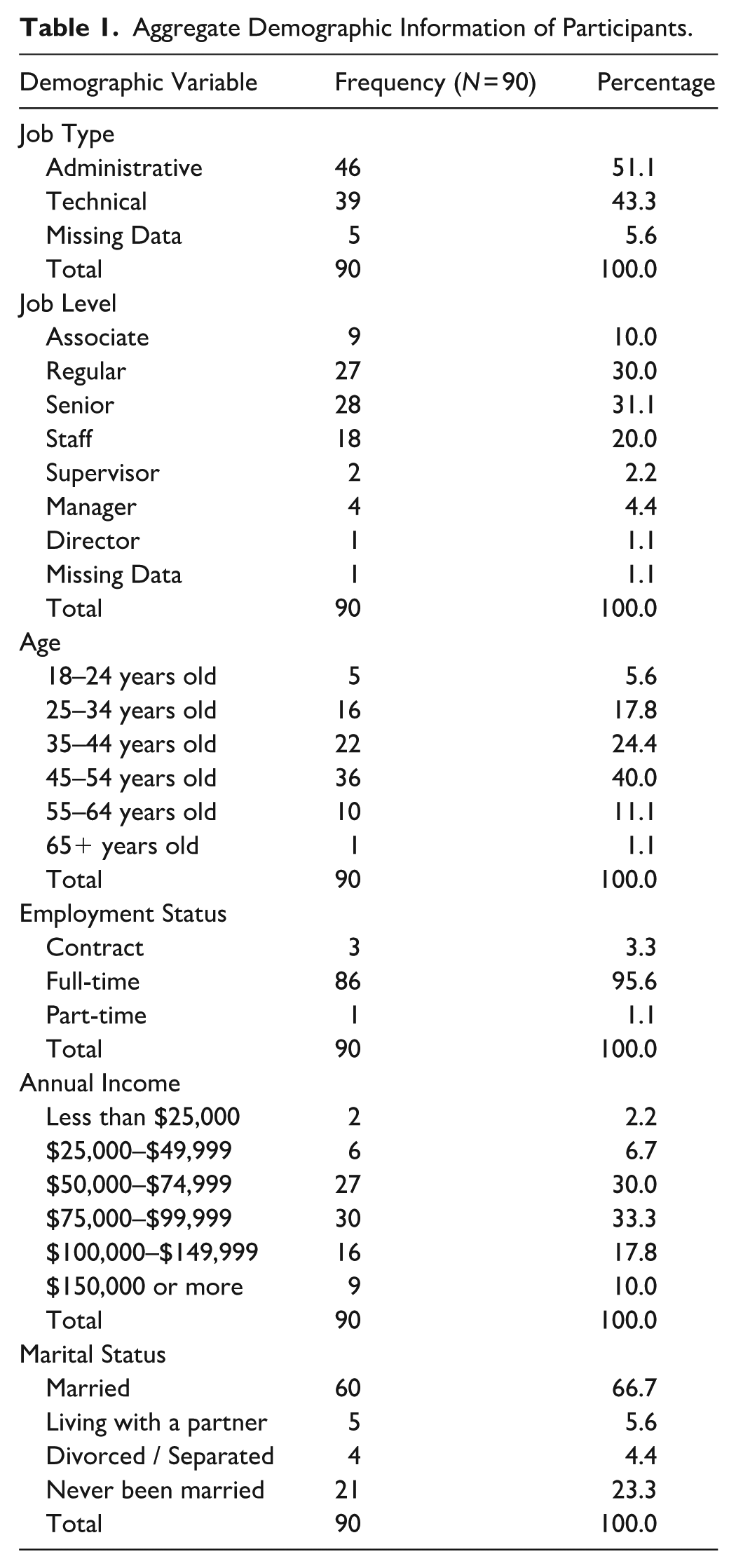
A total of 90 out of 110 employees from the PCO Department at X Engineering completed the survey, yielding an 81.8% response rate. Missing data was addressed using mean substitution, replacing missing values with the mean value of the respective variable to ensure the robustness of the following analyses. The survey instrument demonstrated strong internal consistency, with an overall Cronbach’s alpha of .94 for the full study sample, indicating high reliability across the survey items (Johnson & Christensen, 2014). Reliability was also examined across the major conceptual groupings reflected in the instrument. Items assessing workplace learning effectiveness included statements such as “I have been gaining new knowledge through workplace learning.” Intrinsic motivation was represented by items such as “Learning new skills at work is driven by my interest in the subject matter.” Extrinsic motivation was captured through items including “Financial rewards motivate me to engage more effectively in workplace learning.” Social and environmental factors were measured using items such as “Teamwork in the workplace increases my motivation to learn.” Basic psychological needs were reflected in items including “Feeling competent in my role increases my learning effectiveness.” Participants’ demographic information is listed in Table 1.
Aggregate Demographic Information of Participants.
To answer this research question, the model quantitatively assesses the influence of various predictors on employees’ workplace learning effectiveness. The following presents the regression equation derived from the data:
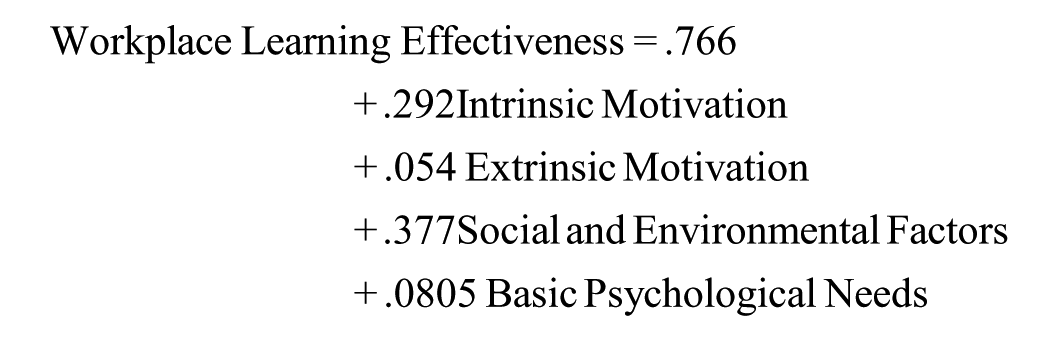
The regression equations present unstandardized coefficients, while statistical significance is reported in the accompanying regression tables.
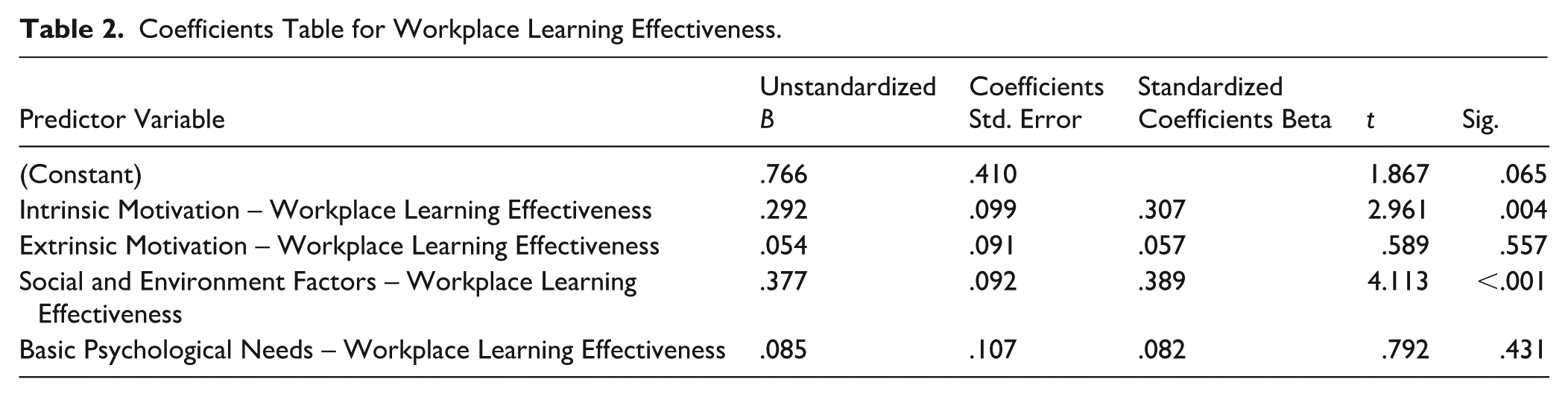
First, the intercept is .766 (see Table 2) that establishes the baseline level of workplace learning effectiveness when all predictors are zero (Johnson & Christensen, 2014). Next, the social and environmental factors, specifically the OD interventions in this study, with the highest regression coefficient of .377 and Sig. value of less than .001 (p < .05), (see Table 2), suggests that supportive OD interventions are critical in creating a conducive learning environment that facilitates knowledge acquisition and skill development. Third, intrinsic motivation also shows a significant effect, with a regression coefficient of .292 and a Sig. value of .004 (p < .05) (see Table 2), demonstrating that employees' internal drive and satisfaction significantly enhance their workplace learning outcomes. These findings confirm that both intrinsic motivation and OD-related environmental supports play substantial roles in enhancing workplace learning effectiveness. Last, extrinsic motivation and basic psychological needs are not significant predictors (p > .05), implying that these factors may play minimal roles in this specific context.
Coefficients Table for Workplace Learning Effectiveness.
Hypothesis Testing for Workplace Learning Effectiveness
The findings provide partial support for the proposed hypotheses grounded in SDT. The hypothesis regarding intrinsic motivation was supported, as intrinsic motivation demonstrated a statistically significant positive association with workplace learning effectiveness. The hypothesis related to social and environmental factors was also supported, with these factors showing the strongest positive association with workplace learning effectiveness. In contrast, the hypotheses concerning extrinsic motivation and basic psychological needs were not supported in this context, as neither variable demonstrated a statistically significant relationship with workplace learning effectiveness. These results indicate that internally oriented motivation and supportive workplace environments play a more prominent role in workplace learning effectiveness within the PCO Department at X Engineering than externally oriented incentives or perceived psychological need satisfaction.
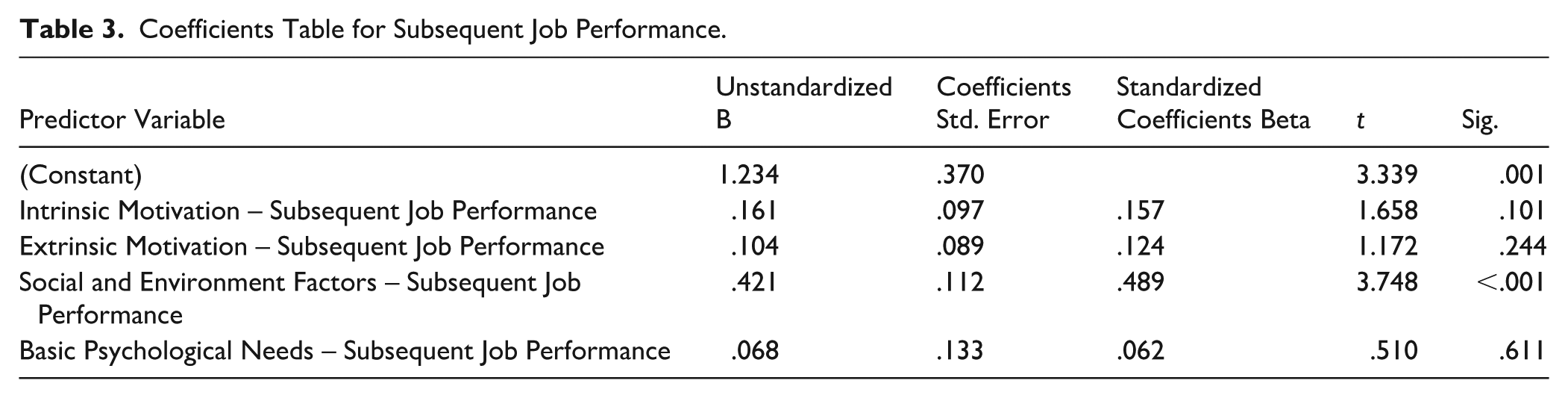
To answer this research question, the model quantitatively evaluates how the same predictors affect employee job performance after participating in workplace learning programs. The following presents the regression equation derived from the data:
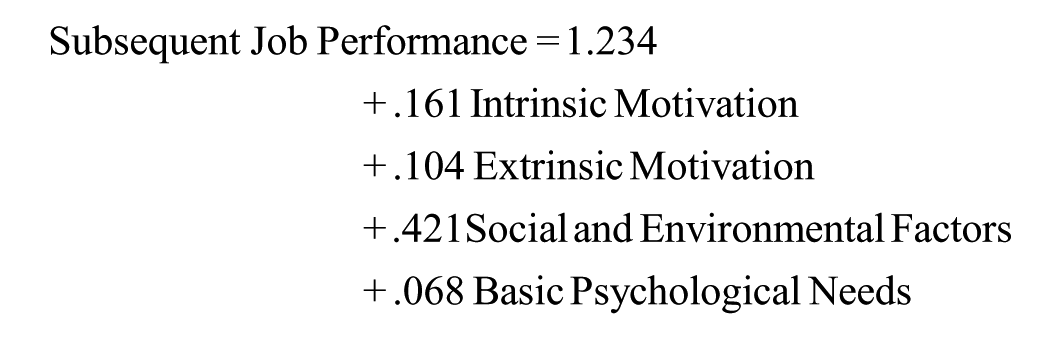
The regression equations present unstandardized coefficients, while statistical significance is reported in the accompanying regression tables.
First, the intercept is 1.234 (see Table 3), which establishes the baseline level of subsequent job performance when all predictors are zero (Johnson & Christensen, 2014). Among all predictors, only social and environmental factors, specifically the OD interventions examined in this study, emerged as a significant predictor. With a regression coefficient of .421 and a Sig. value of less than .001 (p < .05) (see Table 3), this finding suggests that supportive OD interventions notably influence subsequent job performance. In contrast, intrinsic motivation, extrinsic motivation, and basic psychological needs all showed insignificant results (p > .05), indicating that these motivational factors likely have minimal influence on subsequent job performance within the PCO Department at X Engineering.
Coefficients Table for Subsequent Job Performance.
Hypothesis Testing for Subsequent Job Performance
The findings related to subsequent job performance provide partial support for the hypotheses grounded in SDT. Among the predictors examined, only social and environmental factors was identified as a statistically significant predictor of subsequent job performance. This result supports the hypothesis related to social and environmental factors. In contrast, intrinsic motivation, extrinsic motivation, and basic psychological needs did not demonstrate statistically significant relationships with subsequent job performance. These findings suggest that, within the PCO Department at X Engineering, organizational and environmental conditions play a more influential role in affecting job performance outcomes than individual motivational orientations alone.
Model Summary
The R Square value for the workplace learning effectiveness model is .47 (see Table 4), which means that 47% of the variance in workplace learning effectiveness could be explained by the predictors (Ozili, 2023; Pallant, 2010). Similarly, the subsequent job performance model has an R Square value of .54 (see Table 5), indicating that 54% of the variance in subsequent job performance could be explained by the predictors (Ozili, 2023; Pallant, 2010). This statistical evidence indicates how these predictors influence key outcomes in the PCO Department at X Engineering (Field, 2017; George & Mallery, 2020).
Model Summary for Workplace Learning Effectiveness.

Model Summary for Subsequent Job Performance.

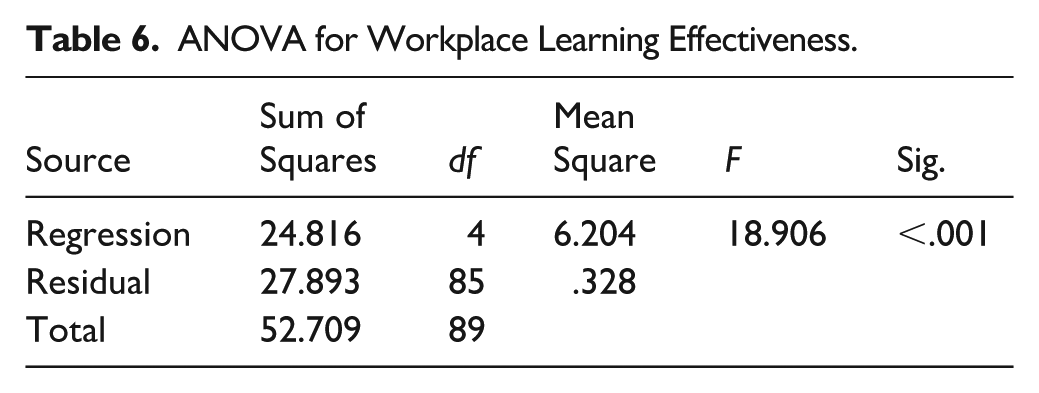
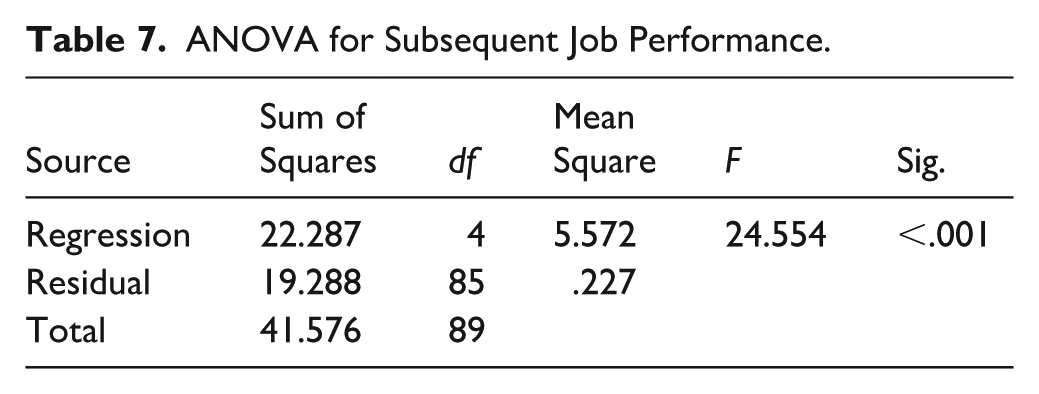
Next, the ANOVA results (see Tables 6 and 7) show an F value for the workplace learning effectiveness model is 18.91 and the Sig. F is less than .001 (p < .05), indicating a significant enhancement in the model's explanatory power with the inclusion of predictors (Dhakal, 2019; Tabachnick & Fidell, 2012). Likewise, the F value for the subsequent job performance model is 24.55 and the Sig. F also less than .001 (p < .05), affirming a significant increase in predictive capability due to the predictors (Dhakal, 2019; Tabachnick & Fidell, 2012).
ANOVA for Workplace Learning Effectiveness.
ANOVA for Subsequent Job Performance.
Third, on the normal P-P plots of regression standardized residual (see Figures 1 and 2), all the points are lying in a reasonable straight diagonal line from bottom left to top right, which conform the validity of the regression models (Field, 2017; Pallant, 2010). Last, the standardized residual scatterplots (see Figures 3 and 4) for both the workplace learning effectiveness and subsequent job performance models show a random dispersion of residuals around the horizontal zero line, indicating that both models are well-fitted and meet the assumptions for valid regression analysis (Cohen et al., 2003; Pallant, 2010).
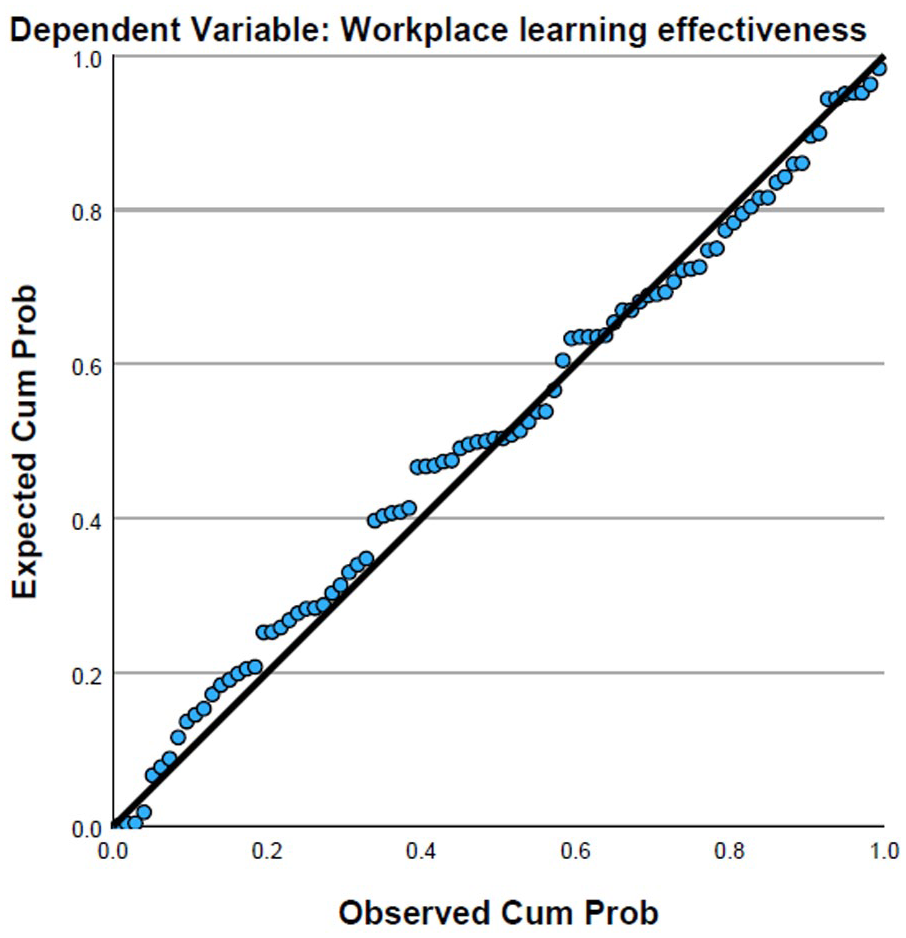
Normal P-P plot of regression standardized residual for workplace learning effectiveness.
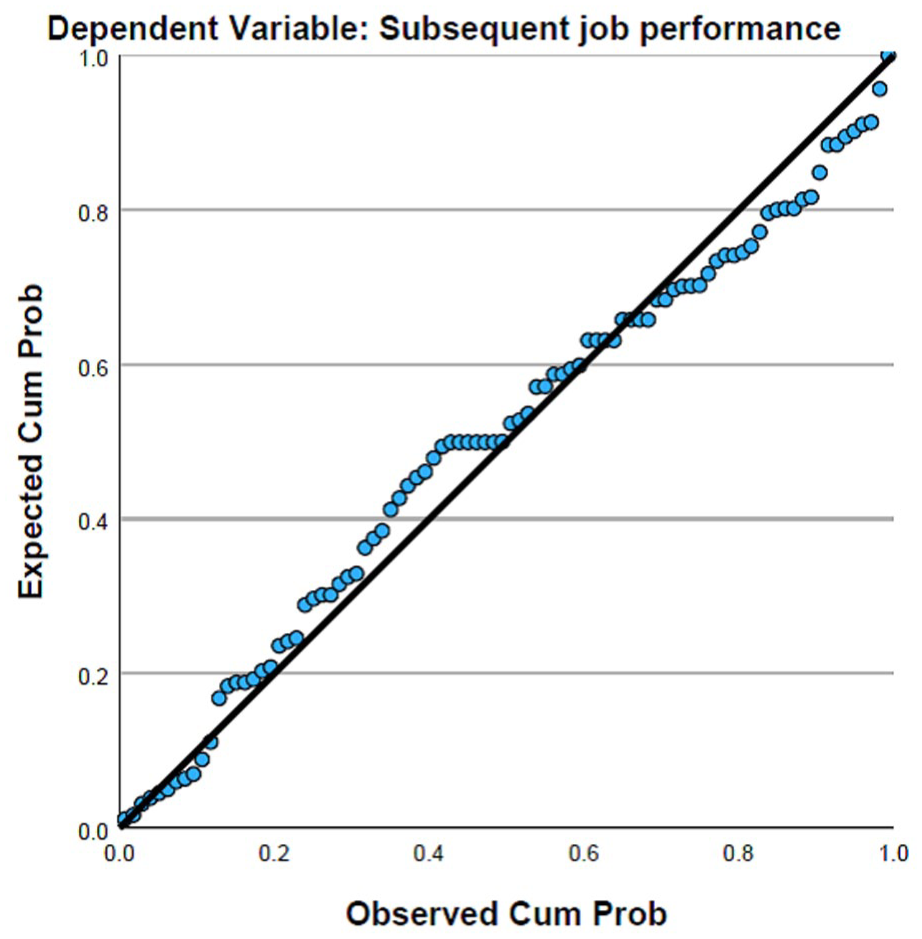
Normal P-P plot of regression standardized residual for subsequent job performance.
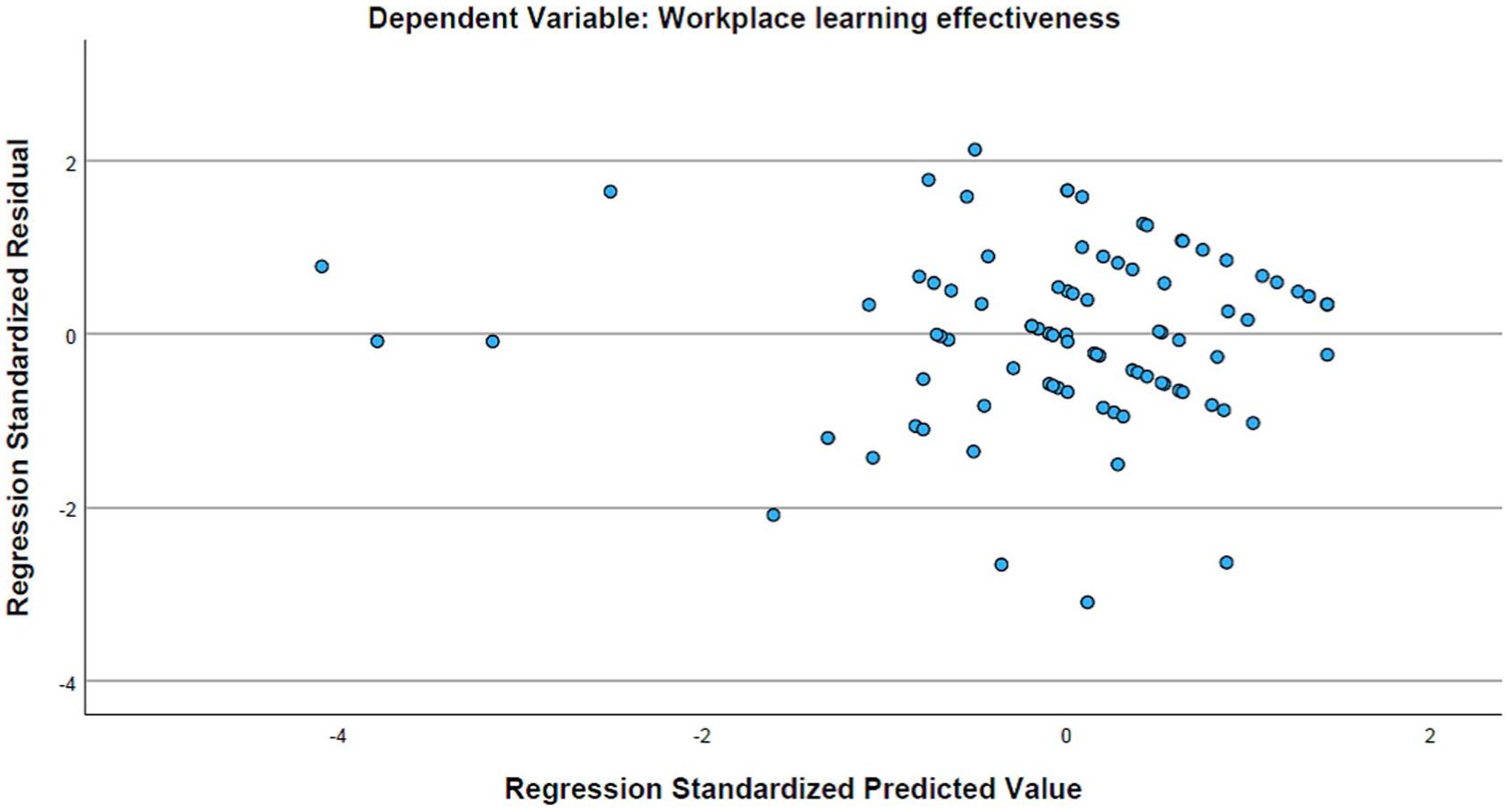
Standardized residual scatterplot for workplace learning effectiveness.
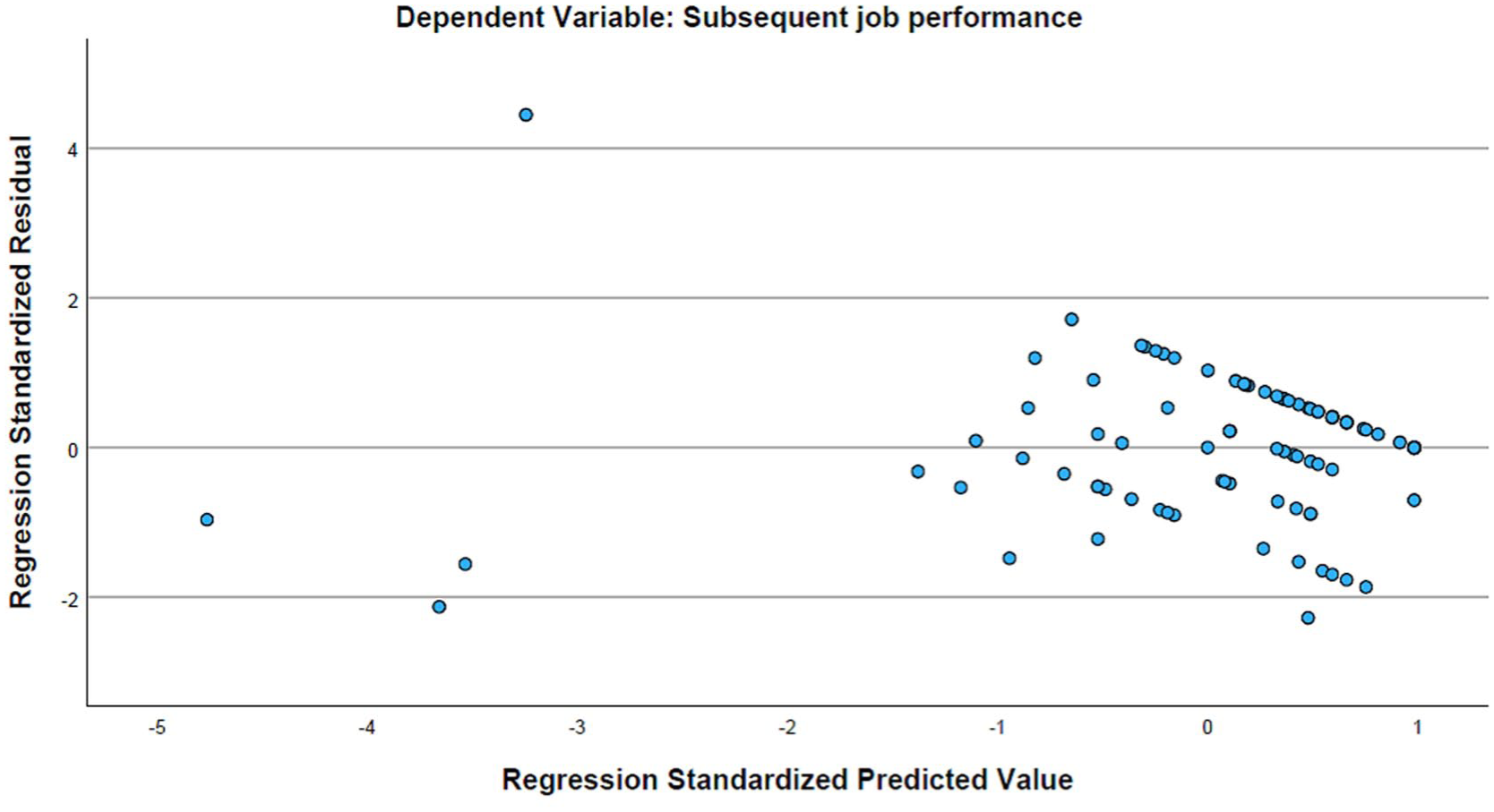
Standardized residual scatterplot for subsequent job performance.
Discussion
Implications for HRD Practices
Creating a Conducive Work Environment
The influence of OD interventions as part of the social and environmental factors on workplace learning effectiveness and subsequent job performance emphasizes the crucial role HRD professionals play in developing a supportive work environment (Klein et al., 2009). Managers to be supportive and approachable are essential along with ensuring they provide constructive and motivational feedback. They also need to be understanding and skilled, capable of fostering a positive atmosphere that enhances team dynamics and overall job satisfaction (Cummings & Worley, 2015; Neuman et al., 1989).
Moreover, a positive workplace culture fostered by OD interventions that promotes inclusivity, team harmony, and a strong sense of community is crucial (Schein, 2010). Such an environment encourages informal interactions among staff, which can break down hierarchical barriers and improve communication across all levels of the organization (West, 2012). This will facilitate a more cohesive team dynamic and a supportive community feels within the workplace (Lau & May, 1998).
It is important to clarify that teamwork itself is not synonymous with OD. OD refers to planned, system-level organizational change, whereas teamwork represents a proximal social process that emerges from such change efforts. In this study, teamwork-related perceptions were examined as indicators of OD-related social and environmental conditions. These perceptions reflect how planned changes in leadership, structure, and communication are experienced in everyday work practices. This distinction situates teamwork as a mechanism through which OD initiatives influence learning and performance, rather than as a direct definition of OD itself.
Enhancing Intrinsic Motivation
The role of intrinsic motivation in workplace learning effective and subsequent job performance is highlighted by the need for HRD strategies that are closely aligned with employees' intrinsic interests and passions (Ryu & Moon, 2019; Tran et al., 2020). By designing work tasks that are engaging and meaningful, HRD practices can significantly enhance employee engagement (Fairlie, 2011).
Moreover, recognizing and celebrating individual achievements in meaningful ways is crucial (Ryan & Deci, 2000b). This personalization of learning experiences helps create a work environment where employees feel appreciated, valued and recognized (Bakker & Demerouti, 2008; Noe, 1999, 2017). Celebrating excellence and providing opportunities for employees to demonstrate their skills can further enhance the intrinsic satisfaction received from their jobs (Deci et al., 1989). This reinforces the essential role of intrinsic motivation in advancing effective HRD practices (Ryan & Deci, 2000a).
Rethinking Extrinsic Motivation Practices
While extrinsic motivation has a lesser influence on workplace learning effectiveness and subsequent job performance compared to other motivational factors in this study, it remains important in enhancing overall job performance (Ghaffari et al., 2017; Moran et al., 2012; Nisar et al., 2016). HRD practices should carefully design reward systems that align bonuses and promotions with clear and achievable goals. These rewards should be meaningful and extend beyond routine tasks to ensure they enhance rather than diminish intrinsic motivation (Ryan & Deci, 2017). By ensuring these rewards are viewed as fair and directly connected to performance outcomes, they can effectively motivate employees and foster a sense of achievement (Eisenberger & Cameron, 1996; Jenkins et al., 1998).
Moreover, integrating career development opportunities into the reward system can provide non-financial incentives that could promote long-term career growth and personal development (Mohammed et al., 2019). This approach not only satisfies immediate motivational needs through tangible rewards but also supports long-term aspirations by offering pathways for professional advancement. By aligning personal goals with organizational objectives, the strategy benefits the individual and ultimately enhances both individual performance and organizational success (S. Yousaf et al., 2014). In implementing this strategy, it is necessary to ensure that extrinsic motivation works alongside other motivational factors and contributes positively to the overall motivational environment within the organization (Deci et al., 1999; Gagné & Deci, 2005).
Implications for HRD Research
Exploring Social and Environmental Influences
The findings from this study demonstrate the significant role that social and environmental factors plays in workplace learning effectiveness and subsequent job performance. These could encourage a deeper investigation into the specific aspects of OD interventions that are most effective in the workplace. Research could examine how this factor differs across industries or geographic locations, providing insight into its influences in diverse organizational settings. Additionally, assessing the long-term influences of this factor on employee motivation and performance would offer valuable data on their effectiveness over time (Luthans, 2011; Robbins & Judge, 2018; Romme, 2010).
Influence of Intrinsic Motivation
The findings on intrinsic motivation highlight its significance in HRD research, suggesting a need for further exploration into the organizational conditions that foster intrinsic motivation (Deci et al., 2017). Such exploration could expand existing theories by integrating the complexities of intrinsic motivation within diverse organizational contexts (Deci & Ryan, 2000; A. Yousaf et al., 2015). Moreover, understanding which job characteristics or policies enhance intrinsic motivation could significantly contribute to theoretical frameworks in HRD, offering specific implications for research in this field (Vansteenkiste et al., 2010). This insight would help clarify the processes through which intrinsic motivation influences employee performance and engagement, thereby informing the development of more effective HRD strategies (Tran et al., 2020).
Influence of Extrinsic Motivation
Although extrinsic rewards like bonuses and promotions did not significantly influence workplace learning effectiveness or subsequent job performance, they offer insights into the conditions under which such rewards can be effective. This indicates the importance of HRD research in investigating the differential influence of extrinsic rewards across various employee groups and organizational contexts, and suggests the development of HRD strategies adapted to meet diverse motivational needs within the workforce.
Measurement Validity and Interpretation of Non-Significant Predictors
The measures used in this study demonstrated strong internal consistency, supporting their reliability. However, construct validity warrants further examination. Future research could strengthen validity through confirmatory factor analysis, multi-source data, or longitudinal designs. These approaches would allow motivational constructs to be captured more comprehensively.
The non-significant effects of extrinsic motivation and basic psychological needs can be interpreted through SDT. In highly structured and technically intensive environments, externally regulated incentives may be less salient. Generalized need satisfaction may also play a weaker role when organizational systems and learning conditions are strongly defined. Future studies should examine mediators such as learning transfer or engagement. Moderators such as job autonomy or leadership style should also be considered.
Limitations and Recommendations for Future Research
First, the homogeneity of the sample, which consisted solely of employees from the PCO Department at X Engineering, limits the generalizability of the findings. To address this limitation, future research should conduct a multi-site comparative study across departments, organizations, or industries to examine whether similar motivational patterns emerge in different organizational contexts.
Second, the survey instrument was developed for a single organizational setting, which may limit its applicability elsewhere. This limitation could be addressed through follow-up validation studies that apply the instrument across diverse workplaces or through qualitative case studies that examine how motivational constructs manifest in different environments.
Third, the reliance on self-reported data introduces the possibility of response bias. Future studies could correct this limitation by using mixed-method designs that combine survey data with supervisor ratings, peer feedback, or objective performance indicators to triangulate findings.
Fourth, the cross-sectional design limits insight into changes in motivation, learning, and performance over time. Longitudinal research designs are recommended to address this limitation by examining how motivational factors and workplace learning effectiveness develop across multiple time points, particularly before and after HRD interventions.
To further extend the research, six empirical directions are recommended: (1) a longitudinal panel study tracking motivation, workplace learning effectiveness, and subsequent job performance over time; (2) a qualitative interview or case study within engineering-based teams to explore how employees experience OD interventions; (3) an explanatory sequential mixed-method study that uses qualitative data to interpret quantitative results; (4) a multi-organization comparative study examining contextual differences; (5) an intervention-based study testing specific OD practices and assessing pre-post changes; and (6) an extended model study that incorporates theoretically relevant mediators such as learning transfer, engagement, or psychological safety and moderators such as leadership style, job autonomy, and organizational culture. These approaches would address current limitations while advancing theory and practice in HRD.
Supplemental Material
sj-doc-1-nha-10.1177_19394225261456954 – Supplemental material for Exploring the Influence of Employee Motivations on Workplace Learning Effectiveness and Subsequent Job Performance: A Quantitative Study Within the Precision Calibration Operations Department in an Engineering Company
Supplemental material, sj-doc-1-nha-10.1177_19394225261456954 for Exploring the Influence of Employee Motivations on Workplace Learning Effectiveness and Subsequent Job Performance: A Quantitative Study Within the Precision Calibration Operations Department in an Engineering Company by Kuang-Pu Cheng and Wenhao David Huang in New Horizons in Adult Education and Human Resource Development
Footnotes

Ethical Considerations
This study was reviewed and approved by the Institutional Review Board (IRB). All procedures involving human participants were conducted in accordance with applicable ethical standards for research involving human subjects.
Consent to Participate
The consent form was integrated into the beginning of the survey. Participants who agreed to the terms clicked “I consent” to proceed, while those who did not were exited from the process. Participation was voluntary, and responses were collected anonymously.
Author Contributions
Kuang-Pu Cheng is the primary author responsible for data collection, analysis, and manuscript drafting. Wenhao David Huang is the co-author who provided guidance and supervision.
Funding
The author received no financial support for the research, authorship, and/or publication of this article.
Declaration of Conflicting Interests
The author declared no potential conflicts of interest with respect to the research, authorship, and/or publication of this article.
Supplemental Material
Supplemental material for this article is available online.
Author Biographies
References
Supplementary Material
Please find the following supplemental material available below.
For Open Access articles published under a Creative Commons License, all supplemental material carries the same license as the article it is associated with.
For non-Open Access articles published, all supplemental material carries a non-exclusive license, and permission requests for re-use of supplemental material or any part of supplemental material shall be sent directly to the copyright owner as specified in the copyright notice associated with the article.
