







Abstract
Keywords
Introduction
Since long, unremitting habitat loss, illegal killing and severe human elephant conflict (HEC) cases have hindered the conservation process of wild elephants throughout the globe (Shaffer et al., 2019; Treves et al., 2009). Habitat fragmentation and loss of habitat have diminished food resources; consequently, wild elephants have resorted to raiding agricultural crops grown within or adjacent to their home range, bringing about increased HECs in such zones (Liu et al., 2017; Mukeka et al., 2019). Wild elephants, with expansive home ranges, often venture beyond protected areas, encountering conflicts in diverse landscapes, including forests, tea gardens, croplands, and human settlements, leading to crop-raiding, property loss, and casualties (Chakraborty, 2015; Rangarajan et al., 2010; Tiller et al., 2021). In Asia, communities residing in proximity to protected areas are reported to experience a reduction of 10–15% in their agricultural net profit as a consequence of HEC (Madhusudan & Sankaran, 2010). Alarmingly, crop-raiding incidents in Asia annually result in over 600 human deaths and 450 elephant fatalities, with India and Sri Lanka accounting for more than 80% of these casualties (Sukumar, 1990; Williams et al., 2020). Consequently, the recurring incidents with elephants have led to a growing negative perception among local residents, significantly hindering conservation efforts (Chakraborty, 2018; Evans & Adams, 2016).
Globally, multiple mitigation techniques have been implemented by local people and other stakeholders in conflict zones to reduce the levels of HECs intermittently, however, the incidents have not witnessed significant reduction (Chakraborty & Paul, 2021; Denninger & Rentsch, 2020; Shaffer et al., 2019). Among several mitigation techniques, the deployment of electric fence (EF) stands out as a notable measure (Hart, 2017; Kioko et al., 2008; Thouless & Sakwa, 1995). Electrified fences are utilized to restrict the foraying of large herbivores and safeguarding resources from predatory animals (Hayward & Kerley, 2009; Osborn & Parker, 2003). EFs are favoured over alternative measures to deter elephant attacks, as they effectively prevent elephants from entering human habitats and discourage them from raiding agricultural lands, serving more as a psychological deterrent than a physical barrier (Kioko et al., 2008; Sukumar, 1984; Thouless & Sakwa, 1995). A few types of EFs such as electric, solar, offset solar, and low-cost solar fences are implemented with reference to their functionality and operational variation (Fernando, 2020; Honda, 2021). These fencing systems vary widely in design, voltage, energy source, and cost-efficiency depending on terrain, land use, and human settlement patterns (Hoare, 2003). Due to their efficacy, EFs are utilized for countering wild elephant raids in several countries, including Botswana, South Africa, Kenya, Tanzania, Nepal, Sri Lanka, India, and others (Matata et al., 2022). However, the long-term success of EFs depends on various factors such as the installation pattern, design, location, maintenance, the source and type of electricity applied, and the behavioural response of elephants (Hoare, 2003; Kamdar et al., 2022; Thouless & Sakwa, 1995).
India holds a significant portion, approximately 60%, of the global population of the Asian elephant (Elephas maximus) (Panda et al., 2020). Here, approximately 70% of the pachyderm population inhabits patchy forest fragments situated in close proximity to human settlements, even in locales where human density exceeds 500 individuals per square kilometre at specific sites (Naha et al., 2019). This close proximity of elephants and humans has substantially heightened the frequency of conflicts, leading to substantial mortality for both entities (Chakraborty, 2015; Chakraborty & Paul, 2021; Lingaraju & Venkataramana, 2014). Conflict incidents in India, result in annual loss of approximately 400 human lives and 100 elephants, with an additional direct impact on 5,00,000 families due to crop-raiding (Rangarajan et al., 2010). Apart from natural deaths, major causes of elephant mortalities include, poaching, food shortage, accidents, retaliation by humans, poisoning and electrocution (Doyle et al., 2010; Gunawansa et al., 2023; Majumder, 2022).
Elephant fatalities resulting from electrocution can be attributed to two primary causes: firstly, the presence of sagging high-voltage electric lines traversing forests and elephant corridors, and secondly, the direct tapping of high-voltage alternating current (AC) in electrified fences designed to restrict their movements (Kalam et al., 2018; Palei et al., 2014; Rodrigo, 2022; Subramanian, 2017). Fences powered through direct connections to high-tension wires or receiving a direct power supply (AC) from households, transmission poles or inverters or DC to AC converters with a voltage exceeding 220 volts (at high amperage) are categorized as 'lethal fences’ (Fernando, 2020; Liefting et al., 2018). In contrast, fences powered with energizers that pass high-voltage electricity (ranging between 5,000 and 8,000 DC volts) at low amperages (∼5 milliamperes), with short pulses (∼1 pulse/sec) and a pulse width (duration of pulse) lasting a few thousandths of a second, are labelled as ‘non-lethal fences’. As the current comes in pulses, the shock is ‘non-lethal’ (Kalam et al., 2018; Fernando, 2020; Honda, 2021).
Locations of Few Electrocution-Related Elephant Deaths in Last Few Years (2016-23) in Northern Districts of West Bengal [IIANS (2016); Amitabha (2017); Nair (2017); Editorial (2019); Bhaduri (2020); PTI (2020 a); PTI (2020 b); Web Desk (2020); PTI (2020 c); Bhattacharya (2021); Editorial (2021); Mishra and Kundu (2021)]

Investigations on the usage and efficacy of EFs as a mitigation tool against HECs have been carried out in various countries, including Sri Lanka (Gunaratne & Premarathne, 2005), India (Palei et al., 2014 in Odisha; Kalam et al., 2018 in Assam), Kenya (van Eden et al., 2016), Bhutan (Nima & Gurung, 2018), and Tanzania (Matata et al., 2022) and so on. In Sri Lanka and Bhutan, fences have helped reduce crop damage when locally managed and well-maintained (Gunaratne & Premarathne, 2005; Nima & Gurung, 2018). In Kenya and Tanzania, community perceptions and engagement influenced the effectiveness of electric fencing initiatives (Matata et al., 2022; van Eden et al., 2016). However, in parts of India like Assam and Odisha, illegal or poorly constructed electrified fences have led to numerous elephant deaths by electrocution, signalling a major conservation concern (Kalam et al., 2018; Palei et al., 2014). Despite the alarming rise in electrocution-related elephant fatalities in the region, there exists a notable gap concerning the assessment of effectiveness of EFs as a mitigation strategy in the elephant habitats of West Bengal, chiefly the northern districts. Owing to the region’s unique habitat features, diverse land use patterns, increasing frequency of HEC incidents, high elephant density, and other ethological considerations, such a study was considered to be crucial.
With this background, a novel study was designed to assess the status and role of EFs in mitigating HEC in northern districts of West Bengal. The specific objectives were: (a) To document the physical status of these fences installed at specific HEC hotspots. (b) To examine local community perceptions and experiences regarding the efficacy of EFs in mitigating elephant raids in the region. (c) To provide recommendations for enhanced and sustainable management of EFs as a mitigation technique.
To analyze the usage and efficacy of EFs as a mitigation tool in HEC, a few hypotheses (H) were formulated, supported by empirical predictions. H1 hypothesized that EF activity status would be influenced by the surrounding land use type, as areas under stricter protection or agricultural productivity may demand more consistent fence operation. Accordingly, the prediction was that active fences would be more frequently observed in protected forests and croplands than in residential or tea garden areas. H2 proposed that lethal fences—those directly tapping power without regulation—would be more prevalent in high-conflict, privately managed landscapes such as agricultural fields and human settlements. It was predicted that these fences would appear more often in such zones than in protected or institutional areas. H3 hypothesized that lethal fences would be more likely to remain active than non-lethal ones, as they are often continuously powered via direct connections; thus, a greater proportion of lethal fences were expected to be active during the survey. H4 suggested that the activation pattern of lethal fences would be more seasonal, aligning with crop cycles or peak elephant movement periods; therefore, lethal fences were predicted to be more commonly activated seasonally than permanently. H5 assumed that fence lethality would be associated with ownership type, specifically that fences under community or individual control would be more likely to be lethal than those managed by government or estates. H6 proposed that lethal fences would generally be shorter than non-lethal ones, as they are typically installed around small private plots or homesteads rather than along large forest boundaries. Finally, H7 hypothesized that people’s perceptions of EF effectiveness would vary by socio-demographic factors. The prediction was that male, younger, and more educated respondents would perceive EFs as more effective, possibly due to greater exposure to information or involvement in installation and maintenance. For all hypotheses, the corresponding null assumption was that no significant association exists between the categorical variables under examination—whether ecological (e.g., land use type, ownership, fence length) or social (e.g., gender, age, education)—and the observed EF characteristics or perceived efficacy.
Material and Methods
Study Region
The study was conducted at specific HEC-prone zones in the three administrative districts, viz., Darjeeling (including the newly set up Kalimpong district), Jalpaiguri, and Alipurduar in the northern part of the state of West Bengal, India (Figure 1). This region is characterized by moist tropical and sub-tropical evergreen forests along the foothills of the Eastern Himalaya and includes four National Parks and five Wildlife Sanctuaries. These include Buxa National Park at Alipurduar (117.1 km2), Jaldapara National Park at Alipurduar (217 km2), Singalila National Park at Darjeeling (78.6 km2), Gorumara National Park at Jalpaiguri (80 km2), Chapramari Wildlife Sanctuary at Jalpaiguri (9.6 km2), Mahananda Wildlife Sanctuary partly at Darjeeling and Jalpaiguri (158.04 km2), Senchal wildlife sanctuary at Darjeeling (38.88 km2), Jorepokhri Wildlife Sanctuary at Darjeeling (0.04 km2), Buxa Wildlife Sanctuary (314.52 km2) at Alipurduar. Some of these protected areas such as Senchal, and Jorepokhri Wildlife Sanctuaries are located beyond 1000 meters altitude in the higher reaches of the Eastern Himalayan region. This entire region of forestry areas along the foothills of North Bengal from the Indo-Nepal border with the Mechi river in the west to the Sankosh river in the east, bordering Assam, is a historically continuous elephant range (Naha et al., 2019; SFRWB, 2019). The geographical pattern of the region includes a combination of hilly terrain and plains with a slope from north to south. The study sites were located within 26.68° N/ 89.86° E to 27.11° N/ 87.99° E co-ordinates and encompass a mosaic of land use types such as forest fringes, agricultural fields, tea plantations, defence areas, and rural settlements—each having a role in human-elephant interactions. Study area map showing the northern districts of West Bengal, including the locations of the study sites
Data Collection and Analysis
The study followed a two-stage data collection approach. In the first phase, secondary data were gathered to identify and select areas with high incidences of elephant electrocution-related mortalities occurring between 2017 and 2023, across the three target districts. These data were collected from published scientific literature, government records, state forest department reports, news portals, newspapers, and NGOs. Structured keyword searches were conducted using phrases such as “human-elephant conflict,” “mitigation measures,” “electrocution deaths,” and “electric fences”, across scientific databases and credible grey literature sources, including NGO reports and media archives. Selected articles were screened for relevance and cross-referenced to ensure comprehensive coverage of the topic. Where possible, news reports were verified either through field visits or by consulting local informants. The overall selection process is depicted in the PRISMA flow diagram (Haddaway et al., 2022) (Figure 2), and the extracted information is described in Table 1. PRISMA Flow Diagram of the Systematic Review on EF Usage and Electrocution-Based Elephant Casualties in the Study Region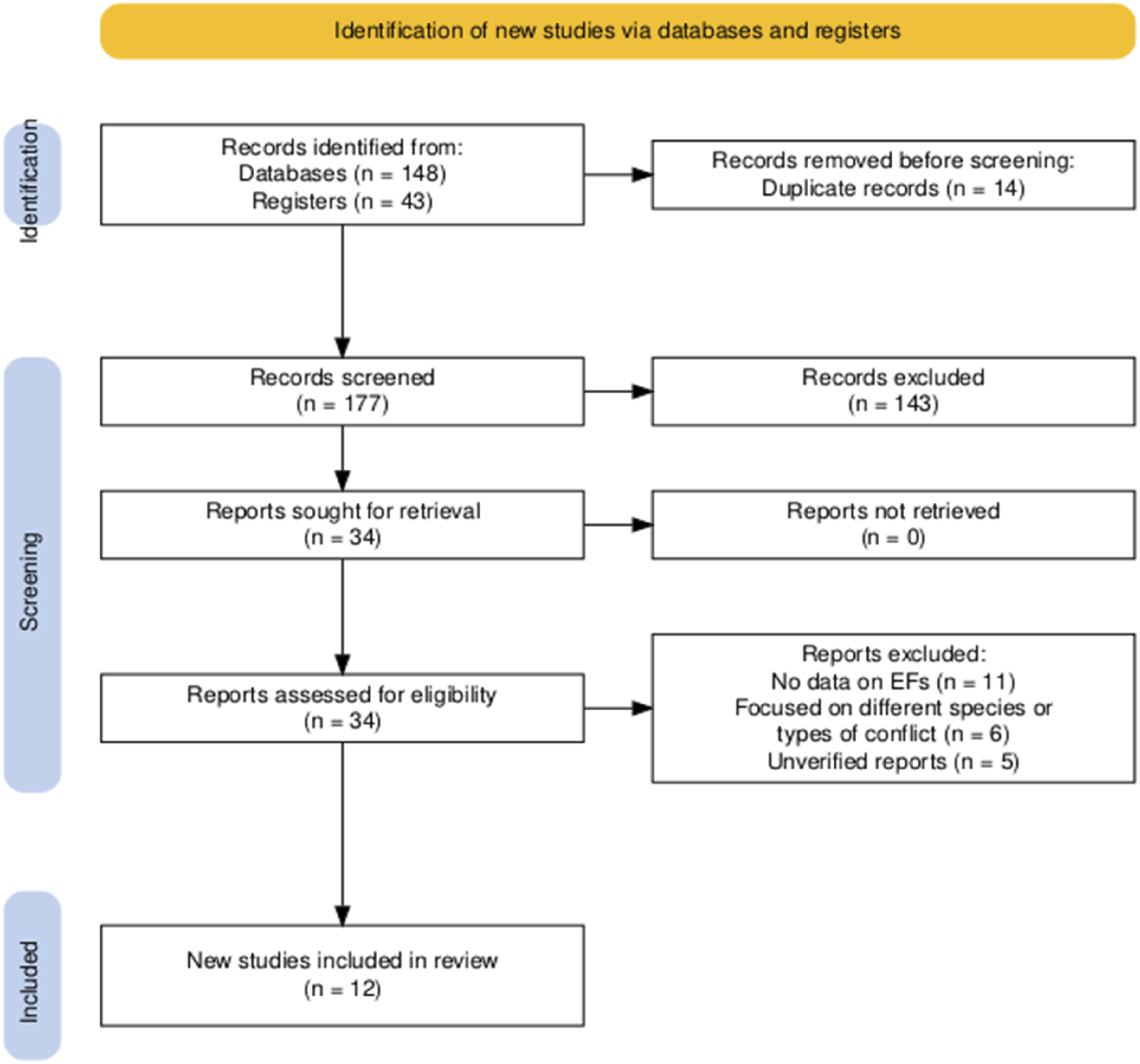
Study Locations of the Electric Fences

During the on-site surveys, detailed assessments of the EFs were conducted, such as, activation status (active/ inactive), power source (energizer/ inverter/ direct supply from transmission poles or household electric sources/ others), location and land use type (agricultural fields/ human household/ protected forest/ tea plantation/ defence area/ mixed land use area), ownership (private/ forest department/ defence sector/tea industry/ others), installation pattern (permanent/ seasonal), activation pattern (seasonal/ permanent), length (less than 500 m/ 500 m–1 km/ between 1–3 km/ more than 3 km) and so on.
Interviews were undertaken to gather perceptions from local residents regarding the timing of elephant raids and the effectiveness of EFs. A total of 166 respondents residing within a 5 km radius of the fence installation sites across the three districts were selected randomly, representing diverse age groups [young (16 to 30 years)/ middle-aged (31 to 50 years)/ elderly (51 to 76 years)], literacy levels [illiterate (no formal education)/ literate (with formal education)]. The rationale behind the 5 km radius was based on previous HEC studies suggesting that most crop-raiding incidents and elephant movements affect communities within this buffer (Goswami et al., 2014; Sitati et al., 2003). A good proportion of participants belonged to the local Nepali, Rajbangshi, and Adivasi communities. Verbal consent was obtained from each participant before recording their responses. The semi-structured interviews included inquiries about the frequencies of elephant raids in the region (i.e., seasonal/ permanent), and if seasonal, the month(-s) of raid. Participants were asked to rate their perception of the efficacy of EFs in mitigating elephant raids on a three-point scale (highly effective/ moderately effective/ ineffective) within their region. Additionally, they had the option to abstain by stating 'do not know'.
Chi-square tests of independence (considering p ≤ 0.05 as statistically significant) were utilized to evaluate relationships between categorical variables (viz., activity status × land use type, fence lethality × land use type, fence lethality × activity status, fence lethality × activation pattern, fence lethality × ownership/control, fence lethality × fence length, gender × perceived EF efficacy, age group × perceived EF efficacy, education × perceived EF efficacy) in the study. For each significant association, Cramér’s V was calculated to assess the effect size. Additionally, standardized residuals were examined to identify the specific categories contributing most to the observed associations. All tests were conducted using PAST software (ver. 4.03, 2020) (Hammer & Harper, 2001) and descriptive statistics were computed using Microsoft Excel (MS Excel, ver., 2021). The area map was generated using QGIS software (ver., 3.36.0, Maidenhead) (QGIS, 2024).
Results
During this study, a total of 62 EFs were documented across 33 different locations, spanning three administrative districts—Jalpaiguri, Alipurduar, and Darjeeling— encompassing 10 community development blocks, and 16 forest ranges in northern West Bengal. Most EFs were observed in Jalpaiguri district (n=29), followed by Alipurduar (n=23) and Darjeeling (n=10) (Figure 3). Within Jalpaiguri district, most EFs were recorded in the Banarhat forest range (n=13), while in Darjeeling district, the majority were observed in the Bagdogra forest range (n=5). In Alipurduar district, the Rydak forest range (n=7) exhibited a noteworthy presence of EFs. District-wise EF Types
Activity Status
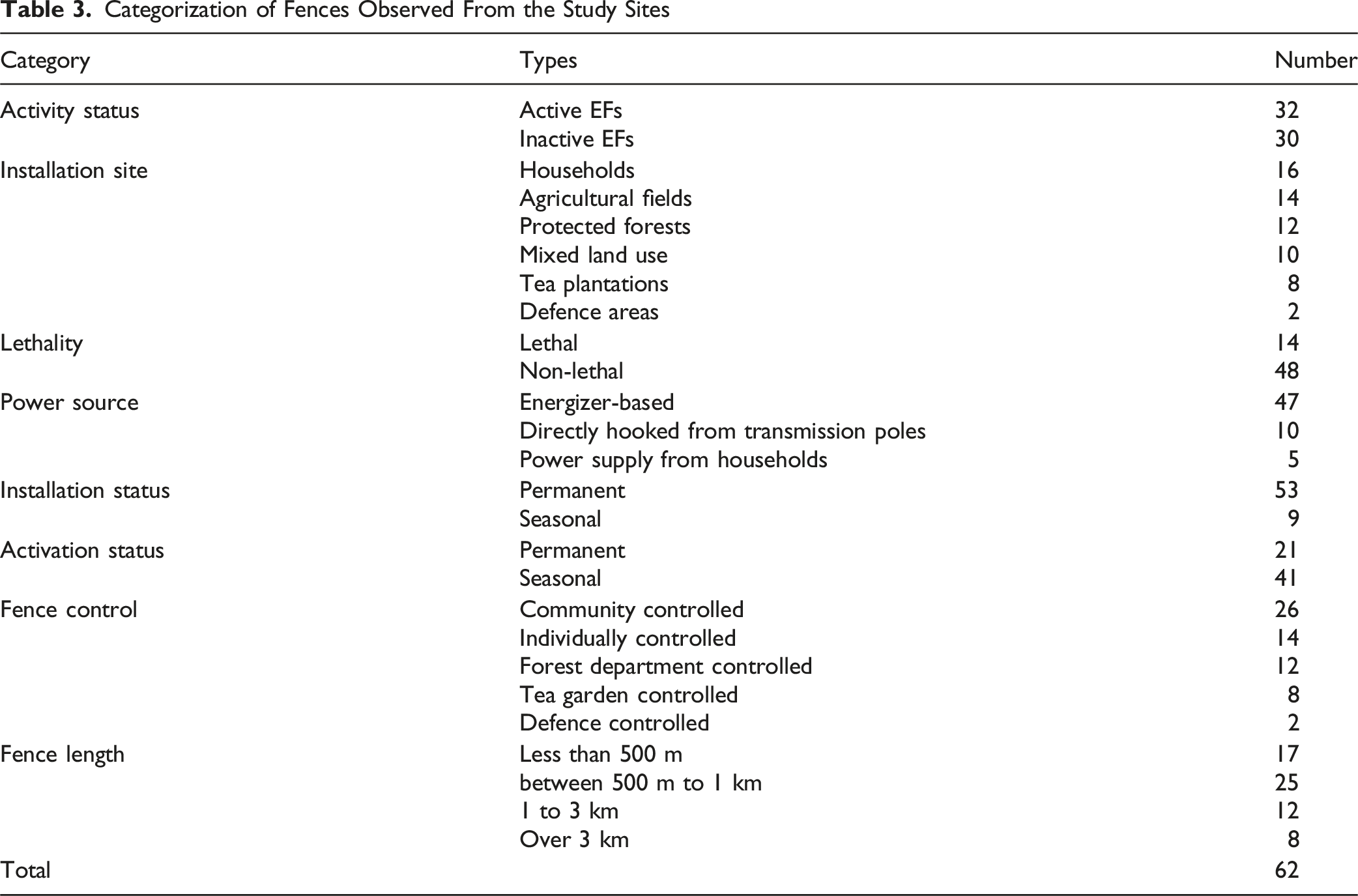
Categorization of Fences Observed From the Study Sites
Installation Sites
The surveyed fences were found installed in a variety of land use areas, with the highest percentage found encircling human households (25.8%, n=16). Following closely were agricultural fields, encompassing 22.6% (n=14) of the observed fences, while protected forests accounted for 19.3% (n=12). Mixed land use areas comprised 16.1% (n=10), tea plantations constituted 12.9% (n=8), and defence areas had the smallest proportion 3.2% (n=2) (Table 3, Figure 4). Within the category of human households, both single houses and combinations of two or more houses were included. Notably, during the survey, agricultural fields with EFs were observed cultivating crops chiefly corn, paddy, mustard, and wheat. Mixed land use areas featuring installed EFs exhibited a combination of individual households, crop lands, and forested areas. Installation Site-wise EF Types (PF=Protected Forests; HH=Human Households; MLU=mixed Land Use Areas; AF=Agricultural Fields; TP=Tea Plantation; DA=Defence Area)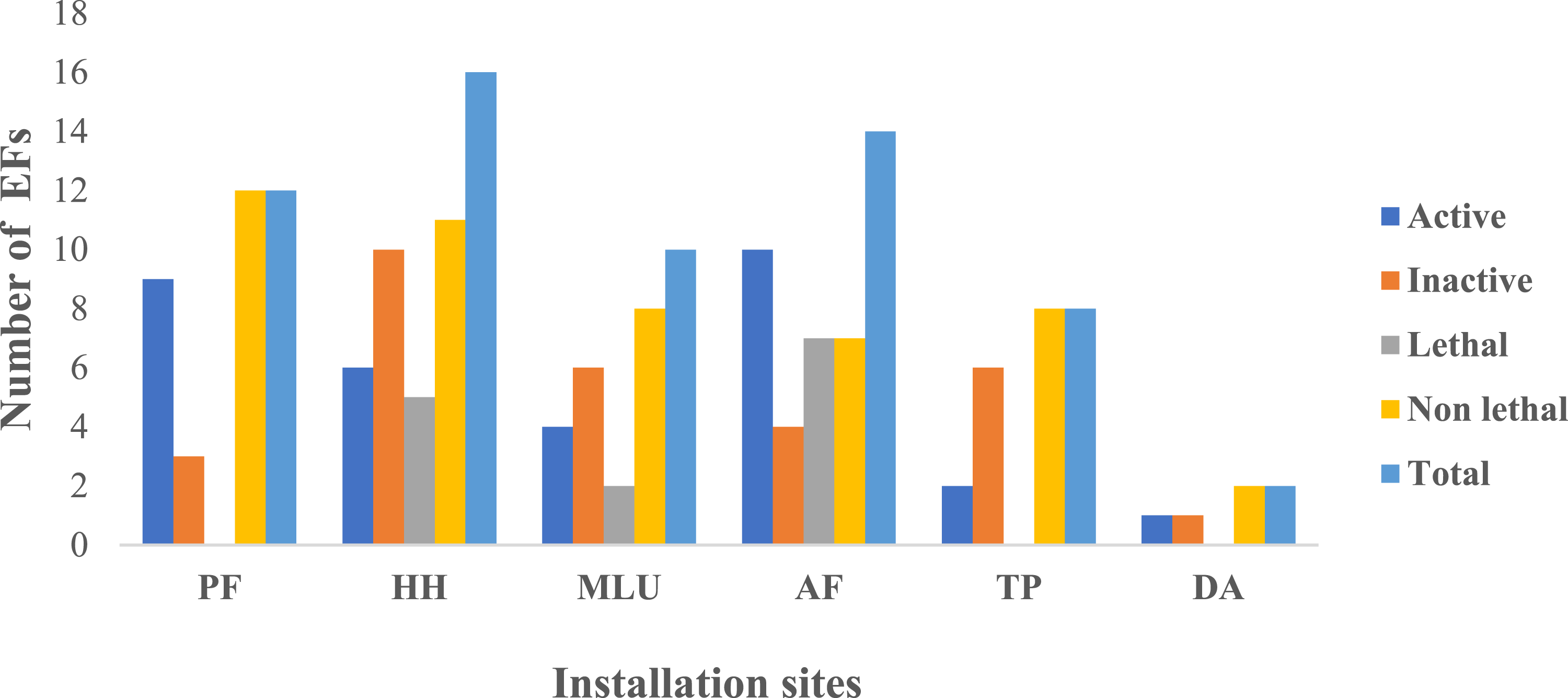
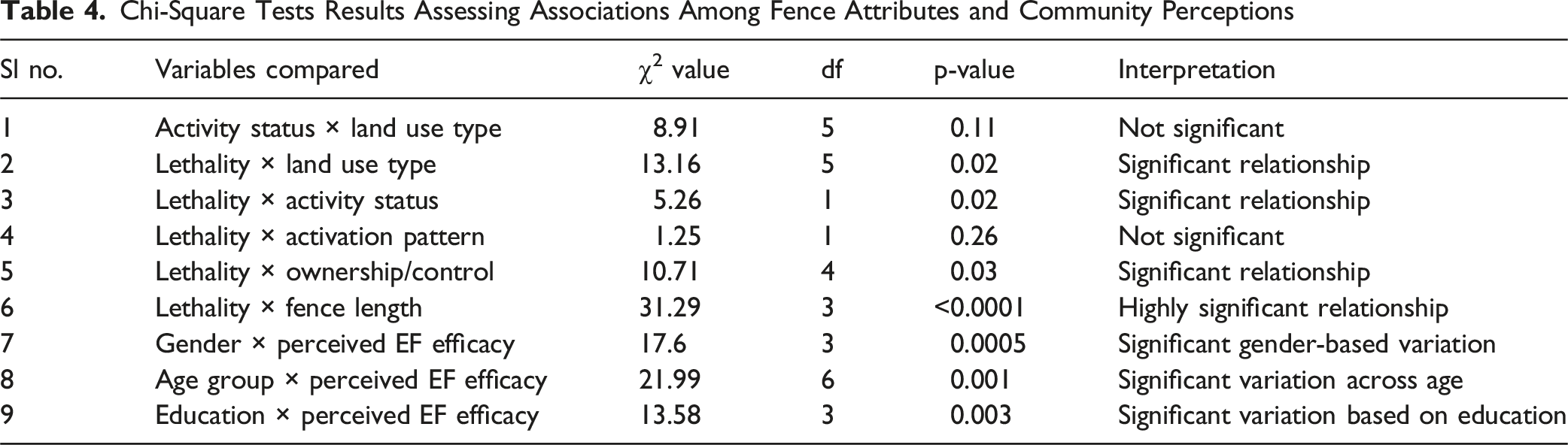
Chi-Square Tests Results Assessing Associations Among Fence Attributes and Community Perceptions
Lethality
Among the installed fences, 22.6% (n=14) were classified as lethal, directly tapping electricity either from transmission lines or households, without an energizer. The remaining 77.4% (n=48) were categorized as non-lethal, utilizing energizers or inverters for electric supply (Table 3). The highest number of lethal fences were recorded in Jalpaiguri (8 out of 14), followed by Alipurduar (5 out of 14) (Figure 3). The majority of lethal fences were positioned around agricultural fields (50%, n=7), followed by human households (35.7%, n=5), and mixed land use areas (14.3%, n=2) (Figure 4). Remarkably, all agricultural fields with active lethal fences were observed to be cultivating crops, whereas, EFs established around protected forests, defence areas, and tea gardens were all non-lethal in nature. The findings indicated a significant association between fence lethality and land use patterns (χ2=13.16, df=5, p-value=0.02), with a moderate effect size (Cramér’s V=0.46
Most lethal fences, 78.6% (n=11) were found in an active state, while remaining 21.4% (n=3) were in inactive condition during the study period. Similarly, among non-lethal fences, 43.8% (n=21) were active while rest 56.3% (n=27) were in inactive condition. Hence, a significant relation was found between the activity status and lethality of the fences (χ2=5.26, df=1, p-value=0.02) (Table 4), with a moderate association (Cramér’s V= 0.29), supporting H3 which predicted that lethal fences would be more active.
Installation and Activation Patterns
The majority of fences, approximately 85.5% (n=53), were permanently installed, while the remaining 14.5% (n=9) were installed seasonally at the sites. However, among all the installed fences, 33.9% (n=21) were activated permanently (i.e., throughout the year), whereas, rest 66.1% (n=41) were seasonally activated (Table 3), typically during the months of May–July and October–February. All permanently installed lethal fences were exclusively found around human households. On the other hand, permanently installed non-lethal fences were predominantly observed around protected areas, tea gardens, and defence areas. Based on the fence activation pattern, 78.6% (n=11) of the lethal fences were activated seasonally, while only 21.4% (n=3) were active permanently. In contrast, among non-lethal EFs, 62.5% (n=30) were seasonal, and 37.5% (n=18) were permanently activated. No statistically significant association was found between fence lethality and activation patterns (χ2 = 1.25, df=1, p = 0.26, Cramér’s V = 0.38; Table 4). The observed effect size indicated a moderate but non-significant trend, contrary to H4, which hypothesized that lethal fences would exhibit more seasonal activation.
Fence Control
In context of ownership and control, nearly half of the EFs (49.1%, n = 26) were managed by local communities, 22.6 % (n= 14) were controlled individually, 19.4% (n= 12) by forest department, 12.9% (n= 8) by tea garden authorities and 3.2% (n= 2) by defence establishments (Table 3, Figure 5). Among the lethal fences, 57.1% (n=8) were controlled by local community and 42.9% (n=6) were under individual ownership. In case of non-lethal fences, the majority were community-controlled (37.5%, n=18), followed by forest department (25%, n=12) and individual users (16.7%, n=8) (Figure 5). Therefore, the results depicted a significant relationship between lethality and ownership of the EFs observed (χ2=10.71, df=4, p-value=0.03) (Table 4), with a moderate effect size (Cramér’s V of 0.41), supporting H5 which expected greater lethality among privately or community-controlled fences. Types of EF Controllers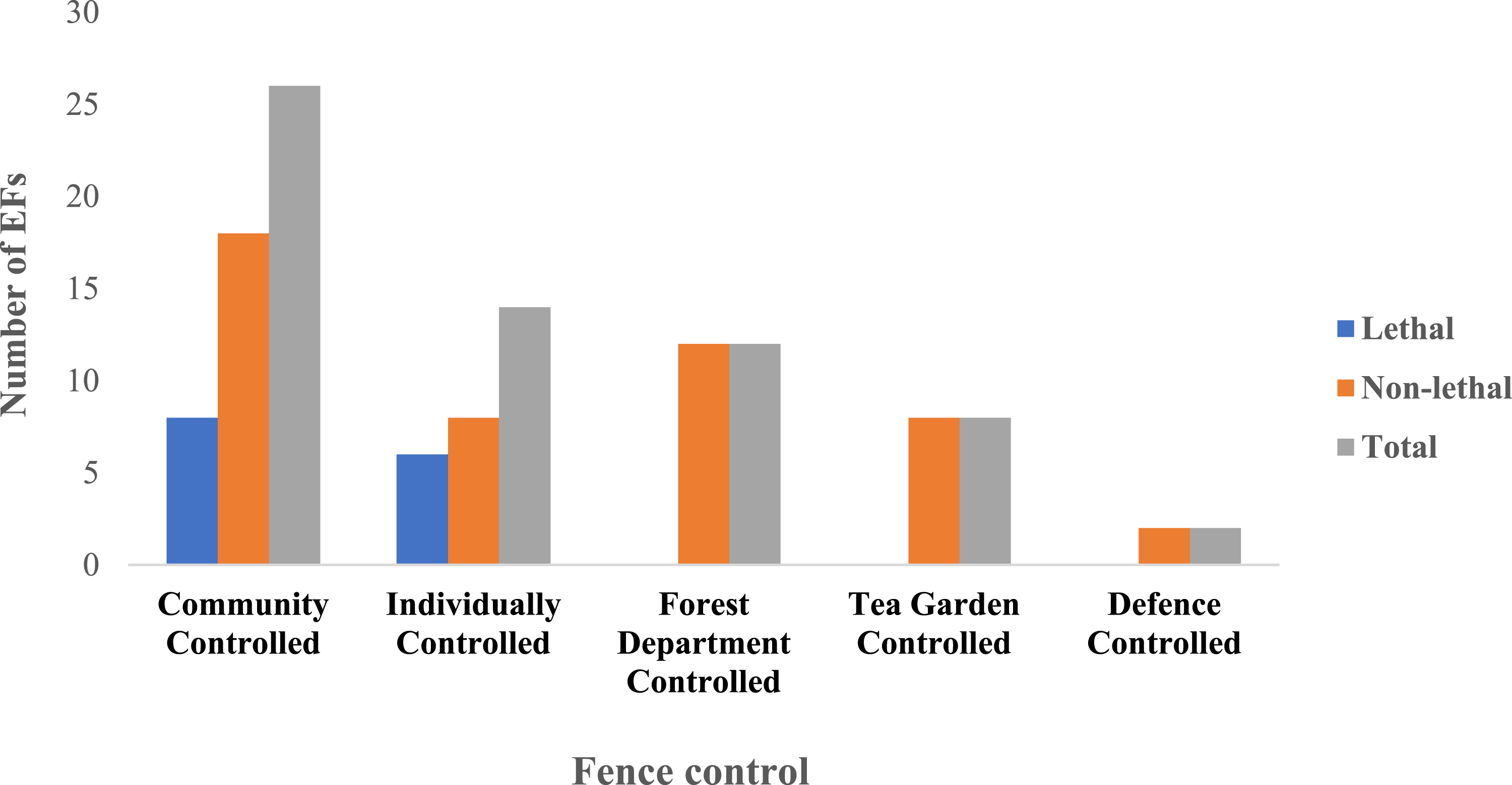
Fence Length
Regarding the length of the fences, 27.41% (n=17) were less than 500 m, 40.3% (n=25) ranged between 500 m –1 km, 19.35% (n=12) spanned from 1 –3 km, and the remaining 12.9% (n=8) were over 3 km in length (Table 3). Among the lethal fences, vast majority, i.e., 78.5% (n=12), were less than 500 m in length. The data revealed a significant relationship between lethality and the length of the EFs (χ2= 31.29, df= 3, p-value <0.0001) (Table 4), with a strong association (Cramér’s V = 0.7), strongly aligning with H6. Lethal fences tended to be shorter and more concentrated around households and agricultural fields, whereas longer fences (≥3 km) were primarily associated with protected forests. Standardized residuals from the χ2 -test revealed that lethal fences were significantly overrepresented in the ≤500 m category (residual = +4.17), while non-lethal fences were underrepresented (residual = −2.25).
Frequency of Elephant Raids
In context of the frequency of elephant raids in and around fence installation sites, 39.1% (n=65) of the respondents noted year-round presence of elephants, while 56.1% (n=93) reported experiencing seasonal elephant raids. A small percentage, 4.8% (n=8), were unsure on this matter. Most elephant activity was concentrated between May–July and October–February, coinciding with the seasonal activation of EFs.
People’s Perception towards Efficacy of EFs
Perceptions on EF effectiveness varied significantly by gender, age, and education level. Among 166 respondents (89 males and 77 females), 47.2% (n=42) of male participants expressed that EFs were 'moderately effective,’ 29.2% (n=26) considered them 'highly effective,’ 20.2% (n=18) deemed them 'ineffective’, and 3.4% (n=3) were unsure. In contrast, among female respondents, 42.9% (n=33) considered EFs 'ineffective,’ 31.2% (n=24) as 'moderately effective,’ 14.3% (n=11) as 'highly effective,’ and the remaining 11.7% (n=9) were uncertain about the role of EFs in mitigating HECs (Figure 6). Most respondents who perceived EFs as effective pointed out their significant role in minimizing crop damage and preventing loss of life and property. The data indicates significant variability in responses between male and female members of the study sites (χ2=17.6, df=3, p-value=0.0005) (Table 4), with a moderate effect size (Cramér’s V = 0.32), emphasizing the difference in perceptions towards the use of EFs based on gender. Perception of Local Inhabitants Towards Efficacy of EFs in HEC Mitigation in the Area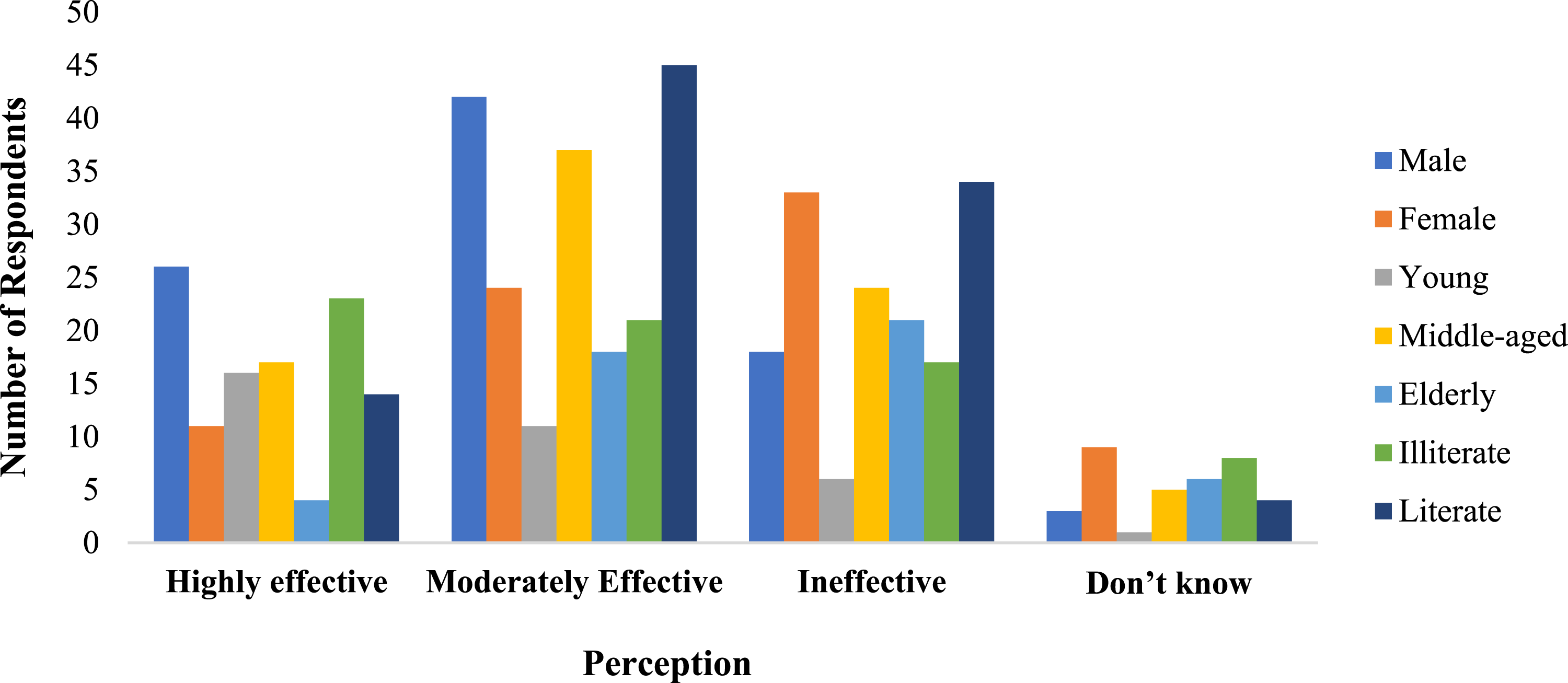
This study revealed that a significant proportion of young-aged respondents considered EFs to be 'highly effective’ (47%, n=16), while the majority of middle-aged participants perceived them as 'moderately effective’ (44.5%, n=37) in reducing elephant raids. In contrast, a substantial number of elderly respondents regarded EFs as 'ineffective’ (42.8%, n=21) (Figure 6). Hence, there was a notable variation in opinions regarding EF efficacy among different age groups (χ2=21.99, df=6, p-value=0.001). (Table 4) with a moderate association (Cramér’s V = 0.25). Furthermore, among the respondents with different educational backgrounds, the majority of literate individuals (46.3%) advocated for EFs being 'moderately effective,’ while a significant portion of illiterate participants (33.3%) considered them 'ineffective’ in mitigating HECs. This indicates that perceptions varied based on educational status (χ2=13.58, df=3, p-value=0.003), with a moderate effect size (Cramér’s V = 0.29) (Figure 6) (Table 4). Standardized residuals from the χ2 tests revealed that young respondents significantly over-reported “Highly Effective” perceptions of EFs (residual = +3.06), while older respondents under-reported this perception (residual = –2.09). Additionally, female respondents were more inclined than males to view EFs as ineffective (residual = +1.92). Illiterate individuals also tended to over-report “Highly Effective” responses compared to literate individuals (residual = +1.94). These patterns support H7, indicating that perceptions of EF effectiveness varied significantly across gender, age, and education.
Discussion
Distribution of EFs in the Region
In this study, the extensive implementation of EFs across three districts, 10 community development blocks, and 16 forest ranges highlights the significant adoption of this conflict mitigation measure in the region. Jalpaiguri district, with the largest forest cover among the northern districts (Tiwari et al., 2017), emerged as a primary area for EF usage, followed by Alipurduar and Darjeeling, reflecting spatial variation in HEC intensity. Despite comprising 33.01% of the state’s forest cover, the northern districts have highly fragmented forest patches, resulting in higher elephant population densities across small meta-populations (Chakraborty, 2022). Specifically, in Alipurduar, the Jaldapara, Buxa Tiger Reserve East, and Buxa Tiger Reserve West divisions show elephant densities of 0.26, 0.1, and 0.37 per square km, respectively, while Jalpaiguri and Darjeeling report densities of 0.15 and 0.12 per square km, respectively (MoEF & CC, 2017). Supposedly, this ecological configuration is a critical driver of frequent HECs, accounting for 12–13% of such incidents nationally (Naha et al., 2019). The results support a strong correlation between EF prevalence and ecological variables such as forest fragmentation, high elephant density, and proximity to human settlements. Kalam et al. (2018) observed similar instances in Assam where increased adoption of EFs were seen in response to high elephant density, extensive forestry areas, and close proximity of human settlements to elephant habitats. Therefore, these patterns validate the ecological justification for EF deployment in the study area.
Functionality and Activity Status of EFs Across Districts
The analysis of recorded EFs revealed that a substantial portion was active, indicating their consistent use and relevance in deterring elephants. The higher prevalence of active EFs in Jalpaiguri and Alipurduar compared to Darjeeling further highlights the relatively higher frequency of HECs and more proactive mitigation using EFs in these areas. The presence of agricultural fields, tea plantations, and forest patches in the plains contributes to elevated HEC probability, as supported by Naha et al. (2019). Consequently, the higher number of active fences in the plains of Jalpaiguri and Alipurduar, which have more forested areas, agricultural land, and tea gardens, can be attributed to these interrelated factors. Therefore, the geography and land use in these areas strongly influence EF usage and functionality.
Land Use Influences on EF Installations
EFs were strategically positioned in diverse land use areas, primarily around human households, agricultural fields, and protected forests. The predominance of fences in these locations indicates that they are primary target sites for elephant raids. This pattern aligns with the land-use distribution in the northern districts of West Bengal, where elephant habitats comprise approximately 34% forested areas, 22% tea plantations, 17% agricultural land, and 27% human settlements and developed zones (Tiwari et al., 2017). Consequently, elephants frequently traverse these landscapes during their daily movements, increasing the likelihood of interactions with human-dominated areas. Tea gardens, in particular, act as conflict hotspots due to their alignment with elephant corridors and historical ranges (Naha et al., 2019). Solar-powered EFs installed by the forest department around protected areas help contain elephant movement (WBFD, 2011), but the presence of around 450 tea gardens in the northern districts has exacerbated habitat fragmentation and frequent HECs (Naha et al., 2019). Cultural practices like brewing local liquor, also known as ‘haaria’ locally, have been implicated in attracting elephants to these settlements (Naha et al., 2019), exacerbating conflict.
Darjeeling, Jalpaiguri, and Alipurduar are part of the transboundary migration route for elephants within the Kangchenjunga landscape, shared by Nepal, India, and Bhutan. Changes in land use patterns along these migratory routes have escalated HECs, leading to increased EF deployments (Singh et al., 2019).
Many agricultural lands in the northern districts contain elephant corridors, heightening vulnerability to HECs (Menon & Tiwari, 2017). Over the past two years, there has been a 6.1% reduction in vegetation in non-forest areas due to urbanization, increasing the likelihood of wildlife, especially elephants, encountering human habitation (FSI, 2017). This information highlights the varied contexts in which HECs occur, indicating the necessity of deploying EFs across different land use classes in the region.
Drivers of Lethal and Non-lethal EF Deployment
The categorization of EFs into lethal and non-lethal types unveiled various socio-economic dynamics regarding their deployment. The majority of lethal fences were shorter in length and found around agricultural fields, and human households, often built by marginalized farmers. In Assam, Kalam et al. (2018) noted that while an energizer-based EF incurred a cost of approximately 7,000 Indian rupees (approximately equivalent to 100 USD), the inverter-based fences were priced at 2,000 Indian rupees (approximately ranging from 20–30 USD). Fernando (2020) mentioned that in Sri Lanka, the installation cost for setting up a non-lethal fence was 1,000–2,500 USD per km, with energizer and solar panel expenses constituting up to 45% of the overall cost. Several studies, including those conducted by Kioko et al. (2008), Hayward and Kerley (2009), Hoare (2015), and Kamdar et al. (2022), have highlighted the comparatively elevated installation and maintenance costs, along with the requirement for intricate technical expertise in setting up non-lethal EFs. Understandably, lethal fences were typically shorter, inexpensive, and easier to install and dismantle—features that made them attractive to low-income communities in the region despite their illegality. The results of the present study also revealed a significant relationship between lethality and the length of the EFs, reinforcing the tendency for shorter fences to be lethal. Therefore, in order to protect their crops and minimize risks to life and property, small, marginalized farmers and local residents, often opted for the easy, cost-effective option of lethal fences. Additionally, lenient enforcement of wildlife protection laws and penalties (Subramanian, 2017) could explain the continued use of illegal lethal fences in the region. In contrast, in Nepal, Sapkota et al., 2014, showed installation of non-lethal EFs was both economically and socially beneficial and sustainable in terms of cost-benefit ratio. Feuerbacher et al. (2021) also supported the adoption of EFs over traditional crop guarding for increased profitability and economic viability, in Bhutan. This offers a model that can be beneficially adapted in the present region.
Maintenance, Community Involvement, and EF Sustainability
The efficacy and functionality of EFs largely depend on proper maintenance (Kamdar et al., 2022; Vibha et al., 2021). Maintenance, typically performed by community caretakers funded by individuals, organizations, the community, or the state through the forest department, is influenced by various socio-economic and ecological factors, including the severity of crop-raiding, technical proficiency, funding availability, cost-benefit analysis, and disputes between settlers and non-settlers (Evans & Adams, 2016; Gunaratne & Premarathne, 2005; Kamdar et al., 2022). The notable proportion of inactive fences in this study perhaps results from maintenance challenges related to these factors. The challenges in maintenance, such as funding availability and technical proficiency, highlight the need for more structured support systems. However, further detailed studies are needed to provide comprehensive insights into this issue.
People from relatively low socio-economic backgrounds could not erect fences singly, thus, a good number of fences were observed to be set by a group of individuals (community-controlled) with mutual benefits. This collaborative effort not only allowed for shared responsibilities but also contributed to a reduction in installation costs for these resident groups with lower income. This reflects community-driven initiatives in HEC management in the region. Similar instances of collective maintenance of fences for minimizing crop damage were documented in Laikipia County, Kenya, among pastoral communities (van Eden et al., 2016). Kalam et al. (2018) and Kamdar et al. (2022) also found that community-controlled EFs are more prevalent than individually maintained ones in Assam.
Seasonal Activation Patterns and Correlation with Crop-Raiding Events
Elephant crop-raiding, which involves the consumption of and/or damage to crops, stands out as a prominent and widespread issue in HEC globally (Lenin & Sukumar, 2011; Wettasin et al., 2023). Due to the constraints of limited resources and fragmented habitat in northern districts, elephants are compelled to forage on nutritious agricultural crops as a supplement (Sukumar et al., 2003). Even when resources are present within protected areas during the monsoon, elephants tend to search for accessible and abundant food in the form of crops (Nath et al., 1998). Small scale farmers are the most vulnerable victims of these crop-raiding events (Riddle et al., 2010) and therefore, develop an inclination towards retaliatory action on the invading elephants (Benjaminsen et al., 2013; Lenin & Sukumar, 2011). Elephant raids at crop lands being a frequent event in northern districts (Chakraborty, 2015, 2022), understandably a considerable number of lethal EFs were found around croplands, erected by local farmers. Crop sowing and harvesting periods in the area ranges between May–July and October–February annually. The intensity of elephant raids correlated with the harvest period of crops such as paddy, wheat, corn, etc., reaching peak levels between November to February and July to October (Naha et al., 2020). Therefore, a considerable number of fences were recorded to be activated seasonally, syncing with the period of crop-raiding. Similar findings were noted by De Boer et al. (2000) in Mozambique and Kalam et al. (2018) in Assam, India. Nyhus and Tilson (2000) and Hoare (2001) mentioned the usefulness of EFs is directly influenced by the closeness of elephant habitats and elephant corridors to agricultural lands.
Socio-Demographic Influences on Perception towards EF Efficacy
Comprehending the human perception and attitude towards the various dimensions of HEC is a fundamental yet intricate aspect. It relies on numerous factors, including gender, literacy, socio-economic conditions, religious beliefs, cultural background, and past encounters with wildlife, among others (Chakraborty, 2018, 2024; Snyman, 2014). In the present study, community perceptions towards EFs varied based on demographic factors such as age, gender, and educational background. These variations highlight the importance of considering diverse perspectives during the implementation and assessment of mitigation strategies. Results indicating variability among the responses between male and female members of the study sites (Figure 6) highlighted the fact that perception towards the use of EFs varied between genders. Whereas the majority male respondents supported the moderate efficiency of the EFs, female participants were indifferent about their efficacy in HEC mitigation. As human- elephant encounters are more common with male members than females (Naha et al., 2019, 2020), male members seemed to advocate more on the use of EFs. Perception towards the efficacy of EFs varied with different age-grouped respondents as well. Most young-aged respondents (age between 16–30 years) mentioned EFs to be ‘highly effective’, most middle aged (age between 30–50 years) referred to them as ‘moderately effective’, while the majority elderly respondents referred to them as ‘ineffective’ in nature (Figure 6). With elephants being worshipped in the region (Barua, 2014; Borah et al., 2022; Chakraborty, 2018), a significant number of elderly respondents supposedly disapproved of the utilization of EFs. Educational status impacted the perception of local people towards the use of EFs. Most literate respondents advocated EFs to be ‘moderately effective, while the majority illiterate individuals referred to them as ‘ineffective’ in HEC mitigation. The overall variation in views could be correlated to variables, such as, the extent of elephant raids, level of conflicts, level of awareness among local dwellers and so on (Borah et al., 2022; Hariohay et al., 2018; Talukdar & Choudhury, 2021). Sites hit by frequent elephant raids in crop fields show stronger intolerance towards elephant conservation (Chakraborty et al., 2024; Ram et al., 2021; Talukdar & Choudhury, 2021). Consequently, individuals displaying a higher propensity for employing EFs are likely to have encountered frequent incidents of elephant raids. Discussions with local dwellers unveiled that the deployment of lethal fences was never intended to result in the death of elephants. Instead, it was selectively utilized at specific sites as a cost-effective yet efficient deterrent measure against elephant raids. Comparable perceptions about EF usage were recorded from two communities residing around electric fenced areas and experiencing frequent elephant raids at Laikipia County, Kenya by van Eden et al. (2016). They found even though EFs impede the convenient movement of farmers and other local residents across various areas, the majority of the respondents in this region preferred the implementation of EFs and were ready to pay for their maintenance. Similarly, the belief that EFs can reduce elephant raids and prevent crop and life loss is supposed to have contributed to the overall positive perception towards EF usage among the respondents in the present study area.
Future Directions for Conflict Mitigation and EF Usage
The greater prevalence of non-lethal over lethal fences indicates a positive trend for elephant conservation in the northern districts. This could be attributed to relatively increased awareness among local communities about elephant conservation, the convenient accessibility of energizers, increased technical knowledge about EF installation, rigorous monitoring by the forest department, among other factors in recent times. Anti-electrocution squads (AES) deployed by the state forest department are presumed to have been instrumental in creating this cognizance among local people about the drawbacks of using lethal EFs. Additionally, local NGOs, educational institutions such as schools and colleges, nature clubs, and tea garden officials have played a pivotal role in promoting widespread awareness about the demerits of lethal EFs and prudent use of EFs. Therefore, if this trend persists, the incidence of elephant mortality due to electrocution may substantially decline in the future course, balancing the need for human safety with long-term elephant conservation.
Implications for Conservation
This study offers a pioneering and comprehensive analysis of EFs as a strategy to mitigate HECs in northern West Bengal, addressing a significant gap in the current wildlife management literature. By examining the distribution, activation status, land use patterns, lethality, installation practices, and community perceptions of EFs, the study provides crucial insights into their effectiveness and challenges.
The study reveals that while previously lethal EFs were a major concern, there has been a significant shift towards the use of non-lethal EFs, reflecting positive developments in local awareness and conservation practices. This shift is attributed to the concerted efforts by the state forest department, NGOs, and community groups to promote the benefits of non-lethal solutions and enforce stricter regulations in recent times. The predominance of non-lethal EFs suggests an improved understanding among local communities about the adverse impacts of lethal EFs on elephant populations.
Community perceptions towards the efficacy of EFs were generally positive, with many residents acknowledging the role of these fences in reducing crop damage and preventing elephant raids. The collaborative effort in maintaining EFs, highlights the importance of community involvement in conservation practices. However, some scepticism persists regarding the long-term sustainability and maintenance of EFs, especially in the face of socio-economic and ecological challenges.
Recommendations from the study include enhancing regulatory frameworks to further discourage the use of lethal EFs, improving infrastructure safety by raising power lines and insulating them, and encouraging the use of eco-friendly solar-powered energizers. Additionally, the study calls for improved inspection protocols to detect electrocution-related deaths, which are often misclassified due to unnoticeable burn marks (Thepapichaikul et al., 2018) and the potential for lethal fences to go undetected. Integrating EFs with broader HEC mitigation strategies, such as habitat restoration, alternative livelihoods for affected communities, and early warning systems, offers a holistic approach to conflict resolution. This integrated approach can address the root causes of HECs and provide sustainable solutions. It is also recommended that policymakers engage in long-term planning to reduce the use of lethal EFs further, by implementing stricter laws and establishing more region-specific monitoring teams. Implementing these recommendations can effectively prevent future elephant deaths caused by electrocution from lethal EFs in the region.
Several studies have indicated that the use of EFs does not necessarily reduce the overall incidence of HECs; instead, it often shifts the conflict to adjacent areas (Osipova et al., 2018; Sutherland et al., 2017). A comparable situation has been observed along the India-Nepal transboundary elephant migratory routes, where installation of 18 km long EF along the Mechi river at Jhapa district (Neupane et al., 2018) has halted cross-border elephant migration, resulting in severe HECs on the Indian side of the fence (Chakraborty, 2022; Mallick, 2012). Therefore, alternative and more effective mitigation strategies need to be explored and implemented to sustainably reduce HEC occurrences.
While the study provides valuable insights, it acknowledges limitations such as a small sample size and potential biases in community perceptions affecting generalizability. Consequently, the findings should be viewed as indicative rather than conclusive. Thus, further research is needed to address these limitations and focus on several key areas such as, examining additional variables, conducting longitudinal studies, analysing the effects of transboundary migration, spillover effects and employing more sophisticated analytical techniques to uncover deeper mechanisms. This study aims to serve as a foundational resource for guiding future research, policy development, and conservation strategies in the region and elsewhere.
Footnotes
Acknowledgements
The authors gratefully acknowledge the invaluable contributions of all participants who generously shared their time and perspectives for this study. We extend our heartfelt thanks to the local volunteers whose support in the field was crucial to the successful completion of this research. We are especially grateful to the officials and staff of the Forest Department for their cooperation and continuous support throughout the study. We also sincerely thank the editor-in-chief, the associate editor and the anonymous reviewers for their insightful feedback, which greatly enhanced the clarity and quality of our manuscript, thereby strengthening its scholarly value.

Consent to Participate
Participation was voluntary and anonymous in the study.
Author Contributions
Funding
The authors received no financial support for the research, authorship, and/or publication of this article.
Declaration of Conflicting Interests
The authors declared no potential conflicts of interest with respect to the research, authorship, and/or publication of this article.
Data Availability Statement
The datasets generated during and/or analysed during the current study are available in the manuscript.