







Abstract
In this article, we share methodological lessons learned from a participatory regional planning process which was intended to produce a regional strategy for a multiactor program on human rights and rural development in the Southern Highlands of Peru, funded by the Belgian solidarity organization Broederlijk Delen (BD). The underlying goal of the planning process, which was also funded by BD, was to shift the practices of planning, decision making, and evaluation in the program, by strengthening participation of local communities and social change-focused organizations. As such, a broad group of these actors were invited and participated in the nearly year-long planning process. Throughout, we as facilitators used many creative, reflective methods—for example, drawings, co-construction of timelines and mind maps, reflective plenaries, and so forth—that we hoped would “speak” to the different participants’ learning styles and ways of knowing and therefore increase their levels of participation and ownership in the process and program. In this article, we ask the question “to what extent was the process really participatory?” in order to help explain ways in which “participatory methods” enable and constrain participant knowledge and identity, and highlight ways to improve participation through the use of methodology.
Introduction
Motives for Participation
Action researchers advocate for participation for ethical, practical, and strategic reasons, among many others. Ethical participation, which is fundamentally about the rights of people to participate in decisions that affect them, asks questions such as “participation for whose benefit, and on what terms” (Saxena, 2011, p. 31) and “whose reality counts?” (Chambers, 1997). Ethical participation is fundamentally political in its implementation, in that it involves decisions about who is invited to the table, who does the inviting, and who has control over research processes, including the extent to which action research participants also “participate as researchers in the thinking and decision-making that generates, manages and draws knowledge from the whole research process” (Heron, 1996, p. 20). For ethical participation, it is therefore paramount “to attend to how partnerships are established, power distributed and control exerted” (Banks & Brydon-Miller, 2019, p. 8). Practical participation can be seen as “the key to feelings of ownership that motivate people to invest their time and energy to help shape the nature and quality of the acts, activities, and behaviors in which they engage” (Stringer, 2013, p. 31). In other words, people will not buy in if they don’t feel their presence and voice are respected and heard. Strategic participation speaks to the fact that key knowledge in any action research or change process is held by the people closest to the issues being addressed. For example, a teacher’s work affects and is informed by students, fellow teachers, administrators, parents, and support staff, whereas nurses’ interactions with patients and patient family members, doctors, hospital administrators, and others may be central to understanding challenges nurses themselves face (Stringer, 2013). The question “who knows?”—literally, “who are the key knowledge holders in a given situation and how can we engage their knowledge?”—becomes a fundamental strategic participation issue for any action research process.
Whether the primary motivations for seeking participation are ethical, practical, and/or strategic, each has limitations when seen in isolation. For example, processes to generate (practical) buy-in without an ethical framework can become drive-by or extractive research. Similarly, pursuing large numbers of or targeting “key” (strategic) knowledge holders may favor the same people in power and not engage marginalized voices. In Figure 1, we present motivations for seeking participation and dilemmas that may arise when participation is approached from a single angle.
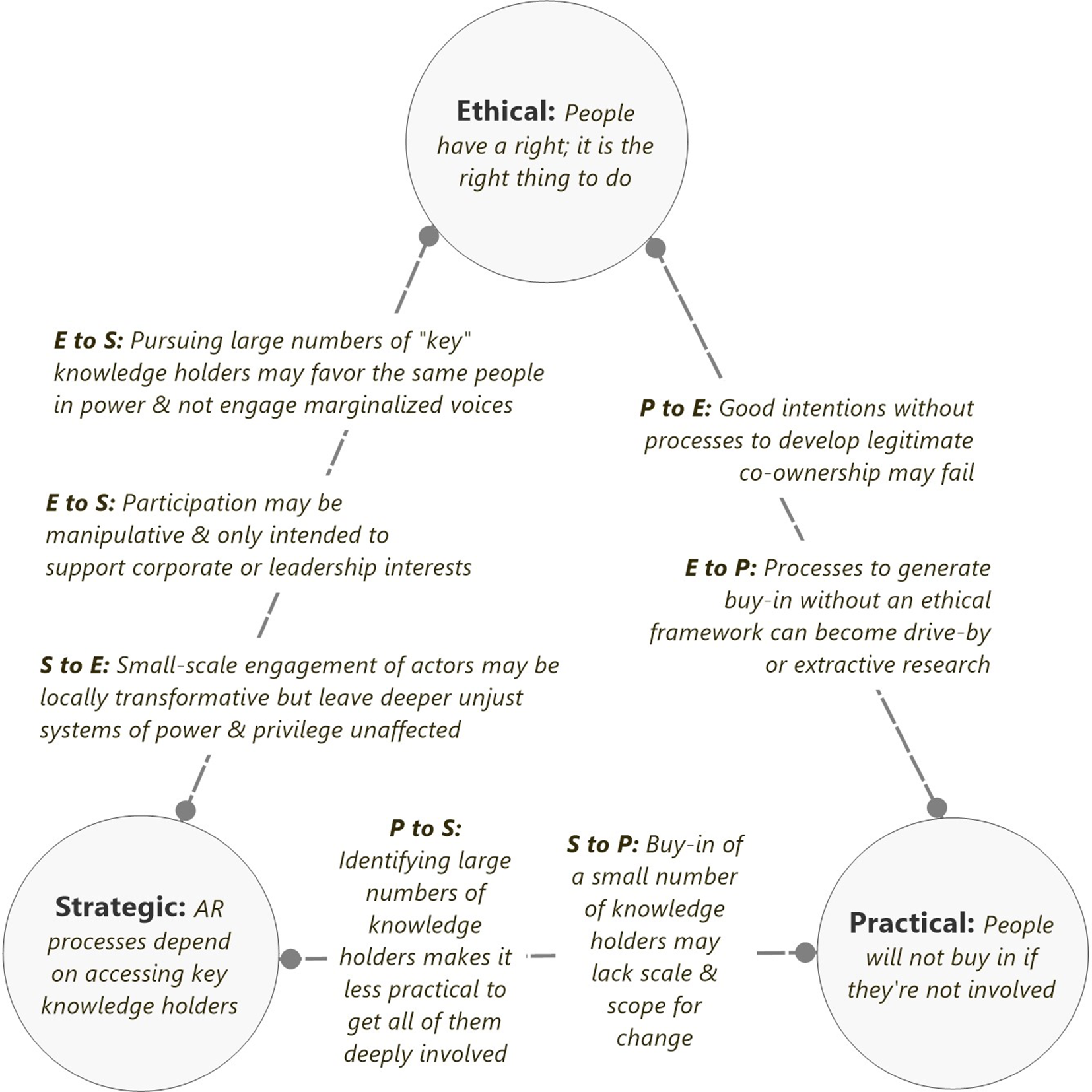
Three purposes for pursuing participation (The dilemmas between circles should be read as messages from one participation motive to another. For example, from S to E is a message from from strategic to ethical participation).
Article Focus
This article uses the framework in Figure 1 as a starting point for reflecting on a participatory strategic planning process that we (the authors) were deeply involved in from mid-2012 to mid-2013. The planning process was intended to produce a regional strategy for a multiactor program on human rights and rural development in the Southern Highlands of Peru, funded by the Belgian solidarity organization Broederlijk Delen (BD). The planning process was implemented by a mixed team of facilitators convened by BD Peru coordinator Rapha Hoetmer (co-author of this article), which included Juan Carlos Giles and Alfredo Ortiz Aragón as planning, capacity development, and facilitation specialists, and occasional participation from a range of other facilitators and thematic specialists, including from BDs partner organizations. As BD Peru’s newly named coordinator at the time (2011), Rapha desired to implement a participatory process that would result in a funding strategy that would represent the wants and needs of the Peruvian “coparte” (counterpart or partner) organizations that BD funded, as well as local stakeholders with whom these copartes engaged. He sketched a seven-stage strategic planning process which would include a mix of planning workshops, thematic reflections on topics within BD’s mandate in the region, and workshops on important cross-cutting themes such as human rights-based approaches, interculturality, and gender. An underlying goal of the process was to shift the practices of planning, decision-making, and evaluation in the program to local actors, by strengthening participation of local communities and organizations. The methodology and political worldview of the process were deeply inspired by the previous experiences of the “Dialogue of Knowledges and Social Movements” (see Daza et al., 2016) promoted by an activist Peruvian action-research center, Programa Democracia y Transformación Global (PTDG), in which Ortiz Aragón, Giles Macedo, and Hoetmer had participated, together with many other facilitators. 1
In the remainder of this article, we share lessons learned from the planning process, focusing on methodological insights that help us understand how methodology enables and constrains participation in participatory planning processes. First, we share a brief explanation of the “River of Life systematization” methodology we used to evaluate the planning process.
Our Research “River of Life” Methodology
8
I am the river become night.
I travel through the broken depths,
through the forgotten unknown villages,
through the cities crammed with people in display cases.
I am the river.
I flow through the prairies.
The trees on my banks are alive with doves.
The trees sing with the river,
the trees sing with my bird’s heart,
the rivers sing with my arms.
9
The hour will come when I will have to flow into the ocean,
to mix my clean waters with its murky waters.
I will have to quell my luminous song,
I will have to hush my furious screams…
I will wash my eyes with the sea.
That day will come, and in those immense seas
I will no longer see my fertile fields,
I will never again see my green trees,
nor feel the nearby breeze,
my clear sky, my dark lake,
my sun, my clouds,
I will see nothing,
except that immense blue heaven where everything has dissolved,
into a vast expanse of water,
where one more song or another poem will mean nothing more than a little river trickling down,
or a mighty river coming down to join me,
in my newly luminous waters,
in my newly extinguished waters.
(Stanzas 8 and 9 of “El Río” by Javier Heraud (1960), performed by participants (in original Spanish) in the systematization workshop)
River of Life as a “Systematized” Expression of Our Shared Planning Experience
Systematization of experiences is a methodology used to systematically and interpret reconstruct and interpret a past shared experience in a participatory manner. Through the process of reconstruction, diverse individual interpretations emerge that, upon combining with others’ interpretations, allow participants to more deeply understand and even theorize from their experiences (for more details, see Jara Holliday, 2014). Our systematization process included a detailed review of reports and documents from the strategic planning process, interviews with 18 participants, a participatory systematization workshop, and report development in Spanish and English.
Because we (the authors) thought river metaphors could be helpful in communicating across such a diverse group—which included participants from rural communities and cities, community-based organizations and NGOs, and Spanish and Quechua speakers (all spoke Spanish, but some spoke more fluently in Quechua)—we incorporated “River of Life (RoL)” method (see Wallerstein & Auerbach, 2004; Parker et al., 2020,) into the systematization of our planning process. Specifically, we asked participants to record on index cards the most significant moments and actions from their participation in the BD regional planning process and subsequent program implementation (a 3-year period from 2012-14 approx). We then asked them to join other members of their organizations (these were groups of two to five people) to develop shared rivers of life based on the individual significant moments recorded on their cards. They could dialog and develop the rivers in the language of their choosing—a lesson learned from earlier in the process (see the “Power, Language(s), and Ways of Knowing: Balancing Conscious Design and Emerging Facilitation” section of this article).
To begin the process in the systematization workshop, Alfredo presented a completed river (shown in Figure 2) as an example of how participants might fully harness the river’s metaphoric power to help them communicate the dynamic, nonlinear nature of their own unique journeys, including hot debates, unexpected turns, successes, mistakes, and failures (Giles Macedo, n.d.). If some participants felt the process seemed cautiously promising, then they might draw a slow-moving river that is gradually widening. Suddenly, the river gathers speed, becoming more active and beginning to wind, generating excitement but also fear that we may not survive the journey! Perhaps we did make it out of the rapids, only to find ourselves stuck in an eddy, dizzy, and desperate to get back into the river’s flow. Alfredo encouraged participants to use the river to simultaneously tell and interpret the story so we might then learn from each other’s rivers, including their “tributaries, … dams, …calm pools, …rapids, … and waterfalls” (Wallerstein & Auerbach, 2004, p. 32).
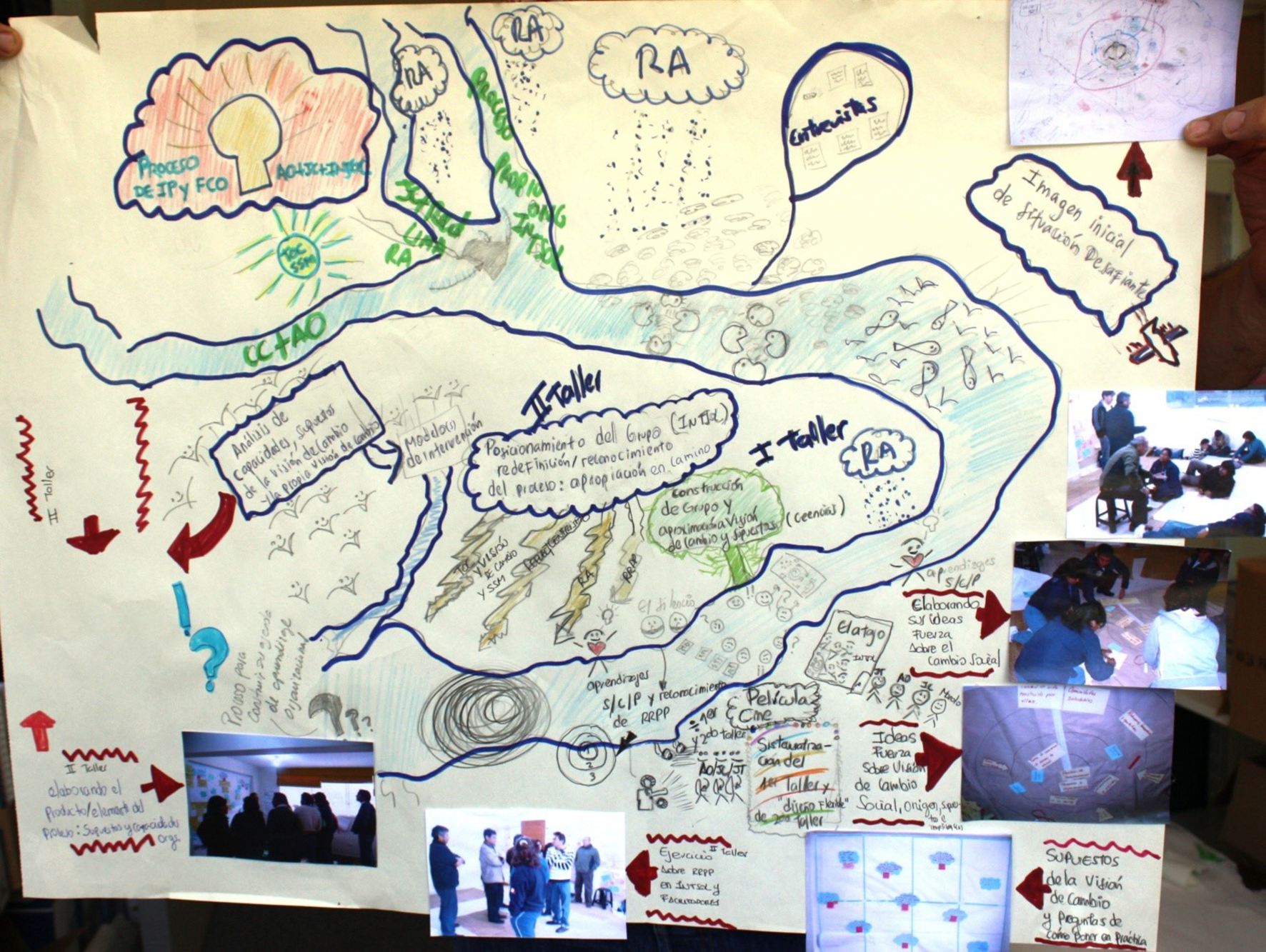
River of life example presented by Alfredo (elaborated by Juan Carlos Giles).
Developing the Rivers and Harvesting Key Ideas
In developing their rivers, each group drew from from positive, negative, and other significant moments they had experienced in the planning process, including key events related to mining conflicts, advocacy efforts by women’s groups, gender and power issues that emerged in workshops, explorations of the meanings of “buen vivir,” myriad issues related to water, spiritual rituals, and even memories around project design and development of outcomes and indicators.
Ironically, a moment ocurred in the systematization workshop where the River of Life process had itself had become tiring, with participants becoming lethargic. One participant asked if he could perform the poem “El Río” by Javier Heraud (see stanzas 8 and 9 at the beginning of this section), to help us “row out” of the workshop eddy we were experiencing! He performed one stanza of the poem using spoken word style, which led to a full performance by two others the following morning. The full performance was followed by a reflective plenary session in which it became evident that the poem performance and the significance of the river metaphors that it emphasized had recharged the workshop with meaning, beyond that which was ocurring through River of Life method on its own. This also led a native Quechua speaker to share her own poem with the group in Quechua. Many deep insights emerged, one of which we share here (we end the article with additional reflections):
In terms of systematization, developing a river is so valuable because rivers are stormy, calmable, aware, nostalgic; they can be upset. It isn’t good or bad, it’s simply life. To create a river of life is to remember—it’s not about judging, just about remembering. What did we do, what can we do better, what was worthwhile? It is far from an empty vessel—it carries all of our emotions. (P1, Human and ecological rights organization)
After the rivers of life were complete, we asked all groups to extract and record key moments from the BD planning process onto orange index cards, parallel moments from their own organizational lives in blue, and takeaways from the entire process in yellow. From these, we created the shared timeline shown in Figure 3.
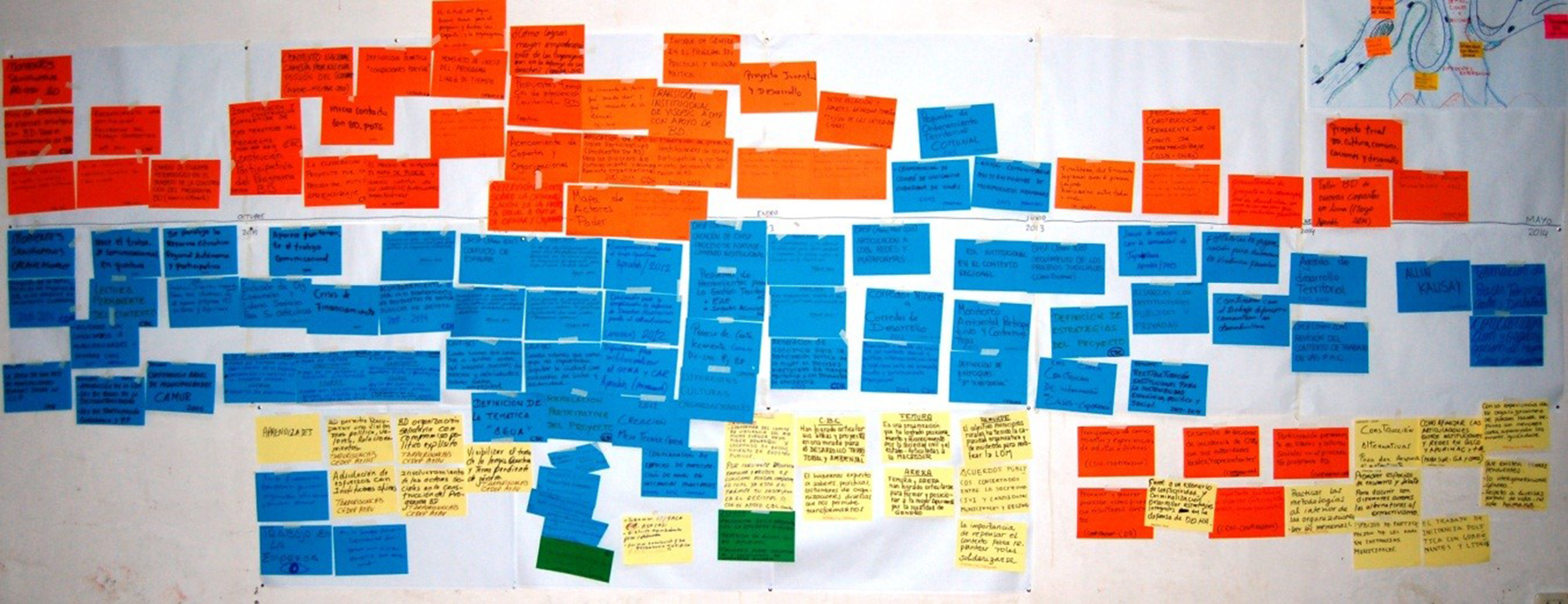
Shared timelines (orange cards on top, blue in the middle, and yellow on bottom).
Alfredo later created a mind map that brought together the ideas in orange from the BD planning experience into nine categories, which was shared with the participants in a workshop “memoria” (report). In Figure 4, we have created a translated and abridged version of the map, organizing the categories into relational, methodological, thematic, and project design themes that spoke to what participants found meaningful in the BD planning process.
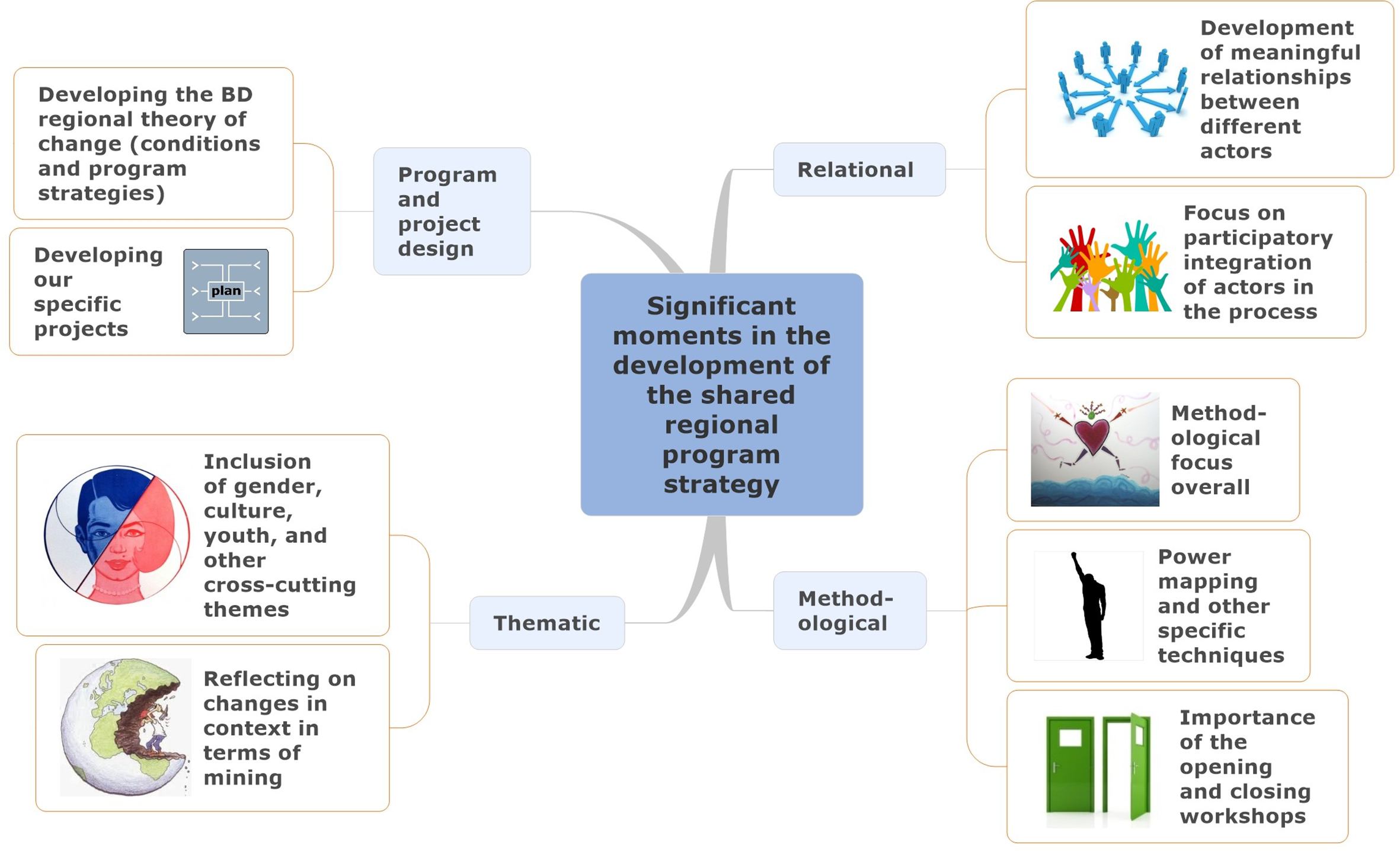
Main significant moment themes extracted from the rivers of life, related to the BD planning experience.
In addition to each person naming significant moments individually and constructing a shared timeline from all participants’ shared moments, Systematization of Experiences also includes a subsequent deep exploration of the shared timeline from a specific “eje” (an angle or lens) that is meaningful to the group (see Jara Holliday, 2014, pp. 165–166 for a more detailed explanation). For example, a timeline may be constructed of a shared period of major organizational transition and upheaval, and then critically examined from the lens of how gender relationships played out during that period, or how leadership emerged, or any other specific angle or magnifying lens that is meaningful for the group to explore. With the timeline complete, we moved to critically analyze the shared timeline from the magnifying lens of “participatory process” (Figure 5).
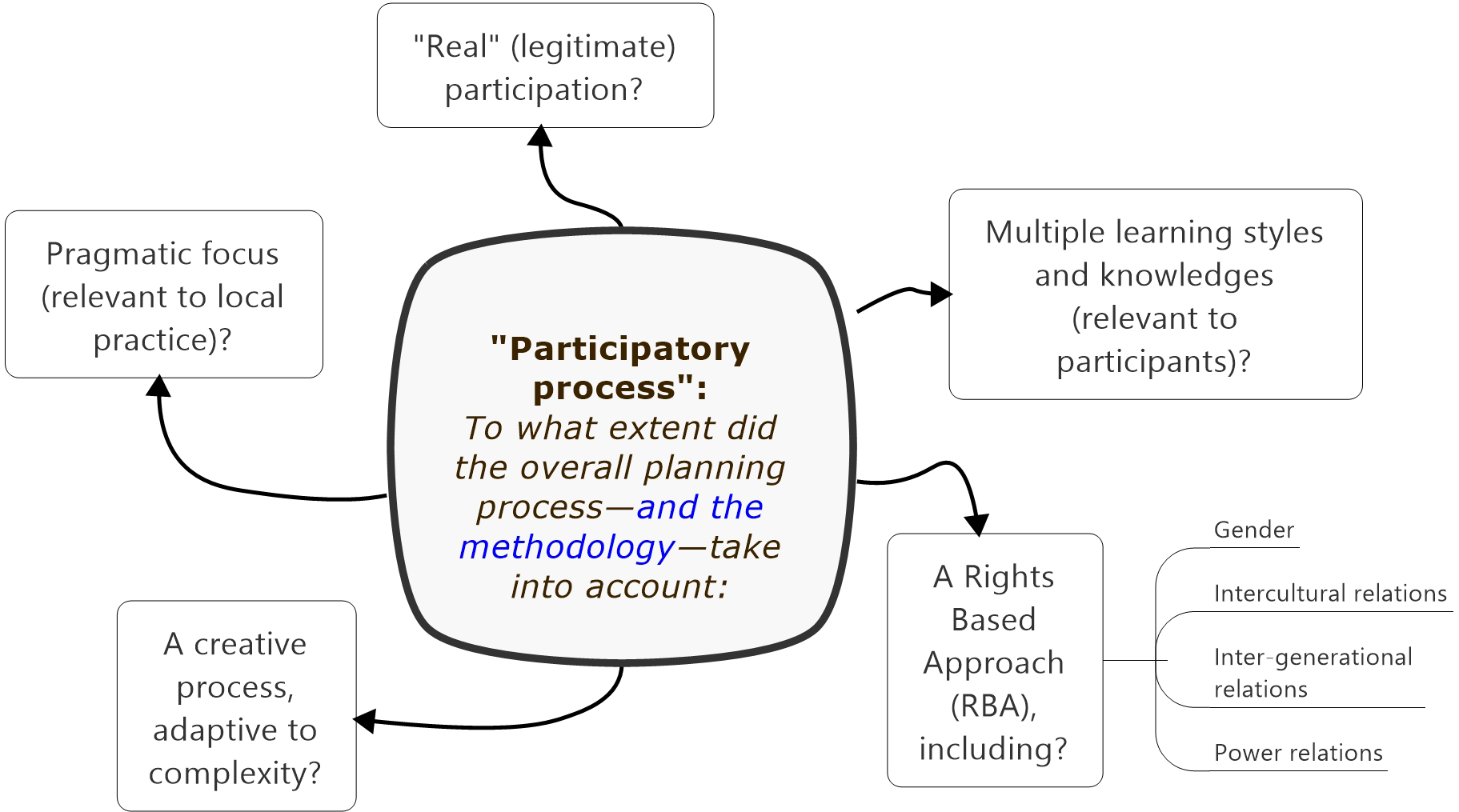
“Magnifying lens” question used in the systematization workshop.
It is important to note that we (the authors) developed this participation lens in the moment, without consulting any specific participation literature. Participants then organized into groups to utilize this lens to critically analyze the timeline they had co-constructed of their experience. This was followed by additional exercises to finalize the systematization workshop, along with other data gathering processes that formed the empirical and analytical basis of the present article.
Based on the analysis of the timeline in Figure 3 and utilizing the “participatory process” magnifying lens presented in Figure 5, we now share two examples of how participation played out in the planning process.
Participatory Mapping Reveals How Diverse Actors Affect the River’s Go
The whole process was very political; to be involved in a critical and committed way to what was happening socially and publically—this bypassed our expectations as NGOs. The theme “some NGOs think we are their property” exploded and became part of the the process—generating critical and self-critical reflections regarding the relationships and legitimate roles that community-based organizations and NGOs establish between them. (P2, Education and cultural rights organization)
What Participants Valued
The systematization process revealed that the active participation of community leaders and representatives of local “base” organizations had fundamentally affected the quality of discussion and analysis in the planning process, and contributed to a rethinking of the relationships between these actors and NGO partners of BD. More horizontal relationships had been developed in multiple directions between national and local NGOs, local actors, and BD. Of particular note was the relationship between NGOs and local organizations and leaders, as some BD partner organizations noted they had subsequently improved their relationships with other local actors with whom they work.
Several participants in the systematization process recalled a key moment that occurred in an early workshop in the planning process when local leaders publicly challenged the larger group (all other workshop participants) in a plenary session by loudly voicing: “Some NGOs think we are their property.” This led to many discussions on the extent to which any organization “represents” its stakeholders, and raised the possibility that this representation may actually be cooptation mostly for the benefit of the “representing” organization. Discussions emerged on how this assumed representation may also be rendering local actors invisible in the eyes of funders and programs that may continue to insist their work with local actors should be managed through NGO intermediaries. This challenge opened to critical scrutiny the relationships between BD copartes (NGOs in this case) and local actors such as rural communities and community-based organizations, including farmer and women’s organizations. Participants also challenged Lima-based NGOs to not think of themselves as “national” representatives, but simply as nonlocal, specialized actors. Local actors were also challenged to think about how they might go beyond local to help shape national advocacy efforts on topics they were knowledgeable about, including how they may assume more leadership in regional and national networks. One result that emerged from these discussions was the self-organization of a body for ongoing coordination on important thematic and territorial issues, thus providing continuity to the BD process.
What Methodological Decisions Contributed to What Participants Valued?
Many political and methodical decisions contributed to important changes in perceptions of and relationships between different actors. Participants noted that creating shared timelines of personal and work-related experience, co-developing power and conflict maps (Figures 6 and 7), and even participating in acts of solidarity together (e.g. occasional protests and vigils) enabled new conversations to emerge that allowed diverse participants to see each other in a different light. Most importantly, however, was that fact that key actors were at the table in the first place. From the beginning of the process, the methodological team (largely led by Rapha) discussed who to invite and decided to invite key grassroots organizations, local leaders, local government representatives, and NGOs—only some of whom were directly funded by BD. Participants noted that the diversity in thought, culture, and worldview that these actors brought enriched the process, even when this caused methodological challenges (and it did!).
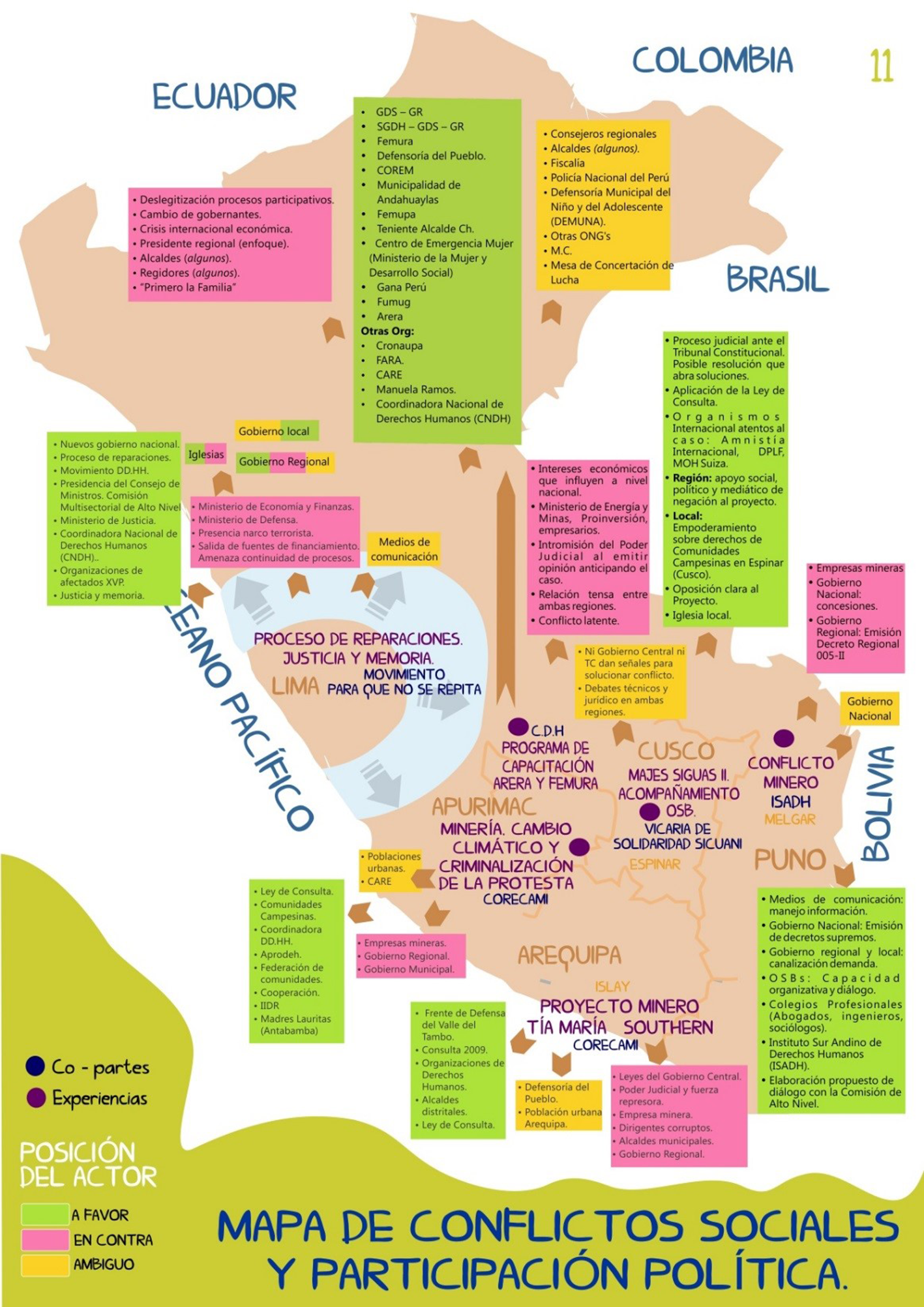
Map of political participation and social conflict.
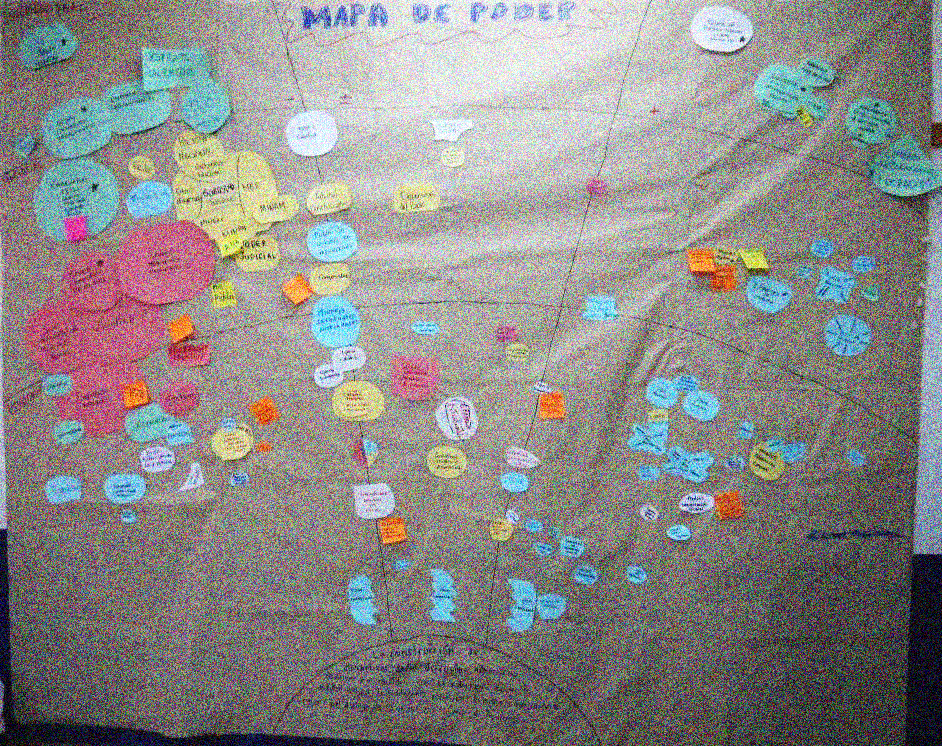
Power map.
Bringing the right people together was central, but participants also valued the methodological decisions to use multiple mapping processes to better understand how we as diverse participants related as individuals, organizations, and broader movements. Comparative mapping allowed for different actors to see themselves in relation to each other and as part of a broader dynamic web of relating between more and less powerful actors (i.e., a “context”).
From Implicit to Explicit Mapping—A Methodological Example
In a workshop early in the process, Juan Carlos and Rapha conducted a simple exercise called “What we do,” requesting participants share on a flip chart subdivided into four quadrants: (a) their main organizational purposes and programs; (b) how they connect with other BD partner organizations; (c) where they work; and, (d) how the people they serve participate in their work. Although simple, the question “where do we work” immediately opened up conversations that located multiple organizations onto a figurative map that participants could visualize as they continued to share. Responses to the question “how do we connect with other BD partner organizations” included “sharing ideas,” “advocacy,” “organizational capacity building,” “coordinating in forums for territorial zoning and climate change,” “as allies in carrying out decentralized workshops,” and “implementing actions… that come out of joint networks,” among others. This simple exercise immediately opened up a conversational map of actors which would become a literal map later in the day. Implicit mapping was one of many relational exercises that continually helped participants situate themselves in relation to other actors and factors in their ecosystems.
In terms of explicit mapping, various literal maps were collectively drawn among different participants in different moments. For example, working groups on territorial zoning, climate change, and political participation and social conflict produced maps of actors who participate in each of these themes, and conflicts that arise from that participation. The methodological process typically entailed providing participants with a key question or two and then providing them with materials (e.g. markers, flip chart paper, tape, index cards, post-it notes, etc.) to create the map in response to the questions. For example, for the map of political participation and social conflict shown in Figure 6, participants were responding to questions such as
What are the main political and social conflicts in your locality and region?
Who are the main actors that are participating in these conflicts (as aggressors, victims, enablers, etc.), including each of us?
What is the main position of each actor in this conflict—in favor, against, or ambiguous?
The tonal differences in the boxes in the map of Figure 6 show different positions of each actor.
As participants constructed these maps, we (facilitators) asked them to situate their own projects and experiences on the maps as well, in relation to each other. This led to comments and questions on the role of people in urban areas in addressing climate change, on what levels advocacy efforts actually work better (e.g., regional government, national government, or civil society actors), on willingness of local governments and governmental ministries (e.g., the Peruvian secretary of environment) to help local causes, and on the absence of international actors on key issues.
Mapping actors based on (perceived) positive, negative, or ambiguous actions revealed similar actors—for example, local governments—playing contradictory roles in different parts of the same maps. This helped participants see the complexity with which they were engaging. For example, in a territorial zoning map, national government actors appear to be directly destabilizing social-change oriented organizations in social movements, allying with private businesses, and promoting an extractivist economic model (all rated negative), even as they facilitate a national process in favor of interculturality and inclusion (rated ambiguous). An overall broad panorama of actors and processes emerged that includes mayors, “narcos” (drug traffickers), honest and corrupt council people (regidores), mining companies and projects, regional governments, NGOs, public prosecutors, mass media, negotiation “tables” (mesas), consensus building processes, and many more. Advocacy successes at the local level appear on maps, while Cusco and Apurimac—the two focal regions for BD—are clearly shown to be affected by national policies and global trends. Climate change, when compared to other topics, does not rise to the priority level desired by BD. Later in the process, participants conducted a very comprehensive power mapping exercise (Figure 7) which was informed by previous maps and which allowed discussion on the strategies that were needed to influence different actors.
Via continual mapping, conversations continued to deepen about how different actors and factors enable and constrain positive, negative (and ambiguous) changes, and which of these actors and factors are more and less susceptible to local and broader influences, including those that each BD coparte brings to bear. Conversations also ebbed and flowed about the relative positions of each actor in a real-life dynamically changing map—a dialog that would last for several more months.
Involving social actors both at the level of convening (i.e., getting them into the room) and inviting their participation through participatory mapping was highly valued, in part because it allowed NGOs to deeply reexamine the way they see themselves and their work, which depends on collaboration with local actors. “We’ve better understood our roles and our quotas of power” (P6, Regional development organization) captures an important realization that emerged through this process. The process opened up new possibilities for collaboration, as roles and perceptions of legitimacy and capacity at different levels shifted. For example, NGO representatives noted that through the process they realized the need to strengthen the autonomy of local actors: “Within our organizations it became a priority to strengthen the autonomy of local organizations—they can walk on their own, generate their own processes, manage themselves as equals” (P3, regional social development NGO).
Some of these changes found their way into the very project designs by copartes, who included activities in their workplans that engaged local community organizations, including seeking their input in the definition of priorities and planning of activities. Copartes also requested and received funding for meetings to create shared agendas and design collaborative interventions with grassroots actors.
Power, Language(s), and Ways of Knowing: Balancing Conscious Design and Emerging Facilitation
I’ll go… A comment… that all the skits have gone in the same direction, no? No one agreed in advance, no one spoke beforehand. Well, actually, all the reflection from the previous days had gone in that same direction. But the themes of gender, violence, language and the fact that local authorities don’t speak the same language. The issue of many NGOs going their own route, and, in many cases, not having a project co-developed with the community, no? But really, how heavy that it seems all skits practically had the same scriptwriter, with a few nuances, of course. (P4, national legal rights NGO, Opening comment after the presentation of skits in the strategy launch workshop, July 2012)
In the previous section, we saw how participation was affected by simple invitation, and then by methods that generated conversation through implicit and explicit mapping processes. In this section, we share how tensions and challenges between intentional and emergent methodological design allowed us to deal and not deal with unforeseen complexities. Although we sought to create conditions for horizontal dialog of knowledges between very unequal actors, at several points of time it became clear to us that we still reproduced many hierarchies or logics of exclusion, which we could only partially address through emergent design and responsive facilitation. The following example highlights this issue.
What are the ‘Absent Themes’ That We’re Not Talking About?
Early in the planning process, over 50 people came together in an important “launch” workshop to create an initial “systemic” theory of change (Ortiz Aragón, 2010; Ortiz Aragón & Giles Macedo, 2010) to inform the emerging regional strategy. Each evening of the 3-day workshop, the facilitation team of 3–5 of us met to reflect on the day’s events and replan the following day (we were 4 males and 1 female on most nights). As we were meeting on the evening of the second day of the workshop, we discussed as a team how we were frustrated that participants were not really talking about substantive issues of gender-based violence, racial discrimination, and exclusion in the rural highlands of Cusco and Apurimac, in spite of the fact that these themes were clearly on the table as part of the workshop agenda, in response to participant requests. For some reason, these issues had disappeared from the collective discussion, even when we had mapped political trends in the region and discussed them in a plenary session. We agreed that we needed to open up a session the next morning to discuss “temas ausentes” (absent themes) in order to confront directly why we as a collective group were not discussing these important issues. Methodologically, we decided we would ask participants to break into groups to design and perform sociodramas (skits) that exemplified the missing themes (Figure 8).
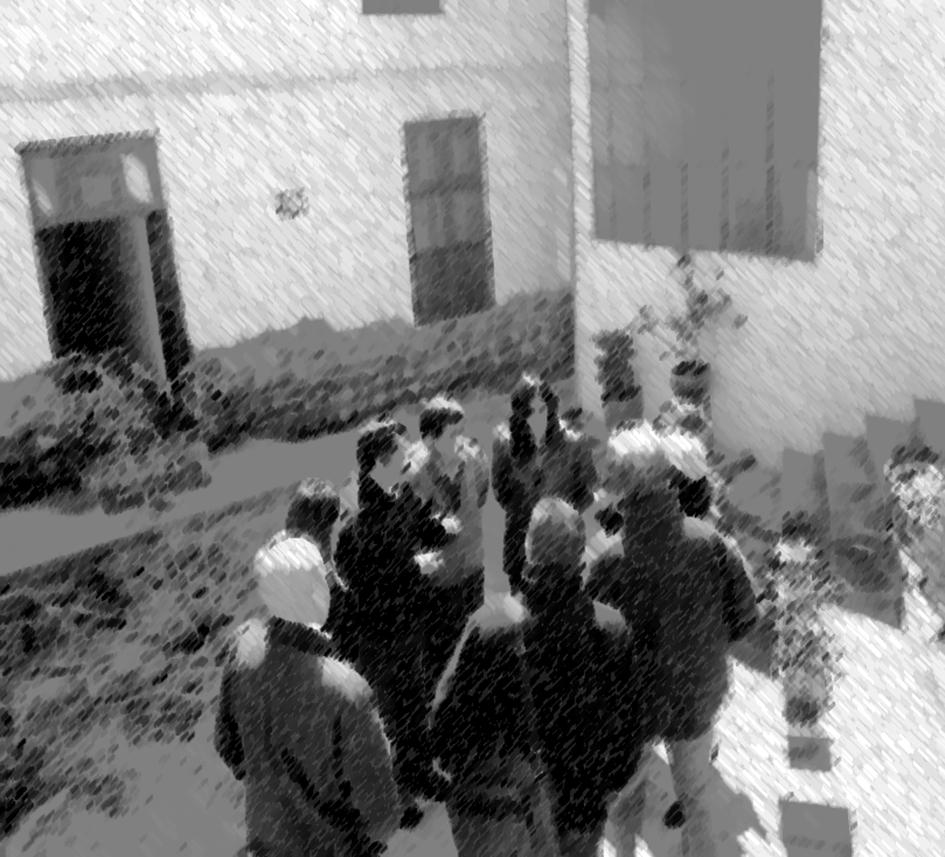
Preparation of the sociodramas.
The following morning the design went according to plan, with the different groups preparing their sociodramas with apparent good energy. When the sociodramas were performed, however, something remarkable happened (as we noted in a later reflective facilitator session). Each of the six groups performed very vivid and animated skits, enacting scenes of women trying to speak up and being silenced in public meetings, other women resisting and insisting on being heard, NGO representatives trying to carry out their projects in clumsy ways, women unsuccessfully or successfully negotiating with their husbands their own participation in women’s solidarity groups, and several difficult scenes of violence or insinuated sexual abuse, as well as issues of racism and discrimination of community members. Some participants who had previously been relatively quiet and unassuming came alive as actors, demonstrating complex behaviors, cultural codes, and interactions that had not emerged in the workshop up to this point (Figures 9 and 10). Even more interesting was that over half of each skit was conducted in Quechua and not in Spanish, in spite of the fact that the entire workshop up to that point had been conducted in Spanish (and we had given no language instructions as part of the exercise). Some skits even used dialog between Quechua and Spanish speakers to dichotomize broader social problems that are often enacted between people of different economic and social classes, many of whom use Spanish and ignorance of Quechua as an instrument of power to reproduce dominant behaviors. After the sociodramas were complete, facilitators Juan Carlos Giles and Alfredo Ortiz Aragón opened up a reflection period that went deep into important “temas ausentes,” including some participants sharing difficult moments, with very emotional expressions.
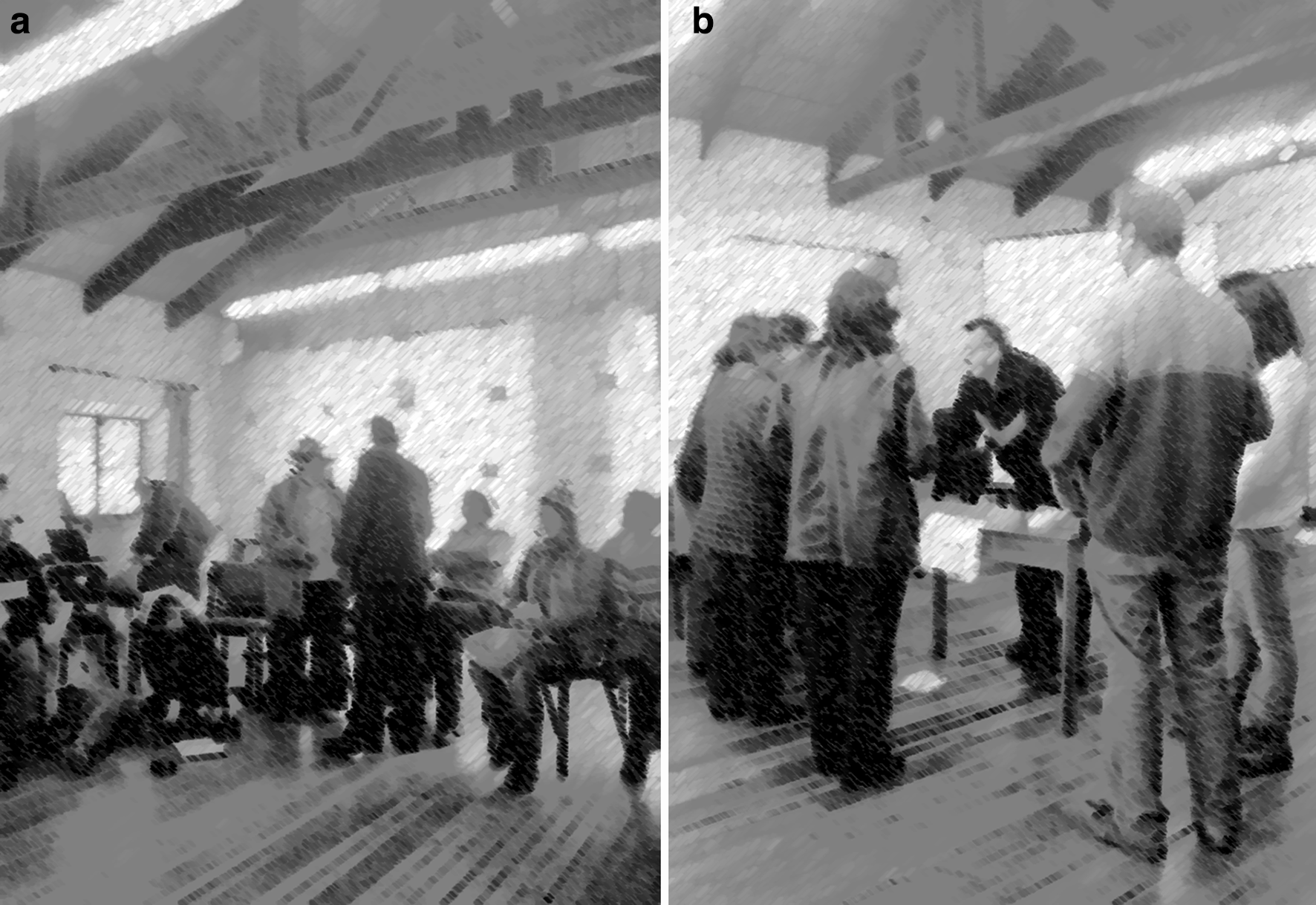
Acting out the sociodramas.
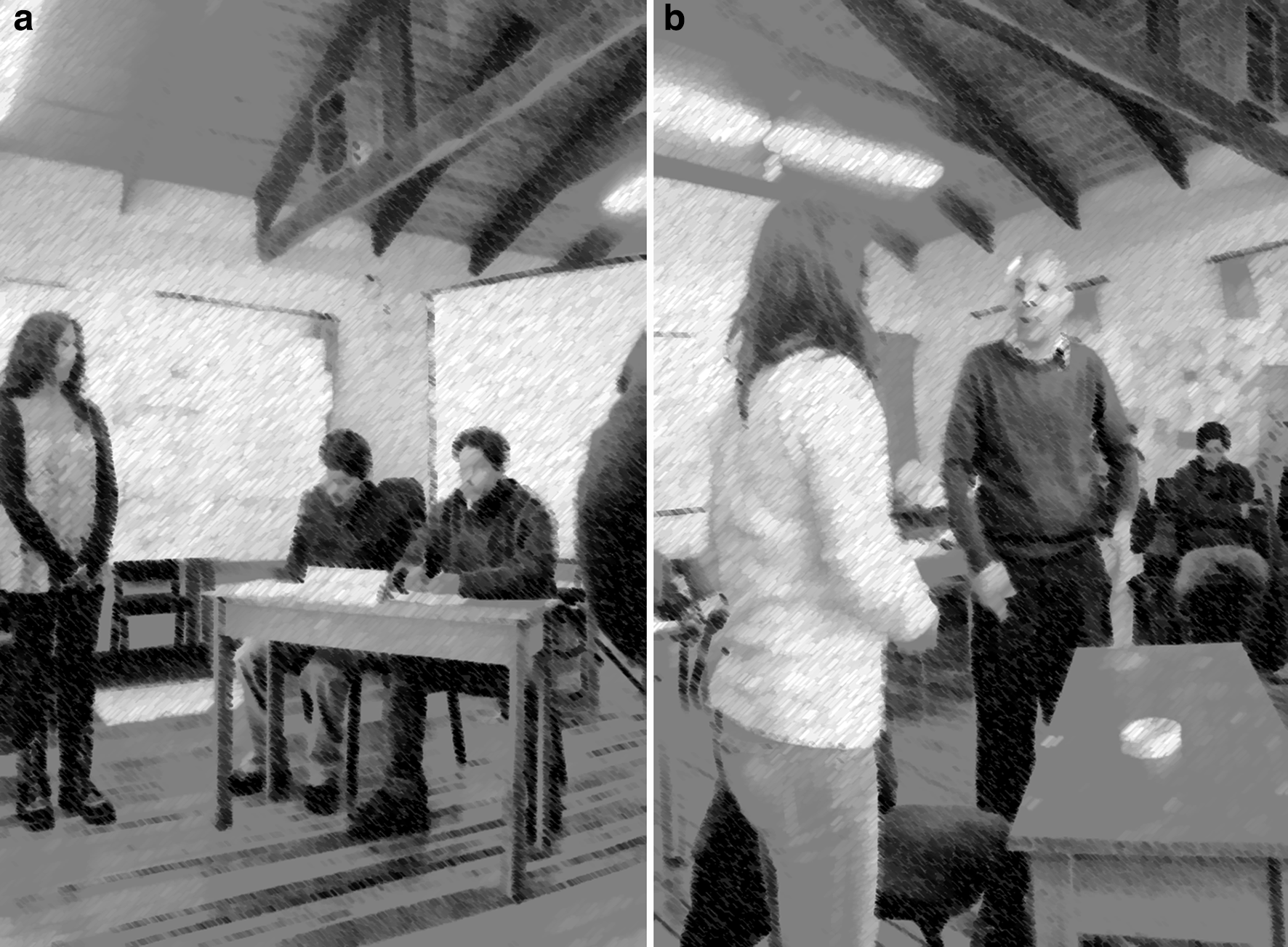
Acting out the sociodramas.
Language and Cultural Ways of Knowing Affect Participation
We share this example to make a simple point. We as workshop organizers had made implicit assumptions about the use of language in the process. Alfredo, for example, assumed that Spanish simply “made sense” for a workshop in Peru, because all workshop participants spoke Spanish. Indeed, Spanish is a common language for those BD participants whose first language might be Spanish, Quechua, or English or Dutch, for example. Our implicit assumption was simply that language was not a methodological issue—that people would deal with this themselves by simply adjusting as needed in Spanish.
But as the workshop space suddenly came alive after 2 days, in Quechua, a language many of us could not understand, it became clear to us how some participants were able to express themselves more effectively from within the persona that emerges in their native tongues. They were able to access and perform gestures, meanings, and behaviors that they had not done up to this point while speaking in Spanish. Population-wide patterns of behavior (i.e., “societal” cultural behavior; Stacey, 2007), including behaviors that actively constrain and exclude women, were not only placed on the table but were vividly presented as evidence through live performance. Certainly, sociodrama as a performative way of knowing contributed to this, but language also clearly contributed as people found their voice, or at least a different voice (Belenky et al., 1997), in Quechua.
Broadened Participation Affects Strategic Intentions and Process Awareness
The diversity present in these previously unheard voices fundamentally affected the overall workshop conversation, and ultimately, the expression of strategic intentions of the BD planning process. At the level of strategic intentions these sociodramas opened up conversations on interculturalism, violence against women, problematic power relationships between local leaders and NGOs, and other themes that were further developed throughout the planning process. “Sociodrama” eliminated rules of engagement that were implicitly present in Spanish, producing evidence that was later used to press for bilingual expression as workshop participants were banding together to elaborate a newspaper bulletin protesting the unlawful detention of a prominent community rights leader:
Just one more thing, regarding [the unlawful detention in] Cajamarca. We… have not been able to translate the pronouncement into Quechua. It’s just that this is not an insignificant issue. I mean, it is a problem if we’re here marvelously speaking so that we can read the pronouncement to ourselves and not the communities. And we have only one or two people who could actually do a good translation. It is a complex issue, but I bring it to our attention because it came out in the sociodramas… You said it just today (gesturing to Alfredo), that it is sad that it isn’t until the third day that we realize the problem we have with language. Well, we’re knocking ourselves out to put out the pronouncement in Spanish and not in Quechua. (P5, Education and cultural rights organization, final commentary of the same plenary)
We (all participants in workshop, led by a smaller committee that wrote the pronouncement) did indeed translate this important pronouncement from Spanish to Quechua. Perhaps more importantly, from this moment on in the planning process, we made consistent attempts to accommodate primary Quechua speakers in different workshop moments, including the decision to use River of Life as presented earlier in this article. In fact, our decision to marry River of Life with Systematization of Experiences was a direct result of language challenges experienced earlier in the process. Systematization is typically carried out in a shared language, which in our case was Spanish. Multiple Rivers of Life, however, can be created in whatever language participants choose, and key lessons can then be harvested for a shared timeline (which we did). After the sociodrama experience, Rapha and other participants committed to moving toward fully bilingual workshops when appropriate, even as we fell short in many ways.
Looking Forward—The Importance of Methodological Strategies for Promoting Ethical, Practical, and Strategic Participation
The How and Why of Participation
The systematization process revealed that the presence and active participation of diverse actors fundamentally affected the planning process, and that the methodology had frequently been effective in targeting and engaging diverse participants’ knowledge, language, and experiences. Participants highlighted how drawings, thematic mapping utilizing icons, developing timelines of experiences, using analytical mind maps, designing mock ups of museums of social change, conducting skits, and many other methods, allowed different participants to share their experiences and knowledges in different ways. We used methods that not only helped actors participate from their unique perspectives but also in languages that allowed for fuller participation.
Many of these techniques have a long history of use in Participatory Action Research traditions, with participatory mapping being the most widely adopted and adapted method (Chambers, 2010). Drawing inspiration from Freirean notions that poor and exploited people are capable and therefore should analyze their own reality, PAR “has sought actively to involve people in generating knowledge about their own condition and how it can be changed, to stimulate social and economic change based on the awakening of the common people, and to empower the oppressed” (Chambers, 1997, p. 106). In seeking participation of economically poor and marginalized people, Chambers explains how facilitators of participatory methodologies discovered certain “reversals” from “normal” professional and research practices were needed in order to really engage people’s knowledge and power (Chambers, 1997). These reversals are
From closed to open
From measuring to comparing
From individual to group
From verbal to visual
From higher to lower
From reserve to rapport, and frustration to fun
Each of these reversals of power seeks new forms of participation under the assumption that open processes, comparative analyses, group construction, visualized realities, power awareness and mitigation, and co-operative commitment and engagement might lead to better knowledge in support of “good change” (Chambers, 2004). As noted in our introduction, this was in fact Rapha’s declared intention upon initiating the BD Peru strategic planning process. So how did we do? To what extent was the process strongly participatory, and what difference did that make?
How Did and Didn’t the Planning Process Generate Ethical, Practical, and Strategic Participation?
Our systematization lens (Figure 5) asked this very question of our shared rivers of life, with ideas that track very closely to Chambers’ reversals, both in content and in their focus on the “how” action researchers engage people and sometimes achieve co-participation and co-research. We now use Chambers’ reversals to critically examine how participation played out in our process, recognizing that each of the “normal” states can also be useful depending on context (Cornwall, 2008). In our analysis, we occasionally refer back to ethical, practical, and strategic motives for participation shared earlier in Figure 1.
From higher to lower—Broad convening of actors across hierarchies of power
In Chambers’ view, this reversal signifies a move from overvaluing and enacting social, economic, and cultural hierarchies, to seeking ways to enable freer flow of expression across hierarchies. This may include working on the ground to mitigate heirarchical power differences (Archer & Cottingham, 1996) (Figure 11), insisting on examples from real life that anyone can contribute, rather than abstract analysis where academics may dominate (Ortiz Aragón & Giles Macedo, 2015), using visualizations, starting from people’s experiences, and opening design choices to participants.

Participants creating a timeline on the ground.
Moving from higher to lower clearly fits within ethical purposes for participation, because as action researchers we cannot argue that our work is meant to help people unless we enable them to be involved. Our decision (led by Rapha) to broadly convene not only traditional NGO partners but also grassroots and local leaders, addressed ethical rights to participation, even as the implicit purposes were also strategic. Broad convening of actors was practical as well, as participants expressed ownership of the process and its results, in large part due to their active involvement. Finally, in addition to broad convening of actors, we utilized multiple methods that allowed people to communicate across hierarchies, including the examples shared in this article.
From individual to group—“Controlled” clashes of ideas across actors
This reversal implies a shift from thinking of knowledge as primarily located in “individuals” and accessible through interviews, to thinking of knowledge as emerging through shared lived experiences in which “group members have an overlapping spread of knowledge which covers a wider field than that of any single person” (Chambers, 1997, p. 148). Convening a more diverse group of actors is only of use, however, if their diverse knowledge is brought into creative conflict that moves from individual to group knowledge. Participants noted that the BD planning process allowed for collective construction of ideas and feedback mechanisms that allowed them to recognize strengths and weaknesses in relation to each other. As one participant noted: “We were able to see that suspicions, tensions, fears, and prejudices would not be solved through discourse alone, but rather through personal interaction and coexistence—it does matter that you get to know someone and generate relationships of confidence” (P1, Human and ecological rights organization). Through the process, some participants expressed that they had become more tolerant, confident, and had learned how to see and hear each other better.
The idea of individual to group expands higher to lower thinking from an ethical to a strategic realm, by challenging action researchers to go from siloed to connected—from self-referential to ecosystemic thinking. This is because higher to lower thinking may not always be strategic, as a focus on excluded groups may not engage key knowledge holders that exist across hierarchies of power and privilege. In our process, we chose to limit participation of other system actors from government or private sector (including antagonist) perspectives, in part so that we could get on the same page with actors with whom we would most intensely engage. We are left with an open question on what was lost by not engaging more powerful, system-level actors.
From verbal to visual—Epistemic participation to engage multiple ways of knowing
Both higher to lower and individual to group assume that participation is achieved not only through convening of those most affected by the action research process, but through methodological processes that enable freer flow of expression across social, economic, and cultural hierarchies—that is, epistemic participation (Heron, 1996). This includes the use of “practical, conceptual, imaginal and empathic forms of knowing among… knowers, and the cultivation of skills that deepen these forms. [Epistemic participation] …sees inquiry as an intersubjective space, a common culture, in which the use of language is grounded in a deep context of nonlinguistic meanings, the lifeworld of shared experience, necessarily presupposed by agreement about the use of language itself” (Heron, 1996, p. 11).
In the BD process, we learned how language and power are deeply intertwined, even in a space in which (almost) everyone advocates for a bilingual society, against racism and discrimination, and in favor of indigenous culture and language. Questions of “whose knowledge counts” are perhaps even more pertinent in contexts of significant cultural differences, where power dynamics are rooted in contemporary reproductions of the “coloniality of power and knowledge” (Lander, 2000; Quijano, 2000) that privilege western, modern, professionalized, and academic knowledge over other forms of knowledge rooted in indigenous, afro-descendant, peasant, female, and popular experiences. Particularly in the international development sector, this has led historically to the formulation of programs, projects, and strategies based on universal concepts and recipes instead of local knowledges, resulting in many failed interventions (Escobar, 2011). To attend to any of these three motives for participation first requires acknowledging the existence of an ecosystem of different knowledges (Sousa Santos, 2006) that needs to enter into participatory dialog for effective strategy design.
Even in a space that was aware of and valued these knowledges, without clear indications on language use the plenary sessions acquired a power dynamic that occasionally silenced Quechua and imposed Spanish as the dominant language. The sociodramas, without particular indication on which language to use, had a different power structure, in which Quechua emerged “naturally”—affecting and transforming the entire subsequent planning process!
Discovering issues with language and power was due to ongoing methodological moves from verbal to visual which extended epistemology more broadly to encompass multiple ways of knowing and learning. This move, we believe, is central to all three purposes for participation. Whereas broad convening may bring people to the table, creating spaces and modalities that allow them to share what they know, and express, exchange, and construct their knowledge with others on equitable terms, is clearly an ethical issue. This is also key for generating buy-in (practical) and for generating larger scale knowledge flow across a wide and diverse range of key stakeholders (strategic), which is also key for moving from individual to group knowledge construction.
Even with unequal conditions in the use and understanding of languages, both with regard to our “technical” process language and also to the literal reliance on Spanish, many participants noted that the tools and methodologies that were used in the BD process were creative and new to them, and allowed people to use their own expressions and participate by drawing from their own experience. Reflections on limitations in the use of Quechua led to an initiative to favor Quechua more when possible, as well as to highlight the strategic significance of this and other intercultural issues in the overall BD strategy. As a matter of policy, the spaces in which the BD program engaged (beyond this process) became more bilingual, in part due to the emergence of these bilingual needs in this process.
From measuring to comparing in the co-construction of knowledge
This reversal signifies a shift from seeking correct and measurable answers in a search for “the truth,” to quickly comparing knowledge for purposes of learning for improvement—a shift from an ontological “what is reality?” to an epistemological “how do we find out and improve” stance (Chambers, 1997). We find it interesting how through mapping exercises each participant was obliged to situate her/himself in relation to each other—other allies and local actors, other geographical spaces, and other types of programmatic focus and action. The implicit message that was sent by virtue of these methodological choices was clear (although not necessarily clear to the designers at the moment): Our purposes and programs—our organizations—exist in a world of actors with similar and different needs and in different and similar geographies. For a regional planning process, it is important that we see ourselves in relation to each other (and other actors), and not in a self-referential manner. This shifted the focus from finding right answers to seeing each other on the same map with some similar areas of concern and shared interests. Although the maps had “ontological” value in recording the presence and actions of real actors on a map, their main value was epistemological—to generate deep conversation and learning, and individual to group co-constructed knowledge.
From a participation perspective, the implicit message was that each actor needed to bring their personal and organizational identities into the process to figure out who they are as they relate to others in a broader world of actors and factors. Perhaps we wanted to engage in strategic dialog more than strategic planning per se—as sustainable responses to key challenges would depend on the ability of each actor to sustain dialog and collaborative action with others in the future. By obliging each participant to situate themselves (their organizational and individual identities) as actors with power, a platform emerged on which each actor could participate with not only their presence but also their knowledge, and in the process influence an emerging regional funding strategy. This was possible by virtue of key knowledge holders being at the table and having myriad options for sharing their experience to generate meaningful, sometimes strategic conversations.
From closed to open
This reversal implies a shift from high levels of structure, predetermined questions, and expert or best-practice-defined categories, to more open inquiry that allows for probing, emergence, pursuing leads and serendipitous discovery, and local, more relevant categories and questions to emerge (Chambers, 1997). Having the ability to move from closed to open is clearly an ethical question because if people are invited to participate, yet are provided with right answers through predetermined purposes, or “facipulated” (manipulation disguised as facilitation) into addressing only the conveners’ agenda, or expert opinions, their voices are not really being valued. Closed to open is clearly a strategic issue as well, as there is no purpose to convening a broad range of diverse stakeholders if processes are not open enough to allow their diversity to take shape and enter into debate and dialog with others.
Participants in the process highly valued how the methodology allowed for multiple shifts and adaptations to the context in the moment. At one point, we suspended an entire morning workshop to work on the pronouncement denouncing the unlawful detention of the activist mentioned earlier. In separate reports to BD and to the participants (not publicly shared), we shared multiple examples of how participants valued the epistemological value of the methodology—that is, its ability to initiate important conversations and follow them where they lead. These same participants reported having subsequently replicated many methods in their own work with local partners in the rural areas of Cusco and Apurimac: “In Abancay, each local partner used theatric means to show what they wished to achieve in their projects in a given period. This type of methodology has allowed us to completely change the project from our initial ideas about what it would focus on” (P6, Regional development organization).
At the same time, closed to open is not optimally efficient (and thus not always practical), because emergent processes can lead down paths that may be hard to follow, and can generate annihilating anxiety for highly structured people. Some participants felt the process was too long, the language was too dense, and the methodology was too repetitive. Even as we explained that the methodology intentionally involved “successive approximations” to the issues (Ortiz Aragón, 2013), one participant craftily reworded the concept as he explained…: “It’s true that we can arrange another workshop with similar characteristics, and even better ideas are going to emerge and that will be rich. But there were ‘excessive approximations’ for the reality of our organizations. Repeating will produce more, but the problem is availability of time, and the urgencies we all have” (P5, Education and cultural rights organization). We are left with the dilemma of how best to achieve depth and follow emergent leads (open), while using more rigid planning and predetermined categories and containers (closed) that allow for a more predictable and efficient process (which is certainly needed sometimes). We consistently erred on the side of “open” in this process.
From reserve to rapport, and frustration to fun
This final participation reversal assumes a shift from an assumption that external facilitators or researchers are trusted and welcomed, to an assumption that trust and welcoming emerge when facilitators and researchers “put ourselves into the picture” that we are trying to improve. This implies opening ourselves up through shared participation to new cultural experience and empathetic connection with people, including finding humor in the occasional absurdity of our contradictions!
The planning process included many moments of eating together, participating in protests at key moments, and sharing elements of our personal and collective identities and cultures, including in responding to the political developments surrounding our meetings. Many participants remembered a final exercise in which each participant donned a cape made out of flip-chart paper, on which which others then wrote personal messages that reinforced “los lazos de amistad” (the bonds of friendship) many of us had created with each other—above and beyond the task at hand.
Conclusion
The underlying goal of the planning process shared in this article was to shift planning, decision making, and evaluation practices in the program downward, by strengthening participation of local communities and social-change oriented organizations in the process. Because the final funding strategy was directly based on the co-constructed systemic theory of change, we can say that we were successful in this regard. Within the process itself, we shared how the use of creative, reflective “participatory methods” enabled and constrained participant knowledge and identity, which led the main facilitators to make important changes to the methodology along the way. Some of these adaptive methods did “speak” to learning styles and ways of knowing of different participants, and therefore, increased their levels of participation and ownership in the process and program. Yet, although we continually opened spaces for discussion about the methodology during and after workshops, we recognize that the methodology was very intentional and controlled by the facilitation team. We were very open to adjust the methodology and BD funding priorities based on emergent issues, demands, and inputs by participants throughout the process. But we were not open to changing the principles underpinning the process that are explained in this article. It remains a question what would have happened if we would have opened up the discussion on deciding what methodology and specific methods to use at different points in the process. Although participants significantly valued the methodology by the end of the process, 2 we are left with the question of when and in what ways the process could have been developed in a more participatory way, recognizing that many times participants might prefer processes that develop according to epistemologies based on privileged and more structured knowledges.
We end this article with additional quotes from participants in the systematization workshop, shared after hearing the performance of Javier Heraud’s “El Río” poem by two other participants. We hope this highlights the relational nature of participation, and brings us back to the River of Life, which sustains us all.
A river of blood is taking the young boy from Tambobamba. Mining has become a major threat and those transparent, crystalline rivers are becoming rivers of blood, because mining succeeds at the expense of the pueblos and our fight against contamination. (P7, Association of cities and towns)
The river represents a social and political process with various elements and landscapes; it describes truncated processes. The river’s force helps us advance and converge…, as the other rivers have to find their way to the sea, to a calmer moment, where all ideals combine into something much stronger. (P8, Human and ecological rights organization)
The river is part of life; through the river we express what each person, institution or organization actually does, with happiness and problems. After being stuck in an eddy we are able to break free and life goes on…, with new challenges. (P9, Regional development organization)
The river is part of our life, just as the organization emerges from us as we face bumps in the road. We have a river called Belille and we feel for that river, even though many people don’t understand contamination, and that all of the species that depend on the river could disappear… (P10, Local community leader)
The poem relates to the work we do. When the river is interrupted by a landslide it doesn’t just remain stuck. It infiltrates the soil underneath, or it finds new pathways…; it keeps going forward. (P11, Education and cultural rights organization)
Footnotes
Declaration of Conflicting Interests
The author(s) declared no potential conflicts of interest with respect to the research, authorship, and/or publication of this article.
Funding
The author(s) received no financial support for the research, authorship, and/or publication of this article.
Notes
Author Biographies