







Abstract
This visual-verbal essay is a modified version of the script for a virtual performance that I did as part of the “Scholarly Reading Practices” session at the ICQI conference in May 2022. It is a work of “autotheory” (McCrary, 2015) that explores the literacy and cultural implications of my mother’s acts of editing my childhood books. I treat the script and its visuals, now absent of performance or verbalization in the context of that panel, as an invitation for future performances by other scholarly readers who might relate to this content. The essay, in short, moves the script initially intended for the author’s performance at a virtual conference into an offering for any scholar who reads, or any reader who scholarizes. This is a laughing abstract, trying hard not to split its sides out of respect for the conventions of its form. This abstract is already falling apart. The author worries it is no longer an abstract and now part of the piece. Having turned to third person out of fear she may not be read seriously by her reader, likely a scholar, she ends here.
Keywords
Introduction
When I was a child, it was common for my mother to edit my books—usually with Sharpie markers, pencils, and stickers—to make them more feminist, more Jewish, and less American. An Israeli feminist critical of U.S. gender dynamics and white Christian normativity, she would often intervene in my children’s books to reflect the world she wished for her daughters: a world where women propose to men and church crosses are rung dry of signification, meaning nothing more than the letter “t.” I consider how my mother’s pissed-off refusal of patriarchal, Christian norms—a refusal physically interrupting those children’s books—affected my reading practices as an entangled scholar, writer, and artist. In this experimental piece, I theorize her parental interventions as inciting a literacy that “talks to the hand” (with the hand) in collaboration with a text that, by nature of being a text, performs its own historical narrative. I perform this theory of reading as active refusal through textual interventions, the photographic documentation of which I weave through the text. 1
What follows is meant to be read aloud, whether that be by me (the author) and/or by you (the reader).
*
I begin again at the site of my textual emergence. An emergency, in my mother’s eyes.
*
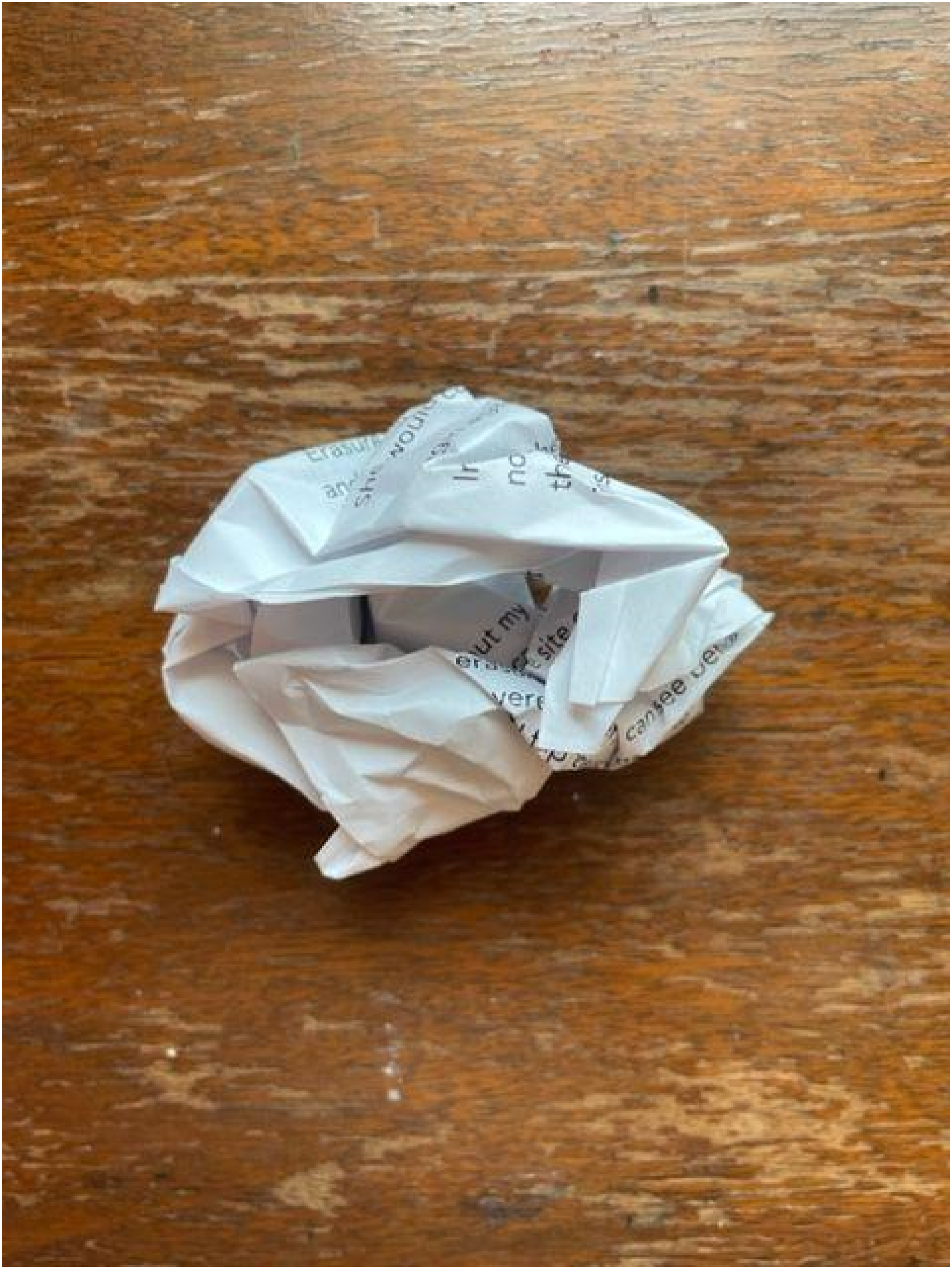
My mother arrives at the site of my reading as what artist Eyal Sivan 2 (1991) calls a “slave of memory”—or, the doing of Israel onto its citizens: Never forget. And all violence in the service of a state that remembers. A nation that builds soldiers perpetually haunted by the trauma of the Holocaust and years of pogroms and exile. A nation of people enslaved to a memory that sustains them as a people, that defies erasure.
*
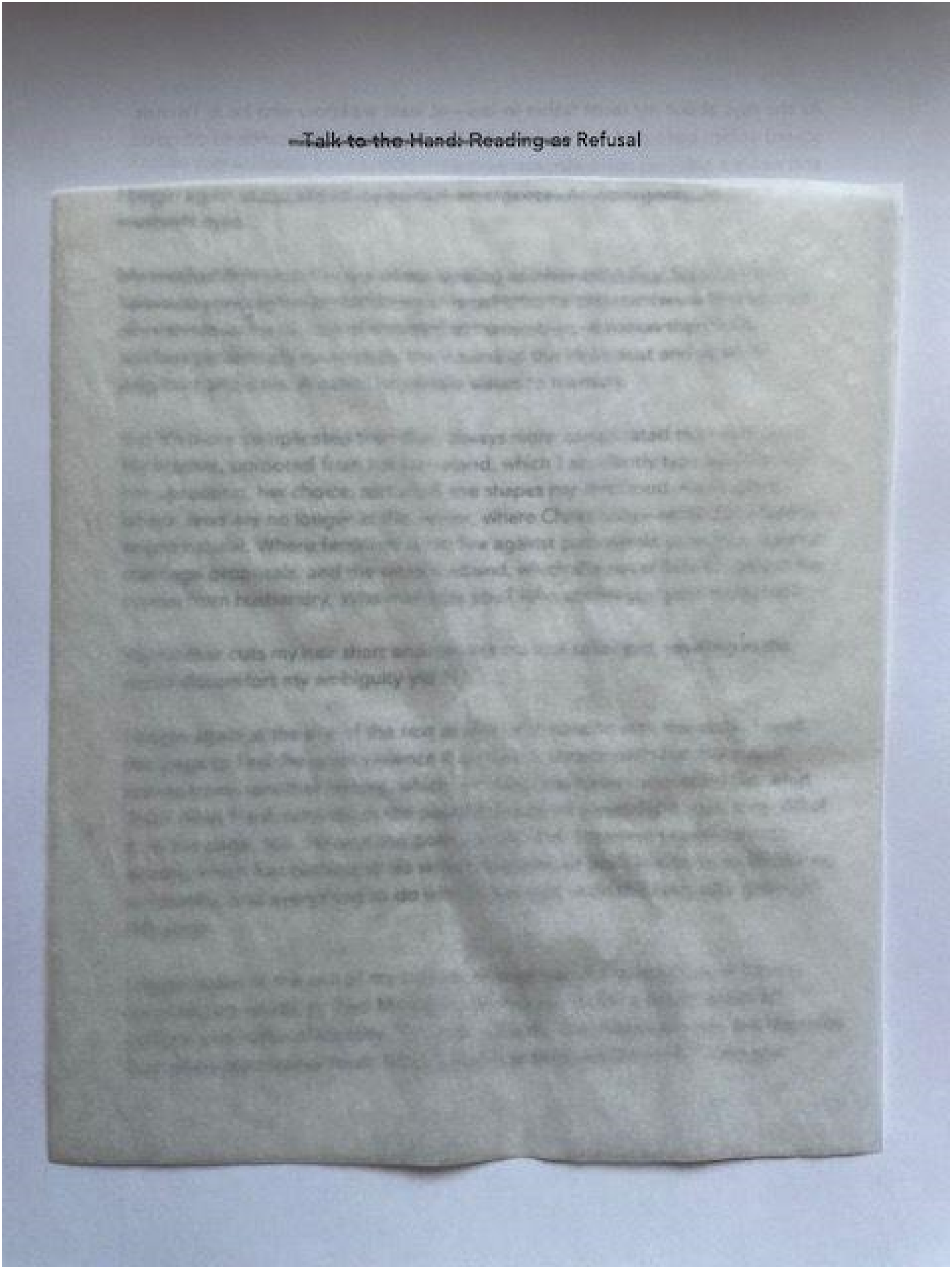
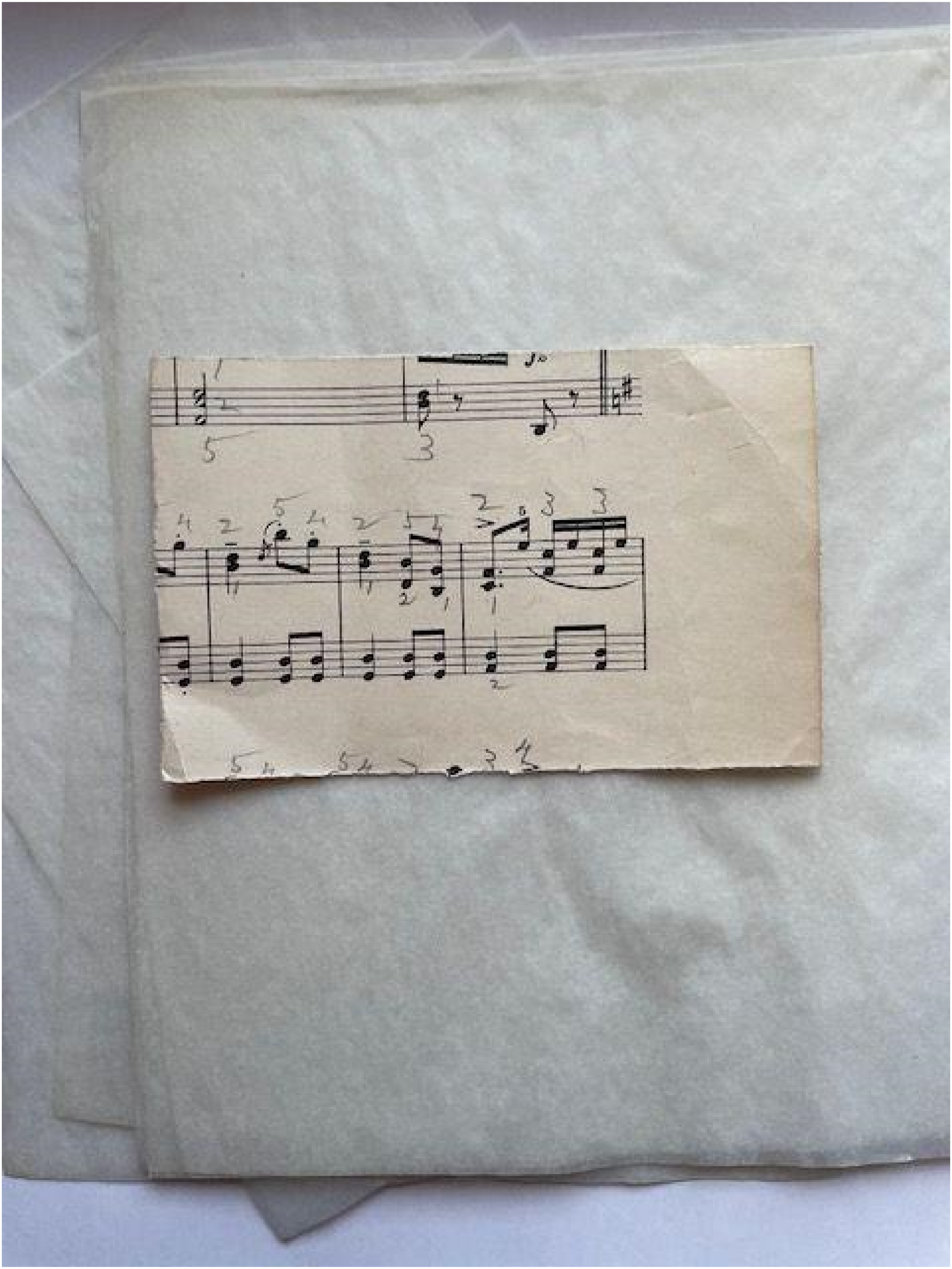
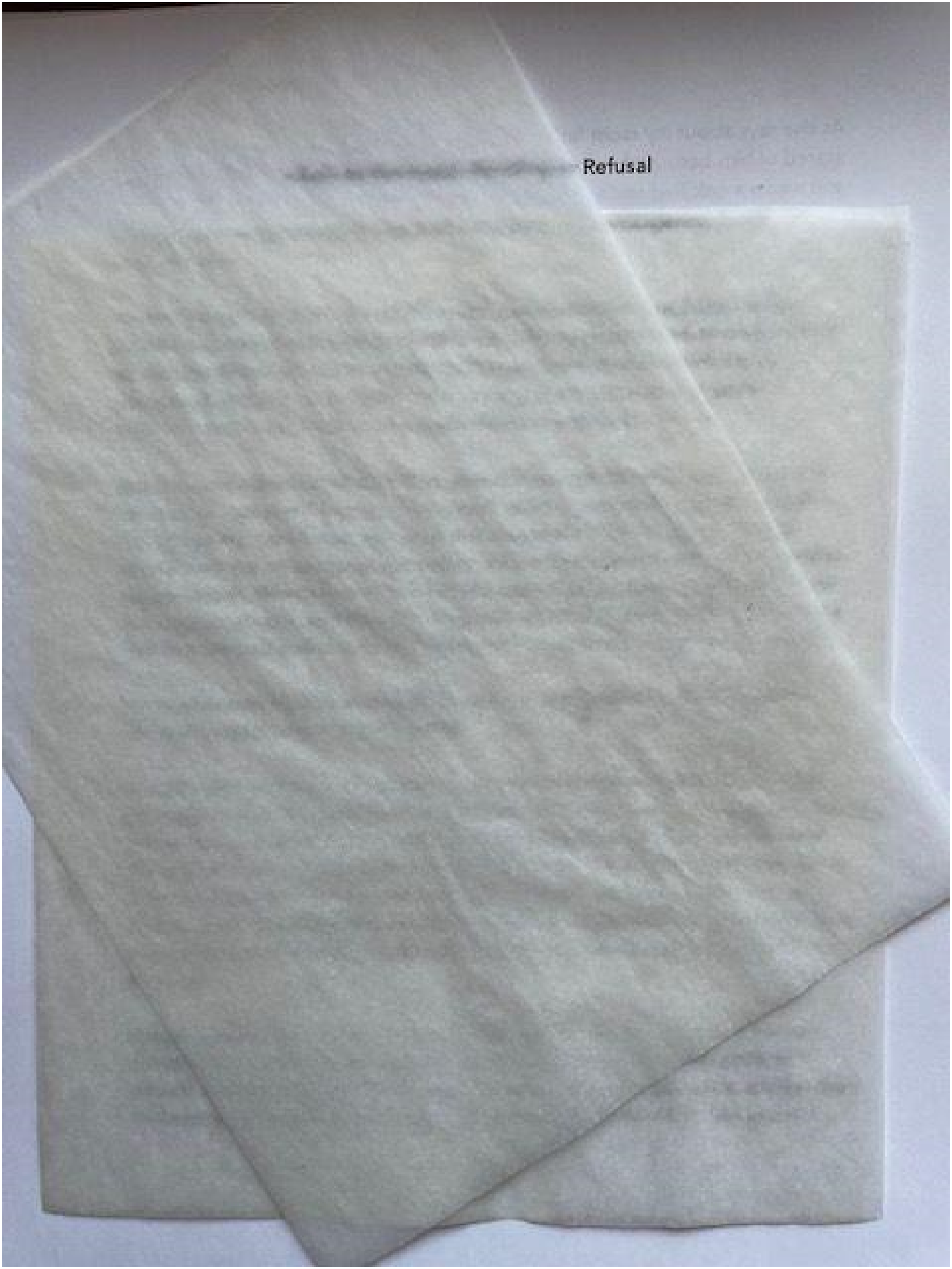
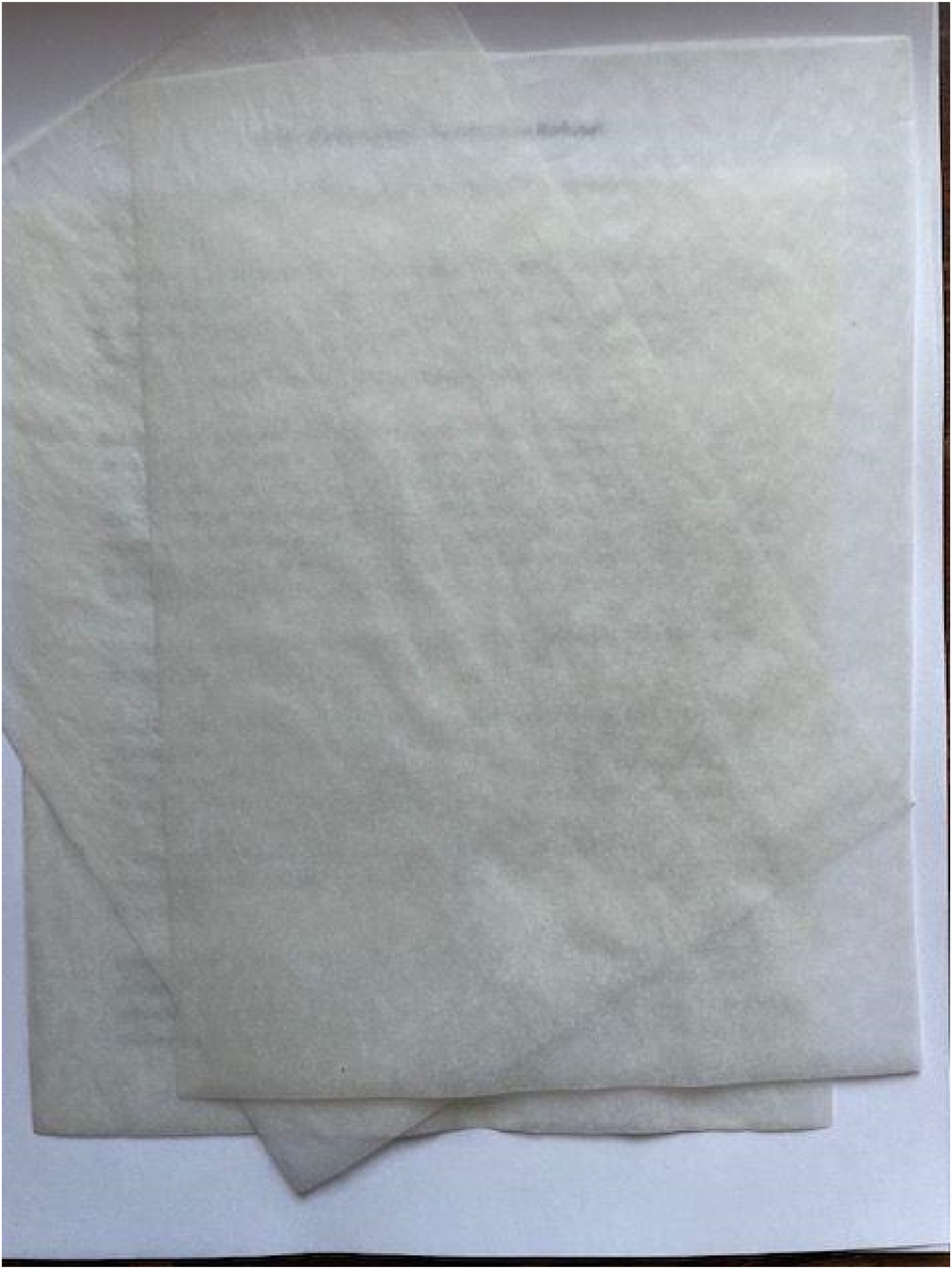
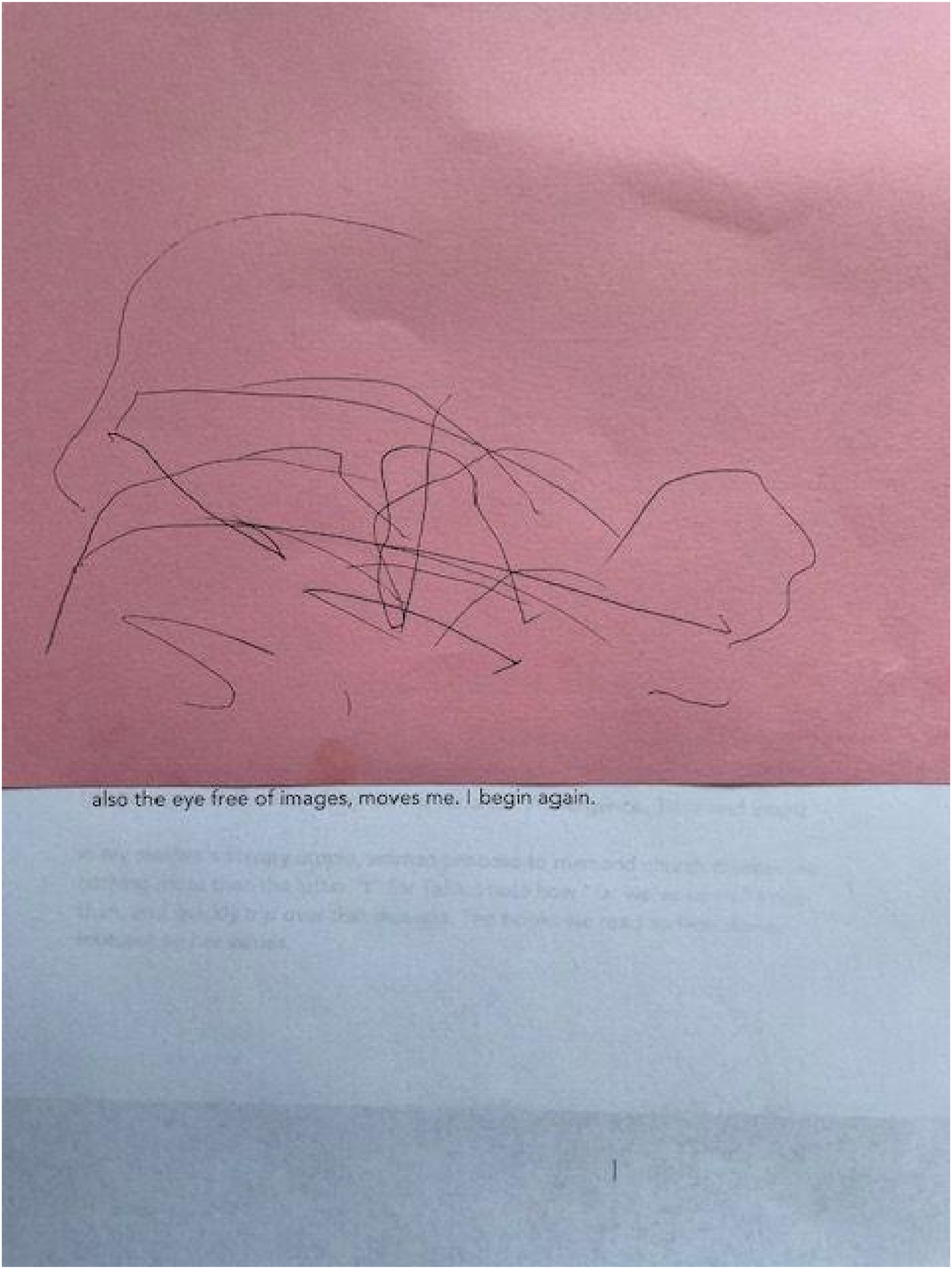
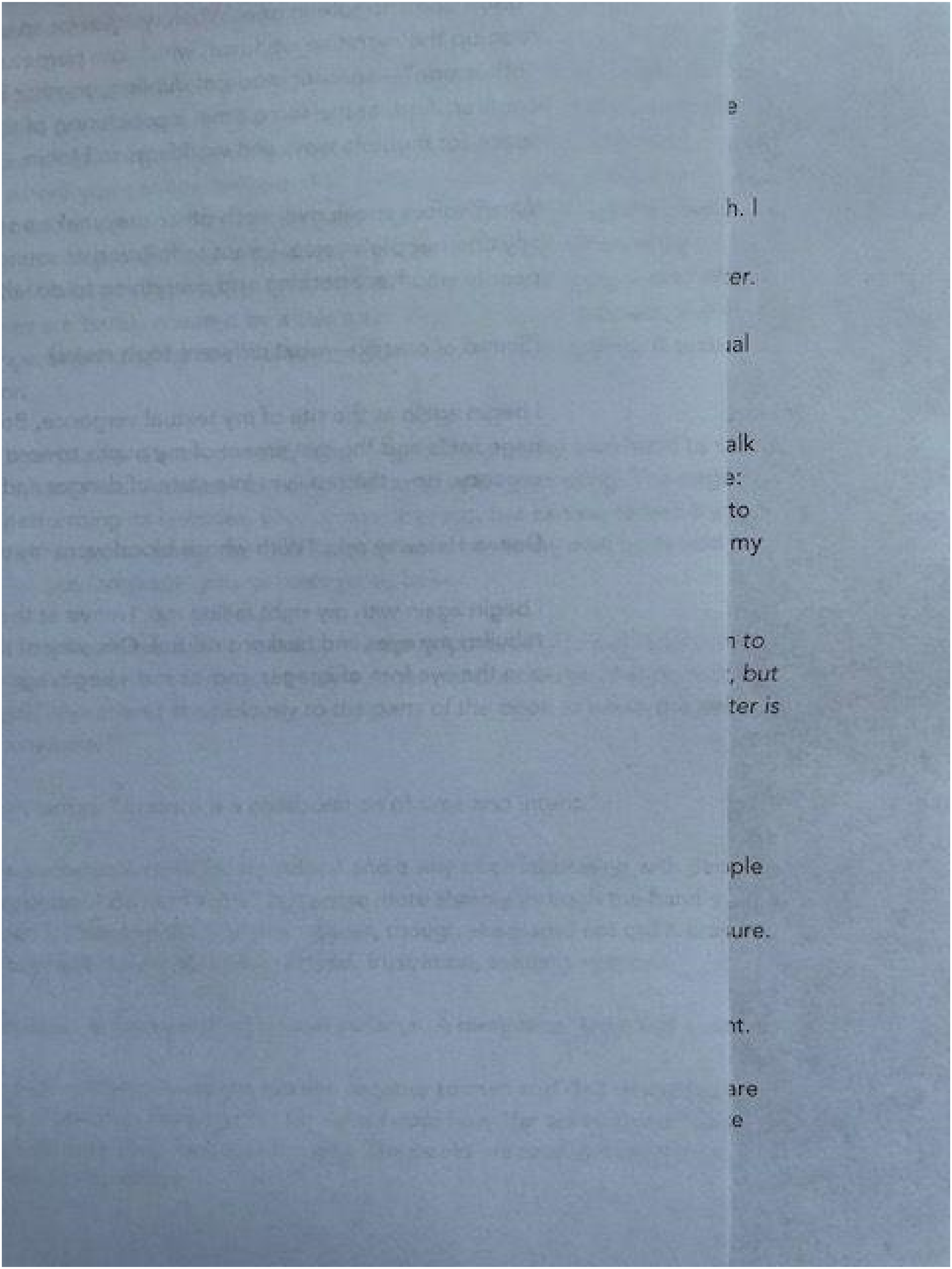
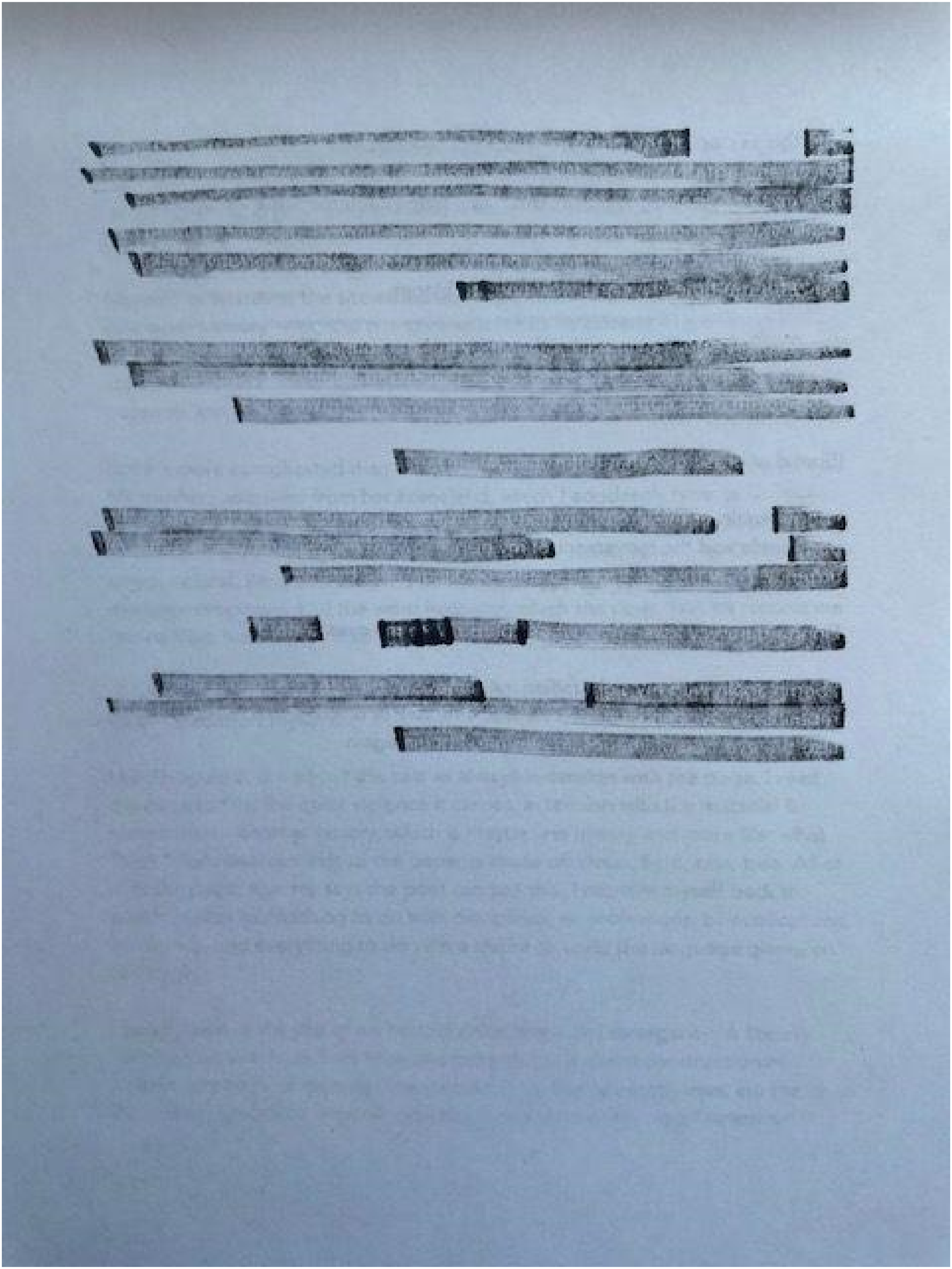
But it’s more complicated than that, always more complicated than one place. My mother, uprooted from her homeland, which I accidently type as upland—her uprooting, her choice, sort of, and she arrives to shape my childhood in a country where Jews are no longer at the center, where Christianity—white Christianity—reigns natural. Where feminism is her fire against patronymic promises, against marriage proposals, and the word husband, which she never fails to remind me comes from “husbandry.” Who manages you? Who denies you your humanity? (Figures 1–9). First Act. Second Act. Third Act. Fourth Act. Fifth Act. Sixth Act. Seventh Act. Eighth Act. Ninth Act.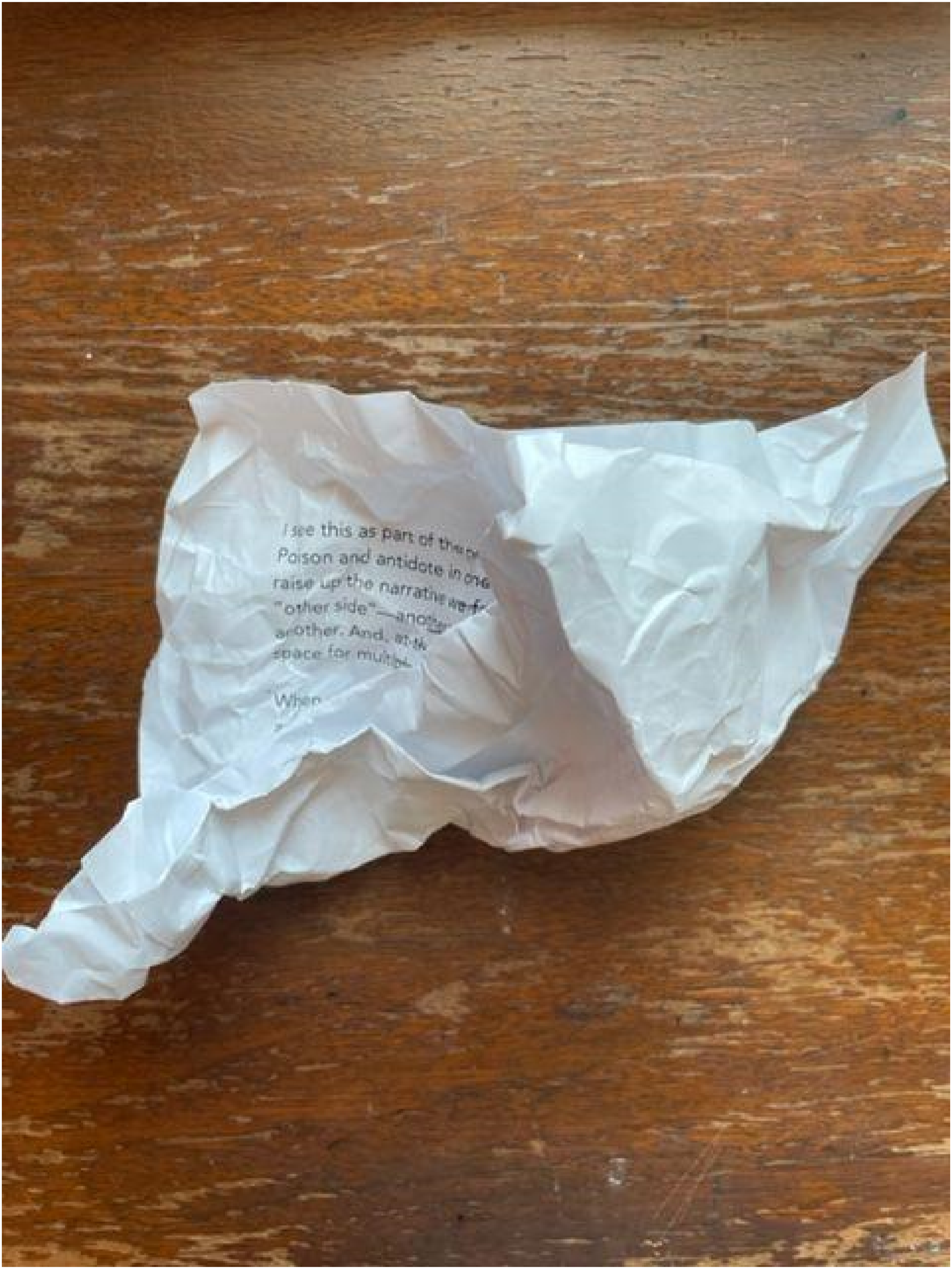
*
My mother cuts my hair short and dresses me in a sailor suit, reveling in the social discomfort my ambiguity yields. 3
*
I begin again at the site of the text as always-in-tension with the page. I read the page to find the quiet violence it carries, in tension with the material it comes from—another history, which is maybe less history and more life: what Thich Nhat Hanh reminds us the paper is made of: cloud, light, rain, and tree. 4 All of it, in the page, too. He says the poet can see this. I reorient myself back to poetry, which has nothing to do with disciplines, or professions, or publications, or identity, and everything to do with a desire to undo the language given, on this page. To see what came before and comes-with this thing I read. A refusal to forget.
*
I begin again at the site of my textual emergence. An emergency. A literary construction which, as Toni Morrison reminds us, is also a construction of cultural and national identity. A construction of language, racialized, coded, and always entangled with our senses of humanity. 5 The cutest books, the sweetest ones, are the ones that worry my mother most. Maybe because they are the most “American.” As she says about a racist relative—at least we know who he is. I’m not scared of him because I can see him. It’s the woman who believes she’s innocent and doing good and who wears a calcified smile who scares me. Who are you?
*
I begin again at the site of my textual surgence. An emergence. Here, my mother edits my children’s books with Sharpie, pencils, and stickers to make them more of the world she wishes for her daughters. Her redaction, an erasure, where you can see beneath that something has been erased, or covered over, or crossed out. 6 I could peel away the sticker to see the church. I could flip the page over to see what traces of words she’s blackened by Sharpie: Mr Mouse proposed to Mrs. Mouse and they lived happily ever after. Some lines are barely covered by a thin scrim of pencil lead—a teaser, like sheer lingerie pretending to cover what’s there by way of revealing. A textual seduction.
*
I begin again at the site of my textual agency. A lifting of my own hand to talk back to what I read. A refusal to accept the page as a given thing. The page: always performing its histories, which I cannot grasp, but can sense and try to tend to with my own body, my own hand, which is never my own body and my own hand, but language, you can only go so far—
*
Robin Coste Lewis writes: “As readers, it is our responsibility to pay attention to everything in a book—not only the way a writer wants us to read her project, but we should also attend scrupulously to the parts of the book to which the writer is wholly unaware.”
She then writes: “Erasure is a collaboration of time and intent.” 7
Erasure becomes a force for my refusal and a way of collaborating with people and processes I do not “know” but sense more sharply through the hand’s movement. I learned this from my mother, though she would not call it erasure. She would call it survival, power, refusal, frustration, and seeding agency.
*
I begin again at the site of my textual variance. A mergence. Time and intent.
*
In my mother’s literary utopia, women propose to men and church crosses are nothing more than the letter “t” for Talia. I note how “far we’ve come” since then, and quickly trip over that thought. 8 The books we read surface stories insistent on her values.
I see this as part of the problem and the solution. Derrida’s pharmakon 9 , maybe. Poison and antidote in one. When we disrupt an existing narrative, we do so to raise up the narrative we favor, which can perpetuate the same action as the “other side”—another mode of dualism, another binary—one voice talking over another. And, at the same time, a puncturing of the existing narrative makes space for multiple ways and worldings to bloom.
*
When voices speak over each other they make a sound. That sound is no longer any one people’s voice. I want to follow that sound because it leads me to people who have nothing and everything to do with “my people.”
*
{Sound of erasing—what different tools make}
*
I begin again at the site of my textual vergence. Both the direction in which the page folds and the movement of my pupils toward or away from each other. An urgency. How the sea lives in a state of danger and beauty. 10
*
Donna Haraway asks, “With whose blood were my eyes crafted?” 11
I follow her question with my own eyes, making a mouth of my mother.
*
I begin again with my sight failing me. I move at the site of a seeing that rebuilds 12 my eyes and beckons refusal. One way of reading. The hand, which is also the eye free of images, 13 moves me. I begin again.
Footnotes
Declaration of conflicting interests
The author(s) declared no potential conflicts of interest with respect to the research, authorship, and/or publication of this article.
Funding
The author(s) received no financial support for the research, authorship, and/or publication of this article.
