







Abstract
Background:
Fastest mean (MVfastest) and peak (PVfastest) velocity of the set have been proposed to predict the maximum number of repetitions to failure (RTF) during the Smith machine prone bench pull (PBP) exercise.
Hypothesis:
Goodness-of-fit would be higher for individualized compared with generalized RTF-velocity relationships and comparable for both execution equipment conditions (with or without straps), and the MVfastest and PVfastest associated with each RTF would be comparable between execution equipment and prediction methods (multiple- vs 2-point method).
Study Design:
Cross-sectional study.
Level of Evidence:
Level 3.
Methods:
After determining the PBP 1-repetition maximum (1RM), 20 resistance-trained male athletes performed 2 sessions randomly, with and without lifting straps, consisting of single sets to failure against the same load sequence (60% to 80% to 70% 1RM). Generalized (pooling data from all subjects) and individualized (separately for each subject using multiple-point or 2-point methods) RTF-velocity relationships were constructed.
Results:
Individualized RTF-velocity relationships were always stronger than generalized RFT-velocity relationships, but comparable with (MVfastest: r2 = 0.87-0.99]; PVfastest: r2 = 0.88-1.00]) and without (MVfastest: r2 = 0.82-1.00; PVfastest: r2 = 0.89-0.99]) lifting straps. The velocity values associated with each RTF were comparable between execution equipment (P ≥ 0.22), but higher for the multiple-point compared with the 2-point method (P < 0.01).
Conclusion:
The use of lifting straps during the Smith machine PBP exercise does not affect the goodness-of-fit of the RTF-velocity relationships or the velocity values associated with different RTFs. However, caution should be exercised when using different methods.
Clinical Relevance:
The benefits of the RTF-velocity relationships can be extrapolated when using lifting straps, and the 2-point method can also be used as a quick and more fatigue-free procedure. Nevertheless, it is imperative for coaches to ensure that these relationships are reflective of fatigue experienced during training.
The prone bench pull (PBP) is a multijoint upper-body exercise frequently used to improve muscular strength, hypertrophy, and power in sports disciplines such as rowing or kayaking.5,18,27 These training adaptations depend not only on exercise selection but also on the proper management of acute training variables such as exercise intensity.1,17 Exercise intensity has commonly been prescribed based on the percentage of the 1-repetition maximum (%1RM).7,8,29 However, due to the large between-subject variability reported for the maximum number of repetitions that can be completed to failure (RTF) against a given %1RM, this percentage-based prescription method has been discouraged for prescribing a fixed number of repetitions across individual athletes.9,21,23 Practitioners have used the maximum number of repetitions that can be completed with a given load (XRM) to alternatively prescribe exercise intensity.10,17 However, the accuracy of the XRM prescription method is inevitably affected by daily fluctuations in individuals’ strength levels. 26 In this context, it is not practical to assess the XRM in every training session. Moreover, it could hinder training goals by reducing volume due to fatigue from XRM testing.24,26 To overcome these limitations, researchers have examined the possibility of predicting XRMs through recorded lifting velocity.9,16,21
The fastest mean velocity (MVfastest) and fastest peak velocity (PVfastest) of the set has been used recently to predict the RTF during the Smith machine PBP exercise. 21 The authors of that study also showed that individualized RTF-velocity relationships provided a higher goodness-of-fit (Pearson’s multivariate coefficient of determination [r2] = 0.96-0.97 vs 0.67-0.70) and accuracy in prediction of the RTF (absolute errors, 2.1-2.9 repetitions vs 2.8-4.3 repetitions) than generalized RTF-velocity relationships. Importantly, the Smith machine PBP exercise was conducted without lifting straps. This could make an athlete’s grip strength a limiting factor, potentially causing early fatigue and exercise interruption.2,15 Briefly, lifting straps allow for a greater perceived security and feeling of power, as well as greater mean and peak velocity when performing 4 sets of 4 repetitions against the 80% 1RM load.13,15 These benefits may be somewhat explained by part of the weight lifted being transferred from the fingers to the wrist.2,28 However, other authors did not report any effect of using lifting straps on mean and peak power, mean and peak velocity recorded at a range of fixed loads (from 20% to 80% 1RM) during the deadlift exercise, 14 or on the 1RM value, RTF against 70% 1RM, and muscle activation during the latissimus dorsi (lat) pulldown exercise. 28 These conflicting findings highlight the important methodological issue of whether the RTF-velocity relationships are influenced by using lifting straps during the Smith machine PBP exercise.
Strong and linear RTF-velocity relationships have been reported for each subject during the Smith machine PBP exercise (r2 = 0.97 [0.83-1.00]). 21 Specifically, individualized RTF-velocity relationships were modeled by applying a linear regression model to data obtained from sets to failure performed against 4 loads (60% 1RM, 70% 1RM, 80% 1RM, and 90% 1RM).9,21 This testing procedure, which incorporates >2 experimental points in the modeling, has been referred to as the “multiple-point method” in the velocity-based training (VBT) literature.8,20,29 However, from a more practical perspective, using this multiple-point method to create an individualized RTF-velocity relationship is time consuming and the subject is prone to fatigue.8,20,29 Given the high linearity reported for the individualized RTF-velocity relationships, a more efficient approach would involve performing sets to failure against only 2 distant loads (eg, 60% 1RM and 80% 1RM) (ie, a “2-point method”).8,20 However, no study has examined the feasibility of the 2-point method to predict velocity values (MVfastest and PVfastest) associated with each RTF. The expected findings should provide novel and valuable information for refining the testing procedure used to construct RTF-velocity relationships.
To shed light on the gaps identified in the literature, the objectives of this study were to (1) compare the goodness-of-fit between the generalized and individualized RTF-MVfastest and RTF-PVfastest relationships obtained during the Smith machine PBP exercise performed with and without lifting straps, and (2) compare the MVfastest and PVfastest associated with different RTFs (from 1 to 15) between both execution equipment conditions (with vs without lifting straps) and prediction methods (multiple-point vs 2-point). We hypothesized that: (1) the goodness-of-fit would be higher for individualized compared with generalized RTF-velocity relationships and comparable for both execution equipment conditions,9,16,21 and (2) the velocity values (MVfastest and PVfastest) associated with each RTF would be comparable between execution equipment and prediction methods.6,8,14,15,28
Methods
Study Design
The possibility of predicting RTF from the monitoring of lifting velocity during the Smith machine PBP exercise performed with and without lifting straps was investigated using a randomized crossover design, as shown in Figure 1. Following an initial Smith machine PBP 1RM testing session, subjects rest for 72 hours and participated in 2 experimental sessions separated by at least 48 hours of rest throughout the same week. Both experimental sessions consisted of single sets of RTF separated by 5 minutes of rest against 3 relative loads performed in the following order: 60% 1RM, 80% 1RM, and 70% 1RM. Subjects were asked to lift the barbell as fast as possible for as many repetitions as possible while receiving real-time velocity performance feedback to maximize performance in each repetition. 12 Each subject’s session was held in the University's research facility at the same time of day (±3 hours) and under identical climatic conditions (∼22ºC and ∼60% humidity).
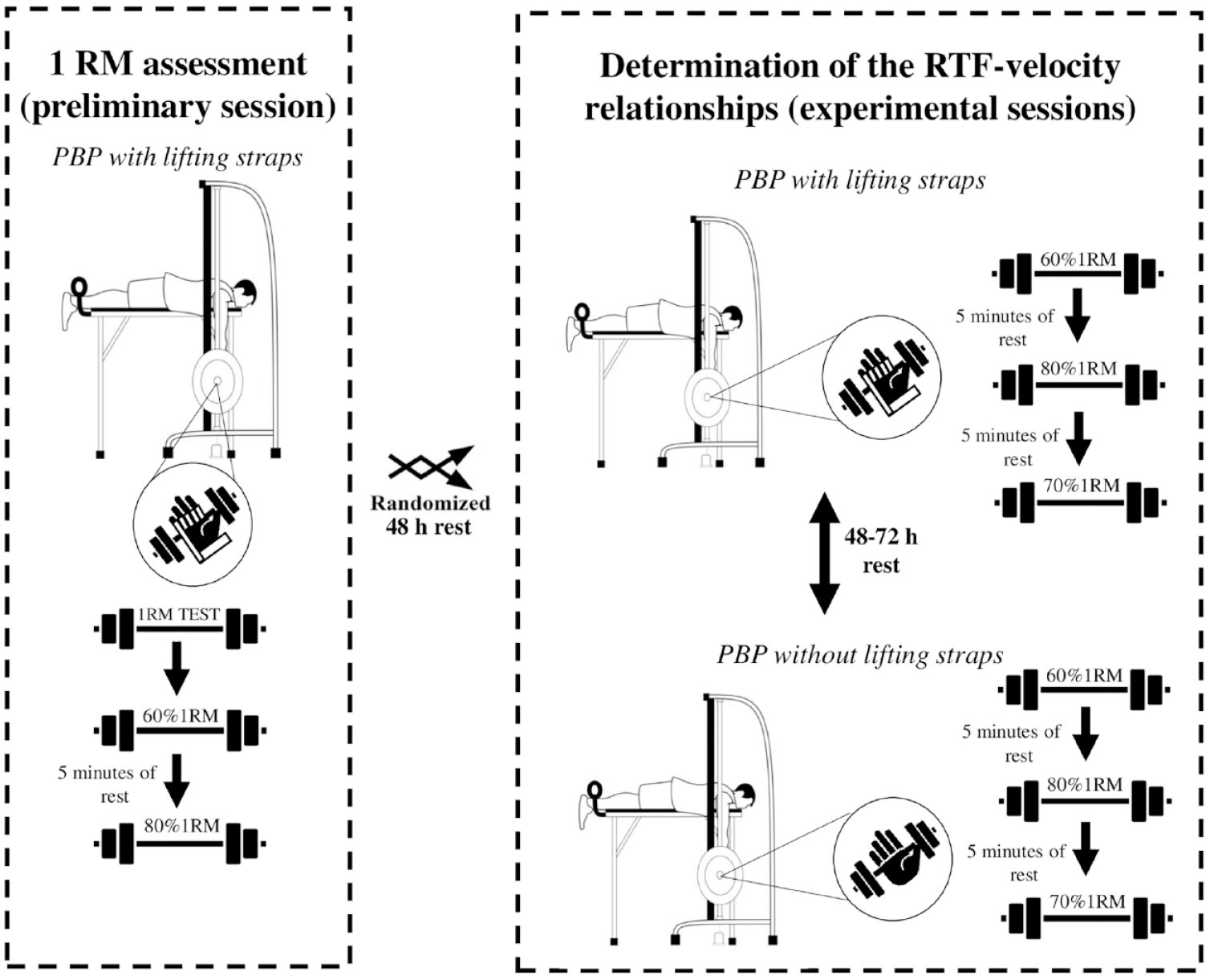
Overview of the experimental design. 1RM, 1-repetition maximum; PBP, prone bench pull; RTF, maximum number of repetitions performed before achieving momentary muscular failure.
Participants
A total of 20 resistance-trained male athletes (age, 25.1 ± 5.4 years [range, 19-42 years]; body height, 1.78 ± 0.08 m; body mass, 83.6 ± 23.1 kg; Smith machine PBP 1RM with lifting straps, 88.9 ± 11.0 kg [1.10 ± 0.17 normalized per kilogram of body mass]) participated in this study (data presented as means and standard deviations). All subjects had 5.8 ± 4.7 years of resistance training experience and reported using the PBP exercise in their regular training. No physical limitations or musculoskeletal injuries that could compromise testing were reported. Before the study, they were informed of the study procedures, signed a written informed consent form, and were asked to refrain from vigorous activity. The study protocol adhered to the tenets of the Declaration of Helsinki and was approved by the Andalusian Biomedical Research Ethics Portal (approval no. 0557-N-22).
Procedures
Preliminary Assessment of 1RM With Lifting Straps
Jogging, dynamic stretching, upper-body joint mobilization exercises, and 2 sets of 5 repetitions of the Smith machine PBP against 20 kg and 30 kg comprised the warm-up. Initial load for the incremental loading test was 40 kg, and raised by 10 kg increments until the mean velocity fell below 0.80 m/s. From that point on, the load was adjusted in increments of 5 kg to 1 kg in consensus between the subject and an experienced researcher until the 1RM was attained. Two repetitions with light-to-moderate loads (mean velocity ≥0.80 m/s) and 1 repetition with heavier loads (mean velocity <0.80 m/s) were conducted.21,22 Recovery time was set to 3 minutes for light-moderate loads and 5 minutes for heavier loads.21,22 Finally, subjects completed 1 set of RTF against the 60% 1RM and another set against the 80% 1RM for familiarization purposes. 21 Both sets of RTF were separated by 5 minutes. 22 Finally, it is essential to mention that all participants had previously participated in research projects conducted by our research group and were familiar with the VBT methodology and PBP exercise technique. Specifically, their VBT training frequency was 2 sessions per week during the previous month before the onset of this study.
Experimental Determination of RTF-Velocity Relationship
The entire experimental session was performed separately with or without lifting straps according to each condition. Jogging, dynamic stretching, and upper-body joint-mobilization exercises comprised the warm-up, which was followed by 1 set of 10, 3, and 1 repetition of the tested PBP with the 40% 1RM, 60% 1RM, and 80% 1RM, respectively.21,22 After warming up, subjects rested for 3 minutes before doing single sets of RTF against 3 relative loads performed in the following order: 60% 1RM, 80% 1RM, and 70% 1RM; 5-minute pauses were taken between RTF sets. 22 The same sequence and absolute loads were maintained for both sessions.
PBP Technique
The PBP exercise was performed in a Smith machine (Multipower Fitness Line, Peroga). Subjects assumed a prone posture with their chins resting on the bench, elbows fully extended, and a barbell grip approximately broader than shoulder width.19-21 The Smith machine’s telescopic holders were positioned such that the barbell stopped precisely when both elbows were fully extended, allowing the same range of motion to be maintained.19-21 The subjects were asked to pull the barbell as fast as possible until it contacted with the bottom of the bench with an overhand grip. The test was terminated and neither repetition was counted if the barbell failed to hit the bottom of the bench (11.0 cm thickness) for 2 consecutive repetitions. 21 The calves of the legs were secured with a stiff strap to avoid leg movements and to facilitate application of force by the upper limbs.21,22 All participants were able to wrap the same lifting straps (RDX Sports; material: flat nylon; padding: gel integrated neoprene; length, 58.5 cm; width, 3.8 cm) during all experimental sessions. A validated linear velocity transducer (T-Force System Version 3.70; Ergotech) was used for velocity monitoring. 3 The RTF, MVfastest, PVfastest, mean velocity of the last repetition (MVlast), and peak velocity of the last repetition (PVlast) were used for subsequent analyses. 21
Statistical Analyses
Data are presented as means and standard deviations, while the r2 and standard error of the estimate (SEE) are presented through the median value and range. The normal distribution of the data was confirmed using the Shapiro-Wilk test (P > 0.05). Two-way repeated-measures analysis of variances (ANOVA) (execution equipment [with vs without lifting straps]) × load [60% 1RM vs 80% 1RM vs 70% 1RM]) were conducted on RTF, MVfastest, PVfastest, MVlast, and PVlast. Least-square linear regression models were used to determine the RTF-MVfastest and RTF-PVfastest relationships for each execution equipment condition.9,21 Generalized relationships were obtained separately for each execution equipment condition by pooling together the data from all subjects (20 subjects × 3 sets = 60 data points),9,21 while individualized relationships were computed separately for each subject considering the data points acquired from the 3 loads (ie, multiple-point method [60%-80%-70% 1RM]) or only the 2 most distant loads (ie, 2-point method [60-80% 1RM]). 22 The goodness-of-fit of generalized and individualized RTF-MVfastest and RTF-PVfastest relationships were evaluated through the r2 and SEE.9,21 In addition, a 2-way repeated-measures ANOVA (execution equipment [with vs without lifting straps]) × prediction method [multiple-point vs 2-point]) was used to compare the MVfastest and PVfastest values associated with each predicted RTF.9,21 The Greenhouse-Geisser correction was used when the Mauchly’s sphericity test was violated, and pairwise differences were identified using Bonferroni post hoc corrections. The magnitude of the differences was assessed by the Cohen’s d effect size (ES), which was interpreted using the following scale: trivial (<0.20), small (0.20-0.59), moderate (0.60-1.19), large (1.20-2.00), or very large (>2.00). 11 The software package SPSS (Version 25.0, IBM SPSS) was used for the analyses. Alpha was set at 0.05.
Results
The execution equipment × load interaction did not achieve any statistical significance for RTF, MVfastest, MVlast, PVfastest, or PVlast (F(2,38) ≤ 1.2; P ≥ 0.28) (Table 1). The main effect of execution equipment reached statistical significance only for MVlast due to the higher values obtained with lifting straps compared to without lifting straps (F(1,19) = 5.2; P = 0.03). The main effect of load was significant for RTF, MVfastest, and PVfastest (F(2,38) ≥ 152.0; P < 0.01) as they decreased with the increment in the load.
Two-way repeated measures ANOVA comparing RTF, MVfastest, PVfastest, MVlast, and PVlast repetitions of sets performed against 3 relative loads during the Smith machine PBP exercise performed with and without lifting straps a
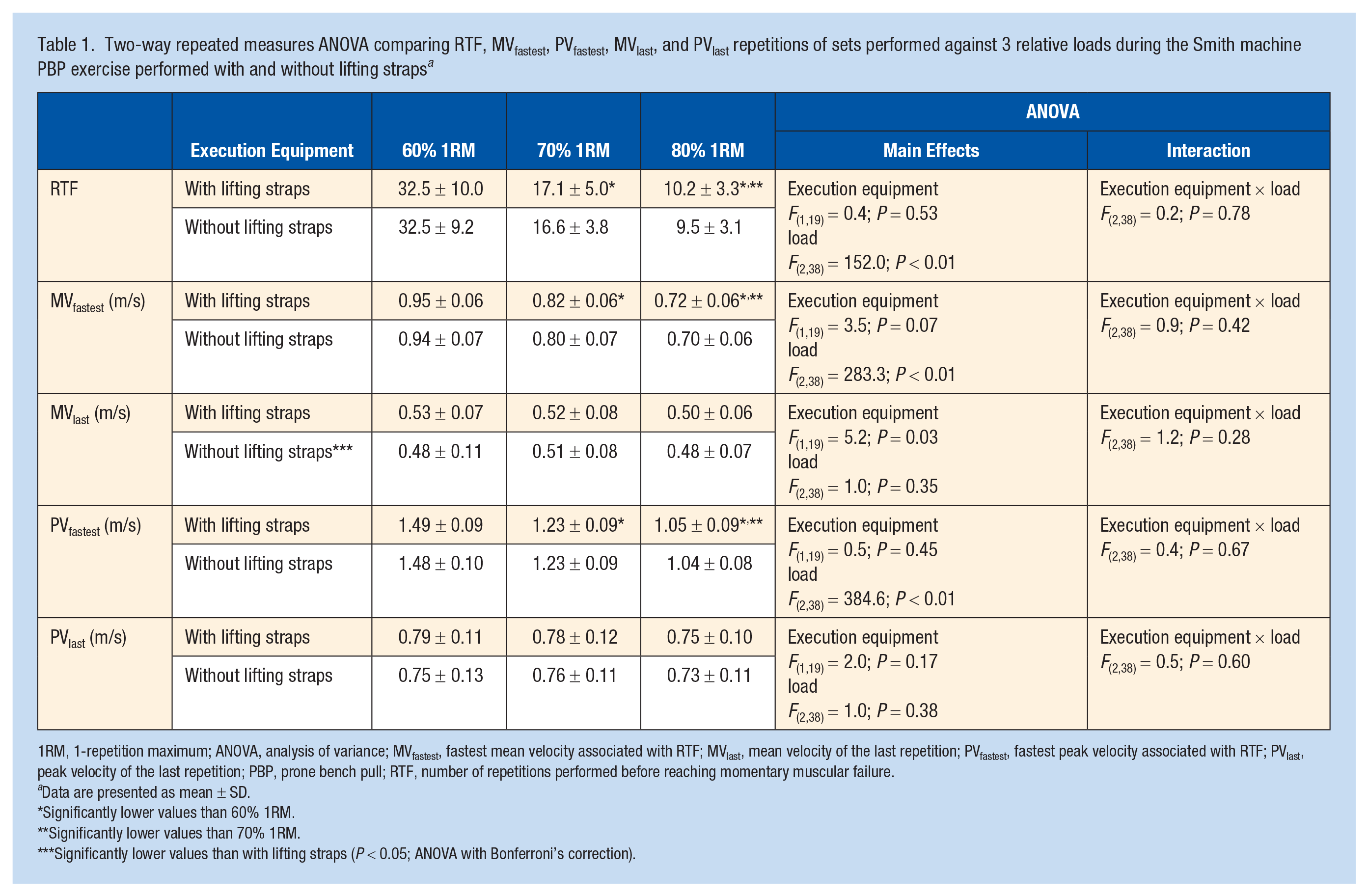
1RM, 1-repetition maximum; ANOVA, analysis of variance; MVfastest, fastest mean velocity associated with RTF; MVlast, mean velocity of the last repetition; PVfastest, fastest peak velocity associated with RTF; PVlast, peak velocity of the last repetition; PBP, prone bench pull; RTF, number of repetitions performed before reaching momentary muscular failure.
Data are presented as mean ± SD.
Significantly lower values than 60% 1RM.
Significantly lower values than 70% 1RM.
Significantly lower values than with lifting straps (P < 0.05; ANOVA with Bonferroni’s correction).
The goodness-of-fit and accuracy of the generalized RTF-MVfastest and RTF-PVfastest relationships were comparable with (r2 = 0.57 and 0.66; SEE, 7.5 and 6.7 repetitions, respectively) and without (r2 = 0.52 and 0.59; SEE, 7.9 and 7.3 repetitions, respectively) lifting straps (Figure 2). The individualized RTF-velocity relationships were always stronger than the generalized RTF-velocity relationships, but comparable with (MVfastest: r2 = 0.95 [0.87, 0.99]; SEE, 2.7 repetitions [0.1, 9.6 repetitions]; PVfastest: r2 = 0.97 [0.88, 1.00]; SEE, 2.3 repetitions [0.1, 10.3 repetitions]) and without (MVfastest: r2 = 0.95 [0.82, 1.00]; SEE, 2.7 repetitions [0.1, 10.4 repetitions]; PVfastest: r2 = 0.97 [0.89, 0.99]; SEE, 2.3 repetitions [0.2, 8.0 repetitions]) lifting straps.
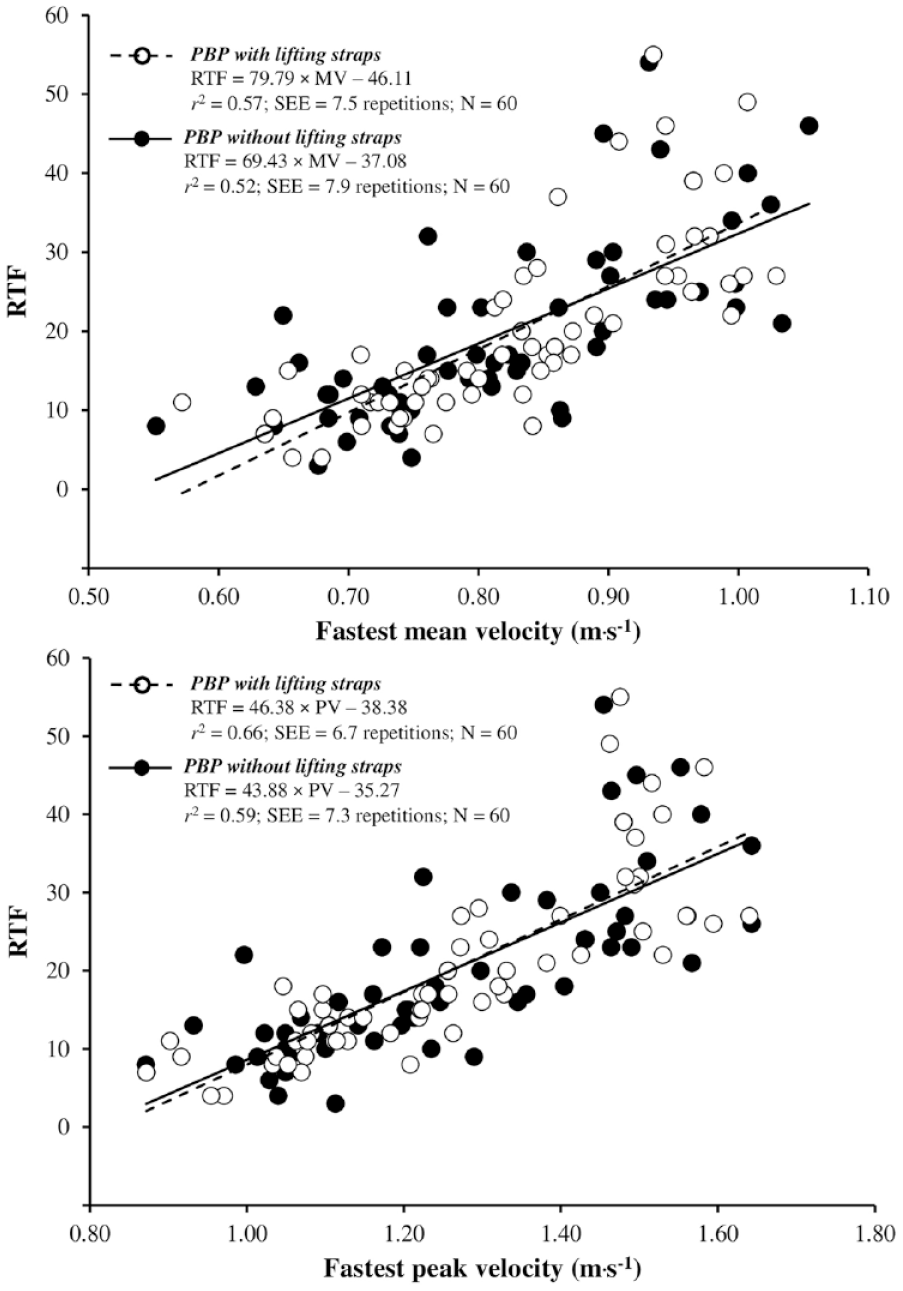
Generalized relationship between RTF and the MVfastest or the PVfastest of the set during the Smith machine PBP exercise performed with (open dots and dashed lines) or without (filled dots and straight lines) lifting straps. MVfastest, fastest mean velocity associated with RTF; N, numbers of trials included in the regression analysis. PVfastest, fastest peak velocity associated with RTF; PBP, prone bench pull; r2, Pearson’s multivariate coefficient of determination; SEE, standard error of the estimate; RTF, number of repetitions performed before reaching momentary muscular failure.
Neither the execution equipment × prediction method interaction nor the main effect of the execution equipment achieved statistical significance for the MVfastest (F(1,19) ≤ 0.1 and 1.6; P ≥ 0.70 and 0.22, respectively) (Table 2) or PVfastest (F(1,19) ≤ 0.5 and 0.6; P ≥ 0.46 and 0.43, respectively) (Table 3) values associated with the different RTFs. However, the main effect of the prediction method was always significant for MVfastest (F(1,19) ≥ 17.0; P < 0.01) (Table 2) and PVfastest (F(1,19) ≥ 21.5; P < 0.01) (Table 3) due to slightly higher velocity values associated with each RTF for the multiple-point method compared with the 2-point method for MVfastest (P < 0.01; ES ≤ 0.25) and PVfastest (P < 0.01; ES ≤ 0.24).
Comparison of the MVfastest of the set associated with each RTF between both execution equipment conditions (with and without lifting straps) and prediction methods (multiple-point and 2-point) a
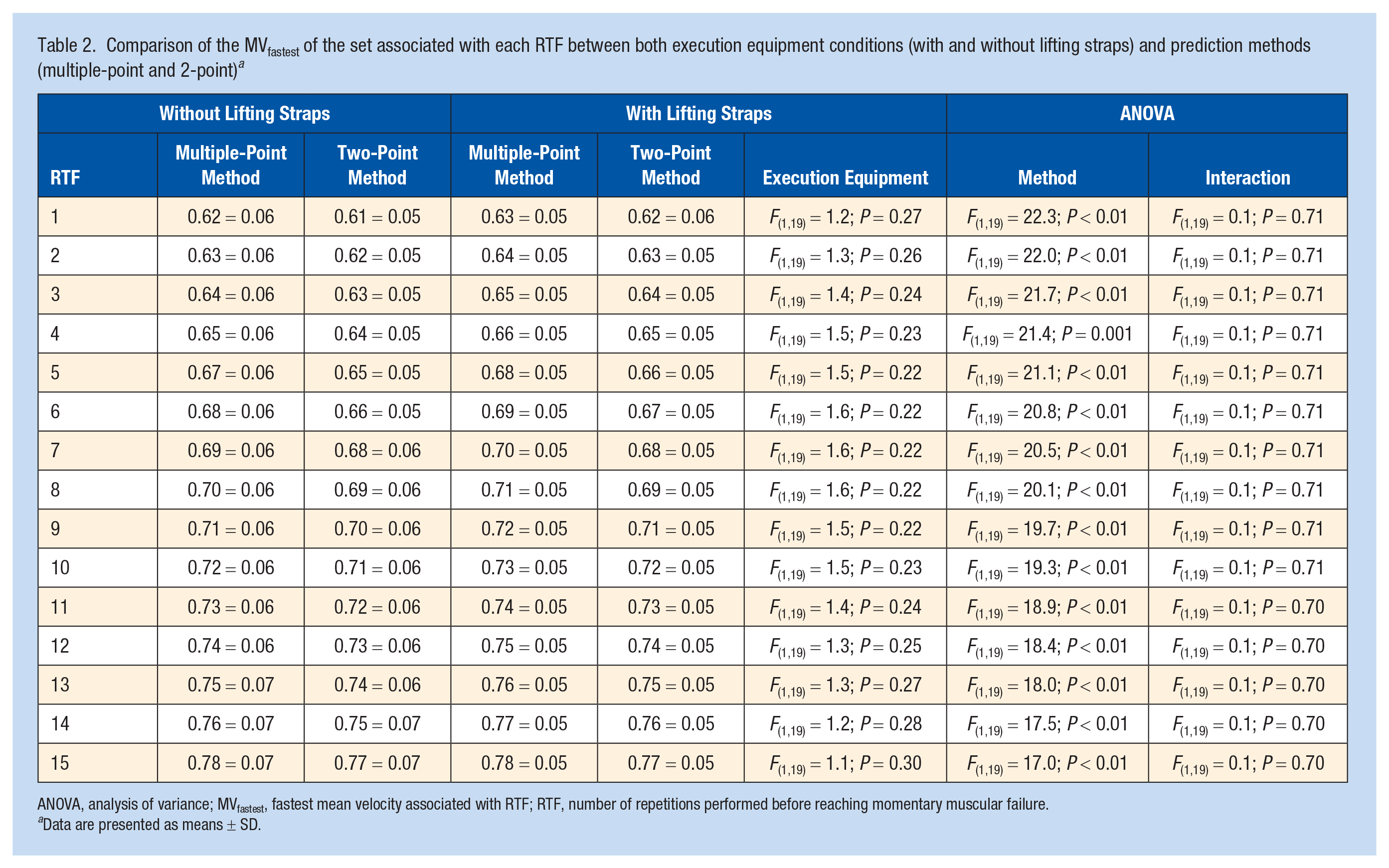
ANOVA, analysis of variance; MVfastest, fastest mean velocity associated with RTF; RTF, number of repetitions performed before reaching momentary muscular failure.
Data are presented as means ± SD.
Comparison of PVfastest of the set associated with each RTF between both execution equipment conditions (with and straps lifting straps) and prediction methods (multiple-point and 2-point) a
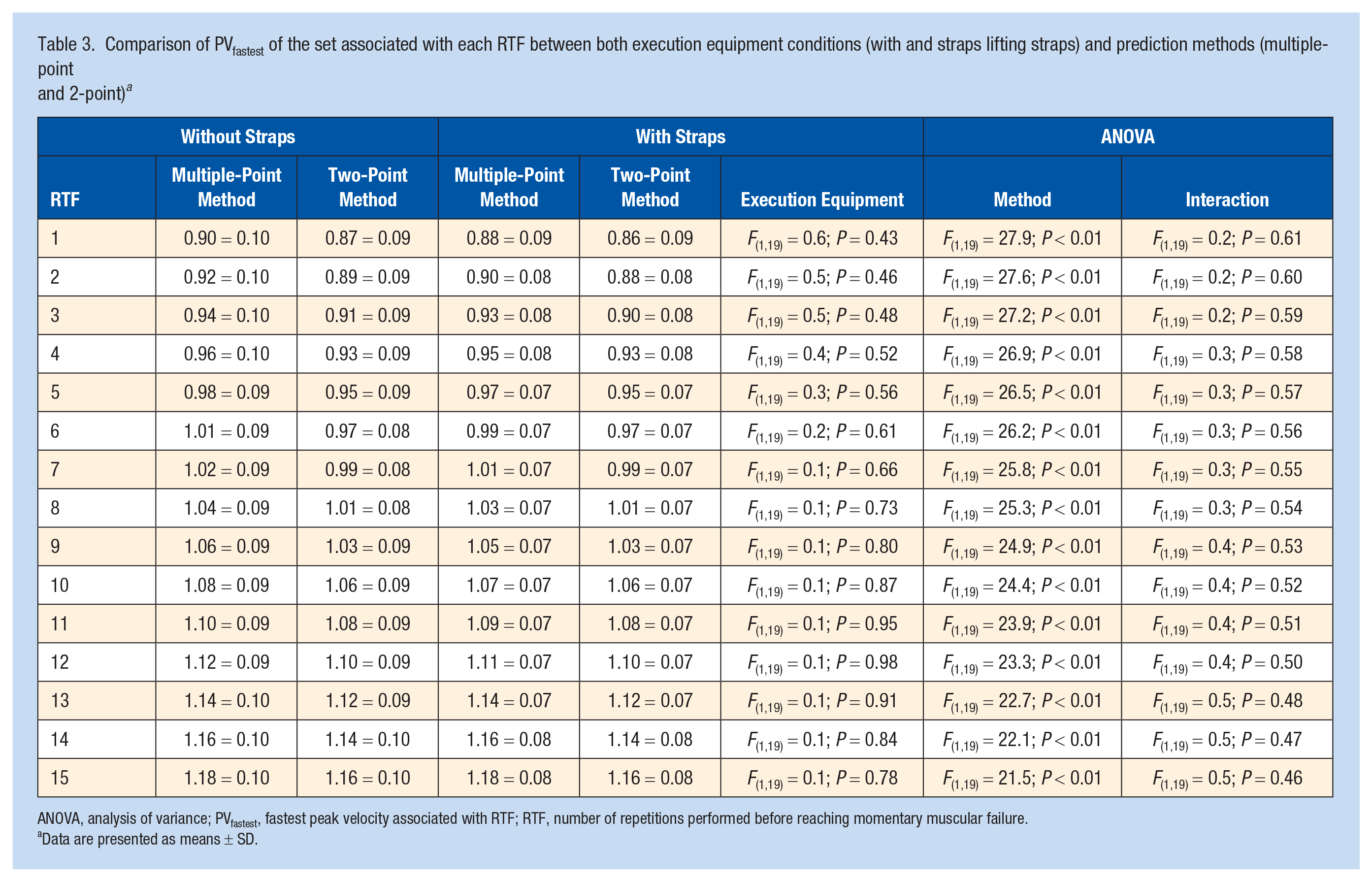
ANOVA, analysis of variance; PVfastest, fastest peak velocity associated with RTF; RTF, number of repetitions performed before reaching momentary muscular failure.
Data are presented as means ± SD.
Discussion
The current research aims to examine whether the use of lifting straps impacts the RTF-MVfastest and RTF-PVfastest relationships constructed from different prediction methods (multiple- and 2-point method). The main findings of this study revealed that (1) individualized RTF-velocity relationships presented a higher goodness-of-fit than the generalized RTF-velocity relationships, while the goodness-of-fit was comparable between both execution equipment conditions, and (2) the MVfastest and PVfastest values associated with different RTFs were comparable between both execution equipment conditions, but greater for the multiple-point compared with the 2-point method. These results suggest that, while the lifting straps do not affect the goodness-of-fit of the RTF-velocity relationships or the velocity values associated with different RTFs, caution should be taken when applying different prediction methods to create the RTF-velocity relationships during the Smith machine PBP exercise.
Supporting our first hypothesis, both execution equipment conditions provided a greater goodness-of-fit for individualized compared with generalized RTF-velocity relationships using both MVfastest and PVfastest. These findings align with a previous study by Miras-Moreno et al, 21 which also showed a stronger goodness-of-fit for individualized compared with generalized RTF-velocity relationships for both velocity variables (median r2 = 0.96 and 0.97 for MVfastest and PVfastest, respectively). In addition, this strong linearity is consistent with other upper-body and lower-body resistance training exercises such as the Smith machine bench press (median r2 = 0.98 for MVfastest) or free-weight back squat exercise (median r2 = 0.98 for MVfastest).9,16 Specifically, it is also crucial to note that the slope and intercept from generalized RTF-velocity relationships observed in this study vary from those established by Miras-Moreno et al 21 (RTF-axis intercept, 69.43 vs 40.58 and 43.88 vs 25.22; slope, 37.08 vs 21.04 and 35.27 vs 19.49 for MVfastest and PVfastest, respectively), despite the use of the same resistance training exercise (ie, Smith machine PBP) and execution equipment (ie, without lifting straps). The notable differences observed between these RTF-velocity relationships under consistent experimental conditions underscore the paramount importance of using individualized RTF-velocity. 23 This fact may be explained by the high inter-subject RTF differences against a given %1RM, whereas MVfastest and PVfastest remain consistent across subjects (eg, while MVfastest was 0.95 ± 0.06 ms-1, RTF was 32.5 ± 10.0 against the 60% 1RM load; see Table 1 for further details). 23
Supporting our second hypothesis, the goodness-of-fit of the RTF-velocity relationships and the MVfastest and PVfastest values associated with each RTF were comparable between both execution equipment conditions. These results may be explained by the fact that no differences were found for RTF, MVfastest, and PVfastest when the Smith machine PBP exercise was performed with and without lifting straps. These findings concur with recent studies that showed no effect of lifting straps on RTF against the 70% 1RM load during the lat pulldown and the 80% 1RM load during the deadlift exercise.2,28 However, it should also be emphasized that the same absolute loads were maintained not for both execution equipment conditions, but relative to each 1RM condition2,28; therefore, this may involve comparing greater loads for lifting straps in contrast to without lifting straps. In contrast, recent results showed that using lifting straps during the deadlift exercise may show greater perceived security, power feeling, mean velocity, and peak velocity when performing 4 sets of 4 repetitions against the same absolute load (80% 1RM).13,15 In addition, Jukic et al 14 did not report any effect of using lifting straps on mean and peak velocity recorded at a range of fixed loads (from 20% to 80% 1RM) during the deadlift exercise. It should be noted that these differences showed by Jukic et al13-15 appear unrelated to participant strength levels and experience because the same participants were involved in these studies. However, these discrepancies may be explained because heavier loads are easier to lift during deadlift (ie, higher recruitment of motor units from the upper and lower body) and grip strength is compromised more than in lat-pulldown or PBP exercises where less load is expected to be lifted.2,4 Collectively, these results suggests that the benefits of lifting straps may be exercise dependent and it seems that there is no effect on RTF, MVfastest, and PVfastest and, consequently, RTF-velocity relationships during the Smith machine PBP exercise are not affected.
In the context of VBT, the 2-point method has been proposed as a quicker method, and one that is less prone to fatigue, to estimate 1RM and other load-velocity relationship variables.6,8,20 In this regard, the strong linearity observed for the individualized RTF-velocity relationship during the Smith machine PBP and Smith machine bench press exercises could justify the use of the 2-point method to estimate RTF.9,21 However, contrary to our second hypothesis, the MVfastest and PVfastest values associated with each RTF showed slightly greater values for the multiple-point method (ie, modeled by 3 sets performed to failure) compared with the 2-point method (ie, modeled by 2 sets to failure). The higher velocity values associated with each RTF for the multiple-point method may be explained by a higher fatigue experienced by subjects when starting the third set (ie, nonperformed set during the 2-point method) compared with the first 2 sets, which were common to both multiple- and 2-point methods. For example, when analyzing each regression model obtained during the Smith machine PBP exercise performed without straps subject-by-subject, the 2-point method slope (98.25 ± 32.5) was slightly higher than the multiple-point method slope (97.09 ± 31.8), whereas the RTF-axis intercept remains perfectly stable between both prediction methods (2-point, 59.4 ± 21.5; multiple-point, 59.3 ± 21.1). In practical terms, this means that for the same MVfastest, the RTF would result slightly higher values for the 2-point method compared with the multiple-point method, probably by an increment of the fatigue during the testing procedure (eg, a determined MVfastest of 0.70 m/s1 would predict a load of 9 repetition maximum for the 2-point method and of 8 repetition maximum for the multiple-point method; see Table 2 for further details). Therefore, since fatigue affects RTF more than it affects MVfastest or PVfastest, 21 it seems reasonable to determine the RTF-velocity relationship under fatigue levels similar to those typically experienced during resistance training sessions.
Even though this study provides novel insights into the influence of lifting straps on the RTF-velocity relationships obtained during the Smith machine PBP exercise, a number of limitations must be addressed. First, since most athletes commonly use free weights during their daily routine, the Smith machine may have limited the ecological validity of our results. It is important to note that during the free-weight exercise, with greater involvement of stabilizer muscles, lifting straps may show more benefits than during machine-based exercises.10,25 In addition, the estimation error (difference between predicted vs performed) between the multiple-point and 2-point method must be proven against different levels of fatigue experienced during construction of the RTF-velocity relationships when both MV and PV are monitored. Finally, since its use does not decrease performance and may improve grip security, use is recommended only if the subject feels comfortable during the Smith machine PBP exercise.
Conclusion
The use of lifting straps during the Smith machine PBP exercise does not affect the goodness-of-fit of the RTF-velocity relationships or the velocity values associated with different RTFs. However, some caution should be taken when applying different prediction methods to create the RTF-velocity relationships during the Smith machine PBP exercise. Specifically, when using the same output velocity, the estimation of the RTF from the 2-point method was slightly higher than from the multiple-point method due to the lesser fatigue experienced by the subjects during the testing procedure (2 vs 3 sets to failure). From a practical standpoint, practitioners only need to monitor the fastest velocity (eg, MV or PV) during sets performed to momentary failure against at least 2 distant loads (eg, 60% 1RM and 80% 1RM). It may also be important that the different sets used for modeling the RTF-velocity relationships are initiated under fatigue conditions similar to those that will be experienced during actual resistance training sessions (eg, 1 set performed to failure before the testing procedure may be realized when moderate levels of fatigue are intended).
Footnotes
Acknowledgements
The authors would like to thank all the participants who selflessly participated in the study. This study is part of a PhD Thesis conducted in the Biomedicine Doctoral Studies of the University of Granada, Spain. This study was supported by the Spanish Ministry of University under a predoctoral grant (FPU19/01137) awarded to Sergio Miras-Moreno and by the Spanish Ministry of Science and Innovation (PID2019-110074GBI00/SRA/10.13039/501100011033).
The authors report no potential conflicts of interest in the development and publication of this article.
