







Abstract
Background:
Biomechanical asymmetries after anterior cruciate ligament reconstruction (ACLR) may be amplified and perpetuated by progressing athletes to higher-demand tasks despite impairments in lower-demand tasks.
Hypotheses:
(1) Between-limb asymmetries in limb loading and joint kinetics will be greater during the higher-demand drop jump compared with squatting. (2) Asymmetries in limb loading and joint kinetics during squatting will be associated with asymmetries during drop jump.
Study Design:
Descriptive laboratory study.
Level of Evidence:
Level 4.
Methods:
A total of 22 (11 female) participants after primary ACLR (6.4 ± 0.5 months) performed bilateral squat and drop jump tasks. Vertical ground-reaction force (vGRF), knee and hip extensor net joint moments (NJMs), hip/knee mean NJM ratio, and limb symmetry index (LSI) were calculated during the eccentric phase. Comparisons between limbs and across tasks were analyzed using 2-way repeated measures analyses of variance. Pearson’s correlations assessed associations between vGRF and NJM LSIs, and hip/knee NJM ratios across tasks.
Results:
Mean vGRF LSI and knee NJM LSI were significantly more asymmetric during drop jump compared with squatting (79.7 ± 14.9 vs 90.0 ± 11.0%, P < 0.001 and 55.8 ± 17.6 vs 66.4 ± 25.6%, P = 0.02, respectively). Mean vGRF LSI (r = 0.58; P = 0.004) and knee NJM LSI (r = 0.61; P = 0.002) were moderately correlated between tasks. The hip/knee ratio for the ACLR limb correlated strongly between tasks (r = 0.69; P < 0.001); nonsurgical limb: r = 0.39; P = 0.07).
Conclusion:
Underloading and reduced functional use of the ACLR knee were amplified during the drop jump compared with squatting. Limb mechanics during lower-demand squatting are informative of performance during drop jump.
Clinical Relevance:
Criterion-based rehabilitation guidelines may benefit from requiring symmetry in lower-demand tasks before progressing to higher-level activities to optimize recovery and reduce risk of reinjury.
Athletes postanterior cruciate ligament reconstruction (ACLR) continue to have a higher risk of reinjury and early onset of osteoarthritis compared with peers without ACLR.19,21,27,28,37,54 Factors generally considered to contribute to undesirable outcomes of increased reinjury and knee osteoarthritis include quadriceps muscle weakness3,11,46 and maladaptive movement strategies such as limb underloading and decreased knee joint kinetics.7,10,15 -17,24,26,29,31,35,36,38,40,50 -52 These impairments, which manifest immediately after surgery, persist in the majority of athletes far beyond return to play, despite months of rehabilitation. Although there are efforts to improve return to play criteria, 5 equal attention is warranted to reevaluate the criteria used to progress rehabilitation of athletes from lower- to higher-demand tasks.
The goal of rehabilitation after ACLR is to restore symmetric lower limb function and thus a safe return to play.5,6 In principle, patients are progressed to higher-demand activities so long as they are successful performing lower-demand activities. However, there is a clear disconnect between the principles of rehabilitation and findings from studies examining lower limb biomechanics. For example, rehabilitation consistently fails to resolve lower limb kinetic asymmetries over the first 6 to 9 months after ACLR during the dynamic, high-demand drop jump task.10,16,17,24,26,29,50,52 Numerous studies also indicate persistent asymmetry in lower limb kinetics during the same period while completing a bilateral squat task,7,15,31,35,36,38,40,51 a low-demand equivalent to the drop jump task. One interpretation of these data is that current task-based progressions are reinforcing maladaptive movement strategies. Preliminary support for this premise was demonstrated by a laboratory-based study of 41 participants with primary unilateral ACLR that showed that between-limb asymmetry in the peak vertical ground-reaction force (vGRF) and knee extensor net joint moment (NJM) during squatting was moderately associated with asymmetry during the stop jump task. 31 Considering the goal of rehabilitation is to restore limb symmetry across numerous tasks, and bilateral tasks are often used to classify movement deficiencies, 34 further studies are warranted to examine whether squatting mechanics are informative of drop jump mechanics. Given that current rehabilitation strategies may not fully address lower limb asymmetries, understanding whether squatting mechanics predict performance in higher-demand tasks such as the drop jump is crucial for refining rehabilitation protocols.
This study aimed to examine whether between-limb asymmetry in limb loading (vGRF) and joint kinetics (knee NJM and hip/knee NJM ratio) increase from the lower-demand squat to the higher-demand drop jump. In addition, we aimed to determine whether asymmetries in squatting mechanics are associated with those observed during the drop jump. We chose to focus testing at 6 months (a time when the ACL graft is undergoing the ligamentization phase of remodeling, though it has not yet fully matured), 8 because athletes are typically engaging in jumping and landing tasks and beginning sport specific progressions. We hypothesized that between-limb asymmetries in vGRF and joint kinetics would increase from the lower-demand squat to the higher-demand drop jump. In addition, we hypothesized that asymmetries in vGRF and joint kinetics during squatting would be moderately associated with asymmetries during drop jump.
Methods
Participants
A total of 22 participants (11 female, 11 male; age range, 14-26 years) that were approximately 6 months post-ACLR participated in this study. Of these 22 participants, 21 had an all-soft tissue quadriceps tendon autograft from a single sports medicine fellowship-trained orthopaedic surgeon,41,56 and 1 participant had a bone-patellar-tendon-bone autograft. Participants were eligible if they had a unilateral, primary ACLR and no current discomfort in the surgical limb, no previous history of ACLR, and no recent history of contralateral leg injury that could influence their ability to complete testing. Participants provided written informed consent in accordance with procedures approved by the Institutional Review Board. For participants <18 years old, parental consent and youth assent were obtained before participation.
Procedures
All subjects participated in a single laboratory testing session to analyze lower extremity loading and joint kinetics during bilateral squat and drop jump tasks. Quadriceps muscle strength was recorded while seated with the knee axis aligned with the isokinetic dynamometer axis of rotation (Humac Norm, CSMI, Inc) using commonly reported isokinetic testing parameters. 49 Patients completed maximal effort concentric knee extension and flexion repetitions at 60 deg/s (5 repetitions) through full range of motion (full extension to 90° of flexion) using gravity correction.13,22 Peak knee extension and flexion torques from each leg were normalized to body mass (Nm/kg). Lower extremity kinematics were recorded with a 10-camera motion-analysis system at 200 Hz (Vicon; Oxford Metrics PLC) and vGRFs with 2 force plates at 1000 Hz (Advanced Mechanical Technology, Inc). Reflective markers were placed at the following landmarks: L5/S1, anterior iliac spines, superior iliac crests, greater trochanters, femoral epicondyles, ankle malleoli, first and fifth metatarsal heads, and distal second toe. In addition, noncollinear tracking cluster markers were placed on the heel, lateral shank, and lateral thigh. 48 After marker placement, all participants underwent a static standing trial that was used for calibration.
For the squat task, participants were instructed to stand with their arms crossed and parallel to the ground, and feet shoulder width apart, with each foot on a separate force plate. They were asked to squat down until their thighs were parallel with the floor, and then return to the standing position. Participants performed 5 consecutive squats at a self-selected pace, with a brief pause when returning to the upright standing position between repetitions. For the drop jump task, participants were instructed to hop forward off a 30-cm box with both feet at the same time, land with each foot on separate force plates, and jump as high as possible. Three successful trials were recorded for the drop jump task.
Data Analysis
Lower extremity kinematics and kinetics during the squat and drop jump tasks were calculated using Visual3D software (Version 2021.06.2; C-motion, Inc). The local coordinate systems of the pelvis, thigh, shank, and foot were derived from a static standing trial, and joint centers were established in accordance with the recommendations of the International Society of Biomechanics. 55 Data were reduced to biomechanical variables during the eccentric phase of the squat and drop jump tasks. For the squat, the eccentric phase was defined as the initiation of the downward motion of the pelvis center of mass (>0.04 m/s) from the standing position to peak knee flexion. The eccentric (eg, landing) phase for the drop jump was from initial foot contact of the force plate to peak knee flexion.
The primary variables of interest were the peak and mean vGRF and knee and hip extensor NJMs during the descending phase of the squat and drop jump tasks. The vGRFs were expressed relative to body weight (N) and NJMs were expressed relative to body mass (kg). The limb symmetry index (LSI) was calculated for the peak and mean vGRF and knee and hip extensor NJMs as:
Statistical Analysis
The sample size was determined through a power analysis, which indicated that a minimum of 21 participants would be needed to detect a 10% difference in asymmetry between the squat and drop jump tasks. The analysis was based on an estimated standard deviation of 15% (Cohen’s d effect size = 0.75), a within-subject correlation of 0.6, a power of 90%, and an alpha level of 0.05. Descriptive statistics are reported in the text and figures as mean ± 1 SD. The dependent variables were assessed with quantile-quartile plots and Shapiro-Wilks test for normality. Separate 2-way repeated measures analyses of variance (ANOVAs) were performed to evaluate the effect of limb (ACLR vs nonsurgical) and task (squat vs drop jump) on limb loading (mean and peak vGRF), NJMs (mean and peak knee NJM), and mean hip/knee NJM ratio. When a significant limb-by-task interaction was identified, simple main effects analyses were conducted for all pairwise comparisons. Otherwise, results of the significant main effect(s) and subsequent post hoc analyses were reported. Quadriceps strength and limb asymmetry (ie, LSI) between tasks were analyzed using paired t tests. Pearson’s correlation coefficients (r) were used to determine the association between limb asymmetry during the bilateral squat and drop jump tasks. Although numerous guidelines have been established to interpret the magnitude of r, 39 the criteria of Taylor 45 (1990) were used to classify the relationship as weak (r ≤ 0.35), moderate (0.36 ≥ r ≤ 0.67), and strong (0.68 ≥ r ≤ 1.0). All statistical analyses were performed using SPSS (Version 29.0, IBM Corp) with statistical significance set at α ≤ 0.05.
Results
Participant demographic information is shown in Table 1. Participants’ ACLR limb produced less torque than the nonsurgical limb (P < 0.001).
Participant demographics
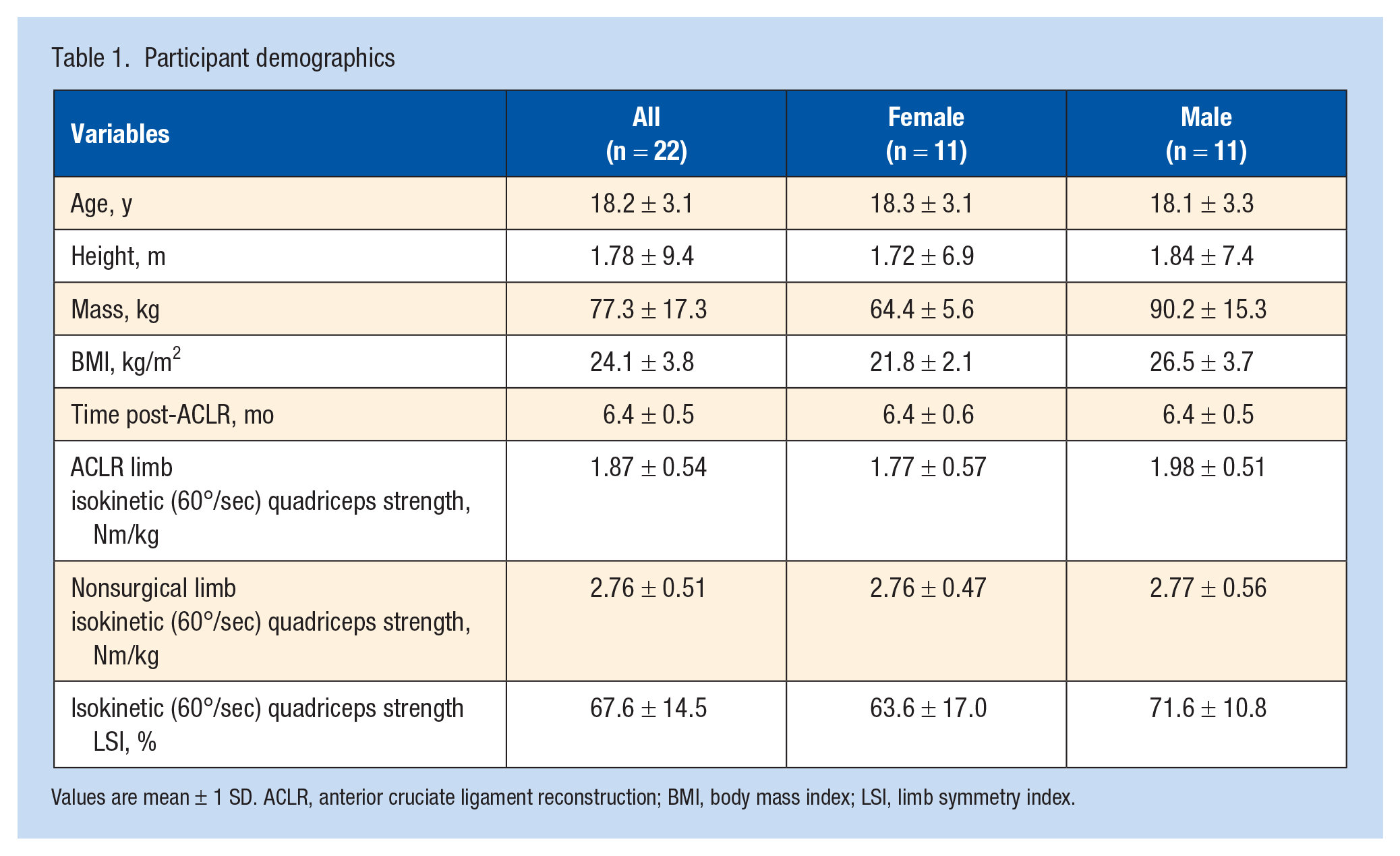
Values are mean ± 1 SD. ACLR, anterior cruciate ligament reconstruction; BMI, body mass index; LSI, limb symmetry index.
Limb Loading
There was a significant limb-by-task interaction for both the mean (P < 0.001) and peak vGRF (P = 0.005) (Figure 1a,b). Post hoc simple main effects analyses showed that the mean and peak vGRF were significantly smaller on the ACLR limbs compared with nonsurgical limbs during both the squat and drop jump tasks (all P < 0.001). As expected, the mean and peak vGRF were greater for both limbs during the more demanding drop jump task when compared with the squat (all P < 0.001).
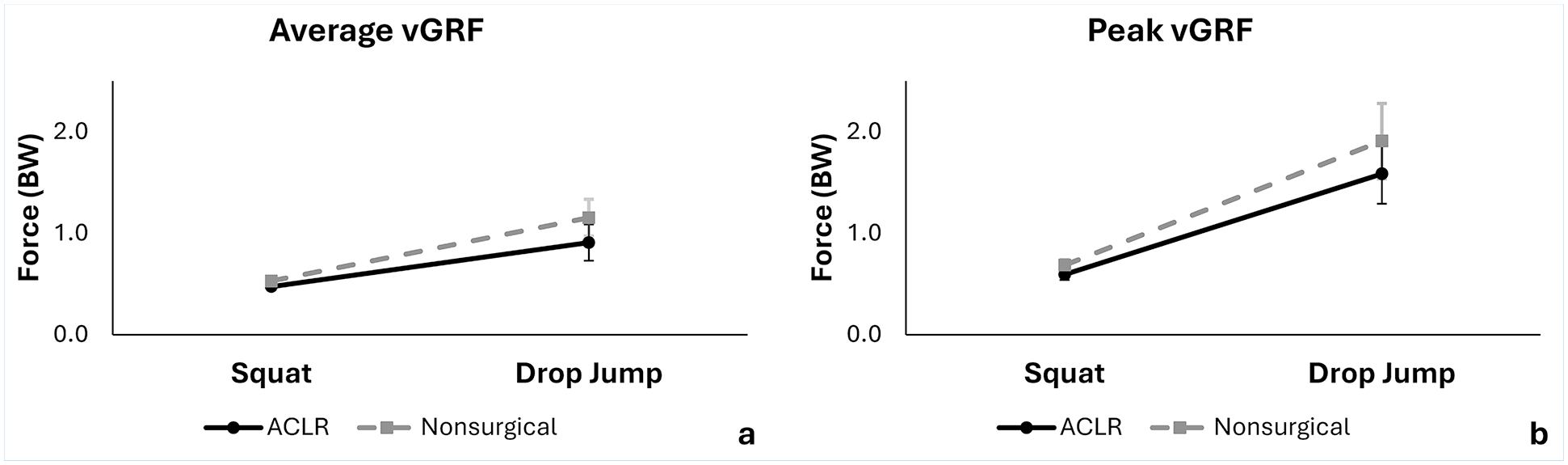
Comparison of (a) mean and (b) peak vGRF between the ACLR and nonsurgical limbs during the squat and drop jump tasks. Data are presented as mean ± 1 SD. ACLR, anterior cruciate ligament reconstruction; BW, body weight; vGRF, vertical ground-reaction force.
Limb Loading Asymmetry
The mean vGRF LSI during the drop jump was significantly smaller than the mean vGRF LSI during squatting (drop jump LSI, 79.7 ± 14.9 vs squat LSI, 90.0 ± 11.0%; P < 0.001). Despite noticeable between-limb asymmetry in peak vGRF (ie, LSI < 90%) during the drop jump and squatting, the peak vGRF LSI was not significantly different between tasks (drop jump LSI, 84.9 ± 17.1 vs squat, 86.9 ± 9.5%; P = 0.54). The observed limb loading asymmetry during squatting was moderately positively correlated with limb loading asymmetry during the drop jump task for both mean vGRF LSI (Figure 2a) and peak vGRF LSI (Figure 2b).
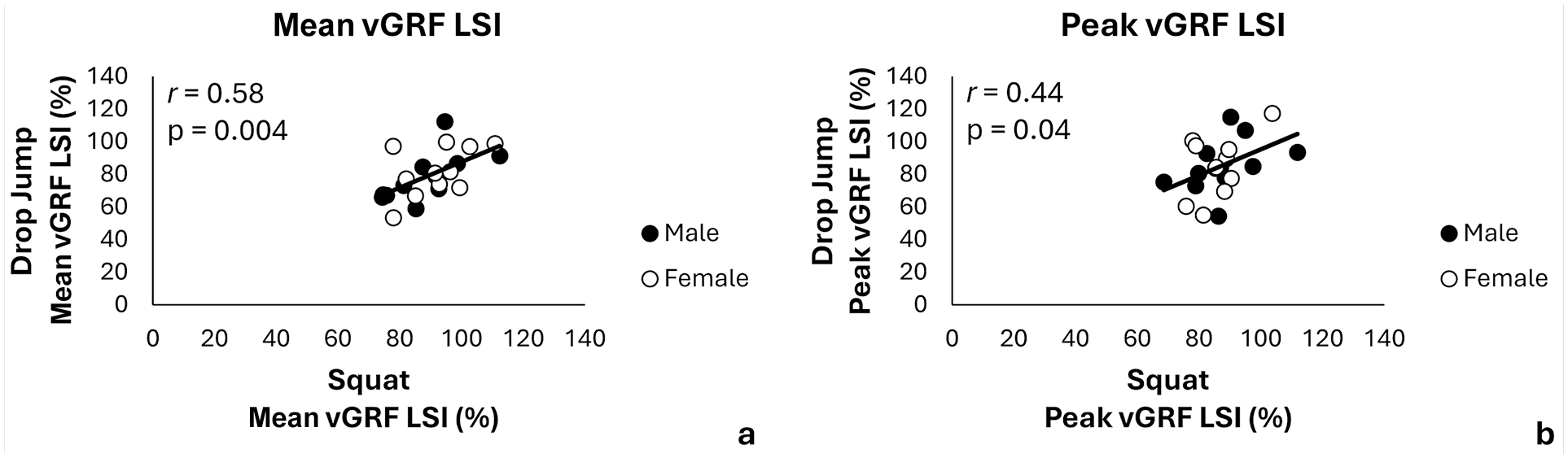
Correlation between drop jump and squat tasks for (a) mean vGRF LSI and (b) peak vGRF LSI. LSI, limb symmetry index; vGRF, vertical ground-reaction force.
Joint Kinetics
There was a significant limb-by-task interaction observed for mean (P < 0.001) and peak knee extensor NJM (P = 0.009) (Figure 3a,b). The mean and peak knee extensor NJM were significantly smaller on the ACLR limbs compared with nonsurgical limbs during both the squat and drop jump tasks (all P < 0.001). The mean and peak knee extensor NJM were also greater for both ACLR and nonsurgical limbs during the drop jump compared with the squat (all P < 0.001).
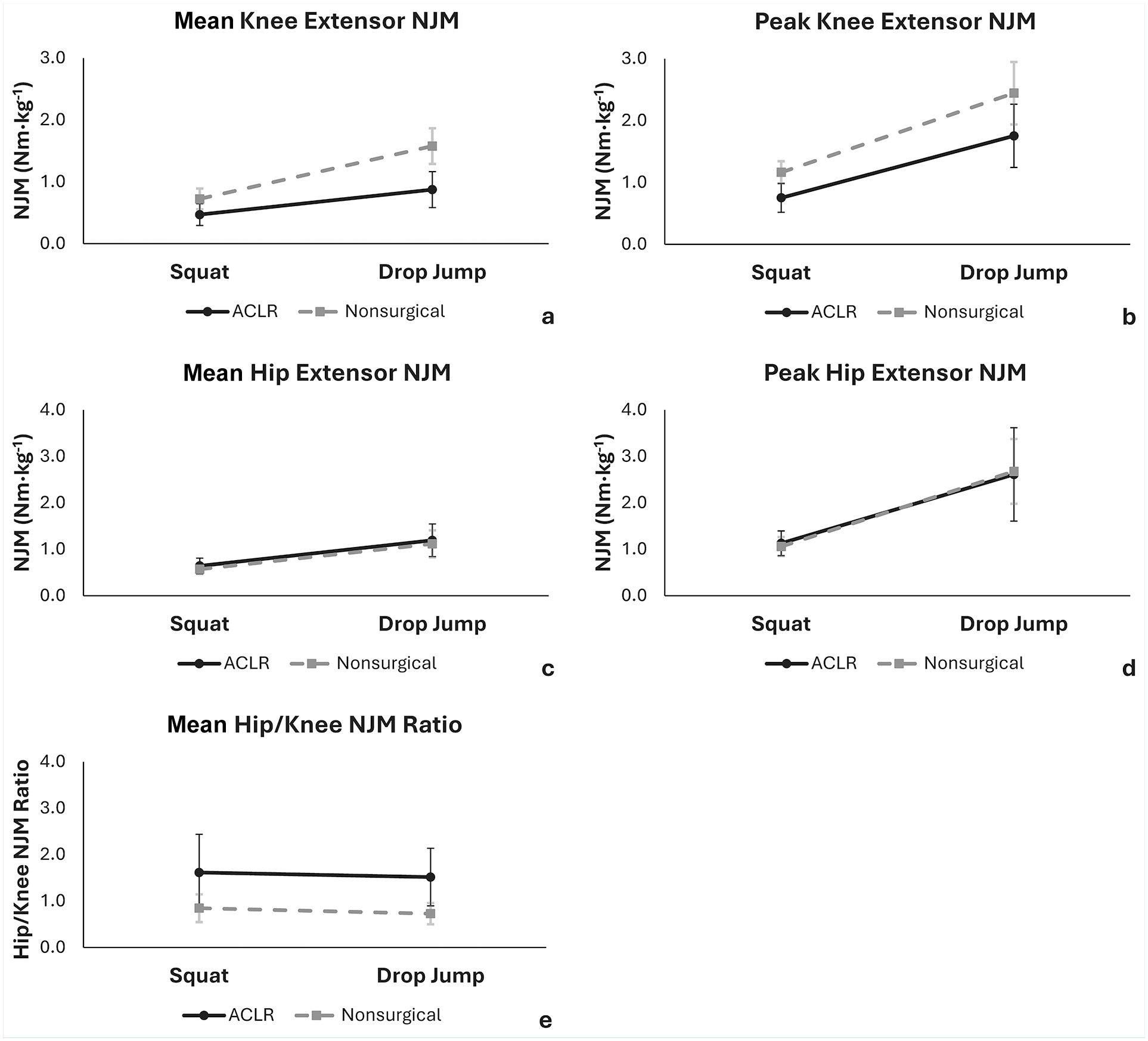
Comparison of (a) mean and (b) peak knee extensor NJM, (c) mean and (d) peak hip extensor NJM, and (e) mean hip/knee NJM ratio between ACLR and nonsurgical limbs during the squat and drop jump tasks. Data are presented as mean ± 1 SD. ACLR, anterior cruciate ligament reconstruction; NJM, net joint moment.
The mean and peak hip NJMs were not different between limbs during the squat or drop jump as indicated by no leg-by-task interaction (P = 0.91) and no main effect of limb (P = 0.36). However, there was a significant main effect of task for both mean (P < 0.001) and peak hip extensor NJM (P < 0.001), which demonstrated greater demand at the hip during the drop jump compared with the squat (Figure 3c,d). Whereas the hip extensor NJM was not statistically different between limbs, the mean hip/knee NJM ratio was significantly larger in the ACLR limb compared with the nonsurgical limb during both the squat (1.62 ± 0.82 vs 0.85 ± 0.30; p < 0.001) and drop jump (1.52 ± 0.62 vs 0.73 ± 0.23; P < 0.001) tasks (Figure 3e).
Joint Kinetics Asymmetry
The asymmetry observed in the knee extensor NJM LSIs underscores a maladaptive pattern suggestive of reduced utilization of the ACLR knee. The mean knee extensor NJM LSI was significantly smaller during the drop jump compared with the squat (drop jump LSI, 55.8 ± 17.6 vs squat LSI, 66.4 ± 25.6%; P = 0.02); however, the between-limb asymmetry for the peak knee extensor NJM was not significantly different between the drop jump and squat (drop jump LSI, 72.5 ± 18.0% vs squat LSI, 65.3 ± 20.0%; P = 0.14). The mean knee extensor NJM LSI during the squat was moderately positively correlated with asymmetry during the drop jump (Figure 4), whereas the peak knee extensor NJM LSI between squat and drop jump were not significantly correlated (r = 0.32; P = 0.14).
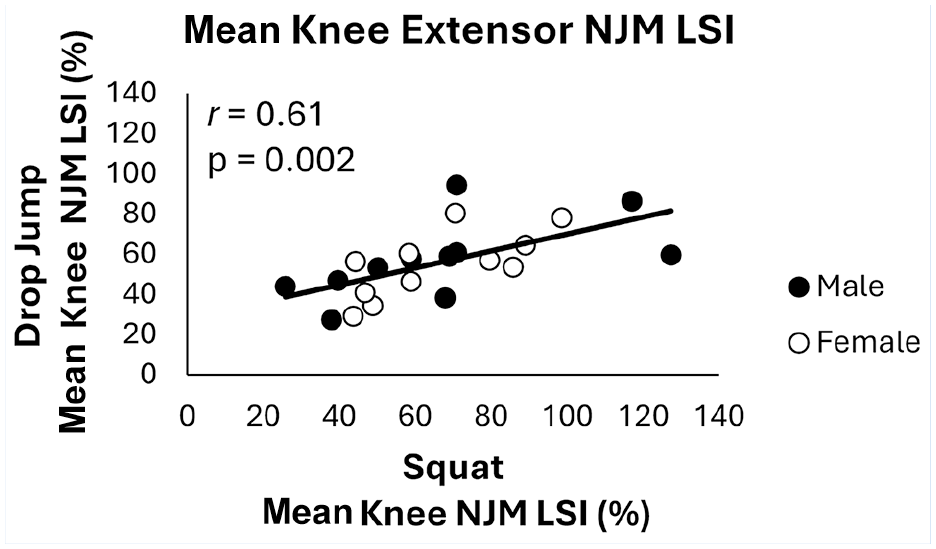
Correlation between squat and drop jump tasks for mean knee extensor NJM LSI. NJM, net joint moment; LSI, limb symmetry index.
The asymmetry in the mean hip extensor NJM LSI (drop jump LSI, 112.5 ± 39.3% vs squat LSI, 114.1 ± 31.2%; P = 0.86) and peak hip extensor NJM LSI (drop jump LSI, 98.1 ± 25.9% vs squat LSI, 107.9 ± 23.5%; P = 0.14) were not significantly different between tasks. The mean hip extensor NJM LSI (r = 0.31; P = 0.16) and peak hip extensor NJM LSI (r = 0.27; P = 0.23) were also not significantly correlated between the 2 tasks.
The mean hip/knee NJM ratio demonstrated a significant positive correlation between the drop jump and squat tasks in the ACLR limb, whereas there was no significant correlation observed for the nonsurgical limb (Figure 5a,b).
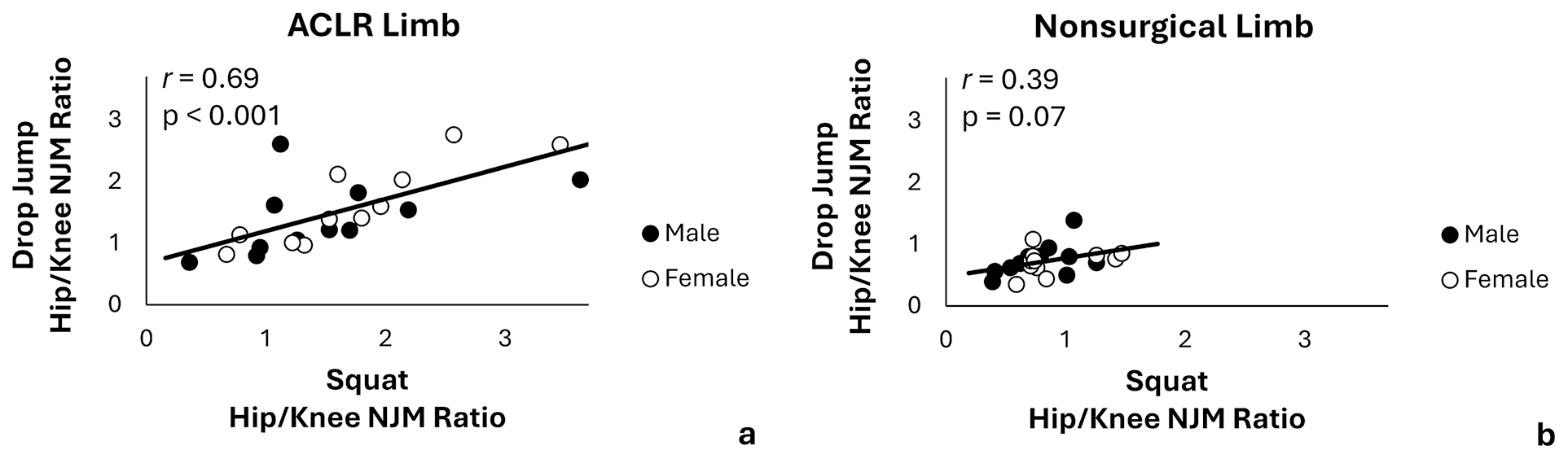
Correlation of the mean hip/knee NJM ratio between squat and drop jump tasks for (a) ACLR and (b) nonsurgical limbs. ACLR, anterior cruciate ligament reconstruction; NJM, net joint moment.
Discussion
This study examined lower limb biomechanics in athletes 6 months after ACLR during 2 commonly prescribed rehabilitation activities with distinct physical demands: the bilateral squat and drop jump. The study results indicate that, post-ACLR, patients demonstrate a maladaptive movement strategy characterized by limb underloading (reduced vGRF), reduced knee extensor NJM, and altered relative distribution of muscle demand between the knee and hip joints (increased hip/knee NJM ratio) on the ACLR limb. Consistent with our hypothesis, the between-limb asymmetries in mean limb loading and knee joint kinetics were more pronounced during the drop jump compared with the squat. Moreover, moderate-to-strong associations were observed between asymmetries during the lower-demand squat and the higher-demand drop jump tasks. Taken together, deficiencies in the functional use of the ACLR limb during a low-demand task that is amplified during a similar task with higher demand highlights the clinical need to consider criteria such as symmetric limb loading and knee joint kinetics for task-based rehabilitation progression so as to reduce the possibility of perpetuating maladaptive movement patterns.
Although numerous studies have investigated lower limb biomechanics in persons with ACLR during squat and jump/landing tasks in the context of return to sport readiness and reinjury risk,2,7,10,15 -18,24,26,29,35,36,38,40,44,50 -52 few studies have compared tasks that share similar movement patterns but distinct physical demands to provide context for rehabilitation progression decision making.31,42 A key finding of our study is that asymmetries in vGRF and knee NJM were more pronounced during the higher-demand drop jump compared with the lower-demand squat. Consistent with previous research by Peebles et al 31 and Song et al, 42 we observed greater asymmetries in knee joint kinetics during the higher-demand drop jump compared with the lower-demand squat. This finding further supports the hypothesis that rehabilitation needs to address asymmetries across tasks. 42 As hypothesized, we found that asymmetries in lower-demand tasks (such as squatting) were predictive of performance deficits during higher-demand tasks (such as drop jumping), suggesting that addressing these asymmetries early in rehabilitation could be crucial for improving outcomes.
Between-limb asymmetries in vGRF and knee NJM during squatting were moderately-to-strongly correlated with asymmetries during the drop jump in the current study. This finding corroborates the recent findings by Peebles and colleagues, 31 who found moderate to strong correlations between lower extremity biomechanics during the eccentric phase of a bilateral stop jump and squat task. These comparable findings are notable considering the participants in the study by Peebles et al 31 underwent ACLR with patellar tendon or hamstring tendon autografts, whereas the majority of participants (21 out of 22) in the current study had all-soft tissue quadriceps tendon autografts. The significant correlations between movement asymmetries during related tasks with low and high physical demands provides justification for criterion-based progression, regardless of graft type. We concur with Peebles et al 31 that these data suggest that identifying and correcting biomechanical deficits during squatting may exert a transferable influence in tasks with greater biomechanical demands such as jumping and landing. Although our findings support this notion, additional work is needed to examine whether correcting between-limb asymmetries in lower-demand tasks leads to improvements in higher-demand tasks.
A greater hip/knee NJM ratio in the ACLR compared with the nonsurgical limb, indicating a greater relative reliance on the hip, was found in this and other studies.35,36,40 Previous studies have found that the increased hip/knee NJM ratio arises from both a reduced knee NJM and a compensatory increase in hip NJM in the ACLR limb.35,36,40 However, in the current study, the increased mean hip/knee NJM ratio was due to a decrease in the ACLR knee extensor NJM. Importantly, the within-limb hip/knee NJM ratio impairment in the ACLR limb was strongly correlated between the squatting and drop jump tasks but the hip/knee NJM ratio was not correlated between tasks in the nonsurgical limb. These data highlight a consistent joint kinetic strategy of reduced knee joint loading and impaired functional use of the ACLR knee, which underscores the importance of addressing knee extensor function during rehabilitation, especially in the early stages.
Our findings have important clinical implications for rehabilitation practices after ACLR. The asymmetrical limb loading and decreased knee extensor NJM during a low-demand task such as squatting at 6 months after ACLR is a clinical concern given that athletes are performing dynamic activities in preparation for return to sport. Unfortunately, joint kinetic impairments are identified more often than kinematic impairments, 12 and are not visible in the rehabilitation clinic (ie, require motion capture and force platforms). As a result, clinicians may unknowingly progress athletes to landing and jumping tasks despite exhibiting significant underloading and abnormal joint kinetics during lower-demand tasks, thereby perpetuating and reinforcing the maladaptive movement biomechanics. Moreover, although hip-dominant strategies have been proposed as a means to mitigate the risk of ACL injuries,25,33 and decrease tibiofemoral shear and compressive forces, 47 encouraging a hip-dominant movement strategy as part of ACLR rehabilitation may also reinforce a reduced functional use of the knee. There is an urgent need to reverse the movement dysfunction early before it becomes habitual, and correcting the limb underloading and decreased knee extensor NJM in the ACLR limb during squatting with real-time feedback is a promising possibility.4,7 Current best evidence suggests focusing on improving functional use of the knee, either with feedback of the knee extensor NJM or a more posterior center of pressure location, 14 would be more beneficial than feedback of vGRF alone. 30 Future studies should investigate whether incorporating real-time feedback during squatting can improve landing mechanics and whether such effects persist during sport-specific activities.
Although this study had numerous strengths, particularly with respect to the small variability in time post-ACLR surgery and inclusion of commonly studied and clinically prescribed tasks (ie, bilateral squat and drop jump tasks), there are some limitations worth noting. Given the cross-sectional nature of the study, it is important to acknowledge limitations regarding generalizability, as our data did not explore long-term or longitudinal outcomes. In addition, the majority of study participants had all-soft tissue quadriceps tendon autografts, and, whereas this may be considered a distinctive feature of the study given the increased use of quadriceps tendon autografts in ACLR, it should be noted that graft type may also limit generalizability. Although the sample size in this study is in line with other studies conducted in the ACLR population,12,20,46 a larger sample size would help to increase the power of the study and strengthen the confidence in our findings. Furthermore, the participants in this study exhibited some heterogeneity in age, with a range from 14 to 26 years. However, we recruited an athletic population, and previous studies have demonstrated lower extremity asymmetries in adolescents and adults after ACLR.12,20 Although our data do not include measures related to trunk kinematics or kinetics, future research in this area may provide insight into the compensatory strategies observed as trunk position influences lower extremity kinetics,2,9 including the hip/knee NJM ratio. 43 Finally, this study was conducted on a single group of participants post-ACLR and did not have a control group. However, this limitation is minor considering we were interested in the between-limb differences that are commonly observed after ACLR. Despite these limitations, this study is among the few to examine biomechanical asymmetries across related tasks with distinct physical demands, offering valuable insights for clinical decision-making.
Conclusion
At the 6-month timepoint after ACLR, participants demonstrated significant asymmetries in limb loading and joint kinetics between the ACLR limb and nonsurgical limb. These asymmetries support the notion of reduced functional use of the ACLR knee during both squatting and drop jump tasks. The moderate positive correlations observed between asymmetries in limb loading and joint kinetics across tasks indicate limb biomechanics during the low-demand squatting task is informative of performance during more demanding tasks such as the drop jump. To mitigate persistent movement asymmetries and improve outcomes after ACLR, these findings suggest criterion-based rehabilitation progression guidelines may benefit from requiring, when possible, symmetry during lower-demand tasks before advancing to higher-level functional activities.
Footnotes
The following author declared potential conflicts of interest: J.W.X. has received consulting fees from Arthrex and Trice Medical, compensation for nonconsulting services and royalties or licensing fees from Arthrex, education support from United Orthopedics, and holds stock options in My-Eye.
