







Abstract

Therapeutic peptides are generating increasing public interest as potential pain relievers and recovery supplements for musculoskeletal disorders. The nearly US $1 trillion economic burden of musculoskeletal disease highlights the need for effective therapies to address chronic conditions. 48 Orthopaedic surgeons are asked increasingly about the legitimacy and potential benefits of peptides such as BPC-157, TB-500, and Ibutamoren (MK-677), particularly for postoperative pain and recovery. 17 Online promotion emphasizes recovery, angiogenesis, and healing despite most products being labeled “for research purposes only.” In practice, peptides are often self-administered for pain reduction and tissue regeneration without medical supervision, creating a regulatory gray area. 22
Although human evidence is minimal and United States Food and Drug Administration (FDA) approval is lacking, demand for peptides is expanding. Interest has been amplified by celebrity endorsements and persists despite bans by the World Anti-Doping Agency and other sports organizations.28,33,70,74 This growth parallels the rise of the biohacking movement, which promotes health optimization through methods outside traditional medicine.42,43 Biohacking emphasizes broad access to novel therapies and often rejects reliance on established academic or regulatory frameworks. Online forums, particularly Reddit, serve as key venues for sharing experiences outside the physician-patient relationship.42,43
Reddit hosts >401 million weekly active users across over 100,000 subreddits as of March 2025. 60 While users are predominantly young, English-speaking, and male, anonymity encourages open disclosure of health-related experiences. 5 Health-seeking Reddit users are also more likely to incorporate information into daily practice than those seeking other advice. 59 Previous qualitative studies of Reddit data have examined diverse health topics including rheumatoid arthritis, opioid use disorder, urinary incontinence, mental health, CAR-T cell therapy, self-managed abortion, and unmatched residency applicants.7,20,32,44,52,66,72 Few studies have focused on musculoskeletal disorders. For therapeutic peptides, communities such as r/bpc-157, r/Peptidesource, and r/Biohackers contain anecdotal reports and advice on peptide-assisted recovery. These forums offer unique insights for orthopaedic practice.
Popularity and online sales of peptides continue to rise despite limited human research. Global sales were estimated at US$35 billion in 2015, exceeded US$70 billion in 2019, and were projected to grow 9 percent annually through 2024.6,17,71 This widening gap between consumer use and scientific evaluation underscores the need for qualitative research on patient-reported experiences. Understanding motivations, practices, and outcomes described online may help orthopaedic clinicians anticipate trends and counsel patients on risks. The aim of this study was to investigate patient-reported motivations, experiences, and outcomes related to peptide use through analysis of Reddit discussions. We hypothesized that Reddit content would primarily reflect firsthand accounts with wide variation in delivery and dosage practices.
A qualitative thematic analysis was performed using publicly available Reddit posts and comments to characterize patient-driven discussions of therapeutic peptide use in orthopaedic injury and surgery.
Data were collected retrospectively from Reddit using the Python Reddit API Wrapper (PRAW) to access Reddit’s official application program interface (API) programmatically. 61 The data collection period spanned from January 1, 2023 to May 18, 2024. Target subreddits were identified based on their relevance to discussions on peptides, dietary supplements, biohacking, nootropics, performance-enhancing drugs, fitness, bodybuilding, chronic pain conditions, and general health and medical inquiries. Using keyword searches, 20 subreddits were selected for further data extraction and analysis: r/Biohackers, r/BPC_157, r/Peptidesource, r/PlantarFasciitis, r/ACL, r/BackPain, r/ChronicPain, r/MensHealth, r/AskDocs, r/Medical, r/Health, r/Supplements, r/Nootropics, r/SarmsSourceTalk, r/StackAdvice, r/PEDs, r/ResearchChemicals, r/Fitness, r/Bodybuilding, and r/AdvancedFitness. These subreddits were identified by researcher consensus based on relevance and Reddit user activity during the time frame established.
Within each target subreddit, searches were conducted to identify posts containing specific peptide-related keywords. A predefined list of 26 search terms was used to identify posts related to peptide therapy. Table 1 summarizes orthopaedic-relevant peptides, their reported biologic effects, and current regulatory approval status. Keywords included specific peptide names and abbreviations (“BPC-157,” “BPC 157,” “Body Protection Compound 157,” “TB-500,” “TB 500,” “Thymosin beta 4,” “GHK-Cu,” “GHK Cu,” “copper peptide,” “Ibutamoren,” “MK-677,” “MK 677,” “CJC-1295,” “CJC 1295,” “Ipamorelin,” “Sermorelin,” “Melanotan II,” “Melanotan 2,” “MT2,” “PT-141,” “Bremelanotide”), collagen-related terms (“Collagen peptide supplementation,” “collagen peptides,” “hydrolyzed collagen”), and medical procedure terms (“post-surgery healing,” “tendon repair”). Searches were sorted by “new” to capture the most recent and relevant discussions, with a software-defined limit of up to 200 posts per keyword-subreddit combination.
Orthopaedic-relevant peptides, reported effects, and current regulatory approval status
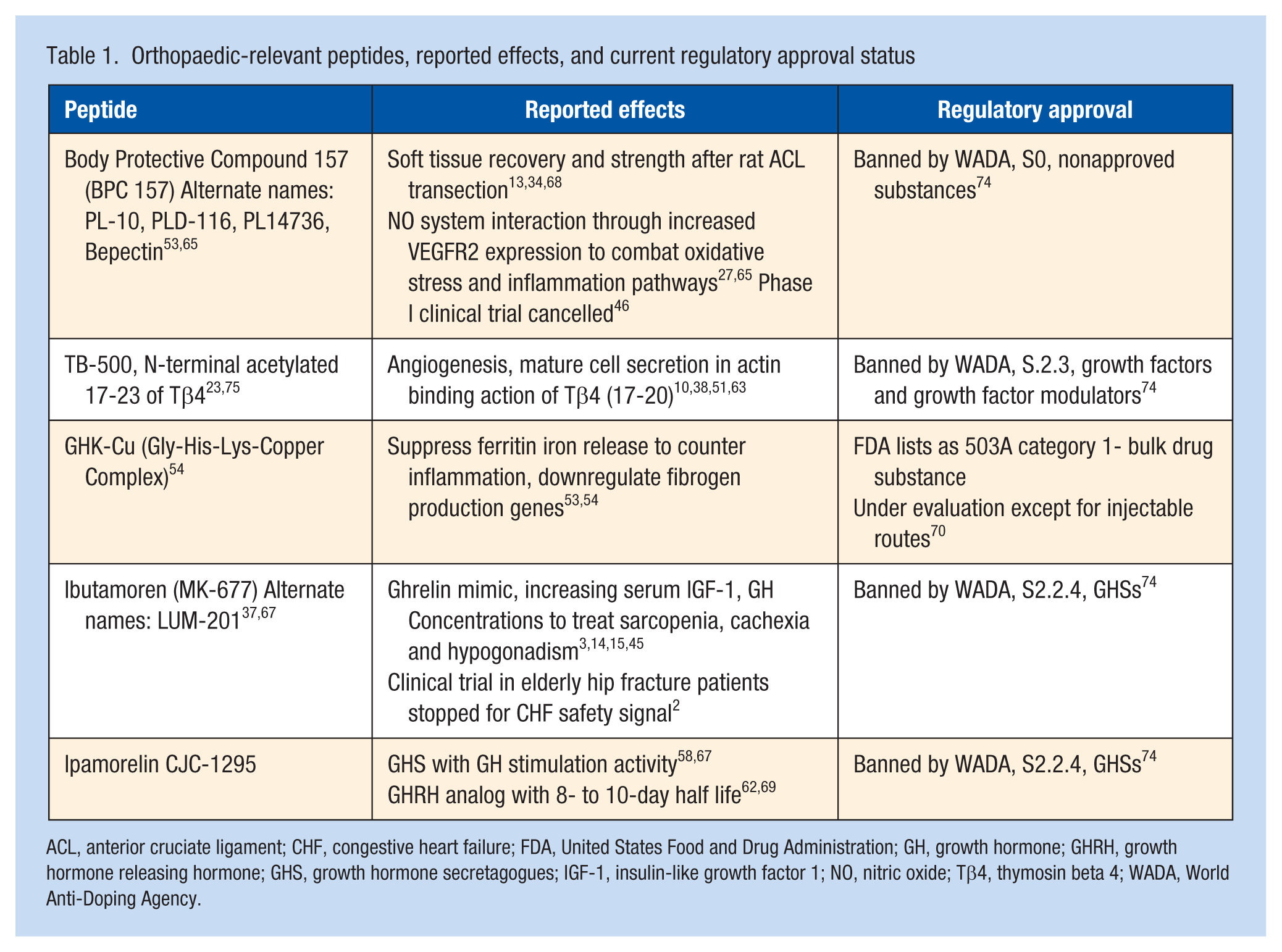
ACL, anterior cruciate ligament; CHF, congestive heart failure; FDA, United States Food and Drug Administration; GH, growth hormone; GHRH, growth hormone releasing hormone; GHS, growth hormone secretagogues; IGF-1, insulin-like growth factor 1; NO, nitric oxide; Tβ4, thymosin beta 4; WADA, World Anti-Doping Agency.
After the initial data extraction, a multistage automated filtering process using the Gemma 7B language model was applied to the raw dataset to identify posts and comments suitable for thematic analysis. 41 Posts and comments were included if they met the following criteria: (1) discussed personal experiences using peptides after orthopaedic surgery or musculoskeletal injury; (2) described perceived effects, dosing regimens, recovery outcomes, or interactions with healthcare providers; and (3) provided contextual details suggesting relevance to orthopaedic practice (e.g., anterior cruciate ligament [ACL] repair, tendon rupture, fracture recovery). Posts were excluded if they focused solely on cosmetic or bodybuilding-only peptide use, sexual performance, nonhuman or speculative content without experiential input, and use of peptides unrelated to musculoskeletal health (e.g., tanning peptides, nootropics alone).
For each included post, the full text and associated metadata (ID, title, self-text, URL, score, number of comments, creation timestamp) was extracted and stored in a comma-separated values (CSV) file. All associated comments were also collected and linked to their parent posts, with extracted data including body text, score, creation timestamp, parent ID, and whether the commenter was the original poster. To avoid redundant processing, a set of unique post IDs was maintained. Posts were anonymized, and identifying details were removed to ensure user privacy.
The final filtered dataset was analyzed thematically using Braun and Clarke’s 6-phase framework. 11 Two independent reviewers performed line-by-line inductive coding of posts and comments in NVivo (Lumivero). 19 Codes were refined iteratively and clustered into higher-order themes through constant comparison. Discrepancies were resolved by consensus, and emergent themes were mapped to conceptual domains reflecting patient perspectives on peptide use.
Of 18,950 posts initially identified, 6195 were excluded according to the predefined criteria, leaving 12,755 posts for analysis (67.3% meaningful classification rate). A total of 101 unique code combinations and 13 classification codes yielded 10 emergent themes: Protocol Information, Information Seeking, Patient Experience, Peer Consultation, DIY Medicine, Emotional Motivation, Medical Context, Healthcare Skepticism, Biohacking, and Safety Concerns (Table 2).
The 10 thematic categories determined after 6-phase thematic analysis by 2 independent reviewers and corresponding illustrative quotes from Reddit users
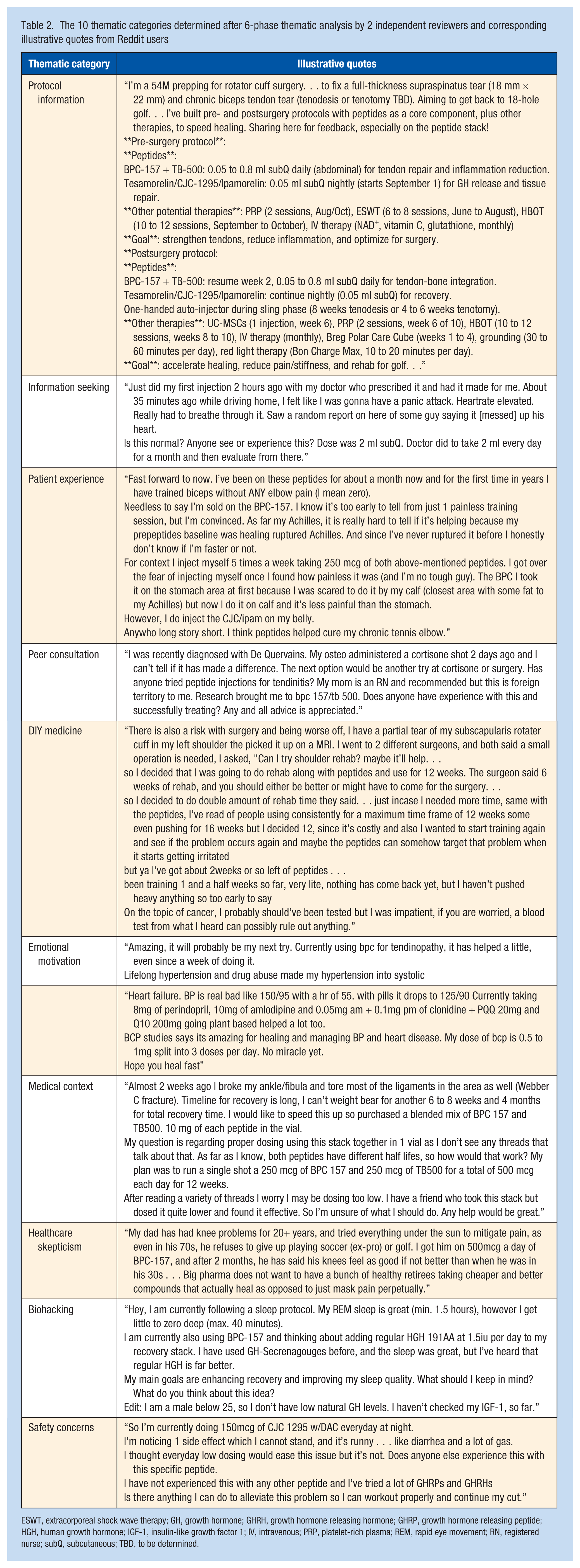
ESWT, extracorporeal shock wave therapy; GH, growth hormone; GHRH, growth hormone releasing hormone; GHRP, growth hormone releasing peptide; HGH, human growth hormone; IGF-1, insulin-like growth factor 1; IV, intravenous; PRP, platelet-rich plasma; REM, rapid eye movement; RN, registered nurse; subQ, subcutaneous; TBD, to be determined.
Most posts (66.5%) contained content spanning multiple themes (Figure 1). The 5 most frequent classification codes, each applied to >1000 posts, were “Dosing Regimen,” “Information Source,” “Peptide Positive Effect,” “Request for Advice,” and “Self-Experimentation” (Figure 2). The most common coupled themes were Protocol Information with Patient Experience, Protocol Information with Information Seeking, Protocol Information with DIY Medicine, Patient Experience with Information Seeking, and Protocol Information with Peer Consultation (Figure 3).
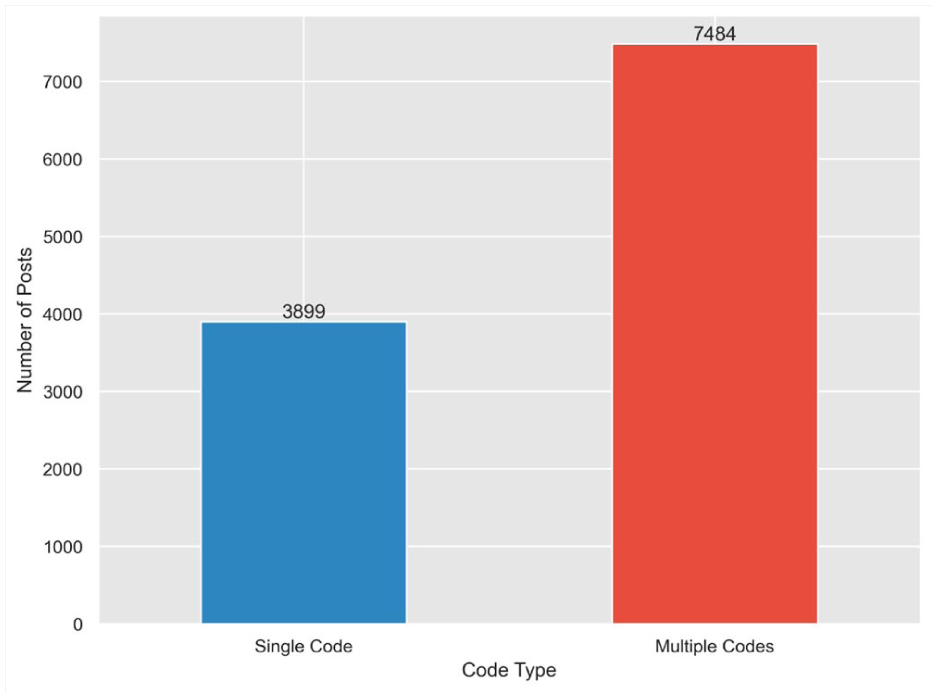
Number of posts classified with a single code and multiple codes.
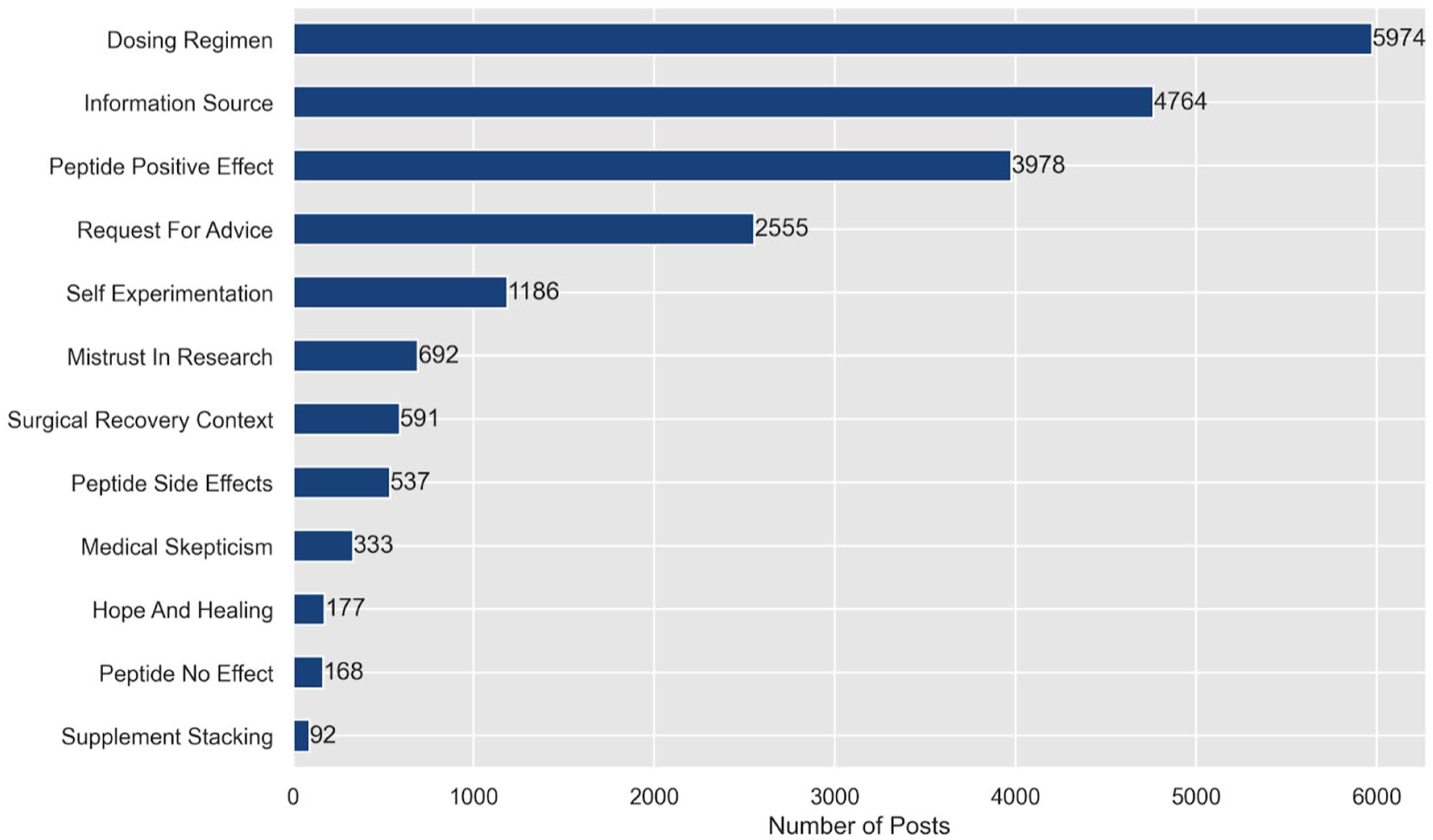
The 12 most frequent classification codes and the number of posts classified with each.
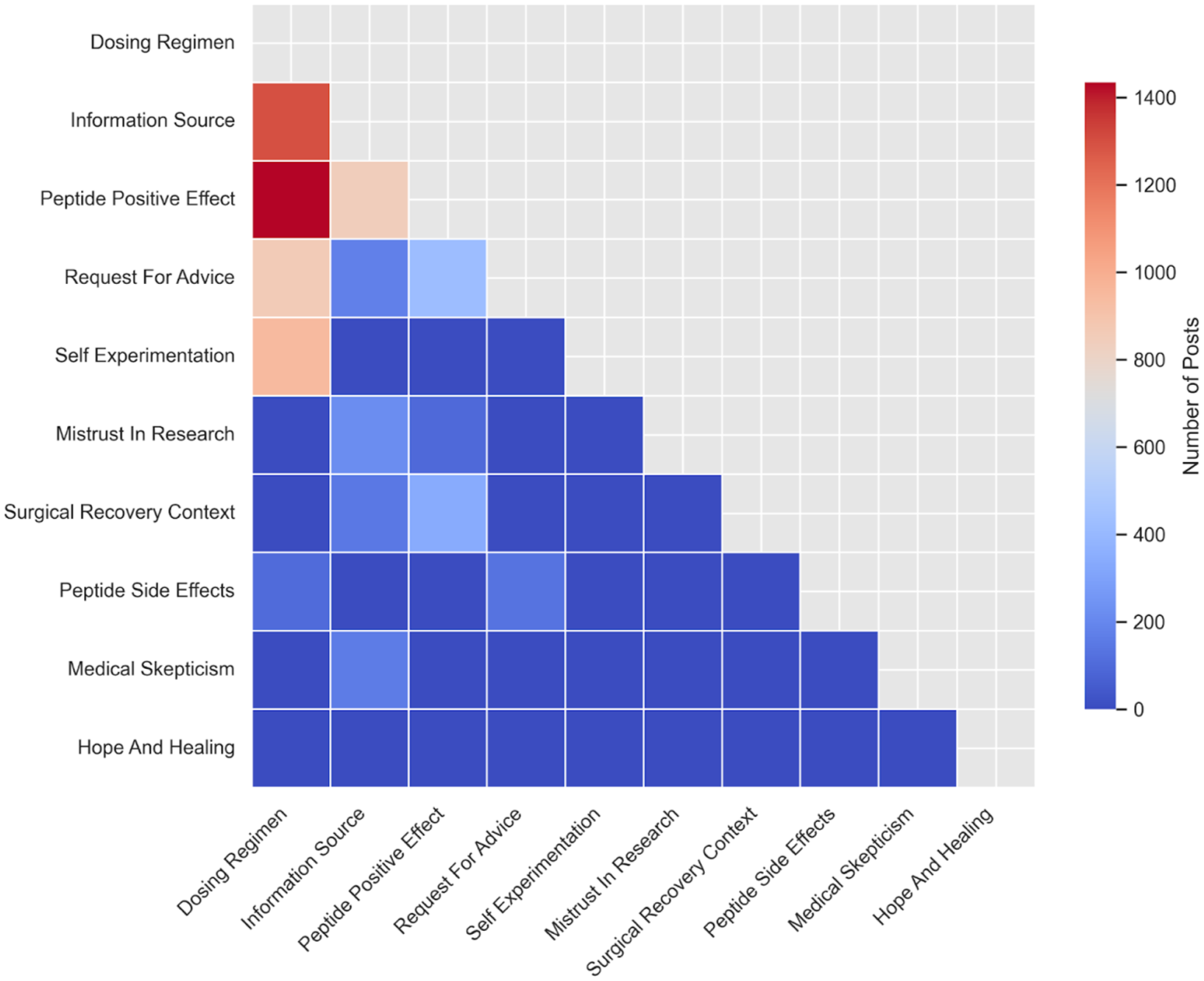
Co-occurrence of 10 emergent themes within post content.
The largest proportion of posts were classified within the Protocol Information theme, encompassing discussions of peptide administration, dosage, and frequency. A total of 5974 posts (28.4%) were classified with the “Dosing Regimen” code. The most frequent code pairings involved dosing regimens with reported positive effects (1434 posts, 11.2%), information sources (1297, 10.2%), self-experimentation (945, 7.4%), and requests for advice (862, 6.8%). Protocol-related discussions often addressed user motivations, desired effects, and information sources, and these posts frequently attracted high levels of engagement across other identified themes. Many users shared detailed protocols.
Many users in the analyzed subreddits sought information about protocols and experiences, both positive and negative. A total of 4764 posts (22.6%) were classified with the “Information Seeking” code, and 2555 with the “Request for Advice” code. Posts in these categories often cited journal articles, described personal experiences, or referenced other Reddit discussions as evidence. Requests commonly aimed to validate the author’s own experiences with a therapeutic effect or side effect, or to obtain advice on modifying or continuing a protocol.
In 3978 posts (18.9%), users described firsthand experiences with peptide use, often in response to requests for information. These accounts were sometimes presented as evidence supporting the efficacy of a personal protocol for a specific injury or goal. Many expressed satisfaction when peptides were perceived to resolve long-standing injuries. A total of 1434 posts (11.2%) described both a dosing regimen and positive effects, while 843 posts (6.6%) described information sources and positive effects, illustrating how favorable experiences were used to validate individual protocols.
Direct requests for advice appeared across several subreddits, with users seeking to validate protocols, question current practices, or explore new approaches for injuries and ailments. In some cases, this peer consultation was accompanied by skepticism toward medical professionals, with users suggesting their subreddit community was more helpful in addressing conditions with peptides. The “Request for Advice” code encompassed 2555 posts (12.1%) and was coupled with dosing regimen content in 862 posts (6.8%), often involving confirmation, rejection, or modification of an author’s chosen protocol. These posts frequently developed into extended exchanges between users and drew additional unprompted input from others. Content also overlapped with multiple other themes identified in this analysis.
Some users in the analyzed subreddits reported using peptides as substitutes for conventional medical care or as novel treatments for conditions they felt were inadequately addressed clinically. The “Self-Experimentation” code was applied to 1186 posts (9.3%), and 945 posts (7.4%) also included dosing regimen discussions related to treatment of injuries or other medical conditions. Reported injuries spanned a broad range of orthopaedic presentations, from tendinopathy and ligament or tendon tears to more complex surgical cases.
Some users portrayed peptides as a “savior” from unresolved diagnoses, chronic pain, and lifelong ailments. For others, personal suffering evoked strong emotional responses that motivated exploration of peptides as potential treatments for these burdensome conditions. A total of 177 posts (0.8%) expressed hope for healing with peptides, whereas 168 posts (0.8%) conveyed disappointment at their lack of effect. Within the “Patient Experience” theme, many anecdotes described both relief from pain and persistence of symptoms despite extensive peptide use.
Therapeutic peptide use in recovery after surgery or other procedures is of particular relevance to healthcare providers, especially in orthopaedics. A total of 591 posts (2.8%) described peptide use in pre- and postsurgical contexts, either as pretreatment before surgery or to support recovery. Given that different peptides are promoted for different purposes, these posts provide insight into how users integrate peptide use alongside medical treatment.
Some Reddit users described how distrust in modern healthcare contributed to their interest in peptides as treatment alternatives. A total of 692 posts (3.3%) were classified with the “Mistrust in Research” code, and 333 posts (1.6%) with the “Medical Skepticism” code. These posts portrayed peptides as existing outside mainstream medicine and emphasized growing interest driven by shared accounts of novel effects. Users expressed disdain for pharmaceutical companies and government agencies, while others argued that the absence of blanket patents limits the clinical adoption of certain peptides.
Peptides frequently appeared in discussions of “biohacking,” where people aim to optimize health and performance through supplements, lifestyle modifications, and specific mindsets. Several subreddits analyzed in this study, notably r/BioHackers, were identified through biohacking-related keywords. Unlike posts centered on injury treatment, these discussions often framed peptides as tools for performance enhancement, emphasizing accelerated recovery and improved outcomes. A total of 537 posts (2.6%) addressed side effects and safety concerns related to peptides, including both personal experiences and hypotheses about potential risks. Reported side effects included local injection-site reactions, multiple accounts of anhedonia (primarily with BPC-157), and diarrhea. While some users affirmed these reports, others attributed symptoms to alternative causes based on individual health backgrounds.
This thematic analysis of over 12,000 Reddit posts highlights the breadth and complexity of online discourse surrounding orthopaedic-relevant therapeutic peptide use. Within an active online community, discussions encompassed diverse themes including information exchange (Protocol Information, Information Seeking, Peer Consultation, Safety Concerns), personal narratives (Patient Experience, Emotional Motivation), and intersections with medical practice (DIY Medicine, Medical Context, Healthcare Skepticism, Biohacking) (Table 2). The predominance of posts within the Protocol Information theme underscores a substantial research gap, as patients and lay users are frequently turning to one another in lieu of rigorous clinical evidence to guide peptide use.
Across subreddits, dosing regimens emerged as the most frequently discussed topic (Figure 2), with users seeking and sharing highly specific details about peptide protocols. These posts often blended protocol-related information with anecdotal experiences, DIY experimentation, and peer-to-peer advice (Figure 3). The reliance on social media, including Reddit, for such information reflects broader trends in health-seeking behavior.1,12,50 Social media has influenced significantly how patients access and use health information, with up to 80% of internet users seeking health-related content online.24,25,36,39 Platforms such as Facebook, Instagram, WhatsApp, Youtube, and Reddit provide both passive exposure and active searching for information on diseases, treatments, and lifestyle practices, often before and after clinical encounters.8,36,40 Social media further facilitates peer support, advocacy, and rapid dissemination of public health messaging, while also connecting patients with others experiencing similar conditions, which can enhance self-management and emotional support.11,26,39 These behaviors intensified during public health emergencies such as the COVID-19 pandemic, when reliance on social media influenced vaccination uptake and preventative health practices.26,47,76 Social media also poses risks, including exposure to misinformation, confirmation bias, and variable information quality, as many users do not verify content with healthcare professionals, which can lead to inappropriate changes in treatment.29,47 Professional organizations, such as the American Academy of Pediatrics, have emphasized the need for physicians to guide patients toward credible online sources and engage proactively to counteract misinformation. 39 A 2018 study by Record et al 59 demonstrated that Reddit users who obtain health-related information online are more likely to apply it in practice compared with other forms of content consumption. This finding reinforces the value of Reddit as a lens through which clinicians and researchers may better understand patient motivations, approaches have been used in addiction medicine, psychiatry, and other fields to bring patient perspectives into medical discourse.20,32,44,50,72 To our knowledge, this study is the first to characterize Reddit content specifically addressing orthopaedic-relevant therapeutic peptides such as BPC-157, TB-500, GHK-Cu, and MK-677.
Notably, 3 themes including DIY Medicine, Medical Context, and Healthcare Skepticism, captured conversations that framed peptides explicitly as adjuncts or alternatives to conventional care, often in the context of distrust toward modern healthcare. While social-media-driven misinformation contributes to such skepticism, historical and ongoing inequities in healthcare access, and variable quality of care also play a significant role.4,9,64 For many users, the appeal of peptide use lies not only in perceived therapeutic benefit but also in the autonomy and control it affords, particularly when traditional healthcare systems are perceived as inaccessible, dismissive, or overly restrictive. In this sense, online forums function as both information hubs and communities of shared experience, reinforcing beliefs and shaping health decision-making outside of the clinical setting.8,24,25,36,39,47 The convergence of misinformation, peer-to-peer reinforcement, and lived experiences of healthcare inequities makes skepticism toward conventional practice especially difficult to counter.29,47 However, these same discussions also provide valuable insight into patient priorities, concerns, and motivations, which are rarely captured in formal clinical encounters. For orthopaedic providers, these findings emphasize the importance of remaining informed about peptide-related literature, proactively engaging patients in open dialogue, and providing evidence-based guidance without dismissing the perspectives patients bring from online communities.
Safety concerns were also raised frequently (Table 2). Although anecdotal in nature, such discussions may inform the design of future clinical studies. Reports of adverse effects, uncertainty about product purity, and questions about long-term safety reflect the absence of standardized manufacturing and regulatory oversight for many peptides currently circulating online or through nonmedical channels. Systematic impurity profiling of falsified peptide drugs acquired from illegal internet pharmacies has demonstrated highly variable purity (5% to 75%), presence of toxic contaminants such as arsenic and lead, and significant risks of subacute to chronic toxicity, underscoring the dangers associated with unregulated products.30,31 Gaps in regulatory guidance and manufacturing standards contribute to uncertainty regarding impurity profiles and immunogenicity risk, especially for follow-on and general peptide products.18,49,57 User generated accounts can therefore complement these findings by identifying outcomes of greatest concern to patients and guiding the development of relevant safety endpoints. Social media and online health fora are increasingly recognized as valuable sources of real-world data for pharmacovigilance and drug development, enabling identification of patient-reported adverse events and outcomes that may not be captured in traditional clinical trials.56,73 The increasing patient demand for biologics, including peptides, has already prompted the American Academy of Orthopaedic Surgeons (AAOS) to convene a 2018 research symposium focused on advancing biologics evaluation and consensus strategies for musculoskeletal injury treatment. 35 However, the present analysis highlights a persistent disconnect between widespread public use of peptides and their limited scientific evaluation, with major gaps in evidence regarding efficacy, safety, dosing, and long-term outcomes.16,21,31 Carefully designed studies are needed to assess both short- and long-term effects, interactions with other therapies and supplements, and the potential role of peptides in surgical recovery and musculoskeletal disease management. Research must also account for heterogeneity in dosing regimens and delivery methods, which are frequently debated in online forums but remain unstandardized in practice. Ultimately, developing evidence-based guidelines will be essential, not only to ensure safe and informed use, but also to equip orthopaedic providers with the knowledge necessary to counsel patients who are already experimenting with these agents outside traditional healthcare settings.
This study has several important limitations. Because Reddit users represent a self-selecting population, findings may not reflect the perspectives of the broader patient community. Reddit demographics also tend to skew toward younger, white, English-speaking males, which may limit generalizability. 5 User anonymity precludes validation of the accuracy of posts or the ability to conduct follow-up for long-term outcomes. In addition, participation requires Internet access and a device, introducing further socioeconomic bias. Finally, subreddit-specific rules and community norms may shape the type of content shared, potentially favoring positive over negative reports. While these limitations constrain interpretation, the large dataset and systematic approach used here provide valuable insight into real-world conversations about peptide use that would otherwise remain undocumented.
This qualitative thematic analysis of Reddit posts on peptide use in orthopaedic contexts revealed a broad spectrum of discussion topics, spanning information exchange, personal experiences, and connections with medical practice. Most posts were classified under the Protocol Information theme, with users sharing detailed accounts of dosing regimens and perceived outcomes. Reports varied from improved recovery, to lack of benefit or adverse effects, reflecting both patient interest and uncertainty regarding peptide use. These findings demonstrate how Reddit offers unique insight into patient perspectives and unmet needs outside traditional clinical settings. For orthopaedic providers, this emphasizes the importance of remaining informed and engaging patients with evidence-based guidance, while underscoring the urgent need for rigorous clinical research to determine efficacy, safety, and role of peptides in musculoskeletal care.
Supplemental Material
sj-docx-1-sph-10.1177_19417381251411343 – Supplemental material for Injuries, Injections, and Internet Forums: A Qualitative Study of Reddit User Perspectives on Peptide Therapy After Orthopaedic Surgery
Supplemental material, sj-docx-1-sph-10.1177_19417381251411343 for Injuries, Injections, and Internet Forums: A Qualitative Study of Reddit User Perspectives on Peptide Therapy After Orthopaedic Surgery by Ashley E. Rosenberg, Bennett Taylor, Rhea D. Rasquinha, Haneef Khan, Matthew Quinn, Stephen Marcaccio and Nicholas Lemme in Sports Health
Footnotes

References
Supplementary Material
Please find the following supplemental material available below.
For Open Access articles published under a Creative Commons License, all supplemental material carries the same license as the article it is associated with.
For non-Open Access articles published, all supplemental material carries a non-exclusive license, and permission requests for re-use of supplemental material or any part of supplemental material shall be sent directly to the copyright owner as specified in the copyright notice associated with the article.
