






Abstract
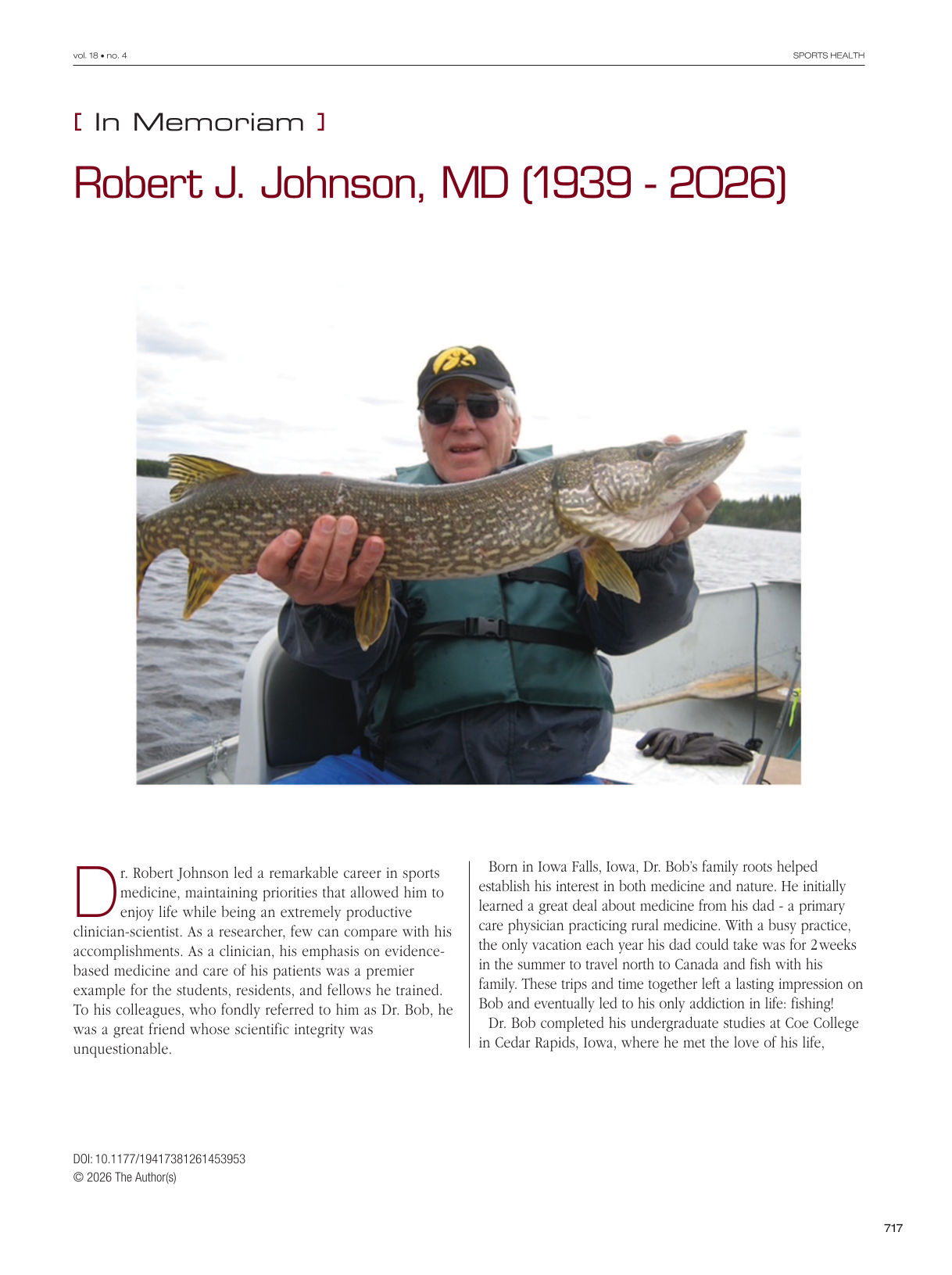
Dr. Robert Johnson led a remarkable career in sports medicine, maintaining priorities that allowed him to enjoy life while being an extremely productive clinician-scientist. As a researcher, few can compare with his accomplishments. As a clinician, his emphasis on evidence-based medicine and care of his patients was a premier example for the students, residents, and fellows he trained. To his colleagues, who fondly referred to him as Dr. Bob, he was a great friend whose scientific integrity was unquestionable.
Born in Iowa Falls, Iowa, Dr. Bob’s family roots helped establish his interest in both medicine and nature. He initially learned a great deal about medicine from his dad - a primary care physician practicing rural medicine. With a busy practice, the only vacation each year his dad could take was for 2 weeks in the summer to travel north to Canada and fish with his family. These trips and time together left a lasting impression on Bob and eventually led to his only addiction in life: fishing!
Dr. Bob completed his undergraduate studies at Coe College in Cedar Rapids, Iowa, where he met the love of his life, Shirley. Their marriage was a source of great joy and happiness for 62 years and helped him tremendously when his health failed. From Coe College, Bob moved to the University of Iowa for medical school and then to Philadelphia General for his surgical internship where he experienced urban medicine for the first time. Back in Iowa, his residency in orthopaedic surgery at the University of Iowa had a profound effect on his professional career: his orthopaedic principles were rock solid and evidence based. When his orthopaedic training was complete, Dr. Bob served his country as Chief of Orthopedics at Loring Air Force base in Maine. There, he recognized the natural beauty of the Eastern States, which led him to settle at the University of Vermont in 1971 as an Assistant Professor in Orthopaedics. Eager to continue improving his sports medicine clinical and research skills, he spent a year (1978-1979) at the Karolinska Institute in Stockholm under the tutelage of Dr. Ejnar Eriksson, who became a lifelong colleague and friend.
While Dr. Bob enjoyed clinical orthopaedics, his brilliance shone brightest in his research work. Over a 49-year span, Dr. Bob led a team of clinicians and engineers, centered at the Sugarbush Ski Resort in Vermont, where he collected injury data on skiers and snowboarders. Those data findingshelped transform the ski industry for the better as they began to focus on preventing injuries, rather than just enhancing performance. The world of skiing owes that Vermont team of researchers led by Dr. Johnson a significant debt of gratitude for making ski equipment much safer. I know of no other injury research effort in orthopaedics that lasted for almost a half century - a fact that is a testament to the aptitude, commitment, and dedication of Dr. Johnson and that team.
It comes as no surprise that Dr. Bob’s research team won every research award sponsored by the AOSSM. Most importantly, Dr. Bob’s team was awarded the Kappa Delta Award by the AAOS in 1994 - the pinnacle of orthopaedic research recognition. Throughout all the research recognition as well as his Presidency of the AOSSM in 1987, Dr. Bob remained the same humble gentleman. Truthfully, he enjoyed splitting firewood with an axe at his woodpile more than the limelight of the stage.
I first met Dr. Johnson in 1989 on the first AOSSM traveling fellowship to Asia. Initially, I was quite intimidated by him because I knew of his expertise in research and clinical medicine. However, it didn’t take long to realize he was also a humorous and relatable colleague who could enjoy drinking beer and discussing Big 10 football!
My most valued educational experiences after my fellowship were sitting next to Dr. Bob during scientific presentations at professional meetings. His critiques of presentations often took me well beyond what I had gleaned from the presentations myself. Dr. Bob’s biomechanics background and scientific integrity made him an integral component of several professional societies where he could continue to share his expertise in sports medicine.
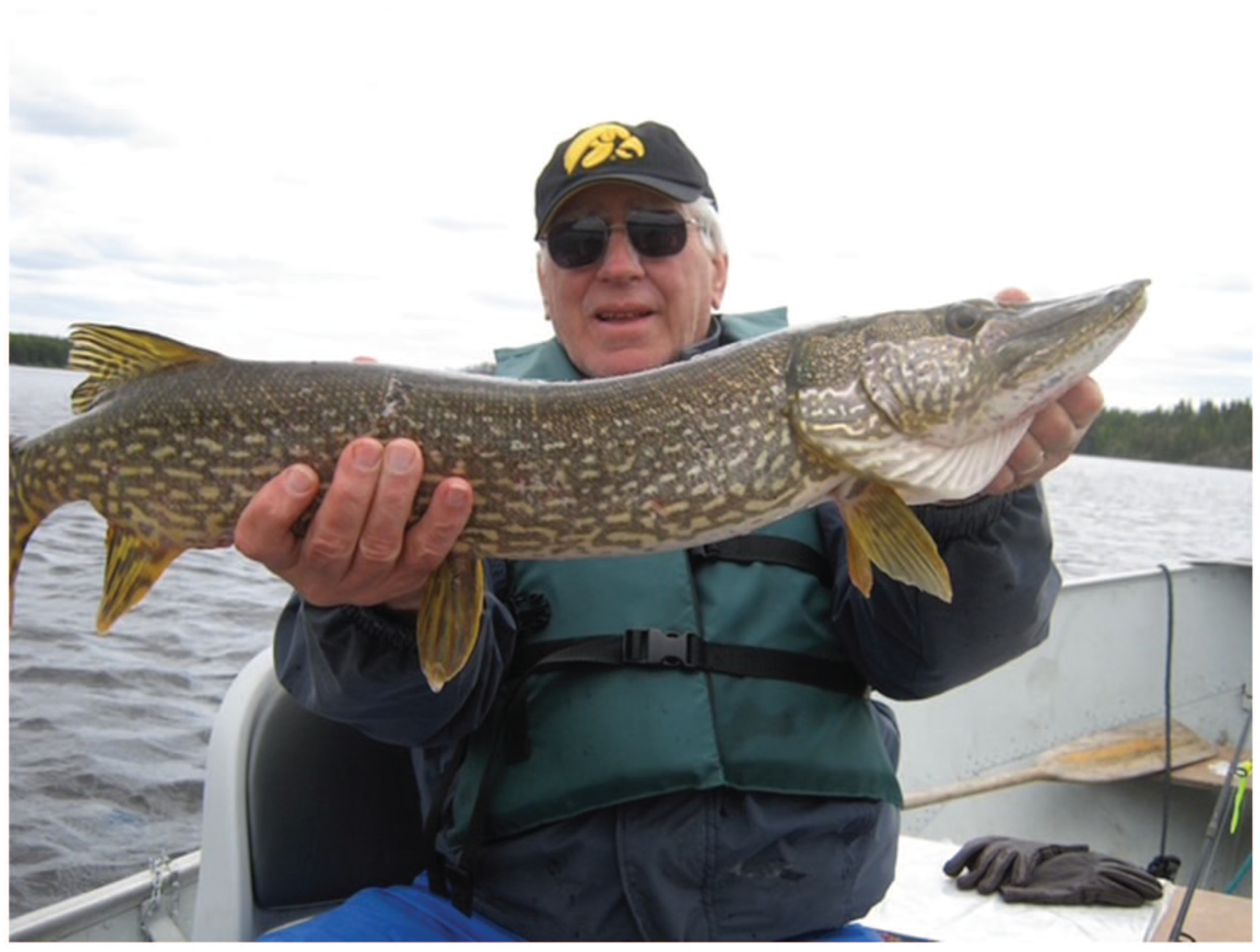
After Dr. Bob retired, I was fortunate to spend more time with him on our annual fishing trips to Northern Manitoba. I know of no one that enjoyed catching fish more than Dr. Bob. From sunup to sundown and sometimes well beyond, he wanted to be on the water testing every lure in his tackle box. One year, he caught and released over 350 walleyes in the first 4 days of our trip. On the fifth day, we awoke to pouring rain and I figured it was a good day to sleep in, but at 7:00 a.m., there stood Dr. Bob in full rain gear ready to head out. A little rain wasn’t going to prevent him from catching more fish.
It was those fishing and birding trips with his wife Shirley that embodied Dr. Bob’s love and appreciation for the natural world. Late night discussions over campfires illuminated his great love for family and friends. Dr. Bob accomplished a tremendous amount of success as a clinician-scientist while dedicating time to enjoy life, setting a great example for us all. Without a doubt, a life well lived and an enduring legacy for sports health!