






Abstract
Background:
Asymmetry in unilateral functional performance may affect both performance outcomes and injury risk in elite athletes. Understanding the relationship between asymmetry ratios and performance parameters in handball players can inform training and monitoring strategies. This study aimed to investigate the relationship between asymmetry ratios obtained from unilateral functional performance tests in elite male handball players and to determine the effect of a 10% asymmetry threshold on performance outcomes.
Hypothesis:
Asymmetry ratios above 10% in lower extremity functional tests negatively influence performance outcomes in elite male handball players.
Study Design:
Cross-sectional study with randomized measurements.
Level of Evidence:
Level 3.
Methods:
A total of 41 elite male handball players (age, 20.98 ± 2.15 years; height, 185.90 ± 7.58 cm; weight, 92.61 ± 14.72 kg; body mass index, 26.76 ± 3.52 kg/m2; training experience, 11.27 ± 3.45 years) participated voluntarily. Lower extremity strength was evaluated using vertical jump (VJ), counter movement jump (CMJ), and 5 single-leg hop tests (SLHTs): single hop for distance (SH), triple hop (TH), crossover hop (CH), medial side triple hop (MSTH), and 90° medial rotation hop (MRH). Dynamic balance was assessed via the Y balance test (YBT). Participants were classified according to a 10% asymmetry threshold for comparison.
Results:
Moderate positive correlations were observed between asymmetry ratios in certain multidirectional jump tests and dynamic balance parameters (P < 0.05). Significant differences between the left and right sides were observed in the VJ, CMJ, SH, TH, MRH, and anterior (ANT) scores (P < 0.05). Participants within the <10% asymmetry threshold outperformed the >10% group across all tests. Notably, effect sizes were large (d = 0.85-2.62) for VJ, CMJ, SH, MRH, ANT, and posteromedial scores (P < 0.05).
Conclusion:
A 10% strength asymmetry ratio represents a critical reference point in elite male handball players. Systematic monitoring of asymmetry ratios is important not only for injury prevention but also for optimizing performance outcomes.
Clinical Relevance:
Identifying and correcting strength asymmetry, and maintaining them below the 10% threshold, can improve performance and reduce the risk of injury in elite handball athletes.
Handball is an Olympic sport that requires the integration of both anaerobic and aerobic energy systems and involves short-term high-intensity actions (such as jumping, sprinting, and change of direction).17,27 It is characterized by high-intensity physical contact and is therefore among the sports with a high injury incidence. 31 Lower extremity injuries are quite common in team handball. Epidemiological studies consistently show that lower extremity injuries account for approximately 54% of all injuries among elite athletes. 3 Among these injuries, the most frequently affected areas are the knee and ankle. Indeed, knee injuries account for approximately 30% of lower extremity injuries, while ankle injuries occur at a rate of approximately 25%. 29 These findings highlight the high incidence of lower extremity injuries in handball and underscore the importance of targeted prevention strategies. 29 In addition, this high injury incidence is associated with impaired control of skeletal muscle strength production and strength asymmetry due to repetitive loading, overuse, and neuromuscular stress in athletes during competitions and similar conditions.1,3 In particular, strength asymmetries and neuromuscular control disorders in the lower extremity muscle groups of handball players have been found to be associated with an increased incidence of injury. 7
On the other hand, strength asymmetry is quite important not only in terms of injury incidence but also in terms of athletic performance and its effect is 2-fold. 10 While a certain level of asymmetry can provide a technical advantage in athletic populations, asymmetry beyond specific thresholds disrupts movement economy and increases energy cost. 26 The 10% asymmetry threshold, which is commonly used as a cut-off value in the literature, has been reported as a meaningful limiting factor in athletic performance. 7 A study found that counter movement jump (CMJ) performance was affected negatively when strength asymmetry exceeded 10%. 37 Although there are studies on asymmetry specific to handball,6 -8 it is evident that these studies have focused largely on individual performance tests. Given the task-specific nature of asymmetry, which implies that results from different tests may not be consistent with one another, 4 it is noteworthy that the relationships between asymmetry ratios obtained from dynamic balance tests and asymmetry scores derived from vertical and multidirectional jump tests have not been investigated sufficiently. Furthermore, although the 10% asymmetry threshold - widely used in the literature - is accepted as a practical criterion for identifying significant interlimb differences, 4 no study has been found that simultaneously examines this threshold across different domains of functional performance and relates it to performance outcomes. Therefore, the present study is of considerable importance, as it aims to address a significant gap in literature.
Considering this information, the aim of this study was to investigate the correlation between asymmetry ratios obtained from unilateral functional performance tests in elite male handball players and to determine the effect of the 10% asymmetry threshold on performance outcomes. The study hypothesized that the asymmetry values obtained would show significant moderate positive correlations in specific tests, and that participants with asymmetry scores above 10% would demonstrate significantly lower performance compared with those in the <10% asymmetry group.
Methods
Study Design
The study had a cross-sectional study design with randomized measurements. Participants visited the laboratory 4 times, including a familiarization session for the measurements. During their first visit, participants were given general information about the study and informed about the test protocols they would apply during the measurement process. In addition, height, bodyweight, and body mass index (BMI) measurements were taken for volunteers participating in the study, and practical applications related to the tests were demonstrated. During their second visit, participants were asked to select cards prepared by researchers that ensured the randomization of the tests. The randomized test cards were as follows: first card: vertical jump test (VJ), CMJ test; second card: 5 different single leg hop tests (SLHT) (single leg hop for distance [SH], triple leg hop for distance [TH], crossover hop for distance [CH], medial side triple hop for distance [MSTH], and 90° medial rotation hop for distance [MRH]), and third card: Y balance test (YBT). Participants performed the tests indicated on the cards they selected across 3 visits (including the randomization session), with 24-hour intervals between sessions (Figure 1). A 24-hour interval between test sessions was chosen to minimize the potential effects of fatigue, ensure participants had sufficient time to recover, and reduce any carry-over effects that might occur between measurements. 24 All tests were administered unilaterally (to the right and left sides). A 5-minute rest period was provided between tests administered during the same session. For participants who do not feel ready, this period has been organized so that it will not exceed twice the duration. A 15-minute warm-up protocol (dynamic stretching and mobilization) was performed with participants before the tests in each measurement session. During the measurements, participants were instructed not to engage in any exercise or physical activity for 48 hours before the start of the tests, to avoid consuming stimulants such as caffeine, and to maintain their usual sleep and dietary habits. However, no records were kept regarding these routines. All measurements were performed at the same time of day (14:00 to 16:00) and under similar environmental conditions (temperature ranging from 19°C to 22°C and humidity from 52% to 60%).
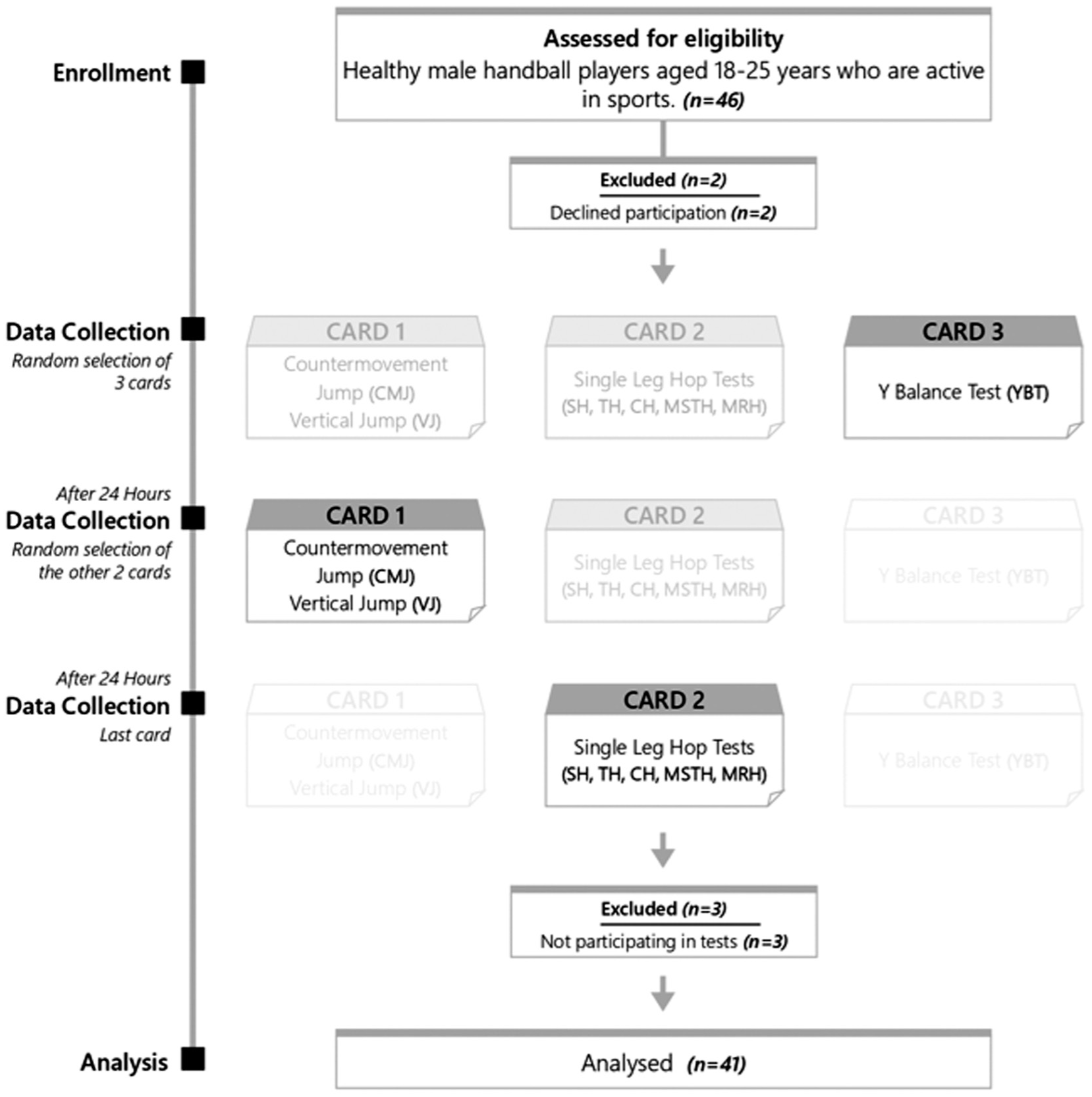
Study flowchart. CH, crossover hop for distance; CMJ, countermovement jump test; MSTH, medial side triple hop for distance; MRH, 90° medial rotation hop for distance; SH, single leg hop for distance; SLHT, single leg hop tests; TH, triple leg hop for distance; VJ, vertical jump test; YBT, Y balance test.
The study was conducted in accordance with the ethical principles stated in the Declaration of Helsinki. Ethical approval for this study was obtained from Hakkari University Committee on Research and Publication Ethics (2025/210).
Participants
A total of 41 male handball players who participate actively in handball (age, 20.98 years; height, 185.90 cm; weight, 92.61 kg; BMI, 26.76 kg/m2; training experience, 11.27 years) participated voluntarily in the study (Table 1). The sample size of the study was determined by G*Power (Version 3.1.9.6) analysis (d = 0.8; α = 0.05; 1 – β = 0.8) and the minimum number of subjects was 32. The inclusion criteria were actively playing handball, having ≥5 years of active training history, having no history of serious injury in the last 6 months, and training ≥3 times a week. Volunteers who did not meet the inclusion criteria were excluded from the study. The subjects were informed about the potential risks and benefits of the test procedures they would undergo during the study and were asked to sign a written informed consent form. However, 2 participants who met the inclusion criteria before the study were excluded because they indicated they did not wish to participate. In addition, 3 participants were excluded by the researcher because they did not attend the tests regularly.
Descriptive data of the subjects (n = 41)
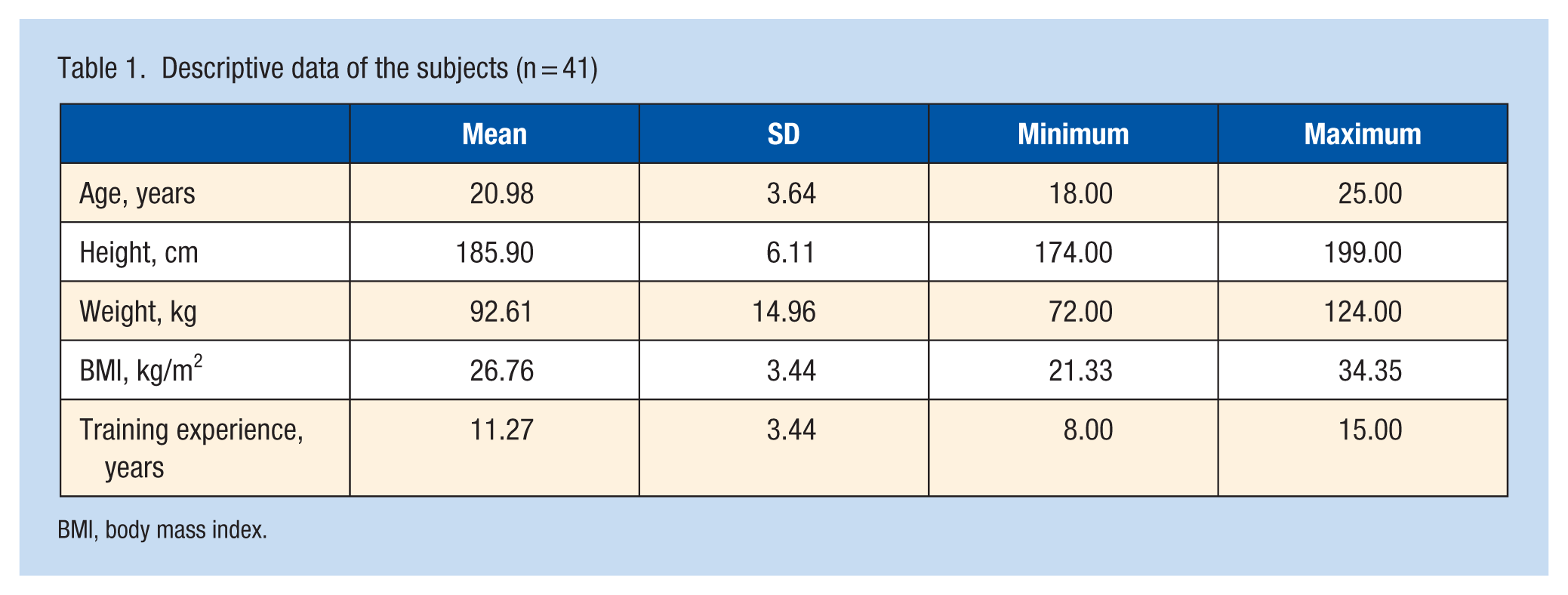
BMI, body mass index.
Evaluation Tools
Anthropometric Measurements
Body weight and height measurements were taken from participants in accordance with anthropometric measurements. A height measuring device with an accuracy of 0.1 cm (Holtain Ltd) was used for height measurements. A body composition analyzer (Jawon Body Composition Analyzer Model X-Scanplus II) was used to measure the bodyweight of participants. Measurements were taken barefoot in the anatomical position. 25 BMI (kg/m2) data were obtained using the participants’ height and bodyweight results (body weight, kg; height, m2).
VJ Test
Participants’ vertical jump heights were measured using a digital vertical jump device (Takei 5406 Jump-MD Vertical Jumpmeter). The vertical jump mat was placed on a flat rubber surface at the start of the test. The researcher then attached the belt (the same person attached the digital belt in all trials) to the subjects’ abdominal region and tightened the strap attached to the rubber mat. While participants were on the foot they were going to jump on, the other leg was bent at the knee at approximately 90°. Participants performed a vertical jump with free arm swing when they felt ready. The test was conducted separately for the right and left sides, with 2 trials performed for each side, separated by 3-minute to 4-minute passive rest intervals. The best score achieved by participants was recorded in centimeters. 19
CMJ Test
Participants’ CMJ jump heights were measured using a digital vertical jump device (Takei 5406 Jump-MD Vertical Jumpmeter). The test was performed without arm swing and unilaterally (right and left). For the test, participants stood upright on the jumping leg while the other leg was flexed at approximately 90° at the knee, and their arms were fixed at waist level. When the subjects were ready, they squatted down by quickly bending their knees and hips and performed a vertical jump with maximum power in the shortest time possible. The subjects’ attempts to maintain their balance by bending their knees and standing softly on the ground were considered successful. Two trials were performed with 3-minute to 4-minute passive rest intervals between each side, and the best score was recorded in centimeters. 28
Y-Balance Test
For the participants’ dynamic balance test measurements, 3 strips (⅄-shaped) 15 cm wide were placed on the floor in the anterior (ANT), posteromedial (PM), and posterolateral (PL) directions. The angle between the strips was 90° between PM and PL, and 135° between the others. The point where the 3 strips meet was designated as the zero point. Participants placed their toes on the zero points for the ANT score and their heels on the zero points for the other directions. During the application phase, participants extended the foot opposite their fixed foot as far as possible in the ANT, PM, and PL directions and then returned to the starting position. Three consecutive trials were performed for each direction. Participants who were able to return their moving feet to the starting position without losing their balance were considered successful. The average of the reach distances obtained in the 3 trials for each direction was recorded in centimeters. 35
Single Leg Hop Tests
A measuring tape (15 cm wide and 6 m long) was placed on the floor for participants’ SLHT measurements. Measurements were performed unilaterally (right to left). During the preparation phase, participants placed the foot they would jump with on the starting line and waited with the opposite foot bent at approximately 90°. When ready, participants performed the jump with free arm swing, following the required protocol for each test. Landing on the jumping leg and maintaining balance in this position for 3 seconds was considered the success criterion. According to this protocol, participants performed a single jump in the SH test and 3 consecutive jumps in the TH test. In the CH test, participants executed 3 consecutive jumps in a crosswise pattern, alternating to the right and left sides of the measuring tape relative to the previous direction. After placing the medial sides of their feet on the starting line for the MRH test, they performed a single 90° rotational jump when ready. In the MSTH test, participants placed the medial side of their feet on the starting line and then performed 3 consecutive jumps in the medial direction. Participants were given 3 attempts for each test, and in successful repetitions, the distance between the starting point and the subjects’ heels was measured in centimeters, and the best result was recorded.11,32,34
Statistical Analysis
The study data were analyzed using IBM SPSS statistical software package (Version 25.0). Descriptive statistics are presented as means and standard deviations. The normality of the data and the homogeneity of the variances were assessed using the Shapiro-Wilk test, Q-Q plots, and the Levene test, respectively. The findings indicated that the data followed a normal distribution. Paired Samples t-test was used to compare the right and left sides in the data obtained from the participants’ unilateral functional performance tests. Interlimb asymmetry was calculated using the formula (stronger limb-weaker limb/stronger limb × 100). 18 The Pearson correlation test was used in the correlation analysis between the asymmetry indices obtained from all tests. In addition, the independent samples t-test was used for performance comparisons based on the 10% threshold method for each test. CIs were reported, and Cohen’s d was calculated for paired comparisons (t-tests) and interpreted as insignificant (<0.2), small (0.2-0.5), medium (0.5-0.8), and large (>0.8). 9 The significance level was set at P < 0.05 for all tests.
Results
Figure 2 compares the functional performance test results of participants on the right and left sides. Comparison results showed significant differences in test results for VJ (P < 0.001; d = 0.78; 95% CI [0.14, 1.42]), CMJ (P < 0.001; d = 0.75; 95% CI [0.12, 1.38]), SH (P < 0.001; d = 0.35; 95% CI [–2.76, –1,23]), MRH (P = 0.002; d = 0.23; 95% CI [0.38, 2.84]), MSTH (P = 0.03; d = 0.24; 95% CI [–4.25, –2,76]), and ANT (P < 0.001; d = 0.76; 95% CI [0.13, 1.39]) tests. However, there was no statistically significant difference in the other tests (P > 0.05).
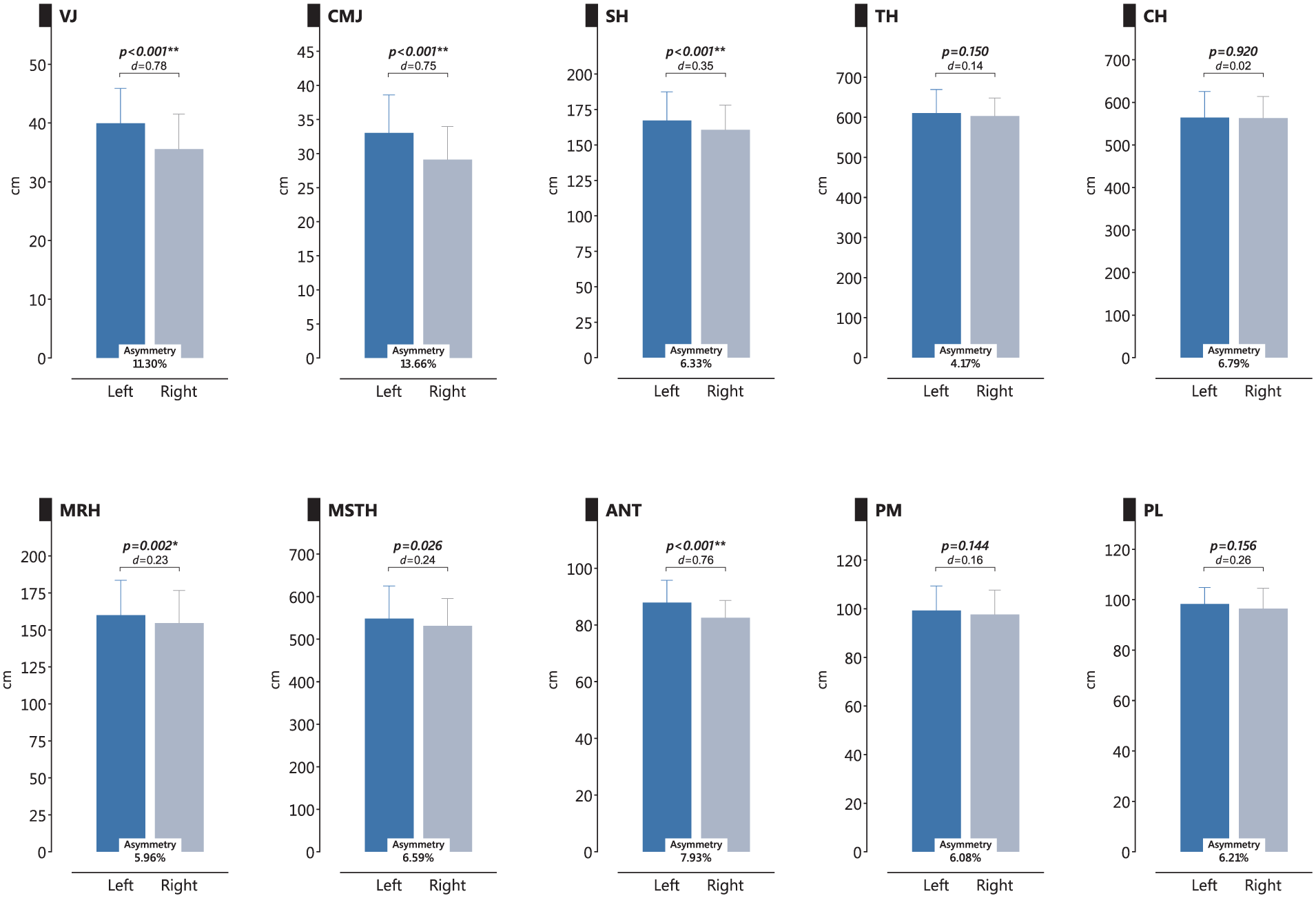
Comparison of functional test results on the right and left sides. ANT, anterior; CH, crossover leg hop for distance; CMJ, counter movement jump; d, Cohen’s effect size; MRH, 90° medial rotation test; MSTH, medial side triple hop test; PL, posterolateral; PM, posteromedial; SH, single leg-hop for distance; TH, triple leg hop for distance; VJ, vertical jump. *P < 0.05; **P < 0.001.
Figure 3 presents the comparison of participants’ functional performance outcomes between the right and left sides, based on the 10% asymmetry threshold. According to the results, participants in the <10% asymmetry group showed significant differences in favor of the right side for VJ (P < 0.001; d = 2.62; 95% CI [1.40, 3.84]), CMJ (P = 0.02; d = 0.85; 95% CI [0.05, 1.65]), SH (P = 0.01; d = 0.86; 95% CI [0.06, 1.66]), MRH (P = 0.02; d = 0.98; 95% CI [0.15, 1.81]), and PM (P = 0.01; d = 0.89; 95% CI [0.08, 1.70) tests, while on the left side, significant differences were observed in the VJ (P < 0.001; d = 1.52; 95% CI [0.55, 2.49]), ANT (P < 0.001; d = 1.74; 95% CI [0.72, 2.76]), and PM (P = 0.001; d = 1.45; 95% CI [0.50, 2.40]) tests compared with the >10% asymmetry group. In other tests, although participants in the <10% asymmetry group achieved higher scores than those in the >10% asymmetry group, no statistically significant difference was detected (P > 0.05).
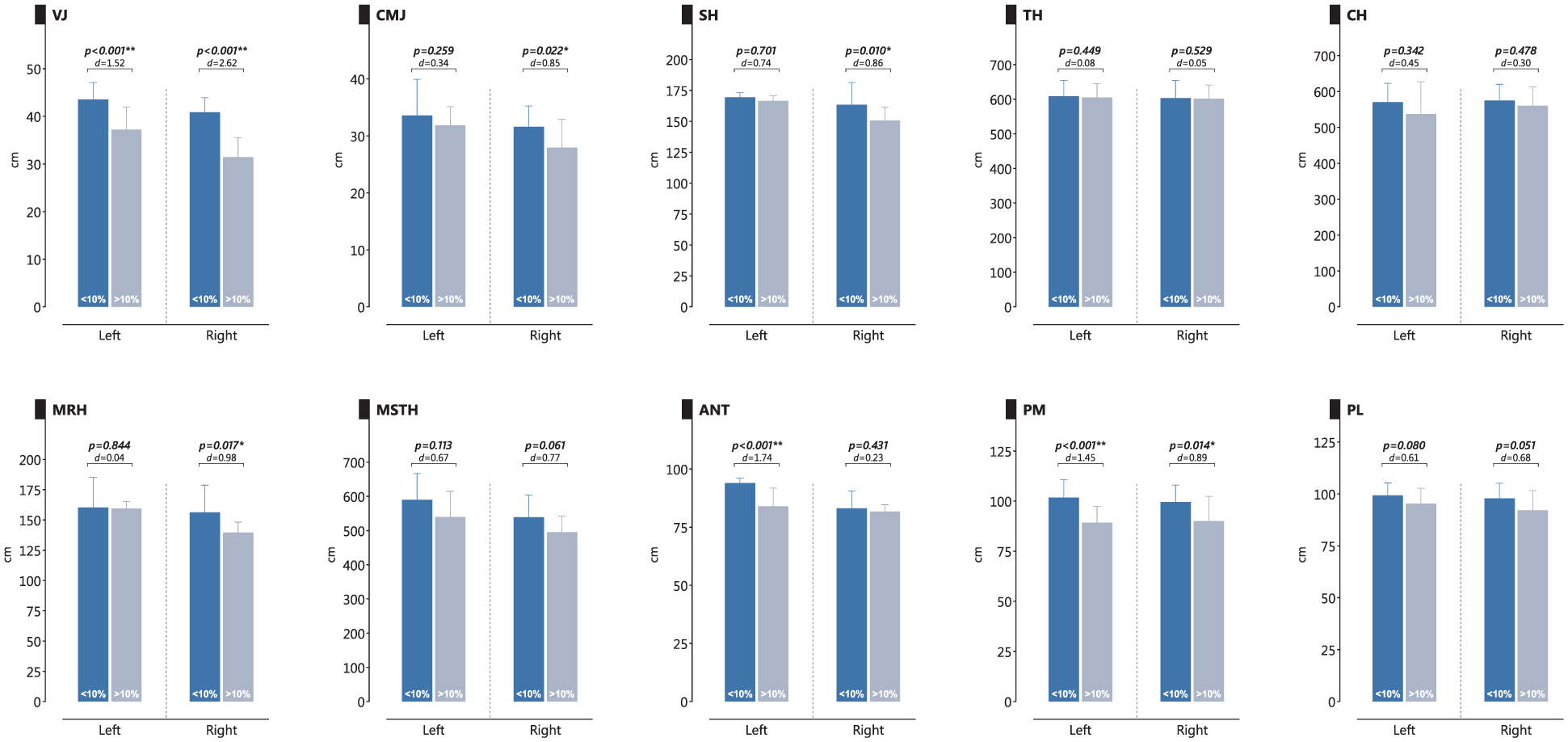
Comparison of performance variables according to asymmetry threshold (10 %). ANT, anterior; CH, crossover leg hop for distance; CMJ, counter movement jump; d, Cohen’s effect size; MRH, 90° medial rotation test; MSTH, medial side triple hop test; PL, posterolateral; PM, posteromedial; SH, single leg-hop for distance; TH, triple leg hop for distance; VJ, vertical jump. *P < 0.05; **P < 0.001.
Figure 4 presents the correlation analysis results between the interlimb asymmetry ratios obtained from the participants’ functional performance tests. The results indicated moderate positive significant correlations between SH and MRH (r = 0.487; P = 0.001), MSTH (r = 0.500; P = 0.001), and PM (r = 0.489; P = 0.001); between CH and PM (r = 0.349; P = 0.03); and between MRH and MSTH (r = 0.450; P = 0.003). No significant correlation was found between the asymmetry ratios obtained from the other tests (P > 0.05).
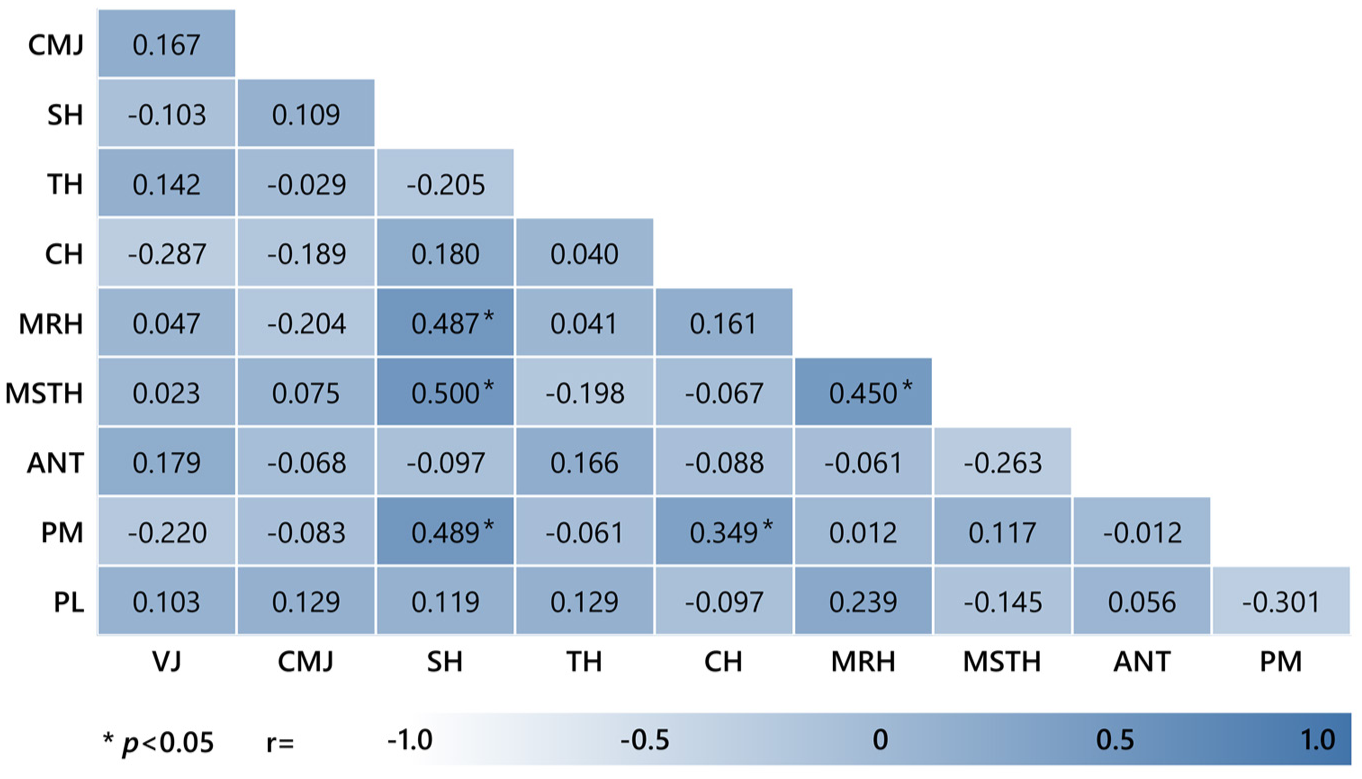
The relationship between asymmetry ratios in functional performance tests. ANT, anterior; CH, crossover leg hop for distance; CMJ, counter movement jump; MRH, 90° medial rotation test; MSTH, medial side triple hop test; PL, posterolateral; PM, posteromedial; SH, single leg-hop for distance; TH, triple leg hop for distance; VJ, vertical jump. *P < 0.05.
Discussion
The present study was designed as a cross-sectional study and conducted using randomized measurements. The study examined the relationship between asymmetries obtained in lower extremity functional performance tests in elite male handball players and the effect of the 10% threshold value on performance parameters. According to the study results, moderate positive correlations were observed between asymmetry ratios in certain multidirectional jump tests and dynamic balance parameters. Significant differences were observed between the left and right sides for the VJ, CMJ, SH, TH, MRH, and ANT scores. In addition, participants with an asymmetry threshold <10% performed better on all tests compared with the group with a threshold >10%. Effect sizes were particularly high in the VJ, CMJ, SH, MRH, ANT, and PM tests. As a result, it was found that these findings support the hypothesis.
Muscle asymmetry refers to differences in strength, torque, activation, and morphological characteristics between the right and left sides of the body, and is particularly evident in sports where unilateral loading is predominant (such as handball and soccer).2,38 A study has found that interlimb asymmetry may be particularly noticeable in actions specific to sports that require maximum strength, especially those performed with the same limb (such as passing, shooting, and jumping). 5 Similarly, the significant differences between sides and the moderate effect sizes (d = 0.75-0.78) in the VJ and CMJ test results in the current study directly reflect differences in unilateral explosive strength potential. However, evaluating lower extremity performance using only traditional functional performance tests may not be sufficient for preventing injuries or making decisions regarding return to sports after surgical procedures such as anterior cruciate ligament reconstruction. 39 Researchers have emphasized that multidirectional tests are also crucial for making decisions regarding return to sport, especially after an injury. 14 In this context, the present study included multifaceted functional performance tests. The significant interlimb differences and relatively small effect sizes (d = 0.23-0.35) in the SH, MRH, and MSTH tests indicate that interlimb strength asymmetries may exist not only in the sagittal plane but also in the frontal and transverse planes. These asymmetries, which arise in different planes, may be related to sport-specific movement demands, differences in neuromuscular control, and adaptations in stiffness in the lower extremity muscle-tendon unit. Current studies support these findings and argue that overuse of limbs in unilateral actions such as handball can increase strength asymmetry.3,22 On the other hand, the significant interlimb difference obtained only in the ANT direction in the YBT test used in the present study suggests that interlimb differences may also be observed in dynamic balance performance and that the anterior reach distance is particularly sensitive to strength parameters.
Each unilateral performance test that allows for the assessment of strength asymmetry ratios may yield different outcomes. 33 A study has shown that lower extremity asymmetry values obtained from different strength assessment methods can vary significantly depending on the type of test. Furthermore, the presence of low-to-moderate correlations among different measurement methods suggests that relying on a single test protocol for asymmetry assessment may be limited and underscores the necessity of a multi-test approach for a more comprehensive evaluation in athletes. 30 Therefore, the use of a multi-test approach is critical in determining strength asymmetries and potential injury incidences in the athletic population. 16 The main reason for this is that the lower extremity requires different strengths, power, and balance demands for different tasks. This is because some tests are affected by explosive force or stability in the sagittal plane, while others are affected in the transverse or frontal plane. 20 In light of this information, the correlation between the asymmetry ratios obtained from the tests used in the current study was examined. The results showed that some SLHTs had a moderate positive correlation with each other and with YBT test data (r = 0.349-0.500). This situation is consistent with the current literature, which argues that unilateral SLHTs reflect not only strength but also dynamic balance and coordination ability.12,15
On the other hand, strength asymmetry is not only a biomechanical outcome but also an important variable that must be regularly monitored in performance management.13,26 Asymmetries at certain levels may confer technical advantages, whereas excessive strength asymmetries may impair athletic performance. 21 In a study conducted on basketball players, Szabó et al 37 found that strength asymmetry exceeding 10% causes a significant decline in jumping and agility performance. In addition, it has been reported that asymmetry levels >10% can increase the risk of injury by approximately 4-fold. Similarly, it is noted that asymmetry values in the 10% to 15% range are associated with higher mechanical loading and neuromuscular imbalance. However, although the 10% threshold may vary depending on different measurement methods, it is used commonly used as a reference value in clinical practice. 36 Similarly, the results of the current study showed that a 10% asymmetry threshold represents a significant breaking point in the performance of team handball players because, in all tests, the performance parameters of participants within the <10% asymmetry threshold were higher than those of participants in the >10% asymmetry group. Moreover, this superiority was significant and had a large effect size (d = 0.85-2.62) in the VJ, CMJ, SH, MRH, ANT, and PM data. Based on this result, it can be said that the 10% asymmetry threshold is critical for handball players. This is because as the asymmetry ratio increases in specific actions related to the sport, the dominant limb takes on more load, while the weaker limb can become a limiting factor in performance. This situation can lead to impaired neuromuscular coordination, decreased efficiency in the force transmission chain, and mechanical disadvantages in unilateral actions. 23
Limitations
Although the current study has considerable strengths when compared with the literature, it also has some limitations. First, field-based tests were used to determine lower extremity strength asymmetry ratios, and these were not supported by clinical tests such as isokinetic dynamometers or force platforms. This limited the in-depth analysis of the findings obtained. Second, since the study sample consisted solely of elite male handball players, the generalizability of the results to female handball players and different performance and age levels is limited. In addition, it should be noted that individual characteristics such as sleep patterns, dietary habits, and regular levels of physical activity may also have influenced the results regarding neuromuscular performance and limb asymmetry; therefore, these factors should be considered when interpreting the current findings. Finally, Although the results indicate that the 10% asymmetry threshold serves as a critical benchmark for performance, it should not be overlooked that neuromuscular adaptations can vary significantly among individual participants. Factors such as athletes’ training history, sport-specific movement requirements, muscle-tendon characteristics, and motor control strategies can influence the extent and direction of these adaptations.
Conclusion
The findings of this study suggest that repetitive movements in handball - such as sudden changes in direction, shooting, and unilateral loading - may be associated with strength asymmetries resulting from morphological and physiological adaptations between the limbs. In addition, it was determined that the asymmetric strength ratios obtained from different unilateral functional performance tests applied to elite male handball players may vary. Furthermore, the moderate positive correlations observed between multi-directional hop tests and YBT performance may be related to common neuromuscular requirements such as lower-limb strength and dynamic postural control; however, it is also thought that factors related to coordination may contribute to these findings. On the other hand, one of the most important findings of the study is that participants with an asymmetry ratio of <10% performed significantly better than those in the >10% group. This suggests that the 10% threshold value may be a practically critical reference point for elite male handball players. From a practical standpoint, monitoring limb asymmetry using a 10% threshold can help coaches and sports specialists identify athletes who could benefit from targeted unilateral training, adapted load distribution, and personalized periodization strategies aimed at reducing the risk of injury and maximizing performance outcomes.
Footnotes
The authors report no potential conflicts of interest in the development and publication of this article.
Ethics Statement
Ethical approval for this study was obtained from Hakkari University Committee on Research and Publication Ethics (2025/210).
Consent to Participate
Informed consent forms were obtained from all participants.

Data Availability Statement
Data supporting the findings of this study are available through the corresponding author, but restrictions apply to the availability of these data used for the current study and are therefore not publicly available. However, data are available from the corresponding authors upon reasonable request.