







Abstract

A 21-year-old man with a recent diagnosis of high-risk pre-B-cell acute lymphocytic leukemia (ALL) presented with acute onset of aphasia. He had been on chemotherapy for 6 weeks and his regimen included intrathecal methotrexate (MTX) for central nervous system prophylaxis. The last 2 administrations were 1 and 9 days before presentation. Examination showed nonfluent aphasia without other deficits. Noncontrast computed tomography of the head was normal. Intravenous tissue plasminogen activator was not administered due to rapidly improving symptoms. Magnetic resonance imaging (MRI) of the brain showed multiple areas of restricted diffusion involving the subcortical white matter (Figure 1A and B) and splenium of the corpus callosum (Figure 1C and D). He returned to his baseline within 24 hours of the onset. Intrathecal methotrexate was discontinued after this episode.
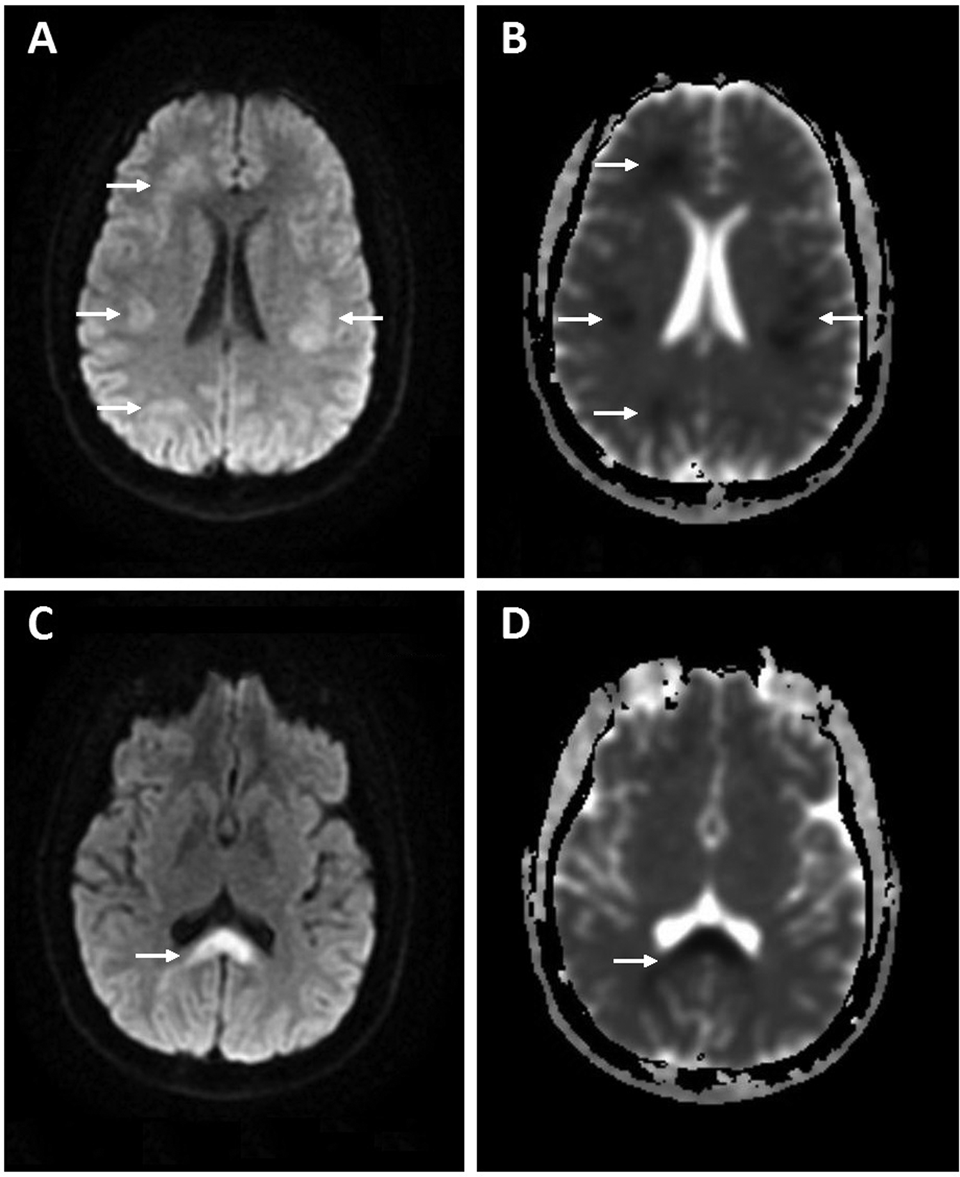
Brain MRI diffusion-weighted imaging (A and C) and apparent diffusion coefficient (B and D) sequences, axial planes, demonstrate areas of restricted diffusion in the bilateral frontoparietal regions (A and B, arrows) and splenium of the corpus callosum (C and D, arrows). MRI indicates magnetic resonance imaging.
Clinically apparent MTX-induced neurotoxicity is rare, occurring in 3.8% of pediatric patients with ALL. 1 It typically manifests 2 to 14 days after administration of the drug with transient stroke-like events or seizures. 1,2 Brain MRI shows diffusion abnormalities in the white matter, particularly in the centrum semiovale. 3 The episodes are brief, and recurrence is uncommon. However, radiologic abnormalities may persist despite resolution of symptoms. 1,2 As hematologic malignancies may increase the risk of stroke, it is important to consider MTX-induced neurotoxicity as an alternative cause of acute deficits and imaging abnormalities in patients receiving this chemotherapeutic agent. 4
Footnotes
Declaration of Conflicting Interests
The author declared no potential conflicts of interest with respect to the research, authorship, and/or publication of this article.
Funding
The author received no financial support for the research, authorship, and/or publication of this article.