






Abstract


Nearly one in three children in the United States is overweight or obese. Over the past 20 years, childhood obesity rates have doubled and are now at epidemic rates. If current trends continue, today’s young people could be the first generation to live shorter lives than their parents.
To combat this growing epidemic, the American Heart Association and the William J. Clinton Foundation partnered in May 2005 to create the Alliance for a Healthier Generation. The goal of the Alliance is to reduce the nationwide prevalence of childhood obesity by 2015 and to empower kids nationwide to make healthy lifestyle choices by working to positively affect the places that can make a difference to a child’s health: homes, schools, doctor’s offices, and communities.
A healthier school environment can result in greater academic achievement and healthier lives for students and school staff. The Alliance believes that supporting efforts to provide these healthy environments is one of the most effective ways to shape the lifelong health and well-being of young people which is why the organization launched its Healthy Schools Program in February of 2006 with funding from the Robert Wood Johnson Foundation.
The Alliance also recognizes how powerful the voice of a school nurse can be when it comes to the health and wellness of those in your care. You can make the difference in your school and the Alliance for a Healthier Generation can help you in your efforts. Assistance is provided at no cost.
The Alliance’s Healthy Schools Program helps schools to improve access to healthier foods; increase physical activity opportunities before, during, and after school; enhance nutrition education; and establish school employee wellness programs. Some benefits include:
Free support and tools, including tool-kits offering best practices for increased physical activity and healthier eating, turnkey materials to help select more nutritious snacks and drinks for students, and free online presentations/phone conferences on a wealth of school health topics to help build a healthier school. An extensive resource database that includes quality resources and grant opportunities to assist in implementing healthy changes at school. Exclusive discounts on quality school health supplies and equipment. Electronic newsletters filled with stories that demonstrate school successes in healthy eating, physical activity, and staff wellness. Promotional tools to highlight efforts toward creating and sustaining a healthier school environment.
The Alliance for a Healthier Generation’s Healthy Schools Program is active in all 50 states, reaching more than 6,000 schools, more than 3.5 million students, and offers a wealth of resources and tools at no cost to anyone who wants to help a school in his or her community to become a healthier place for students to learn and staff to work. Visit www.HealthierGeneration.org to learn more about the Healthy Schools Program and join today to make our children’s generation a healthier generation!
Black’s Mill Elementary School, Georgia
The Alliance for a Healthier Generation presents Leigh Ann Bagley, Black’s Mill Elementary School Nurse, and Jeannie Edwards, Dawson County Coordinator and Wellness Program Co-Chair, with the Healthy Schools Program Bronze Award. Congratulations!
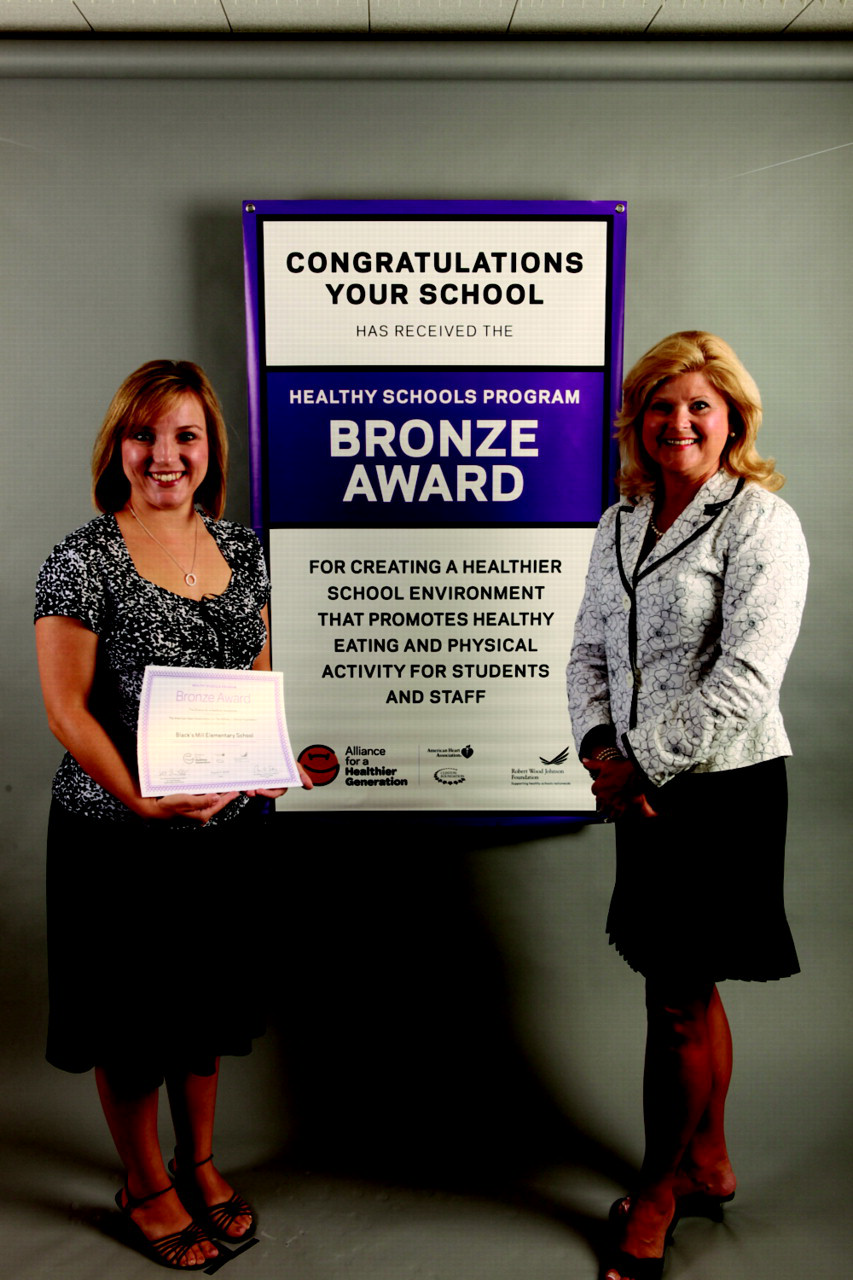
Through the Alliance for a Healthier Generation’s Healthy Schools Program, schools may receive national recognition for their efforts to create healthier school environments. One school that has achieved this recognition is Black’s Mill Elementary School in Dawson County, Georgia.
When Black’s Mill Elementary School joined the Healthy Schools Program last year, the school’s district wellness council, led by Dawson County Coordinator and Wellness Program Co-Chair Jeannie Edwards, RN, got to work assessing what was already in place to support the health and wellness of students and staff, as well as utilizing the tools provided by the Healthy Schools Program to set goals for improvement and track progress along the way.
“The role of the school nurse as an advocate for wellness programs in schools is crucial in ensuring the optimal health and well being of the school community. The Healthy Schools Program provided me with the resources I needed to stimulate my school district’s interest in wellness. All school nurses should utilize the Alliance’s program to help their schools develop wellness programs.”
The food service staff at Black’s Mill Elementary has reduced the amount of fat and calories in school meals, while the physical education program has increased its offerings. Teachers are aware of the value of health education and physical activity, and they include these topics in the classroom setting. Students also have a chance to share their knowledge about health-related topics by presenting information during morning broadcasts.
Next year, the wellness council plans to continue programs already in place, as well as take a closer look at how to incorporate physical activity and good nutrition into school fundraisers and celebrations. “Our school is motivated and excited to move forward with raising the standards for health and wellness,” said school nurse Leigh Ann Bagley. “Our ultimate goal is to raise awareness of the need for physical activity and good nutrition, thus empowering our students to choose healthy habits that will carry them into adulthood.”