







Abstract
Safety isolation protocols in response to the COVID-19 (coronavirus disease 2019) pandemic have had the unintended consequence of social isolation for adolescents, youth who have a developmental need for autonomy and peer connection. Social isolation alone can lead to various psychological effects such as anxiety, stress, low mood, fear, frustration, and boredom. School nurses serve a vital role in addressing stress among adolescents by initiating early interventions, ensuring positive school experiences for students, and providing support surrounding the development of mental health disorders. Through implementation of NASN’s Framework for 21st Century School Nursing Practice, school nurses address stress among high school students during the COVID-19 pandemic. Innovative interventions can include recognizing signs and symptoms of stress on physical and emotional health, advocating for mental health literacy curriculums, social prescribing, incorporating anticipatory guidance related to health promotion lifestyle practices into each school health encounter, and creating a virtual school health office to reach students while COVID-19 safety isolation continues.
School nurses play a key role in addressing the prevalent problem of stress among high school students. Stress represents a physical and emotional state of exhaustion and feeling overwhelmed during which the students’ demands exceed their internal and external resources available to cope with the situation (Walburg, 2014). Specifically, academic or school-related stress refers to stress relevant to academic demands such as high academic expectations from parents, teachers, or themselves. Stress may evolve into school-related burnout presenting as exhaustion, detached attitudes toward school, and feelings of inadequacy (Walburg, 2014). Furthermore, adolescents are faced with underdeveloped cognitive mechanisms that inhibit self-regulation, which may leave them vulnerable to mental health disorders during this developmental stage (Ellis et al., 2020).
The coronavirus disease 2019 (COVID-19) pandemic has negatively affected the mental health of schoolchildren across grade levels due to national school closures and home quarantine mandates. High school students specifically are experiencing heightened stress levels as they must now navigate school demands, remote learning experiences, frequent and unexpected school closures, and varied platforms for social interactions all while prioritizing future choices such as postsecondary study and career paths. Furthermore, adolescents may be employed in jobs that are now deemed essential (e.g., a cashier or restaurant worker) and involve exposure to the general public. Identifying and innovatively addressing stress among high school students is an important duty for the 21st-century school nurse to employ especially during the COVID-19 pandemic.
School-related Stress Among High School Students
High school experiences offer academic, athletic, and social–emotional challenges and opportunities to refine prioritization and organizational skills whether in preparation for further education or for future employment. Although necessary, in some situations such experiences can lead to increased stress and may compound stressors that students experience to varying degrees in their homes and personal lives (Veyis et al., 2019). Home and family stressors adolescents may normally encounter include financial and household instabilities, food insecurity, unreliable living conditions, and even fulfilling high expectations from parents. Common personal issues that lead to stress stem from peer pressure, low self-esteem, and lack of downtime for leisure activities due to hectic schedules (Veyis et al., 2019). When compounded by the COVID-19 pandemic, these preexisting stressors are inflated, arousing unexpected bereavements, even worsening disconnections or shifts in current care for adolescents with known mental health disorders (Guessoum et al., 2020) and may be the antecedent to the onset of new stressors following changes to family employment, finances, or housing and food stability.
According to a study by Wilhsson et al. (2017), adolescents employ three common approaches to coping with school-related stress: prioritizing the future or the present by making choices, finding their own private sphere to relax, and recovering with family and friends. While these strategies are used by students of any gender, there may be differences in the ways that students talk about and utilize these strategies. Table 1 displays gender-related differences for males and females in common methods of dealing with stress.
Gender-Related Differences in School Stress Coping
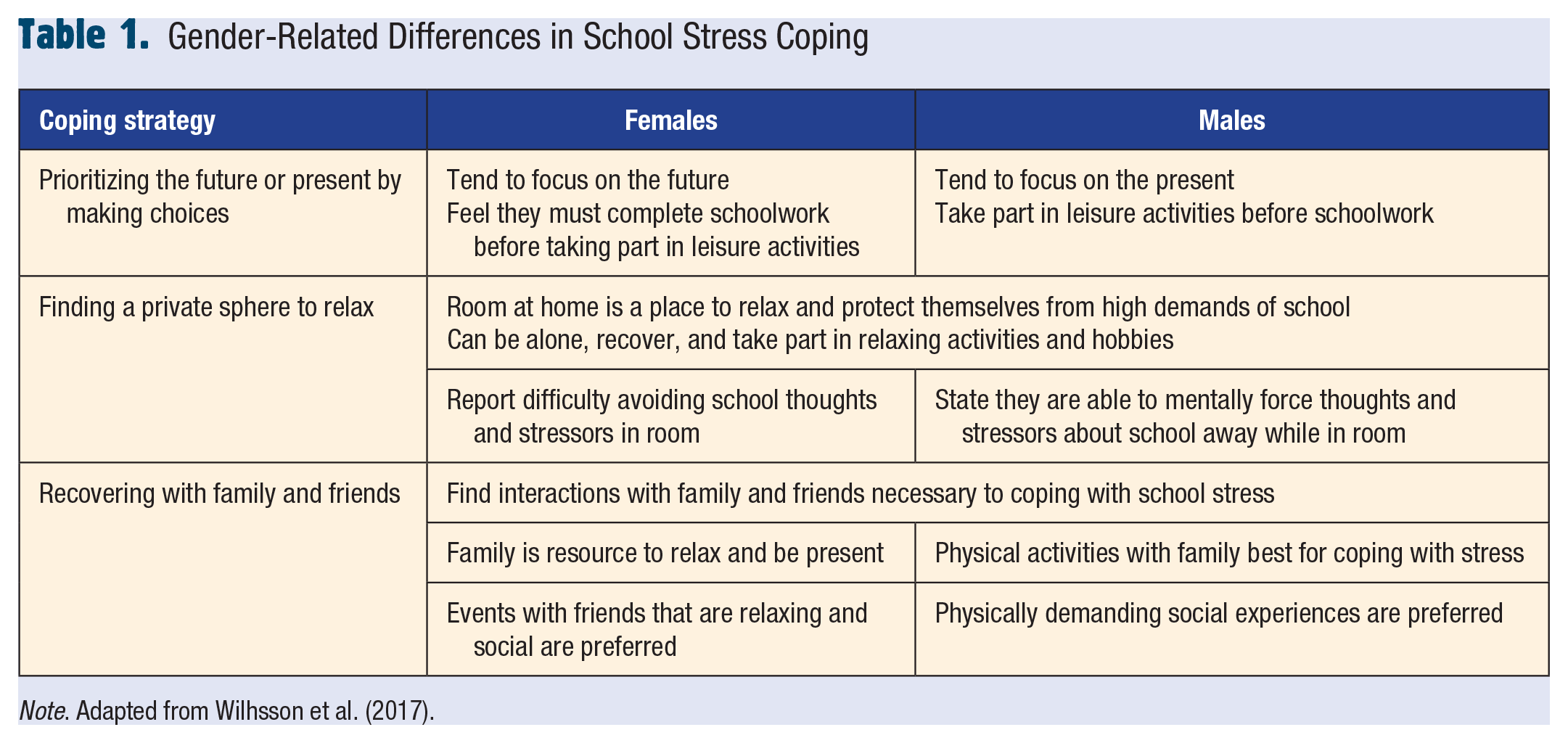
Note. Adapted from Wilhsson et al. (2017).
Potential Impacts of Stress Among Adolescents
The adolescent brain is relatively susceptible to changes due to environmental conditions such as chronic stress. Prolonged chronic stress interacts with the developing adolescent brain by producing significant changes in neural circuits that eventually increase one’s susceptibility to mental health disorders (Sheth et al., 2017). Chronic stress has been associated with several mental health disorders among adolescents such as anxiety, depression, substance use disorder, posttraumatic stress disorder, and personality disorders (Sheth et al., 2017). Meanwhile, adolescent threat reactivity increases leading to emotional dysregulation (Guessoum et al., 2020). In addition to the negative impact prolonged stress can have on mental health, there are consequences it can also have on physical health such as a poorly functioning immune system and increased risk for developing chronic conditions such as diabetes, obesity, or heart disease in later stages of life (Sujithra, 2016).
School-related stress is also an antecedent to engaging in behaviors with other health risks such as drug use, alcohol consumption, and sexual behaviors (Sujithra, 2016). In fact, the burnout and stress high school students experience could significantly influence cannabis consumption (Walburg et al., 2015). Turning to substances to cope with stress starts a self-deprecating cycle of aggravating school issues that then increase the amount of school-related stress, leading back again to increased relief through substance use.
Added Complications of COVID-19
In addition to the widely known, well-established antecedents and negative impacts of school-related stress for high school students, there is now the added stress of living in a pandemic. New stressors include social restrictions, lack of physical activity, fear for their own or loved ones’ safety, adjustments in school attendance (e.g., virtual classrooms), uncertainty about college experiences, financial concerns, and grieving the loss of important milestone events such as graduation. Beyond the acute reactions to these pandemic changes, students are at further risk for heightened stress and engagement in risky health behaviors related to COVID-19, given the manner in which some social isolation protocols hinder the developmentally normal increased desire for autonomy and peer connection (Dardas et al., 2020).
Social isolation alone can lead to various psychological effects such as anxiety, stress, low mood, fear, frustration, and boredom. Although the Wilhsson et al. (2017) study determined that, for male and female students, finding a private sphere to relax and spending time with family were helpful to address school-related stress, it is important to remember that such coping strategies work best concurrently with other approaches such as social leisure time and physical activity. Research conducted during the 2009 influenza A (H1N1) outbreak in the United States indicated that posttraumatic stress scores were four times higher in quarantined children and adolescents than in those who were not quarantined (Razai et al., 2020). Research by Ellis et al. (2020) indicates that adolescents’ concerns about COVID-19 are heightened with 43% reporting they are “very concerned” about the pandemic, exhibiting increased depression and loneliness. However, for many students, access to mental health services has been reduced or eliminated with school closures and social distancing protocols (Ellis et al., 2020).
Interventions for School-related Stressors
School nurses serve a vital role in addressing stress among adolescents. They help maintain mental well-being, initiate early interventions, support positive school experiences for students, and provide support surrounding the development of mental health disorders such as depression, low self-esteem, and suicidal ideation that may occur during adolescence or later in life (National Association of School Nurses [NASN], 2017). A focus on mental health is especially important during the COVID-19 crisis, during which time school nurses can fulfill several key principles and components highlighted in the NASN’s Framework for 21st Century School Nursing PracticeTM (Framework; Maughan et al., 2016).
There are numerous possible interventions that school nurses may utilize to alleviate school-related stressors during the pandemic. We provide several suggestions, along with an example of how school nurses may use free web-based tools to develop a virtual school health office. Examples of Framework principles addressed with each of the practice suggestions are provided in brackets:
Recognize signs and symptoms of stress on physical and emotional health [Standards of Practice: clinical guidelines, evidence-based practice, NASN position statements; Community/Public Health: screenings/referral/follow-up]. Research by Sujithra (2016) indicates that adolescents who are experiencing heightened levels of stress may present with physical changes such as headaches, stomachaches, muscle tension, difficulty sleeping, and poor eating habits or overeating, leading to changes in weight. Additionally, emotional changes may include anger, nervousness, loss of enthusiasm, lack of energy, withdrawal, and feelings of hopelessness (Sujithra, 2016). By recognizing these common signs and symptoms may signal increased levels of stress, school nurses can take prompt action and initiate necessary interventions. Readers are encouraged to review NASN’s (2017) position statement for a more thorough overview of specific nursing action related to assessment, identification, intervention, referral, and follow-up of students in need of behavioral support.
Advocate for mental health literacy curriculums [Leadership: Advocacy; Community/Public Health: health education, health promotion; Care Coordination: student self-empowerment]. A global pandemic, with all the changes it has brought to the lives of students, warrants a revision and reprioritization of select high school curricula. Barriers that prevent adolescents from seeking mental health support include fear of stigma, limited resources, and social discrimination. Implementing and integrating education about mental health and increasing mental health literacy for high school students can promote healthy stress-coping mechanisms, enhance perception of mental health disorders, reduce stigmatization, assist in early mental illness recognition, and promote help-seeking efforts (Milin et al., 2016). Mental health literacy addresses biological, psychological, genetic, and environmental aspects associated with mental health. School is an ideal environment for mental health education, and such education may be more accessible during a pandemic. That is, mental health education may lend itself well to remote delivery where learning can take place outside the traditional classroom, especially for students and families who feel the topic is too personal or taboo for the classroom and desire a more private setting for such study. Mental health education serves as a foundation to effectively address school-related stress, initiate early interventions, promote healthy coping mechanisms, and provide ongoing care.
Social prescribing [Care Coordination: direct care, interdisciplinary teams, student-centered care]. The purpose of social prescribing during a global pandemic is to utilize nonmedical interventions such as arts, physical activity, or other community engagement. Possible activities include but are not limited to exercising, dancing, singing, or painting classes (Razai et al., 2020). Although COVID-19 limits in-person gatherings, many activities and extracurricular school services have moved to virtual platforms. For example, the school nurse could collaborate with an art teacher to meet with students virtually to discuss the importance of wearing masks during the COVID-19 pandemic while students design and assemble their own masks out of fabric and supplies found in or around the home.
Incorporate anticipatory guidance related to health promotion lifestyle practices into each school health encounter [Standards of Practice: evidence-based practice; care coordination: direct care, education, student self-empowerment]. The World Health Organization (2020) recommends that individuals in social isolation or those who are experiencing increased levels of stress should engage in outdoor activities, exercise regularly, eat a healthy well-balanced diet, maintain daily routines and sleep schedules, and stay connected to friends and family through social media networks.
Research by Dardas et al. (2020) indicates that most adolescents receive information regarding COVID-19 though social media networks and television and that these channels can be utilized as a fast approach to spread factual information. Nevertheless, it is important to note that access to pandemic-related news outlets should be monitored and limited, as this can become emotionally distressing for adolescents. While social media can help with a sense of connection among adolescents, school nurses should consider how social media use may add to high screen-time hours. For example, school nurses may suggest taking breaks from watching and reading the news or suggest limits on how many times students might log on to check the news. Finally, at the conclusion of school health visits, whether face-to-face or virtual, school nurses should continue to encourage open communication between students and families.
Parents commonly underestimate their children’s stress levels; therefore, open discussions should be encouraged to accurately understand and address students’ emotions and concerns. (Pfefferbaum & North, 2020, p. 512)
Use of Innovation to Continue Delivering Mental Healthcare
There has never been a more opportune time for school nurses to innovate delivery of healthcare services than now. The silver lining to the pandemic for the school nursing practice is that it has allowed school nurses to adapt to the uncertain and unpredictable landscape of distance delivery of nursing services. Maintaining the nurse–student relationship during school closures is paramount in a school nurse’s ability to assess for stress, mental health, and well-being while allowing students to feel supported and cared for and to maintain a bridge between home- and school-based services. Through these relationships, nurses can passively assess all students for active adverse childhood events (ACEs). Students who have more emotional dysregulation and suffer due to the lack of connectivity to school-based personnel and services can be assessed for acute stress, severe depression, anxiety, and suicidality.
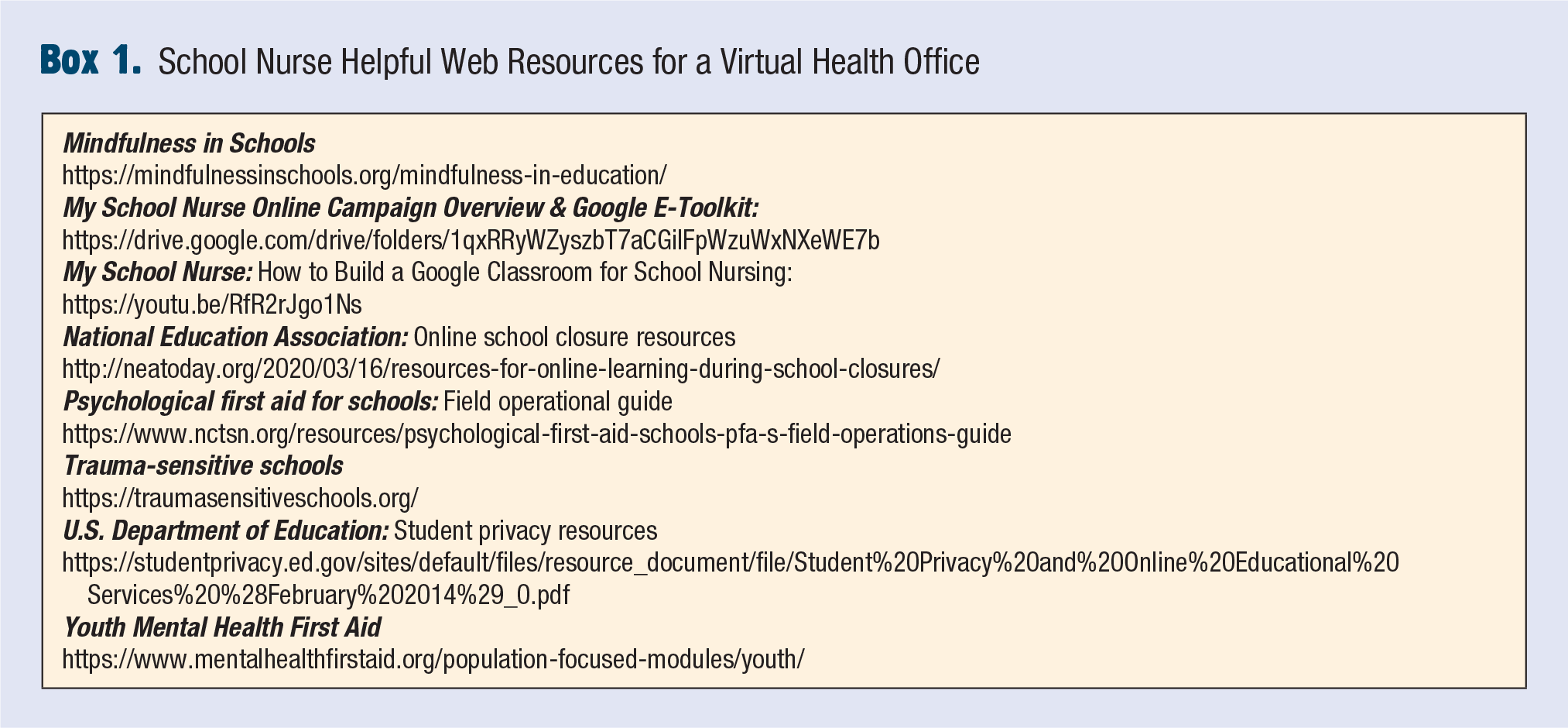
The COVID-19 pandemic has given school nurses across the world a window to showcase the necessary new ways to be a 21st-century school nurse. One innovation school nurses may consider developing is a web-based health office with synchronous visits and asynchronous components modeled after the “I am Still Your School Nurse” online platform (see Box 1: My School Nurse and other helpful web links school nurses may consult when building their own virtual health office).
School Nurse Helpful Web Resources for a Virtual Health Office
Recognizing that each school and accompanying role of the school nurse can be different, an initial survey is an effective tool to gather data regarding a particular population’s social, emotional, and technological determinants. To begin, identify students who may have medical 504s, Individual Behavioral Education Plans, or known mental health conditions; take daily medications; have chronic health conditions or neurodevelopmental disorders; and are even known to engage in risky behavior, reside in foster care, have high ACEs scores, or present frequently to the school nurse. These are the students a school nurse will want to invite personally through video conferencing or phone calls to participate in nurse-directed online activities through the “I Am Still Your School Nurse” online platform.
Next, school nurses can build an online presence to connect, educate, and provide continuity of care. Learning management systems (LMSs) provide distance delivery of academics through familiar platforms such as Google Classroom, Edmodo, Canvas, Schoology, or Apple Teacher. LMSs allow school nurses to practice 21st-century nursing by reinventing traditional school-based clinic models of care to connect to students and families. Whether students are engaged fully in distance delivery, in-person models of learning, or perhaps a hybrid model, schools may experience short-term, unpredictable closures based on COVID-positive cases. With LMSs, school nurses can maintain a safe, healthy, and education-based online practice.
After establishing an online presence, build content to help ameliorate stress in students. Topics may include issues such as nutrition, emotional hygiene, mindfulness, gratitude, and general health education. Whatever the subject, engaging with students regularly is the key to building a successful online school nursing platform. Trial and error come with the territory as nurses decipher engagement and reactivity. Playfully interacting with students can reach those who crave social engagement and connection. Posts with short videos that are relatable and task oriented can spur students to share responses. Surveys with a variety of topics might invite students to share, for example, what they would select from a video about creative snack choices or how they might relate to a video on sleep hygiene, priming them to engage in the more serious survey assessments of stressors in academics, relationships, COVID-19 circumstances, and the home setting.
Conclusion
School-related stressors can ultimately have a profound impact on mental health, especially if stress goes unrecognized or untreated. Prior to the COVID-19 pandemic, approximately 21% of children and adolescents in the United States were diagnosed with a mental health disorder (Varcarolis, 2017). Given the addition of clear stressors to the lives of adolescents during the pandemic, school nurses may reason that more students will be affected by a mental illness or will be at risk for increased levels of stress than before. As prolonged chronic stress has strong associations with mental health disorders, early interventions reaching into elementary and middle school-age students such as mindfulness, emotional hygiene, and resiliency building, in addition to mental health education in high schools can help ameliorate acute school stressors as students learn about healthy coping mechanisms to combat stress and promote robust stress reduction practices. Social isolation during the COVID-19 pandemic can have negative mental health impacts leading to increased levels of stress, especially among adolescents who are at a point in their development where social interactions are essential. Thus, utilizing social prescribing can promote physical activity, improve well-being, and decrease stress levels associated with isolation. Addressing school-related stress among adolescents during COVID-19 is one way school nurses may help students avoid depression, low self-esteem, and suicidal ideation. Early recognition of stress among adolescents by school nurses allows for innovative practices in both direct and online interventions to be put into action and prevent the negative impact that untreated stress may have on physical and mental health in the current COVID-19 climate and later in life.
To address stress in high school students during a pandemic, incorporation of NASN’s Framework for 21st Century School Nursing Practice™ is vital—it must be forward thinking and must expand to engage online learning and healthcare interventions. Being open to and implementing innovative practices to educate students will propel and sustain the clinical practice of school nursing. Through the integration of online and app-based advancements, stress ameliorating practices can help reduce barriers to information and care during a pandemic. Trauma-sensitive school practices, addressing ACEs, Youth Mental Health First Aid, and the power of positive psychology and mindfulness (Engel et al., 2020) are all innovative, evidence based, and emerging tools to reach and sustain connectedness to not only adolescents but also to elementary and middle schoolers who already suffer from non–pandemic-related stressors at school and at home.■
Footnotes

Marissa L. Williams is a recently graduated nursing student from the University of Massachusetts–Lowell, Solomont School of Nursing. Her research interests include pediatrics, mental health, and public health.
Brenna L. Morse is an assistant professor at the University of Massachusetts–Lowell, Solomont School of Nursing. She is a board member and President of the National Board for Certification of School Nurses.
Wendy DeGraffenried is an Alaska State School Nurse Consultant, a school nurse at Mat-Su Central School, and an adjunct professor at the University of Alaska, Anchorage. She develops workshops and school-based activities aimed at increasing trauma sensitive practices, mindfulness, and resiliency building for communities.
Diana L. McAuliffe is a pediatric nursing instructor at the University of Massachusetts–Lowell, Solomont School of Nursing. She is a practicing pediatric emergency room nurse at North Shore Medical Center in Salem, Massachusetts.