






Abstract

Perhaps I have always been an overachiever. I longed to go to school when I was 5 and would watch my older sister walking to and from school daily while complaining to my mom about our small Kansas town not offering kindergarten. Two school districts later, I graduated as one of three valedictorians from my high school class. Excelling in math and science, it was spring of my senior year before I decided to pursue nursing, inspired by a registered nurse (RN) who accompanied me to an honor’s banquet in our town and offered me a summer job working at the community hospital. She was the operating room supervisor. I took her up on the offer, and the experience cemented my career decision.
Four years of college passed quickly at Pittsburg State University (PSU) in southeast Kansas (marriage and commuting 60 miles one-way to campus left little free time). I graduated with honors and was voted by my class as “most likely to pass the state boards!” My husband and I were both thrilled and relieved for me to finish college, and he was eager to share the instant photos he had taken during the graduation ceremony (see Photo 1). I remember distinctly the impact of that day and the prevailing thought troubling me. Upon entering college, I imagined graduating with a sense of confidence in knowledge gained. Instead, any amount of knowledge I had gained left me vastly aware of how much I did not know! The school’s curriculum and clinical experiences had merely scratched the surface.
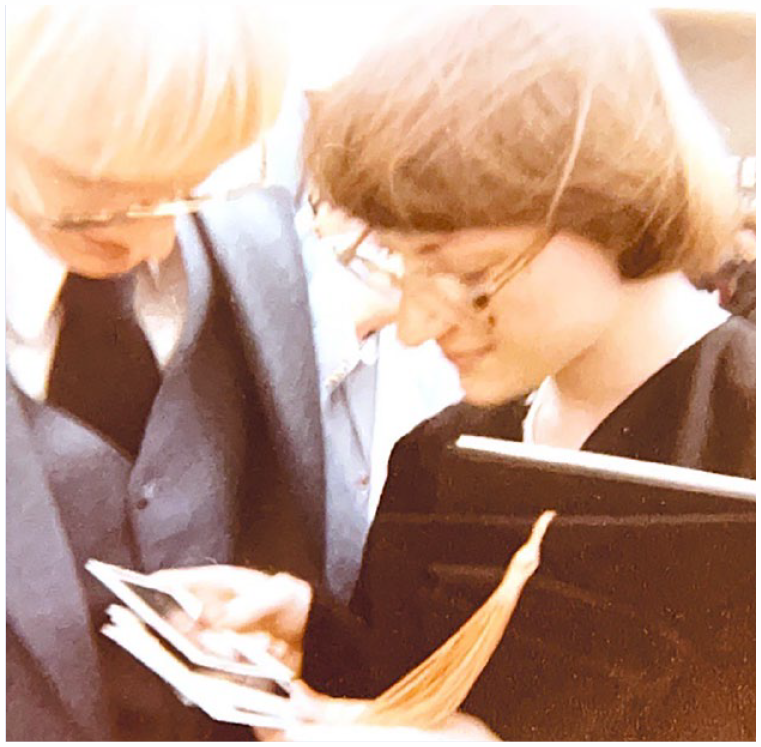
Looking Over Photos Taken During Graduation
In 1980, state board exams were offered twice per year on the same dates across the nation, using the same exam questions, with each jurisdiction setting its own passing benchmark (Benefiel, 2011). As predicted by my classmates, I successfully passed the state boards and had my eyes on obstetrical nursing. Indeed, obstetrical nursing was my highest score among the five separate categories, and interestingly, my lowest score was in nursing of children (pediatrics). After working 1 year on the medical/surgical floors at our community hospital, I was offered a position on the labor and delivery, postpartum, and nursery unit and remained there until my husband’s employer relocated us to the Kansas City area.
Our move to Olathe, a suburb of Kansas City, coincided with the birth of our second child, and I was afforded the opportunity to stay at home. In 1991, a friend and school nurse I sat next to in the church choir informed me about five district nurse openings and encouraged me to apply. Our youngest child would be entering first grade, and my father, who was an elementary principal in the south-central part of the state and shared a school nurse with several other buildings, told me it would “be an easy job for me.” During the interview, my father’s definition of “easy” would have benefited by being expanded to “My father, an elementary principal, believes my skills and strengths are a great fit for the position.”
Despite a somewhat rocky interview, I was offered a position as an elementary school nurse. My soon-to-be supervisor also asked what I planned to do to prepare myself for the position. In addition to becoming recertified in Cardiopulmonary Resuscitation (CPR)/First Aid and attending a new school nurse and annual state conference, I did not hesitate to join both the state (Kansas School Nurses Organization [KSNO]) and national (NASN) organizations. I sought out local inservices on the pediatric management of asthma, diabetes, and attention deficit hyperactivity disorder. I knew I didn’t know how much I didn’t know, and even though I was surrounded by an experienced school nurse supervisor and many colleagues, I did not want to lean totally on their knowledge.
In this issue, Brous (2023), in our series titled “Legal Issues 101,” distinguishes between malpractice and licensure discipline and discusses safeguards for one’s license and practice, emphasizing the importance of nurses maintaining competency with changing standards of practices. She lists examples of ways of maintaining competency: “attending conferences, obtaining continuing education, belonging to professional associations, and subscribing to professional journals” (p. 317). After 3.5 years as an elementary school nurse, I was encouraged to accept the supervisory role of Director of Health Services for Olathe Public Schools. I also served on the board of KSNO for over two decades, including a 4-year term as the Kansas Director to NASN. I credit my involvement to the many initiatives we successfully implemented in our district: one of the first districts in Kansas to have stock epinephrine and automated external defibrillators (AEDs), early adopters of electronic health records, and agreeing to pilot the use of the state immunization registry, to name a few. Equally important are the practices we modified or ceased doing based on new evidence such as automatically performing classroom checks on all students when presented with a case of head lice.
After my husband experienced a career-ending health event in early fall of 2010, I noticed a NASN posting for an editor position. Wanting to buffer our household income, I reached out to the NASN Executive Director (ED), Amy Garcia, inquiring about the position. I accepted an offer and began working to help evolve the NASN School Nurse from what originally was the organization’s newsletter to a clinical resource journal (Galemore, 2016). In my 2016 editorial, I explained how the NASN School Nurse serves as a complement to NASN’s research journal (The Journal of School Nursing [JOSN]). I also discussed our adoption of a double-blind review process and our dedication to articles aligning with current research findings. I shared how we monitor the journal’s growth (number of submissions, full-text downloads, citations, etc.; Galemore, 2016); and how our two oversight groups, an Editorial Advisory Board and an Editorial Panel, strive to fulfill our ongoing mission “to advance the practice of school nursing through the publishing of evidence-based, clinical resource articles and providing information on emerging issues, innovation in school health, and organizational resources of interest to our members” (Sage Journals. NASN School Nurse, n.d., para. 2).
In 2017, I retired from my role with the Olathe Public Schools, as my husband’s illness necessitated full-time care. Continuing to serve as editor eased my journey into semi-retirement and helped me fill the void after my husband’s passing in 2019. In fall of 2022, I informed NASN of my planned retirement toward the end of 2023. Look for an introduction to our next editor in the January 2024 issue.
It has been my upmost privilege to serve as the first RN editor of the NASN School Nurse for the past 13 years. I have many individuals to thank for my success in this role:
my friend and colleague, for introducing me to school nursing, along with all the wonderful school nurses, health room assistants, and administrative assistants I was privileged to work with in Olathe;
my parents, my son and daughter, and my late husband for their love and encouragement;
my Grade 1-12 teachers (who knew, as a nurse, I would rely heavily on grammar and composition instruction?);
the PSU nursing program, namely, the community/public health nursing courses, laying the groundwork for school nursing;
the many dedicated members over the years of both my Editorial Advisory Board and Editorial Panel;
NASN EDs and staff members (past and present) who author and assist with many aspects of the journal, along with the JOSN editors who generously share of their time in a collaborative and mentoring role (Martha Dewey Bergren, and prior to 2020, Julia Muennich Cowell);
NASN Presidents who contribute generously to the journal through their authorship of letters and articles;
the Publishing and Production Editors at Sage Journals; and
all the authors and reviewers—without you, there would be no journal.
Together, as NASN members, we celebrate the great specialty practice of school nursing! Though not my original path, I found my calling in school nursing. As in my 2016 editorial (Galemore), I invite you to continue to make the NASN School Nurse your clinical resource journal.
Read each issue.
Access favorite and past articles online.
Share articles and podcasts with school nurse colleagues (refer to Galemore, 2023, for share options).
Let advertisers know you appreciate their support of the journal.
Participate in the journal: Submit a letter to the editor, submit an idea for an article, or better yet, author an article.
I look forward to watching the journal continue to evolve and mature under the next editor. Thank you for supporting me and allowing me to be a part of your school nursing journey. I still don’t know all I don’t know, but I do know I love school nursing. Now it is time for my “semi” semi-retirement (see Photo 2).
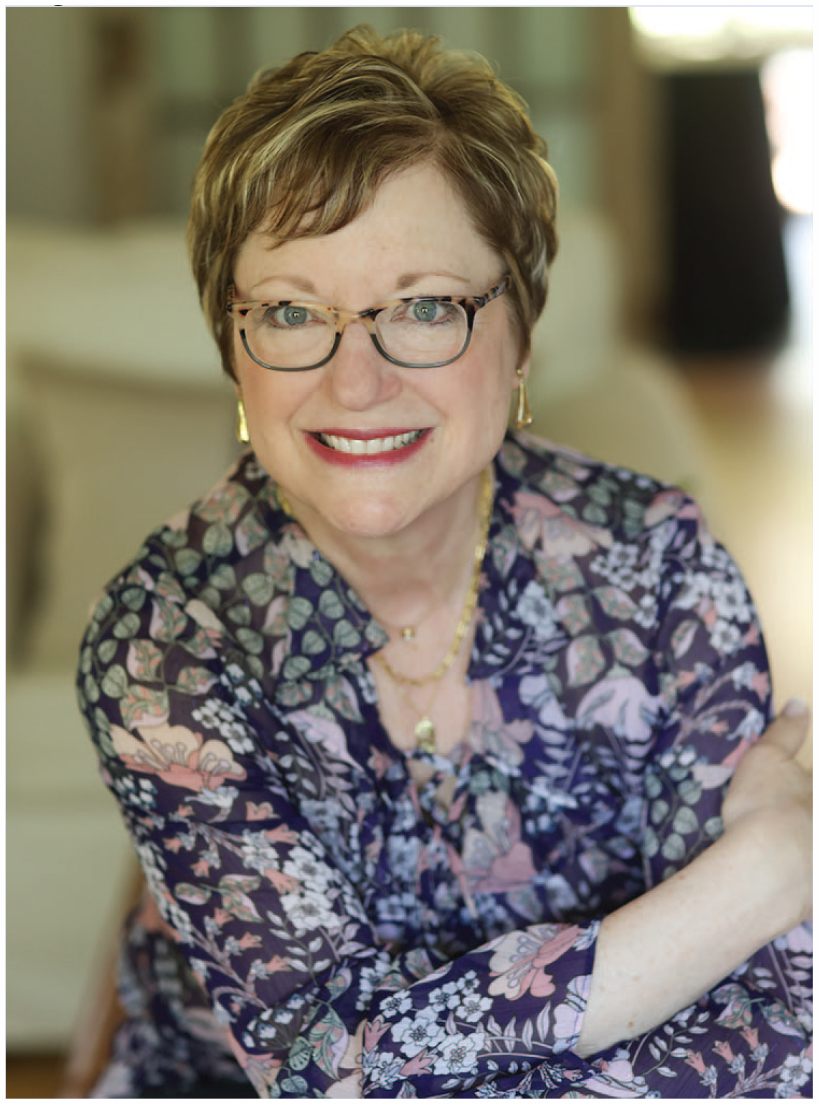
Looking Forward to “Semi” Semi-Retirement