







Abstract
Clinical practice guidelines (CPGs) are statements informed by a systematic review of research/evidence and provide recommendations for clinical practice to improve healthcare quality and patient outcomes. The NASN released School Nursing Evidence-Based Clinical Practice Guideline: Students with Asthma in 2025, to provide evidence-based recommendations specific to school nursing practice and support the role of the school nurse in providing high-quality care for school-age children with asthma. This article will provide an overview of the CPG and Implementation Toolkit. The implementation toolkit is designed to provide school nurses with tools and resources to implement evidence-based recommendations into their practice.
Managing asthma in the school setting can be extremely challenging due to its various causes and treatments. Accurately assessing the level of asthma control in students and determining the necessary and appropriate interventions is essential for achieving good outcomes. The Students With Asthma Clinical Practice Guideline and Toolkit will assist the school nurse in providing up-to-date, evidence-based care, with the potential to decrease the many adverse outcomes associated with poorly controlled or managed asthma.
Contributing to the challenges of managing asthma in the school setting is that asthma is not a “one size fits all” disease. Asthma is a hyperresponsive, or exaggerated, reaction to specific stimuli, with different phenotypes seen in school-age children. These include allergic, nonallergic, and exercise-induced asthma (Global Initiative for Asthma, 2025). Adding to the challenge is that asthma is an intermittent disease, which means that asthma symptoms are not present all the time. Asthma is also reversible, which means that with timely interventions, the underlying cause of symptoms can be mitigated.
Asthma typically occurs in two phases. The early phase reaction results in bronchoconstriction from exposure to a trigger that causes the smooth airway muscles to contract. If this is not alleviated, the late-phase reaction occurs several hours later with the release of inflammatory and immune cells (Sinyor & Concepcion Perez, 2023). This phase is more challenging to manage and often results in poor outcomes for the student, leading to increased utilization of the healthcare system.
Asthma is the most common chronic childhood disease globally and in the United States (Cleveland Clinic, 2023; World Health Organization, 2024). Asthma greatly impacts children in the school setting, with 7.4% of children ages 5 to 17 years currently diagnosed with asthma in 2022, with males having a higher prevalence (7.0%) than females (5.4%). Sadly, 52.7% of children less than 18 years with current asthma experienced an asthma attack in the past year (Centers for Disease Control and Prevention, 2024). Children enrolled in Medicaid and those living below the federal poverty level had the highest asthma prevalence, at 11.2% and 11.3%, respectively (Ojo et al., 2023). These statistics vary widely based on certain sociodemographic factors. Black non-Hispanic children less than 18 years old have the highest asthma prevalence of 14.7% compared to White non-Hispanic children at 8.8% (Office of Minority Health, 2025).
Asthma is the main reason children miss school, accounting for about 13.8 million missed days each year, impacting the academic success and well-being of students (Asthma and Allergy Foundation of America, 2024). Children who are chronically absent between preschool and second grade are much less likely to read at grade level by the third grade. For older students, being chronically absent is strongly associated with failing at school, being suspended or dropping out of high school, and substance abuse (American Academy of Pediatrics, 2024; US Department of Education, 2025).
This asthma guideline provides the school nurse with a roadmap for the care of the student with asthma, to ensure a supportive, healthy environment safe from physical and emotional harm, enabling students to be fully engaged in the management of their chronic disease (ASCD, n.d.). The guidelines reflect the School Nursing Practice Framework foundational principle of Standards of Practice and the Practice Principles of Care Coordination, Leadership, Quality Improvement, and Community/Public Health (National Association of School Nurses [NASN], 2024b). Care of a student with asthma requires a whole-child approach, which focuses on long-term development and success for the child.
This clinical practice guideline incorporates evidence-based recommendations from national and international organizations, including the Global Initiative for Asthma (2025), the Expert Panel Working Group of the National Heart, Lung, and Blood Institute (2020), and the American Lung Association (2025). There is a strong emphasis on shared decision-making to optimize health outcomes and quality of life, which supports the NASN’s (2025) position statement on school nurse support of student outcomes through health care coordination, health education provision, and quality improvement efforts.
Care coordination focuses on purposeful and deliberate student-centered activities for healthcare delivery. The school nurse provides oversight and alignment of evidence-based strategies that support the social, mental, and physical concerns and overall well-being of students. School nurses offer a collaborative and coordinated partnership between students with asthma, their families, healthcare providers, and educators to prevent and/or reduce the occurrence of health problems. These strategies include student asthma self-management, asthma medication administration (e.g., asthma reliever and, in some schools, controller medications), and assisting families with needed resources. Outcomes focus on students’ optimal health, quality of life, and academic success. These clinical practice guidelines (CPGs) provide a means for school nurses to support students with asthma to achieve the following goals (NASN, 2024a, 2024b)
Improved management of asthma
Improved asthma medication self-efficacy and adherence
Improved asthma control
Increased number of students with asthma who have an asthma action plan (AAP) at school
Decreased time spent out of the classroom
Decreased number of school absences
Improved student academic success
Increased opportunities for safe participation in all school activities
Decreased emergency room visits
Decreased hospitalizations
Improved quality of life
Improved mental well-being
Clinical Practice Guideline Overview
Shannon and Maughan (2020) presented the Model for Developing School Nursing Evidence-Based Clinical Practice Guidelines. In this model, the purpose for these guidelines is to provide school nurses with recommendations that are based on the most recent literature and highest levels of evidence. The School Nursing Evidence-based Clinical Practice Guideline: Students with Asthma is the first CPG published for asthma and includes recommendations that address the student goals presented above. Authors for this CPG were contacted by NASN to develop the asthma guidelines based on their expertise and research in the field of asthma. The CPG was reviewed by a team of school nursing and subject matter experts before it was released for publication.
The CPG sections include the rationale that provides an evidence-based literature review, the purpose, the methodology that was based on Shannon and Maughan’s (2020) guidelines for writing CPGs, a list of definitions and terms, an explanation of the search terms and selection of relevant literature, critical appraisal of evidence, and translation into practice recommendations based on highest quality evidence, predominantly within 5 years.
The School Nursing Evidence-based Practice Guidelines are organized in three columns (see Figure 1). The first column is based on the nursing process with topic areas of assessment, nursing diagnosis, outcomes identification, planning, interventions/implementation, and evaluation. The second column provides domains that categorize the literature review into broad themes that are organized according to areas of the nursing process. Thirteen separate domains were identified in the Students with Asthma CPG; however, not all of them apply to every step in the nursing process. The domains in the asthma CPG include academic performance, AAP, care coordination, care planning, community partnerships, education/training, emergency medication, environmental management, leadership/advocacy, medication administration, mental health, policies, and telehealth/telemedicine. The third column contains the grading of quality, level, and strength of evidence for the references included in the CPG. Although there are four levels of quality, the recommendations included in this CPG are based on literature with quality levels I and II. The level of evidence tells the reader what type of articles were used (e.g., systematic review, randomized controlled trial, integrative literature reviews). The strength of recommendations is divided into A, B, C, and D with A being strongest evidence. The strength of evidence included in this CPG was mainly A and B with a few C strength articles. The numbers in the third column correspond to the same numbered reference found in the Collective Findings Table (Appendix C of the CPG). The Collective Findings Table contains more detailed information about each reference, including the purpose/research question, study design, sample size, and characteristics, major strengths and limitations, and summary of findings and recommendations. Please refer to Figure 2 for an example of the Collective Findings Table.
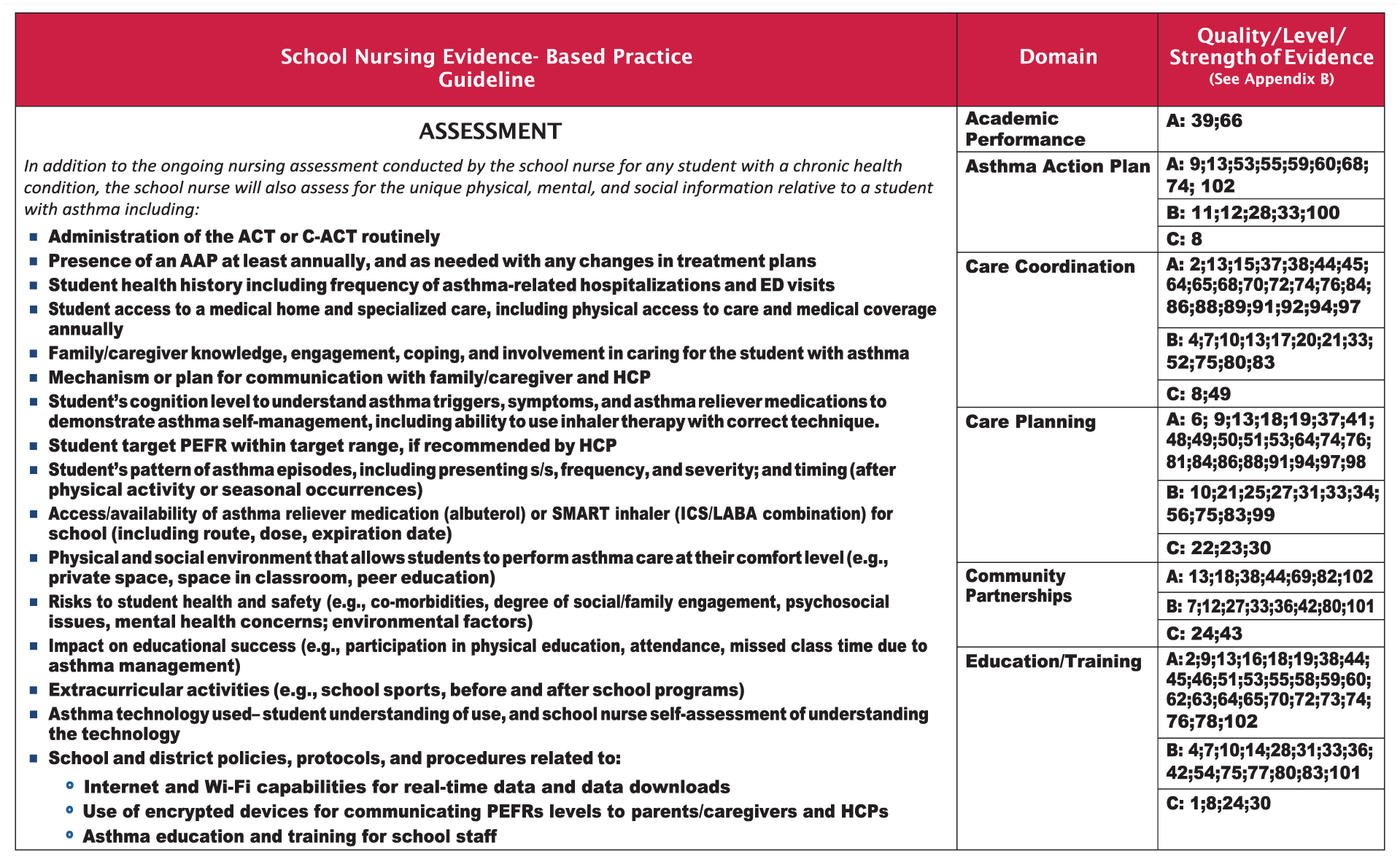
CPG Guideline Critical Appraisal Example
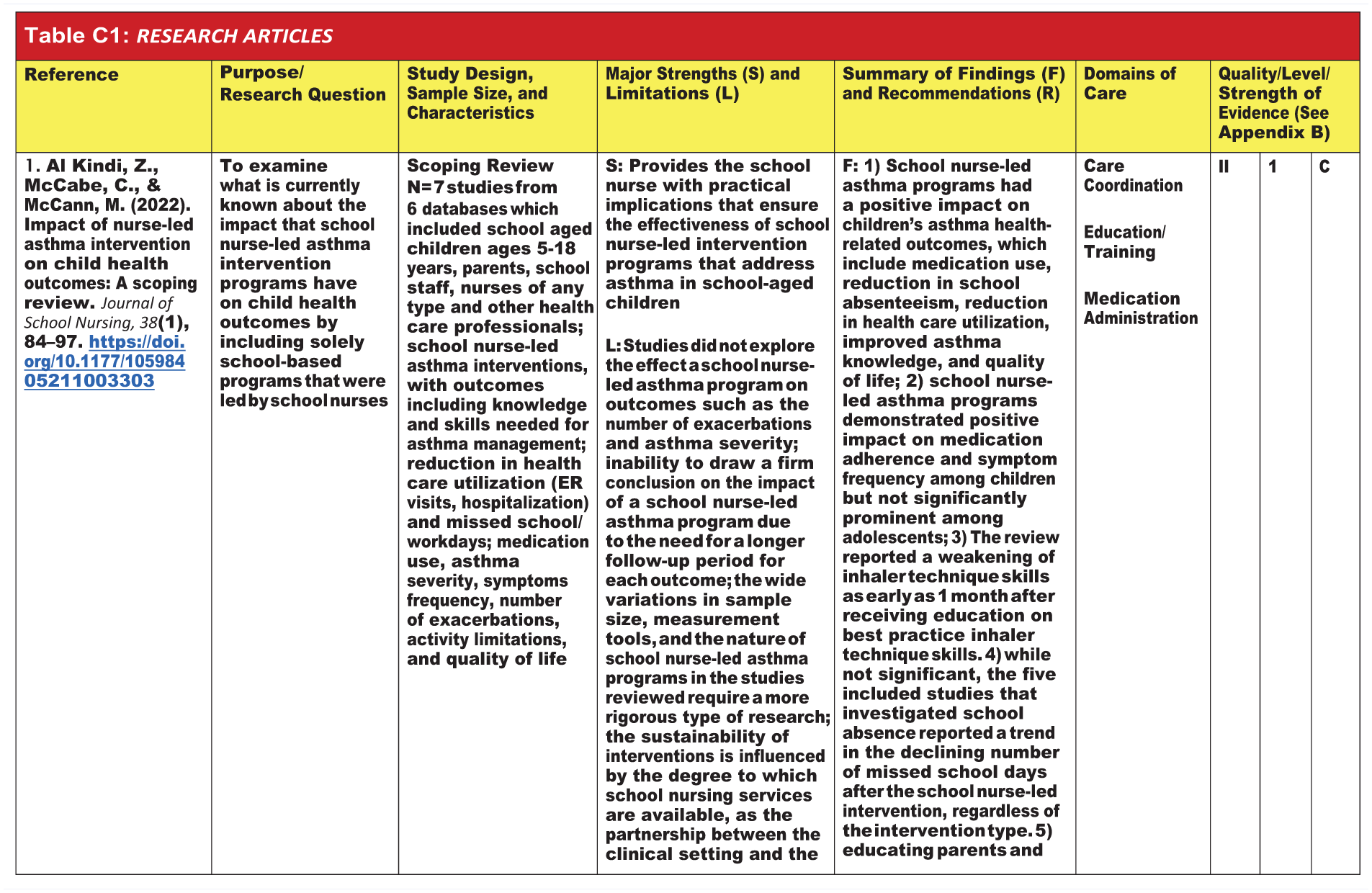
Collective Findings Table: Critical Appraisal of Evidence (Appendix C)
Translating CPGs Into Practice
The CPGs contain evidence-based practice (EBP) recommendations for practice in school and healthcare settings. In the school setting, nurses can face barriers to effective implementation of these EBP recommendations. They may be the only nurse practicing in the school and may be responsible for the care of hundreds of students. They may face barriers, including lack of support, limited resources, and lack of training or skill in accessing and appraising current literature (Yonkaitis, 2018). The provision of rigorously developed CPGs addresses these barriers by providing scientifically assessed EBP practice recommendations for specific health needs. “Although there is strong evidence surrounding the treatment and management of asthma, research specific to the school setting is limited” (NASN, 2024a, p. 13). The recommendations in the asthma CPG are intended to support the school nurse and “are specific to asthma and so do not outline cultural, developmental stage, and other contextual factors that must be addressed in each step of the nursing process” (NASN, 2024a, p. 13).
CPGs do not replace sound nursing judgment and are not legal standards of care. School nurses must be skilled in making sound clinical decisions that are based on the nursing process and must be able to individualize care to meet the student’s unique healthcare needs (Shannon & Maughan, 2020). Assistance on how to implement the asthma CPG can be found in Appendix D (Tables D1 and D2) of the CPG (Figures 3 and 4).
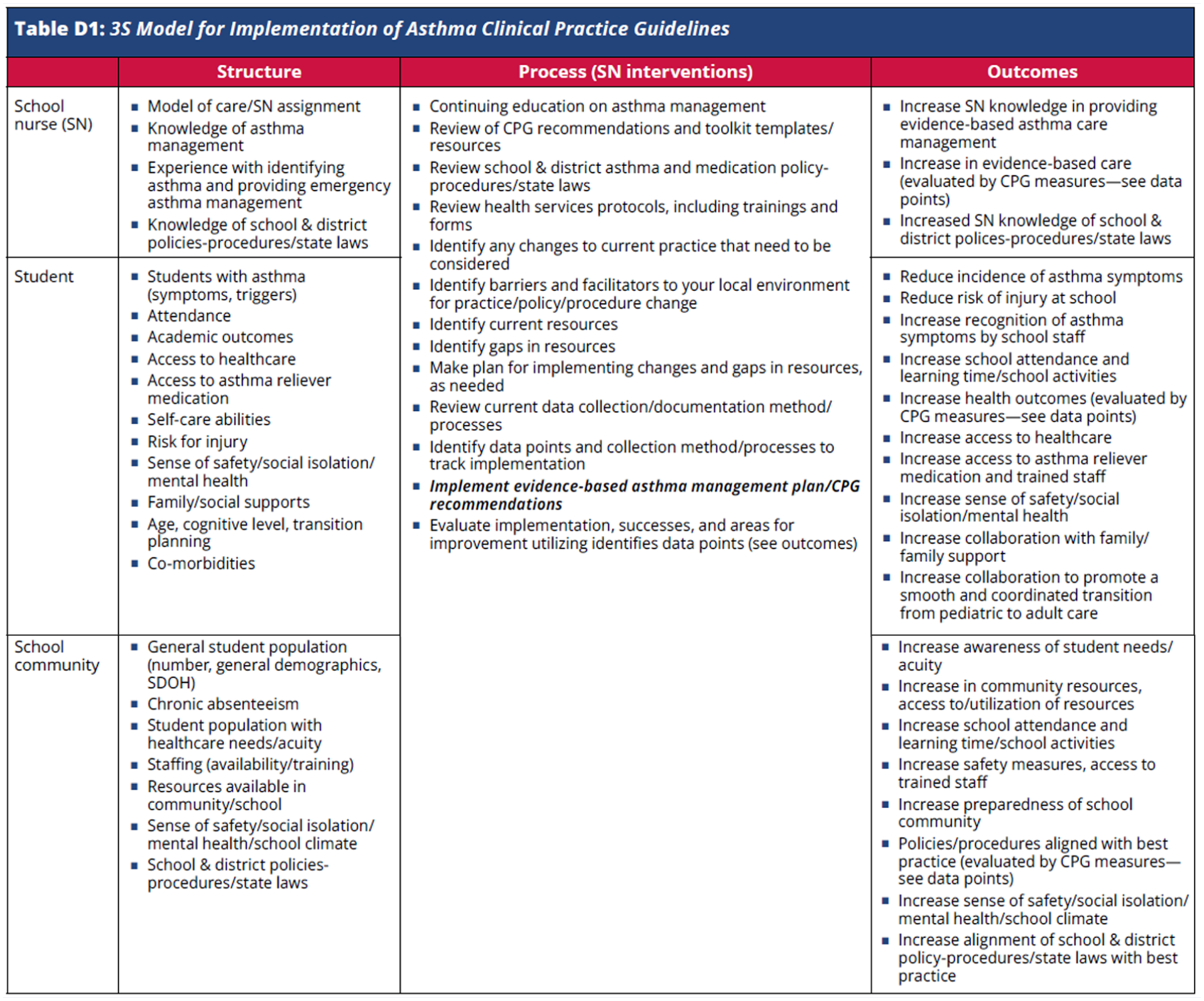
3S Model for Implementation of Asthma CPGs (Appendix D)
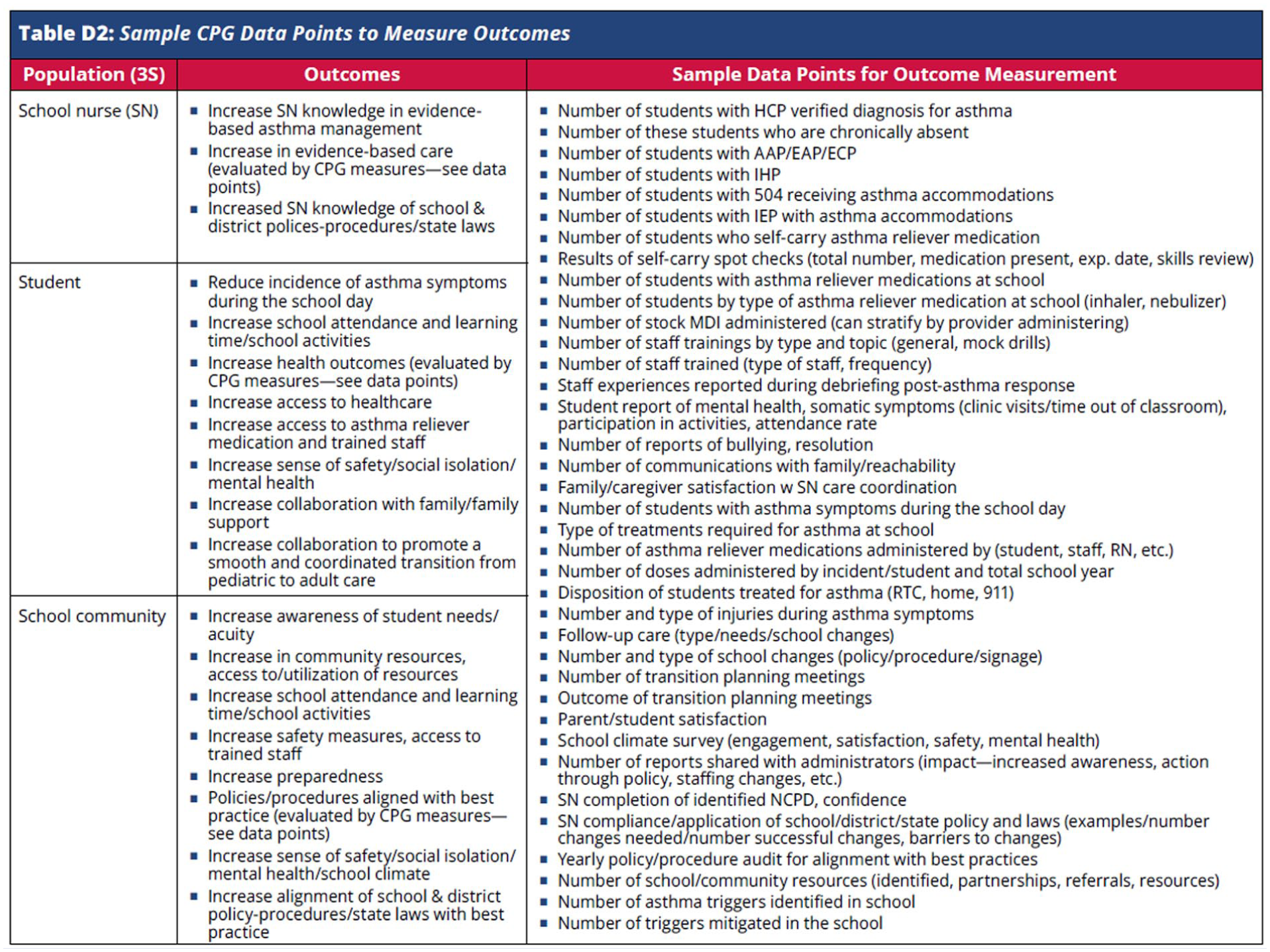
Sample CPG Data Points to Measure Outcomes (Appendix D)
Toolkit Development
The Asthma CPG Implementation Toolkit provides resources that align with the CPG evidence-based recommendations, facilitating implementation into practice. The toolkit is presented in five sections that coincide with the nursing process and the presentation of the CPG recommendations.
The Toolkit in Action
The following case study will be used to help describe how the Asthma CPG toolkit can be used by a practicing school nurse. Nurse Brian is new to school nursing this year. Nurse Brian referred to the Asthma CPG to identify where to begin as he identifies and addresses the needs of Suzy, a first-grade student, newly diagnosed with asthma. The following tables highlight examples of Nurse Brian’s utilization of the CPG and toolkit to inform his practice. Each table provides the nursing process step, specific CPG recommendation identified, and toolkit resources selected to implement the chosen recommendations.
Assessment
Nurse Brian contacts the parents to discuss Suzy’s health history. The A-1 form (Asthma Health History) provides Nurse Brian with an organized and sequential list of items to obtain a comprehensive picture of Suzy’s past and current health history. Nurse Brian utilizes A-4 (Letter to Healthcare Provider) to communicate with the healthcare provider’s office to obtain the AAP and medication orders. The template letter provides Nurse Brian with a tool to increase efficiency in communication between the school and the healthcare provider (Table 1).
Assessment
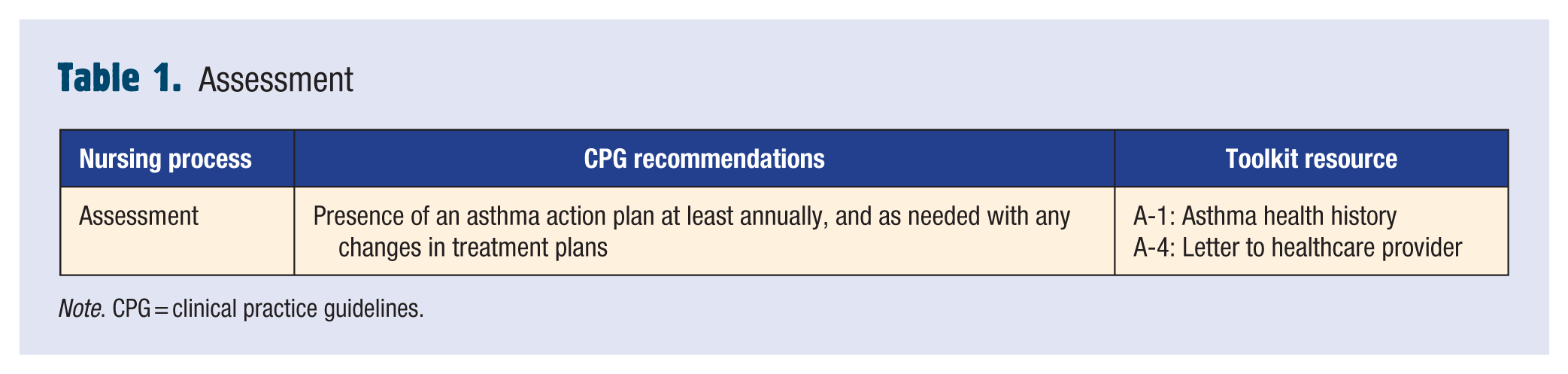
Note. CPG = clinical practice guidelines.
Nursing Diagnosis
Over the past several weeks, Nurse Brian identified a pattern of increased health office visits with complaints of headaches and an upset stomach. Nurse Brian explored possible causes for these visits and learned Suzy was experiencing increased anxiety related to fear of having an asthma exacerbation at school. He updates Form C2 (asthma detailed individualized healthcare plan [IHP]) he started when Suzy presented with asthma to include a nursing diagnosis of anxiety. The IHP provides Nurse Brian with a resource to outline a student-specific care plan to address Suzy’s anxiety (Table 2).
Nursing Diagnosis
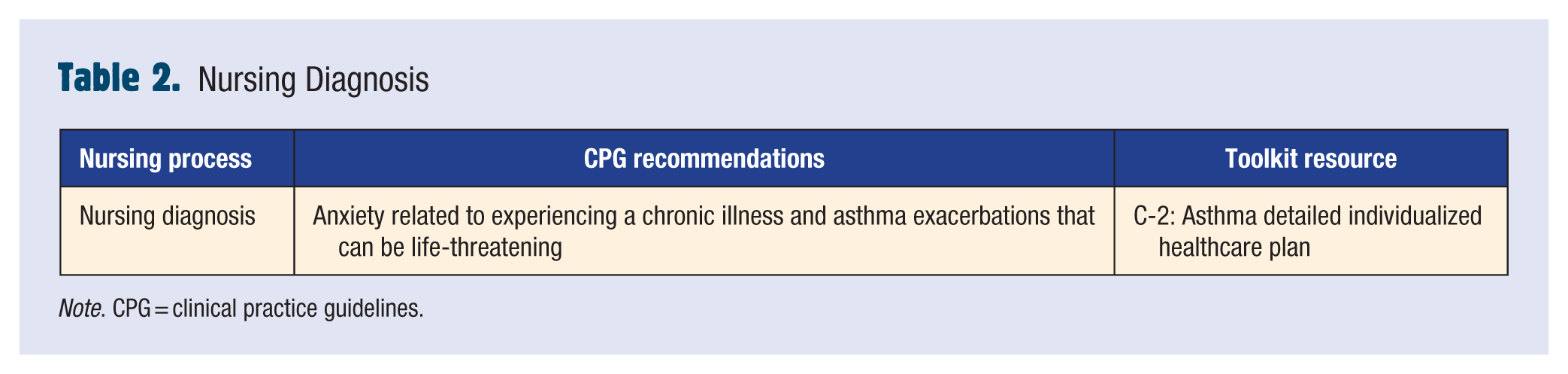
Note. CPG = clinical practice guidelines.
Outcome Identification
Suzy was particularly worried about her asthma and an upcoming field trip to the zoo. The Field Trip Preparation Checklist (Form C-9) provided Nurse Brian with a resource to ensure Suzy had what she needed to receive care during an off-campus activity. He was also able to ensure Suzy’s AAP (Form C-1) was up to date and reviewed it with her teacher prior to the field trip (Table 3).
Outcome Identification
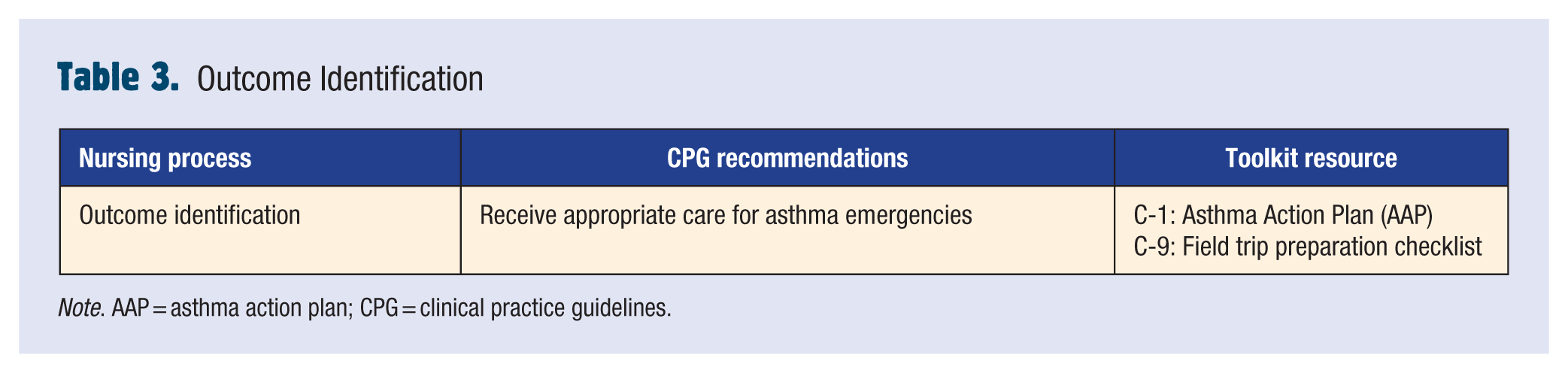
Note. AAP = asthma action plan; CPG = clinical practice guidelines.
Planning
Nurse Brian utilizes the Inhaler with a Spacer or Valved-holding Chamber Skill Competency Documentation Form (Form C-10) to document staff competency in assisting a student to use an inhaled asthma medication via a spacer. This competency documentation would be completed following staff training and discussions with teachers and staff regarding student-specific needs. Nurse Brian has now ensured that staff are properly trained to help Suzy use her inhaler in instances when he may not be available (Table 4).
Planning
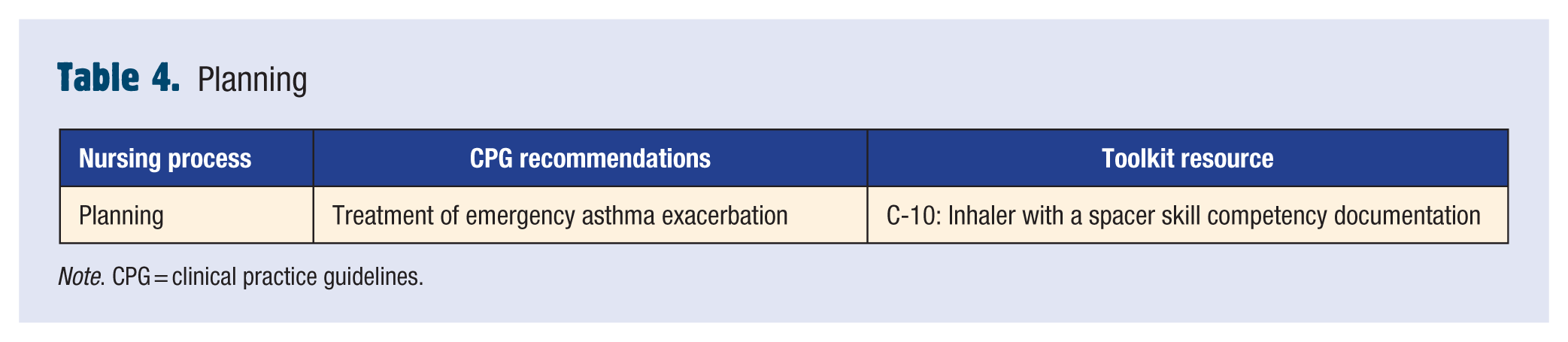
Note. CPG = clinical practice guidelines.
Implementation
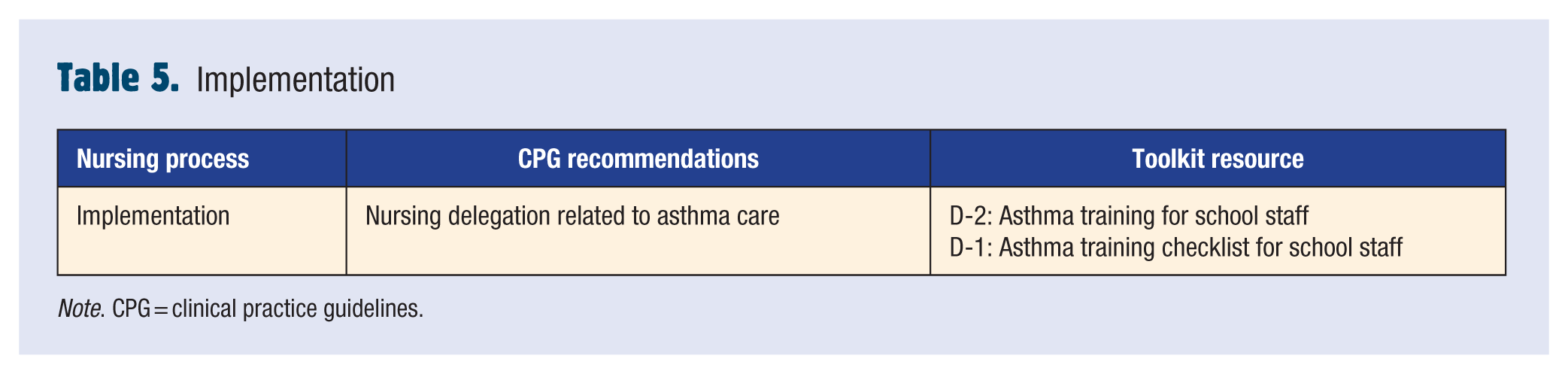
Nurse Brian scheduled an in-service with all school staff after school. He provided school staff training using the Asthma Training for School Staff (Form D-2) to increase staff knowledge and readiness for responding to student needs. He used the Asthma Training Checklist for School Staff (Form D-1) to document the training, noting who attended, when, and outlining the topics and skills that were covered (Table 5).
Implementation
Note. CPG = clinical practice guidelines.
Evaluation
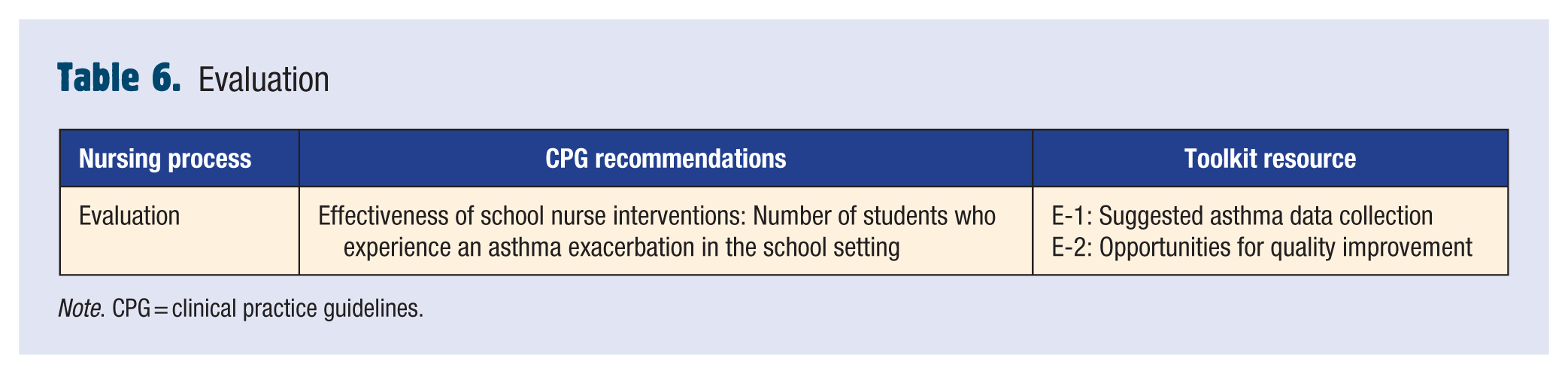
Nurse Brian decided to run reports from his electronic health record (EHR) documentation for asthma-related visits to assess the effectiveness of his care and identify any necessary changes. He used Form E-1: Suggested Asthma Data Collection Tool. Nurse Brian was able to identify the number of students treated for asthma exacerbations each month and the number of documented exacerbations for each student. At the end of the school year, Nurse Brian identified an increase in asthma exacerbation treatment early in the school year. With a goal of decreasing the number of asthma exacerbation treatments the following school year, he reviewed his activities to identify ways to reduce barriers and allow students to have asthma reliever medication at school. Nurse Brian was able to explore individual student needs, as well as the population needs of all students with asthma (Table 6).
Evaluation
Note. CPG = clinical practice guidelines.
Although these examples highlighting Nurse Brian’s care coordination for Suzy is not all-inclusive nor sequential, they provide an application of how the evidence-based recommendations from the CPG can be coupled with multiple Toolkit resources to guide and support school nursing practice. These tools also promote standardized practices for all students with asthma within a school and within a district and increase the efficiency of school nursing care and student outcomes through data collection templates and Quaiity Improvment (QI) opportunities. Assessing the needs of individual students and the sub-population of the school with asthma provides school nurses with the opportunity to plan and implement EBPs to meet the needs of their students from year to year.
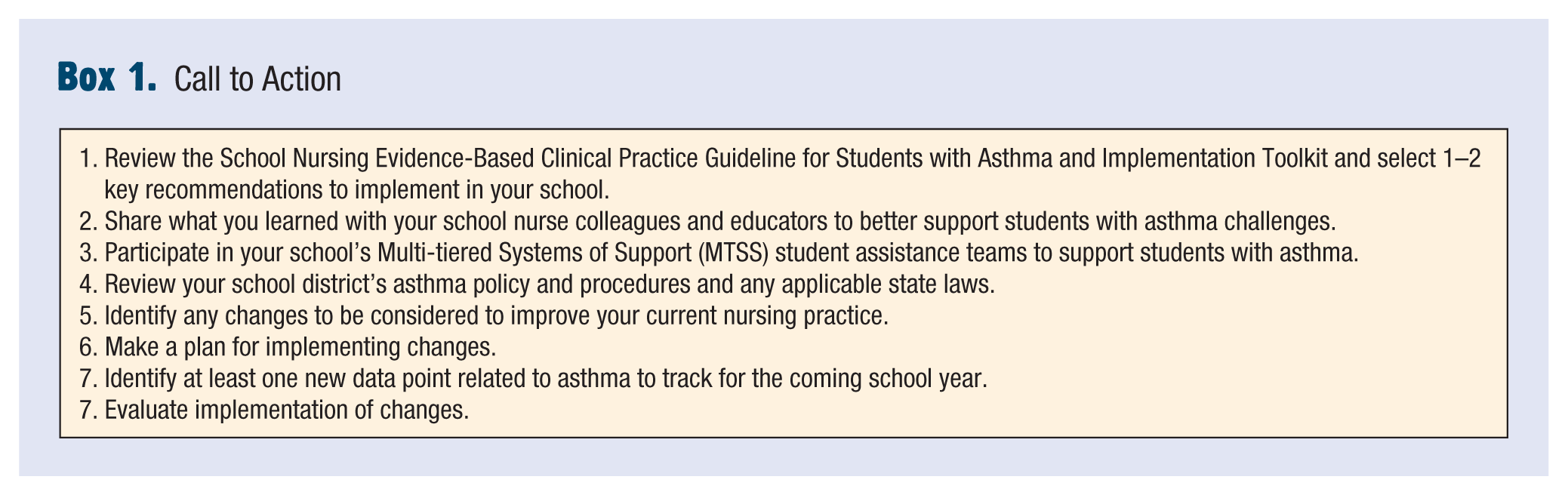
The School Nursing Evidence-Based Clinical Practice Guidelines for Students with Asthma and the Implementation Toolkit provide school nurses with guidance and tools to promote evidence-based care and data-driven decision-making. The CPG may look complicated or intimidating, but the best first step is to review the list of recommendations. For more information on why these recommendations were chosen, the references are noted in the recommendations table and can be found in the CPG’s Appendix for further review. Evidence changes over time and practice must follow suit to promote student outcomes. School nurses are encouraged to review these resources and identify opportunities for updates to their school policy and procedures, school nursing practice, and student access to care and educational opportunities. See The Call to Action (Box 1) for more details.
Call to Action
The CPG and Toolkit can be accessed in the NASN Learning Center through the links below or through the QR code. If you are a nonmember, you will need to create a free account to access the Learning Center.
CPG https://learn.nasn.org/courses/89514
Toolkit https://learn.nasn.org/courses/89761#
Use this QR code to see the CPG and toolkit.

Footnotes
Ethics Approval
This article adheres to NASN’s established ethical standards. Ethical approval was not required as the work did not involve human participants, animal subjects, or sensitive data.

Dr Judith Quaranta has 46 years of experience in pediatric nursing and is a certified pediatric nurse and certified asthma educator. She has been implementing community-based interventions to reduce asthma burden in local communities since 2000 and works closely with the American Lung Association to implement a wide range of asthma management education programs. Dr Quaranta is one of the authors for the School Nursing Evidence-Based Clinical Practice Guideline: Students with Asthma.
Rosa Darling has been a registered nurse for 25 years and has worked in telemetry, NICU, and Supervisor settings. She began teaching at the Decker School of Nursing in 2010 and works with Dr Quaranta in a research immersion community-engaged course for undergraduate students that addresses asthma and pediatric well-being. She is one of the authors for the School Nursing Evidence-Based Clinical Practice Guideline: Students with Asthma.
Dr Kimberly Stanislo has been a nurse for 25+ years. Prior to transitioning into school nursing, she worked in pediatrics as an RN and a nurse practitioner. Kimberly has practiced school nursing since 2004 in various capacities from building nurse, school nurse administrator, and school nurse educator. She currently serves as the Chief Clinical Officer for the National Association of School Nurses. In this role, she provides strategic leadership for NASN’s integration of research, education, and practice into school nursing practice, including oversight of the CPG and Toolkit development process.