







Abstract
This qualitative study explores the impact of an Educational and Community Leadership (EDCL) doctoral program on its alumni, focusing on their personal growth, community engagement, and societal contributions. Guided by a holistic framework, the study addresses two key questions: (1) How do alumni make sense of their doctoral studies in retrospect? and (2) How does the doctoral program in EDCL impact alumni at the levels of Self, Organization, and Community? Through semi-structured interviews with 13 alumni, the study identifies three central themes: (1) Personal Growth, Identity, and Self-Discovery (2) Community Engagement and Leadership for Social Change, and (3) Educational Leadership Beyond Traditional Models. Participants emphasized the need for higher education institutions to incorporate student perspectives in program development to improve success and well-being. The study highlights the role of dynamic-critical pedagogy in shaping leaders and addressing gaps in student success, offering insights for improving doctoral programs and advancing equity in higher education.
Historical Roots of Educational Leadership
The origins of doctoral education in educational leadership can be traced to the early 20th century with Harvard University’s Doctor of Education (EdD) program, first established in 1920. This program was intentionally designed as a professional doctorate for practitioners, focusing on the application of research to real-world educational problems rather than purely academic inquiry. The Harvard EdD model set a precedent for preparing leaders who could integrate scholarship and practice to address the complex demands of schools and educational systems (Perry, 2012).
Building on these early developments, educational administration programs began to emerge more broadly in the 1960s in both the United States and the United Kingdom, driven by the growing need to manage public education systems, particularly after the introduction of postgraduate studies (Tyack & Hansot, 1982). While these programs were initially established within universities, academic research was not a central focus in their early years. Over time, the development of Educational Leadership (EL) was shaped by the theory movement and the paradigm wars of the late 20th century (Culbertson, 1988). In response to logical positivism, Thomas Barr Greenfield’s work advocated for a more humanistic approach to the science of educational administration (Greenfield & Ribbins, 1993). By 1980, Bates and Foster’s (1980) Critical Theory began influencing the field, followed by the naturalistic coherentism of Evers and Lakomski (1991) in the 1990s. Additionally, various theoretical frameworks such as post-modernism (English, 2003), poststructuralism (Niesche & Gowlett, 2019), feminism, anti-racism (Diem & Welton, 2020), postcolonialism, and relationality (Eacott, 2018) have contributed to ongoing debates about how knowledge is generated and applied within EL.
Emergence of Doctoral Programs in Educational Leadership
The creation and expansion of postgraduate programs, particularly doctoral programs in EL, marked a turning point in the professionalization of educational leadership (Firestone et al., 2024; Oplatka, 2010). These programs were designed not only to shape leadership behaviors but also to influence policies and practices in ways that effectively meet the goals of educational systems (Arar et al., 2025). Drawing from both theoretical knowledge and tacit experience, doctoral programs emphasize intensive research activities that develop strategic thinking, problem-solving skills, and the capacity to address environmental challenges in complex educational contexts.
Research by Taysum (2016) and Firestone et al. (2024) demonstrates how doctoral studies foster leaders’ abilities to navigate educational reform through evidence-based approaches to policy and administration. Similarly, Taysum (2013) argues that doctoral education enhances leaders’ abilities to improve student participation and address societal challenges. Initially focused on training school administrators and policymakers, EL doctoral programs have evolved to include a broader range of educational and community leadership roles (Cosner, 2020; Eacott, 2018).
Doctoral and master’s theses remain central components of these programs, offering structured opportunities for students to conduct original research, refine analytical skills, and contribute to the knowledge base of the field (Arar et al., 2024; Creswell, 2007). These culminating projects bridge theory and practice, preparing graduates for both academic and applied leadership roles.
Shifts Toward Educational and Community Leadership
The present discussion is situated within broader social, cultural, and political contexts that shape educational leadership in the 21st century. As EL programs have expanded, many have shifted toward frameworks that integrate educational and community leadership (EDCL), reflecting a more holistic, relational, and context-responsive approach. The accompanying visual guide (Table 1) outlines the historical and genealogical growth of the program, framing its evolution in terms of curriculum, scope, and global impact.
Historical and Genealogical Growth of the EDCL Program.
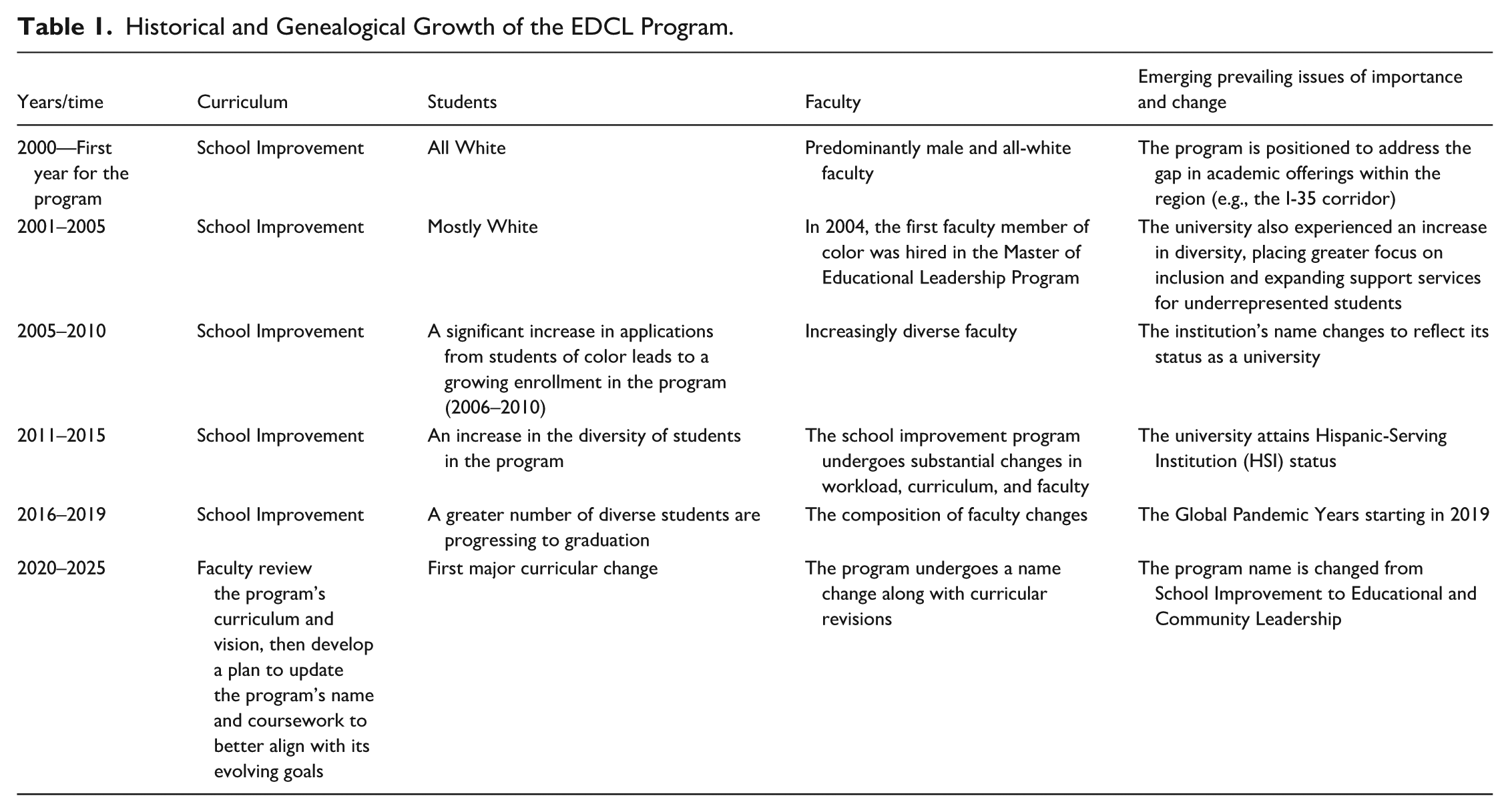
Using the concept of “ecologies of knowing” (M. A. Guajardo et al., 2015), this paper organizes qualitative narratives and observations across three levels: Self, Organization, and Community/Systems to illustrate the relational influence of the program on students and the reciprocal ways students contribute to its growth. This approach foregrounds the program’s role in fostering leadership practices that are not only theoretically informed but also deeply embedded in lived experience and community engagement.
Setting the Stage
This section examines how El doctoral programs navigate the persistent tension between theory and practice. It begins by outlining the nature of the gap that exists between research-based training and the practical realities of leadership. It then turns to scholarly critiques of EL doctoral programs, highlighting concerns about overemphasizing research at the expense of practice and the neglect of supportive professional networks. Building on these critiques, the section explores strategies for strengthening scholarly and practical integration, emphasizing peer learning, writing development, and practice-based engagement. Finally, it introduces relational accountability as a guiding paradigm for bridging the divide, underscoring the importance of trust, collaboration, and community-based networks in shaping transformative doctoral education.
Bridging the Gap Between Theory and Practice in EL Doctoral Programs
The ongoing tensions between theory and practice, research-based knowledge and experiential expertise, and individual transformation and systemic change remain central to doctoral education in EL (Arar et al., 2025; Oplatka, 2010). While many programs now prioritize equity, diversity, and social justice, a persistent challenge lies in bridging the gap between research-intensive training and the complex, context-specific realities of leadership practice (Gümüş et al., 2021). This gap raises critical questions about how EL doctoral programs can better equip graduates to lead transformative change in education (Firestone et al., 2024; Taysum, 2013).
Critiques of EL Doctoral Programs
Scholarly critiques argue that universities often do not sufficiently prepare educational leaders for the real-world demands of leadership (Arar, 2018; Buller, 2015; Honig & Donaldson Walsh, 2019). Programs are frequently critiqued for overemphasizing research skill development at the expense of practical leadership competencies (Honig & Donaldson Walsh, 2019; Shulman et al., 2006). Research in this area also explores standard curricula and instructional strategies (Buss et al., 2016; Cosner, 2020) and examines systemic inequities such as gender inequality and sex discrimination embedded in organizational power structures (Gunter, 2016; Oplatka, 2010). Other critiques target the practice-based dissertation, questioning how effectively it equips students with applied research knowledge and skills (Gillham et al., 2019). Mentorship further emerges as a crucial factor in student success, shaping both scholarly identity and professional readiness (Welton et al., 2014). Taken together, these critiques highlight a persistent imbalance: programs privilege scholarly rigor but risk sacrificing opportunities for practice-based preparation and the cultivation of strong social-professional networks.
Strengthening Scholarly and Practical Integration
In response to these critiques, research suggests that EL doctoral programs must intentionally integrate scholarship with practice. Beyond research proficiency, the development of critical writing skills, peer assessment, and reflective dialogue is vital for doctoral student growth. Woodhouse and Wood (2022) show how peer review processes and dialogic spaces can enhance scholarly writing while fostering collaborative learning environments. Similarly, McBrayer et al. (2021) emphasize that balancing academic rigor with practical application strengthens students’ self-efficacy as scholarly practitioner-researchers. Collectively, these findings suggest that programs should create intentional structures that balance academic theory with practice-based engagement, ensuring that graduates are prepared to address contemporary educational challenges.
Relational Accountability as a Bridge
One promising avenue for bridging the gap is relational accountability. This approach emphasizes trust built through interaction and collaboration, enabling the negotiation of traditional accountability policies into human-centered and ecologically aligned structures (Sergiovanni, 2000). Relational accountability is cultivated through critical reflection and social leadership, supporting the development of trust-based networks between higher education institutions and the communities they serve. Such networks are crucial for doctoral students, who benefit not only from individual mentorship but also from broader relational ecosystems of support. Embedding this relational orientation reimagines the quality and effectiveness of doctoral education (Hartman et al., 2018). Consequently, EL doctoral programs can become transformative spaces for personal and societal change by integrating scholarly knowledge with community-based engagement (Hoggan & Kloubert, 2020).
A Holistic Theoretical Framework for Transformative Leadership Development in Doctoral Education
Doctoral programs in EL play a pivotal role in catalyzing personal and professional transformation, providing graduates with the essential knowledge, skills, and dispositions necessary to navigate complex educational landscapes. Leadership development within these programs is deeply influenced by tacit theories that shape students’ learning experiences and engagement with the field (Arar et al., 2024). Therefore, this study integrates Transformative Learning Theory, Experiential Learning Theory, Social Cognitive Theory, Communities of Practice, and The Self into a comprehensive theoretical framework, offering insights into how EL doctoral programs foster self-efficacy, reflective practice, and applied expertise in educational leaders.
Transformative Learning Theory
Transformative Learning Theory (Mezirow, 1991) underscores the critical role of reflective practice and perspective transformation in doctoral education. In EL doctoral programs, learning extends beyond knowledge acquisition; it demands that students critically reassess their existing assumptions, challenge dominant paradigms, and develop new frames of reference that drive meaningful change (Taylor, 2008). This process fosters deep personal and professional growth as doctoral students become adept at questioning entrenched leadership norms and reimagining educational systems. Transformative learning is aligned with adult learning principles, emphasizing self-directed engagement, intellectual autonomy, and the development of critical consciousness (Cranton, 2013; Hoggan & Kloubert, 2020). Within the context of EL programs, this theory explains how doctoral students cultivate equity-centered, justice-oriented, and contextually responsive leadership practices, enabling them to address the moral and ethical dimensions of education.
Experiential Learning Theory
Experiential Learning Theory (D. A. Kolb, 2015) complements transformative learning by emphasizing learning through experience, reflection, and application. Kolb’s learning cycle—comprising concrete experience, reflective observation, abstract conceptualization, and active experimentation—provides an essential model for leadership development. Doctoral students engage in real-world problem-solving, case-based learning, and action research projects that bridge theory and practice. A. Kolb and Kolb (2017) argues that experiential learning in higher education enhances leadership competencies by reinforcing the iterative nature of learning, where leaders continuously adapt, test, and refine their strategies based on real-world engagement. This framework is particularly relevant in EL programs, as it emphasizes the importance of practical application in leadership development, ensuring that research-informed decision-making is embedded in graduates’ leadership approaches. Experiential learning also facilitates the formation of professional identity, helping doctoral students integrate their academic insights with their leadership philosophies and organizational realities (Rae, 2006).
Social Cognitive Theory
Social Cognitive Theory (Bandura, 1991) introduces an essential psychosocial dimension to leadership development by emphasizing the interplay between self-efficacy, observational learning, and self-regulation. Doctoral students in EL programs are shaped not only by their direct experiences but also by mentorship, peer collaboration, and exposure to diverse leadership models (Schunk, 2012). Bandura (2023) identifies self-efficacy as a key determinant of success, suggesting that individuals who believe in their abilities are more likely to take initiative, persist through challenges, and achieve their goals. This is especially relevant in doctoral education, where confidence in one’s scholarly and leadership abilities directly impacts engagement with research, professional networks, and problem-solving approaches. Furthermore, Social Cognitive Theory explains how EL doctoral students learn by modeling effective leadership behaviors, allowing them to develop leadership competencies through observation of faculty mentors, community leaders, and peers who exemplify impactful educational leadership (Zimmerman, 2000).
Communities of Practice
Further, Communities of Practice (Wenger, 1998) enrich this theoretical framework by emphasizing collaborative learning, shared knowledge creation, and active community engagement. Doctoral programs that intentionally cultivate spaces for collective inquiry foster not only academic growth but also relational connections that extend into professional and civic life. Such programs encourage participants to co-construct knowledge, refine their leadership philosophies, and build networks that sustain their growth beyond graduation (Wenger et al., 2002). Wenger’s framework underscores that knowledge is not developed in isolation but through active participation in professional discourse, meaningful dialogues, and collective problem-solving. This emphasis resonates with Tredway et al. (2025), who argue that lasting educational change emerges from within communities when leaders and learners work collaboratively. Similarly, McKnight and Block (2010) highlight the importance of recognizing and leveraging the assets of communities to strengthen collective capacity, while Block (2009) emphasizes that belonging and shared responsibility are essential for building thriving communities. In this way, EL doctoral students who engage in communities of practice benefit from peer mentorship, interdisciplinary collaboration, and cross-sectoral learning that both enhances their ability to navigate complex educational challenges and strengthens their capacity to drive systemic change (Snowden & Halsall, 2019). Taken together, these interrelated perspectives provide a robust lens for understanding how doctoral students evolve as scholars, practitioners, and change agents through deepened engagement with both academic and broader community contexts.
The Self
Finally, and as equally important to understanding doctoral education is the role of the self as both subject and agent of transformation within the ecology of knowing. Drawing from Guajardo et al. (2002, 2008, 2015), the self serves as a critical entry point for examining how doctoral students and alumni negotiate identity, purpose, and agency within educational leadership. At the micro level, the self is not merely an individual unit of analysis but a locus of reflection, storytelling, and relational accountability that anchors broader organizational and systemic change. Doctoral programs that encourage self-inquiry and narrative practice create spaces where participants can chronicle their journeys, uncover personal histories, and link lived experience to leadership development (M. A. Guajardo & Guajardo, 2002). This emphasis on autoethnographic exploration positions the self as a site of meaning-making where leaders engage with their cultural, familial, and community inheritances to shape their professional practice. Alumni who continue these practices beyond graduation demonstrate how the self can be sustained as a generative resource for adaptive leadership.
Further, M. Guajardo et al. (2008) highlight how transformative education arises from the intentional integration of self-reflection with collective responsibility. When doctoral students and alumni are invited to engage in testimonial practice, story circles, and relational dialogue, they cultivate a deeper awareness of their positionality and their capacity to act as agents of change. This perspective reframes doctoral education as not only a technical or scholarly endeavor but also a personal and ethical one rooted in human experience. This essentially centers the self within the theoretical framework of doctoral education and underscores that leadership development is inseparable from personal narrative, identity formation, and critical reflection. For alumni, this micro lens serves as a compass for ongoing growth, enabling them to navigate shifting educational landscapes while remaining grounded in their own stories and values (M. A. Guajardo et al., 2015).
Thus, this study integrates transformative learning, experiential learning, social cognitive theory, communities of practice, and the self to create a comprehensive framework for understanding the impact of EL doctoral programs. Transformative learning emphasizes how students undergo intellectual and personal shifts, challenging existing assumptions and fostering new perspectives (Mezirow, 1991). Experiential learning underscores the importance of applying theoretical knowledge in real-world contexts, where practical engagement enhances both understanding and skill development (D. A. Kolb, 2015). Social cognitive theory highlights how leadership identity and self-efficacy are shaped through social interactions, mentorship, and role models (Bandura, 1991; Hoggan & Kloubert, 2020). Communities of practice ensure that students remain engaged in collaborative, long-term learning environments, supporting both their professional and scholarly growth (Wenger, 1998). Lastly, the self-ensures that doctoral students engage in deep reflection and meaning-making, anchoring their professional and scholarly growth in personal narrative and lived experience (M. Guajardo et al., 2008). Synergy between these theories fosters leaders who are not only knowledgeable but also capable of driving social change in diverse educational settings.
To strengthen EL doctoral programs, it is crucial to develop adaptive, interdisciplinary, and practice-oriented models that bridge the gap between academic rigor and real-world leadership application. By embedding transformative experiences, field-based learning, and structured mentorship, EL programs can better prepare graduates to lead change in education. Connecting doctoral training to real-world leadership practice will position EL programs as incubators of leadership excellence, nurturing resilient, equity-focused, and impact-driven leaders ready to tackle the challenges of the evolving educational landscape.
Ultimately, this integrated framework (Figure 1) offers a holistic perspective on how EL doctoral programs shape the doctoral experience, supporting students in becoming adaptive, reflective and socially responsive leaders. By examining the intersection of transformative learning, experiential learning, social cognitive theory, communities of practice, and the self, this study illuminates how these theories inform program design and enhance the impact of doctoral education. The combination of these perspectives highlights the importance of linking theoretical insights with practical leadership strategies, ensuring that graduates are prepared to address today’s most pressing educational challenges.
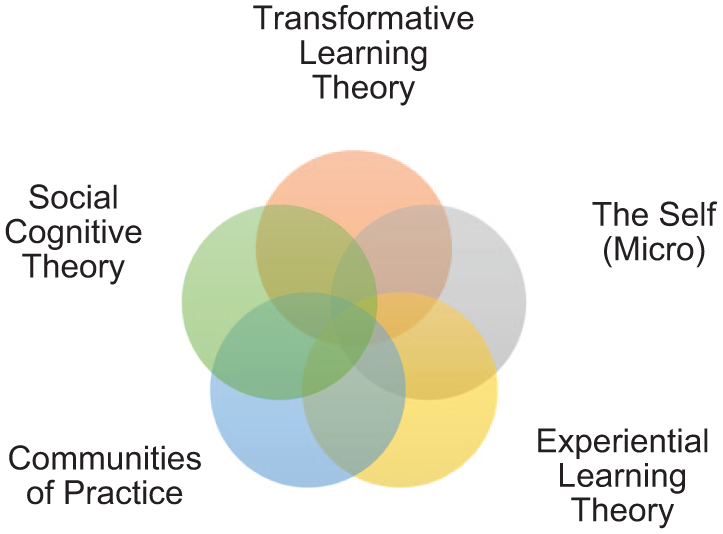
Theoretical framework.
Guided by the above theoretical framework, this paper presents an analysis of the impact of a postgraduate program in EL on alumni’s personal growth, community engagement, and systemic influence, utilizing a qualitative research design. To explore these dynamics, we conducted semi-structured interviews with 13 alumni from a single EL doctoral program, who completed their studies between 2003 and 2023. The interviews aimed to address the following research questions: (1) How do alumni make sense of their doctoral studies in retrospect? and (2) How does the doctoral program in EDCL impact alumni at the levels of Self, Organization, and Community?
Context
The Doctoral Program in Educational and Community Leadership (EDCL) was established in 2000 in central Texas, a rapidly growing community, with the aim of driving educational development both regionally and nationally. Designed around a cohort model, the program offered an interdisciplinary curriculum to prepare education professionals for reflective and ethical practice, foster the growth of individual learners, and support the development of emerging learning communities in diverse educational settings (Gordon, 2003, p. 26).
The core curriculum included courses in educational philosophy, leadership and organizational change, models of inquiry, epistemologies, adult learning and development, and community development. Following the core courses, students specialized in the school improvement major, which covered topics such as the foundations of school improvement, curriculum and instructional leadership, and educational assessment models. Additionally, the program integrated three key components—technology, diversity, and research allowing students to choose electives in these areas alongside traditional quantitative and qualitative research courses (Gordon, 2003, p. 27). These three components were woven throughout the program to provide a holistic and forward-thinking educational experience (Arar et al., 2025).
A strong emphasis on collaborative learning and experiential projects encouraged doctoral students to critically engage with their beliefs. Assignments such as autoethnographies, educational philosophy statements, and reflective dialogues on complex issues facilitated transformative learning, enabling graduates to refine their leadership approaches (Ross-Gordon et al., 2015).
The program was also deeply committed to multicultural and global education, preparing students to be culturally responsive leaders capable of championing equity and social justice. Diversity-focused activities helped students deepen their understanding of their own and others’ cultural backgrounds, an essential competency for effective leadership in diverse environments. Collaborative research was a key feature of the program, with students frequently co-presenting at national and international conferences alongside faculty (Arar et al., 2025).
Doctoral dissertations typically centered on field-based research that fostered transformative learning in educational settings, reinforcing the program’s practical, hands-on orientation. Graduates went on to impact the field through initiatives in counseling, mentoring, and leadership at the district and school levels, with many advancing to roles in higher education. The program, emerging during a period of regional growth, demographic shifts, and evolving higher education landscapes, was shaped by the local political context and the university’s history. Its mission reflected a commitment to developing leaders capable of navigating dynamic educational and social challenges (Arar et al., 2024).
Methodology
This study employed a qualitative case study methodology to examine the experiences and impacts of a doctoral program in EDCL, established in 2000 in central Texas. This approach was chosen for its ability to provide a deep, contextual understanding of complex educational phenomena within a specific setting (Yin, 2018). The program aimed to prepare educational professionals through an interdisciplinary curriculum focused on reflective and ethical practices, supporting the growth of individual learners while fostering learning communities, including schools, higher education institutions, and community-based organizations (Arar et al., 2025; Gordon, 2003; Hartman et al., 2018).
It is important to note that the primary unit of analysis for this study is the student participants/alumni, as the focus of this paper is on the program’s impact on them. While the broader context, including faculty, time, and community, has been described to provide necessary background, this document centers specifically on the influence of the program on students. In future research on the same topic, the unit of analysis may shift to focus on institutional impact or community change. However, for this study, the emphasis remains on student participation and its resulting impact.
Therefore, a qualitative case study methodology was specifically chosen to explore the experiences and perceived impacts of the EL doctoral program on alumni growth, community engagement, and systemic influence. This approach enables in-depth exploration of complex phenomena within real-life contexts, focusing on understanding participants’ perspectives in rich, contextual detail (Yin, 2018). The methodology is particularly well-suited to examine the nuanced ways in which the EL program shaped alumni identities, leadership practices, and their contributions to broader educational and community systems.
Data Collection
As mentioned earlier; to gain a deeper understanding of the experiences and impacts of the doctoral program, we conducted semi-structured interviews with 13 alumni who had graduated since the program’s inception in 2000. Each alum was interviewed individually in English by a trained graduate student familiar with the program’s framework and context. The interviews were conducted both virtually via Zoom and in person, lasting approximately 50 to 60 min, providing flexibility and convenience for the participants. At the start of each interview, the study’s objectives were explained, and participants were assured of confidentiality and anonymity. Participation was completely voluntary, and interviewees were reminded that they could withdraw from the study at any time without consequence.
The interviews sought to capture alumni perspectives on how their doctoral studies contributed to personal and professional growth, advocacy efforts, community engagement, and systemic impact. Key questions focused on participants’ experiences during the program, including the dissertation process, as well as their reflections on how the program influenced their leadership roles and community involvement. The semi-structured format allowed for probing questions to deepen the discussions as needed, fostering a comprehensive understanding of how the EL program shaped alumni trajectories and leadership identities. A detailed account of the interview questions in relation to the research questions is presented in the following Table 2.
Interview Questions.
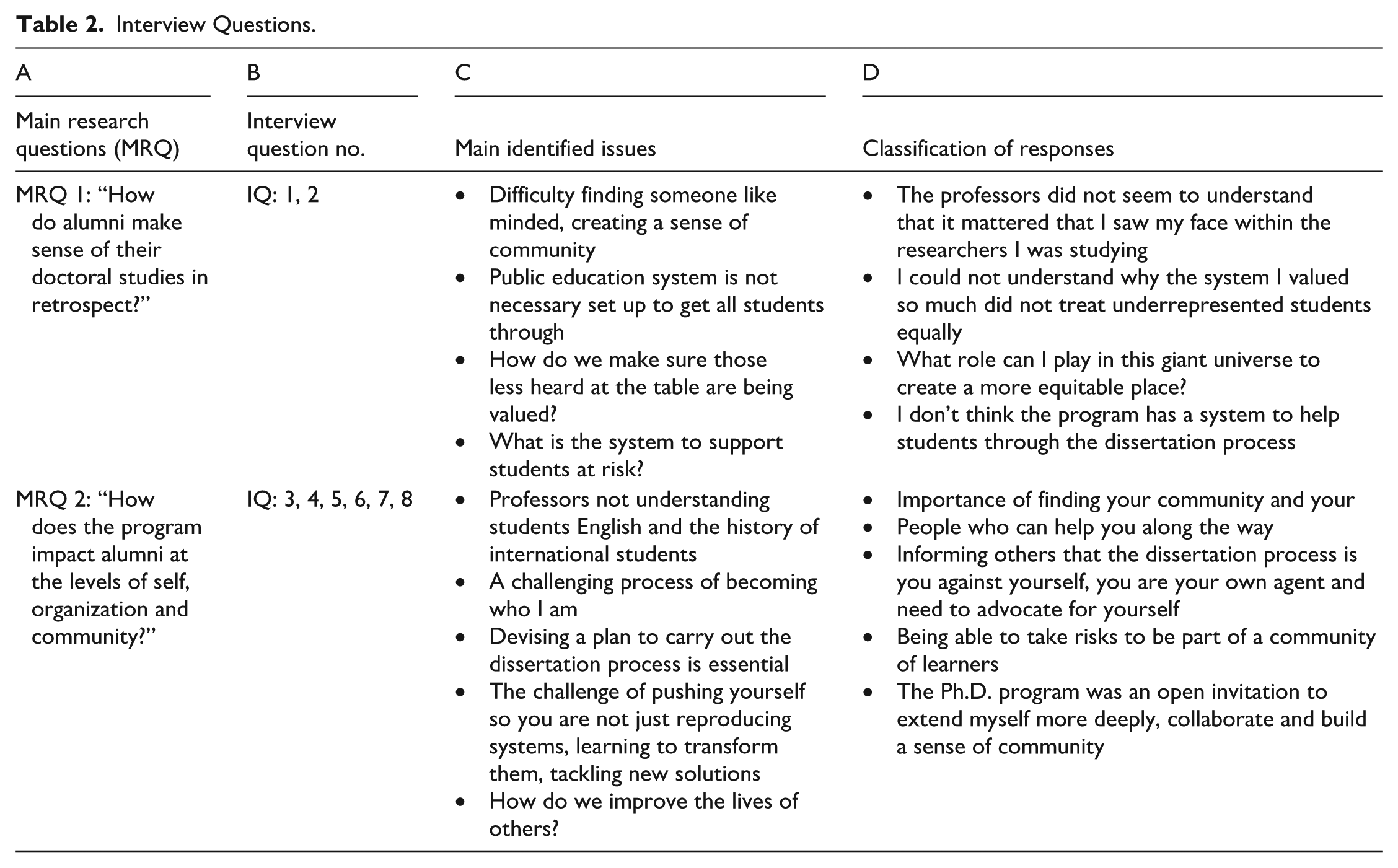
Data were collected through semi-structured interviews, a method that blends guided questions with the flexibility to probe deeper into participants’ responses as new insights emerged (Kallio et al., 2016). This approach allowed participants to freely express their reflections while ensuring that the core research topics were adequately addressed, resulting in a comprehensive understanding of the program’s influence on alumni development and community impact.
Participants as Population
Purposeful invitation was used to select 13 alumni, chosen for their ability to participate, engagement while in the program, detailed insights based on their diverse experiences, and representation of the program participants (Patton, 2002). Of these, thirteen alumni agreed to participate in a 50 to 60-min, semi-structured interviews conducted via Zoom. The participants represented a variety of career stages and made diverse contributions to educational practice and leadership, offering a well-rounded perspective on the program’s impact at individual, community, and systemic levels.
This study involved 13 doctoral graduates from an Educational Leadership program. The sample comprised six and seven male participants, all between the ages of 40 and 50, with the exception of one participant who was in their mid-30s at the time of the interview. Nine participants identified as first-generation college graduates, which is a significant aspect of the program’s emerging impact on first-generation college-going students; a game-changing indicator for both families and communities.
The participant group included a diverse range of racial and ethnic backgrounds: three White alumni, two African American alumni, two Asian alumni, and six Latinx/Hispanic alumni.
Data Analysis
Qualitative data from individual interviews and focus group discussions were transcribed by the first author, who is fluent in the interview language, and analyzed thematically following the four-stage process outlined by Marshall and Rossman (2012): organizing the data, generating categories and themes, testing emergent tendencies, and searching for different meanings within the themes. This process identified central themes by examining recurring experiences and perceived impacts of the EL doctoral program, focusing on how it shaped participants’ personal growth, leadership development, and commitment to social justice, as well as the structural challenges they encountered.
Coding followed comparative analysis principles (Strauss & Corbin, 1998), enabling rigorous comparisons across categories and subcategories to refine themes and identify consistent patterns. A relational approach complemented thematic coding, highlighting the influence of local knowledge and socio-cultural-political contexts on leadership identity formation and community engagement. To enhance trustworthiness, a peer review of initial findings by the second author (Marshall & Rossman, 2012) provided validation and critical feedback, while triangulation across individual interviews and focus groups strengthened credibility. Member checking (Mero-Jaffe, 2011) allowed participants to review and confirm interpretations, ensuring their perspectives were accurately represented. Although the study focused on a single cohort from one doctoral program, limiting generalizability, detailed participant descriptions support “reader generalizability,” allowing readers to determine applicability to their own contexts.
Findings
The analysis of the interview accounts revealed three main themes: (a) Personal Growth, Identity, and Self-Discovery, (b) Community Engagement and Leadership for Social Change, and (c) Educational Leadership Beyond Traditional Models. These themes reflect both the positive aspects of the EL doctoral program and the areas that need improvement to enhance the overall student experience. Together, they answer the two central research questions: (1) How do alumni perceive their doctoral studies retrospectively? and (2) How does the doctoral program in EDCL impact alumni at the levels of Self, Organization, and Community?
The findings provide valuable insights into the transformative potential of an EL doctoral program while identifying challenges that need attention to ensure the program supports students’ academic and personal growth. These themes also align with key tacit theories of learning from our theoretical framework: Transformative Learning Theory (Communities of Practice), Social Cognitive Theory, Experiential Learning Theory, and the Self which offer frameworks to understand how learning and growth occurred throughout the doctoral experience of past alumni.
This analysis will also involve a detailed examination of the narratives from all alumni/participants, as outlined in Table 3. Each of the 13 alumni narratives have been integrated into the analysis, with some alumni being referenced multiple times to offer a more descriptive articulation of the feedback.
Participant Demographics.
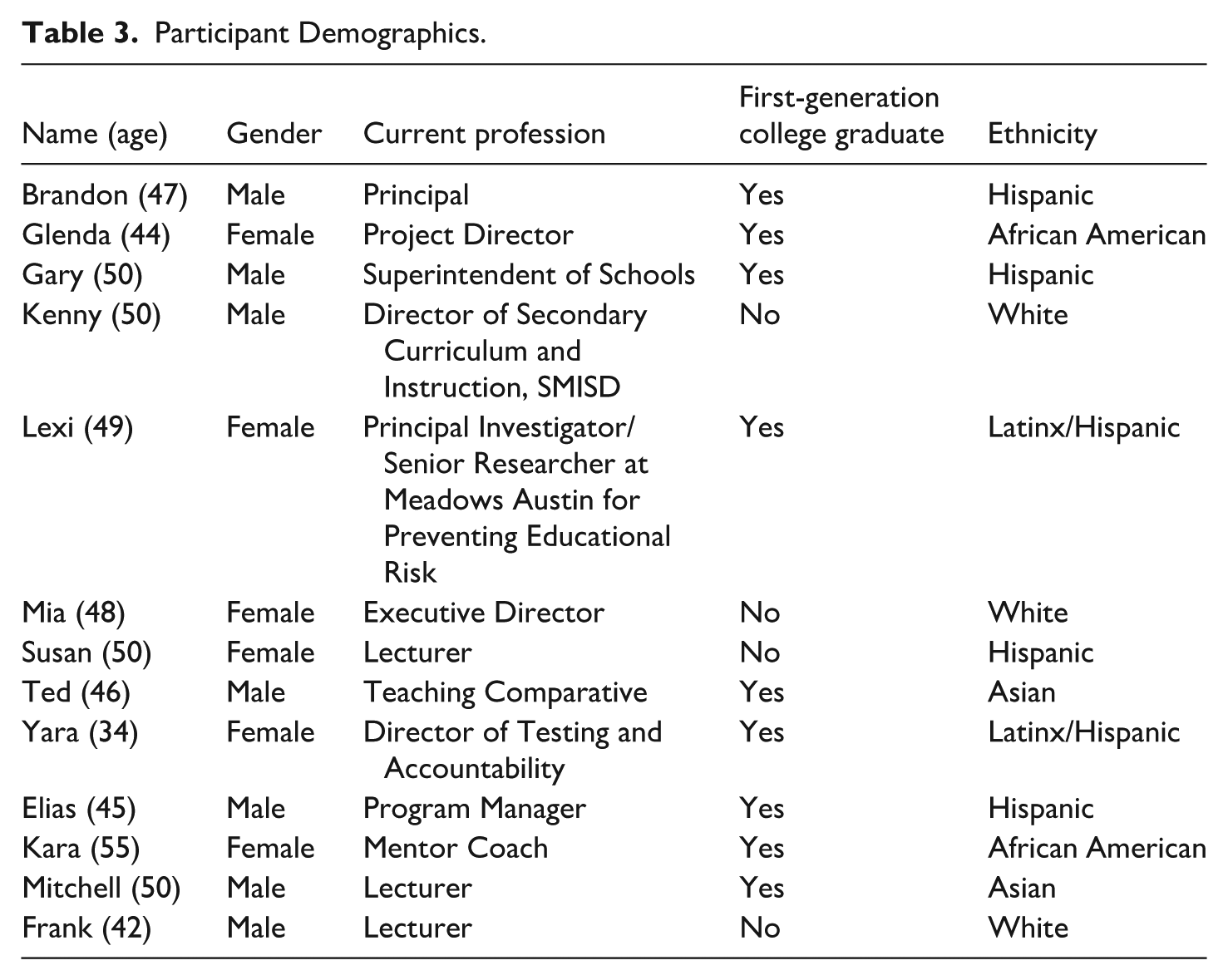
Figure 2 below highlights the central themes and subthemes that emerged from the analysis. These themes will be discussed in greater detail in the following sections.
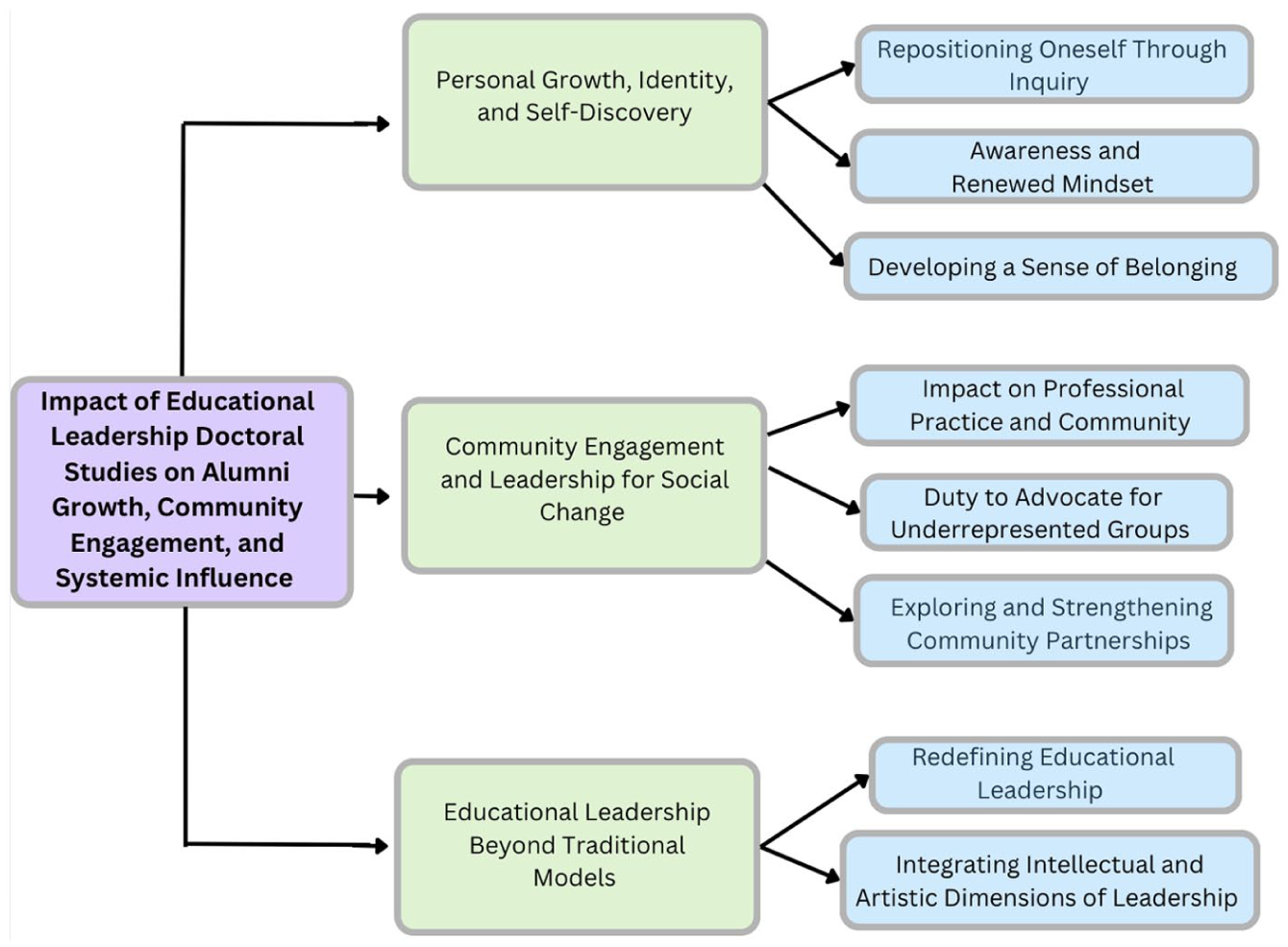
Impact of educational leadership doctoral studies on alumni growth, community, engagement, and systemic influence.
Theme 1: Personal Growth, Identity, and Self-Discovery
Alumni of the EL doctoral program consistently described their journeys as deeply transformative, marked by shifts in identity, values, and purpose. Central to these transformations was the role of the self as both the site and source of growth. The program served as a catalyst for self-discovery, inviting participants to critically examine their personal narratives, cultural backgrounds, and lived experiences as integral components of their leadership practice. This process not only strengthened leadership capacity but also deepened their engagement with communities by grounding action in authenticity and self-awareness.
Participants emphasized how critical reflection enabled them to connect personal experiences with broader societal roles, illustrating that leadership begins with an awakened sense of self that then expands outward to influence organizations and communities. In this way, the EL doctoral program affirmed that the self, when cultivated through reflection, resilience, and inquiry, becomes a foundation for professional growth, social responsibility, and transformative leadership.
Kara (55, African American, Mentor Coach) highlighted the significance of belonging to an intellectual community where ideas flowed freely:
Being around thoughtful adults with shared passions in a safe space helped me clarify my thoughts and become a more effective public thinker. The program pushed me at multiple levels—helping me articulate ideas, work within different systems, and express myself clearly. It was profoundly transformational.
Her experience aligns with Transformative Learning Theory (Mezirow, 1991), which asserts that deep learning occurs through critical reflection and discourse. The program’s collaborative environment fostered this reflection, enabling Kara to refine her identity, strengthen communication skills, and build confidence as a leader. Her narrative also reflects the subtheme of developing a sense of belonging, as the supportive intellectual community provided her with affirmation, safety, and connection. By experiencing belonging, Kara not only grew in her individual capacity but also recognized leadership as a collective process nurtured through relationships of trust and shared purpose.
Lexi (49, Latinx/Hispanic, Principal Investigator) described how the program shifted her understanding of community engagement:
Collaborating with curriculum writers on community asset-building opened my eyes to the depth of people’s wisdom. I realized that my work was meaningful, but it was missing the heart—the deeper connection that strengthens partnerships.
Lexi’s realization resonates with Yosso’s (2005) concept of cultural wealth, which emphasizes the value of community knowledge in shaping leadership. By recognizing the role of history, culture, and lived experience, Lexi developed a more inclusive and community-centered approach to leadership. Her reflection also demonstrates the subtheme of repositioning oneself through inquiry, as she engaged in critical questioning of her prior assumptions and shifted her stance to embrace community wisdom as central to educational leadership. Through this process, Lexi redefined her role from one of leading in isolation to one of inquiry-driven collaboration, grounded in humility, learning, and relational trust.
Brandon (47, Hispanic, Principal) underscored how exposure to new research broadened his horizons:
The program expanded my curiosity and made me hunger for learning. My children saw me researching, reading, and engaging in academic work—it changed how they viewed education. Learning about critical race theory transformed my perspective; I now see myself as a researcher.
His experience reflects Social Cognitive Theory (Bandura, 1991), where self-efficacy enhances agency. Brandon’s growing confidence as a researcher motivated him to enact change while also shaping how his family perceived education, highlighting the intergenerational effects of transformative learning. His reflection also demonstrates the subtheme of awareness and renewed mindset, as he moved from seeing himself solely as a school leader to embracing a new identity as a researcher. This shift reflects how developing critical awareness not only reshaped his professional trajectory but also renewed his sense of purpose, illustrating how transformative learning fosters both personal growth and systemic vision.
Other alumni emphasized how growth extended beyond intellectual development into resilience and coping with the emotional and logistical challenges of doctoral study. Balancing academic, personal, and professional responsibilities tested their well-being, yet the program helped them build stress management techniques and coping mechanisms that continue to benefit them. These reflections align with Experiential Learning Theory (A. Kolb & Kolb, 2017), which emphasizes learning through cycles of experience, reflection, and experimentation.
Mitchell (50, Asian, Lecturer) pointed to the importance of systemic support:
They need to increase funding and support for cohorts. Students should get more from tuition than just classroom learning. There should be more opportunities to explore beyond the classroom. How do we support single-parent mothers so they don’t drop out? How do we address financial struggles? DRA’s should be paid fairly, not below teachers, so students don’t have to worry about making ends meet.
His reflections underscore Social Cognitive Theory’s emphasis on environmental influences, showing how institutional structures and financial supports shape persistence and success (Bandura, 1991). At the same time, Mitchell’s reflection demonstrates the subtheme of awareness and renewed mindset by highlighting how his perspective expanded from focusing solely on individual classroom learning to recognizing broader systemic challenges. This shift reflects personal growth and identity development as he discovered the importance of advocating for equity and structural change. His renewed mindset reframed leadership as not just about personal achievement, but about ensuring support systems that empower diverse learners to thrive.
Gary (50, Hispanic, Superintendent of Schools) shared a more personal challenge with navigating academic expectations:
A professor from an academic lineage lacked the diverse lived experiences many of us brought to the table. She was teaching a literature course and gave me an incomplete with two weeks left in the semester. My writing had never been an issue before, but suddenly, it was. I felt broken. I wanted to improve my work, but I also struggled with the rigid technical standards she imposed.
Gary’s story highlights the emotional toll of misalignment between student experiences and academic norms. His reflections echo Transformative Learning Theory (Mezirow, 1991), which suggests that disorienting experiences can lead to new perspectives on academic and professional identity. This moment of struggle also reflects the subtheme of awareness and renewed mindset, as Gary’s encounter with rigid academic expectations prompted him to reexamine his own approach to learning and leadership. Through this process, he discovered new ways of navigating challenges, redefining his identity as both a learner and leader, and cultivating resilience through personal growth.
Elias (45, Latino, Program Manager) described his journey in explicitly transformational terms:
This was a transformational journey. The emphasis on social justice pushed me to think deeper about leadership. Titles don’t make leaders—understanding why we do this work does. I didn’t expect to change so much throughout this process.
Elias’s experience demonstrates how critical reflection and engagement with justice-oriented frameworks reshape leadership identity, reinforcing the program’s role as a space for both personal resilience and professional transformation. His narrative also illustrates the subtheme of repositioning oneself through inquiry, as he questioned traditional assumptions about leadership tied to titles and instead embraced a deeper inquiry into purpose and justice. Through this process of personal growth and discovery, Elias redefined his identity as a leader, repositioning himself not through status but through values, reflection, and a renewed sense of commitment to transformative leadership.
Taken together, these narratives illustrate the program’s dual role in fostering identity development and resilience. Alumni described growth not only in intellectual and professional domains but also in their capacity to navigate challenges, advocate for equity, and sustain long-term leadership impact. The program’s emphasis on critical inquiry, reflective practice, and social learning aligns with Communities of Practice (Lave & Wenger, 1991) and underscores that leadership emerges from both personal transformation and collective engagement.
Equally important, these findings highlight the centrality of the self within the theoretical framework. As alumni engaged in cycles of reflection and inquiry, they redefined their own identities, confronted personal assumptions, and integrated lived experiences into their leadership practice. This centering of the self not only fostered deeper self-awareness but also affirmed the idea that transformation begins internally before it can ripple outward to organizations and communities.
In the final analysis, the EL doctoral program became more than an academic journey. It reshaped participants’ identities, strengthened their self-efficacy, and provided tools to balance competing demands. By fostering critical reflection, resilience, and community engagement, the program prepared alumni to enact meaningful social change by affirming that education, when rooted in reflection, the self, and collaboration, can be a powerful force for identity development, resilience, and collective empowerment.
Theme 2: Community Engagement and Leadership for Social Change
This theme highlights how alumni viewed their doctoral studies as pivotal in developing leadership capacities centered on social justice, equity, and community involvement. Participants described shifting away from hierarchical leadership models toward inclusive, justice-driven practices. They applied these leadership skills in real-world contexts, advocating for marginalized communities and initiating social justice efforts within schools and broader social spaces.
Gary (50, Hispanic, Superintendent of Schools) shared:
I am an advocate because of my doctoral degree. My opinions are valued more, and the letters after my name have an impact. The dissertation process helped me analyze, draw conclusions, and synthesize data. As a district leader, I now advocate for people of color, helping others understand that the dissertation process is about you versus yourself. I assist other school leaders through advice and mentorship. It’s a process, and a plan is needed to carry it out.
His reflection highlights Social Cognitive Theory (Bandura, 1991), demonstrating how the doctoral journey strengthened his confidence in enacting change. The program not only refined his analytical skills but also reinforced his role as an advocate and mentor, positioning him as a leader who empowers others in their academic and professional journeys. Gary’s narrative also illustrates the subtheme of impact on professional practice and community, as his doctoral learning extended beyond self-development to shape his leadership in ways that uplift colleagues, support emerging leaders, and foster advocacy for equity within his district. By mentoring others and applying his skills to advance community-focused leadership, he exemplifies how doctoral education creates lasting influence in both professional practice and broader communities.
Similarly, Susan (50, Hispanic, Director) reflected on how the program deepened her commitment to diversity and advocacy:
Most of my cohort members were Black, Latinx, and White students. Learning from their experiences with discrimination was crucial. Hearing directly from marginalized people made me a stronger advocate and helped me develop empathy. I learned to integrate the affective domain into my leadership.
Susan’s narrative aligns with Transformative Learning Theory (Mezirow, 1991), which emphasizes critical reflection leading to perspective transformation. Engaging with diverse peers reshaped her understanding of leadership, reinforcing the importance of empathy and advocacy. Her experience also reflects the subtheme of exploring and strengthening community partnerships, as her leadership growth emerged from building relationships across difference and valuing the shared wisdom of her peers. By cultivating empathy through authentic engagement, Susan demonstrates how leadership extends beyond individual practice to the collective work of forming partnerships that strengthen community and advance equity.
Alumni also credited epistemological coursework and qualitative research for reshaping their leadership perspectives. Frank (42, White, Lecturer) noted:
Courses on epistemologies and frameworks changed my thinking. They reshaped how I approach teaching and leadership. Through electives in Curriculum and Instruction, I built relationships with colleagues who shared similar interests. It became clear that community-building and relational connections were central to everything we were doing.
Frank’s experience highlights the importance of epistemological development in leadership, aligning with Communities of Practice (Lave & Wenger, 1991), where shared learning environments foster identity formation and professional growth. His narrative also demonstrates the subtheme of exploring and strengthening community partnerships, as his intellectual growth was directly tied to the relationships and collaborative spaces he developed with peers. By centering leadership on community-building and relational connections, Frank underscores how partnerships rooted in shared inquiry expand leadership beyond the individual to collective transformation.
Glenda (44, African American, Project Director) described how the program transformed her sense of belonging and community engagement:
I never felt like I was part of a community. Hearing others’ stories in the program made me realize that. It pushed me to engage in community work. Now, I work with the Dunbar Harris Foundation and organized the first Kwanzaa event in San Marcos. I also teach Black history. This work makes me feel like I’m giving back while also educating others. Over time, I’ve come to value cultural wealth more than before.
Her narrative reflects Yosso’s (2005) concept of cultural wealth, emphasizing how engaging with marginalized communities fosters both personal and professional growth. The program helped Glenda redefine her leadership identity, shifting toward a model centered on advocacy and education. Her experience also illustrates the subtheme of impact on professional practice and community, as she translated her doctoral learning into tangible contributions that enrich cultural life, foster belonging, and create educational opportunities. By bridging professional expertise with community advocacy, Glenda demonstrates how leadership can generate meaningful impact that extends far beyond academic spaces.
As alumni engaged in social justice efforts, their leadership development was shaped by Social Cognitive Theory (Bandura, 1991), particularly through observational learning and self-regulation. Faculty and peers modeled advocacy, social justice leadership, and community engagement, reinforcing alumni’s belief in their ability to drive change. This process cultivated a stronger sense of self-efficacy, motivating them to apply their learning in real-world settings.
From a Transformative Learning Theory (Mezirow, 1991) perspective, critical reflection throughout the program led alumni to redefine leadership as a socially responsible and collective endeavor. Over time, their leadership expanded beyond administrative roles to include equity-driven, community-oriented practices. By challenging top-down leadership models, they embraced a more participatory and inclusive approach, seeing leadership as a tool for systemic change.
In essence, the doctoral program catalyzed a profound shift in alumni’s leadership philosophy, moving from traditional, hierarchical models to justice-oriented, community-based approaches. Rooted in advocacy and equity, the program equipped them with the tools and mindset to engage in meaningful social change, transforming both educational spaces and the communities they serve.
Theme 3: Educational Leadership Beyond Traditional Models
For the last theme, alumni consistently emphasized how the program reshaped their understanding of educational leadership, moving beyond conventional roles such as principalship and superintendency. Rather than confining leadership to administrative positions, the program encouraged inclusive, innovative, and transformative approaches that broadened its scope and pushed its boundaries. This shift aligns with Experiential Learning Theory (D. A. Kolb, 2015), which emphasizes active participation, reflection, and integration of new experiences, and with Transformative Learning Theory (Mezirow, 1991), which highlights the power of critical reflection in reshaping perspectives.
Gary (50, Hispanic, Superintendent of Schools) reflected:
Without this program, my leadership approach would be superficial. It connected theory to personal experiences, fostering critical thinking about education’s politics and market-driven influences. I’ve learned to navigate these complexities and push back when necessary. I’m a better researcher and leadership facilitator, deeply engaged with the community. The program also prepared me for a future in superintendency.
Gary’s narrative illustrates how experiential learning deepens leadership identity, connecting theory with lived experience and equipping leaders to navigate complex educational landscapes. His reflection demonstrates the subtheme of redefining educational leadership by moving beyond a superficial, technical view of leadership toward one that is reflective, critical, and relational. In recognizing the political and market-driven forces that shape education, Gary reframes leadership as an active practice of resistance and engagement rather than passive compliance. He also emphasizes the importance of community connection, positioning himself not only as a superintendent but as a researcher and facilitator committed to collaborative practices. In this way, his journey underscores how leadership is redefined as a transformative identity rooted in reflection, criticality, and community engagement.
Ted (46, Asian, Teaching Comparative) described how the program informed his practice:
When I entered my district, STARS scores were terrible. I helped create systems that improved performance while fostering a culturally relevant learning environment. The program honed my ability to articulate ideas, turning abstract concepts into actionable strategies. I learned to lead strategically, even through the pandemic, by making long-term, reflective decisions.
His reflections align with Transformative Learning Theory, highlighting how critical reflection empowers leaders to address systemic inequities through strategic, culturally responsive practices. At the same time, Ted’s narrative demonstrates the subtheme of integrating intellectual and artistic dimensions of leadership by transforming abstract ideas into meaningful, creative strategies that shaped both practice and vision. His ability to merge reflective thought with innovative action illustrates how leadership extends beyond technical problem-solving to embrace artistry in decision-making, communication, and the cultivation of culturally responsive educational spaces.
Kenny (50, White, Director of Secondary Curriculum and Instruction) similarly emphasized the blending of theory and practice:
I initially approached education through a theoretical lens, but the program taught me to blend philosophy with practical application. It expanded my teaching perspective, emphasizing real-world implementation over rigid academic frameworks.
Kenny’s experience reflects Experiential Learning Theory, showing how leadership evolves when theory directly informs practice in meaningful, context-specific ways. His reflection demonstrates the subtheme of redefining educational leadership by shifting away from abstract, rigid academic frameworks toward a model of leadership grounded in adaptability, practicality, and critical responsiveness to real-world challenges. In doing so, Kenny redefines leadership as a dynamic process that bridges intellectual exploration with pragmatic application, expanding the role of leaders as both thinkers and practitioners committed to transformative change.
For some alumni, the program sparked a direct critique of traditional models. Frank (42, White, Lecturer) explained:
Educational leadership isn’t just about becoming a principal or superintendent. Even teachers pursuing advanced degrees benefit from understanding leadership. But is the program too focused on traditional leadership paths? How much of it challenges us to redefine leadership creatively?
His reflection embodies Transformative Learning Theory, which values questioning assumptions and reimagining leadership beyond positional authority. Frank’s critique also highlights the subtheme of integrating intellectual and artistic dimensions of leadership by calling for leadership that embraces creativity, innovation, and alternative pathways beyond conventional roles. In reframing leadership as a space for intellectual exploration and imaginative practice, his perspective emphasizes the importance of rethinking educational leadership as both a scholarly and artistic endeavor.
Mitchell (50, Asian, Lecturer) described how his perspective shifted from curriculum-centered to community-centered leadership:
My district focused solely on core curriculum teachers. This program gave me the confidence and language to advocate for others. It broadened my understanding of leadership, enabling me to stand firm on critical issues and challenge administrative norms.
Mitchell’s journey illustrates how experiential and transformative learning work together to cultivate advocacy-driven leadership committed to equity and systemic change. His reflection demonstrates the subtheme of redefining educational leadership by moving away from a narrow, curriculum-centered focus toward a vision of leadership that is community-centered, equity-focused, and grounded in advocacy. By challenging administrative norms and standing firm on critical issues, Mitchell reframes leadership as a practice of resistance and systemic change rather than compliance.
Other alumni further emphasized how leadership transcends institutional hierarchies. Yara (34, Latinx/Hispanic, Director of Testing and Accountability) reflected on her frustrations with inequities:
As a teacher, I saw how public education was not set up to support all students equitably. I struggled to understand why the system I valued so much marginalized underrepresented students. My research validated my experience. Now, I work within systems and constantly ask: How do I push for different outcomes? Moving back to my community made my work more meaningful. It’s about changing lives, one student at a time.
Her perspective highlights how transformative learning fosters critical reflection on systemic barriers, empowering leaders to advocate for more equitable outcomes. Yara’s narrative also reflects the subtheme of integrating intellectual and artistic dimensions of leadership, as she blends research-based knowledge with the creativity of reimagining more just educational practices. By merging rigorous inquiry with the artistry of relational, community-centered leadership, she demonstrates how leadership becomes both an intellectual pursuit and a deeply human, imaginative act of transformation.
Lexi (49, Latinx/Hispanic, Principal Investigator) extended this point, situating education at the heart of democracy:
Public schools are the foundation of democracy and social equity. We are at the heart of a functioning community, empowering students to find their voice. But how do we connect with opportunities along the way?
Her reflections echo Social Cognitive Theory (Bandura, 1991), where observational learning and modeled resilience inform leaders’ ability to navigate tensions between ideals and structural realities. Lexi’s perspective also illustrates the subtheme of integrating intellectual and artistic dimensions of leadership by positioning schools as spaces where civic ideals are both studied and creatively enacted. In framing public education as both democratic foundation and imaginative practice, she highlights leadership as an intellectual endeavor grounded in equity while also embracing the artistry of fostering student voice and community empowerment.
Mia (48, White, Executive Director) critiqued how programs define leadership itself:
This program was unique, it wasn’t just about managing school systems but about transforming them. I wish it were called Transformational Organizational Leadership, where incremental changes give way to real transformation. I developed a critical lens to examine social justice issues, pushing myself to take risks and question whether practice and theory are truly intertwined. This program created a space to take those risks.
Her reflections reinforce Transformative Learning Theory by showing how critical reflection on structural tensions challenges traditional practices and leads to deeper, justice-oriented leadership identities. Mia’s perspective also demonstrates the subtheme of redefining educational leadership by rejecting narrow definitions of leadership as managerial oversight and instead framing it as a practice of transformation. By calling for leadership that is bold, justice-driven, and rooted in the integration of theory and practice, she redefines what it means to lead, not as maintaining systems, but as reshaping them for equity and systemic change.
Collectively, these narratives demonstrate how the EL doctoral program fostered leaders who move beyond administrative roles to embrace advocacy, cultural responsiveness, and systemic transformation. The integration of experiential and transformative learning provided alumni with tools to navigate institutional barriers, rethink conventional hierarchies, and redefine leadership as a dynamic, socially engaged process.
As a result, the program cultivated leaders who view their roles not as positions of authority but as platforms for systemic improvement. By fostering critical reflection, self-regulation, and community engagement, alumni learned to balance progressive ideals with institutional realities while sustaining agency. Their journeys affirm that leadership in education extends beyond titles, shaping a generation of leaders committed to equity, inclusion, and meaningful change.
Discussion: Linking Program Redesign to Student Experiences
The aim of this paper was to examine the experiences and impacts of alumni from an Educational Leadership (EL) doctoral program, focusing on how their doctoral journey contributed to personal growth, community engagement, and societal impact. The study addressed two research questions: (1) How do alumni make sense of their doctoral studies in retrospect? and (2) How does the doctoral program in EDCL impact alumni at the levels of Self, Organization, and Community?
The findings reveal a multifaceted doctoral experience, offering transformative opportunities alongside significant challenges. Participants identified program elements that directly supported their development such as mentorship, reflective practice, and institutional resources, and pointed to aspects of the program redesign that enhanced their engagement. These included integrating equity-focused coursework, expanding opportunities for community-based research, and incorporating wellness supports into the doctoral experience. Alumni noted that these changes improved their ability to connect theory with practice, strengthened their leadership identities, and increased the relevance of their studies to real-world contexts.
At the same time, participants underscored the persistence of structural barriers within academia that limited their ability to fully realize social justice and leadership goals. These insights reinforce the need for higher education institutions to incorporate diverse student voices into program development processes to ensure that redesign efforts address accessibility, cultural responsiveness, and long-term impact (Arar et al., 2025; Gümüş et al., 2021; Gunter, 2016).
The doctoral experience was described as deeply transformative, fostering personal identity development, critical reflection, and equity-focused leadership. Alumni reported that the redesigned curriculum’s emphasis on applied projects, community partnerships, and peer learning directly influenced their professional trajectories. Many transitioned from traditional, hierarchical leadership models to community-centered, relational approaches, leveraging their expertise to enact systemic change (Arar et al., 2024; Ross-Gordon et al., 2015).
Furthermore, theoretical insights from Transformative Learning Theory (Mezirow, 1991) help explain these shifts, showing how critical reflection on lived experiences prompts profound changes in perspective and identity. Alumni reported challenging existing paradigms and recognizing structural barriers within education, leading them to adopt leadership practices that prioritize advocacy, inclusivity, and systemic transformation.
Social Cognitive Theory (Bandura, 1991) further illuminates how alumni built resilience and adaptability, learning through observation, mentorship, and peer collaboration to refine their leadership skills; an outcome strengthened by program redesign elements that facilitated more peer-to-peer engagement. A recurring theme was the tension between progressive educational ideals embedded in the redesigned program and entrenched structures within the wider academic environment (Arar et al., 2025; Gümüş et al., 2021). While the program expanded opportunities for equity-focused leadership and social justice initiatives, alumni sometimes found themselves constrained by institutional limitations that hindered the implementation of transformative change.
Wenger’s (1998) Communities of Practice framework provides further insight into how collaborative learning environments sustained alumni as they navigated these tensions. Within these communities, alumni engaged in collective problem-solving, cross-sectoral dialogue, and community-based projects that deepened their advocacy and commitment to social justice. This emphasis on community engagement positioned leadership as both a relational and civic practice, where knowledge was co-constructed through partnerships with peers and broader communities (Block, 2009; McKnight & Block, 2010; Tredway et al., 2025).
Additionally, the interplay between work-life balance, well-being, and resilience was also central to alumni experiences. The redesigned program’s integration of wellness initiatives and flexible learning pathways aligned with Experiential Learning Theory (D. A. Kolb, 2015), which highlights the iterative process through which students refine coping mechanisms. Alumni reported that institutional supports, such as financial aid adjustments, structured mentorship, and intentional wellness programming, played a crucial role in mitigating stress and fostering persistence. Taken together, these theoretical perspectives highlight the centrality of the self within the ecology of knowing, underscoring how both personal identity and community engagement form the foundation and outcome of transformative doctoral learning (M. A. Guajardo et al., 2015).
Finally, alumni reflections resonate with Peach (2025) and Ramsookbhai (2025), who emphasize the value of embracing risk and uncertainty in doctoral education. Leadership development emerged as an evolving process requiring both academic vulnerability and adaptability. Giroux (2011) similarly underscores the importance of fostering spaces for critical inquiry and resistance, which the redesigned program sought to cultivate through equity-focused courses and community-based research opportunities. These elements positioned alumni to become socially conscious leaders capable of addressing complex, systemic challenges.
Conclusion and Implications
This study underscores the urgent need for structural improvements in EL doctoral programs that foster both academic and personal growth. Universities should move beyond traditional academic structures and design inclusive, flexible environments that support the evolving leadership identities of doctoral students. Such environments require intentional integration of mentorship, community engagement, and wellness initiatives that balance academic rigor with personal well-being (Hartman et al., 2018).
From a policy perspective, institutions should prioritize equitable funding models, interdisciplinary mentorship programs, and accessible mental health resources to ensure that doctoral students thrive. Leadership training embedded within the curriculum should explicitly address social justice and systemic transformation, preparing graduates to respond effectively to real-world challenges. Curriculum innovation should also integrate experiential learning opportunities, enabling students to apply research in authentic contexts that reinforce problem-solving, strategic thinking, and resilience-building skills.
Systemically, higher education institutions must close the gap between progressive leadership ideals and entrenched institutional barriers. Giroux (2011) stresses the importance of fostering spaces for critical inquiry and resistance, aligning with alumni calls for doctoral programs that promote equity-driven and socially conscious leadership. Peach (2025) and Ramsookbhai (2025) further argue for embracing risk and uncertainty in doctoral education, recognizing leadership development as an iterative process that demands vulnerability and adaptability. The study highlights the importance of relational assurance, which builds trust through collaboration, communication, and community-building. This aligns with Wenger’s (1998) perspective that professional identity is co-constructed within peer learning communities, reinforcing the value of cultivating networks of support that extend beyond graduation.
Changing student demographics have important implications for the design and delivery of EL doctoral programs. Luyten (2017) and Acker (2020) emphasize that programs must be responsive to the diverse needs of students, particularly those from marginalized and underrepresented backgrounds. This includes first-generation college students, whose alumni play a critical role in shaping the program’s long-term impact. Addressing the emotional and professional complexities of doctoral study requires flexible learning pathways, targeted mentorship programs, resilience training, and safe spaces for reflective practice and open dialogue.
Curricularly, universities can integrate culturally responsive pedagogy, case-based learning grounded in diverse leadership contexts, and cross-disciplinary collaboration to prepare graduates for increasingly interconnected and multicultural educational systems. Pedagogically, faculty can employ strategies that center student voice, encourage co-construction of knowledge, and embed community-based projects as core components of leadership training.
Future research should explore the longitudinal impacts of EL doctoral education, cross-cultural experiences of doctoral students, and the evolving role of experiential learning in leadership preparation. Investigations into how dissertation work contributes to personal transformation and professional identity formation would offer valuable insights into optimizing doctoral programs for both individual and systemic impact. Examining alumni leadership trajectories can further reveal how programs can adapt to equip future leaders for the complex challenges they will face. Additionally, expanding the unit of analysis to include organizational culture, internal processes, and reciprocal engagement between universities and their communities will provide a deeper understanding of impact. Ultimately, this study contributes critical insights into how EL doctoral programs can cultivate reflective, adaptive, and socially responsible educational leaders. By adopting student-centered policies, inclusive pedagogies, and robust institutional support, universities can ensure that programs evolve to meet the needs of emerging scholars and practitioners committed to transformative change.
Footnotes
Acknowledgements
The contributors extend their sincere gratitude to Mrs. Shannon Belcher and Ms. Amber Joyce for their invaluable assistance in data collection during the initial stage of this research project.
Correction (February 2026):
The reference Oplatka, I. (2014) has been removed from the article files as the authors mistakenly used an incorrect year.

Funding
The authors received no financial support for the research, authorship, and/or publication of this article.
Declaration of Conflicting Interests
The authors declared no potential conflicts of interest with respect to the research, authorship, and/or publication of this article.